
1887 by Andre sits inside the iconic Raffles Hotel, opening about a month ago to grand acclaim. The name is literal: 1887 was the year the Raffles Hotel opened.
The restaurant occupies the hotel’s old formal dining room, previously associated with the Elizabethan Grill and Raffles Grill. 1887 by Andre is Chef Andre Chiang returning to Singapore, yet it is not Restaurant Andre rebuilt in another room.
Andre Chiang is Chef Patron. This is not a tiny counter restaurant where Chiang personally cooks every plate. He shaped the concept, menu direction, team and tone, but the daily restaurant is run through the Raffles machine, with Chiang as creative authority rather than resident craftsman. Leading the kitchen team are chef de cuisine Ben Wang, 34, and sous chef Roy Kuo, 35. Both Taiwanese chefs had worked at chef Chiang’s two-Michelin-starred Raw in Taipei, which closed in 2024, before joining the team at the Raffles.
While Restaurant Andre was Chiang’s private language: Octaphilosophy, memory, texture, terroir, restraint. 1887 starts from a different archive. The raw material is Raffles itself: old menus, silverware, dining-room ritual, trolley service, French technique, colonial hotel theatre, and Singapore as a stopover for travelers and ingredients.
1887 sits where two histories overlap: Chiang’s Singapore years and Raffles Hotel’s long afterlife as a colonial grand hotel.
Chiang became a Singapore name before he became an Asia-wide chef figure. Jaan par Andre gave him his first major platform here. Restaurant Andre opened in late 2010 and became one of the defining restaurants of Singapore fine dining. It held two Michelin stars and reached No. 2 in Asia’s 50 Best Restaurants that same year. Then Chiang closed it in February 2018 while it still had awards, demand and global status. He said he would return the Michelin stars. That decision became part of the Andre myth: closure on his own terms rather than keeping a famous restaurant alive as a trophy.
1887 belongs to a later phase. Chiang returns to Singapore after building a wider Asian network. He is now less the lone chef at the pass and more a director of systems, teams and restaurants built around memory, craft and cultural material.
At Restaurant Andre, Chiang worked from his own memories and French training. At 1887, he works from Raffles’ memory: menus, rooms, guests, rituals, stored objects, and the hotel’s habit of turning Singapore history into theatre.
Raffles Hotel opened in 1887 as a 10-room hotel founded by the Sarkies brothers, Persian-Armenian hoteliers. It became one of Asia’s most famous grand hotels. The National Library Board records it as a national monument gazette in 1987. Raffles’ own mythology leans into writers, dignitaries, travelers and celebrity guests: Rudyard Kipling, Somerset Maugham, Noel Coward, Ava Gardner, Elizabeth Taylor and Jackie Kennedy.
Chiang and the team draw from hotel archives, early dining-room recipes, Victorian rituals, local produce and Singapore’s multicultural flavours. It also mentions Raffles’ old silverware and the silver trolley said to have been buried in the hotel grounds during World War II and uncovered afterwards.
1887 belongs with the small group of Singapore restaurants where chef history, room and institution all matter: Odette, Les Amis, Born, imported Zen-style precision, and the old Restaurant Andre memory that still hangs over the city.
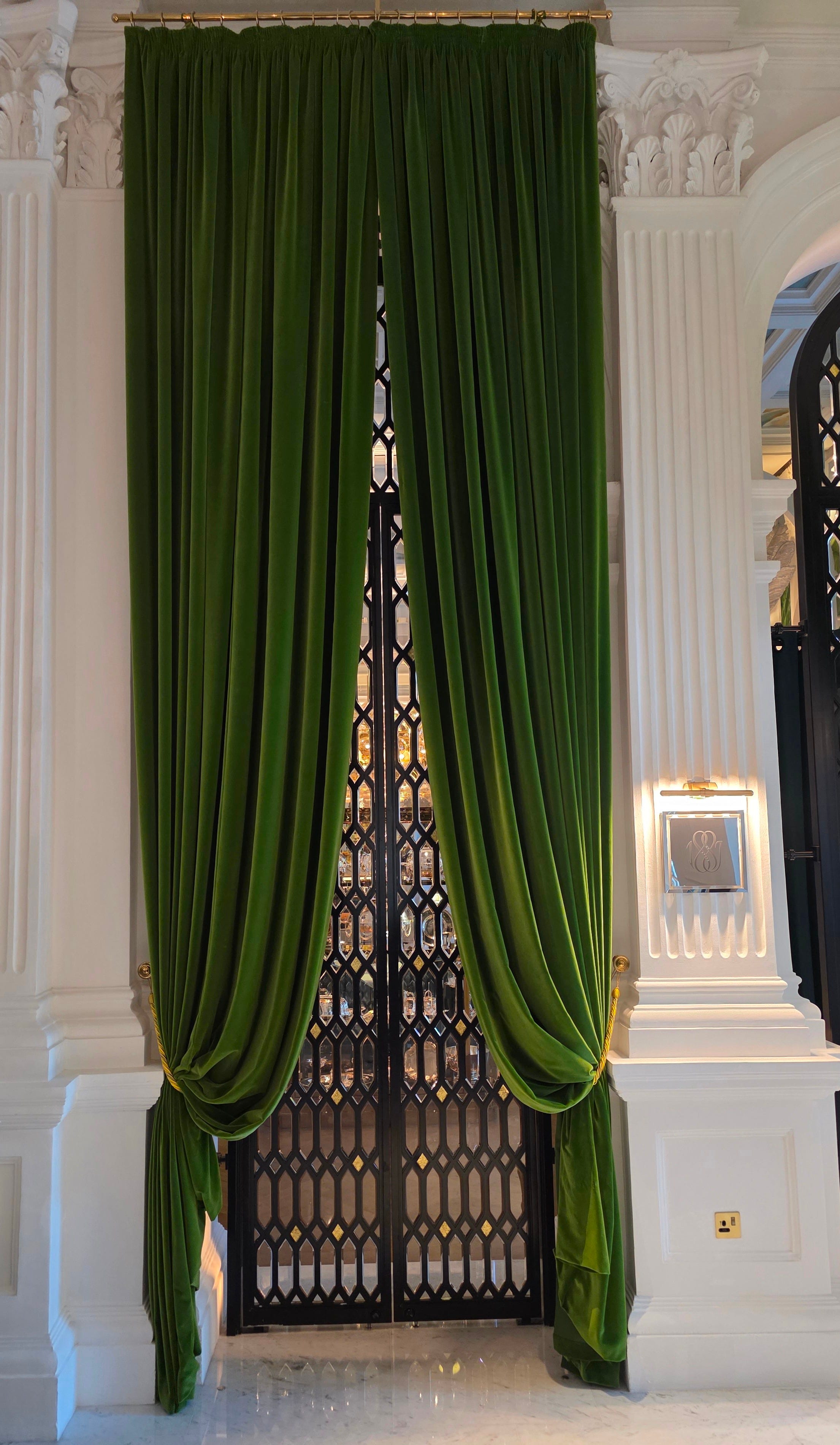
The entrance sets the colour story immediately: emerald green drapes, a shade that keeps returning through the meal.
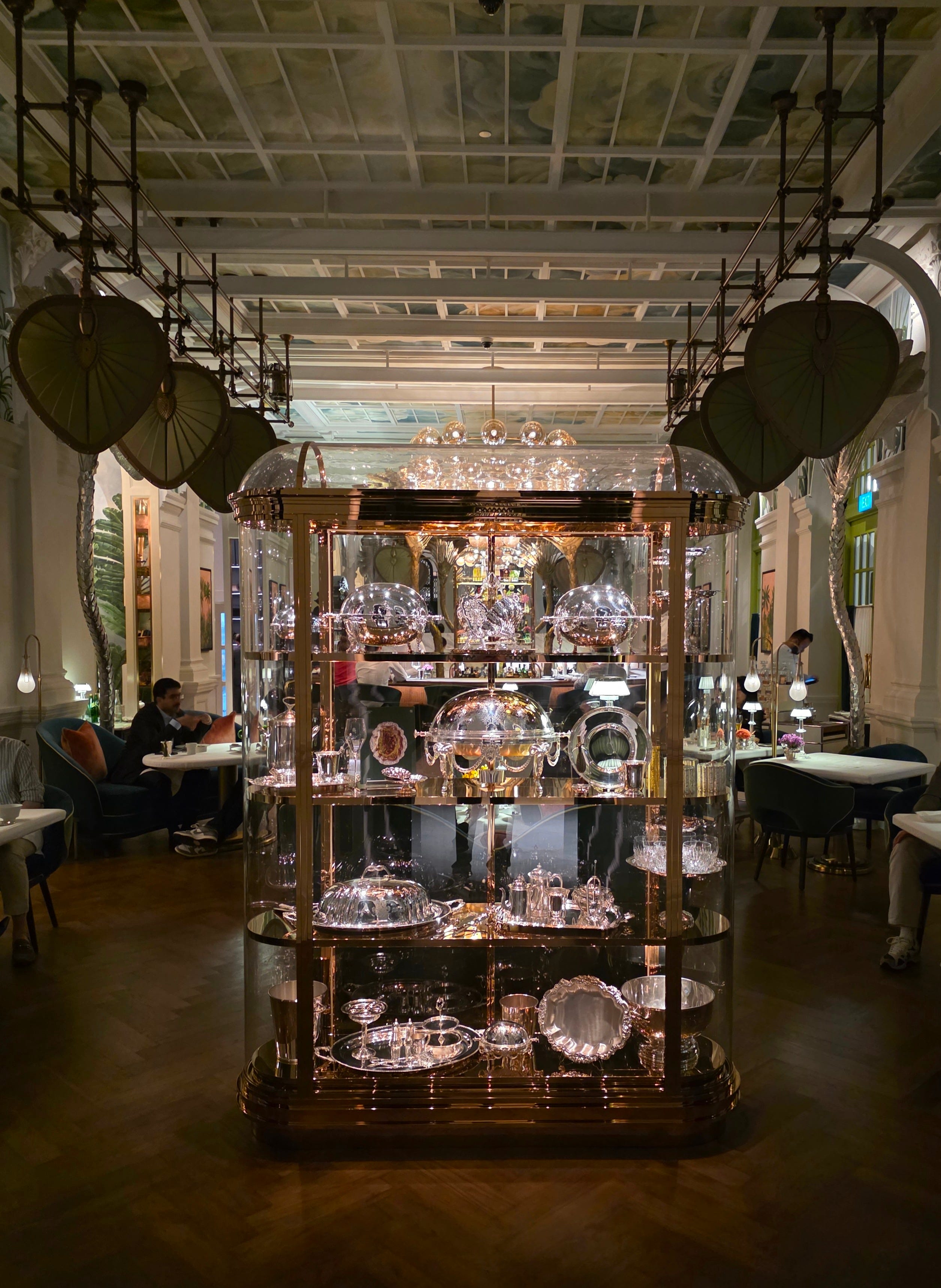
The room is opulent in a very Raffles way. You walk into polished silverware, mechanical palm leaves fanning the dining room, and the sense that the hotel wants you to notice its own past.
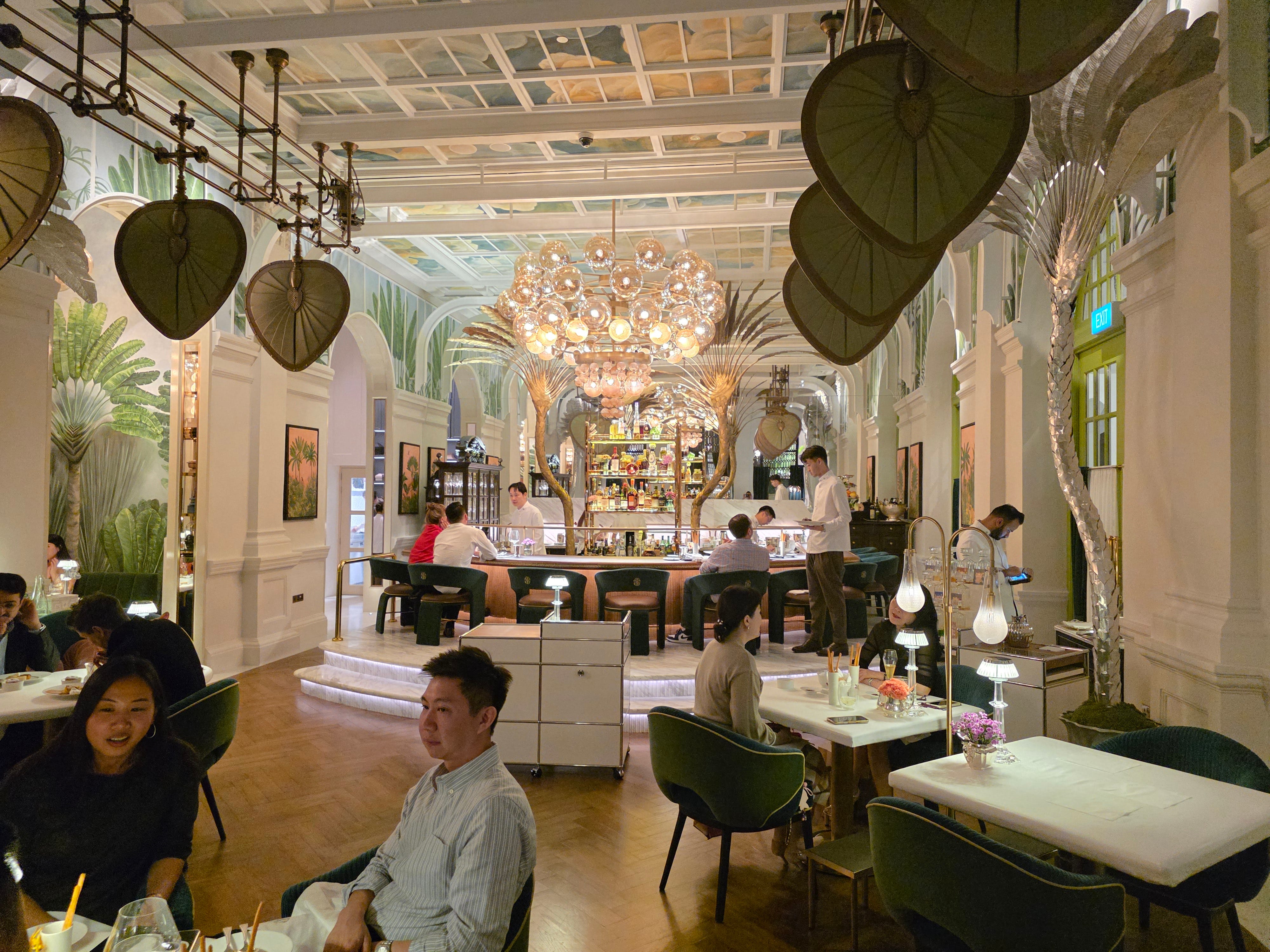
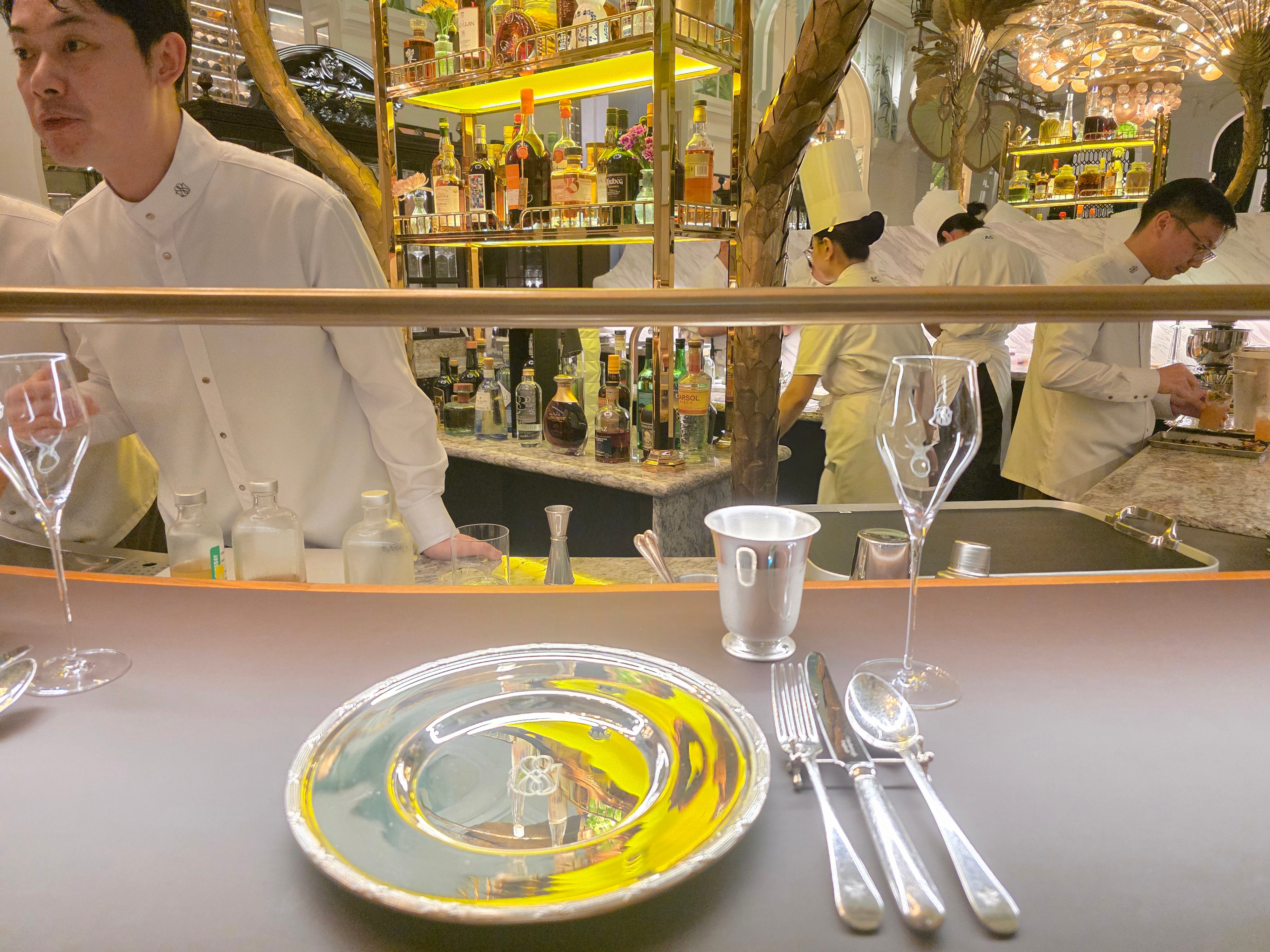
At the back, the chef’s counter wraps around the show kitchen. The cooking stays visible, but the room never becomes a kitchen-counter restaurant. The hotel theatre still wins.
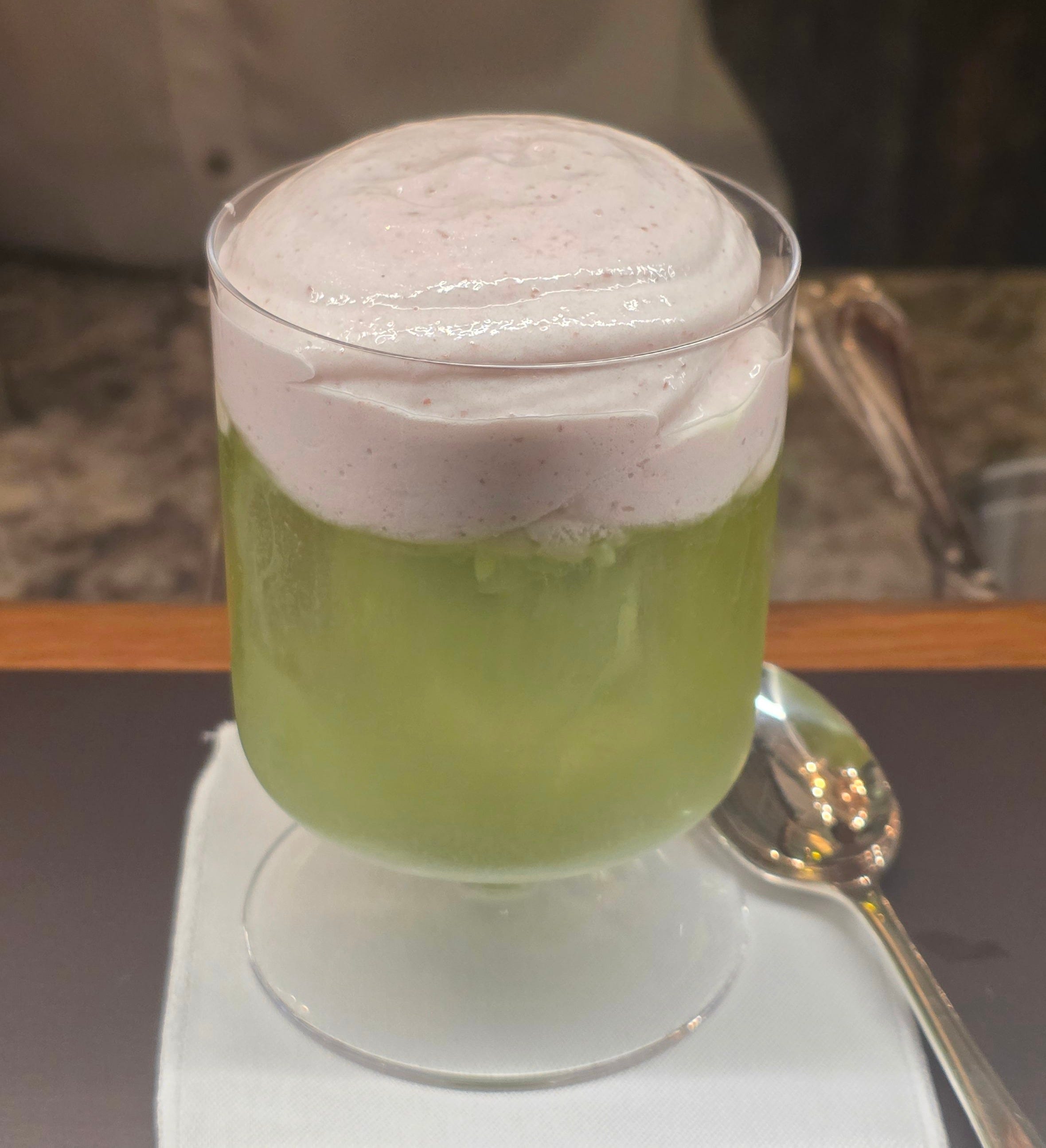
The Chendol Old Fashioned is a clever opening drink: chendol frozen into the ice cube, sweetness kept in check, strength hidden until it is too late.
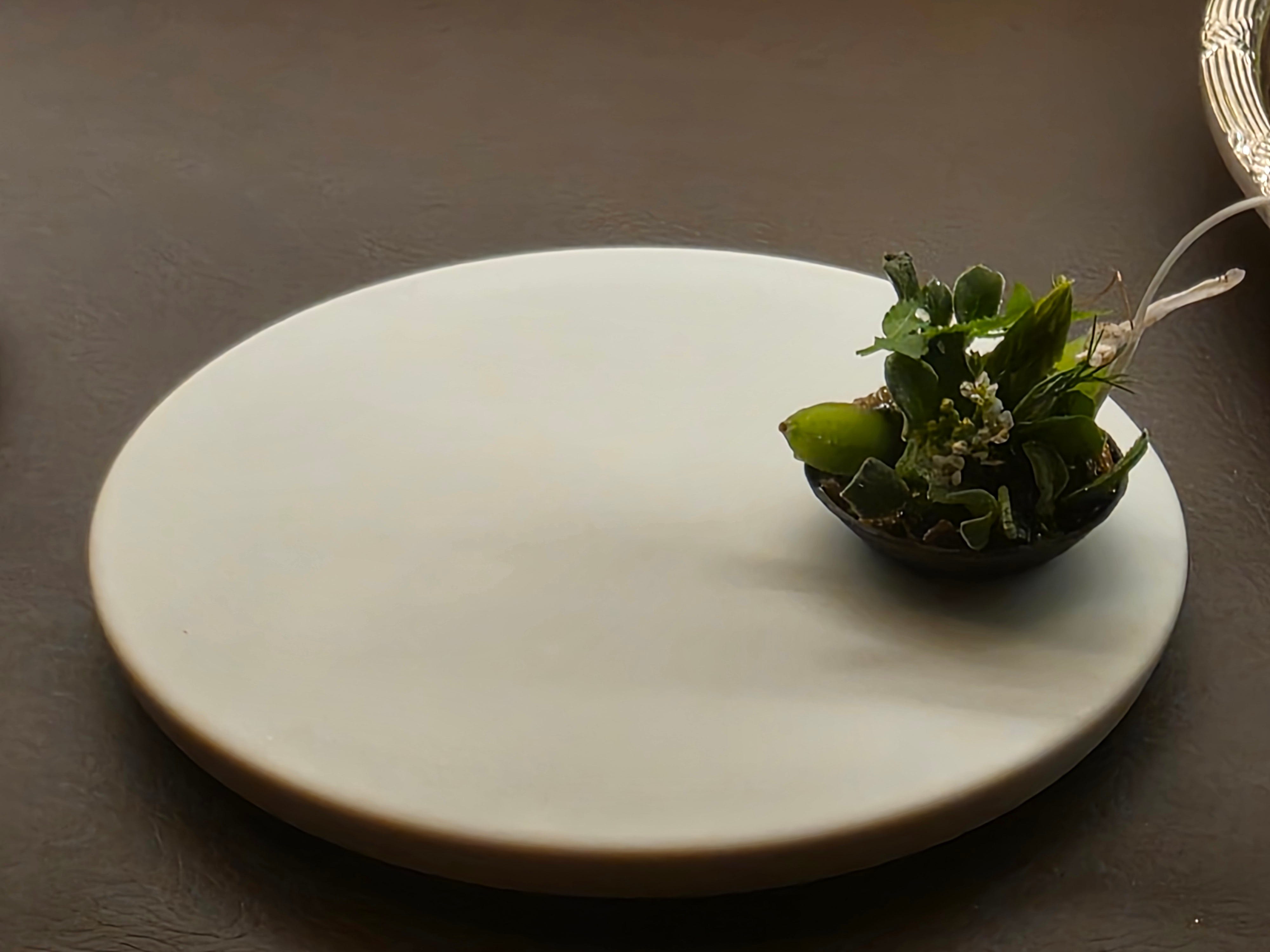
The green motif returns in the amuse bouche, especially the herbal tart inspired by the herb garden outside the restaurant. It is a small detail, but it ties the room to the property instead of leaving the decor as costume.
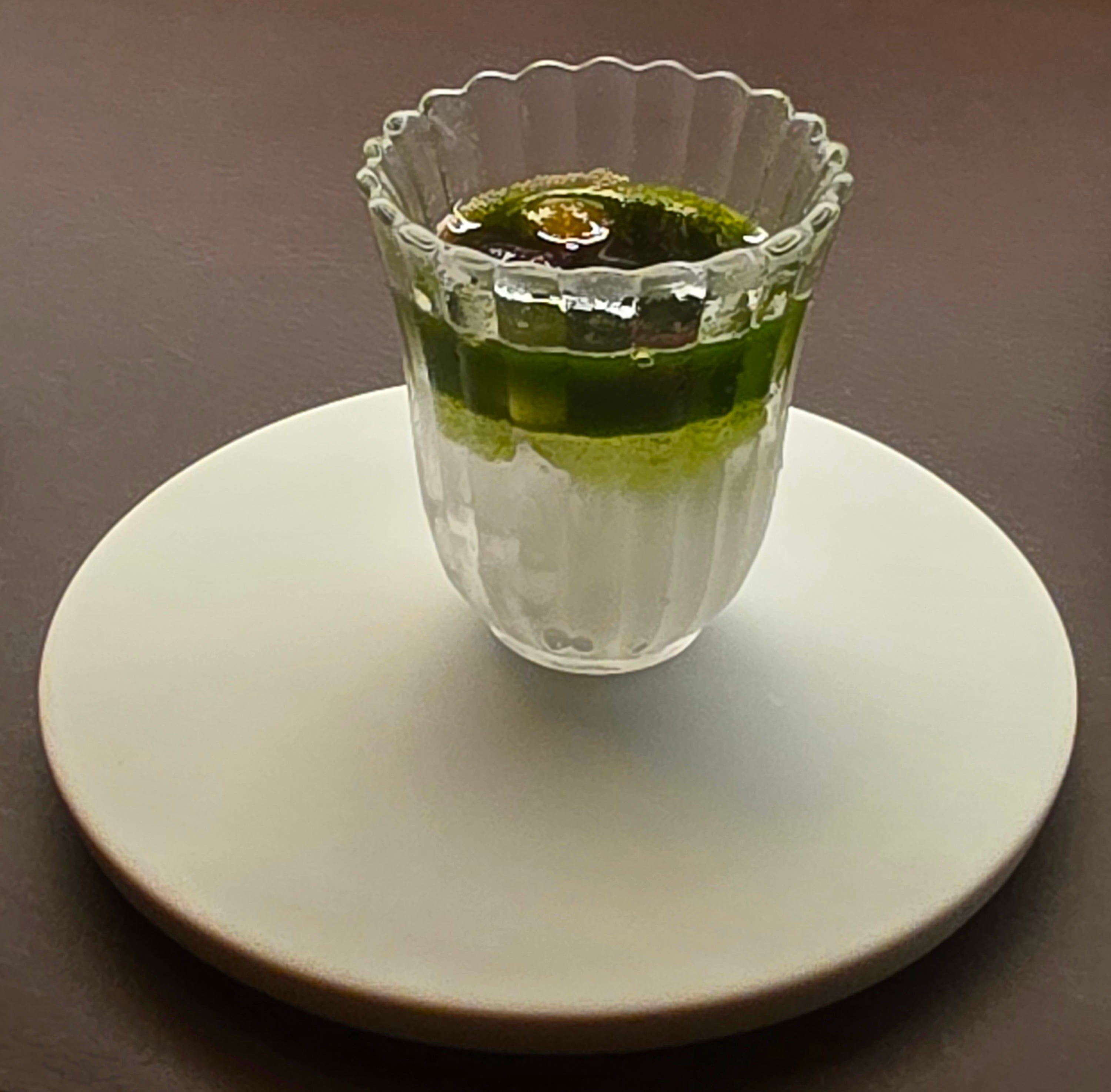
A layered shot follows. The idea is more important than the liquid: the meal keeps using colour and format as memory cues.
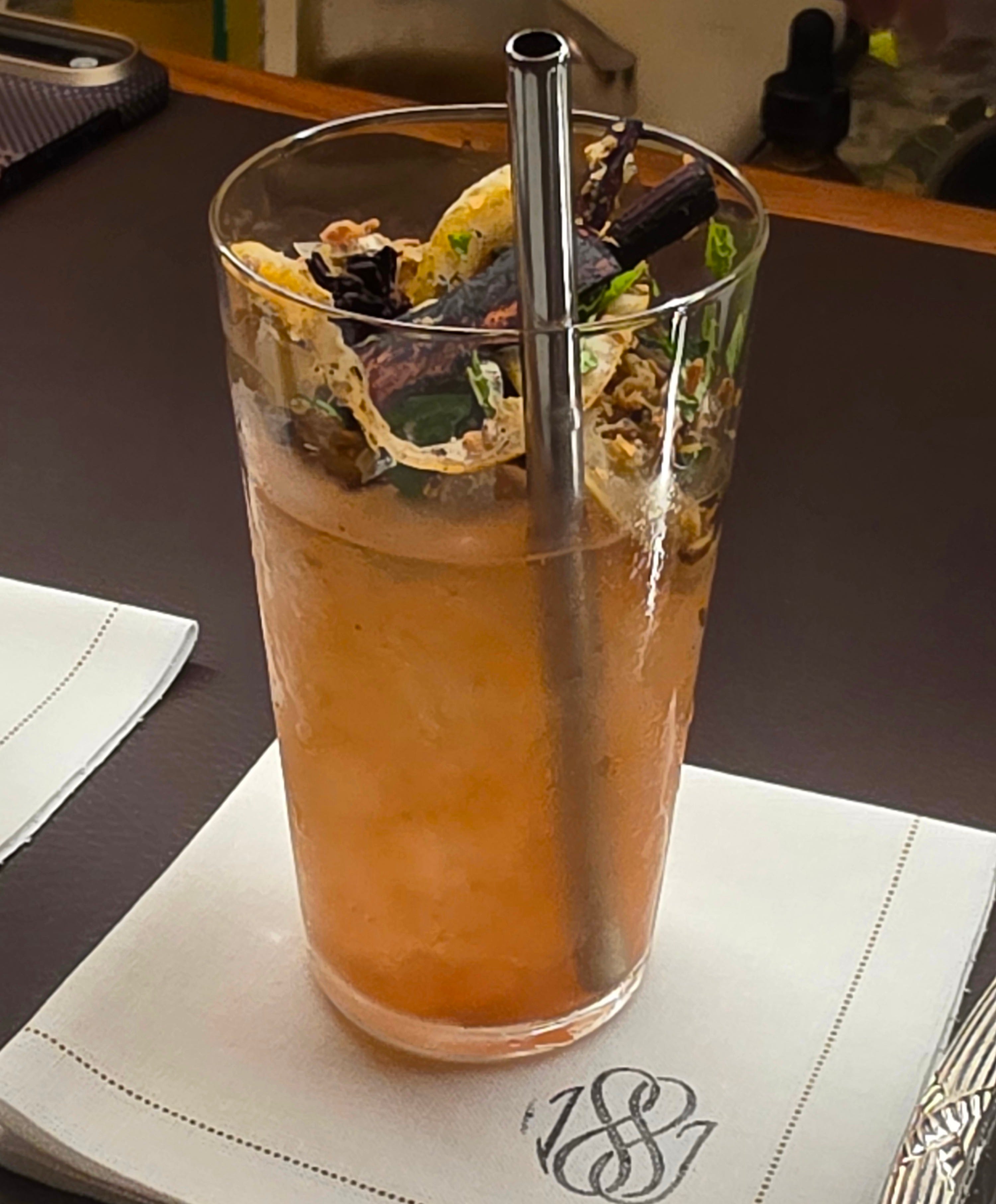
The Spice Bomb lemonade asks you to crush the spices yourself. It lands somewhere between lemonade and chai, with enough aroma to make the interaction feel earned rather than decorative.
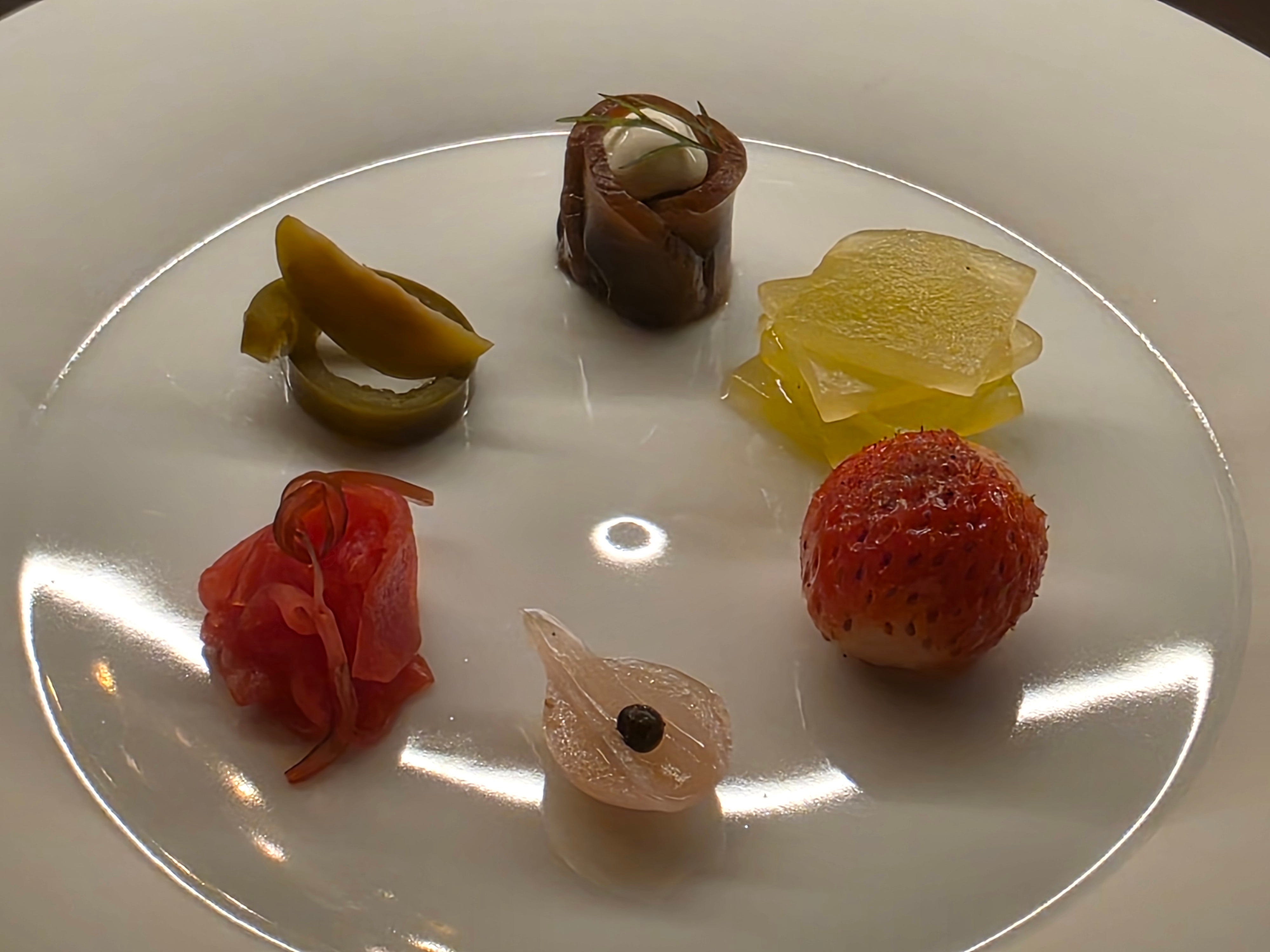
The pickles with the hors d’oeuvres do useful work. They reset the palate and stop the opening snacks from becoming only richness and crunch.
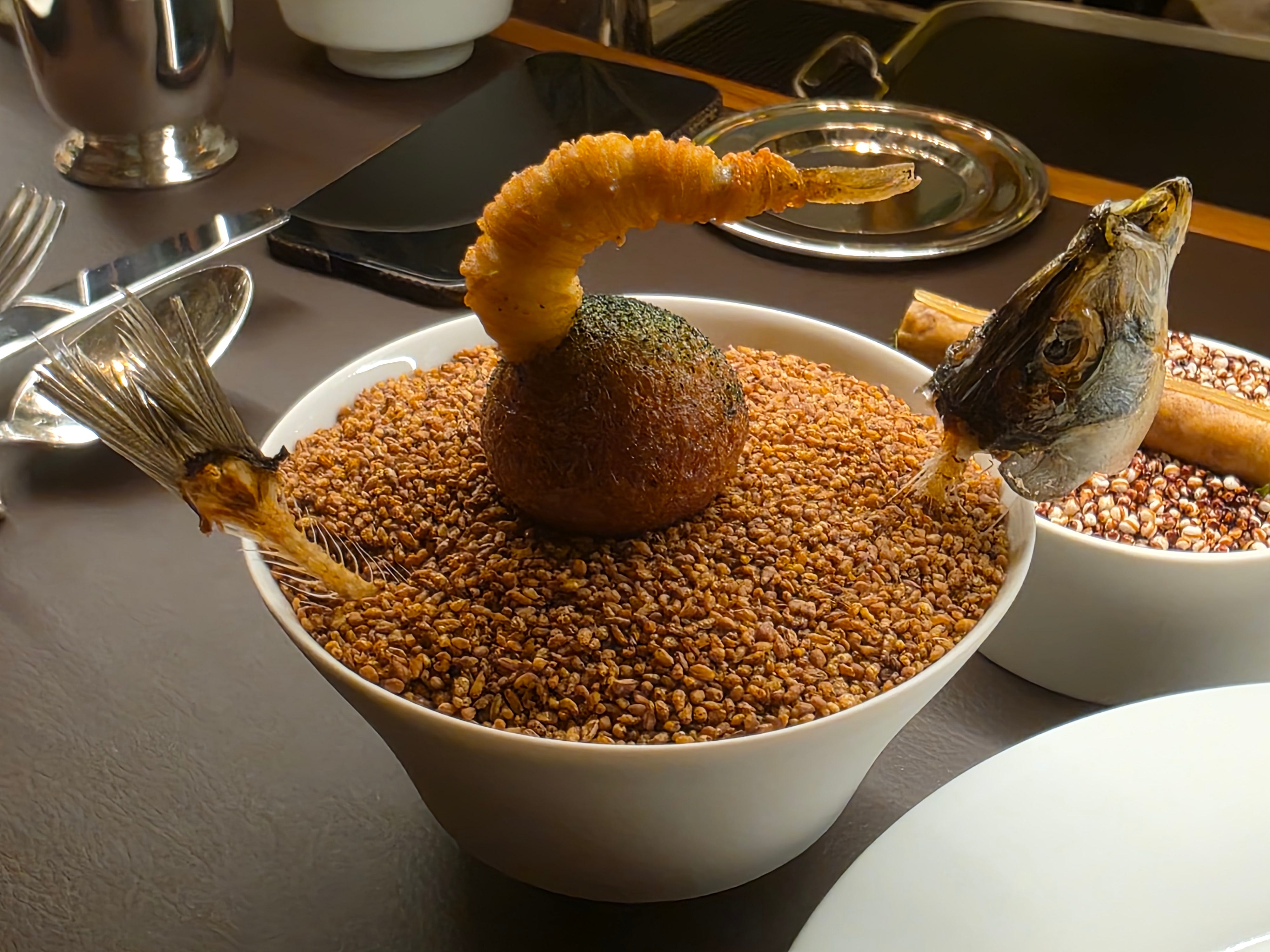
The Trio of Fish and Chips is the kind of dish this restaurant should be doing: fish and chips done three ways, tightened into a small-format snack.
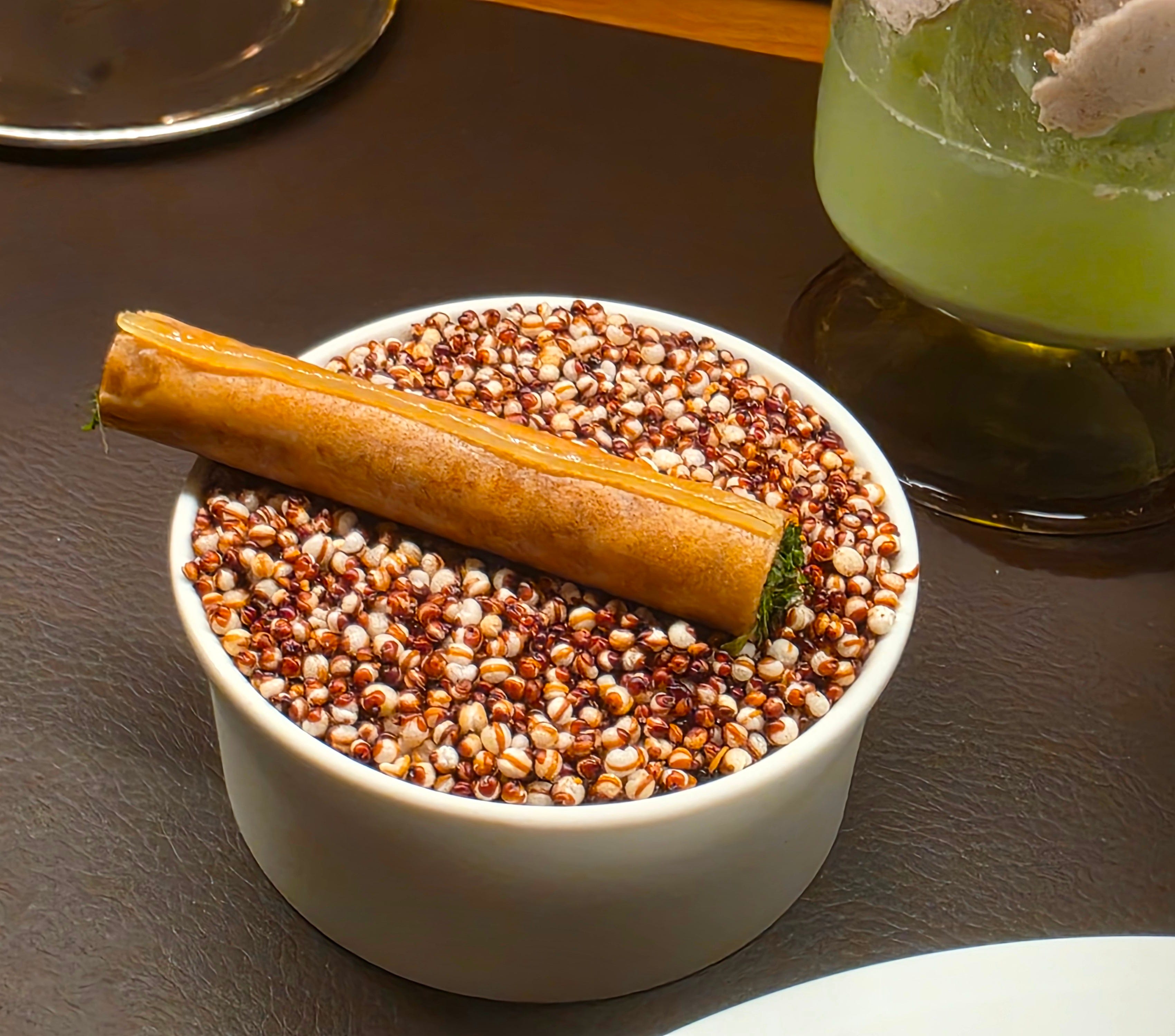
The Hae Bee Hiam prawn roll is fragrant, savoury and direct. It does not need much explanation. The reference is clear.
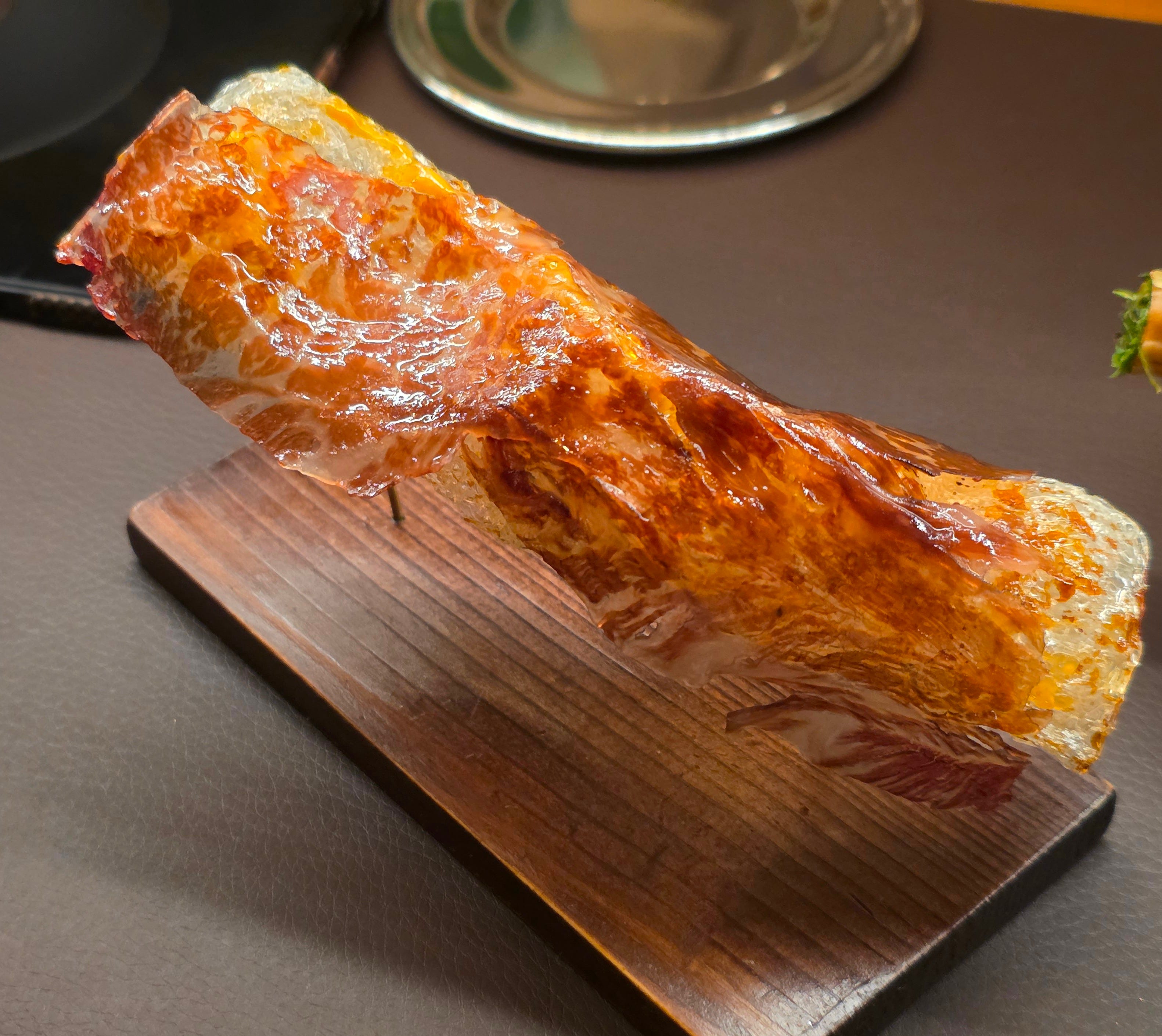
Bone and Flesh pairs puffed beef tendon with cured wagyu ham. It is light, crisp and a little spicy, with chilli oil doing the work of keeping the luxury from feeling too tidy. Absolutely delicious and one of my highlights of the night.
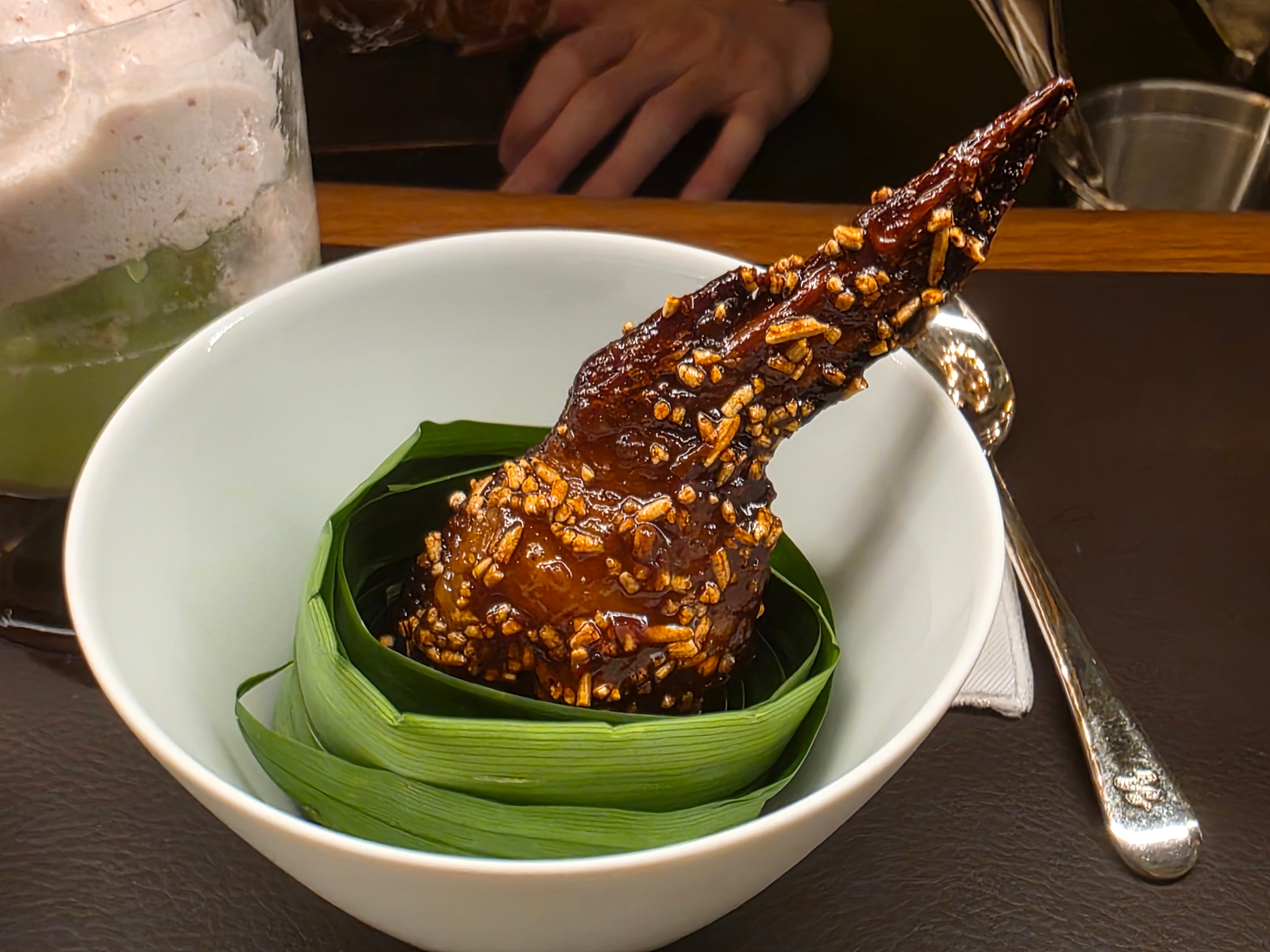
Crispy rice encrusted on to a stuffed chicken wing filled with crystal capellini and Alaskan king crab pushes harder into texture. The dish is busy on paper, but the point is straightforward: crunch, poultry depth and cold seafood sweetness.
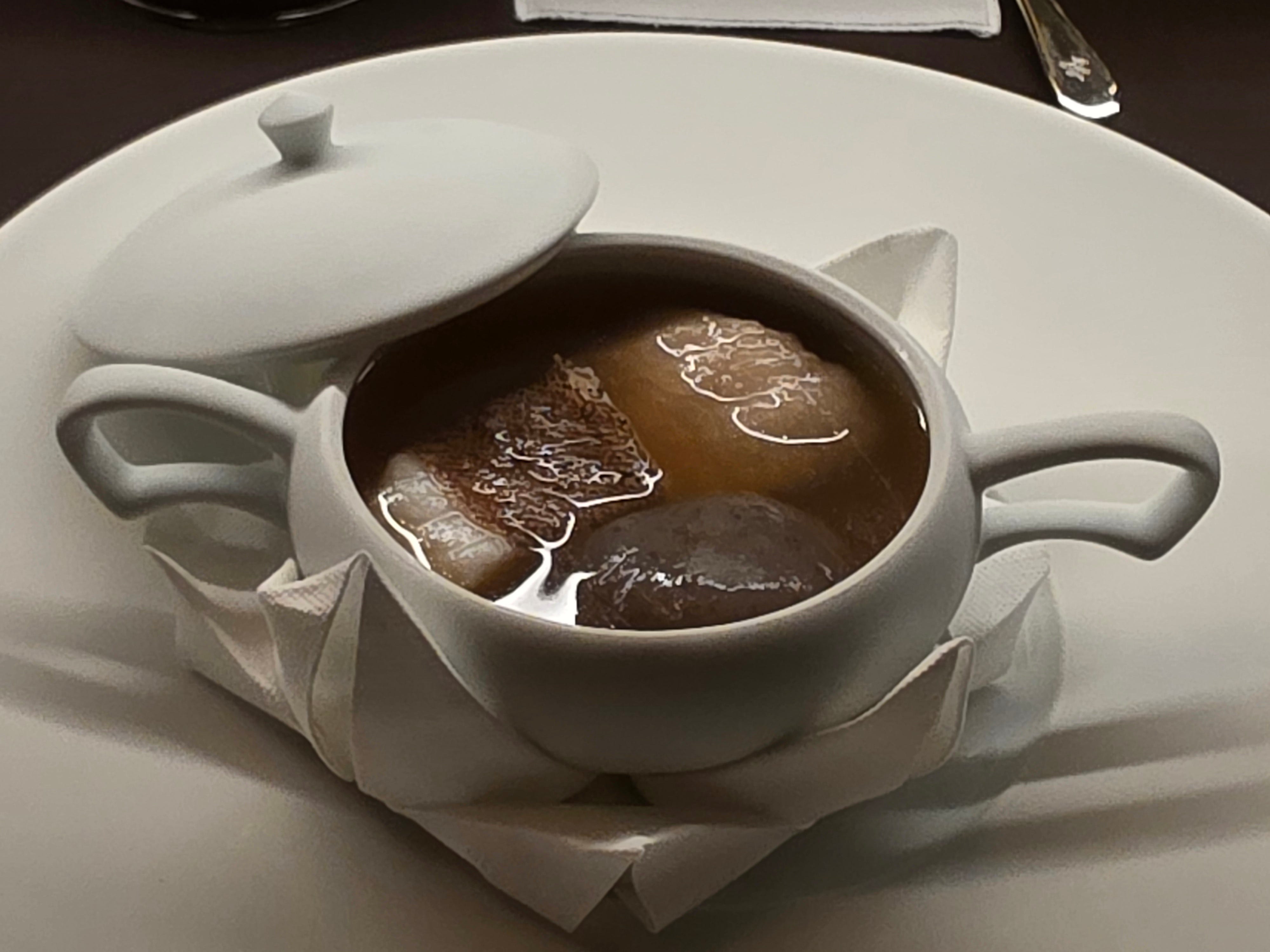
Turtle Soup from 1887 is one of the signature dishes. The team takes an old luxury dish from the Raffles archive, removes the obsolete ingredient, and rebuilds the memory with double-boiled chicken, grouper, herbs and a springy konnyaku ball for texture. This is the restaurant’s thesis in a bowl.
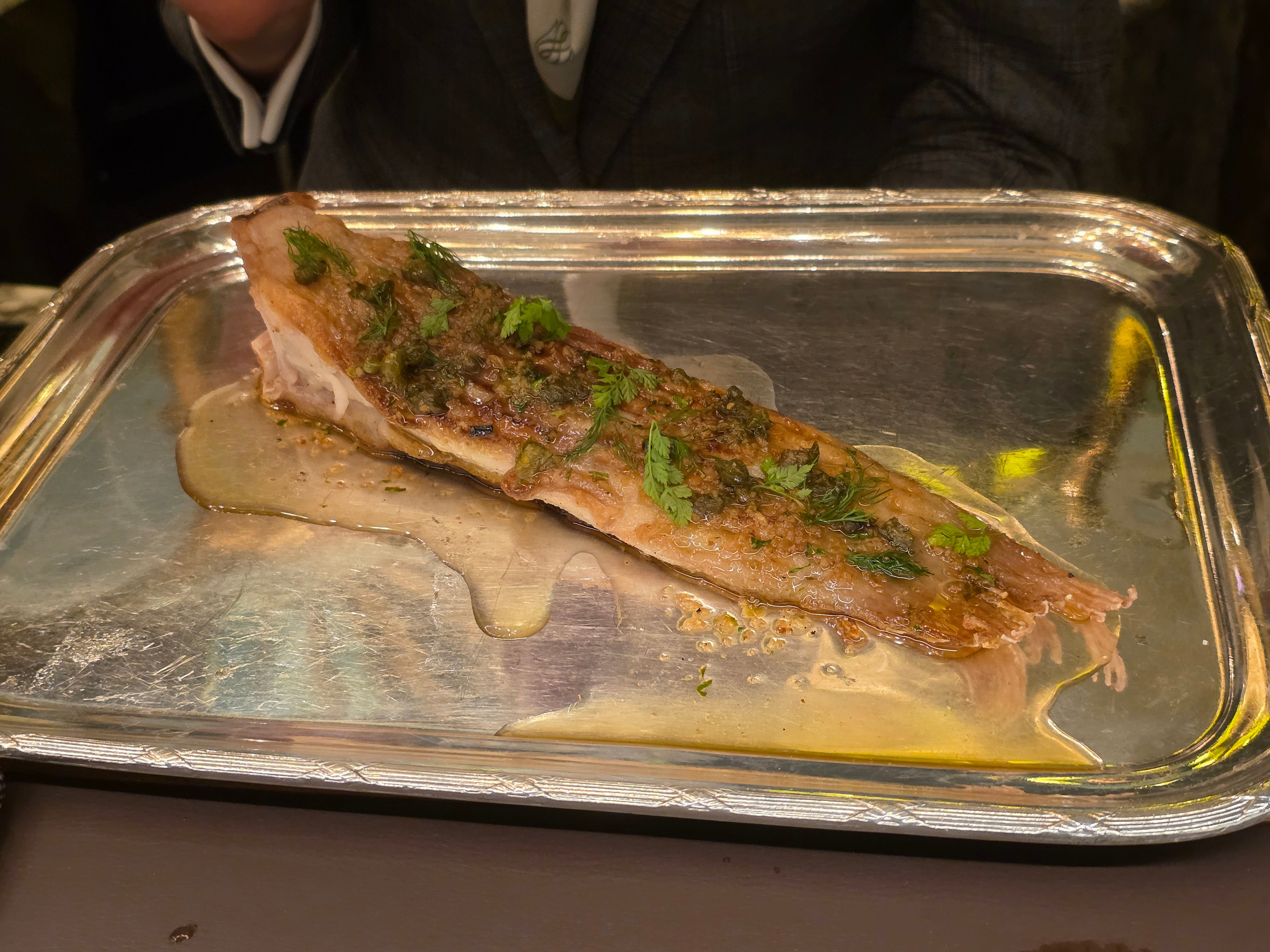
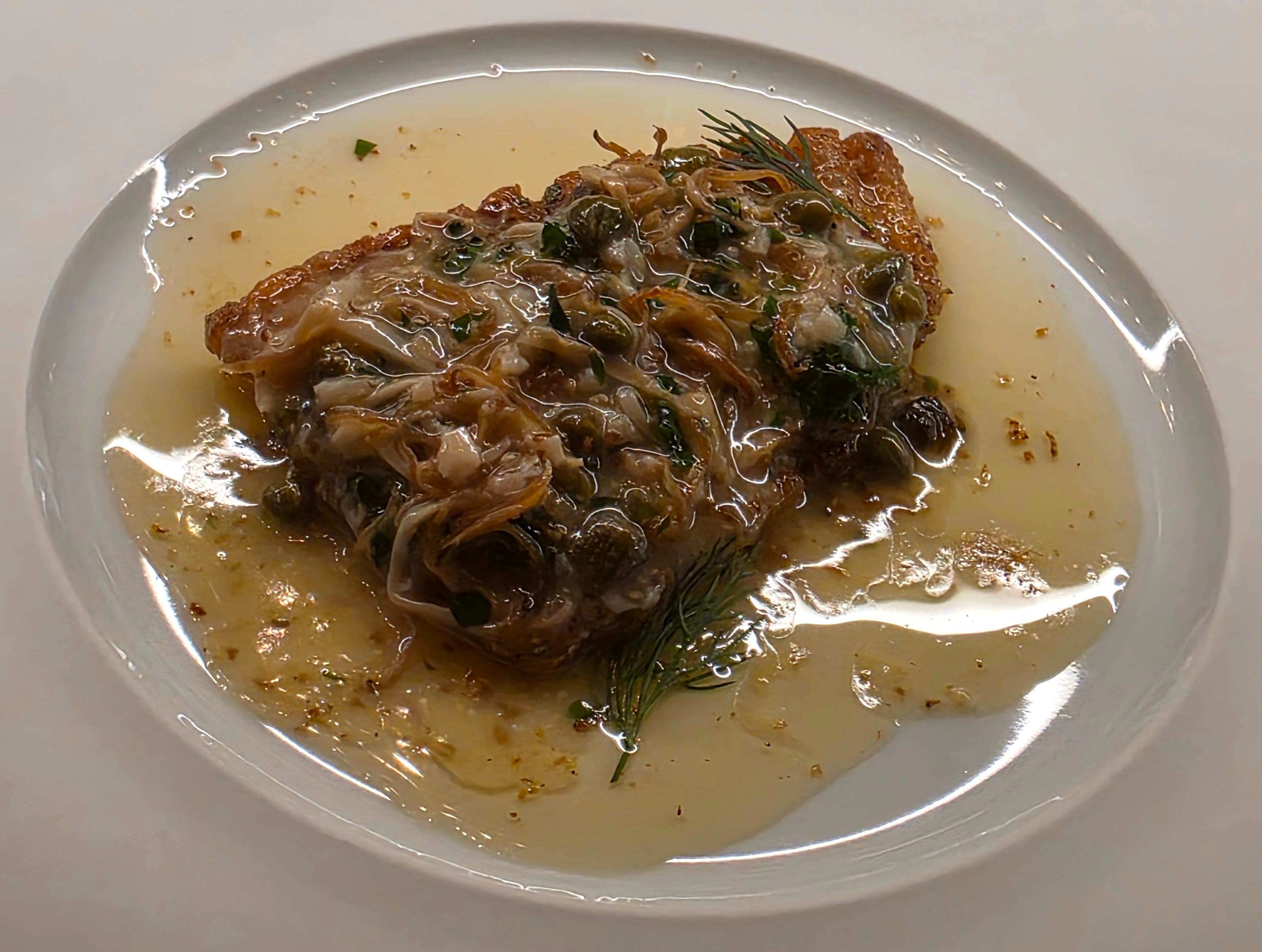
The grilled skate is a better tasting dish than it looks. It takes a Singapore seafood memory and runs it through French meuniere technique, with lemon, butter and capers doing heavy lifting. It is not pretty. It is delicious.
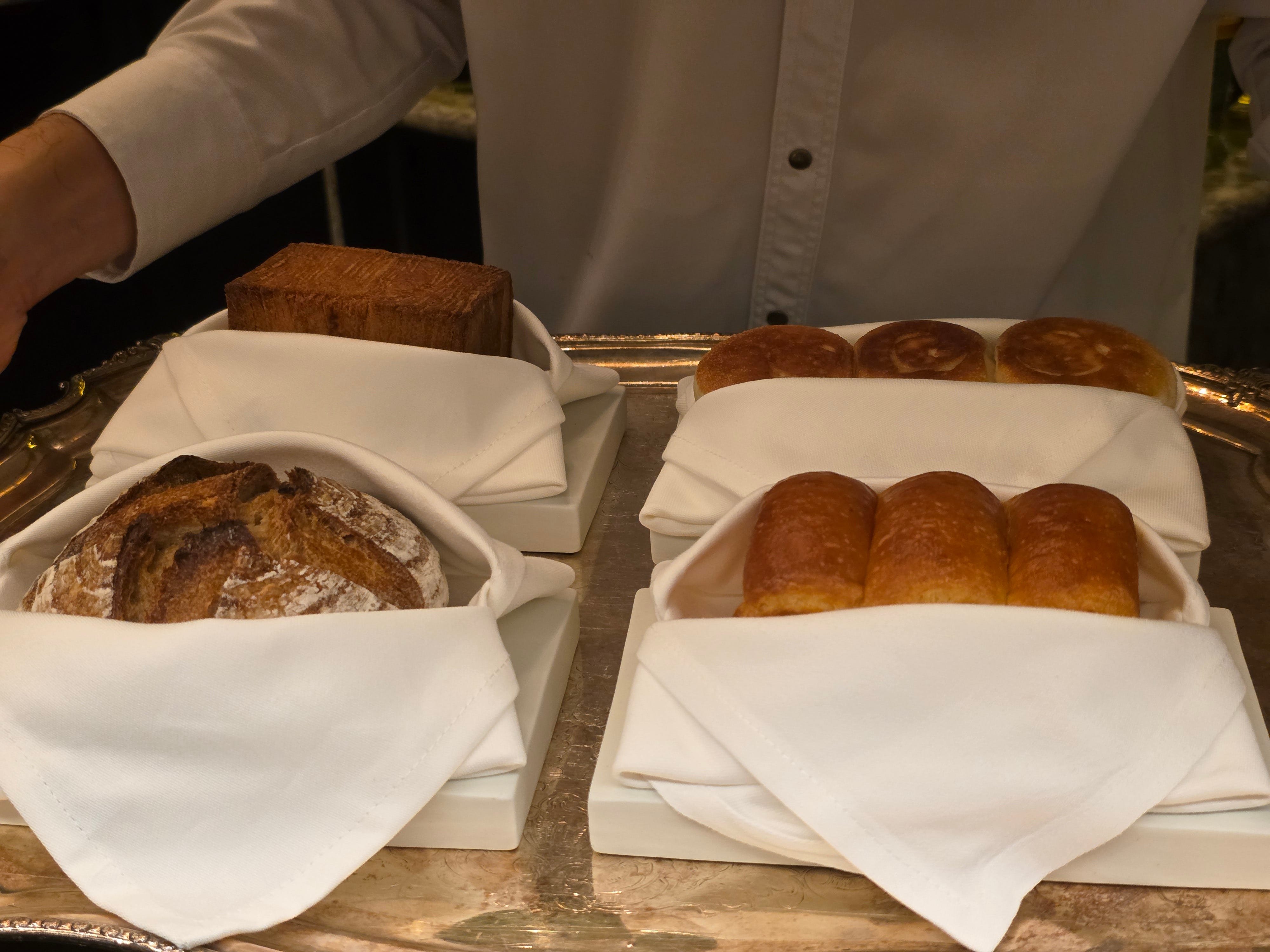
Bread comes in four choices: flaky toast feuillete, mini brioche, pain de campagne sourdough, and a steamed buns finished in an iron pan.
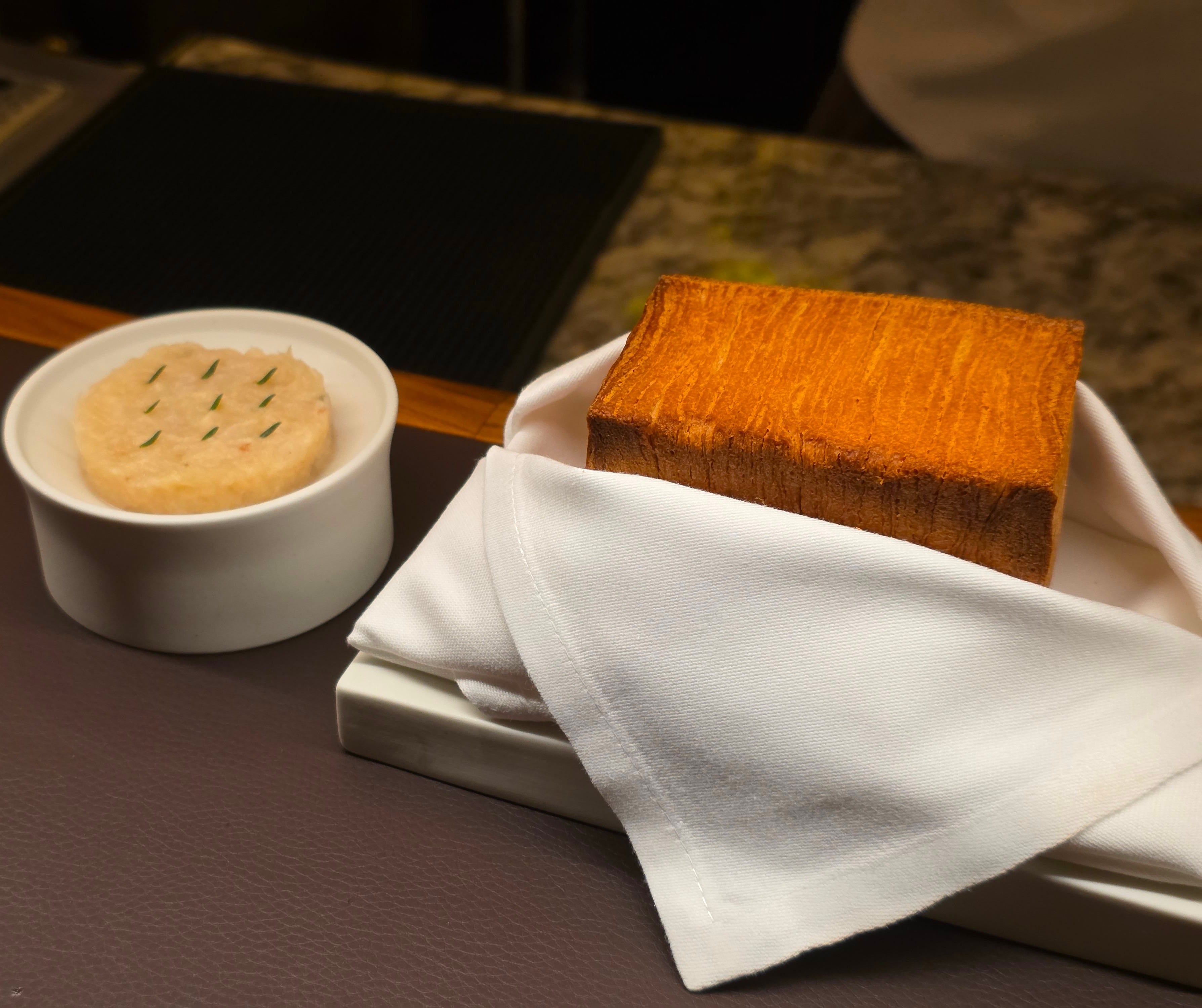
The flaky toast is the right pick. Hundreds of laminated layers get compressed into something closer to milk bread, served with pear and onion marmalade. It is technical, indulgent and still readable as bread.
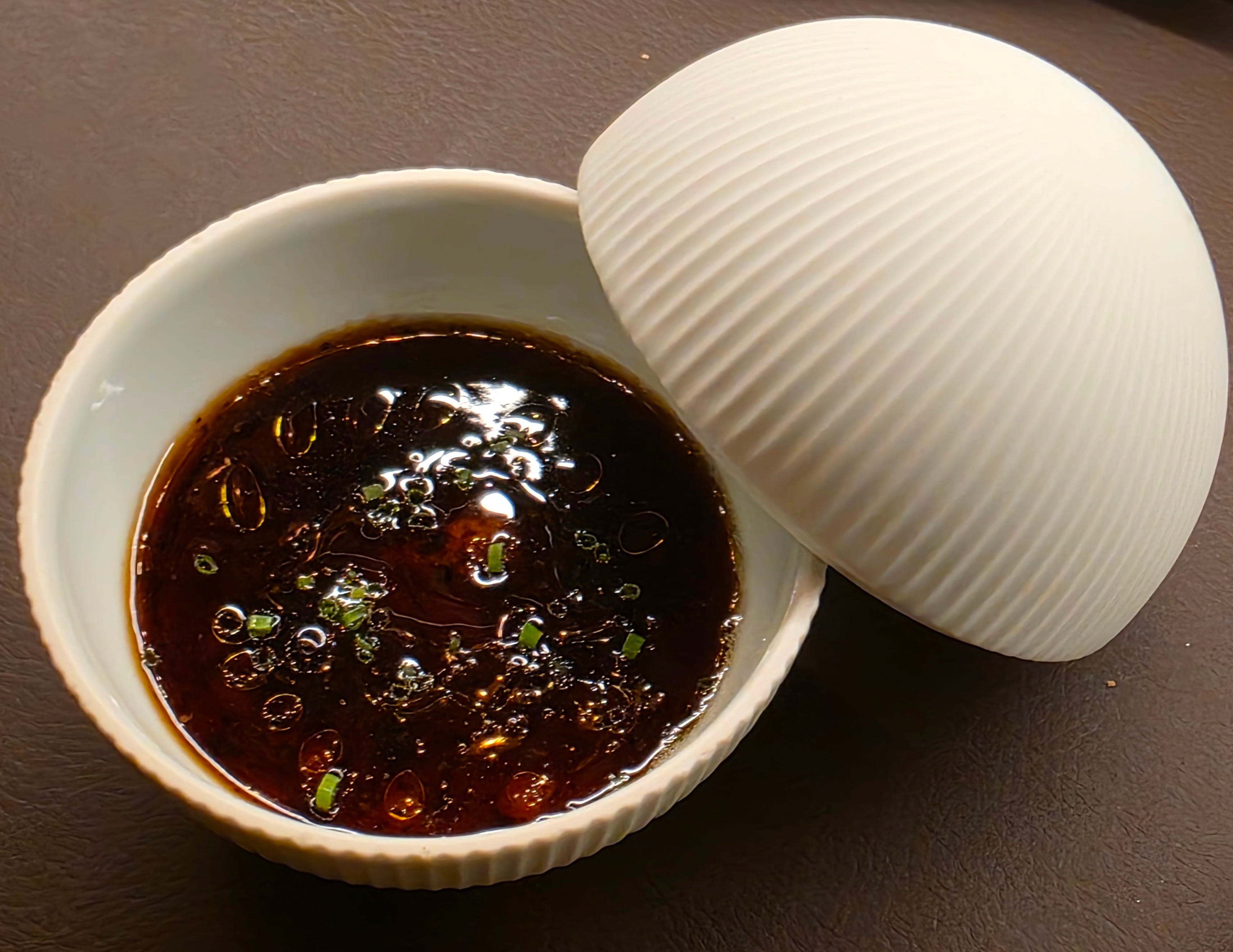
Royale of Foie Gras, “Memory”, is the direct Andre Chiang callback. He created the dish in 1997 while working at the three-Michelin-starred Jardin des Sens. It is a warm foie gras custard layered with truffle coulis. Rich, controlled and unmistakably his.
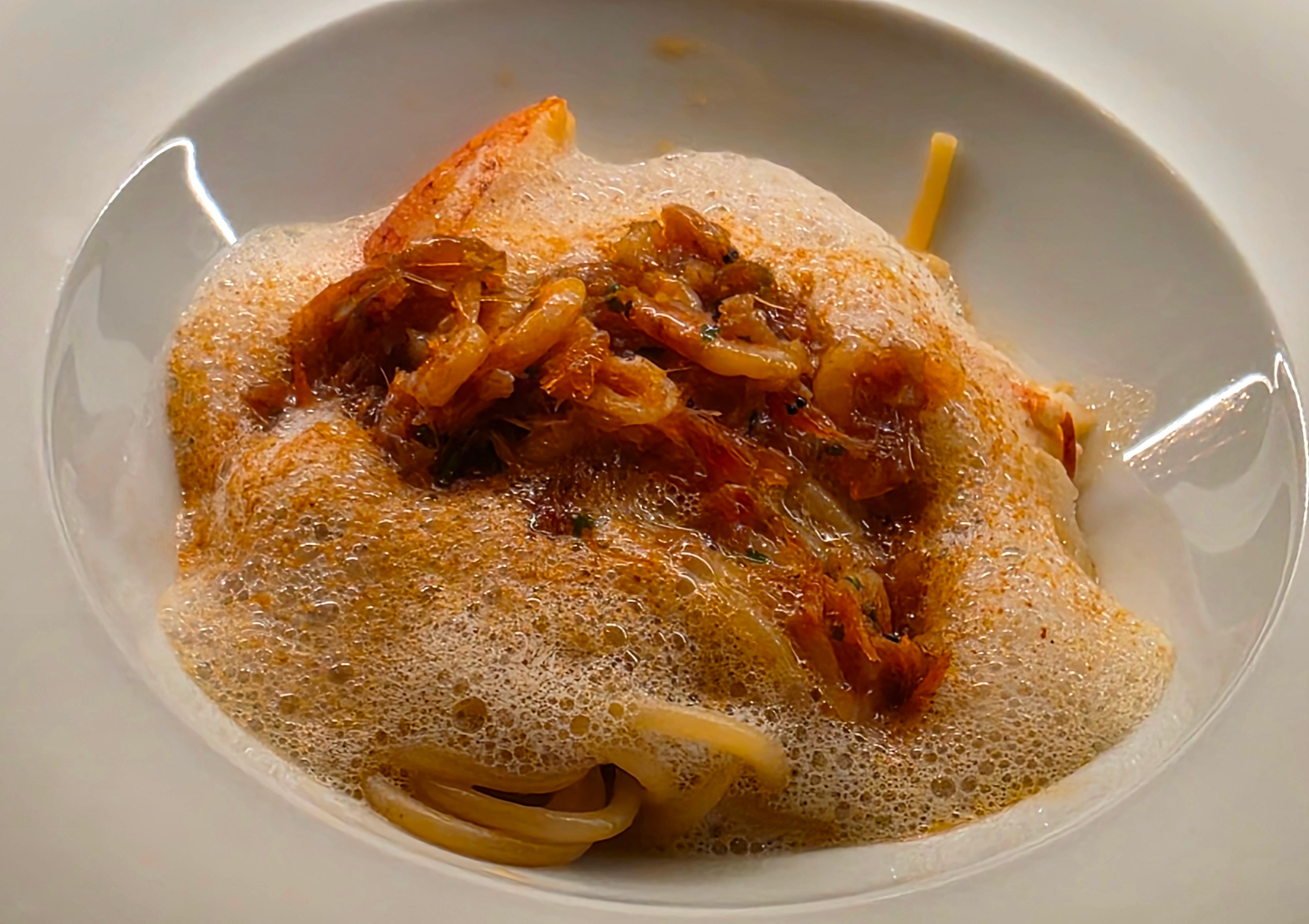
Lobster Heh Mee “Al Ajillo” turns a humble local noodle memory into sakura ebi and lobster-bisque spaghetti. This is the East-West theme at its clearest: prawn intensity, French luxury, local logic.
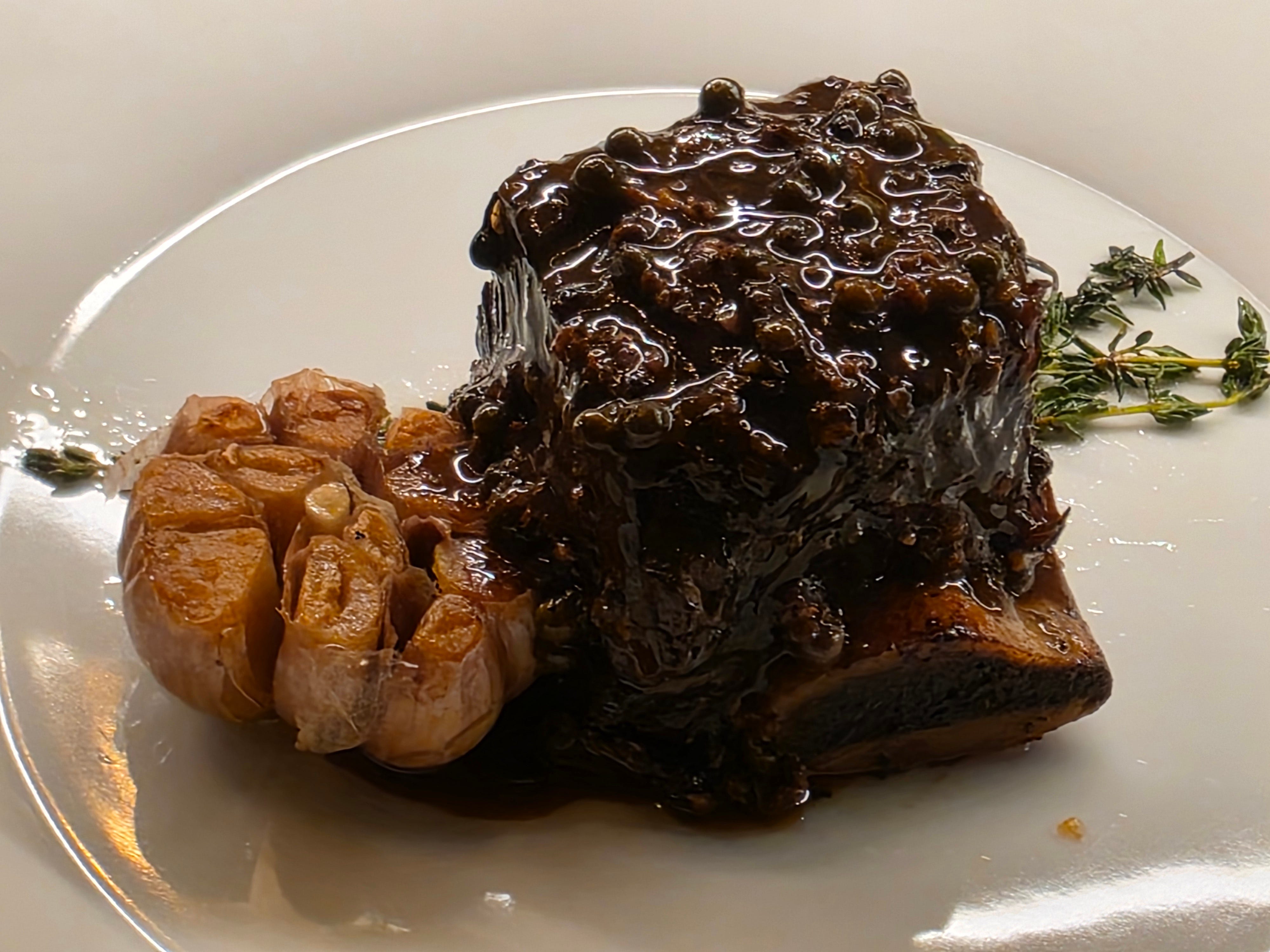
Boeuf au Sept Poivres 1887 brings seven-pepper short rib cooked until it gives way. It is not the most conceptual dish on the table. It does not need to be. It is tender, deep and satisfying.
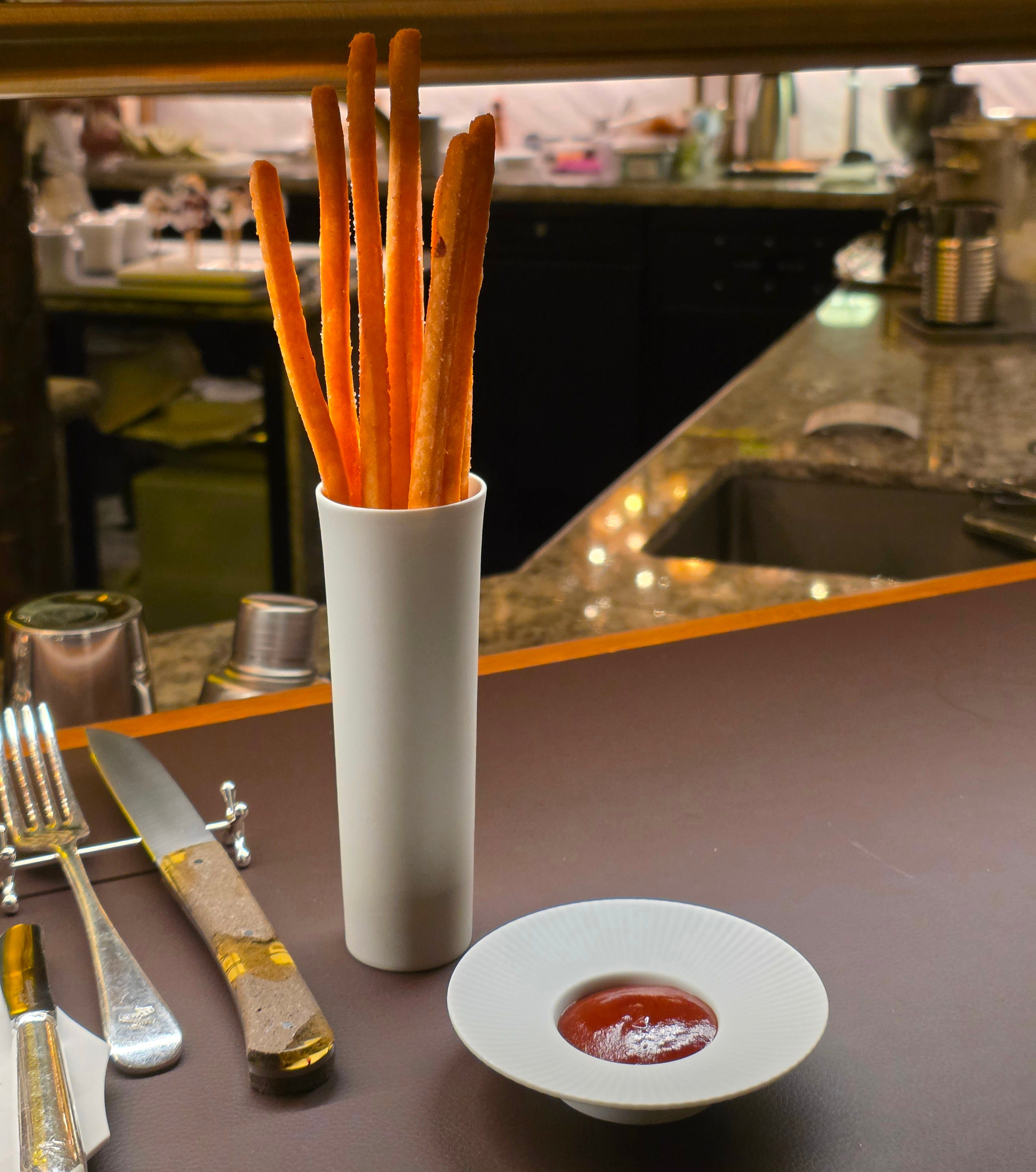
The Frites Maison Allumettes are absurd in the right way: nearly foot-long fries that look like breadsticks, served with homemade ketchup and curry oil. They are memorable because they understand that grand-hotel dining still needs pleasure.
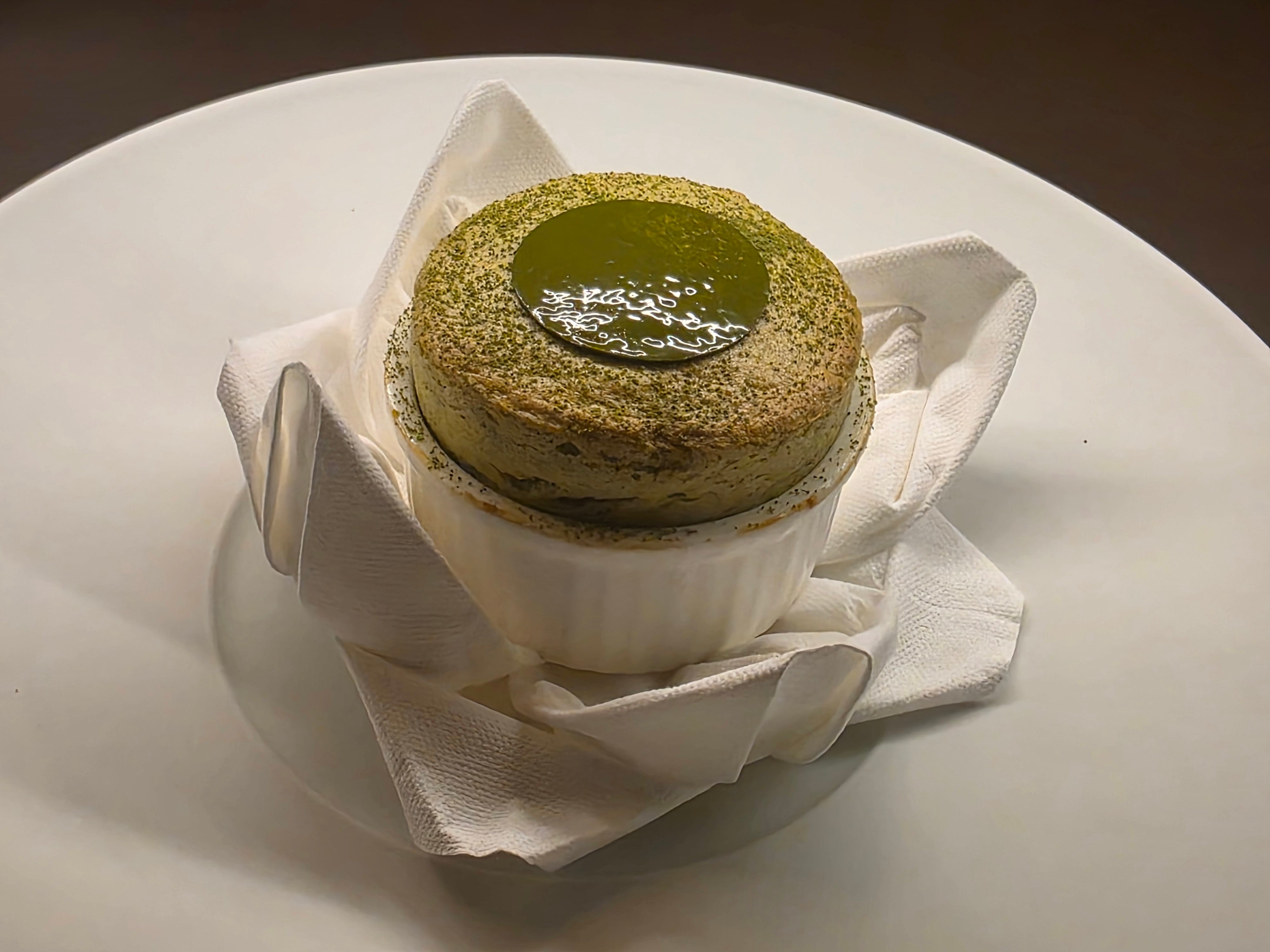
La Vert, or Verdant Forest, keeps the dessert course inside the green motif. The avocado souffle is the anchor.
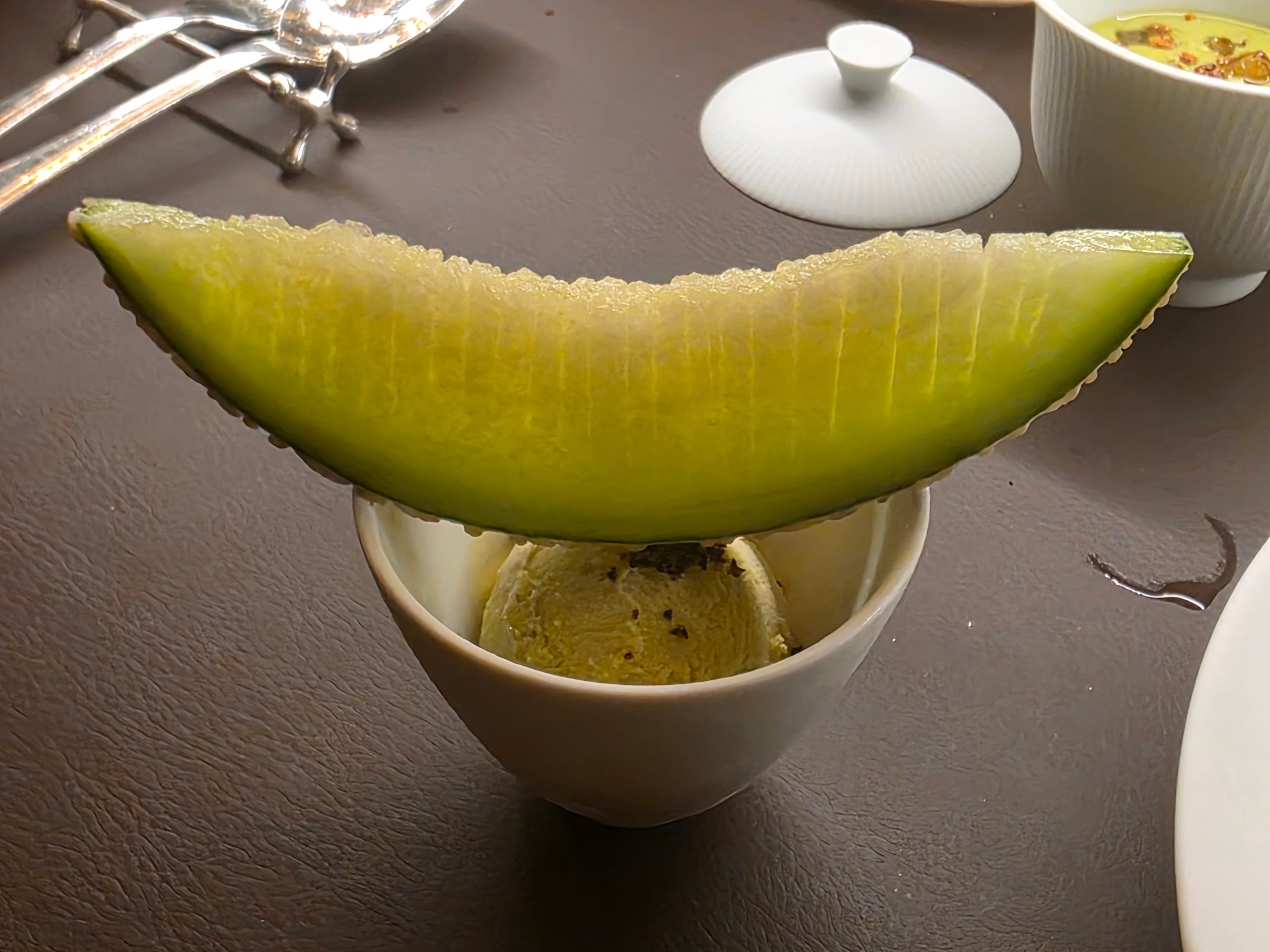
A slice of musk melon sits on pistachio kombu ice cream. It is delicate, clean and more interesting than another heavy luxury dessert would have been.
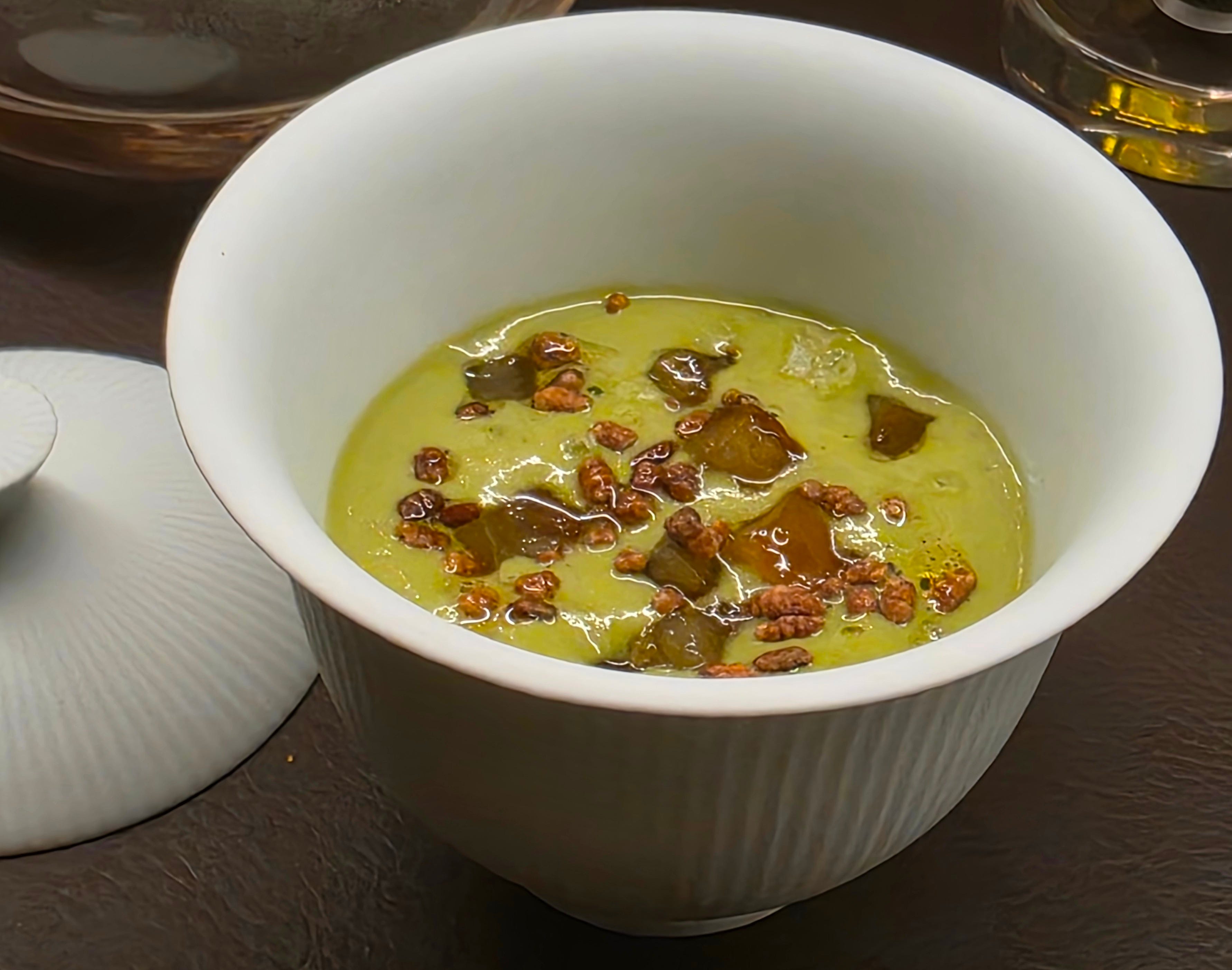
The green matcha pudding continues the colour line without over-explaining it.
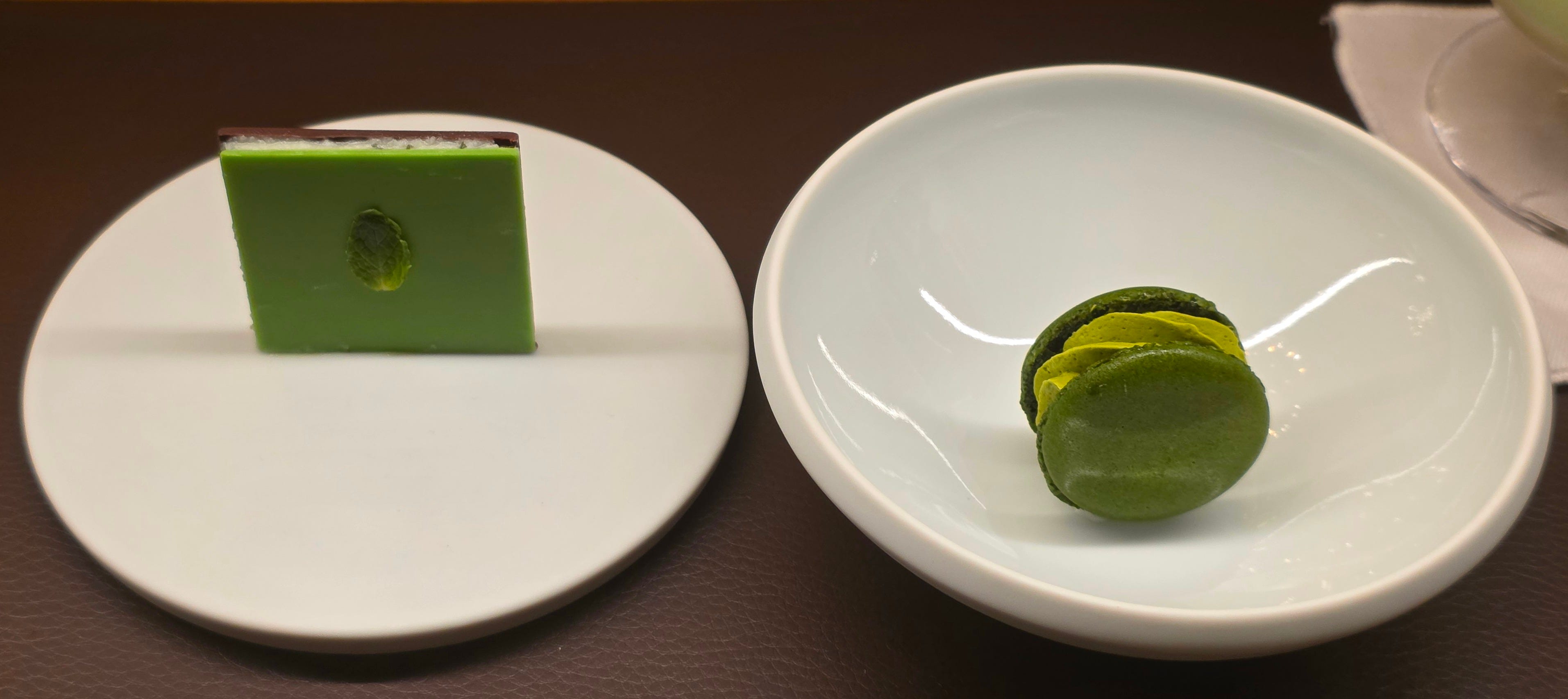
The final sweets, a green olive macaron and an After Eight-style mint chocolate, close the meal with the same idea as the room: old-world reference, and a little theatrical control.
Overall, absolutely amazing. For a restaurant that’s a month old, service and execution were absolutely spot on, and dinner was delicious, if not a bit excessive. By the time we got to the short rib, we were already stuffed. We gave up halfway through dessert. If the degustation menu is a bit excessive, Chef Andre has kindly also also offered every dish a la carte, and in smaller set menu formats as well, so it’s not necessary to go all out to have a great experience here.
In fact, I tried to get a follow up reservation to try the signatures that I missed, but the restaurant is booked out for months. Definitely worth returning, maybe when the initial hype and reservation line dies down.
Total damage: 1050 SGD/2 people
Looks spot on 👏 not another boring TM progression.