
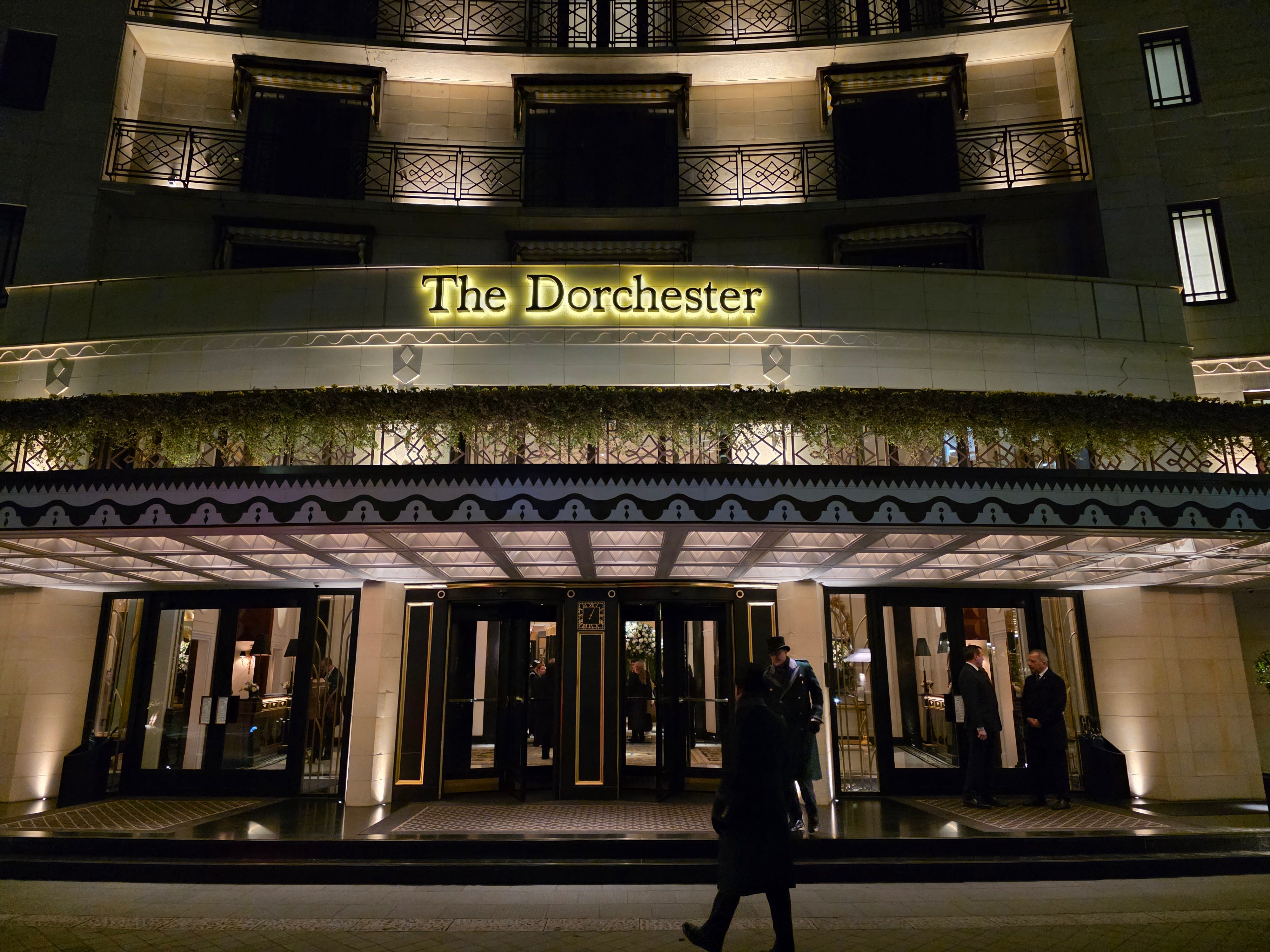
Alain Ducasse at The Dorchester sits inside London’s luxurious Dorchester Hotel on Park Lane, overlooking Hyde Park. The restaurant opened in November 2007, earning its first Michelin star quickly, then all three stars by 2010, holding them ever since.
The namesake Chef, Alain Ducasse, came into the world in 1956, in Orthez, France. Raised on a farm near Castel-Sarrazin in the Landes. He started at 16 working with many legendary chefs and moving quickly between roles and kitchens.
His career reads like a novel: apprenticeships across the south of France, a rise through Alain Chapel's brigade, two Michelin stars at La Terrasse in Juan-les-Pins by 1984, and then, that same year, a light aircraft crash in the French Alps from which he was the sole survivor. Months of surgeries and two years of rehabilitation followed before he returned to the stove. By 1987 he was in Monaco running Le Louis XV at the Hôtel de Paris, championing vegetable-forward menus that earned three stars in 1990 (the first hotel restaurant ever to receive them). The empire grew from there. By 2005, Ducasse became the first chef to hold three stars simultaneously in three cities: Monaco, Paris, and New York. His constellation peaked at twenty-one stars in 2012 and has since settled to seventeen. Beyond the restaurants (over sixty launched since the 1980s, some shuttered, others reinvented), the Ducasse universe spans cooking schools, chocolate shops, and a long shelf of books.
The kitchen at The Dorchester, though, belongs day to day to Executive Chef Jean-Philippe Blondet. Born in 1980 in Nice, Blondet grew up shopping markets with his parents and baking with his mother; he says he knew by the age of three or four that he would cook for a living. A sweet tooth pulled him first toward pastry, but he trained broadly for the wider possibilities. He interned under Jacques Chibois at the two-star La Bastide Saint-Antoine in Grasse, spent time at Sun Valley Resort with Claude Guigon, and found his formative mentor in Pascal Féraud, a Ducasse Paris corporate chef who drilled precision into every plate. Blondet joined the Ducasse group in 2004, working at Spoon at the Sanderson in London, then Le Louis XV in Monaco, followed by a brief spell in Hong Kong. He arrived at The Dorchester in 2013 as sous-chef under Jocelyn Herland, stepped up to head chef within two years, and took the top role in 2016. His cooking refines Ducasse's philosophy with a lighter, more seasonal hand, threading British ingredients through a distinctly French sensibility.
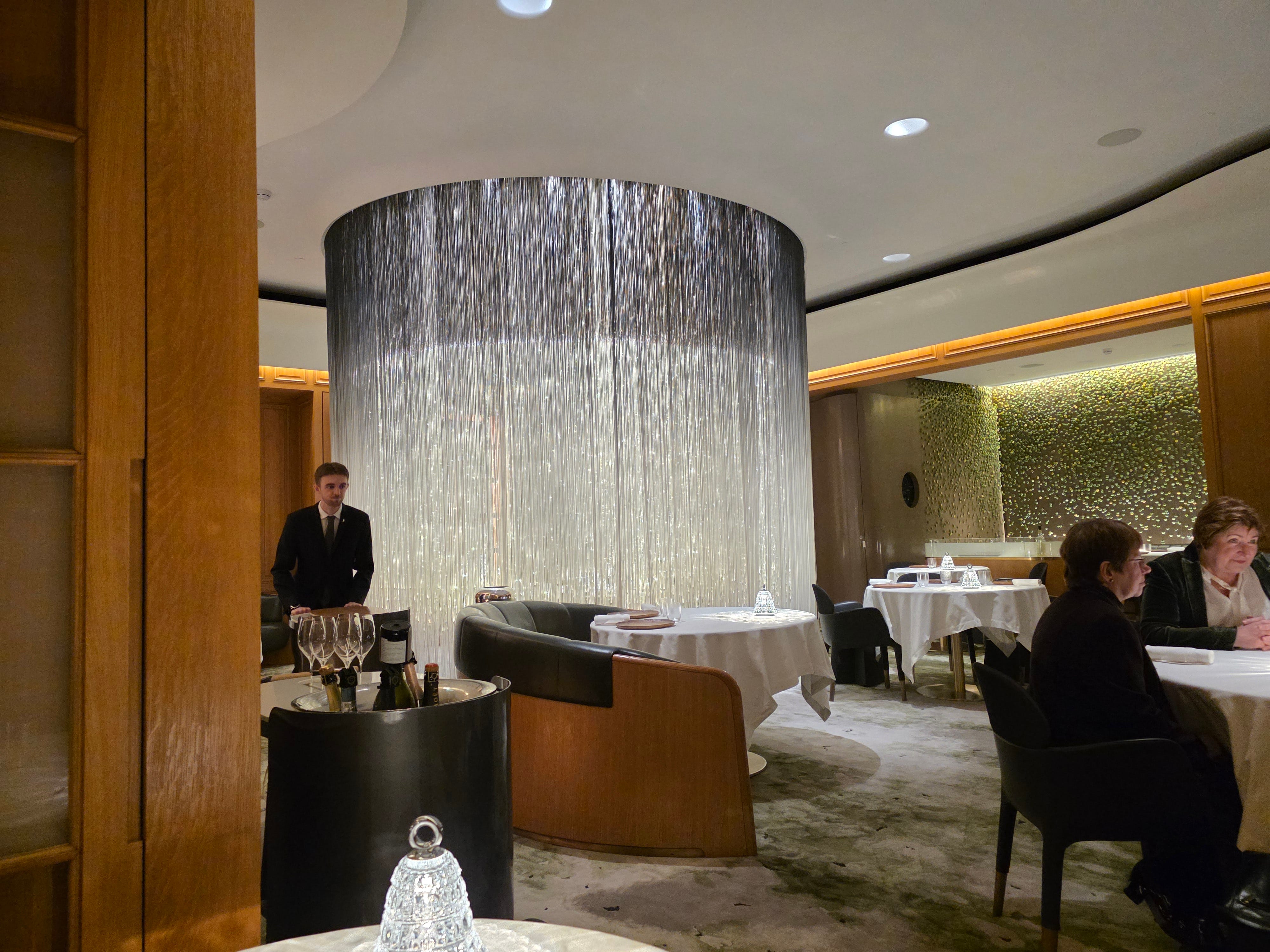
The restaurant had been reimagined since my last visit, but the sparkling private dining room, enclosed by a curtain of crystal beads, remained exactly as I remembered it.
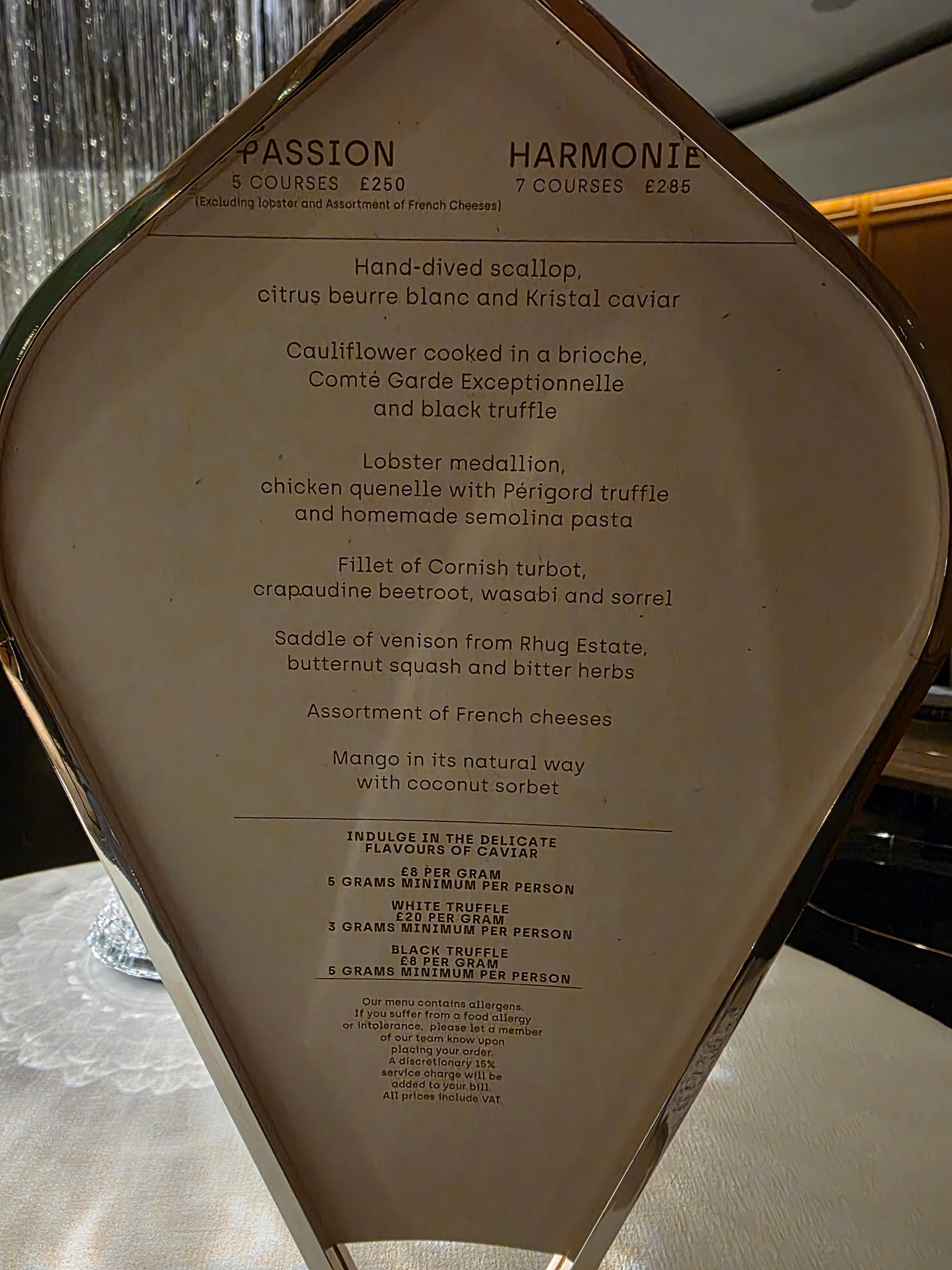
There were two tasting menus on offer, and, naturally, I chose the seven-course option.
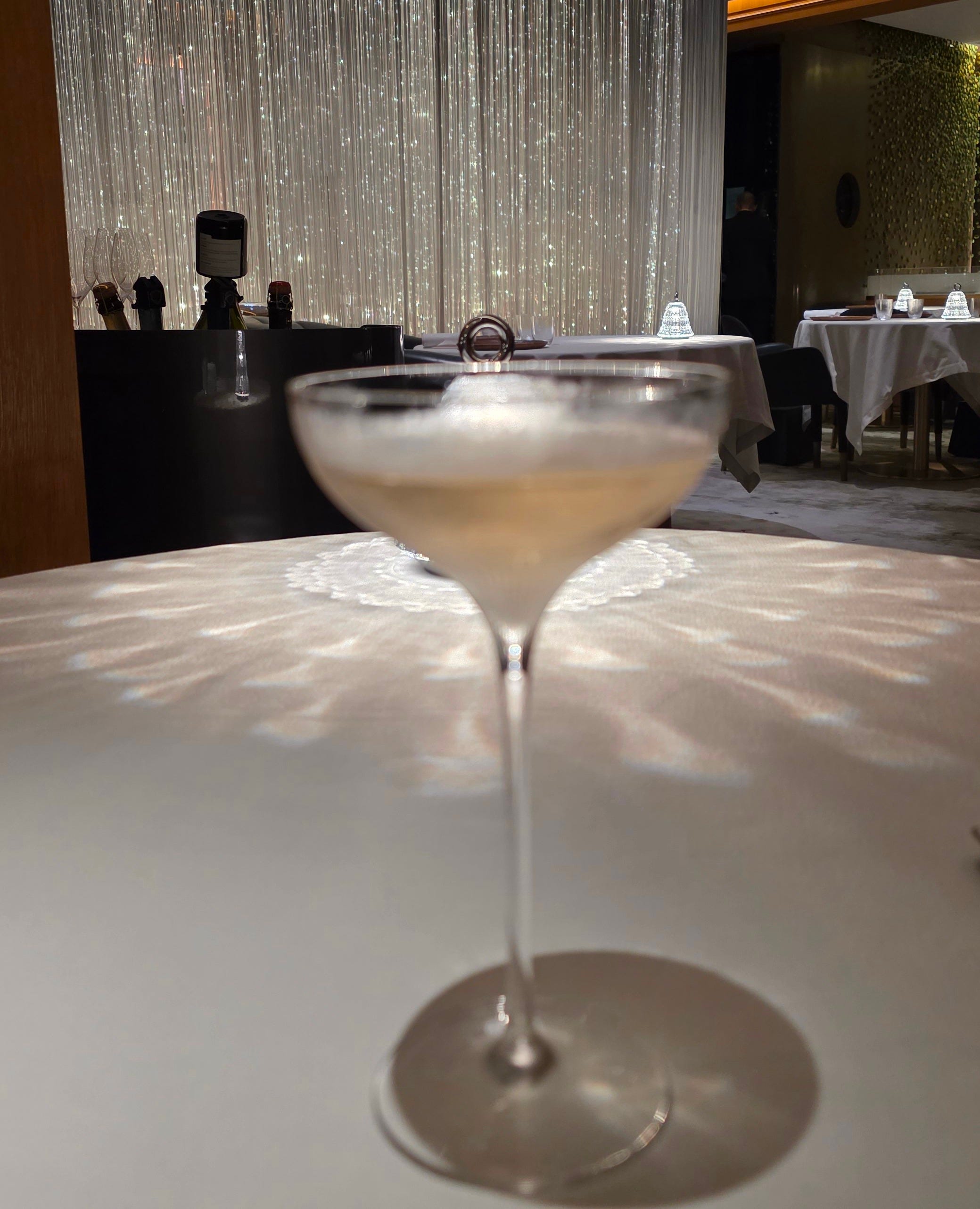
A classic Vesper from the bar next door arrived before the canapés, setting the tone nicely.
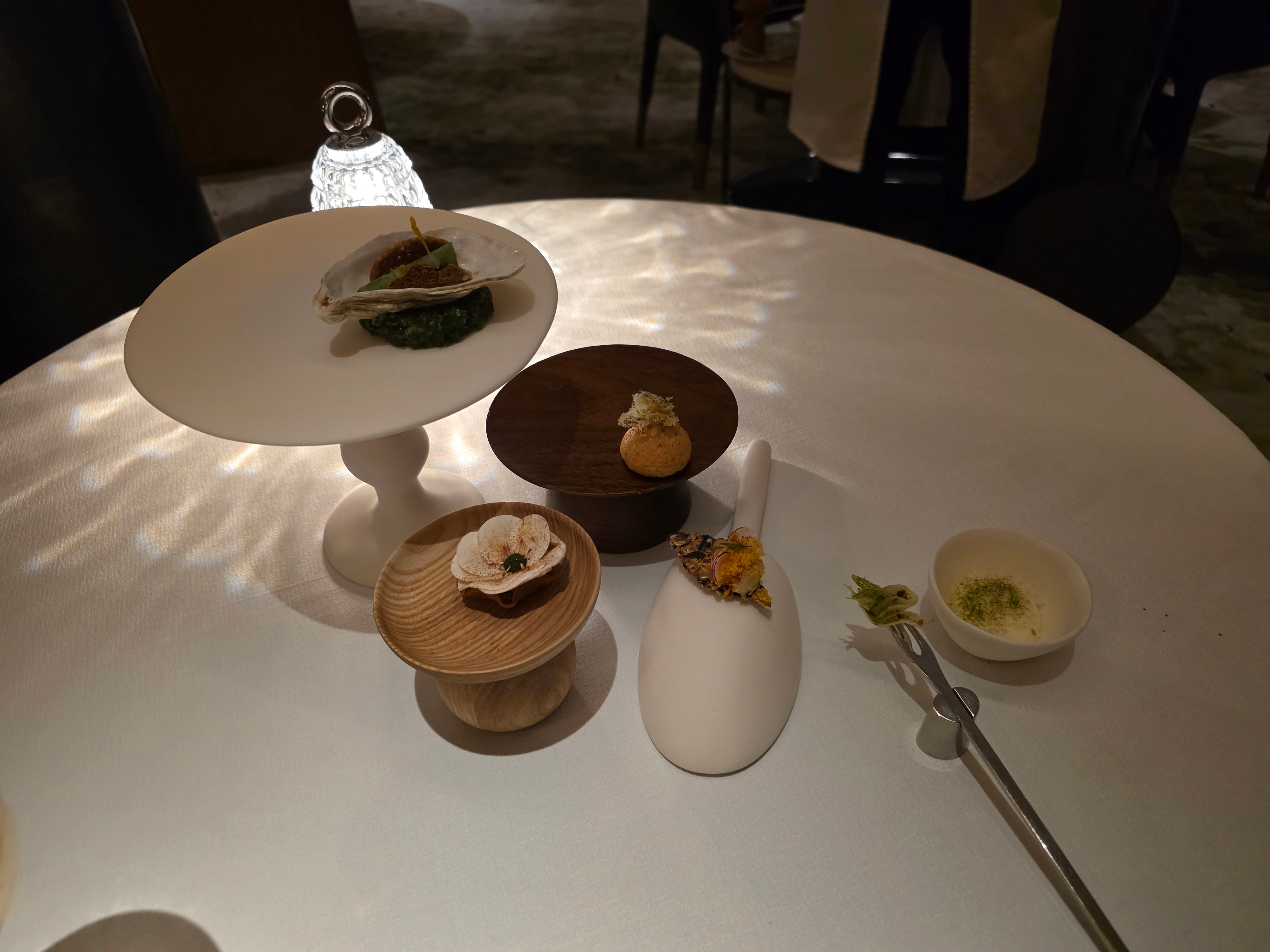
The canapés were then assembled at the table with quiet precision.
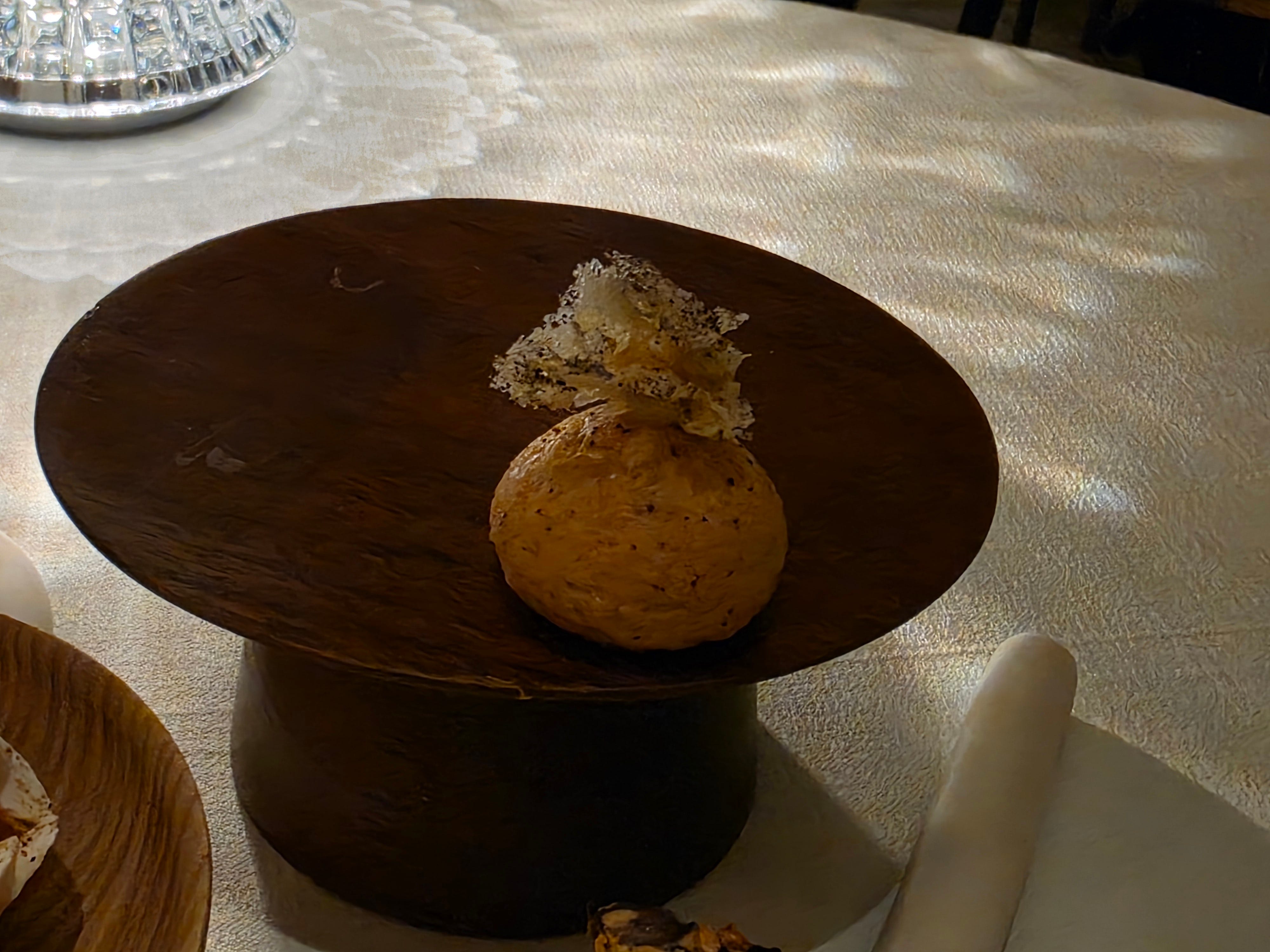
A warm Comté cheese beignet arrived first: crisp shell, molten centre, with funky, nutty depth.
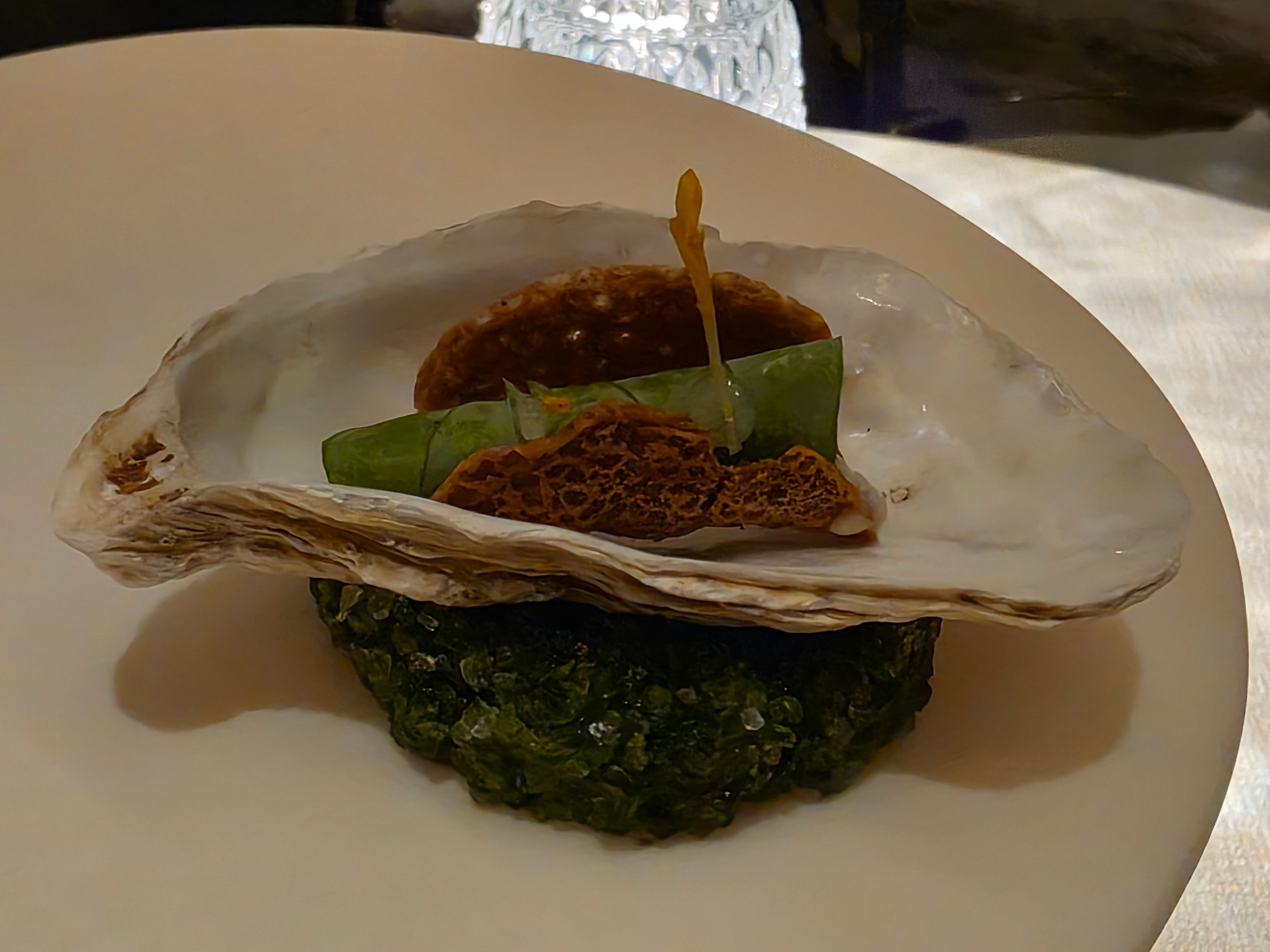
A poached oyster wrapped in a leaf came alongside a buckwheat cracker.
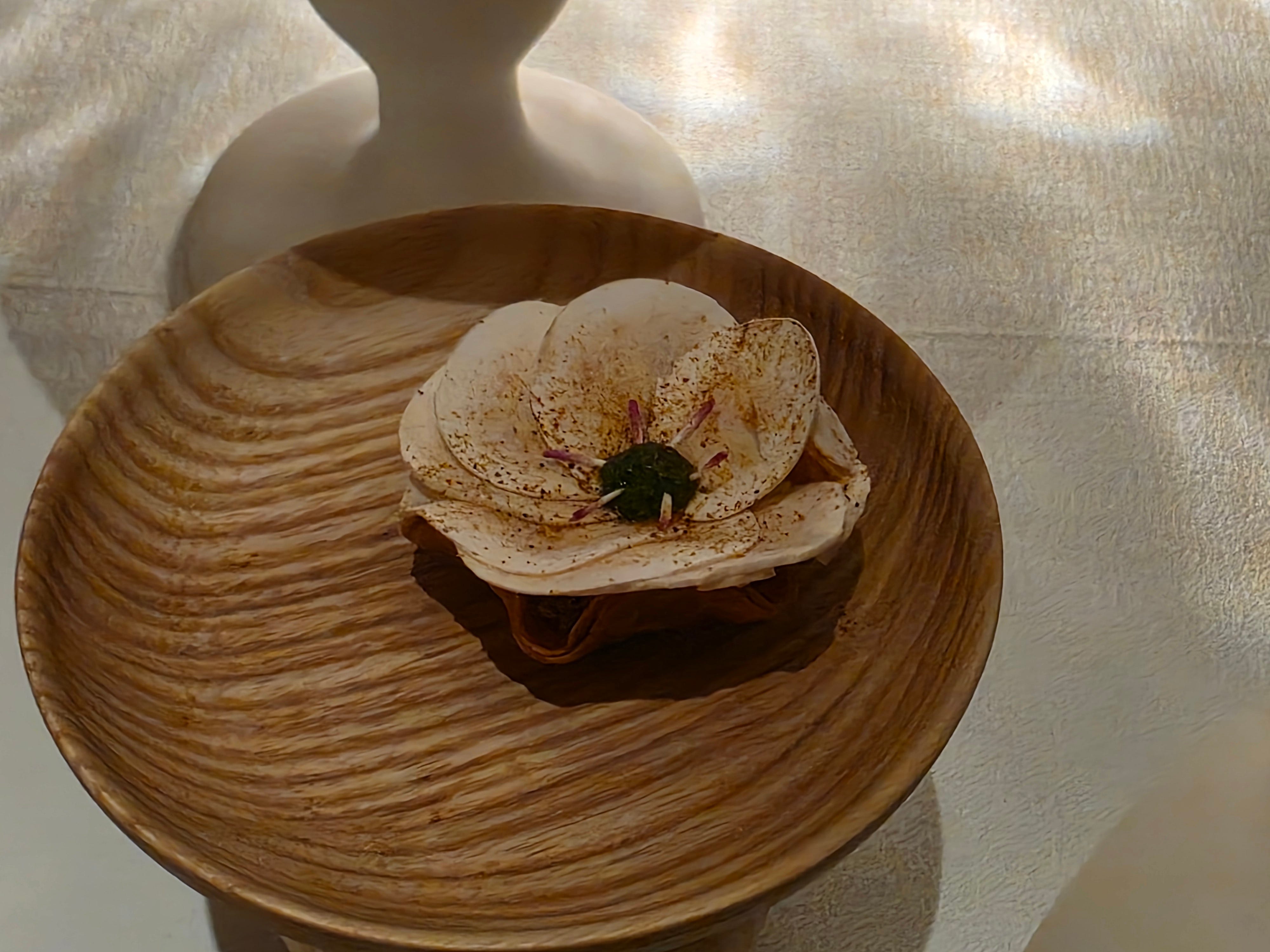
The mushroom filo tart that followed was layered with paper-thin slices of raw mushroom and dusted with mushroom powder.
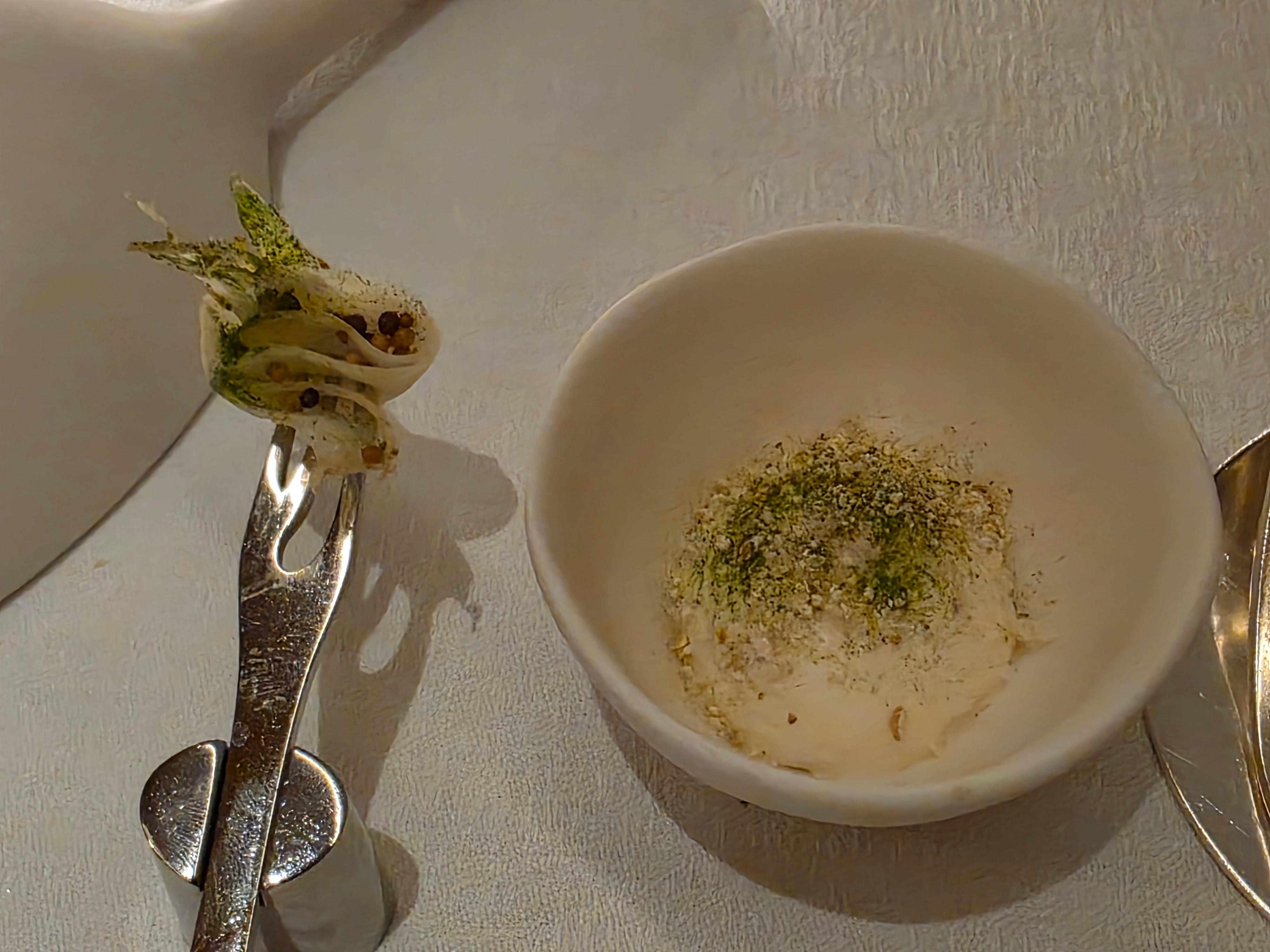
Baby celeriac with mustard and celery seed rounded things out, cradled in a horseradish-celery foam for a sharp hit of pungency.
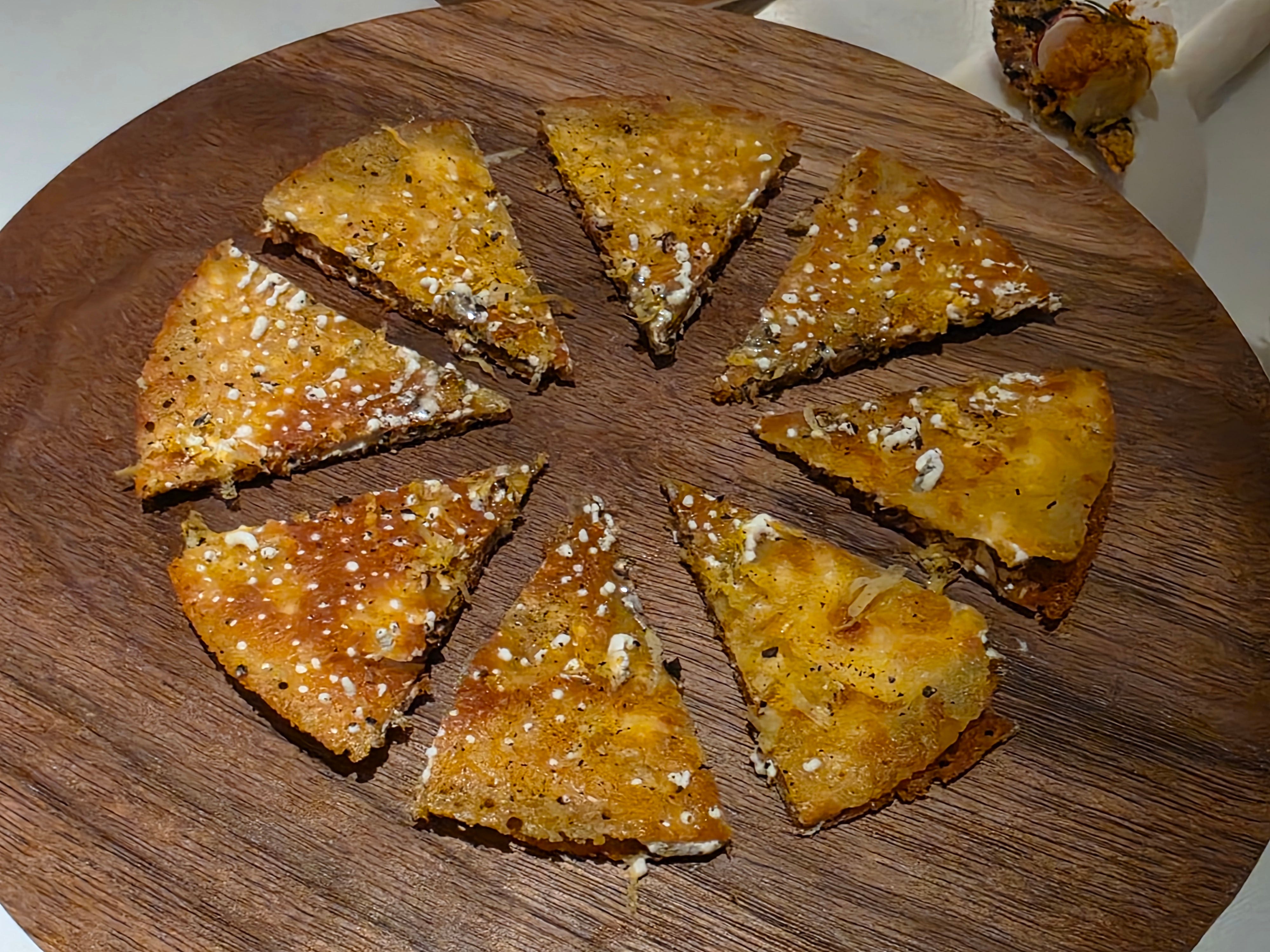
While I worked through the canapés, a server was assembling the final one tableside: two thin socca chickpea crisps (a nod, perhaps, to Blondet's native Nice, where socca is the quintessential street food) sandwiching a layer of caviar and crème fraîche, topped with Malaysian black pepper and Amalfi lemon zest. Crisp, light, zesty, creamy. I wished I had a few more of these.
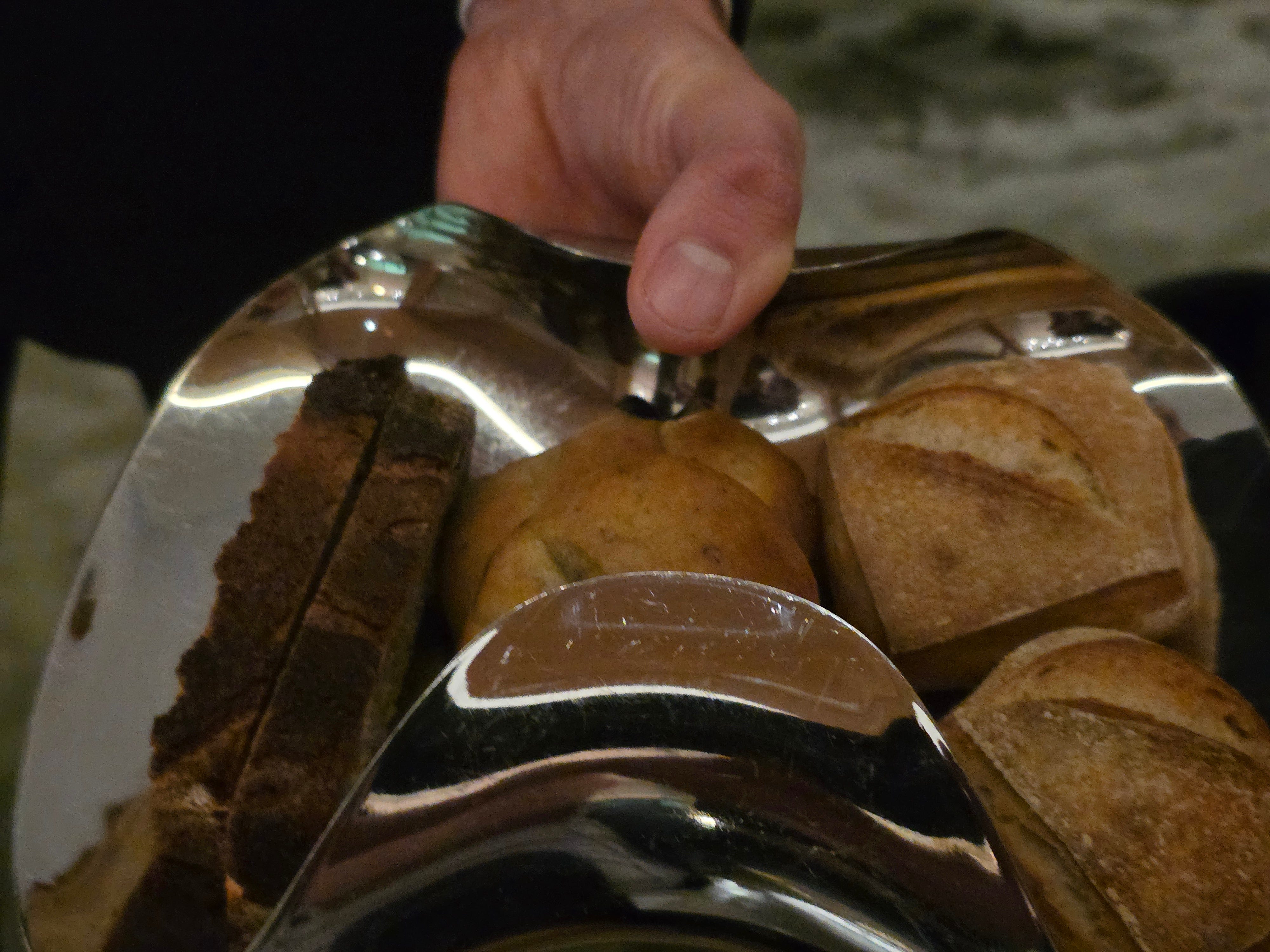
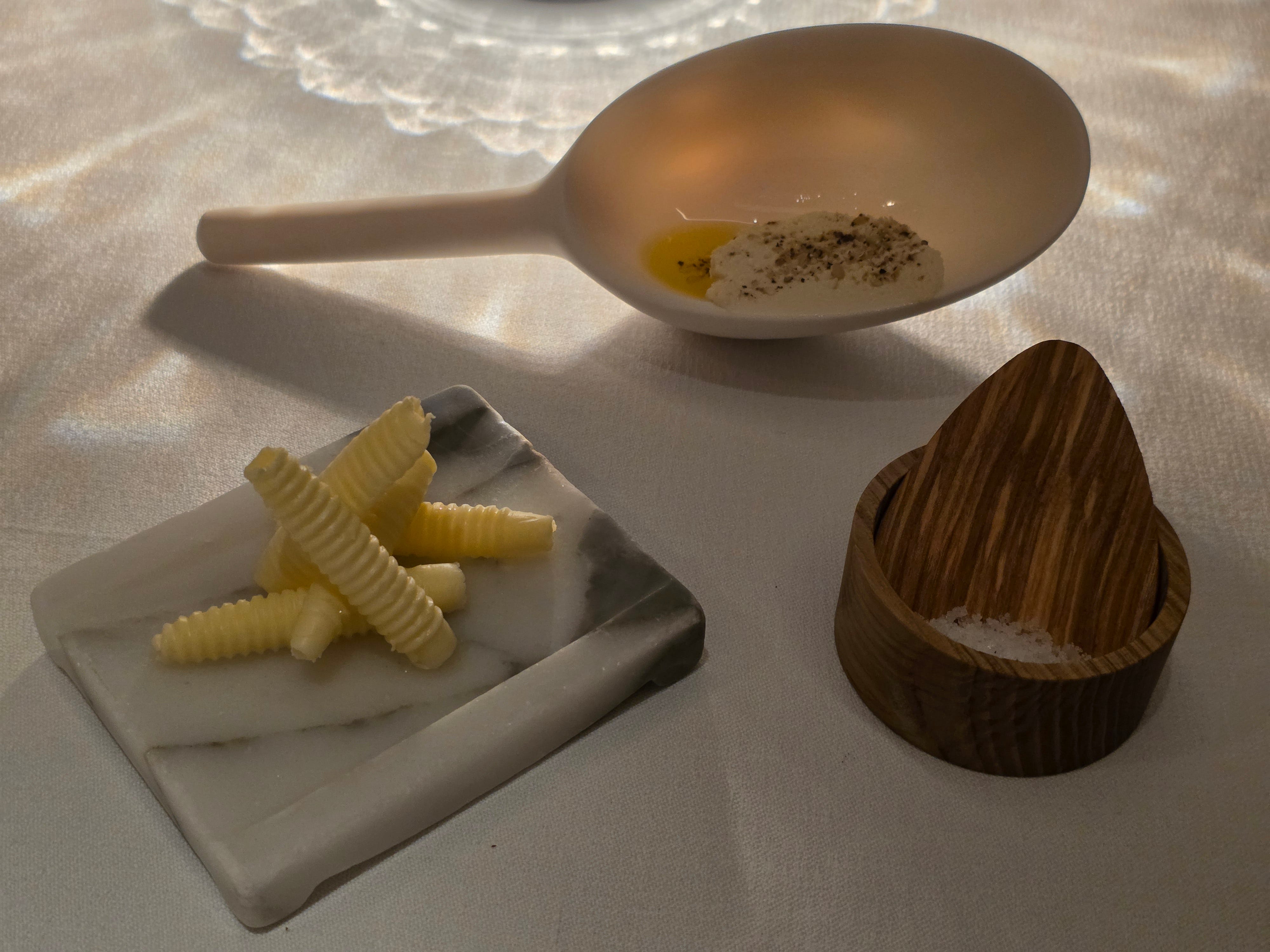
The bread course offered rye, focaccia, and white loaf, plus a signature pork lardon milk bread. I went with the signature, naturally. It came with curls of French butter and, taking a cue from Amber, a foamed soy milk with salt, olive oil, pepper, and buckwheat as a dairy-free alternative. The soy foam didn't do much for me; I stuck with the butter.
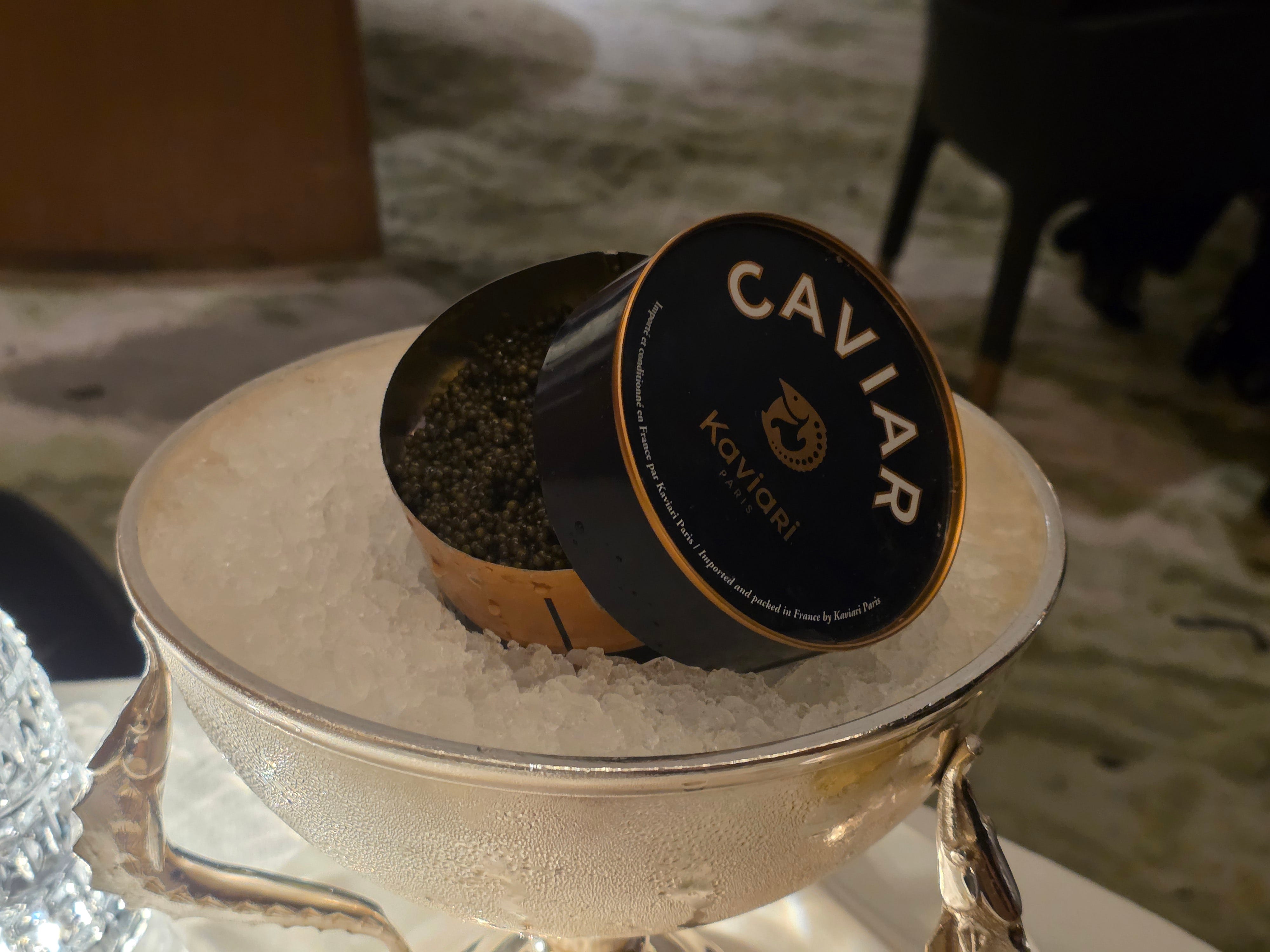
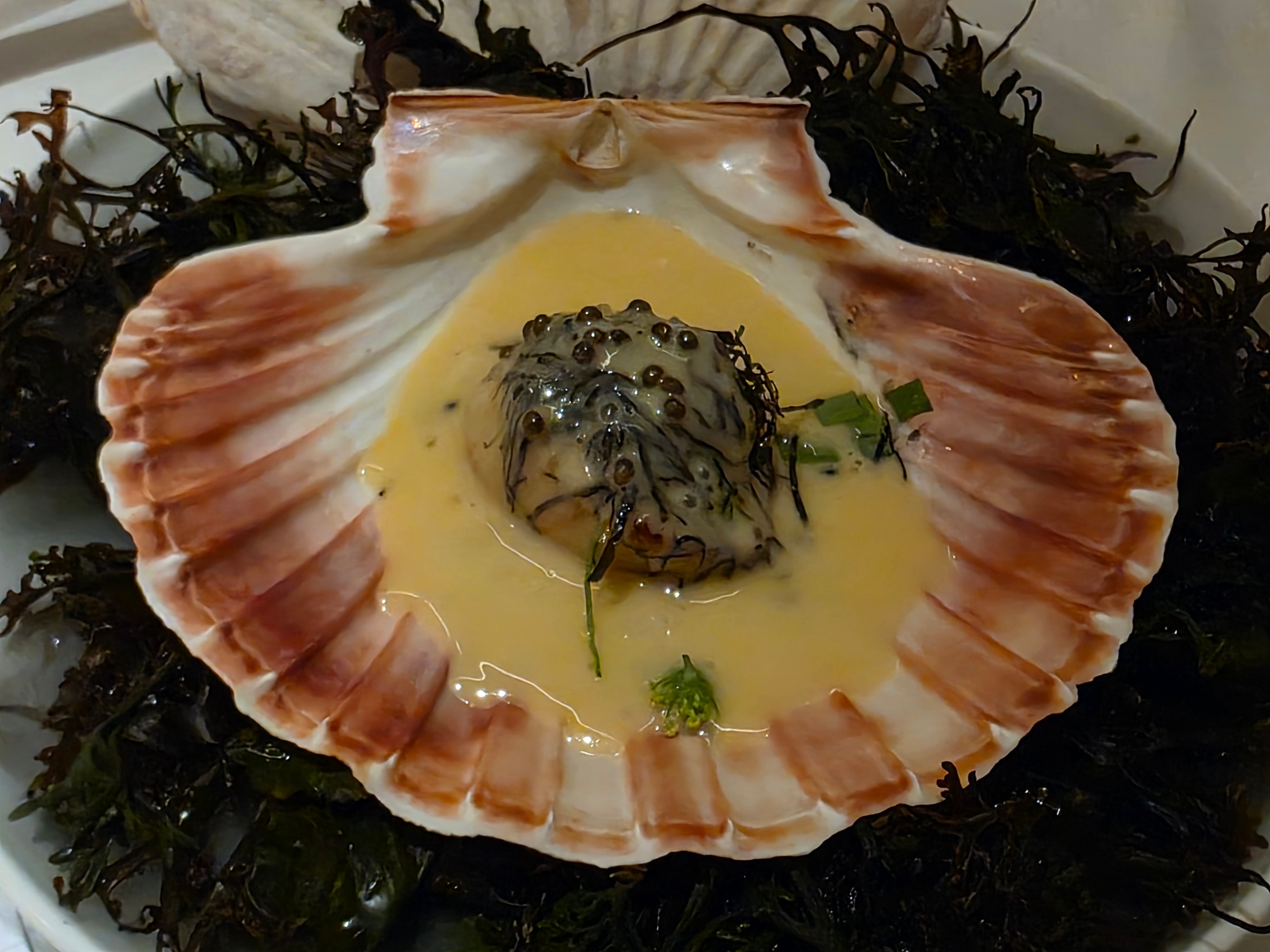
A hand-dived Orkney scallop arrived next, roasted and butter-basted, set in a beurre blanc and crowned with French caviar and fennel fronds. The dish was presented over dry ice, wisps of smoke curling around the plate, and is apparently one of the restaurant's longstanding signatures.
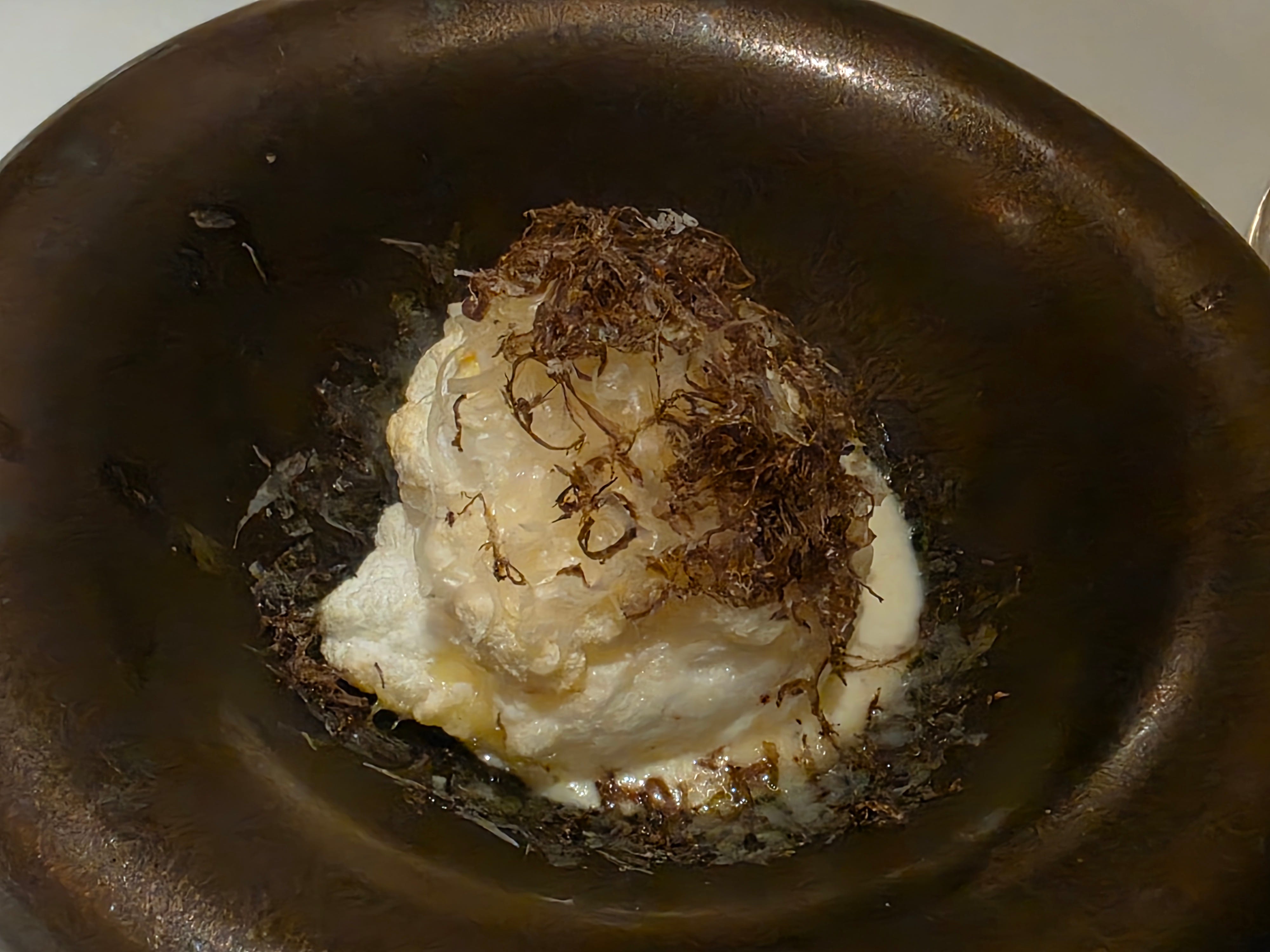
The following course came in two parts, both exploring cauliflower from every angle. First, a cauliflower soufflé, airy and golden, topped with a cauliflower velouté and shaved truffle.
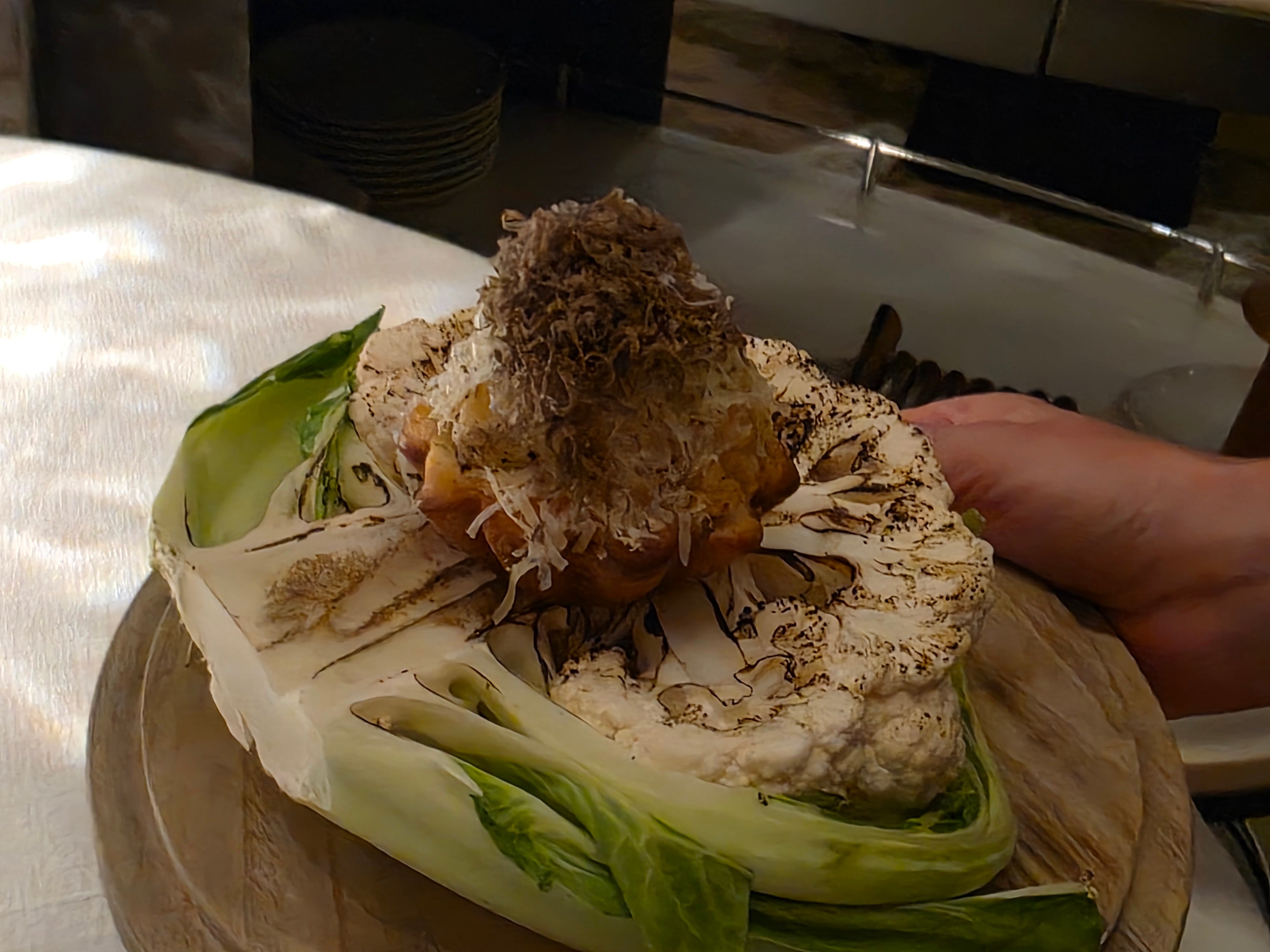
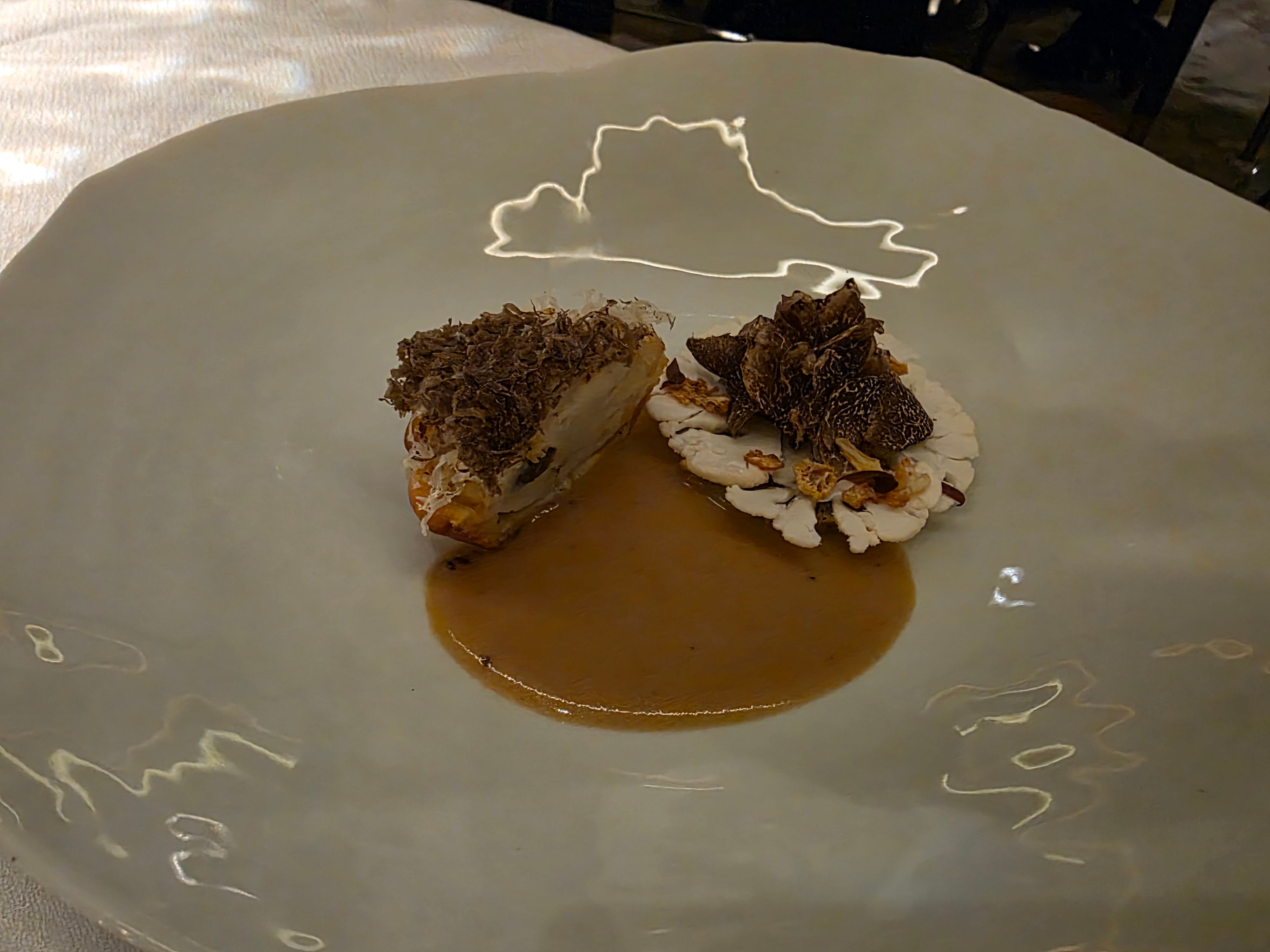
Then, cauliflower slow-cooked in milk, presented in a tart with a caramelised cauliflower sauce, flanked by raw slices of cauliflower and truffle in a cauliflower purée. Light and earthy in the first expression; richer, more layered in the second.
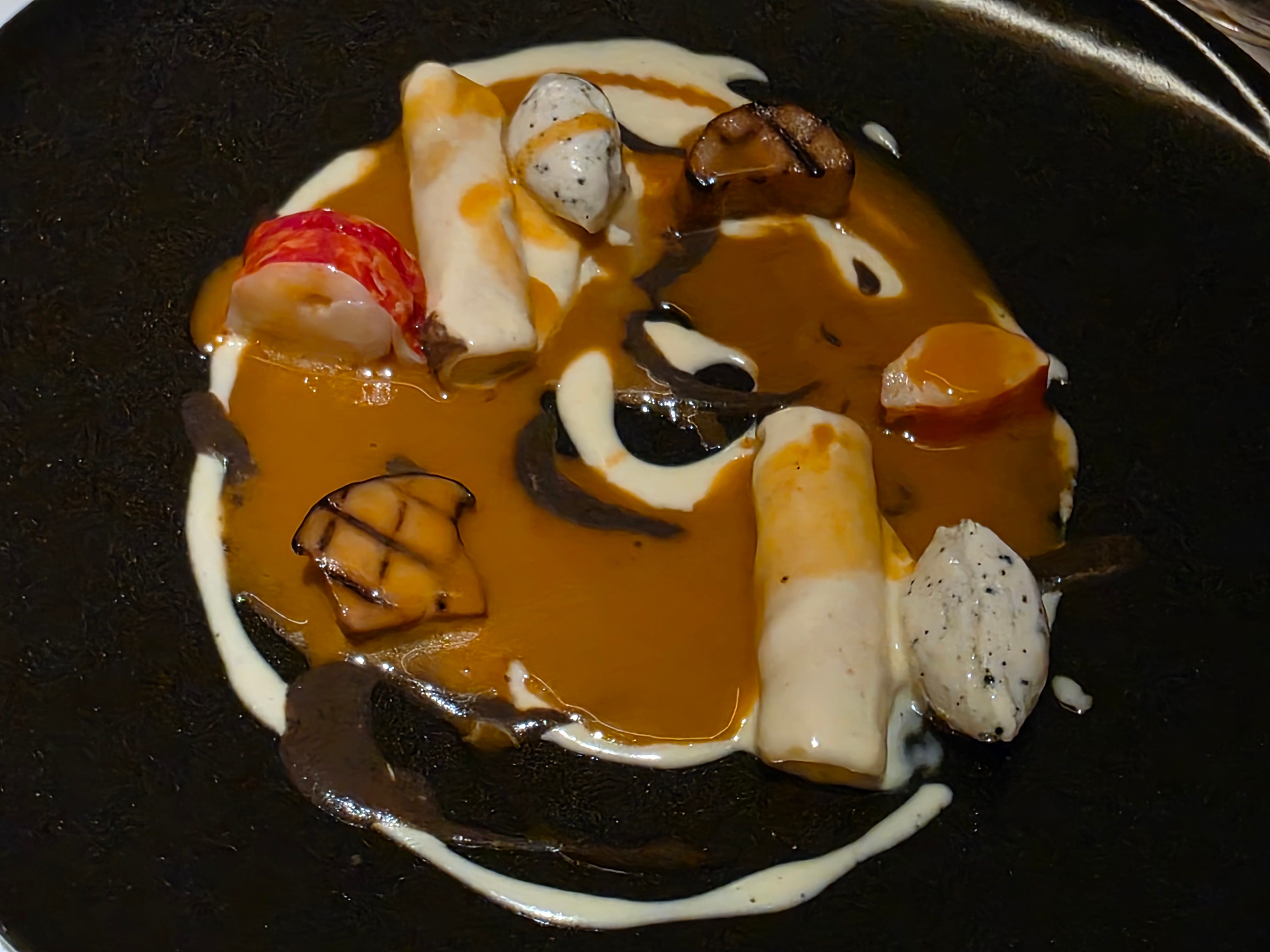
Next, a signature that has been on the menu since the restaurant opened in 2007: lobster medallions with grilled mushrooms, chicken quenelle mousse with Périgord truffle, all bound together in a lobster bisque sauce over homemade semolina pasta.
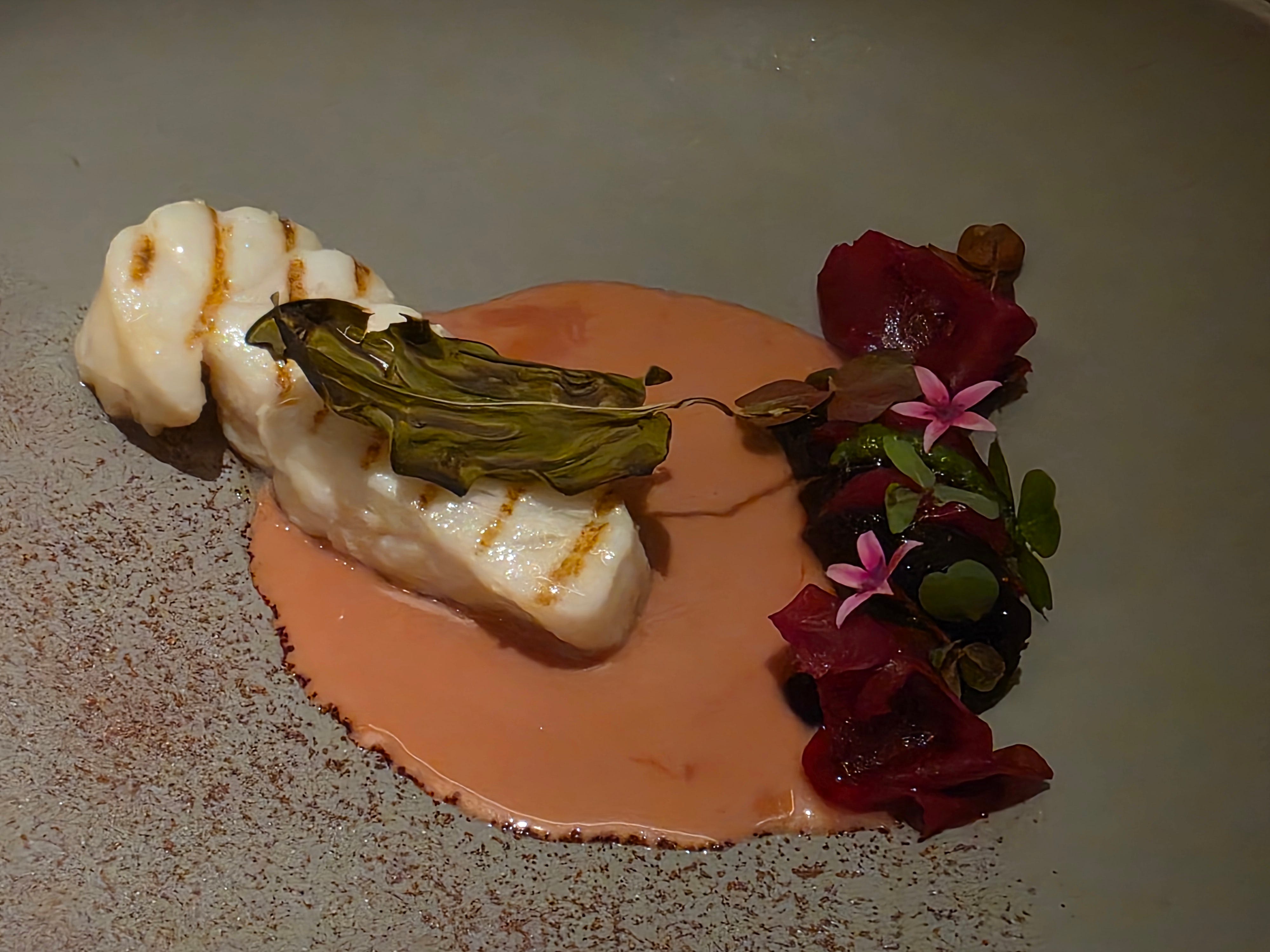
Grilled Cornish turbot followed, served alongside beetroot and sorrel with a touch of Dorset wasabi. Sweet, pungent, and satisfyingly meaty.
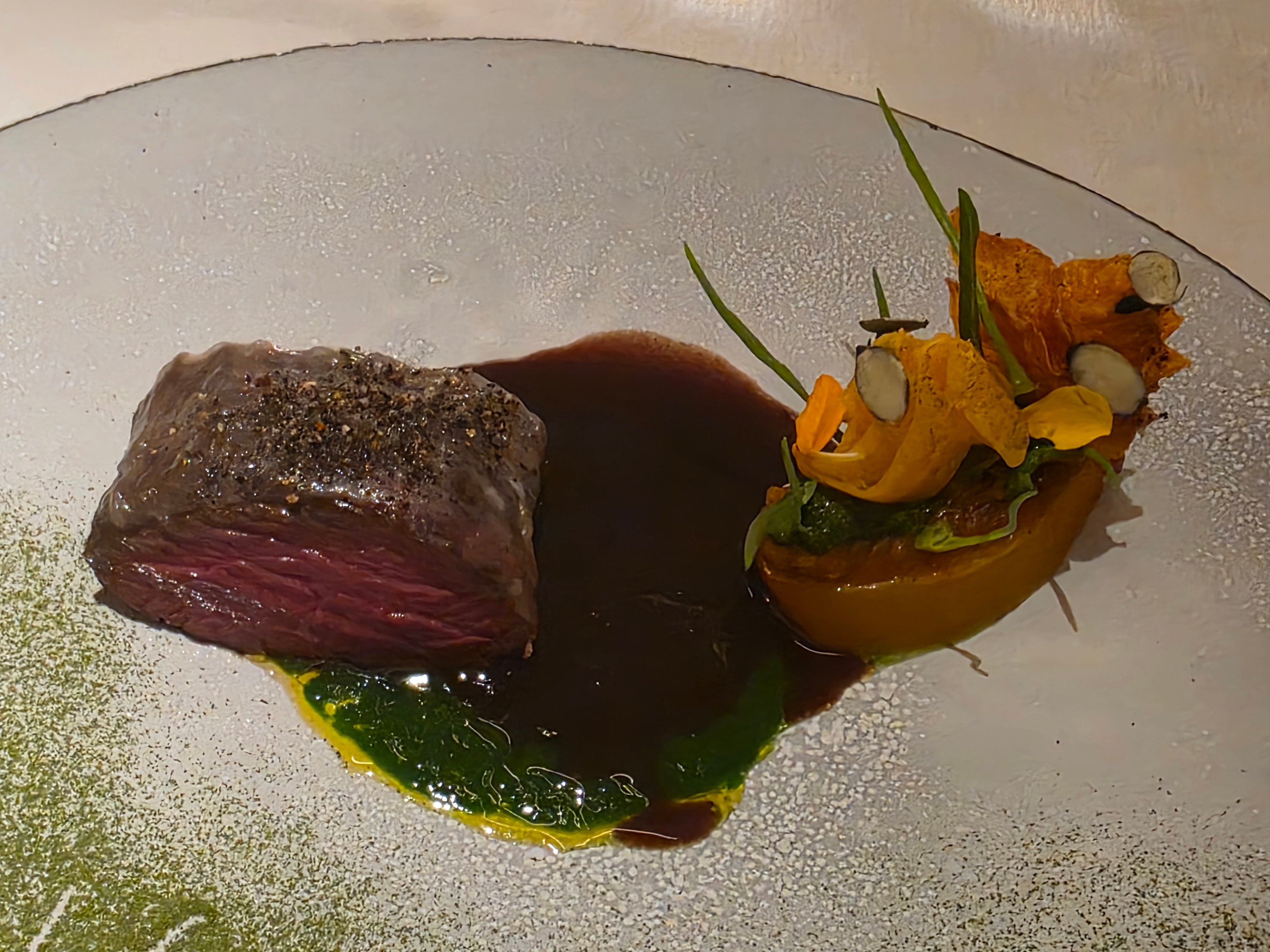
Venison saddle appeared in two preparations. The first: the loin, paired with butternut squash, juniper powder, and a herbal sauce enriched with a dark jus.
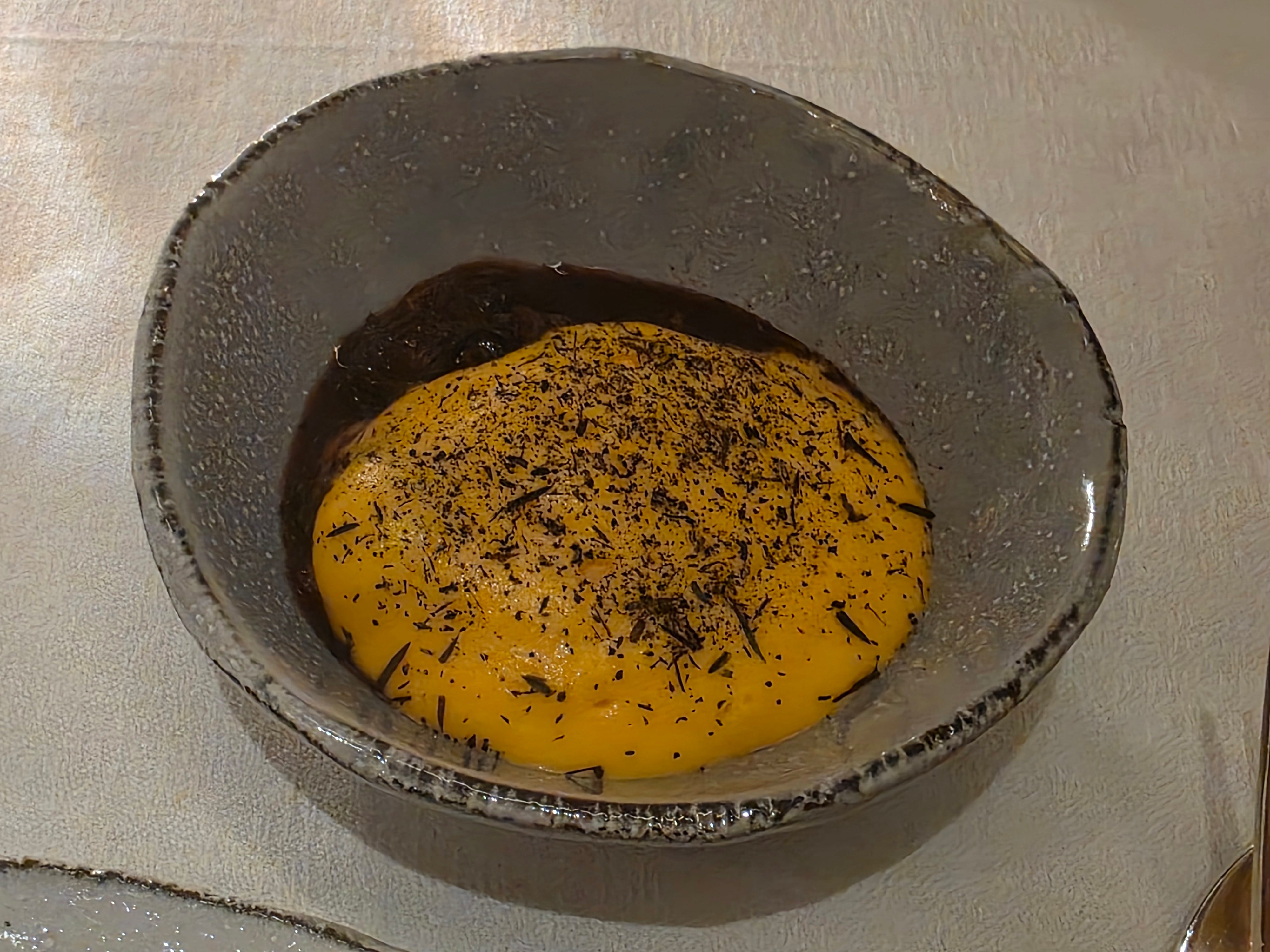
The second: a slow-braised venison stew, topped with butternut squash foam. Rich, meaty and deceptively filling.
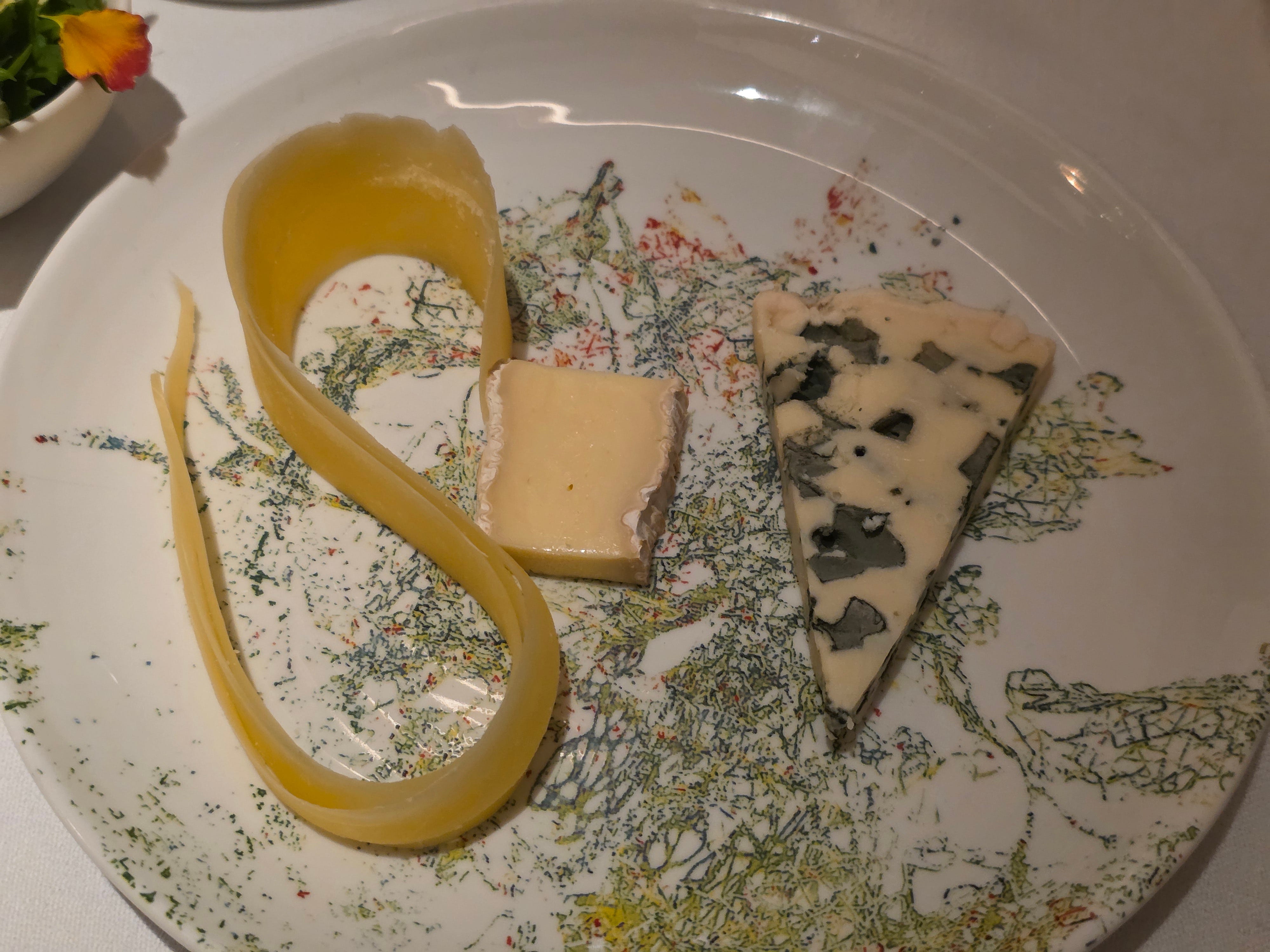
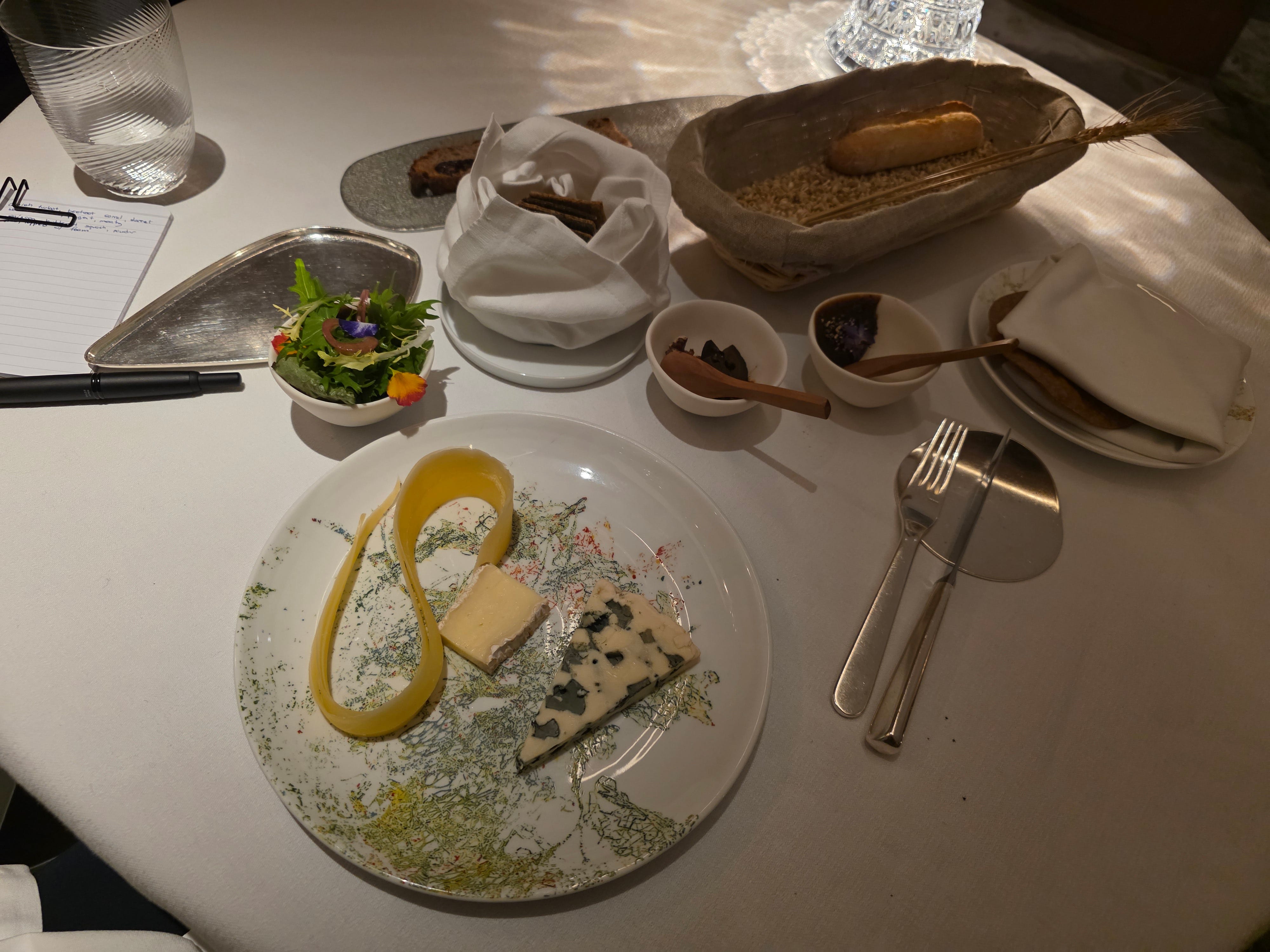
The cheese course arrived with a generous spread of accompaniments. Jet lag was hitting hard by this point, but three selections kept me awake: a forty-month-aged Comté, a bold Roquefort, and a Bergamino di Capra. I usually skip the cheese course, so I am glad I was not given the option.
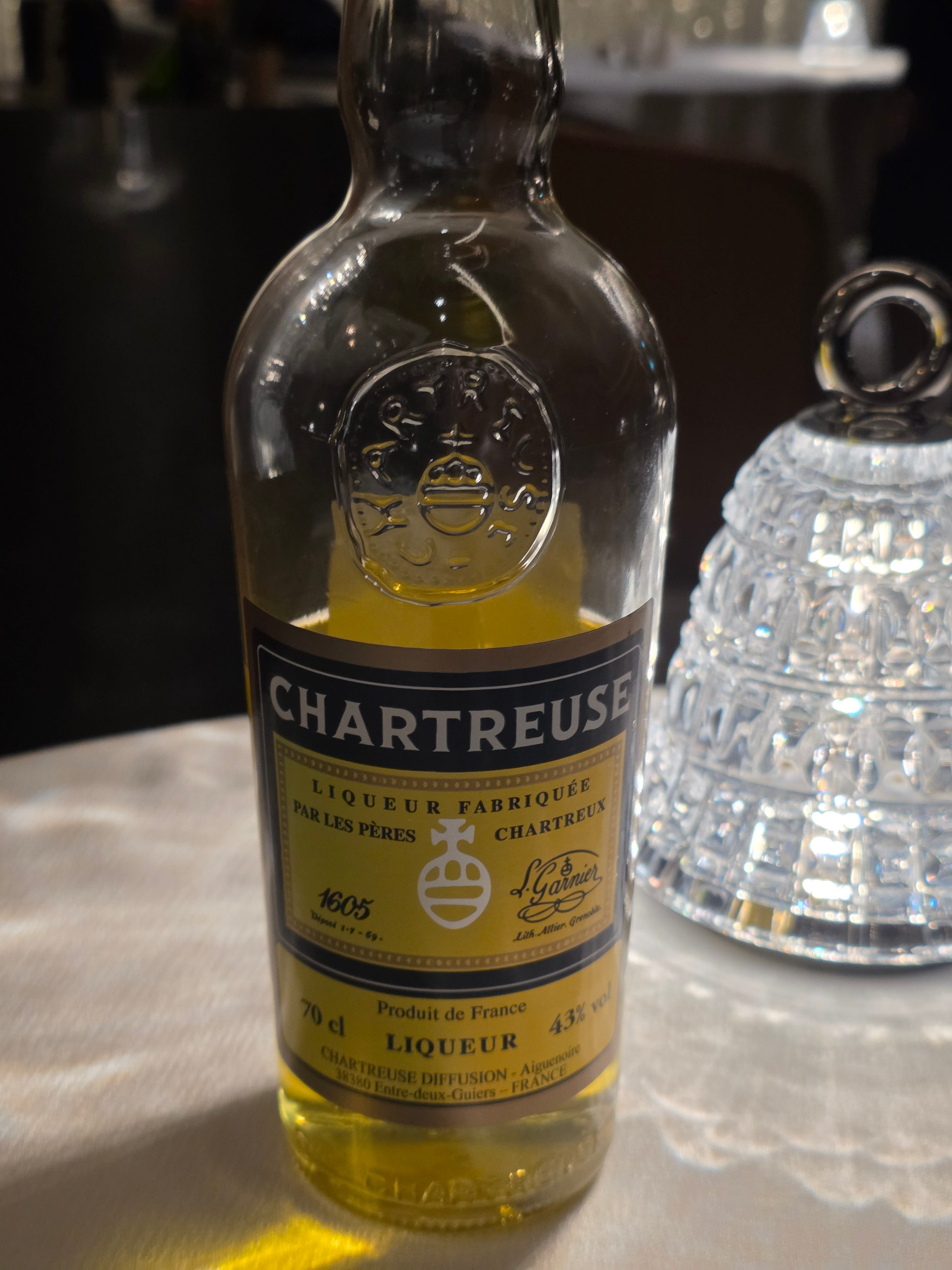
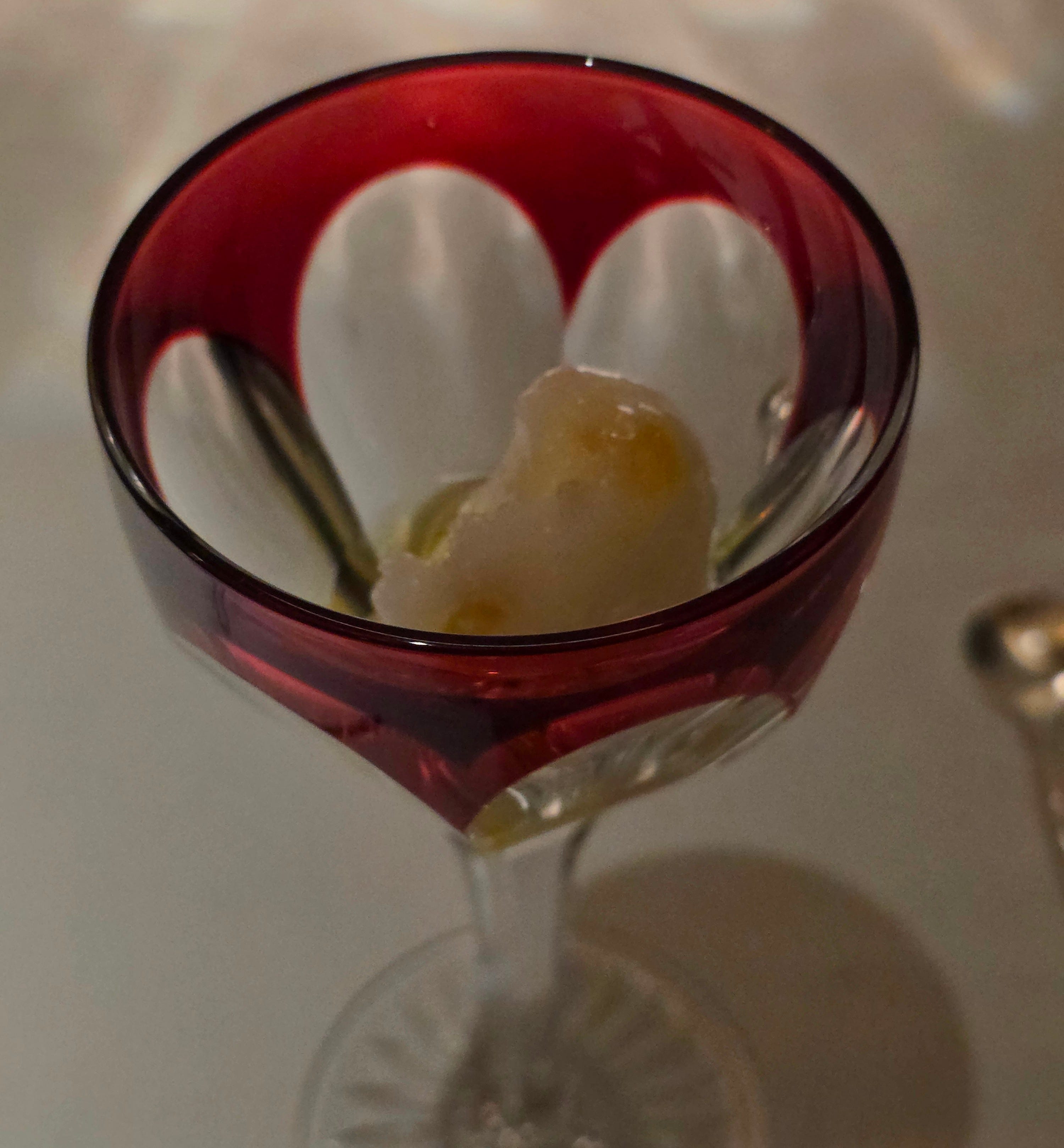
A palate cleanser followed, one I have seen versions of at other restaurants but which still works every time: lemon sorbet with a bracing pour of Chartreuse, the herbal French liqueur adding a bit of bitter complexity to the dish.
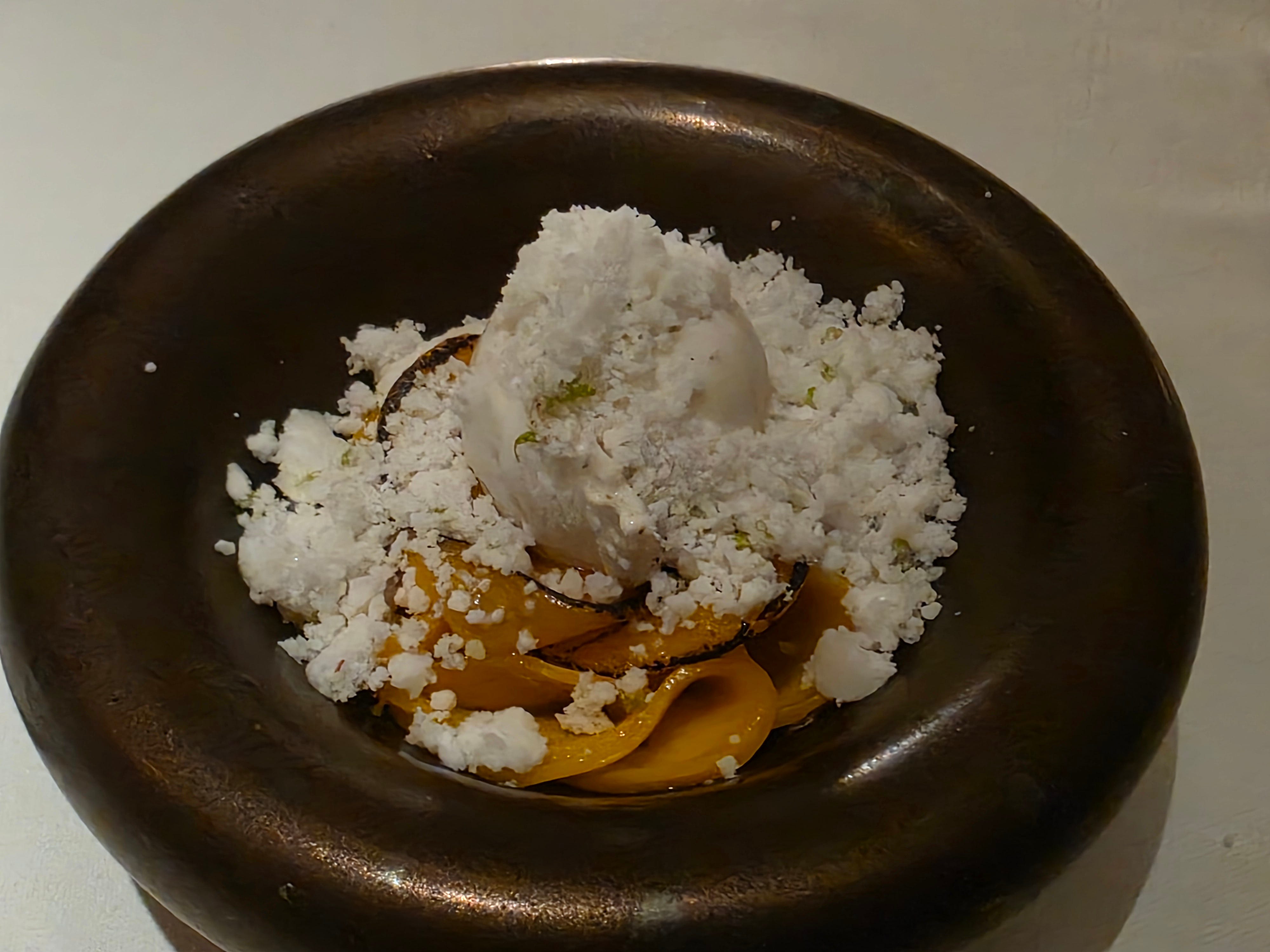
Dessert felt more Bangkok than Bordeaux: thin slices of caramelised mango with passionfruit, coconut sorbet, and a granita, finished with a grating of lime zest. Not particularly French, but no less welcome for it.
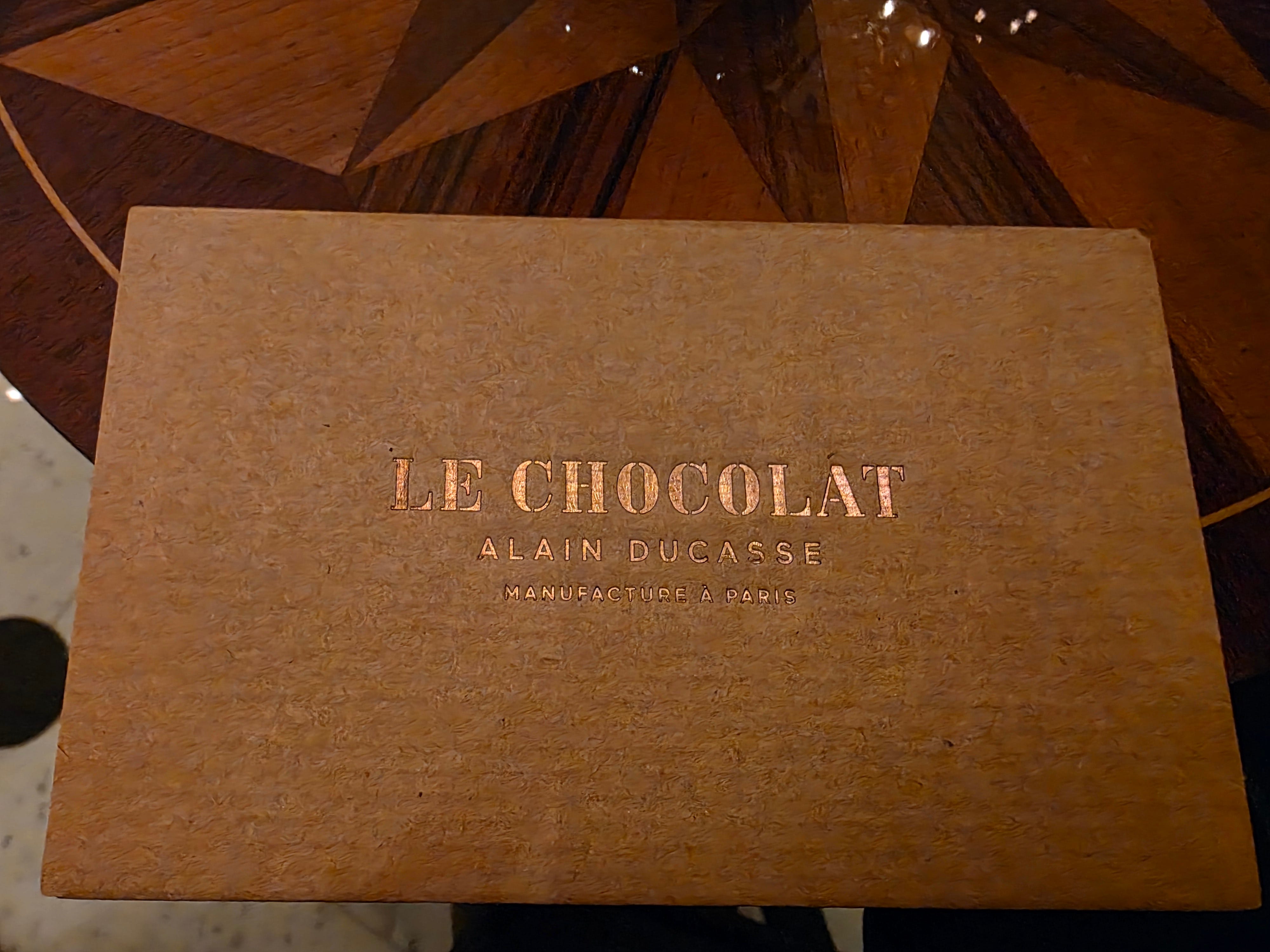
In place of petit fours, a bar of chocolate to send me on my way.
I do not remember my last visit to Alain Ducasse very well. I recall it was around Christmas, mostly because I remember the Christmas crackers. This visit, though, will stay with me. The socca, caviar, and crème fraîche canapé was a standout; the multiple preparations of cauliflower were inventive; and the signature scallop dish lived up to its reputation. Worth a third return.
Total damage: 355 GBP/1 person