
There's a certain irony to stumbling upon one of London's best restaurants in one of its most tourist-trampled corners. The stretch of Regent Street surrounding Hotel Café Royal draws selfie sticks and shopping bags by the thousands, and for years that was enough to keep me away. I'd known about the space for some time, but proximity to the tourist circuit made it easy to overlook. Eventually, curiosity won out, and I'm glad it did.
The hotel itself carries a remarkable history. It was conceived in 1865 by Daniel Nicols, a French wine merchant who had fled bankruptcy in France and arrived in Britain with his wife Célestine and just five pounds to his name. Under their stewardship, it grew into one of the city's great institutions - home to what was once considered the finest wine cellar in the world, and a magnet for the era's most luminous minds. Oscar Wilde held court here. Winston Churchill dined here. David Bowie retired his Ziggy Stardust persona here in 1973. The building was converted into a full luxury hotel between 2008 and 2012 and now forms part of The Set collection, its heritage intact beneath a sleek modern surface.
The restaurant bearing Alex Dilling's name opened within it in 2022 - his first standalone venture after a career that took him from Alain Ducasse's kitchen in New York (where he helped earn two Michelin stars at Adour) to Caviar Russe (where he secured its first star) and eventually back to London, where he maintained two stars at Hélène Darroze's restaurants for eight years and again at The Greenhouse in Mayfair, until the pandemic forced its closure. The accolades followed him here quickly: two Michelin stars arrived in 2023, a year after opening.
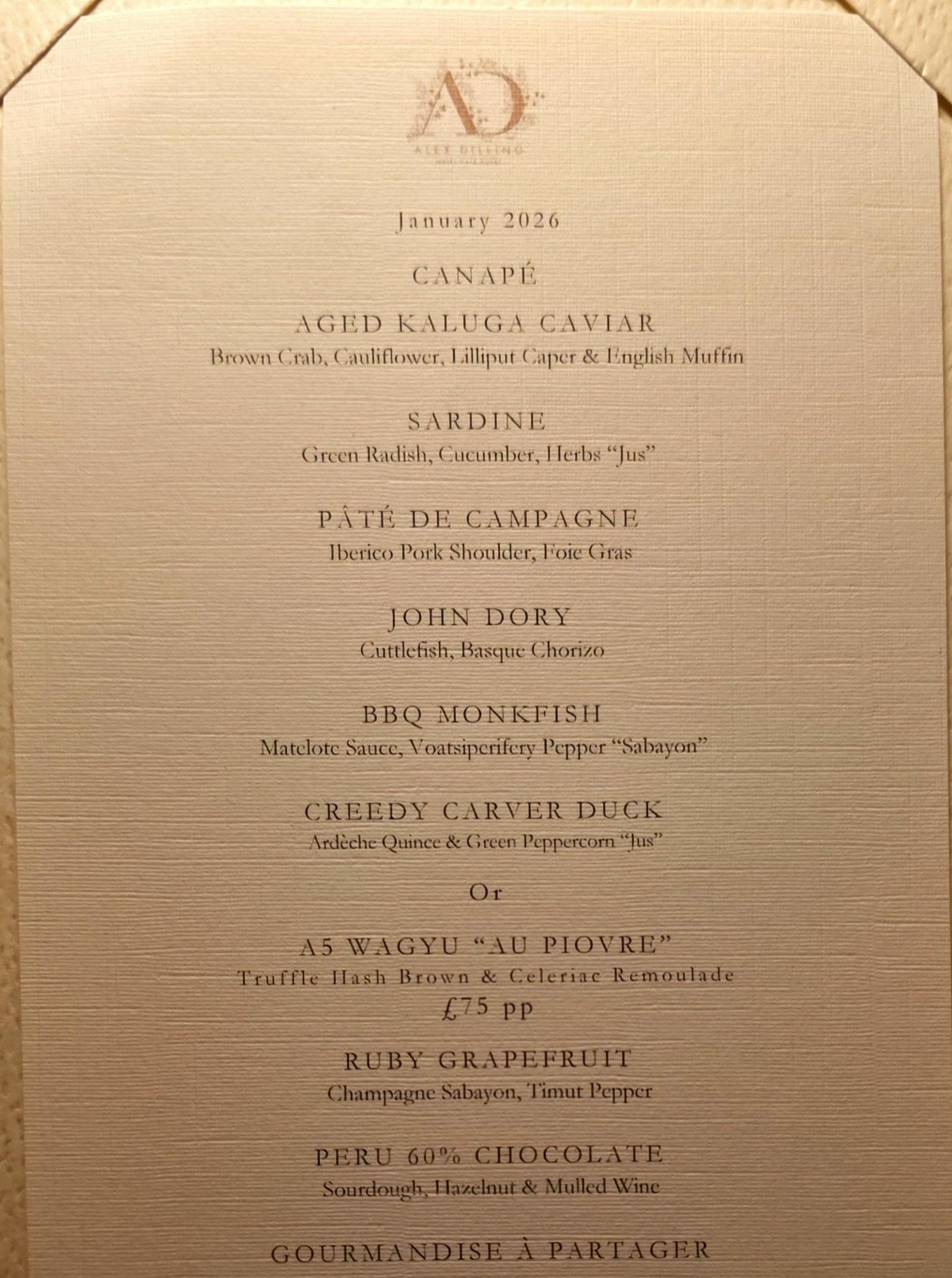
One thing that gives me pause at restaurants of this calibre is the supplement menu - it can feel like a shakedown at a price point where you'd expect everything significant to be included. Both of Alex Dilling's signature dishes came with an additional charge, which meant choosing just one felt almost arbitrary. I picked the Hunter Chicken on a whim, and that turned out to be the right call.
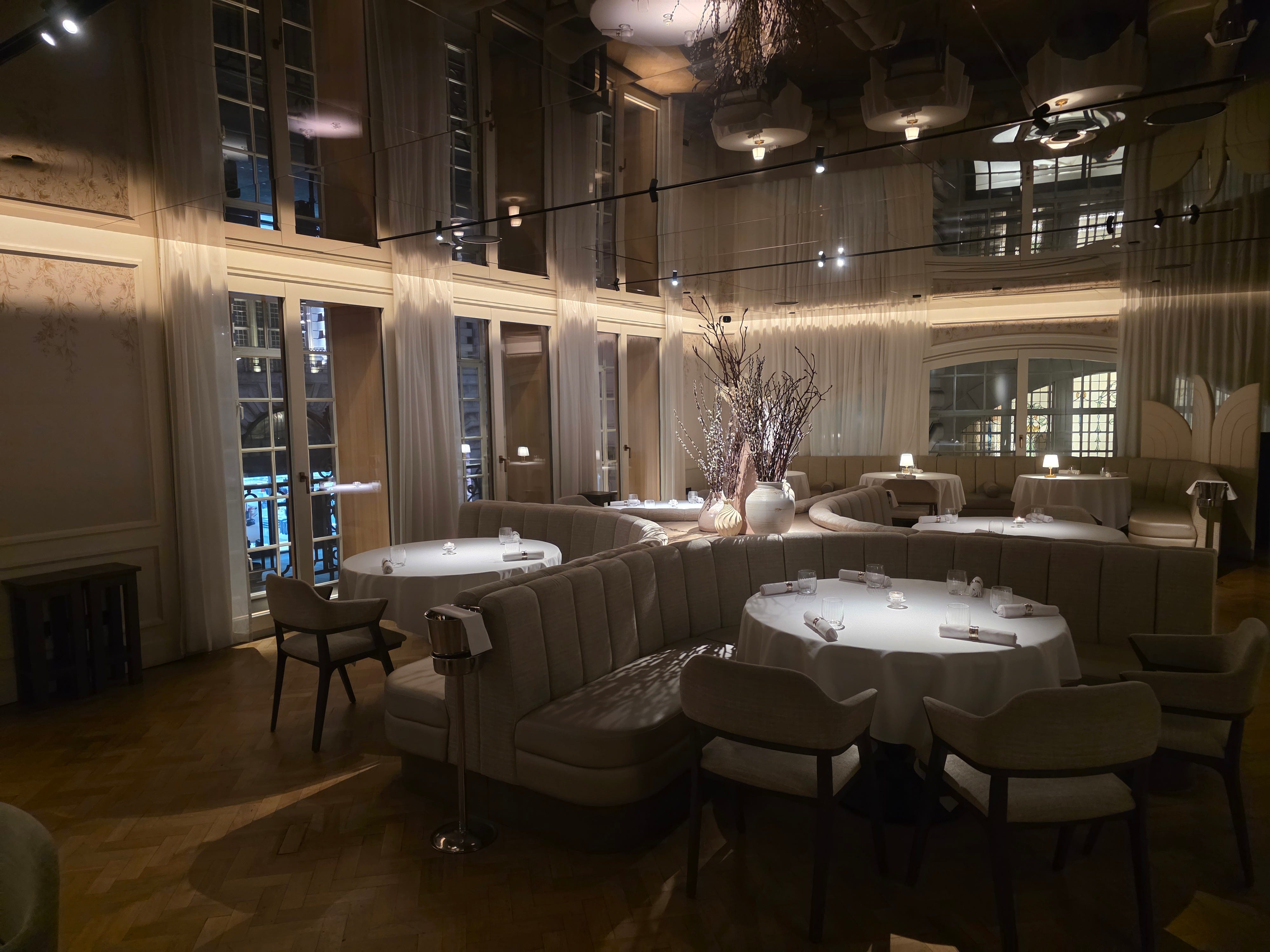
The dining room is intimate, just 34 seat, with a dark, jewel-box atmosphere and an oddly mirrored ceiling that catches the light in ways you don’t quite expect. It sits directly across Regent Street from Hawksmoor, another favourite of mine, which made the walk over feel pleasantly familiar.
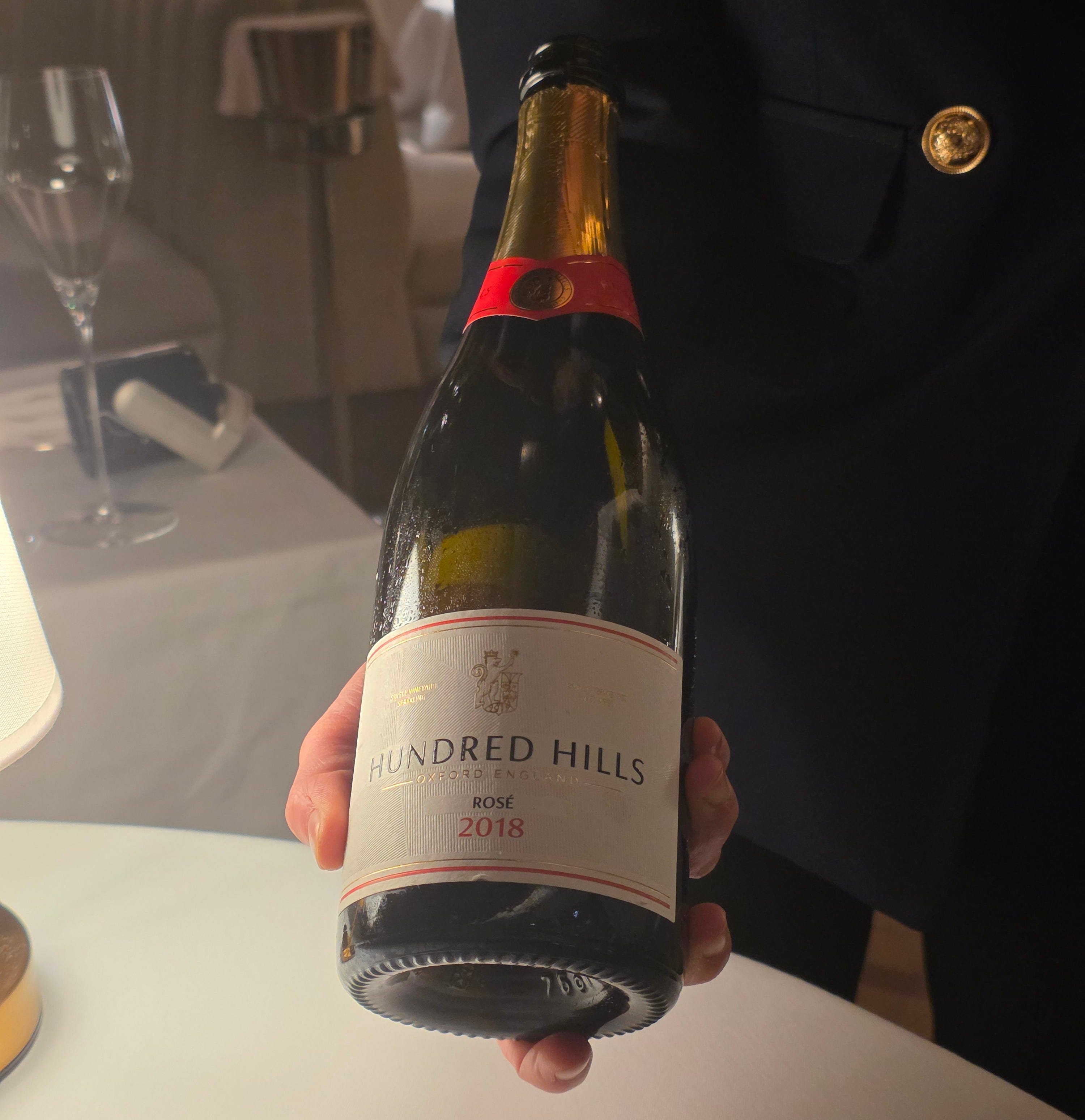
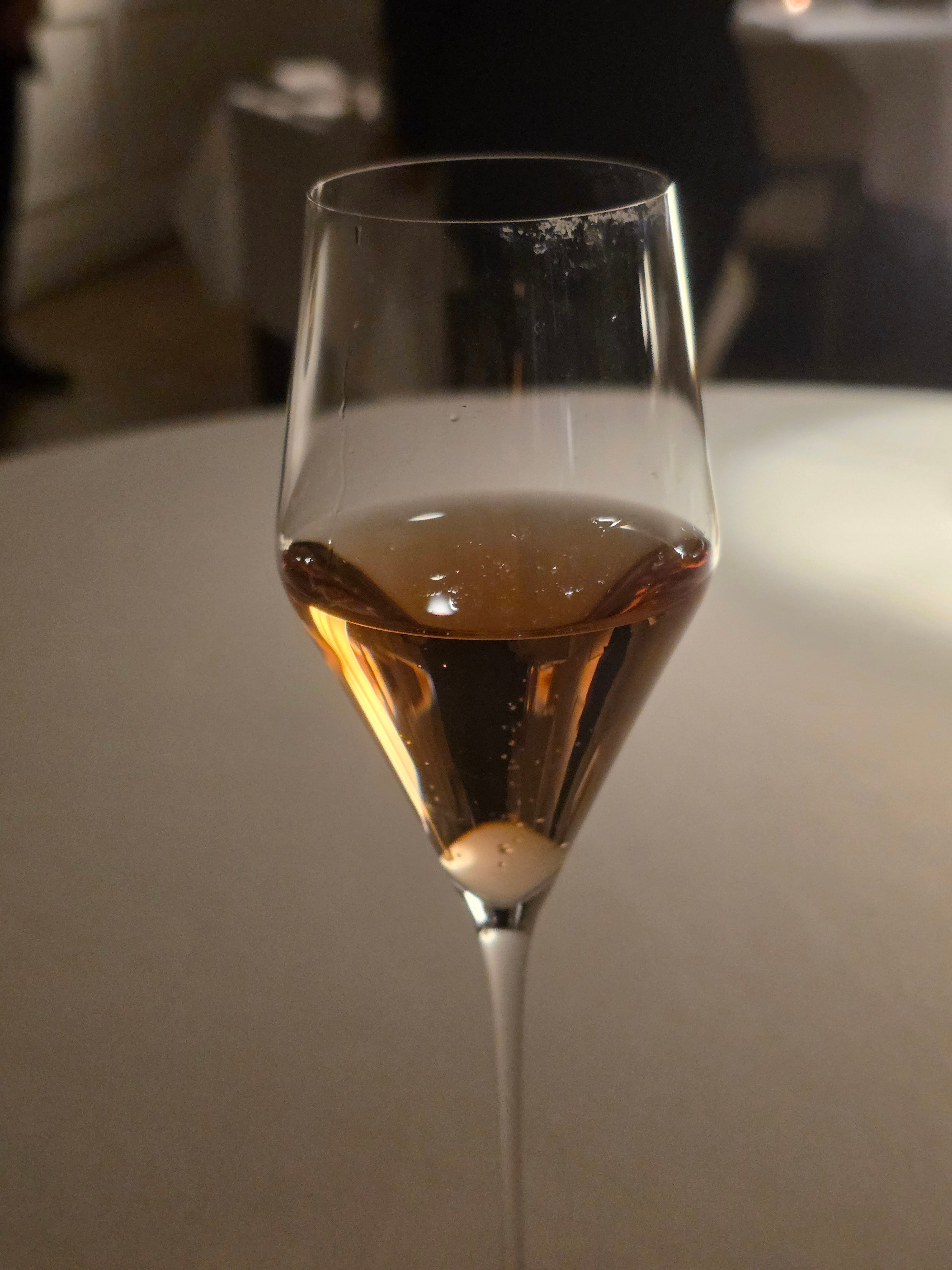
The evening opened with a glass of British sparkling rosé from an Oxfordshire winery - bright, fruit-forward, with a bracing streak of acidity. A fine way to settle in.
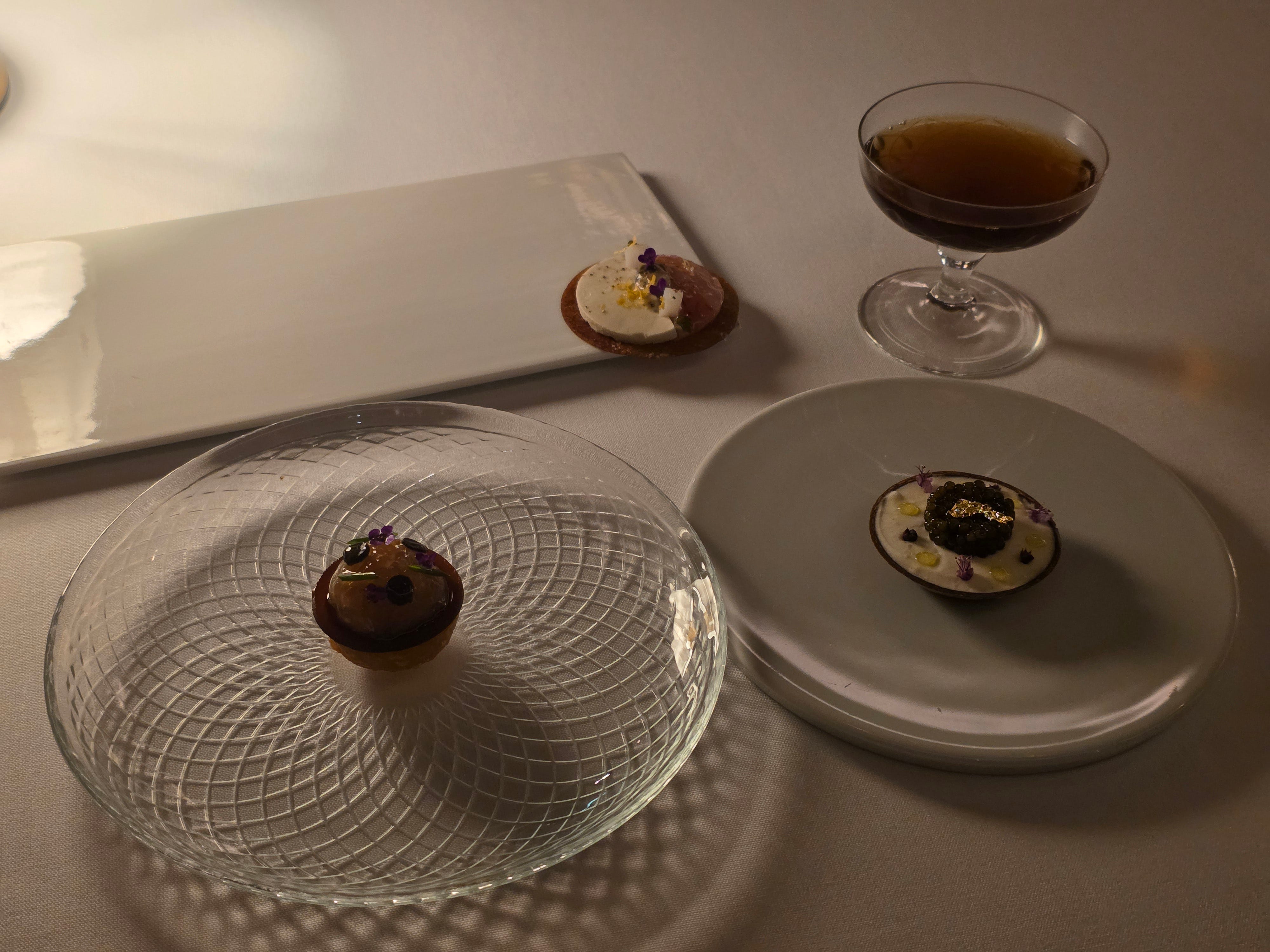
The canapés arrived shortly after, placed on the table with an almost architectural deliberateness that would set the tone for everything to come.
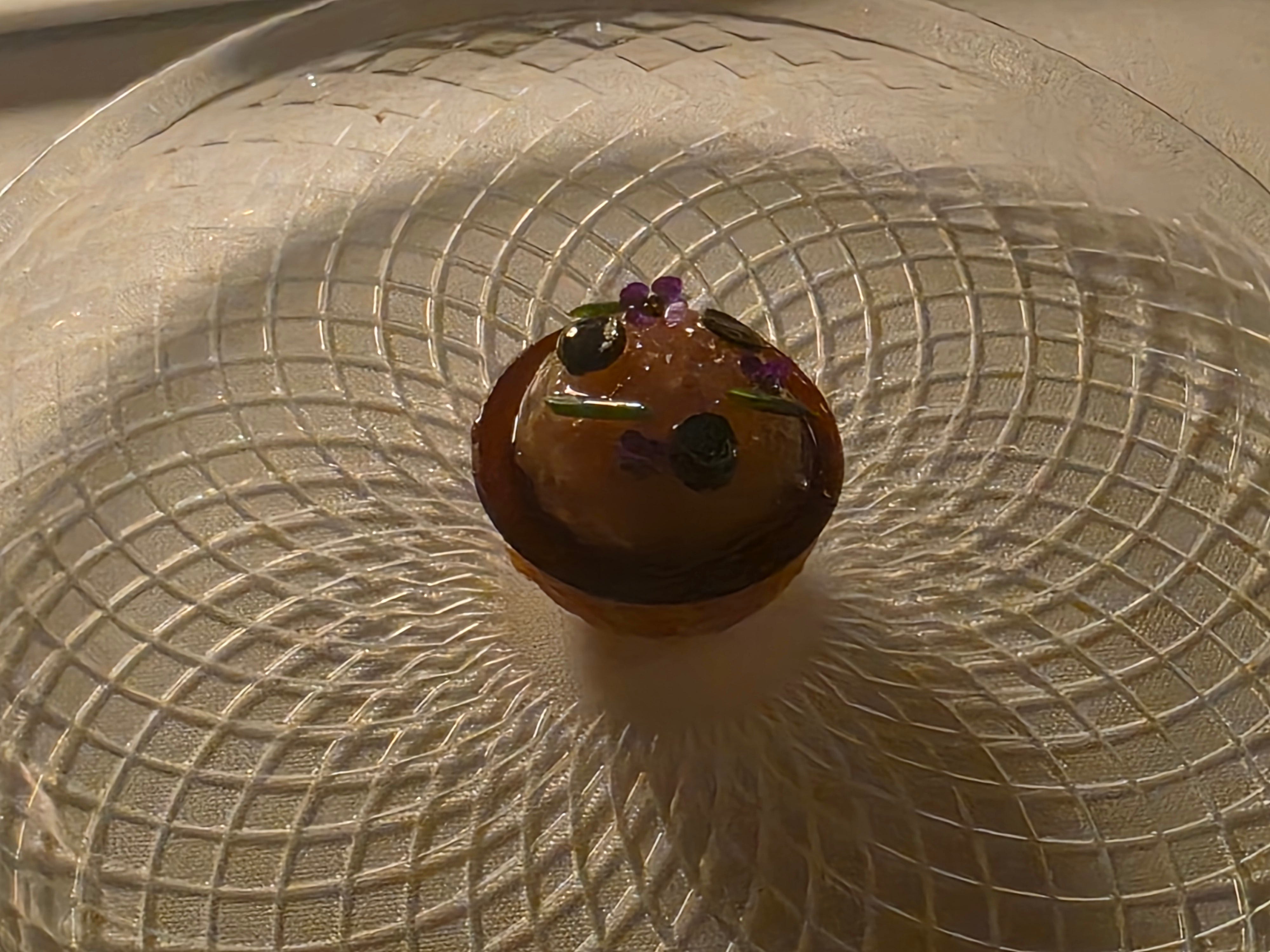
First, a warm mushroom doughnut: doughy, deeply umami, satisfying in the way only something fried and filled can be.
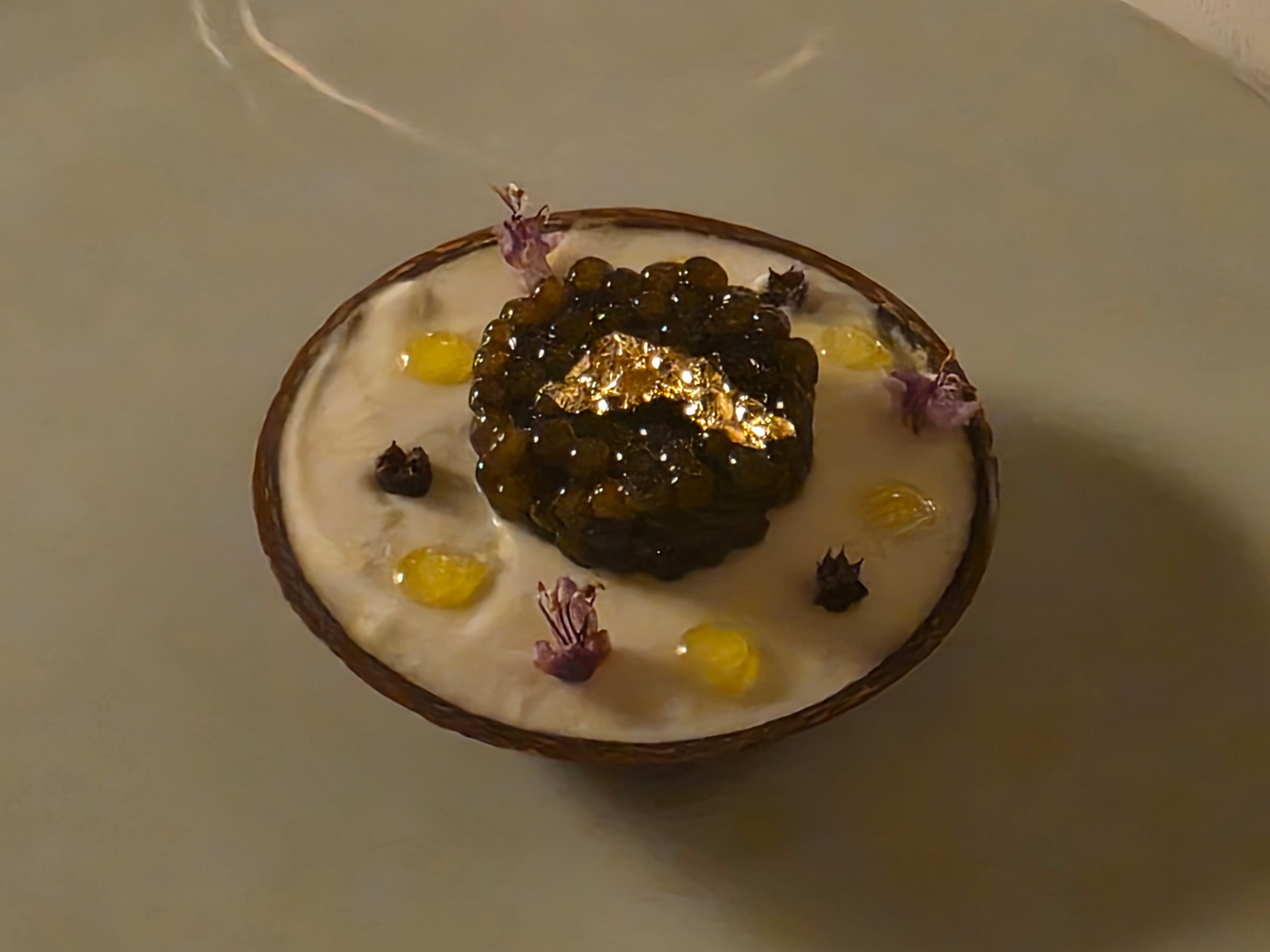
Then a buckwheat tartlet with horseradish crème fraîche and caviar - the tangy creaminess of the horseradish cutting beautifully through the brine.
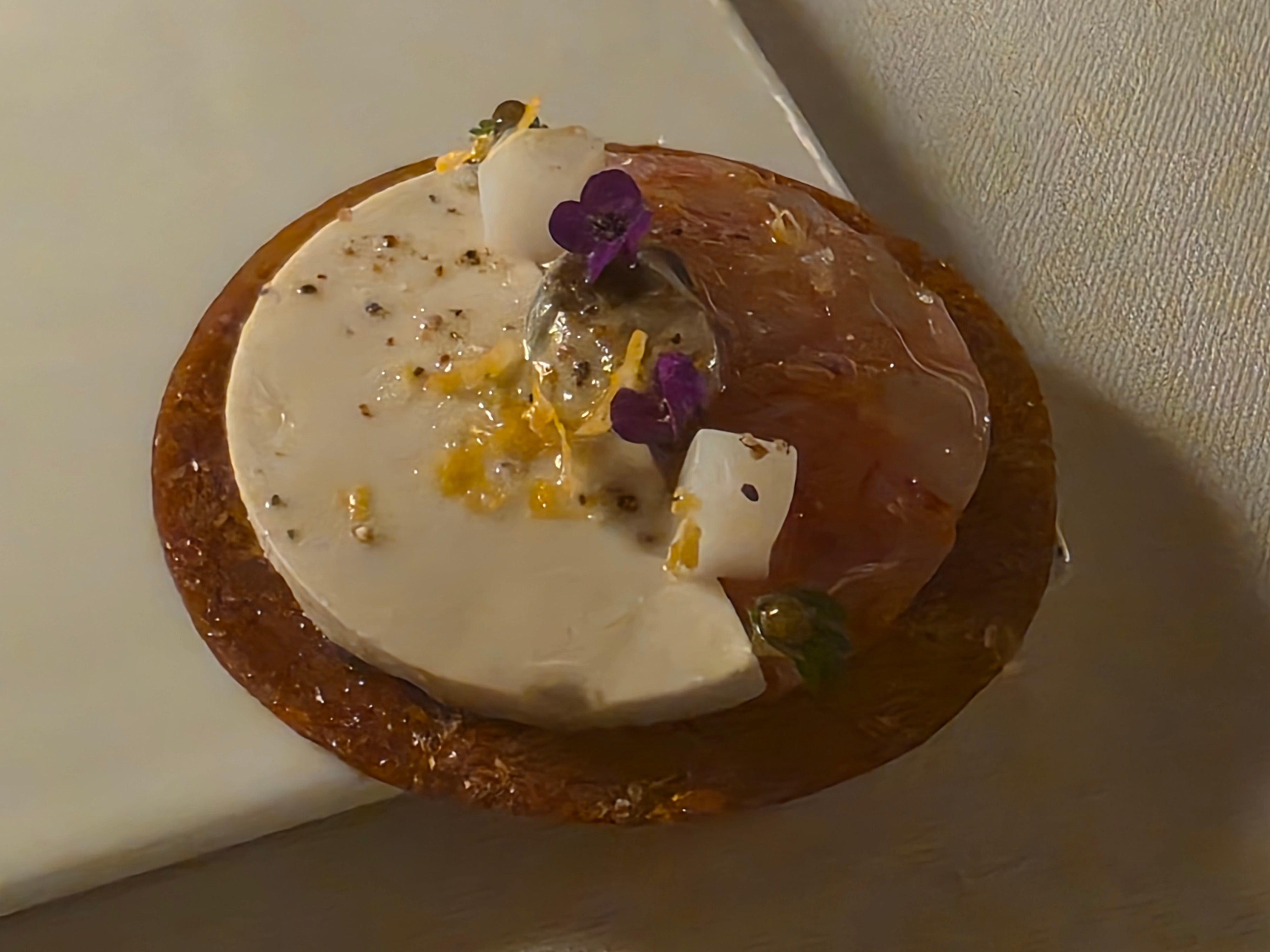
A crisp, paper-thin cracker followed, split between an oyster mousse and a shrimp tartare, offering mineral freshness and a pillowy richness in equal measure.
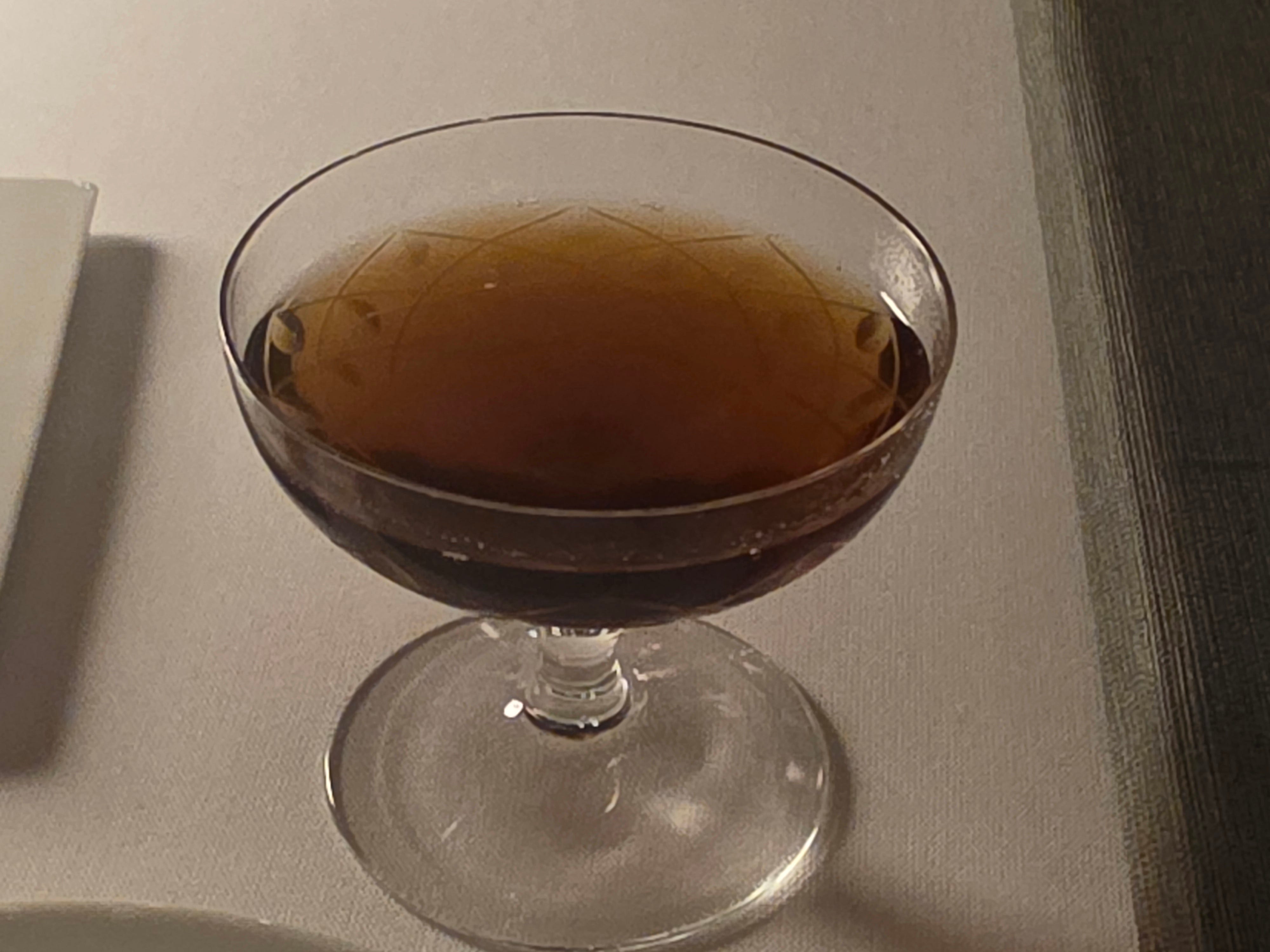
The final canapé was a hot venison consommé, and on a cold London night, it was exactly what you’d want: concentrated, warming, quietly luxurious.
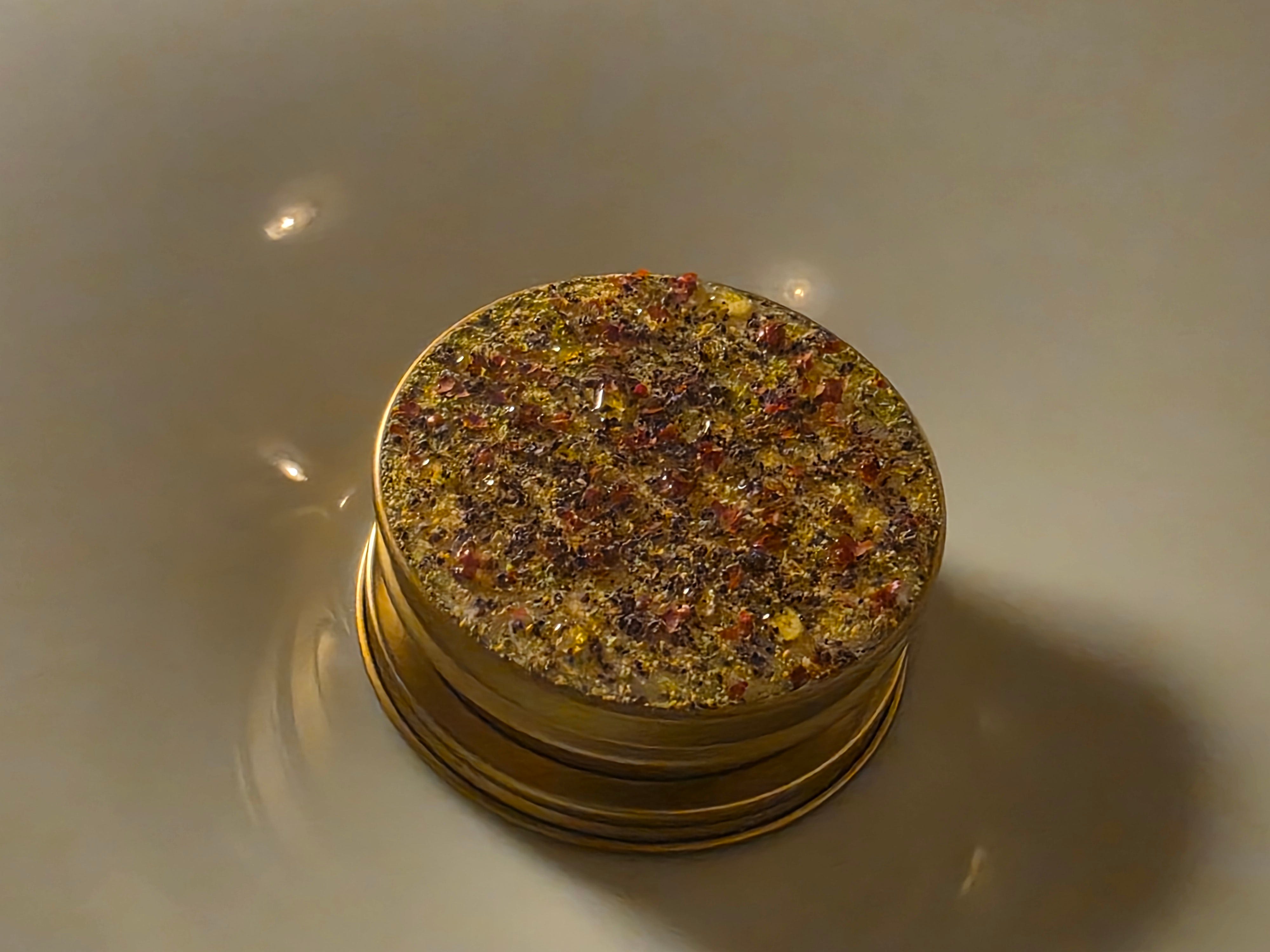
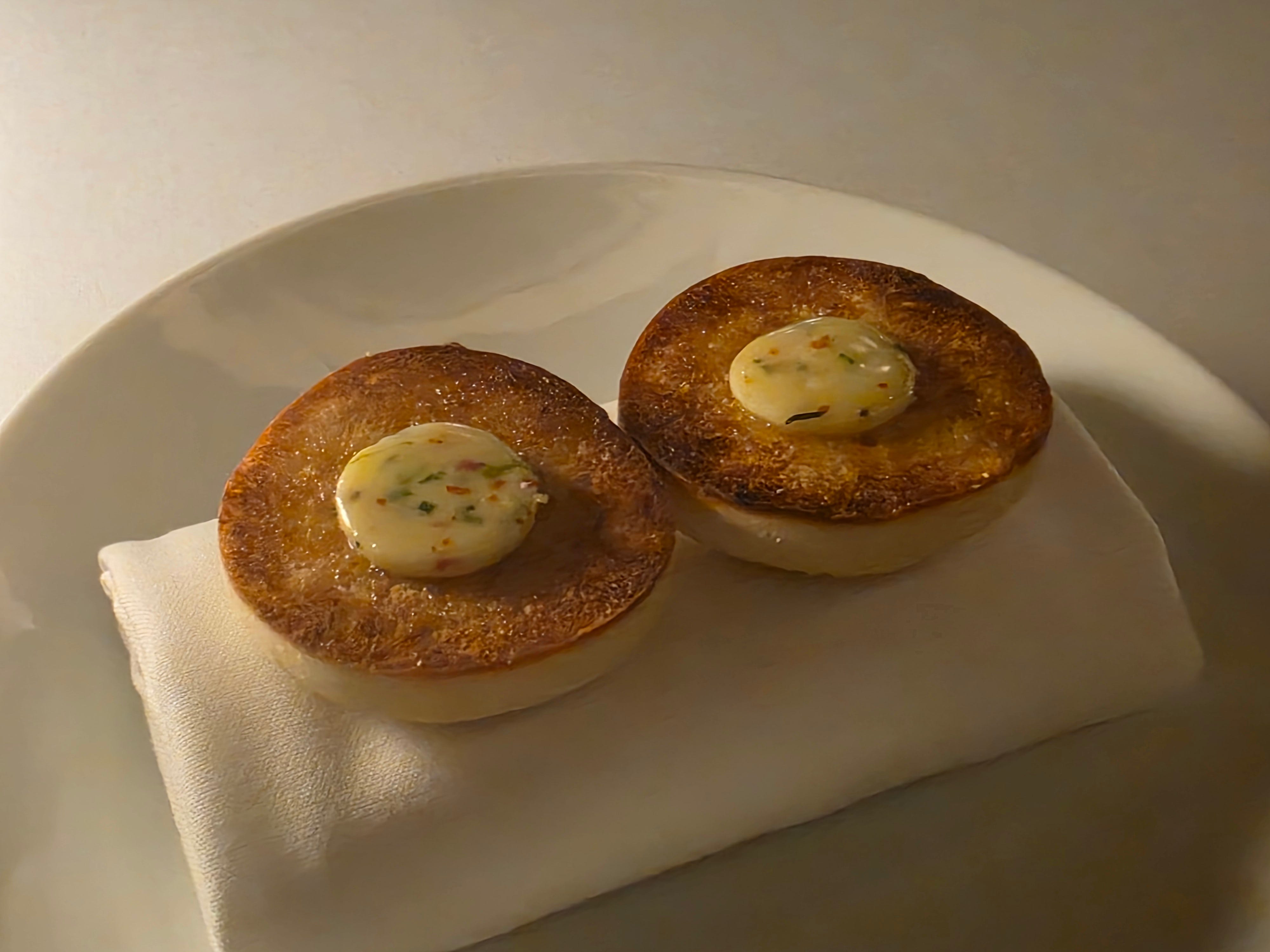
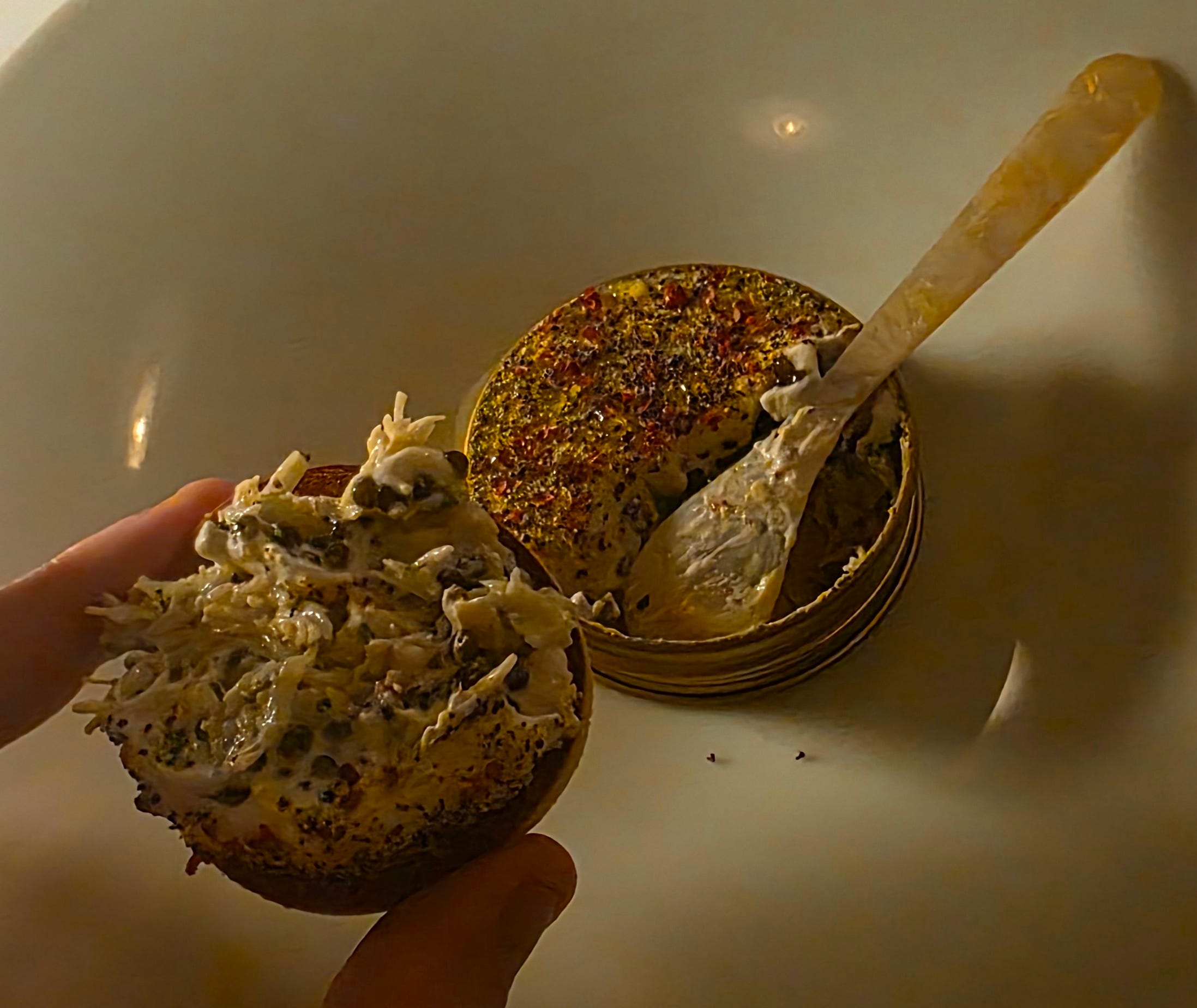
The first proper course was aged caviar and pickled brown crab in a cauliflower purée, accompanied by buttered English muffins. It reminded me of a similar signature at Amber - a high compliment - though this version carried its own identity.
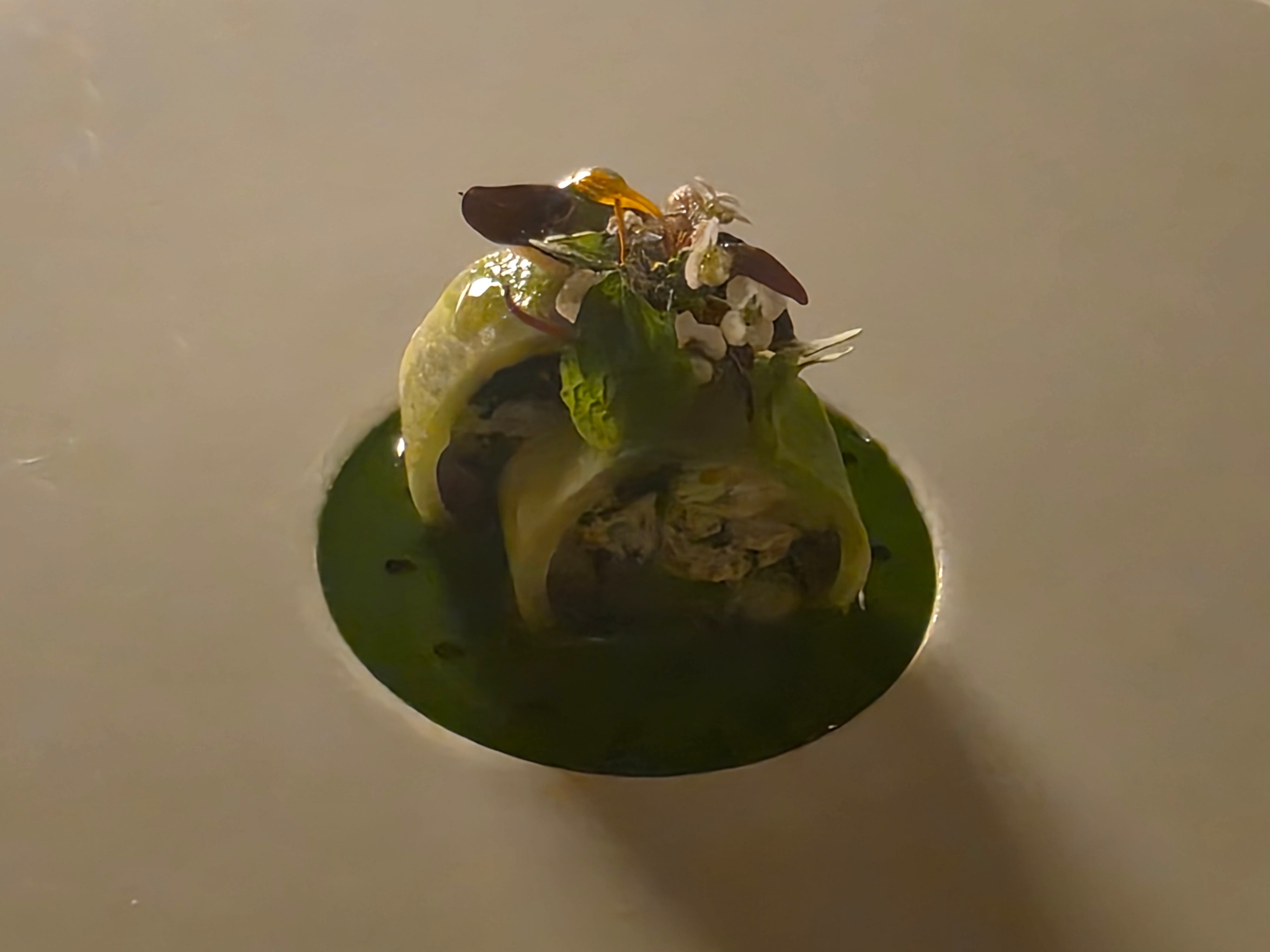
Next came a green sardine roll, wrapped in cucumber skin and served in a mint and coriander sauce. The inspiration was Vietnamese, and the effect was genuinely refreshing — herbal and clean, with the brightness of the sauce doing excellent work against the oiliness of the sardine. It called to mind a Vietnamese summer roll.
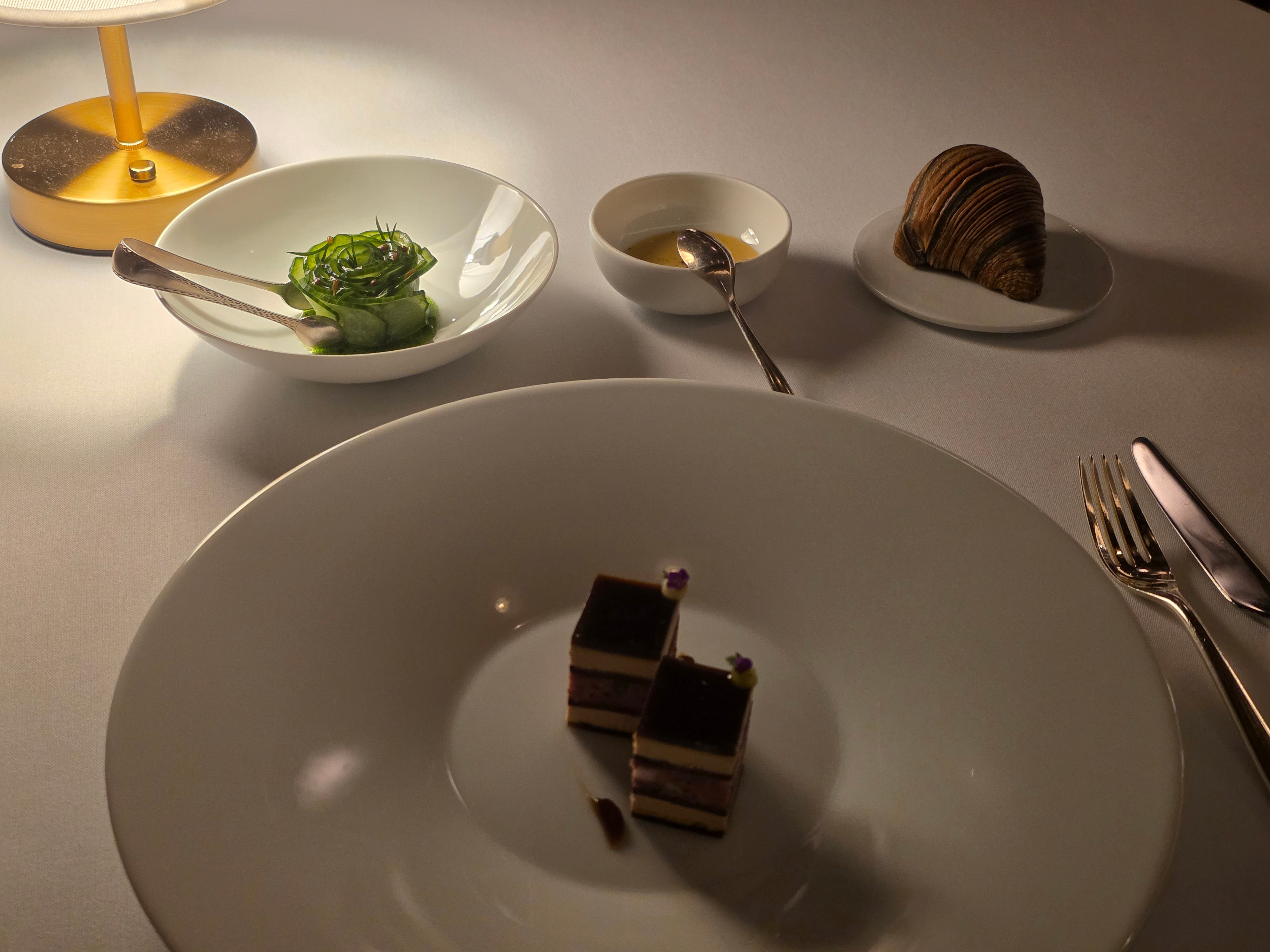
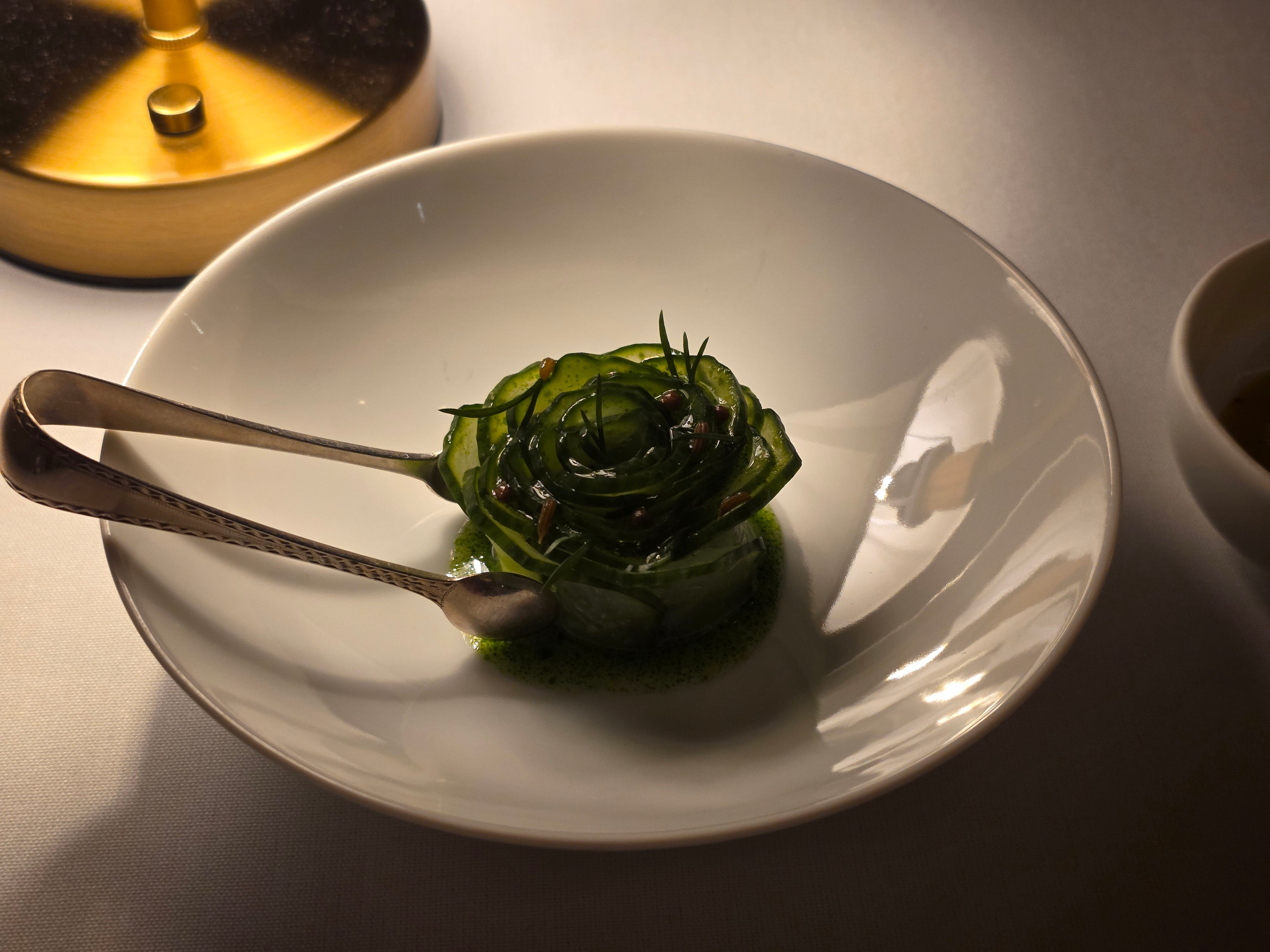
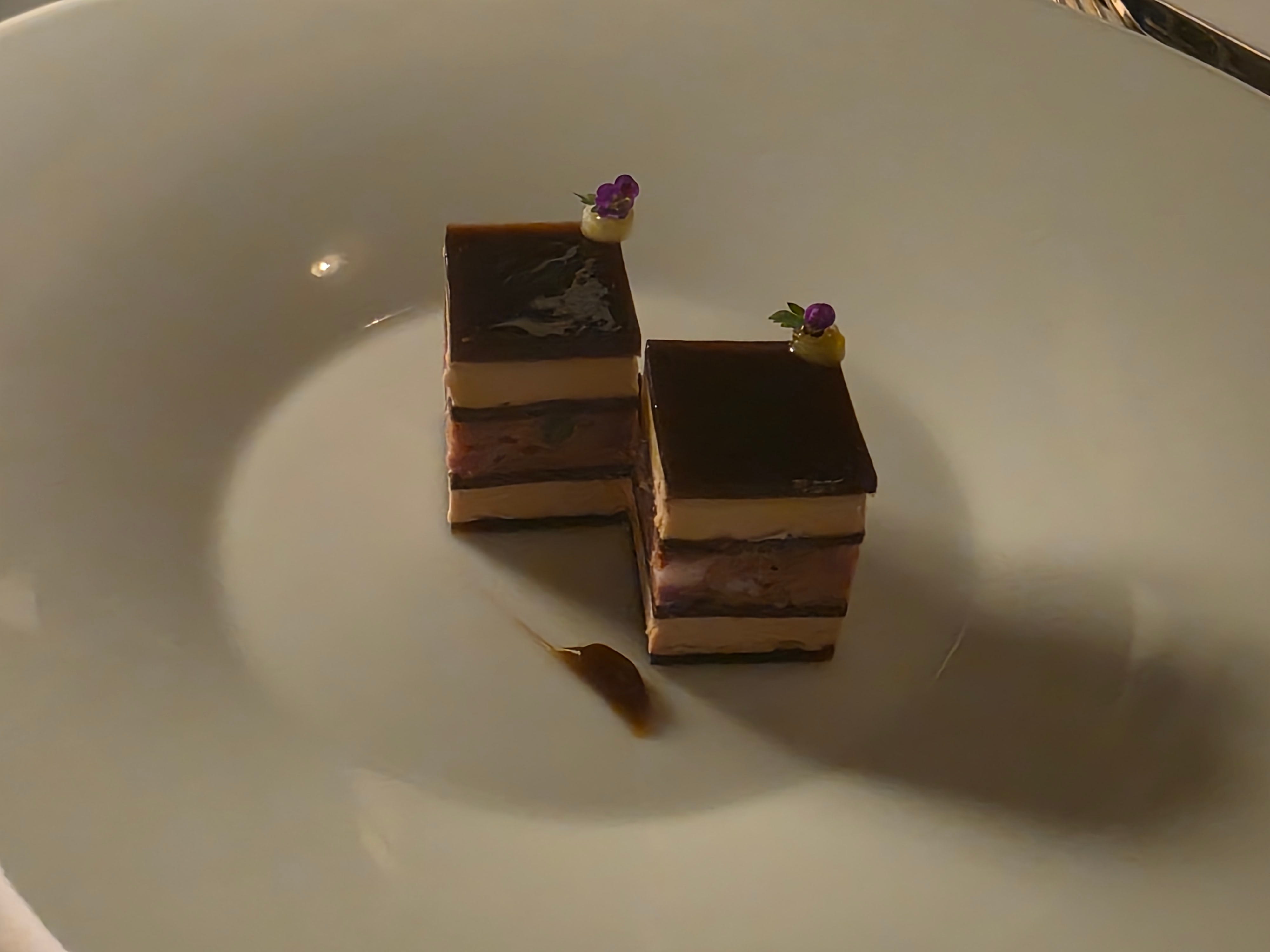
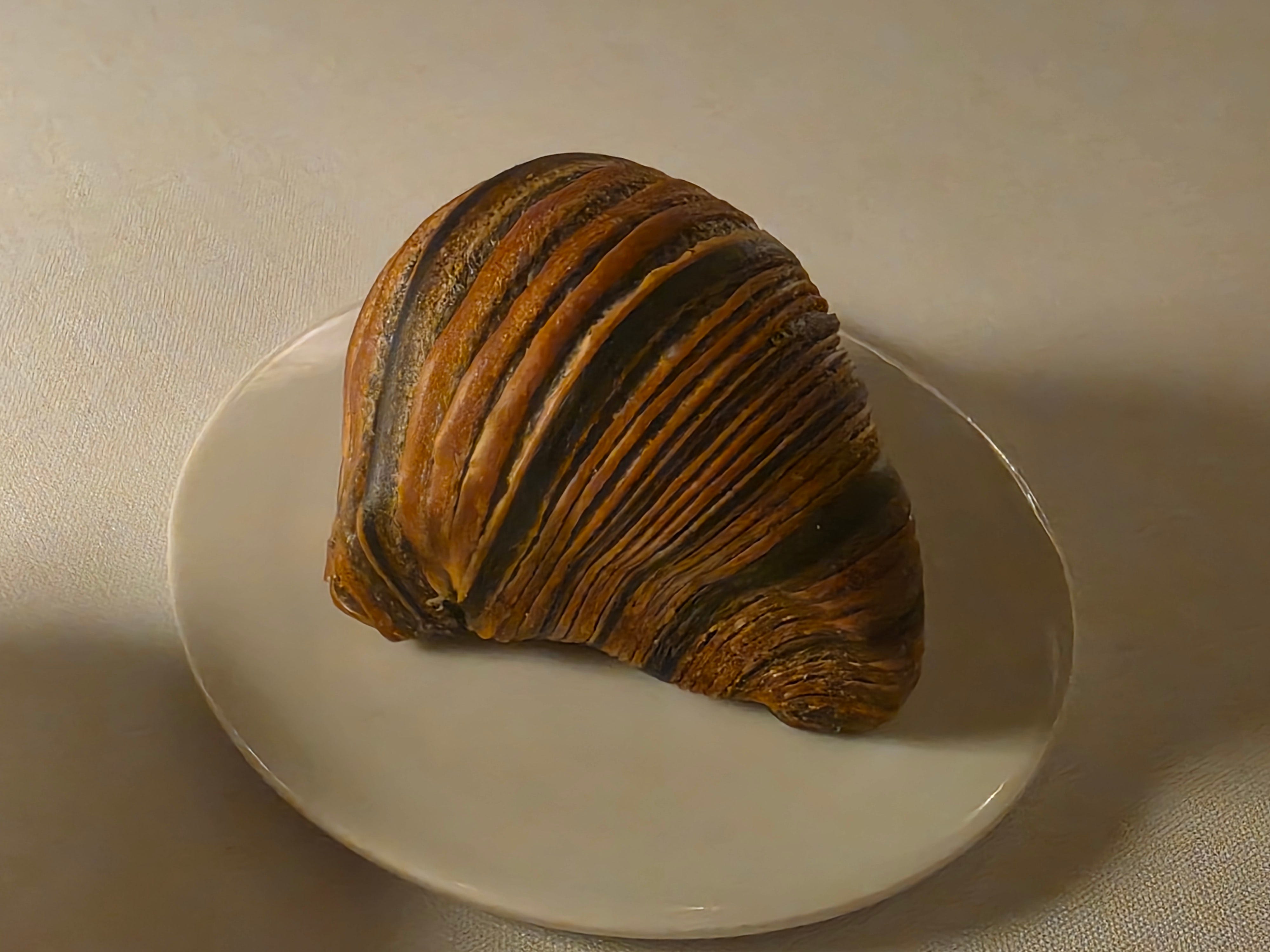
The Pâté de Campagne was a standout. Served with a freshly baked croissant, spicy honey mustard, and pickled cucumbers, it's been on the menu unchanged since the restaurant opened - and once you eat it, the reason is obvious. You assemble it yourself: dense, flavourful pâté, a swipe of sharp mustard, the crunch and sweetness of the pickles, all folded into a croissant so shattering-ly flaky it came apart in my hands the moment I touched it. Great food, and a genuinely fun dish. It also introduced a motif that never let up for the rest of the meal: an almost obsessive attention to detail in presentation. The pickles were arranged in a perfect floral pattern. The pâté was cut into flawless rectangular blocks.
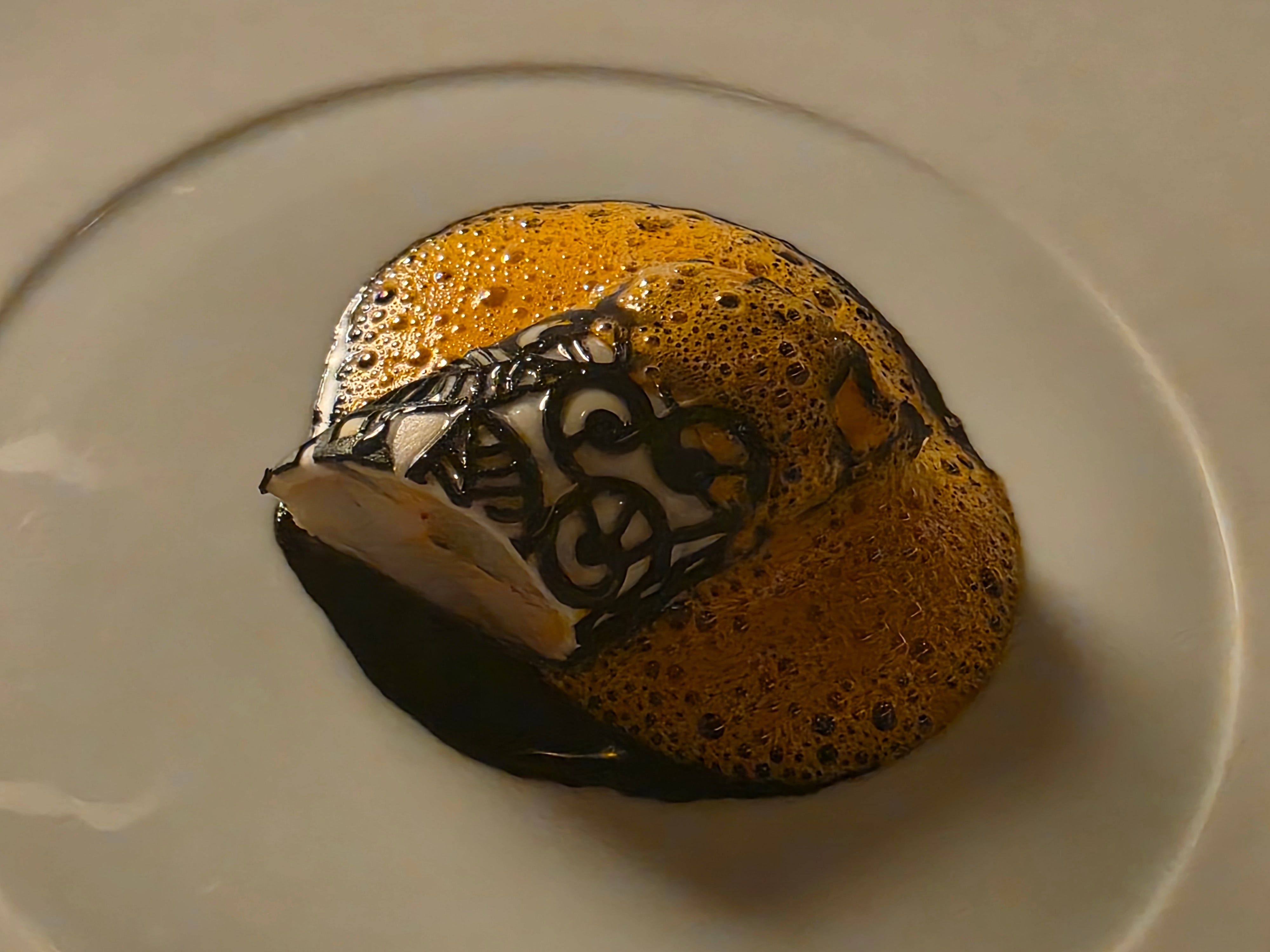
The John Dory arrived next, sandwiching a squid and cuttlefish mousse between two portions of fish, the surface inlaid with an intricate pattern in squid ink, finished with a bouillabaisse sauce and a delicate saffron foam. A technique I've been seeing more frequently - Sezanne was the first place I encountered it, but executed here with characteristic finesse.
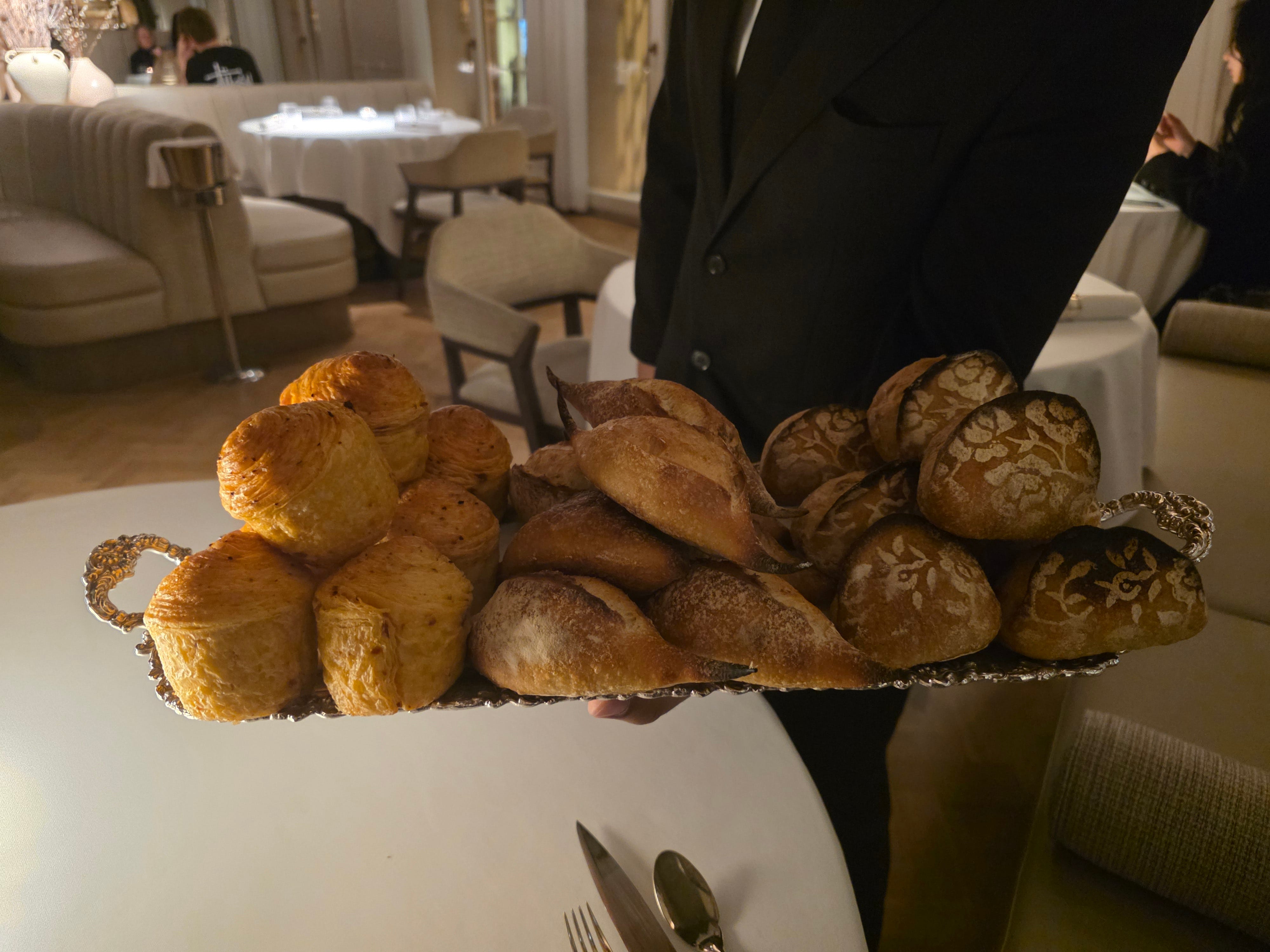
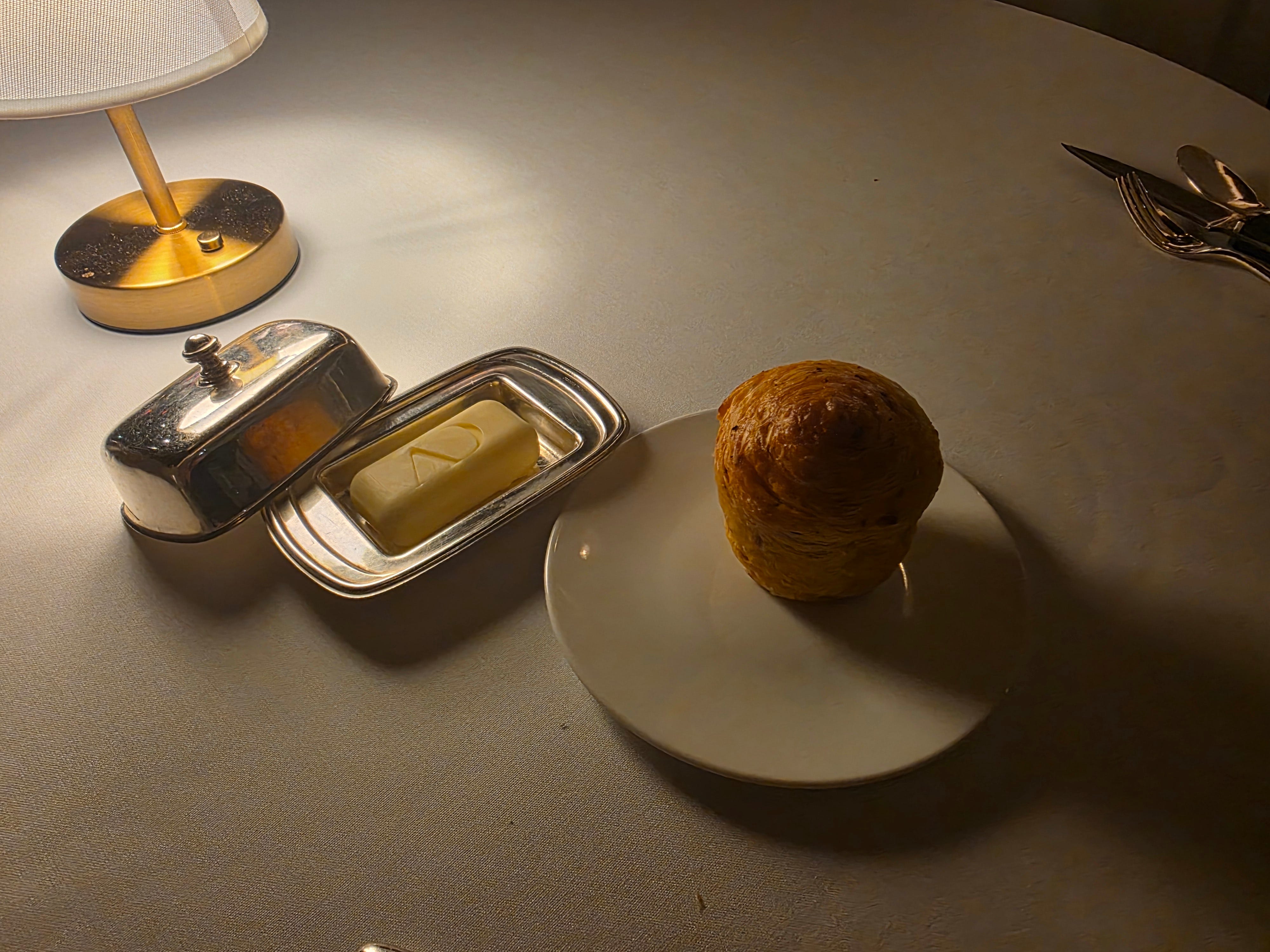
The bread course offered a selection of sourdough, rye, and the house signature: a chorizo roll so good I could barely stop myself from going for more. Soft, flaky, intensely savoury - I had two and had to physically stop myself from reaching for a third. The usual rule about not filling up on bread before dessert was sorely tested.
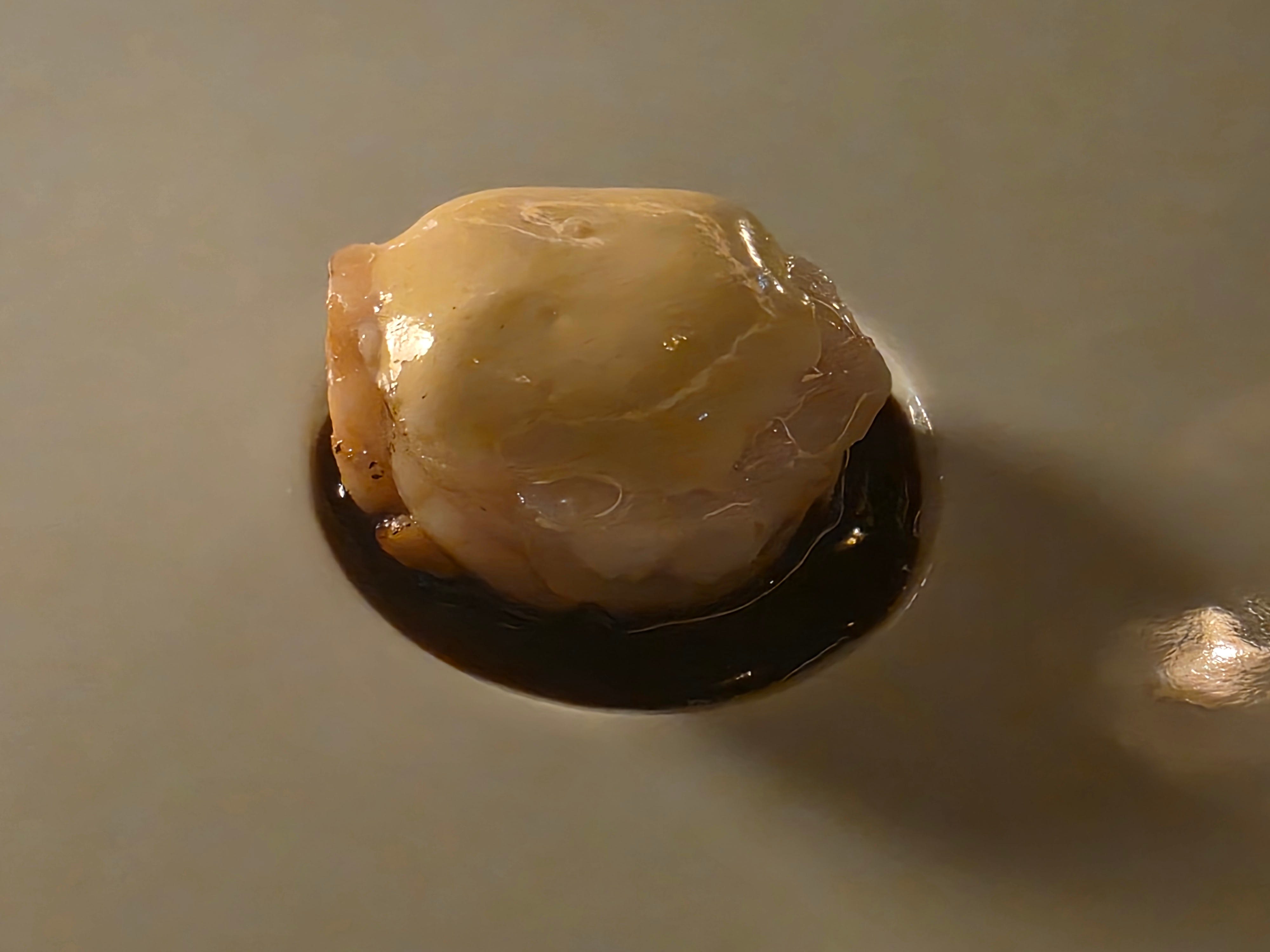
The BBQ monkfish demonstrated the kitchen's restraint and patience. Poached first in butter, then finished over binchotan charcoal for a whisper of smoke and caramelisation, it arrived with a red wine and monkfish bone sauce, a thick sabayon, and a scattering of Madagascar pepper. Meaty and substantial.
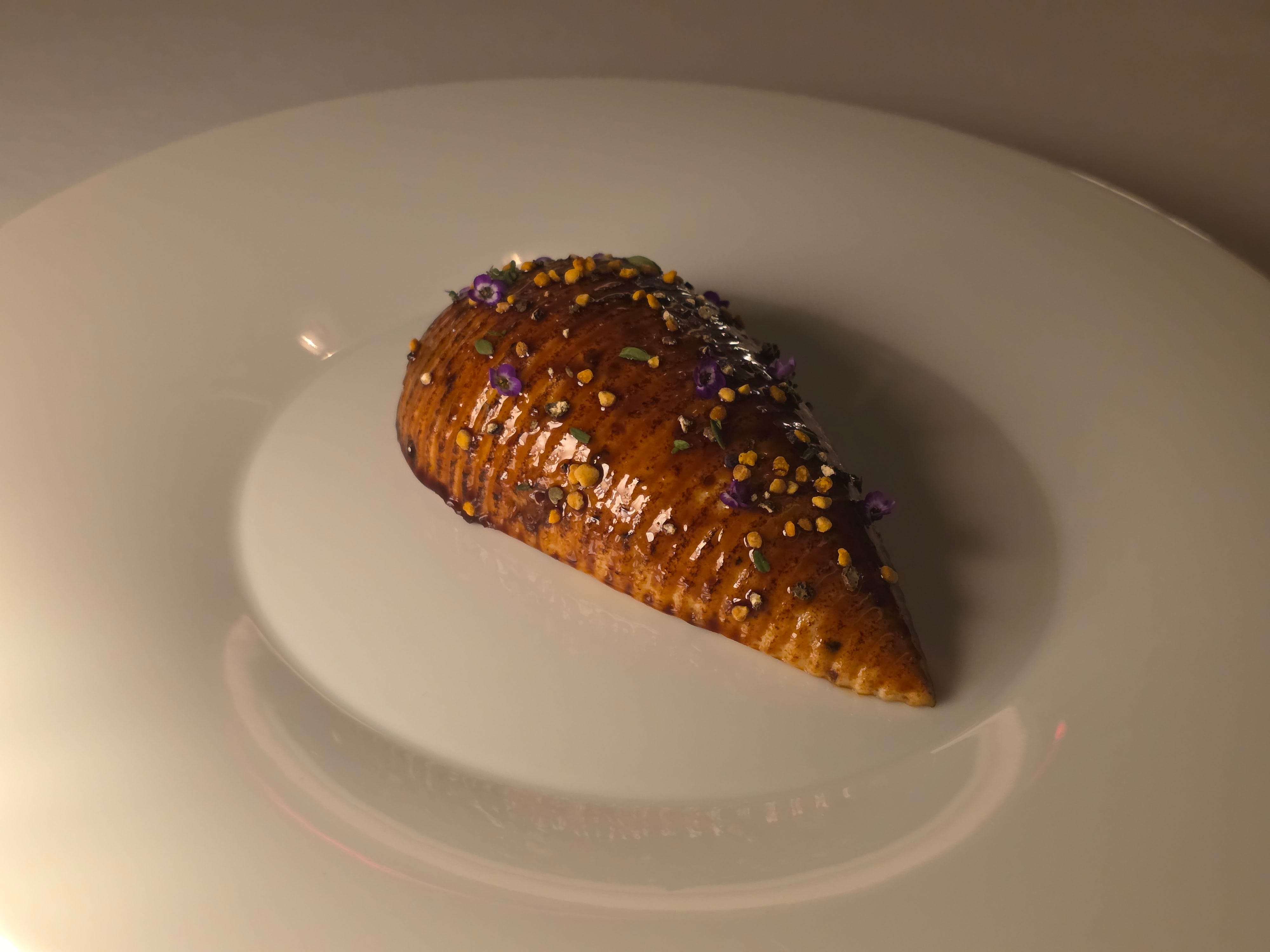
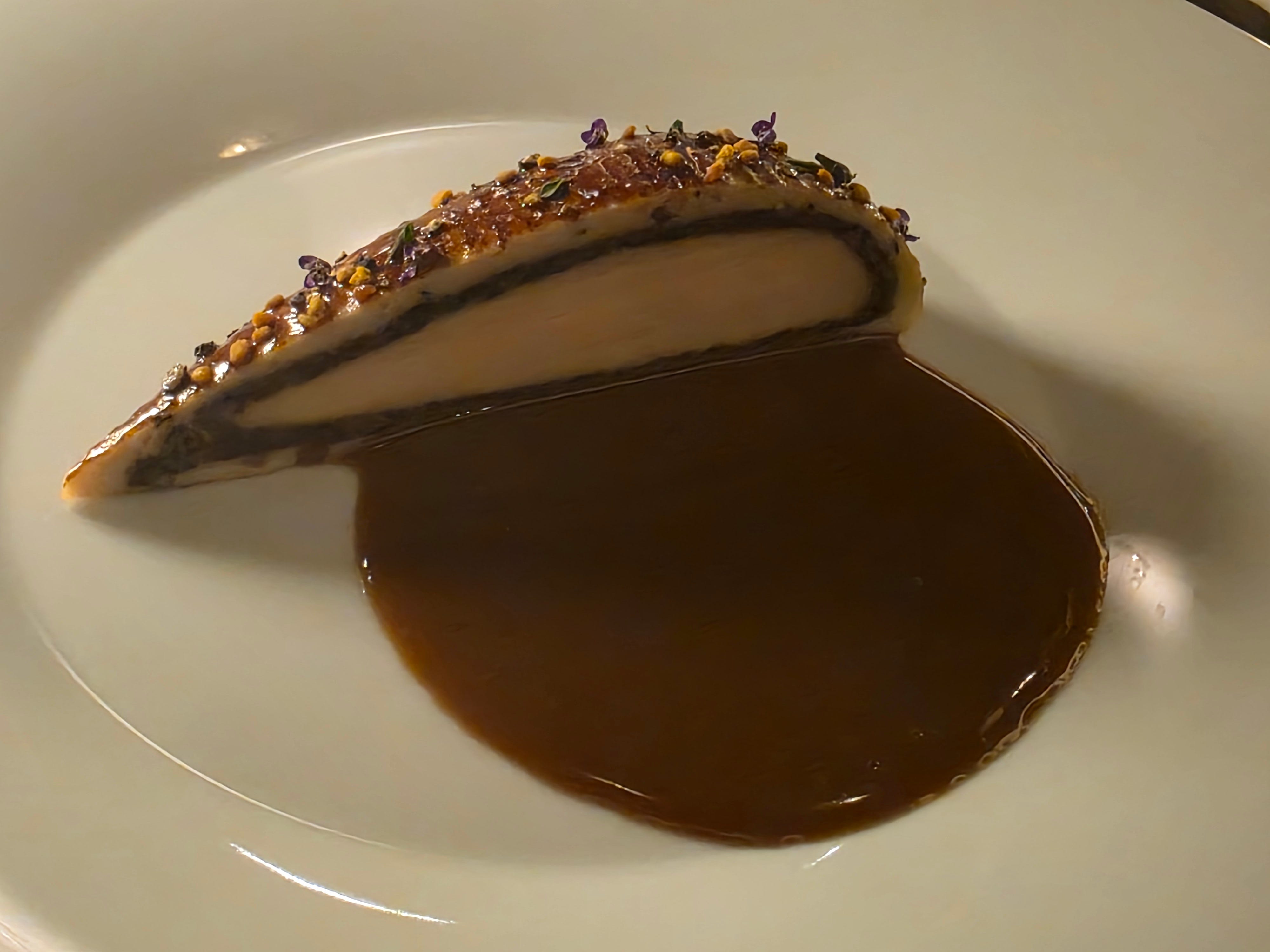
Then, the Hunter Chicken justifying the supplement entirely. Prepared in the style of a beef wellington: a chicken breast encased in a mushroom duxelle, wrapped in a toasted coating that sealed in the moisture, glazed with a glossy chicken jus and finished with lemon thyme. The fear with any preparation this involved is that the chicken emerges dry. It did not. It was exceptional.
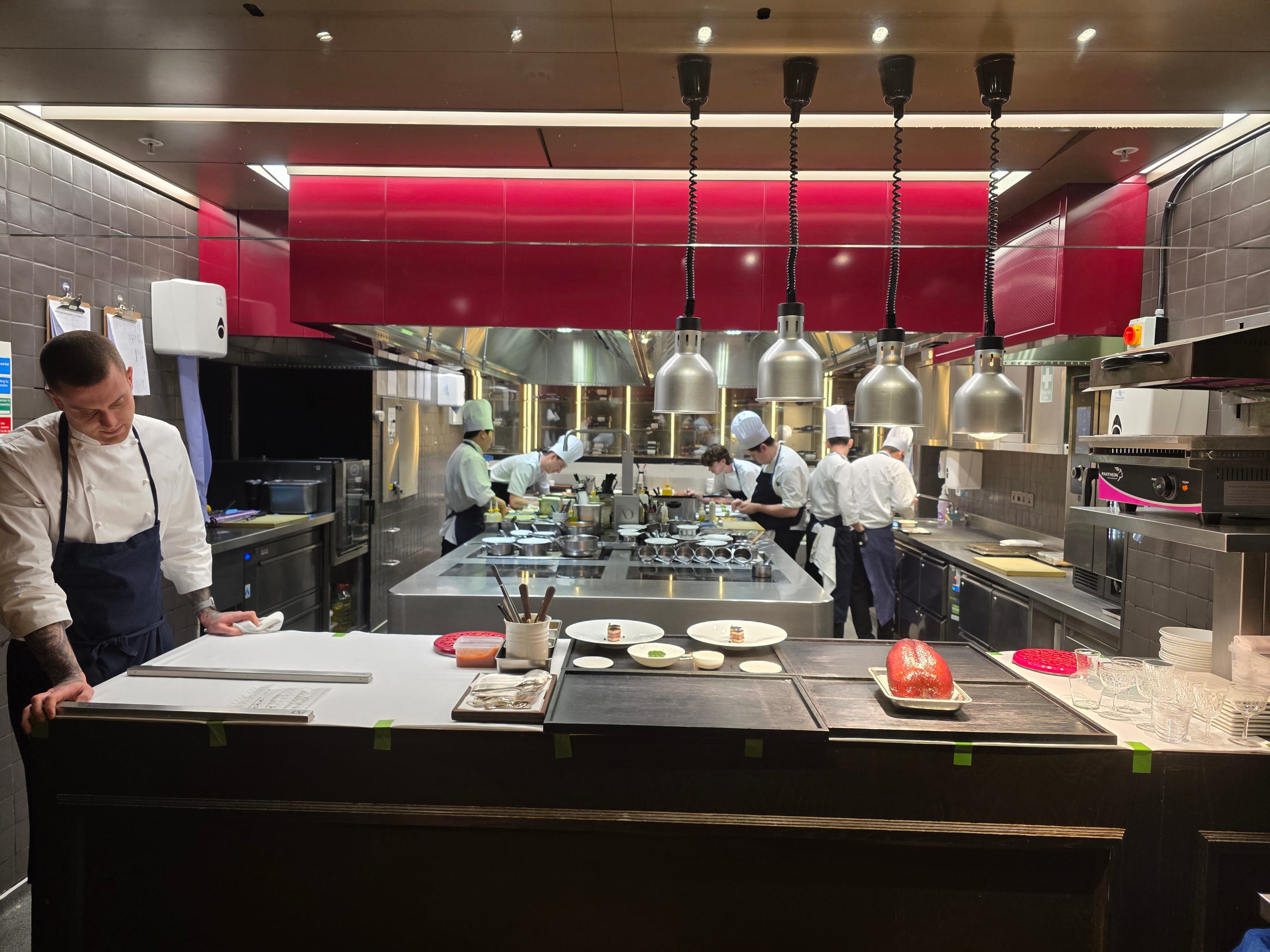
Midway through the meal, I was invited into the kitchen for a brief conversation with Chef Dilling. The space reminded me of the Connaught kitchen, and he confirmed without prompting that he had indeed worked there. We talked about The Greenhouse, which I'd visited before the pandemic, and about his travels through Southeast Asia, which had clearly left a mark.
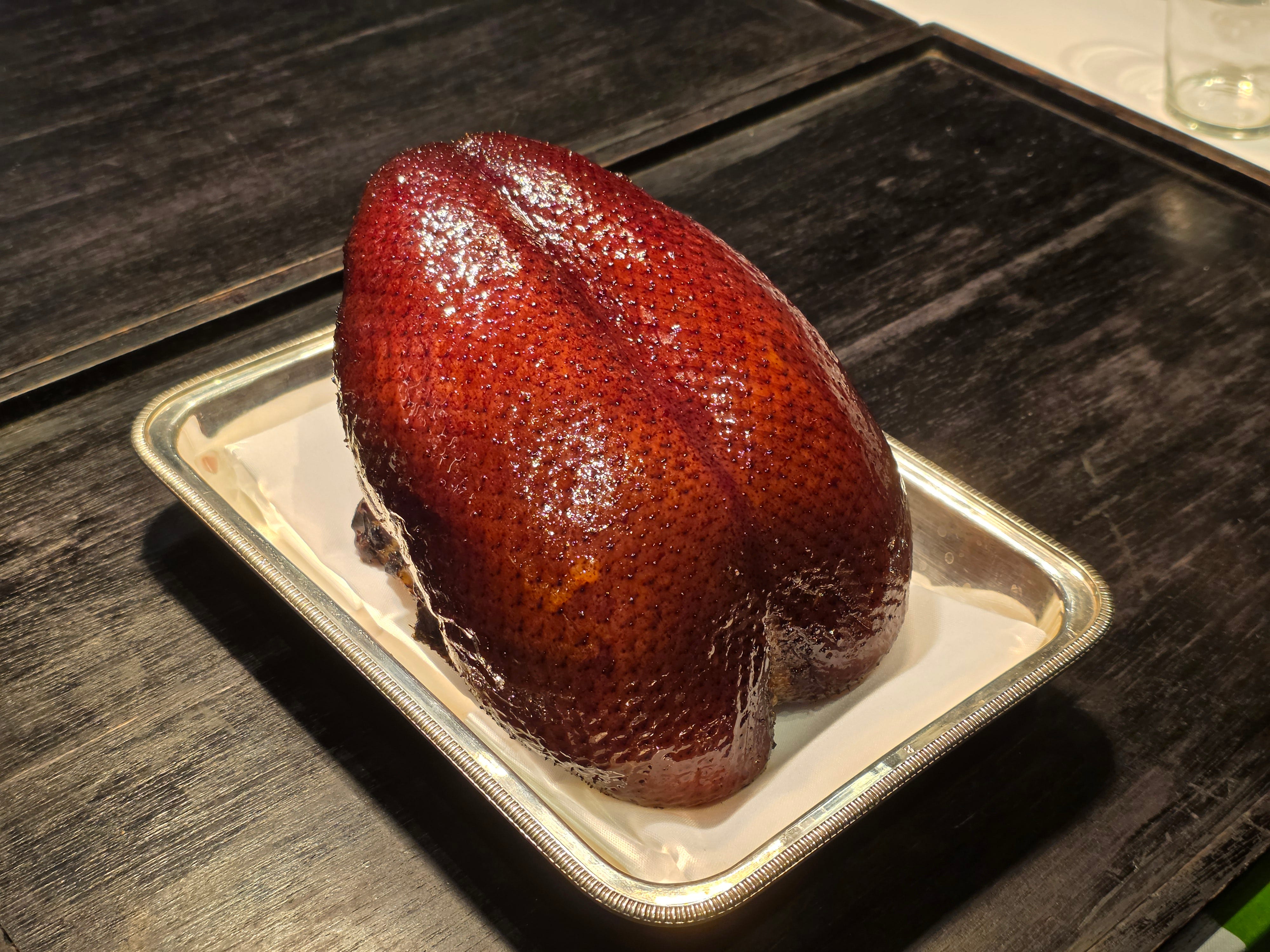
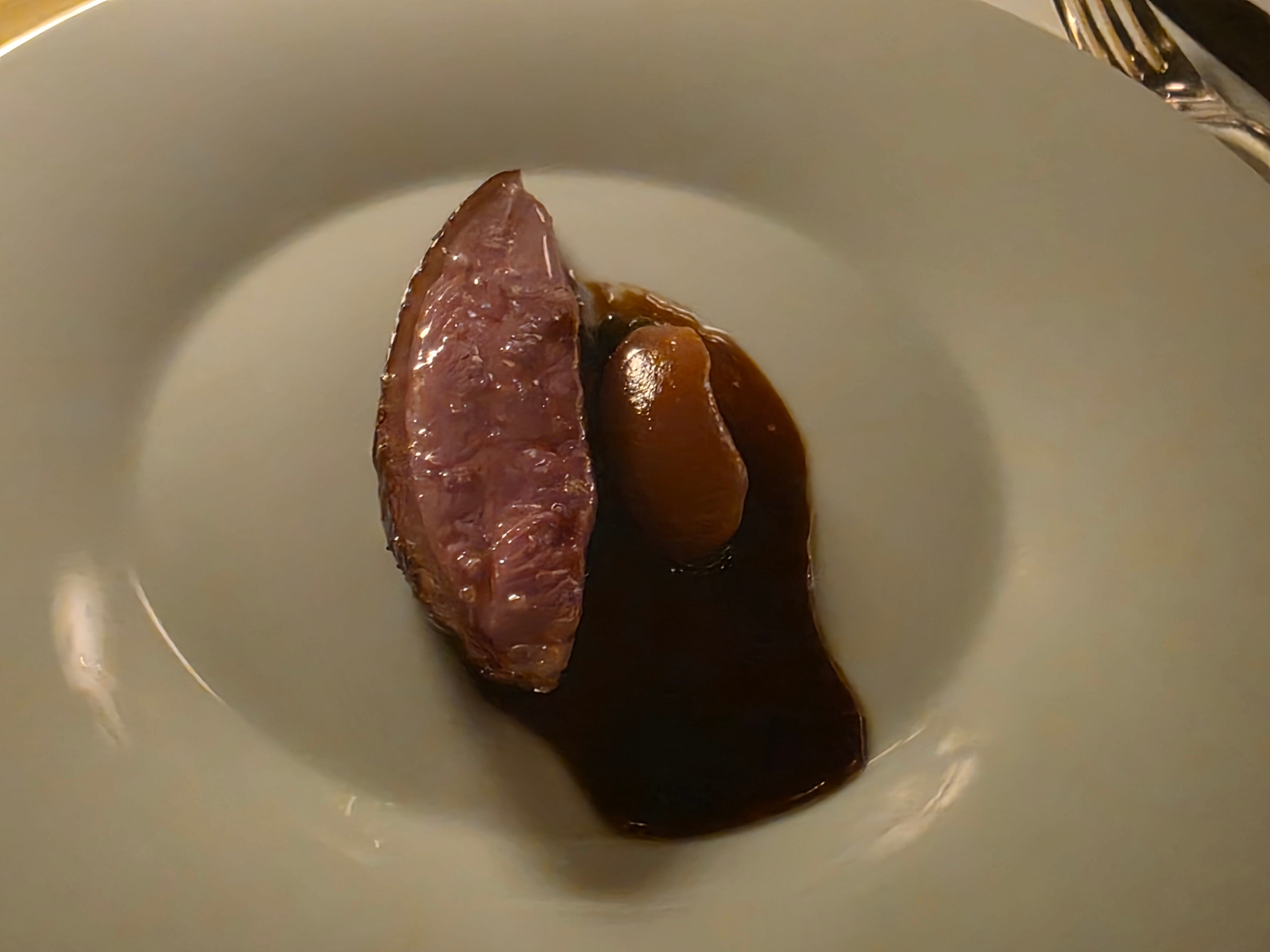
He explained that the duck breast course drew on his memories of Peking duck: the skin treated with a vinegar and sugar mixture, briefly smoked, then roasted to a fierce crispness, served with a quince and duck jus. It didn't have the papery delicacy of a traditional Peking preparation, but the skin was extraordinary, shattering on contact, and deeply flavourful.
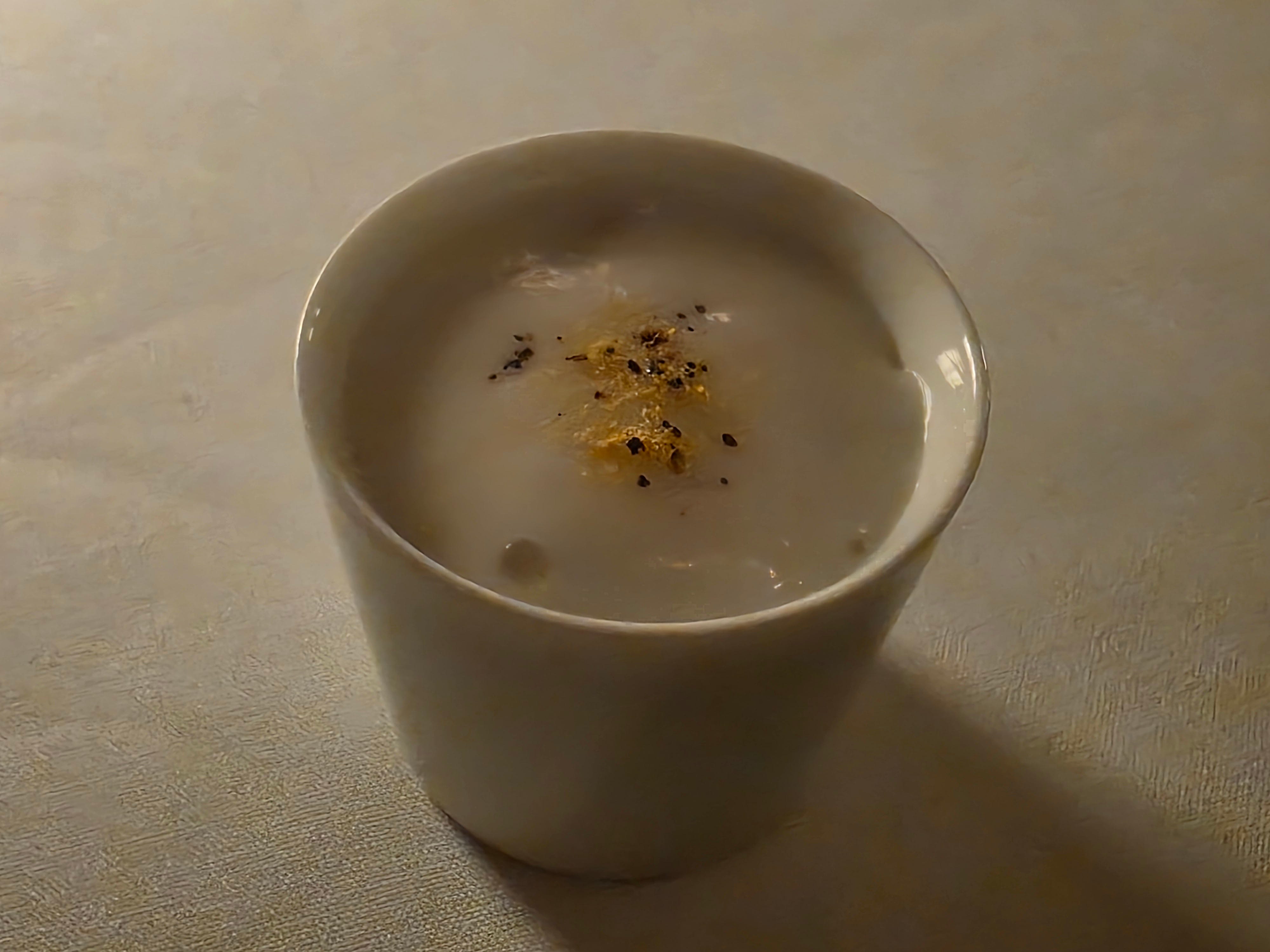
The pre-dessert arrived as a palate reset: ruby grapefruit, a champagne grapefruit sorbet, and a creamy, airy sabayon foam. Bright and effective.
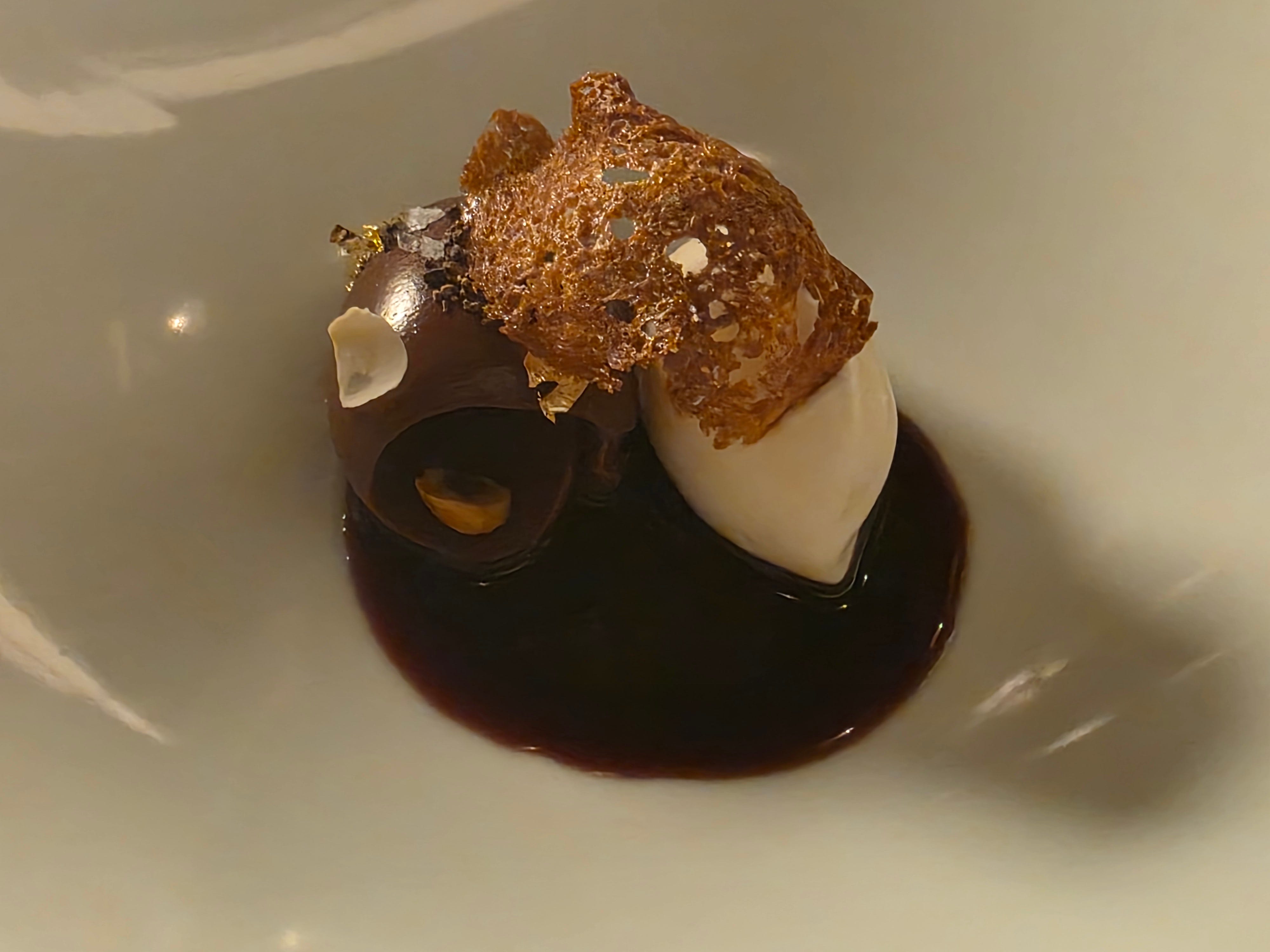
Dessert brought together chocolate ganache, sourdough ice cream topped with a rye crisp, all ringed by a mulled wine reduction. It was the one dish of the night that didn't quite land - the elements felt less integrated than elsewhere on the menu, the flavours pulling in slightly different directions.
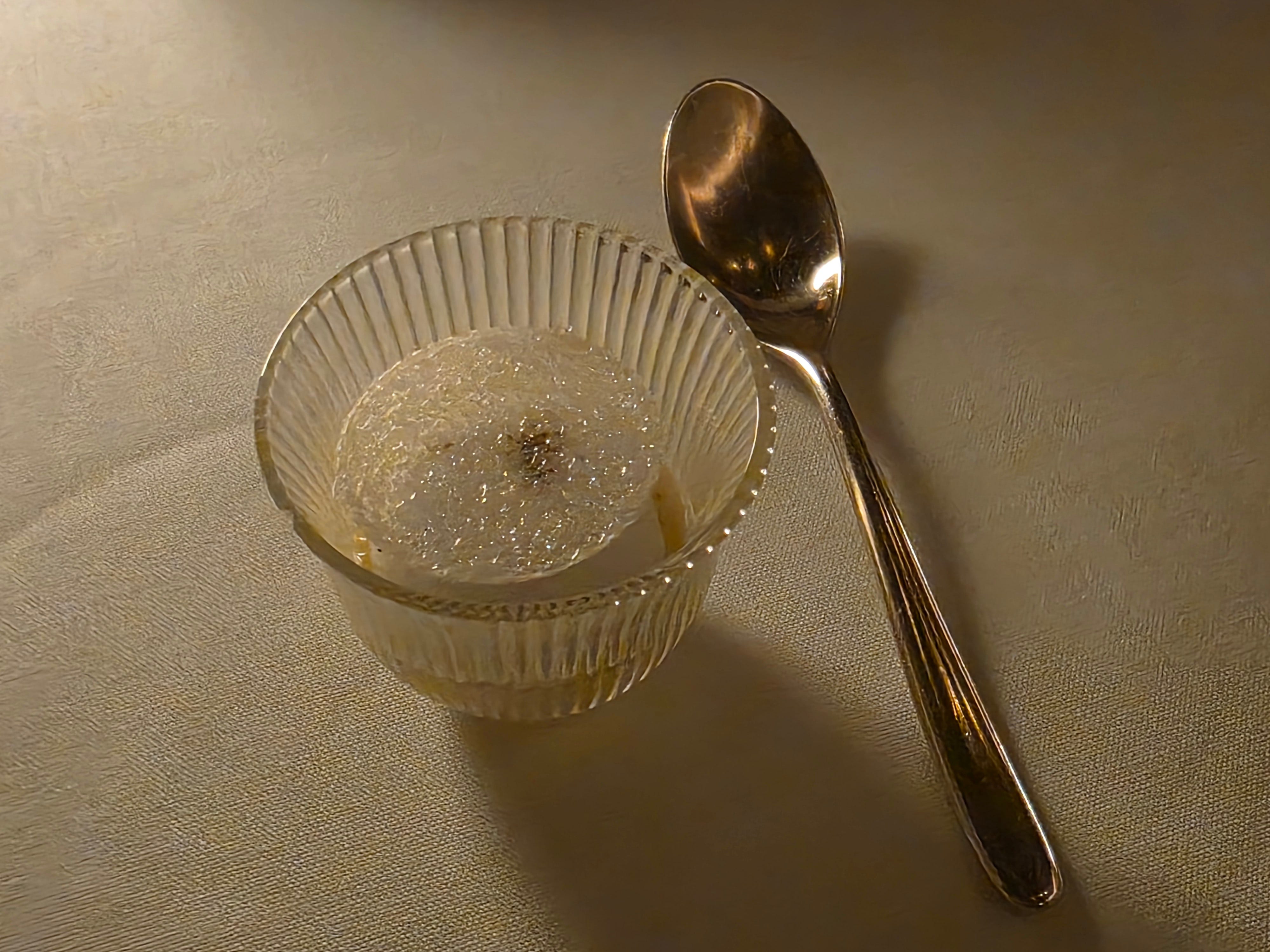
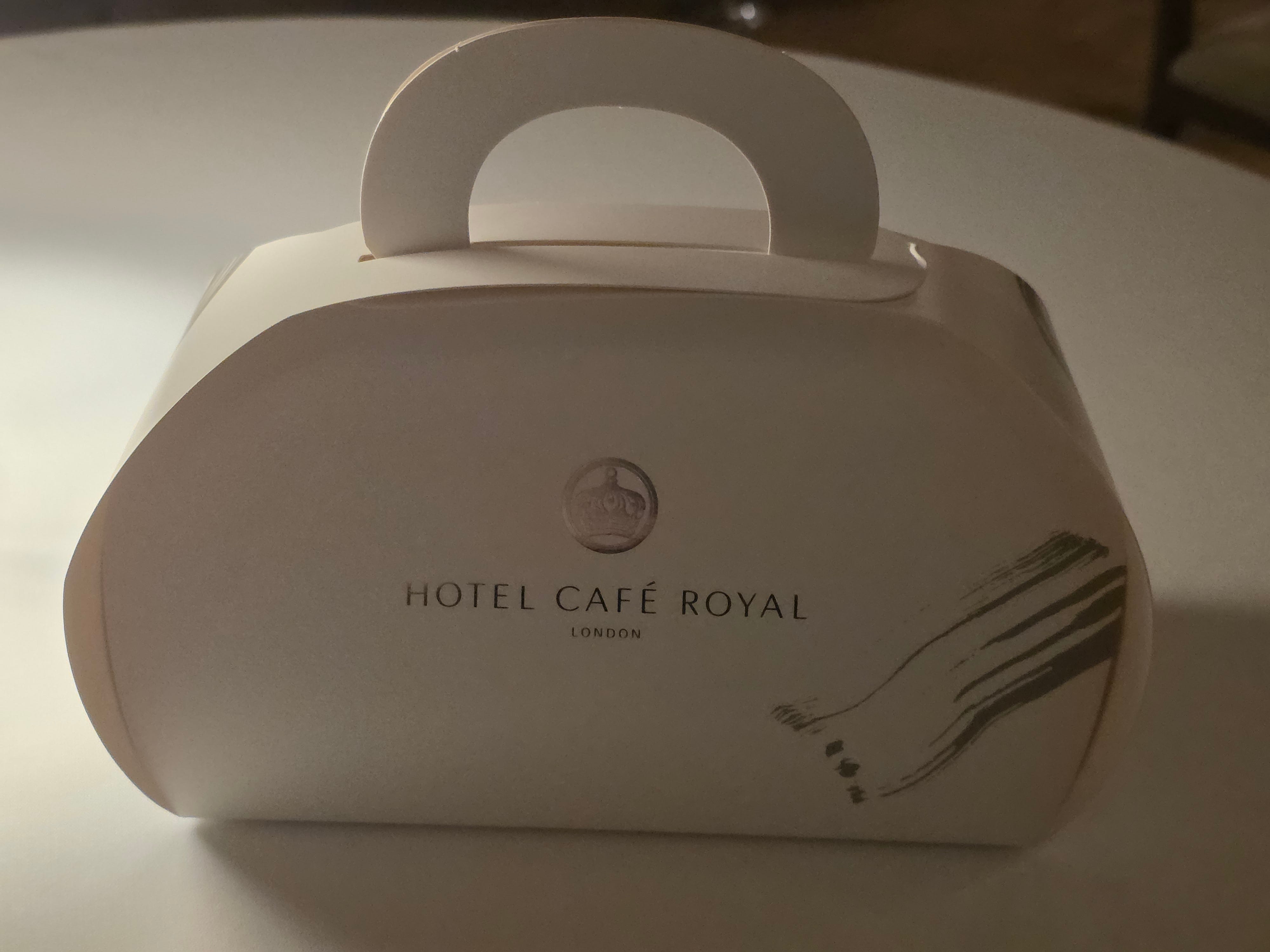
By the time the petit fours came, the jet lag was winning. I asked for them to go. The sorbet couldn't make the journey, so I ate it at the table. The rest came home with me, where they were excellent the following morning.
Alex Dilling surprised me, and I don’t say that lightly. What this kitchen manages to pull off - course after course, night after night - requires a level of consistency that very few restaurants ever achieve. The detail in every plate isn’t incidental; it’s the point. Dilling’s background in French classical cooking is evident not in any stuffy formality, but in the discipline and rigour that runs through everything. The touristy Regent Street location may keep some people away. It kept me away for longer than it should have. Definitely worth a repeat.
Total Damage: 340 GBP/1 person