
This is the second time I’ve flown to Tokyo for a hard to get reservation. The first time was right before Sezanne got its third Michelin star. This time, it was a pop up event Chef Grant Achatz was doing for the 20th anniversary of Alinea. When they announced the event nearly a year in advance, I immediately booked it and figured I’d sort out the details - like who else is going - much later.
Alinea is a pioneering fine-dining restaurant in Chicago’s Lincoln Park neighborhood. It is widely regarded as one of the most innovative restaurants in the world, known for its avant-garde, multi-sensory tasting menus that blend molecular gastronomy, theatrical presentation, and emotional storytelling. The name “Alinea” comes from the pilcrow symbol (¶), signifying the beginning of a new train of thought—reflecting the restaurant’s mission to break from culinary tradition while building on it.
Chef Grant Achatz is the co-owner and executive chef of Alinea. He grew up working in his family’s restaurants, graduated from The Culinary Institute of America in 1994, and quickly established himself as one of America’s most visionary chefs. Beginning his career at Charlie Trotter’s in Chicago, Chef Achatz spent four years at The French Laundry under Thomas Keller, rising to sous chef and absorbing Keller’s relentless pursuit of perfection. before moving to the Trio in Evanston, Illinois, where he transformed it into one of America’s best restaurants and began experimenting with the modernist techniques that would define his style. In 2005, he opened Alinea with Nick Kokonas, using an innovative ticket-based reservation system that eliminated no-shows and treated dining like theater or concerts.
In July 2007, at the height of Alinea’s early success, Achatz was diagnosed with stage IV tongue cancer that had metastasized to his lymph nodes. Doctors initially recommended removing much of his tongue, which would have ended his career. Instead, he underwent aggressive chemotherapy and radiation at the University of Chicago that preserved his tongue but temporarily destroyed his sense of taste. Remarkably, his taste returned almost fully, and he achieved full remission by December 2007. The experience profoundly influenced his cooking philosophy - emphasizing flavor memory, emotion, and pushing boundaries while one still can.
Alinea is widely credited as the restaurant that brought Spanish-style molecular gastronomy to America and made it distinctly American - more emotional, narrative-driven, and theatrical than purely scientific. Achatz and Kokonas helped shift fine dining from stiff French tradition to playful, immersive experiences that engage all senses.
Twenty years later, Alinea remains the benchmark for progressive American cuisine. Even with the 2025 Michelin downgrade, it continues to sell out months in advance and is routinely called one of the most influential restaurants in American history.
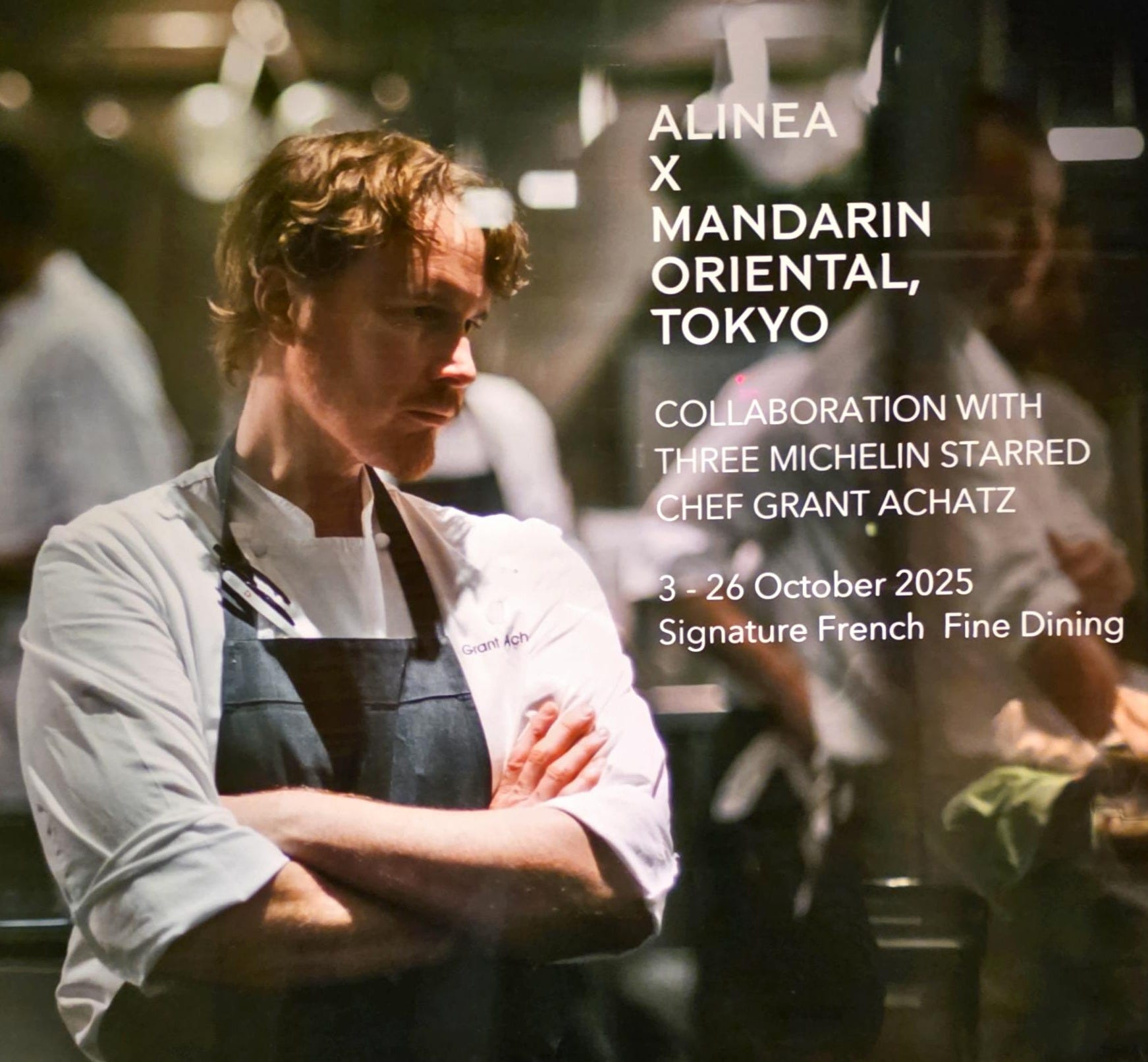
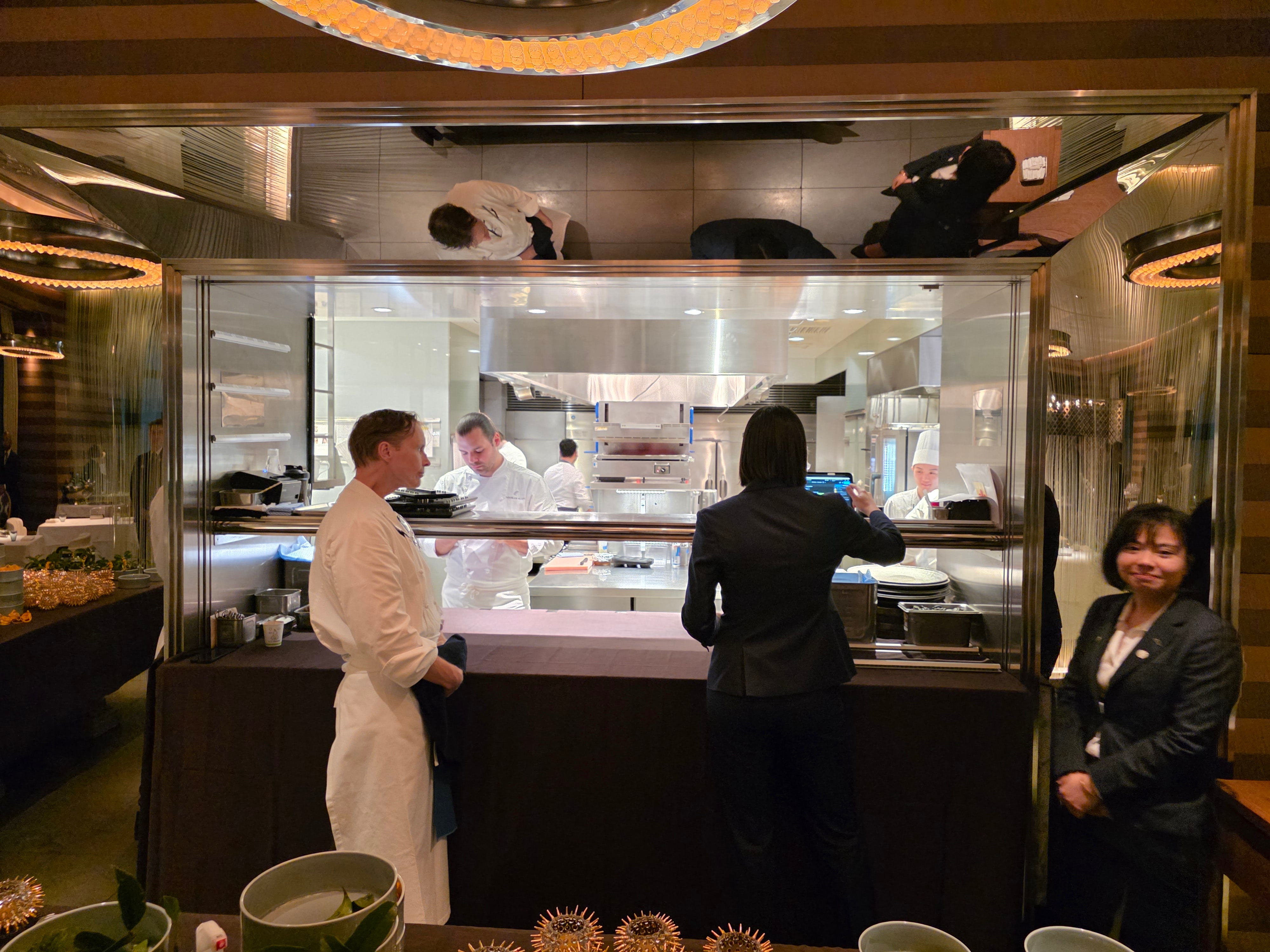
Arriving at the Mandarin Oriental, Chef Achatz brought half his Chicago team for this month long pop-up.
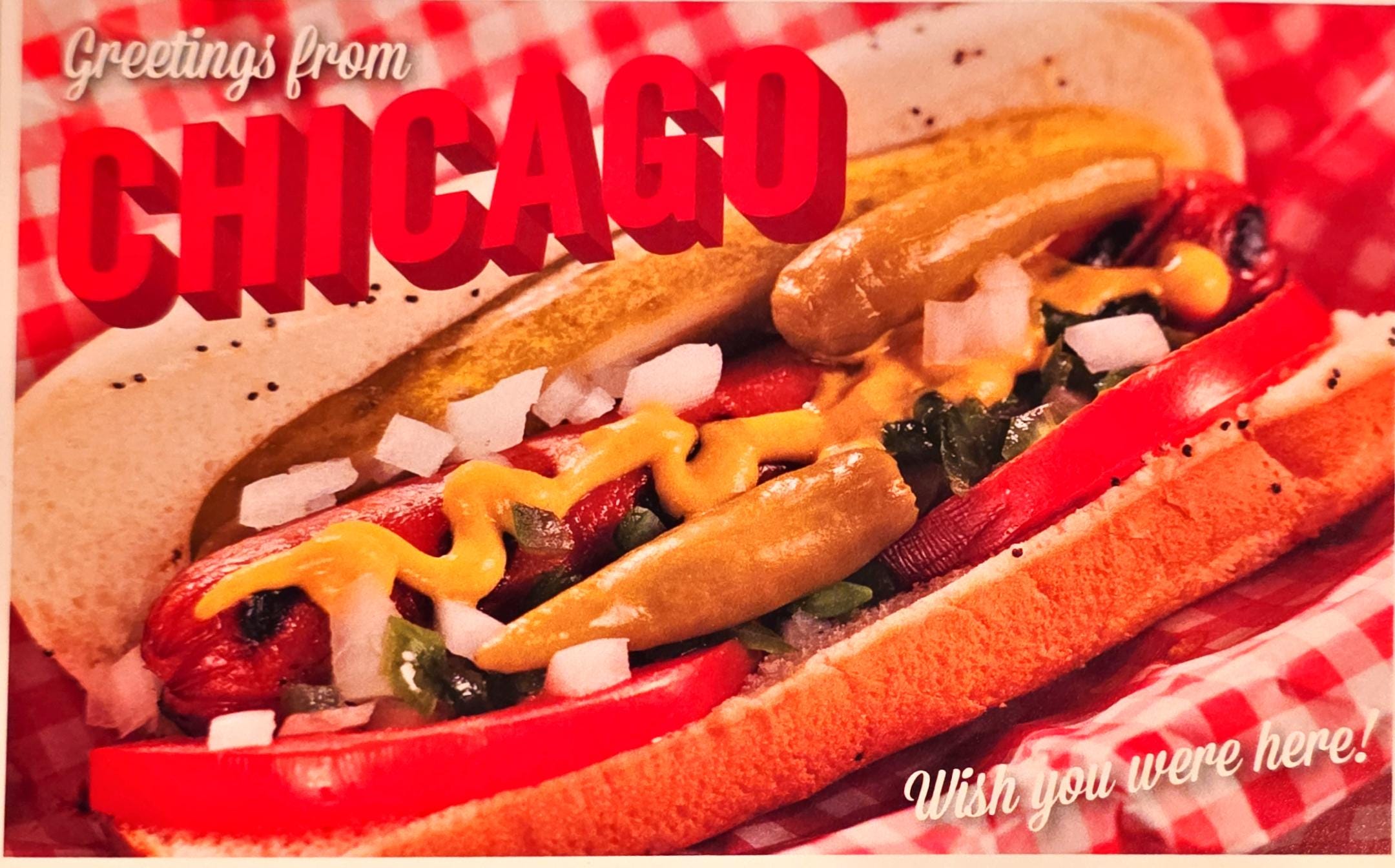
Seated at the table, there was a postcard welcoming us to the table.
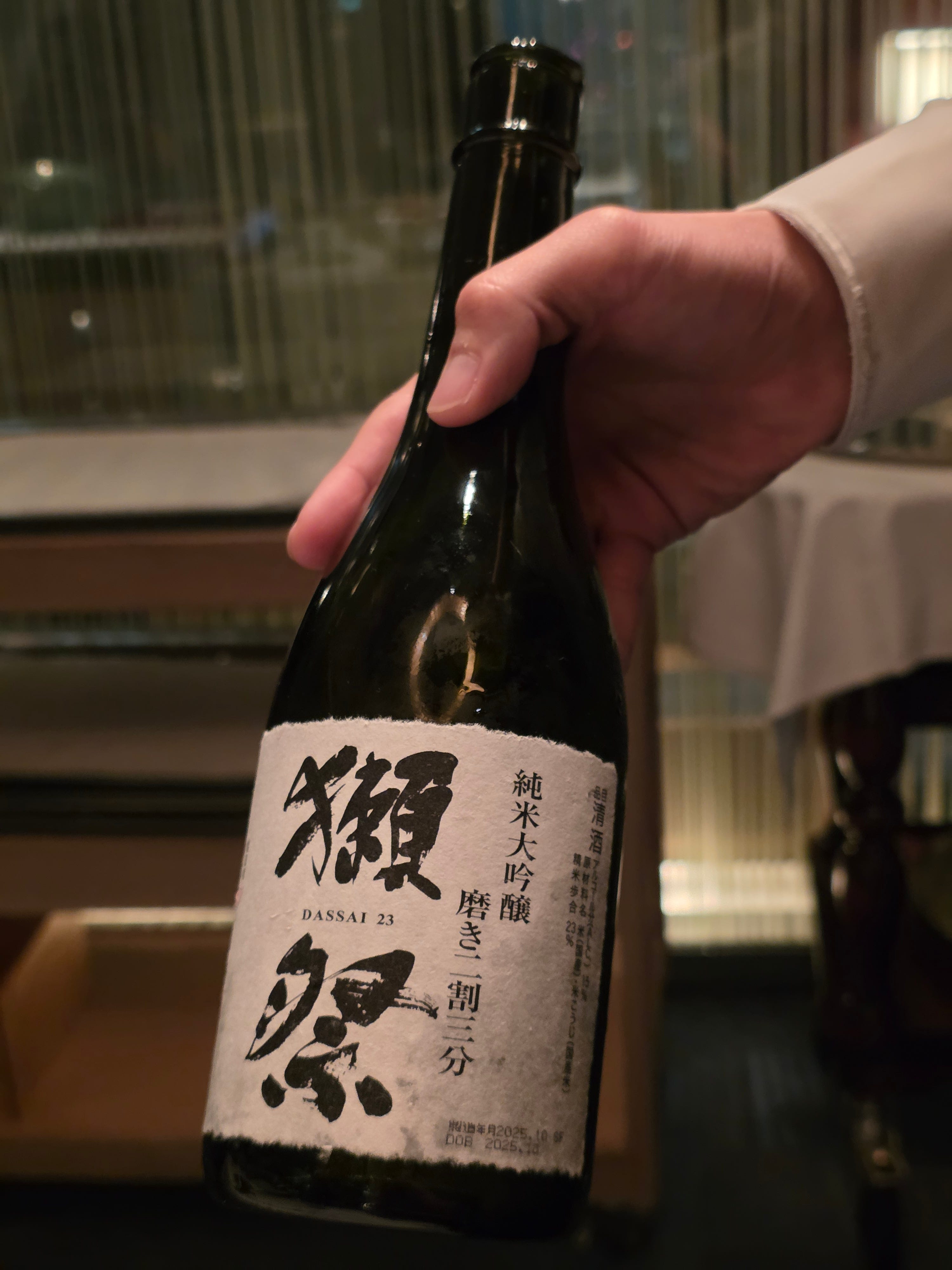
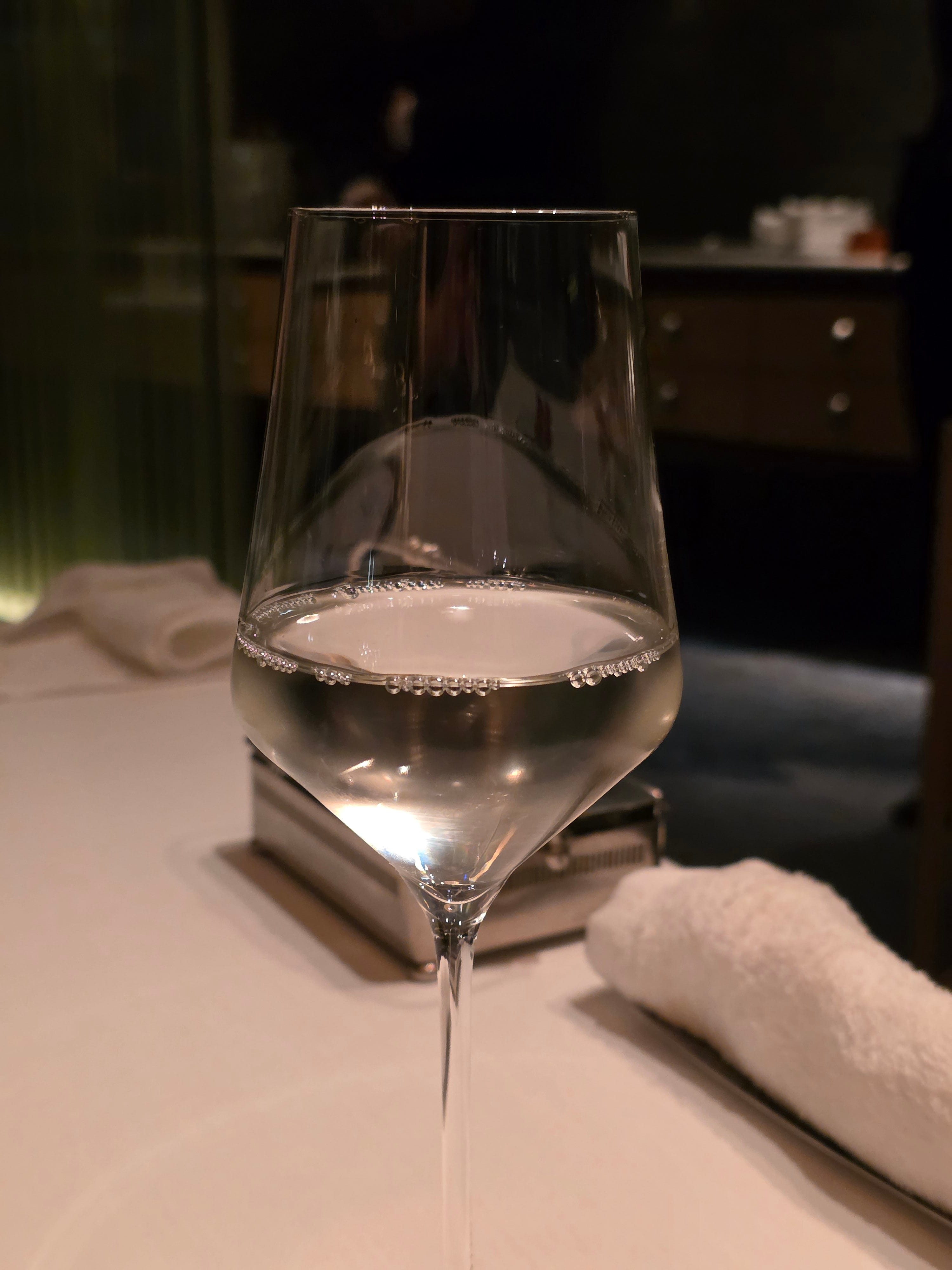
In the spirit of being back in Japan, we went with sake. A Dassai 23, indicating how much of the rice was left after polishing. In this case 23% of the original rice bran.
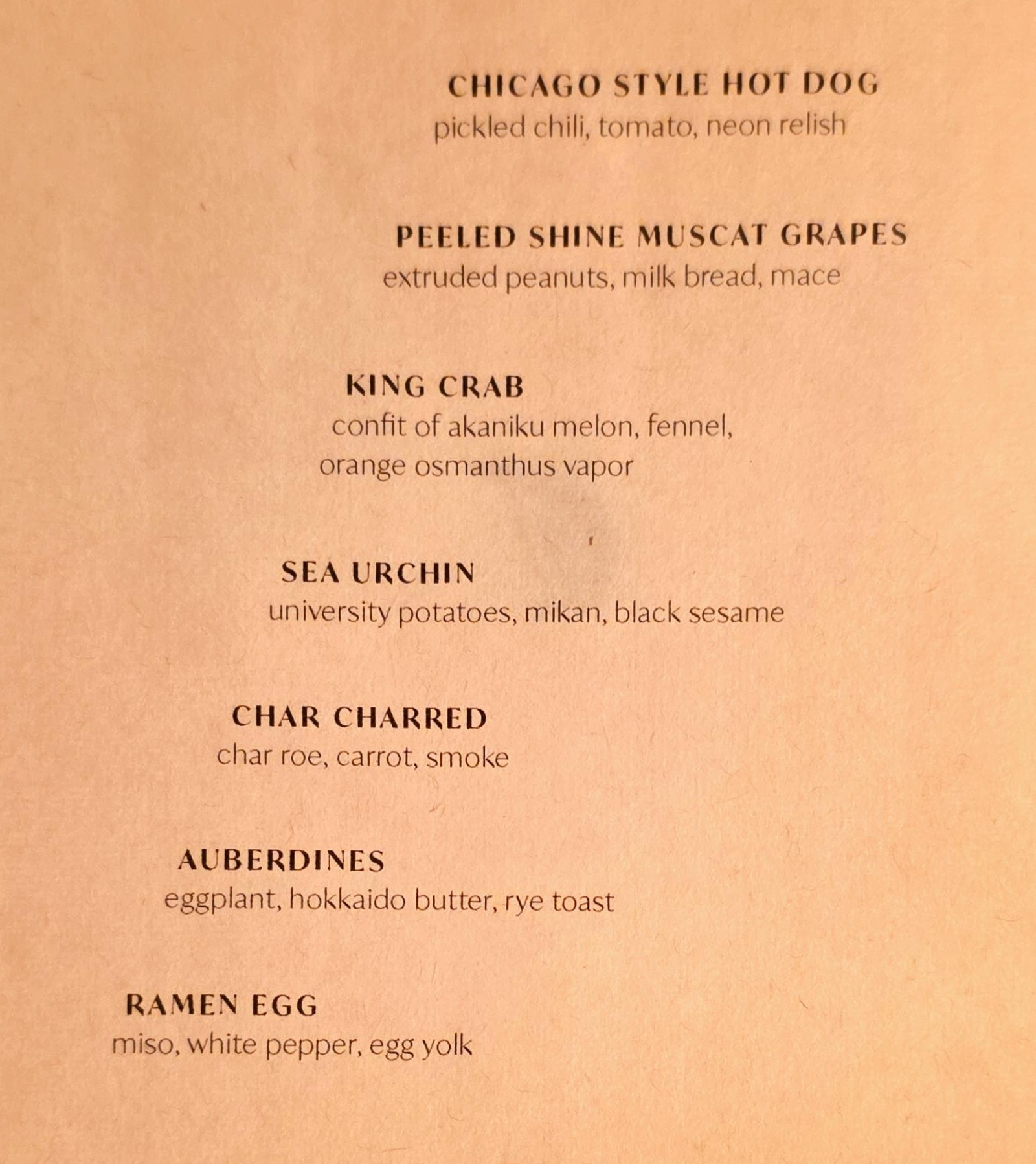
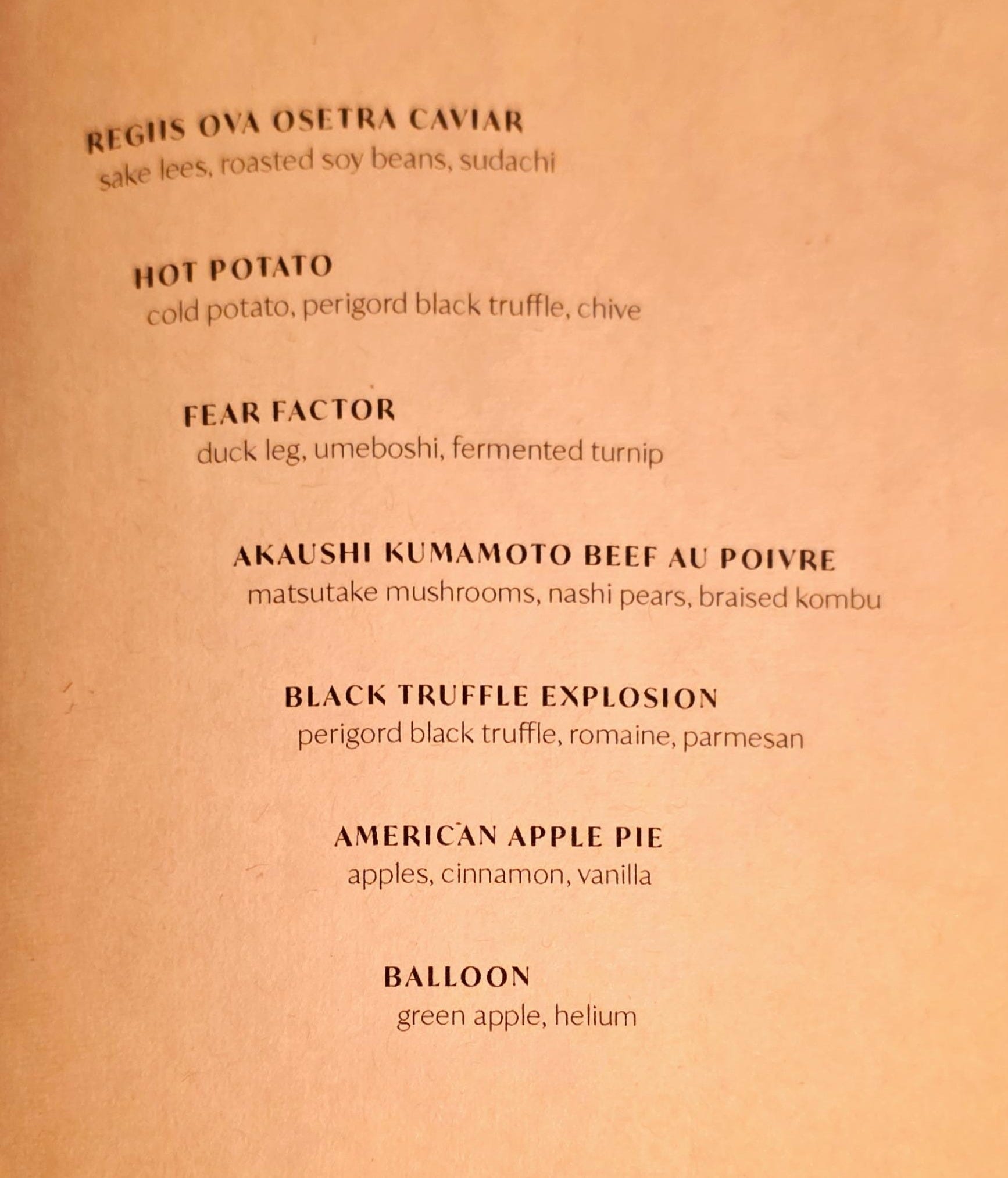
The menu wasn’t revealed until the end of the meal, but included many Alinea classics, as well as unique adaptations trying to incorporate Japanese influences.
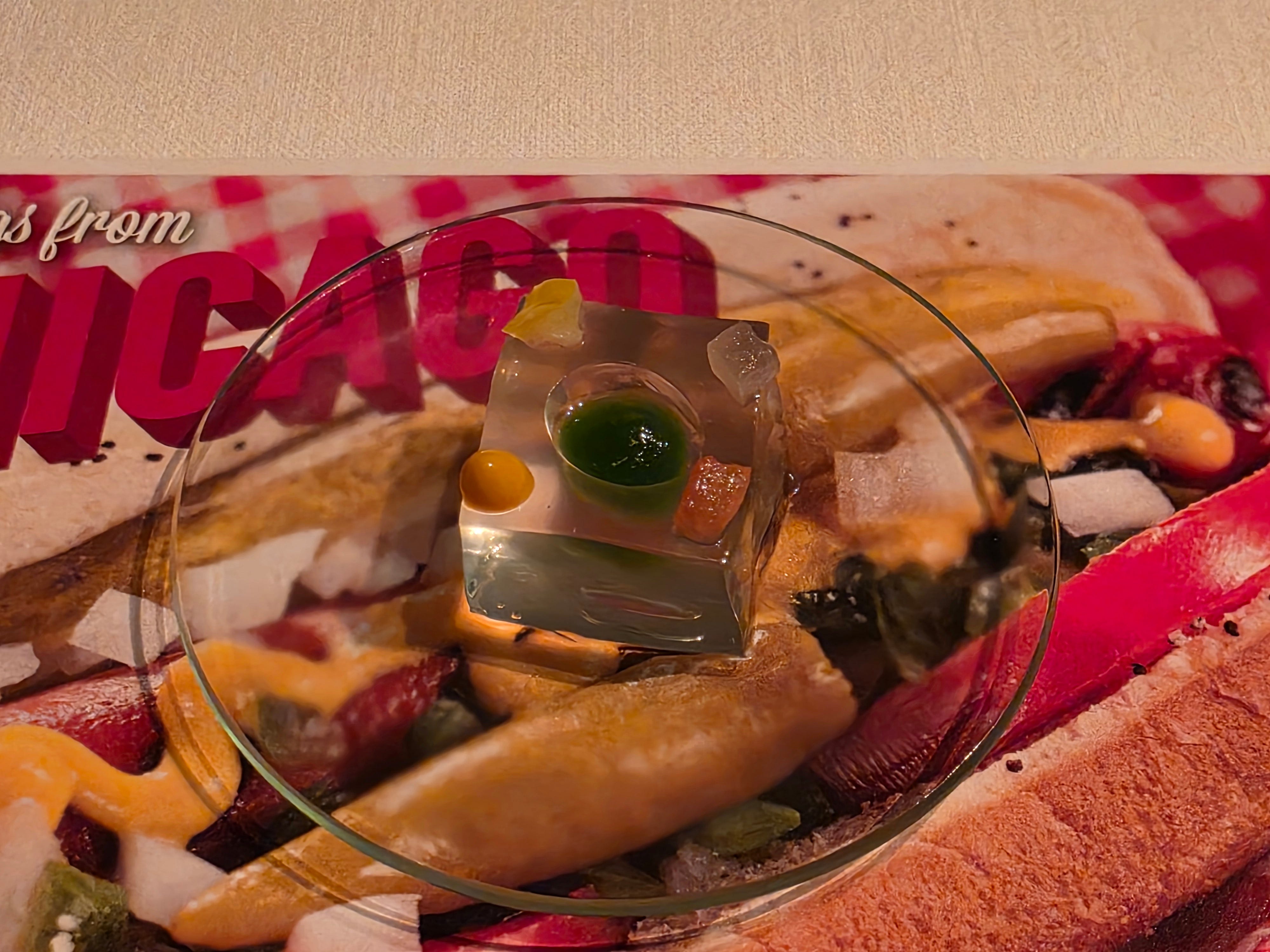
The amuse bouche, which was Alinea’s take on the Chicago style hotdog. All the flavours condensed into a gelatinous cube. It doesn’t seem particularly appealing visually, but once you popped it into your mouth, you got hit with Chicago flavours - hot mustard, tomato, dill pickle and celery salt as well as the all-beef sausage flavour.
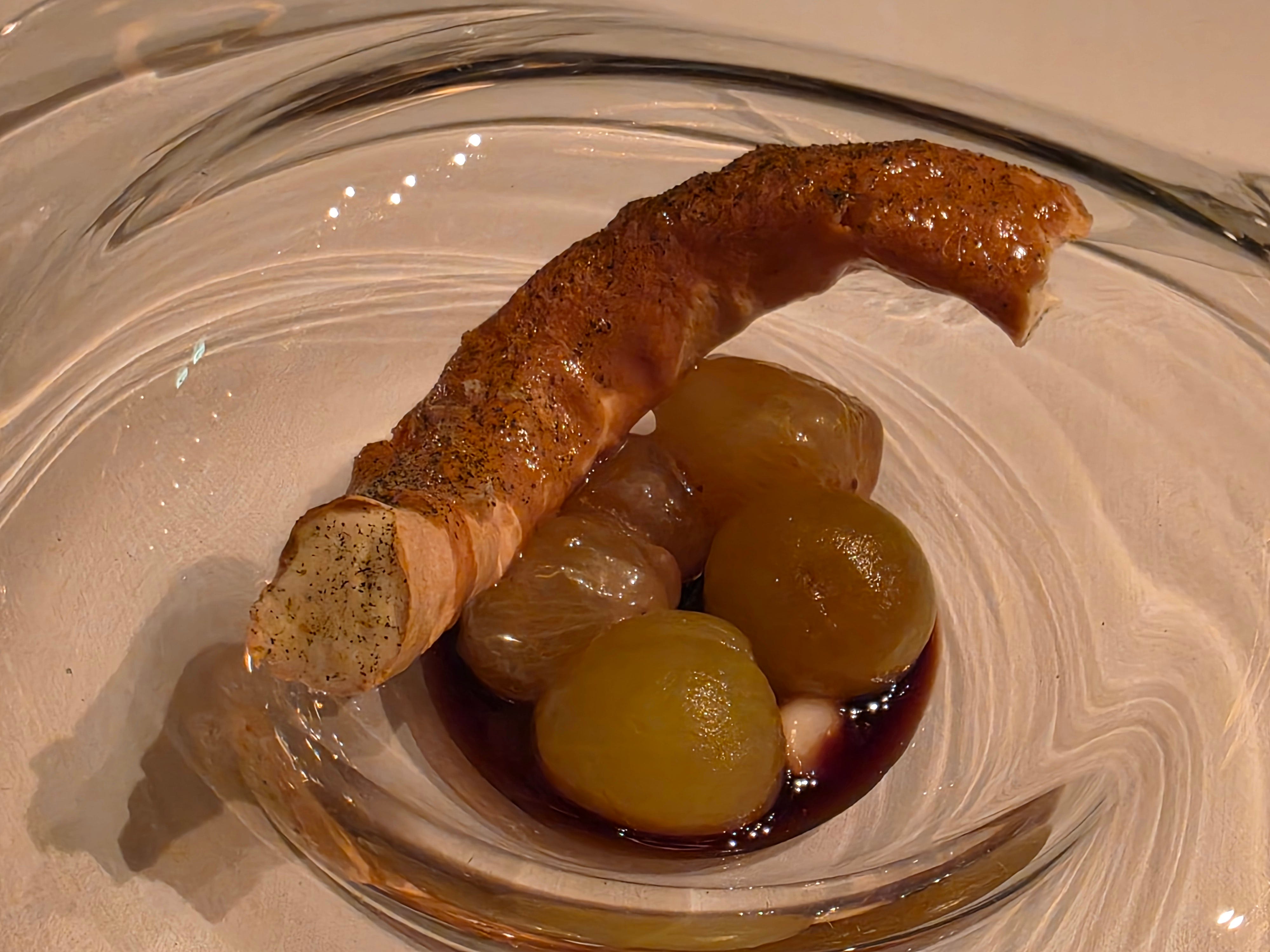
Another all American classic, Alinea’s take on a peanut butter and jelly sandwich, with a extruded peanut shell filled with bread cream, hand-peeled grapes in a sweet vinaigrette. The server told us the story of Chef Achatz hand-peeling grapes when he was at the French Laundry and how he always wanted to make a dish that played on the luxurious feeling of hand-peeled grapes.
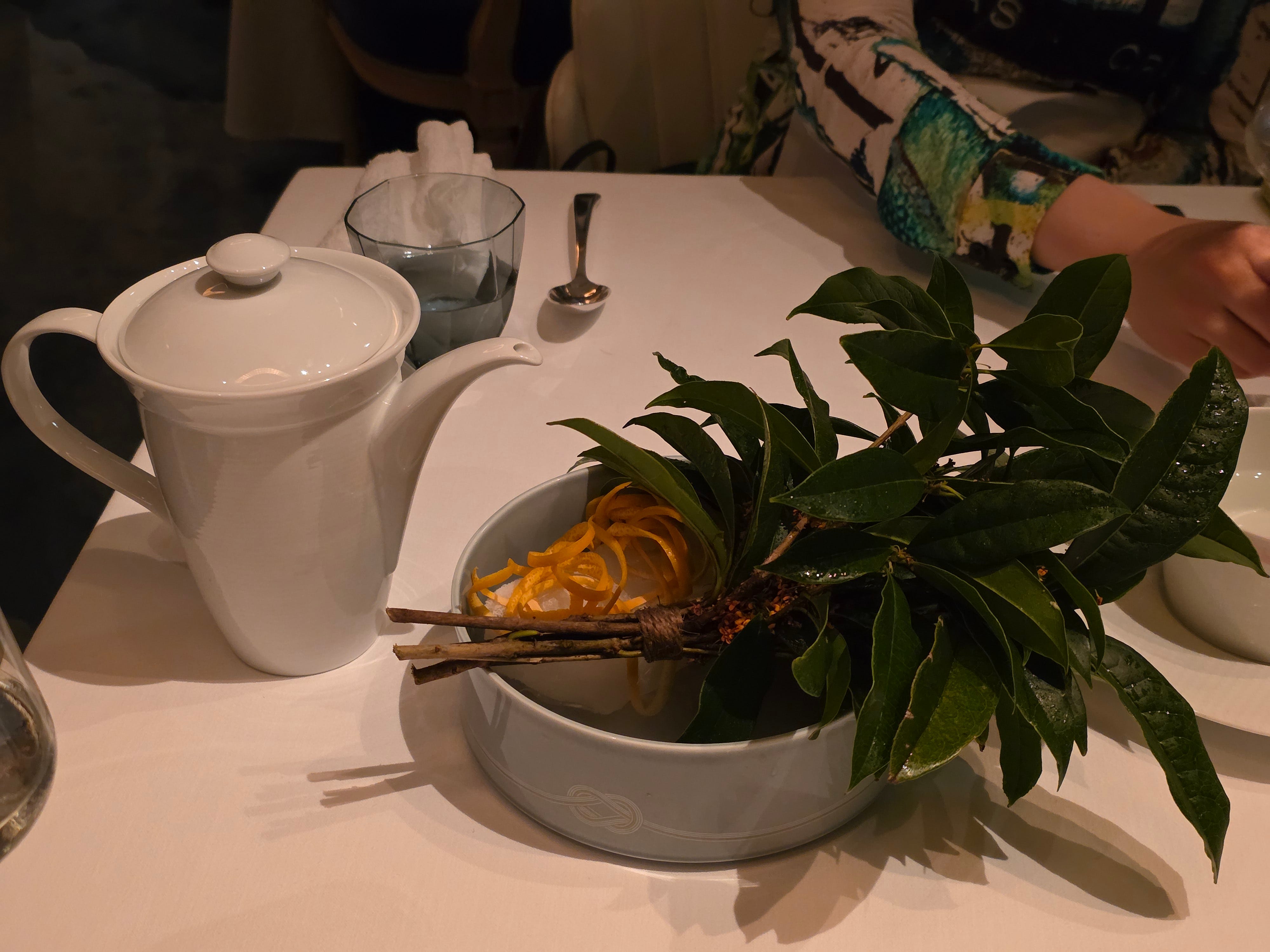
The next dish featured a unique, fragrant centerpiece with osmanthus tea poured on top of dry ice and orange peel for a pleasing aroma.
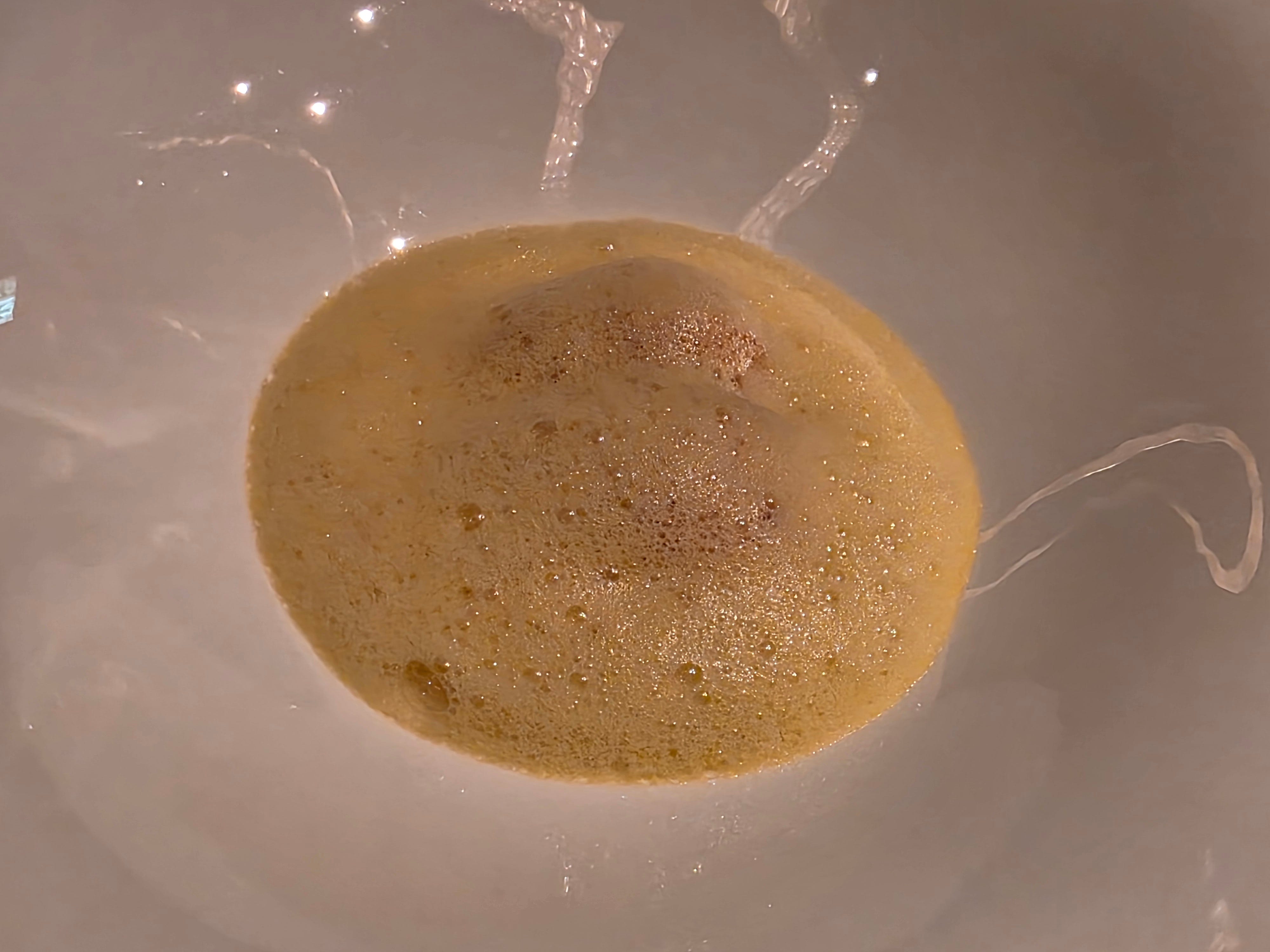
The dish itself was a bit less eventful, with king crab in an osmanthus foam and mandarin jelly with a bit of pickled fennel.
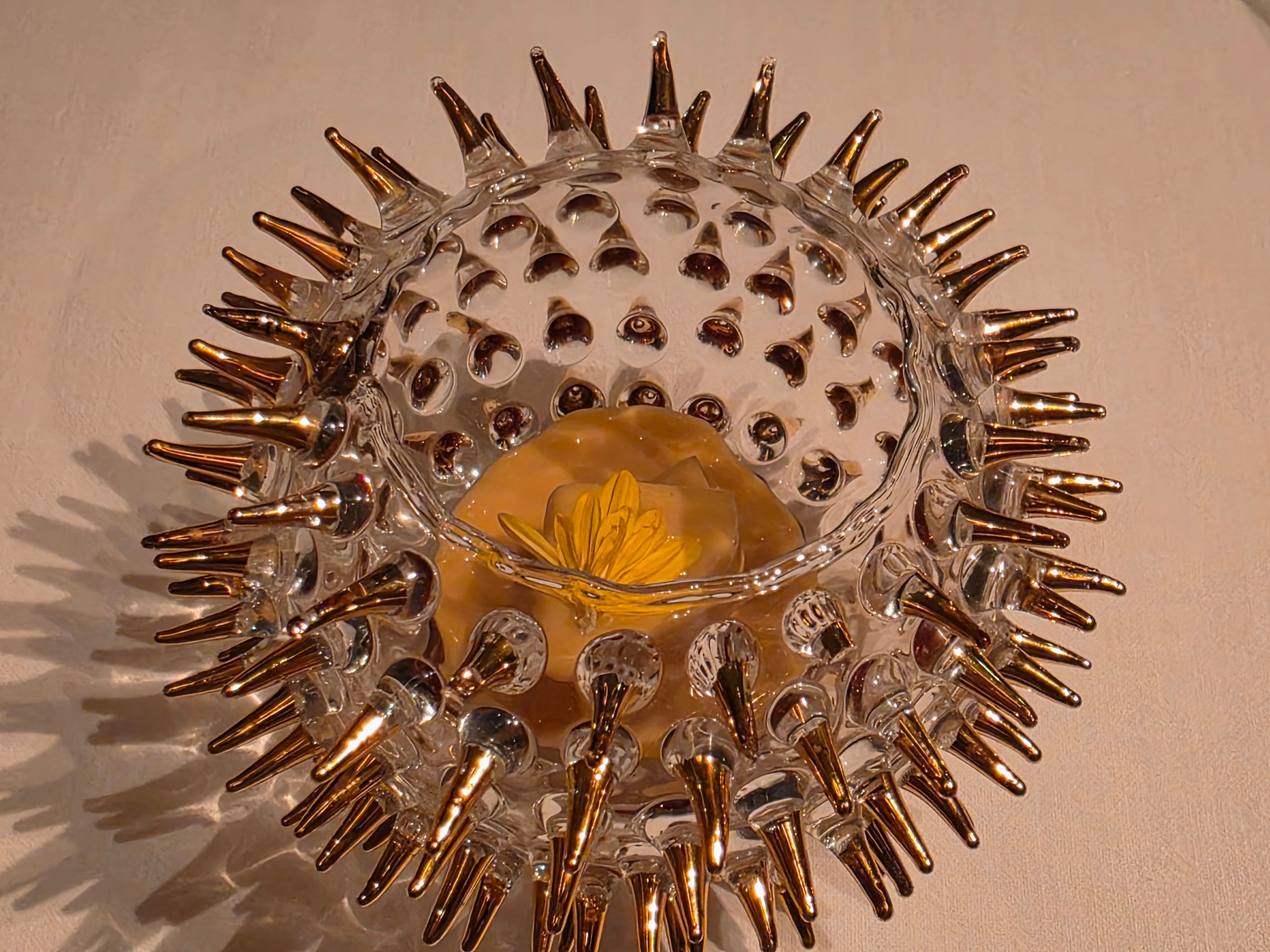
Using extremely fragile dishes that Alinea had specifically made for the restaurant and brought over from Chicago, the next dish had a sea urchin butter sake sauce on top of two slices of persimmon. Really well balance of sweet, sour and salt.
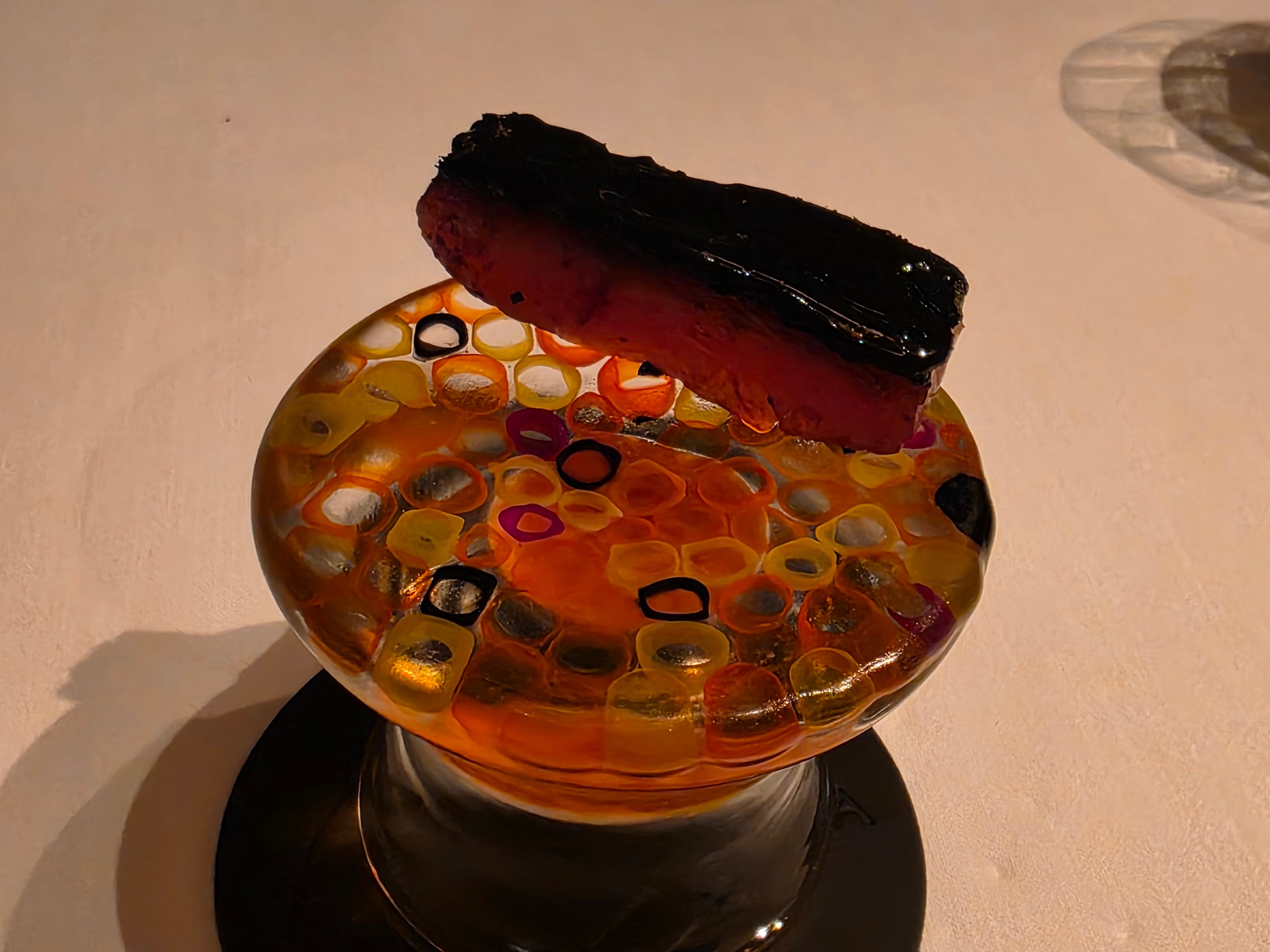
The next dish was called Char Charred. Okay, that seems pretty straightforward. A piece of sweet Arctic Char jerky that is crispy and well charred with a bit of ash flavour on top. Little did I know that there was another surprise waiting for me.
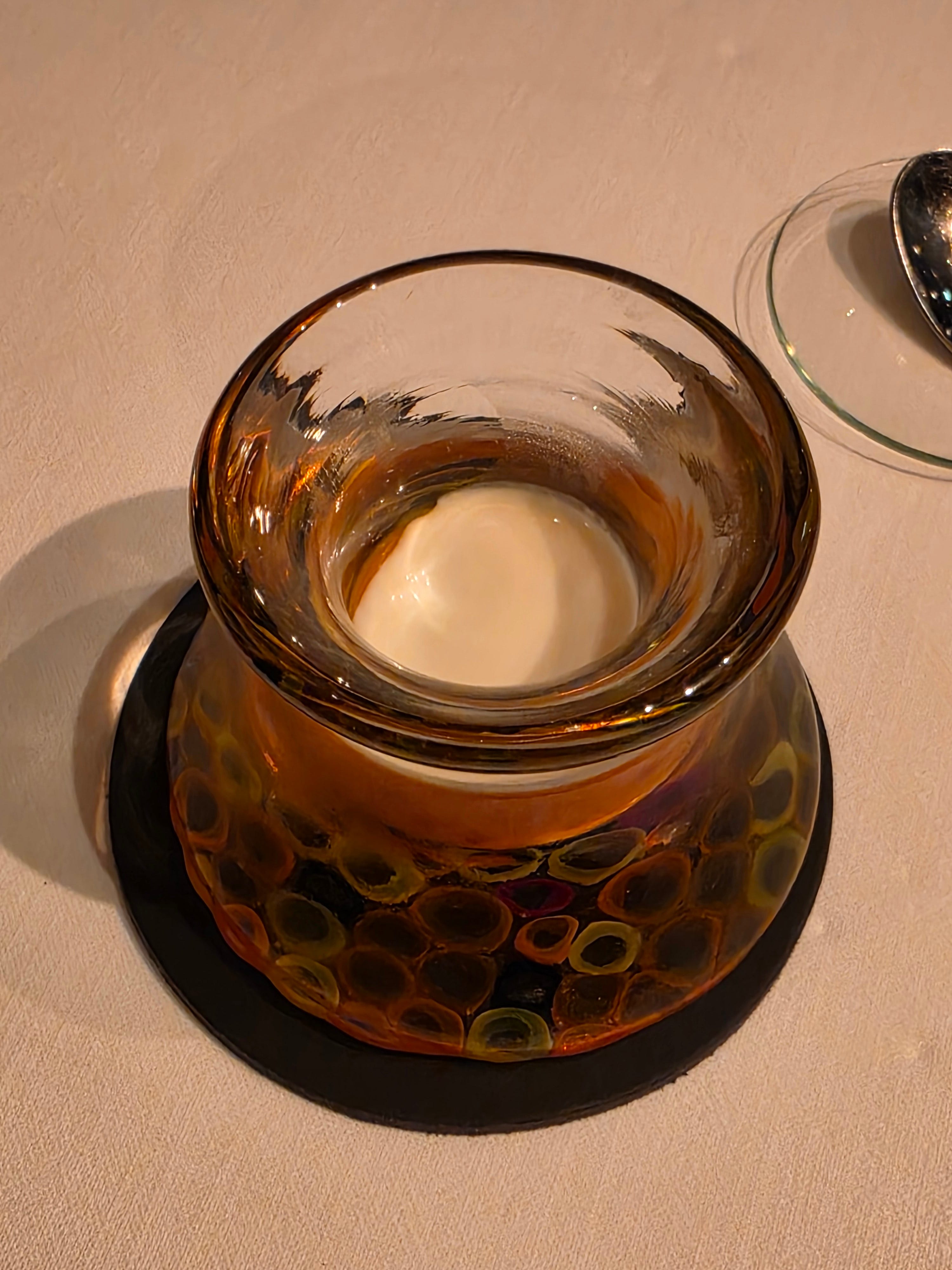
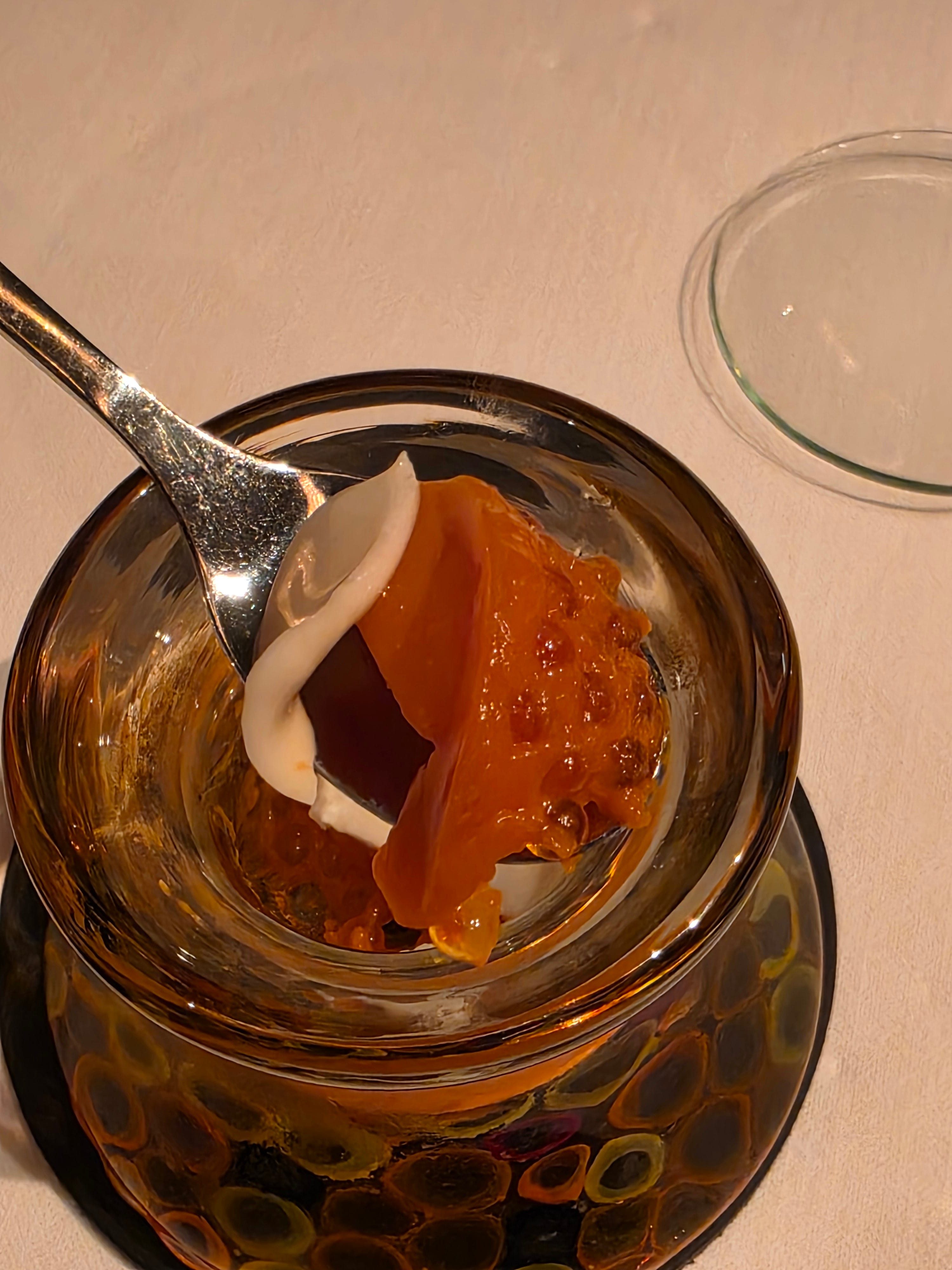
Once we finished the piece of char, we were instructed to turn the dish around to access the second preparation - char roe in a smoked carrot and lemongrass pudding, topped with a thin layer of cream.
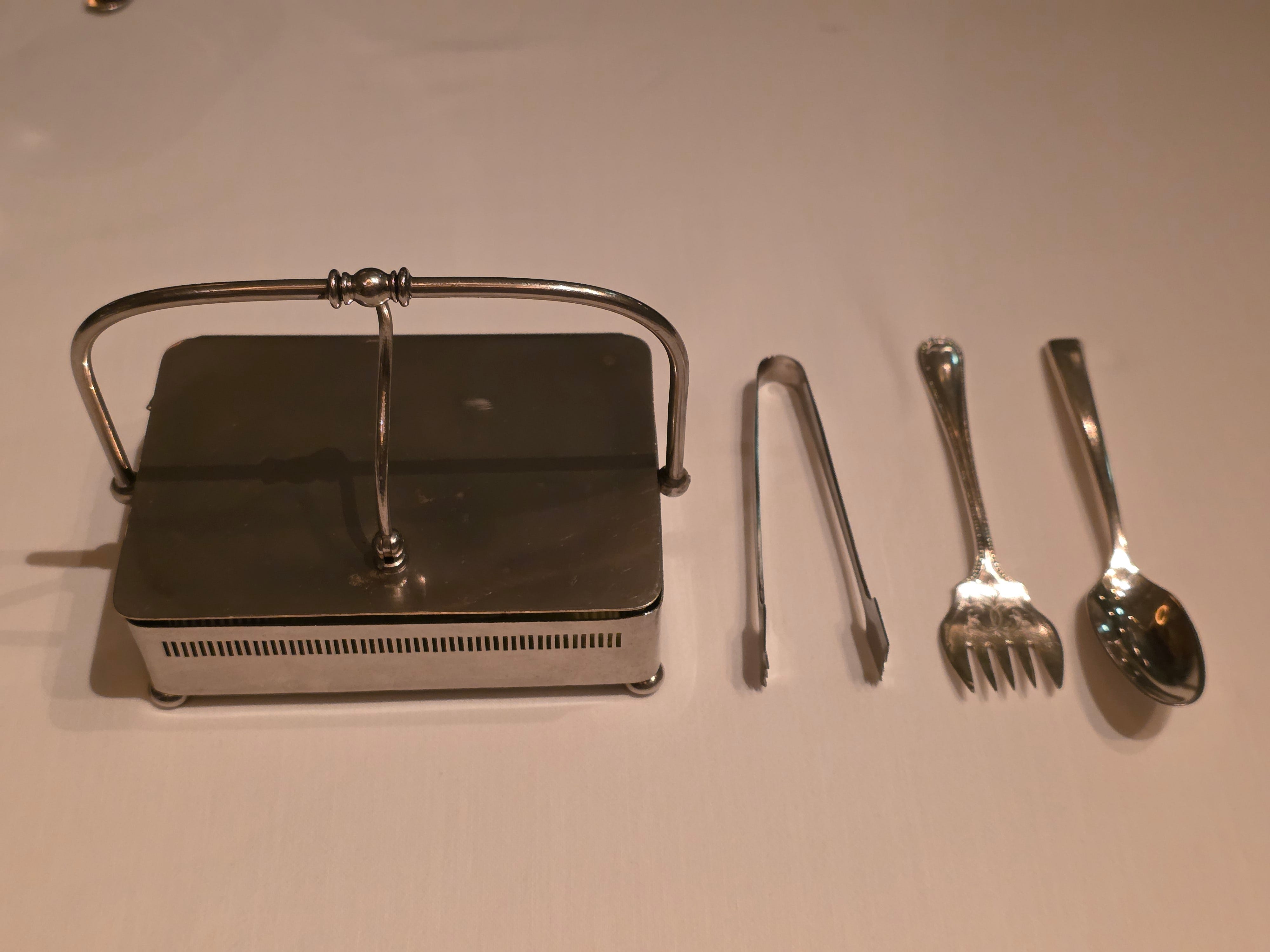
The surprises kept coming, with a box that had been lying on the table all night - I assumed it held napkins. The next course had them bring the box to the cener of the table along with serving utensils.
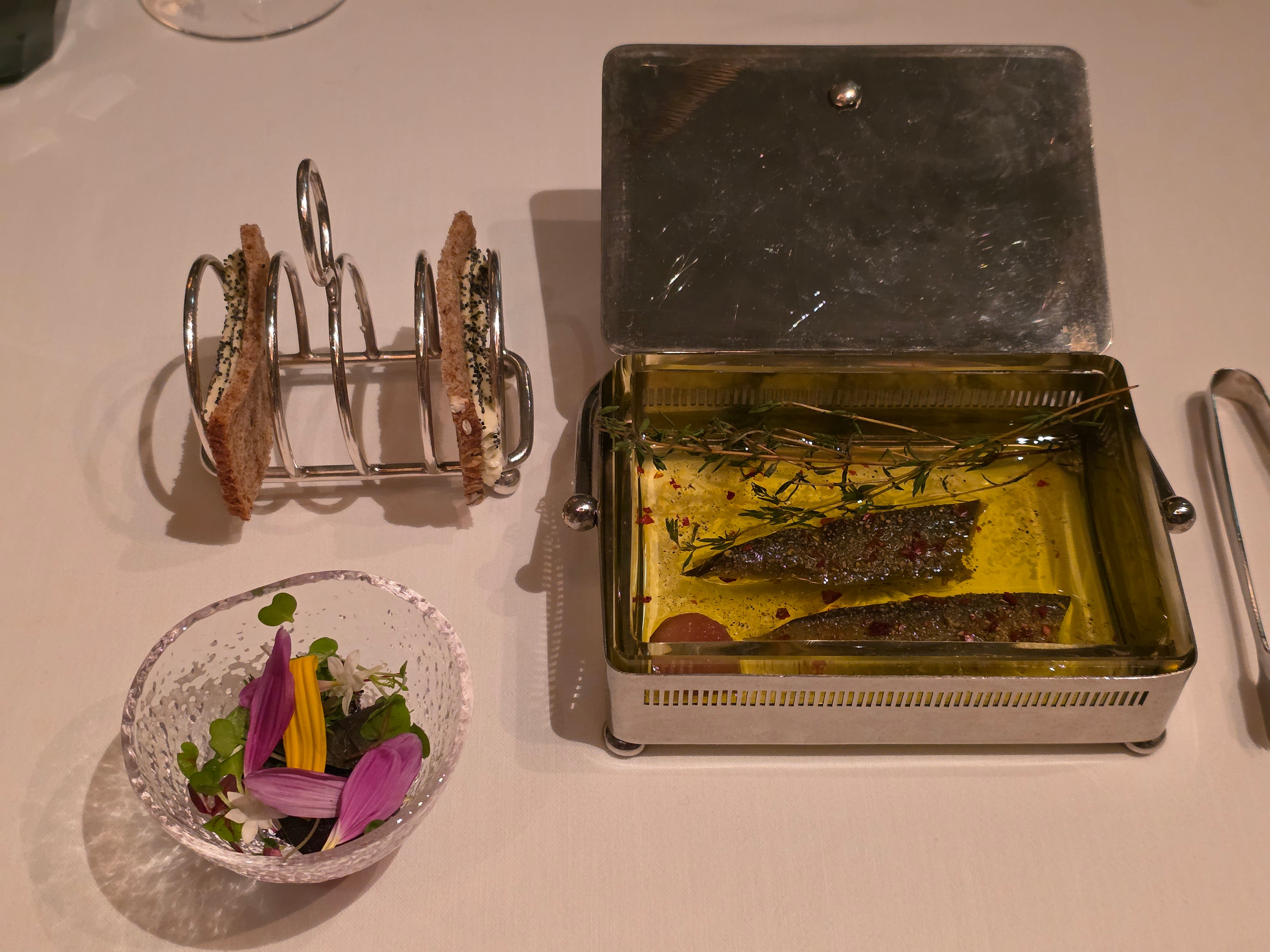
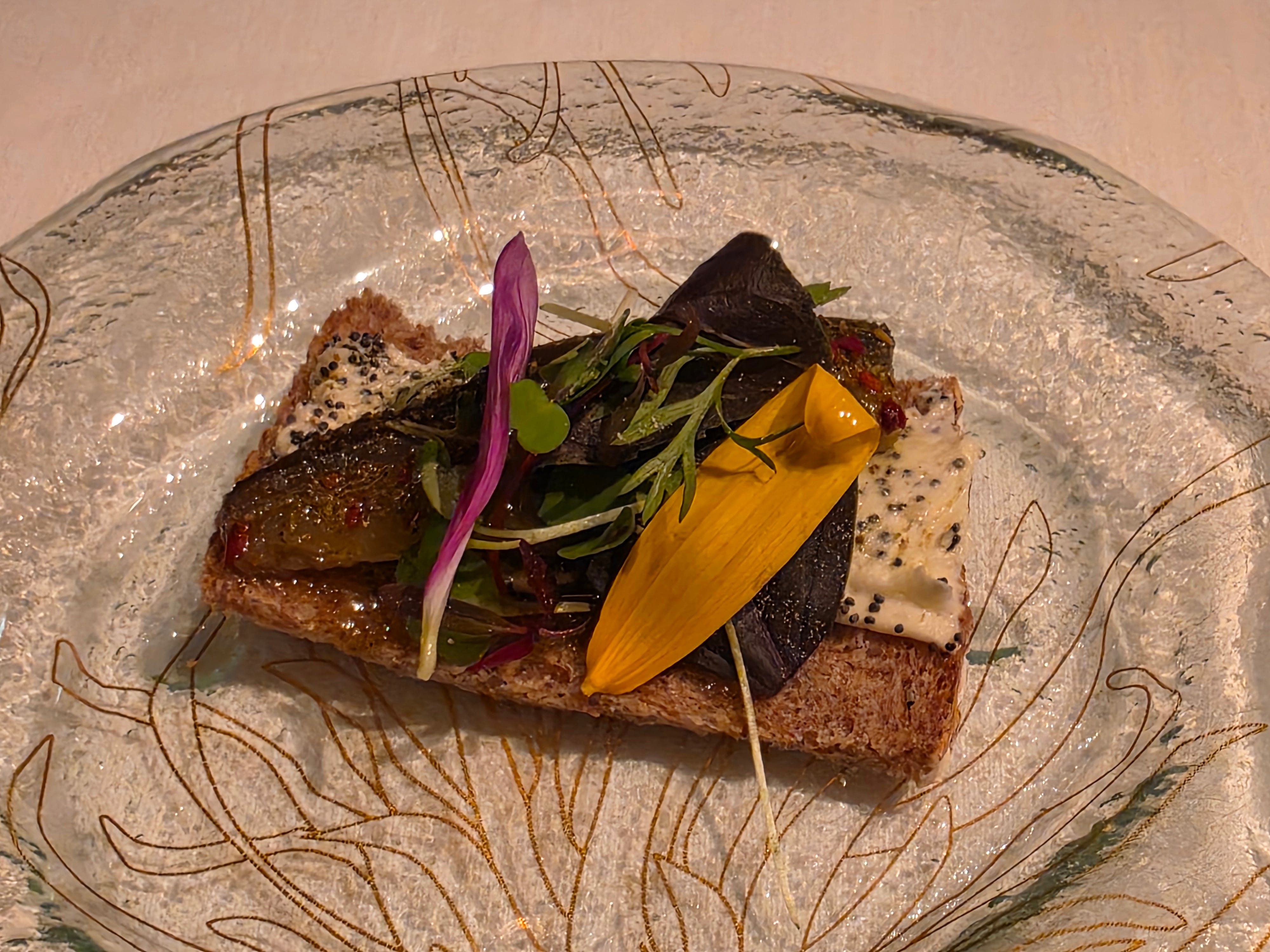
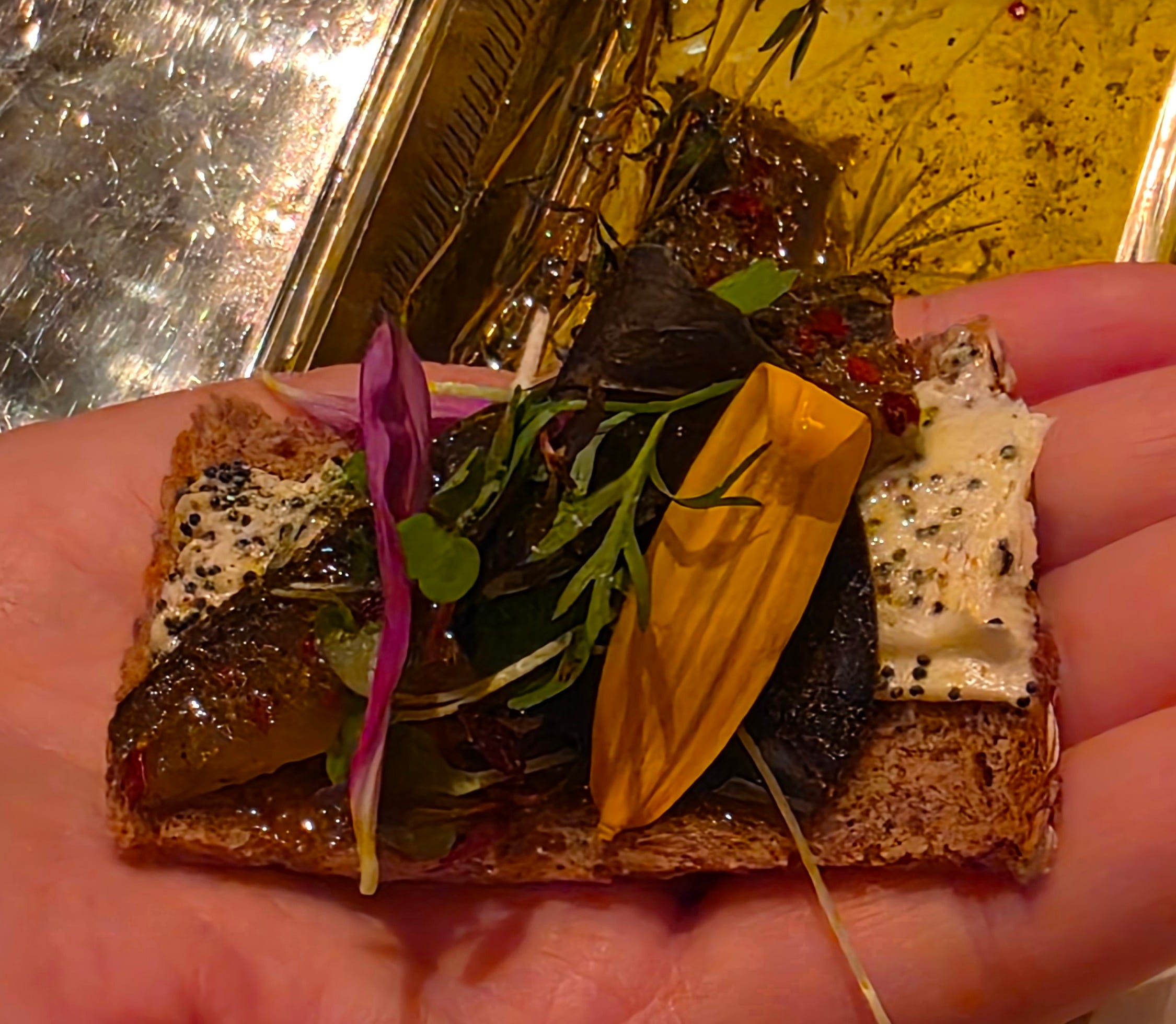
To prepare the classic British favourite, sardines on toast, they brought out thin slices of melba rye toast, fermented Hokkaido butter, opened the box of rosemary and garlic infused “sardines” and some microherbs for toppings. As it turns out, the “sardines” were actually quick-limed Aubergines and contained no fish whatsoever. Aptly, the dish is called “auberdines”. Looks, smelled and tasted exactly like sardines on toast.
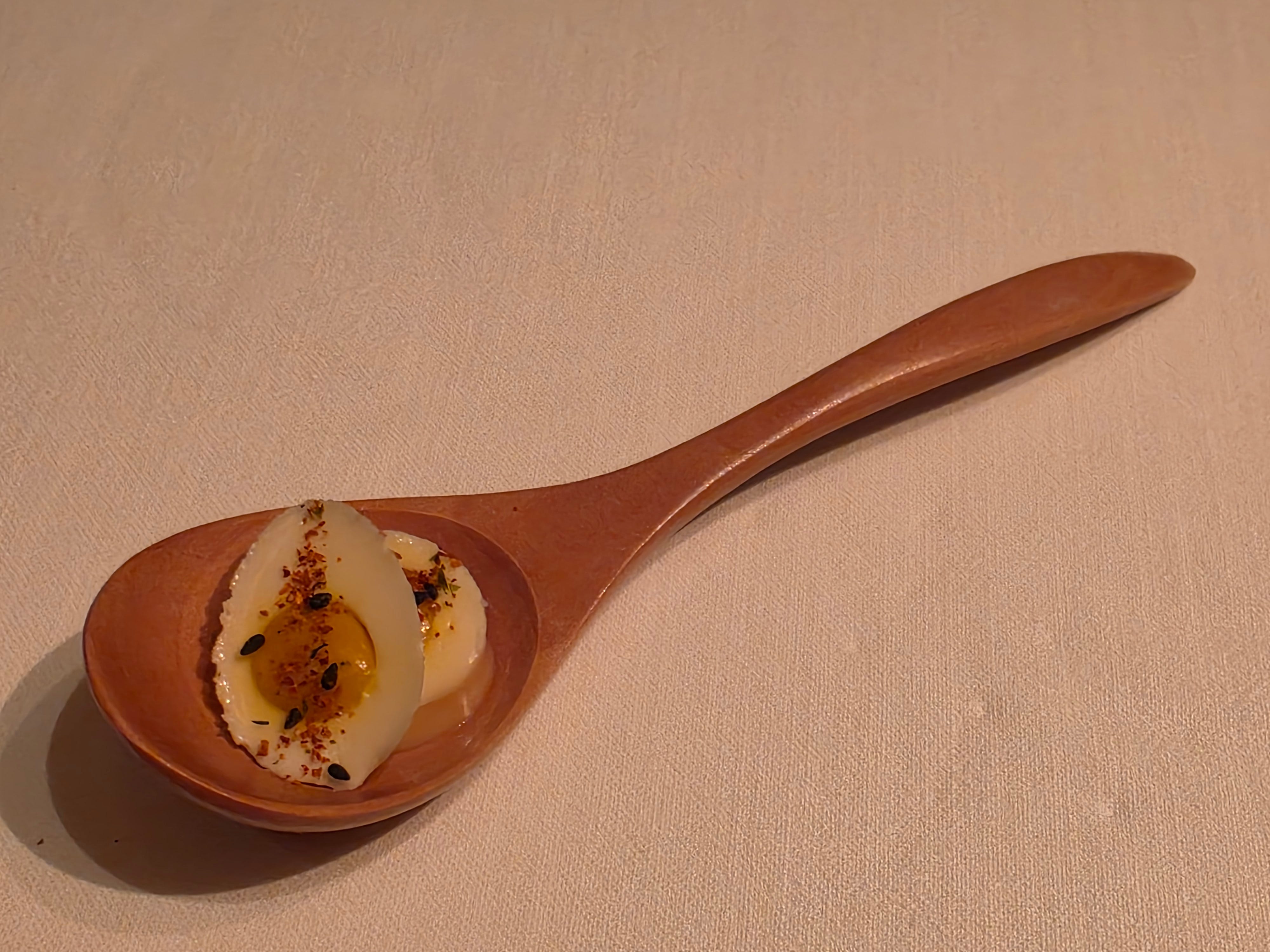
The next dish was called “ramen egg” and contained all the flavours in ramen, condensed into a tiny quail egg. The egg white formed off cream and white pepper, the yolk formed from chicken stock and ramen noodle puree. Interesting, but a bit “meh”.
At this point in the meal, my companion remarked on the overuse of caviar in fine dining, and how many restaurants use luxurious ingredients as a crutch instead of focusing on the quality of the cooking. She was quite glad that she hadn’t seen a pile of caviar at this event.
Which obviously meant the next dish would be a caviar dish.
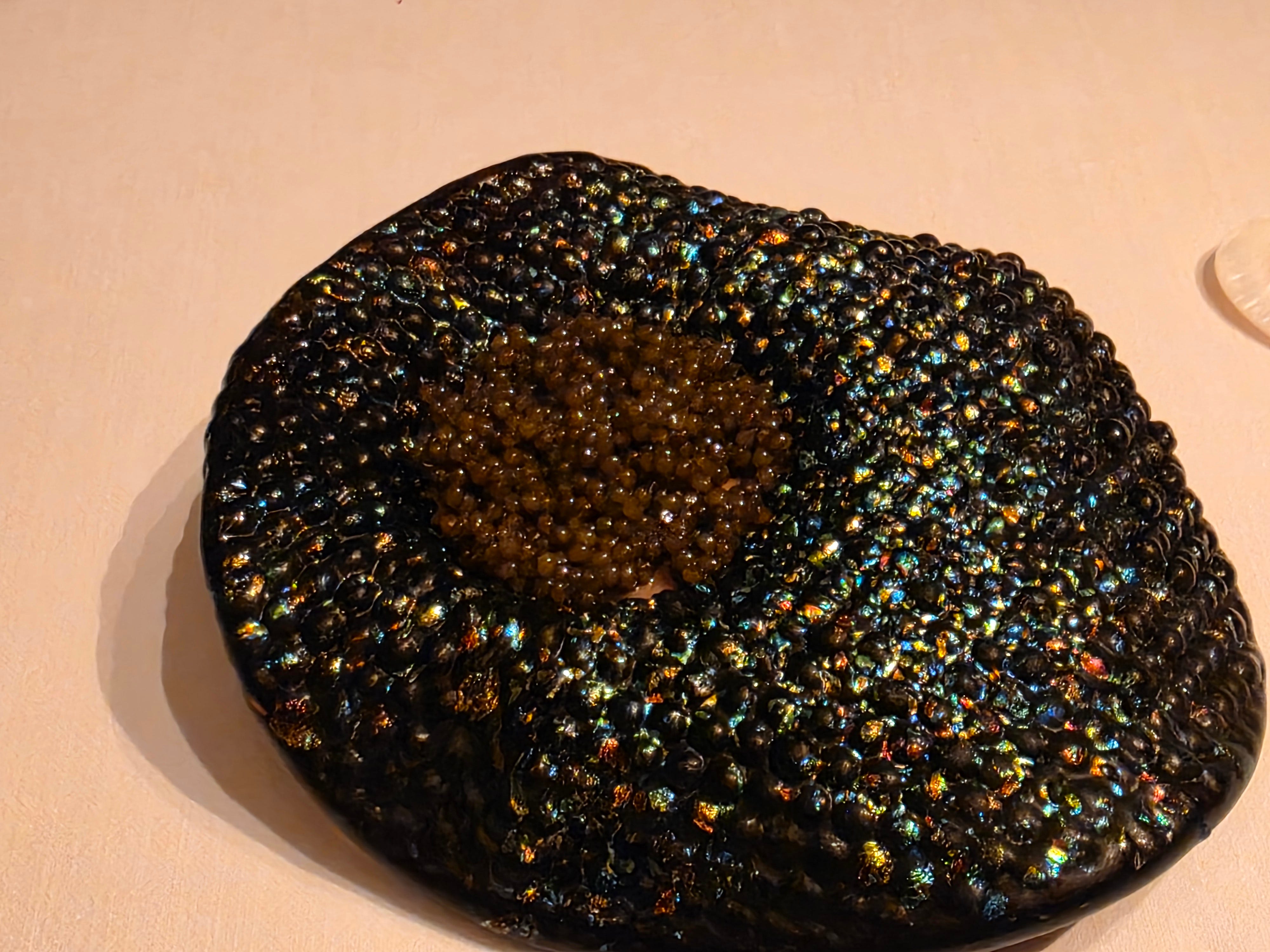
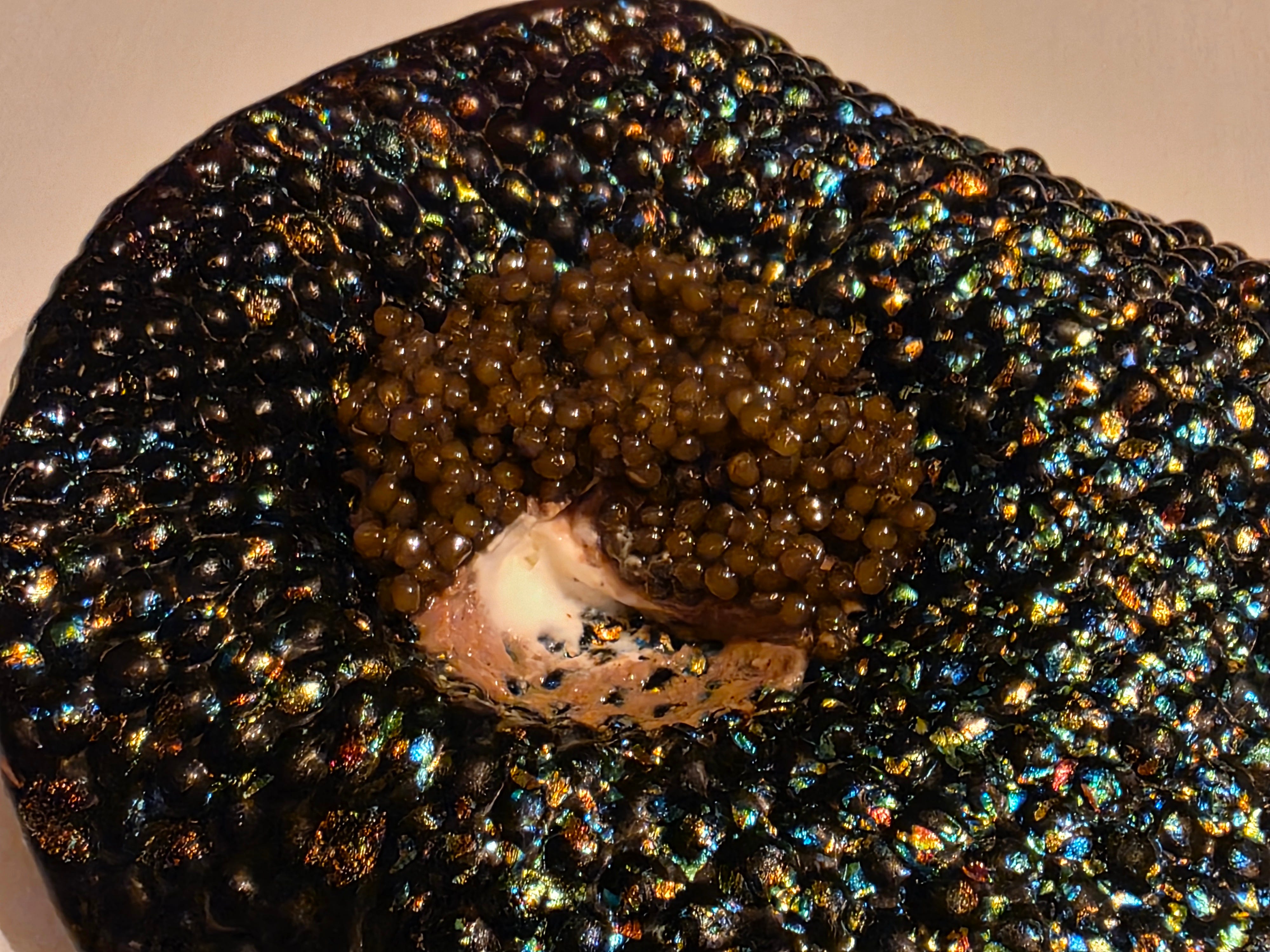
Served on a caviar textured dish with a mussel-like sheen, a generous portion of caviar on top of a soybean custard and sake leas cream. The server remarked that this dish tried to incorporate Japanese ingredients and was a modification of a classic Alinea dish.
Yeasty, bitter, slightly burnt and nutty, they probably should’ve just done the classic Alinea dish. Sake leas, soybean and caviar do not work together. This was one of few dishes that was a bit of a flop.
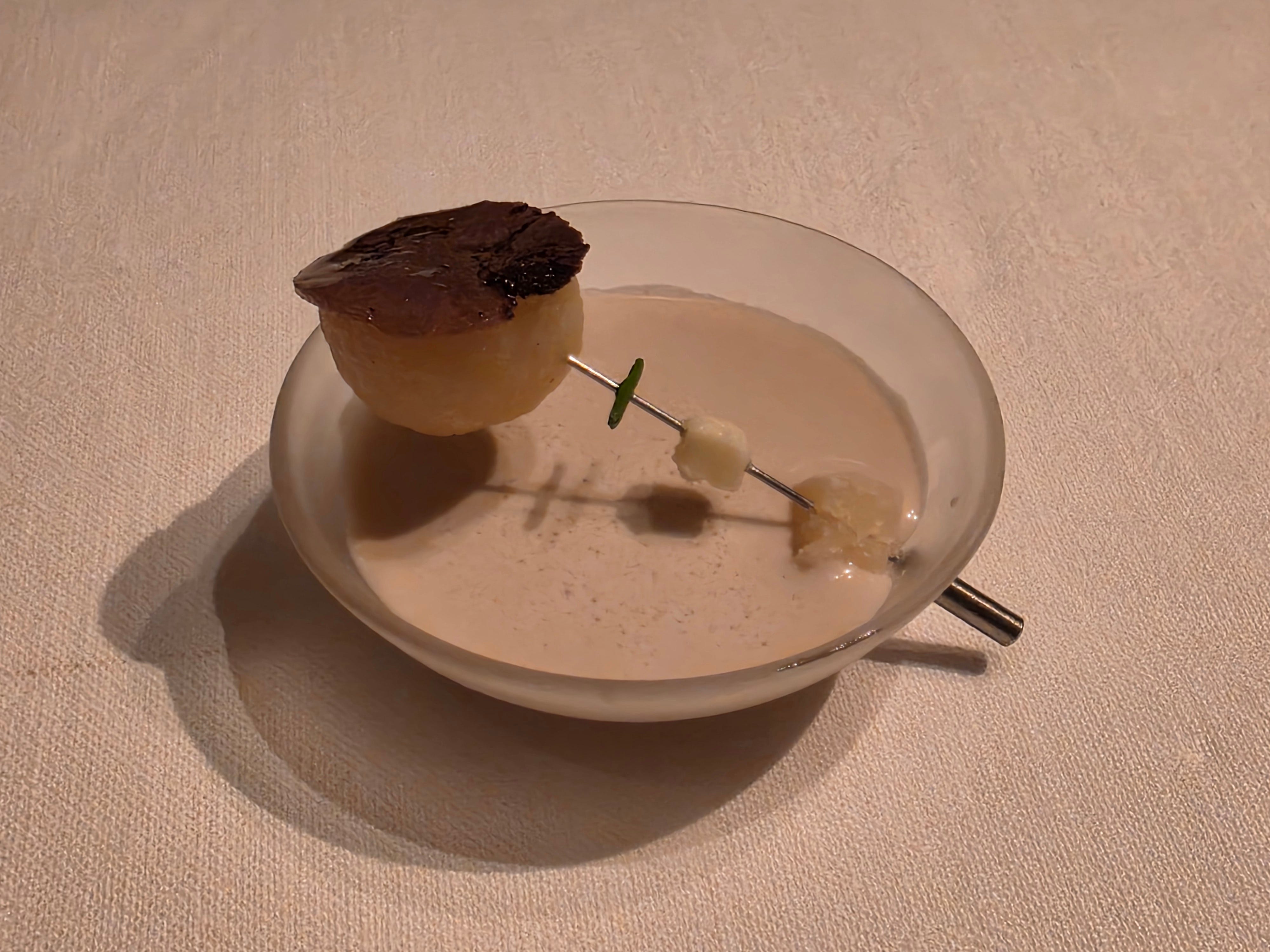
Going back to Alinea classics, a really fun dish of “hot potato, cold potato” contrasting temperatures with a hot potato ball with black truffle suspended above a cold potato vichyssoise. We were instructed to pull the pin, let the hot potato ball falls into vichyssoise and shoot it all down in one gulp. Fun, rich and delicious!
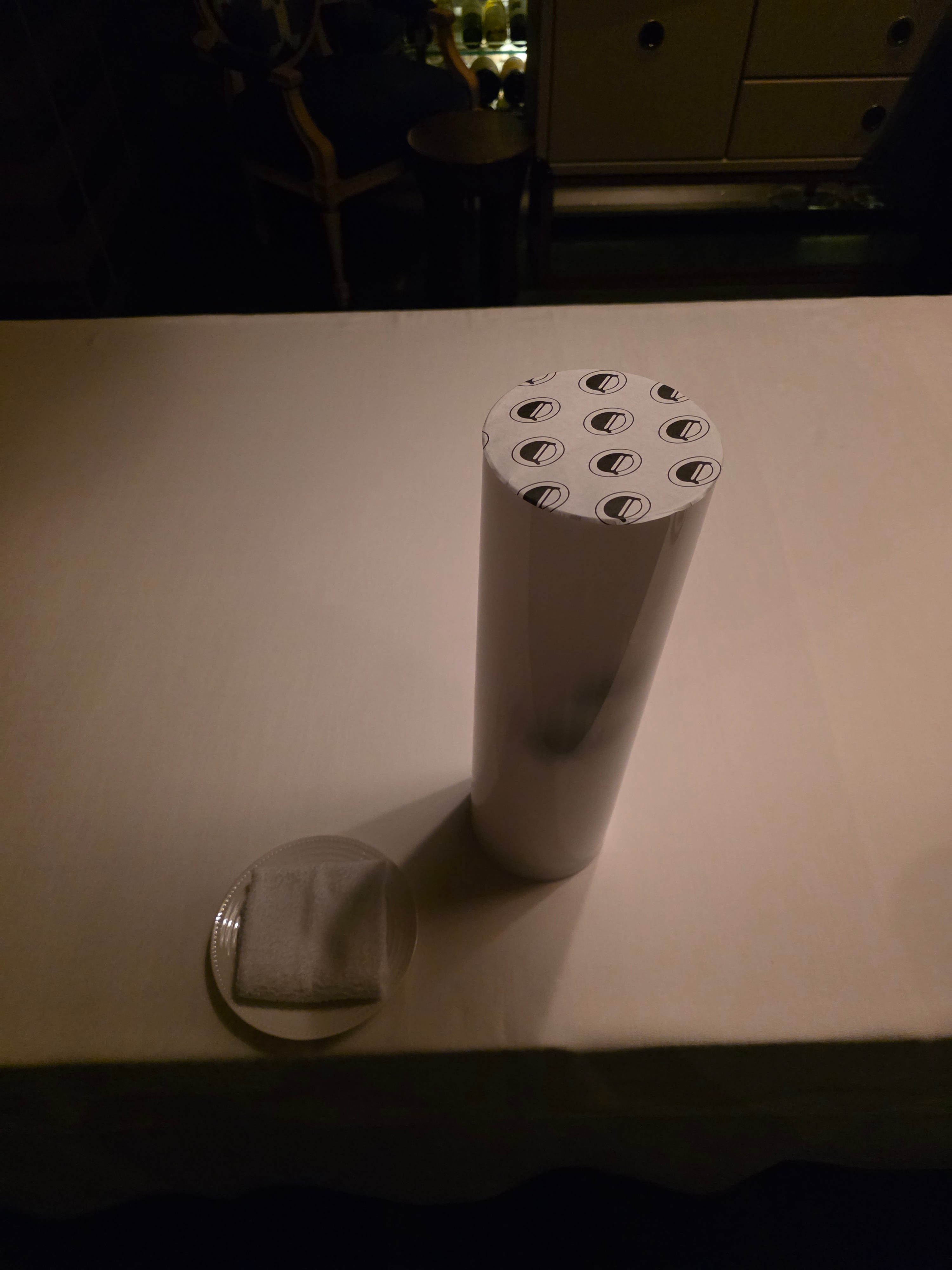
The next course took us for a walk away from the table, where we were met with a curious opaque tube. We were told to plunge our hands through the wax paper, grab whatever was underneath.
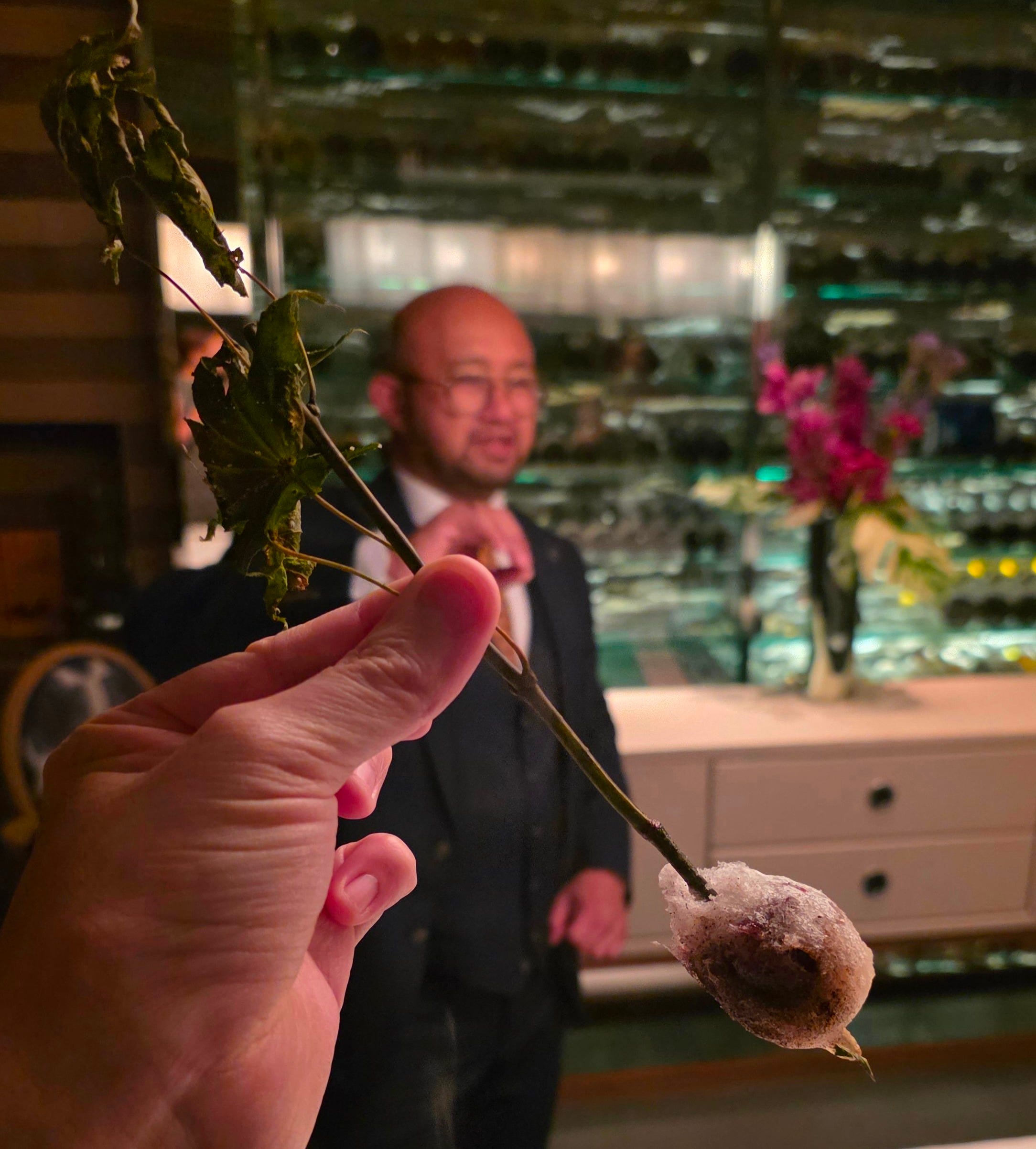
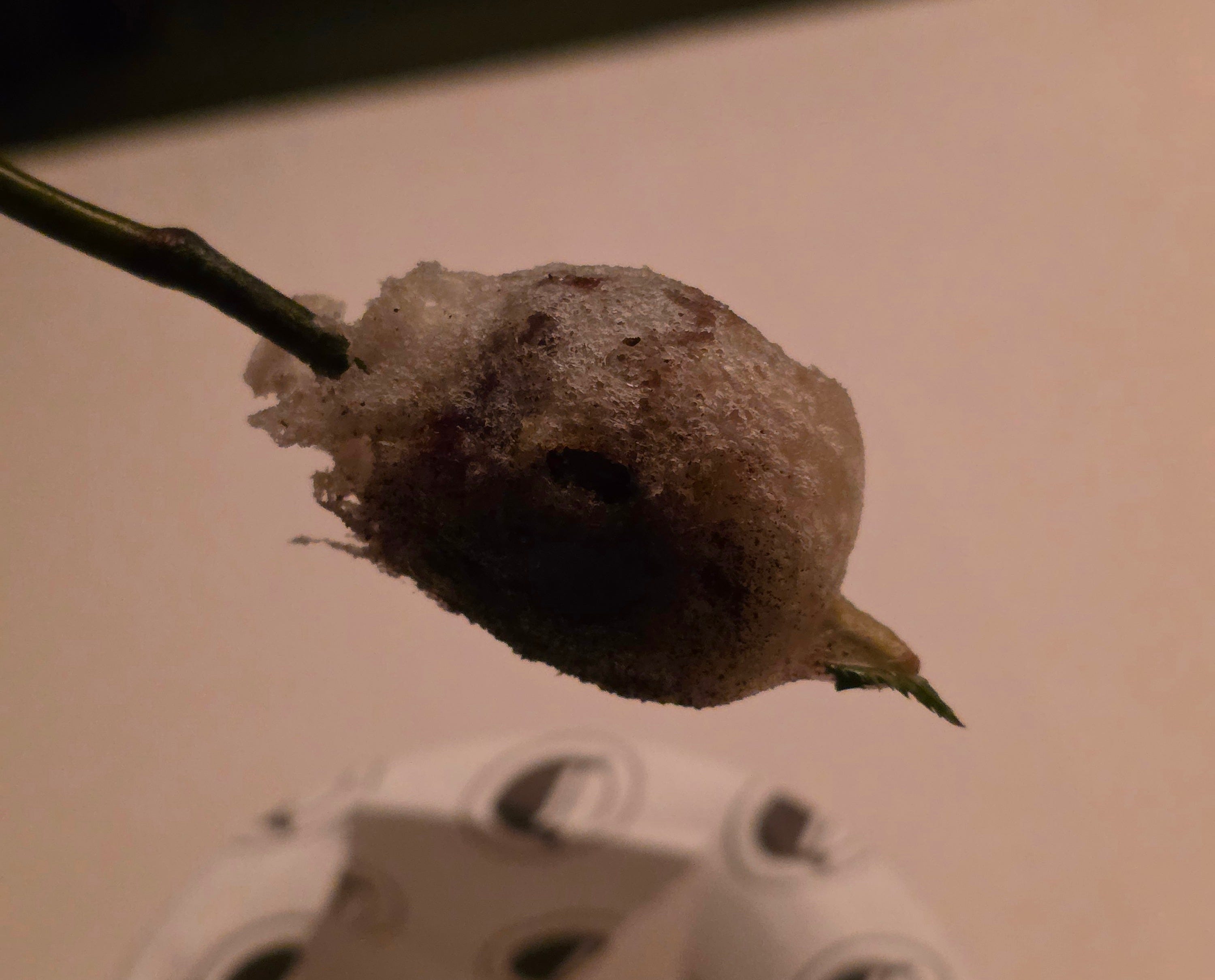
Expecting the worse, and hoping that whatever was inside wasn’t still alive, I dutifully grabbed the skewer underneath. A piece duck confit with plum and pickled turnip tempura. Slightly sweet, savory and extremely light and crispy, another big hit.
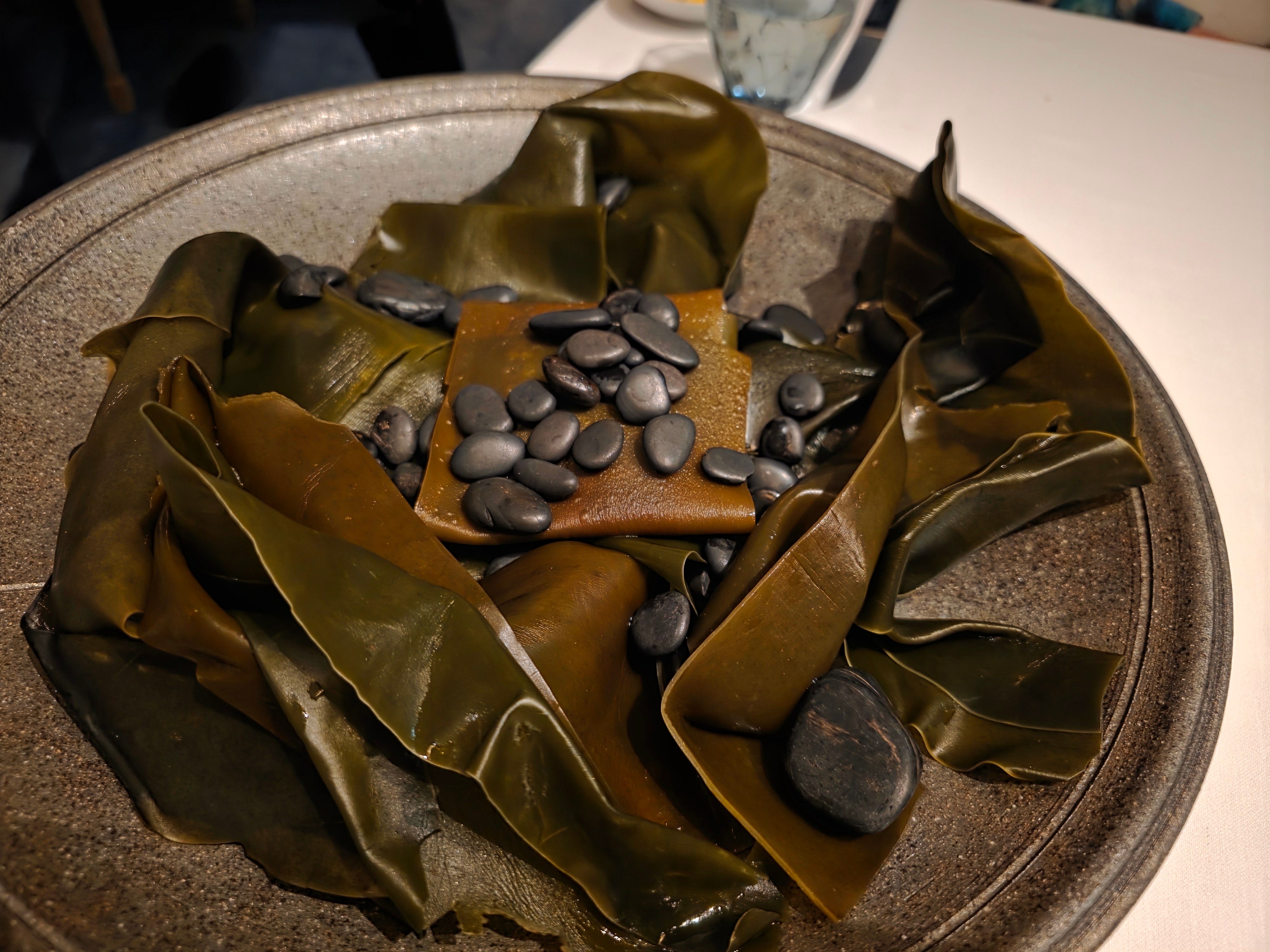
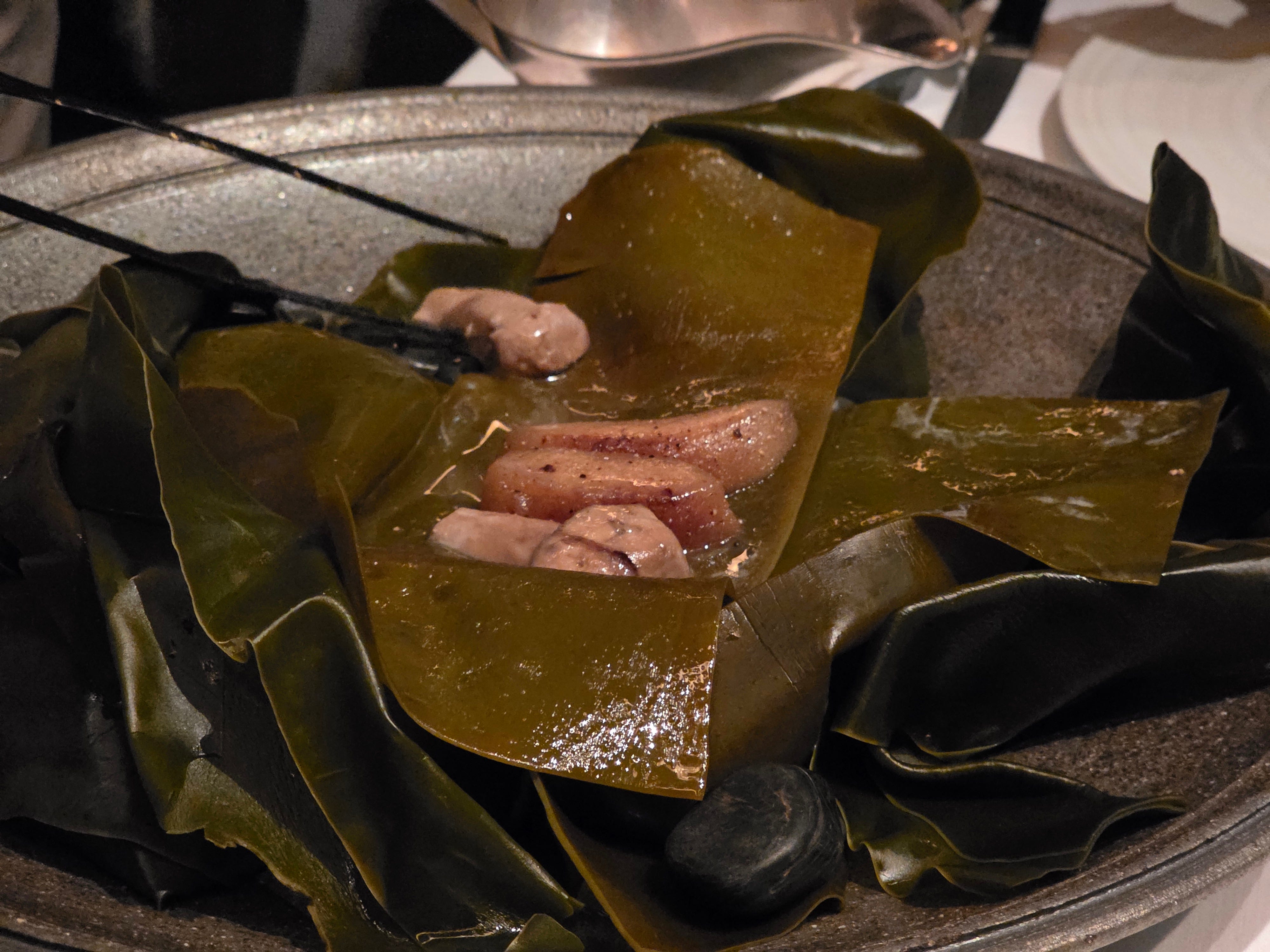
As we returned to our table, we found a large package wrapped in kombu. Unwrapped, we found some Japanese pear and matsutake mushrooms braised within the kombu. These were the accompaniment to our next dish.
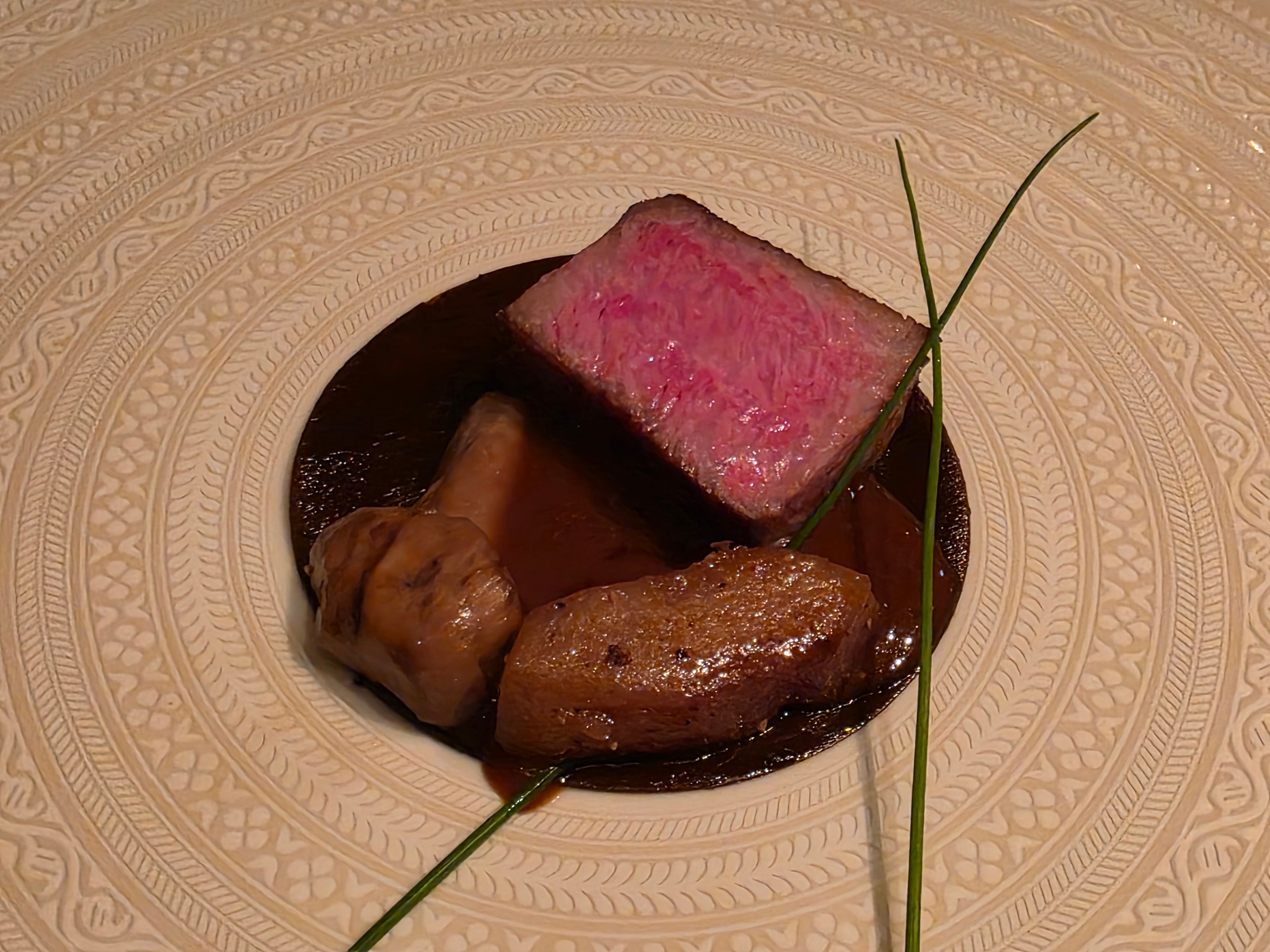
A piece of Akaushi Kumamoto steak, served on a disc of kombu with the braised pear and mushroom.
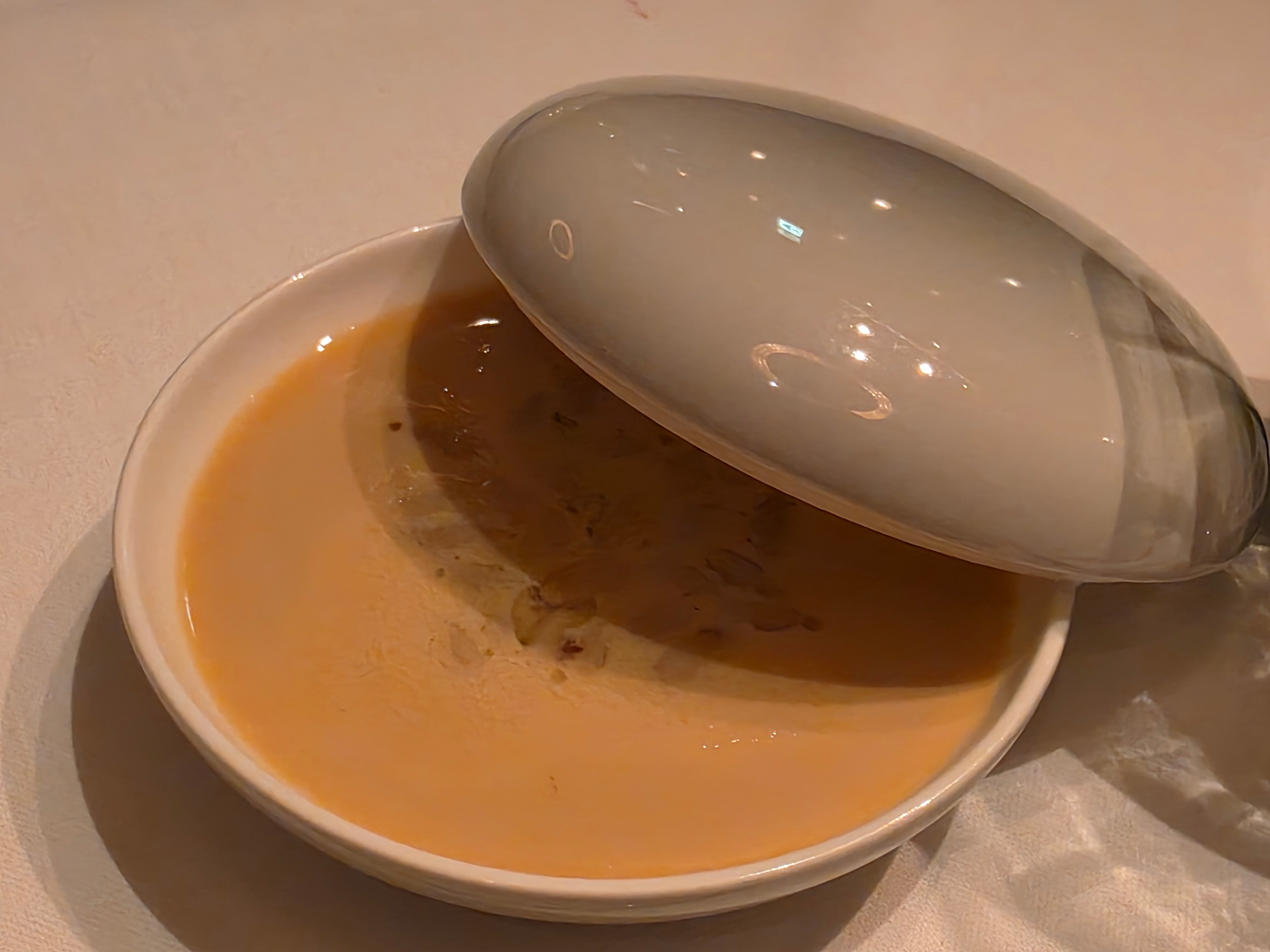
On the side a mushroom and pine nut chawanmushi, another Japan inspired adaptation that worked really well.
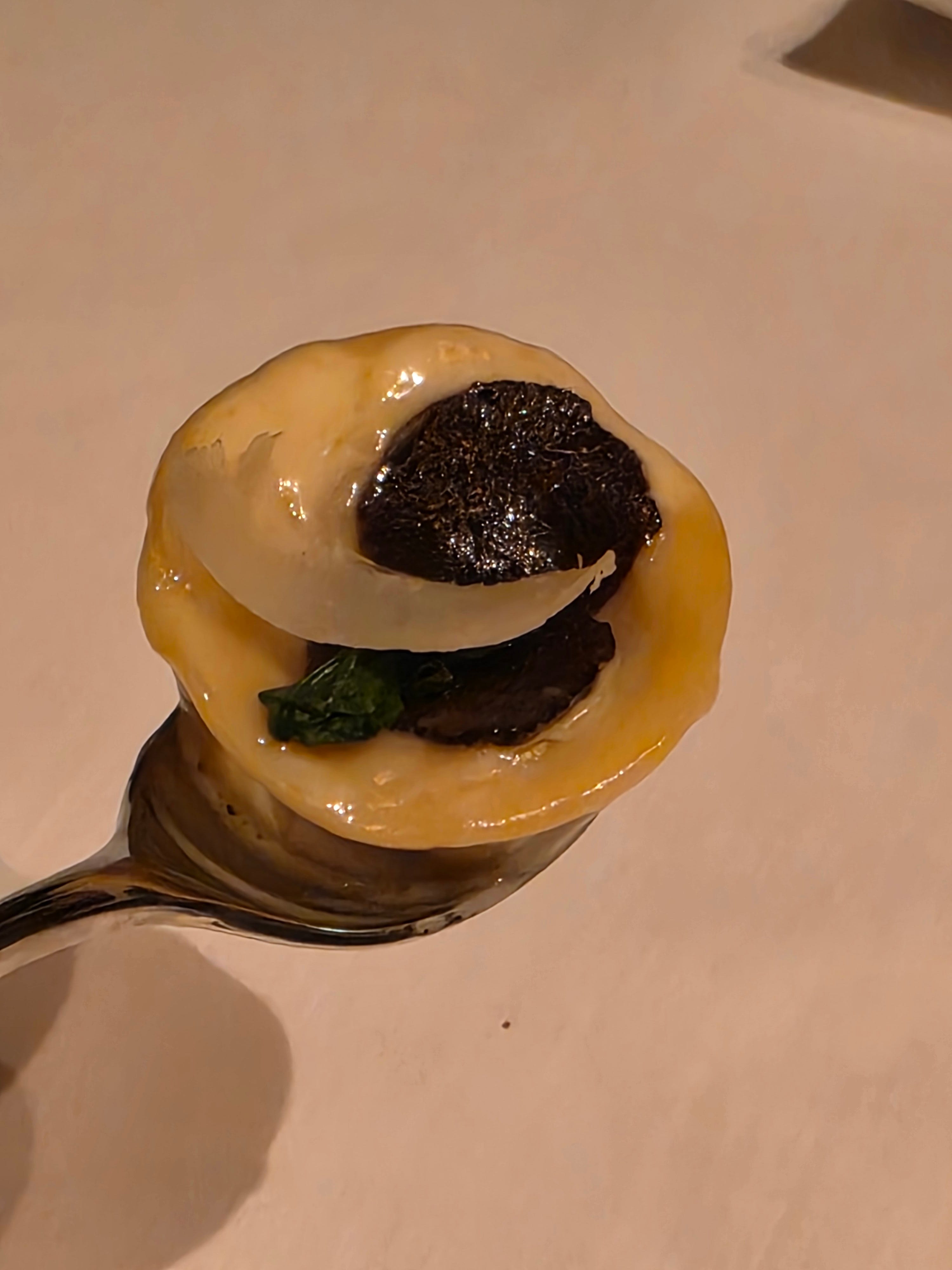
Another Alinea classic, the black truffle explosion. This was probably mind-blowing when it was first featured at Alinea 20 years ago, when the prevalence of good Chinese dumplings must’ve been pretty rare in Chicago. In Asia, where xiaolongbao are pretty common, this was a bit underwhelming.
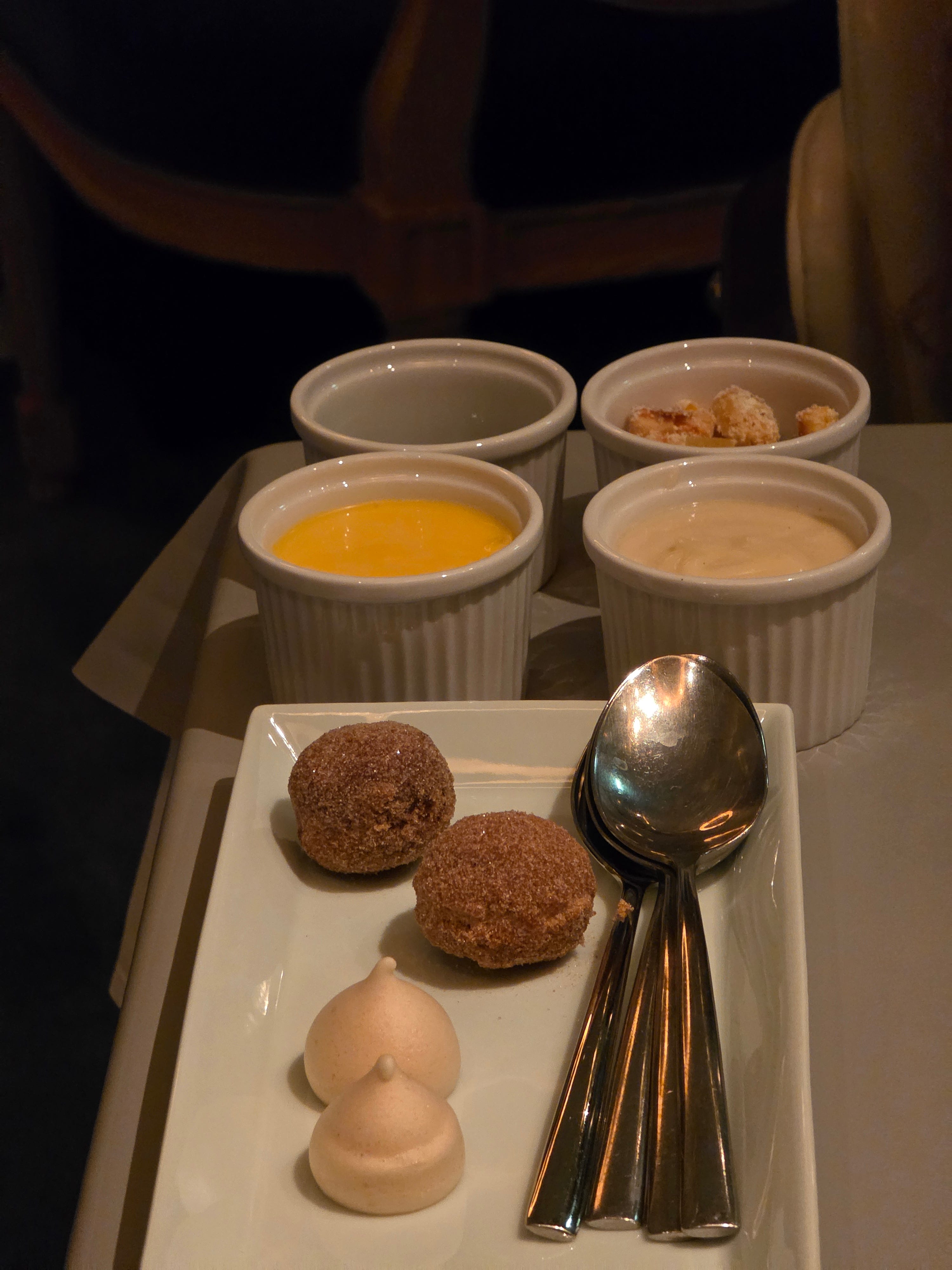
Finally, it was time for dessert. I wasn’t sure what to expect, but my companion who had studied for the test knew exactly what was coming - a deconstructed all-American apple pie.
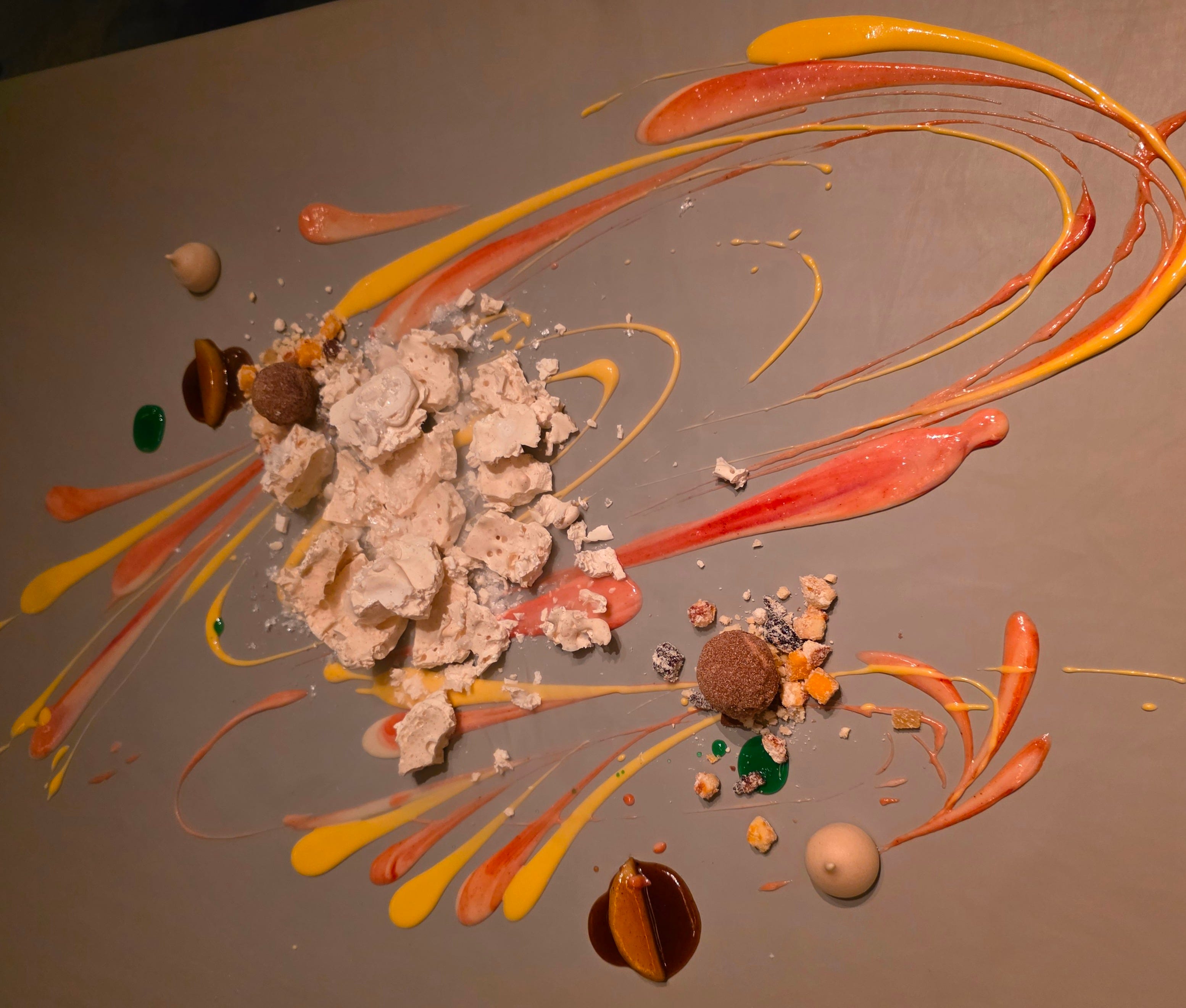
Shards of frozen vanilla ice cream, streaks of apple and cheddar cheese, hints of cinnamon and caramelized apple. The big hit here was the flash-frozen ice cream. Everything else was a bit meh.
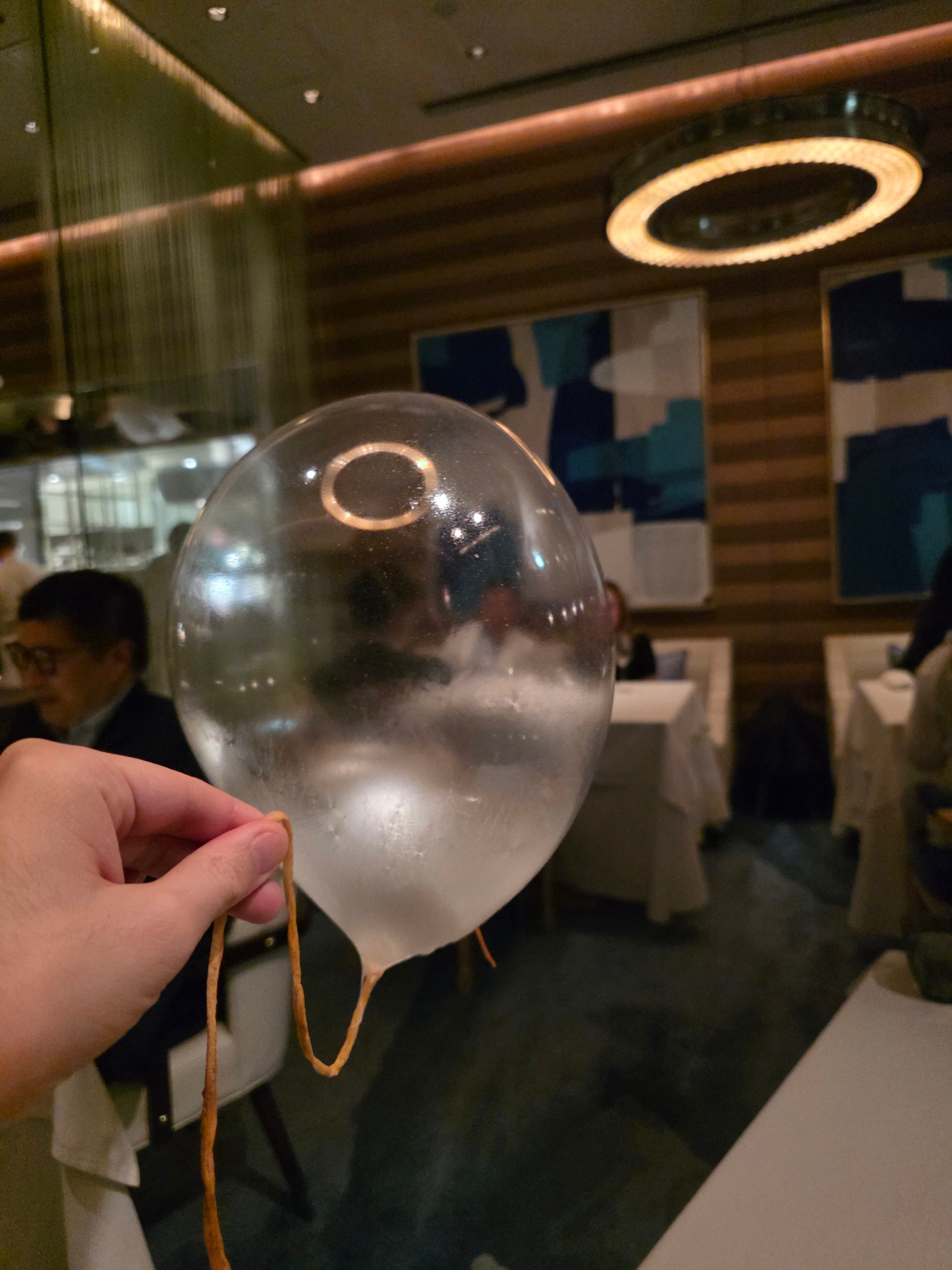
Finally, in the biggest surprise of the night, a completely edible helium balloon, all made out of apple. We were encouraged to bite into the balloon, suck down the helium, joke around, then eat the balloon and the string, before eating the apple pie. Really novel, and a completely unique experience.
Overall, I can see why Alinea is such a big hit. It’s novel, it’s unique, and it’s really a lot of fun. Was it the height of culinary excellence? Probably not. The food was good, but it wasn’t really the quality of the food that made for the experience. It was the quirky, innovative, unique takes, the surprises along the way that made the night really memorable. It’s probably a one and done, I imagine the novelty wears off and the surprise is gone on a second visit, but it’s well worth visiting once.
Total damage 190k JPY/2 people