
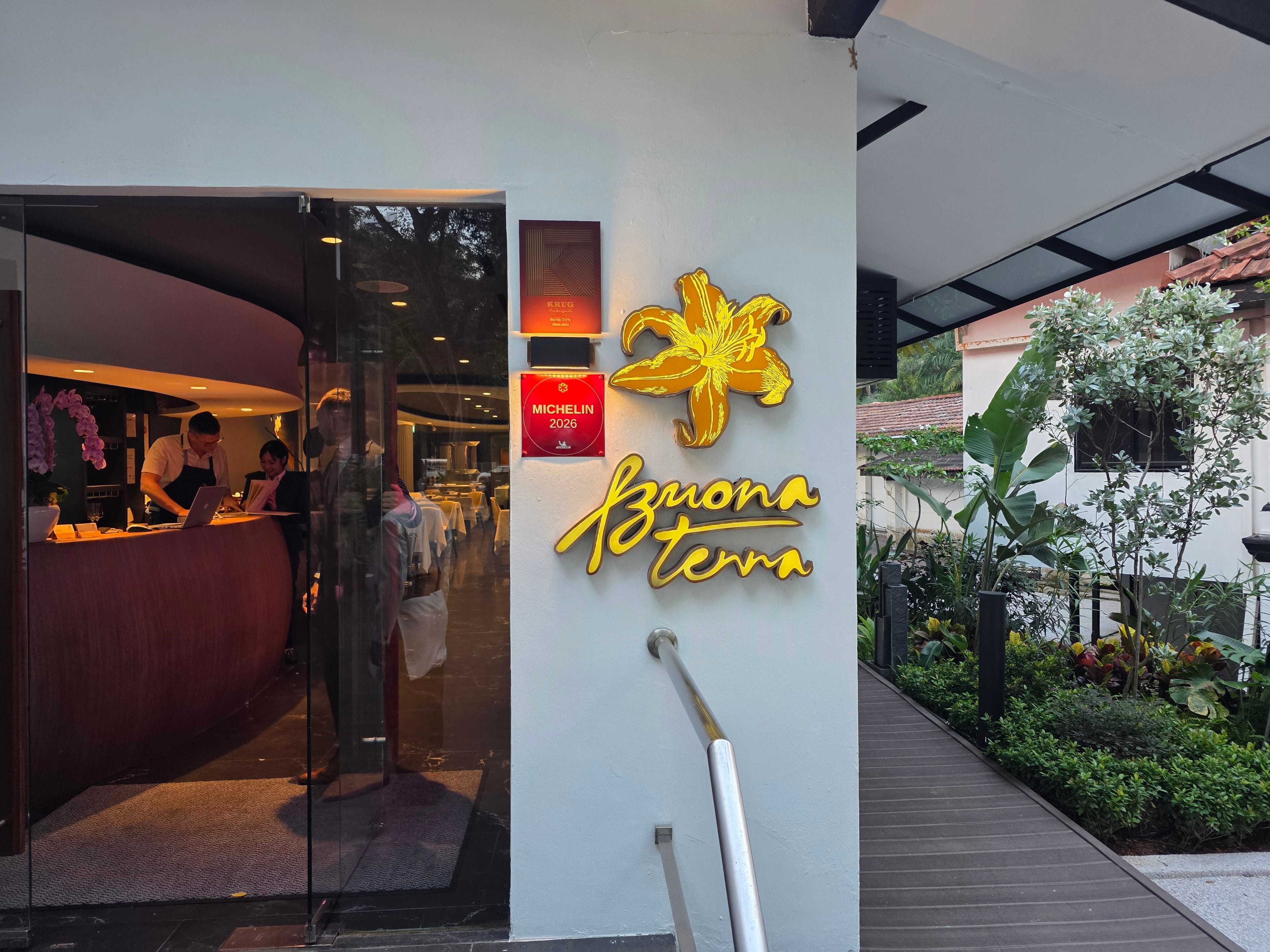
Buona Terra is Chef Denis Lucchi’s contemporary Italian restaurant in a restored black-and-white bungalow in Singapore. The name means “good earth” in Italian and the name fits Lucchi’s approach closely. He builds the menus around seasonal produce, Italian recipes and careful sourcing, then keeps the presentation simple. The restaurant’s appeal is consistency and control over theatrical spectacles.
Chef Lucchi grew up in Toscolano Maderno, near Lake Garda in the province of Brescia, Lombardy. His grandmother cooked fresh pasta, braised meat and ragù for the family, and those Sunday meals remain a clear reference point in his cooking. He has described food as part of his daily life long before he had a serious plan to become a chef.
He entered culinary school at 14. After national service, he left Italy for London - initially to learn English and gain experience outside his hometown. His early career placed him at Osteria dell’Orologio in Salò, followed by work at Quirinale in London under the Brescia-born chef Stefano Savio. He then moved to Rome and worked with Adriano Cavagnini at Hotel Eden, before returning briefly to the Lake Garda area and joining the Esplanade in Desenzano.
Lucchi came to Singapore after deciding that he needed a wider experience of cooking and life outside Europe. He worked at Gattopardo and Garibaldi, two established Italian restaurants in Singapore, before taking charge of Buona Terra in 2012. Buona Terra gave him the opportunity to lead the restaurant and develop a cuisine under his own name rather than work as part of another chef’s operation.
His first Michelin star arrived in 2019, after six years at Buona Terra. Lucchi has said that the award was not the original reason he became a chef, but that it recognised the team’s daily work and gave them motivation to keep improving.
Lucchi treats sourcing as one of the restaurant’s central jobs. Buona Terra uses Italian ingredients where they make sense, but it does not insist that every product travel from Italy. The kitchen uses the best available produce and prepares it through an Italian lens.
The food is recognisably Italian, with contemporary technique and fine-dining presentation. Lucchi has spoken about becoming less interested in complexity as he gained experience. Earlier in his career, he tried to make dishes more complicated to impress diners. At Buona Terra, he now gives more weight to flavour, identity and restraint. The cooking is polished and seasonal, and it does not chase novelty for its own sake.
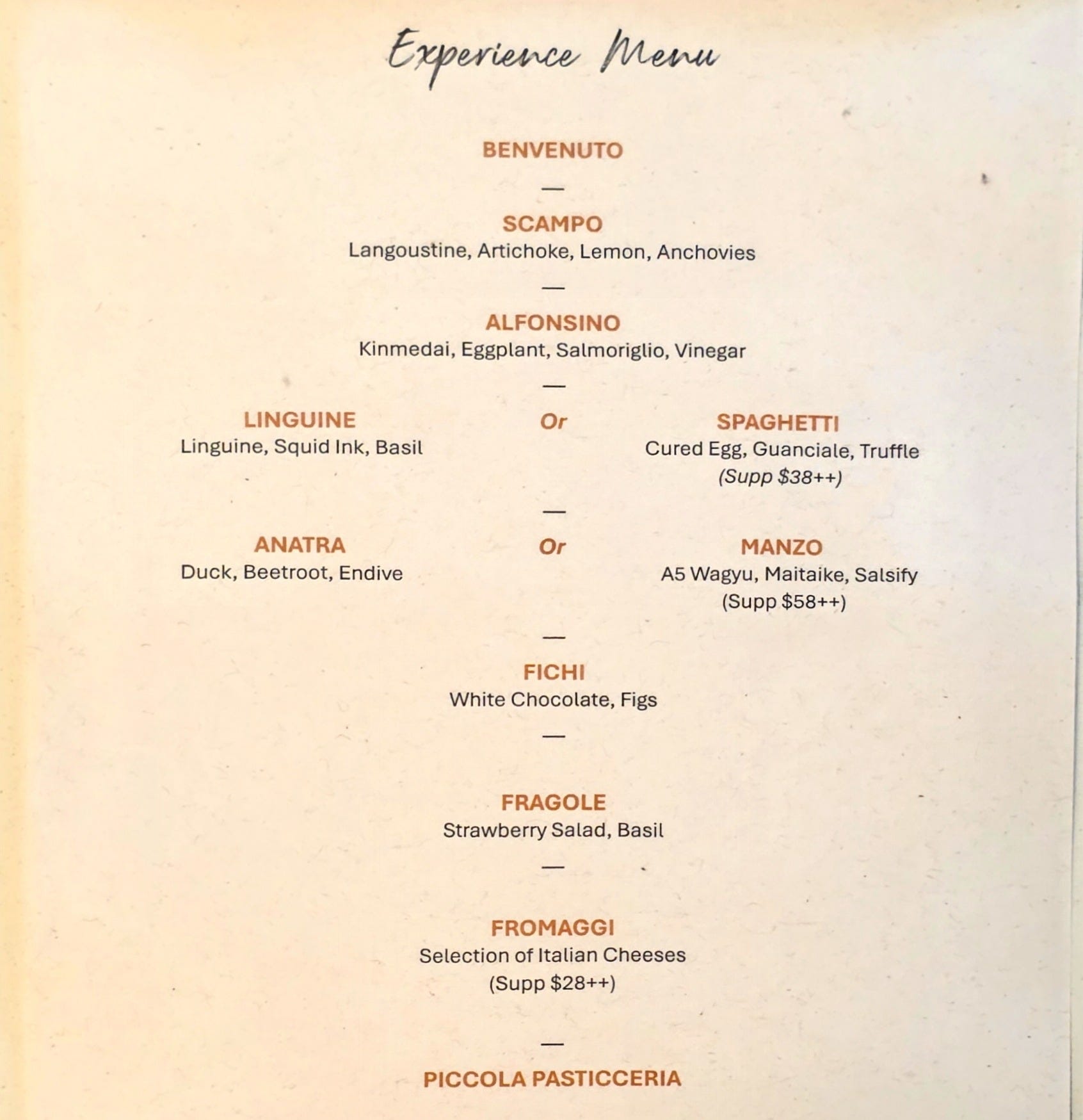
There was one menu with two choices of supplements. The spaghetti carbonara was one of the restaurant’s signature dishes, so I decided to go with that supplement. Wasn’t super interested in the steak, so stuck with the duck instead.
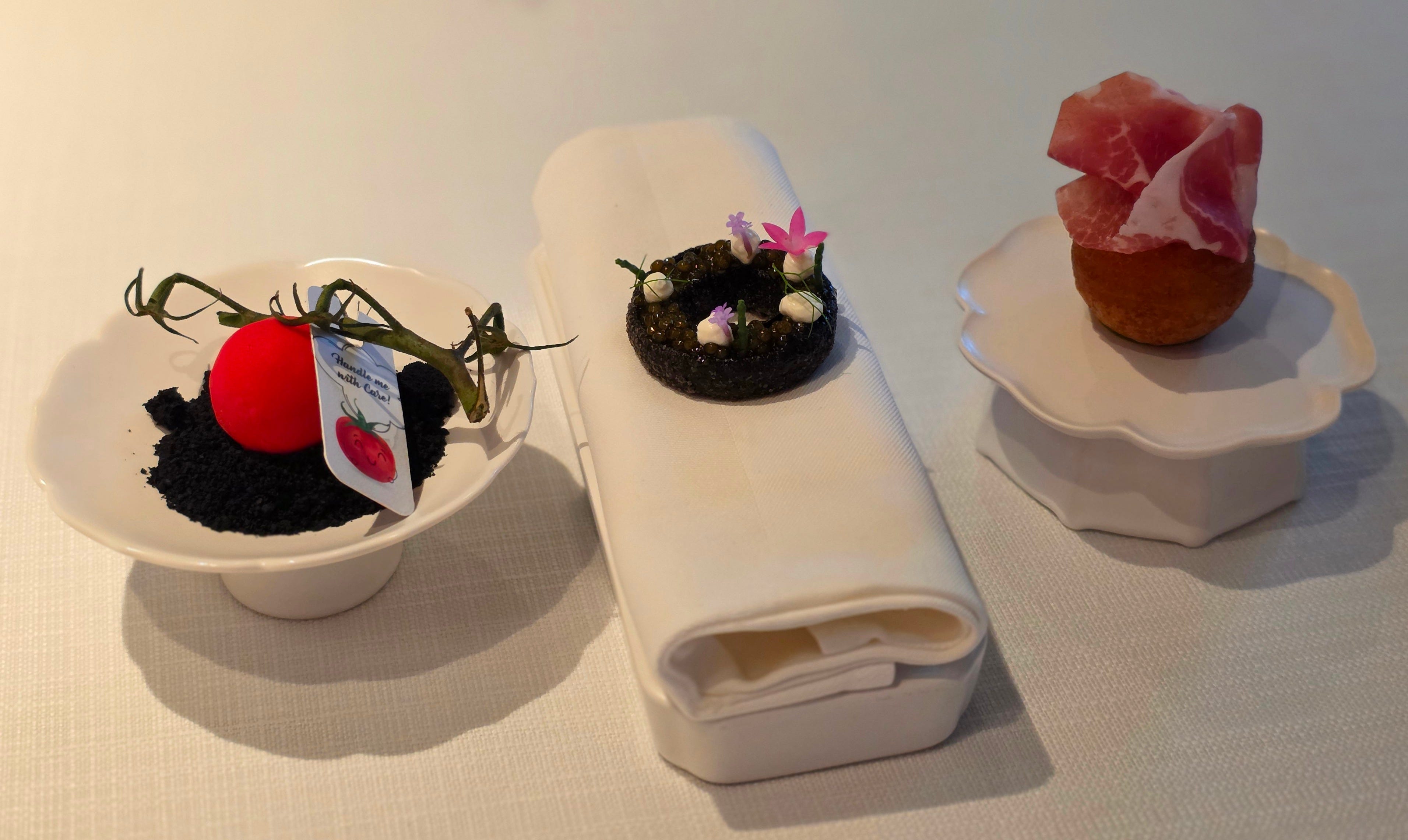
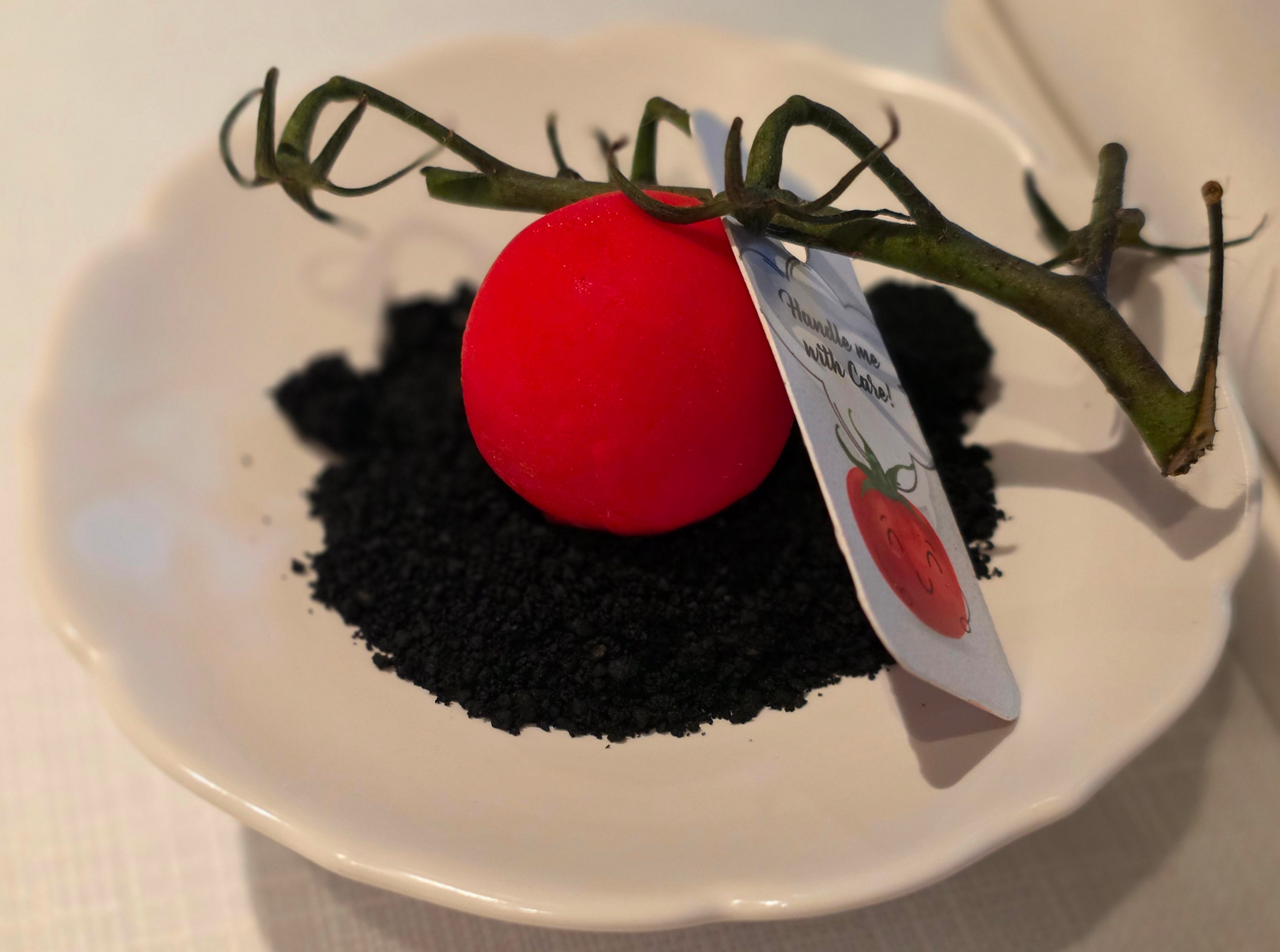
The first amuse bouche was a tomato gazpacho inside a cocoa-butter shell, presented like a small chocolate. Concentrated tangy tomato came through once the shell cracked and it was a particularly memorable bite.
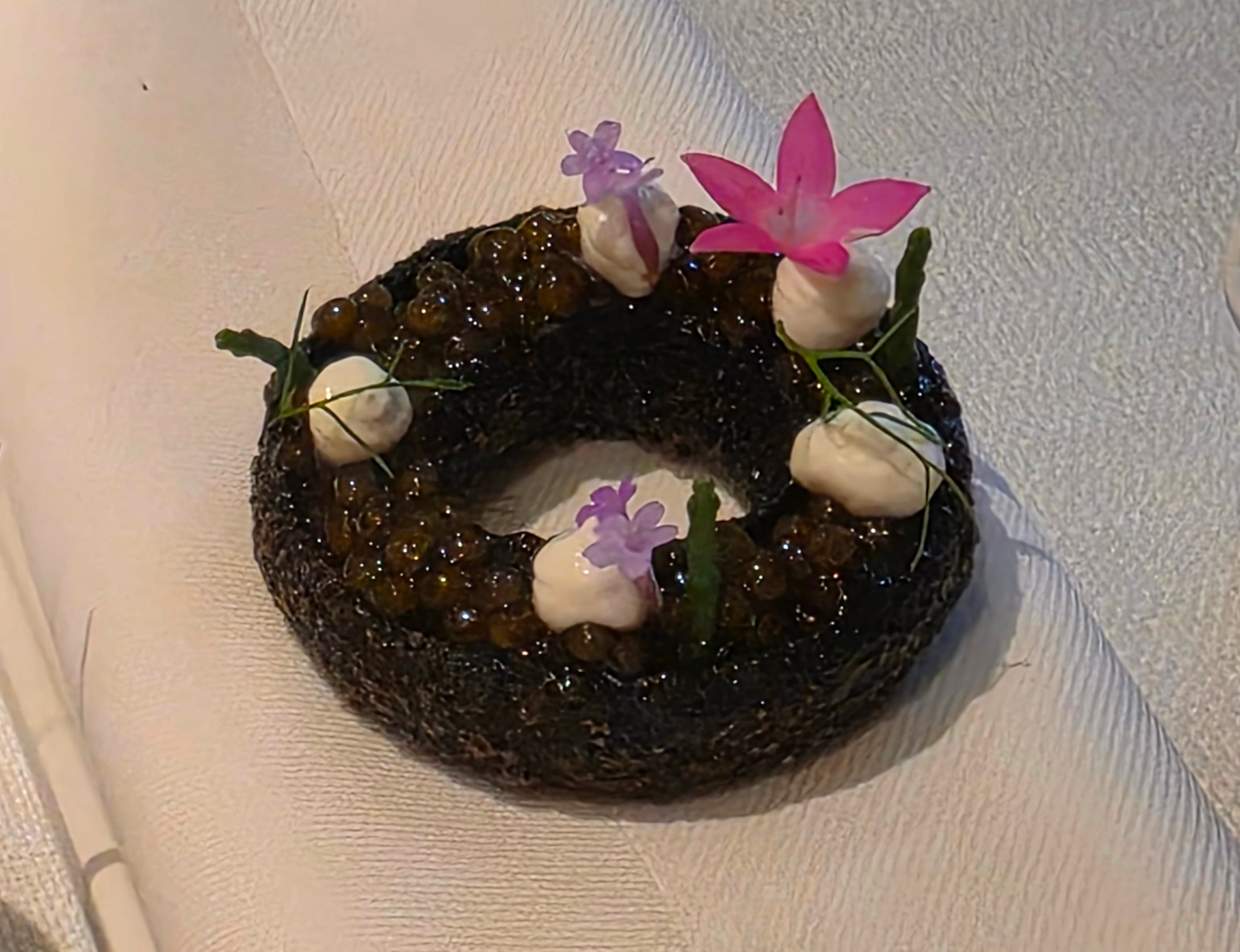
The squid-ink tart was filled with scallop tartare and caviar - clean marine flavour and a crisp pastry base.
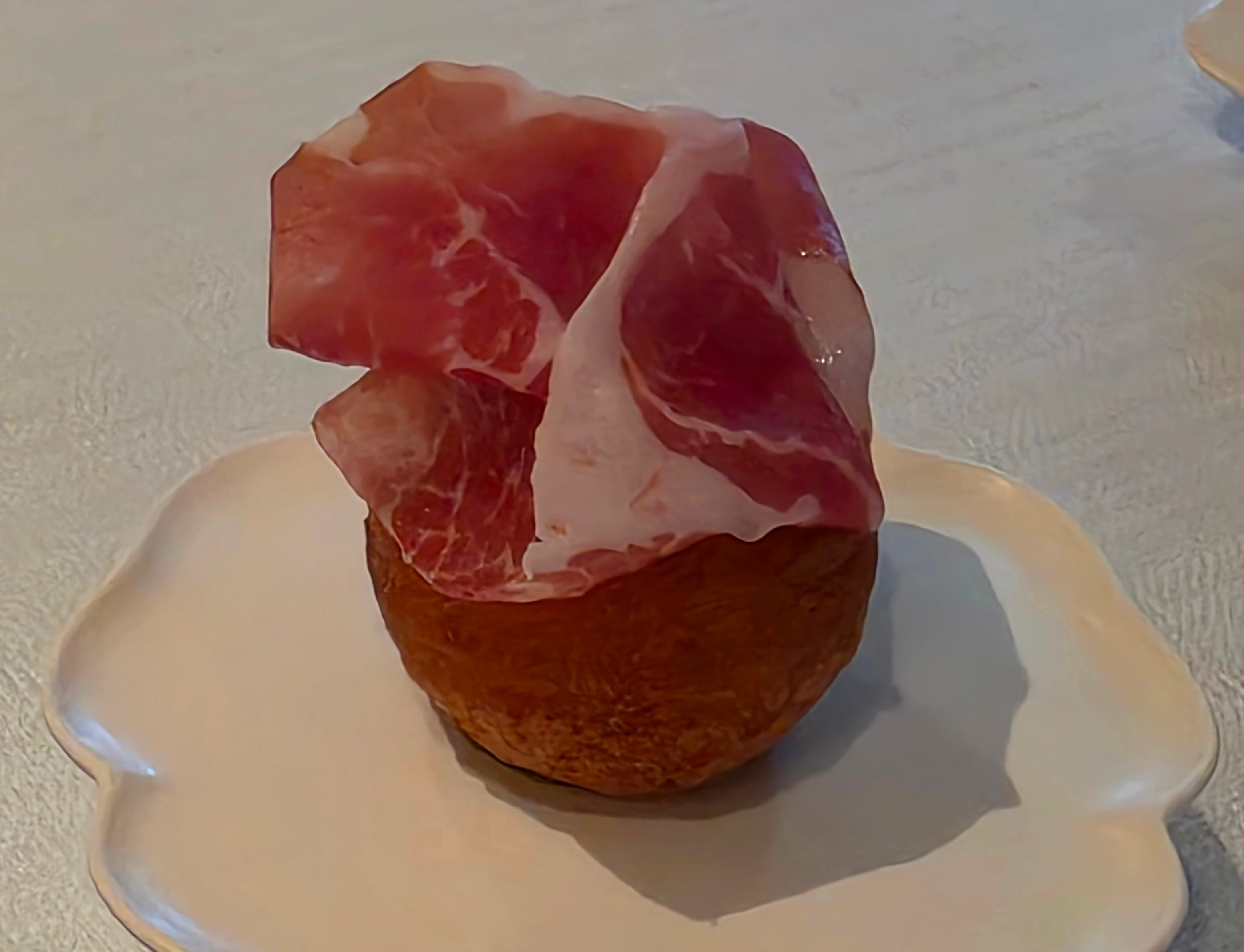
Next came the pizza fritto, a fried doughnut filled with cheese, topped with prosciutto. The dough was warm and savoury, although the texture had softened a bit by the time it reached the table.
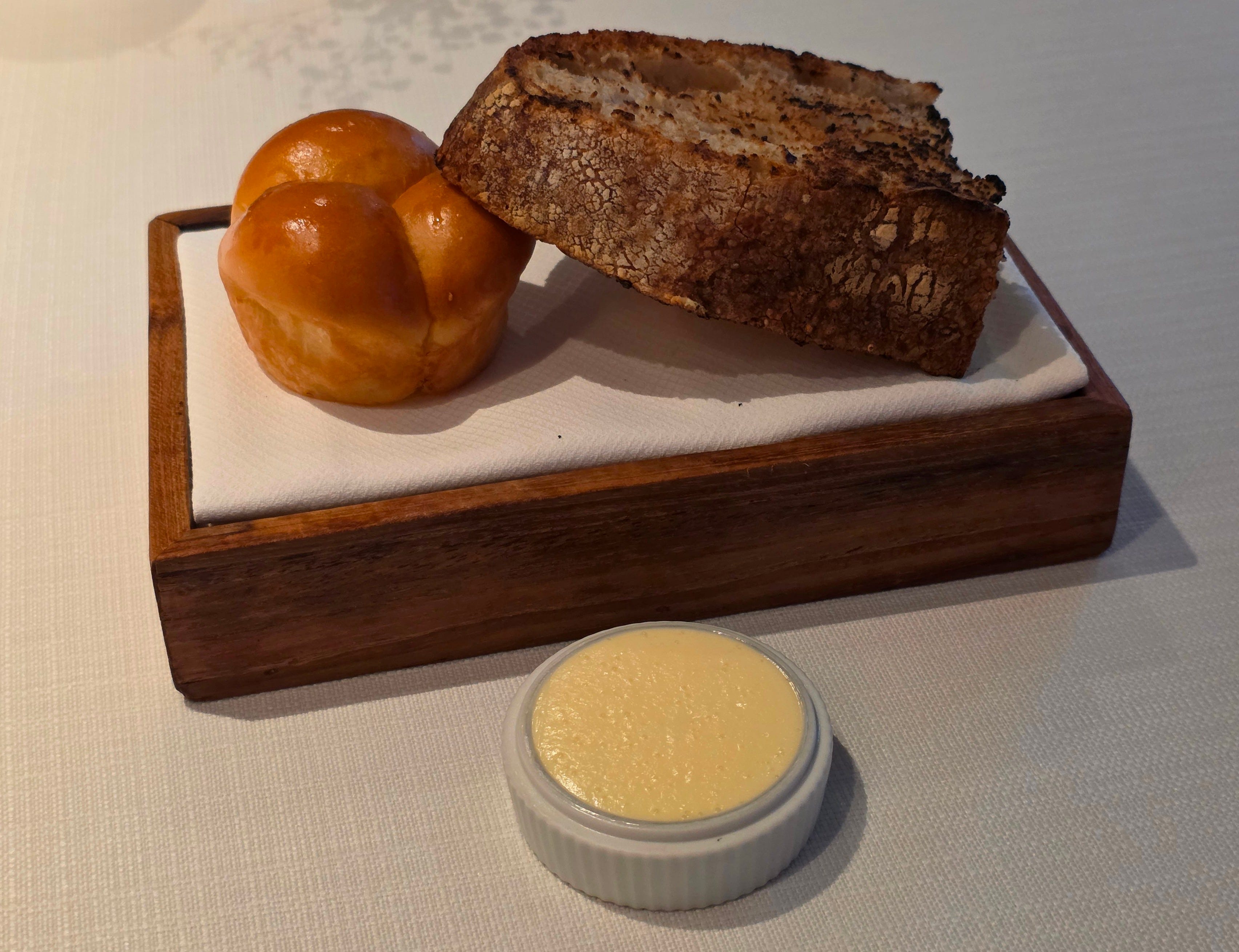
A perfectly toasted slice of sourdough and sweet dinner roll followed, accompanied by Sicilian olive oil and salted butter. While I know that the bread course isn’t usually particularly notable, but I ended up finishing both, and had to restrain myself when offered more. The peppery, pungent olive oil was a great accompaniment.
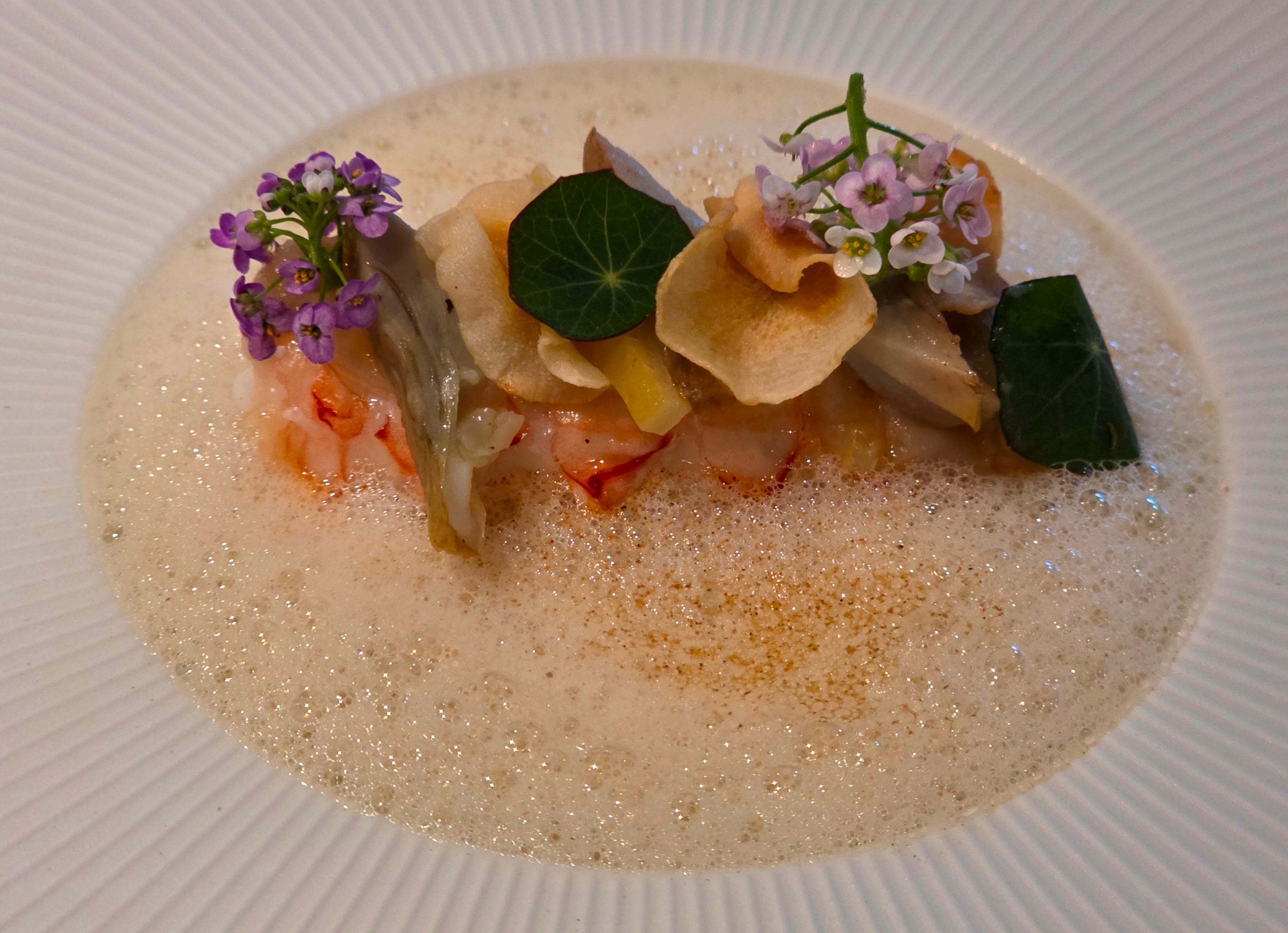
The scampi came with an anchovy-garlic sauce, crisp garlic chips, artichoke and preserved lemon. The sauce had enough salt and acidity to balance the sweetness of the scampi, while the artichoke gave the dish a more earthy centre. A great start to the meal.
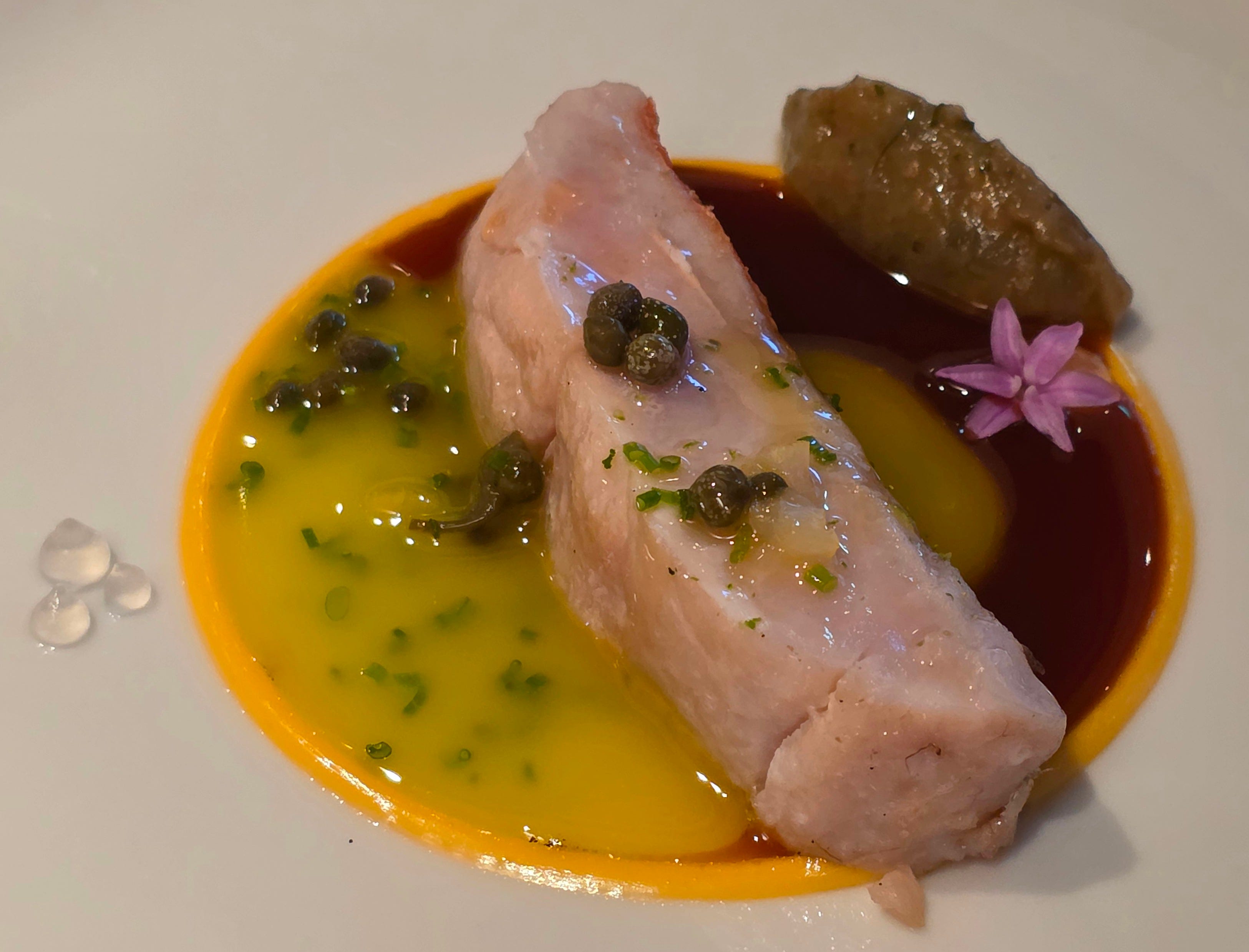
The tilefish had been dry-aged for three to four days, giving the skin extra crispness and concentrating the flavours. It came with a lemon-caper sauce, olive oil and aubergine purée. The fish was well handled, with the double sauce adding both brightness and weight.
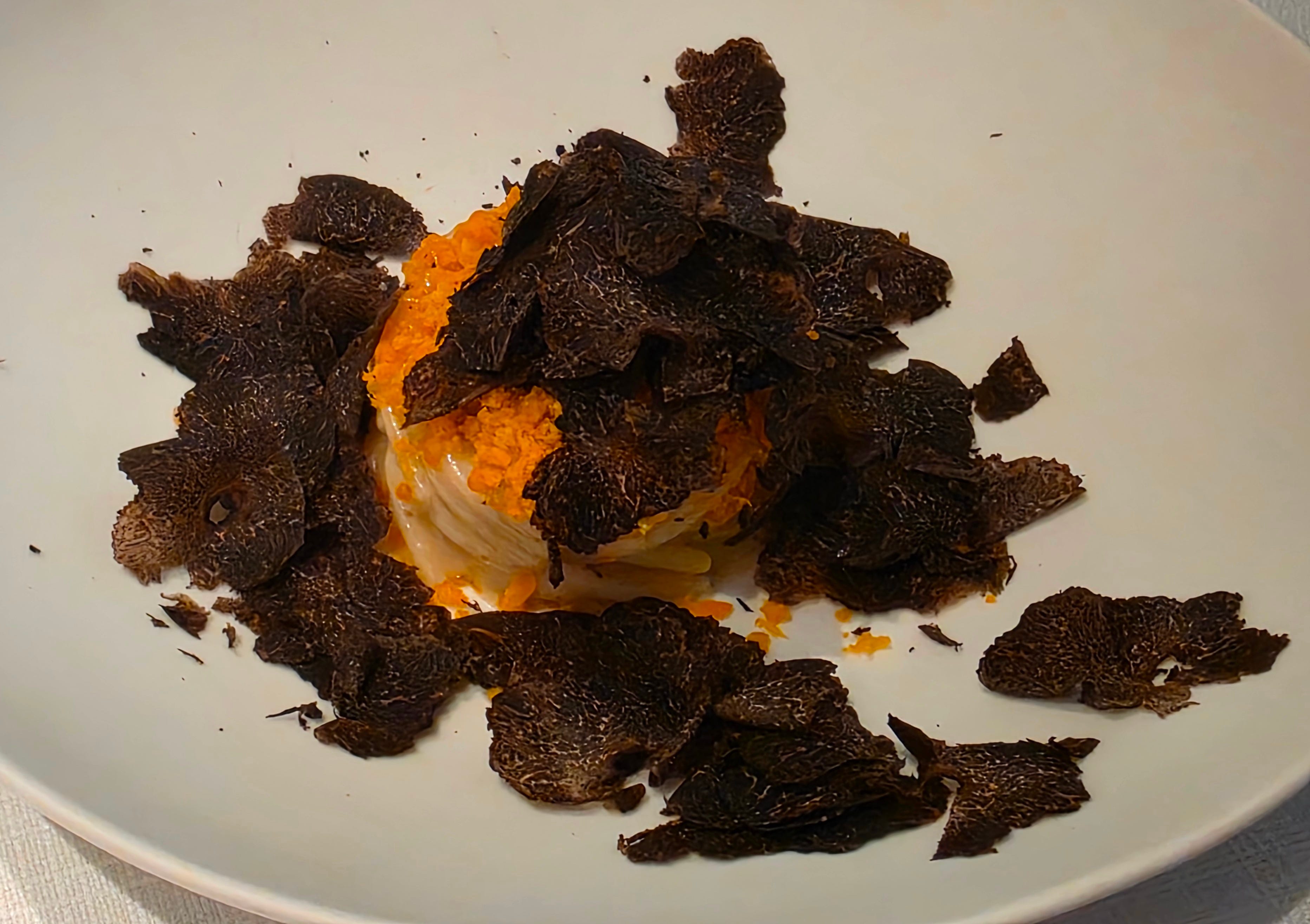
The spaghetti carbonara supplement was rich, warm and intensely earthy, with a generous amount of truffle. This was the most obviously indulgent dish of the meal and the reason to come to Buona Terra. Absolutely heavenly, and I’m glad I went with the supplement.
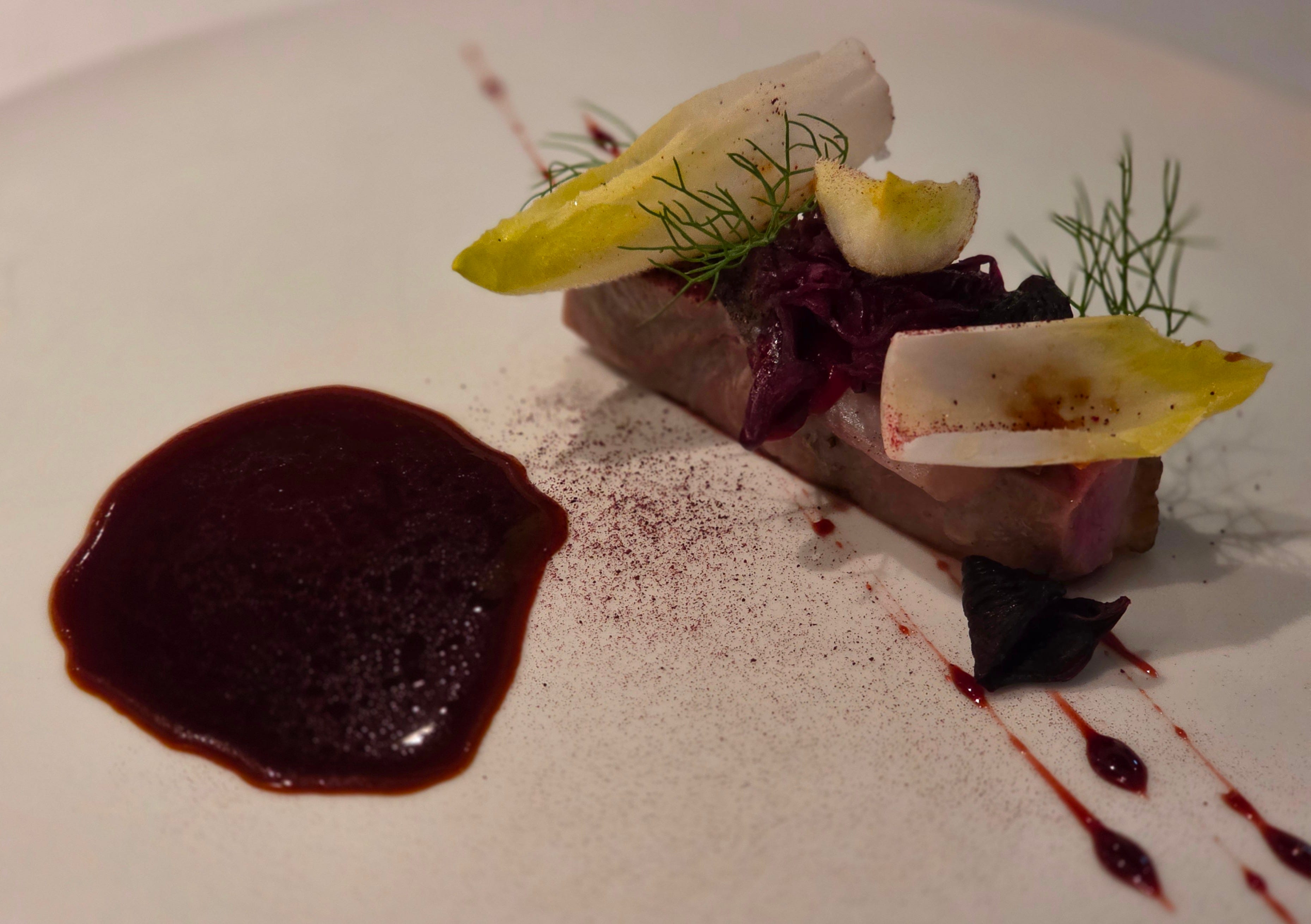
The duck had been dry-aged for 14 days and served with beetroot and cherry sauce, endive, beetroot slaw and dill. The dry-ageing gave the meat a deeper flavour, while the cherry and beetroot supplied the acidity and sweetness it needed. Another big hit!
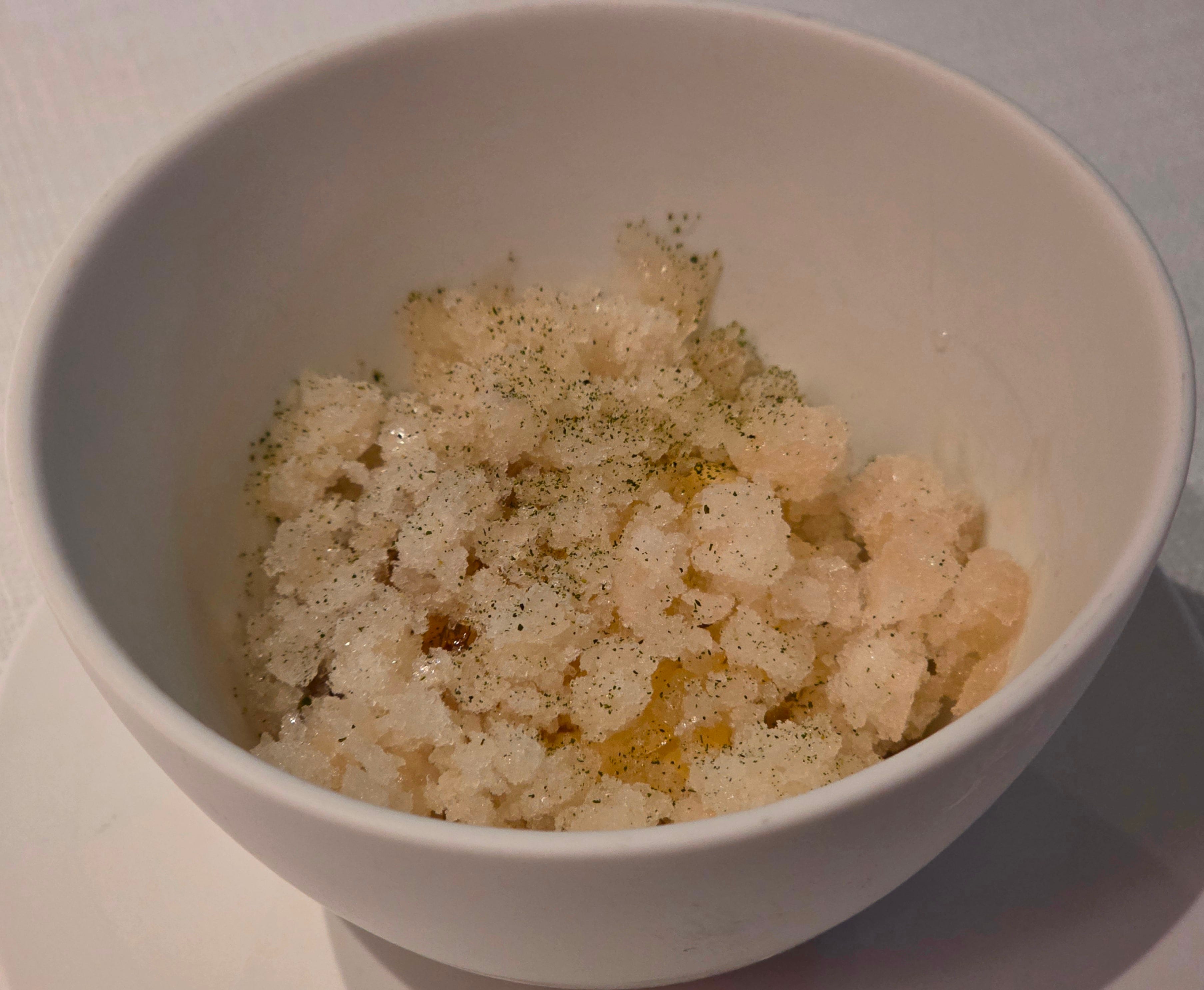
The pre-dessert took its cues from the south of France, highlighting Solliès Figs, with fig granita, fig-leaf powder, diced fig, fig cream and jelly. It was cool and refreshing after the richer savoury courses.
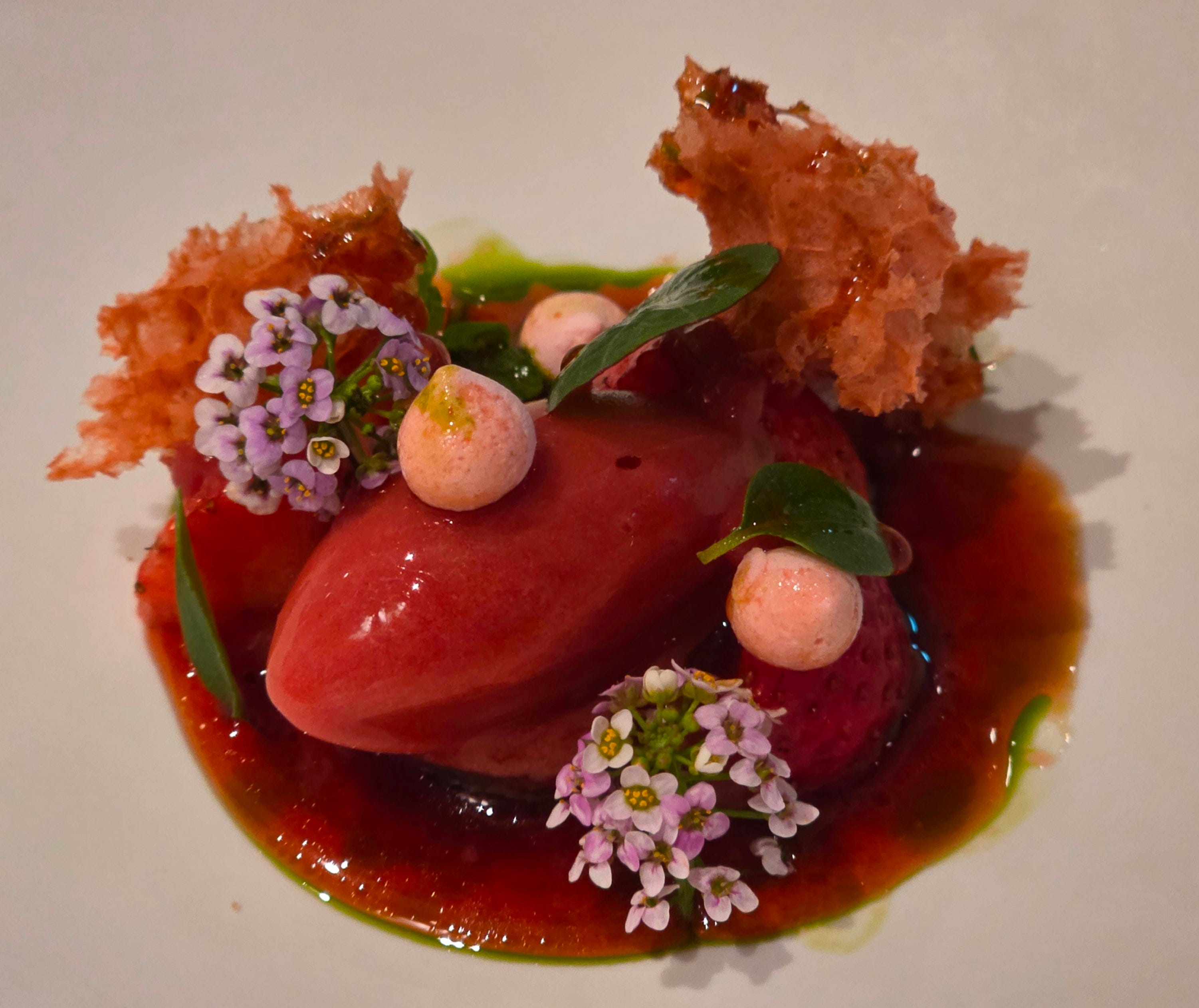
The strawberry salad dessert combined strawberry in a variety of textures and forms: meringue, ice cream, crisps, jus along with some herbal elements: sage, sorrel and mint. The herbs kept it from becoming a straightforward sweet fruit course, and the balance of sweet and bitter gave the dessert a surprising amount of complexity.
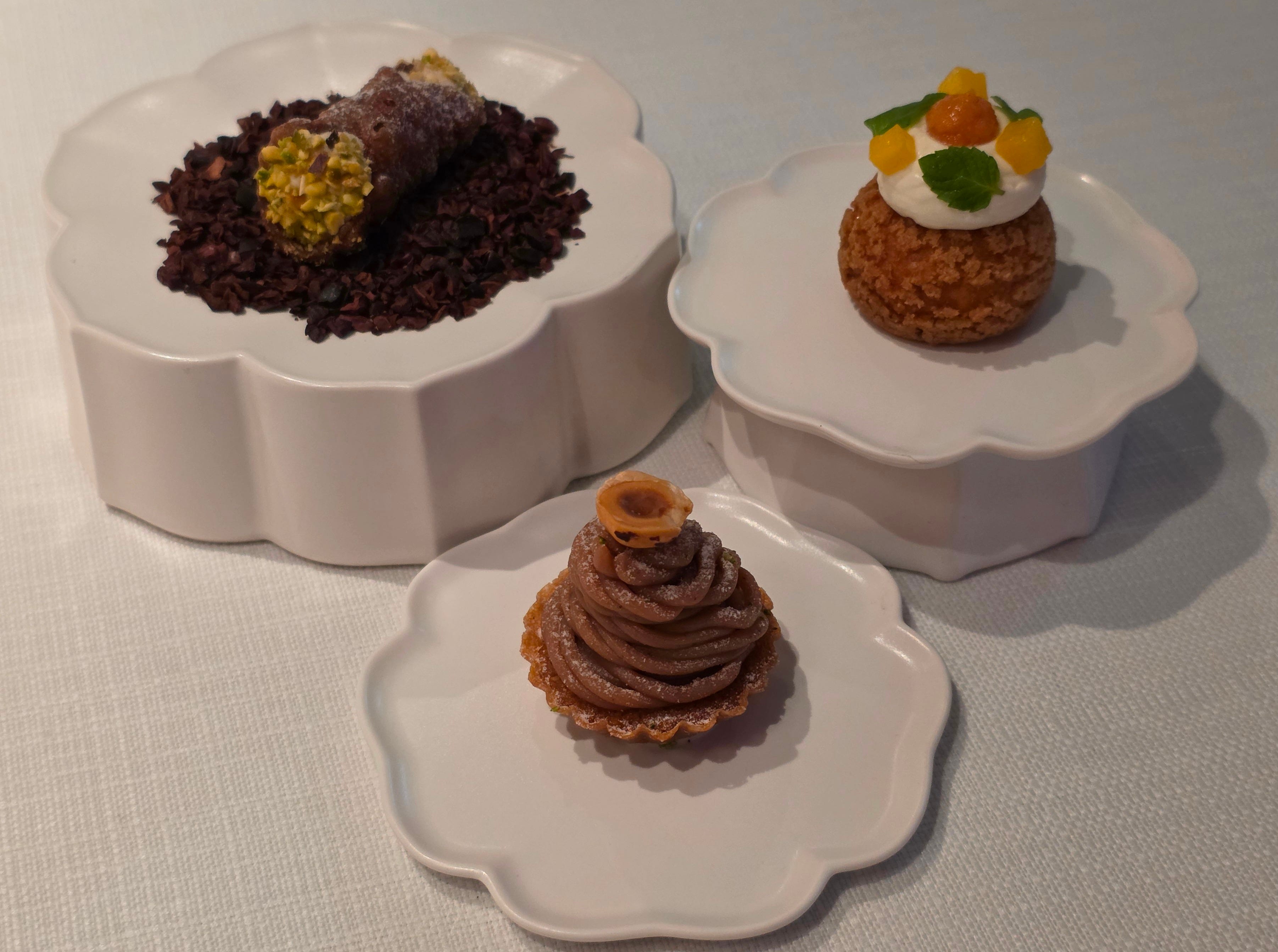
Petit fours included a crisp cannoli, mango choux and a chestnut tart.
Buona Terra is more conventional fine-dining restaurant than theatrical experiences. It builds the meal around Italian technique, sauces, pasta and wine. It’s a more personal expression than a generic Italian tasting menu - references to the Lucchi’s background in Lombardy, his grandmother’s cooking and the years he spent learning in London, Rome and Singapore remain visible, even when the ingredients are sourced internationally.
The food is controlled rather than radical. The strongest reason to visit is Lucchi’s long-developed version of contemporary Italian cooking, a strong sense of consistency, and excellence across all the dishes. Worth a revisit!
Total Damage: 350 SGD/1 person