
China Tang is the Hong Kong chapter of Sir David Tang’s idea of Chinese dining: a richly staged room and Cantonese cooking with flavours from across China. The restaurant began in London, where Tang and Dr Peter Lam opened the first China Tang at The Dorchester Hotel in 2005. After great success in London, the Hong Kong branch followed in 2013, bringing the idea back to Tang’s home city.
Tang was already known for projects such as Shanghai Tang and the China Club, which introduced Chinese culture to an international audience. China Tang put that instinct into a dining room, with hand-painted and embroidered wall coverings, thread-bound books, contemporary art and Art Deco details. The Hong Kong restaurant has outlasted Island Tang and Kowloon Tang, and survived The Landmark’s major redevelopment. It reopened in 2025 with a refreshed room, rather than a new identity.
The original concept came from Tang and Lam. Tang gave it its cultural point of view and appetite for polished, theatrical Chinese dining. In Hong Kong, executive chef Menex Cheung now carries it forward with cooking rooted in Cantonese food and shaped by his years working across mainland China.
Cheung started with the jobs most kitchen newcomers know: washing vegetables, cleaning pots and carrying water. He trained under Bobby Lu, then spent more than a decade in Shanghai, Beijing and Hohhot, in Inner Mongolia. He became an executive chef in Hohhot while still in his twenties. In 2019, he returned to Hong Kong to lead China Tang’s kitchen. It was his first executive-chef role in the city.
Those years gave Cheung more than a collection of regional recipes. He has talked about learning a place through its people, food habits and ingredients, and finding ideas outside restaurant kitchens. He visits independent vendors and talks with fishmongers and butchers. His approach is to take a familiar dish and add an unexpected element without losing the pleasure or recognition of the original.
The menu is Cantonese-led, with the heat of Sichuan and the fuller flavours of Beijing and Shandong alongside it. Cheung’s time working around China gives that range a personal basis. He lets familiar dishes take on some of the places and techniques that have shaped his cooking.
China Tang received its first Michelin star in 2026, a recent recognition for the restaurant under Cheung’s leadership.
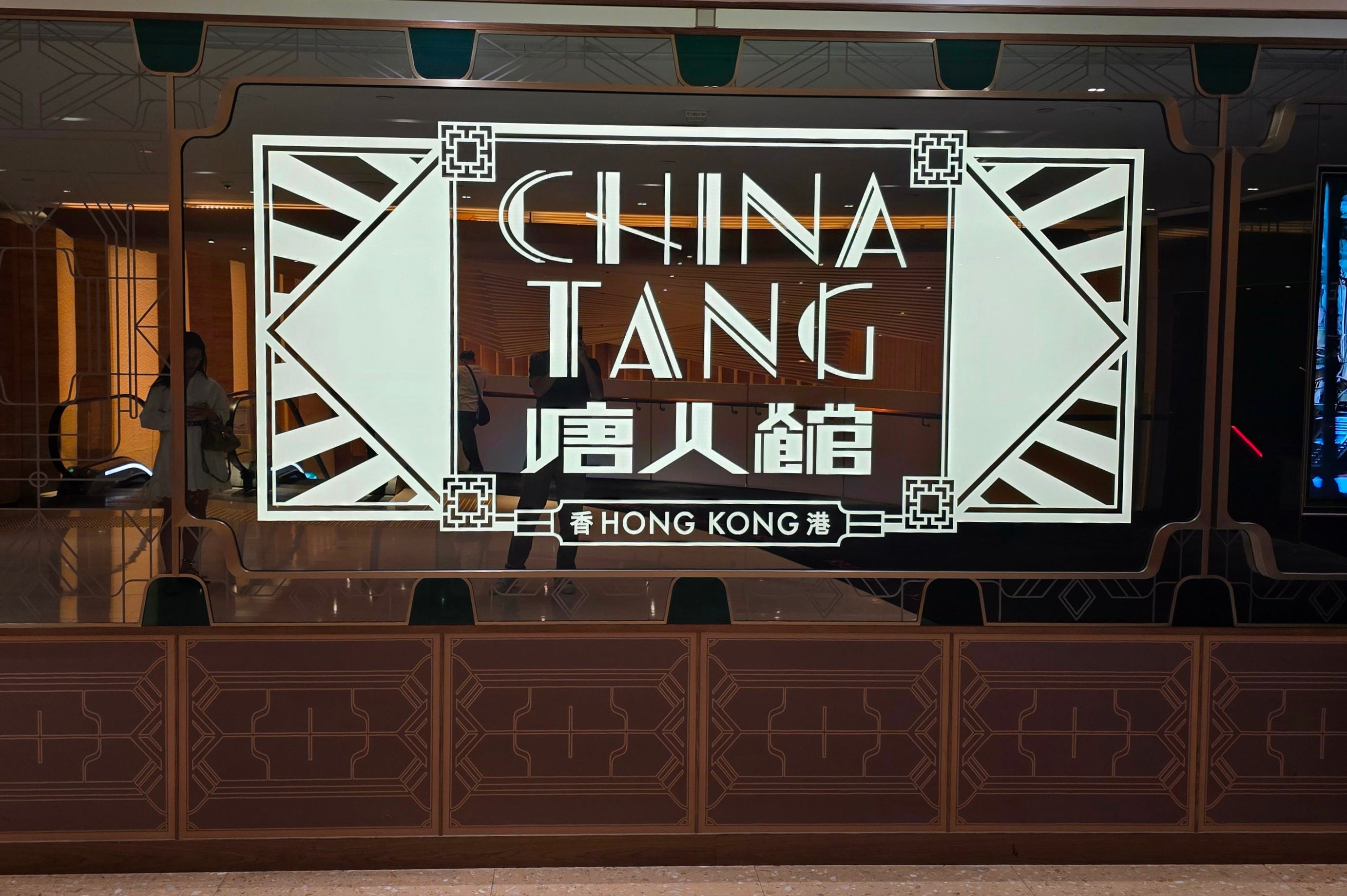
The restaurant decor has influences from around the world: some Shanghainese elegance, some Art Deco from America, and a touch of British colonialism.
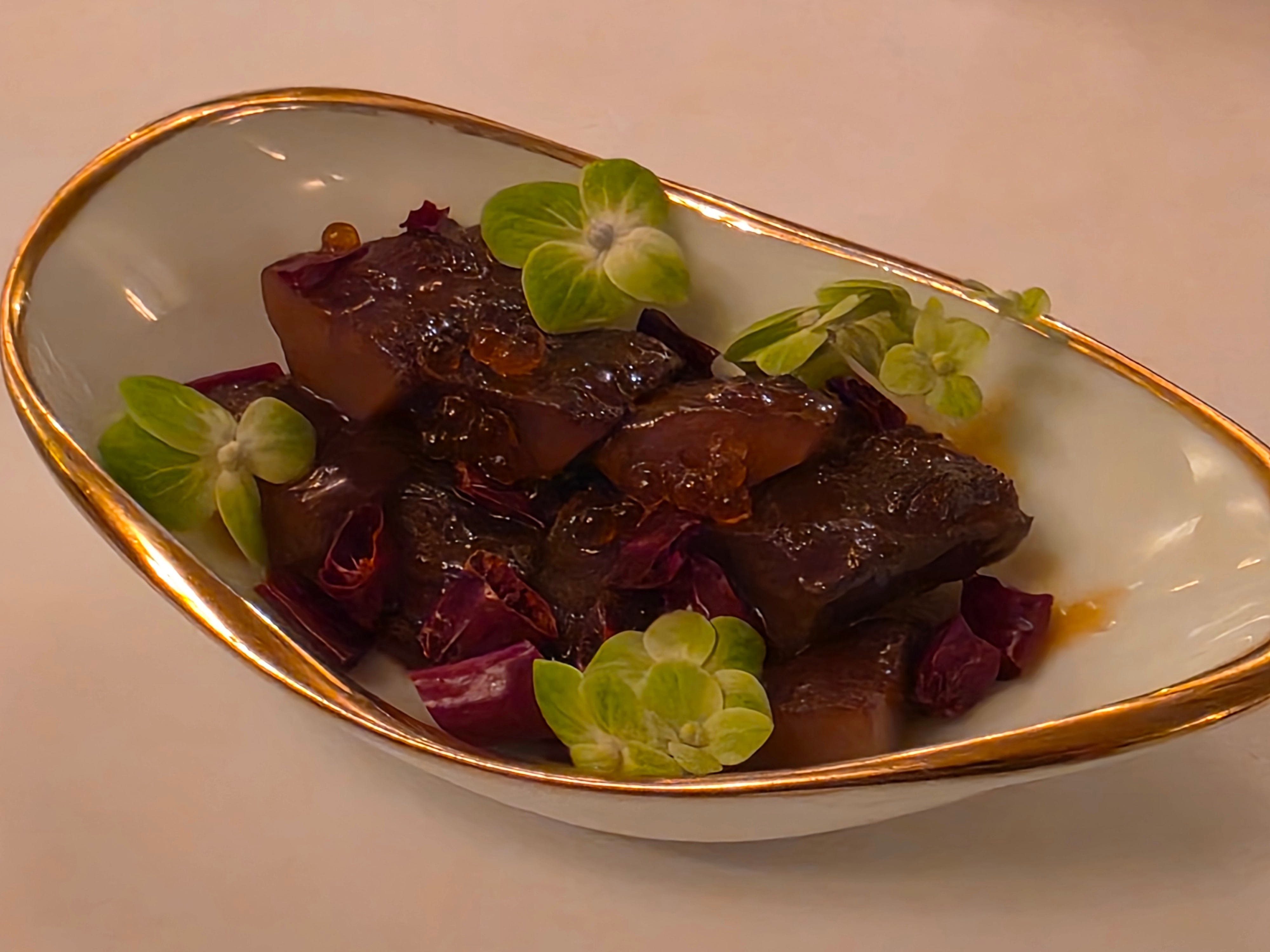
On a previous visit, I remember an excellent sea cucumber appetiser: tiny sea cucumbers sliced lengthways, with chilli oil and fine threads of chilli. This was an updated version, with larger pieces of sea cucumber in a mala dressing. Less delicate than I remembered, but still good.
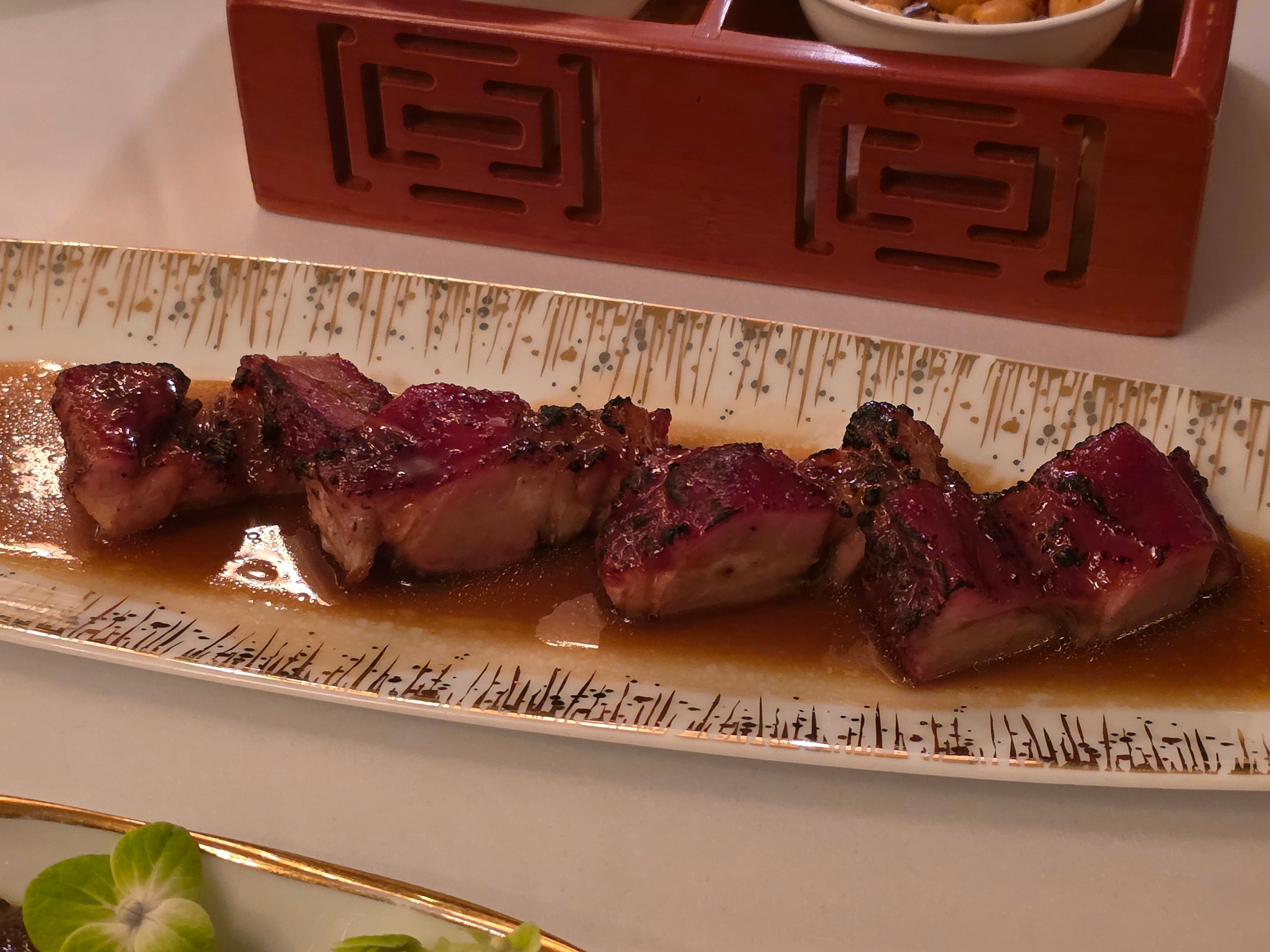
We ordered half a portion of the honey-glazed char siu, which was a bit of a mistake. It was delicious, and well worth the full order.
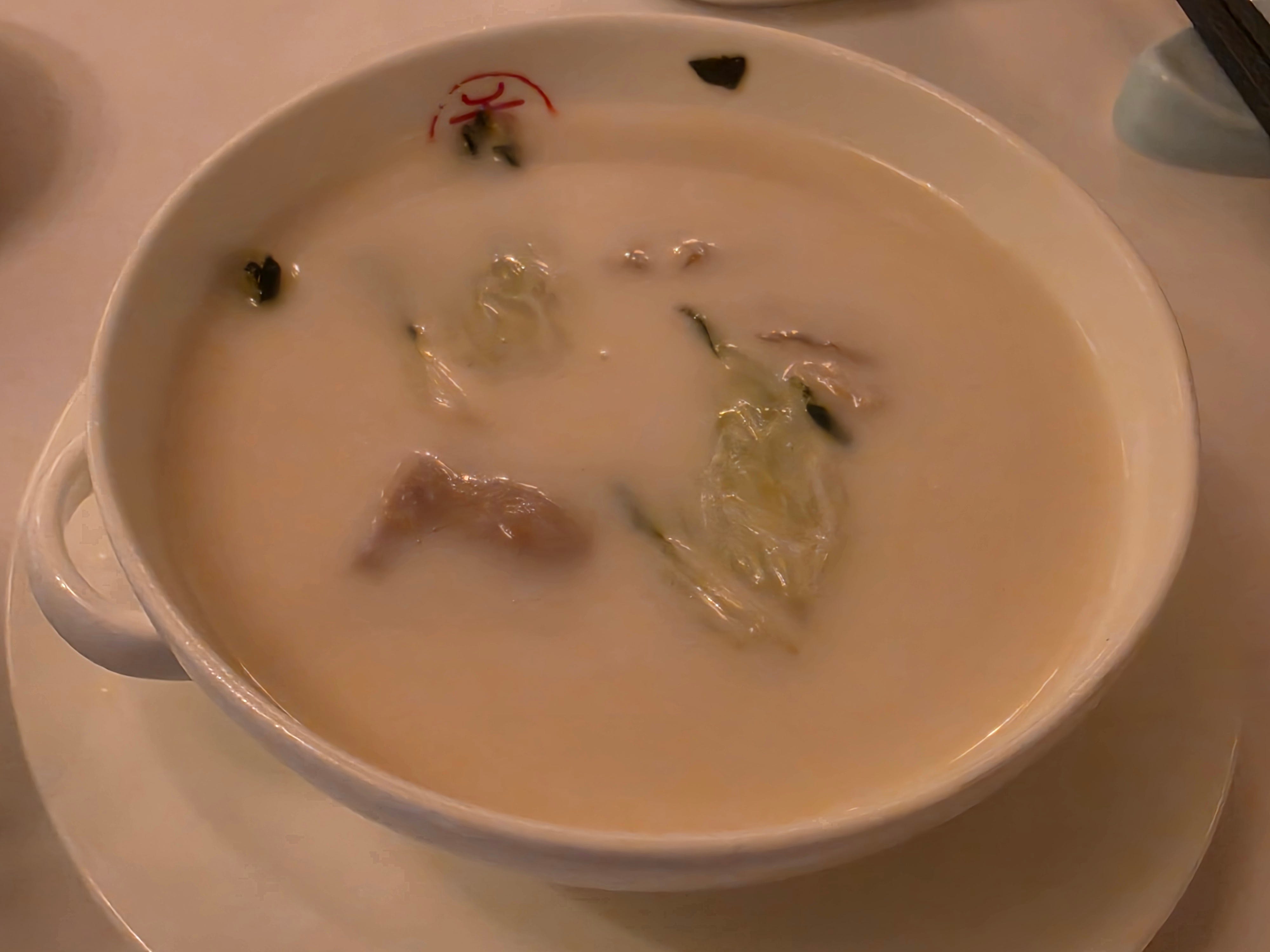
I went for the pig lung in almond tea soup. It was exactly what I expected.
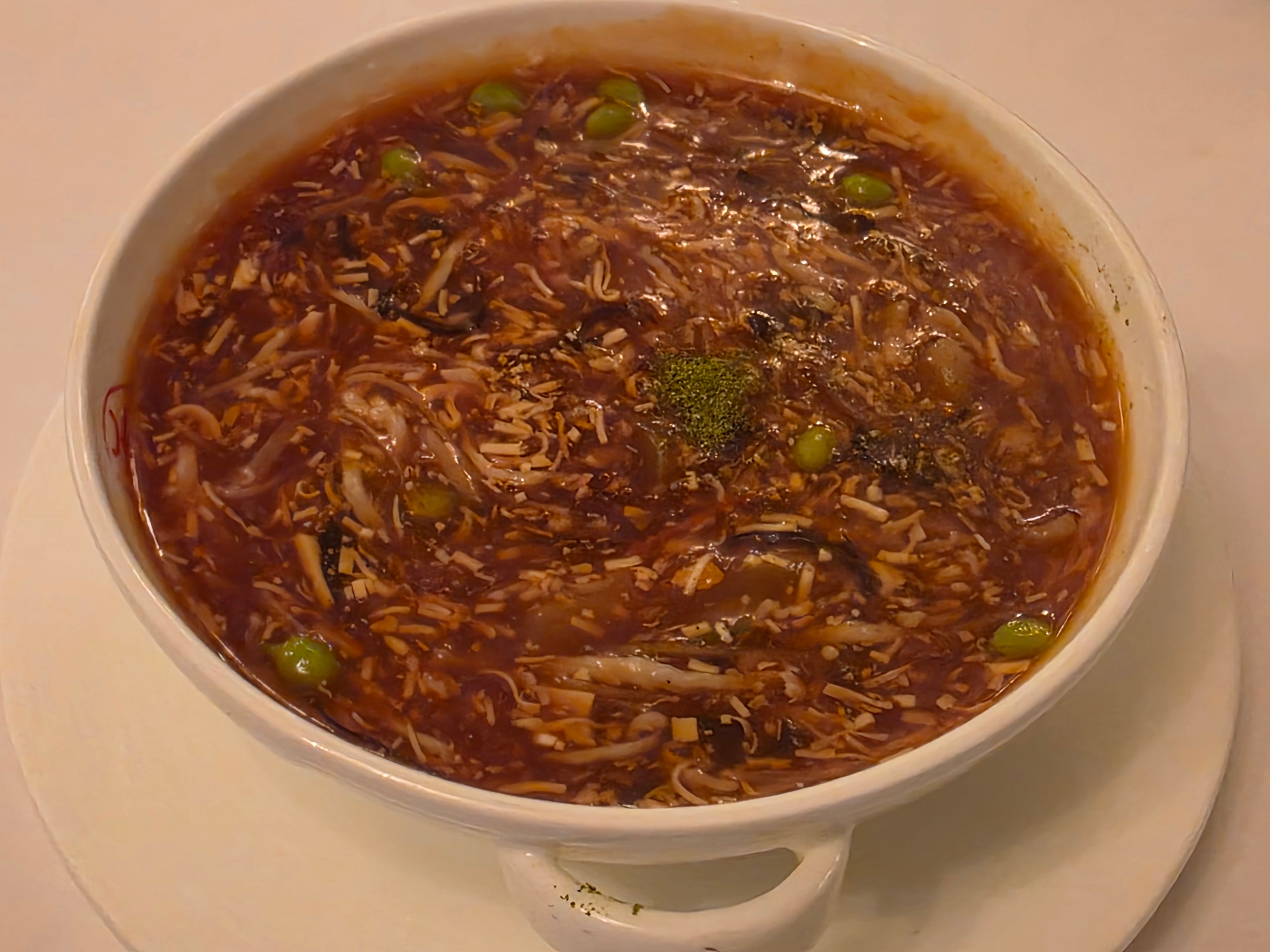
My companion ordered the hot-and-sour fish maw soup. It was better than I expected: thick, rich and made in the Shanghainese style.
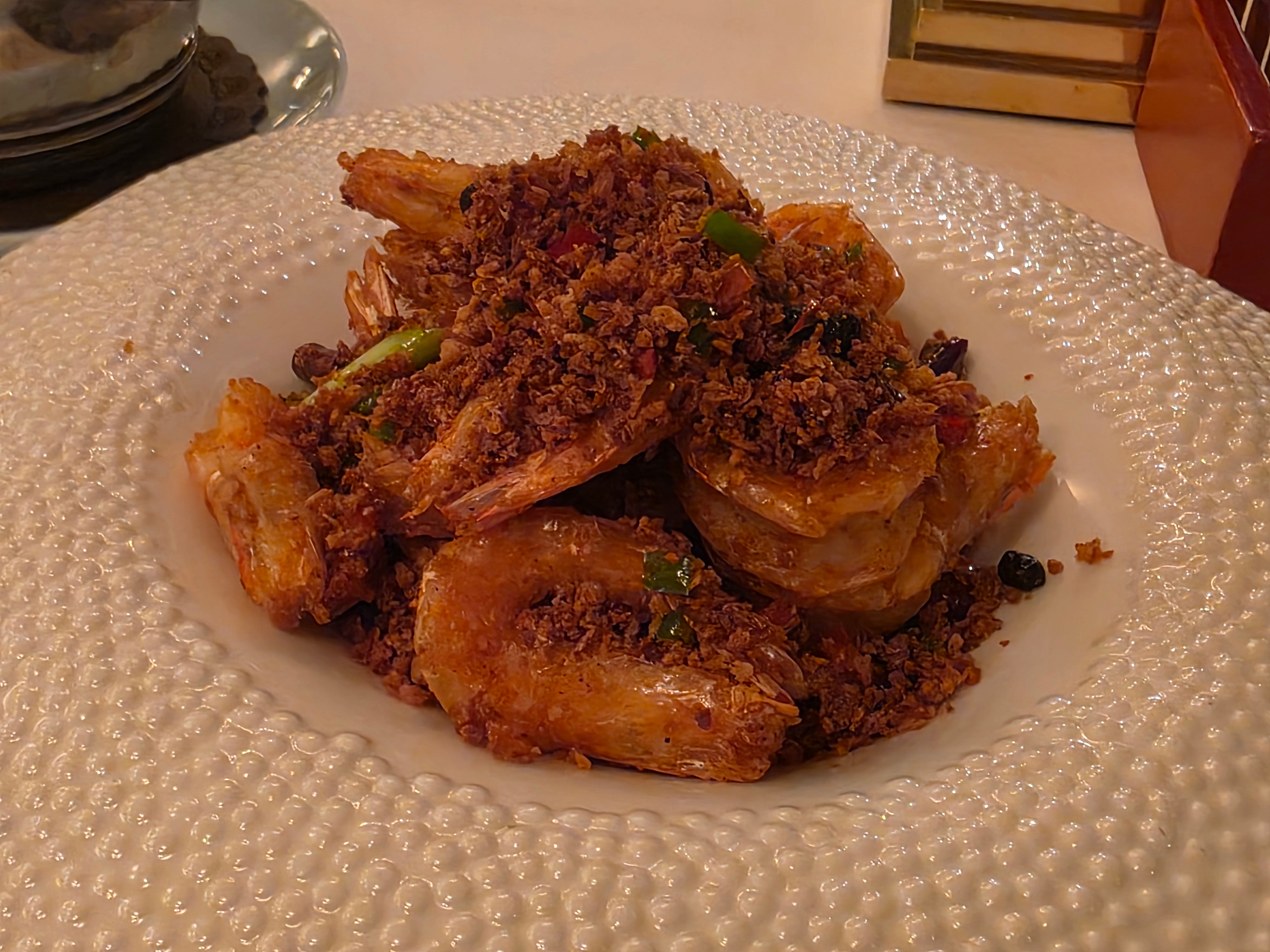
The typhoon shelter shrimp came fried until I could bite straight through the shells and eat the shrimp, shell and all. After frying, the shrimp was tossed with lots of chopped garlic, dried chilli, fermented black beans, and spring onion producing a crisp and fragrant dish with a touch of heat and savory depth.
The style of dish refers to the old boat communities and floating kitchens in Hong Kong’s typhoon shelters. Cooks there worked in cramped galleys and used ingredients that kept without refrigeration. They tossed the day’s seafood over high heat with bold seasonings. The style became famous through crab cooked around Causeway Bay, then moved ashore as the boat restaurants eventually disappeared in the 1960s and 70s.
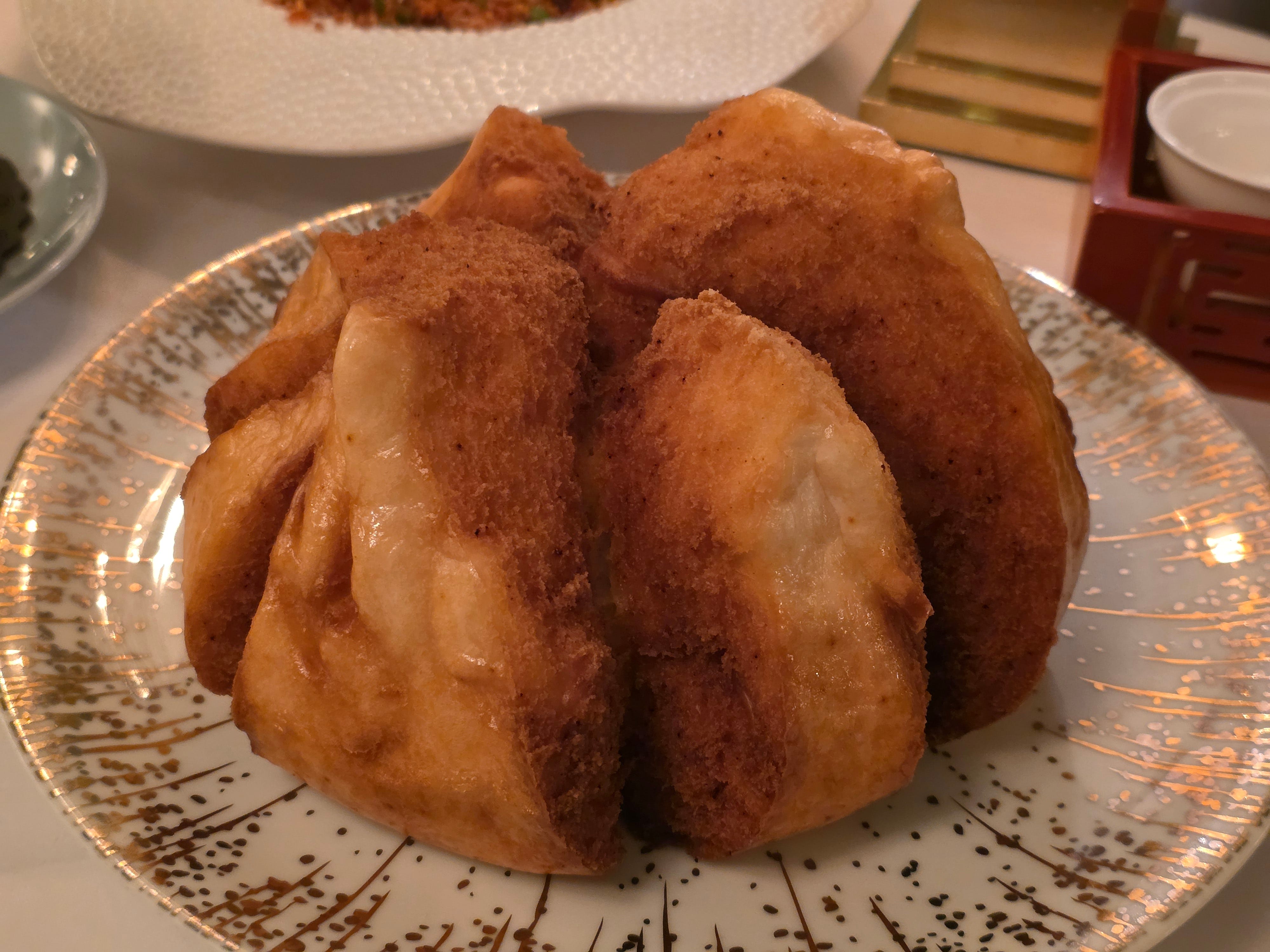
The star of the meal was a deep-fried jumbo bun filled with “Buddha Jumps Over the Wall”. It sounded like a gimmick, but it’s one of the signature dishes, so we ordered it.
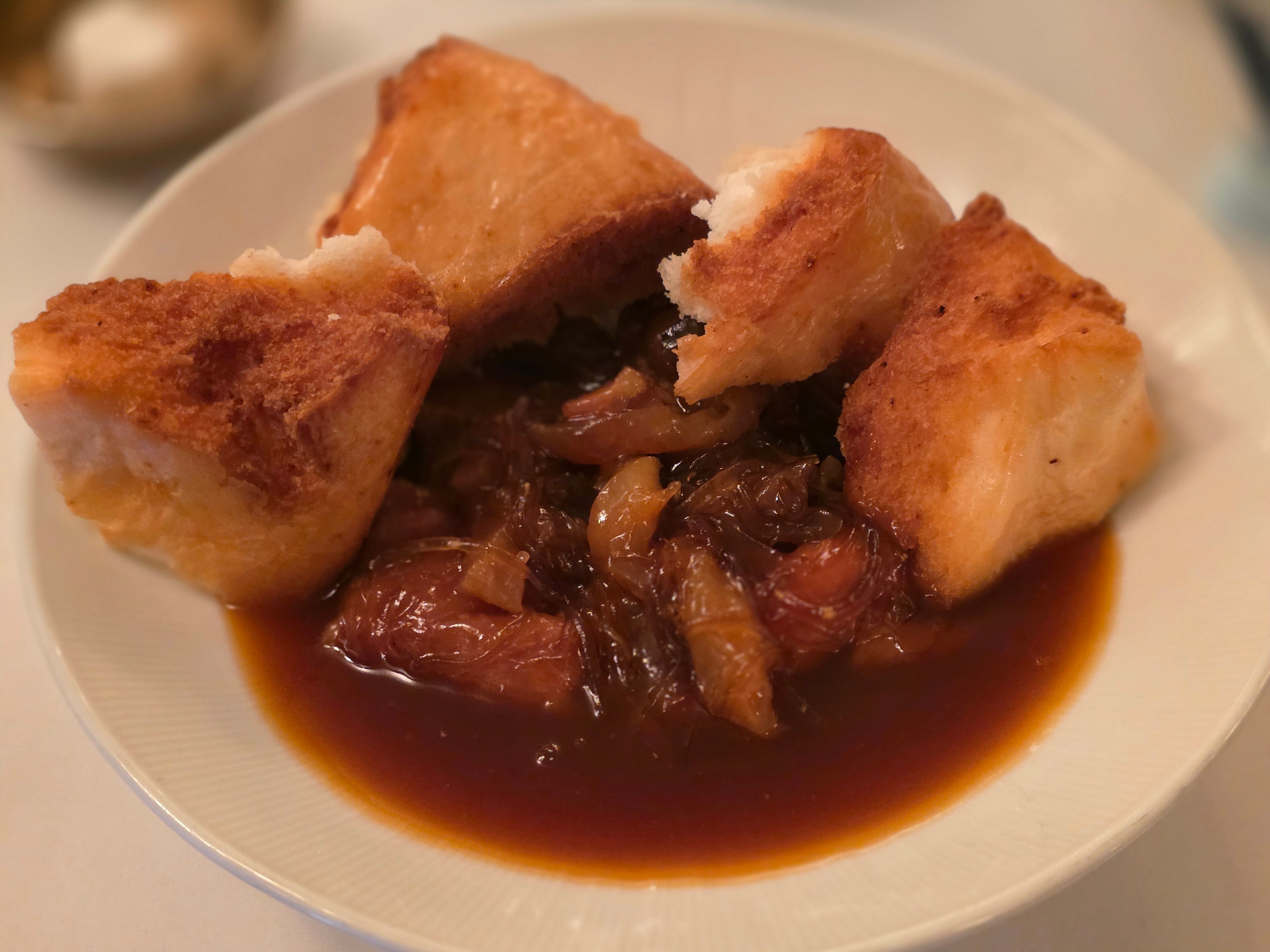
Inside was a thick stew of dried seafood: abalone, sea cucumber, shark fin and conpoy in a rich abalone broth. The bun soaked up the sauce. Its sweet, fluffy bread worked against the savoury stew, and the whole thing was a showstopper. It was my highlight of the night. China Tang has a few other theatrical signatures, and this one made me want to come back to try them.
I also thought the format would work perfectly for a Singapore chilli crab. Pick the crab, cook the meat in its sweet-savoury sauce, then serve it inside one giant mantou. Chilli crab with fried mantou is already a classic combination; turning it into one oversized bun would give it a bit of theatre.
We kept dinner fairly light. The menu is extensive, and I had good memories of a visit several years ago, but we didn’t want a heavy meal. We tried a few different dishes. Most didn’t leave much of an impression, but I’d return for the jumbo bun alone.
Total Damage: HKD 2,800/2 people