
Hamamoto is a serious sushi-kappo counter built around Chef Kazuhiro Hamamoto, high Japanese sourcing, and an omakase format that leans as much on seasonal cooked courses as on its nigiri.
The main dining room centres on a beautiful brushed hinoki counter, which the restaurant claims is the only curved sushi counter in Singapore. The format combines sushi and kappo, with a kaiseki-like rhythm: seasonal appetisers, uni, hot dishes, premium ingredients, nigiri, soup and dessert all prepared in front of you. The room is deliberately spare. You are meant to watch the chef dance with the ingredients, not the room.
Chef Kazuhiro Hamamoto opened Hamamoto in 2021 and the restaurant presents itself as the culmination of more than 20 years of work across Kyoto, Tokyo and Singapore. Before opening Hamamoto Chef Hamamoto worked at Ki-Sho, another famous Kaiseki address in Singapore. He would be the chef who would contact suppliers late at night to secure unusual ingredients. This is consistent with how Hamamoto now markets itself: producer relationships, seasonality and ingredient timing before technique-for-show.
Hamamoto’s distinguishing angle is not a famous Tokyo parent, a celebrity import, or a dramatic room. It is Chef Hamamoto himself, his Ki-Sho history, the tiny counter, and ingredient relationships in Japan.
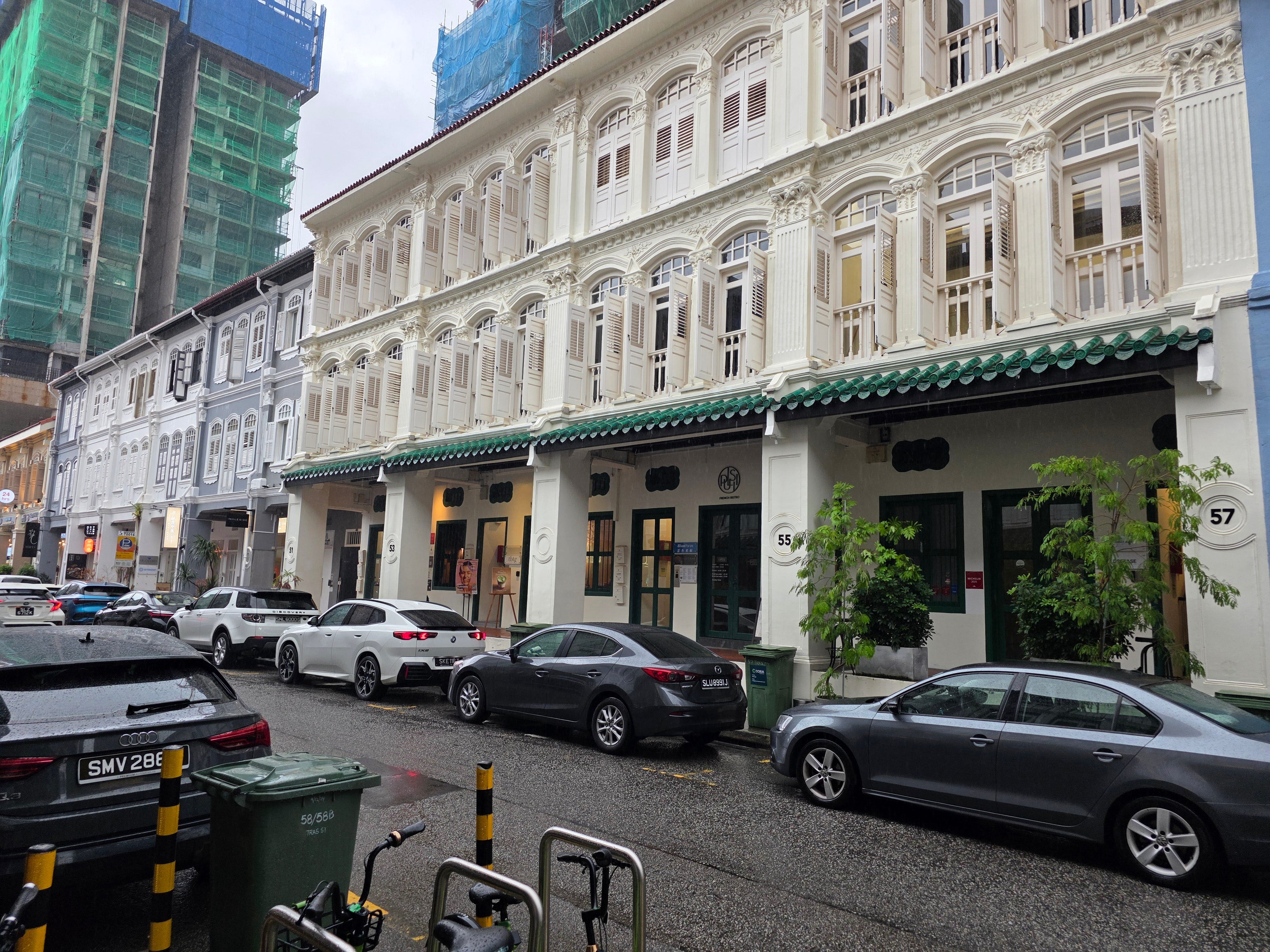
Down a row of historic shophouses in Tanjong Pagar, this area hosts endless restaurants, with many other standouts nearby.
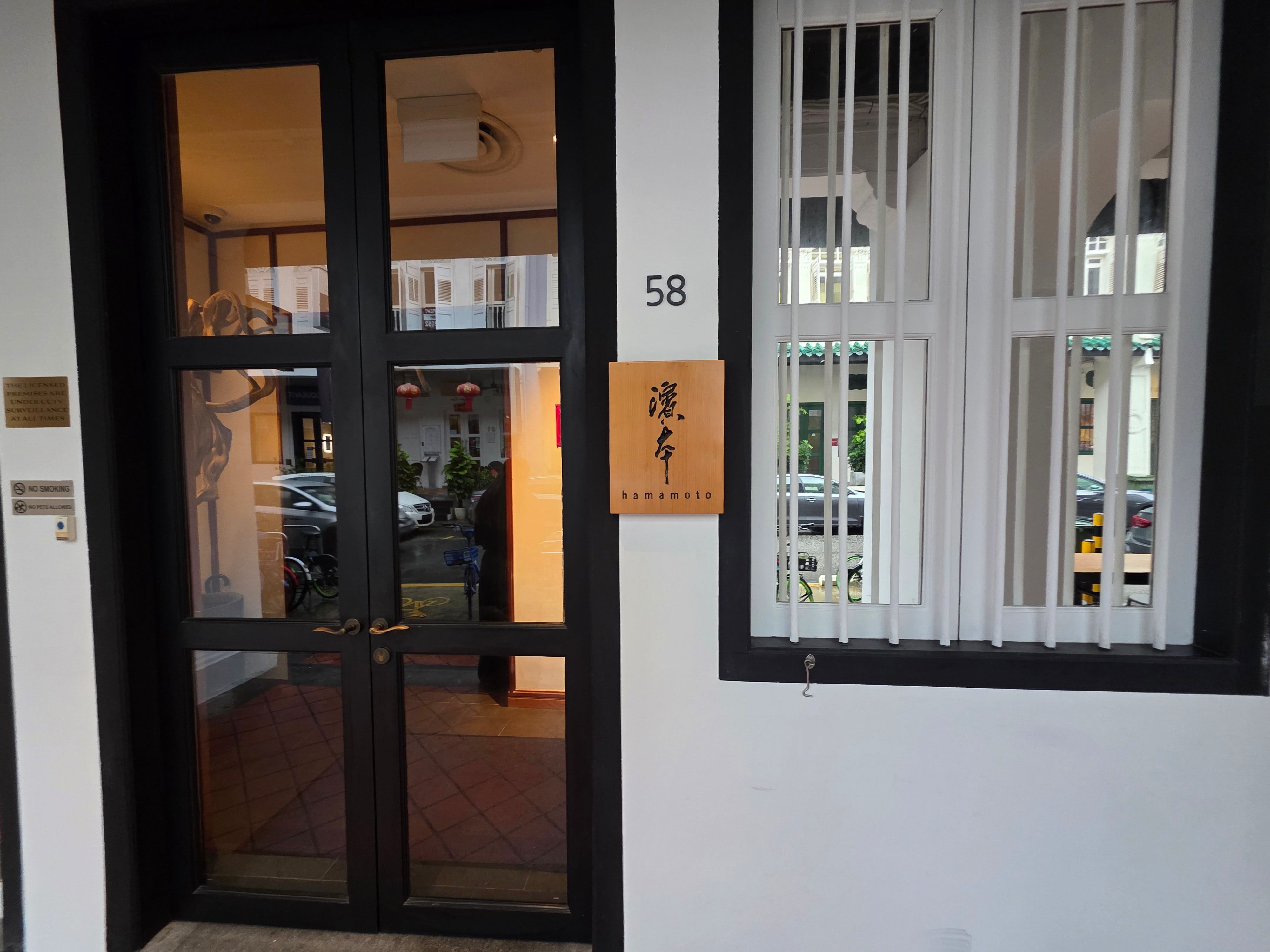
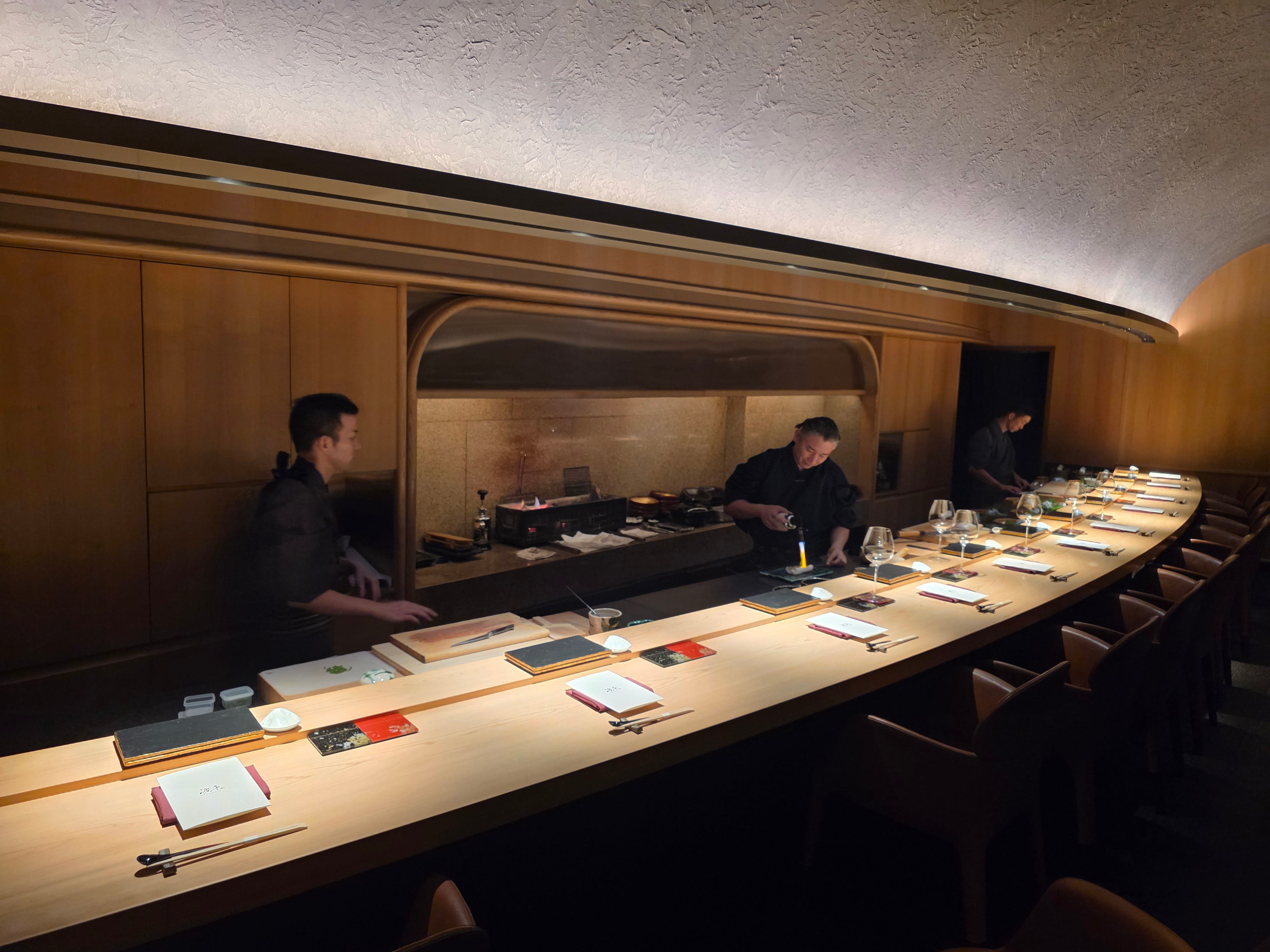
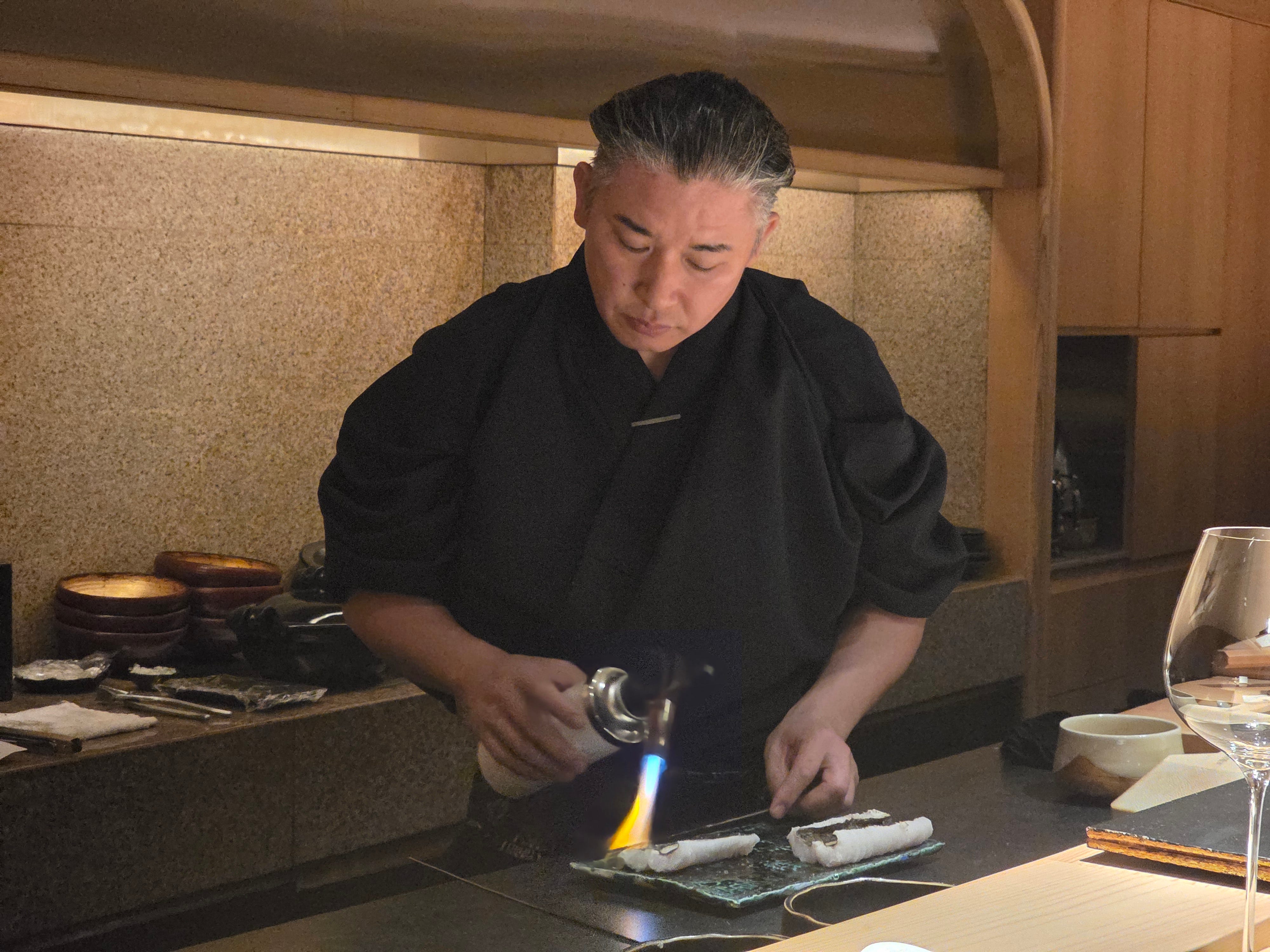
Walking into the darkened. cavernous room. The lighting is particularly impressive, soft, but with specific spotlights in front of each of the seats to highlight the theatrical preparation of each course. Three chefs at their stations, with Chef Hamamoto in the middle, all preparing the mise in place for the meal ahead.
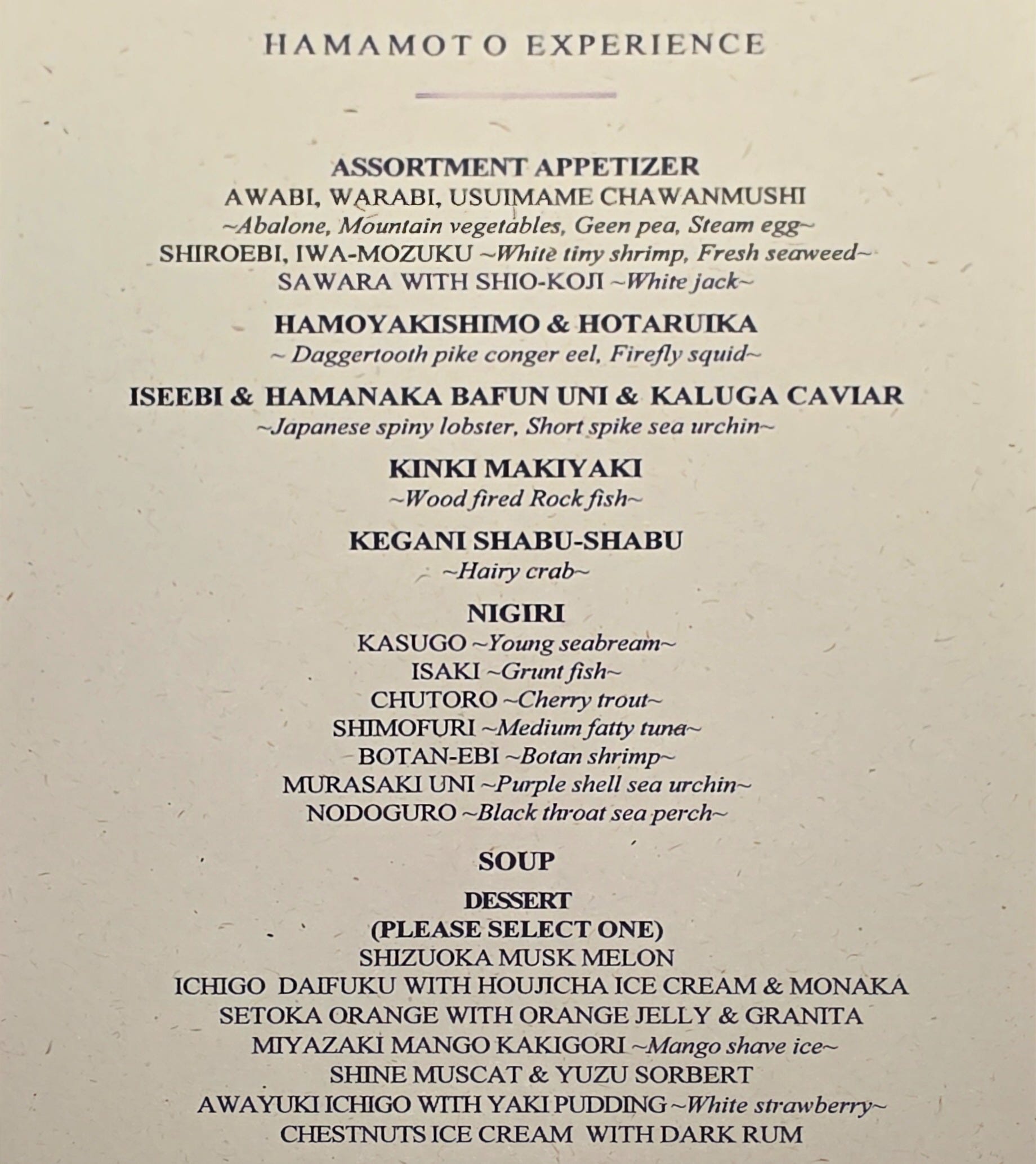
It would be a shame not to do a full experience when visit Hamamoto, and I went with the most extensive menu. The menu was a bit odd, there were definately some translation errors here, and we ended up with a few extra courses that I wasn’t expecting on the menu.
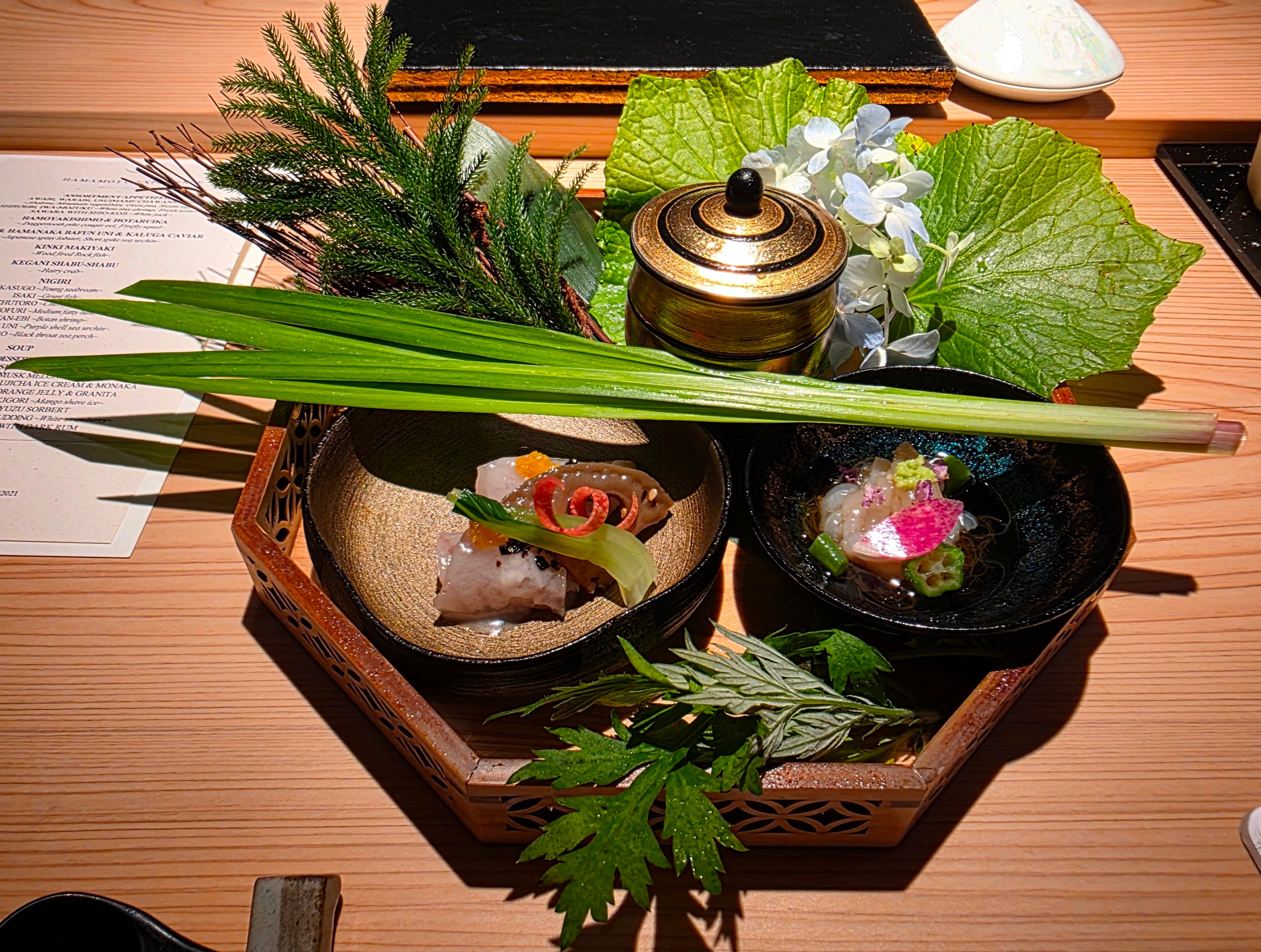
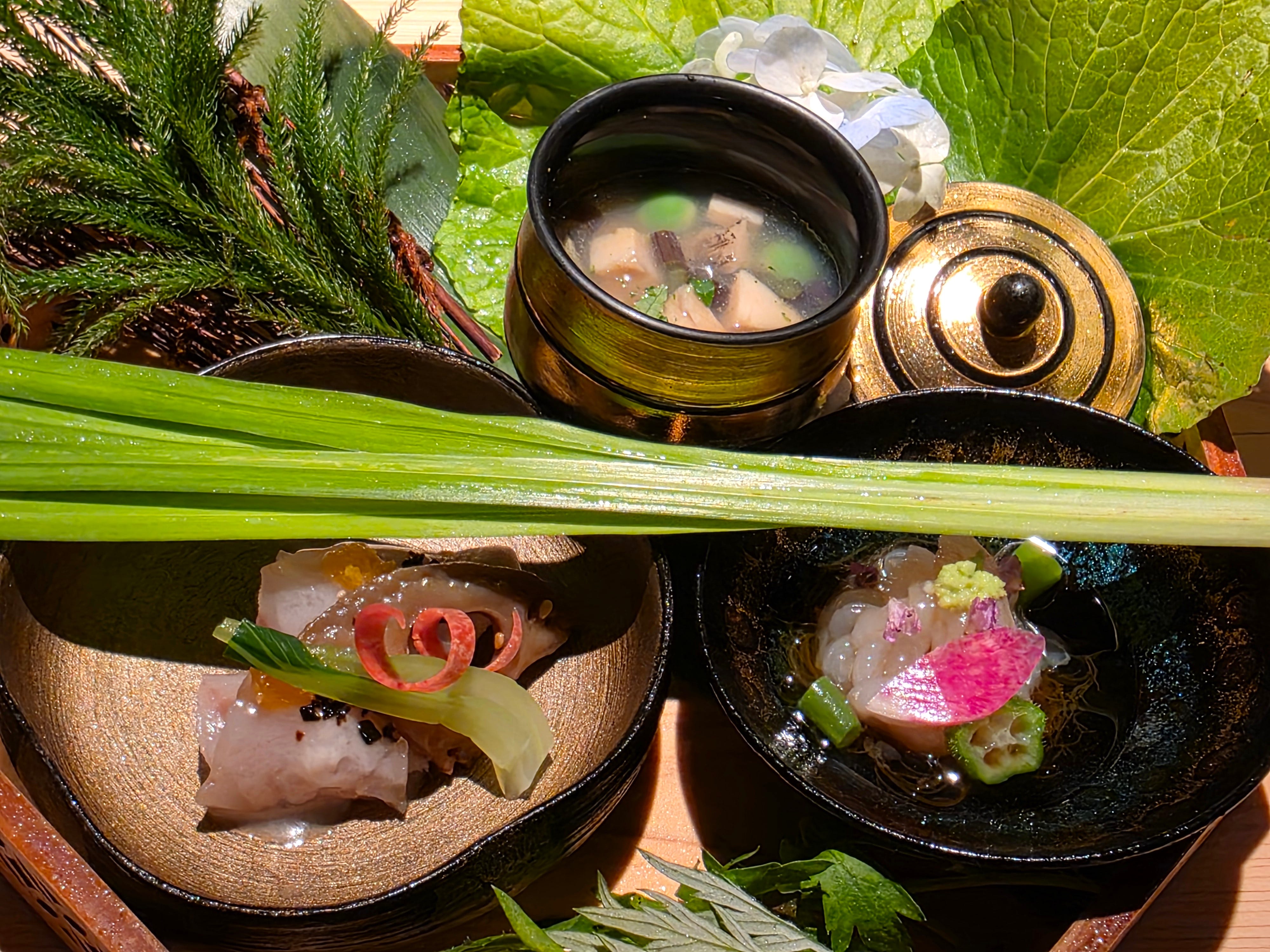
A collection of appetizers with beautiful presentation:
Charwanmushi with diced abalone, mountain vegetables and green peas. Lots of texture in the dish, and it wasn’t all cooked together until soft. Lots of contrast between the soft egg, the spring of the abalone and crunch of the vegetables
Sweet shrimp sashimi, on a bed of slimy seaweed
White jack sashimi, topped with shio-koji and homemade pressed roe
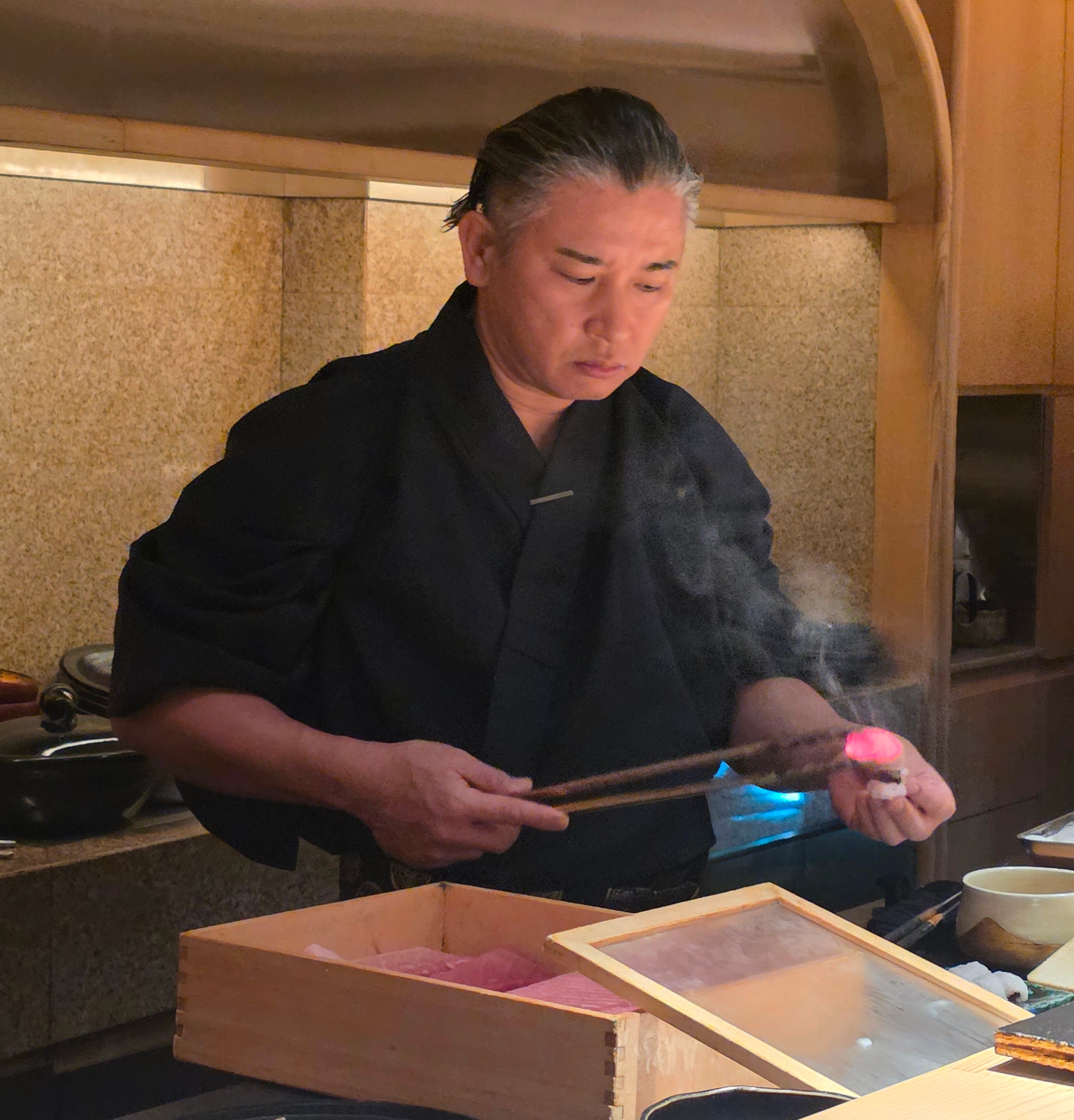
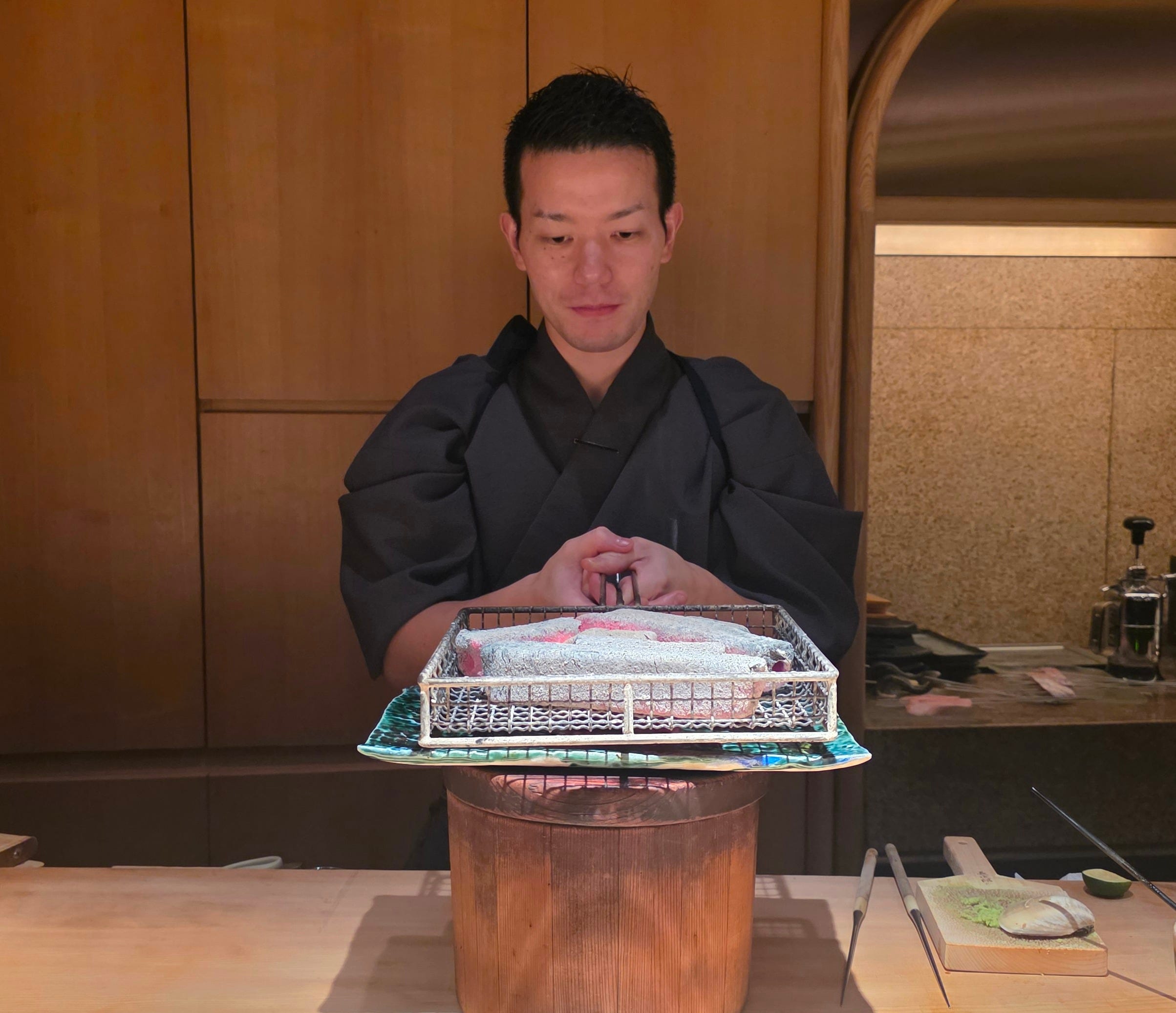
Chef Hamamoto searing the piece of fish for the next dish with a brick of charcoal
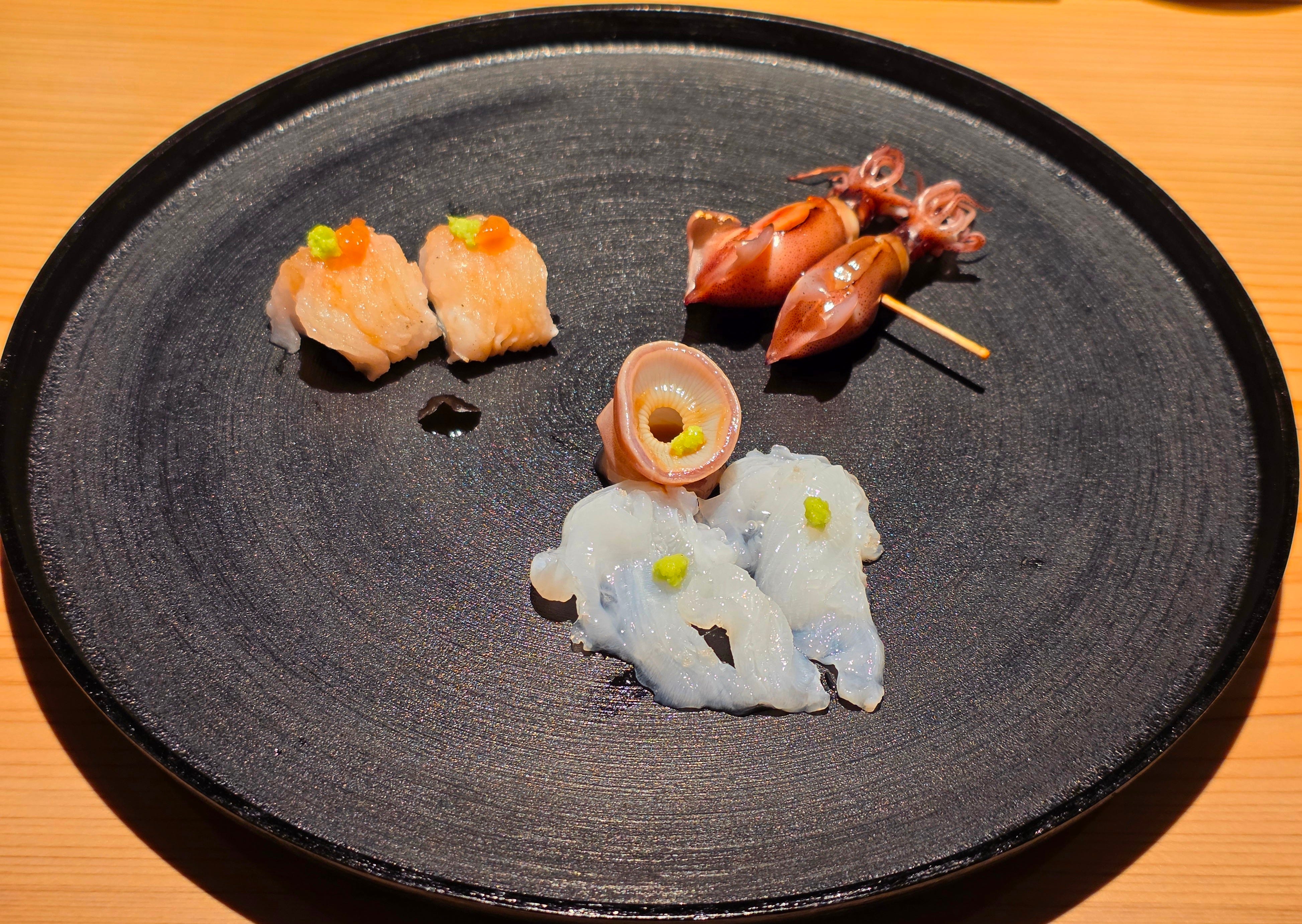
Octopus sashimi from two parts of the octopus, a piece of pike conger eel Chef Hamamoto was searing earlier, and some firefly squid, just lightly touched with fire.
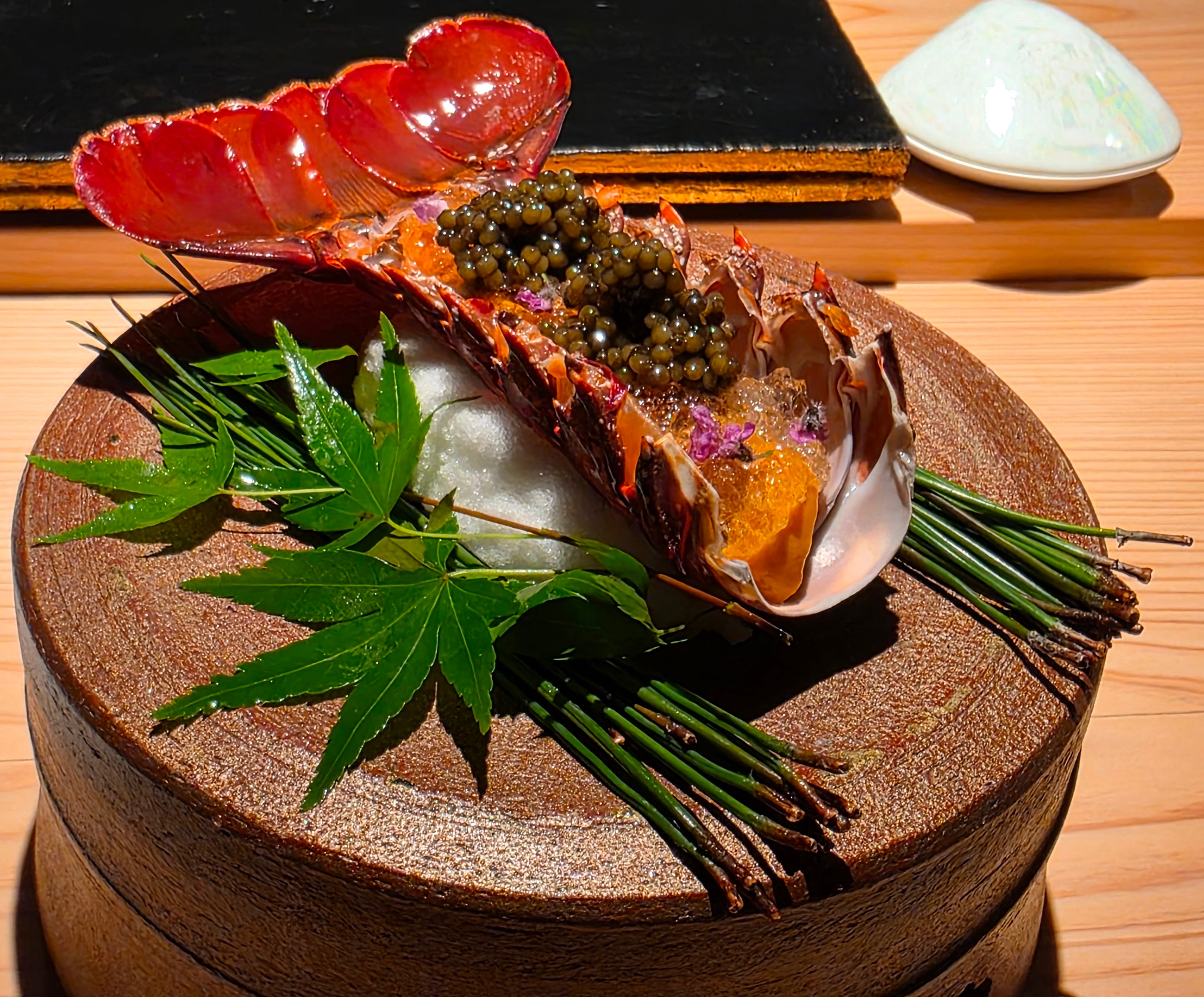
Spiny lobster sashimi topped with generous portions of uni, and kaluga caviar.
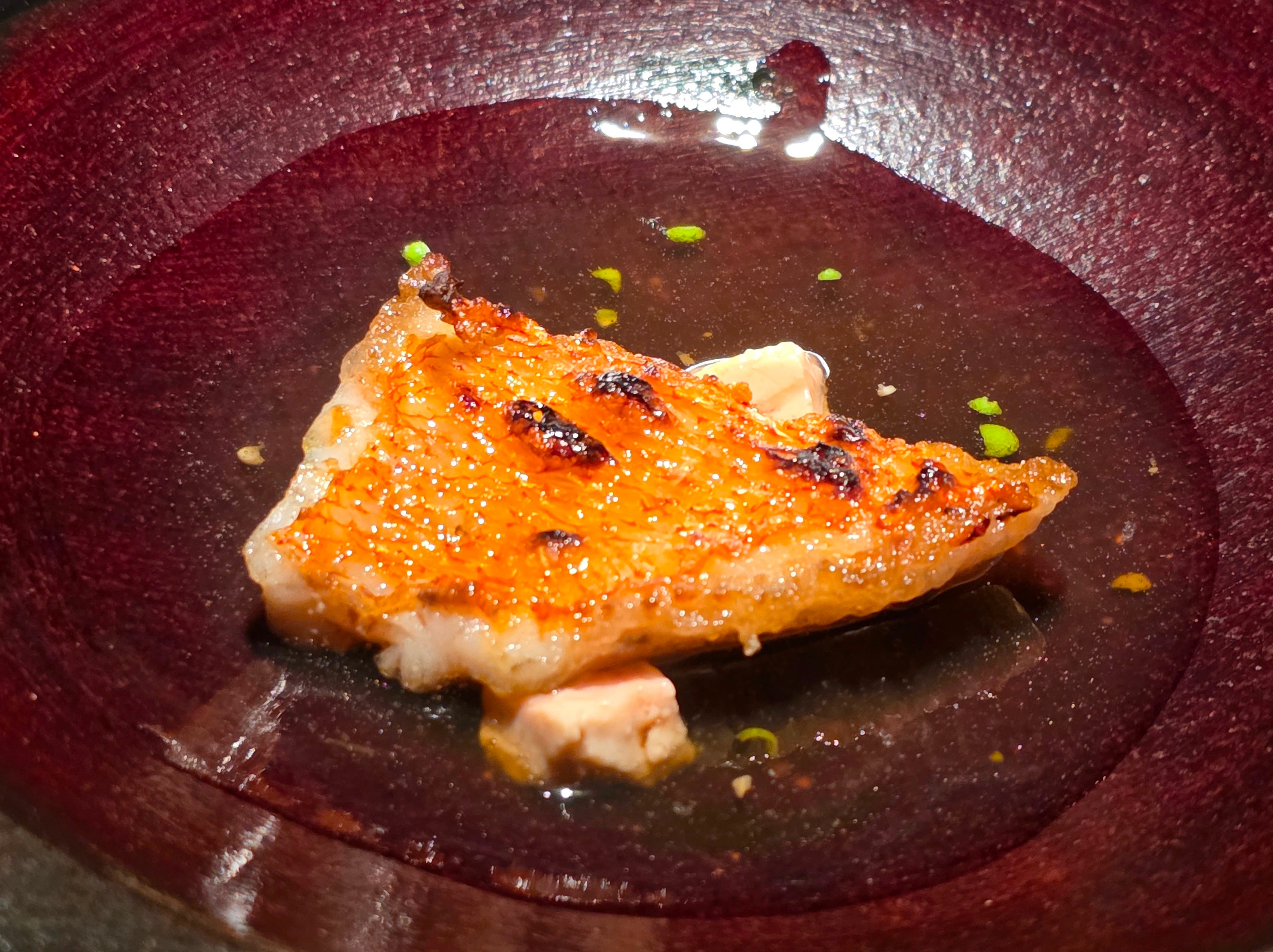
Grilled rockfish, in an aged vinegar sauce on a bed of rich, buttery monkfish liver. Foie gras of the sea.
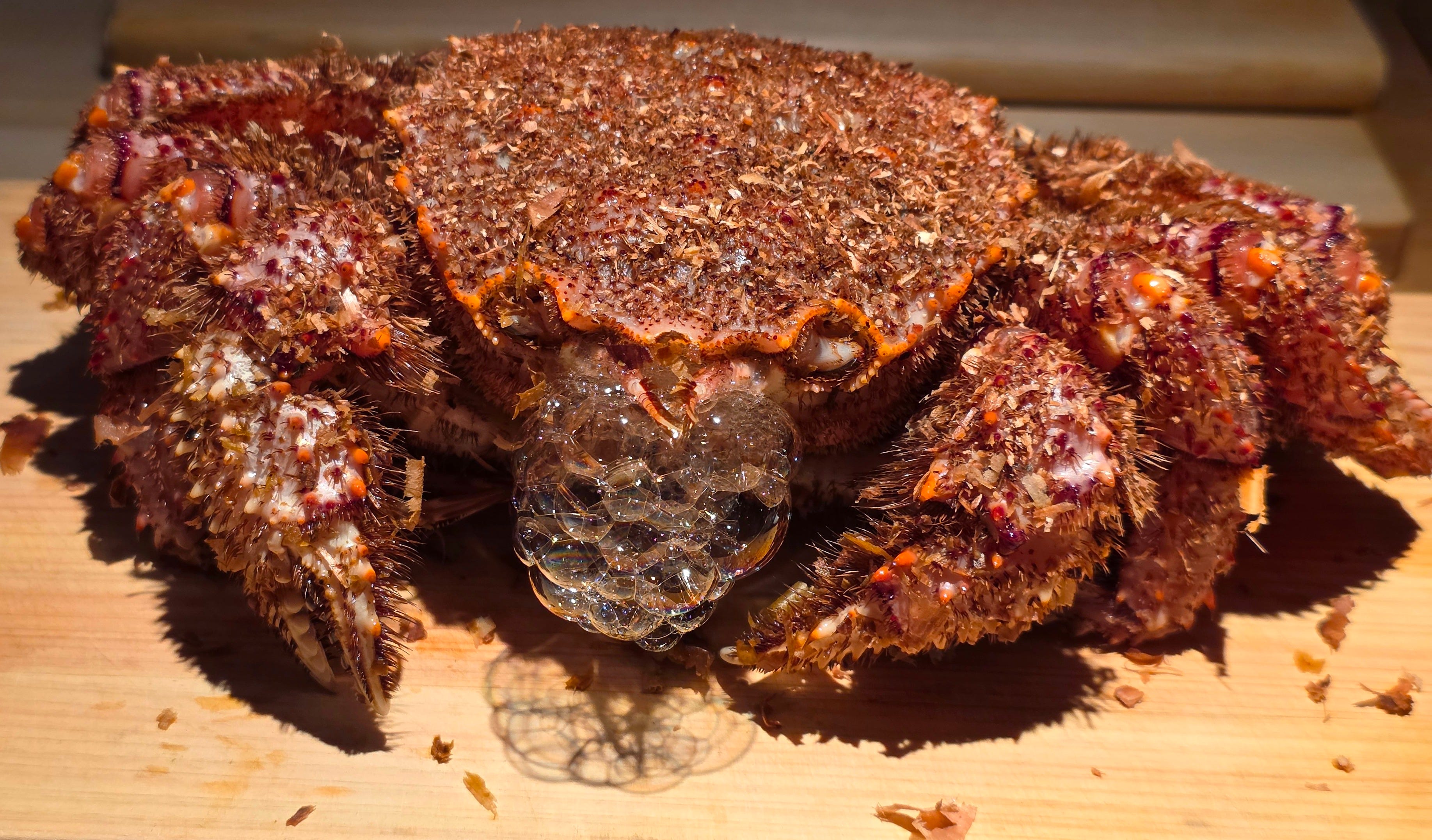
Presentation of the live hairy crab to be used in the next dish.
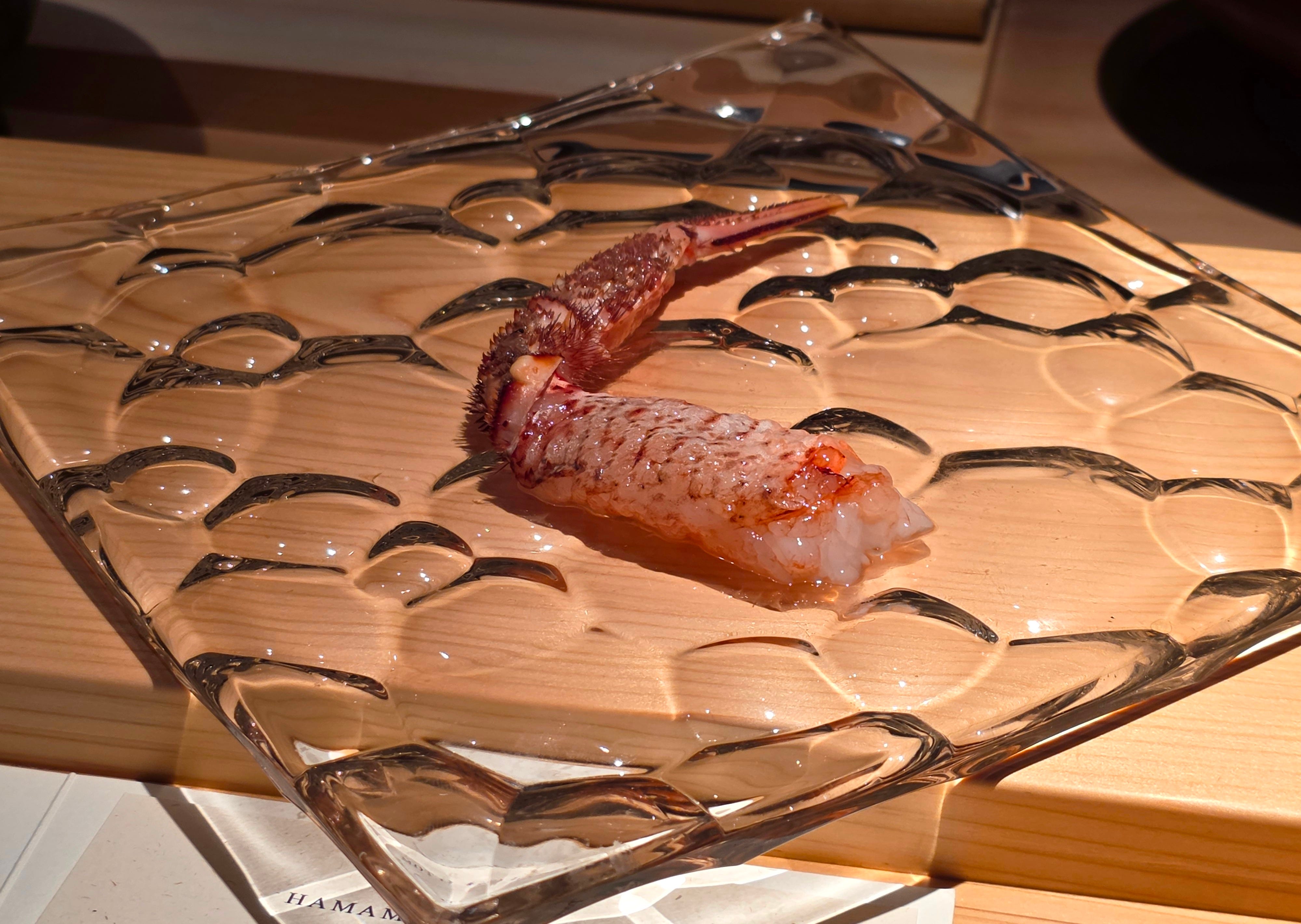
The leg was deshelled and presented before cooking shabu shabu style.
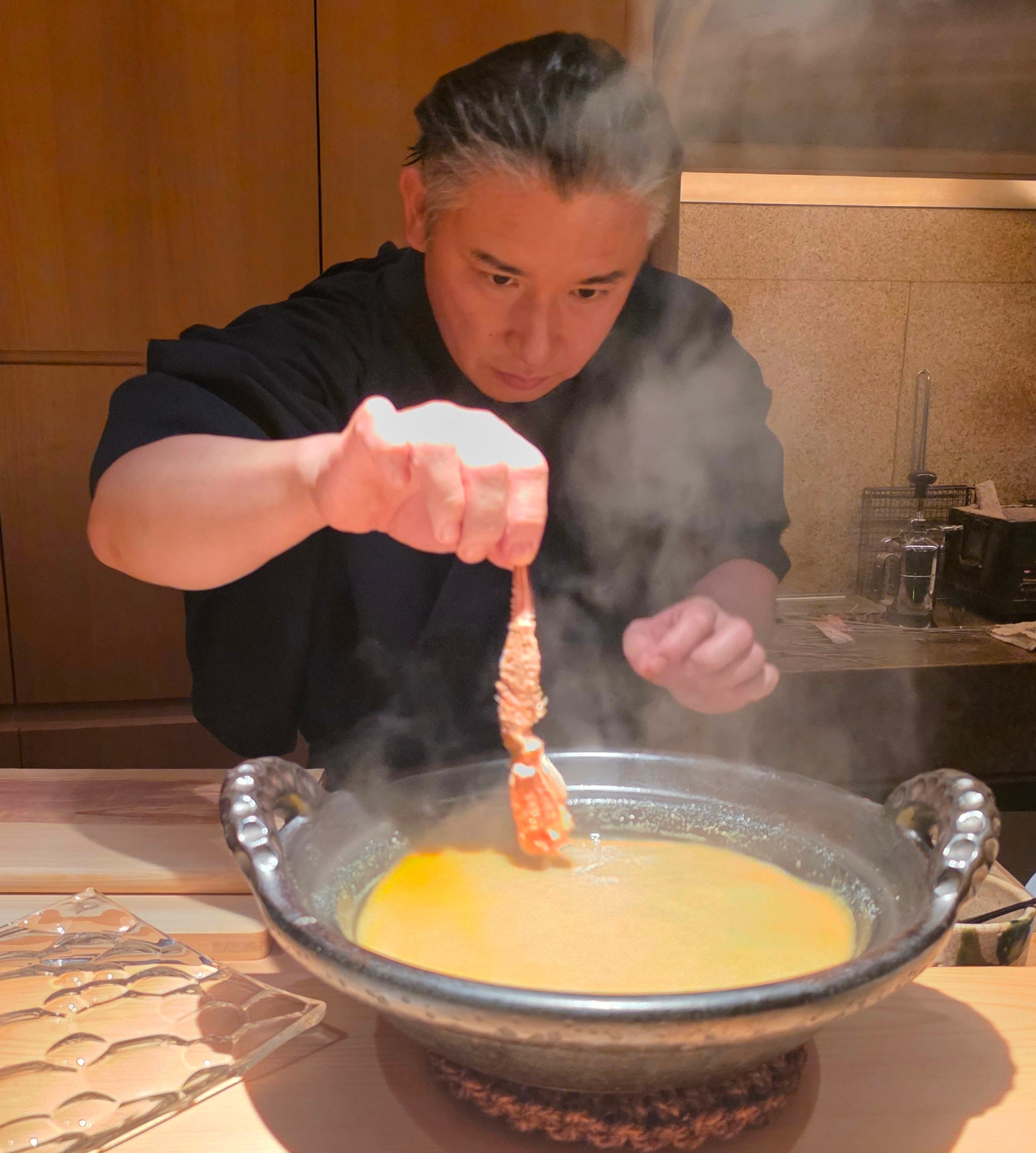
The chef rapidly dipping the leg to just barely poach it in a broth made from the crab innards.
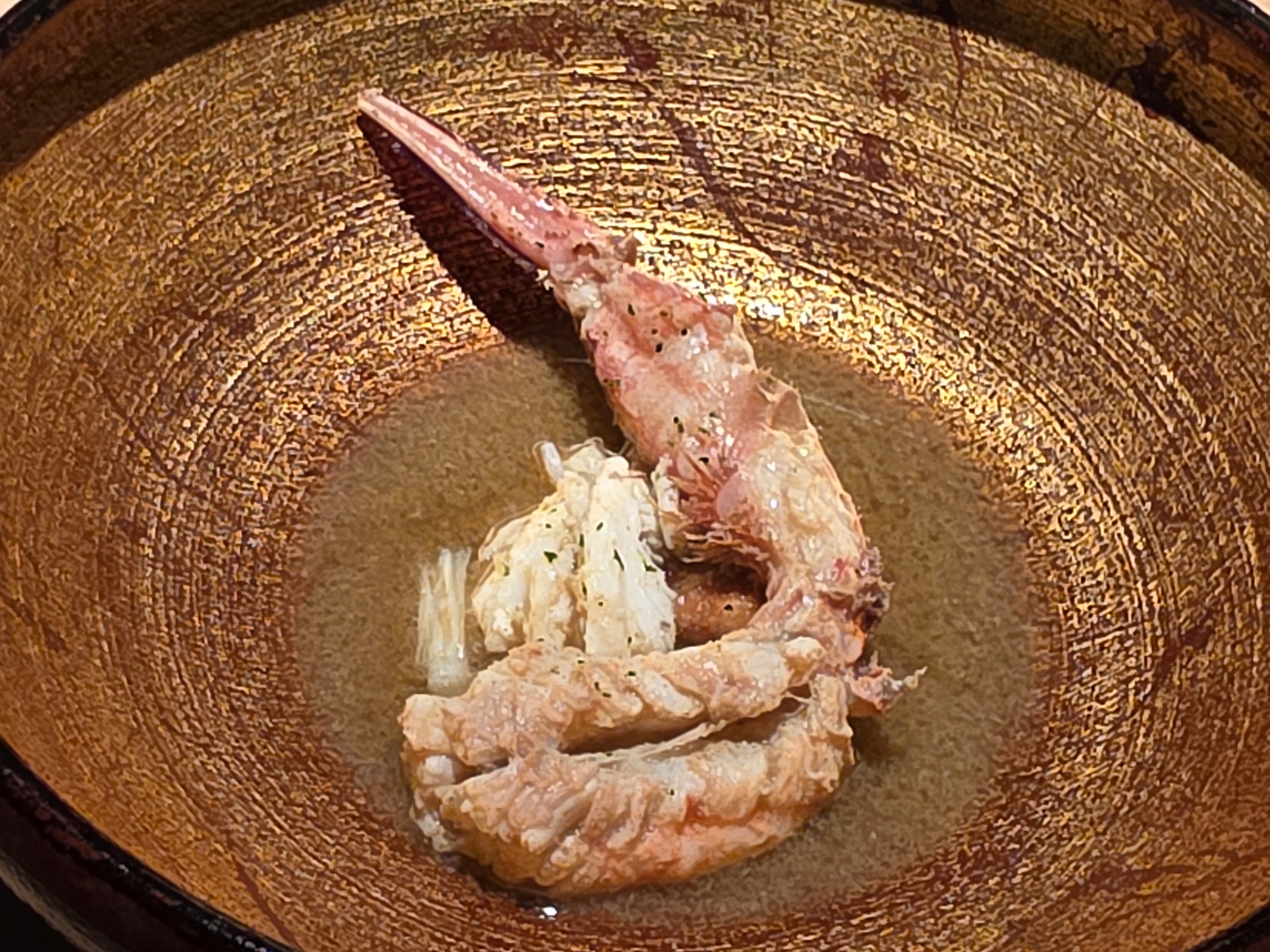
Served with a bit of the broth, just lightly cooked. Absolutely delicious and a highlight of the meal.
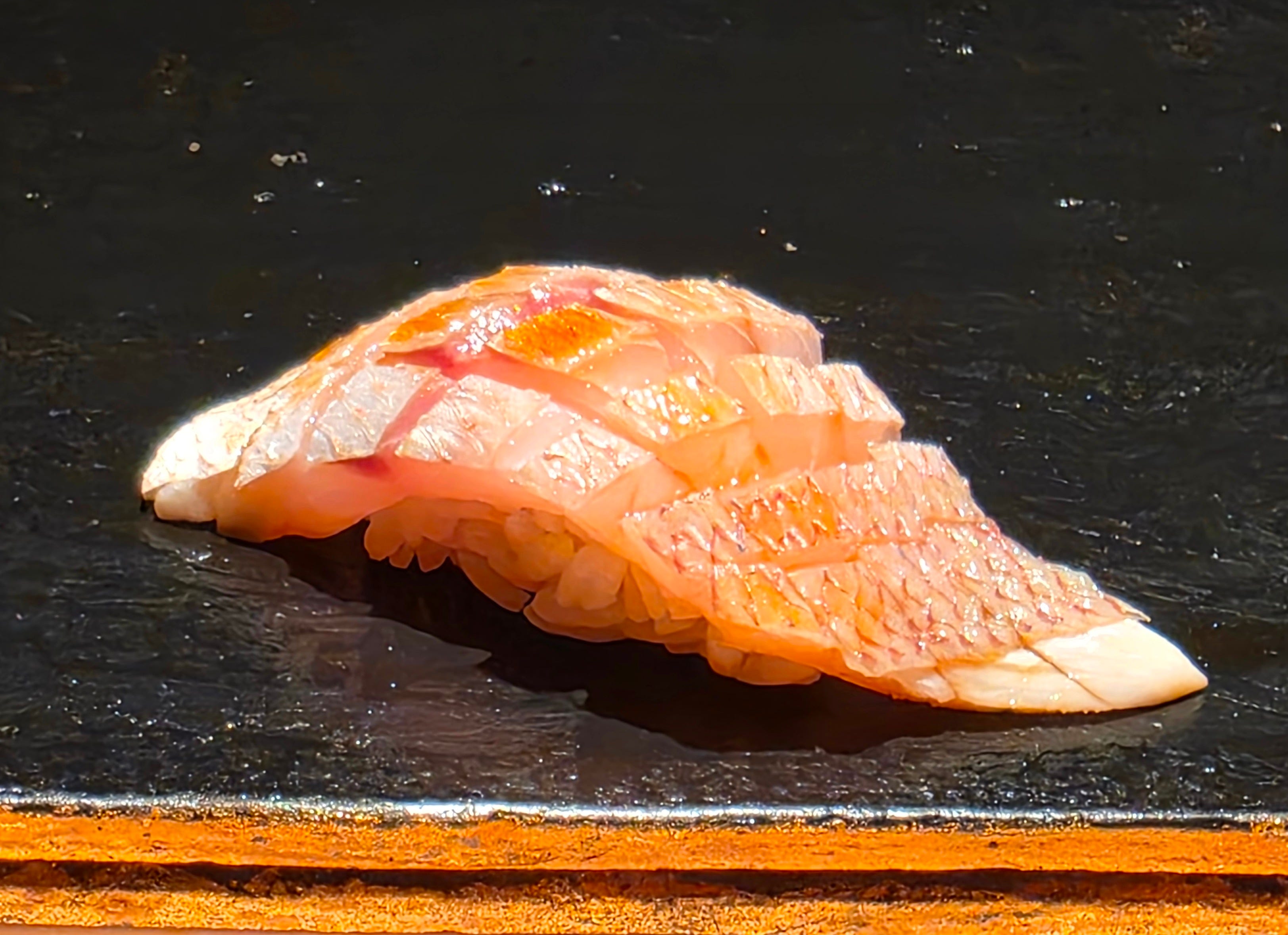
Starting the nigiri dishes, a piece of young sea bream, dramatically smoked table side.
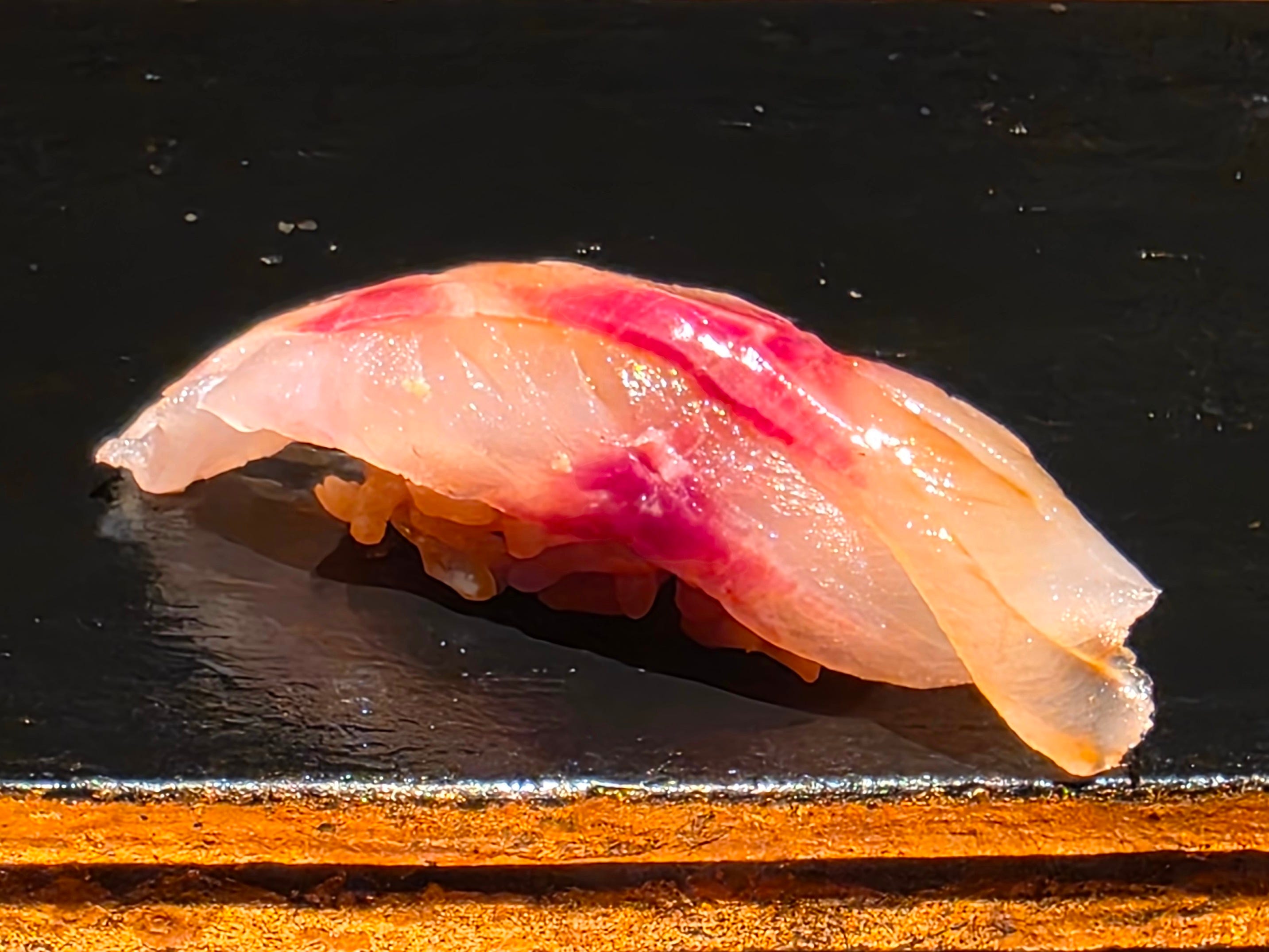
Next, Isaki, or chicken grunt, a fish that maintains higher fat content than most other summer fish.
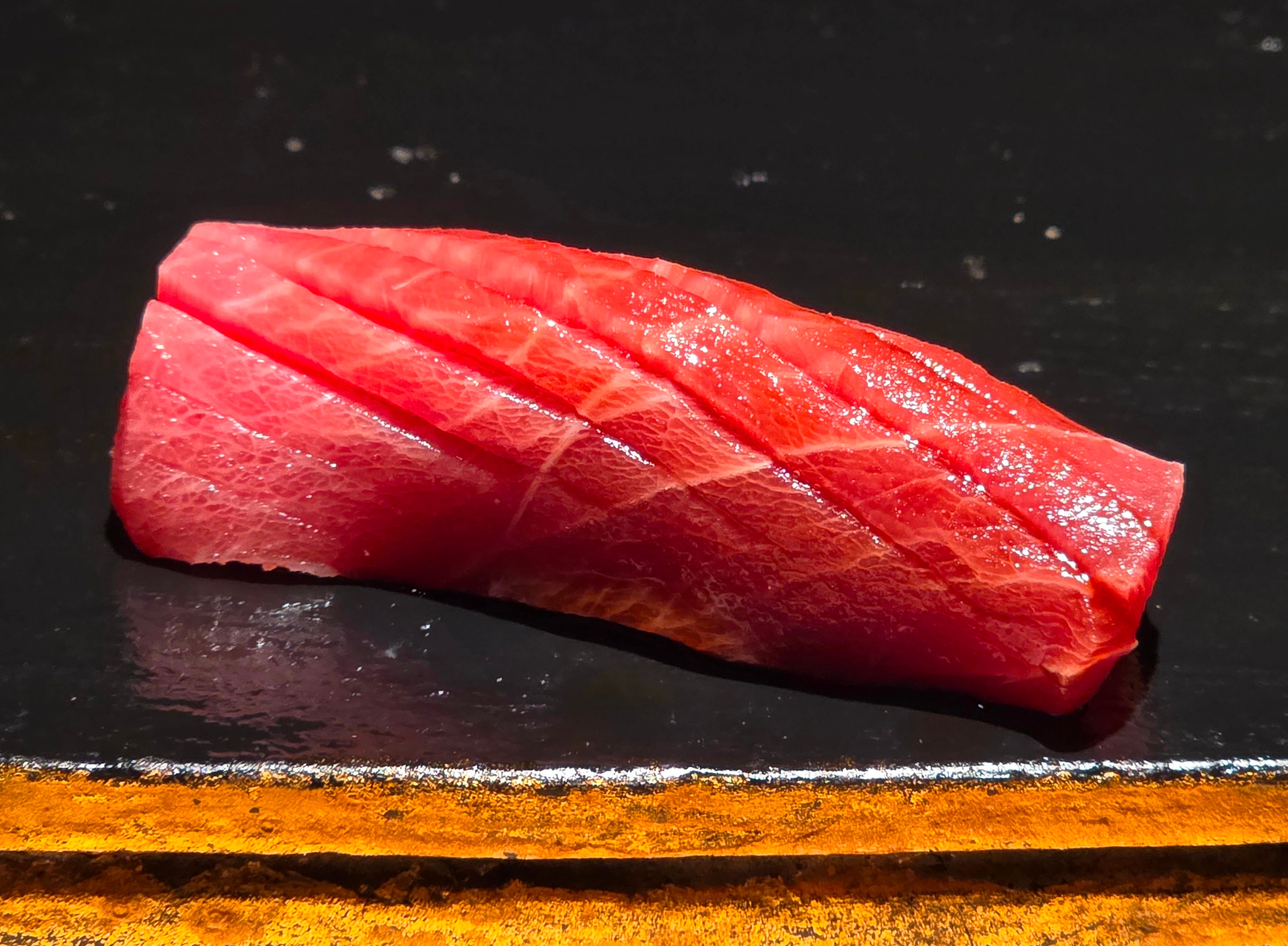
Moving into the tuna pieces, the chutoro, a medium fatty piece of tuna (and not cherry trout as it says on the menu).
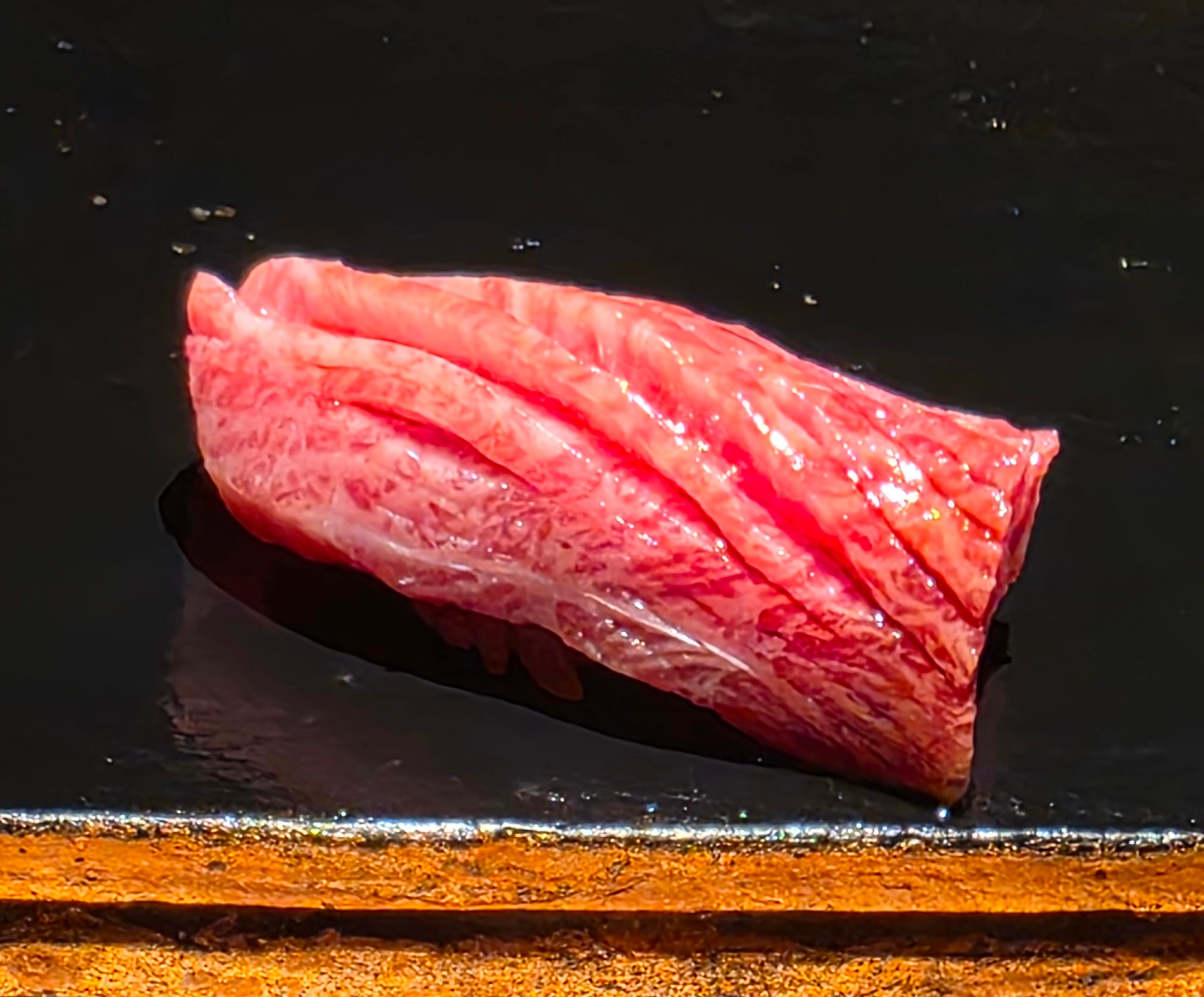
Shimofuri otoro, an incredible piece of otoro with incredibly fine marbling. Looking more like a piece of wagyu than tuna. Slightly less fat percentage than the fat bomb of the more common jabara otoro, which is cut to highlight the fat. This cut is more balanced, and has one of the best pieces of nigiri I’ve ever had. Definitely my highlight of the night. The menu calls it “medium fatty tuna”, but there was nothing medium about this one. I’m pretty sure it was referring to the chutoro from the previous piece.
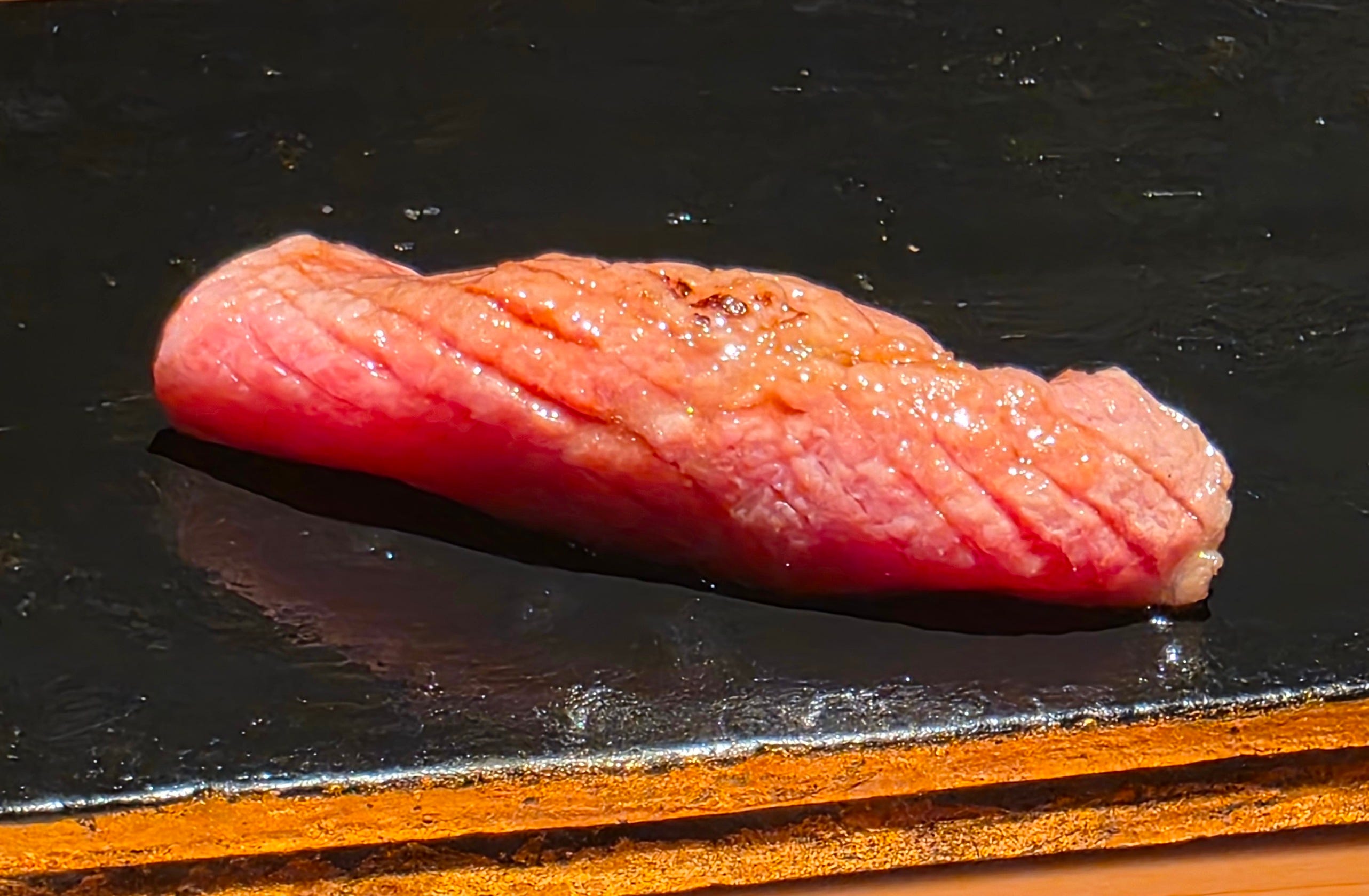
An unexpected piece of nigiri that wasn’t on the menu. What could possibly follow up the shimofuri oroto? Another cut of otoro, of course, cut parallel to highlight the heavy fat, broiled with charcoal directly before serving. A massive mouthful of fat, almost to the point of excessiveness. Without the charcoal grilling, it would’ve probably been too much. Would’ve been my highlight of the night if it wasn’t for the shimofuri piece right before it.
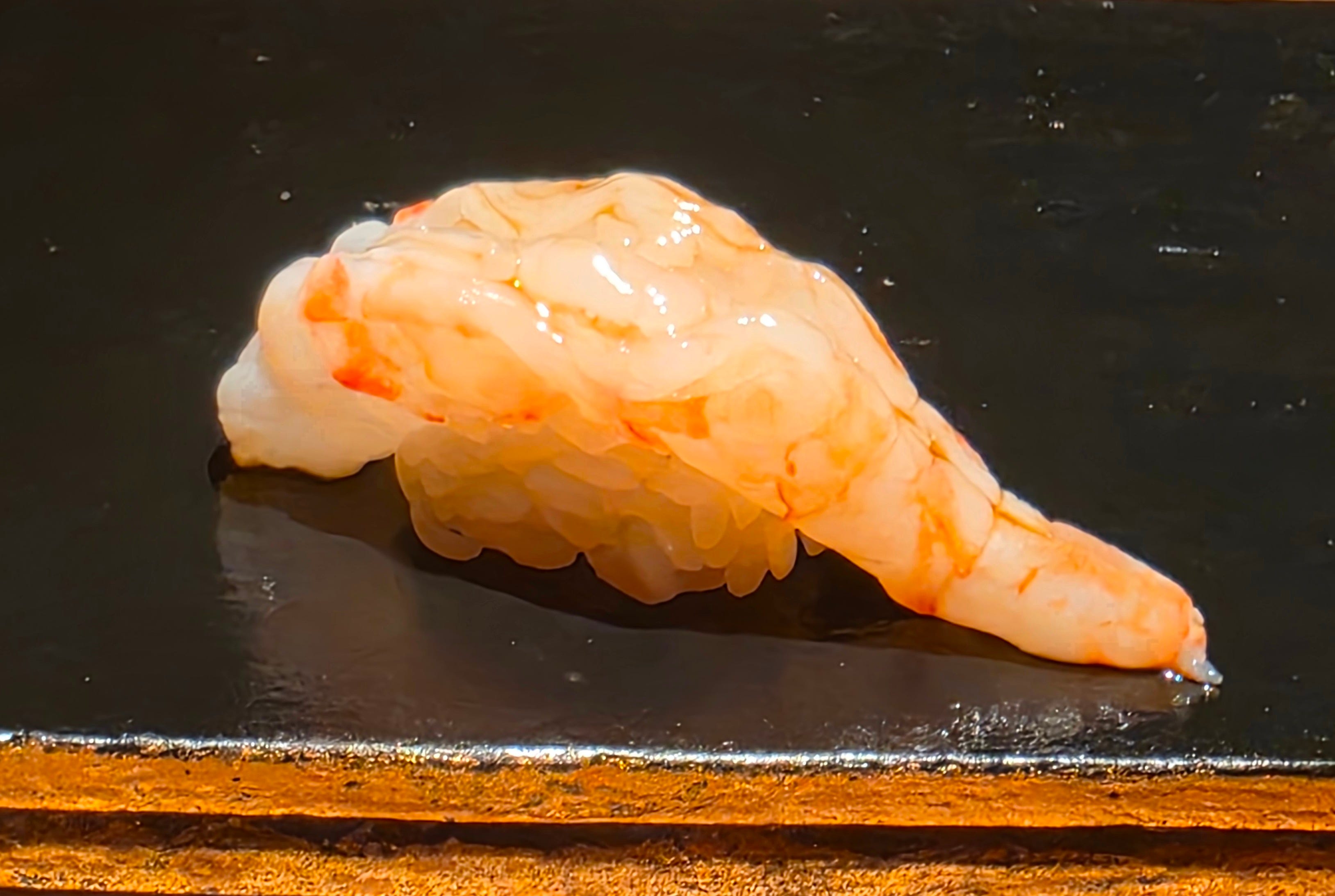
Starting to wind down from the fat bombs, a piece of botan-ebi, or sweet shrimp. A sweet, well-needed break from all the fattiness.
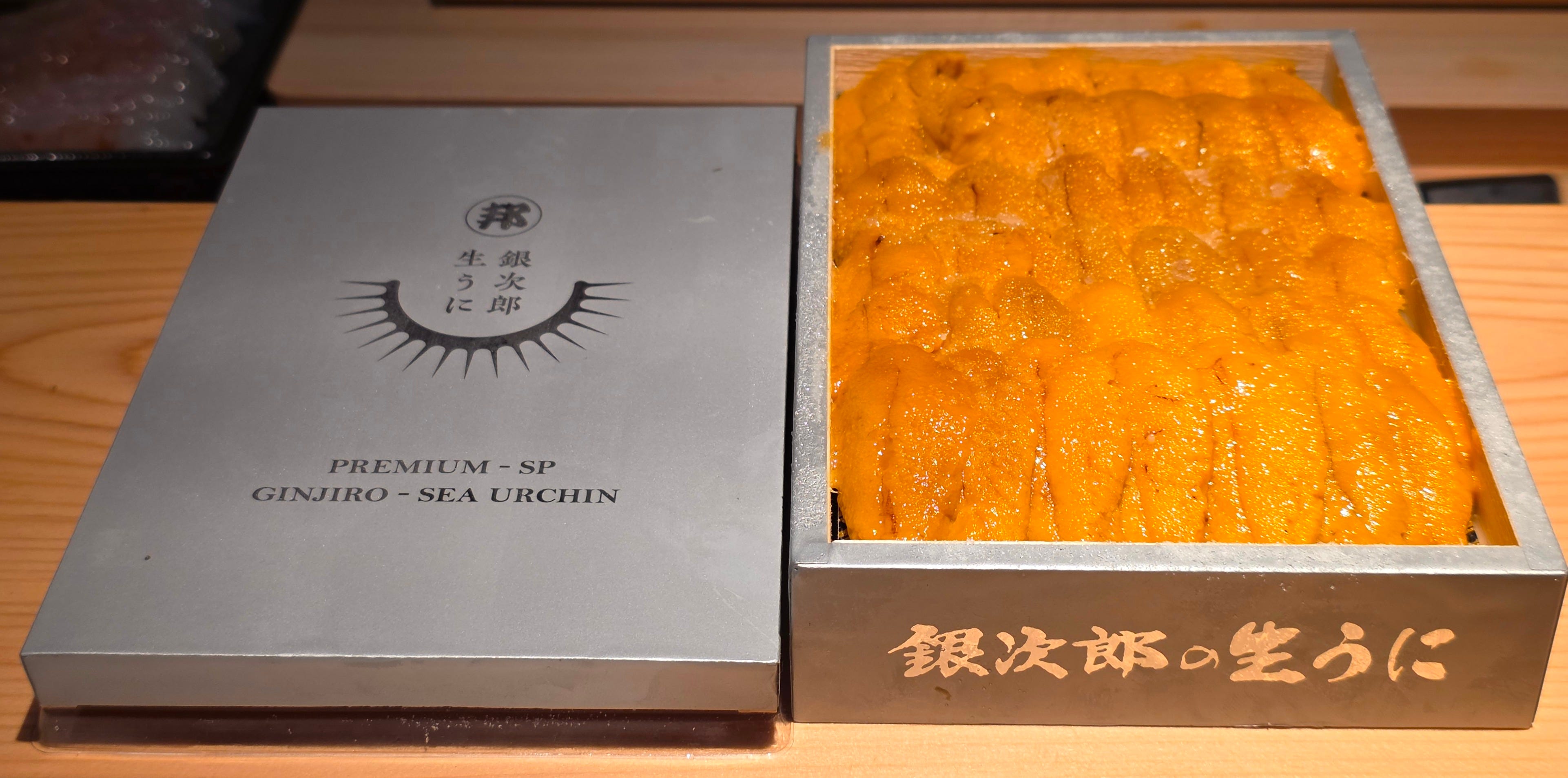
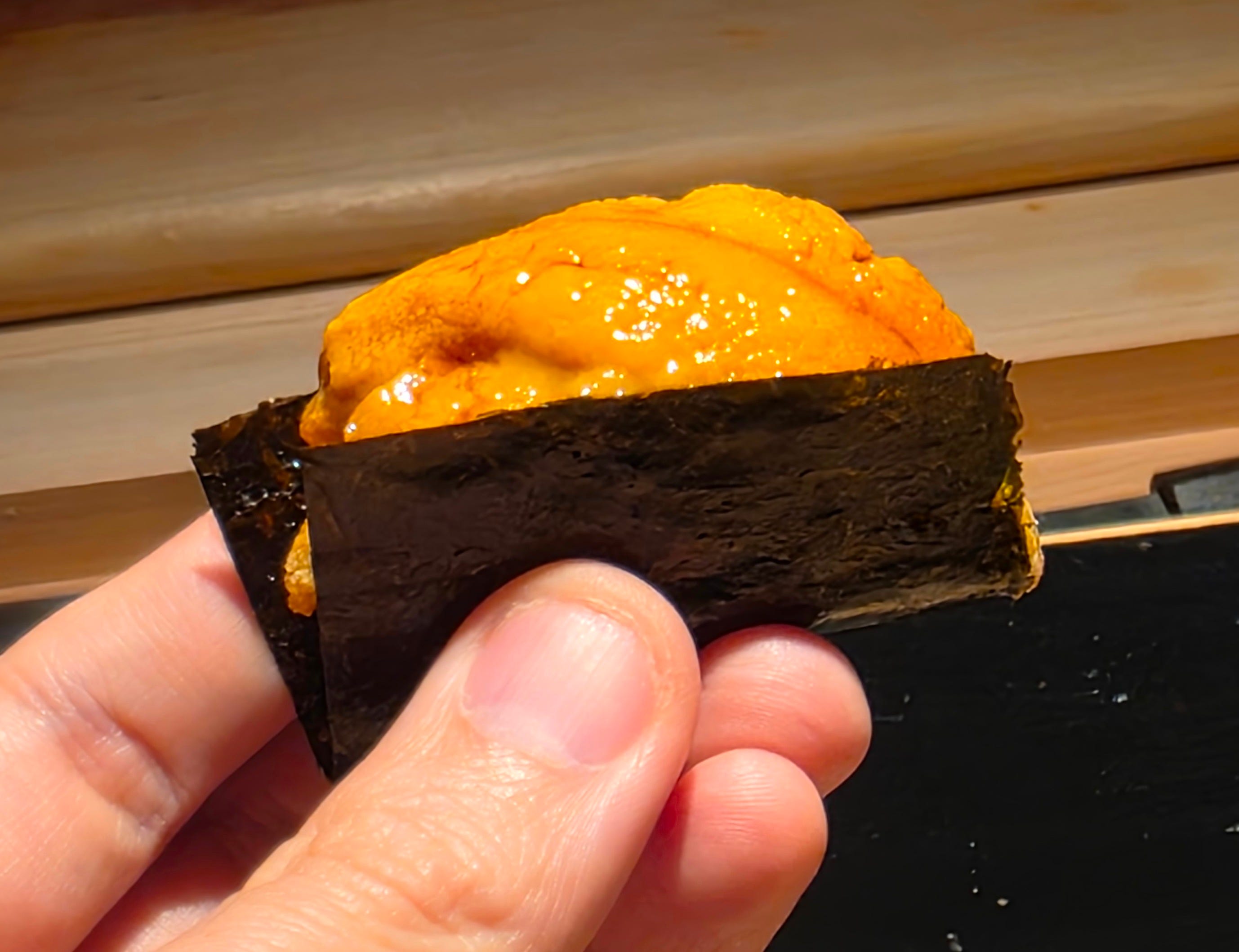
Back to the heavier, creamy dishes, a heavy scoop of uni served on nori, sourced from the northern tip of the Aomori Prefecture. Creamy and decadent, as always.
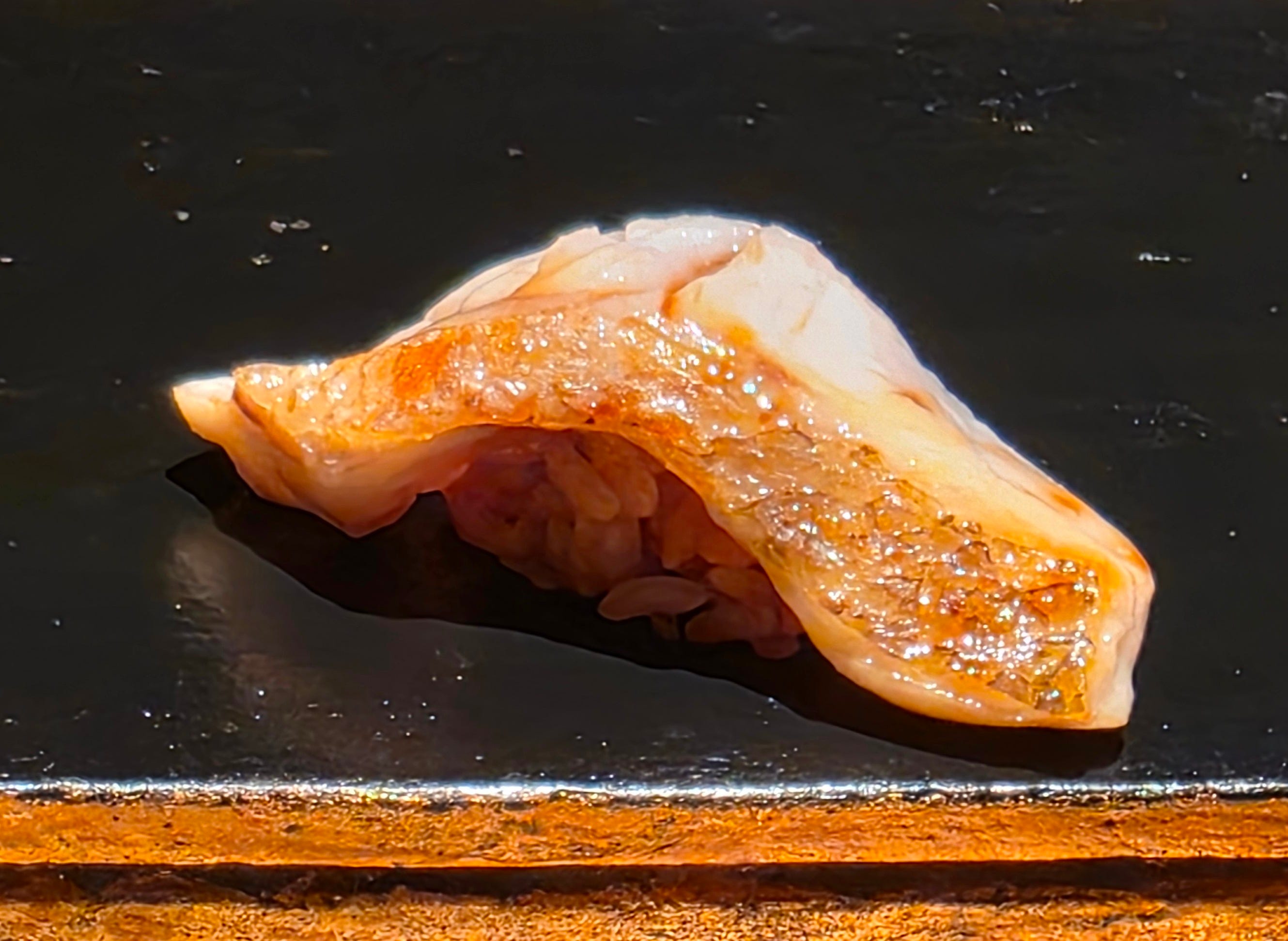
Finishing off the nigiri, and according to the menu, the meal, a piece of Nodoguro or black throat sea perch, lightly poached.
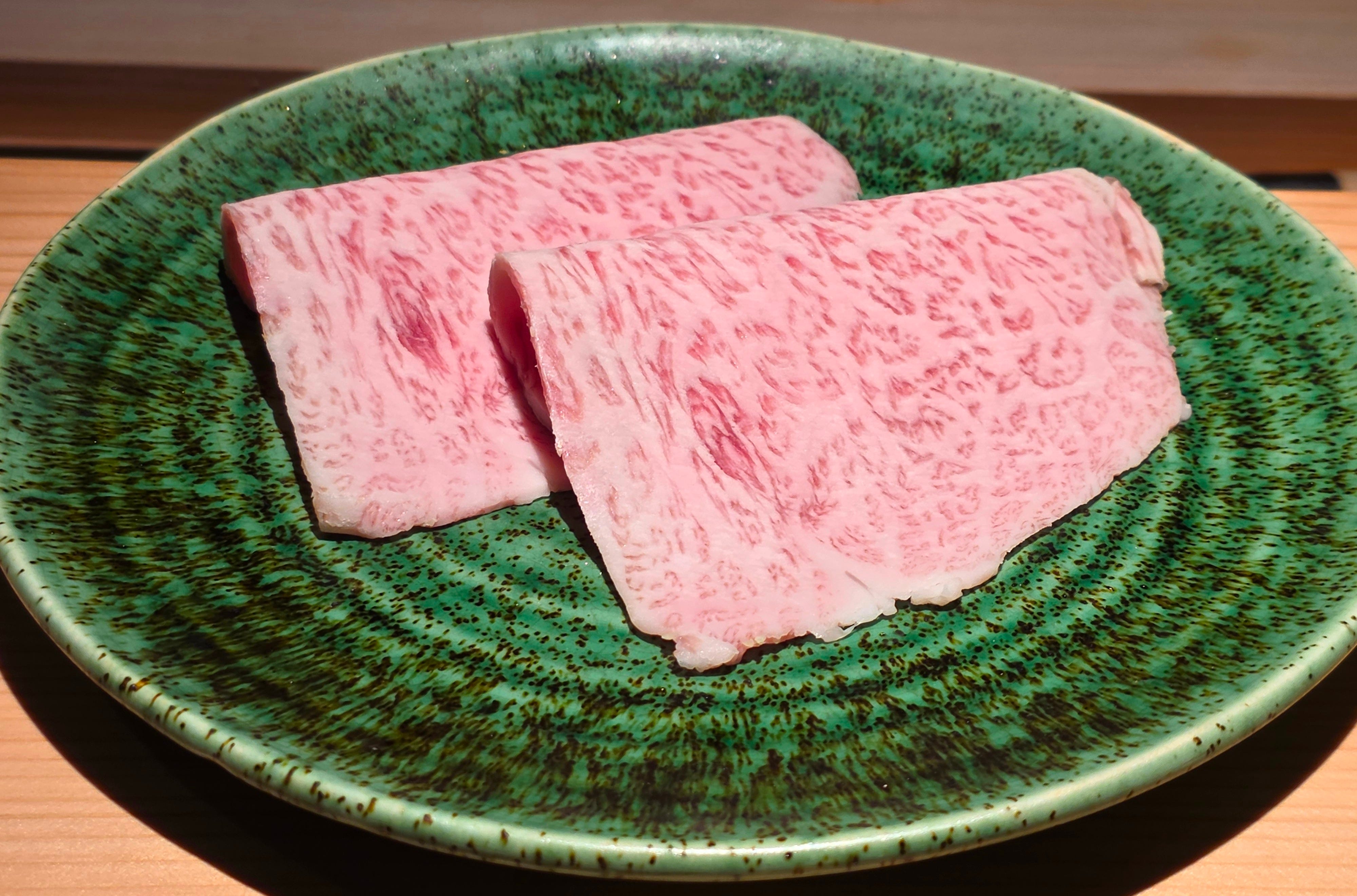
I was completely stuffed by this point, but the chefs just kept going. They showed up with a plate of incredibly well marbled beef. I wasn’t sure where we were going with this.
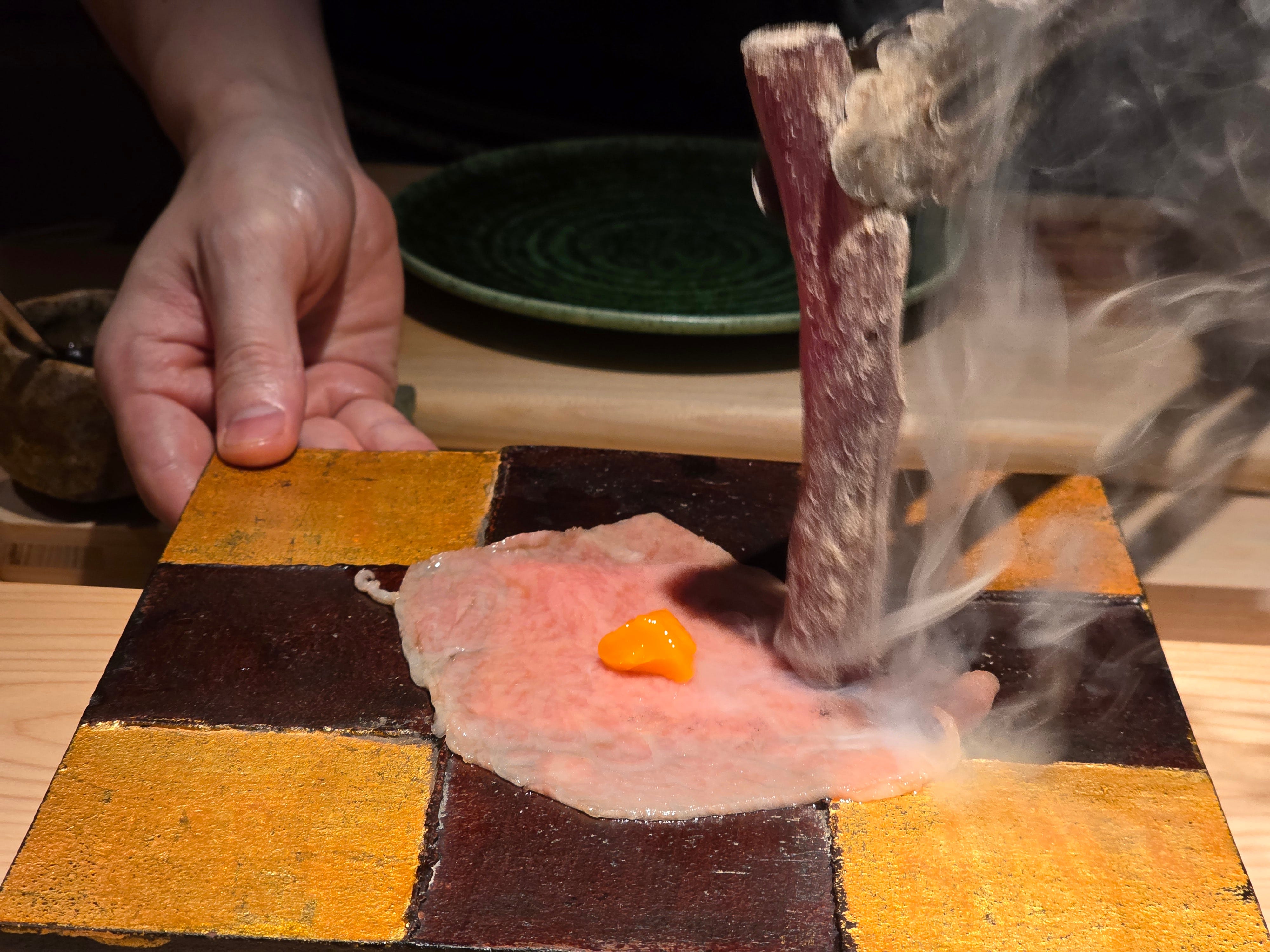
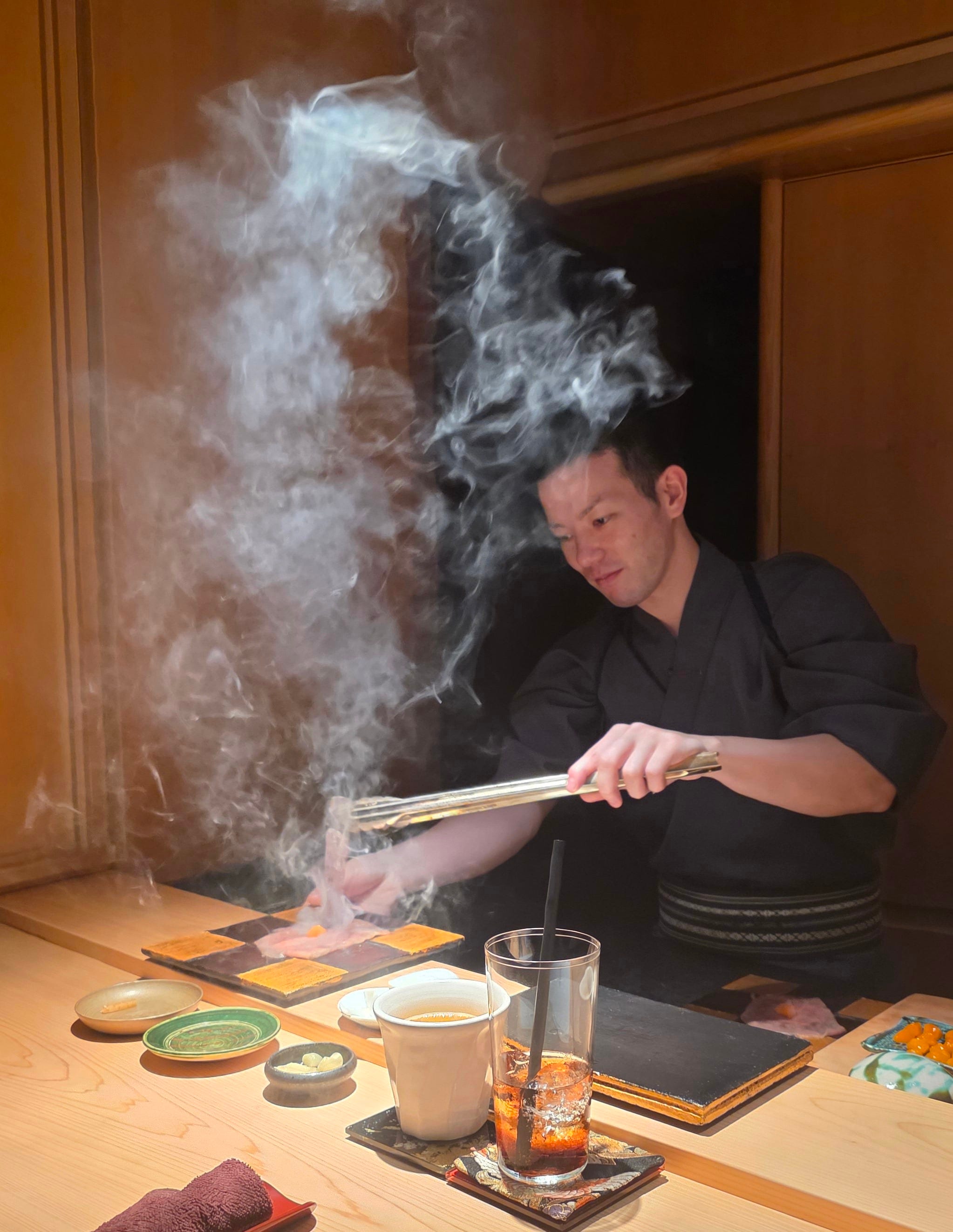
Lightly tapping the meat with charcoal to just char the surface slightly.
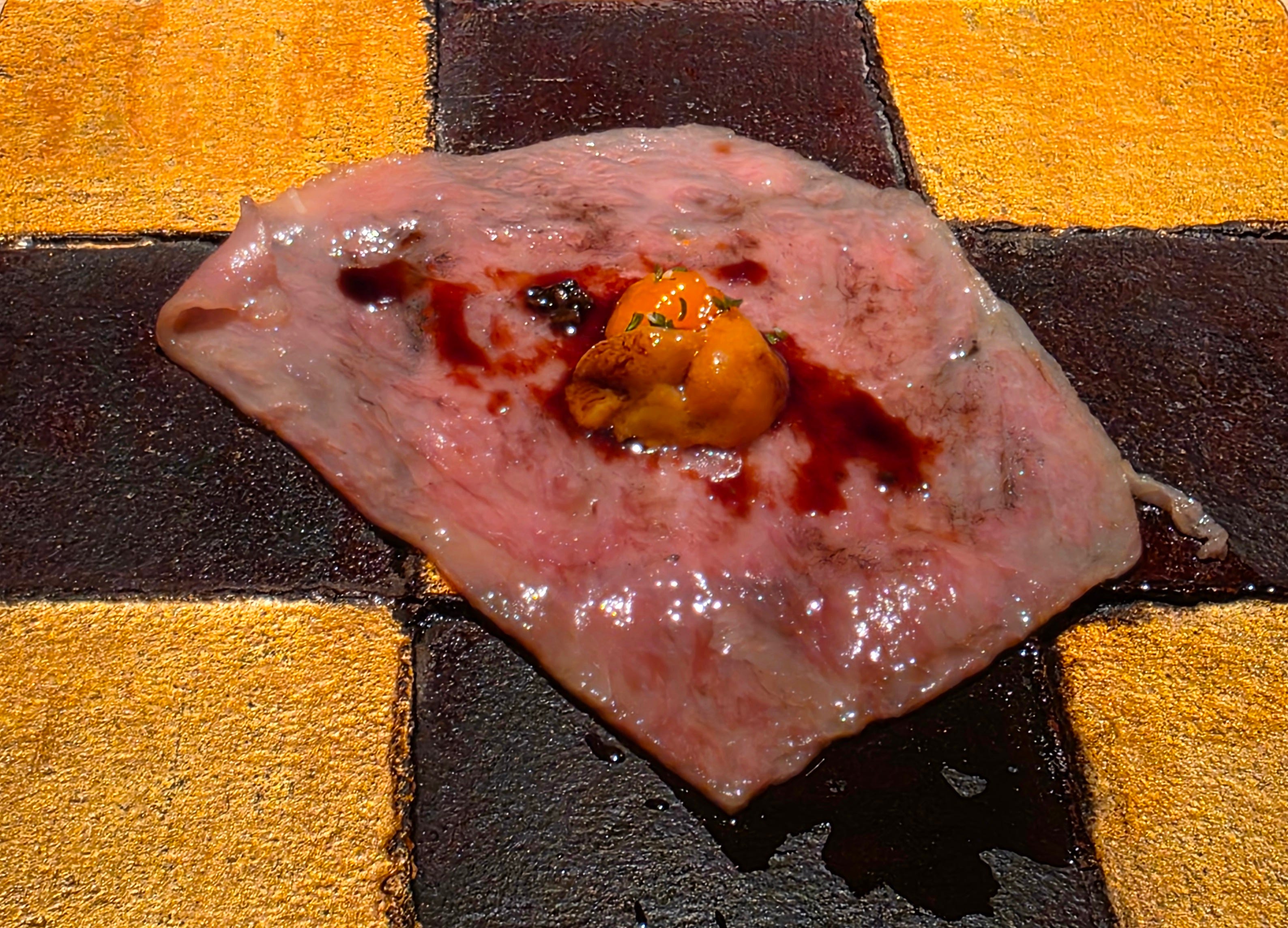
Topped with uni and we were told to roll it up into a Kobe beef-uni wrap
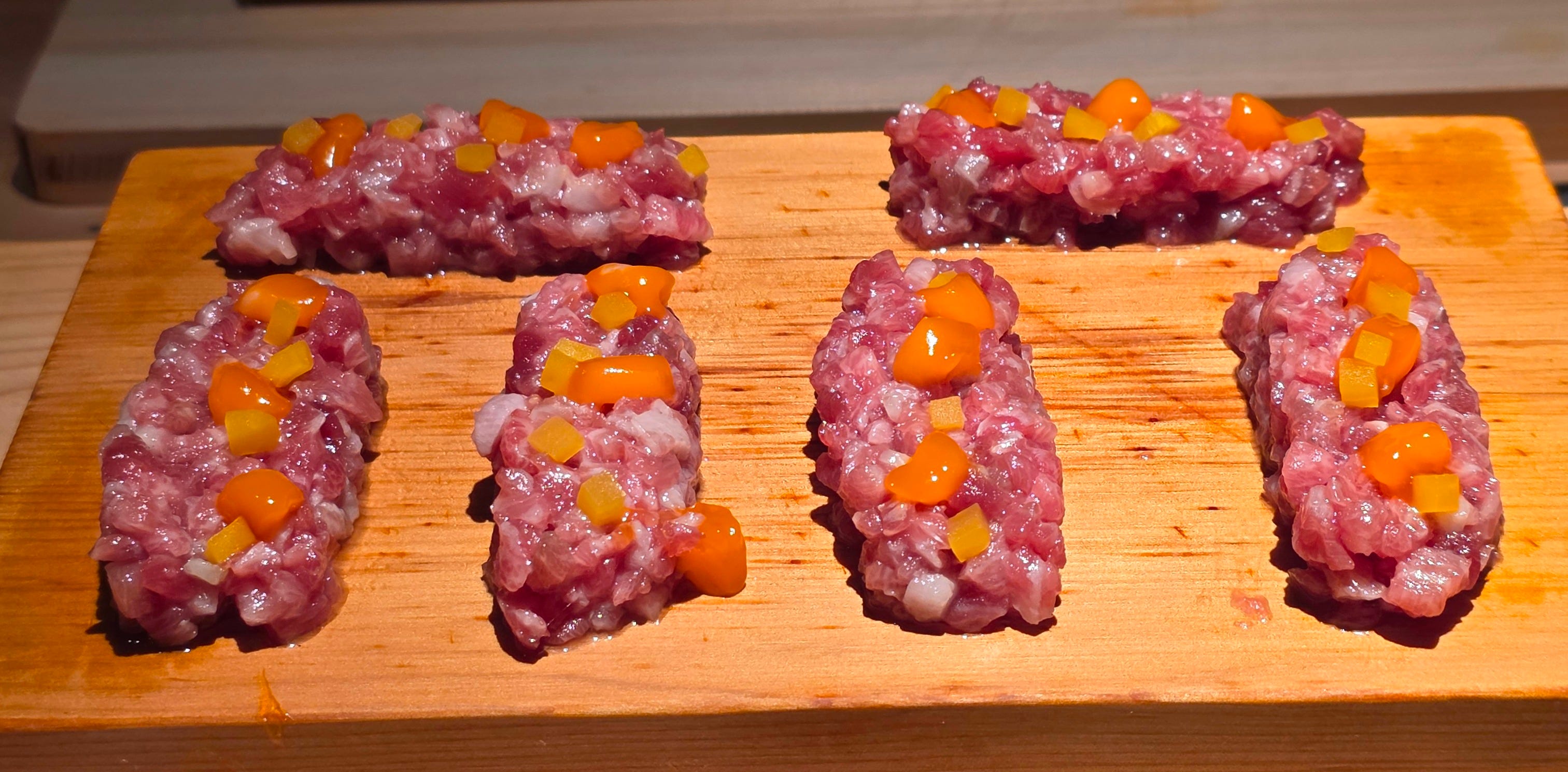
I thought we were done, but there was one final dish before dessert.
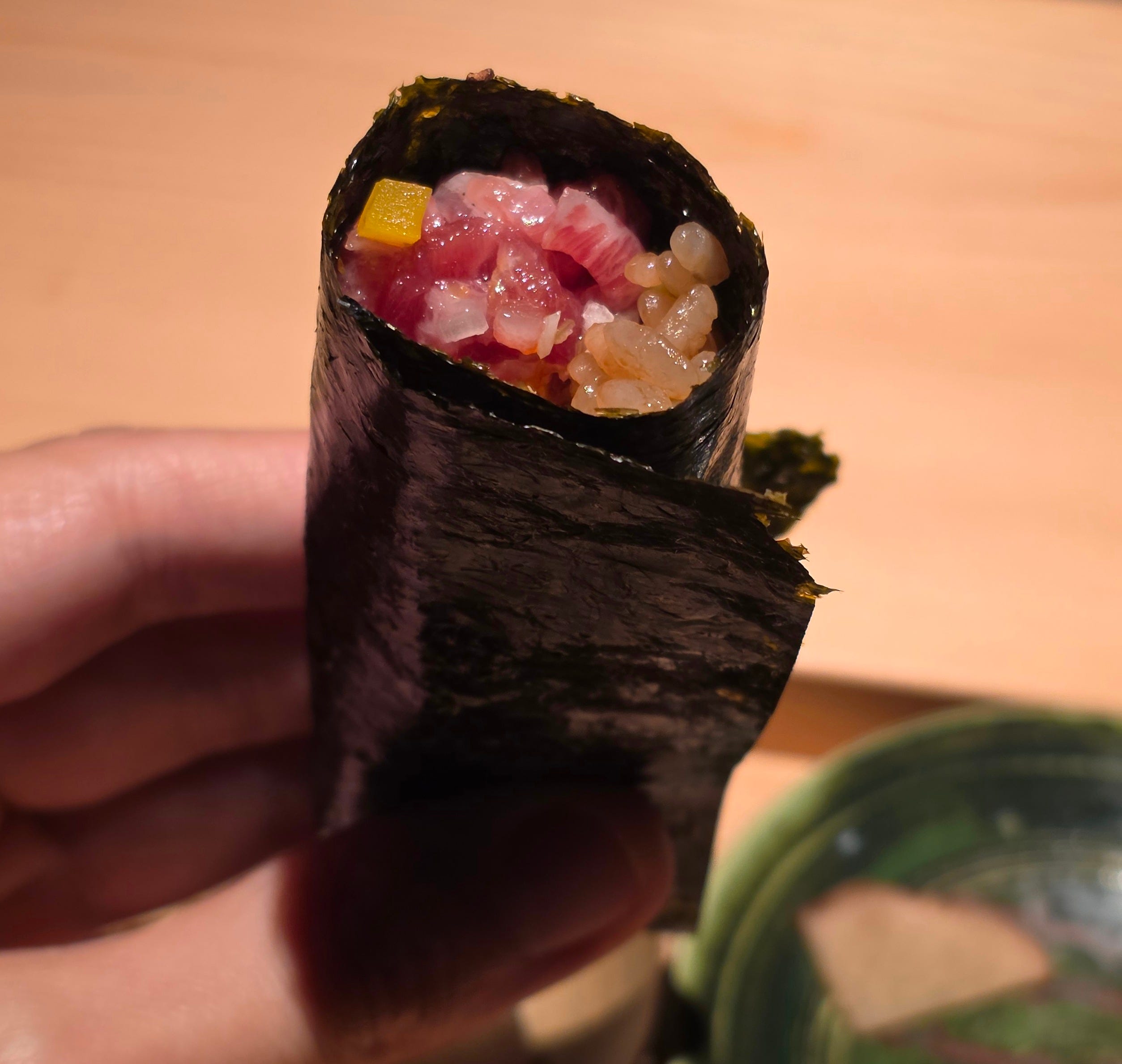
Tuna mince with egg yolk and pickles formed into a hand roll.
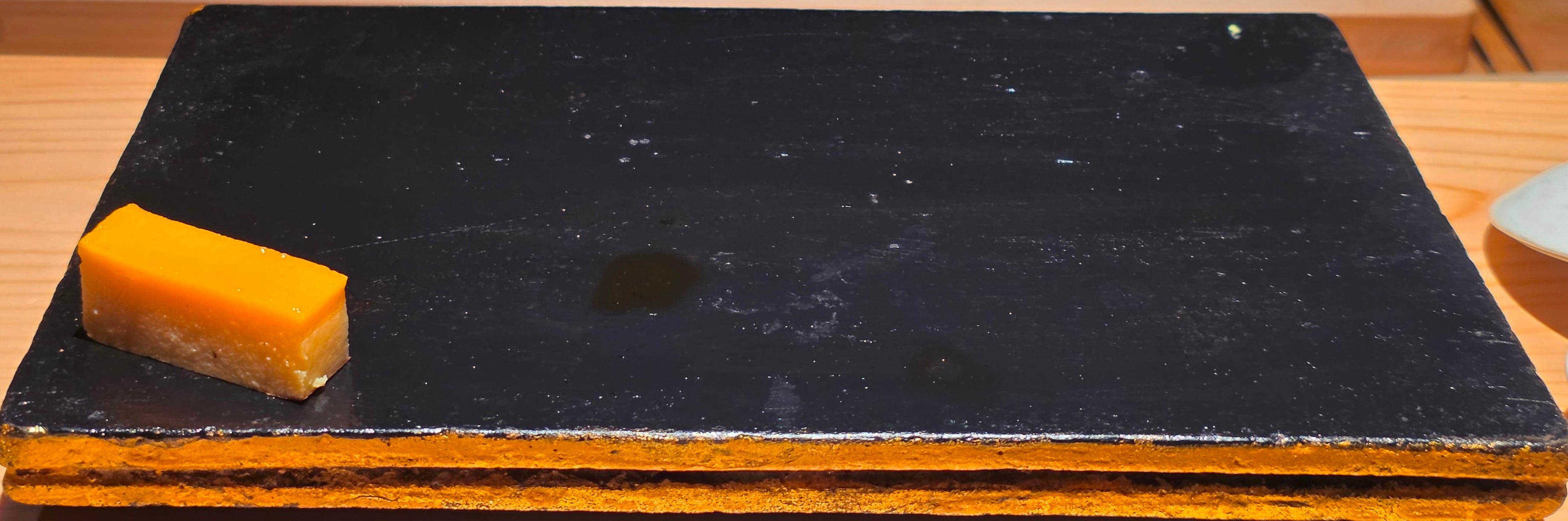
Finally, the egg custard, signifying the end of the meal, precisely positioned at the corner of the plate.
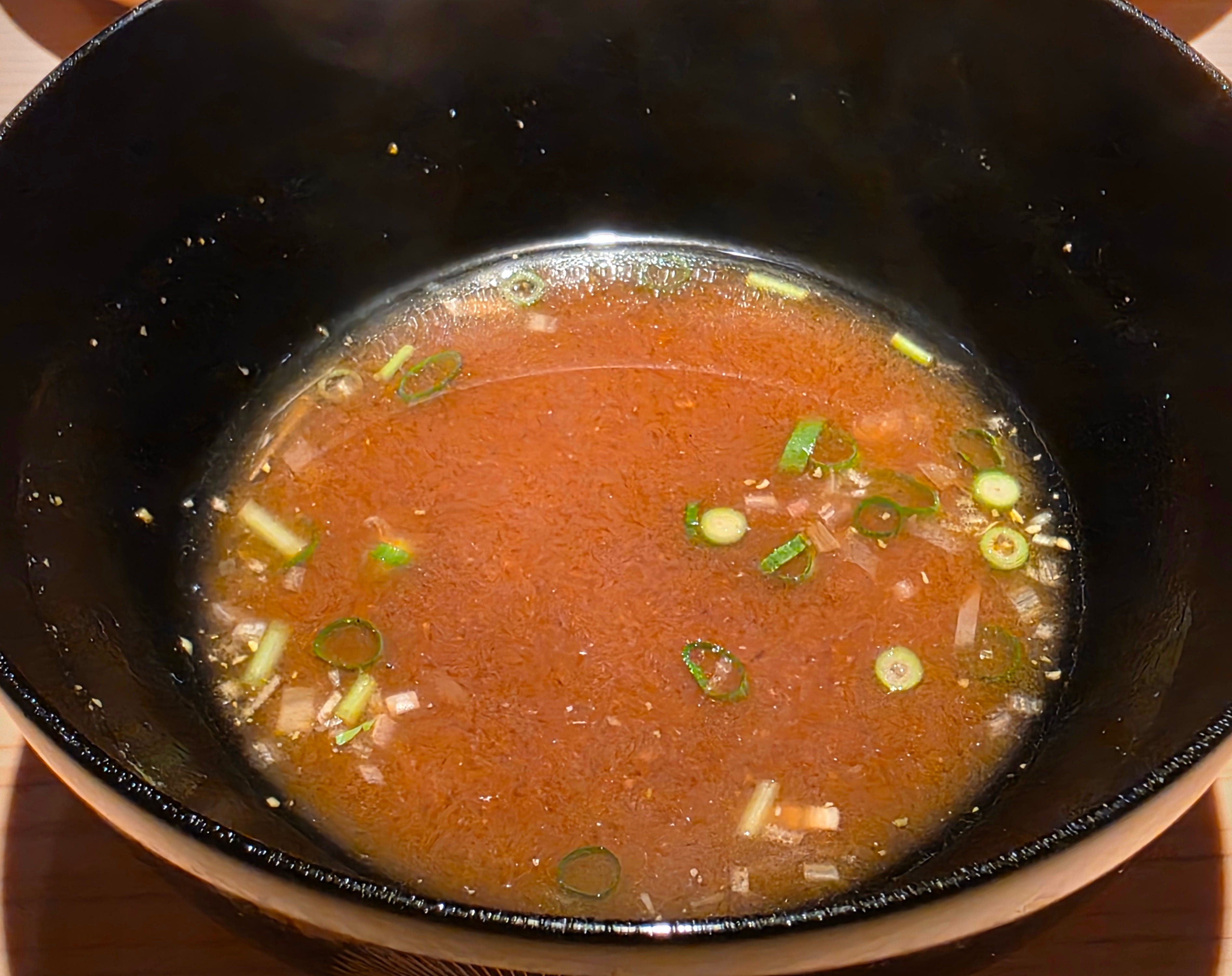
Miso soup, as it customary.
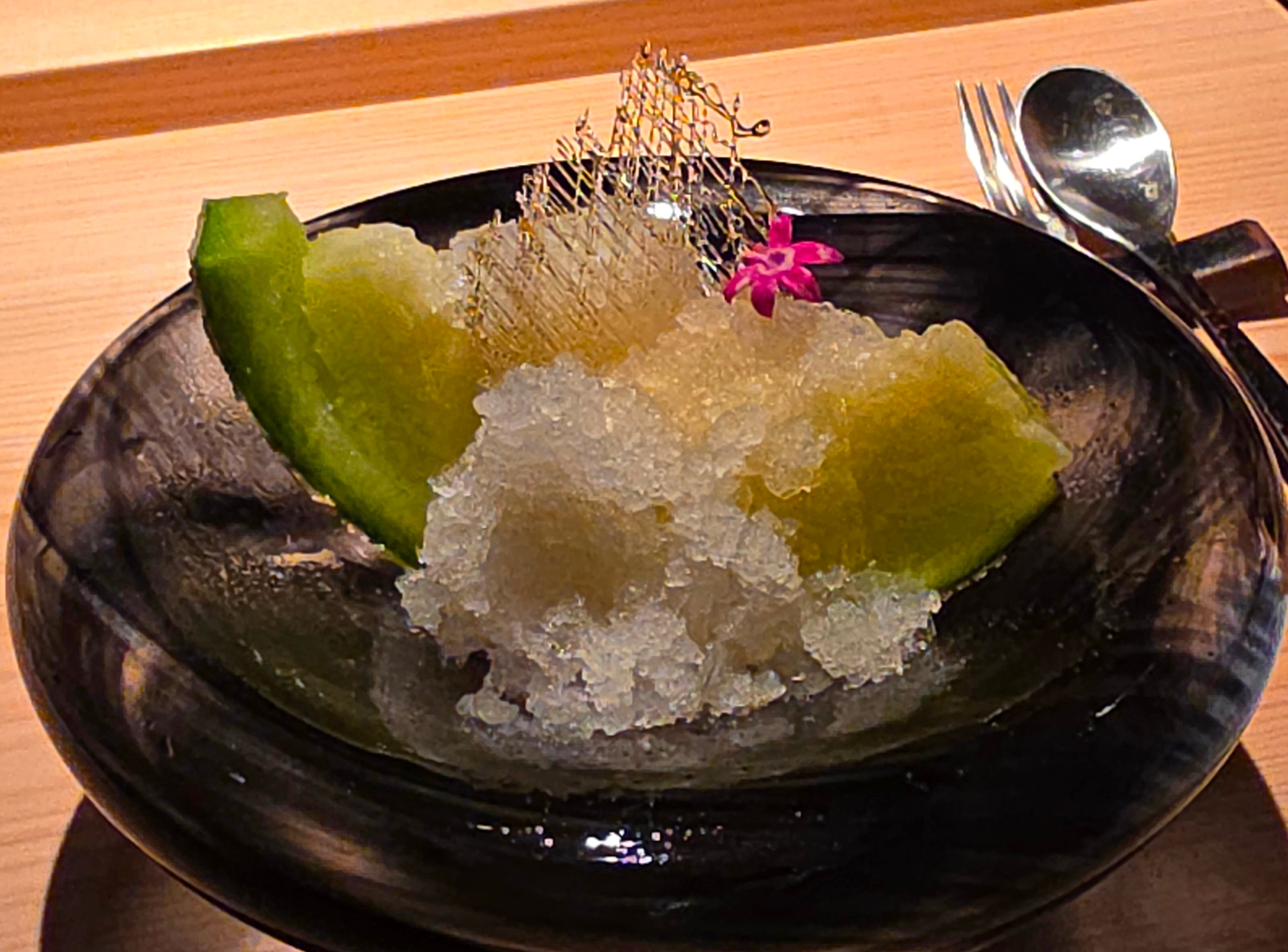
A choice of desserts, which is rare for a omakase or kaiseki meal. I was tempted by the Miyazaki mango shaved ice, but went with their signature musk melon, which was served with shaved ice. Intensely sweet and juicy.
Overall, this was probably the single best Japanese meal I’ve had in a very long time, and a contender for the best meal of the year. Hamamoto doesn’t pitch itself as just a sushi stand, but combining the best of the kaiseki and omakase formats and it shows. There is a sense of dinner and a show, watching the chefs prepare your dinner with a variety of techniques, arousing all the senses - from sight, sound, smell, touch and flavour.
If you want pure sushi hierarchy, Hamamoto may not be the cleanest benchmark because the meal gives meaningful space to cooked seasonal courses. If you want a chef-led Japanese seasonal counter in Singapore, it is squarely in the conversation. I can’t wait to return and to bring others here. Definitely come for dinner and not for lunch, it’s a lot of food and well worth the price of admission.
Total Damage: 660 SGD/1 person
Looks incredible