
Hana no Kumo is a kappou-style Japanese restaurant in the new Henderson building in Hong Kong.
Kappou derives from “kap” for cut and “po” for cook. It’s hands-on Japanese cooking done in view of diners. The chef slices fish, simmer broths, grill skewers at a counter while you sit and observe from feet away. It’s quite similar to kaiseki dining in techniques and ingredients, but instead of the formality of dining alone with your companions with the kitchen and staff out of sight, kappou is more casual, seated around the counter watching the chef. You chat with the chef, watch every cut and preparation. Highlighting the wide array of Japanese cuisine, kappou unfolds in courses: appetizer, soup, sashimi, steamed dishes, grilled dishes, mixed vegetables, fried foods, rice with pickles, dessert.
Hana no Kumo just opened in late 2025, and I managed to squeeze in a a difficult to get reservation before the end of the year.
Executive chef Ogawa Masaru leads the kitchen. He started in 1996 at Kyoto Kitcho Hana-Kitcho in Gion, Kyoto, learning traditional methods and beginning to grow his repertoire. In 2009, he relocated to Hong Kong to join the opening team at Wagyu Kaiseki Den, which earned one Michelin star. By 2015, he served as executive chef at Gin Sai in Wan Chai before opening Hana no Kumo this year.
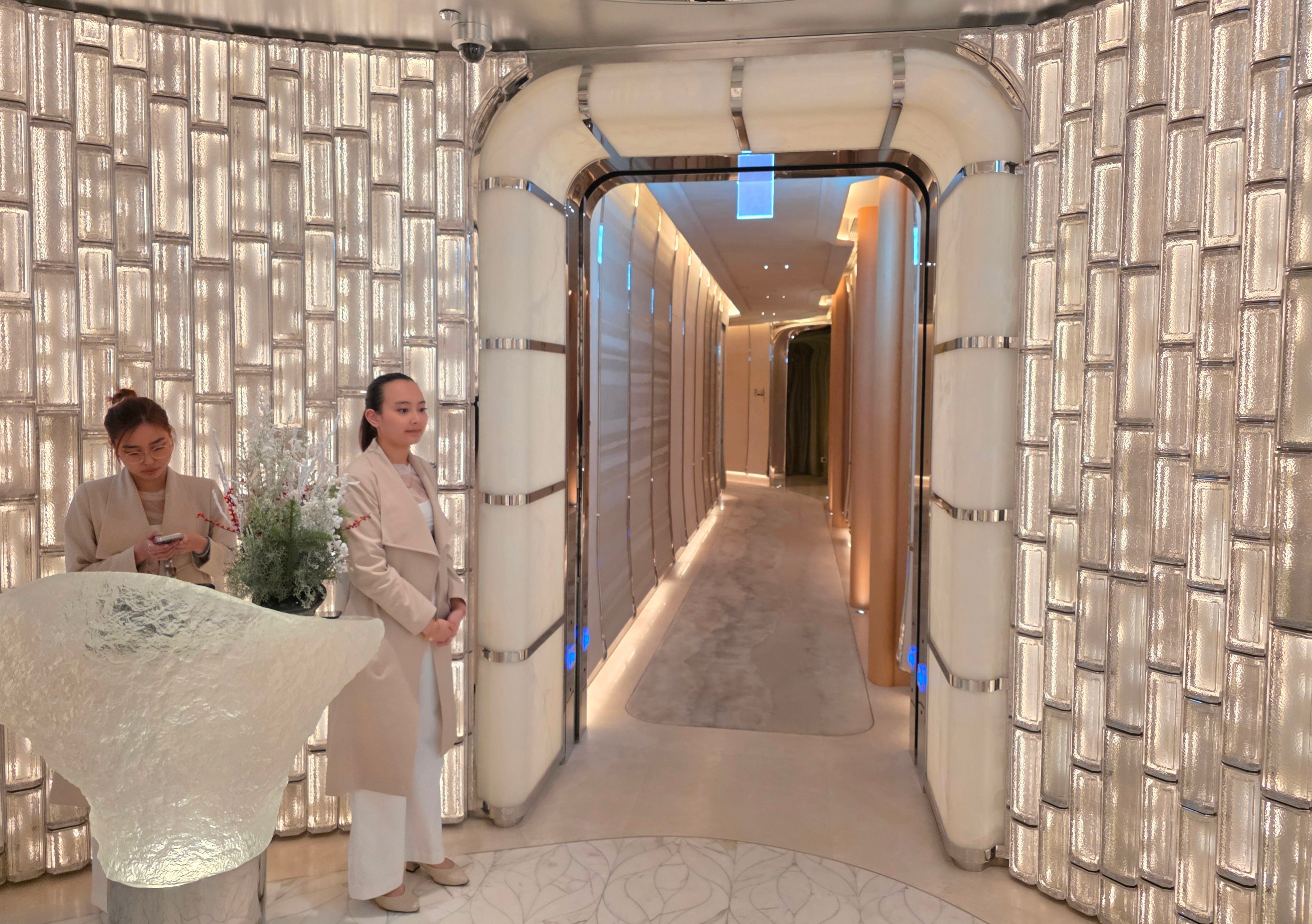
Located at the 38th floor of the new Henderson, the restaurant shares the floor with a cocktail bar and has an entryway a bit reminiscent of a spaceship.
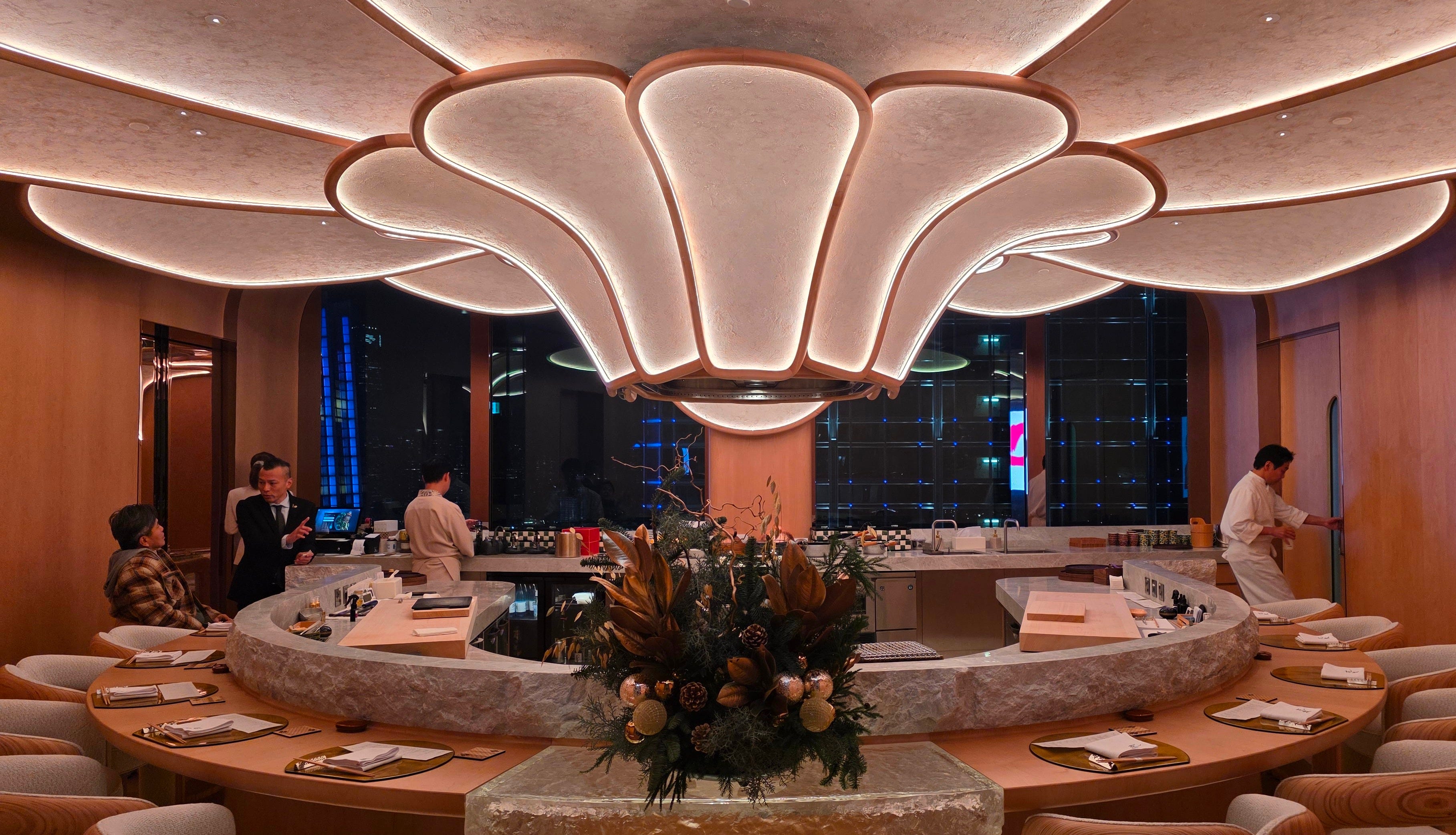
Stepping into the restaurant provides a much more serene environment, with wood and stone surrounding the central chef’s counter and diffuse lighting emanating from the ceiling designed to look like blooming flower petals.
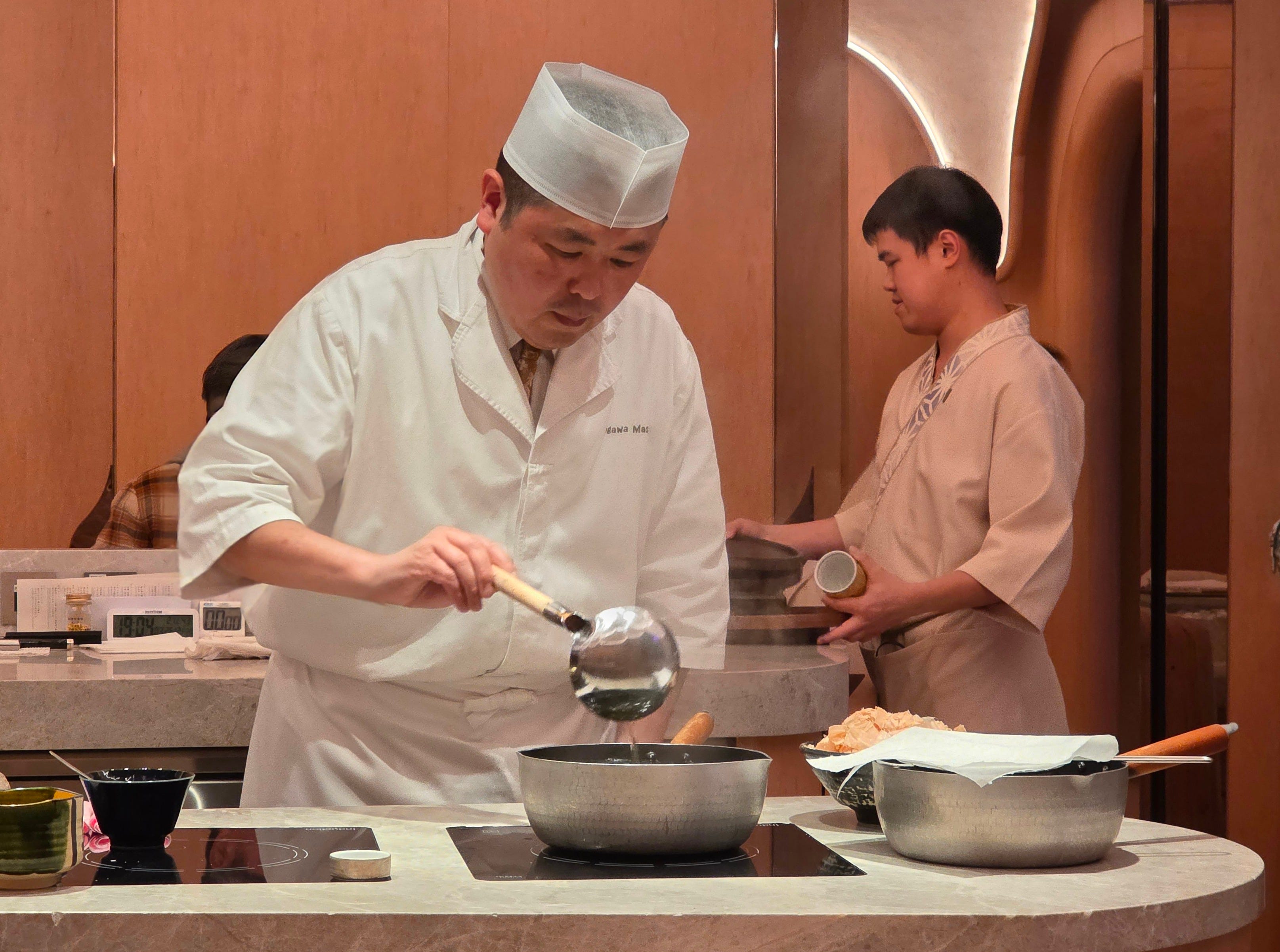
The chef was in the center, already preparing a clear broth for a dish later in the meal.
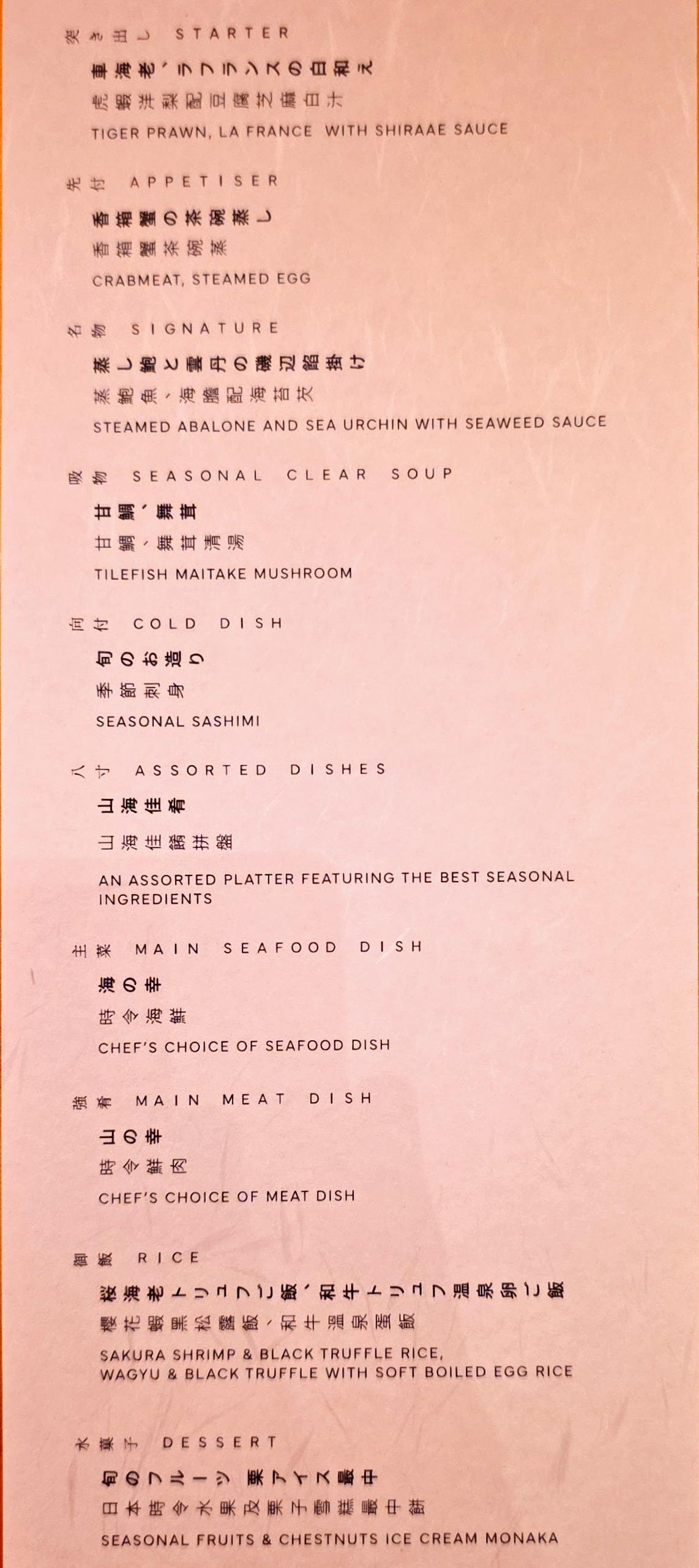
The menu, as always, is omakase - whatever the chef thinks is best.
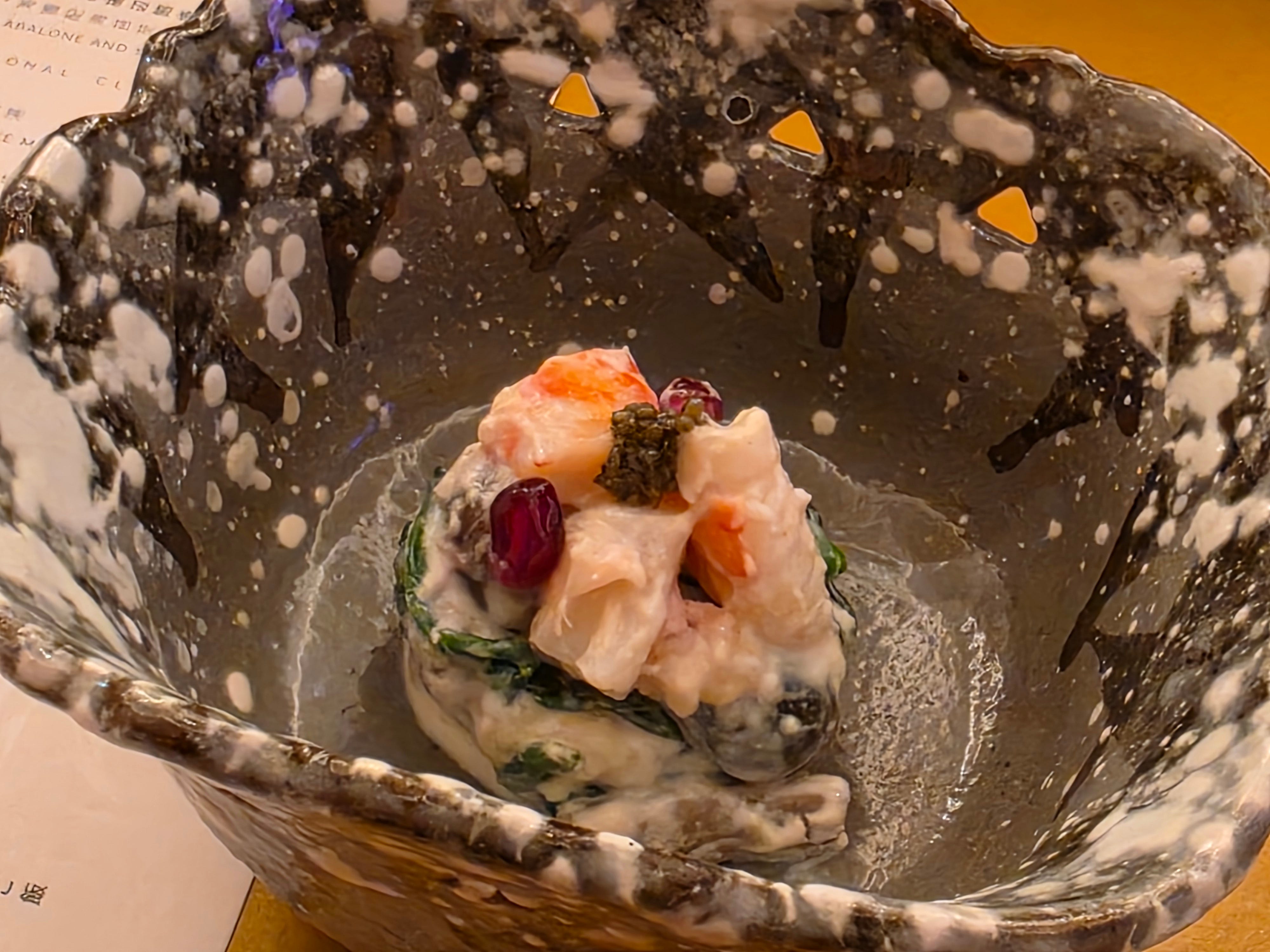
Shortly after, our first course arrived, a mixed salad of poached tiger prawns, spinach, pears, dressed in a mashed tofu, miso and sesame sauce and topped with a few pomegranates. Felt a bit like a Japanese version of a Waldorf salad that worked very well together.
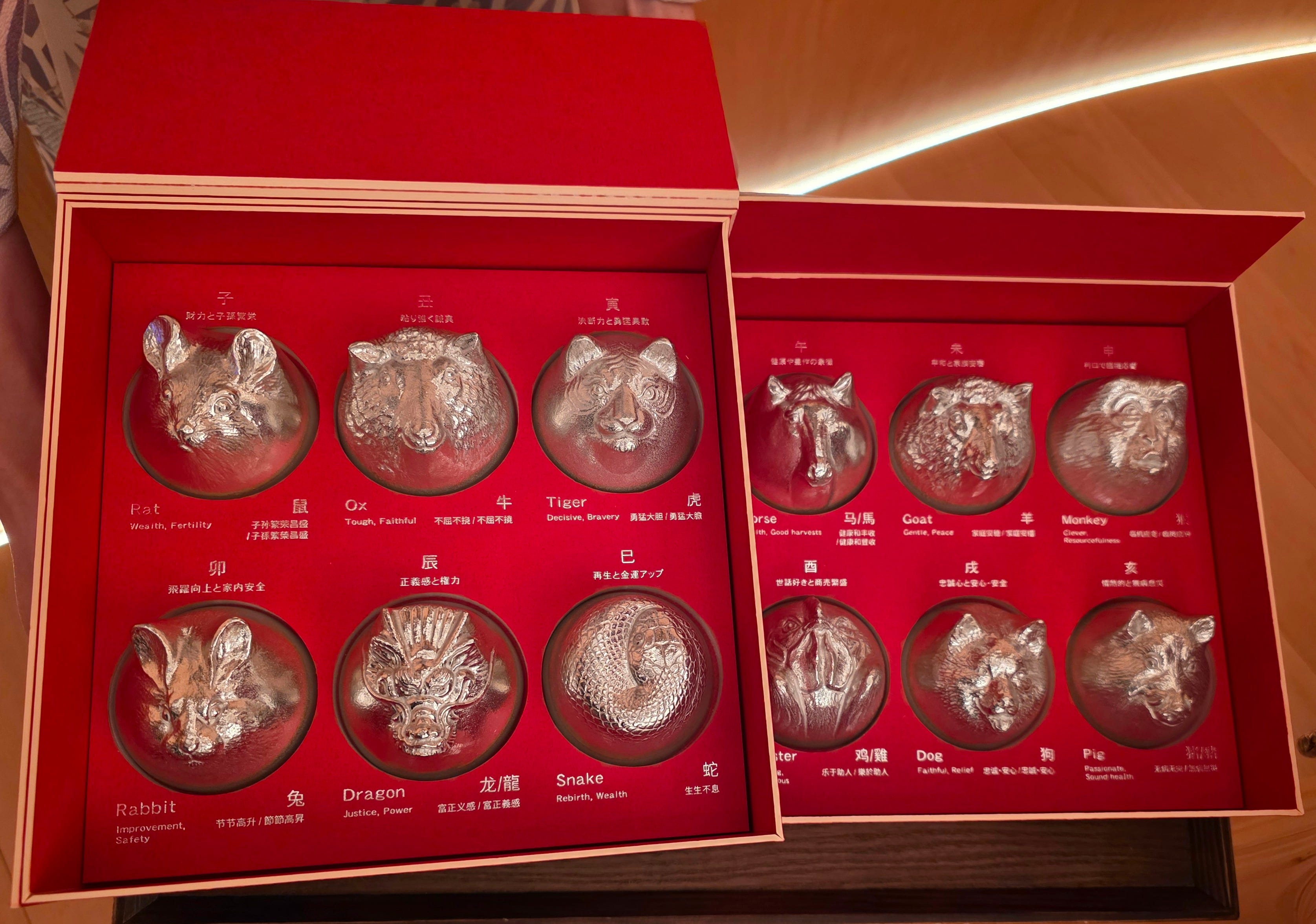
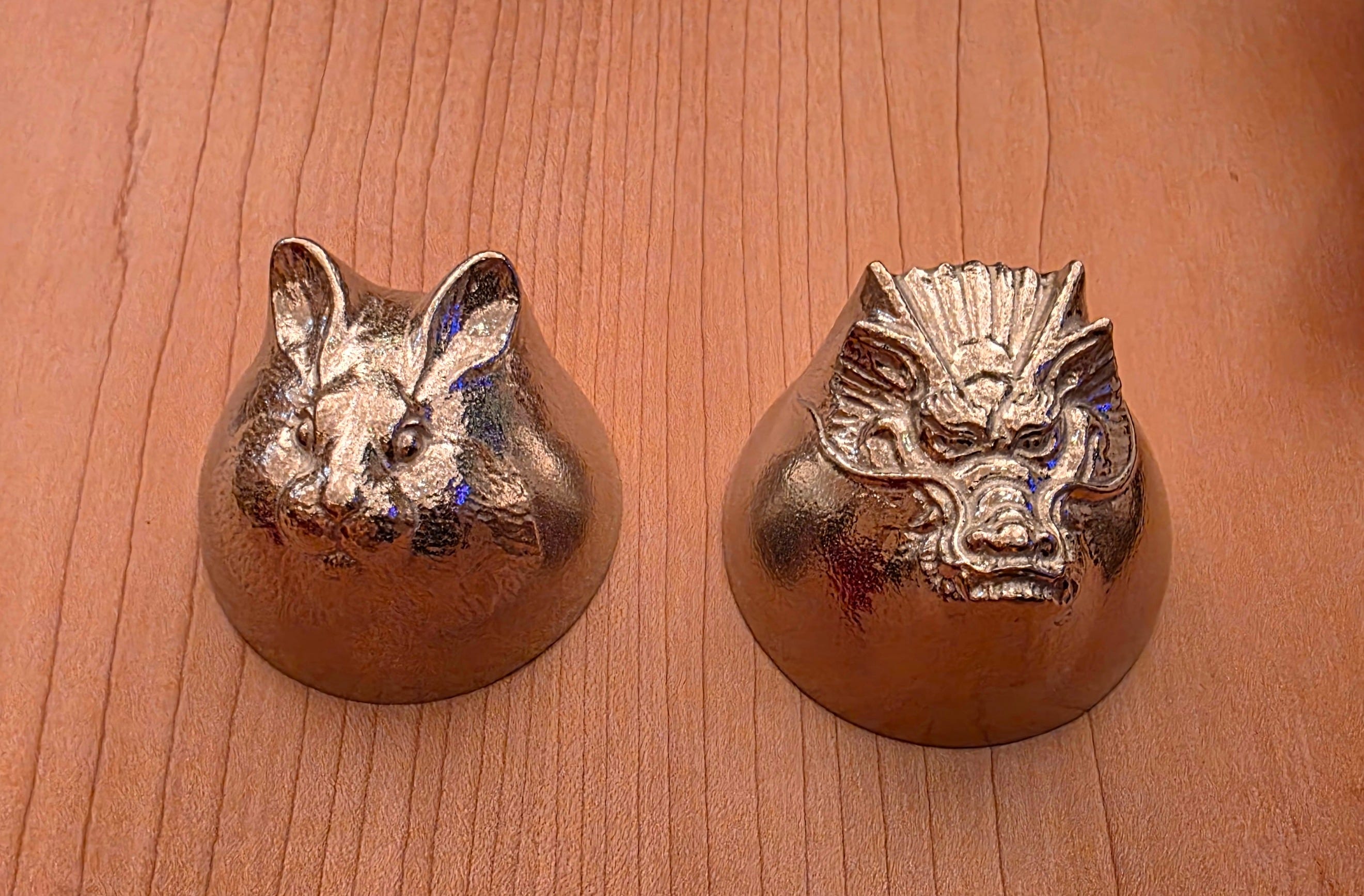
We ordered a bottle of sake, and were asked to select from an arrangement of sake cups corresponding to the Chinese zodiac animals. My companion and I both chose cups that corresponded to our birth year.
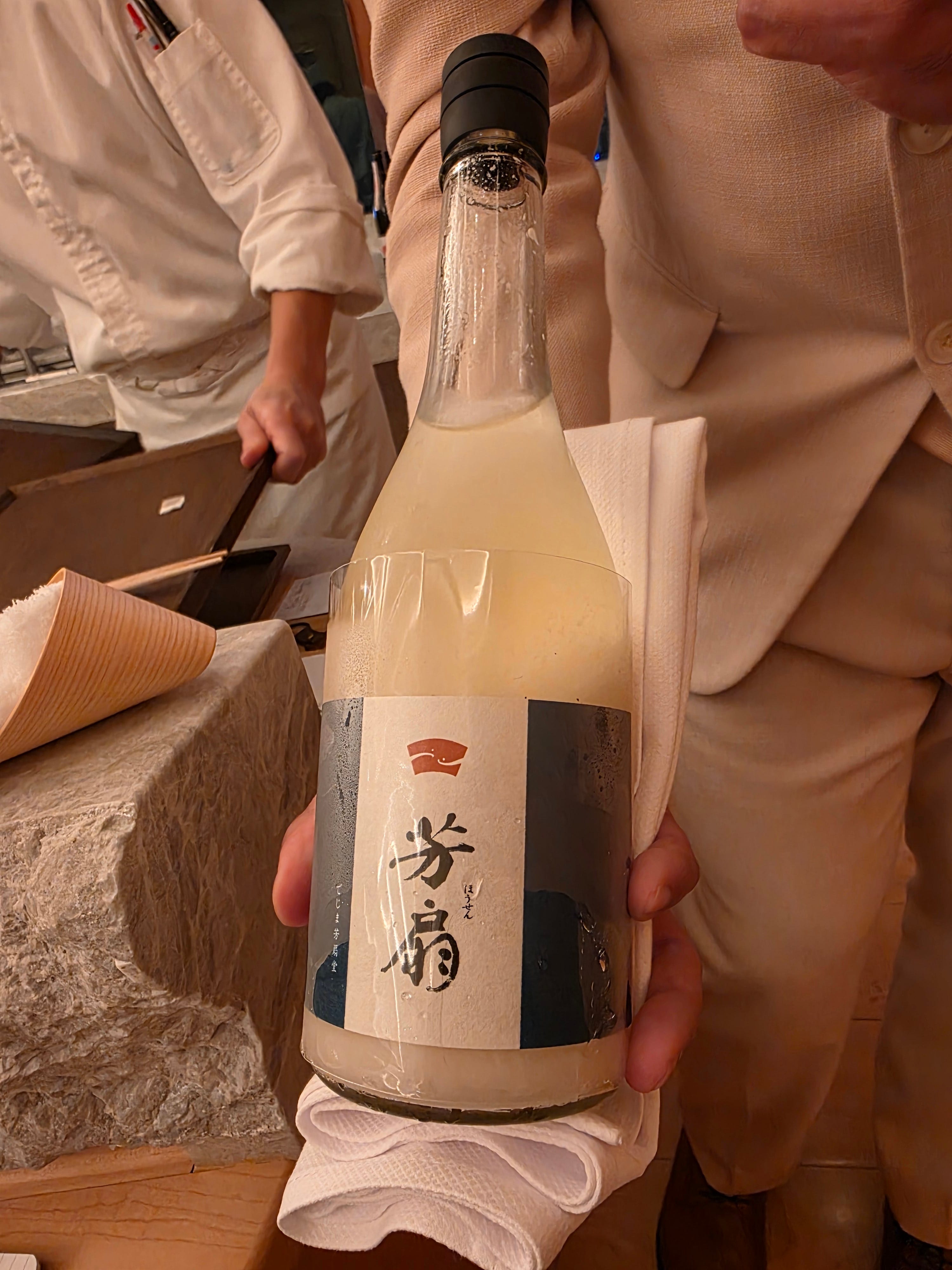
We decided to go with a cloudy sake, but neither we nor the sommelier seemed to pick up on the fact that it was highly carbonated. A loud pop and the cap landing in my companion’s lap later, we were served sake in wine glasses.
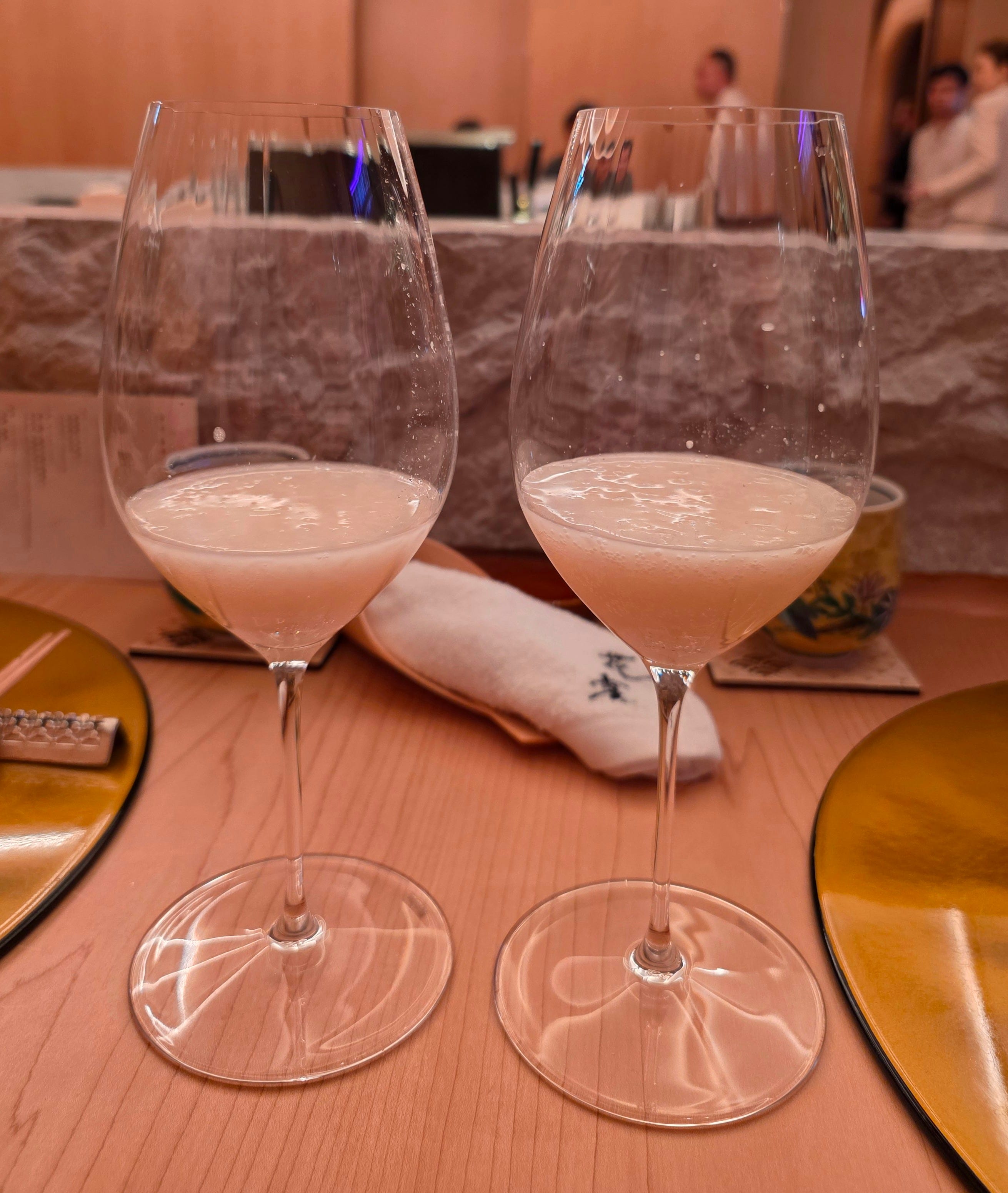
Interestingly, it had the consistency of porridge, with still disenable rice granules. On the sweeter side, but bubbling with the release of carbonation. There’s something about a thick consistency and carbonation that really doesn’t do it for me. We decided to select a more conventional sake instead.
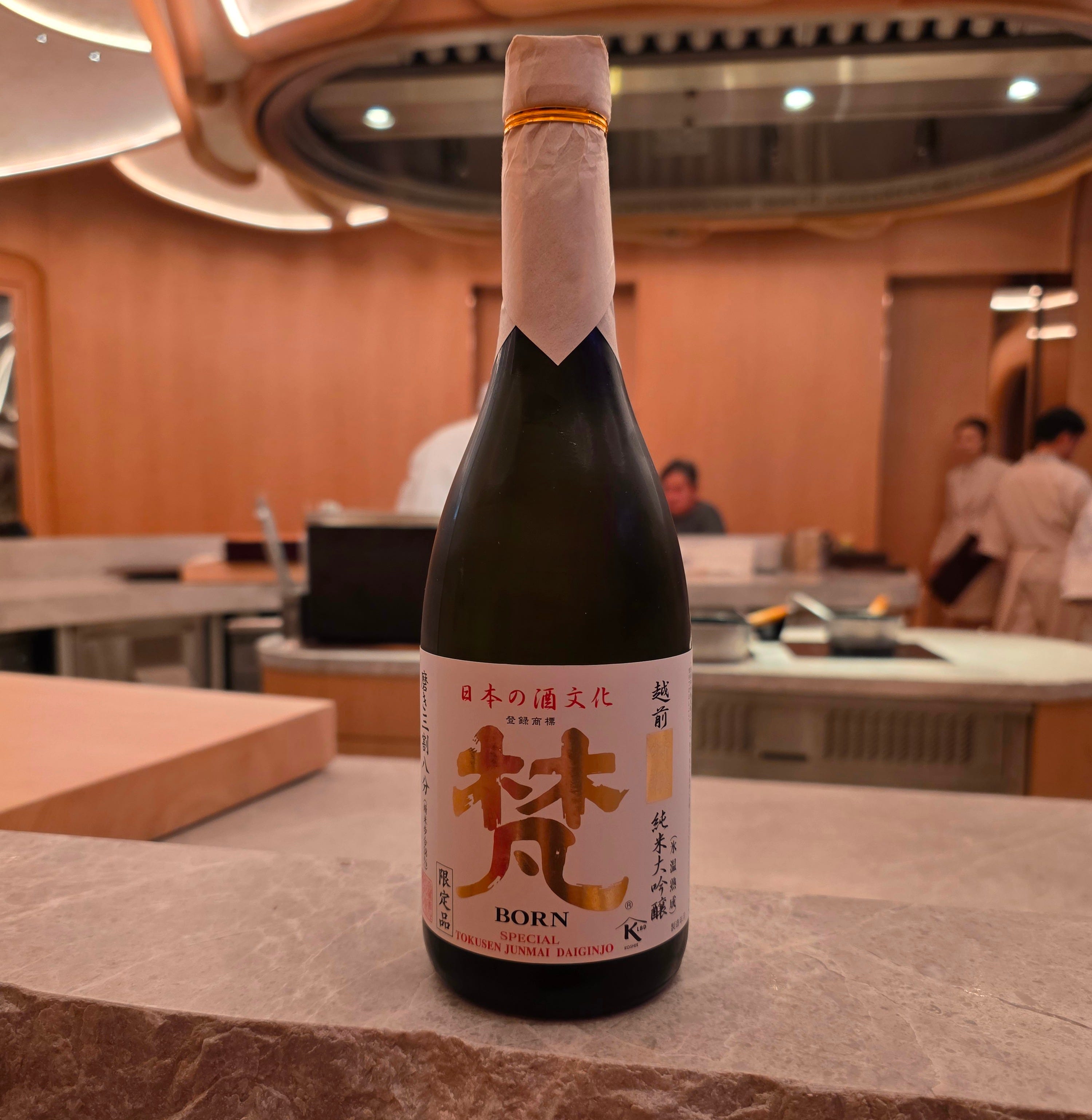
Slightly sweet, floral, easy drinking. Much better than the more exotic sparkling cloudy one we tried earlier.
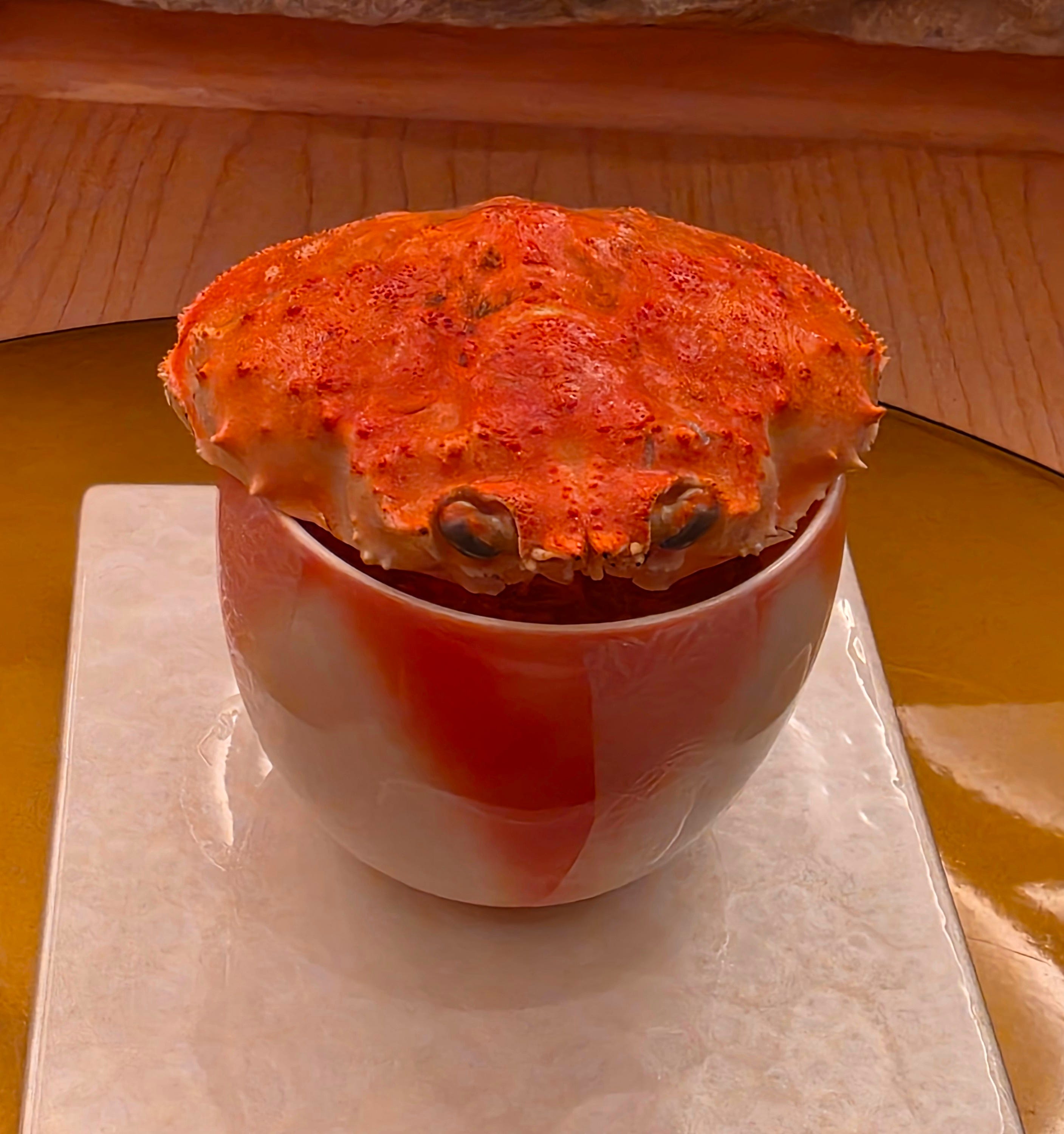
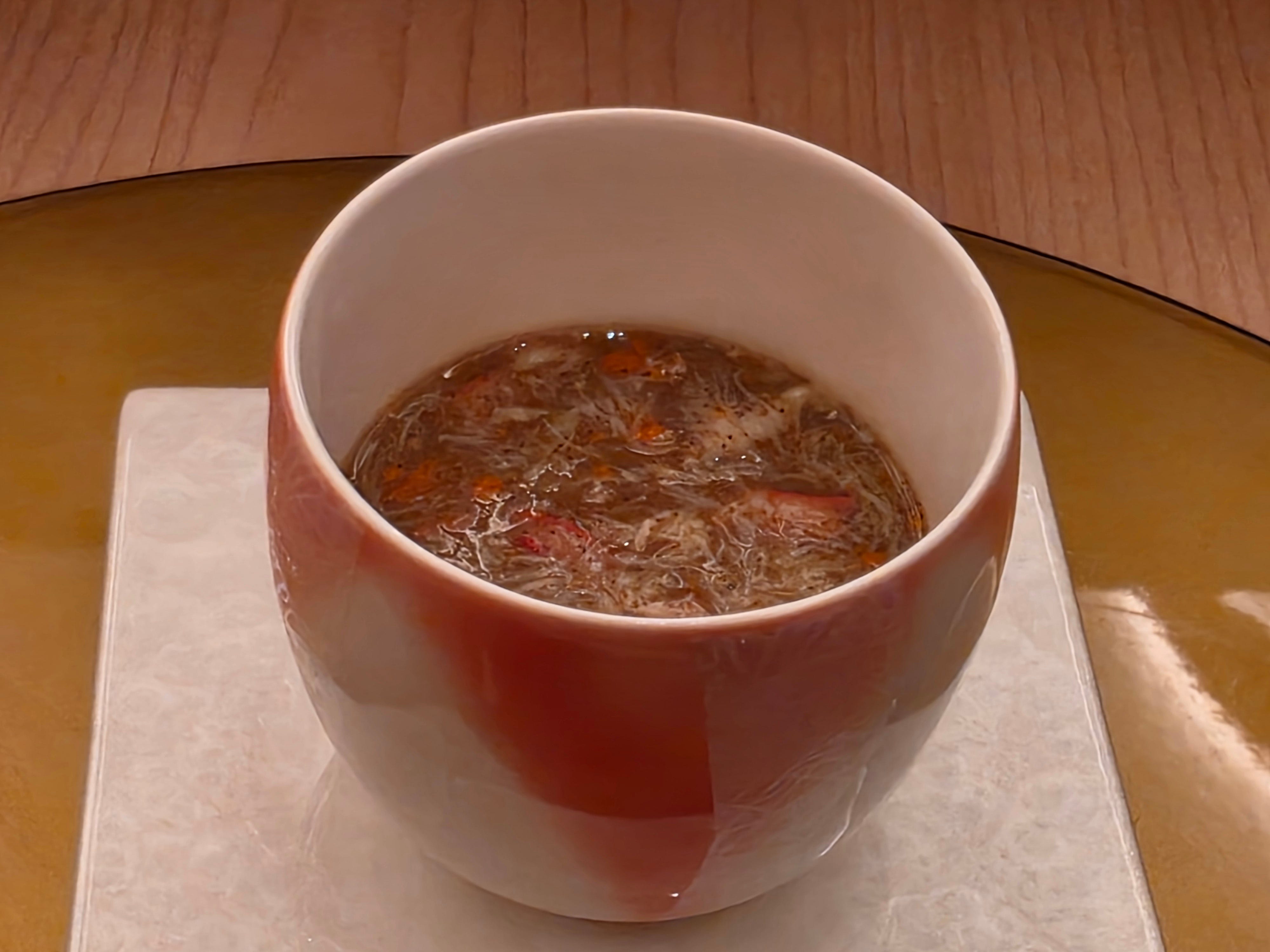
The second course came next, with a steamed egg chawanmushi topped with a thick layer of crab meat and crab roe, and capped with the crab shell. Strong, a bit fishy, and a bit different than the usual chawanmushi with the ingredients embedded within the silky egg custard.
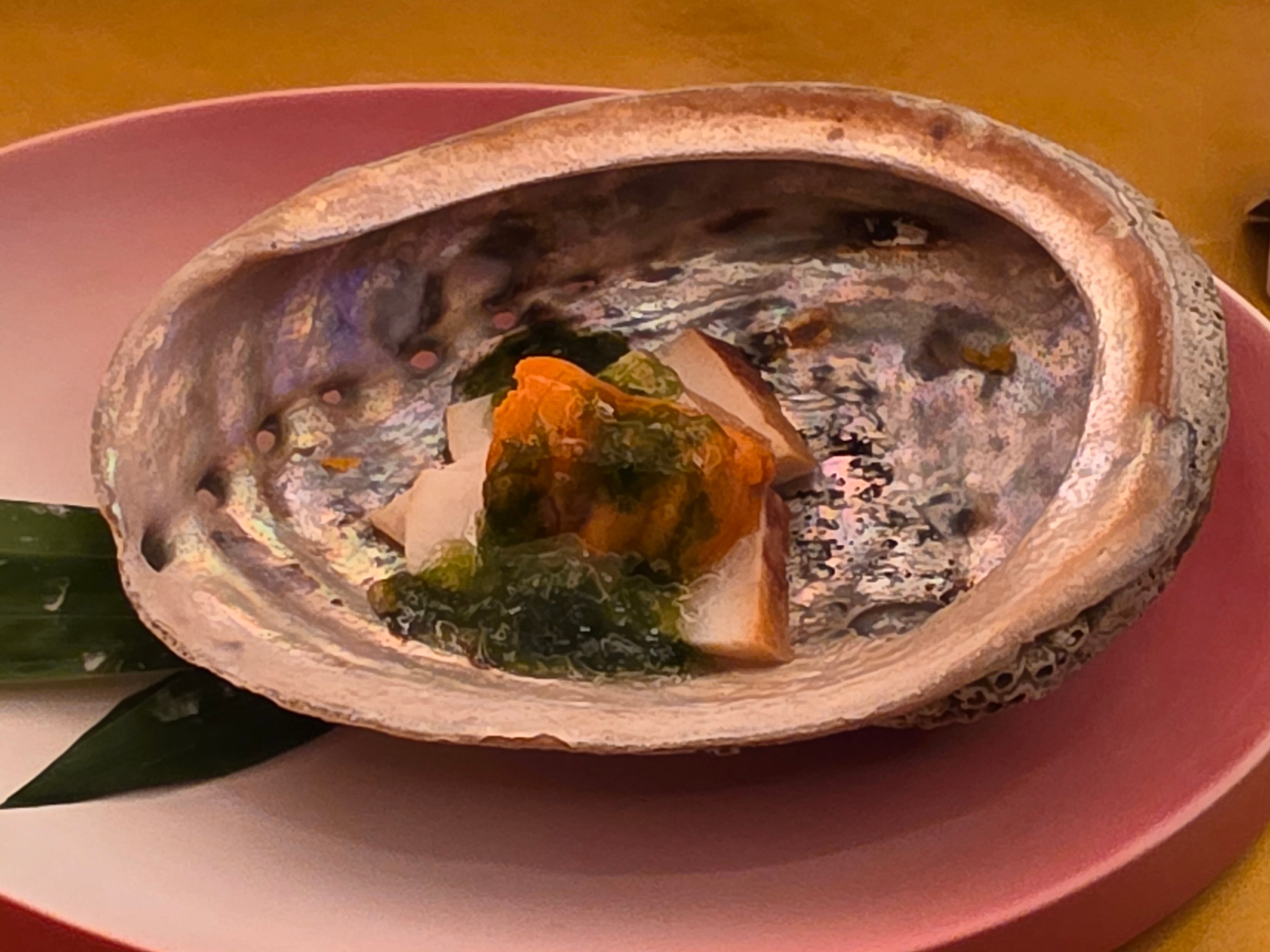
Next came one of the signature dishes from the Chef Masaru. We were told that he started the trend of serving steamed abalone at high end Japanese restaurants in Hong Kong, and nearly every high end omakase in Hong Kong does their own version of this dish. Three slices of steamed abalone topped with uni and a seaweed sauce. Deceptively simple, but difficult to cook through a large abalone, without making it touch and stringy. Chef Masaru’s version was melt-in-the-mouth tender. A bit of brininess and iodine from the seaweed sauce and richness from the uni. A massive hit, and probably the single best version of the steamed abalone dish I’ve tried in Hong Kong (although I hear Chef Yeung Koon-yat of Forum was known as the abalone King).
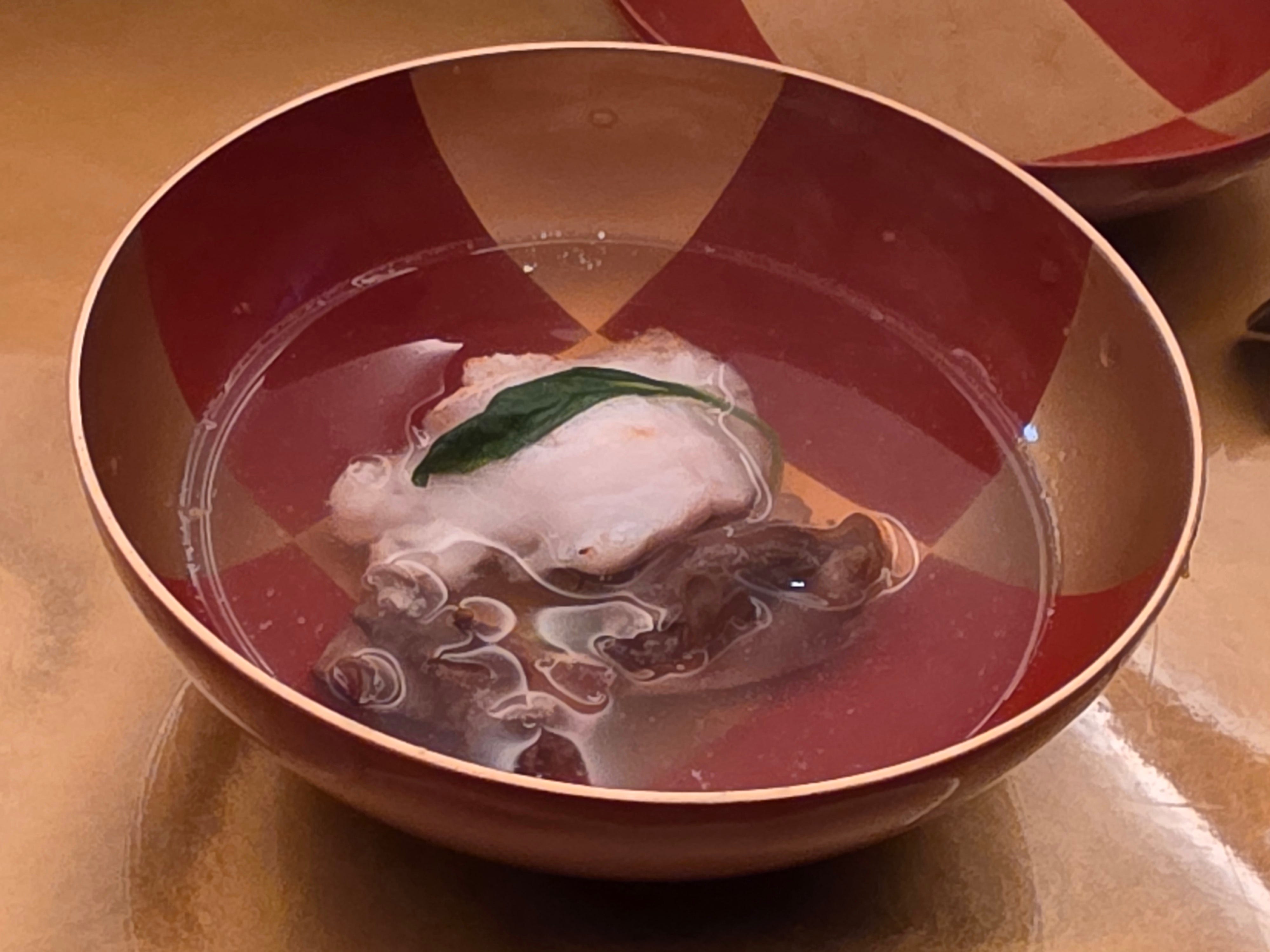
Another deceptively simple dish that shows up on nearly every kaiseki menu. An extremely clarified bonito broth with a few seasonal ingredients. The clarity of the broth makes one assume that the dish would be very light, but the bonito broth packs a hit of smoky umami, highlighting the grilled tilefish and maitake mushrooms.
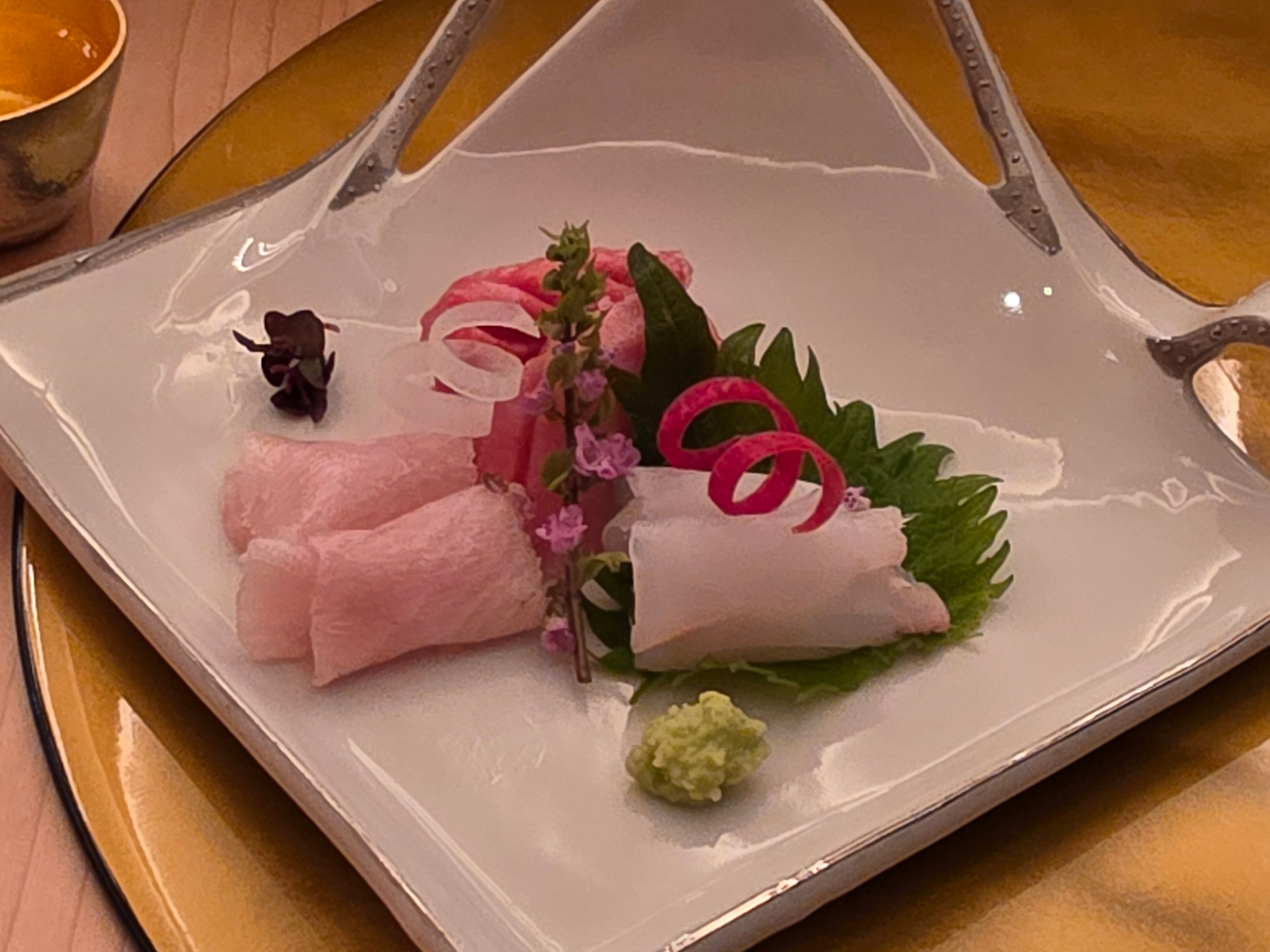
A sashimi plate showed up next, with two kinds of whitefish, and two slices of toro, served with freshly grated wasabi, and a yuzu sauce in addition to soy. The toro was served at room temperature, while the whitefish was served slightly cold. The fattiness and mouthfeel of the toro actually improved with the difference in temperature.
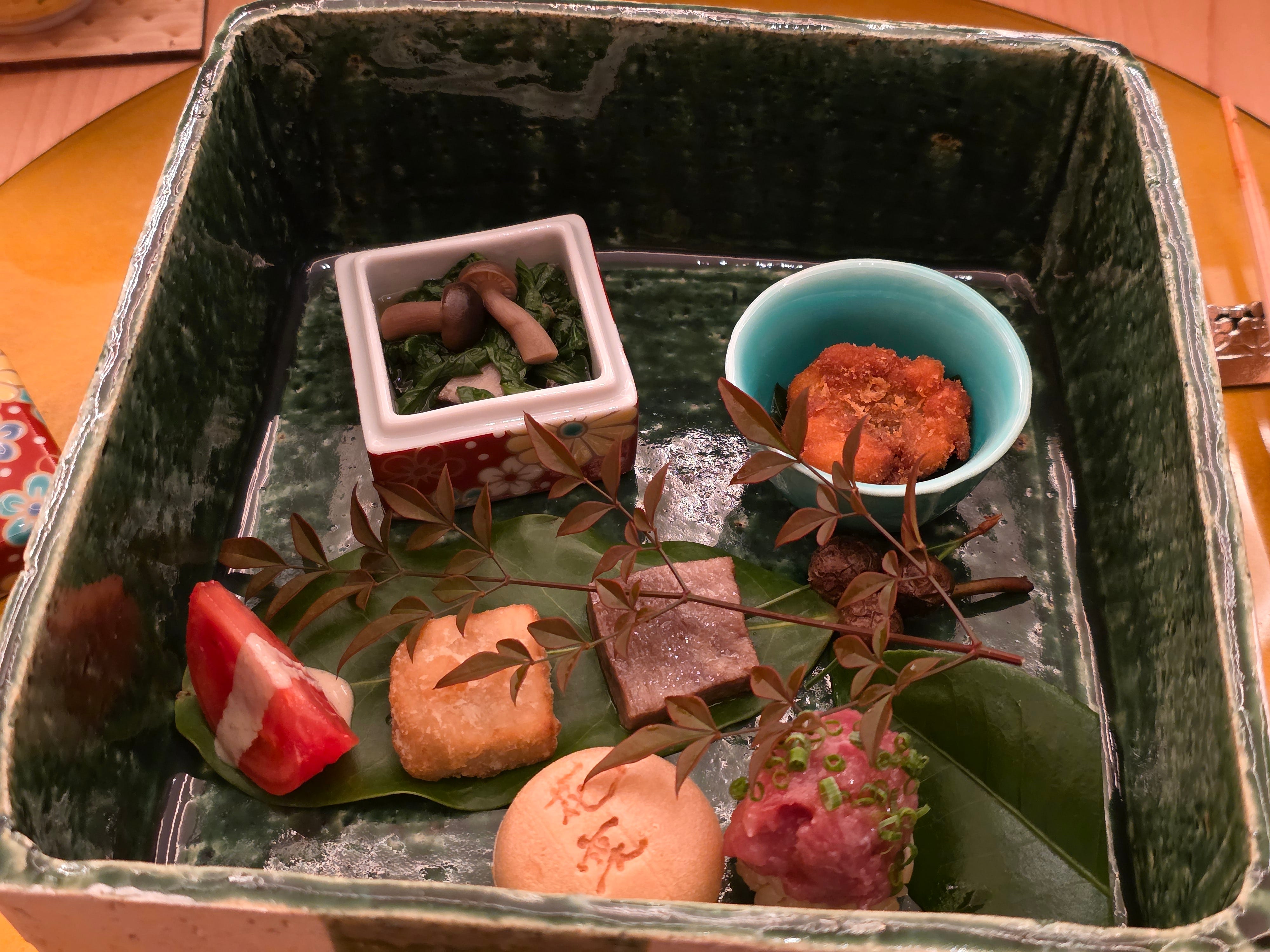
A classic Kaiseki or Kappou dish, the Hassun. Originating from the tea ceremony, it’s served in a square dish with little morsels of food, pairing food from the sea next to food from the mountain. We were told to try it in order, from right to left, top to bottom
A slice of deep fried eel
Warm steamed spinach and mushroom
Lightly grilled ox tongue
A square of fried taro
A slice of tomato in sesame dressing
a ball of minced tuna on top of a rice ball
chicken liver parfait inside a crispy rice cracker - a favourite whenever I see it on the menu
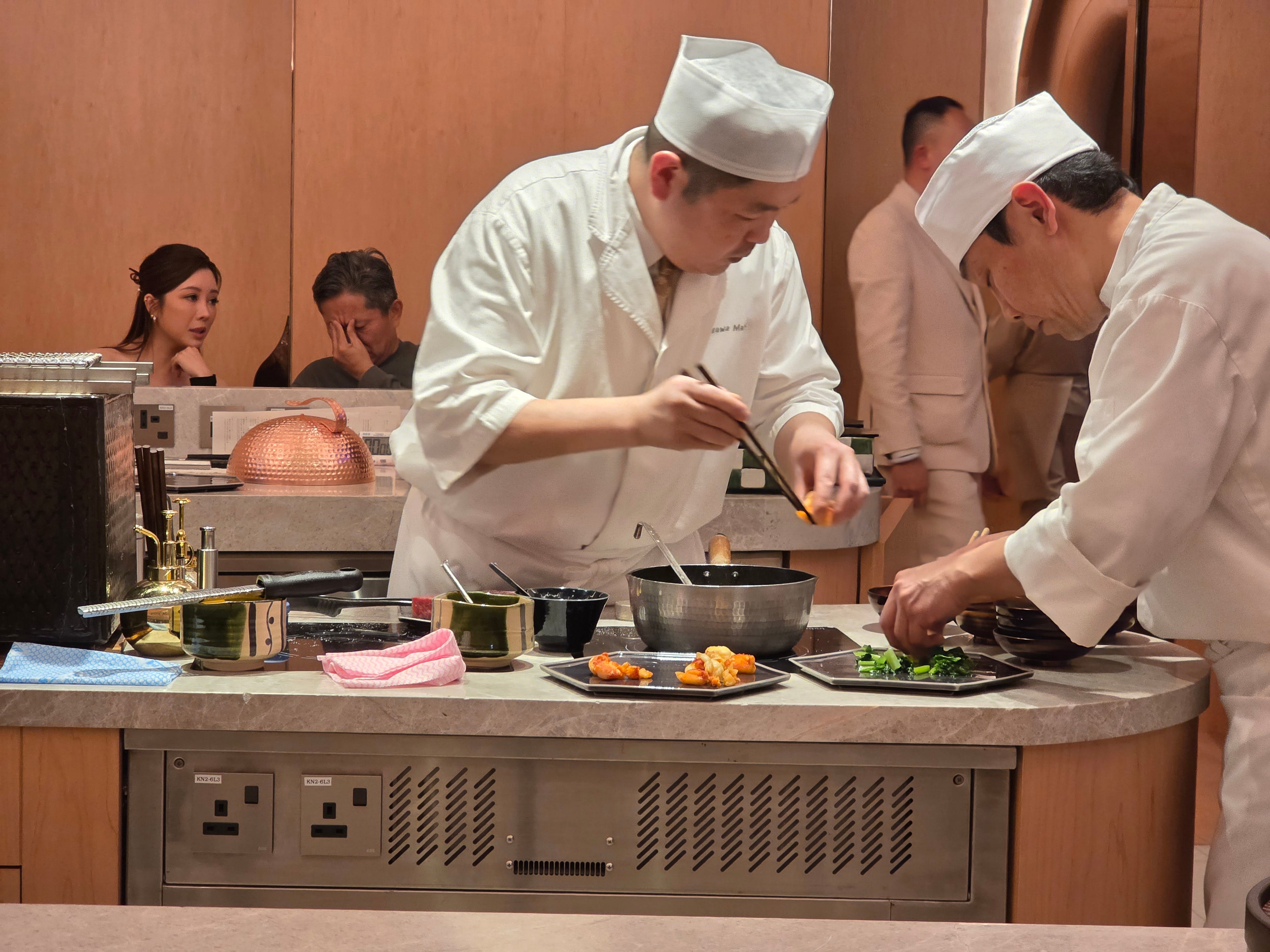
The chef and his assistant plating the next course
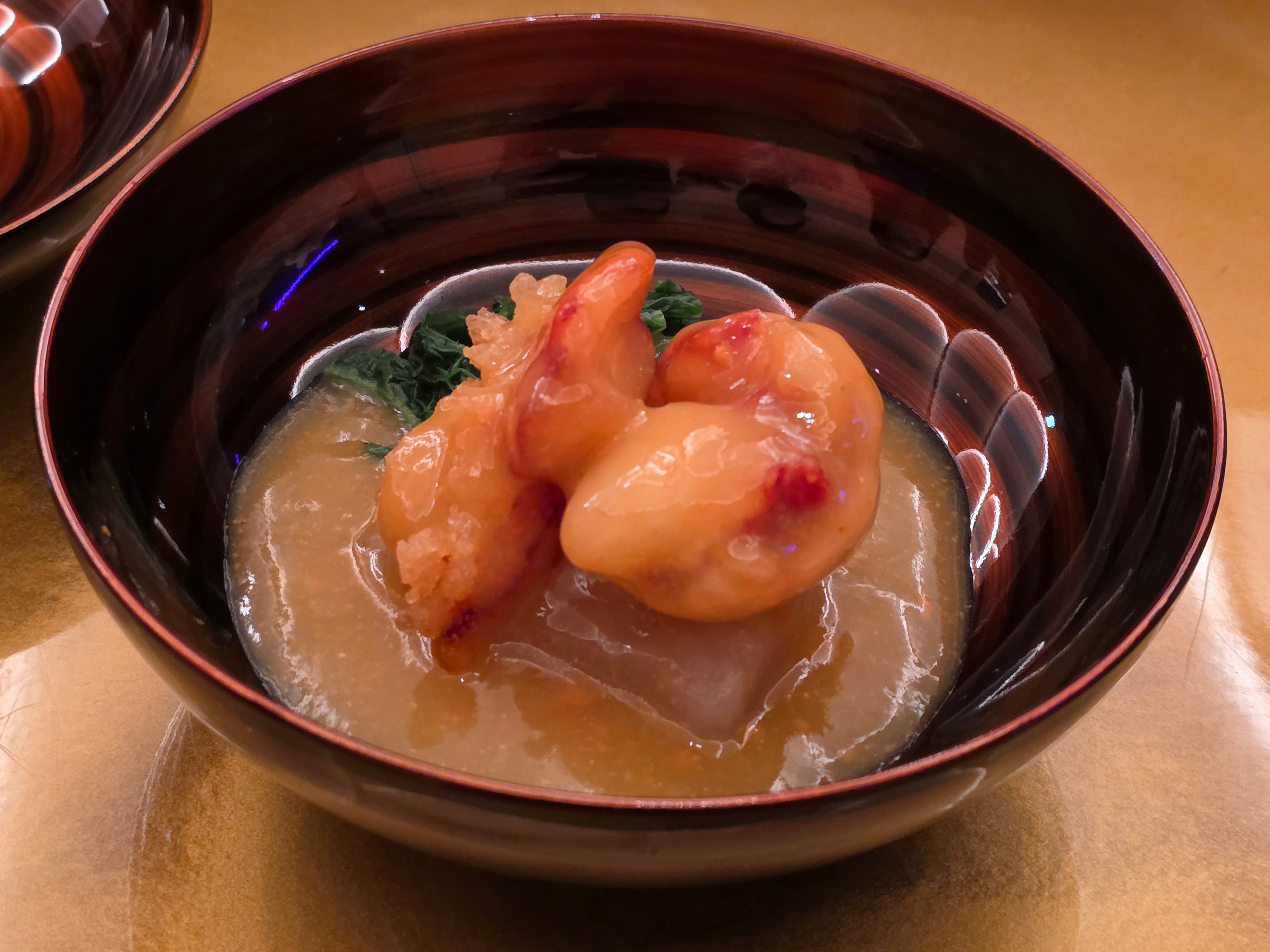
The seasonal seafood main was a Boston lobster tail in a thick uni sauce on top of poached turnip and Japanese vegetables. Well executed, but not particularly notable.
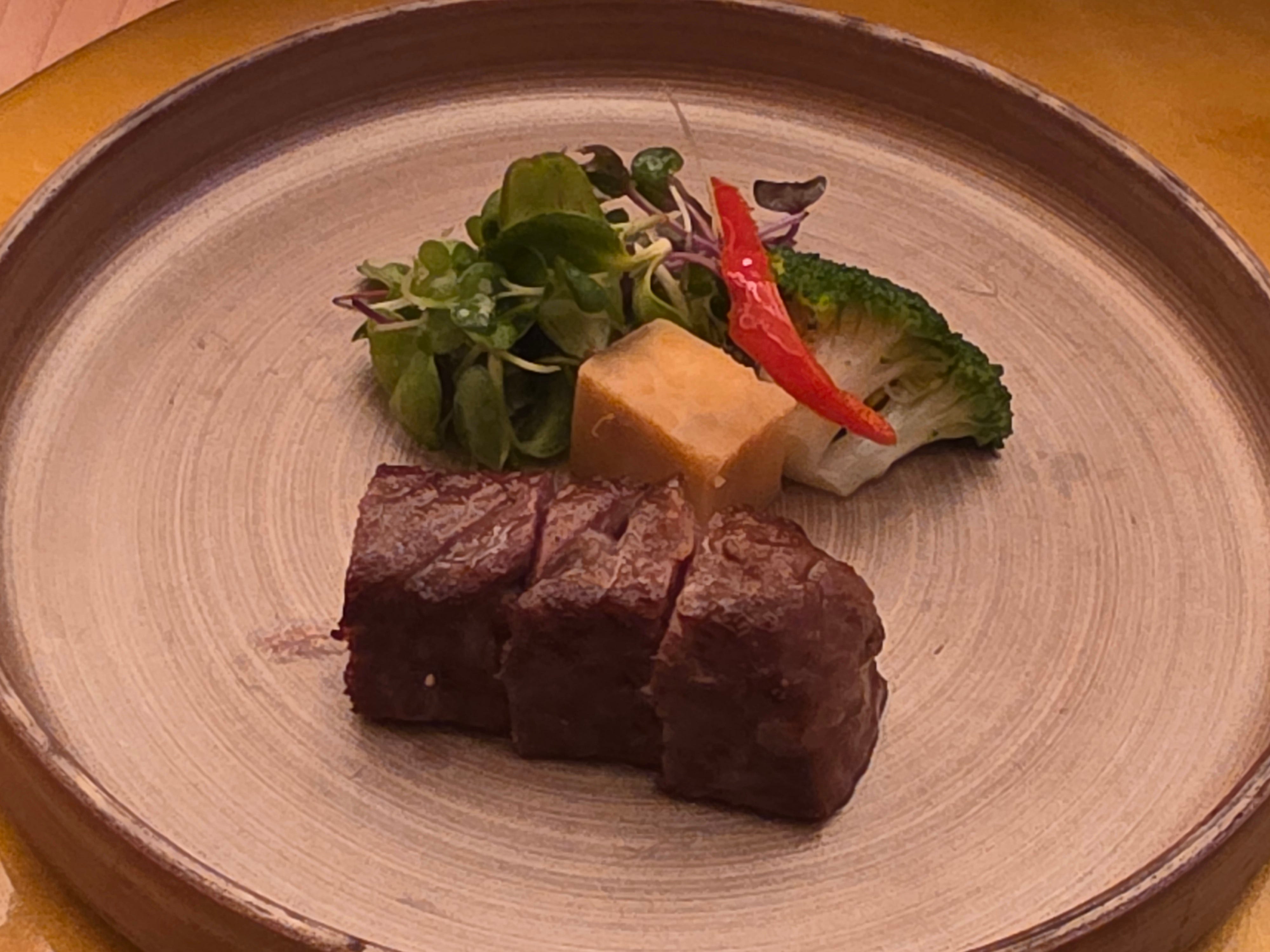
The meat main was a small serving of extremely rich wagyu beef, with microgreens, broccoli and some sort of Japanese root vegetable. The serving size felt a bit small, but the richness of the wagyu is always extremely filling, and going for a steak-sized portion always results in regret afterwards.
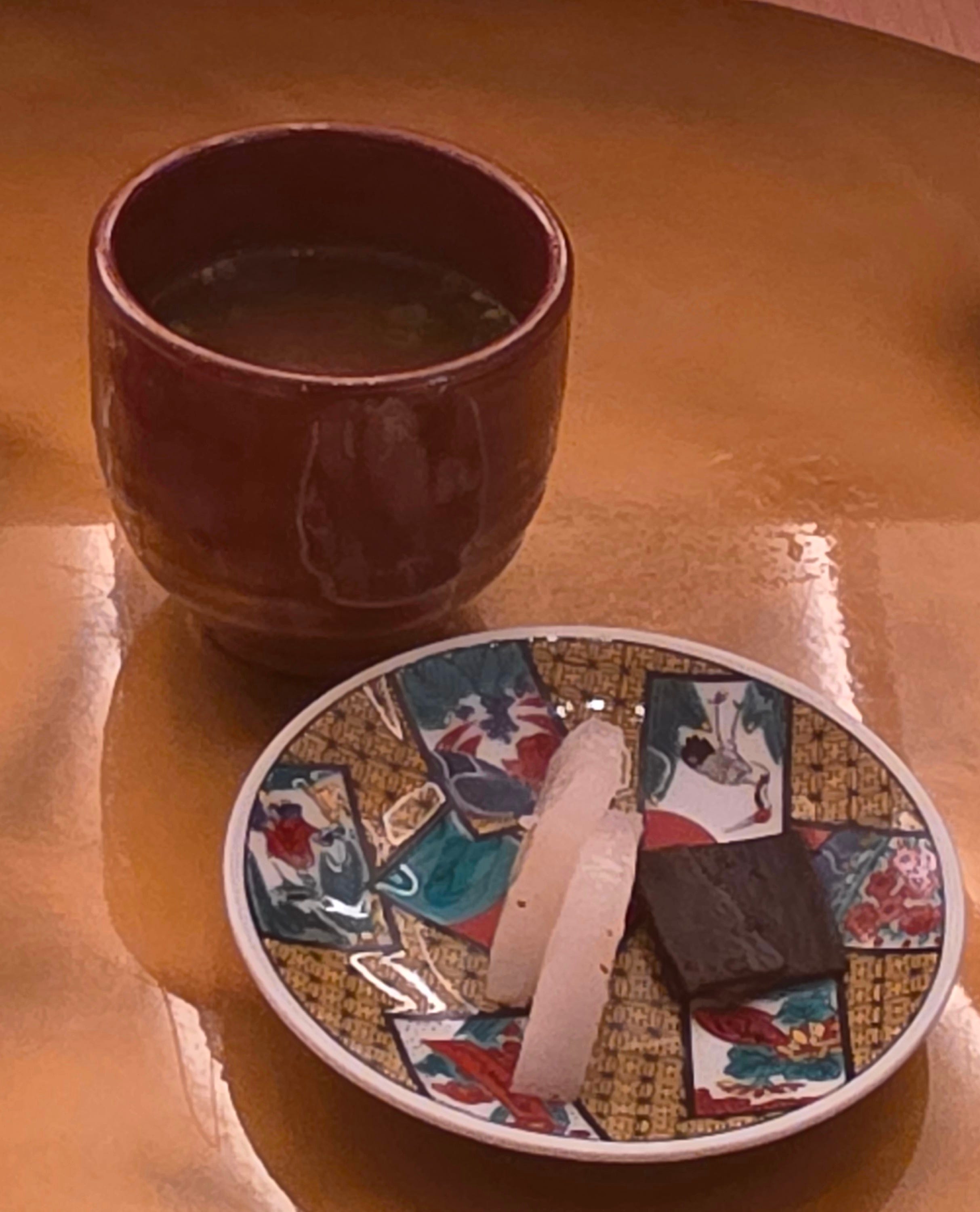
Winding down after the main, a small cup of concentrated miso soup, and some Japanese pickles.
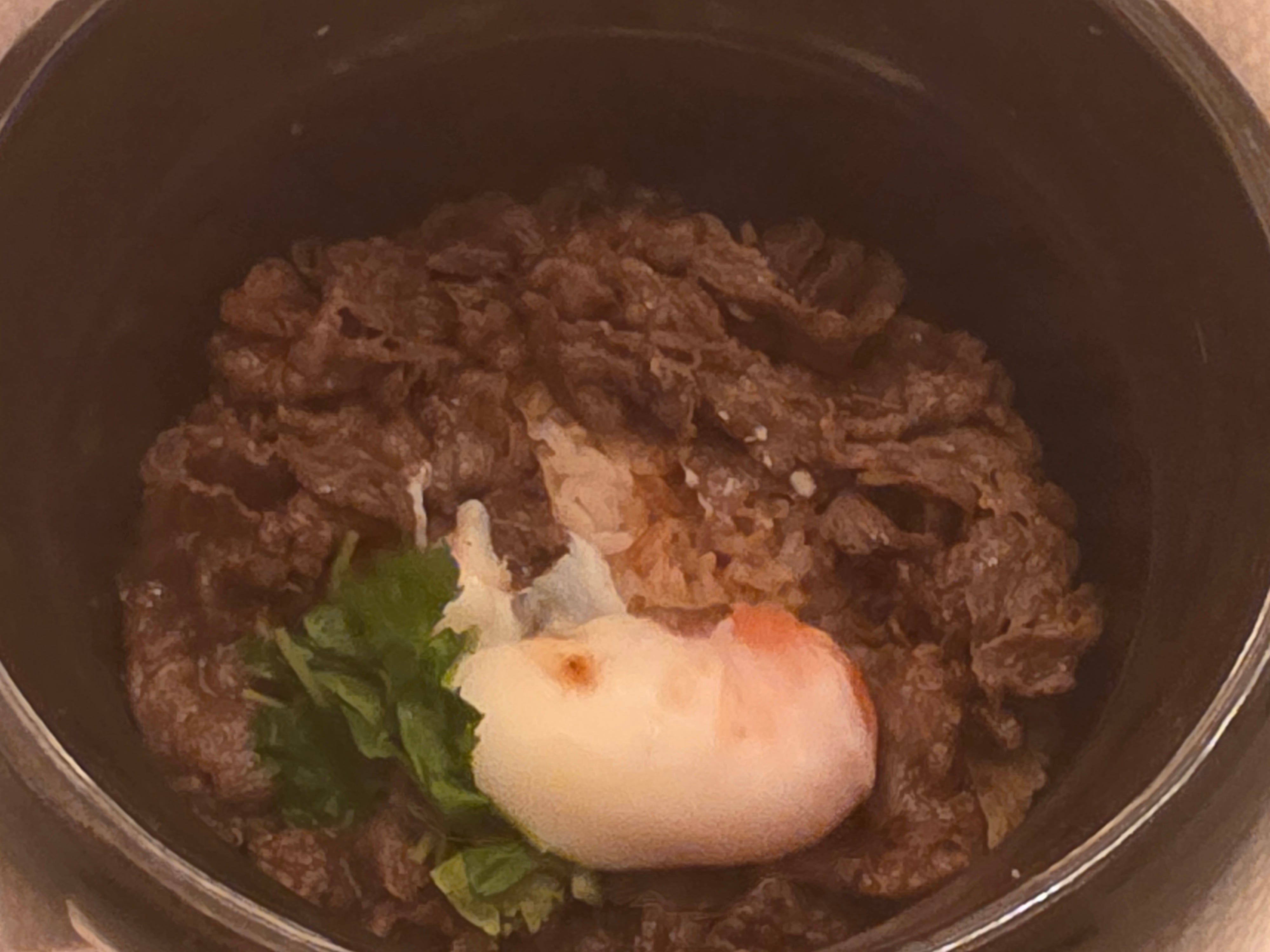
Finally, the other signature dish from the chef, the wagyu beef claypot rice with a soft boiled egg and topped with shaved truffle.
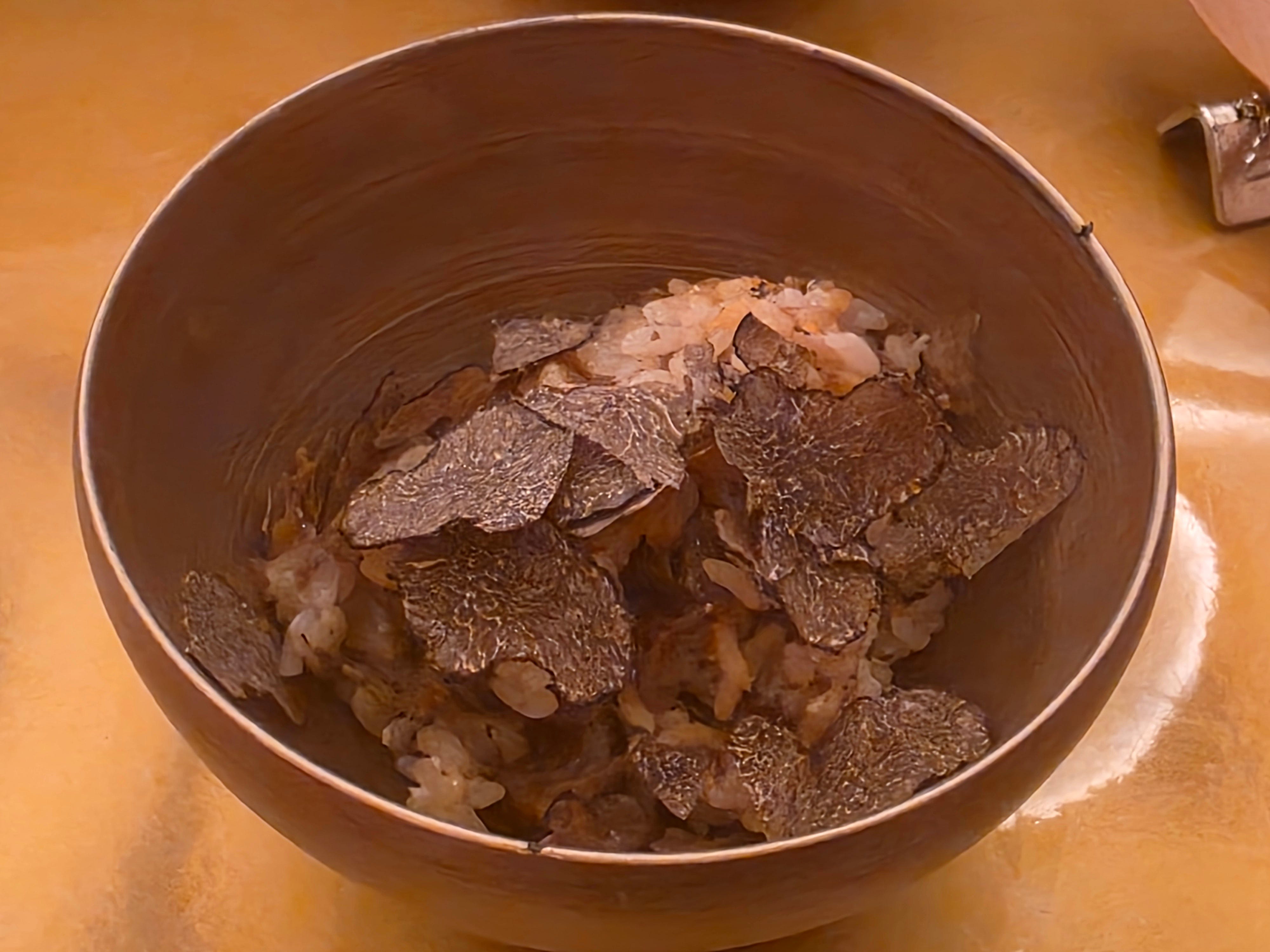
Absolutely delicious, and it was clear why it was a signature. The only thing that I could ask for, and received, was a second helping!
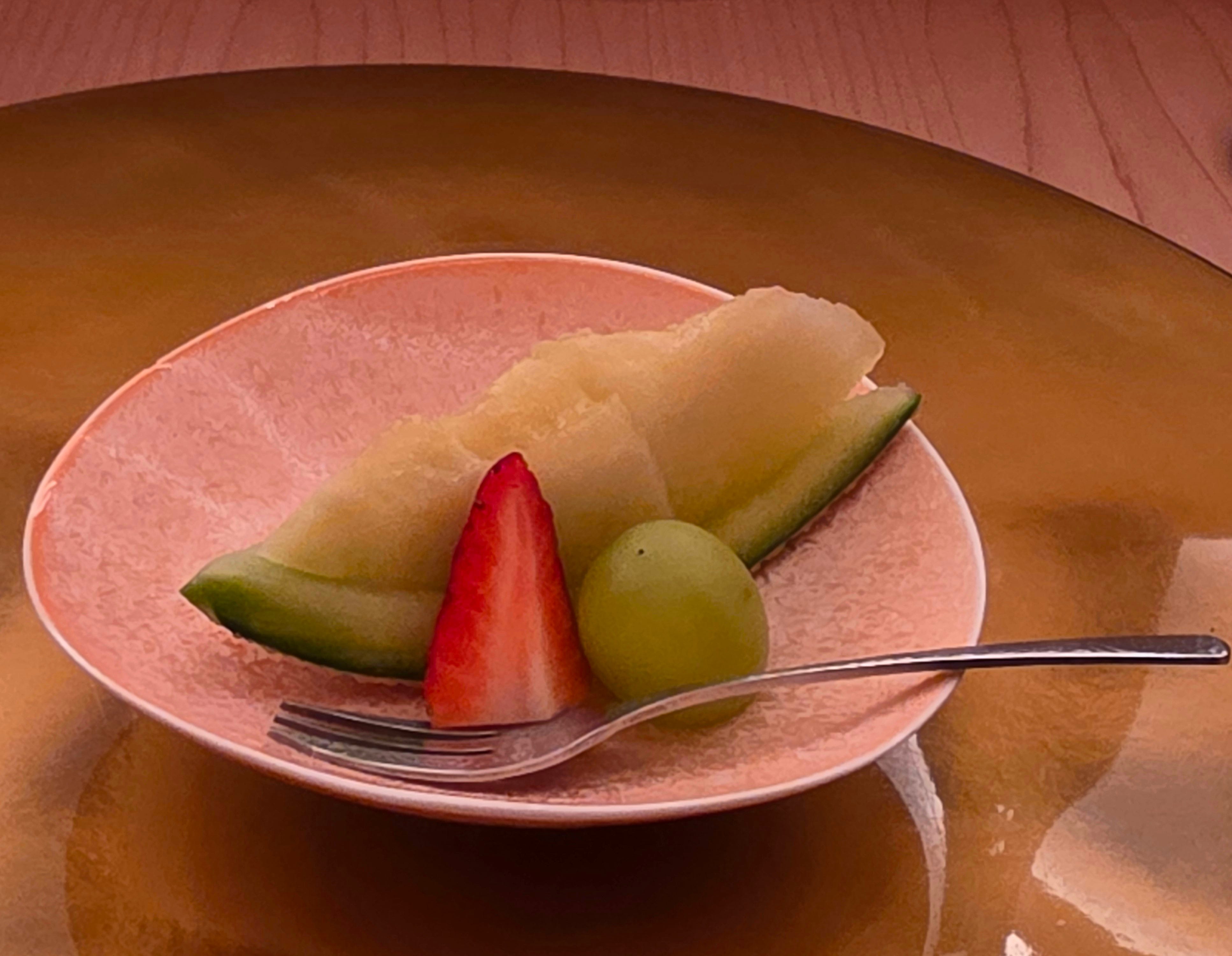
The traditional dessert - Japanese fruit. intensely sweet piece of strawberry, muscat shine grapes and muskmelon.
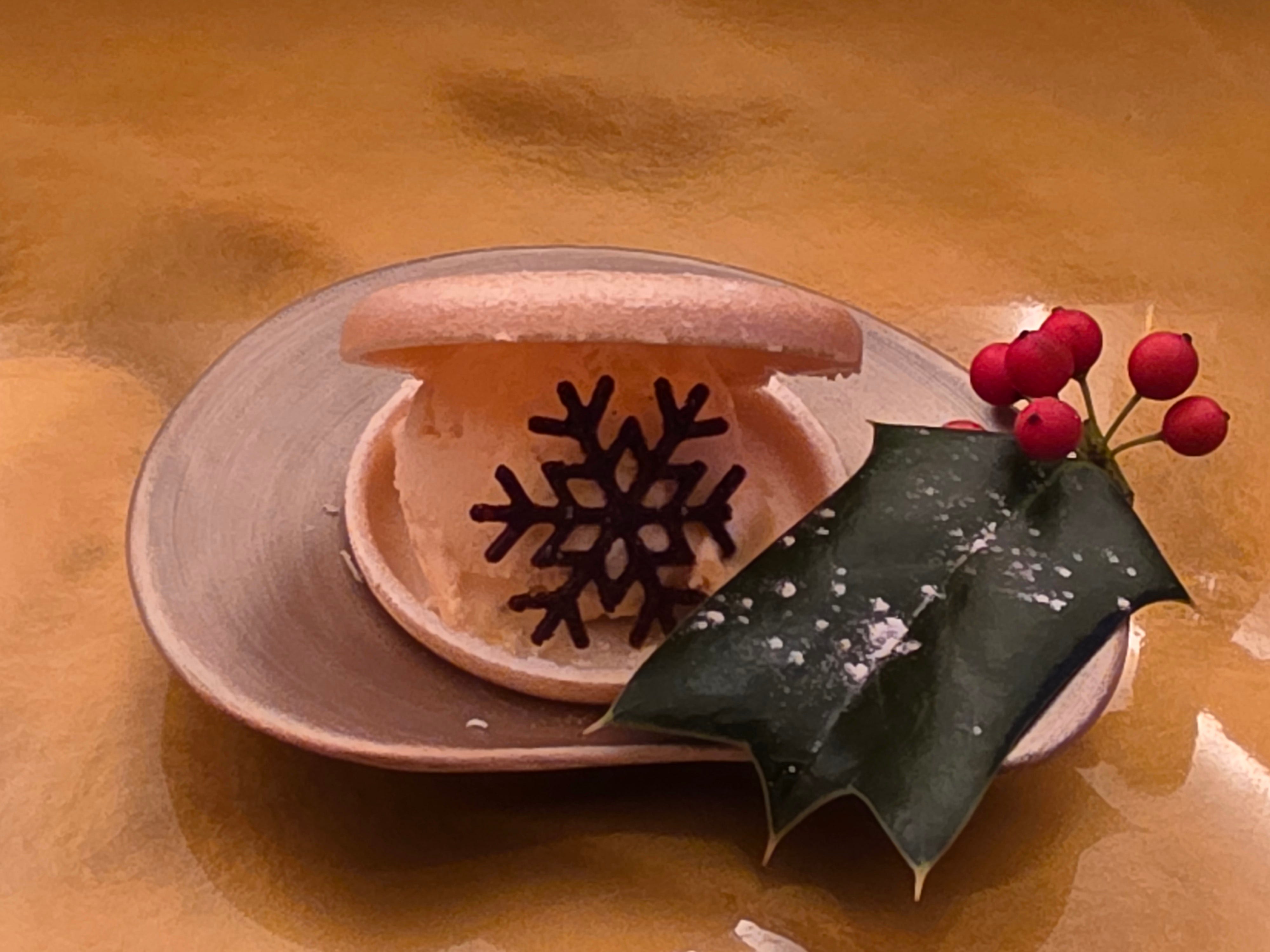
Finally, in seasonal dessert, highlighting the time of season, a scoop of chestnut ice cream sandwiched in the same rice cracker as chicken liver parfait from earlier. Those crispy rice crackers are incredibly versatile - a bit like the larger version of communion crackers, without the long-dated staleness.
Overall, this was my first kappou experience. It mixes the kaiseki experience, with a show of the chef preparing the food like an sushi counter. Simple ingredients, well prepared. The signature dishes were a huge hit, but there was something a bit mechanical about the whole experience. Perhaps it was a busy night - the single chef was managing four groups around the counter and a private room - and we were told that the style of dining has the chef put together every dish by his own hand. The apprentices can help with preparation, but every dish had to be assembled by the chef, down to the scooping of rice from the claypot. This resulted in extremely slow pacing of the dishes, and given how quickly we were finishing the sake, we were left less than sober, and still pretty hungry afterwards.
Total damage 6650 HKD/2 people