
Iggy’s opened in 2004 at The Regent Singapore hotel, founded by Ignatius Chan, a Singaporean sommelier who had previously co-founded Les Amis restaurant in 1994. Chan named the place after himself (or at least after the nickname he has carried for years) and built it around a simple conviction: the wine list should matter as much as the kitchen.
The kitchen has passed through several hands. Early head chefs included Dorin Schuster, who led the cooking around 2006 with a European fine-dining background. Akmal Anuar, a Singaporean who grew up around his family’s nasi padang hawker stall in Teck Whye, took over by 2011 and stayed seven years before going on to open restaurants in Dubai and Singapore (including the Michelin-starred 11 Woodfire). Masahiro Isono followed around 2015, bringing Japanese precision and a focus on seasonal ingredients. In 2016, Aitor Jeronimo Orive arrived: a Spanish-Australian chef who had trained under Andoni Luis Aduriz at Mugaritz and at Heston Blumenthal’s The Fat Duck, and whose molecular-leaning style helped earn Iggy’s its first Michelin star in the 2017 guide. The current head chef, Jake Lee, joined as chef de partie in 2017 and was appointed head chef in July 2019. Originally from Perak, Malaysia, Lee works alongside junior sous chef Cheah Seng Teng, focusing on umami-driven dishes with Japanese influences and holding on to that star. Notable alumni include Louis Han, who went on to open Nae:um, and Kenneth Lai, now at Ce Soir after stints at Iggy’s and 28 Wilkie.
The menu began as modern European fusion with Japanese touches, sourcing seasonal produce largely from Japan, and has stayed broadly in that lane while tilting toward more contemporary flavours rooted in Singapore and Southeast Asia by the 2010s. French and Italian foundations meet Asian ingredients like yuzu and bonito; vegan options were added later. The restaurant relocated from The Regent to the Hilton (now voco Orchard) in 2010, expanding from twenty-eight seats to thirty-six with an eight-seat dessert bar and a larger kitchen team. A 2016 renovation closed it for a month, refreshing both the space and the menu.
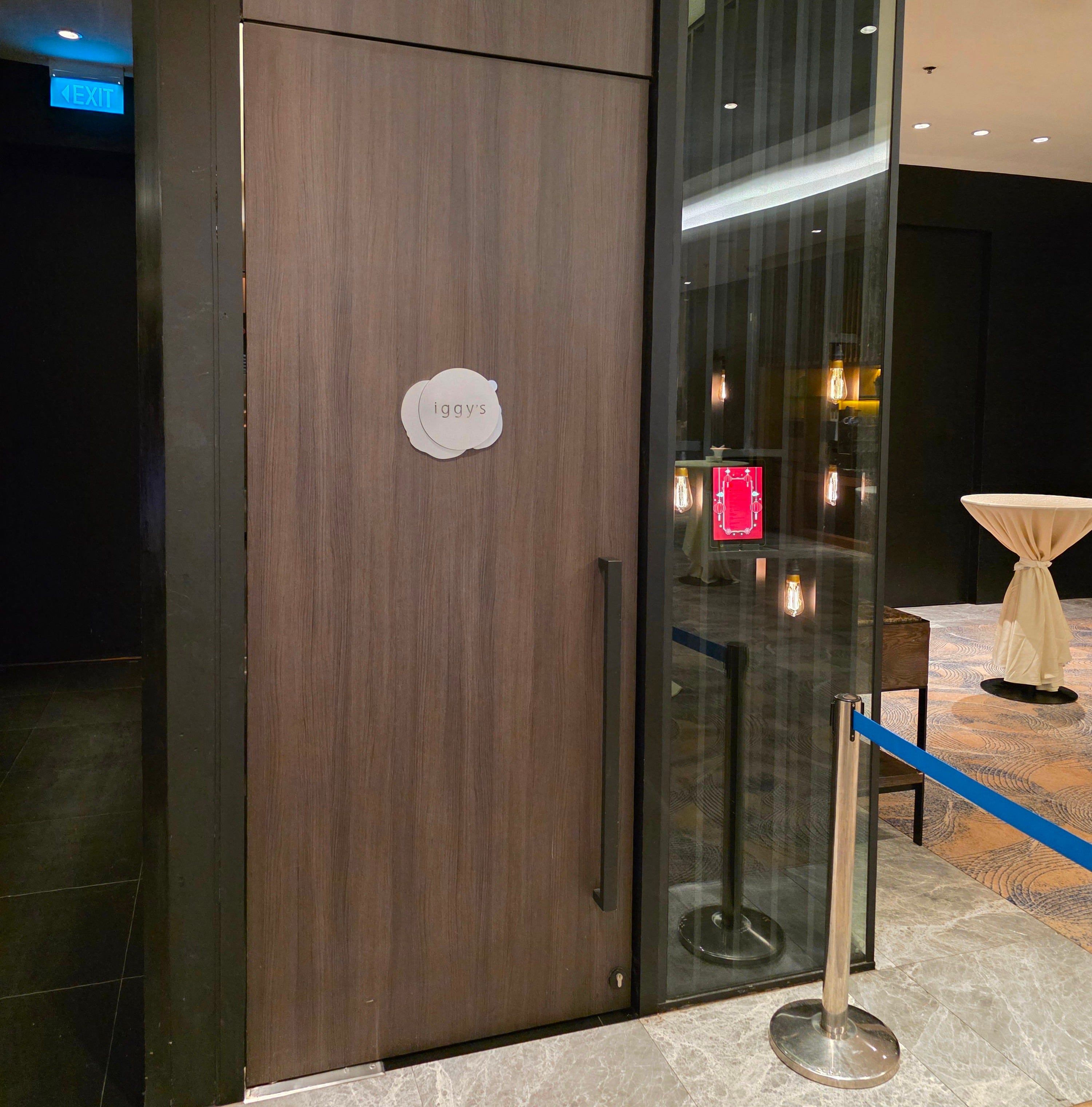
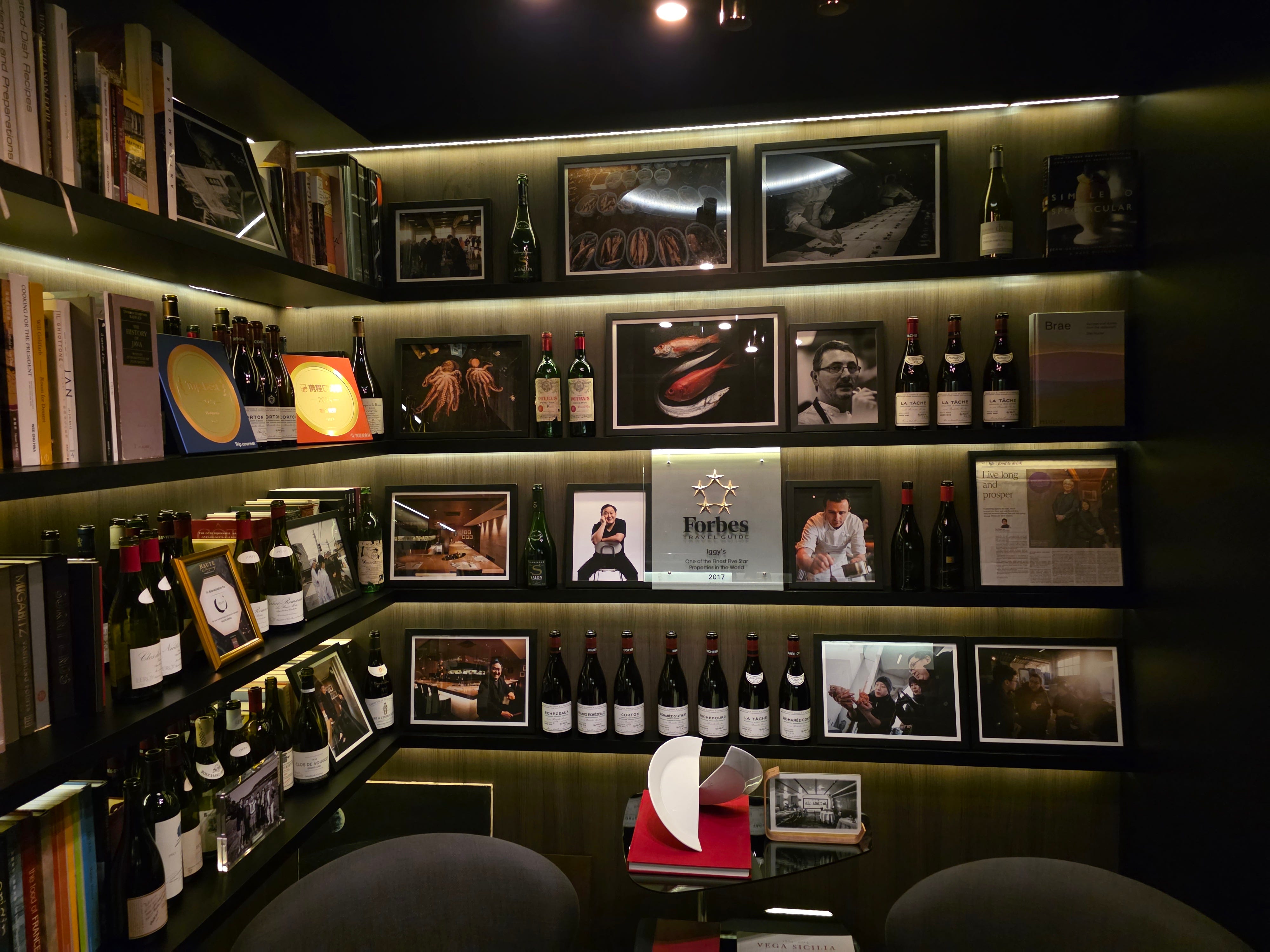
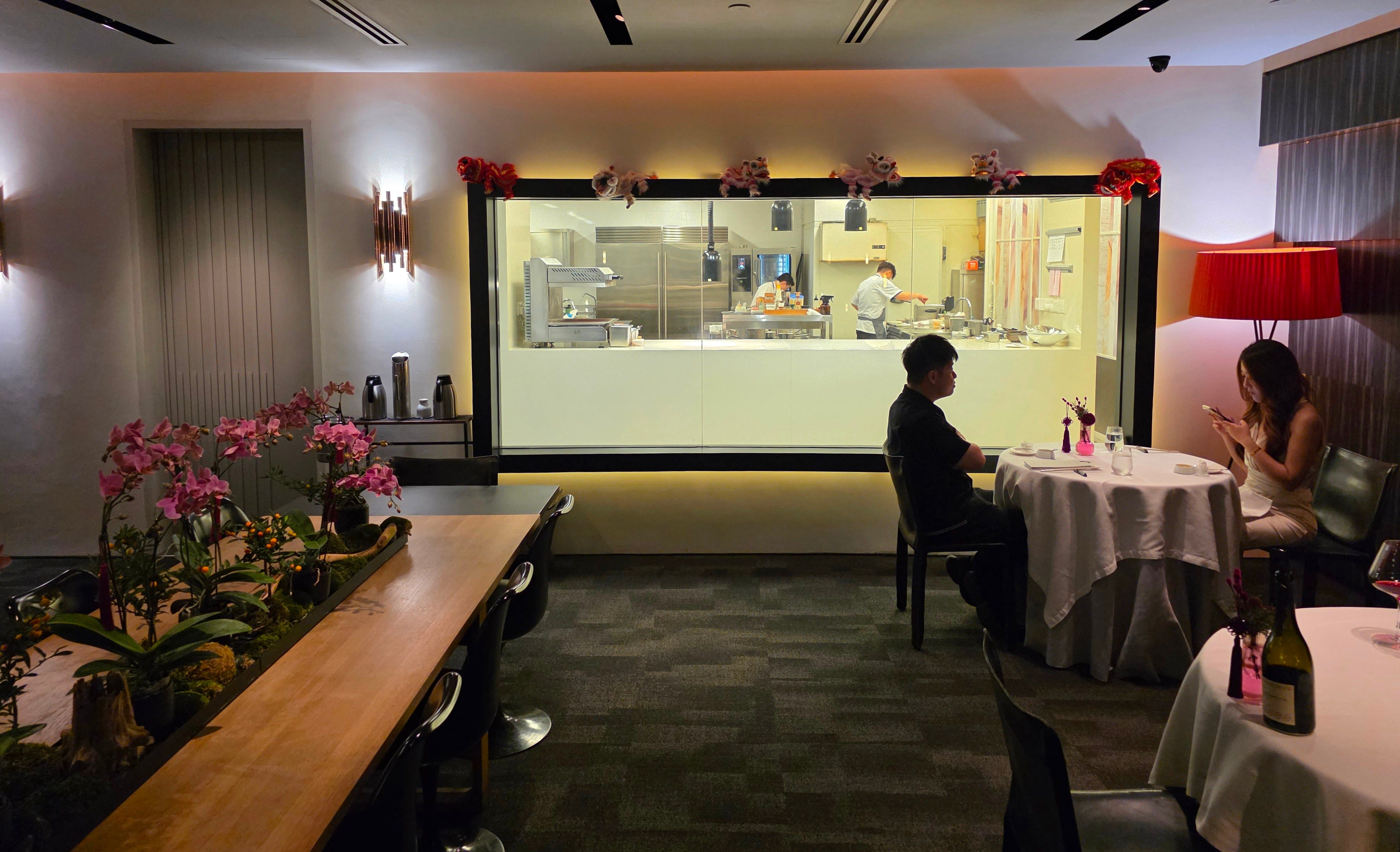
The dining room features a window into the show kitchen, where we could see the staff hard at work.
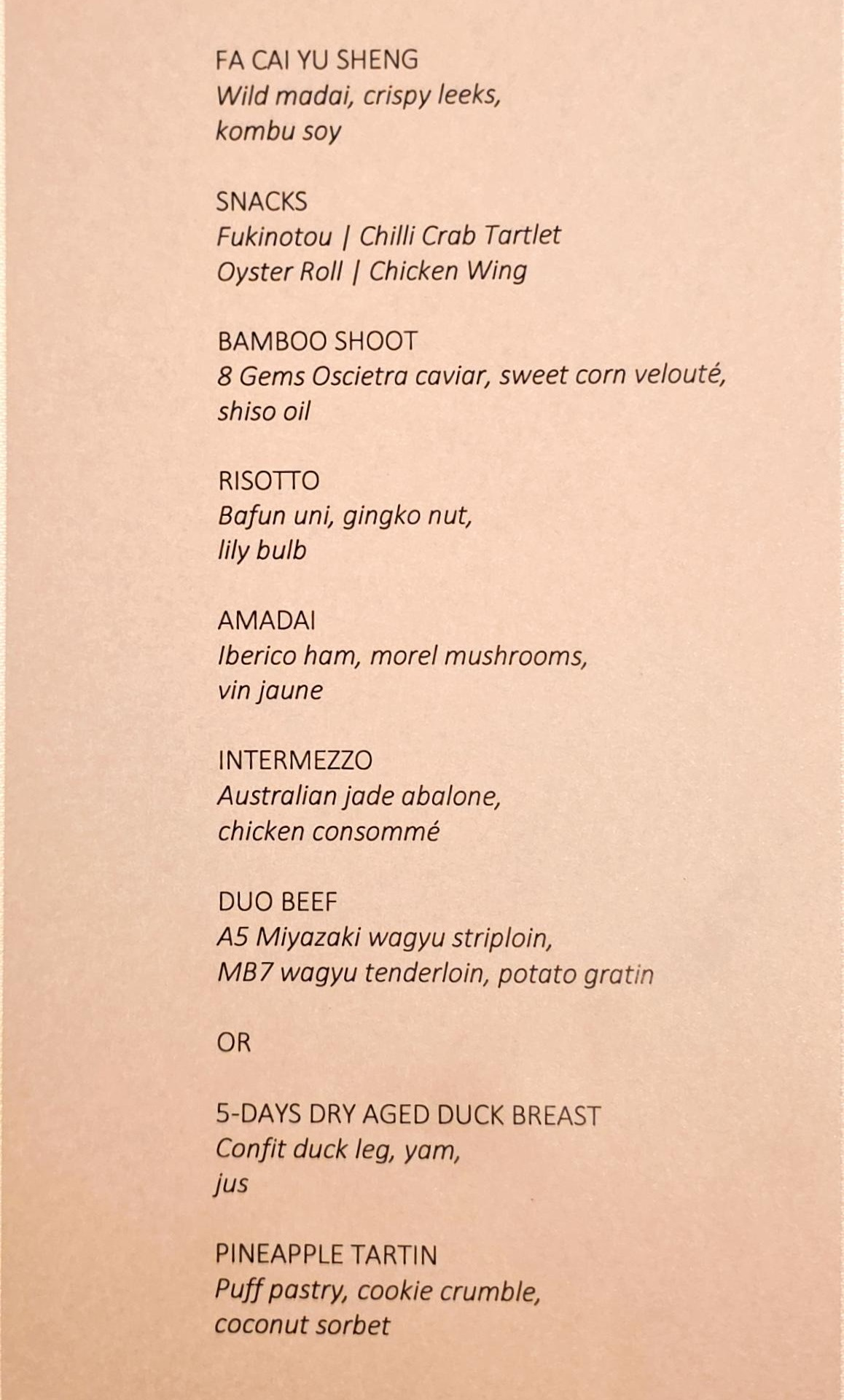
We arrived in time for a seasonal Chinese New Year set, with a traditional Singaporean prosperity toss as the opening course.
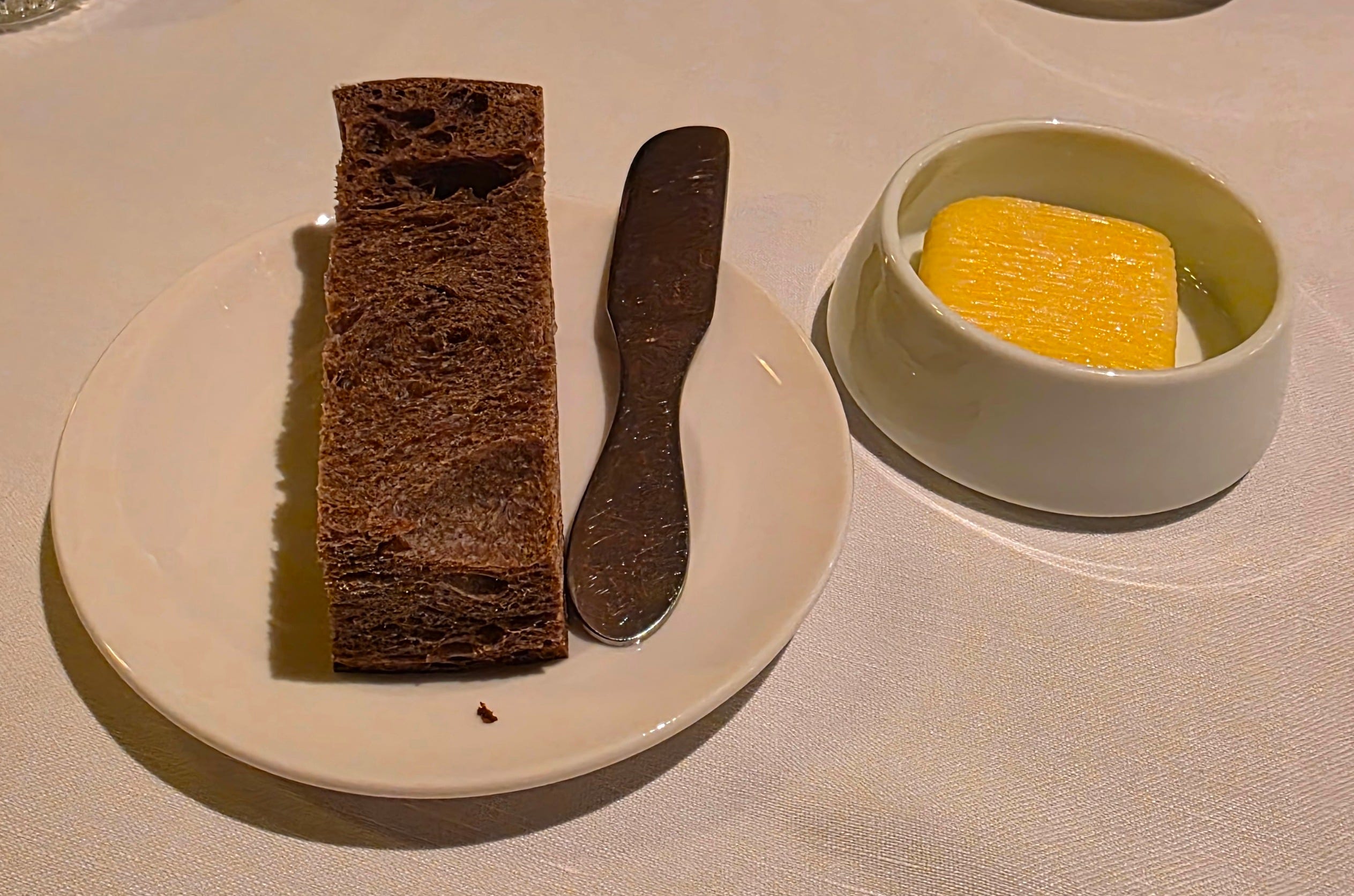
The bread came first. A dense rye sourdough with salted butter, unassuming but well made.
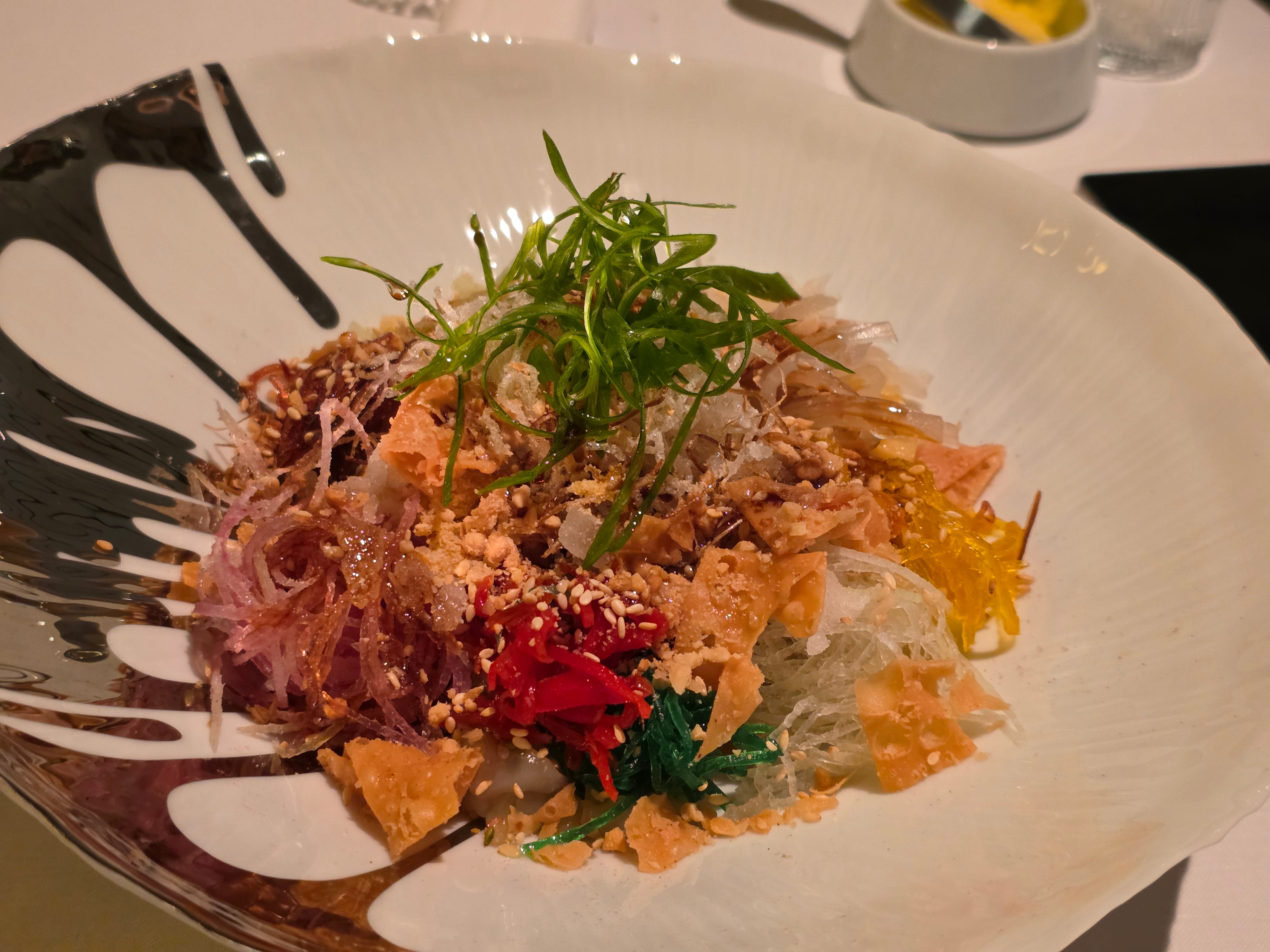
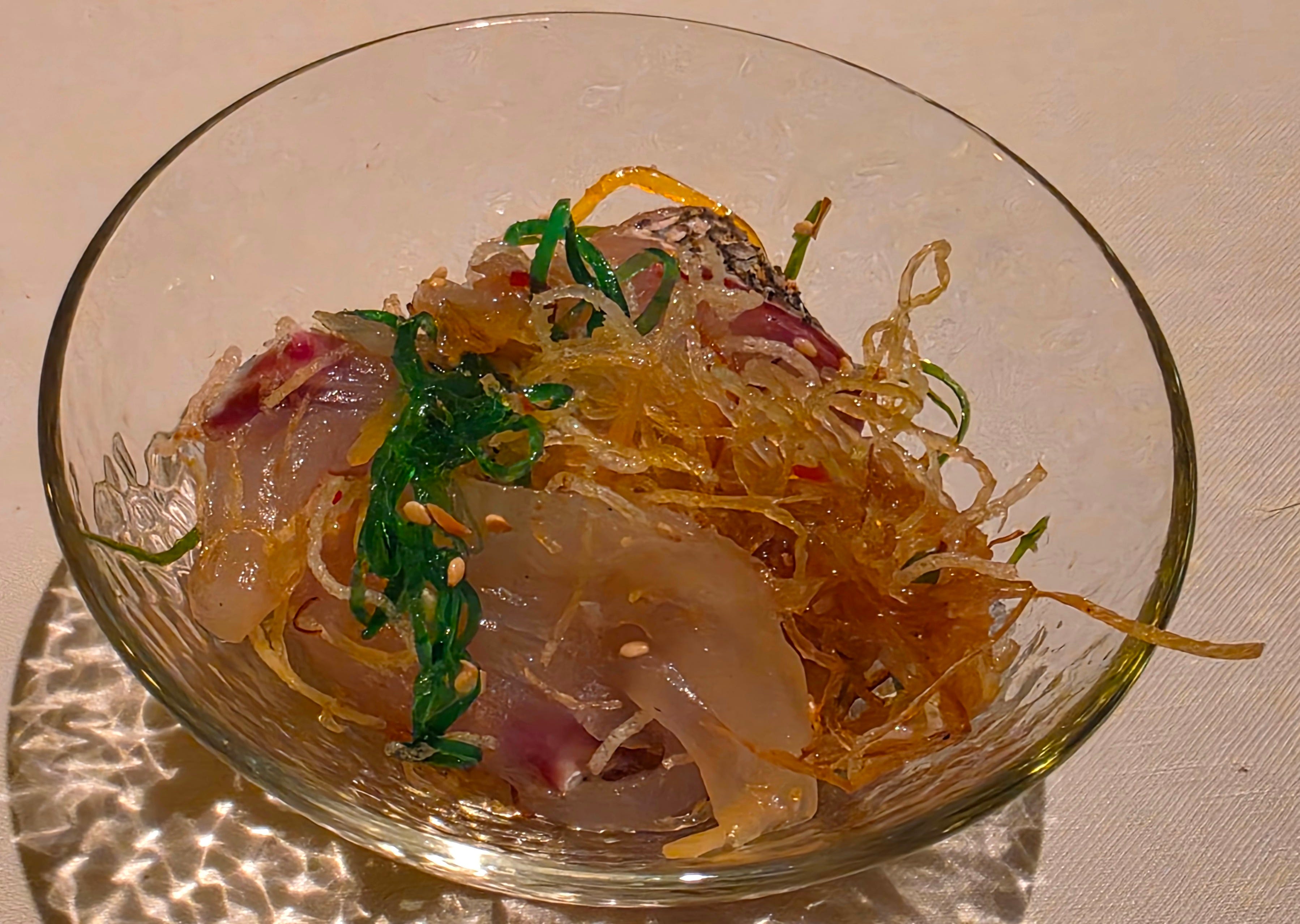
Then the yusheng, Iggy's take on lo hei: raw snapper with shredded vegetables (both raw and pickled), topped with crisp crackers, seaweed, crushed peanuts, and a sweet kombu soy sauce. Sweet, sour, salty, all colliding in one dish, exactly as the ritual demands.
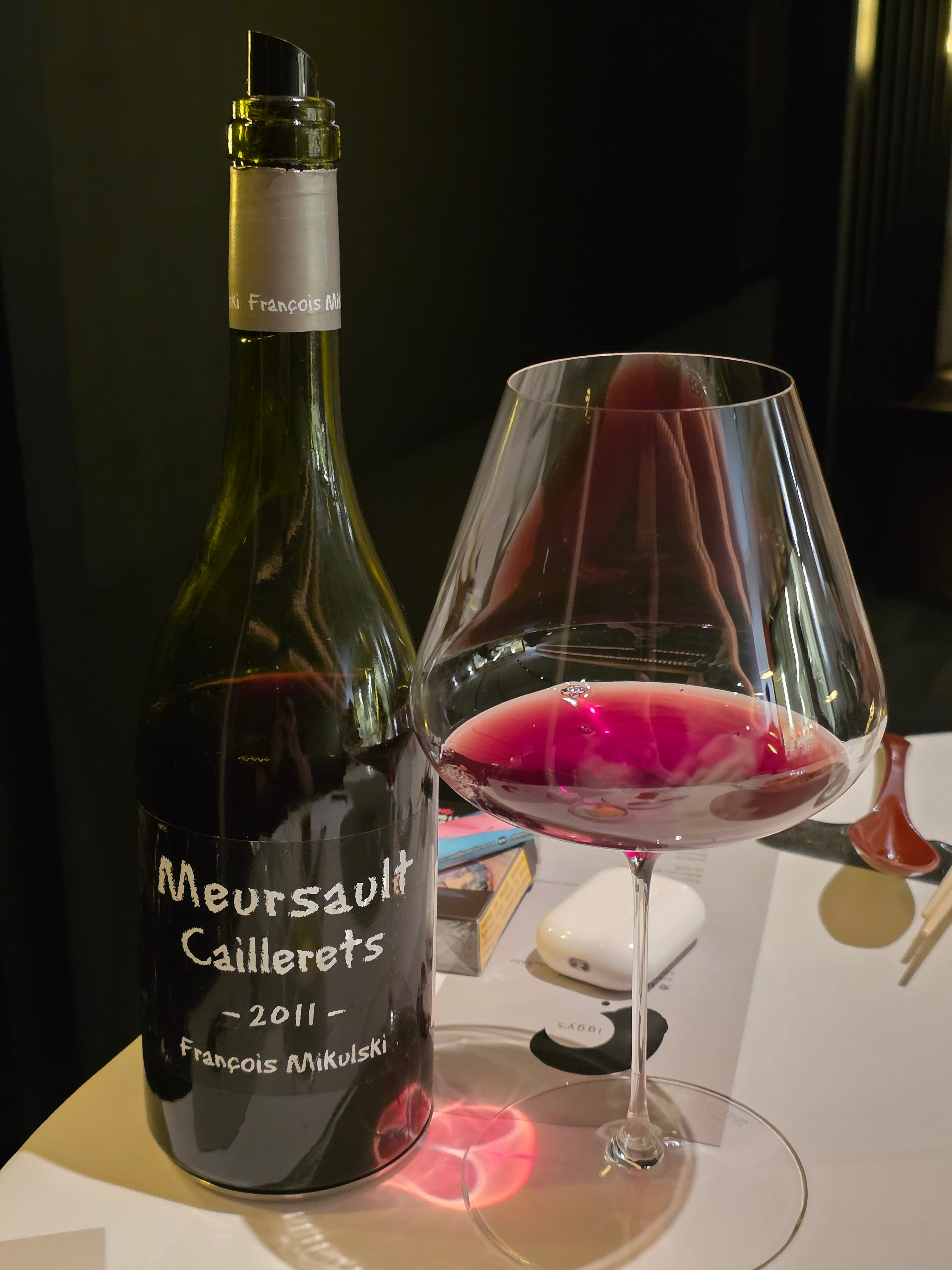
My companion picked the wine, a 2011 red Meursault Caillerets. Lighter than I expected. The vineyard is more known for whites than reds, but it was pretty good nonetheless.
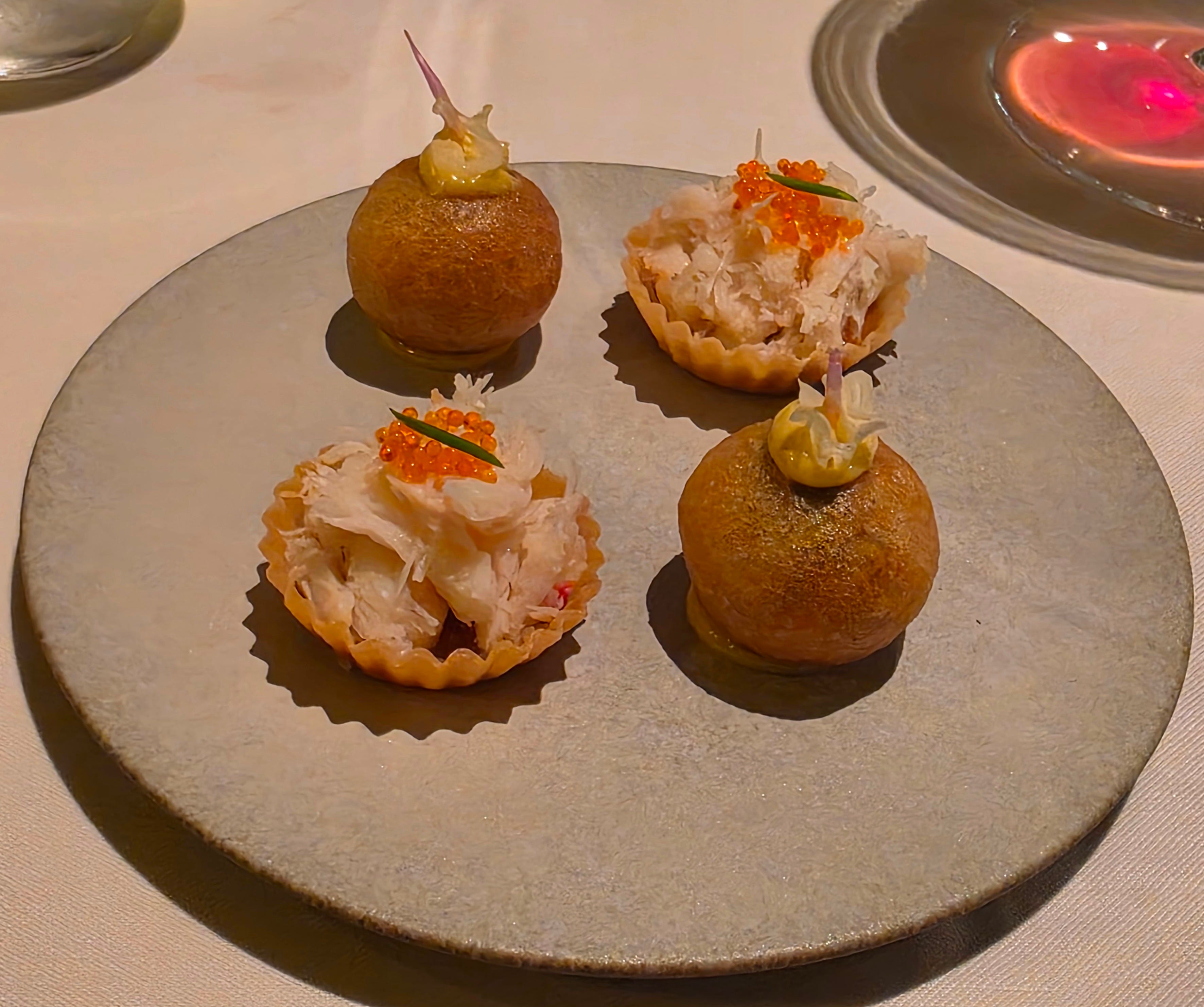
The canapés arrived in quick succession. First, Iggy's riff on chili crab, reimagined as a tart, much more restrained than Labyrinth's version. Alongside it, a fried filled doughnut.
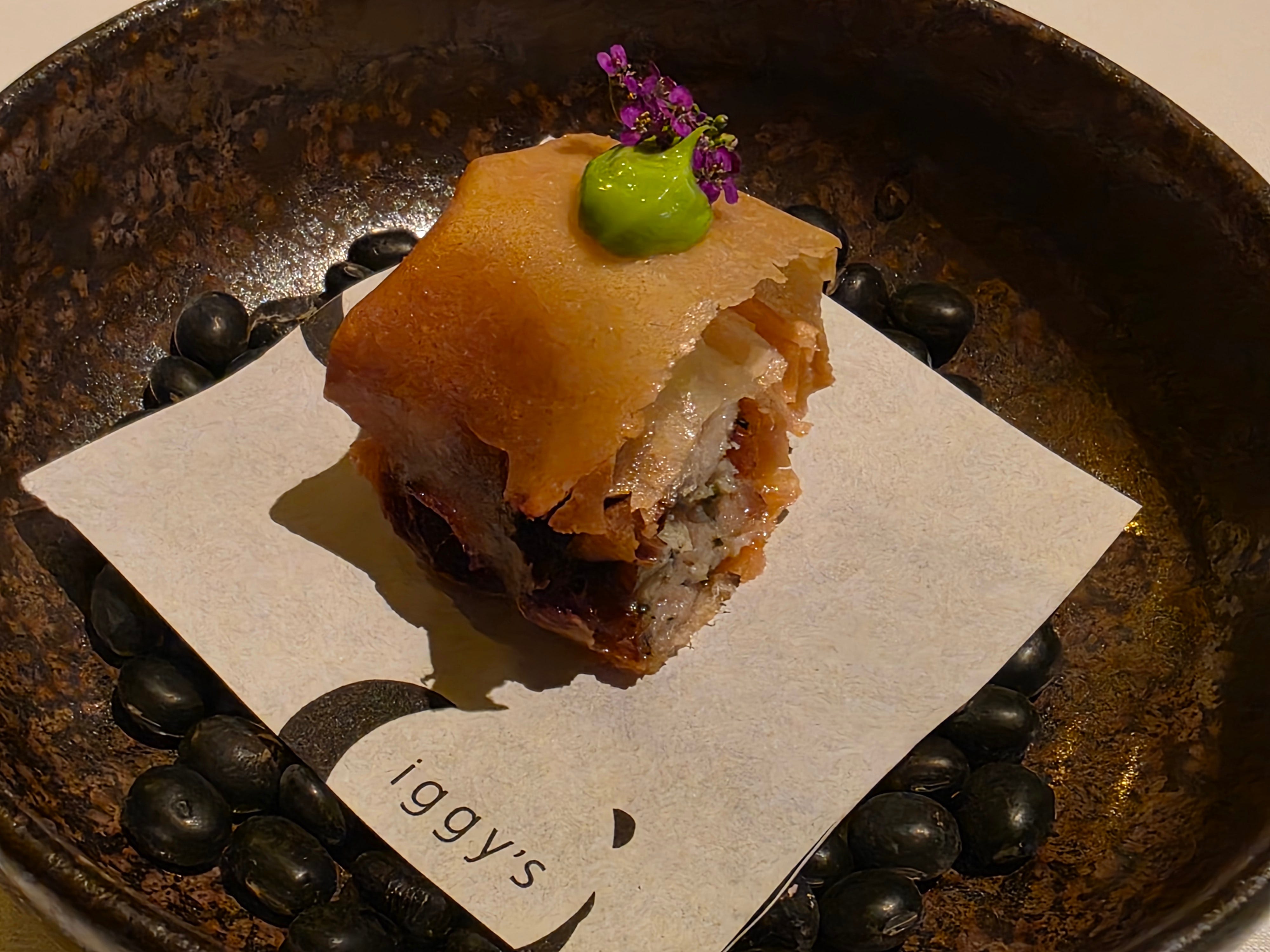
An oyster spring roll followed, topped with celery aïoli.
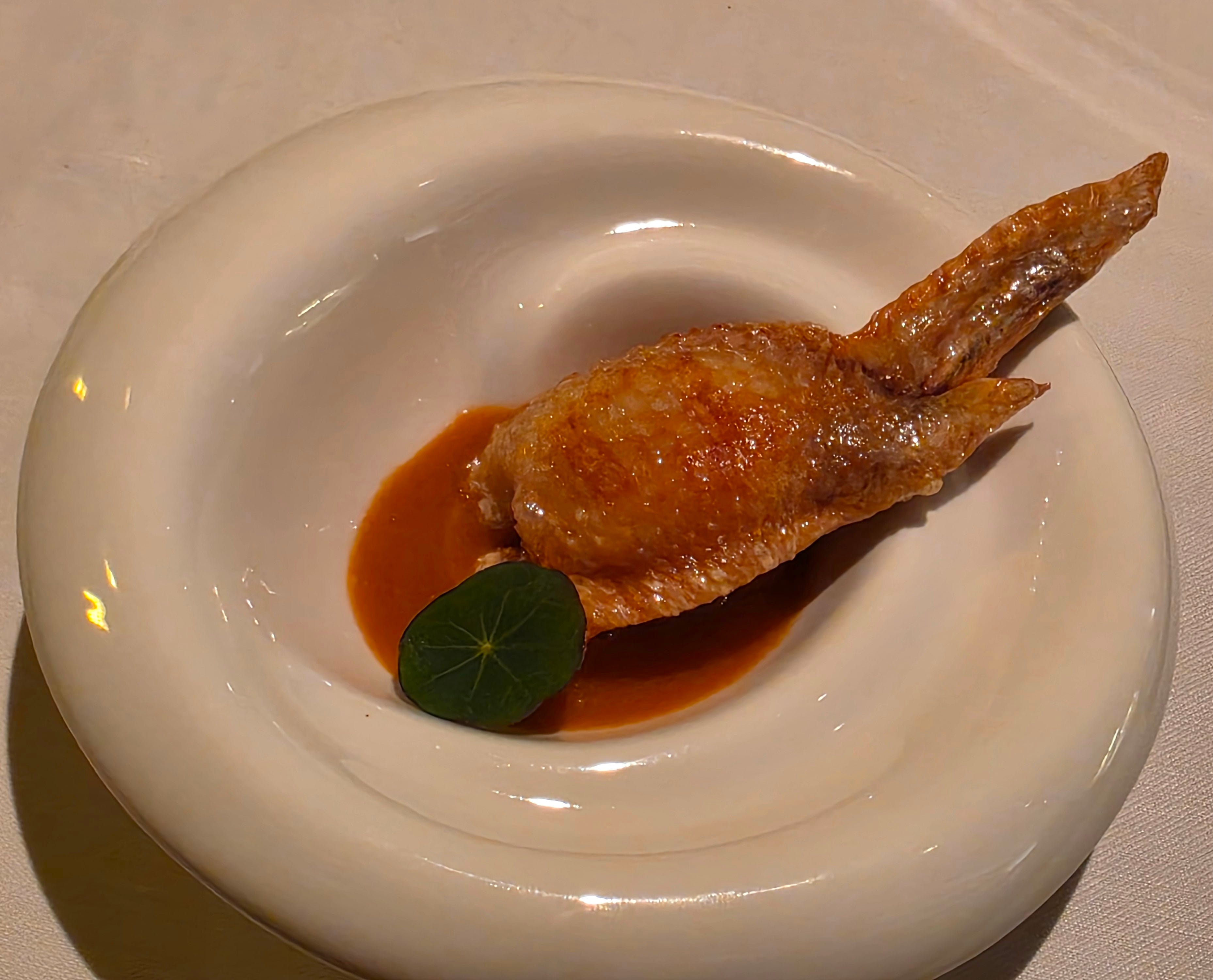
The last of the set was a chicken wing stuffed with shrimp roe in a lobster bisque sauce, its preparation strikingly close to Bo Innovation’s.
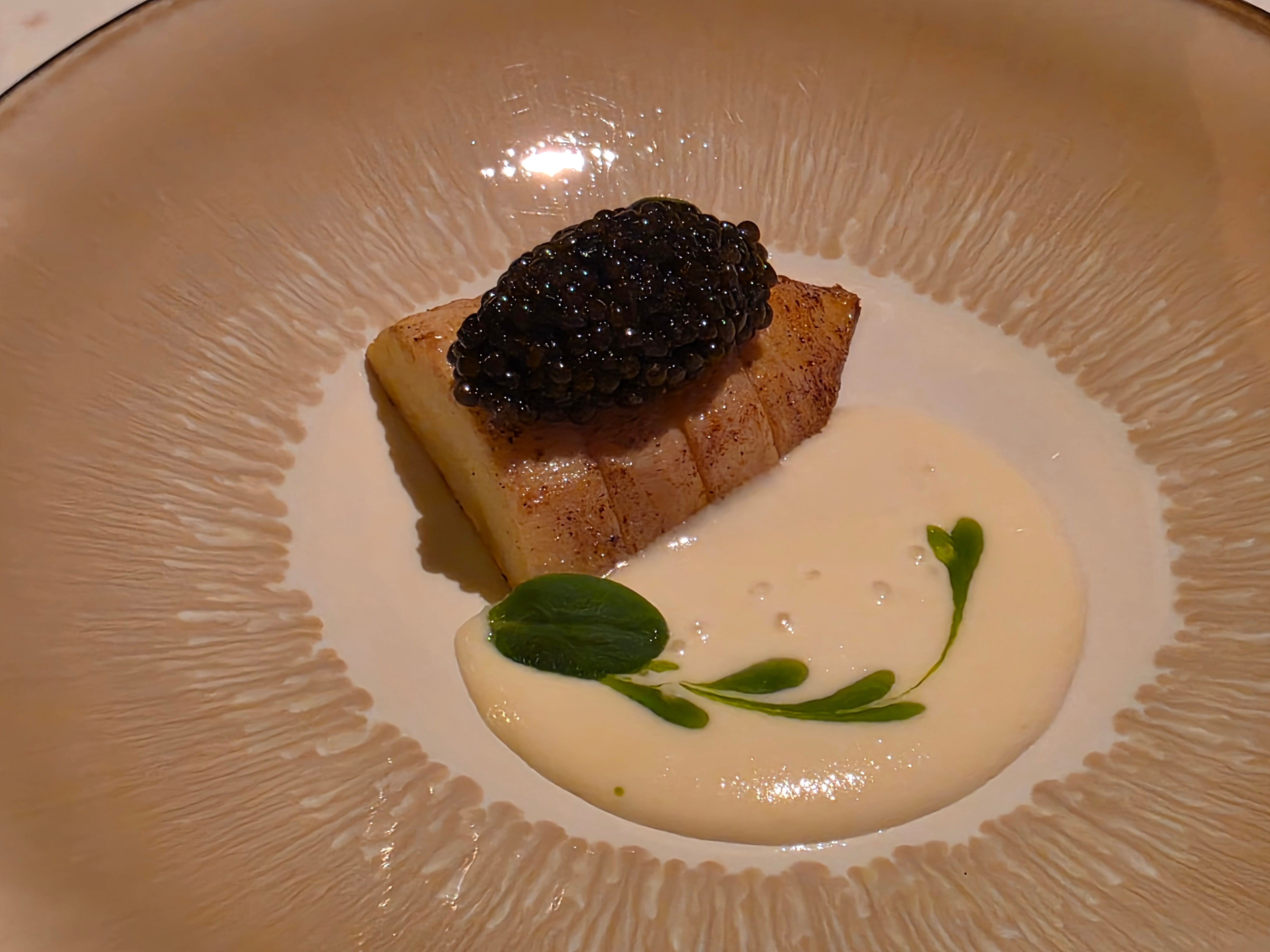
What I assumed would be a fish course turned out to be something else entirely: a shard of crisp bamboo shoot topped with a quenelle of caviar, served with a sweet corn velouté dotted with shiso oil.
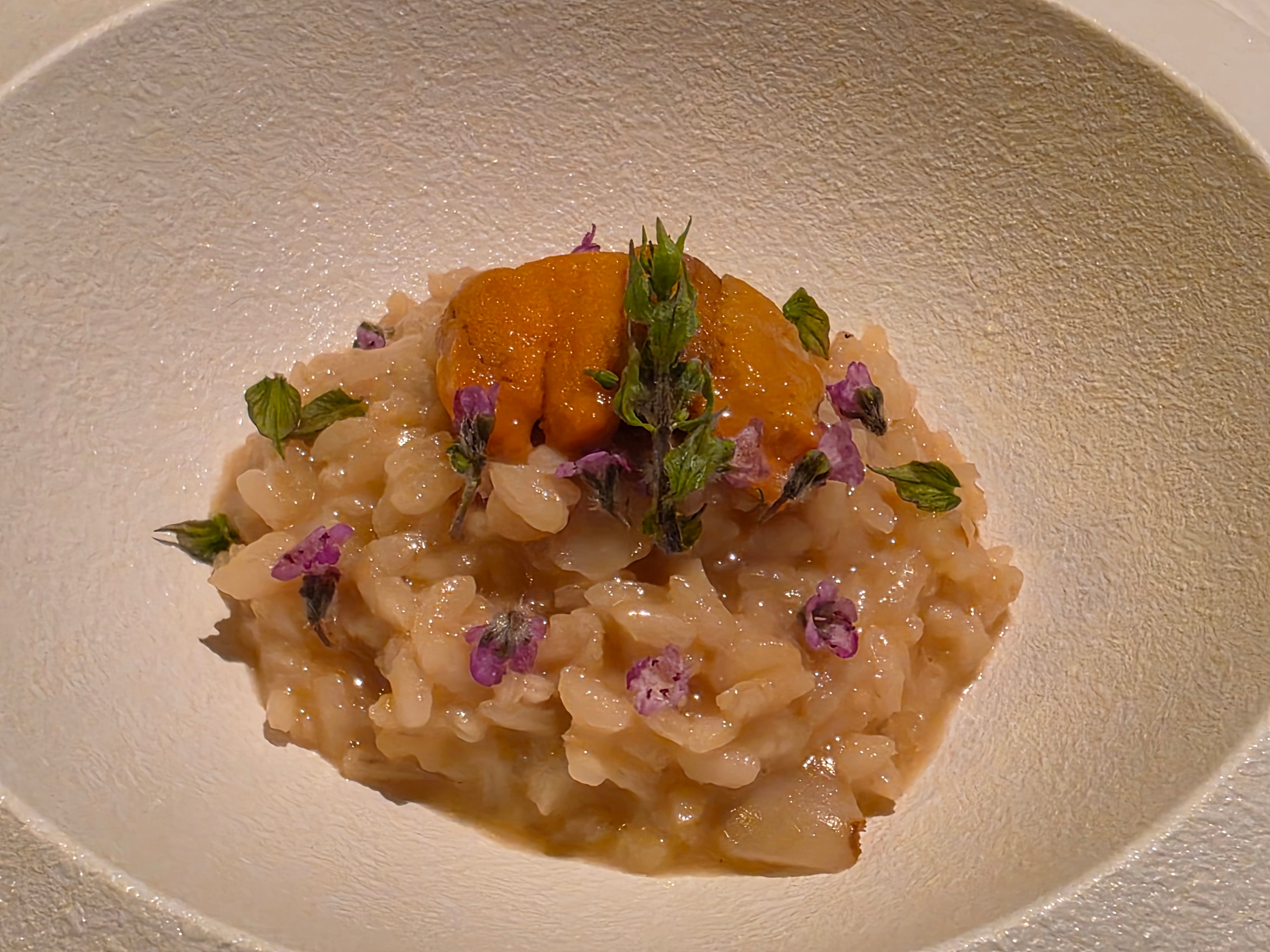
A risotto came next, studded with ginkgo nut, lily bulb, and bafun uni (the bright orange, creamy roe from Hokkaido's small sea urchins). Lush and full of the sea.
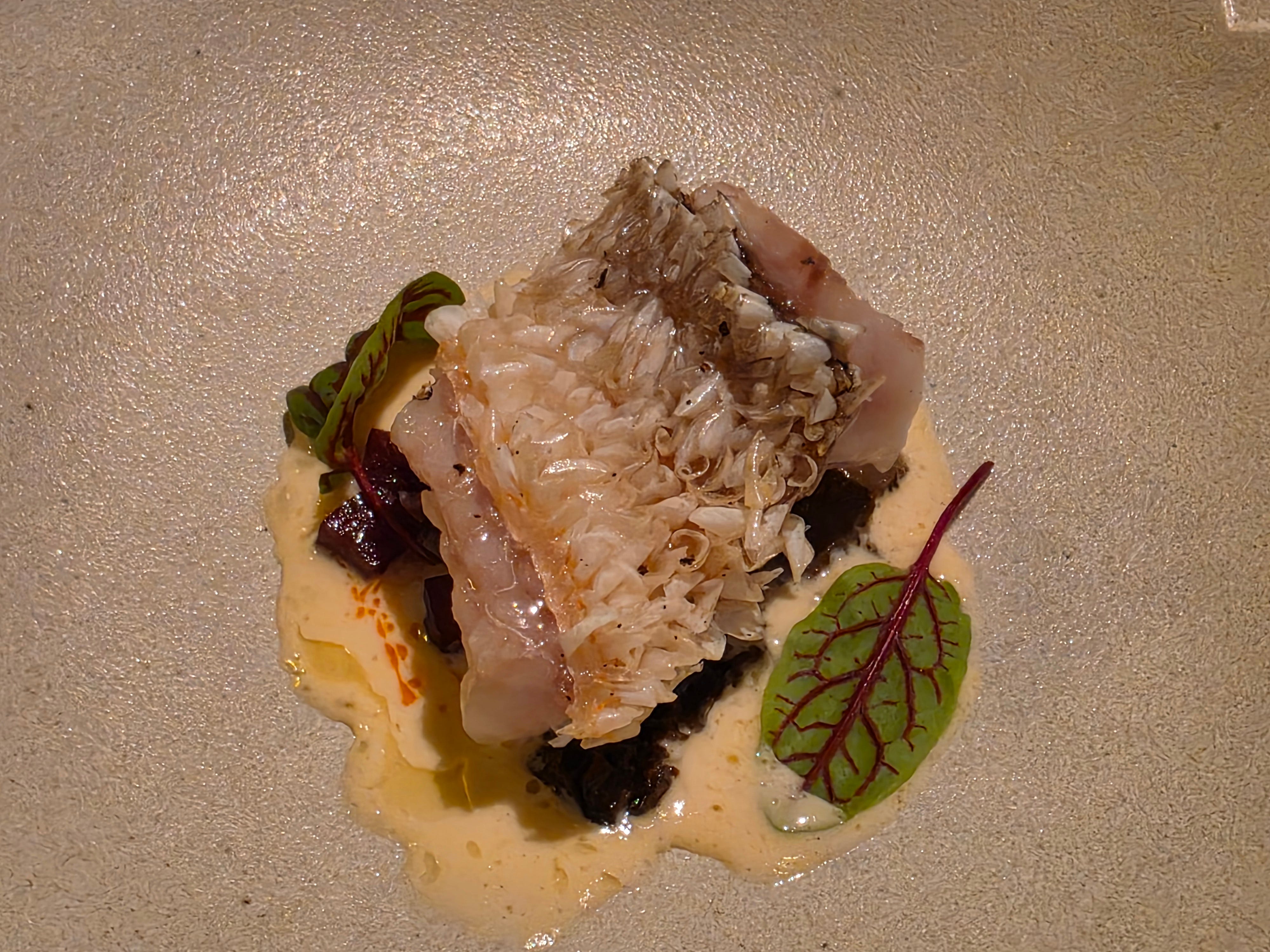
Whenever I see that particular skin texture on fish, I think tilefish, and tilefish it was. The fillet sat on a bed of Ibérico ham and morel mushrooms in a tangy vin jaune (the nutty, sherry-like wine from France's Jura region), finished with a sorrel leaf.
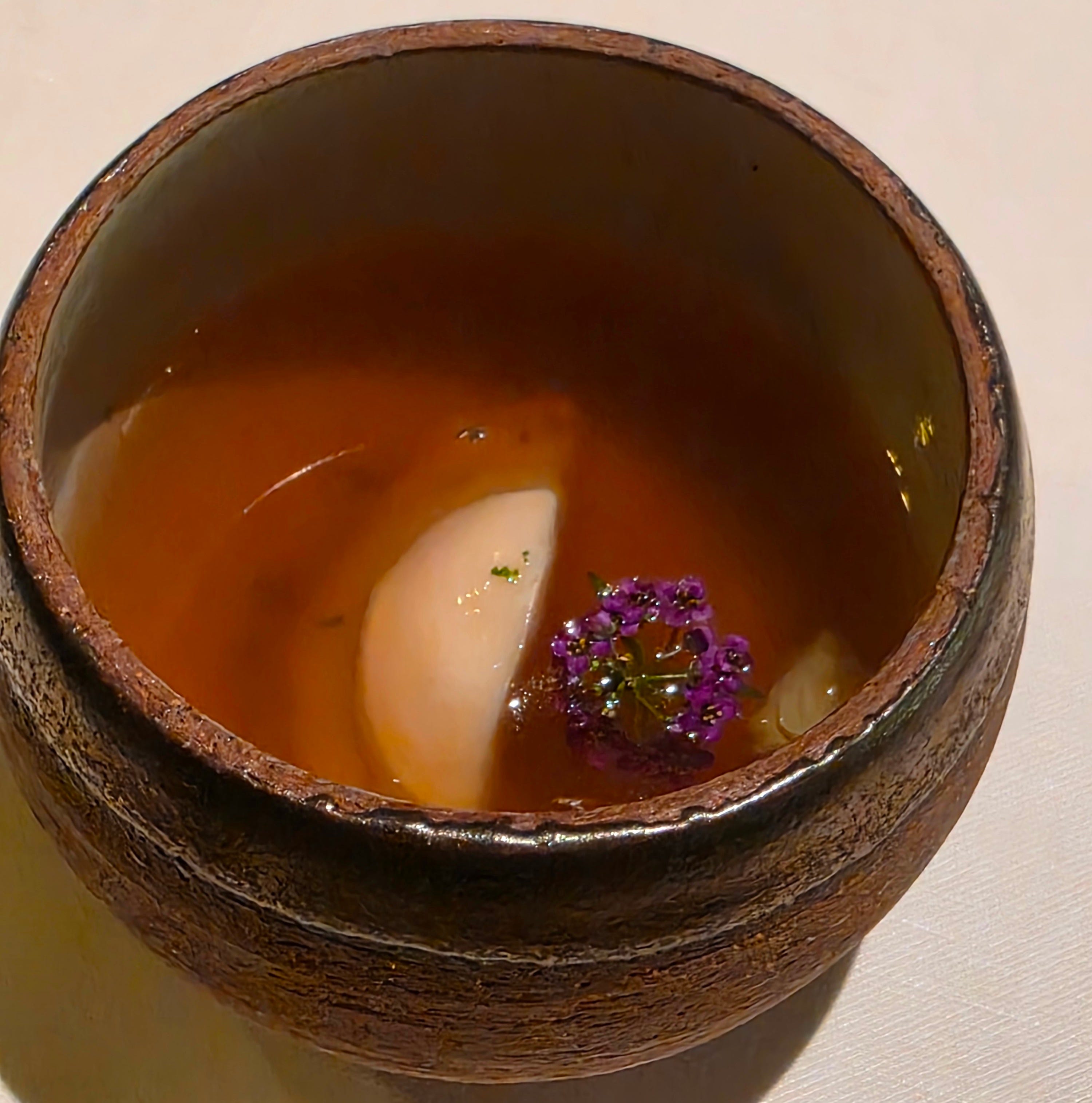
Half an Australian abalone followed, served in a concentrated chicken consommé that had been reduced to an almost syrupy intensity.
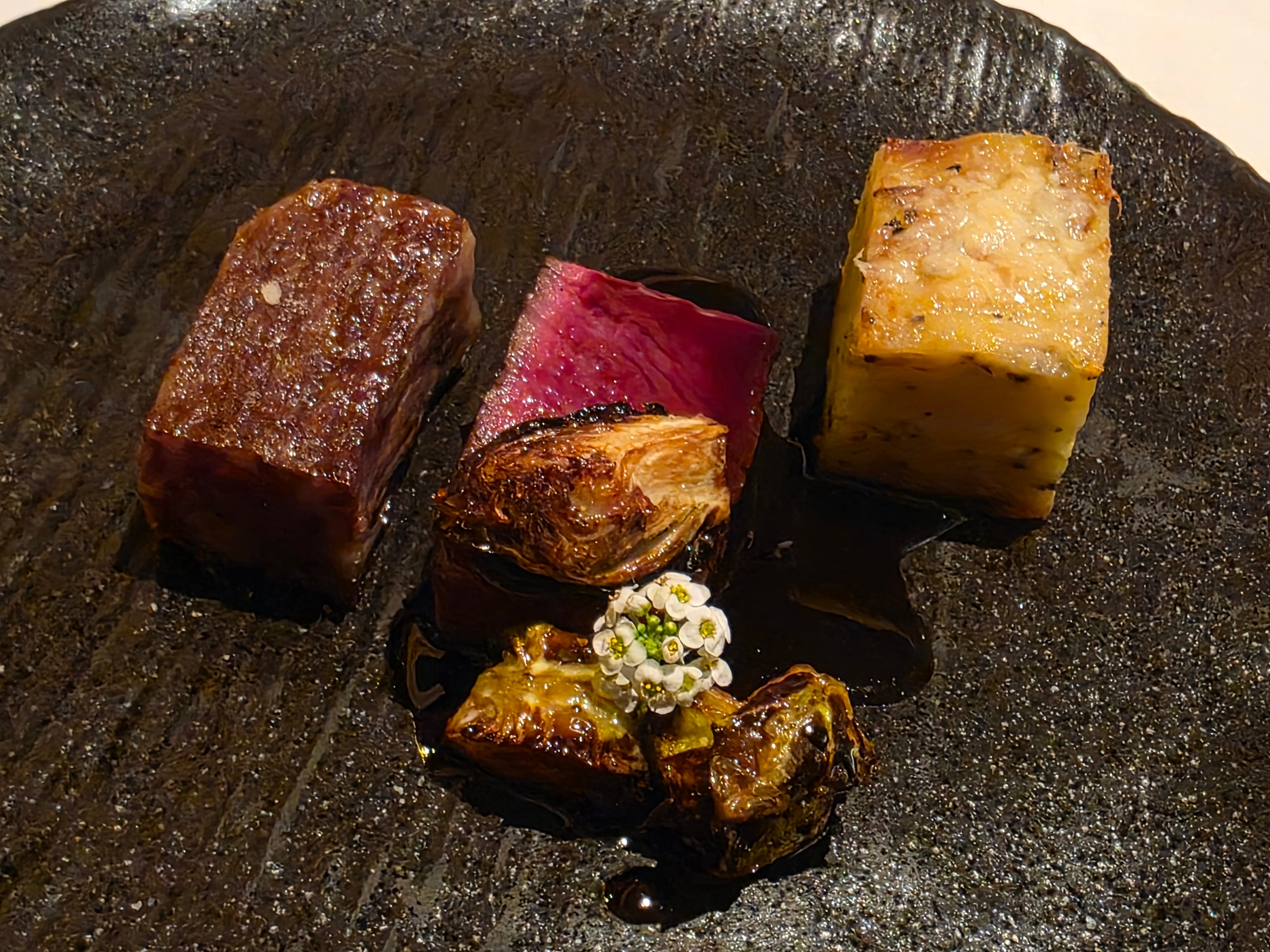
Given the choice between beef and duck, I went with the tried and true: a small piece of A5 wagyu striploin, an MB7 tenderloin, a cube of potato gratin, and a Brussels sprout. It looked modest on the plate but was extraordinarily rich, fatty, and filling.
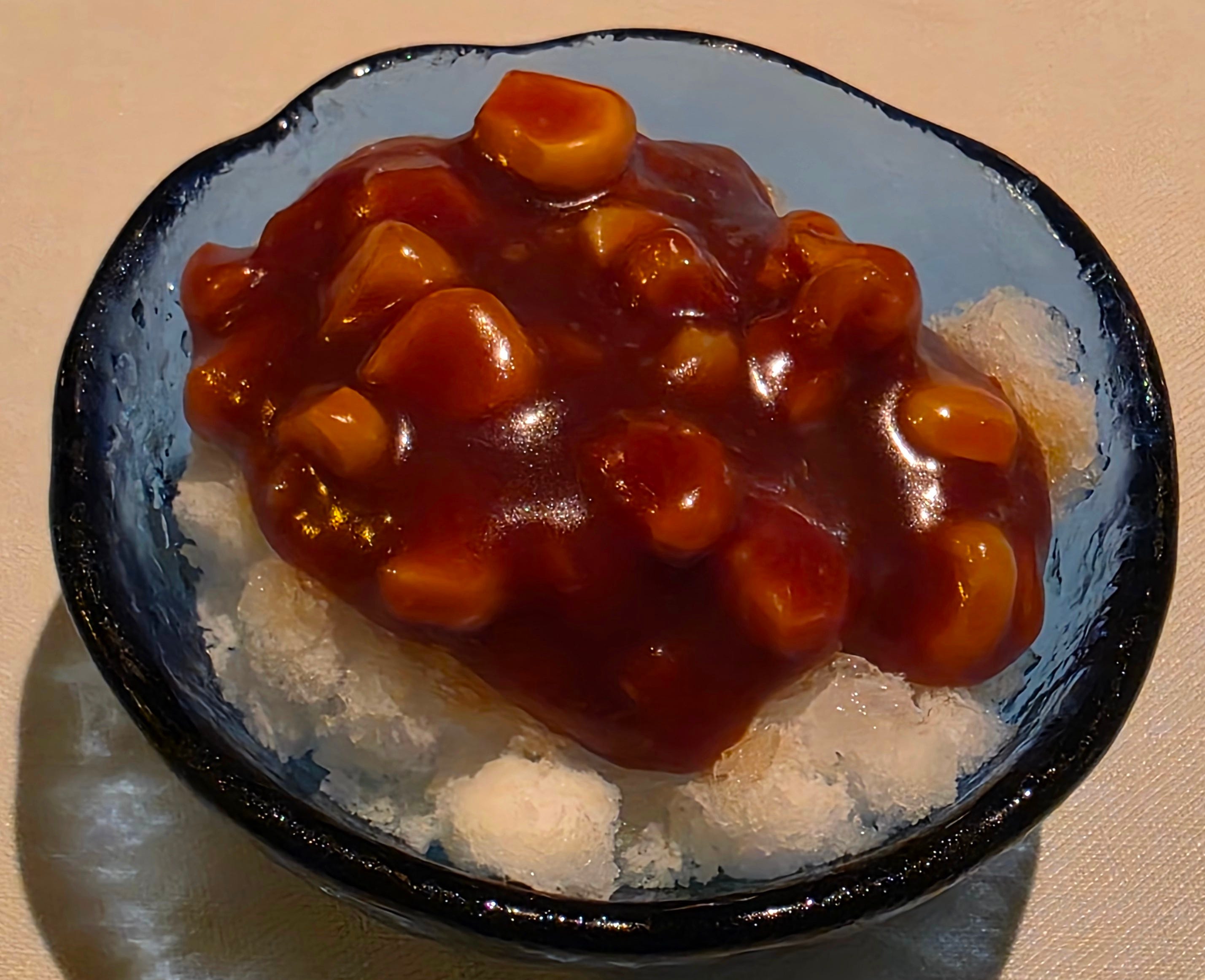
The one dish that did not work for me was the palate cleanser: a thick caramel with corn spooned over ice. The flavour combination called to mind a country fair, but the sticky, intense caramel did little to actually clear the palate.
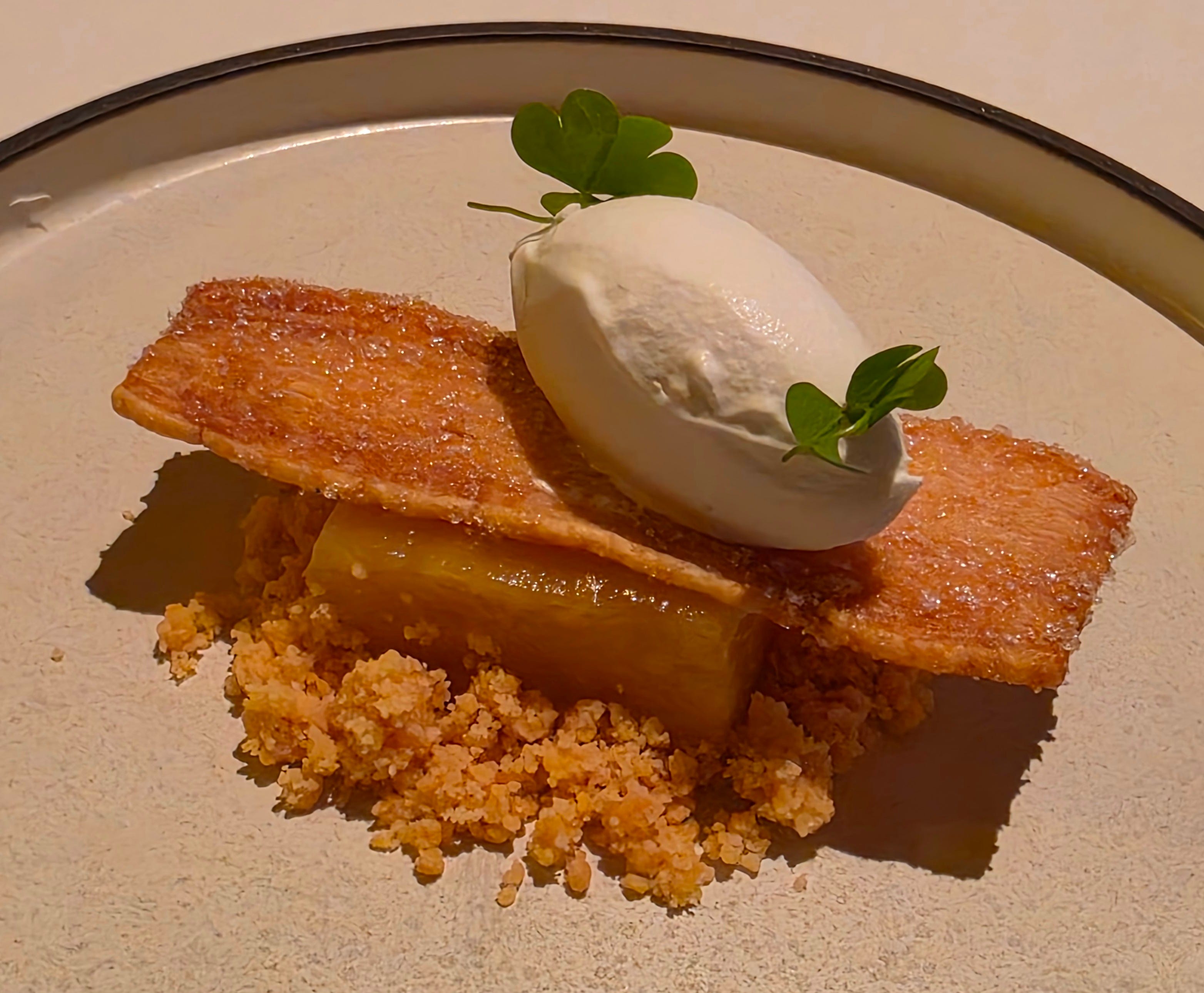
Finally, Iggy's take on the Singaporean pineapple tart. A square of pineapple jelly with cookie crumble and a chewy piece of dried pineapple, topped with coconut sorbet. The sorbet worked for me, but that was about it. I have never been much of a fan of Singaporean pineapple tarts to begin with.
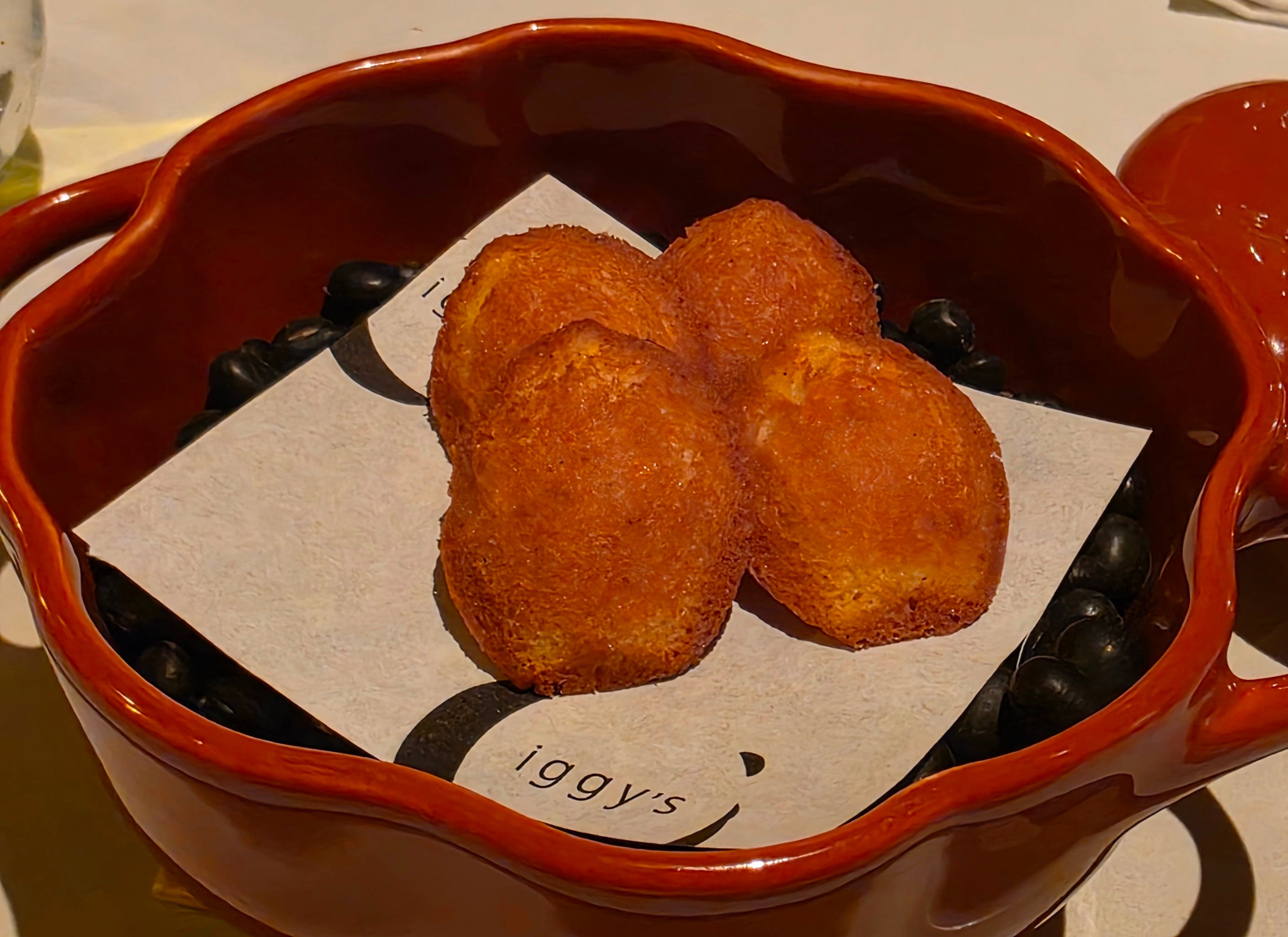
The petit fours were citrusy madeleines, a pleasant enough send-off.
Overall, a solid meal. The tilefish was the clear highlight, and the oyster spring roll was not far behind. The rest of the menu held together well without leaving a deep impression. Worth a visit for the wine programme, the food is good, but not particularly memorable.
Total damage: $1000 SGD/2 people