
Kappo Rin sits next to Sushi Shikon at The Landmark Mandarin Oriental, but the meal takes a different route than a traditional sushi omakase. While Shikon centres on sushi; Kappo means “cut and cook”, and Kappo Rin gives the chef room to move between raw and cooked dishes, using several techniques across a seasonal, multi-course menu. At Rin, the small counter is part of the idea: diners can watch the cooking and interact with the chef. The emphasis is on Japanese ingredients, seasonality and a progression of dishes rather than sushi alone. I prefer this wider range of cooking, and our dinner made good use of it.
Rin opened in 2019 as a collaboration between the group behind Sushi Shikon and Masahiro Yoshitake of Tokyo’s Sushi Yoshitake. The current head chef, Masaru Furukawa, led our meal. The Yoshitake connection gives the restaurant an impressive lineage, but I would not assume he is present in the Hong Kong kitchen. Furukawa is the chef whose work we experienced.
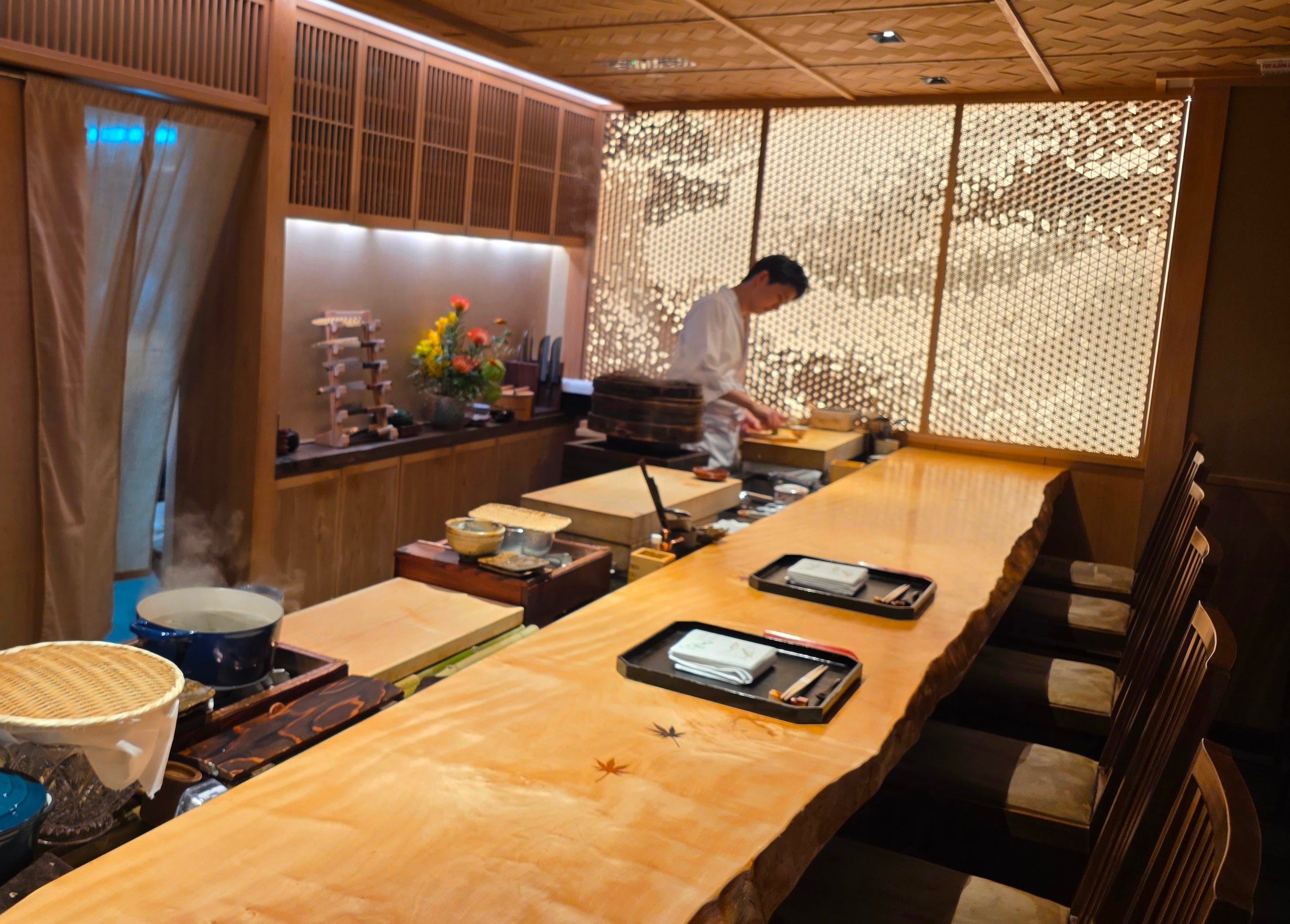
The eight-seat hinoki counter mirrors the one at Shikon. Rin’s busier format gives the chefs more to do: different tools and stations for the grill, steamer, fryer and pots of cooking liquid. Watching the preparation was part of the evening, as was seeing the ingredients before they reached the plate. We were the only reservation that night, so the two of us had the chef and sous-chef to ourselves. Furukawa was warm and easy to talk to.
Our menu had nine courses, all prepared in front of us. We ordered a sweet, easy-drinking sake and settled in.
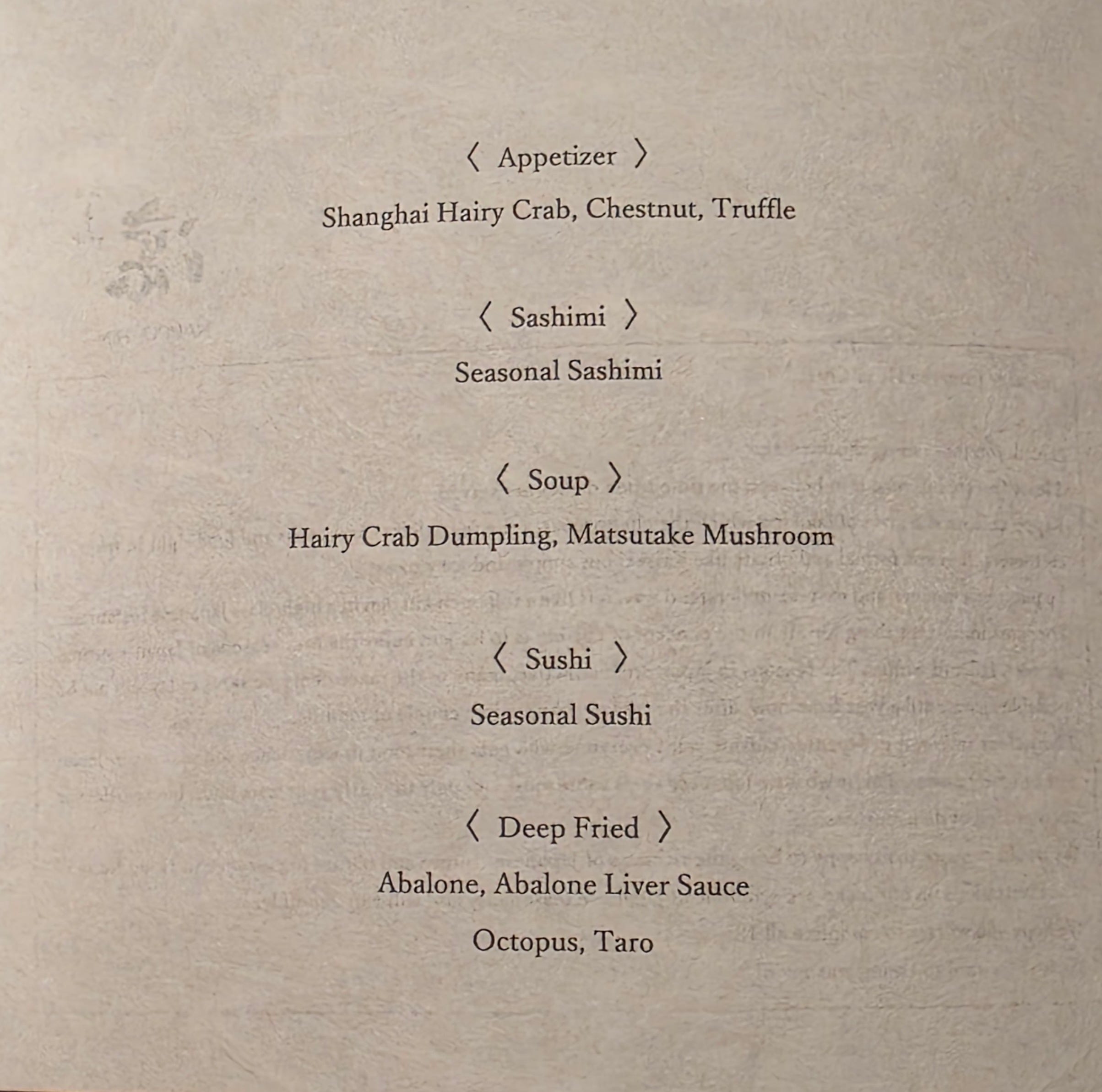
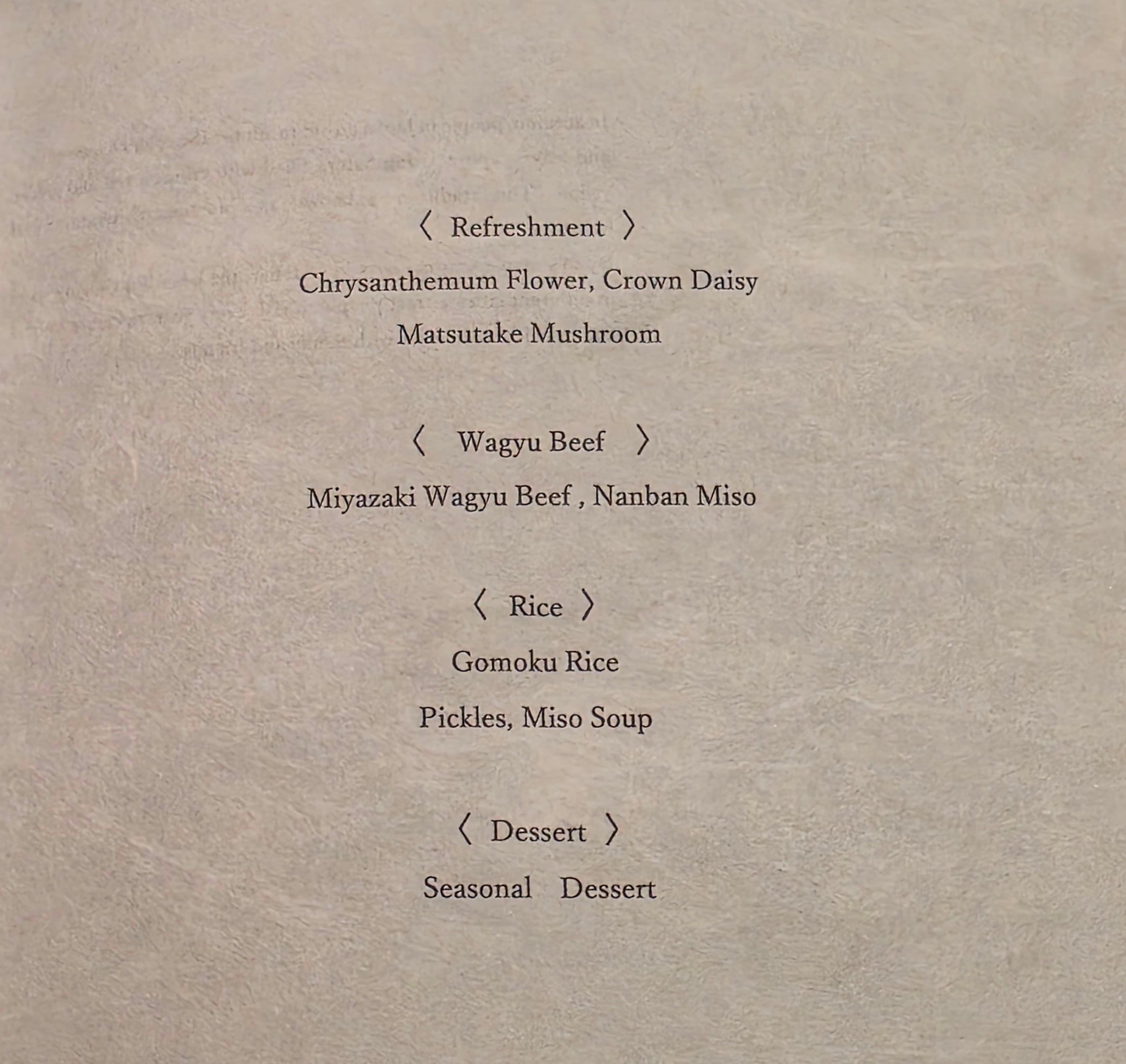
The menu was a nine course progression, all prepared directly in front of us.
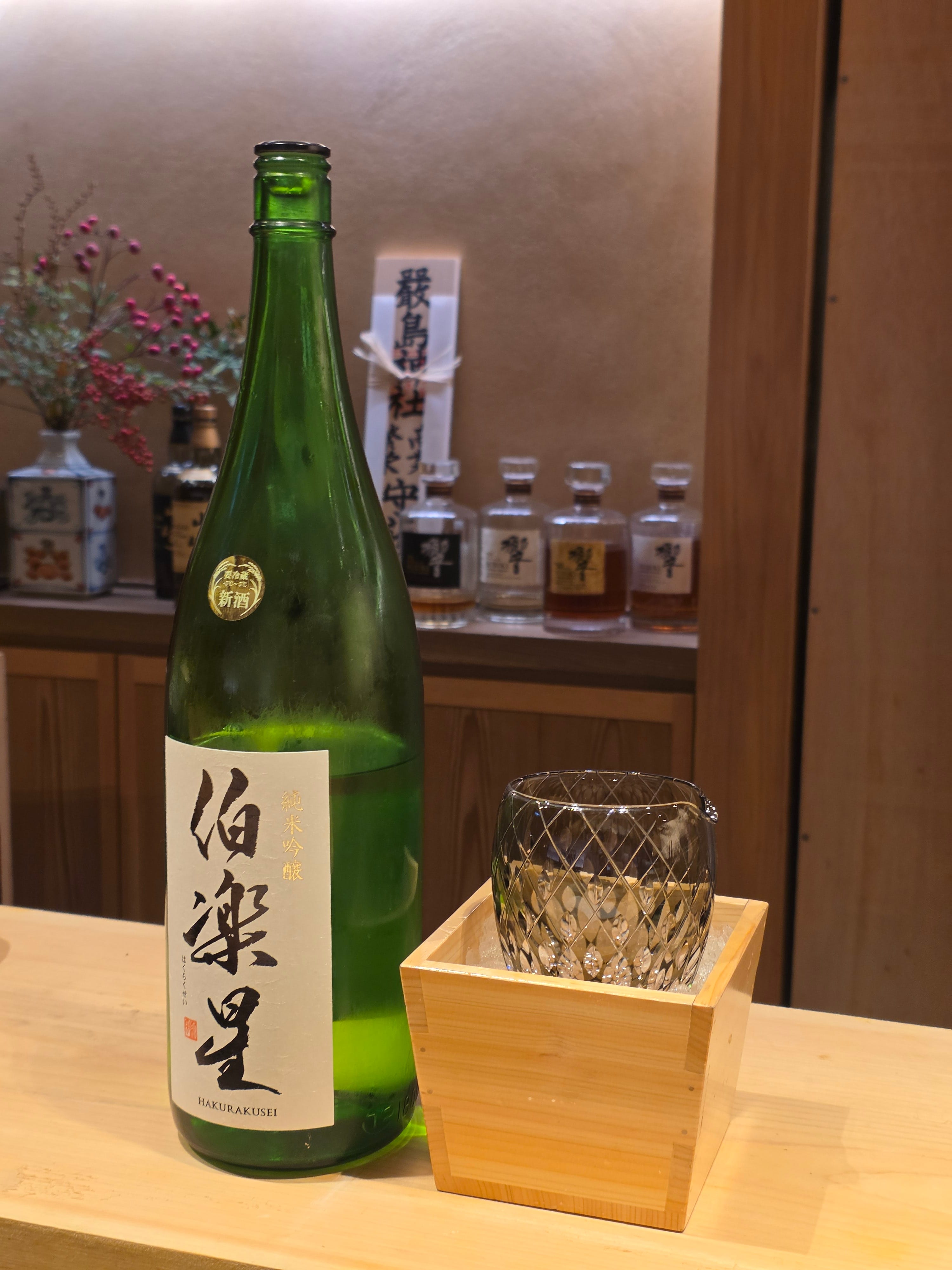
We went with a sweet, easy-drinking sake, and waited for the show to unfold.
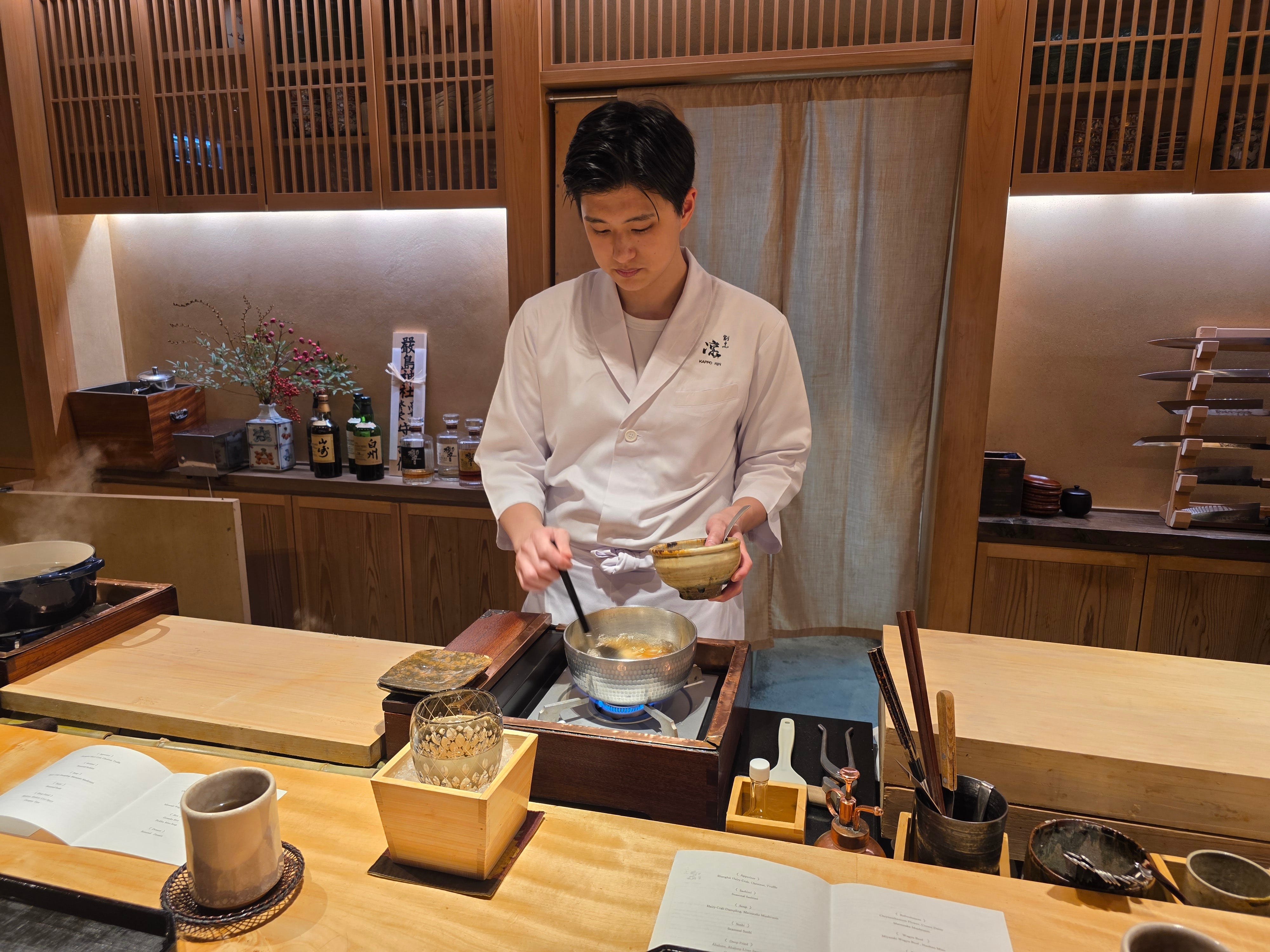
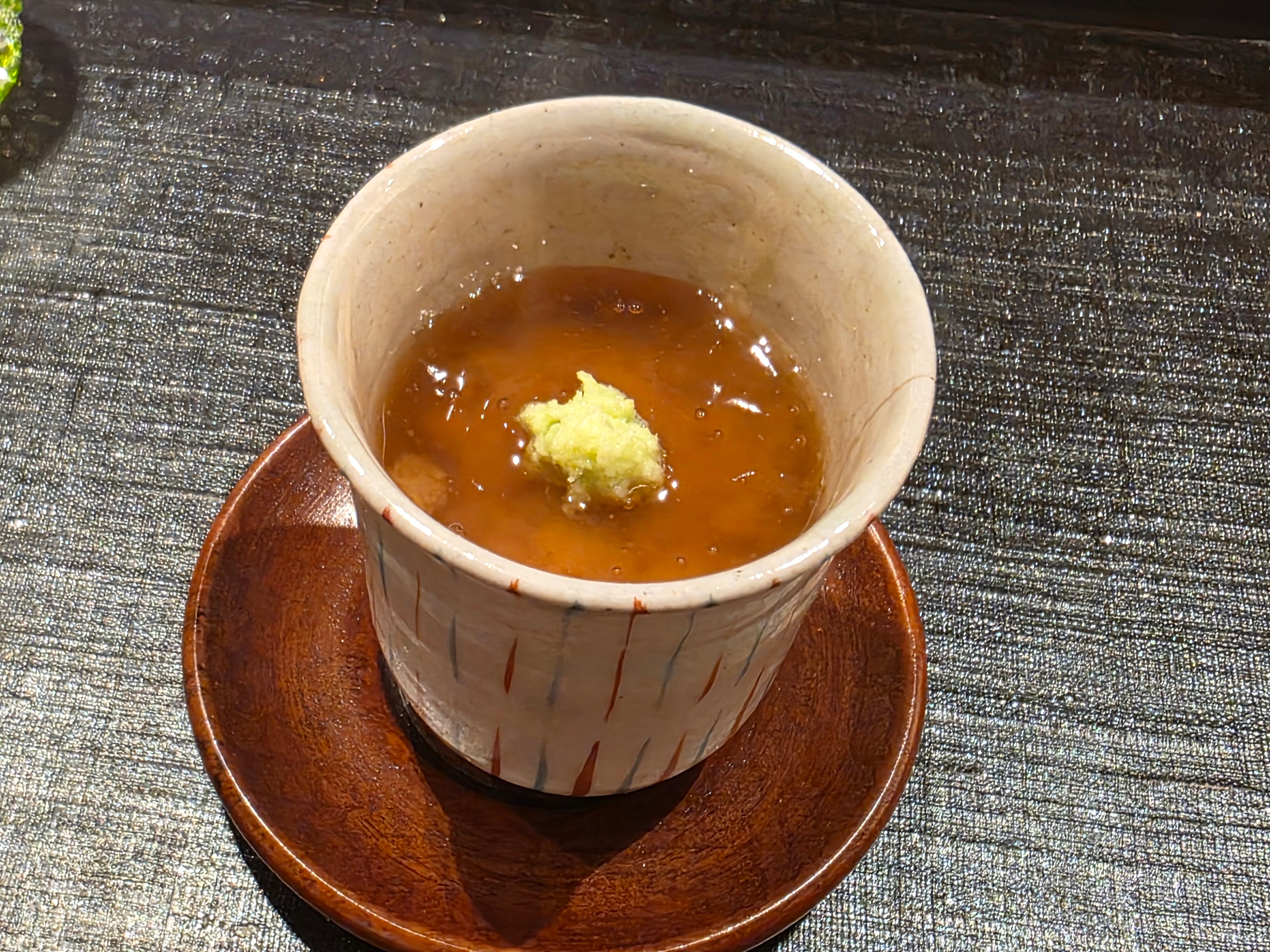
The opening dish drew on Chinese cooking, layering Shanghainese hairy crab, chestnut and truffle into a savoury custard. It was a rich start, with the crab at the centre of the dish.
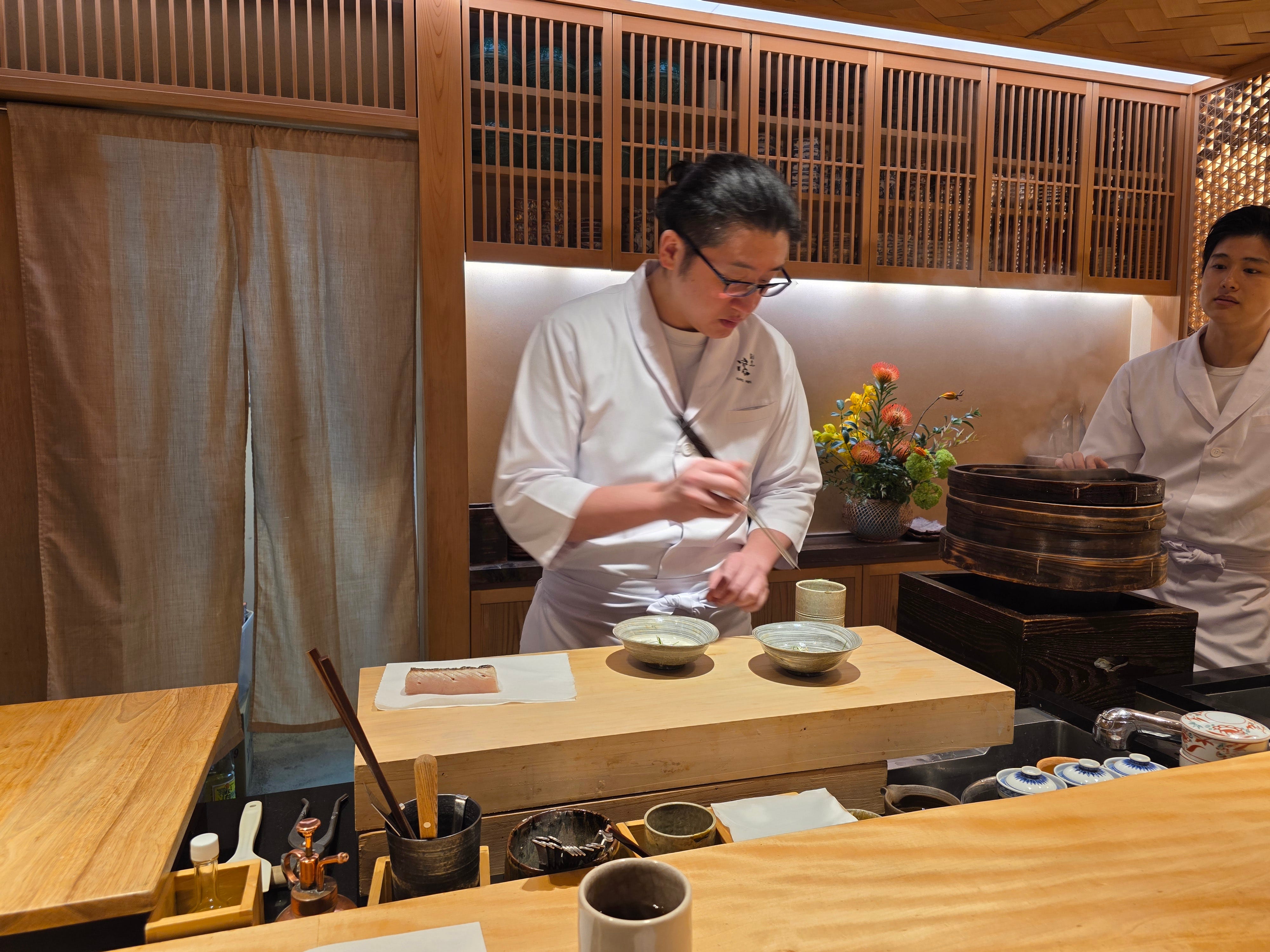
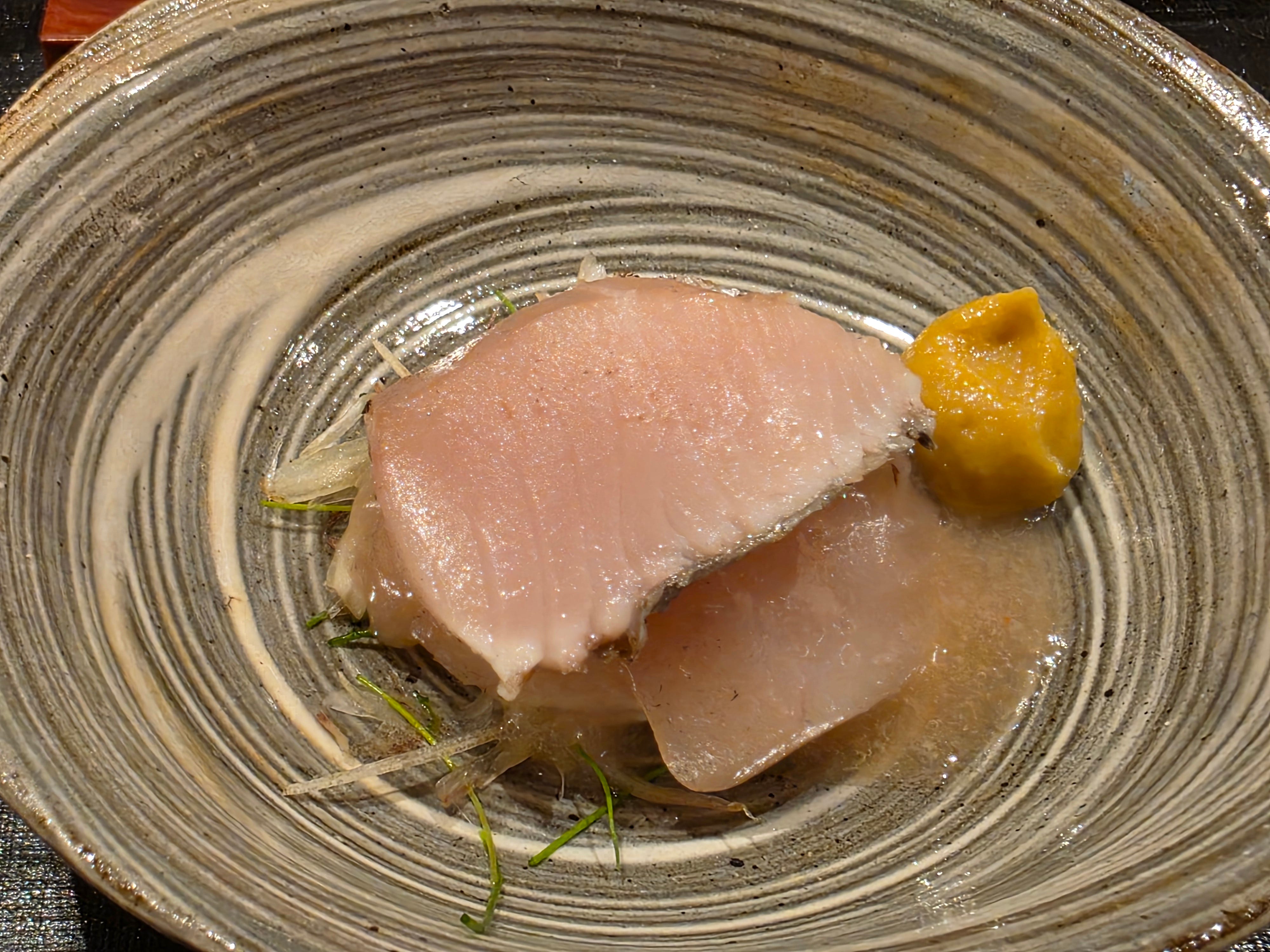
Next came lightly smoked Spanish mackerel with a sweet, fiery mustard sauce. Furukawa prepared it at the counter. The smoke and mustard gave the fish a livelier edge than a plain grilled course would have had.
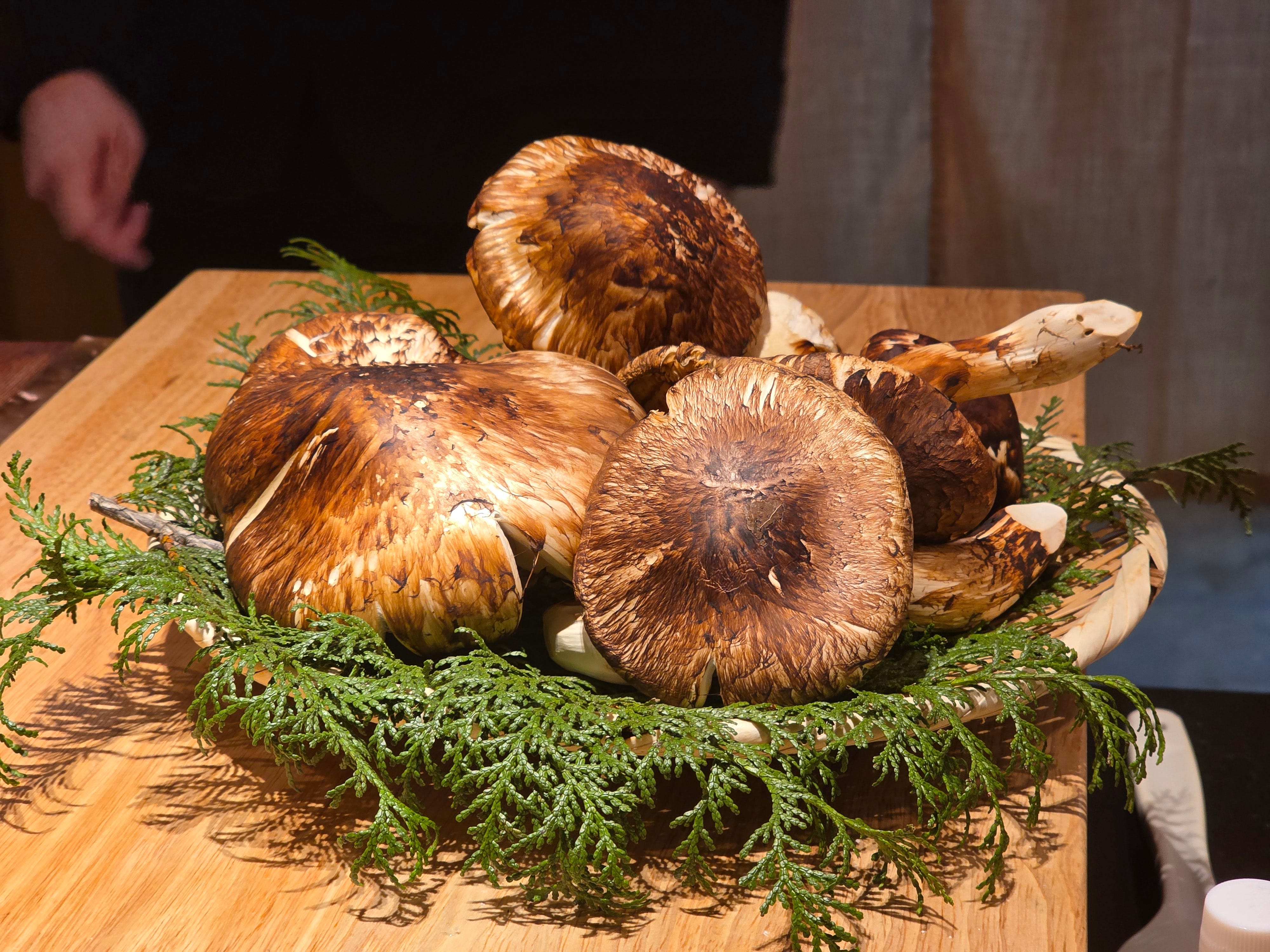
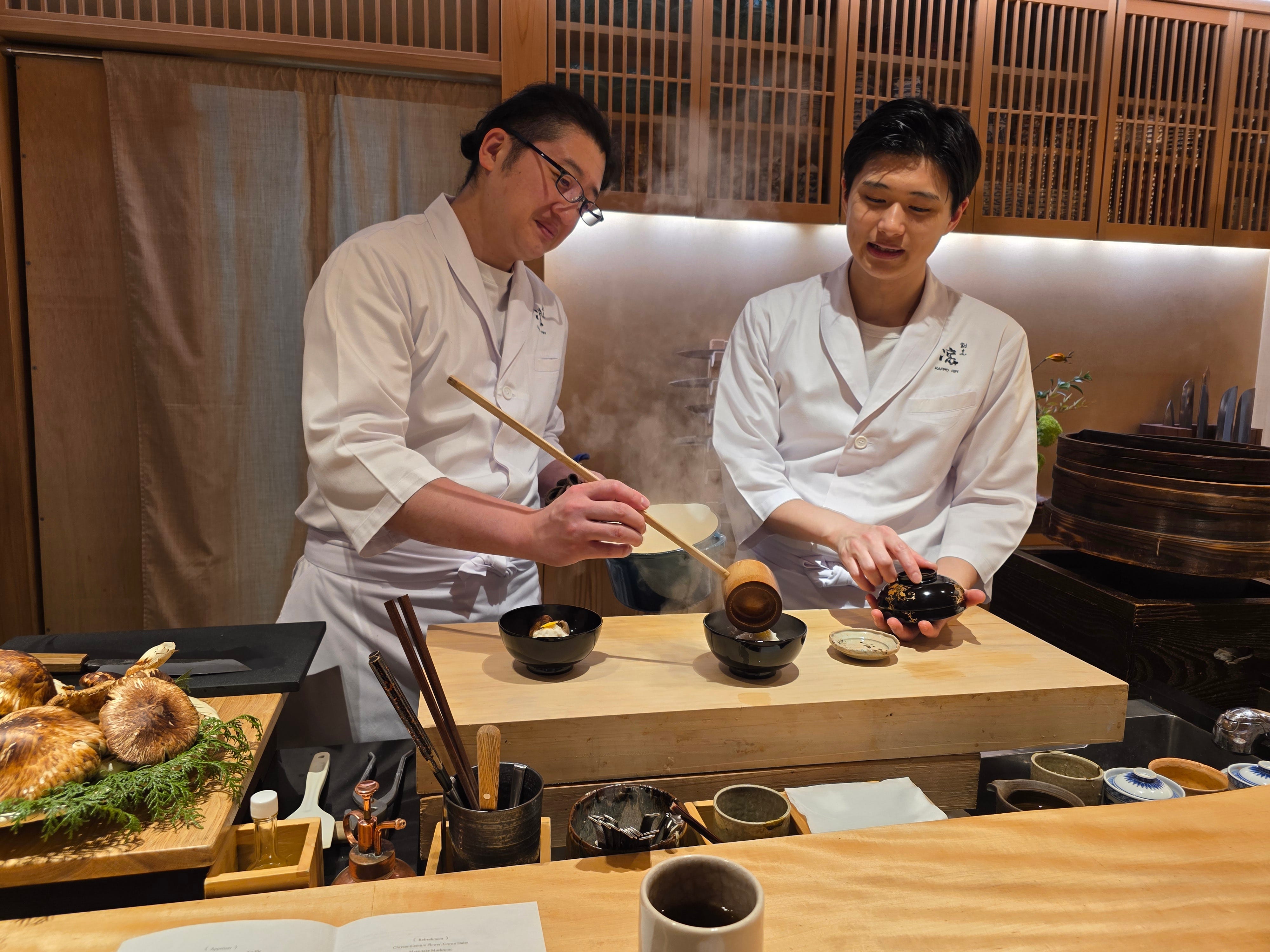
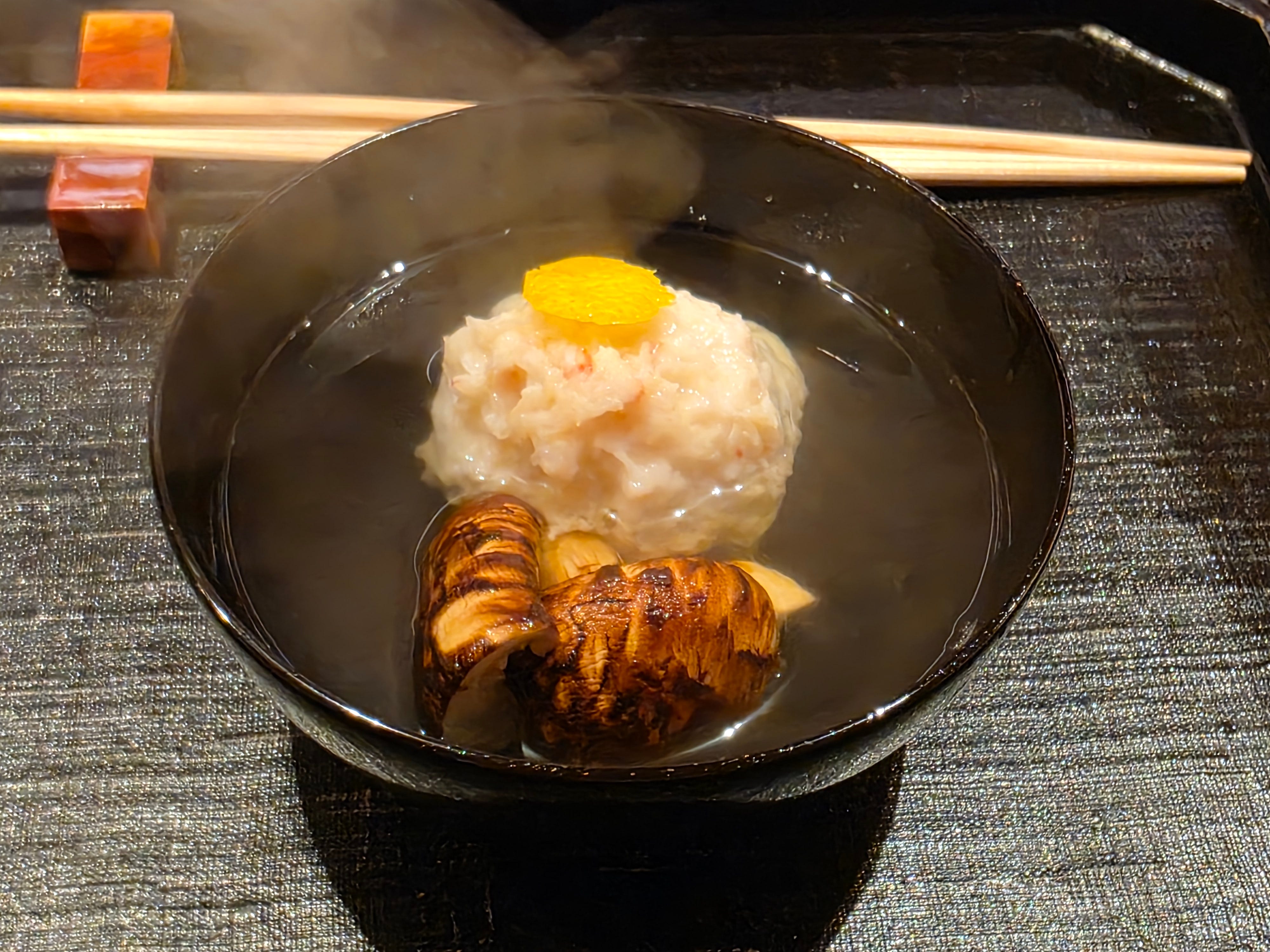
Matsutake mushrooms appeared before the next dish: charcoal-grilled mushrooms and a dumpling filled with hairy crab and fish mousse, served in a clear savoury broth. The broth kept the dish light while the dumpling brought a softer, richer note.
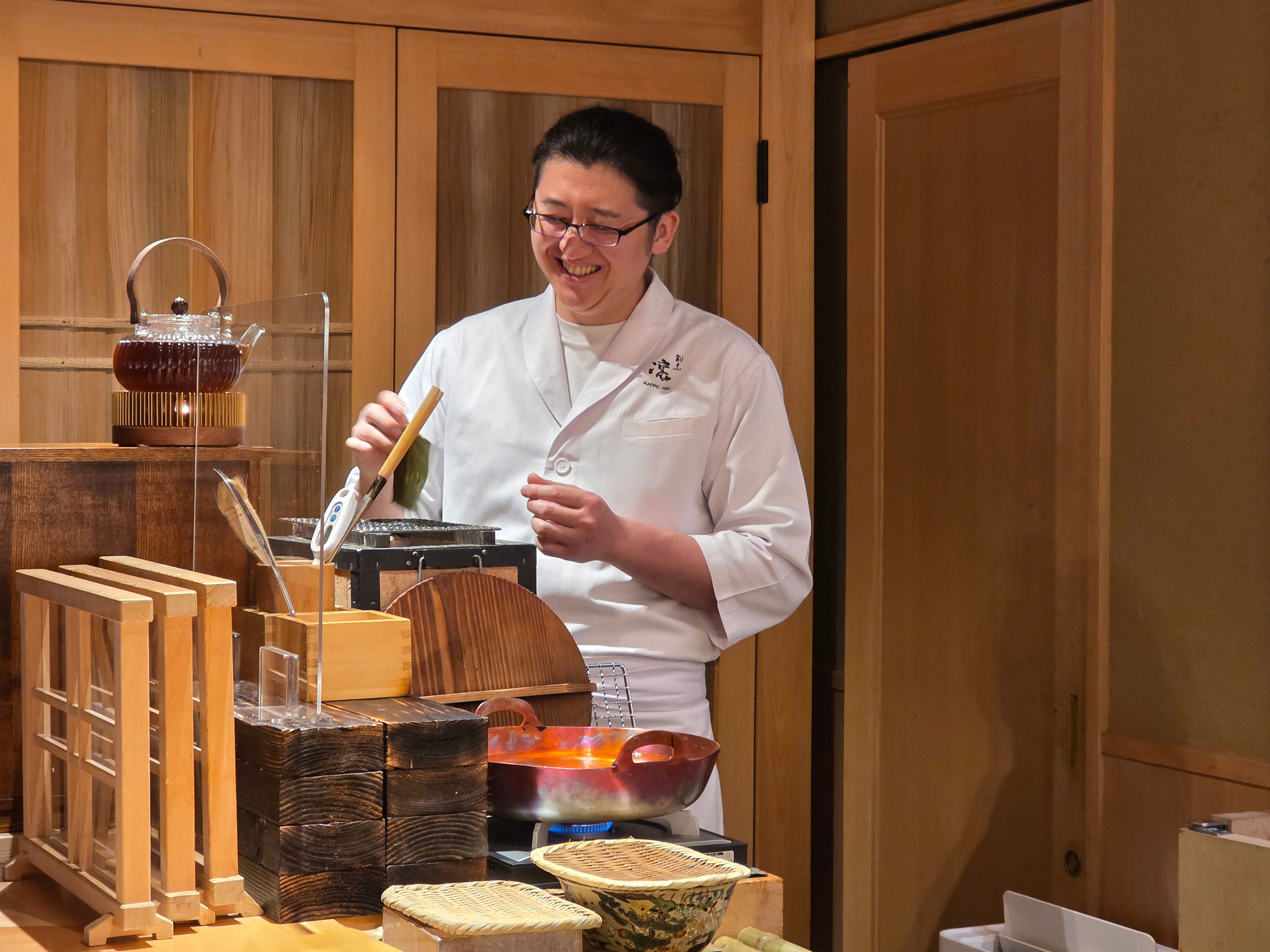
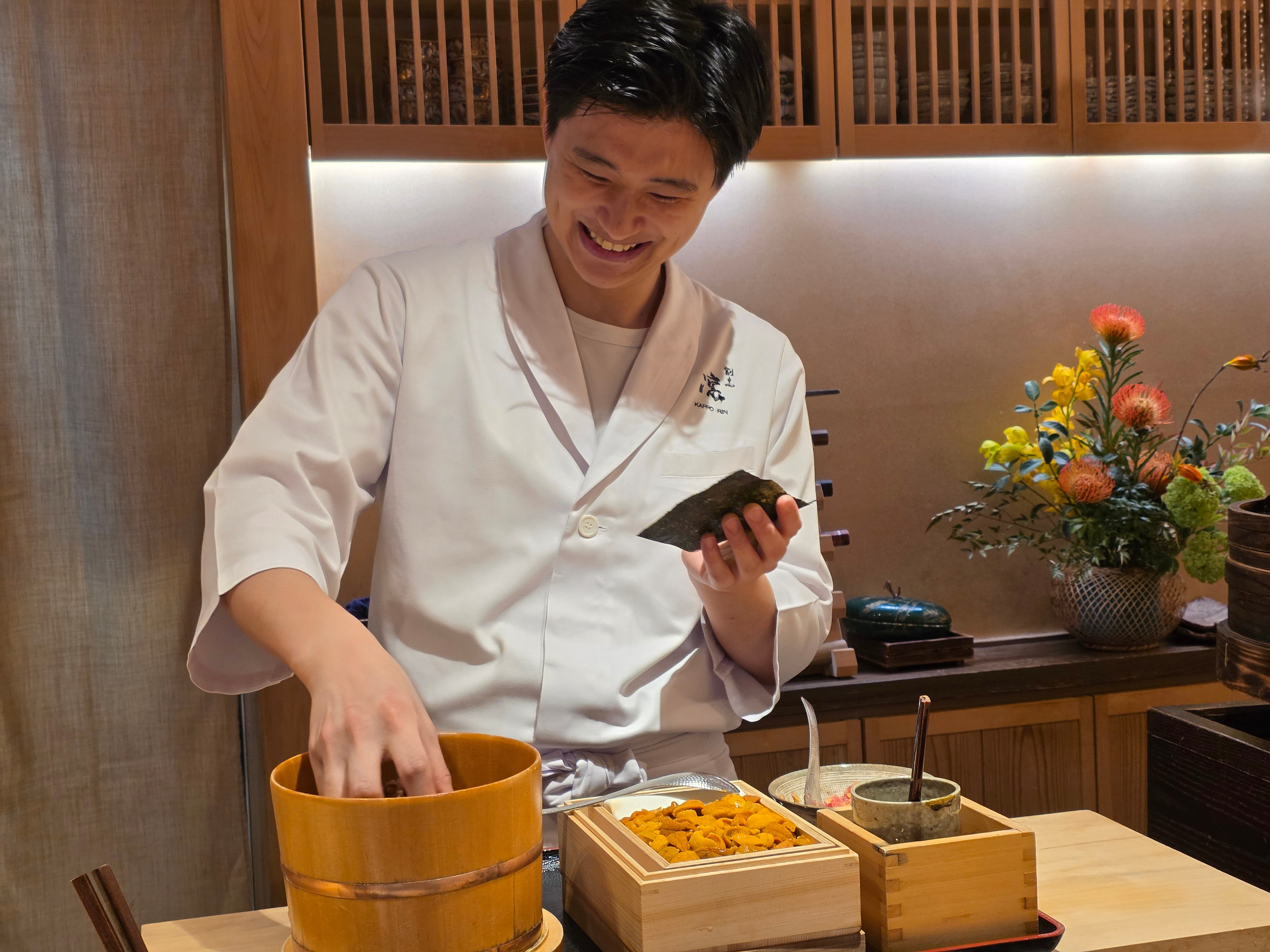
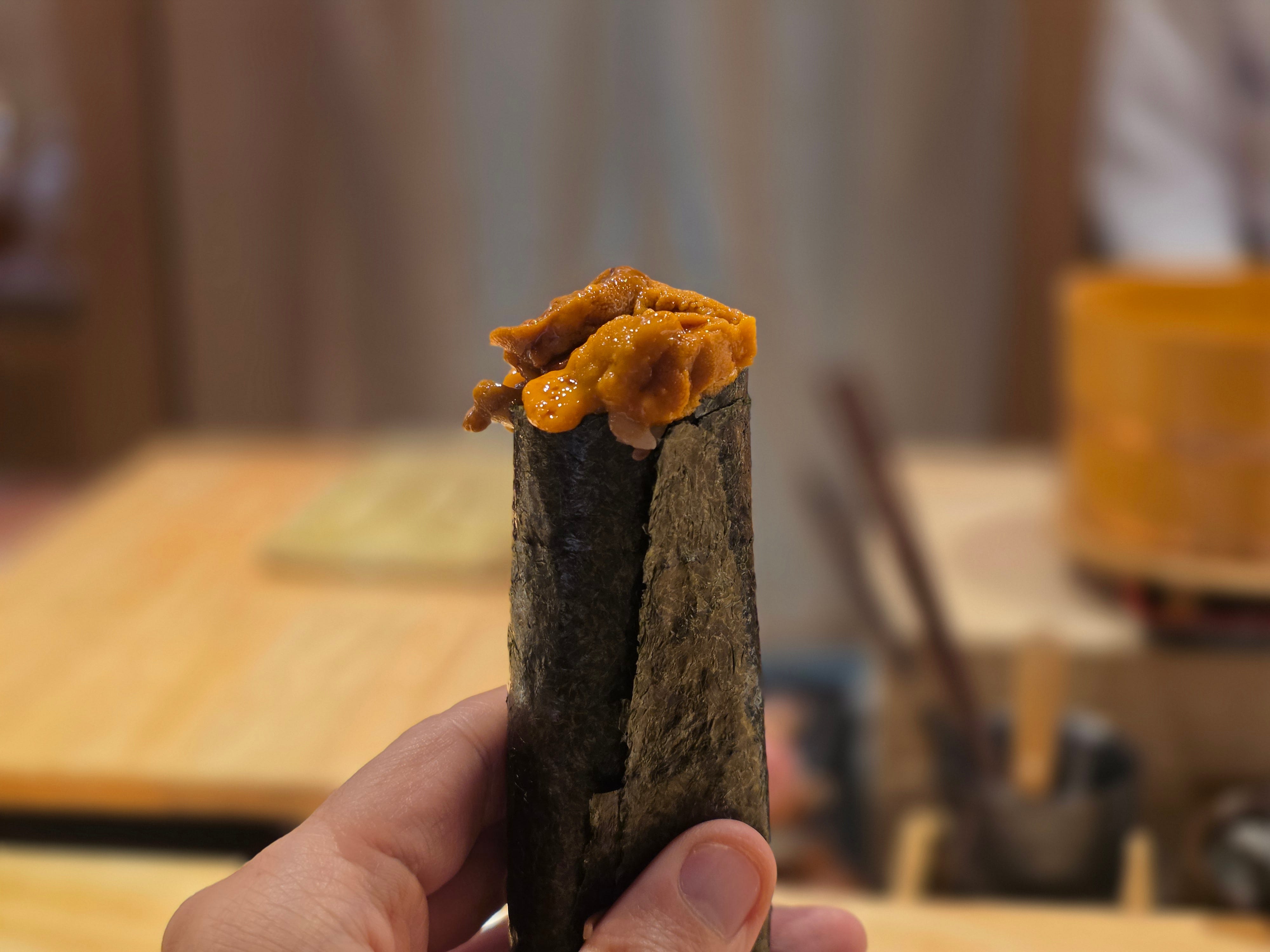
The chefs were all smiles as they made a hand roll of minced tuna, finished with a generous topping of uni. It was a simple, satisfying pause in the progression.
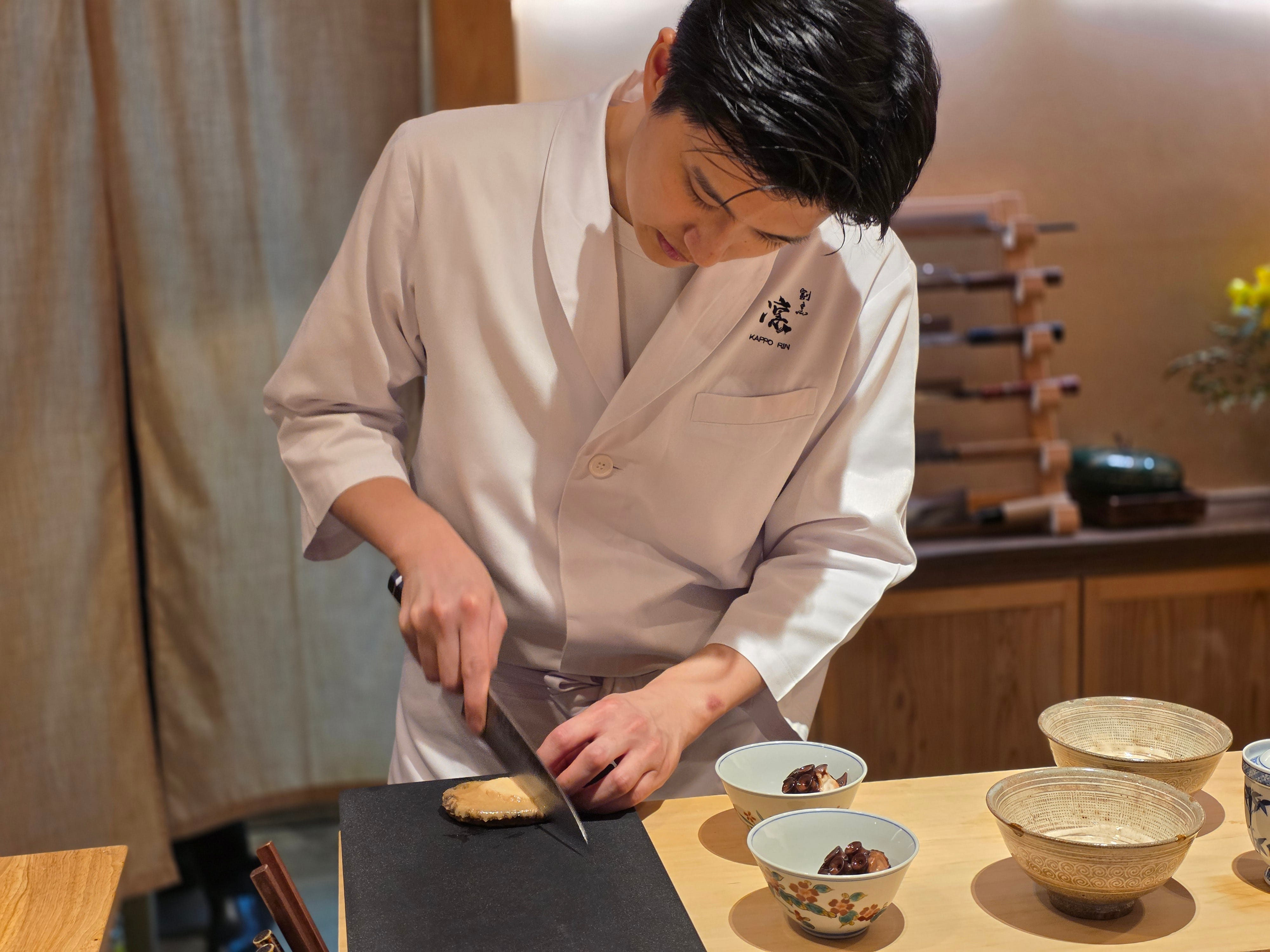
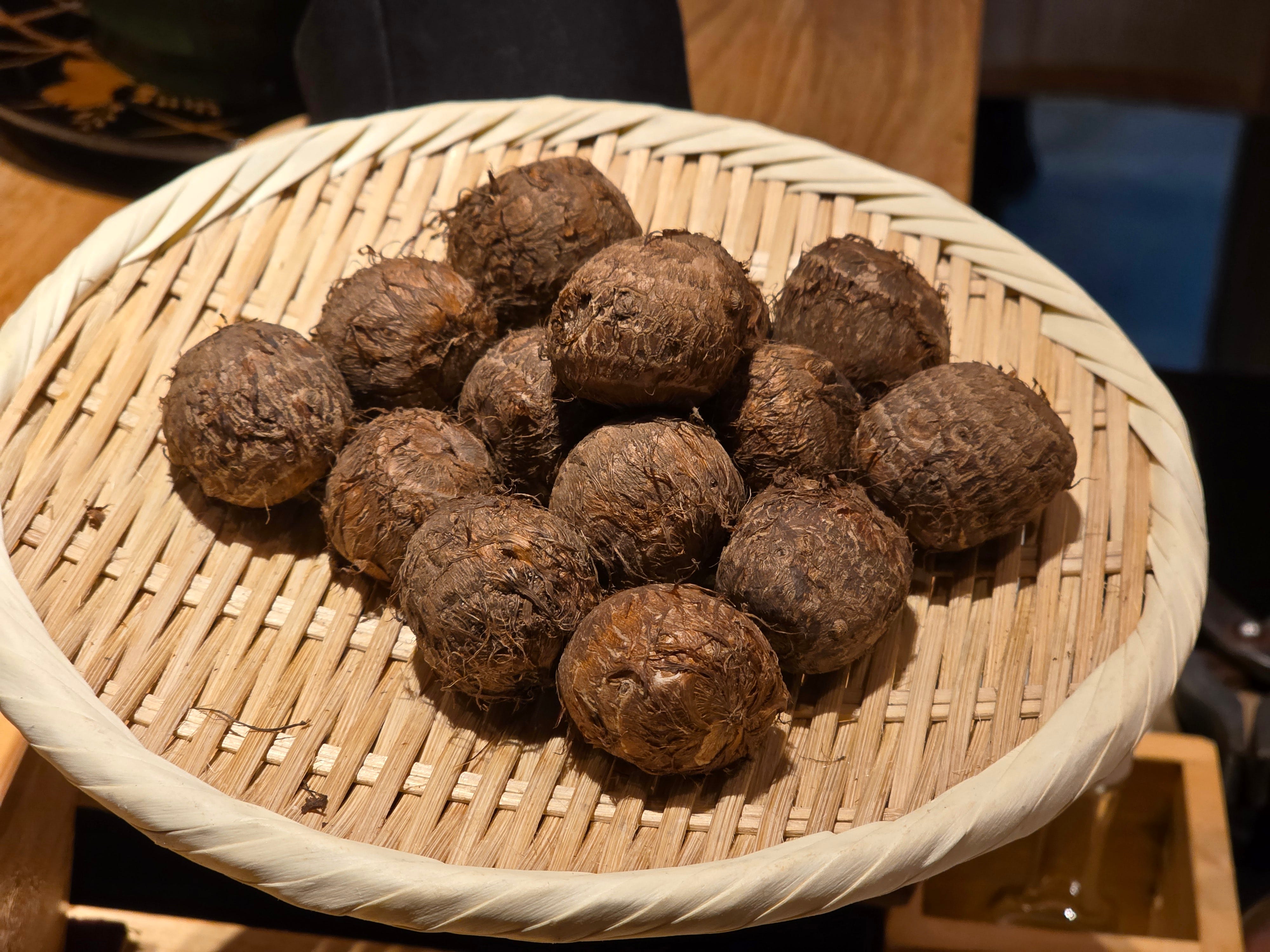
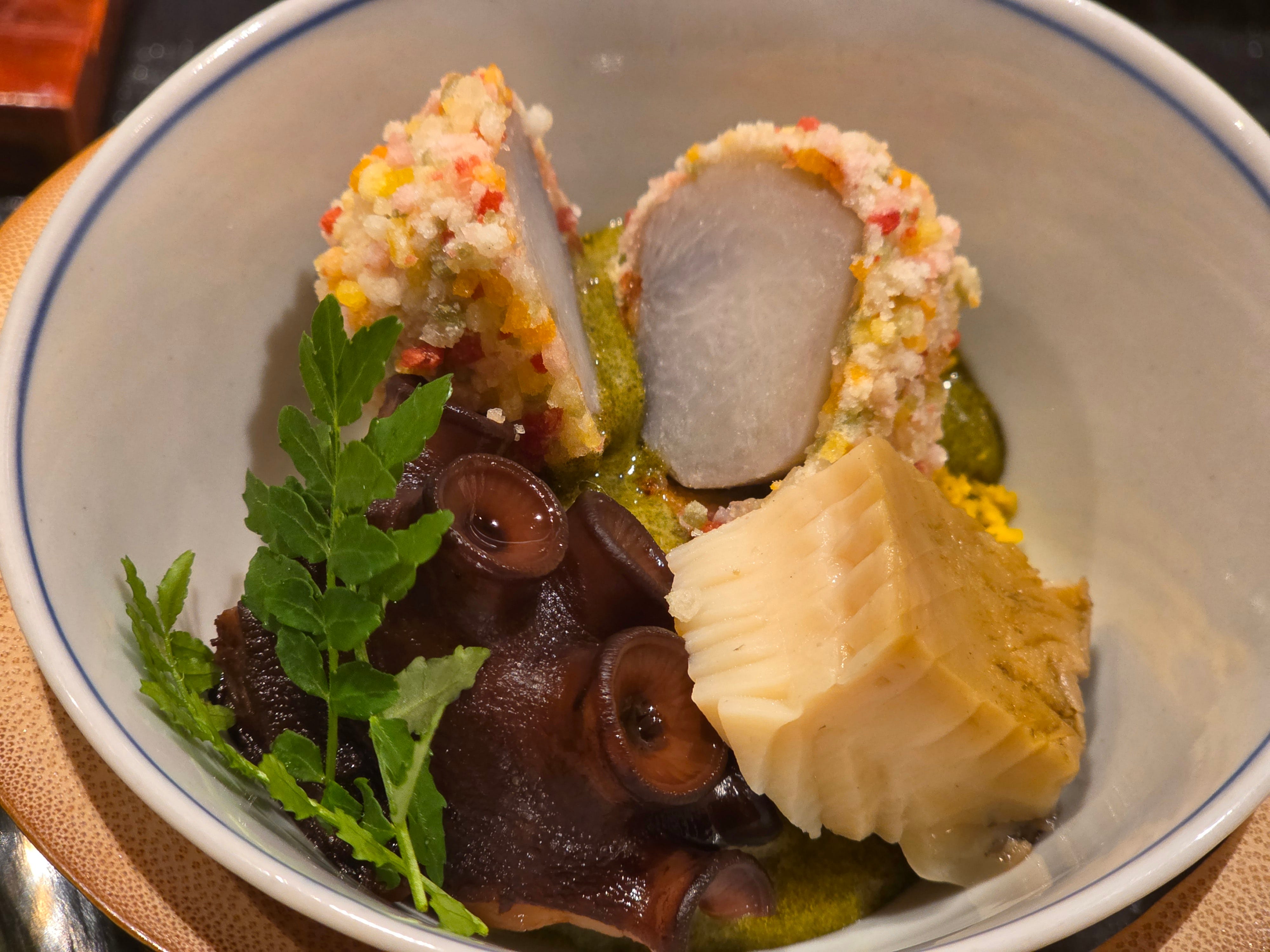
A deep-fried course nodded to Shikon’s signature dish: rice-crusted taro balls with octopus and abalone. The crisp coating gave way to the softer seafood inside, and the reference felt fitting without making Rin seem like a copy of its neighbour.
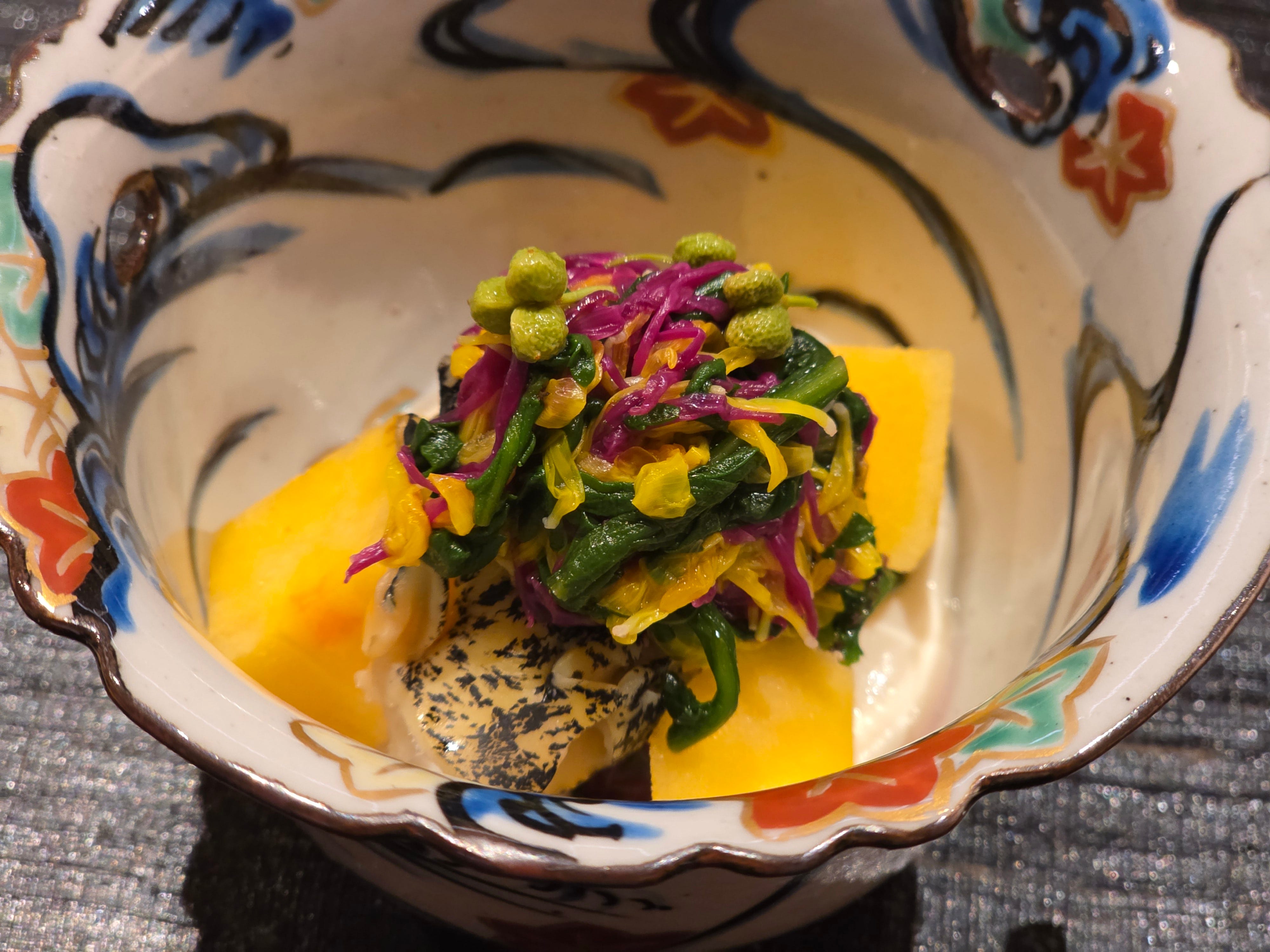
A palate cleanser followed, with pickled chrysanthemum buds over sweet persimmon and more matsutake mushrooms. The pickles cut through the fruit’s sweetness and reset the palate.
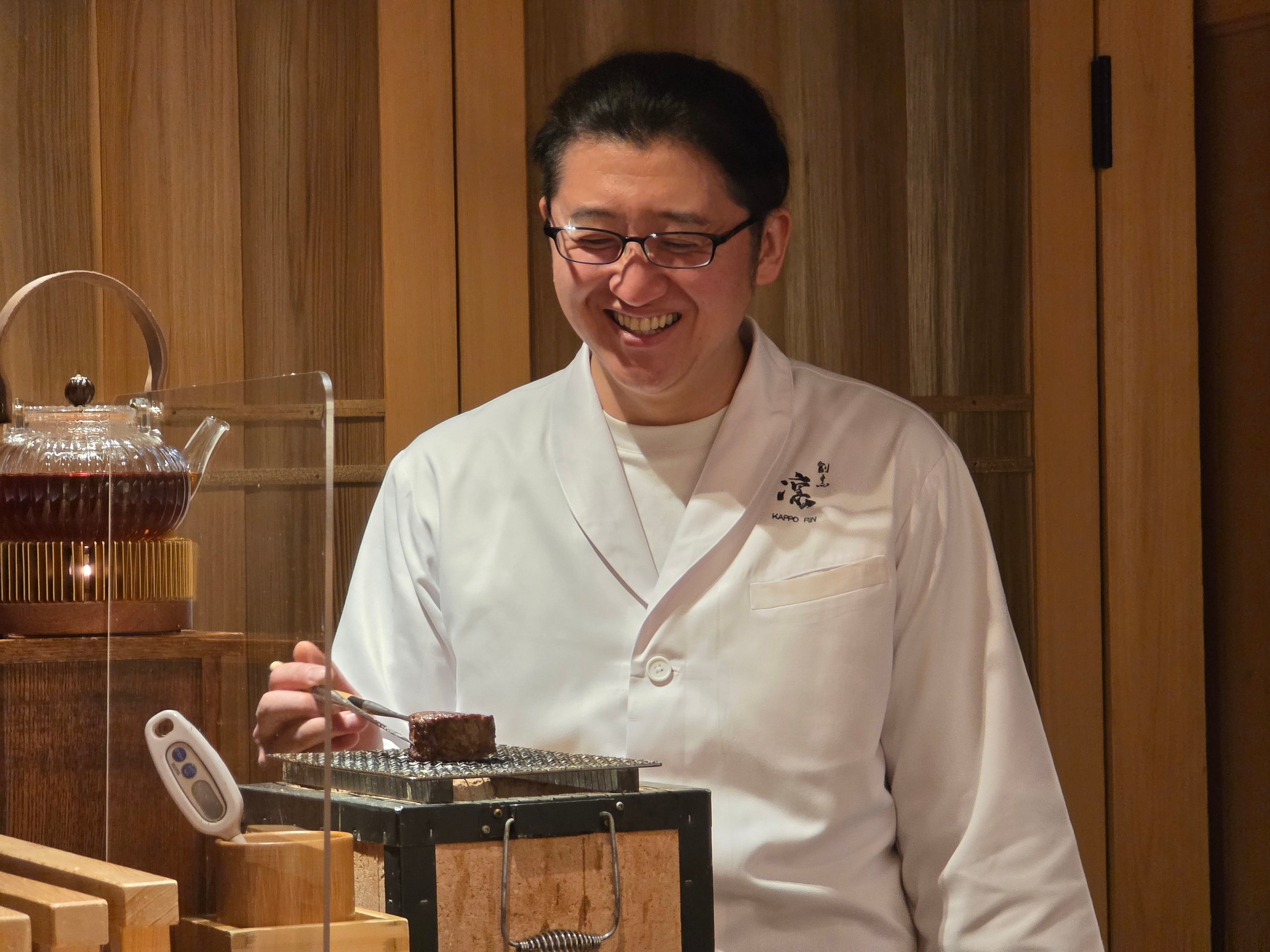
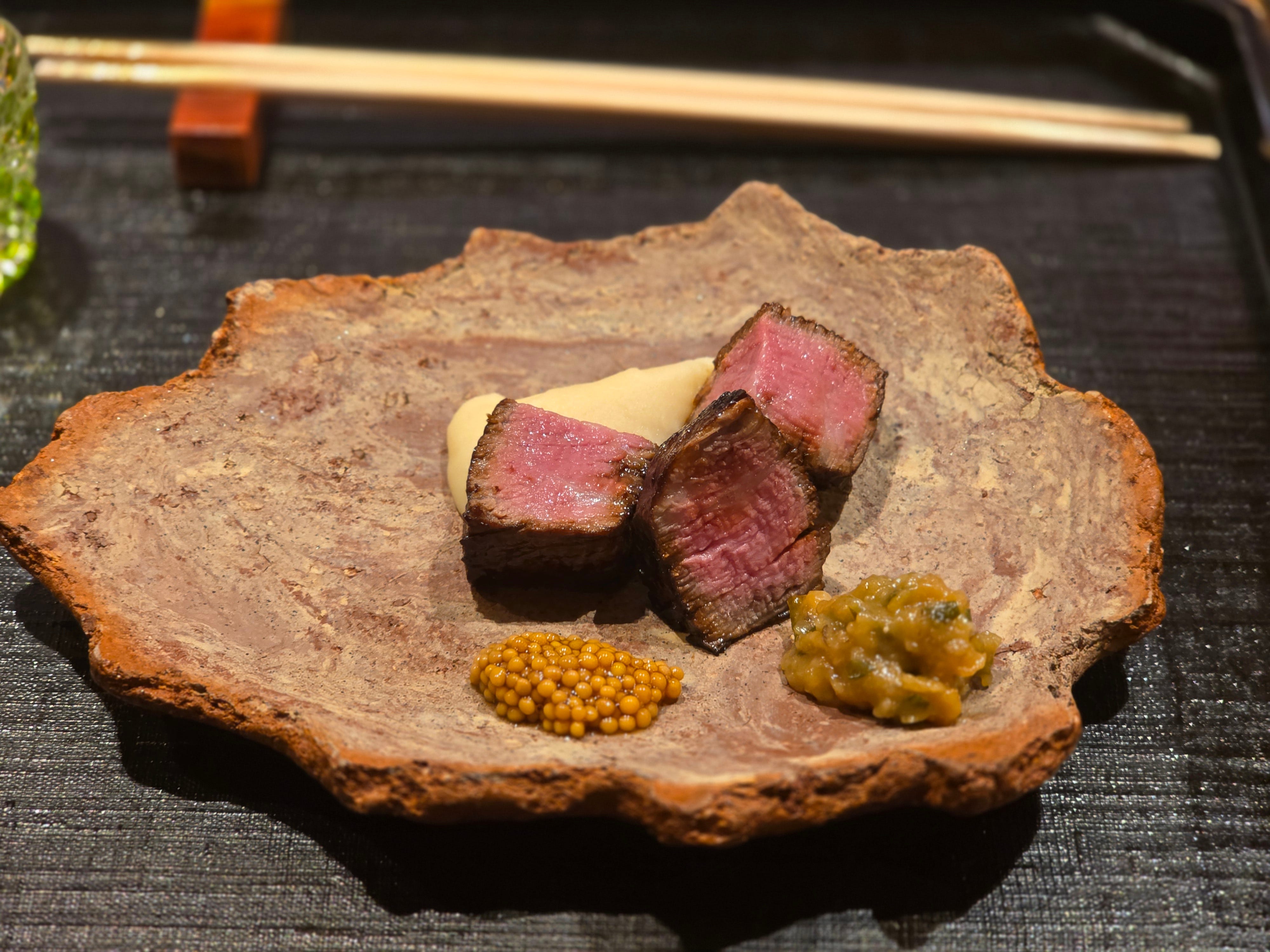
The wagyu steak came with nanban miso and a homemade mustard with a forceful pungency. This was the one course that fell a little flat. The mustard took over, and the beef did not leave the same impression as the earlier dishes.
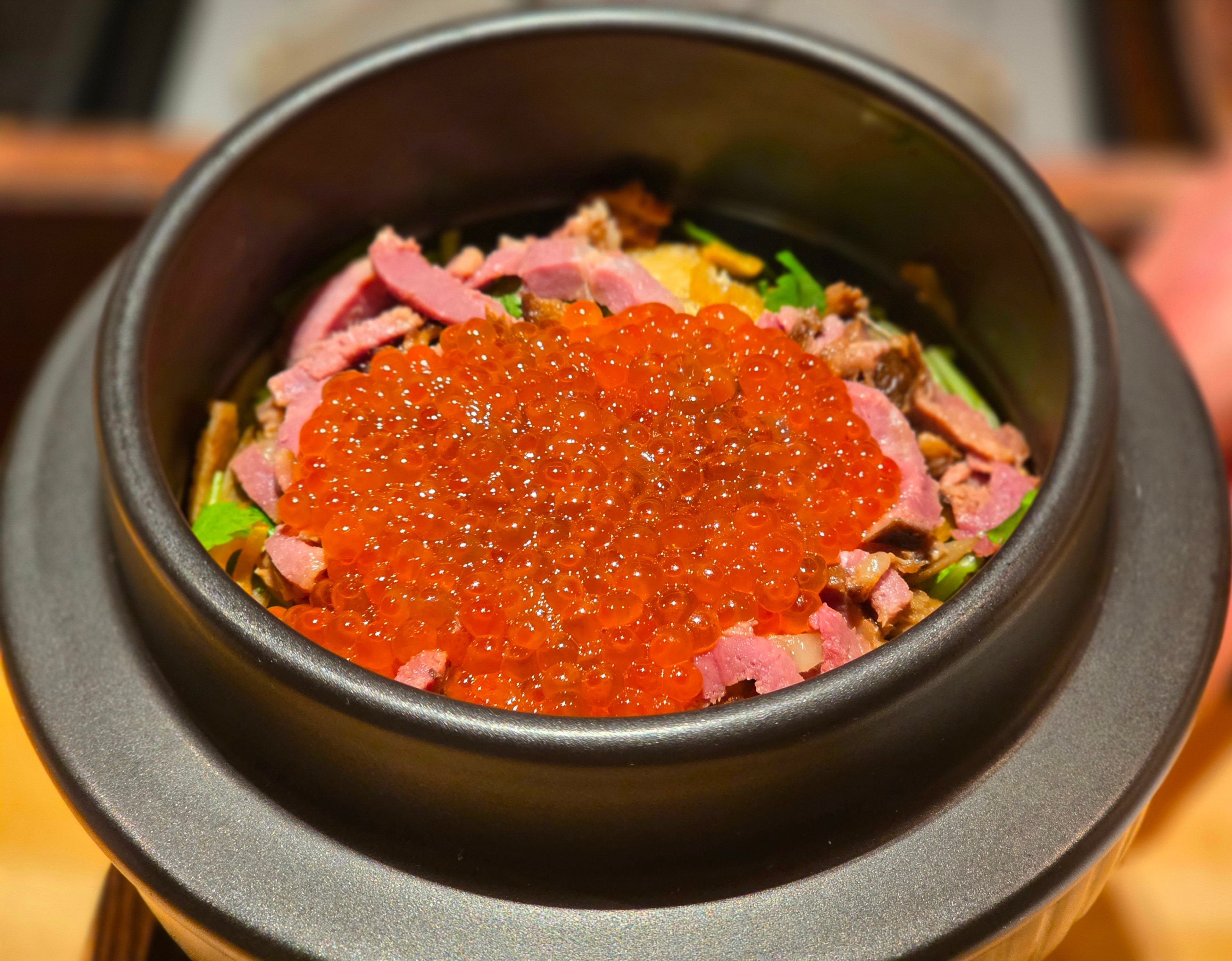
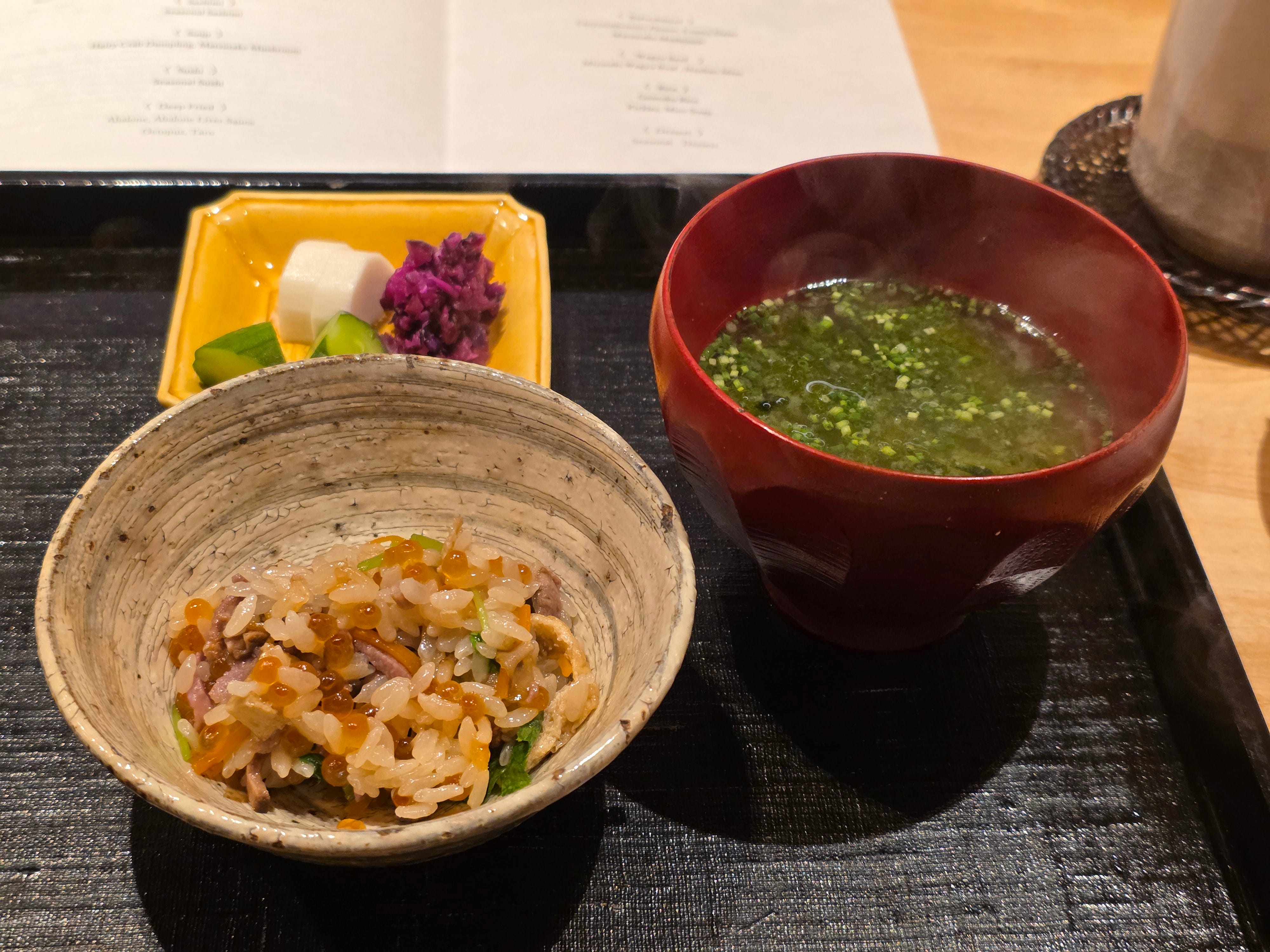
Claypot rice with shredded duck and ikura brought the meal back on track. I always enjoy this kind of rice course, and the duck and salmon roe made it an easy favourite. Japanese pickles and miso soup finished the savoury courses.
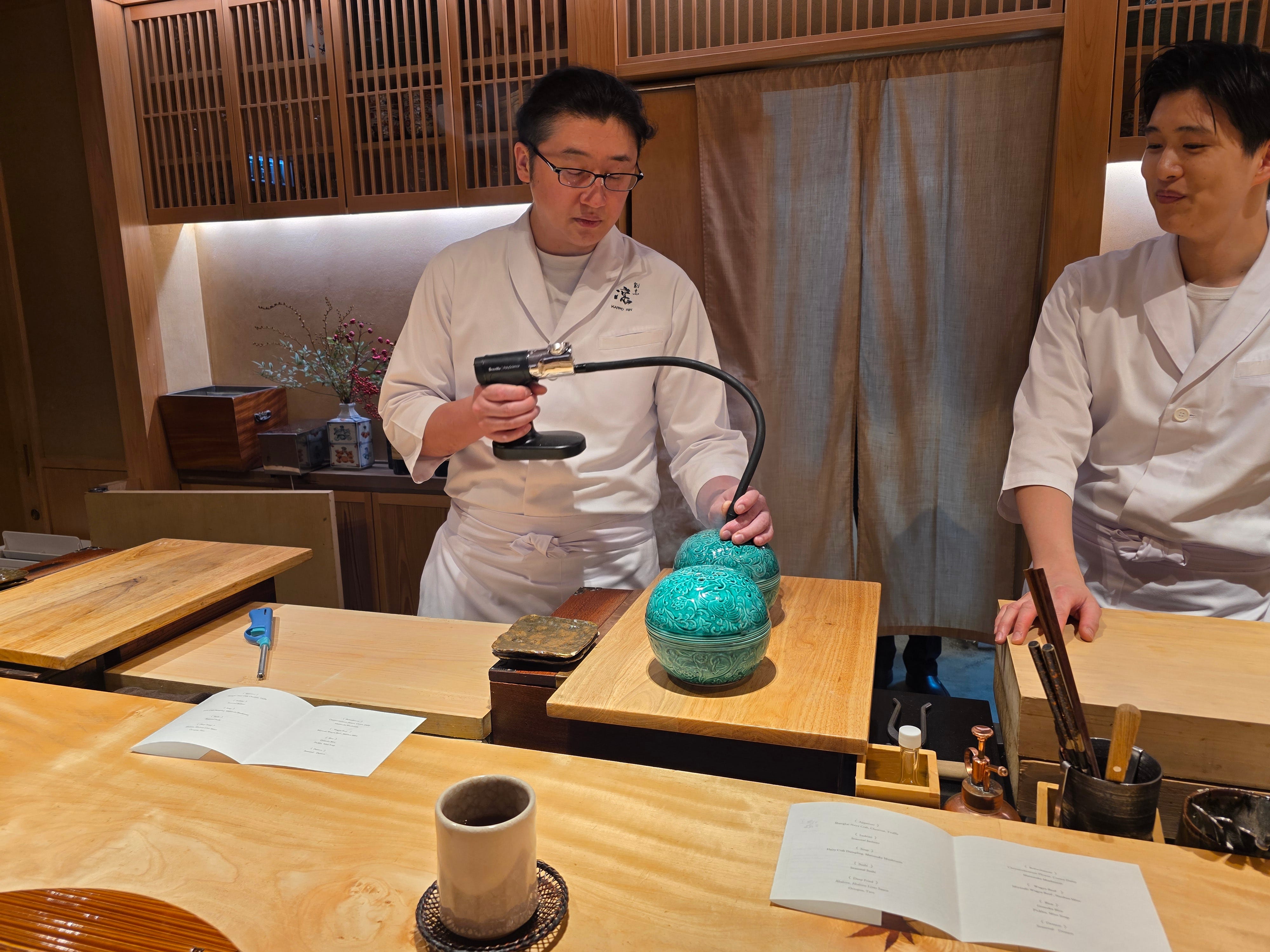
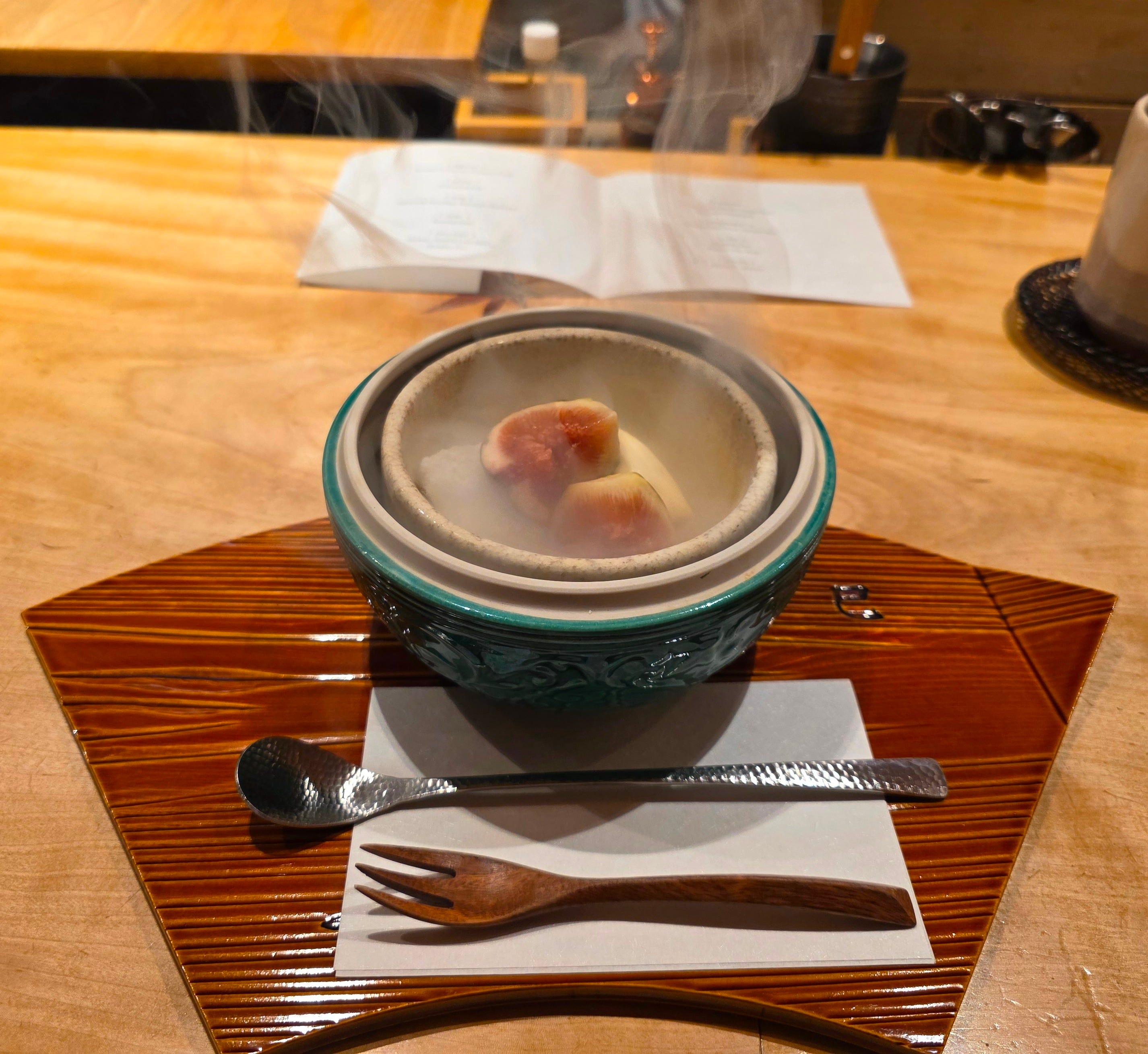
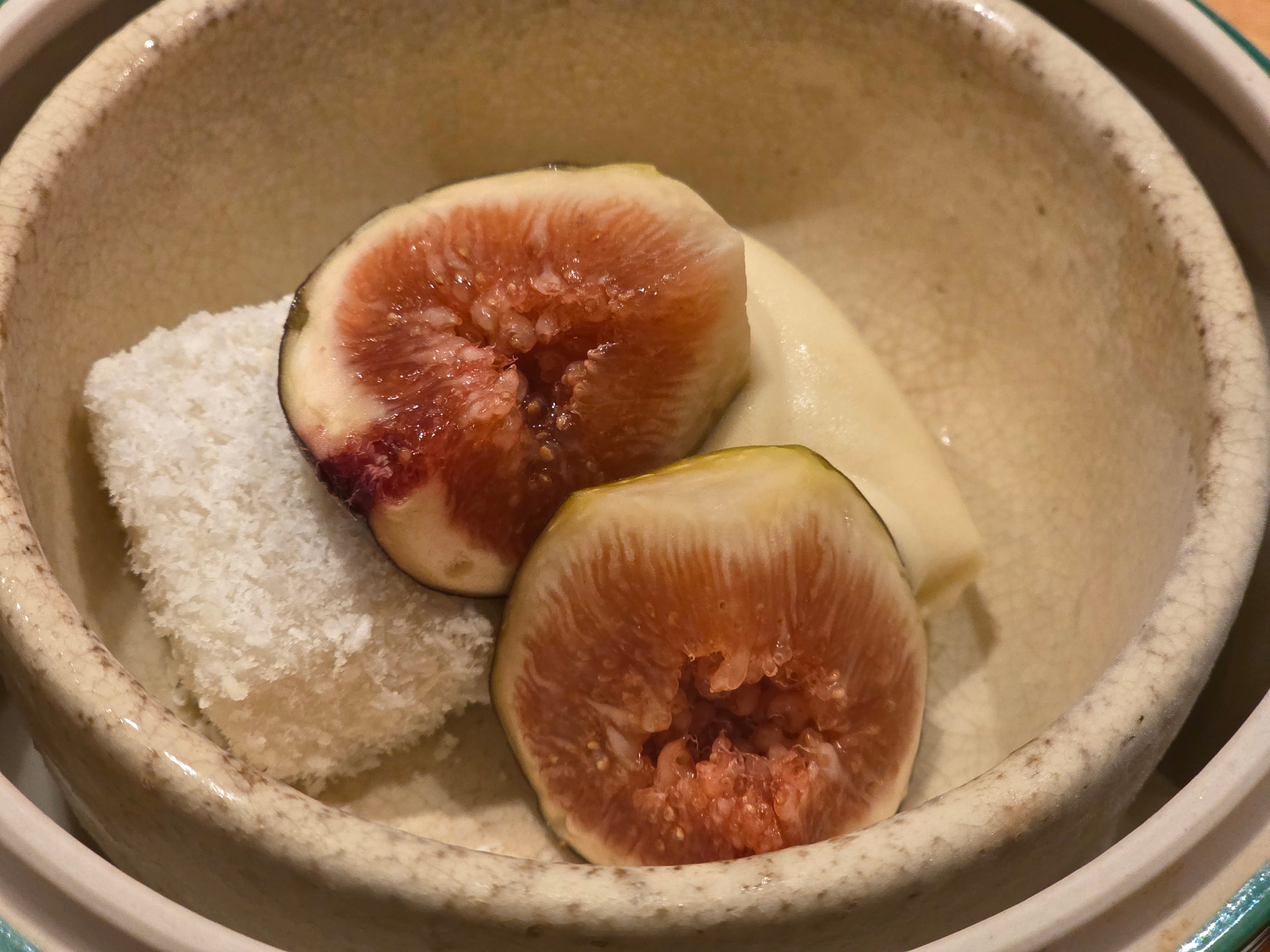
Dessert brought caramelised figs, coconut-crusted mochi and baked yam ice cream. Smoke ran through all three; the yam ice cream was the most interesting of the set.
I enjoyed Kappo Rin. It may not have the same fame as Shikon next door, but I prefer the kappo format: the cooking gives you more variety, and the counter turns the meal into a show without distracting from the food. The wagyu course missed, but the rest of the progression made this well worth the experience.
Total Damage: 5,900 HKD/2 people