
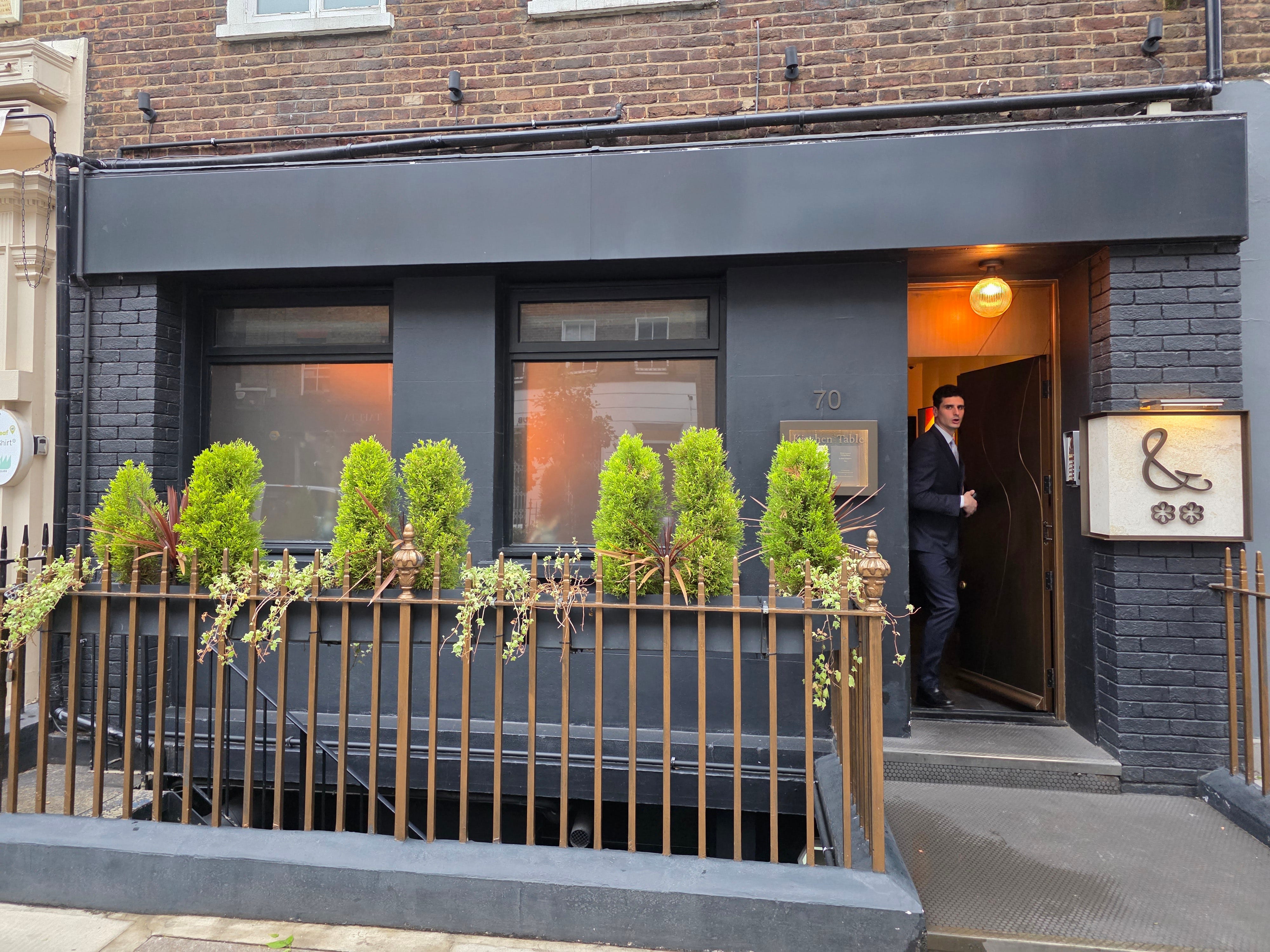
Kitchen Table is Chef James Knappett’s counter-only tasting-menu restaurant in Fitzrovia. It opened in October 2012, founded by James Knappett and his wife Sandia Chang, won its first Michelin star in 2014, added a second in 2018, and has held both ever since. Knappett runs the kitchen. Chang runs the wine and bar programme.
The structure is simple: one counter, one menu, no preview, no substitutions. You arrive in the lounge, start with canapes, move to the open show kitchen for the meal, then return to the lounge for petit fours. The full dinner takes about four hours. At the end, they hand you the menu you have just eaten. That format is the restaurant. Knappett builds the menu after the day’s produce arrives. He talks through each course as it lands. The counter has 20 seats around an open kitchen, so there is nowhere for the kitchen to hide and nowhere for the diner to drift.
The original site also housed Bubbledogs, Chang’s hotdog and Champagne bar. Bubbledogs ran for eight years, built a loyal following, and closed during the pandemic in 2021. The couple then folded the space into Kitchen Table as a lounge and cocktail bar.
Knappett’s background explains the restaurant better than any concept statement. His early kitchens included Restaurant Gordon Ramsay on Royal Hospital Road, The Berkeley under Marcus Wareing, The Ledbury under Brett Graham, Rick Stein’s Seafood Restaurant in Padstow, Per Se in New York, and Noma in Copenhagen.
Per Se is where he met Chang. Noma gave him the foraging habit and the confidence to treat British countryside ingredients as serious luxury product.
Knappett was born in Soham, Cambridgeshire, trained at catering college, and still cooks behind the pass each service. Plenty of two-star restaurants of this age run on systems, but Kitchen Table still feels tied to the chef standing in front of you.
Chang is California-born and worked at Per Se and Noma before opening Bubbledogs and Kitchen Table with Knappett. She is one of London’s more recognisable sommeliers, with television work on Saturday Kitchen and Sunday Brunch and judging work at the Decanter World Wine Awards.
Both remain involved day to day.
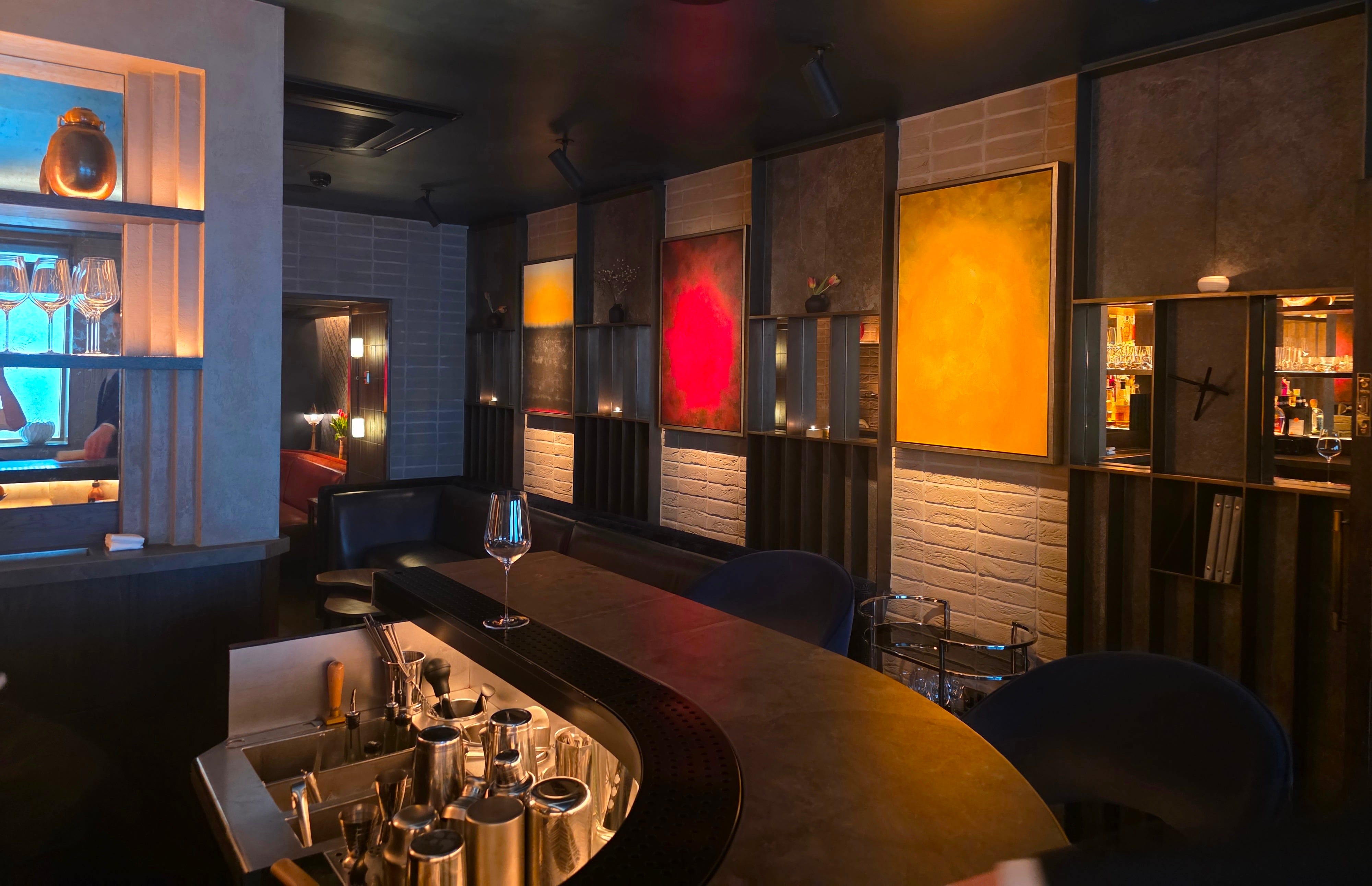
Kitchen Table closed for renovation during the pandemic and reopened in July 2021. The old white tiles went. Walnut panelling came in. Oak replaced the metal counters. The seats were reupholstered. The U-shaped counter stayed.
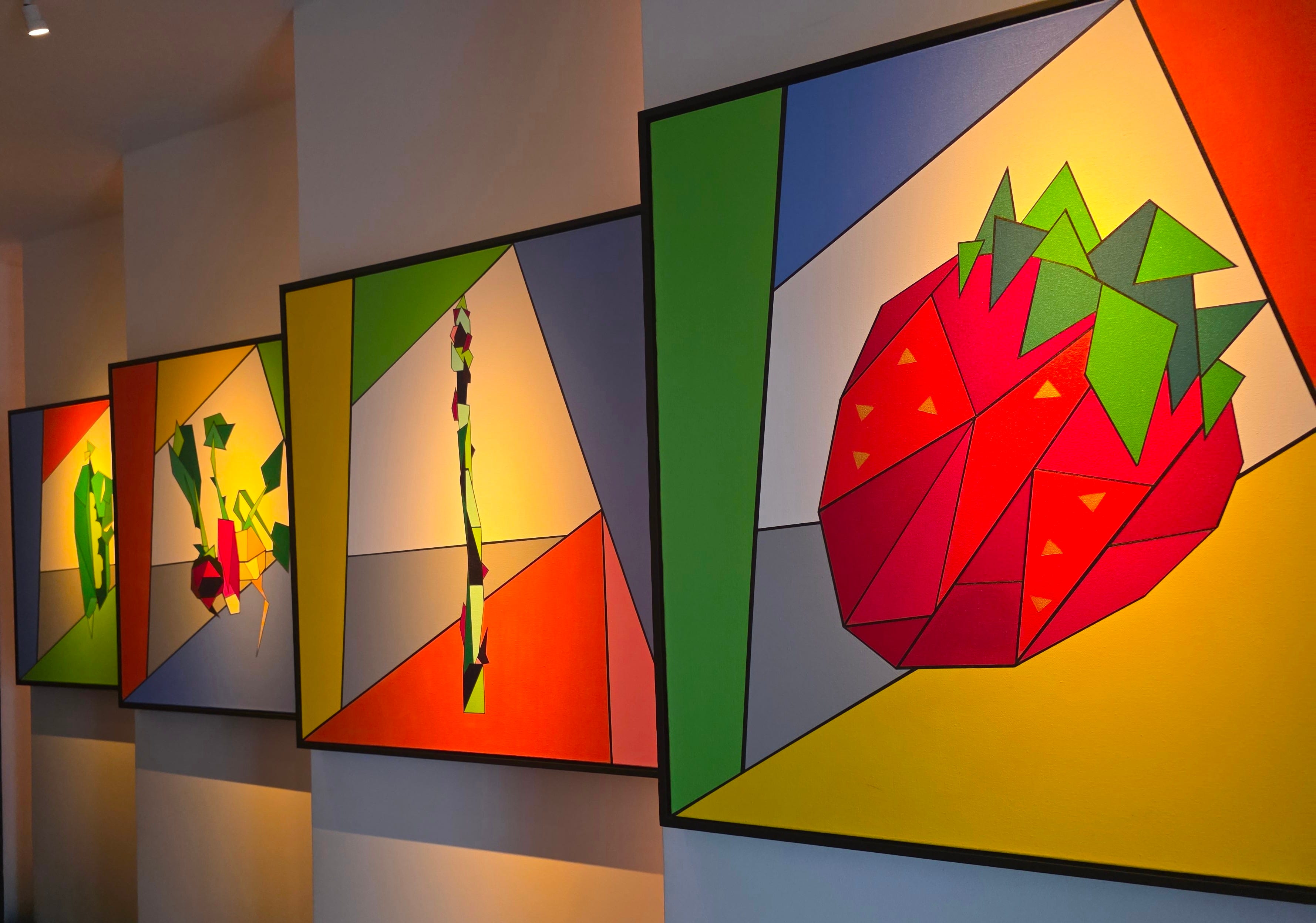
The hallway gives you the idea before you sit down: British produce on display, including strawberries, asparagus, root vegetables and peppers.
The restaurant works with the best available each day. The menu is built around whatever arrives at its best, not around a fixed plan.
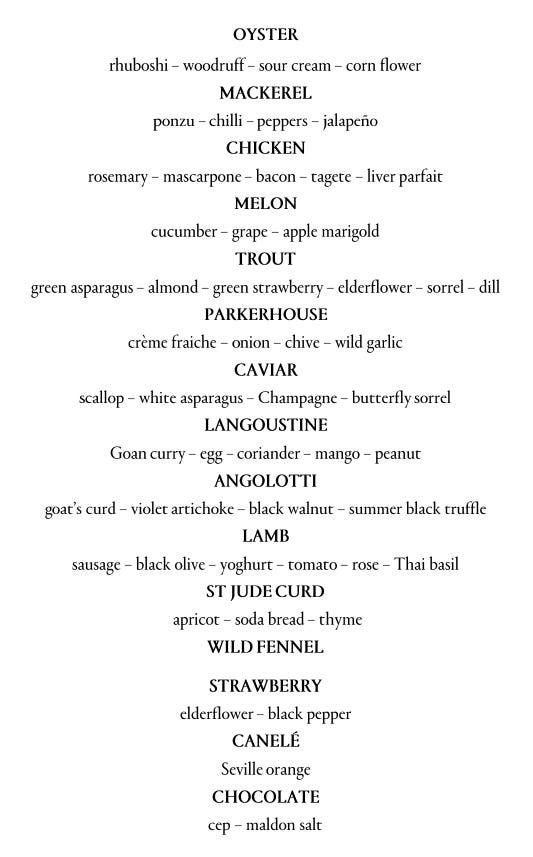
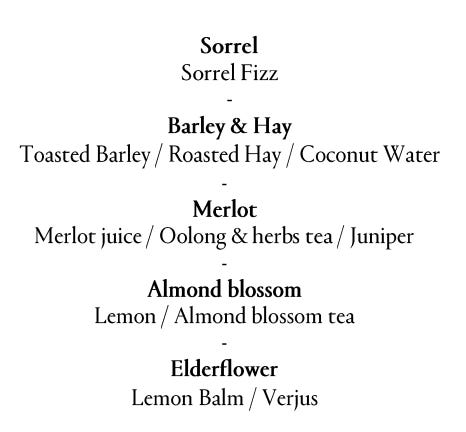
Along with the fixed menu, I decided to go with the non-alcoholic soft pairing.
Kitchen Table cooks modern British food with European technique. The Keller line shows in the polish and control. The Noma line shows in the foraging, the wild ingredients, and the willingness to build a course around what arrived that morning rather than what a menu document promised last month.
The cooking usually starts from one central British ingredient. Wild garlic, stinging nettles, blackberry leaves, bulrush stems, damsons, watercress, chickweed and pine needles have all appeared on menus. This is the better version of seasonal cooking: specific product, tight technique, no faux-rustic dressing. The trade-off is rigidity. If you want choice, this is the wrong room.
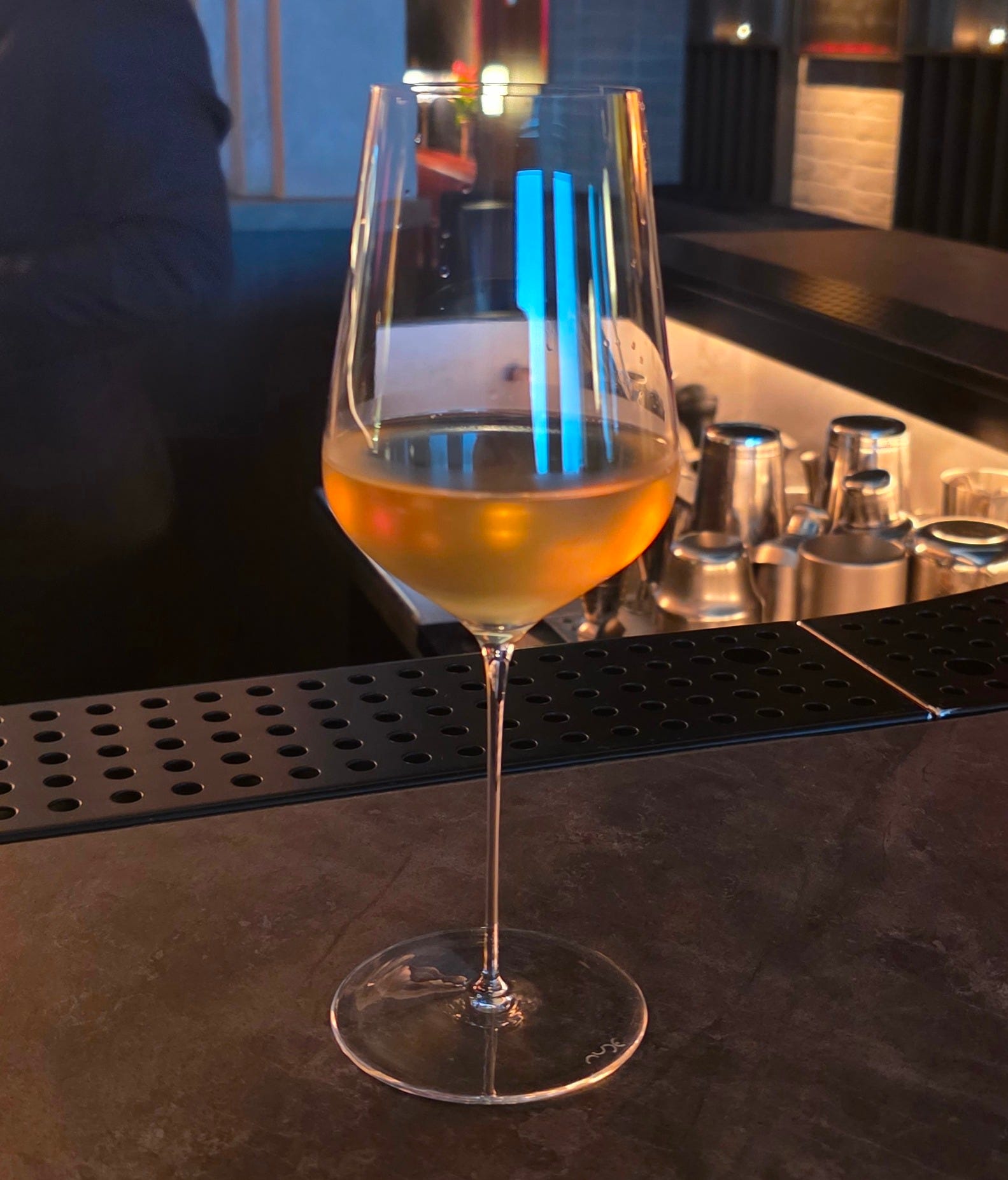
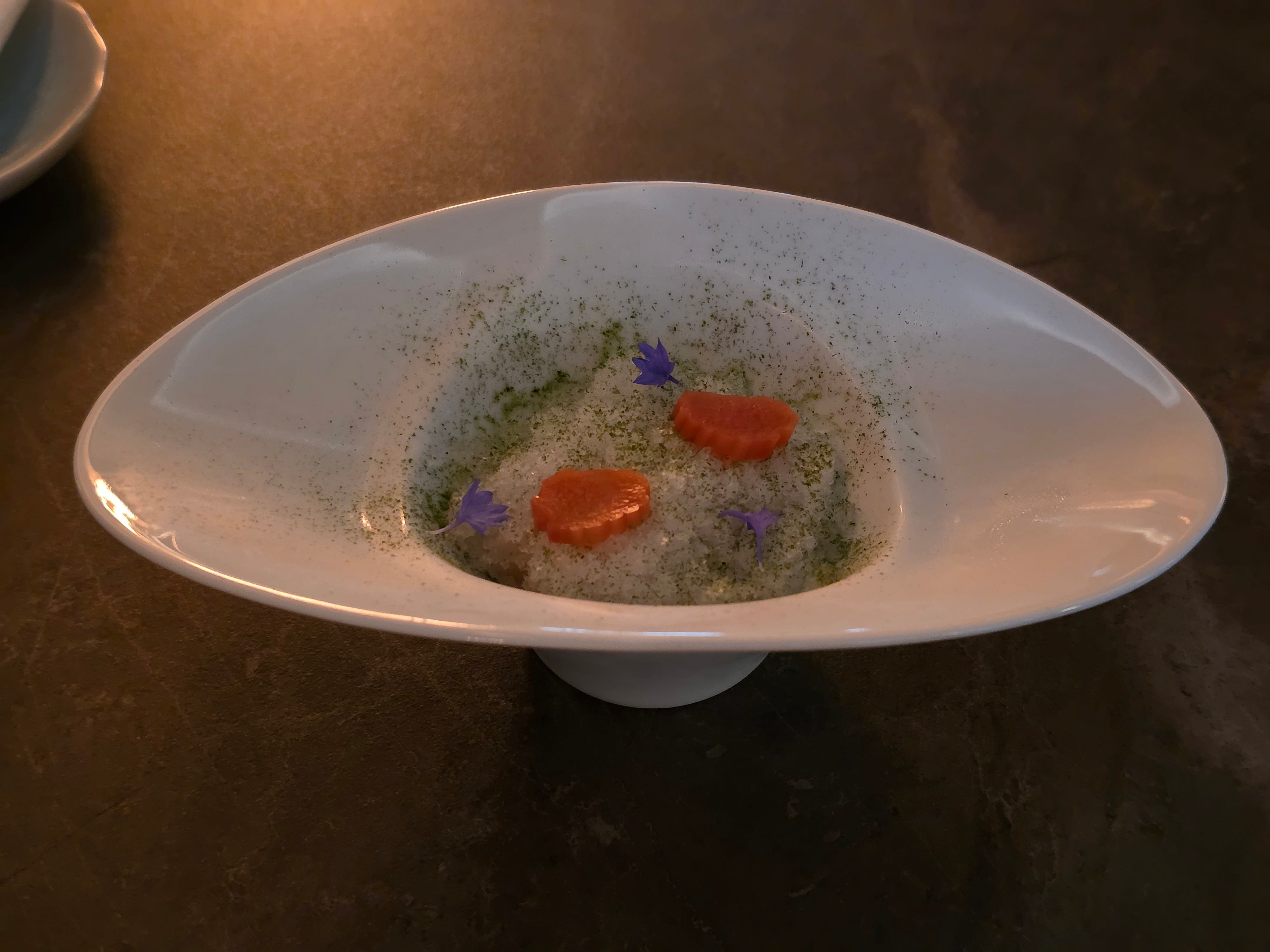
The first bite was served in the lounge - a raw oyster under cold granita, with pickled rhubarb and piped sour cream. Sweet granita, acidity, cold shellfish and tang. A clean opener.
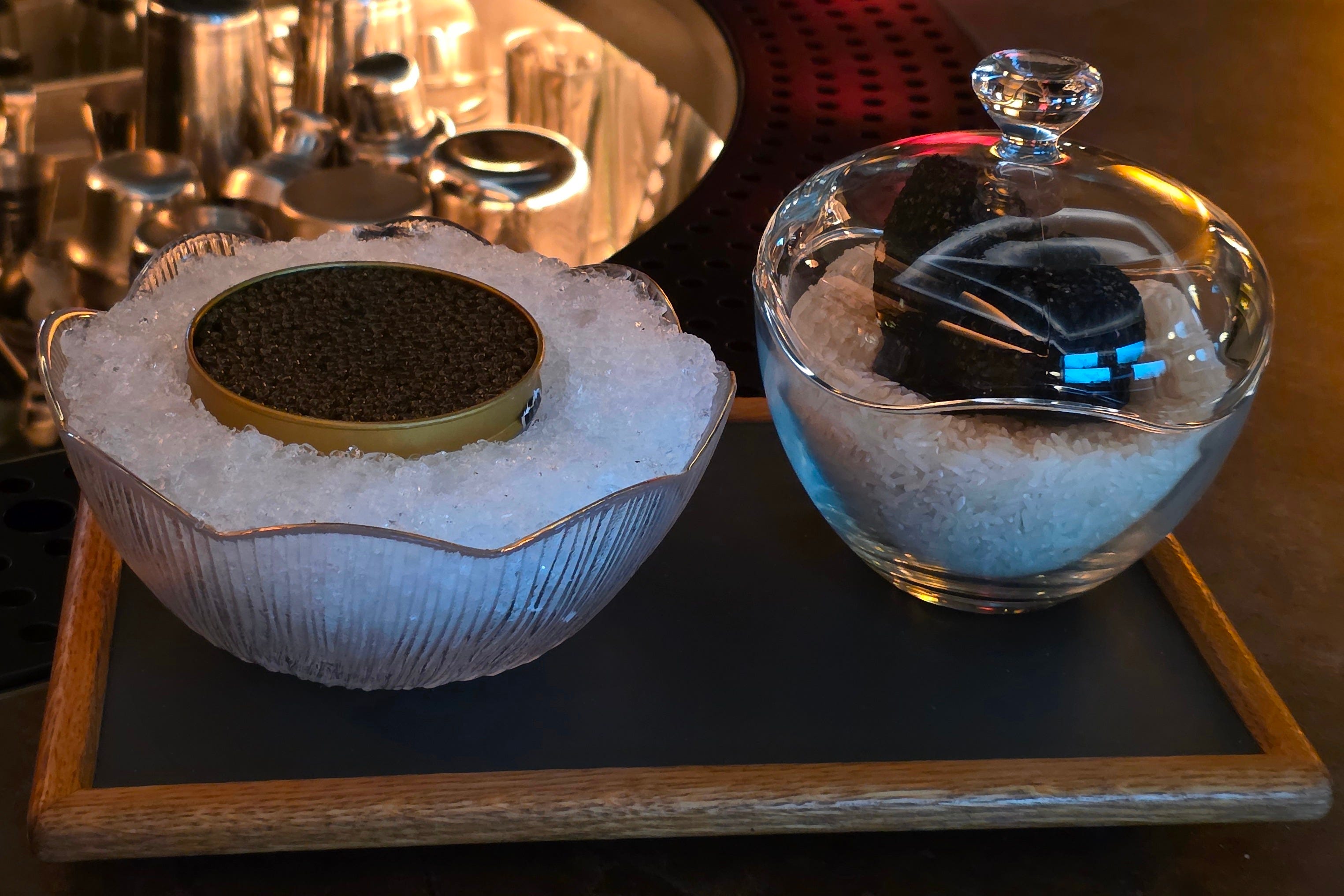
They offered caviar and summer truffle supplements. I took both.
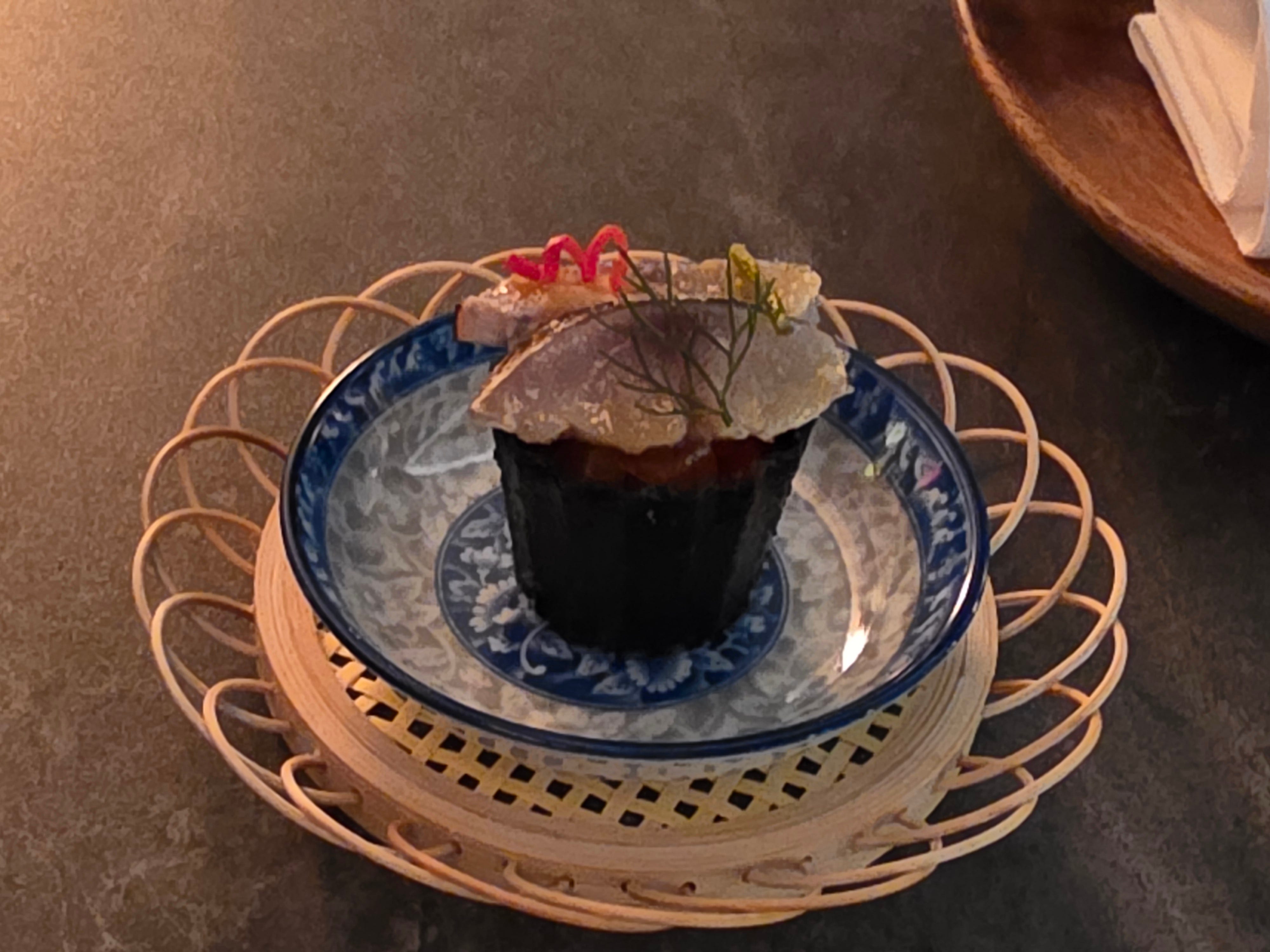
Cured mackerel came with charcoal tart, jalapeno apple puree and pepper. Light, sweet, and good on texture. The charcoal shell gave it a darker note without turning the dish heavy.
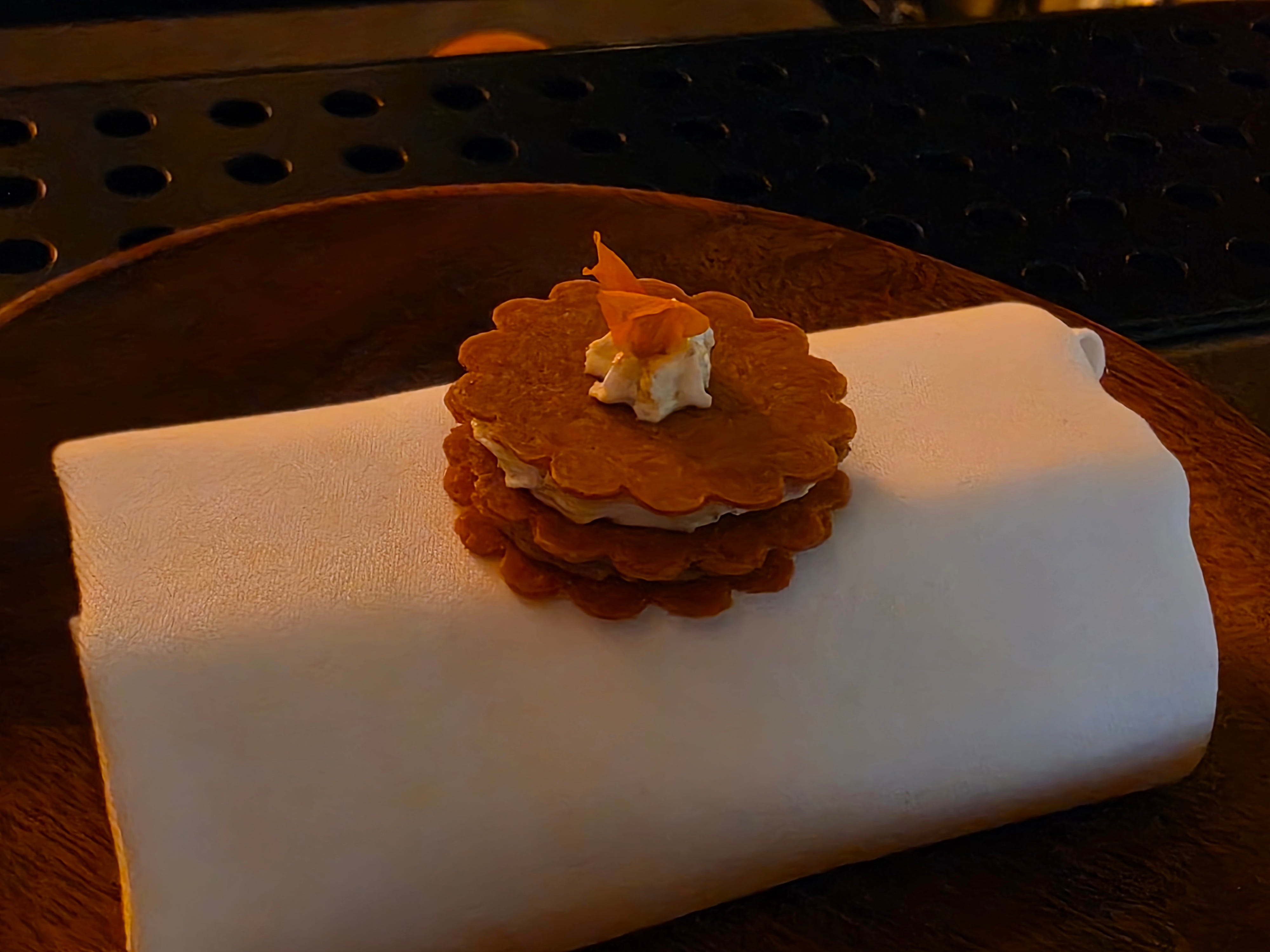
The famous chicken skin followed, with liver parfait. It is easy to see why this signature dish has lasted. Crisp skin, rich parfait, salt and fat in the right order. A small thing done with confidence. The dish has been on the menu since the restaurant opened and serves as its iconic calling card.
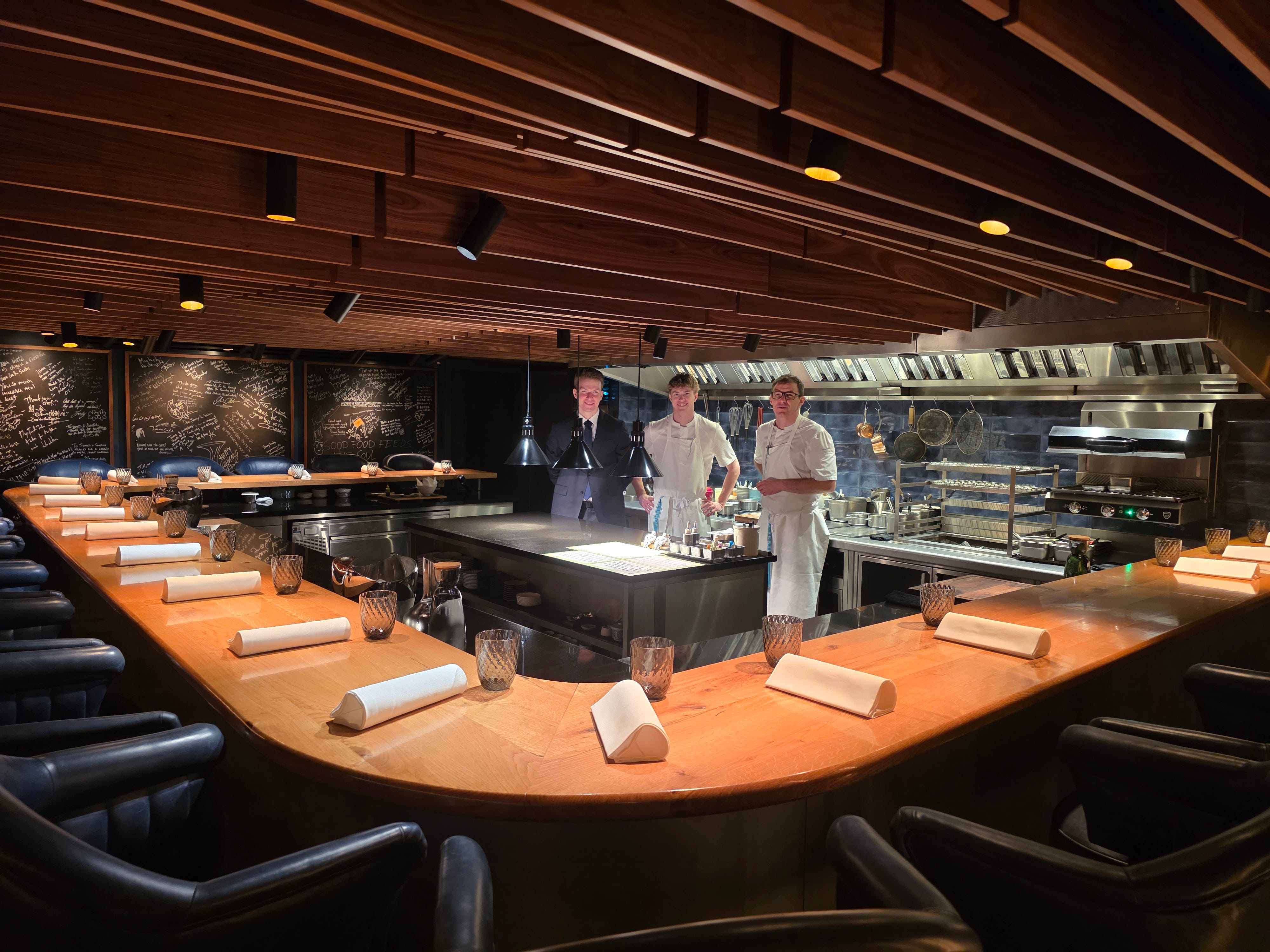
We then moved into the main dining room. In my case, there was no “we” in any meaningful sense: I was the only diner in that sitting, facing a 20-seat counter and the full kitchen.
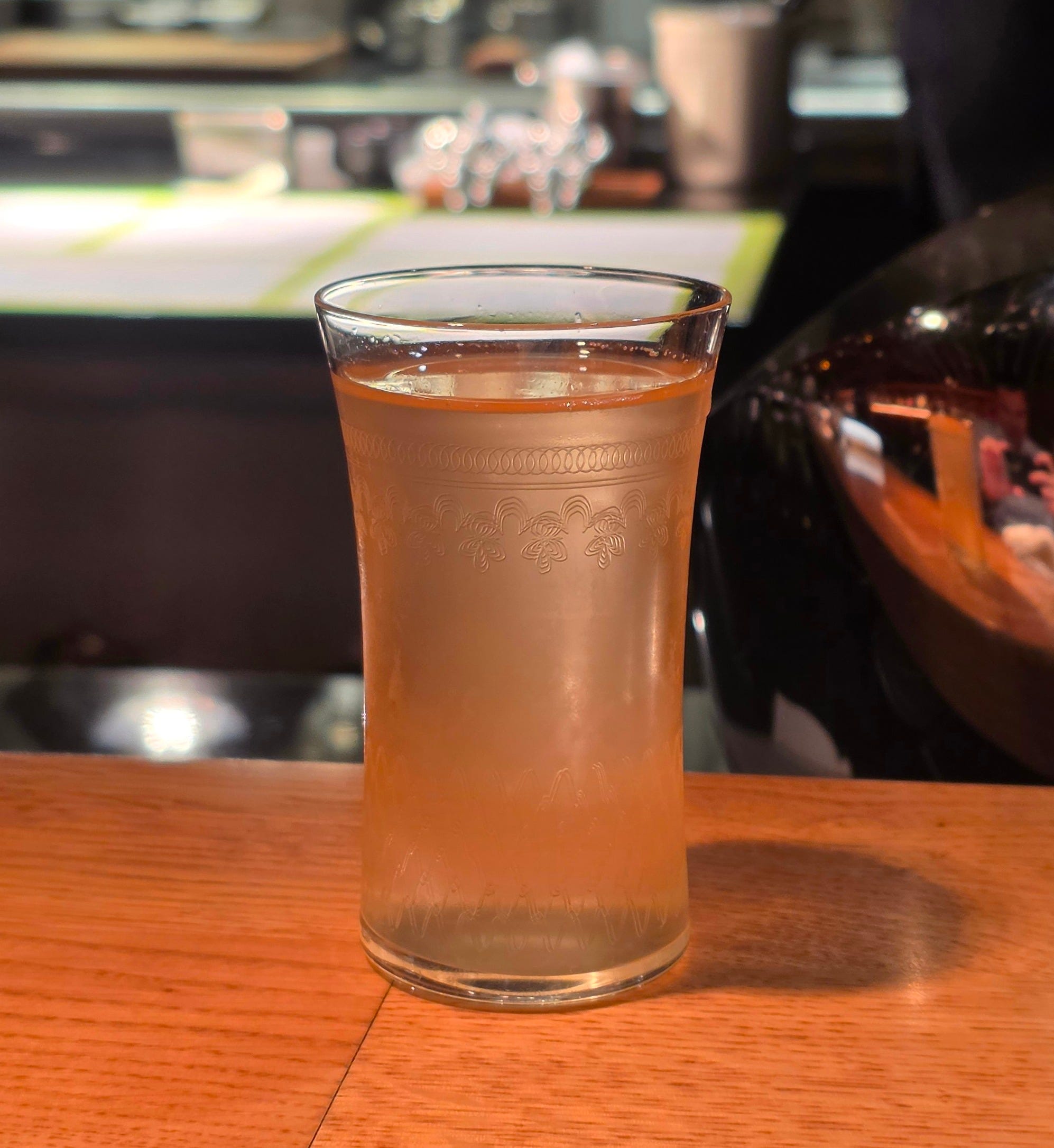
The first soft pairing was a locally foraged sorrel fizz. That set the pattern. Herbs, wild leaves, acidity and British countryside flavours kept returning.
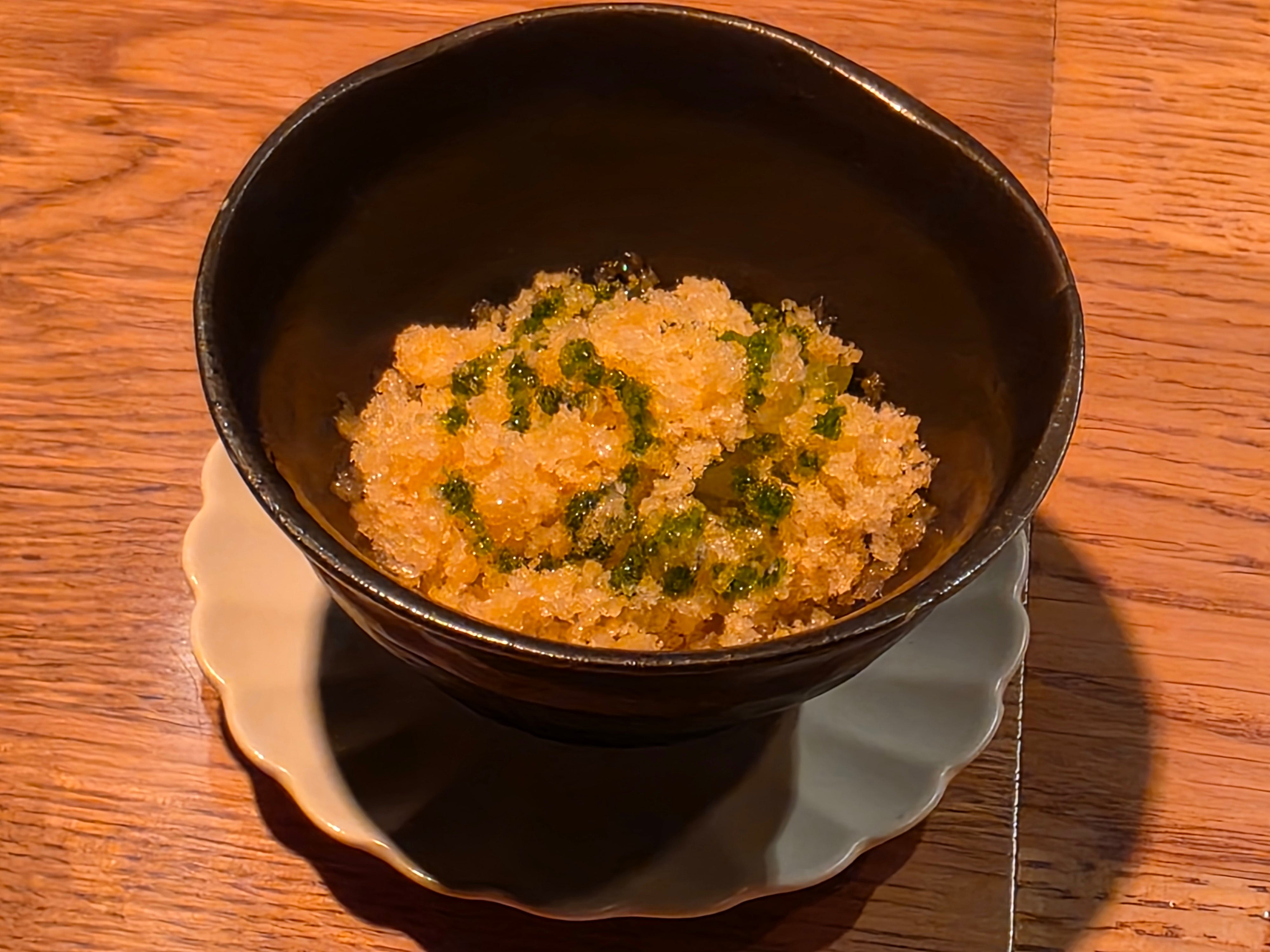
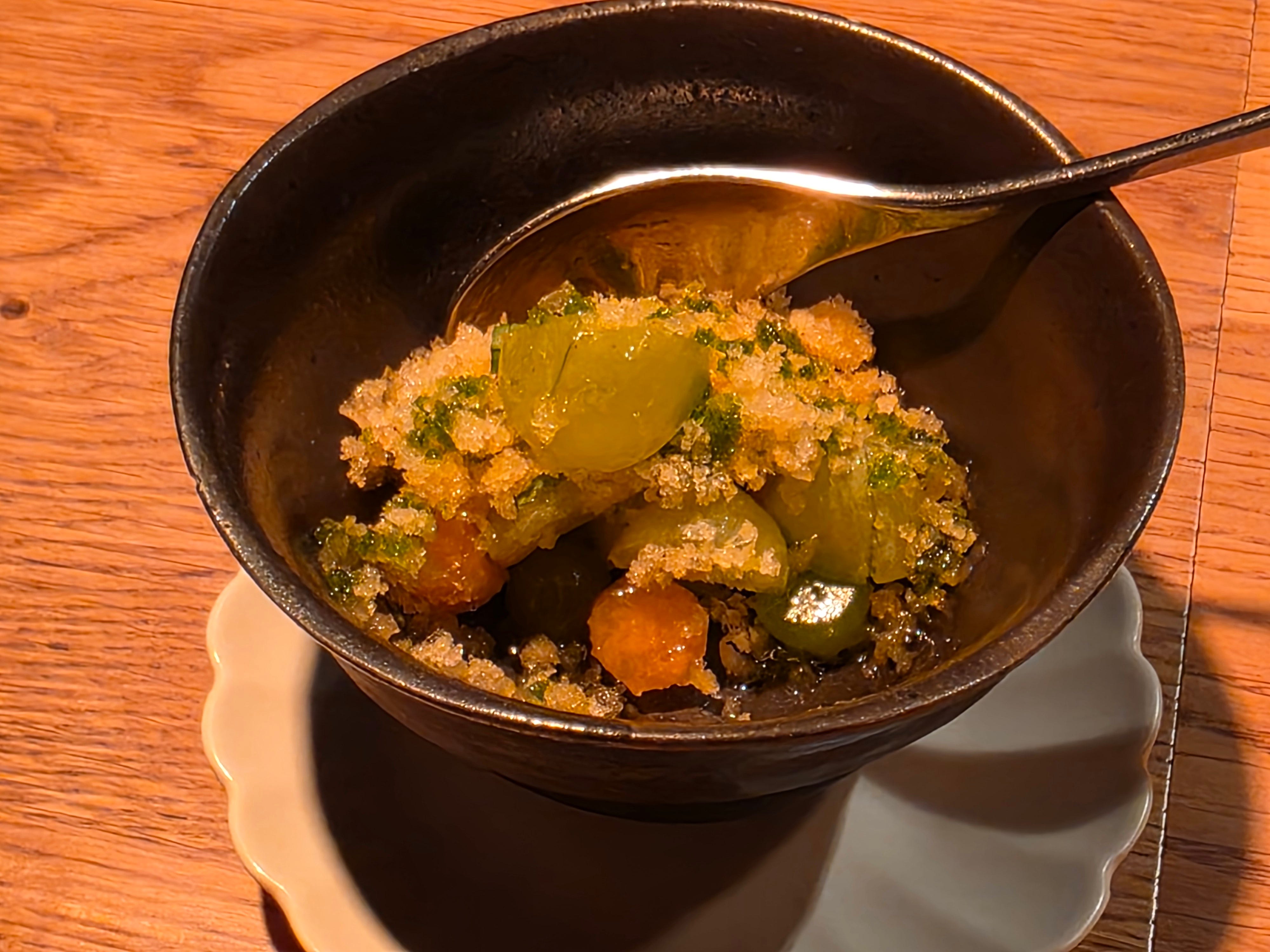
Melon granita came with compressed cucumber, apple marigold leaves and apple marigold oil. Cool, green, direct.
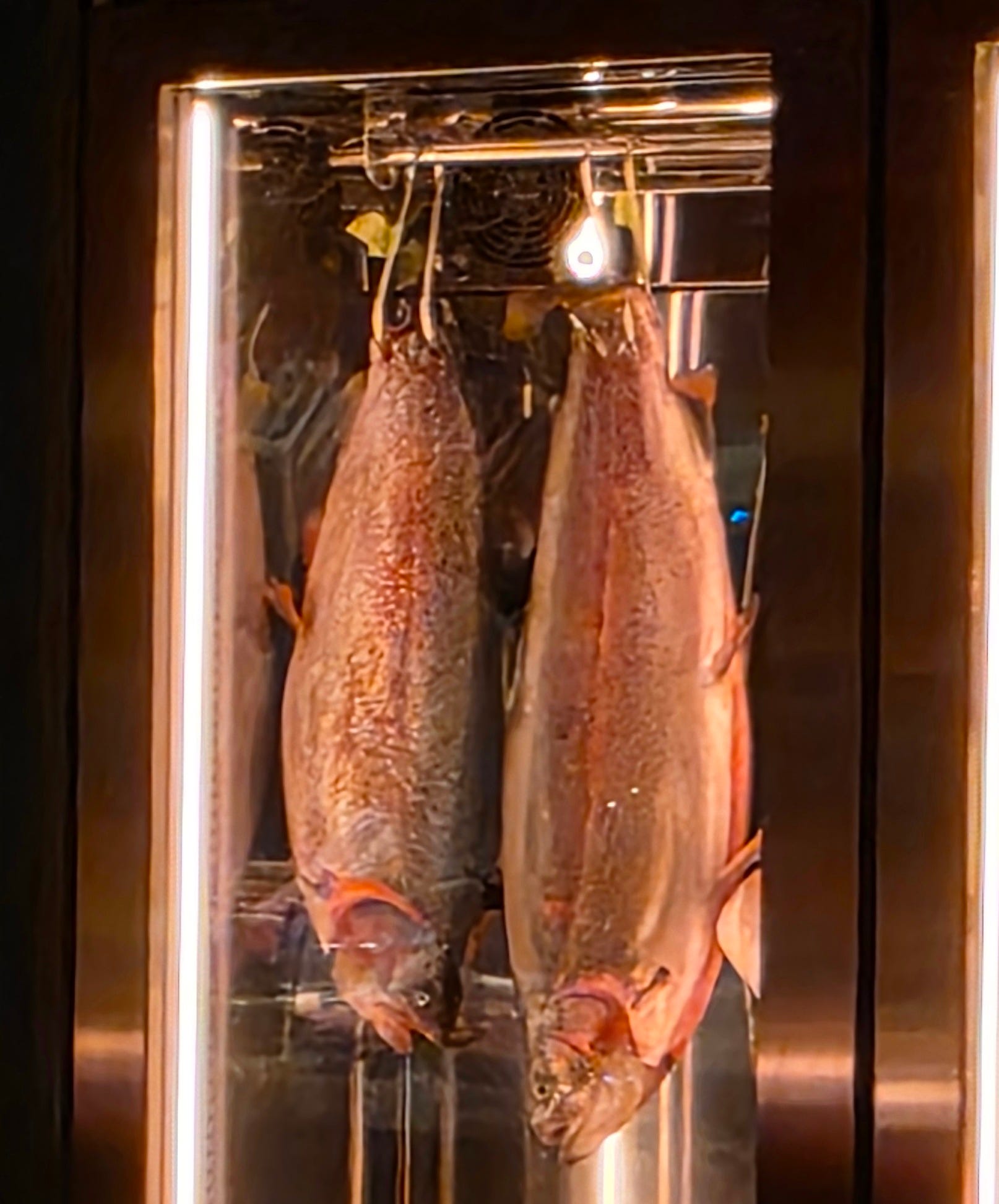
The trout aging in the fridge, used in the next dish.
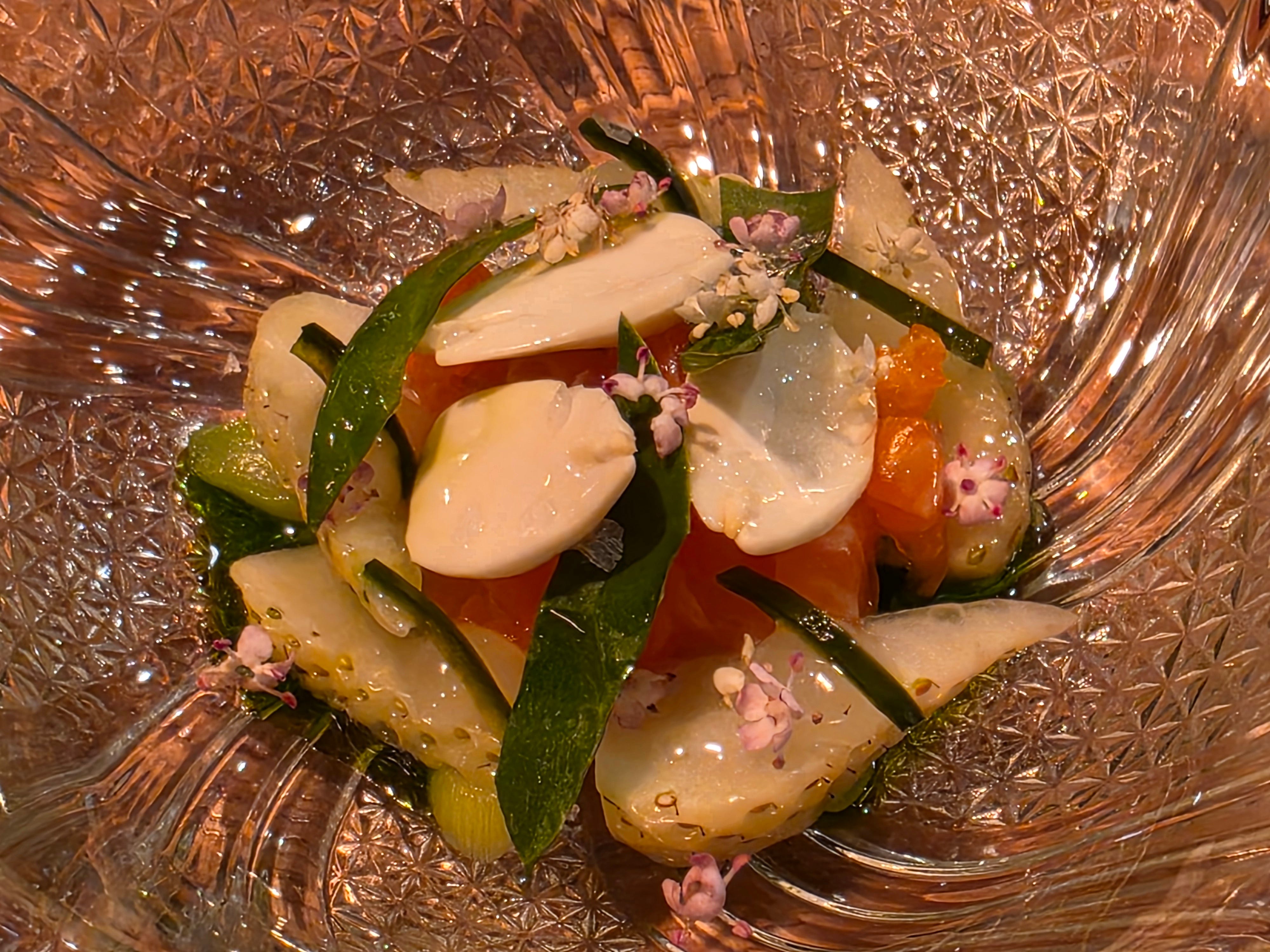
Seven-day aged trout followed with raw almonds, green strawberry, foraged sorrel, elderflower, juniper and dill oil. The dish had cured fish, yoghurt creaminess, almond crunch and enough sharpness from the green strawberry and sorrel. Classic flavours, handled well.
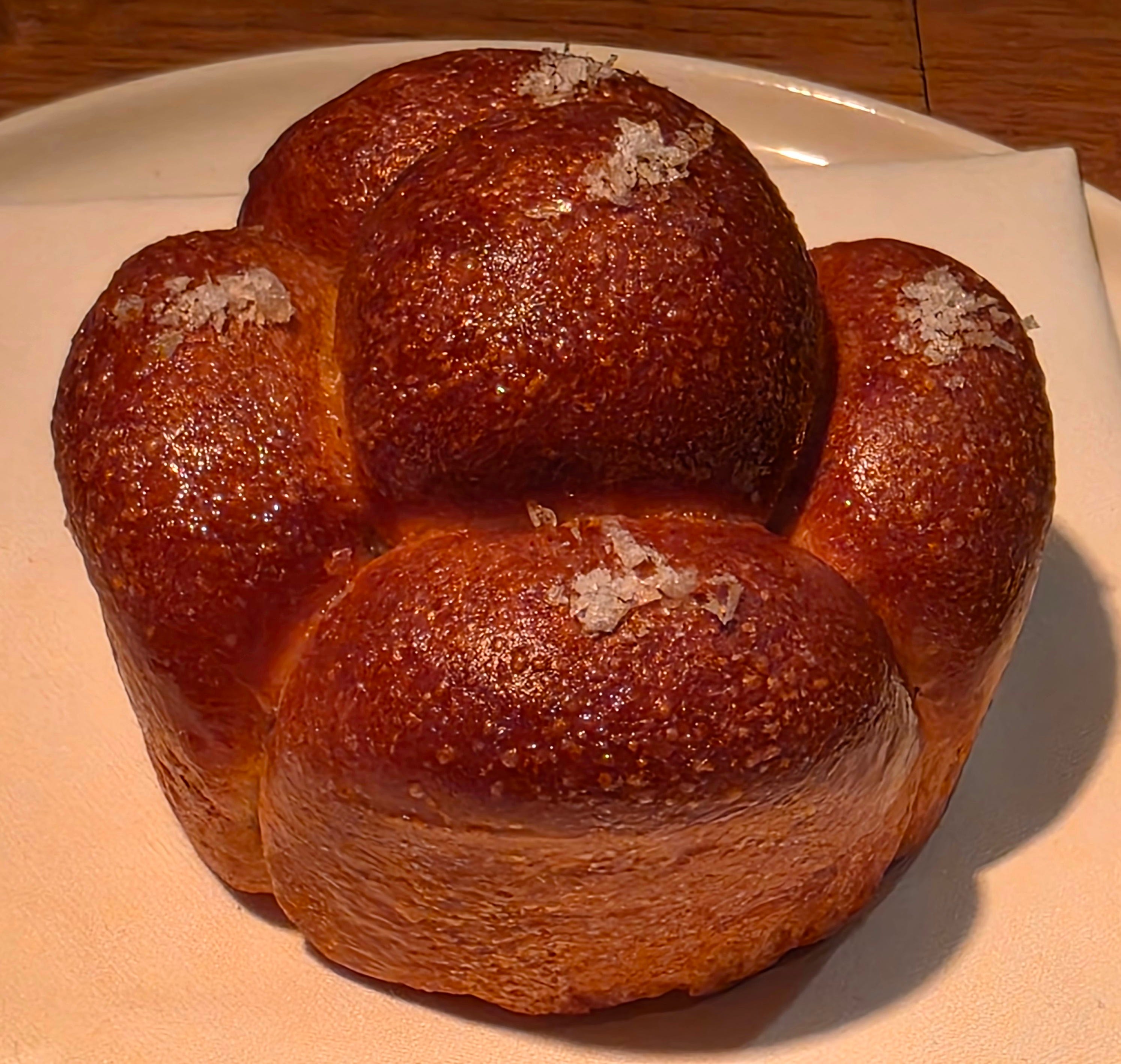
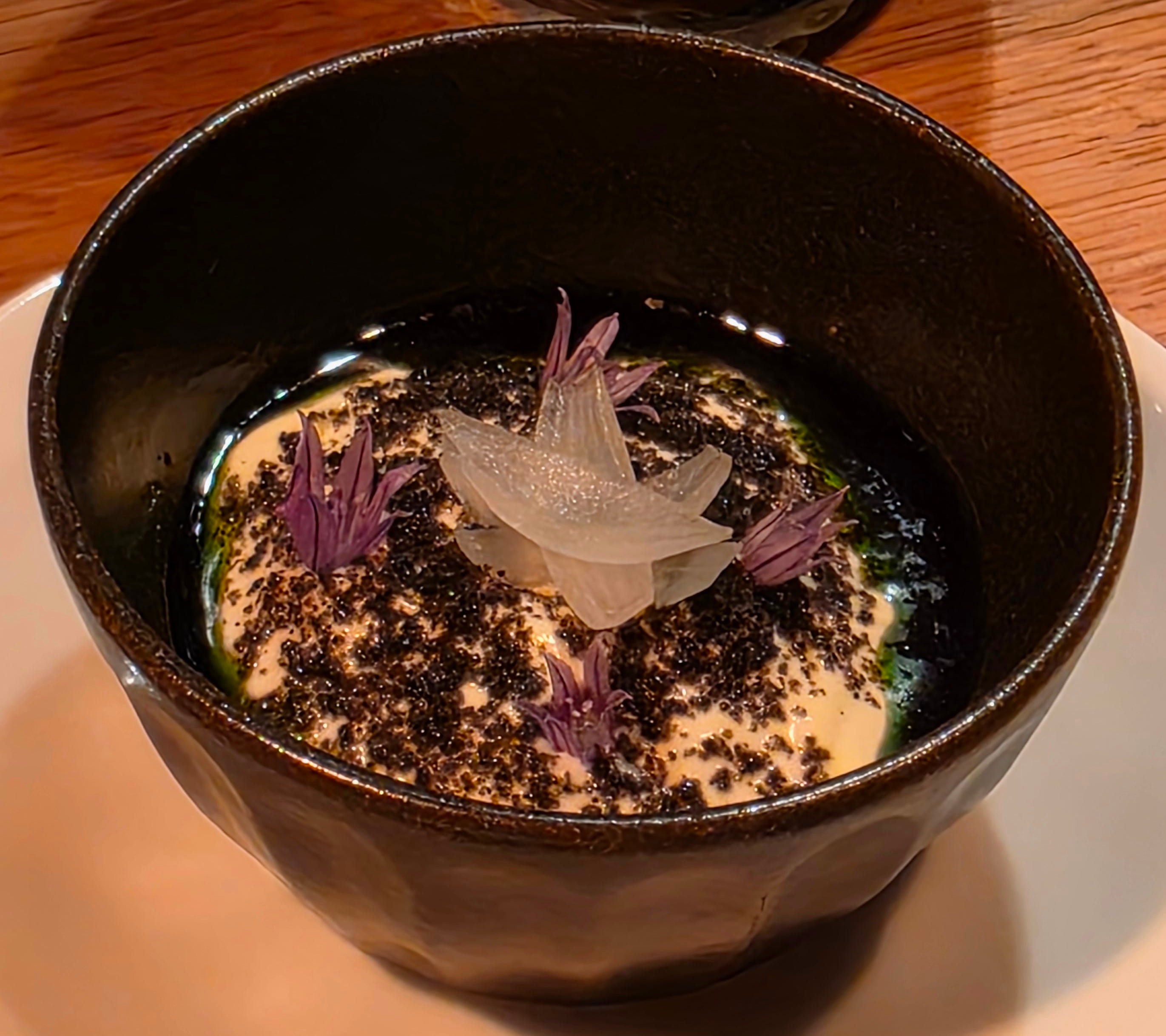
The bread course was strong. Warm house rolls were brushed with cultured butter and sea salt, then served with creme fraiche, onion marmalade, chives and pickled wild garlic. It had the comforting richness you want from bread, with enough acid and allium to keep going back.
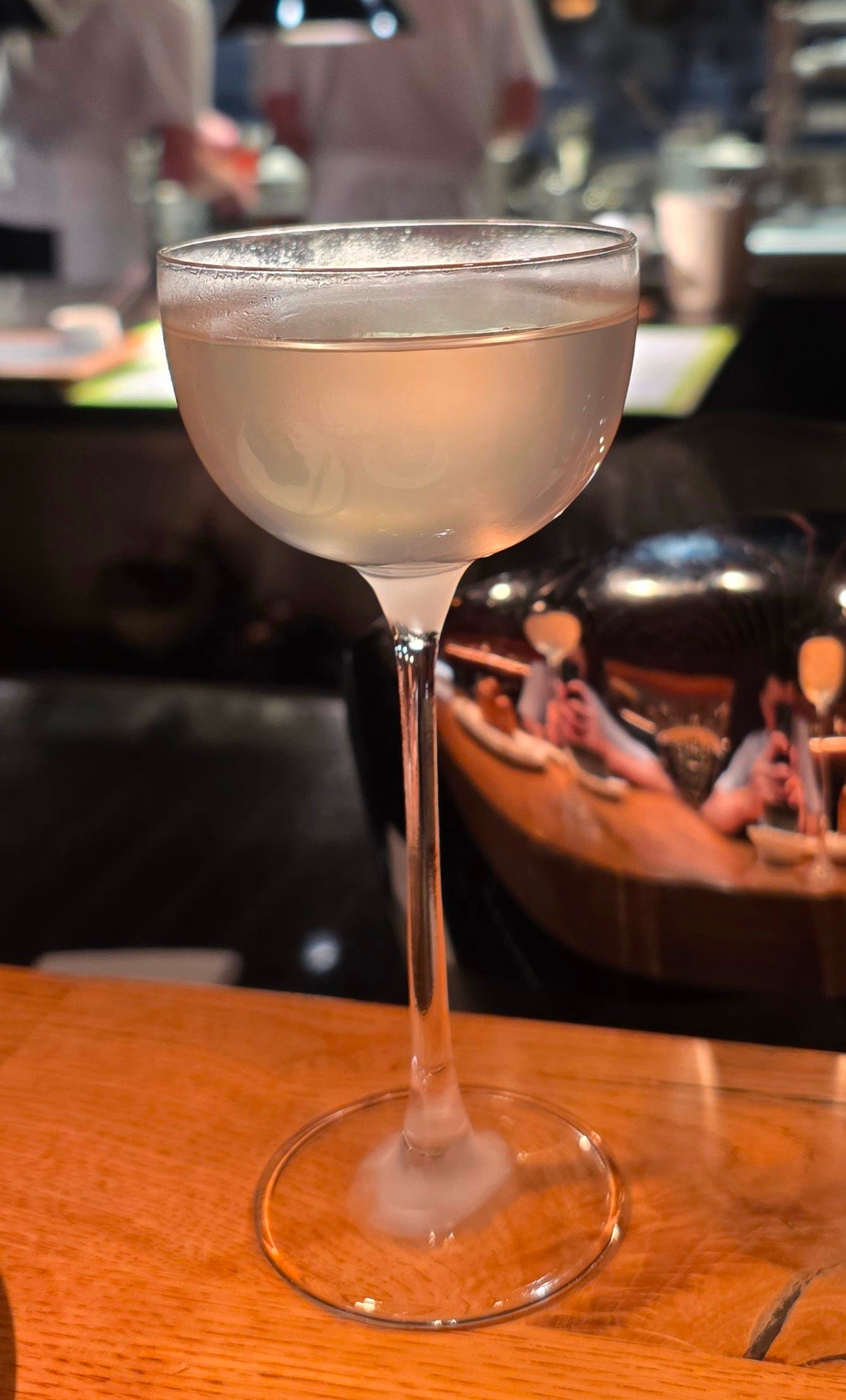
The next soft pairing was toasted barley and coconut water with roasted hay. Smoky coconut water sounds like a dare. It was more interesting than expected.
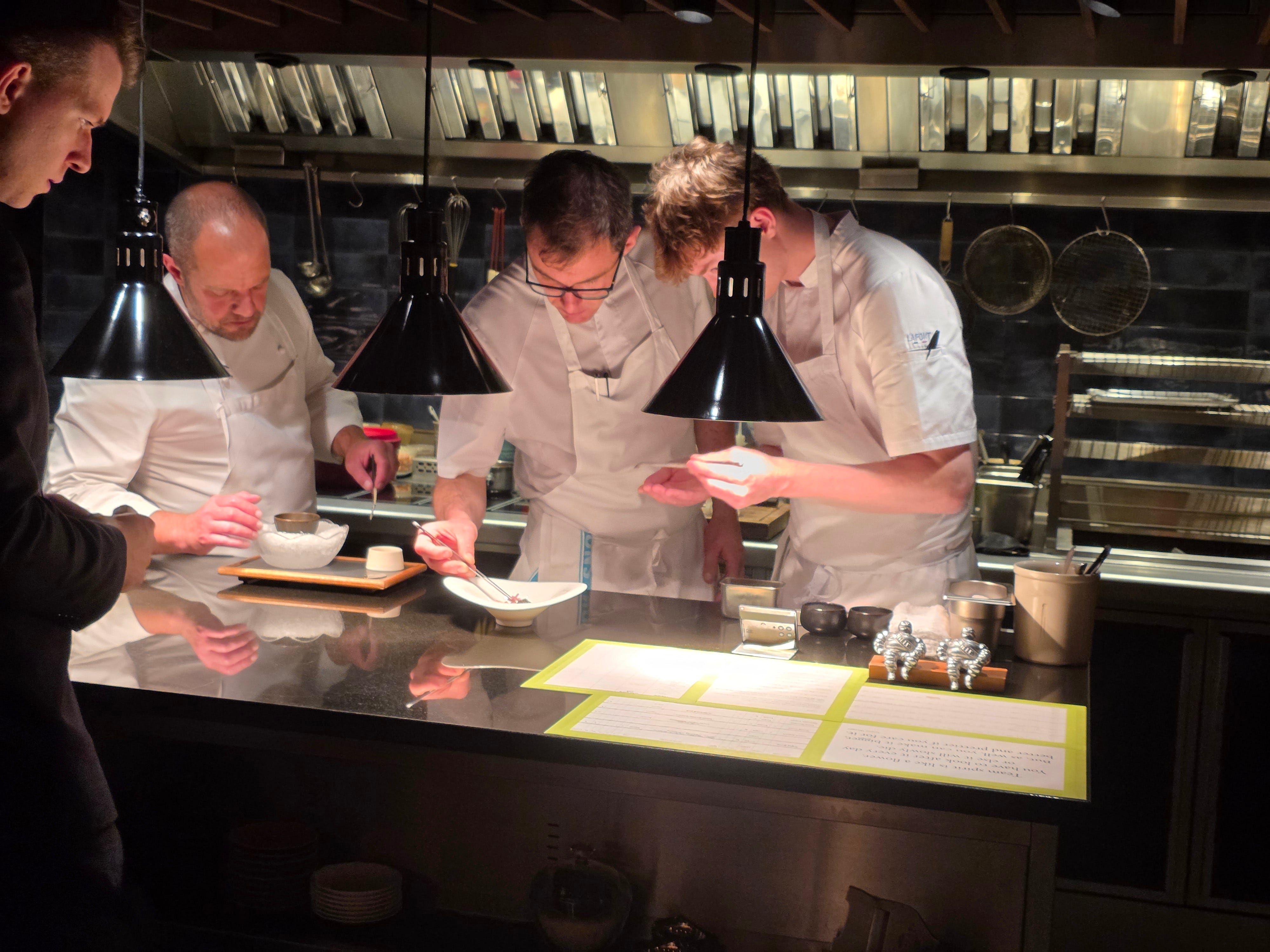
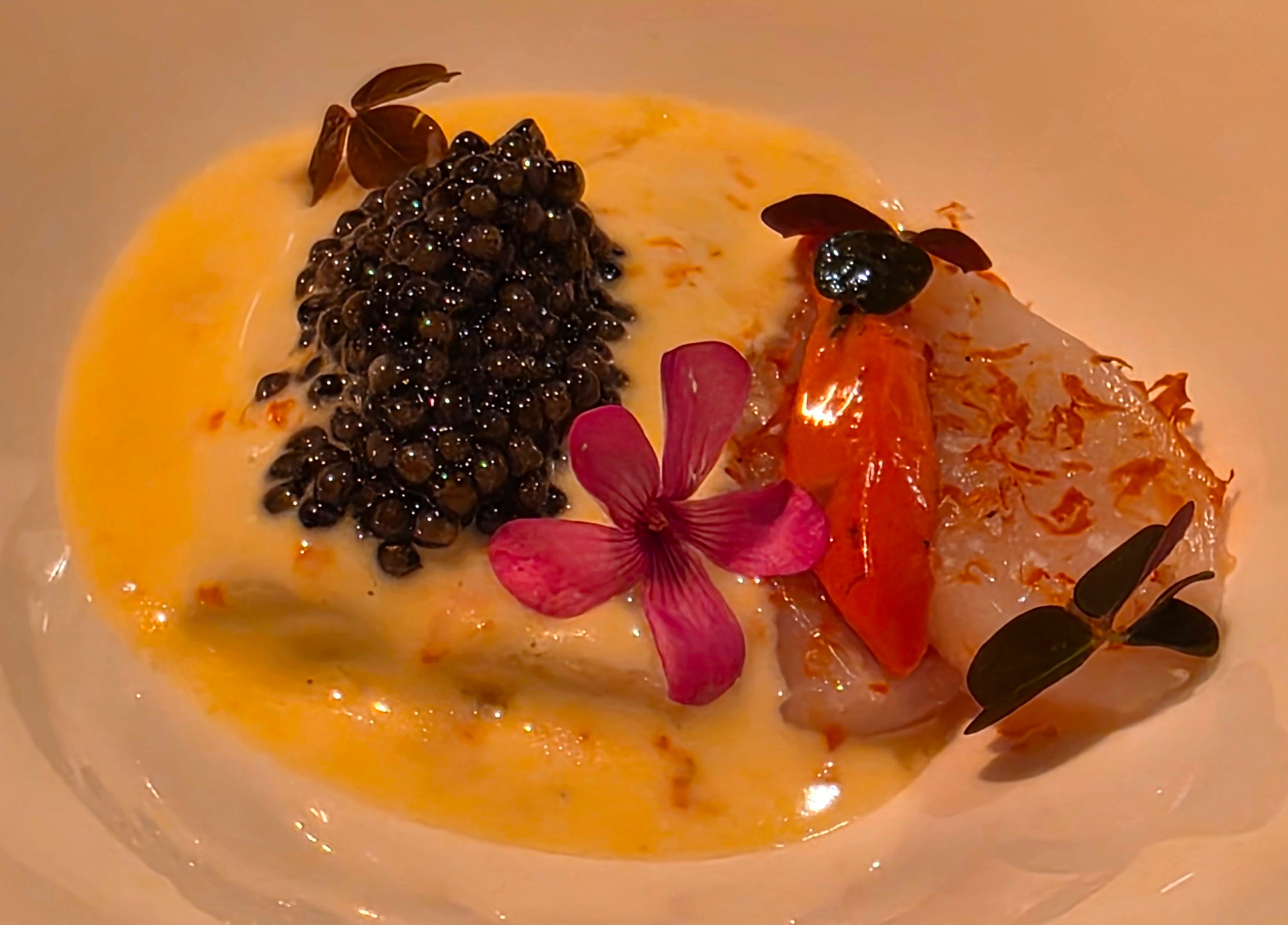
The caviar dish was the highlight of the meal. Raw hand-dived Cornish scallops came with roe and dried roe, Wye Valley white asparagus in hollandaise, and caviar on top. Sweet scallop, asparagus, egg-rich sauce, salt and pop from the caviar. Luxurious, but the white asparagus gave it structure.
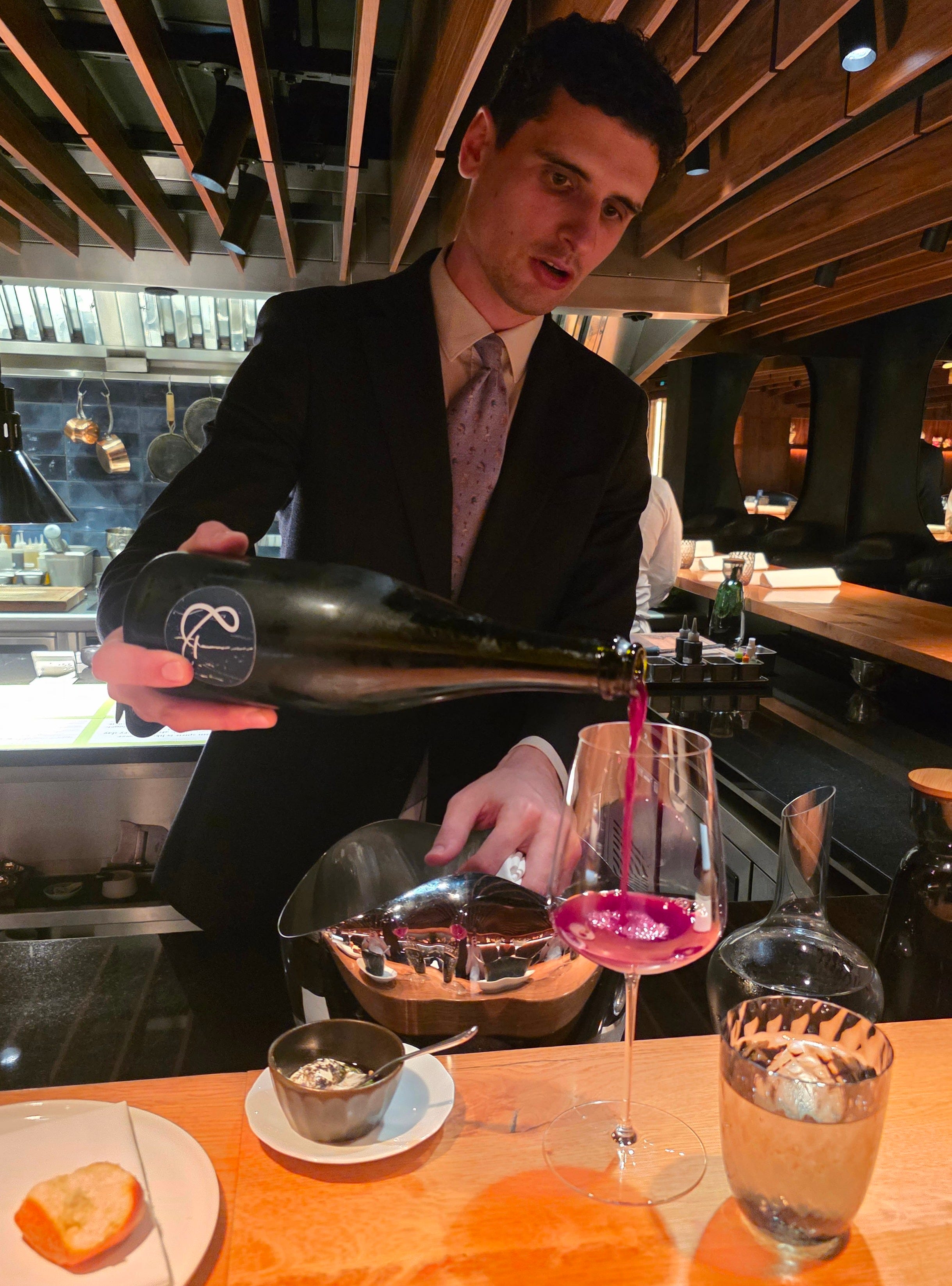
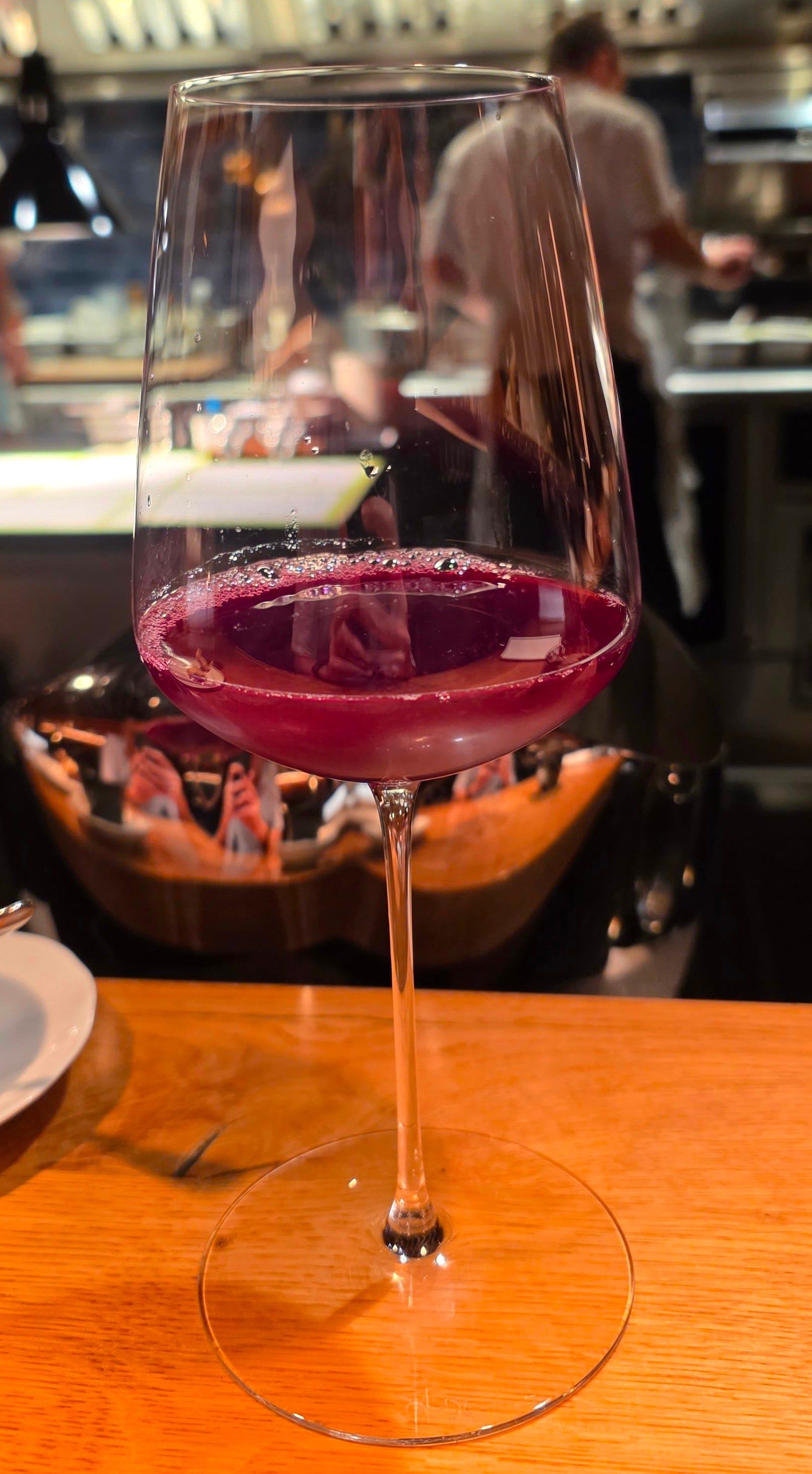
The soft pairing tried to evoke Merlot without simply dealcoholising Merlot: Merlot grape juice, juniper, oolong, acidity and blackcurrant. A clever idea.
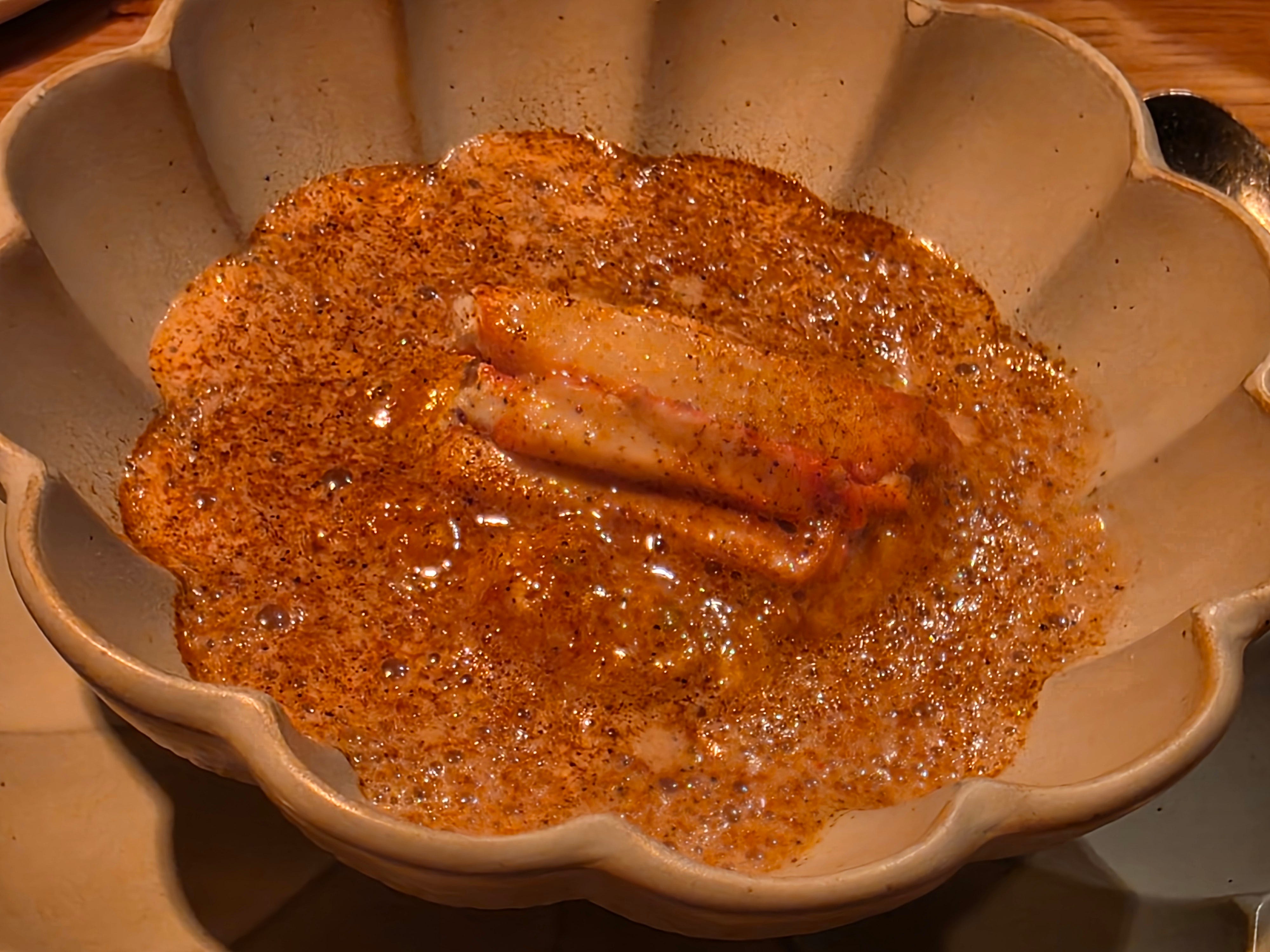
Cornish langoustine came with scrambled eggs, tamale, diced mango, crushed peanuts and curry emulsion. This was the most Thai-influenced dish of the night: spicy, sweet, savoury, creamy and crunchy. It had a lot going on, but the langoustine held.
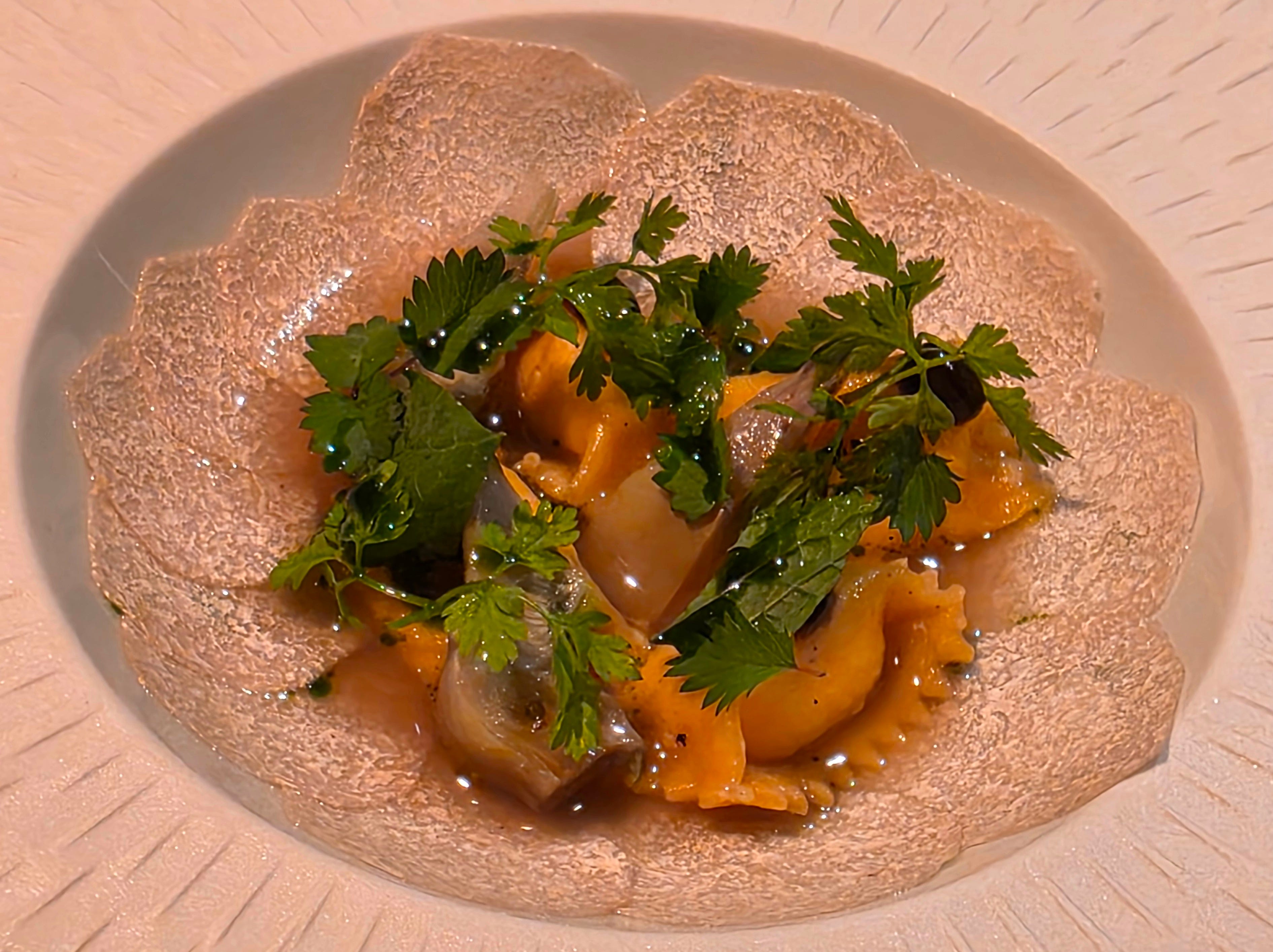
The pasta was the other standout. Homemade agnolotti filled with goat’s curd, violet artichoke, condensed chicken stock and the summer truffle supplement. Rich, savoury, slightly lactic from the curd, with the artichoke and truffle pulling it into a more grown-up register. Absolutely delicious.
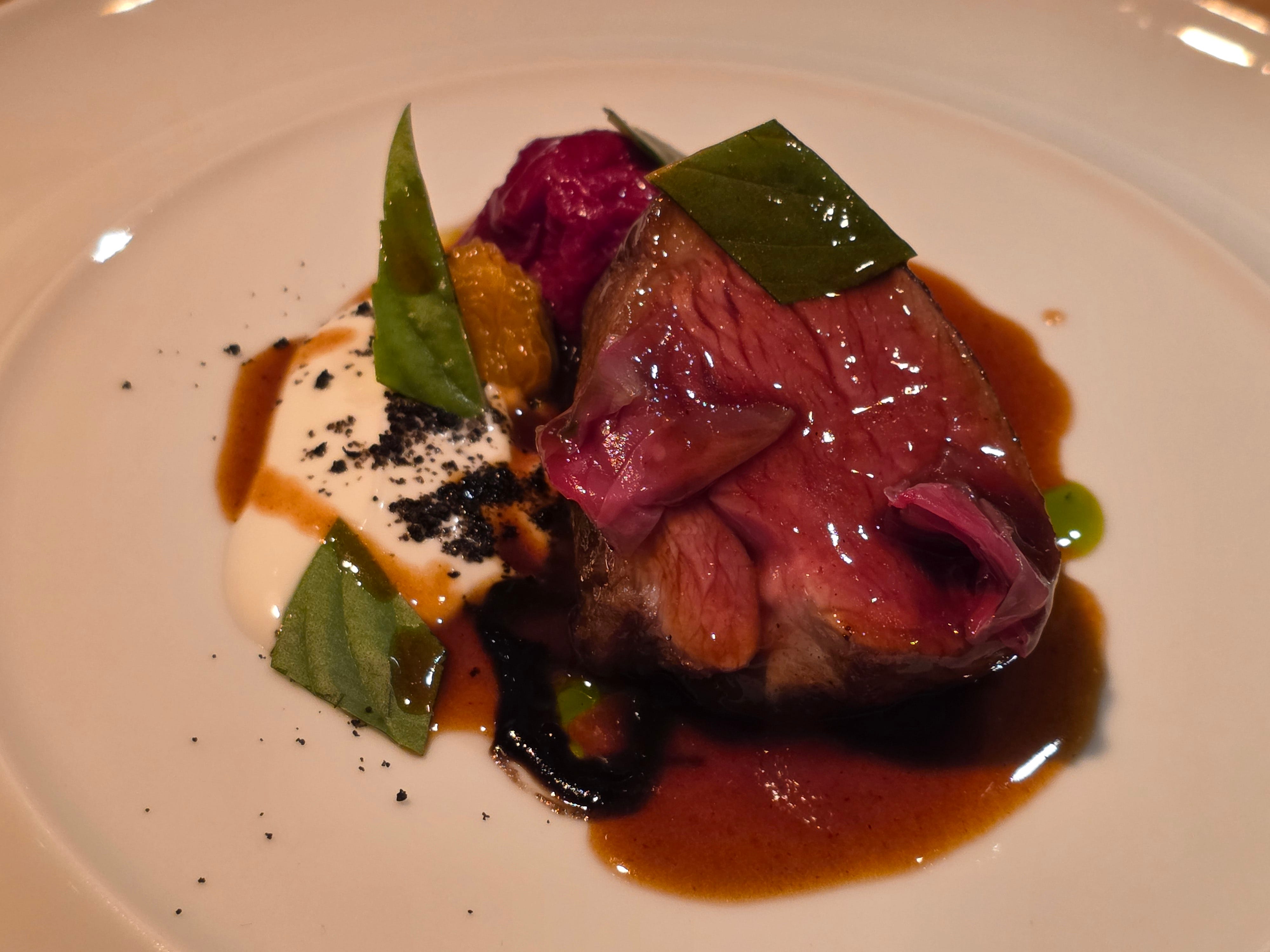
Lamb saddle came with lamb sausage, an intensely sweet dehydrated tomato and yoghurt sauce. Good lamb, clean cookery, and the tomato did useful work as a concentrated sweet-acid counterpoint.
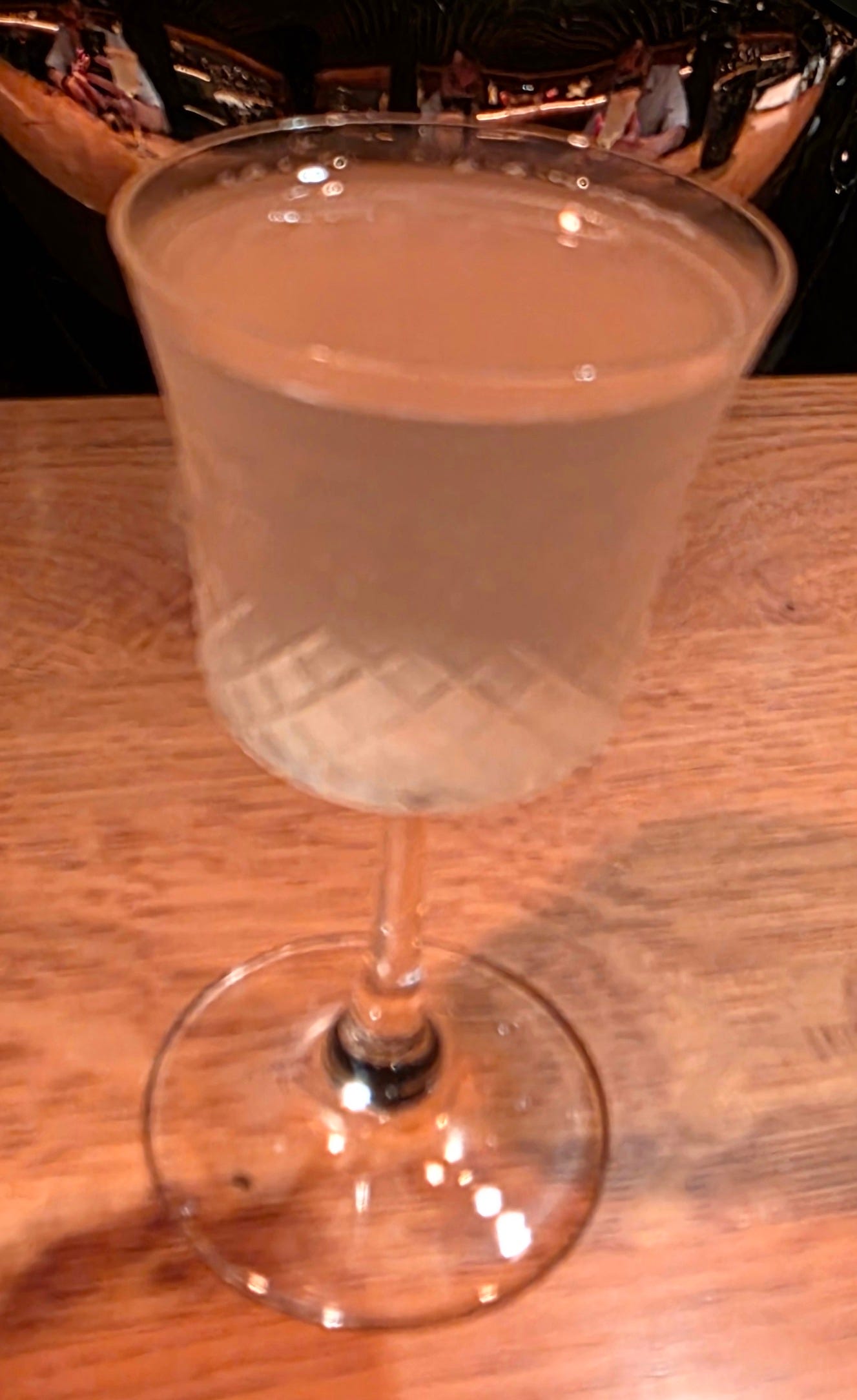
The almond blossom drink came next: lemon with almond blossom tea. Gentle and well placed before the meal moved into cheese and dessert.
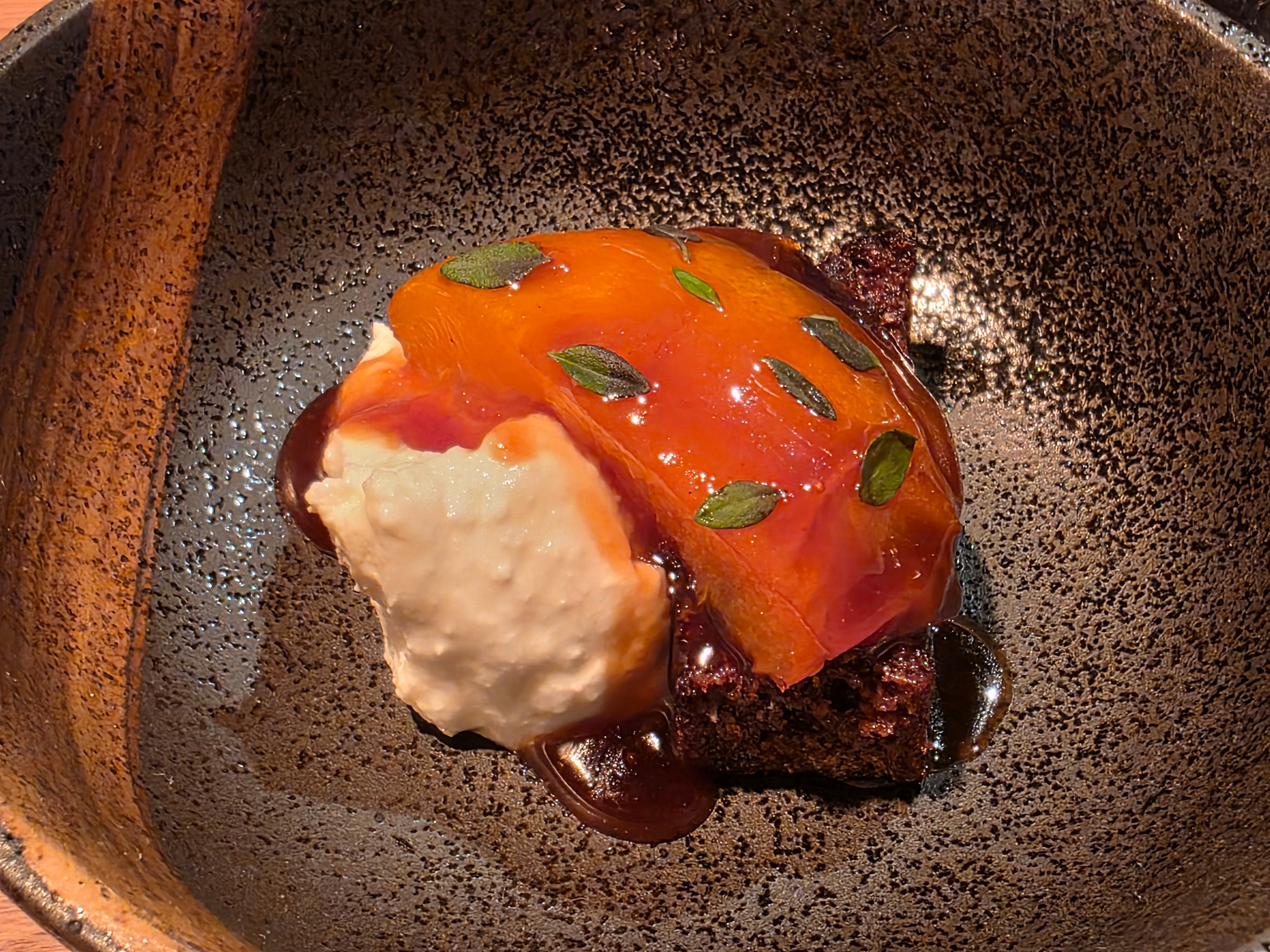
The cheese course also acted as a pre-dessert. Goat curd from the pasta returned with crispy soda bread toast, caramelised apricot and individual thyme leaves. It was a smart bridge: savoury dairy, toast, fruit and herb rather than a heavy cheese trolley.
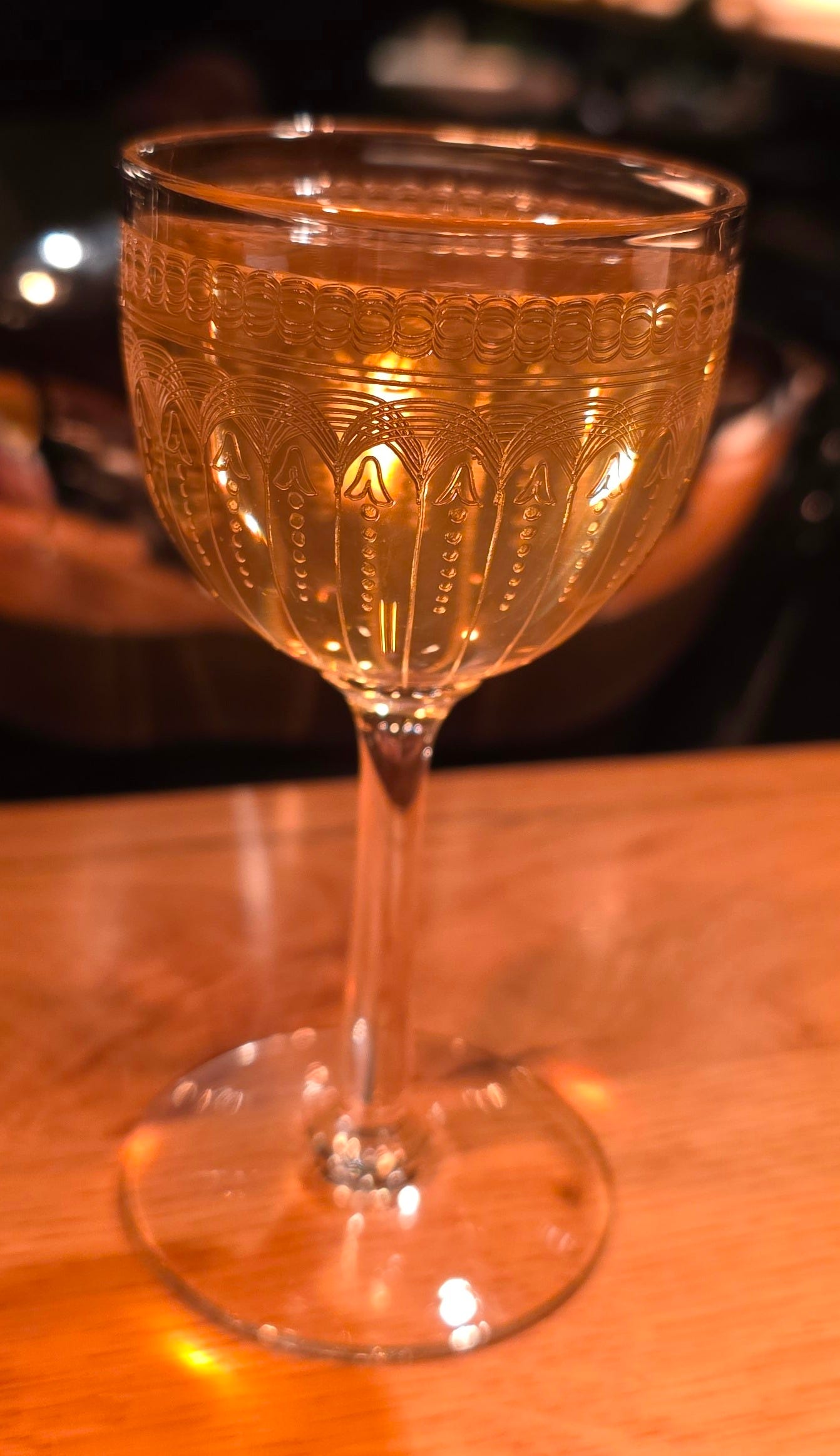
The final soft pairing was elderflower with foraged lemon balm and verjus. Fresh, aromatic, and palate cleansing before the desserts.
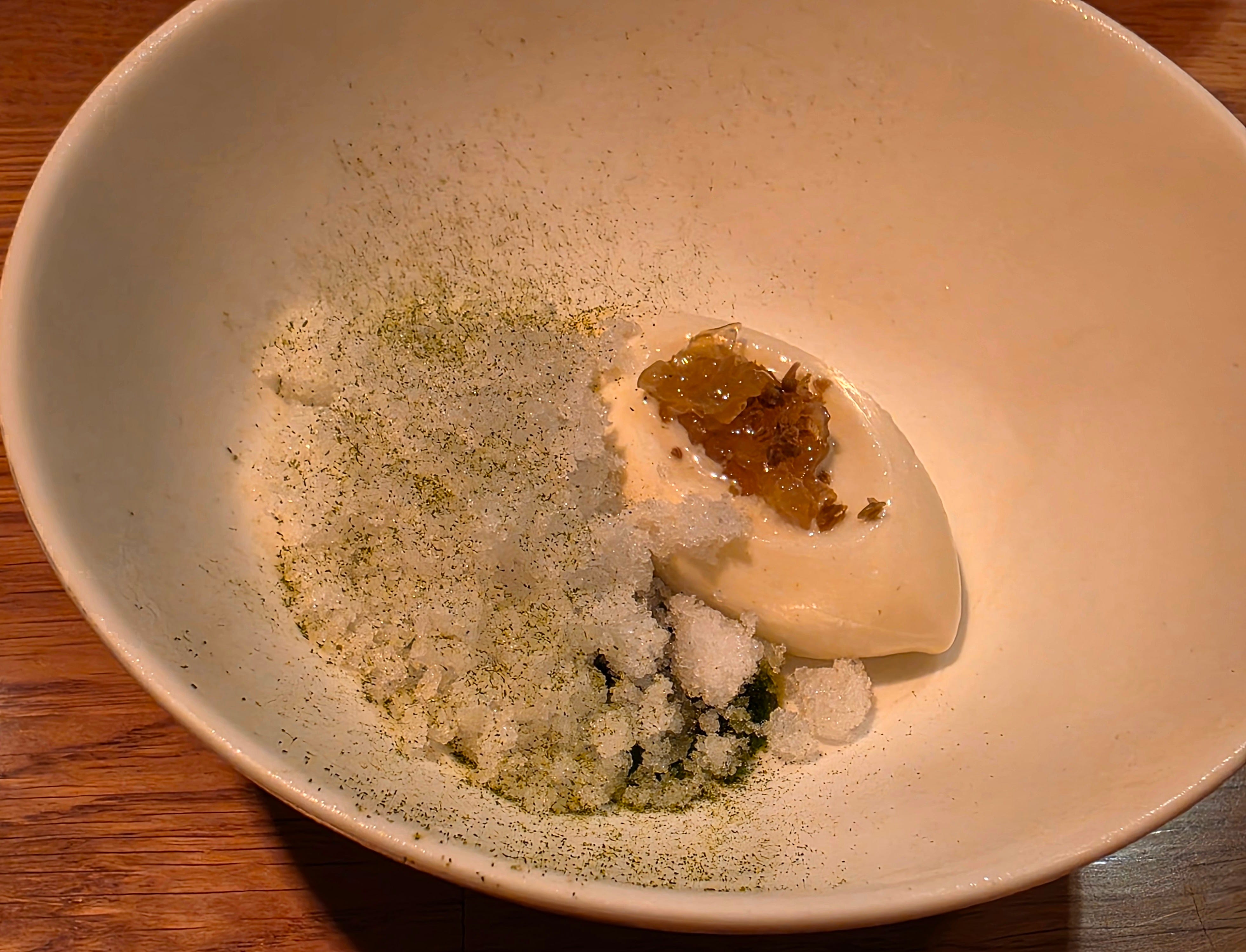
Dessert started with fennel granita, fennel ice cream and fennel seed marmalade. It had only been added to the menu a week before. Fennel is an awkward ingredient if mishandled. Here it worked: cold, clean, lightly bitter, and more memorable than another safe fruit dessert.
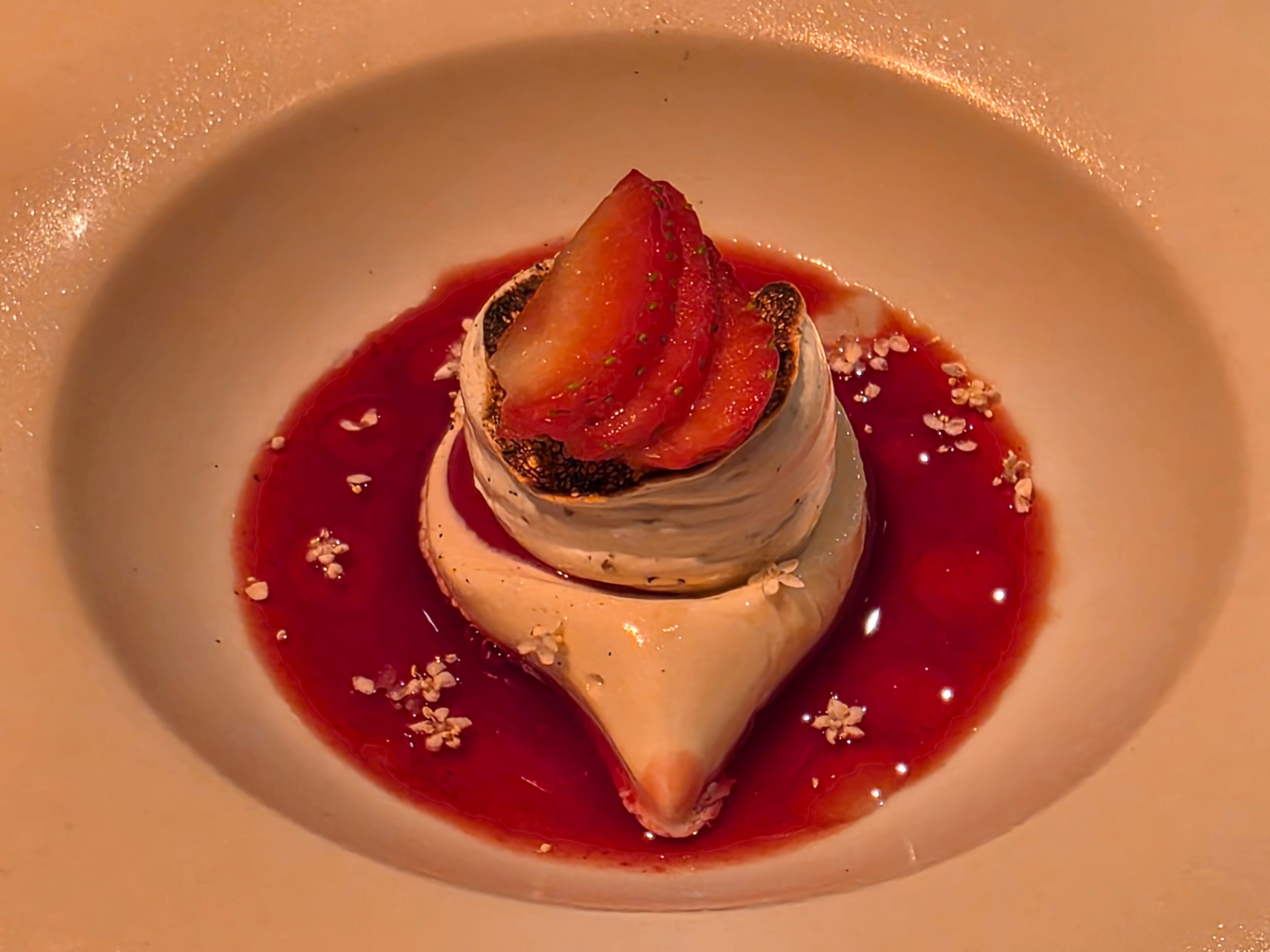
The second dessert was Kent strawberries, sliced and as compote, with elderflower ice cream and coal-seared meringue for smoke. Delicious. It reminded me a little of Humo, with the charcoal seared meringue.
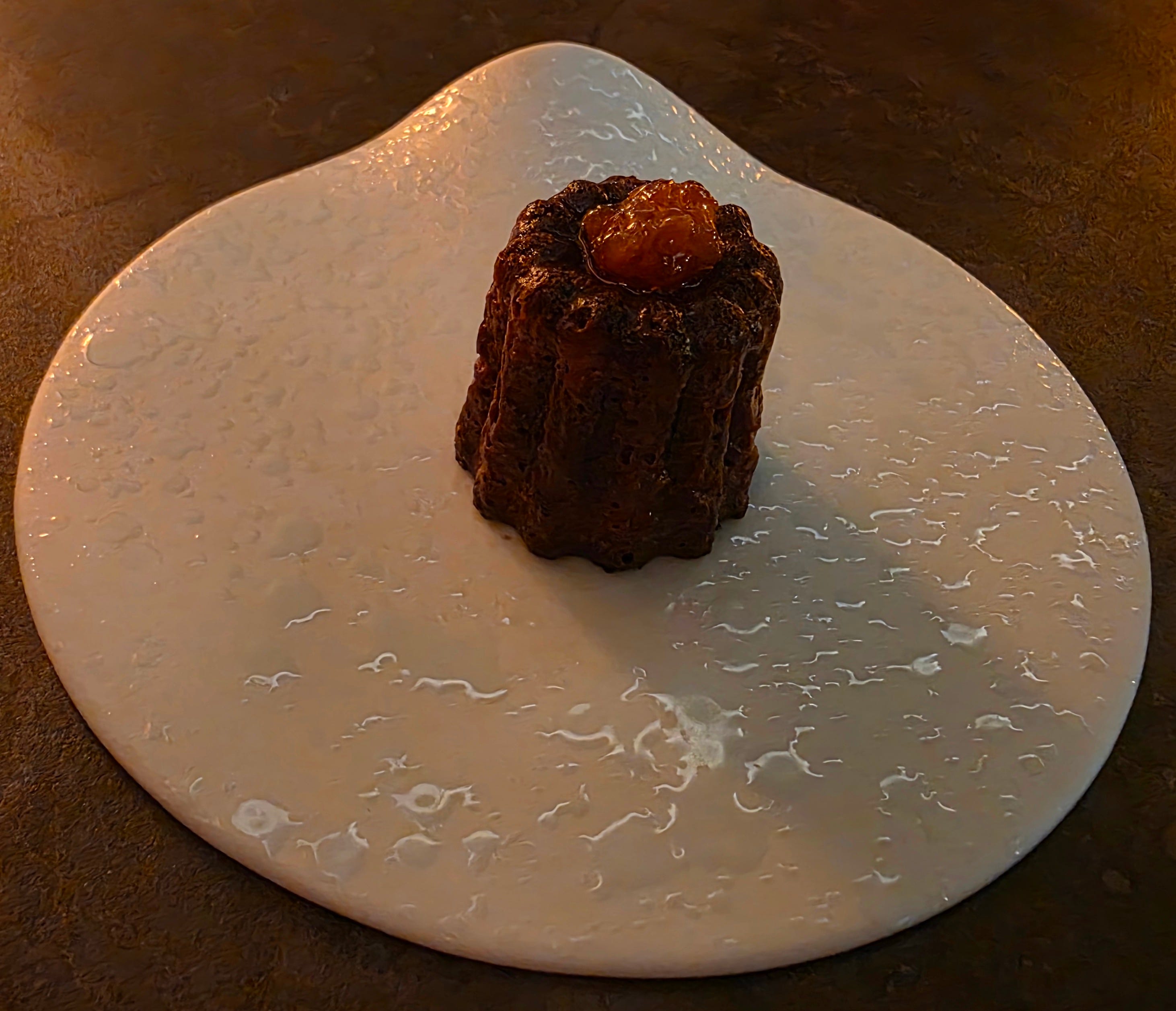
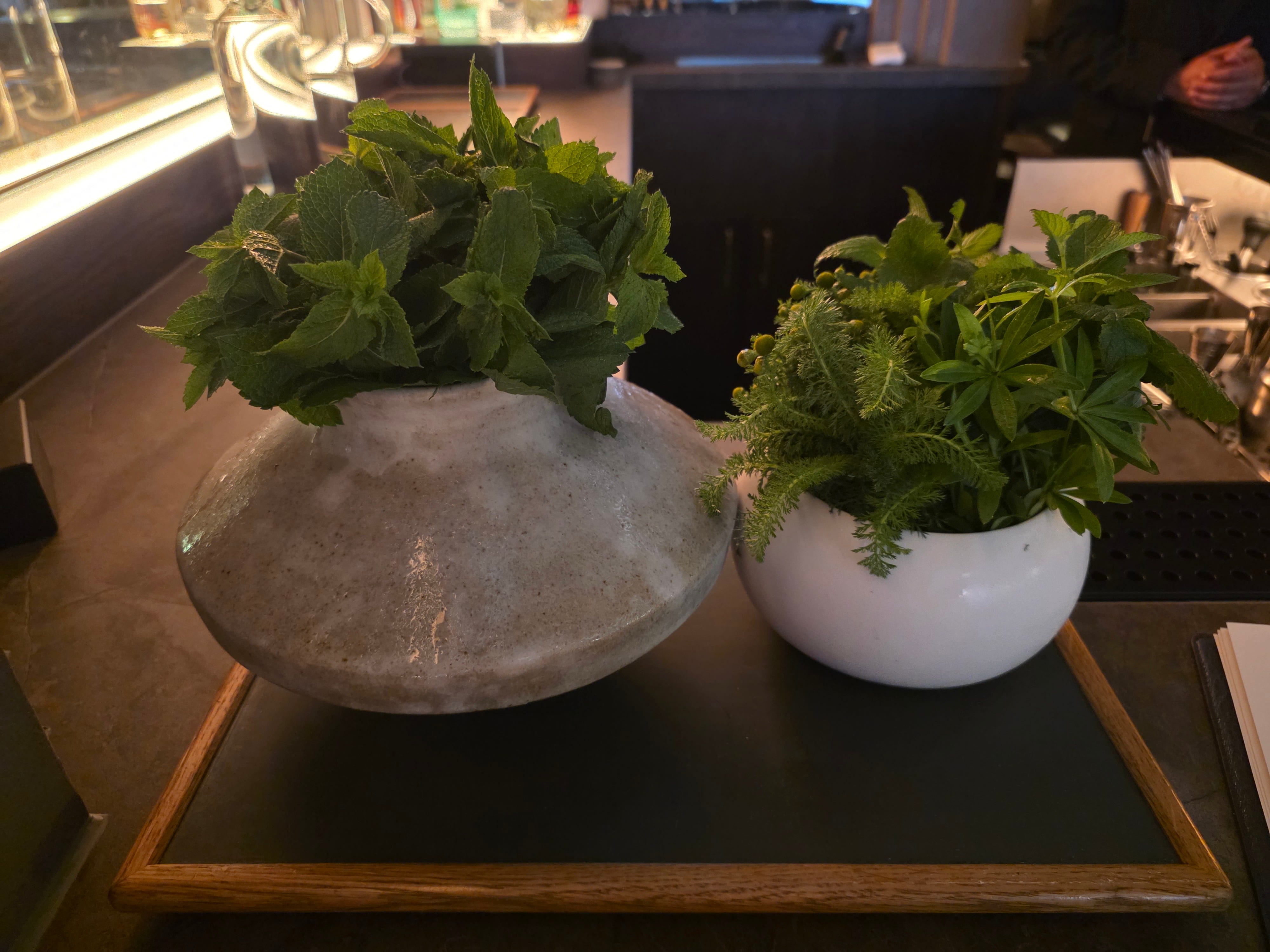
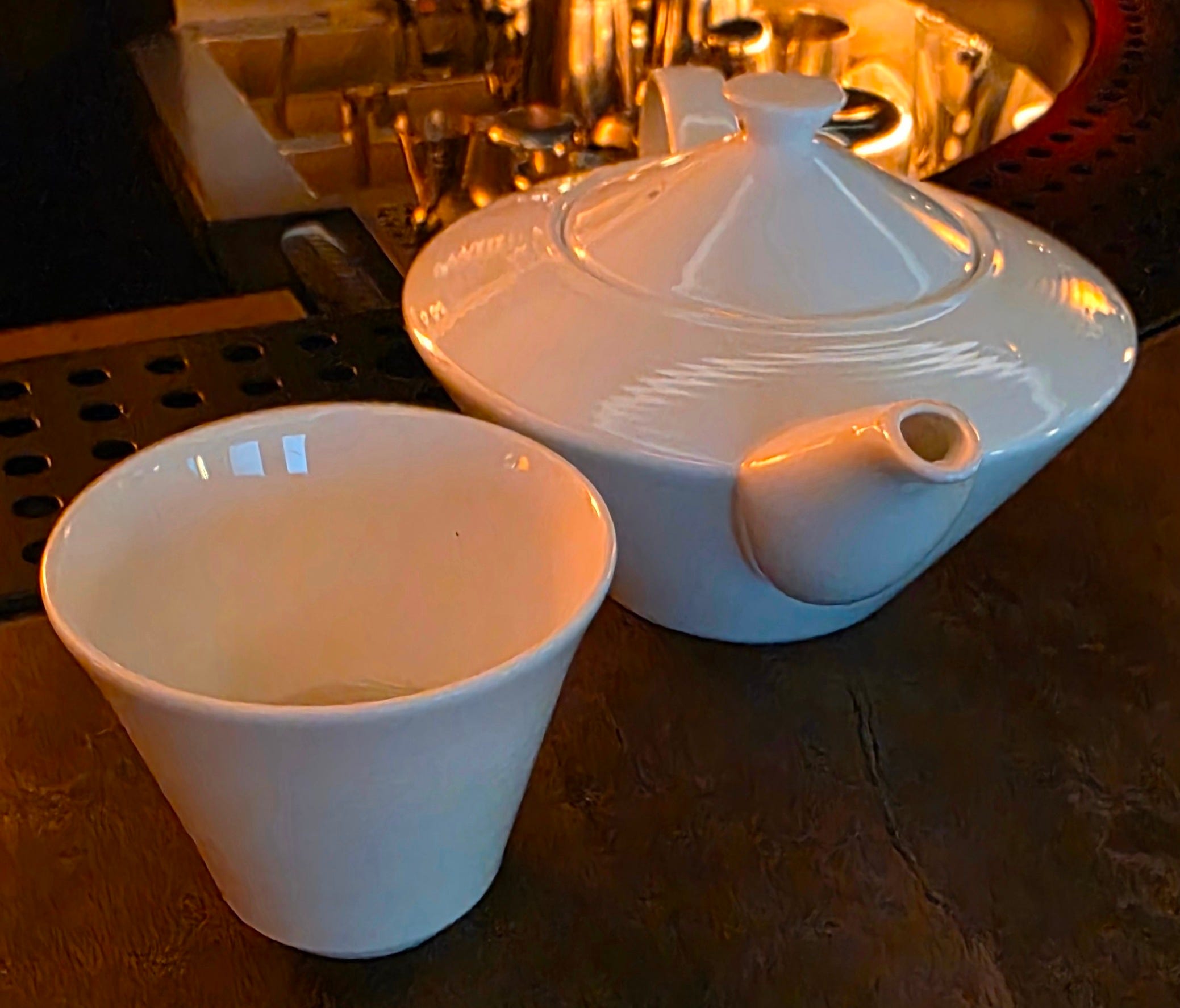
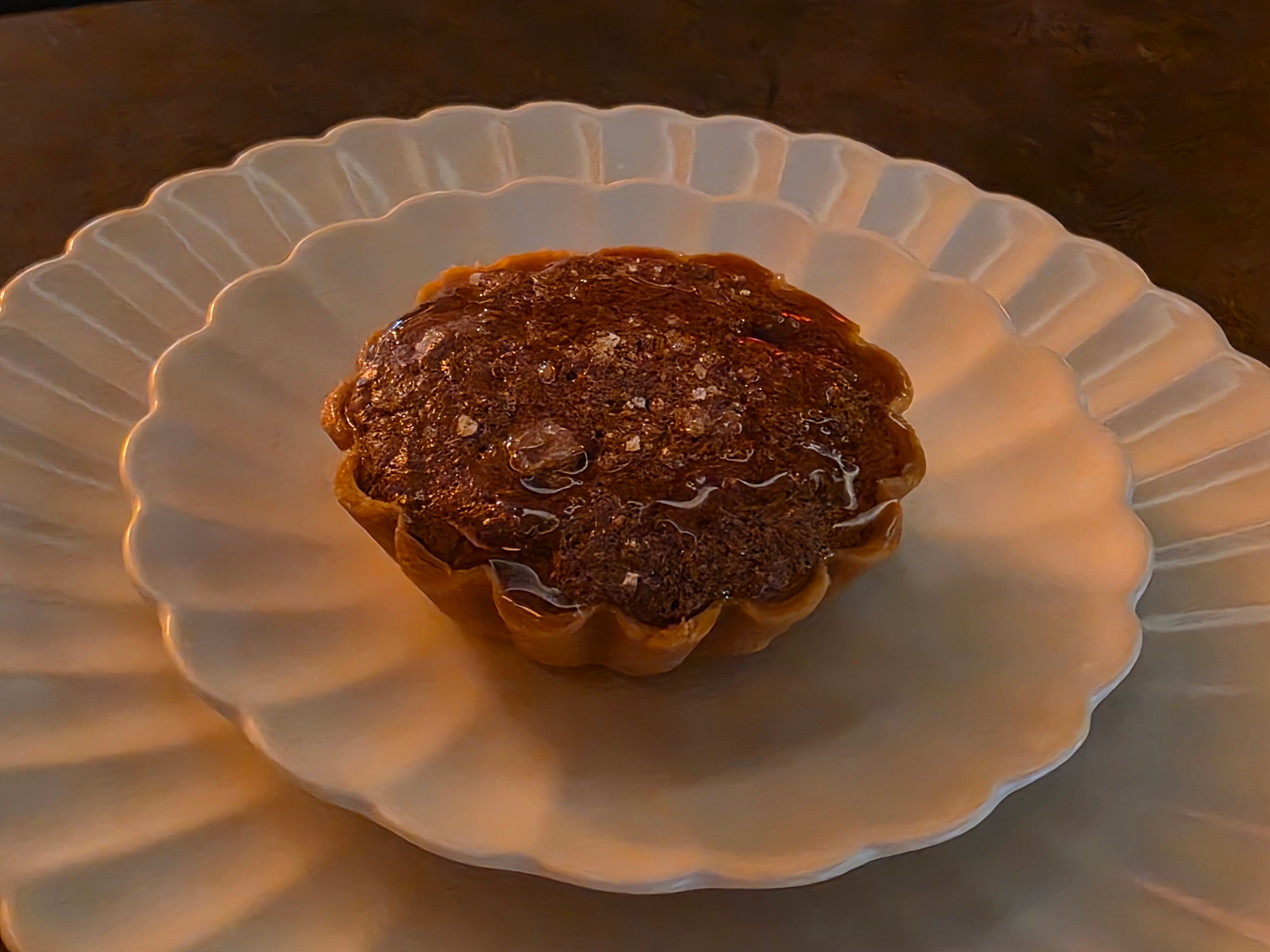
A selection of wild-foraged herbs made into an after dinner tea with locally-sourced honey. A classic canale, served untraditionally warm, and a loose cocoa tart ended the meal.
Dinner was fun. Being the only diner helped. I had the full attention of the staff, with a long conversation about food culture, dish inspiration and other restaurants. That is the counter format at its best: not theatre, but access.
The restaurant’s strengths are clear. British produce, local foraging, exact execution, and a chef still present enough to explain why each dish exists. The white asparagus caviar dish and the goat’s curd agnolotti were the two courses I would most want again.
The meal lacked a bit of spark. Execution was close to flawless, but there were not too many dishes I would rave about later. Still, Kitchen Table is a serious London restaurant with a real point of view. I would recommend going, especially if you care about British ingredients and like the discipline of a counter-only tasting menu.
Total Damage: 350 GBP/1 person