
Chef Christophe Lerouy grew up in Alsace, the son of a local restaurateur, and trained in the kind of kitchens that leave a permanent mark. He worked under Christian Le Squer at Pavillon Ledoyen, Guy Martin at Le Grand Véfour, and the Pourcel brothers at Le Jardin des Sens before setting off on a winding international path through Los Angeles, Shanghai, Marrakech, and Abu Dhabi. He arrived in Singapore in 2008 as sous chef at The Lighthouse, then spent time at Amador in Mannheim (the modernist German restaurant that cemented his experimental streak), and later served as chef de cuisine at Alma by Juan Amador in Singapore. By 2017, he was ready to open his own place.
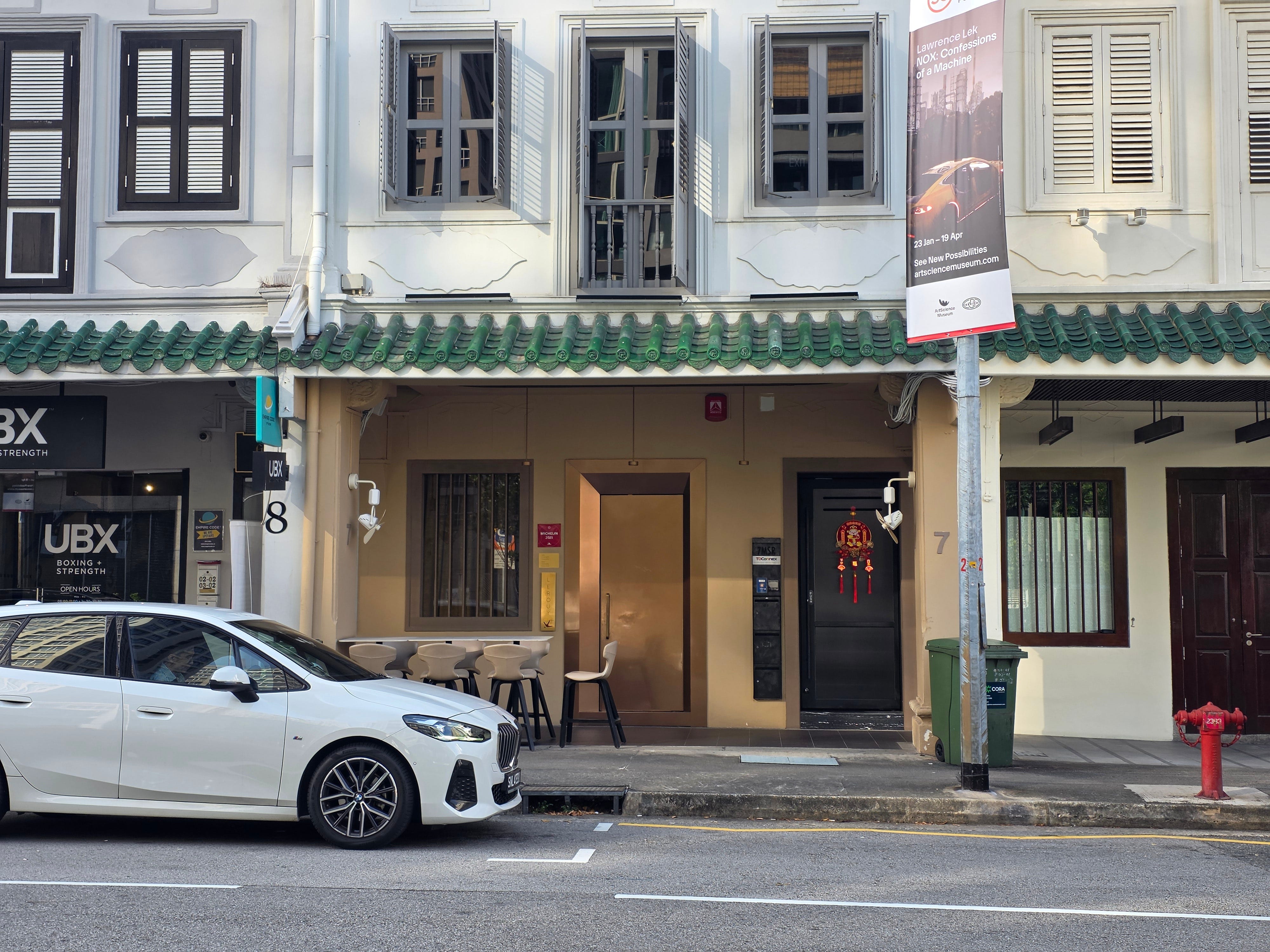
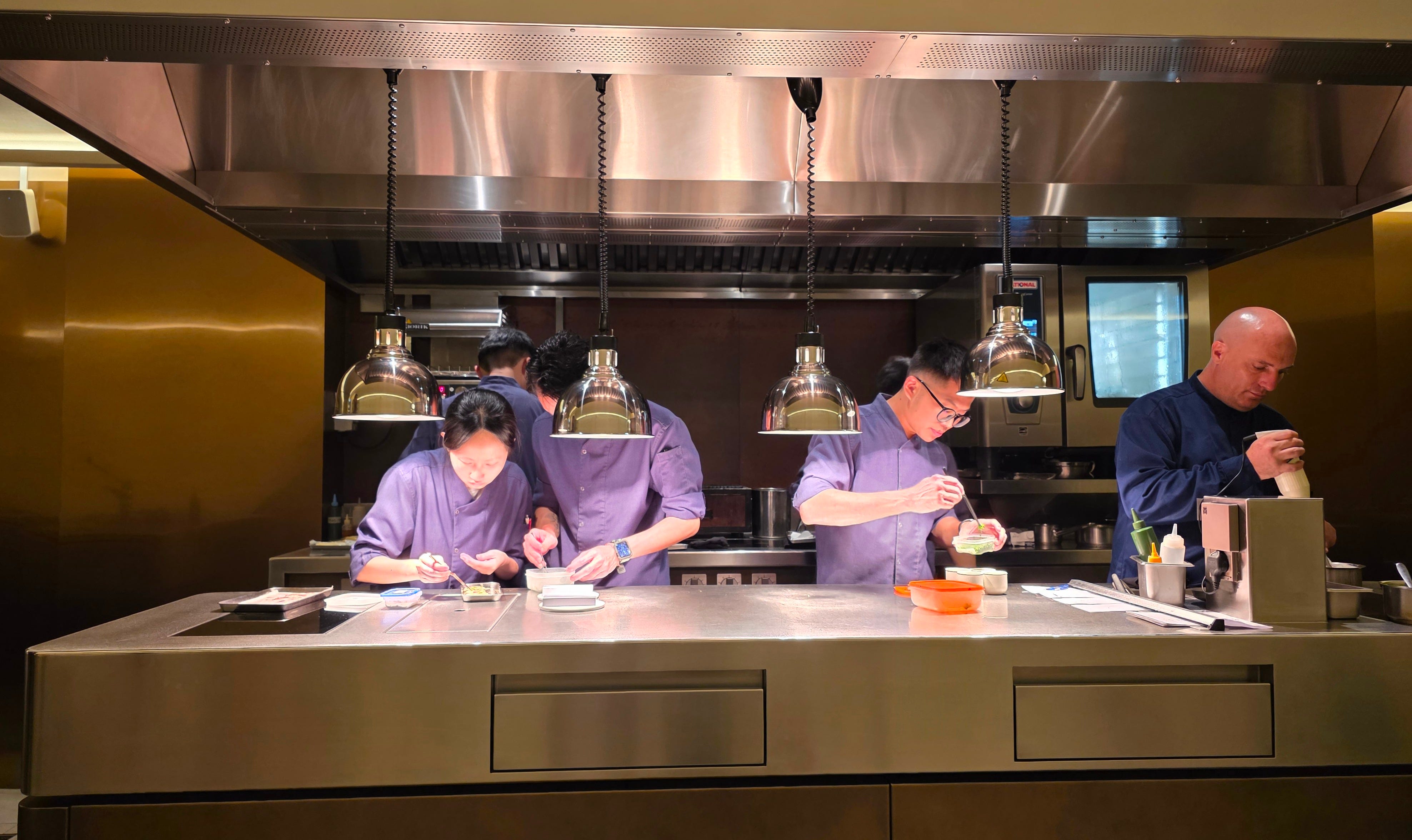
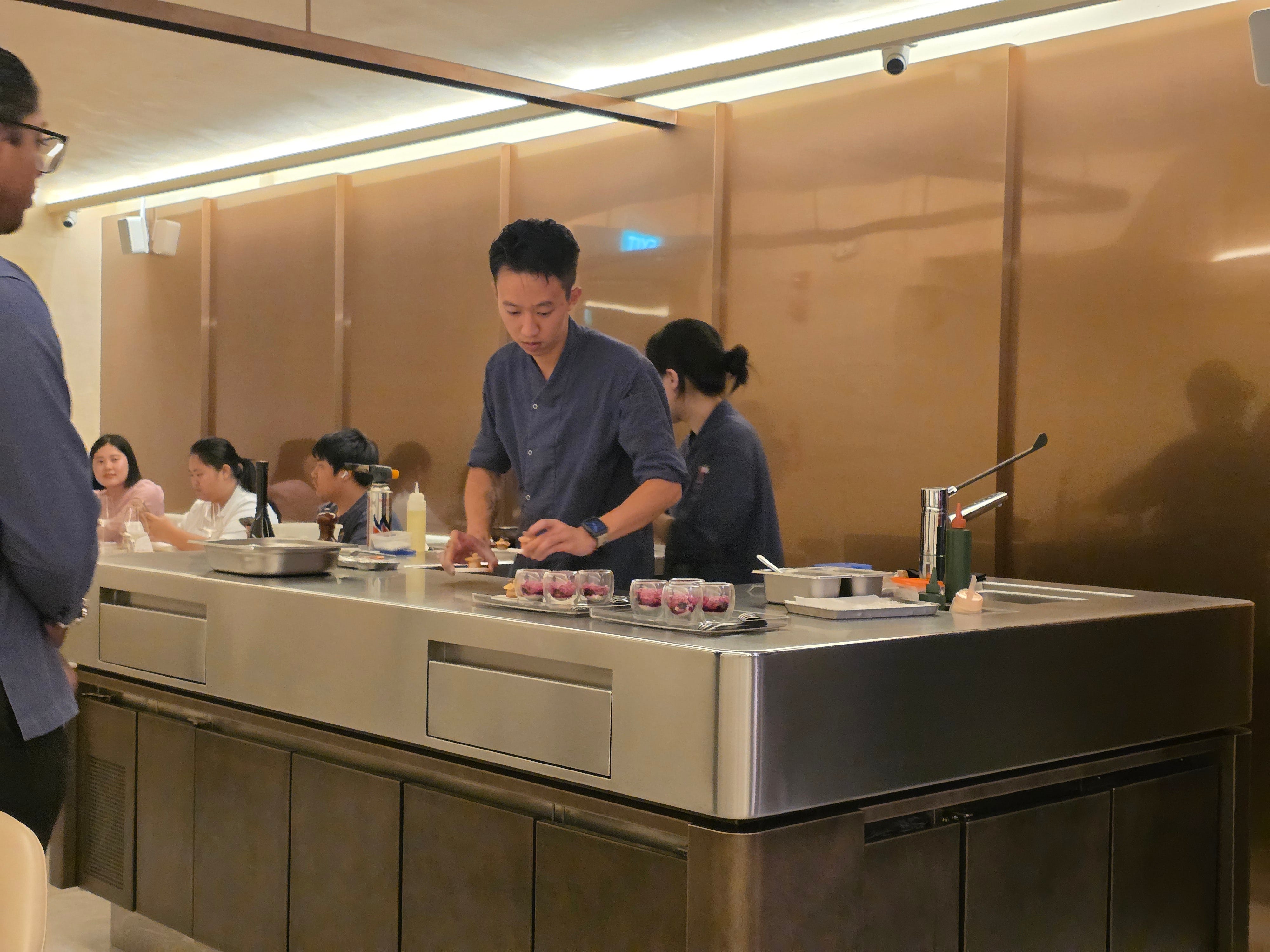
The restaurant that bears his name has moved twice since then. The original was a compact shophouse on Stanley Street with a 26-seat counter and an open kitchen. Around 2020, it relocated to a larger space on Amoy Street for better flow. The current home, since early 2024, is on Mohamed Sultan Road, and the shift is significant. The room is cavernous and contemporary, with an industrial edge and three open islands in the centre where the kitchen team prepares every course in full view. It feels less like a dining room and more like a stage, which is exactly the point.
Inspirations pull from those stints abroad - French base with experimental edges, travel flavors, and fresh suppliers. Signature items shift often, but examples include refined takes on seafood or veggies with unexpected pairings, like punchy sauces or textures from his global exposure.
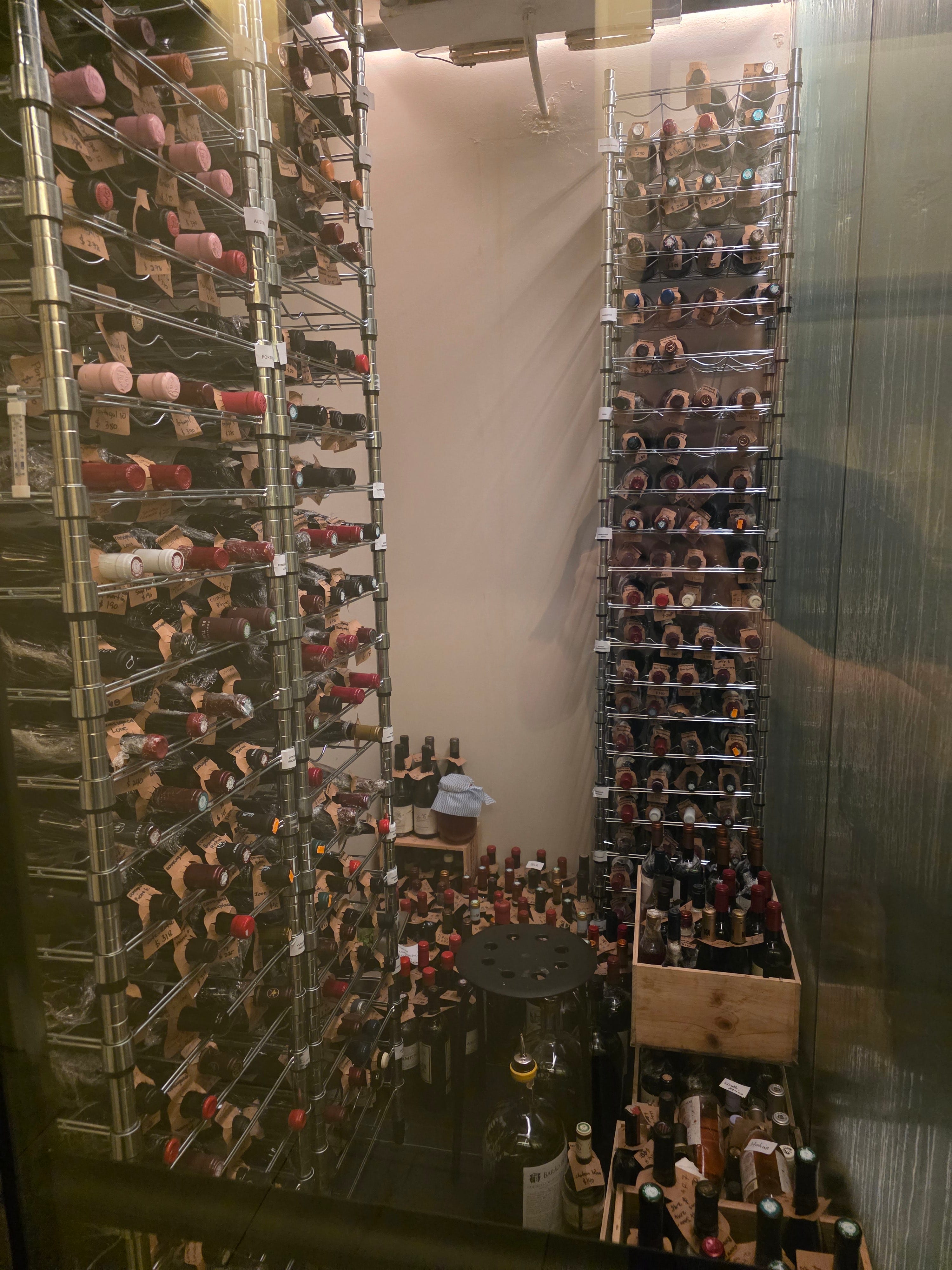
Sous chef Kirby Quinol, who rejoined the team in recent years after stints at The Black Swan and L’Angelus, handles much of the daily execution alongside Lerouy. Multiple wine cellars sit in the back of the restaurant, packed floor to ceiling with bottles spilling out of their racks. What I saw was apparently only half the collection.
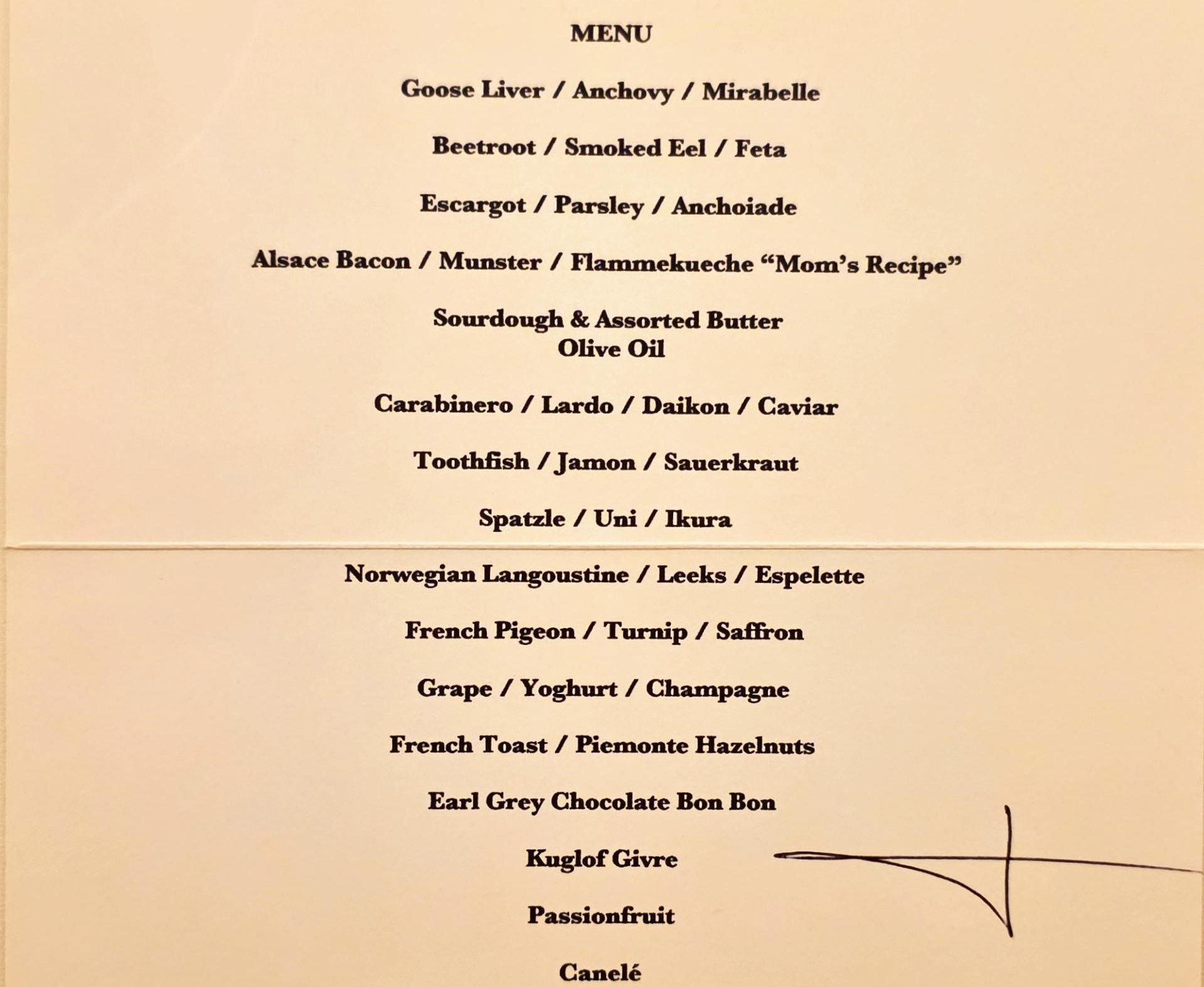
Lerouy operates on a carte blanche basis. There is no menu upfront, no choices, no preview of what’s coming. You sit down and eat what the chef has decided to cook that day, built around whatever is seasonal, whatever has arrived fresh, and whatever ideas are circling his head that week. The printed menu arrives only at the end of the meal (I kept mine as a souvenir). It’s an omakase philosophy filtered through a deeply French sensibility, and the kitchen has held a Michelin star since the 2019 guide.
The meal opened with a round of canapés, each one distinct in flavour, texture, and temperature.
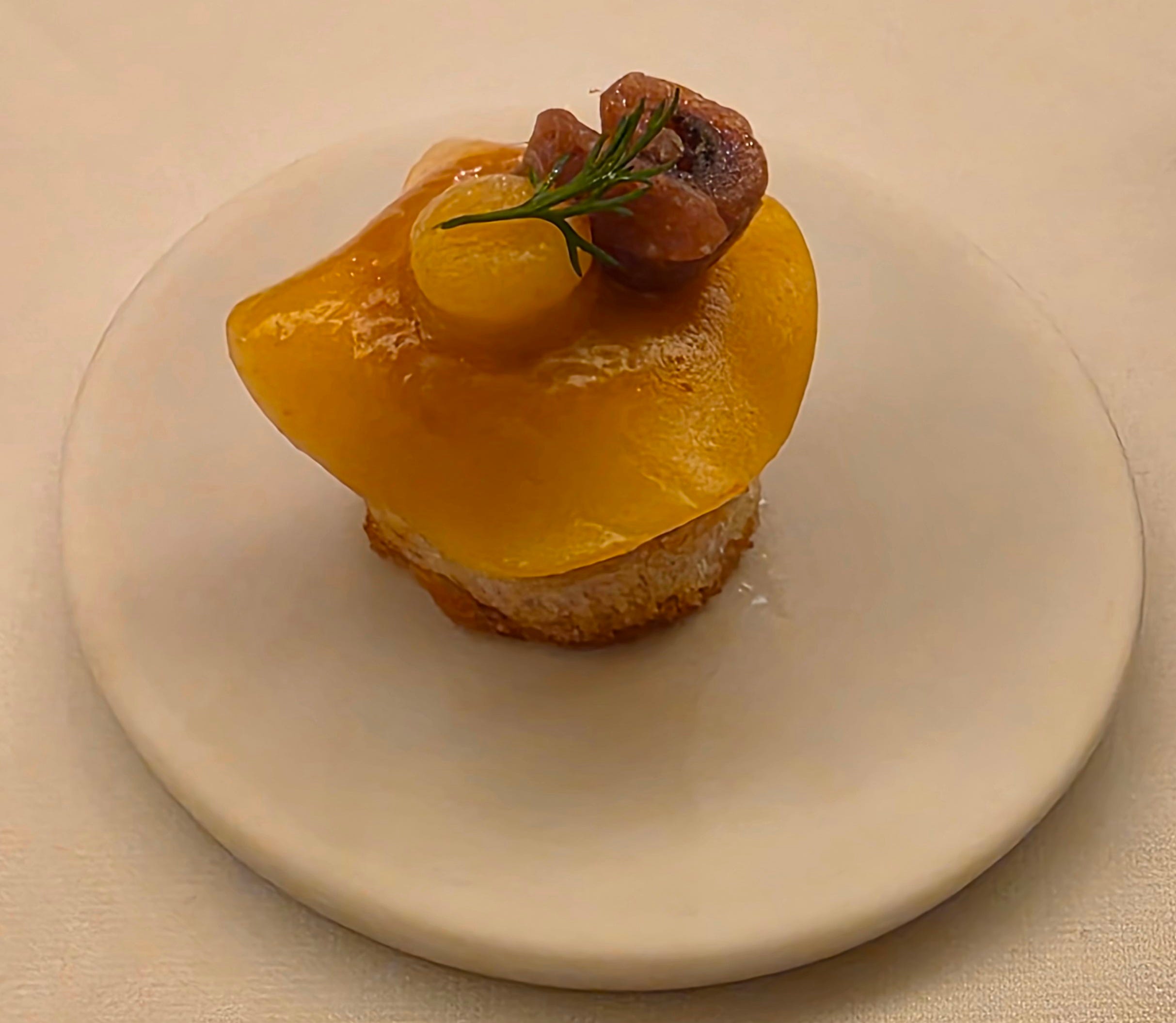
A foie gras terrine arrived on an anchovy crisp with yellow plum, rich and sharp in equal measure.
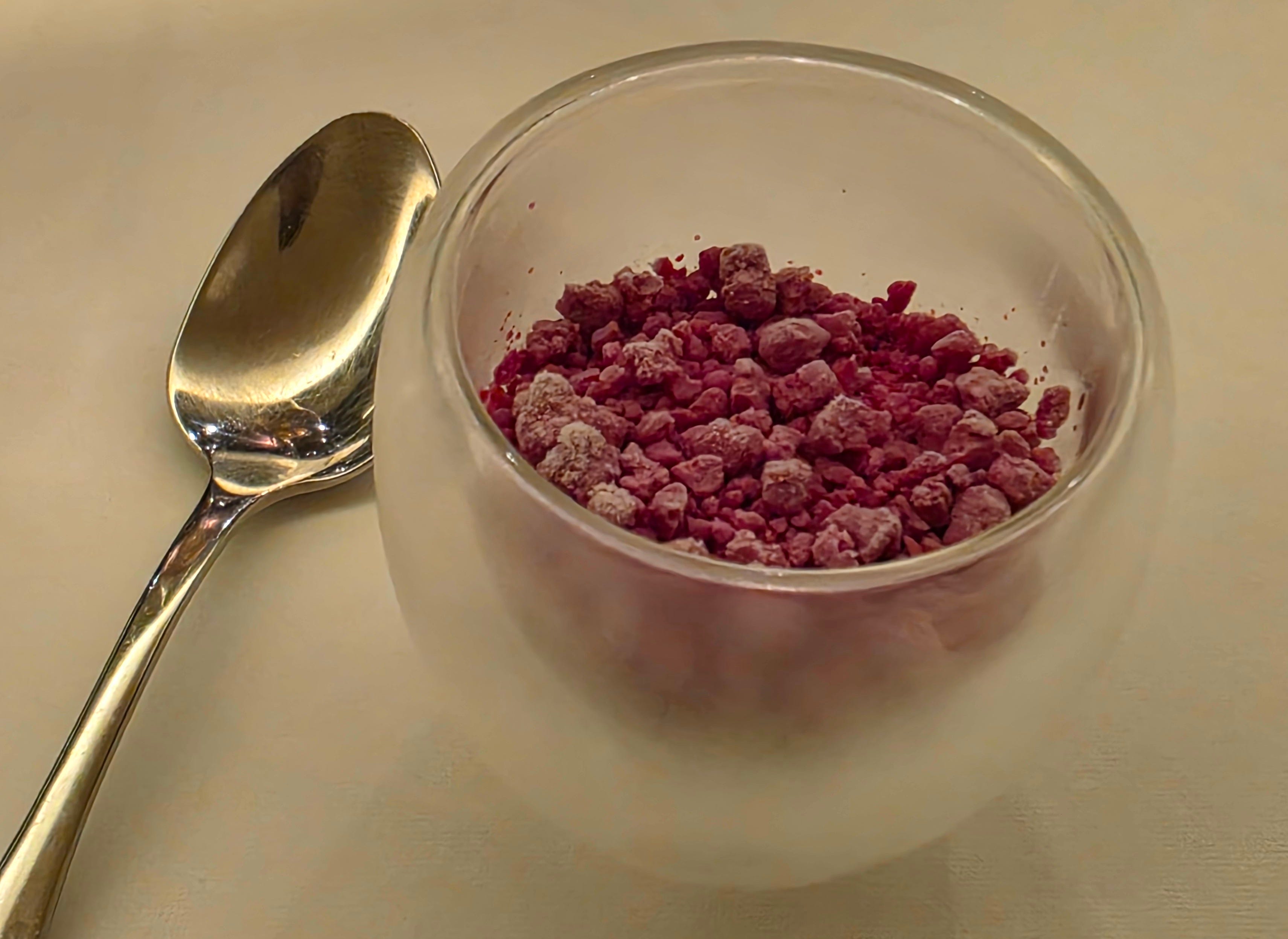
Next, a composition of beetroot (freeze-dried, diced, layered) with creamy feta and smoked eel, where the smokiness lifted the earthy sweetness of the beet.
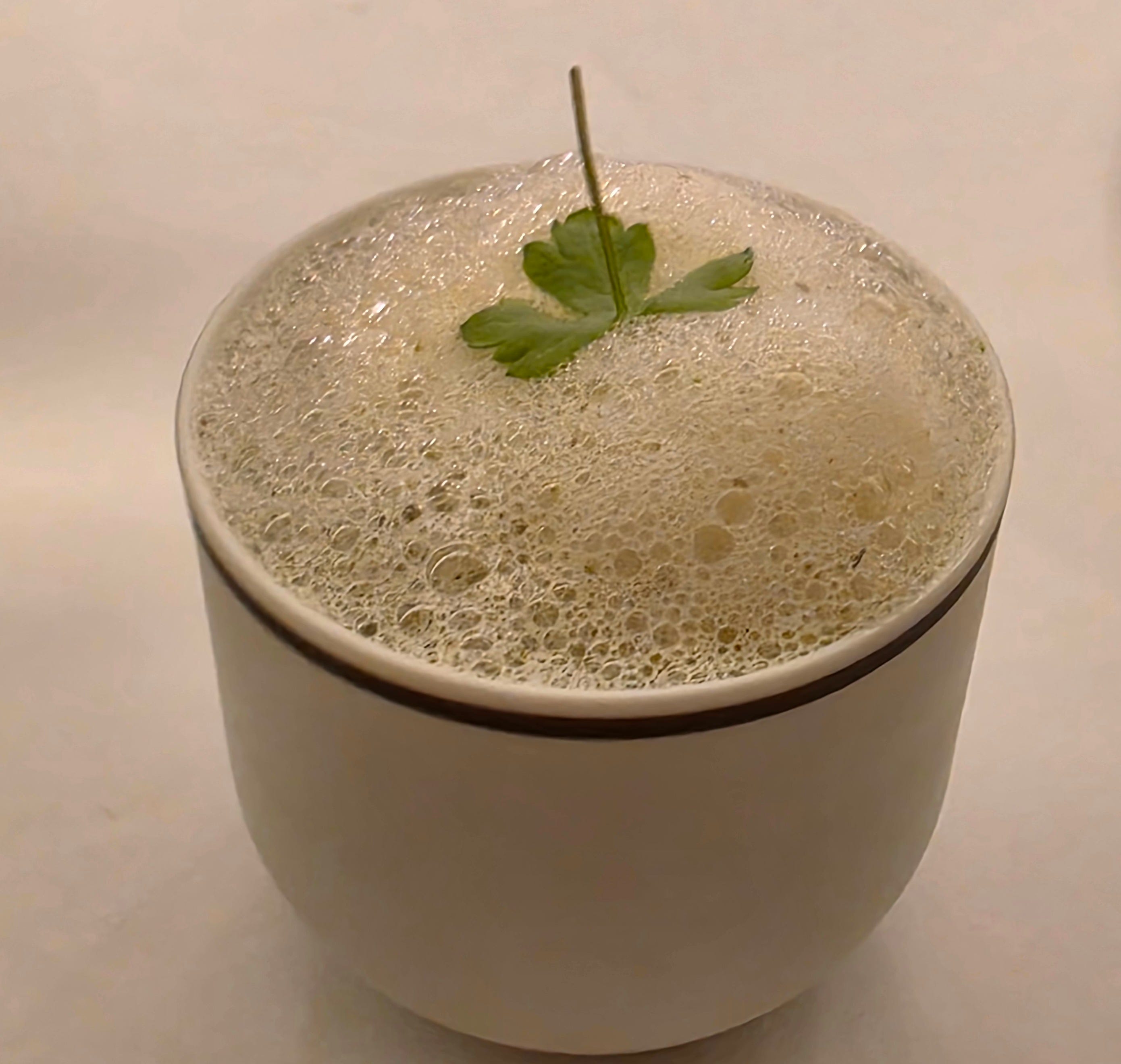
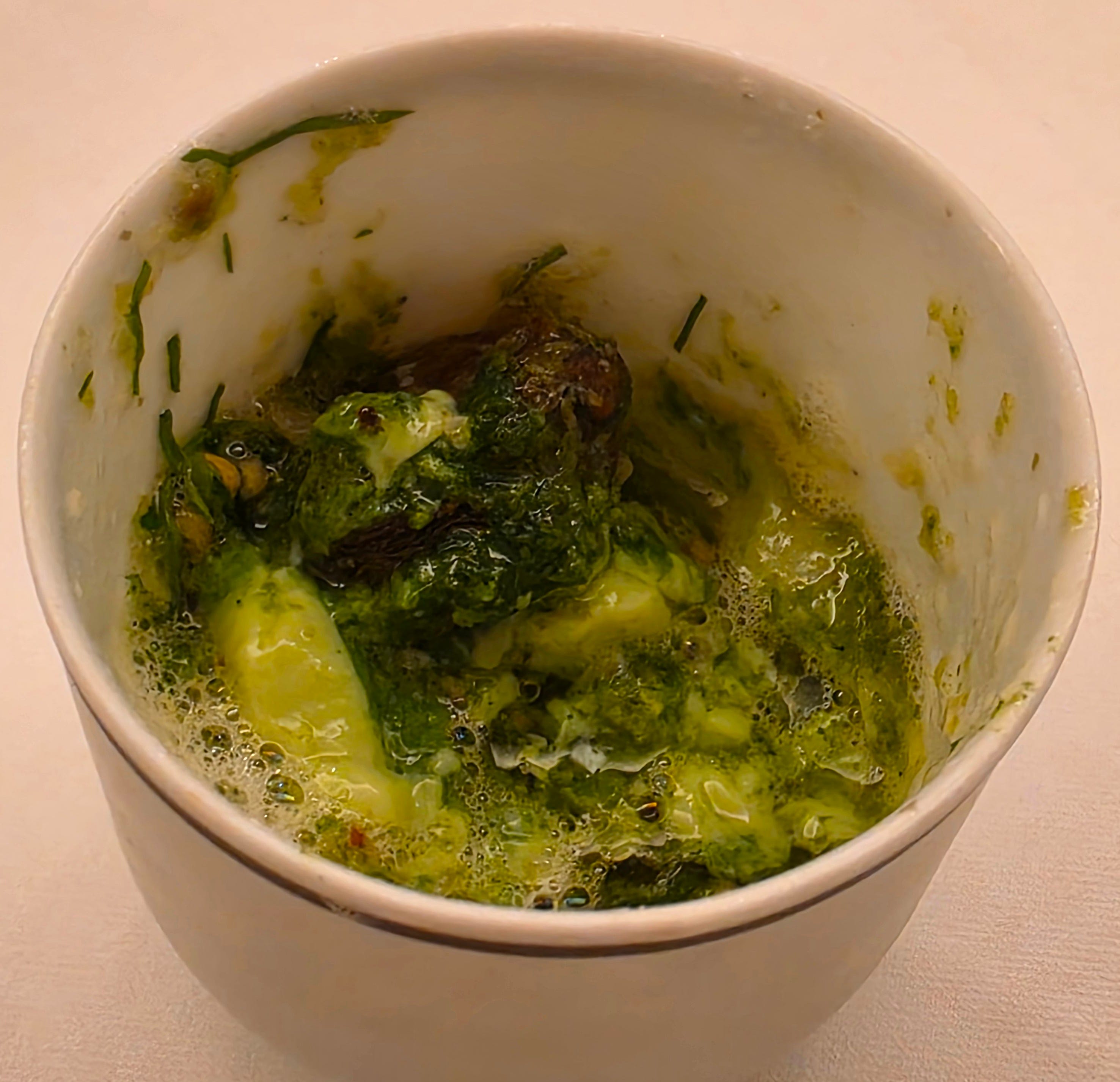
Then escargot, tucked into a Japanese egg custard with classic garlic and parsley butter and a parsley foam on top; a clever Franco-Japanese crossover that somehow felt natural rather than forced.
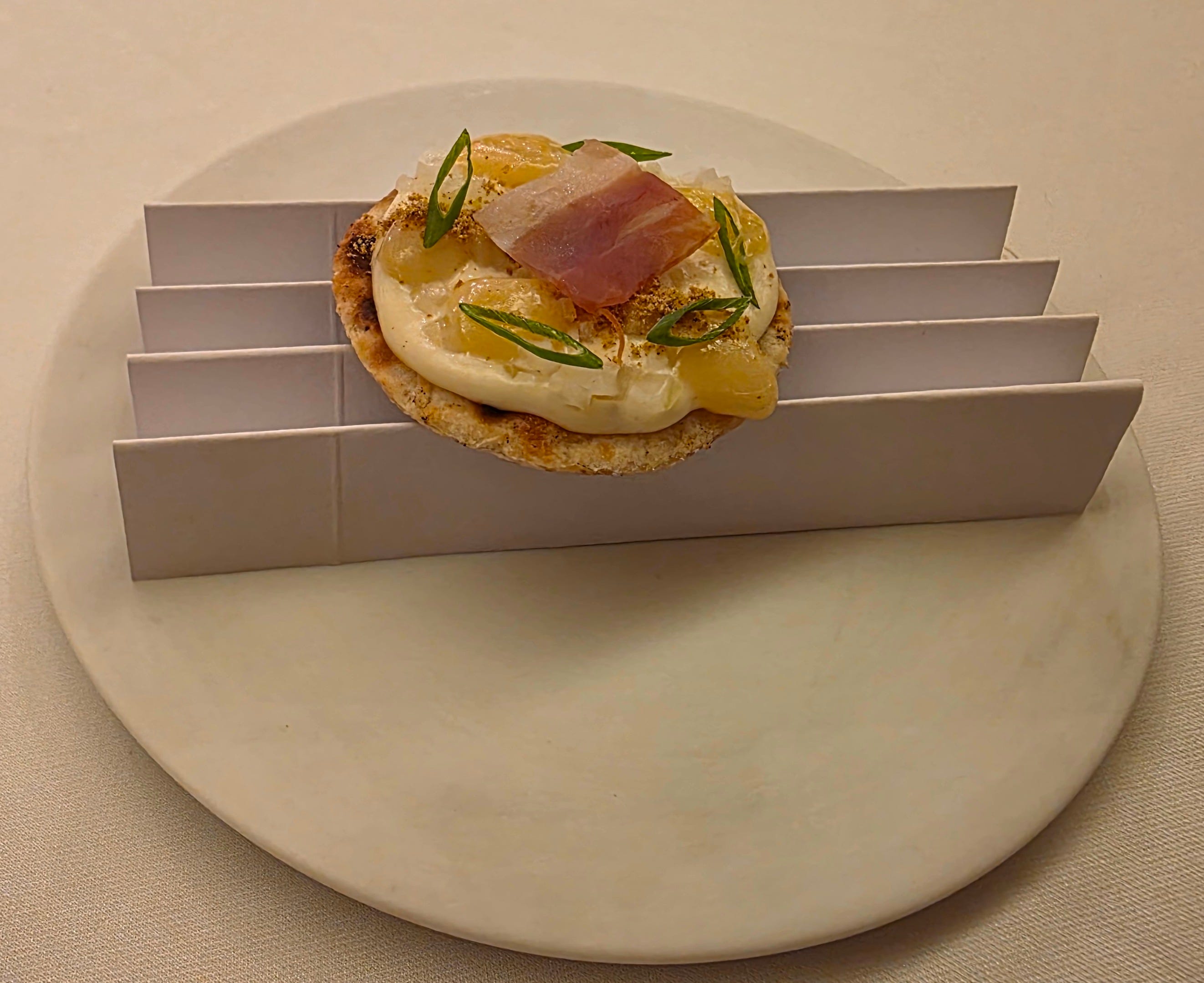
The last canapé was a flatbread with Munster cheese, Alsatian bacon from Chef Lerouy’s hometown, and chives. That Alsace connection would resurface as a quiet theme throughout the night.
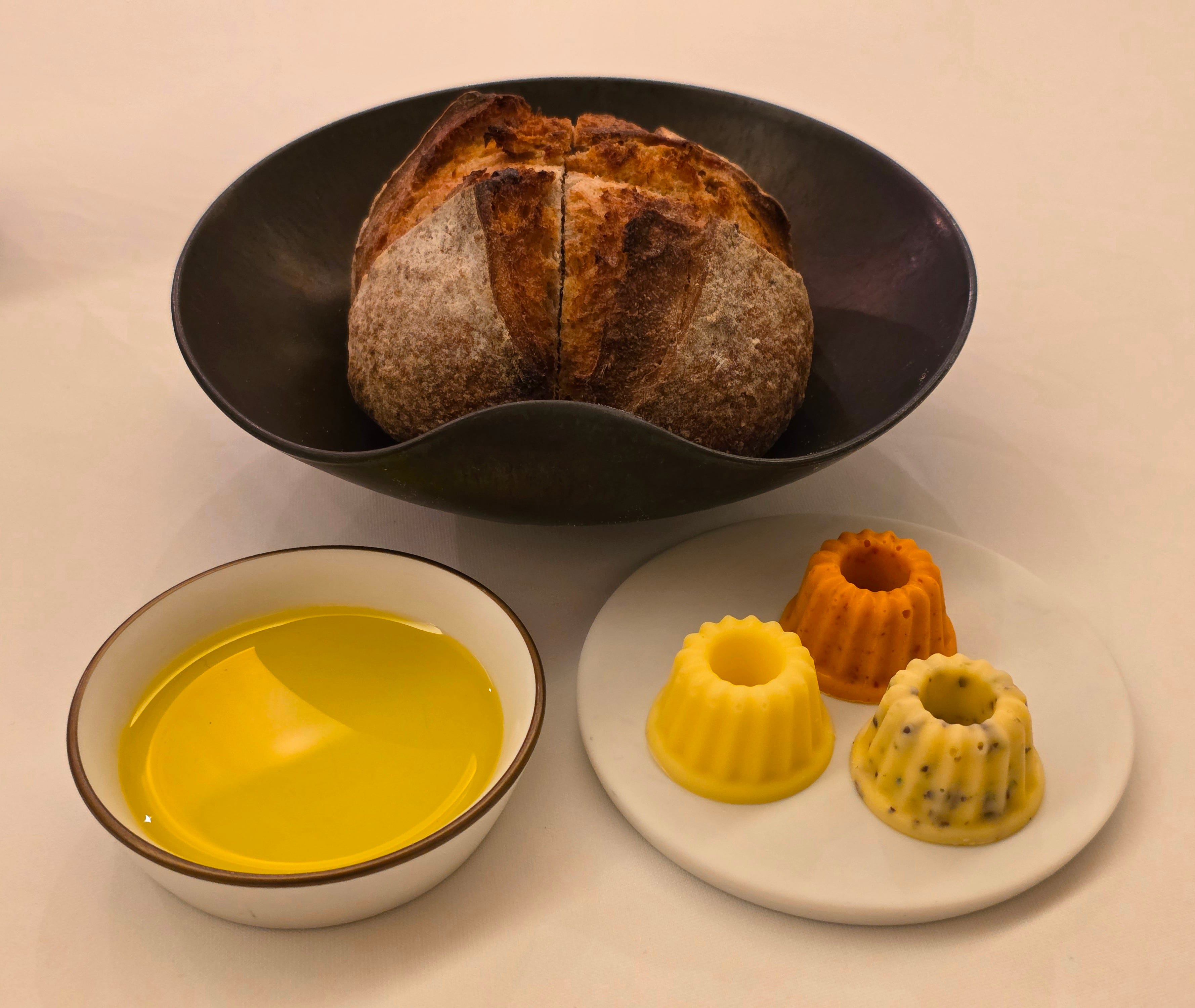
The bread course followed: a sourdough loaf pulled straight from the oven, still releasing a puff of steam when torn apart. Served with three kinds of butter and olive oil.
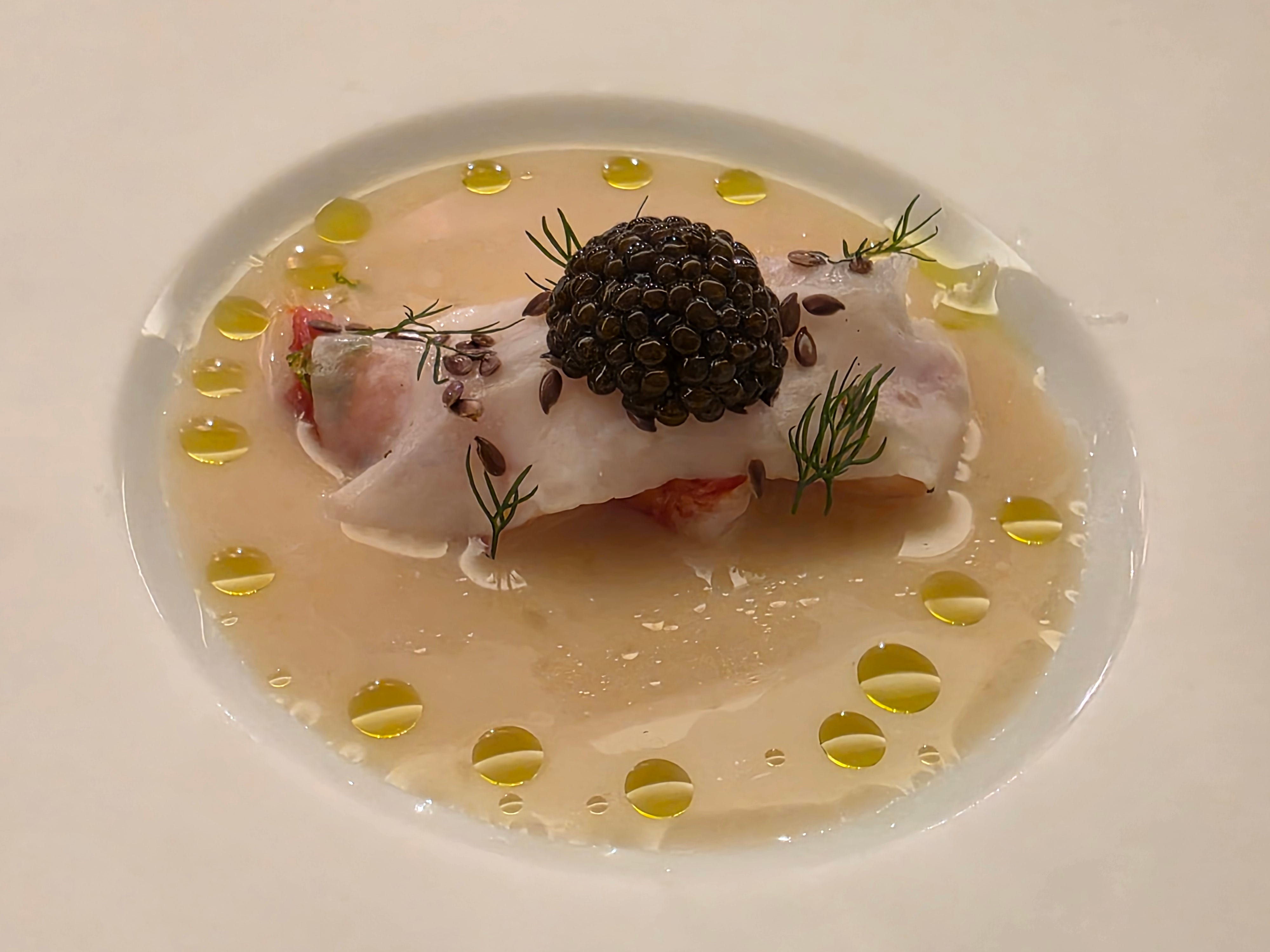
Then came a Spanish Carabinero prawn, served cold with slice of lardo in a umami daikon sauce, and a generous scoop of caviar on top. Well seasoned, briny, with a clean acidity that made it immediately refreshing.
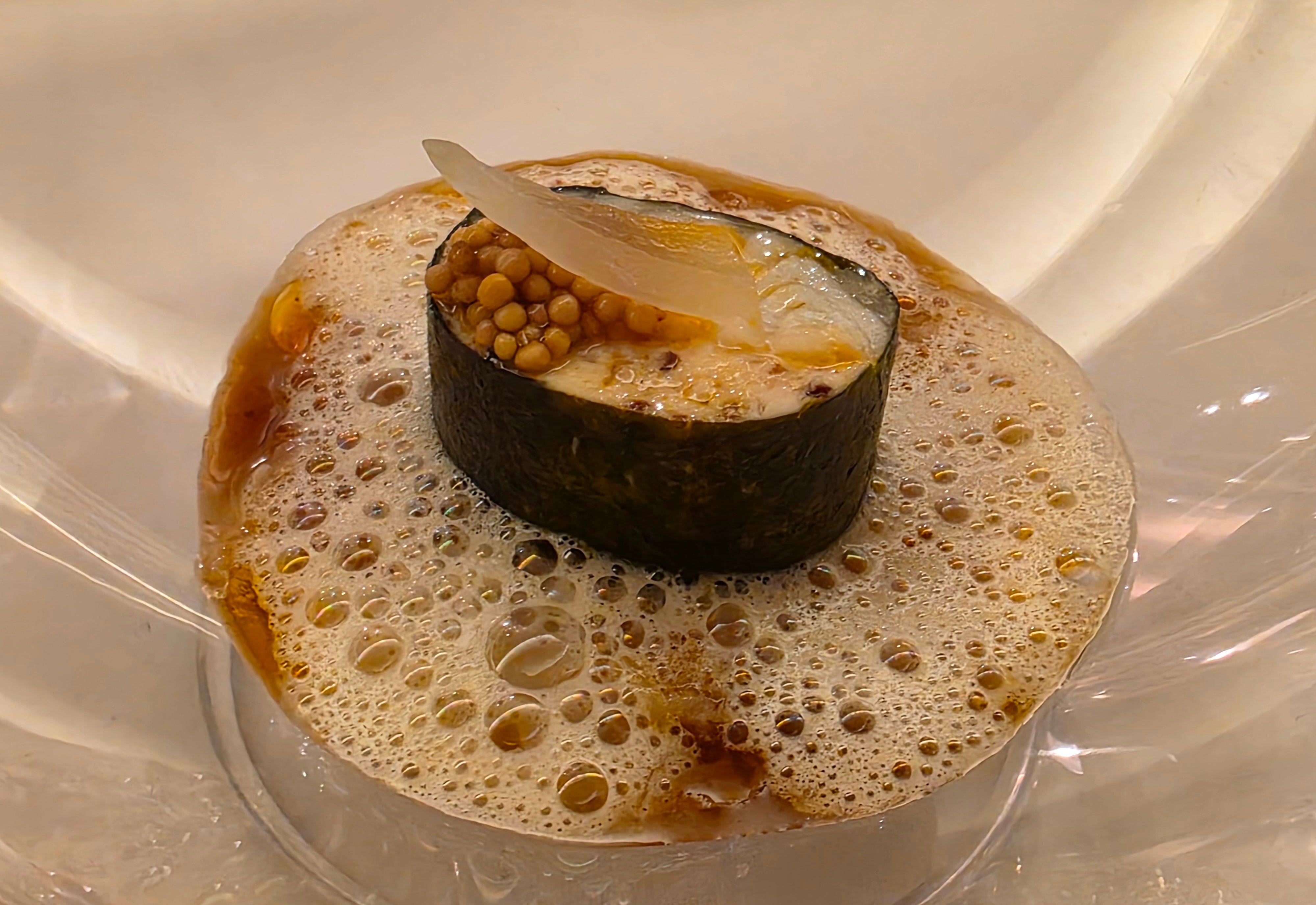
The Alsatian thread returned with the next course: toothfish and ham wrapped in nori like a gunkan sushi roll. The toothfish had been pressed with a chicken mousse and sat in a sauerkraut sauce. I'm not typically a fan of sauerkraut, but this worked. The sourness cut through the richness of the fish and chicken without overwhelming either, and that kind of well-balanced acidity became another recurring motif as the evening went on.
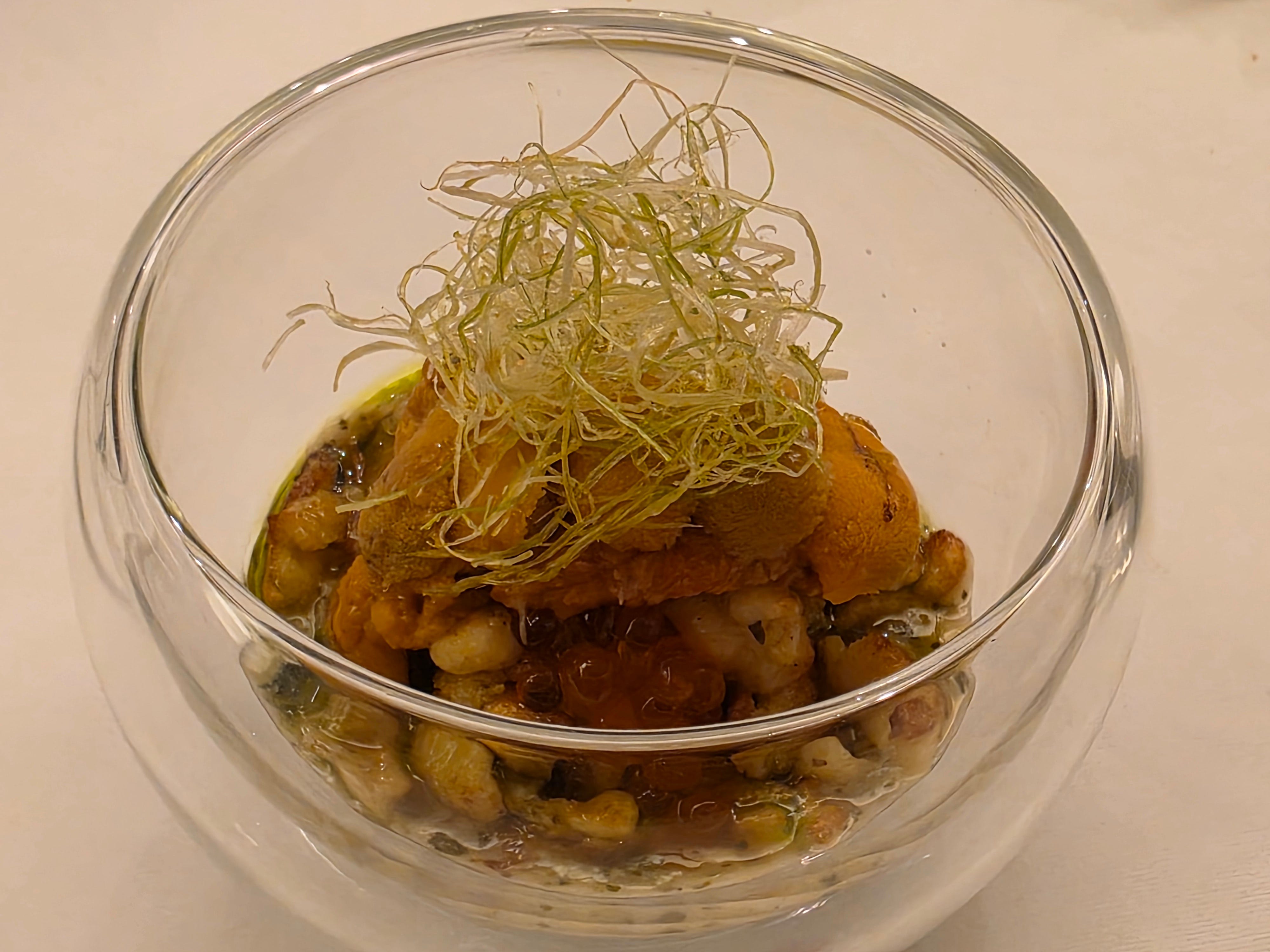
A crab Spätzle followed, topped with sea urchin and salmon roe. The Spätzle had been pan-fried after boiling to give it a slight crispiness, then finished with crisped leeks in an umami-rich kombu sauce. A hearty dish with a lot happening on the plate, but nothing competing.
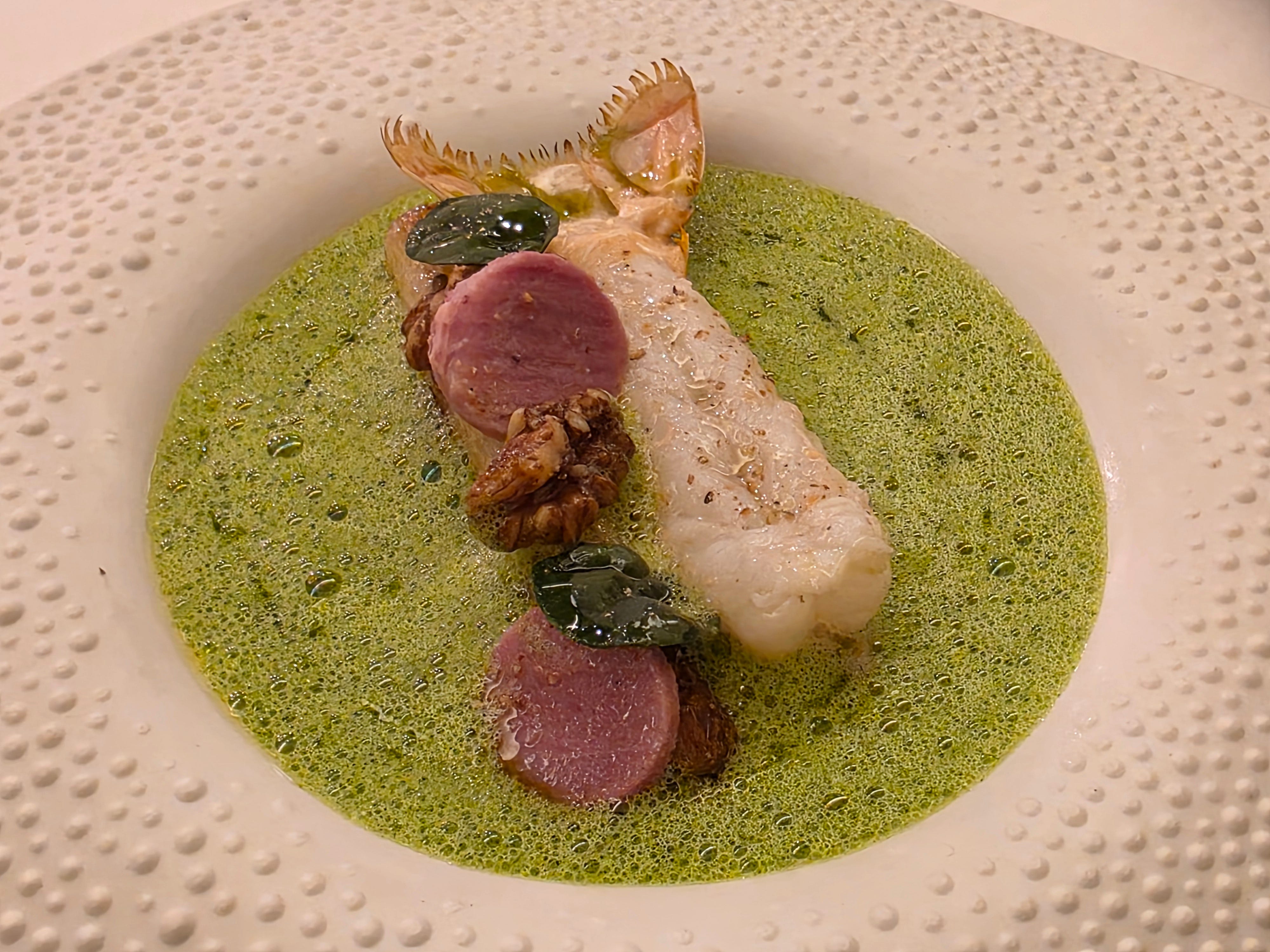
From that density, the kitchen pivoted to something quieter. Norwegian langoustine with white asparagus, walnuts, and veal tongue in a lovage sauce. Herbaceous, grassy, and restrained after the richness of the Spätzle.
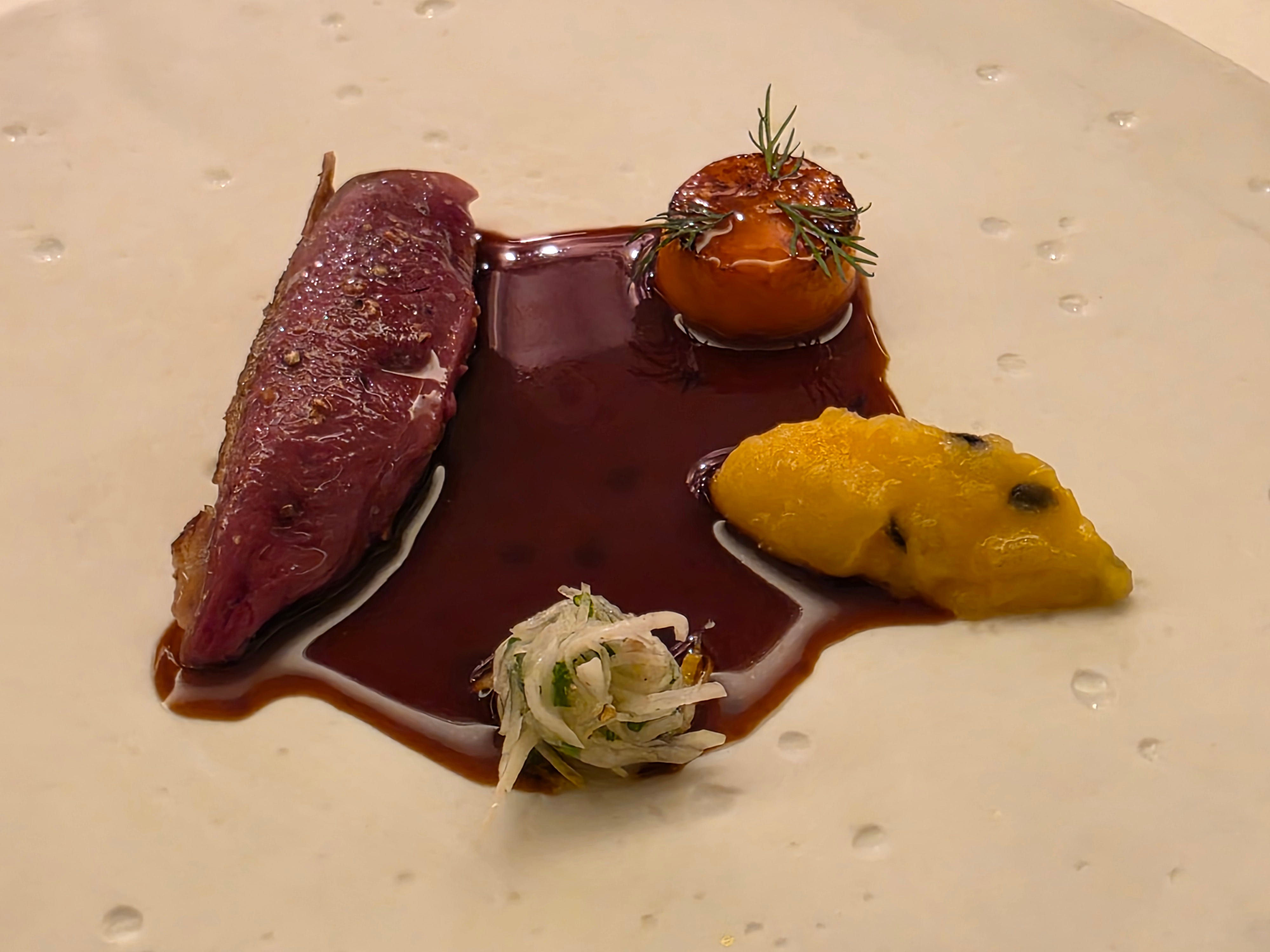
The main was French pigeon, served with a small piece of turnip, a turnip salad, and a sauce built from apple, passionfruit, and quince. Sweet and savoury in the same bite, with a gentle acidity from the quince that kept pulling the dish back into balance.
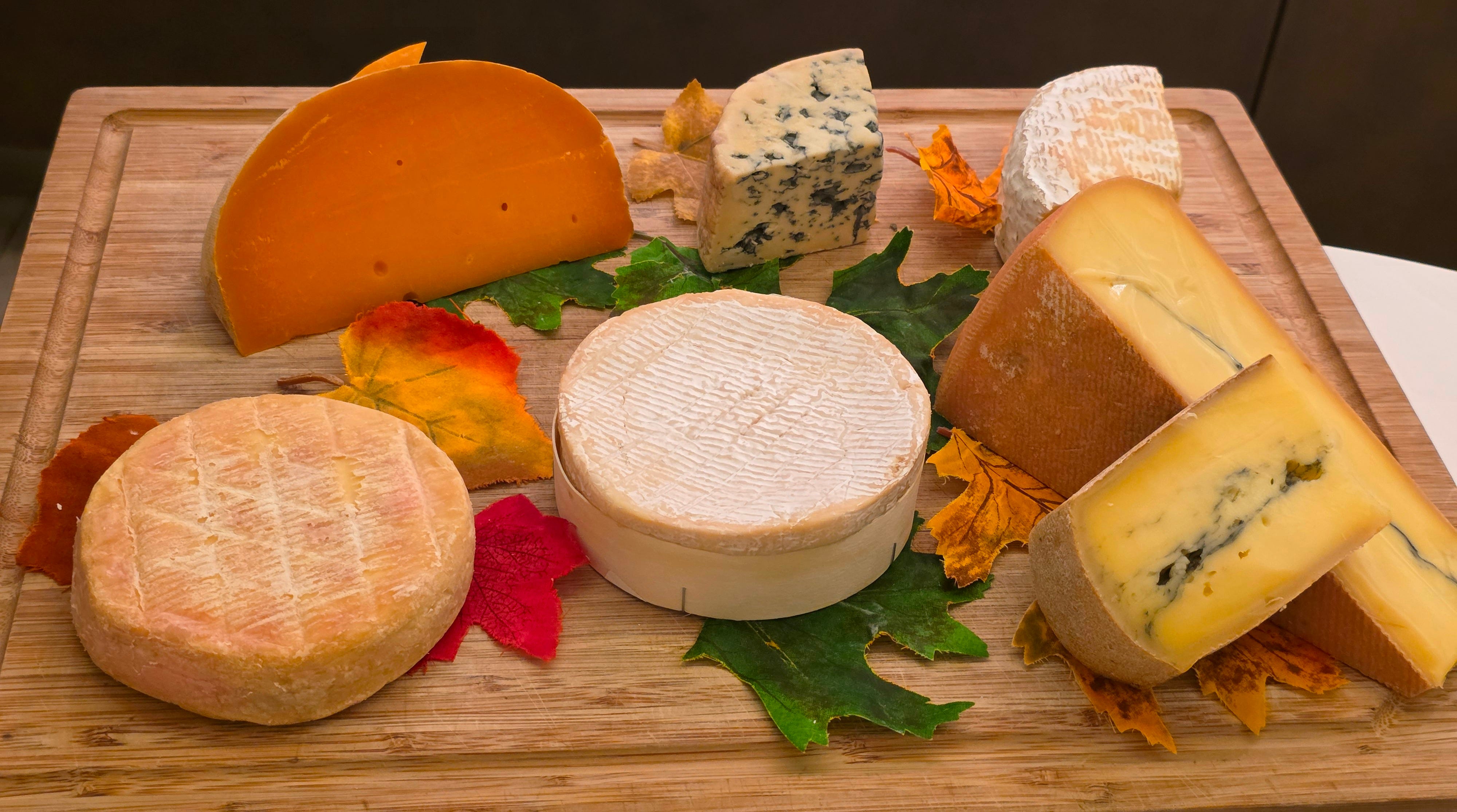
An optional cheese course followed, which I declined. By that point I was running out of room.
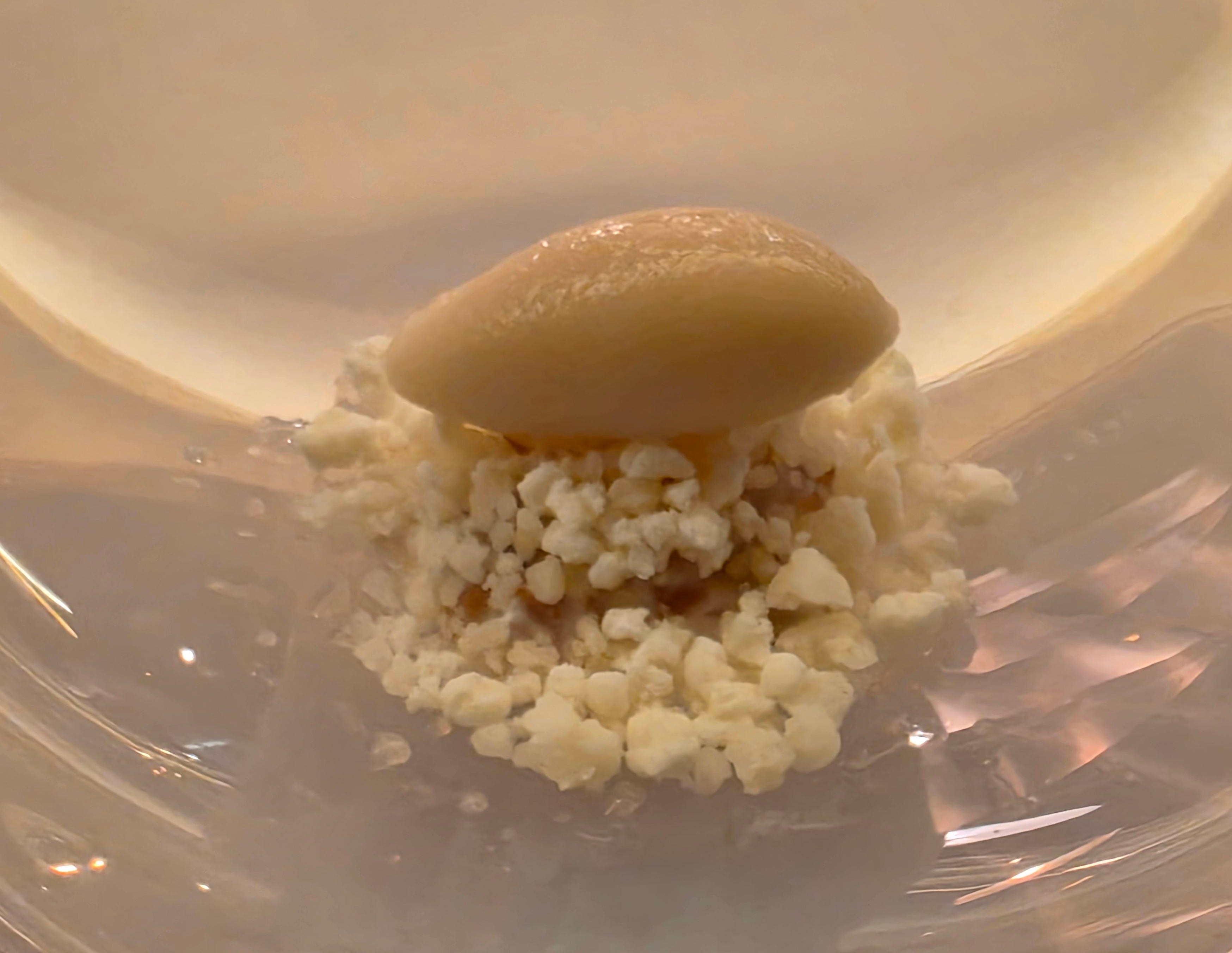
For the palate cleanser, different preparations of grape (freeze-dried yoghurt, diced fresh grapes, grape sorbet) came layered together, bright and cooling.
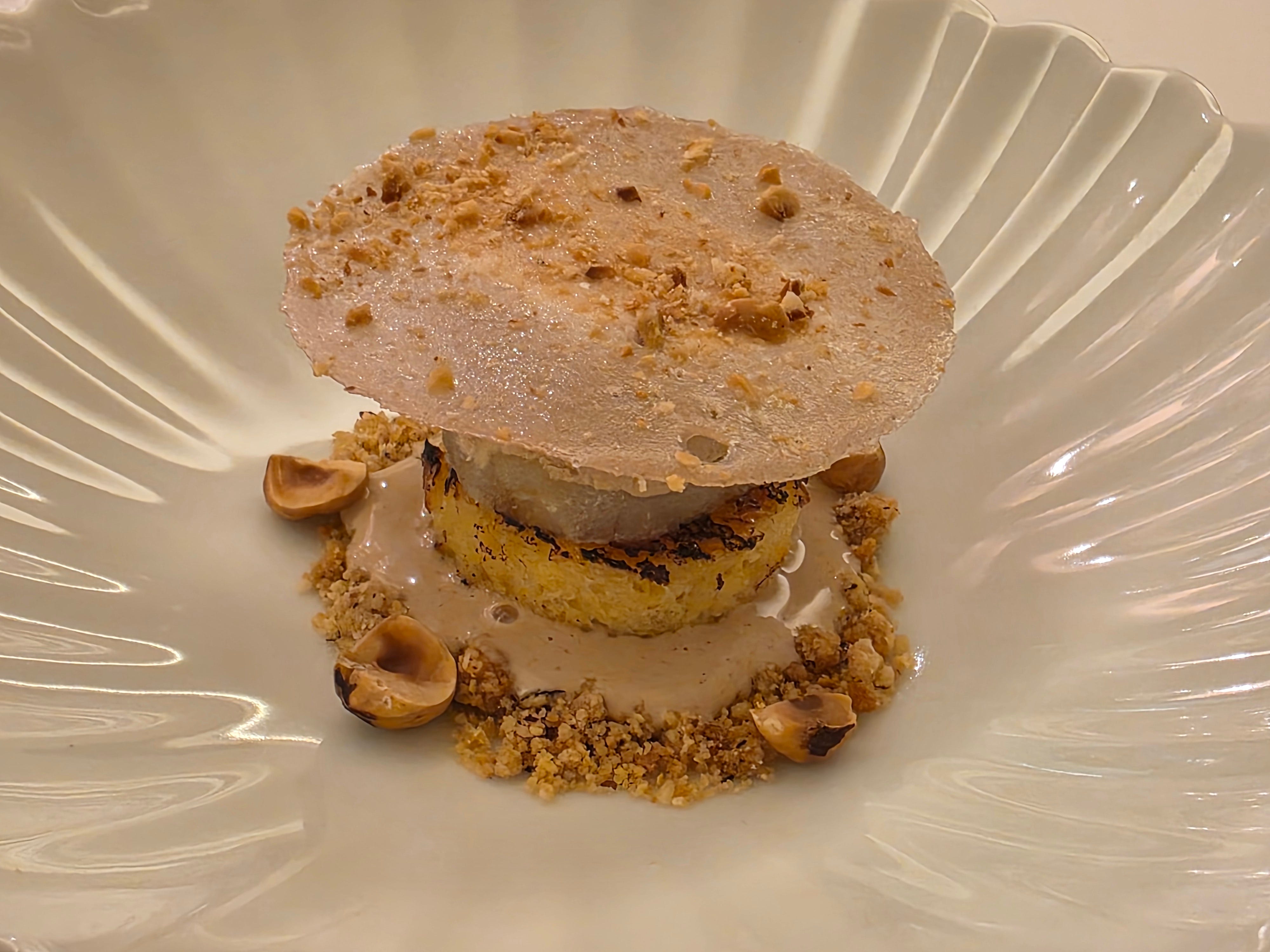
Dessert was Chef Lerouy's take on French toast, though with the hazelnuts involved, my first thought was that it looked and tasted like a Ferrero Rocher. I mean that as a compliment.
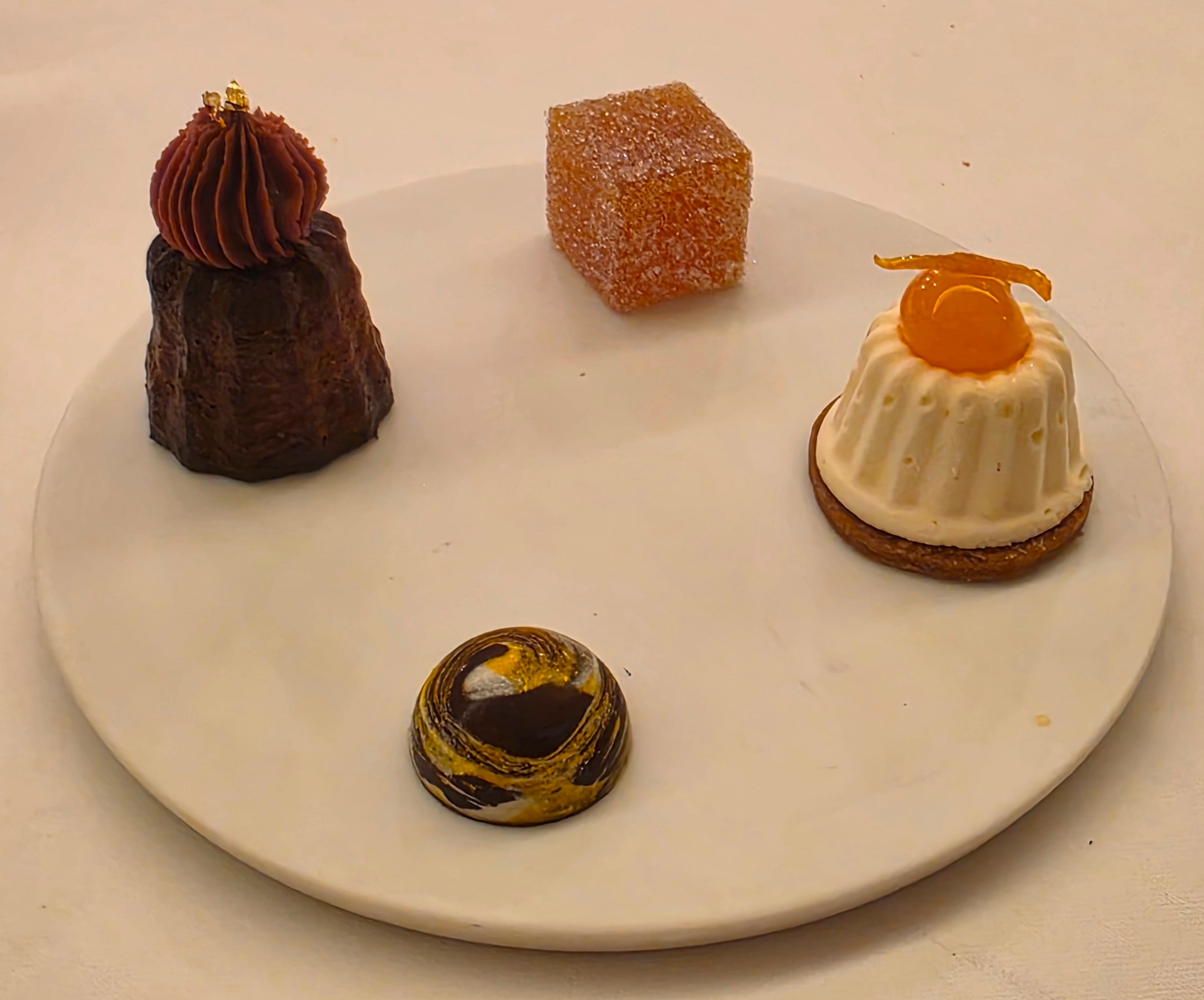
The meal closed with a round of petit fours: a chocolate bonbon, a chocolate canelé, a passionfruit jelly, and a triple sec and mandarin jelly perched on top of a pistachio cream meringue.
Overall, this was a really fun night. I spent quite a bit of time talking about food with the Chef as well as the kitchen staff. I was sat right by the main kitchen island, in the midst of all the action. The quality of the meal itself was excellent. A creative menu, well-executed. Worth returning.
Total damage: 330 SGD/1 person