
Rules is one of the few London restaurant institutions that still looks and feels like itself. It is independently owned, still in Covent Garden, still trading on game, oysters, pies, puddings, clubby service and the claim that it is London’s oldest restaurant.
The relevant question is not whether Rules competes with London’s modern tasting-menu restaurants. It obviously does not. The question is whether the room, history, oysters, game, pies and old British puddings still add up to a serious meal.
On paper, it should. The menu is conservative, but not incoherent: oysters, potted shrimps, terrines, steak and kidney pie, steak and kidney pudding, braised meats, roast beef, fish, game, proper puddings and a wine list built for people who still enjoy claret-shaped dining.
The risk is equally obvious. You are paying for the room and the lineage as much as the cooking. If the kitchen misses, the whole thing can slide very quickly from heritage into expensive theatre.
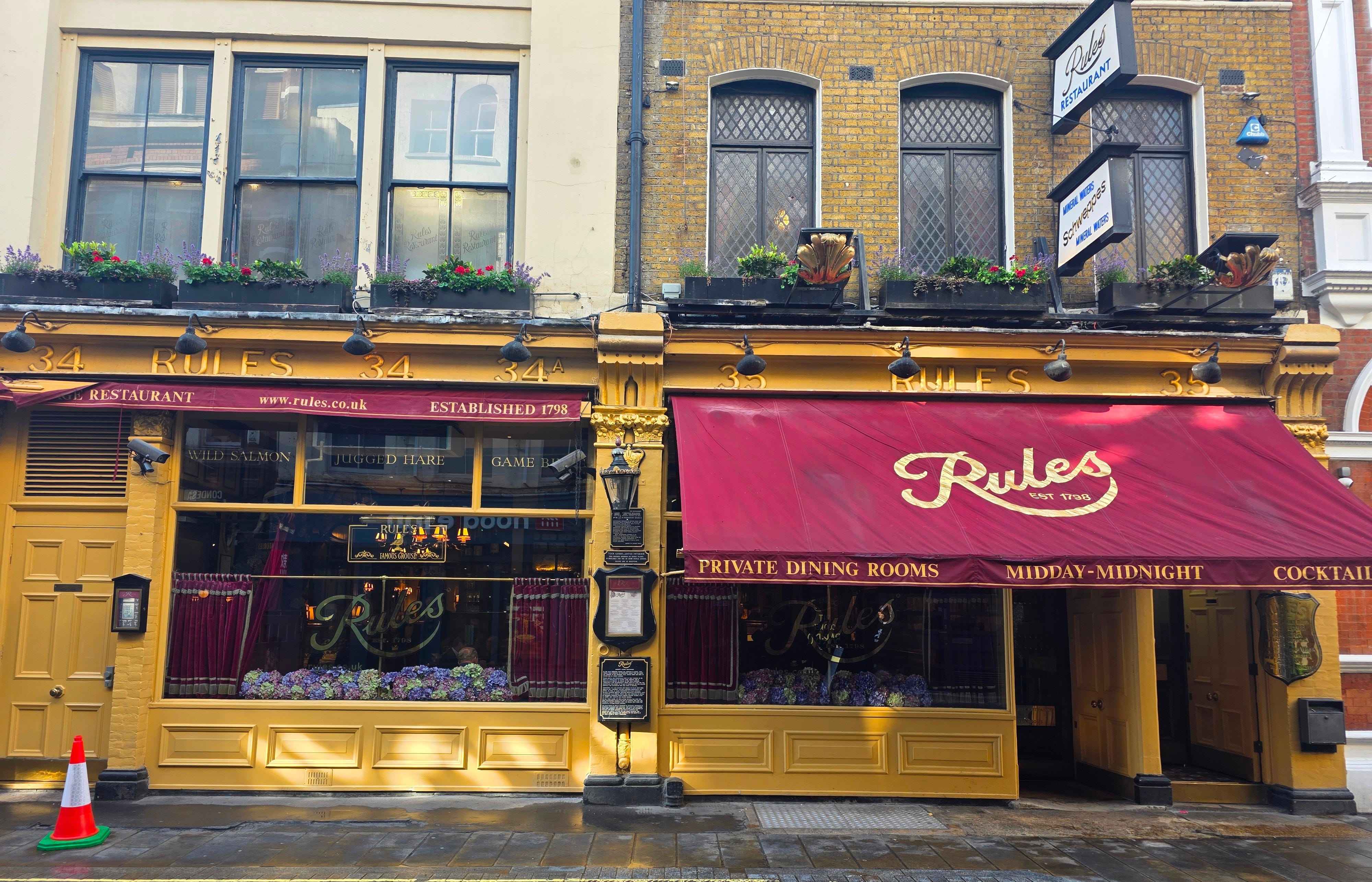
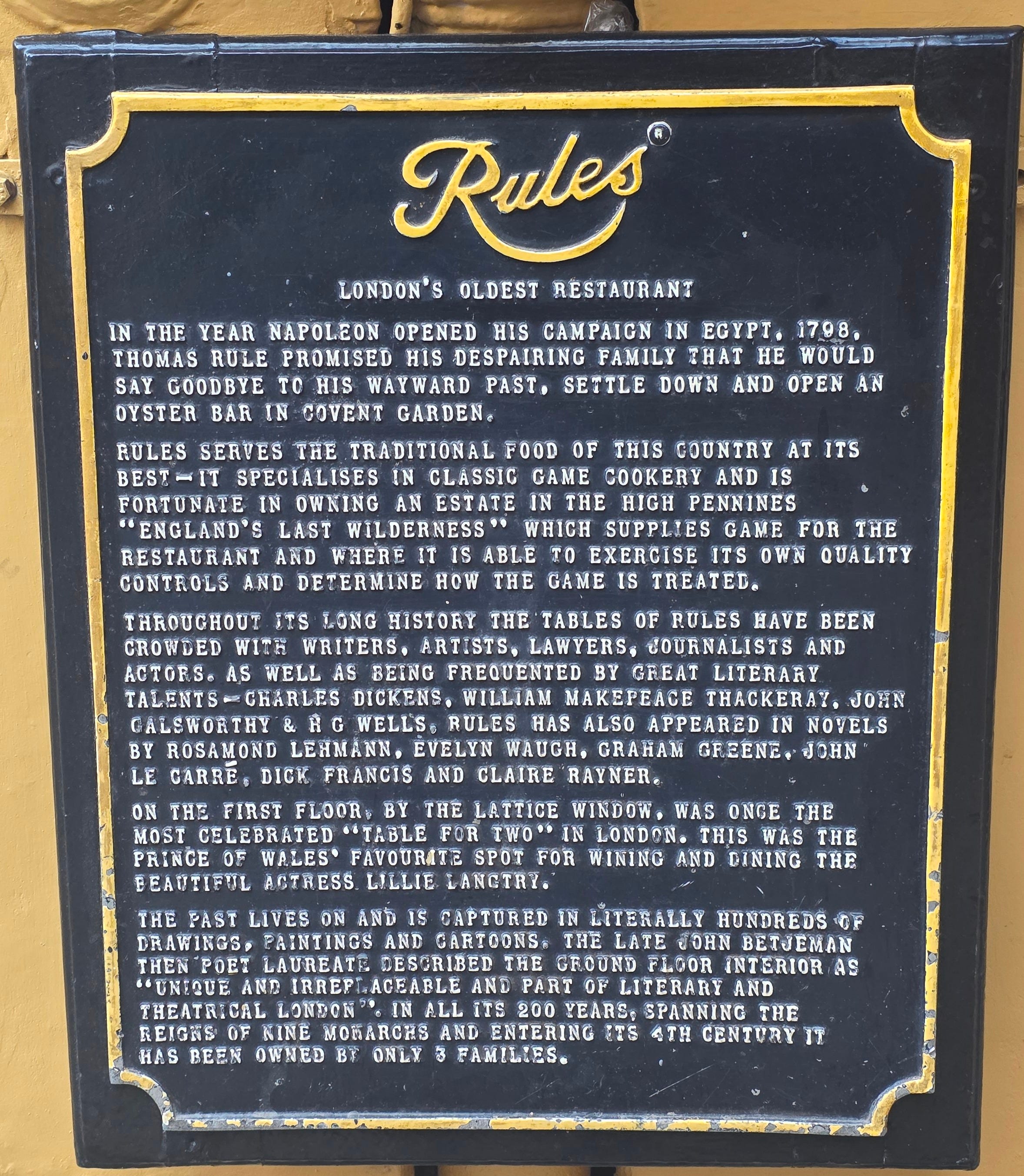
Thomas Rule founded the restaurant in 1798 as an oyster house. Rules describes itself as London’s oldest restaurant, and the ownership history is unusually tidy. Thomas Rule & Sons ran it from 1798 to 1918, Tom Bell & Daughter from 1918 to 1984, John Mayhew from 1984 to 2022, and Richard “Ricky” McMenemy from 2022 onwards.
The handovers are part of the mythology. Shortly before the First World War, Charles Rule considered moving to Paris and met Tom Bell, who owned the Alhambra restaurant there. They swapped businesses. In 1984, Tom Bell’s daughter sold Rules to John Mayhew. In 2022, McMenemy, who had already worked at Rules for decades, took over.
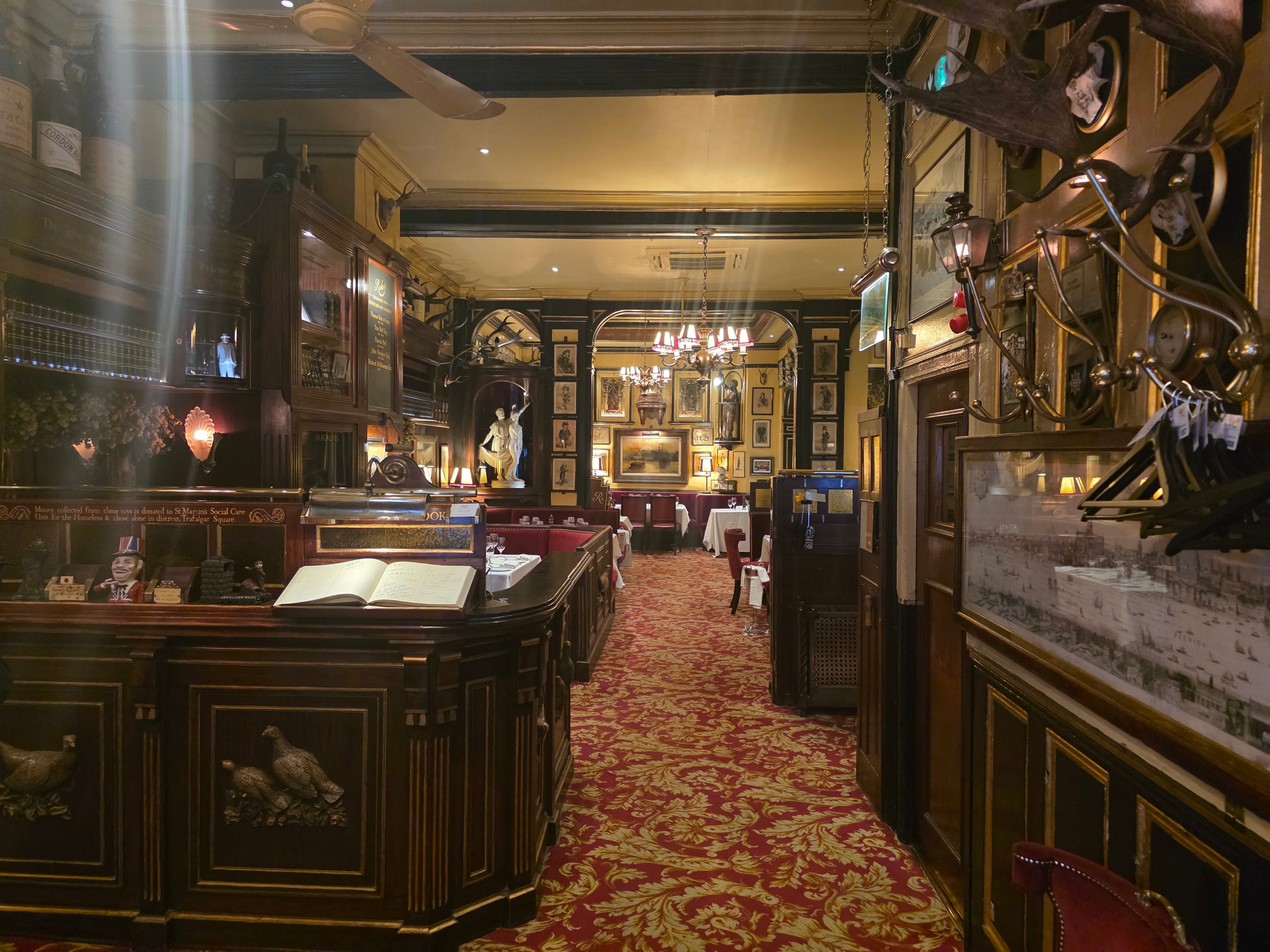
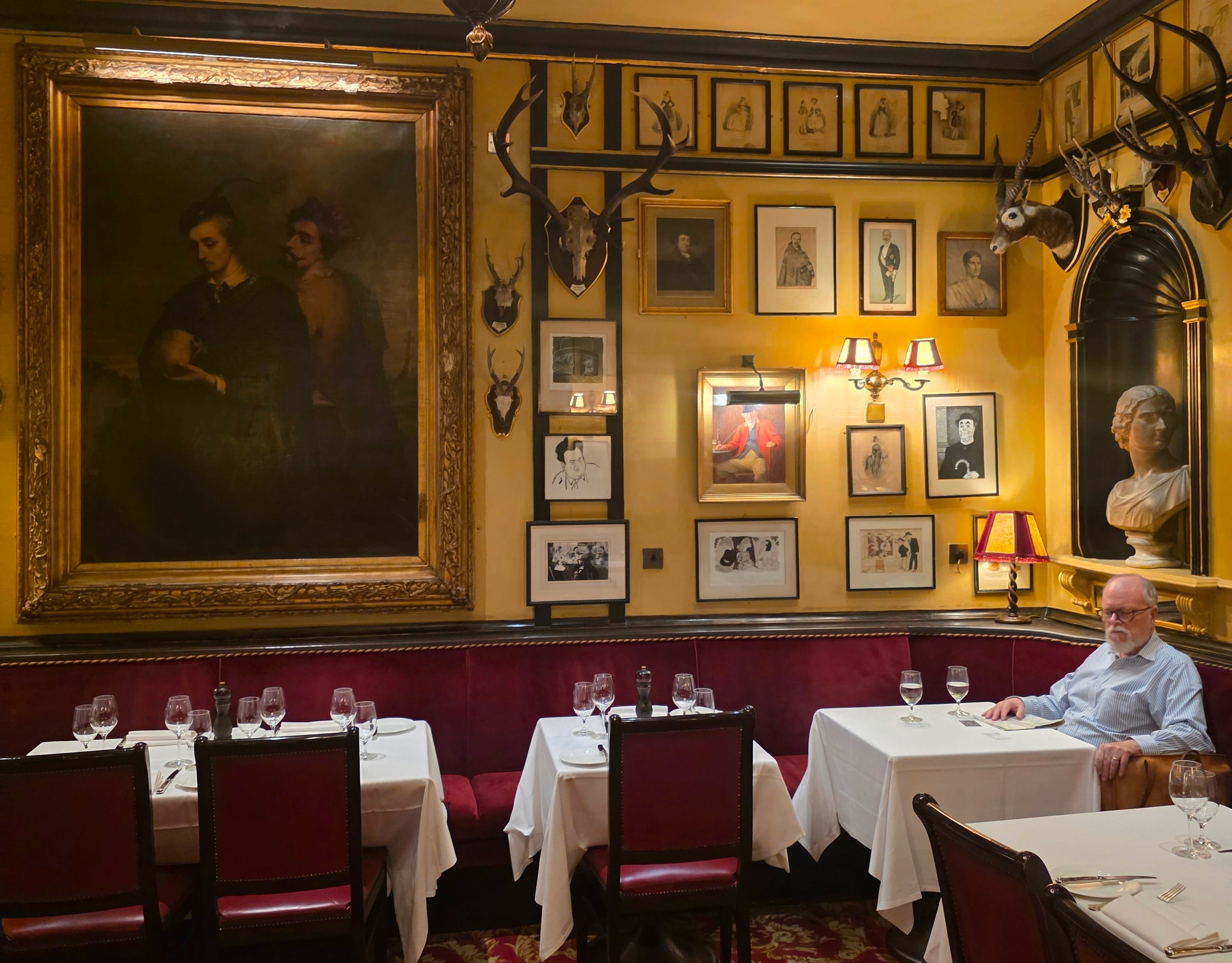
The oyster-house origin still matters because Rules continues to sell the same basic story: oysters, game, pies, puddings, old London, and a dining room packed with paintings, cartoons, prints, velvet and wood panelling. The restaurant’s own roll call includes Dickens, Thackeray, H.G. Wells, Henry Irving, Laurence Olivier, Buster Keaton and Charlie Chaplin.
The food is traditional British restaurant cooking with a heavy game-house bias. The structure is simple: oysters and cold starters; terrines, rillettes, potted shrimps and smoked salmon; pies, puddings, roast meats, lamb, fish and seasonal game; side vegetables; then nursery puddings, savouries and cheese.
Given the room, I thought I should at least try to meet Rules on its own terms. I asked the waiter what the most British things on the menu were. He recommended the cream of spinach and nettle soup, and the steak and kidney pudding.
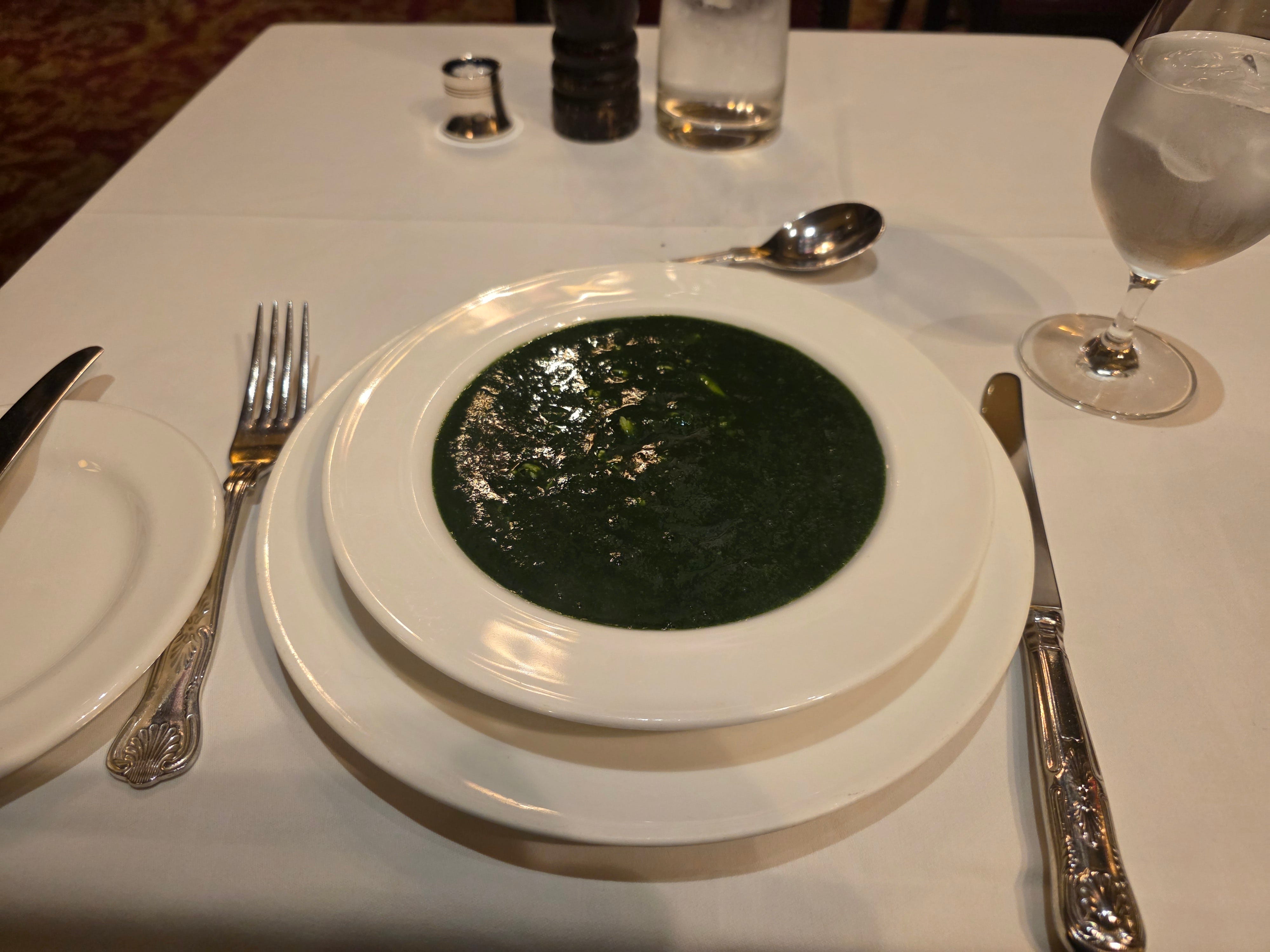
The soup came first, in a dense emerald green. I was not sure what to expect from nettle soup, but Rules gave me a fairly quick reminder of how British food acquired its historic reputation.
There were some faint grassy and herbal notes, but the main impression was that nobody had introduced the soup to seasoning. After adding a fairly serious amount of salt, the problem shifted from seasoning to flavour and texture. The famous British palate was not making a strong opening argument.
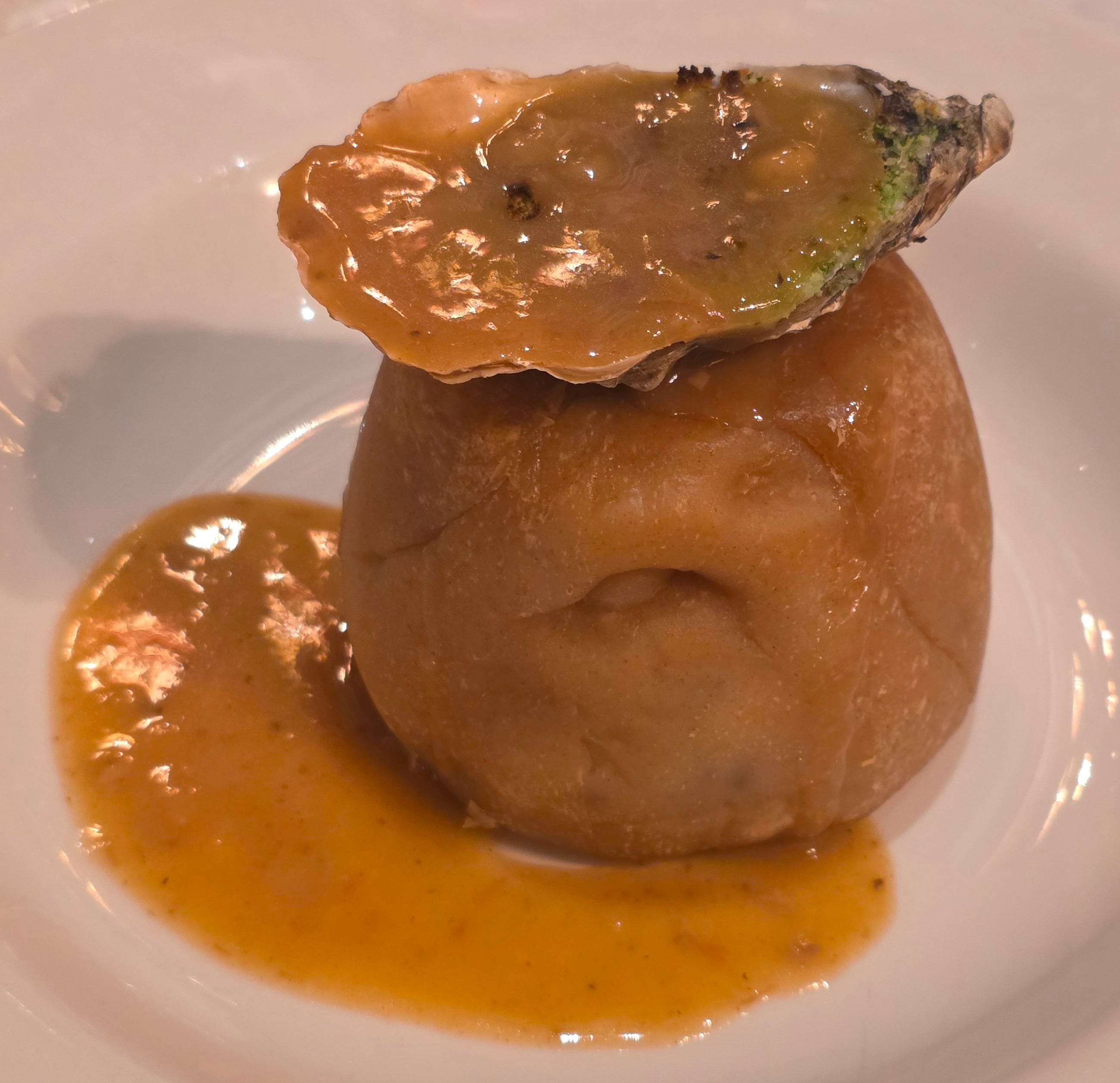
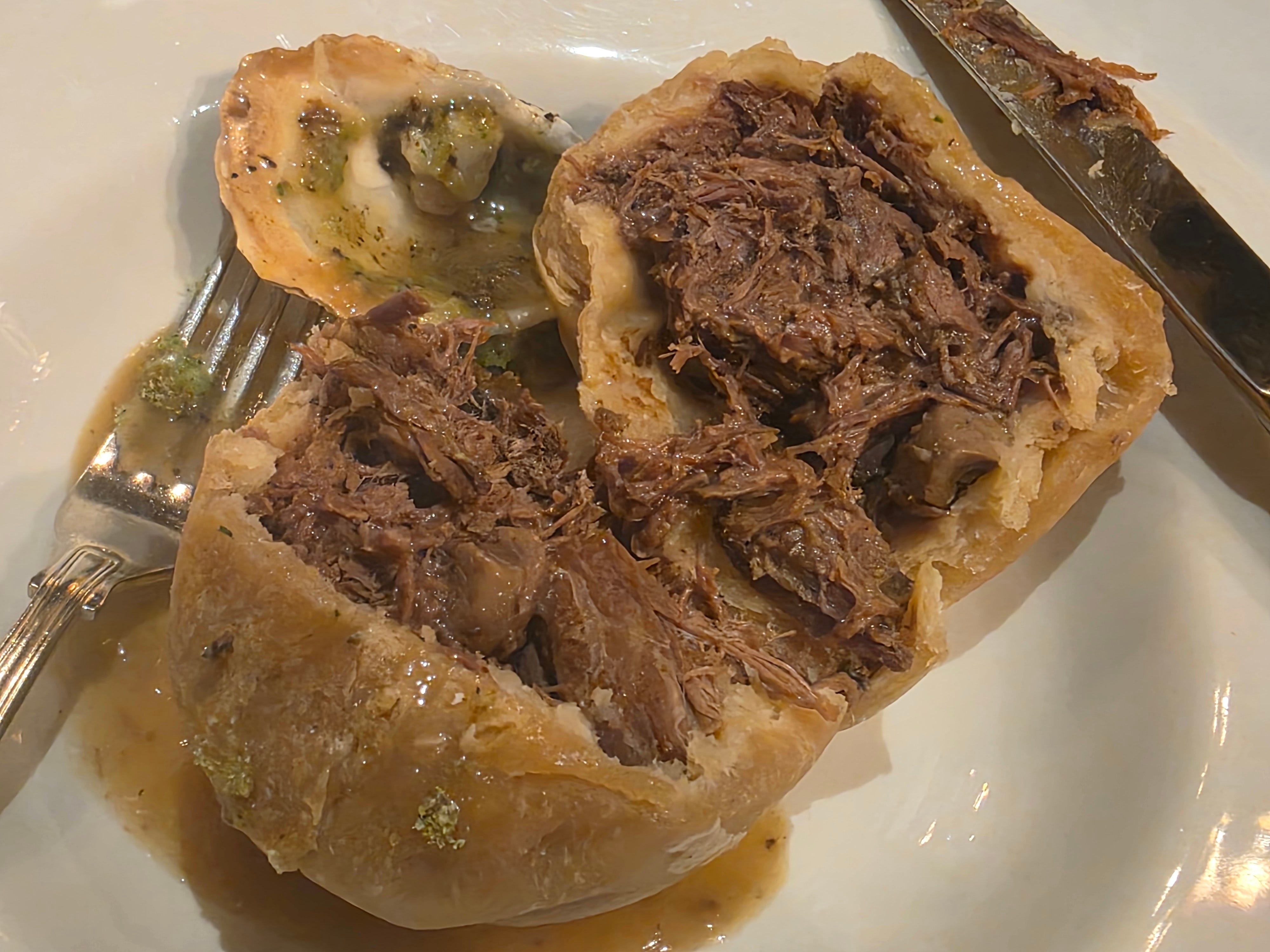
The menu had both steak and kidney pie and steak and kidney pudding. The difference is mainly the wrapper. The pie comes with baked puff pastry. The pudding comes wrapped in steamed suet.
I chose the more British option, which was probably the mistake.
The pudding arrived with a broiled oyster on top. The filling had the expected minerally offal note from the kidney, plus tough pieces of steak and some button mushrooms. The suet wrapper was thick, pale and slightly soggy. Since it had been steamed, there was no browning and no real texture. With enough gravy, the filling was edible. That is not high praise.
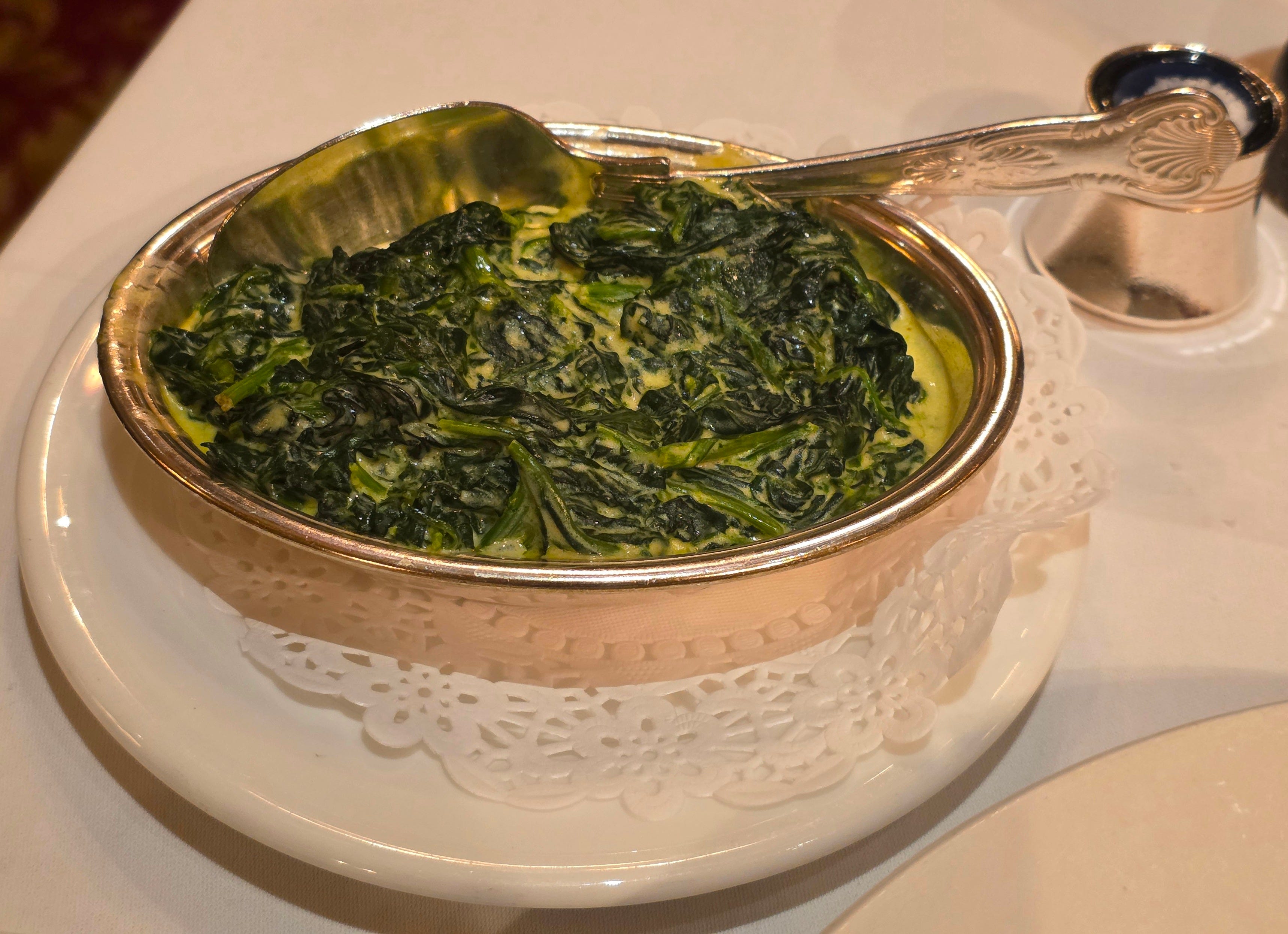
The creamed spinach was uneventful. It was underseasoned and bland, although that was probably the least offensive version of the dish they could have produced.
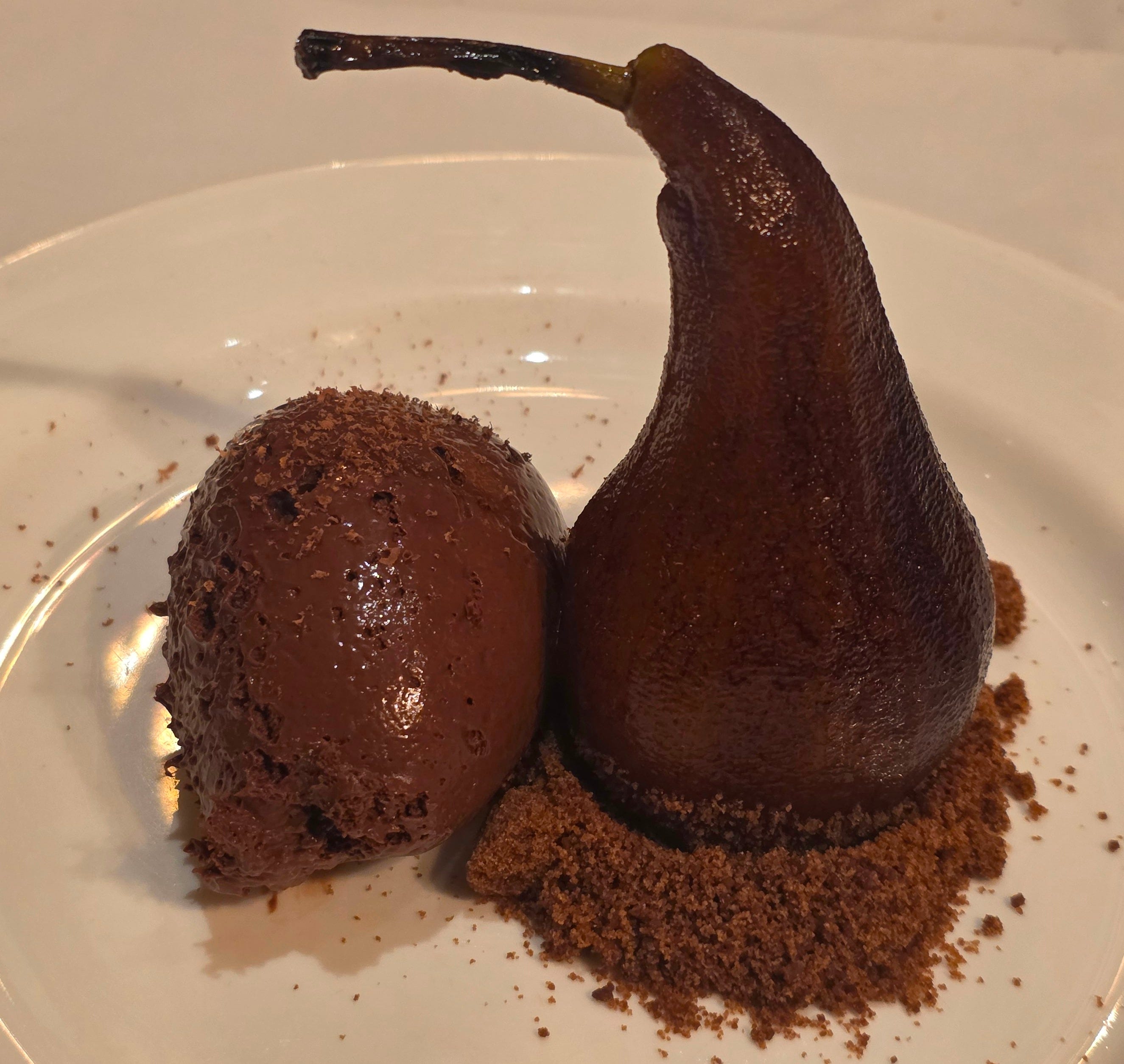
I did not finish much of the pudding or the spinach, so dessert became the last chance for the meal to recover. I skipped the waiter’s recommendation of sticky toffee pudding and ordered the poached pear with chocolate mousse instead.
This was better. The pear came on a bed of brown sugar, and the dark chocolate mousse was rich, dark and hit fairly hard with alcohol. I finished the pear.
I was not expecting luxury fine dining from Rules. I wanted a dose of old London, somewhere in the general world of Wiltons, The Savoy Grill or Bentley’s. Instead, I got a fairly brutal reminder of why historic British food spent so long as a punchline. Don’t bother.
Total damage: 70 GBP/1 person