
Sushi Sakuta is a highly acclaimed omakase restaurant in Singapore specializing in Edomae-style sushi. The restaurant emphasizes precision, simplicity, and letting premium ingredients shine, with fish and seafood flown in daily from Tokyo’s Toyosu Market.
The restaurant features an intimate 10-seat hinoki cypress counter made from a 200-year-old tree and the experience is calm, refined, and highly technical - Chef Sakuta personally calibrates rice temperature, vinegar blends, sauce intensity, and even uses separate soy sauce brushes for lean and fatty fish to keep flavors pure.
The restaurant opened in 2021 (initially at The Capitol Kempinski Hotel Singapore) and earned one Michelin star in 2023, before being promoted to two Michelin stars in the 2025 guide. After four years at Kempinski, it relocated in late 2025 to a new space at Millenia Walk.
The chef-owner is Chef Yoshio Sakuta, who runs the restaurant. He is known for his meticulous, almost obsessive attention to detail and a philosophy of deep respect for ingredients - he treats each piece of fish as unique and adapts techniques daily based on its condition.
Chef Sakuta began his sushi training at age 18 in Japan and spent years honing his craft in renowned high-end sushi and omakase restaurants there before moving to Singapore and working behind the counter at the legendary two-Michelin-starred Shoukouwa before opening Sakuta.
A notable personal detail: As a child/young man, Chef Sakuta actually disliked raw fish because he found it too “fishy.” That changed when he discovered ways to draw out clean, pristine natural flavors through precise aging, seasoning, and temperature control, which became the foundation of his style.
Sushi Sakuta represents the pinnacle of traditional yet personal Edomae sushi in Singapore today, built on Chef Sakuta’s journey from someone who once avoided raw fish to one of the city’s most precise and celebrated itamae.
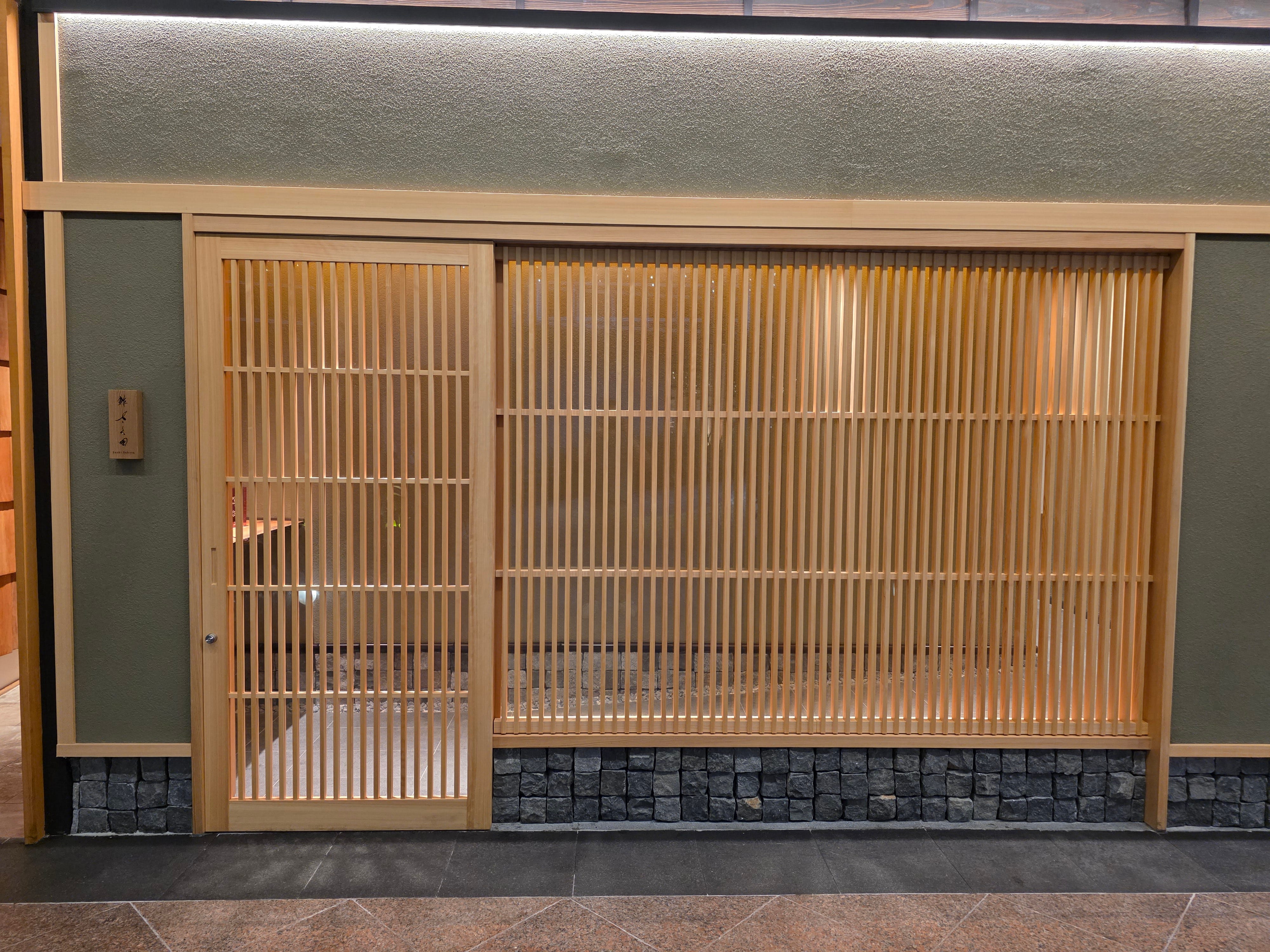
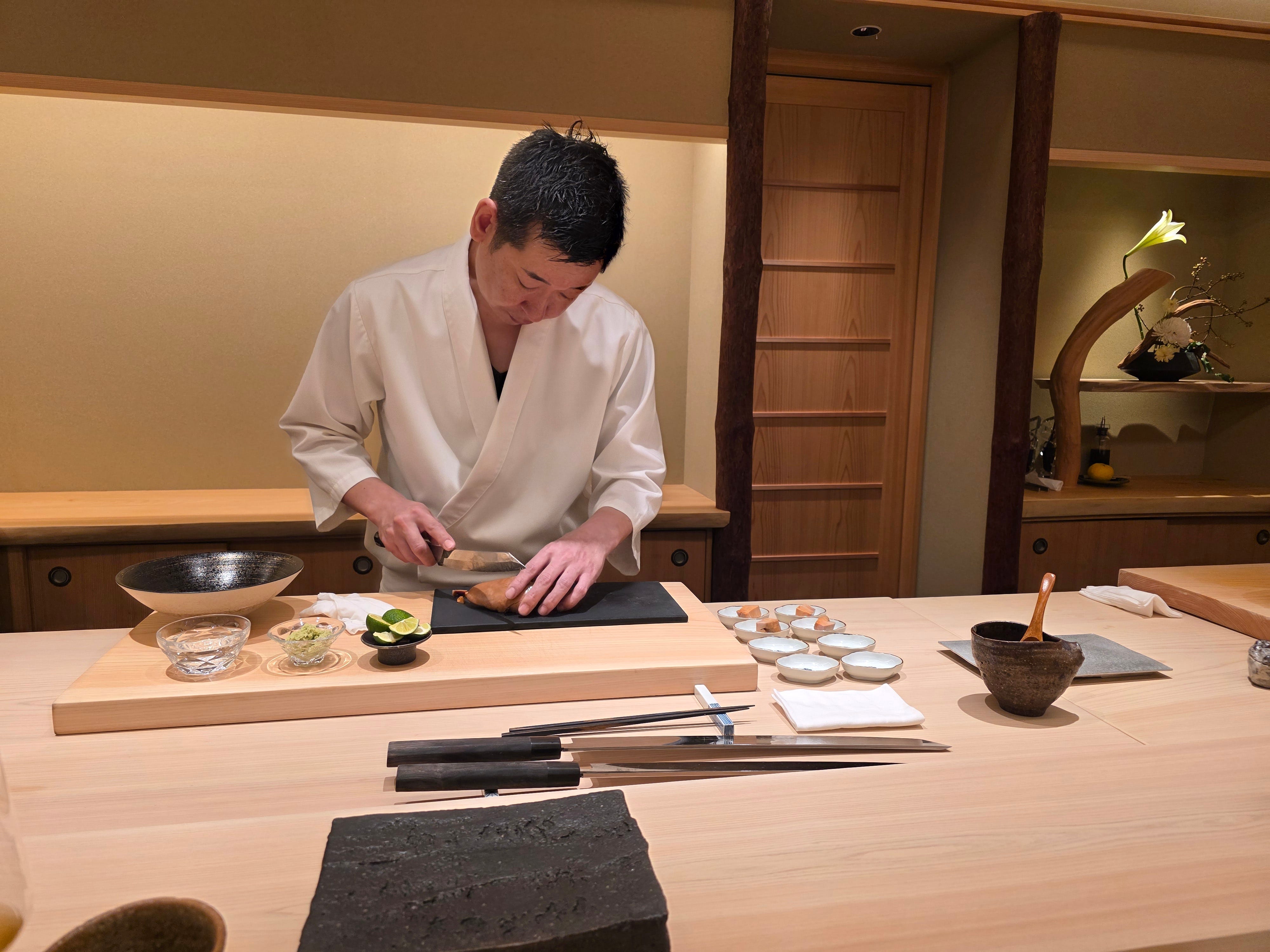
Walking to Millenia Walk, the minimalistic restaurant is located along the outside walk. There is only one seating for dinner, with all patrons surrounding the 10 seater Hinoki counter. We were all shown to our seats, and the master and apprentice entered the room to start preparations for dinner.
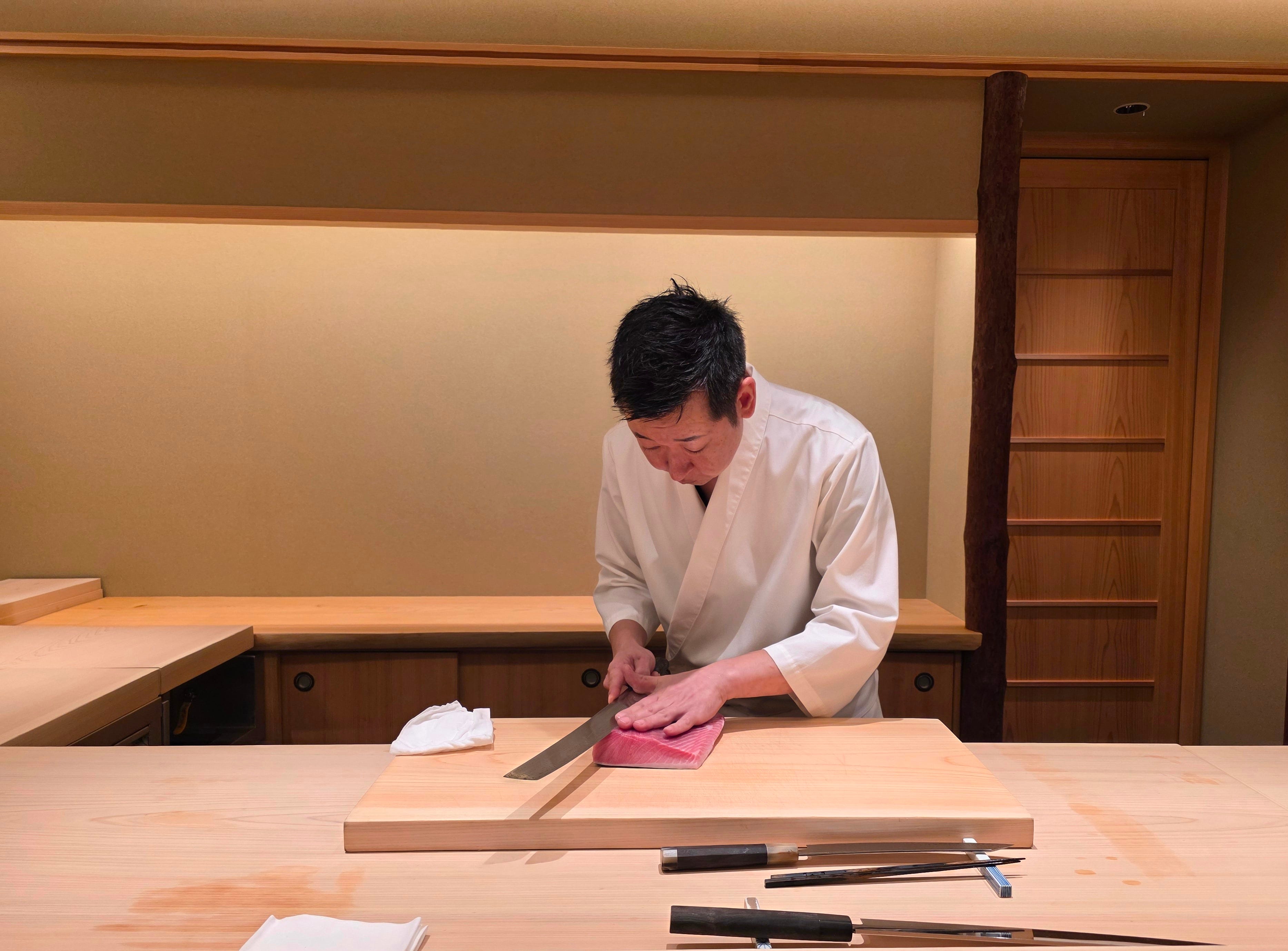
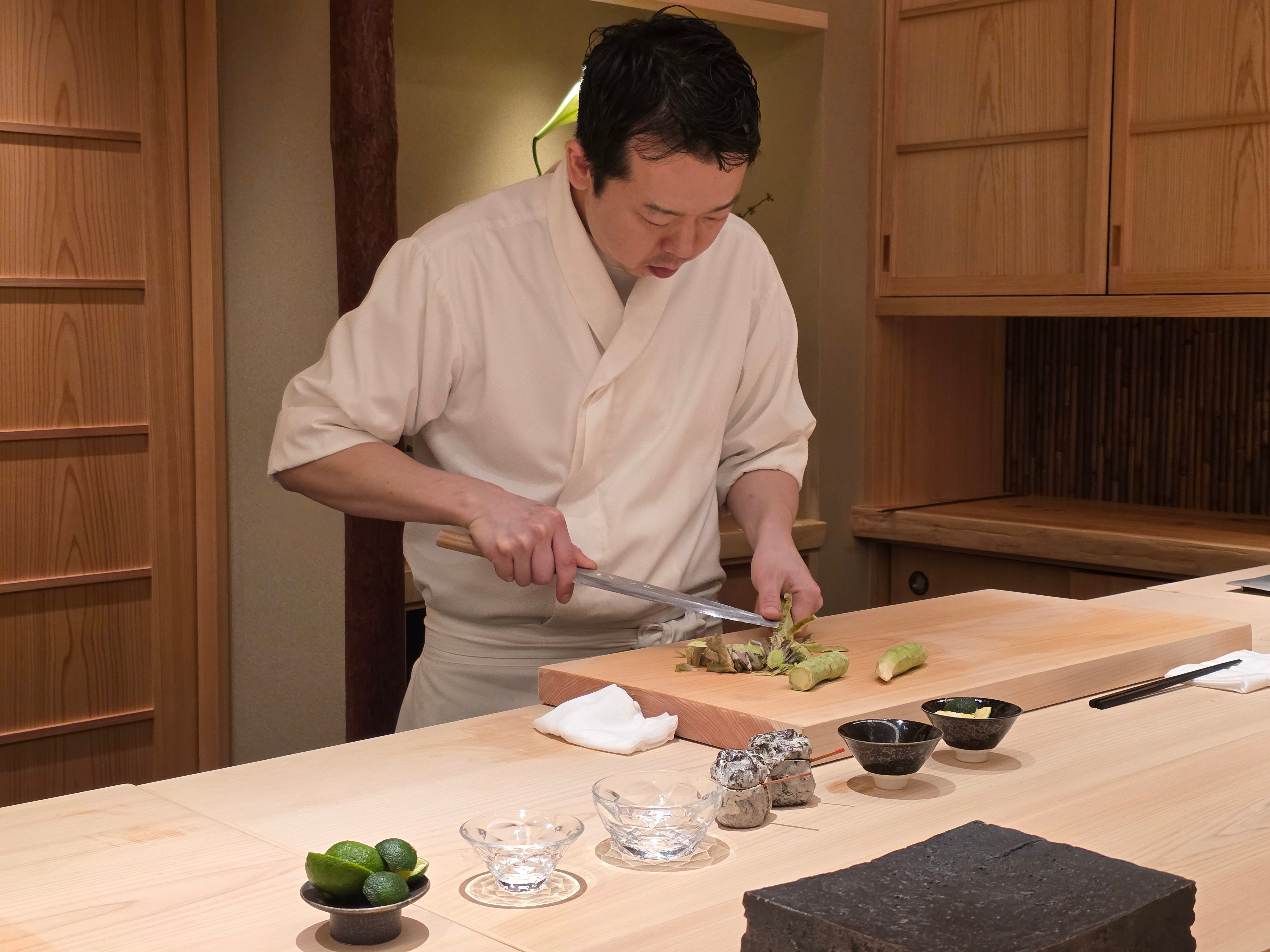
The master preparing the young tuna for the appetizer, while the apprentice was delicately shaving the wasabi.
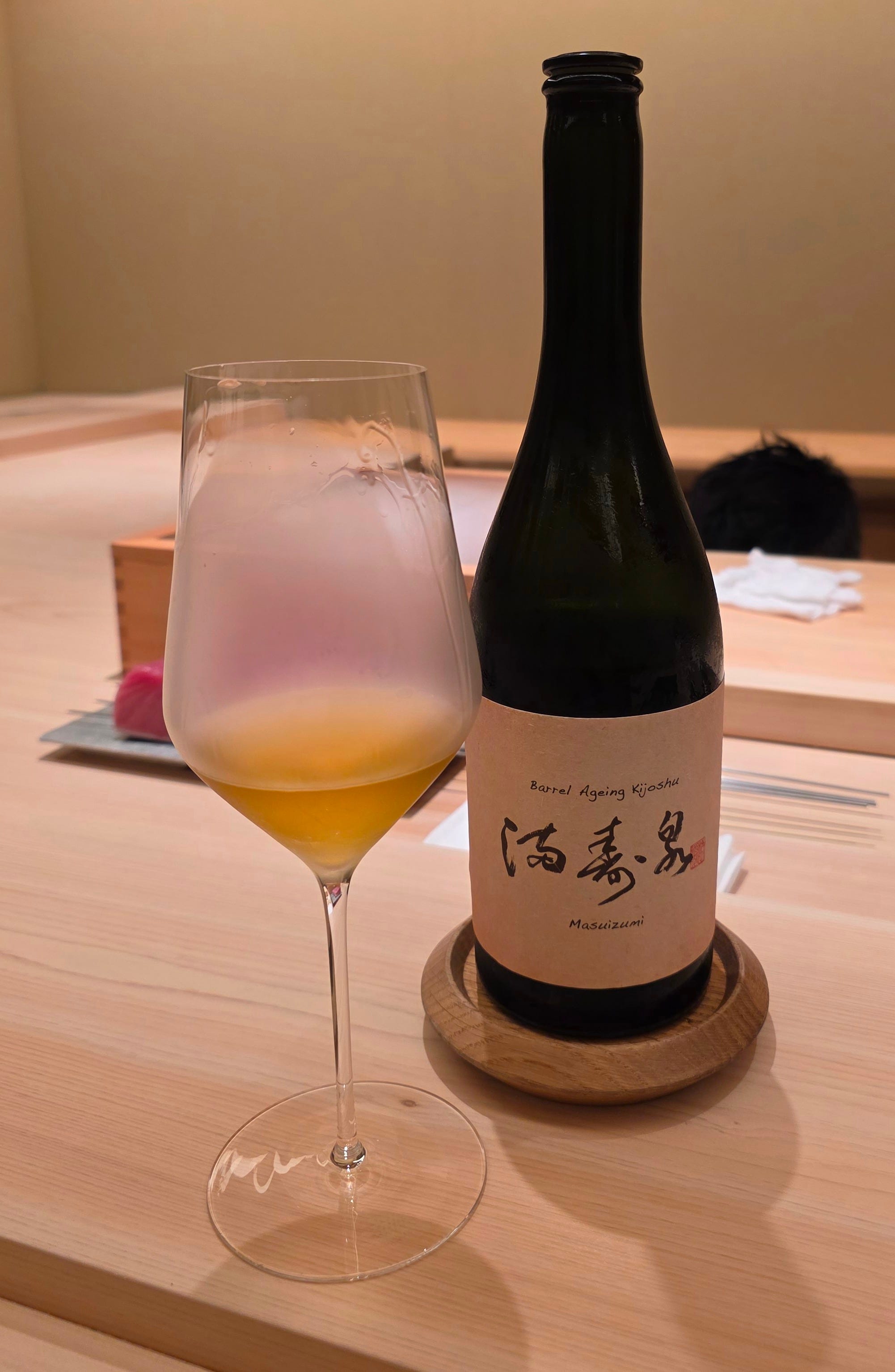
In an unorthodox pick, I went with a sweet Kijoshu-style sake, more akin to a dessert wine than a normal sake. Pretty unique, and I was a huge fan.
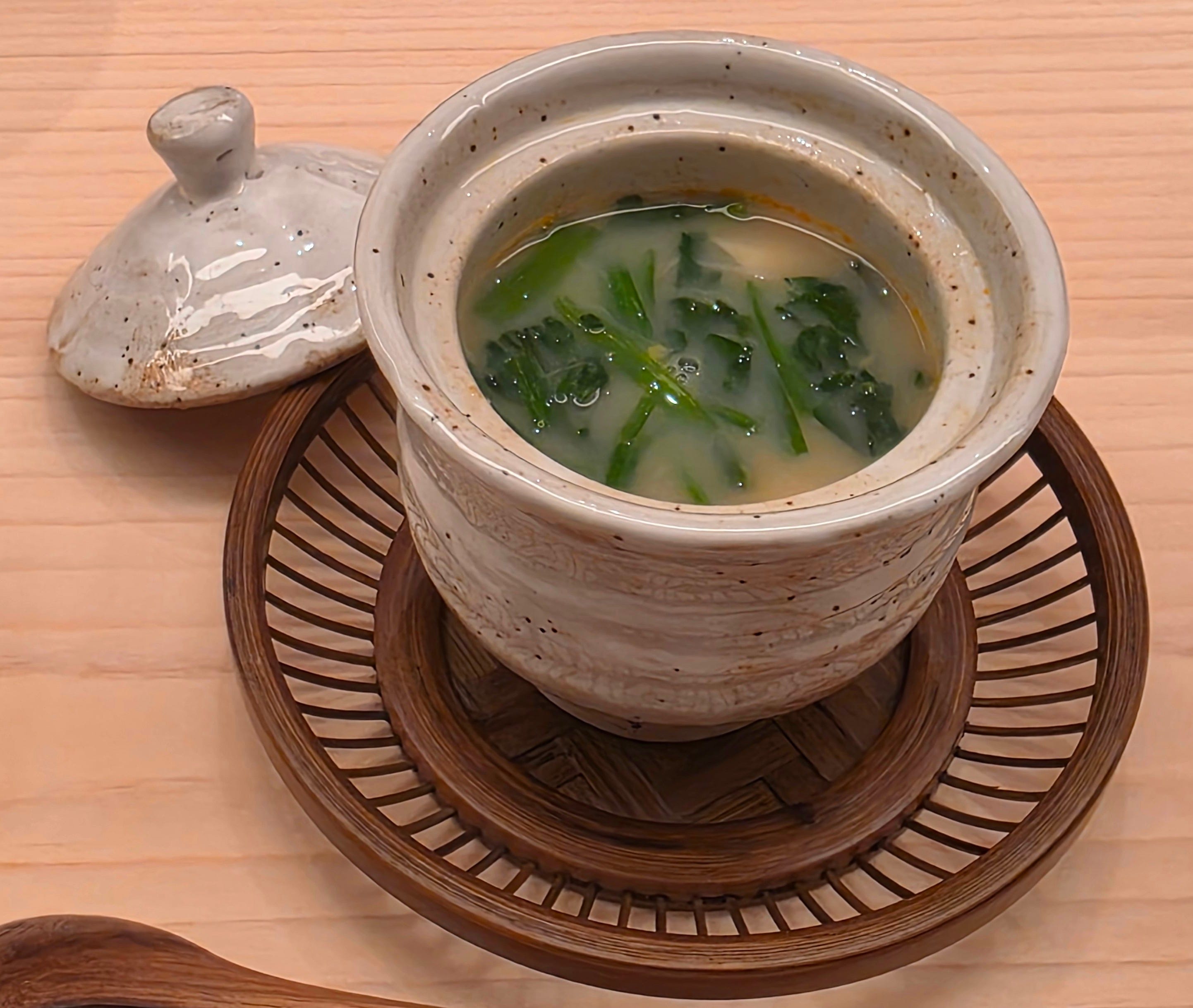
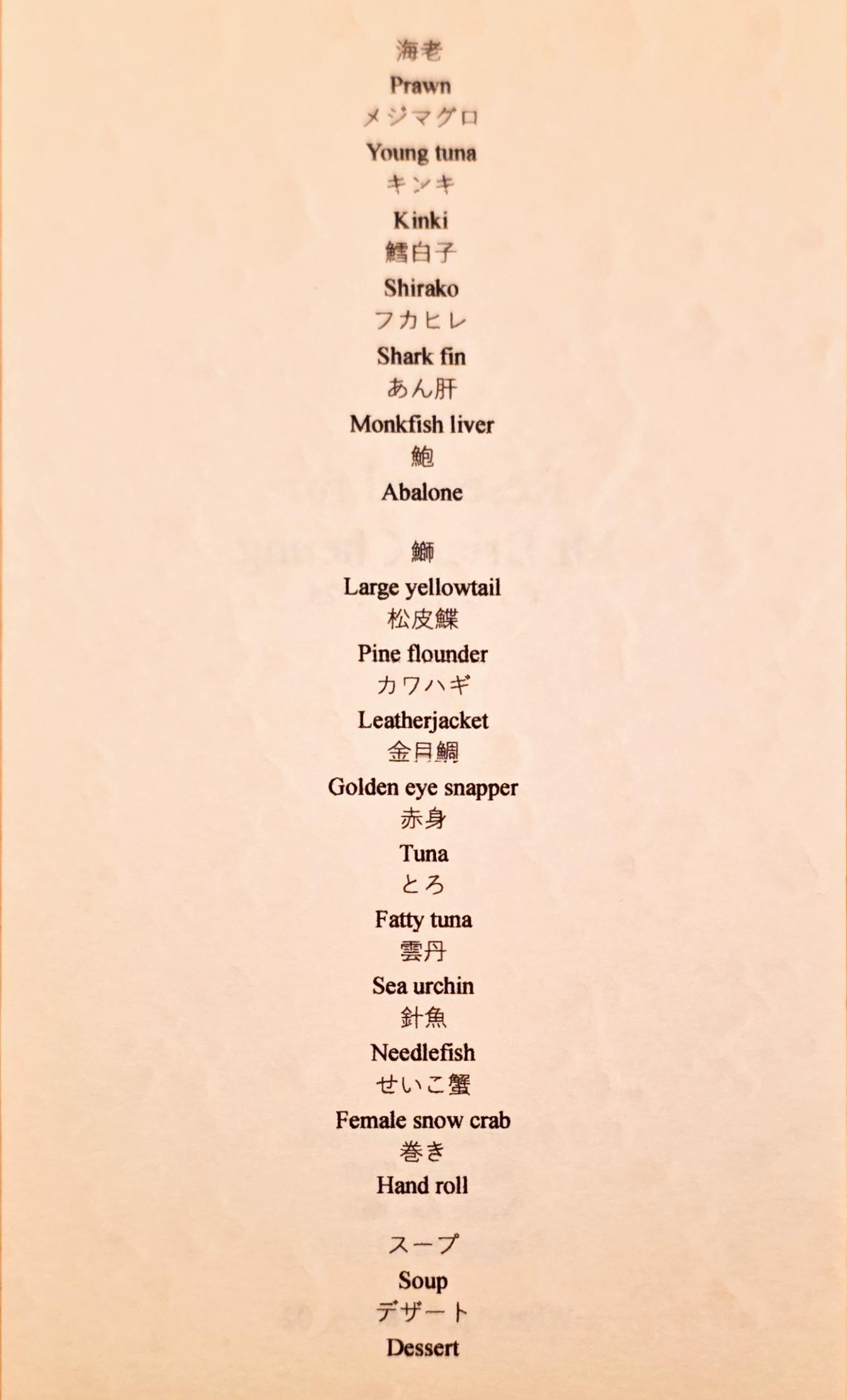
To welcome us to the restaurant, we were served a warm soup with prawns and tofu.
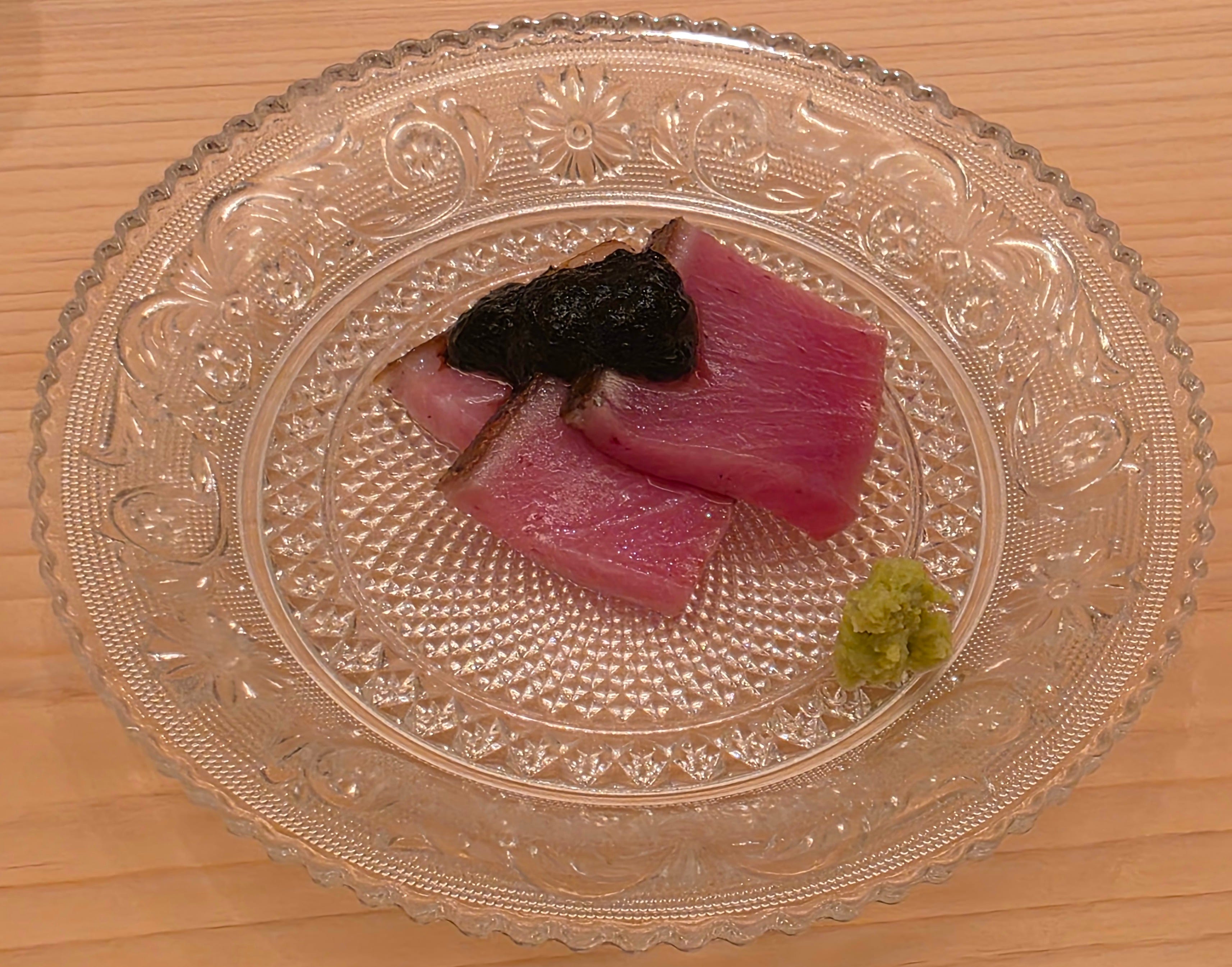
The first appetizer was young tuna, kissed with hot charcoal to produce a smoky, crispy skin, and a black, inky seaweed soy paste and a touch of freshly ground wasabi.
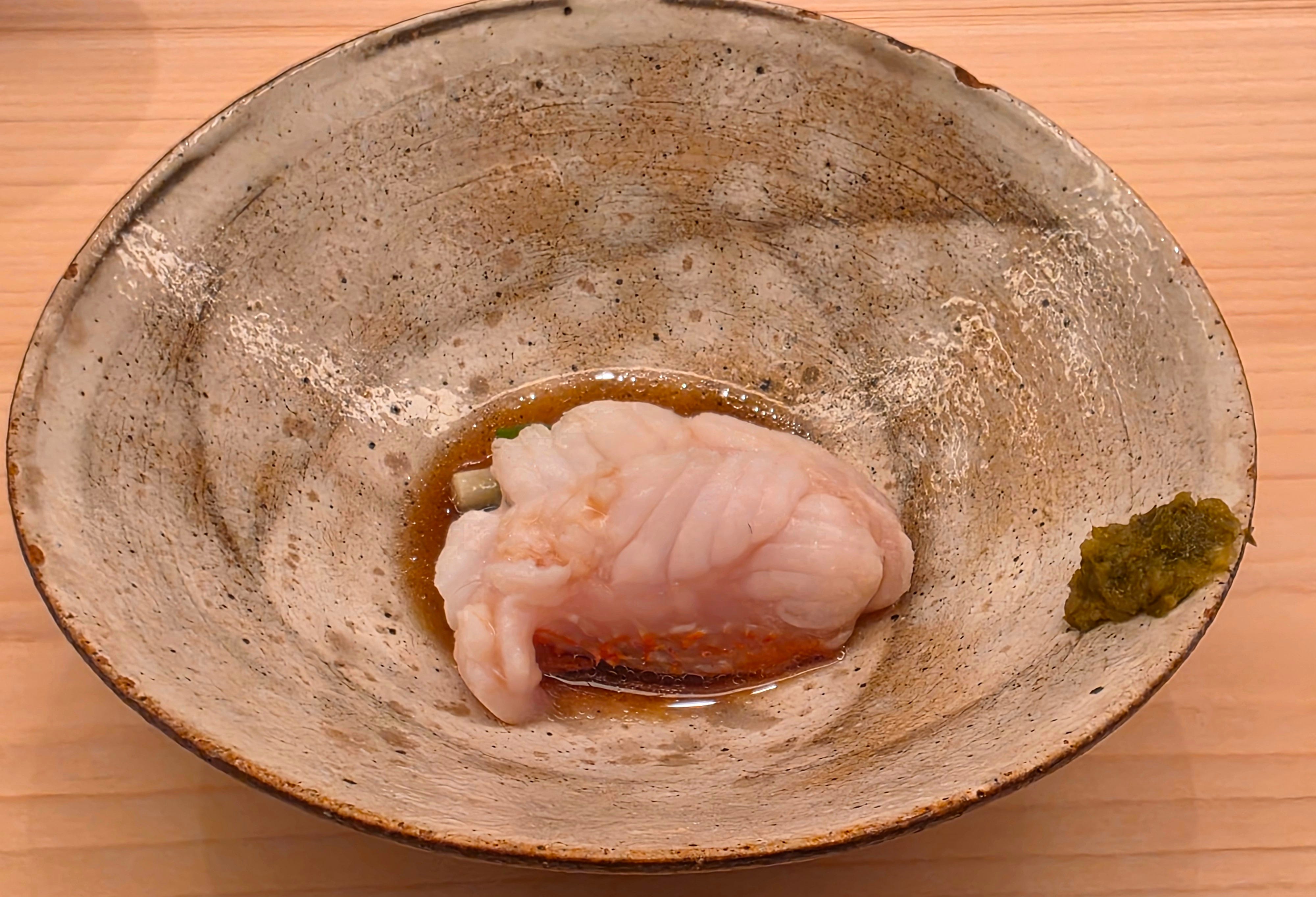
Next a piece of firm kinki fish, in a warm and flavourful broth. Served with a dollop of fermented pepper.
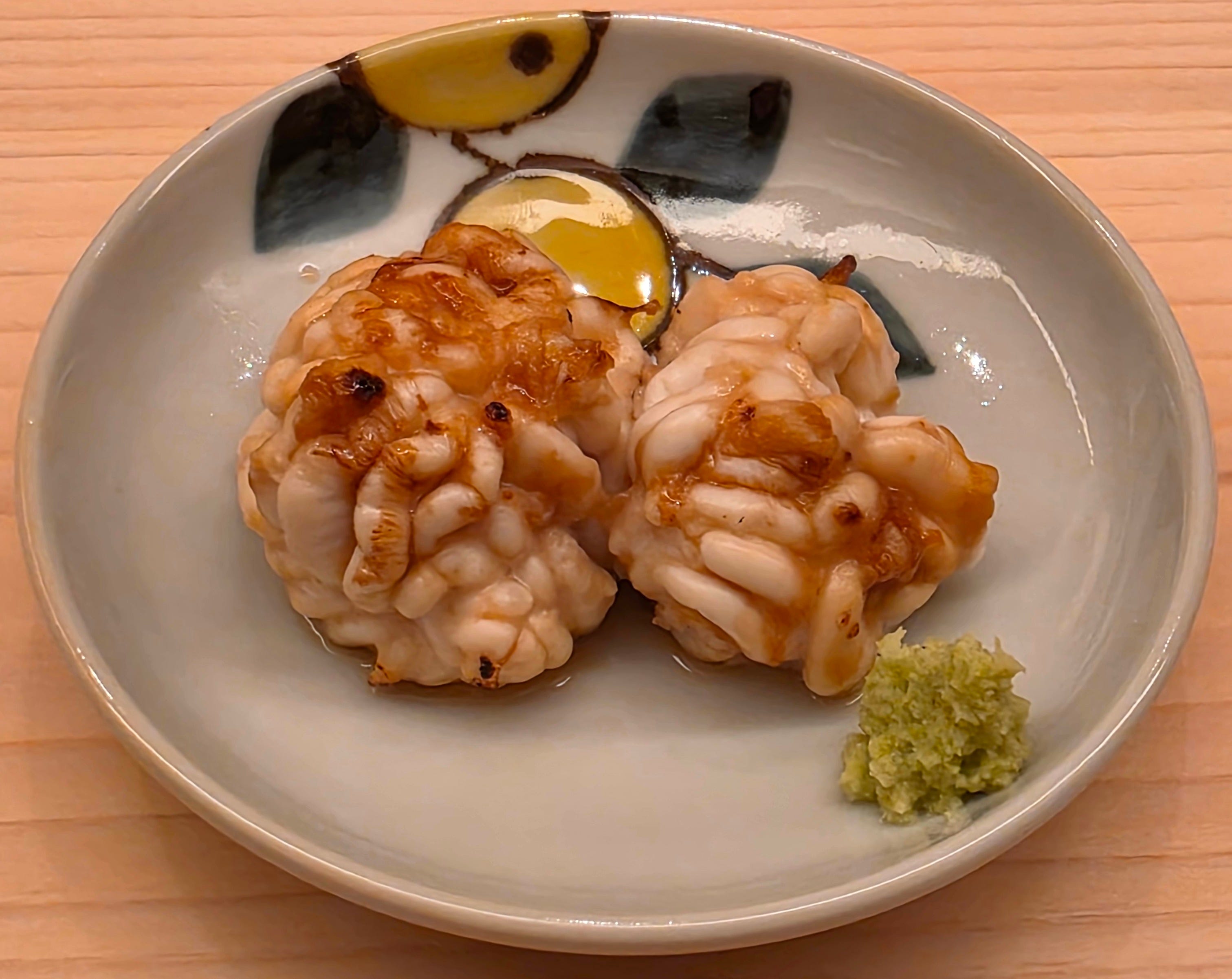
Next a large serving of Shirako, or fish sperm sac, with a soy glaze and more fresh wasabi. Not the biggest fan of Shirako, but rich, creamy and not particularly unpleasant.
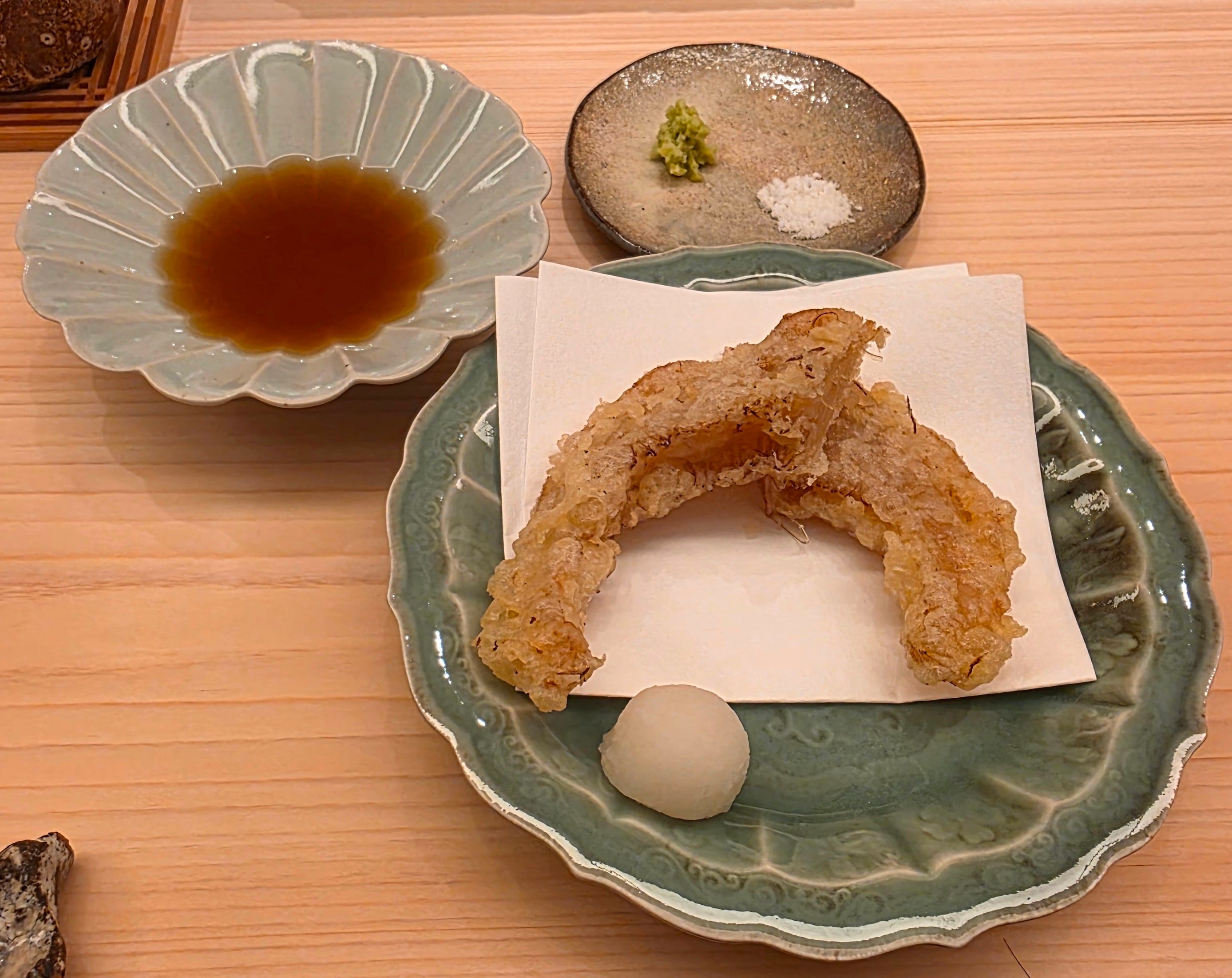
A really unique dish I’ve never seen before. Tempura shark fin. Traditionally a texture food soaking in the flavours of whatever it’s cooked in, the deep fried tempura version was a really delicious take. I was a huge fan, and would love to try it again.
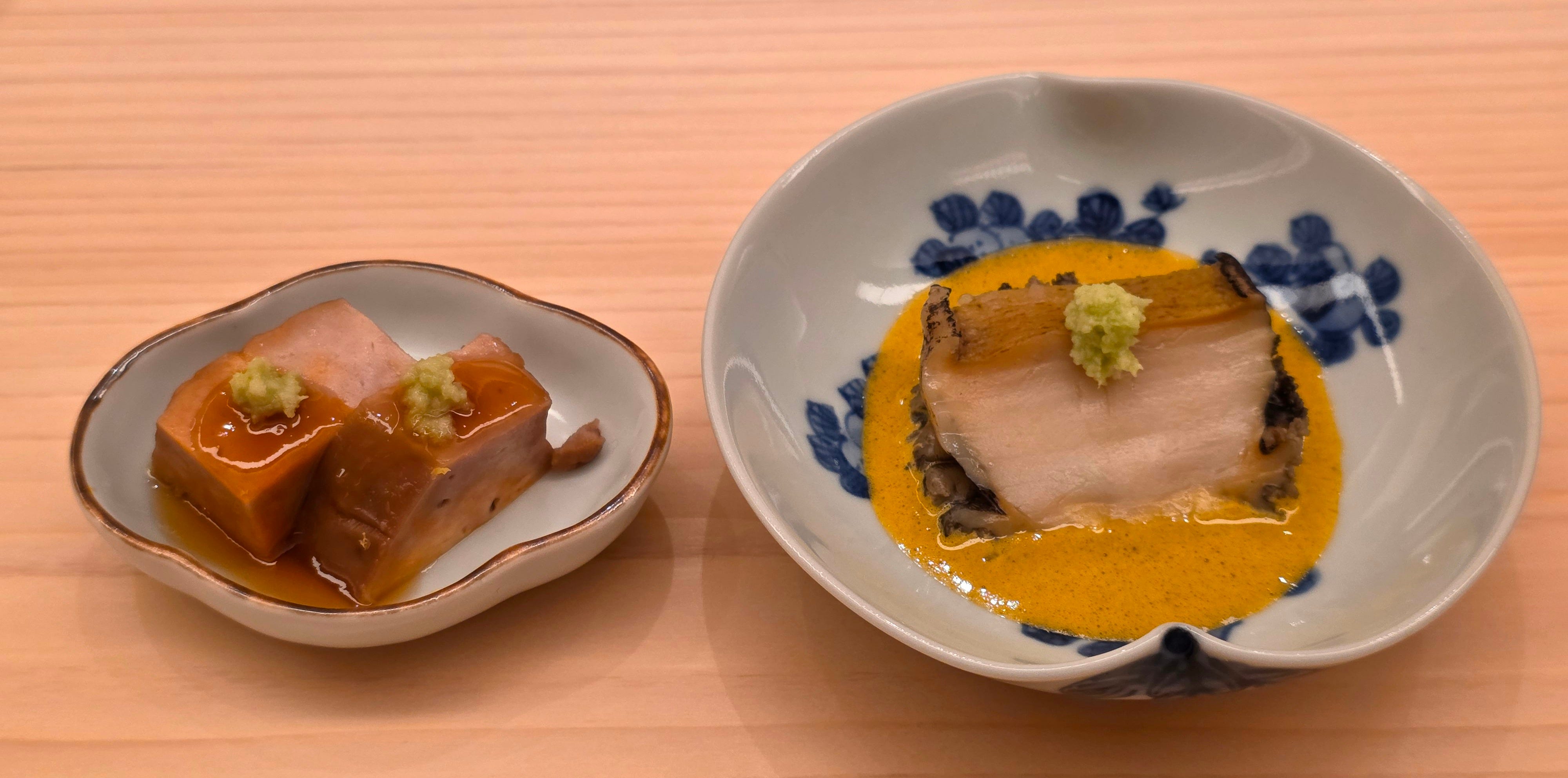
Finishing off the appetizers were two piece of monkfish liver, like foie gras in consistency, and a tender piece of braised abalone, served in the classical style, with the abalone liver sauce.
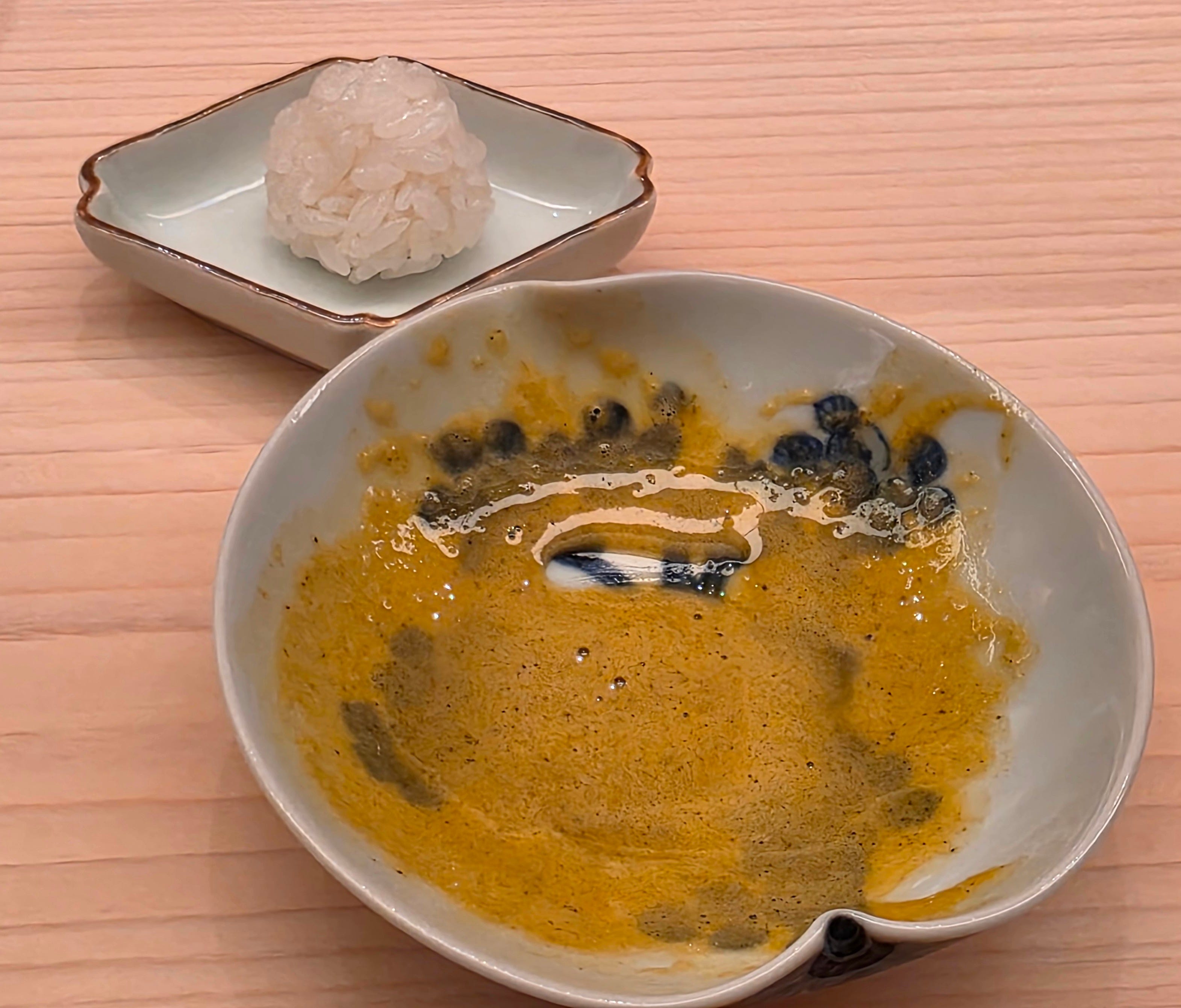
Of course, we wouldn’t let any of the excess abalone sauce go to waste, so a small ball of sushi rice was provided to soak up and finish off the liver sauce.
At this point it was time to start the main event. The chef and his apprentice finished the preparation and laid out all the slices of fish mise en place.
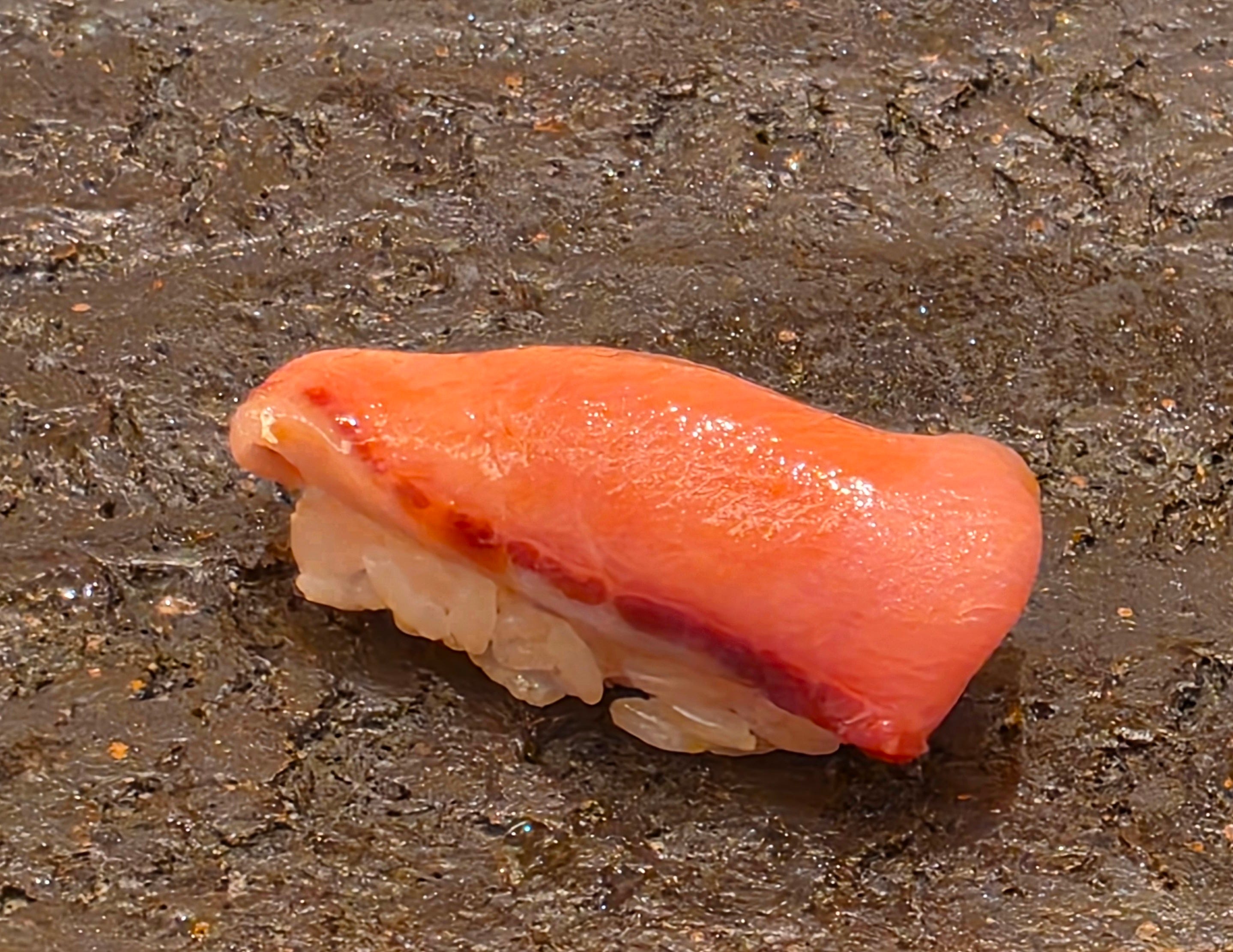
Starting right into some tuna, a large amberjack. Best served in winter when it’s fat stores are completely full and it’s extra rich.
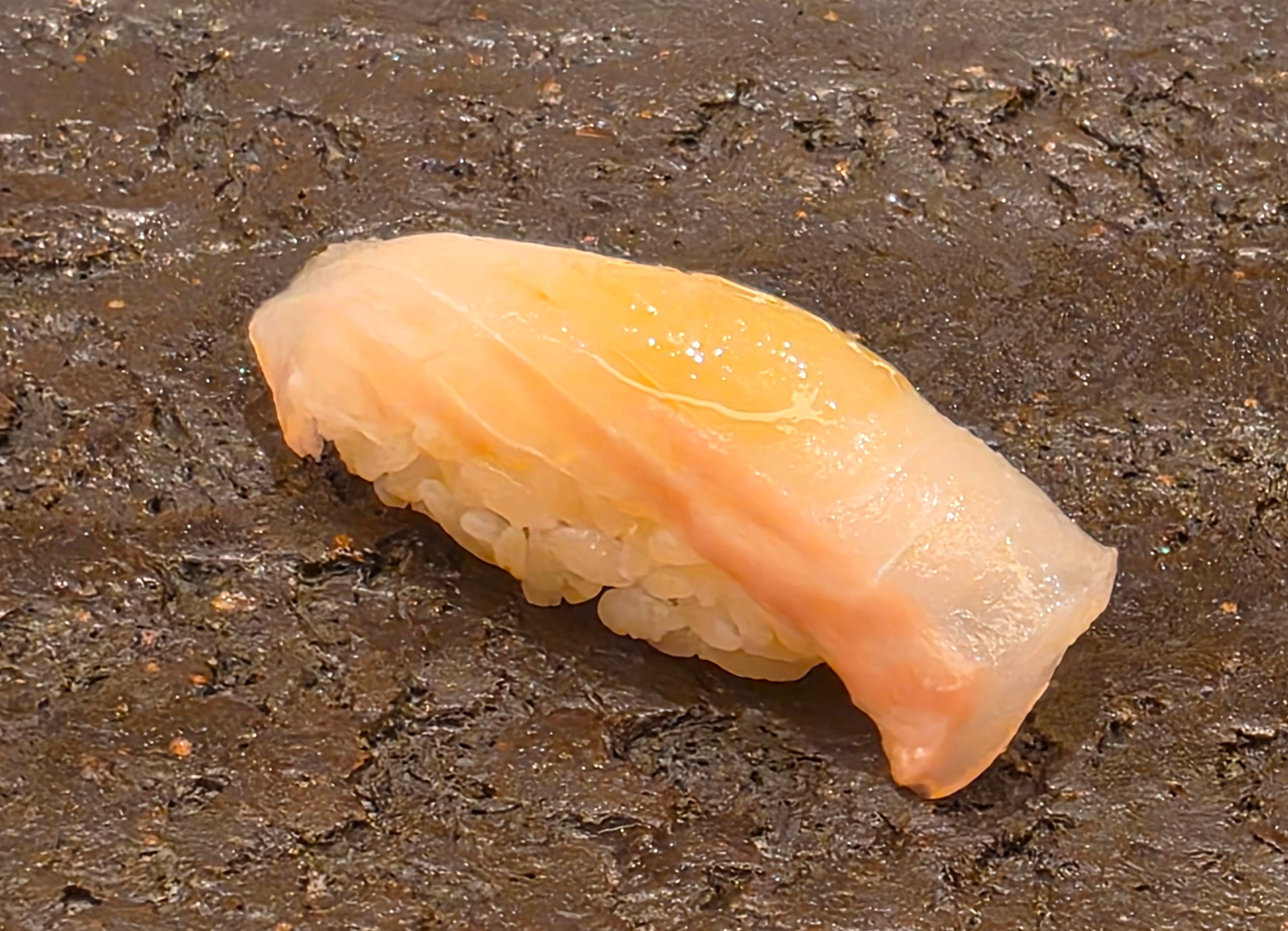
Next, the Pine flounder. Not a fish I see much in omakase. The king of flounders, a fatty flatfish with a firm, almost sweet flavour.
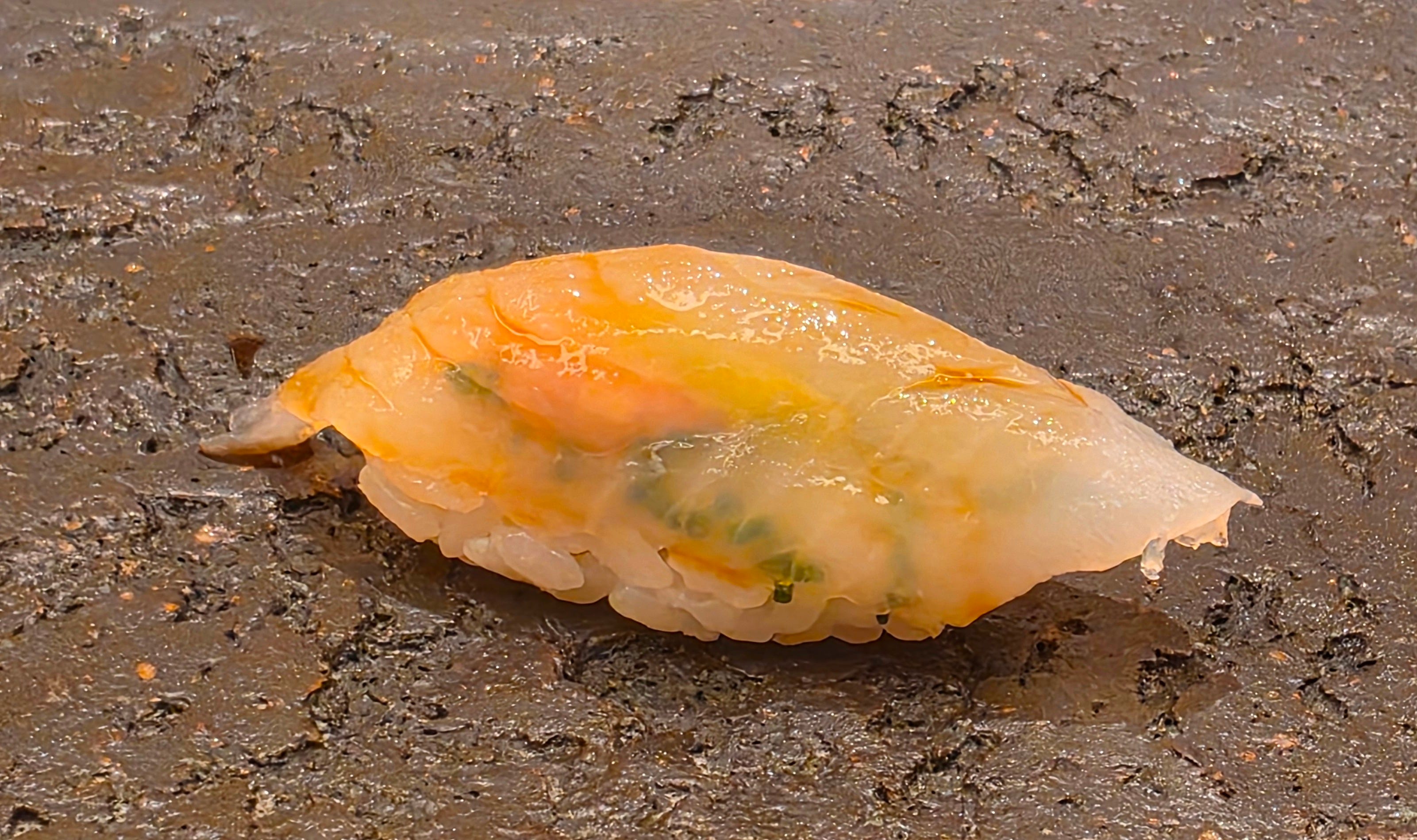
The leatherjacket came next. A small fish somewhat similar to a mackerel - mild, slightly oil, and served with a layer of thinly chopped chives between the fish and the rice.
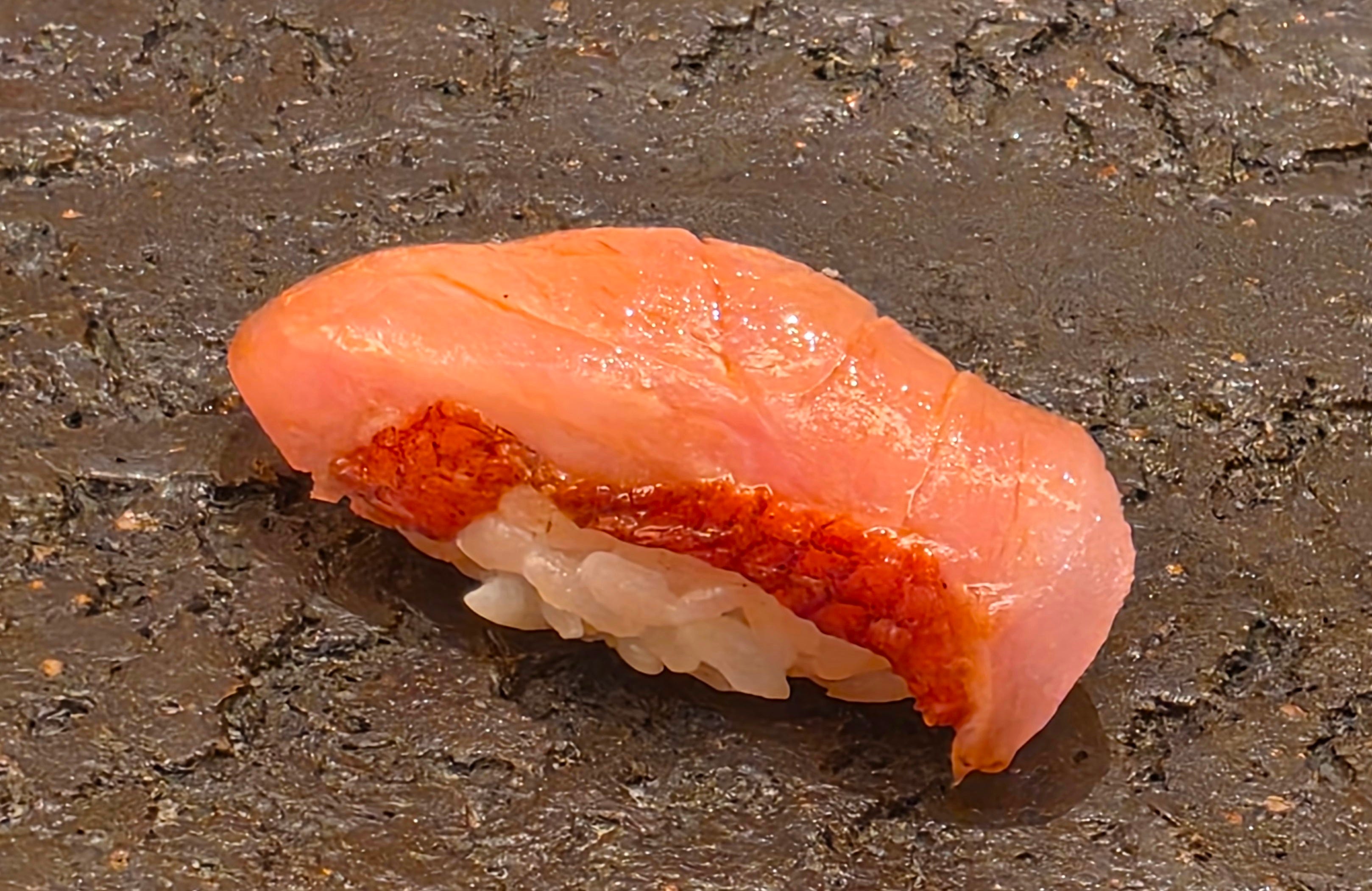
Following up with a golden eye snapper, sliced to highlight it’s vibrant red skin and slightly pink flesh. Rich buttery flavour, a slightly oily.
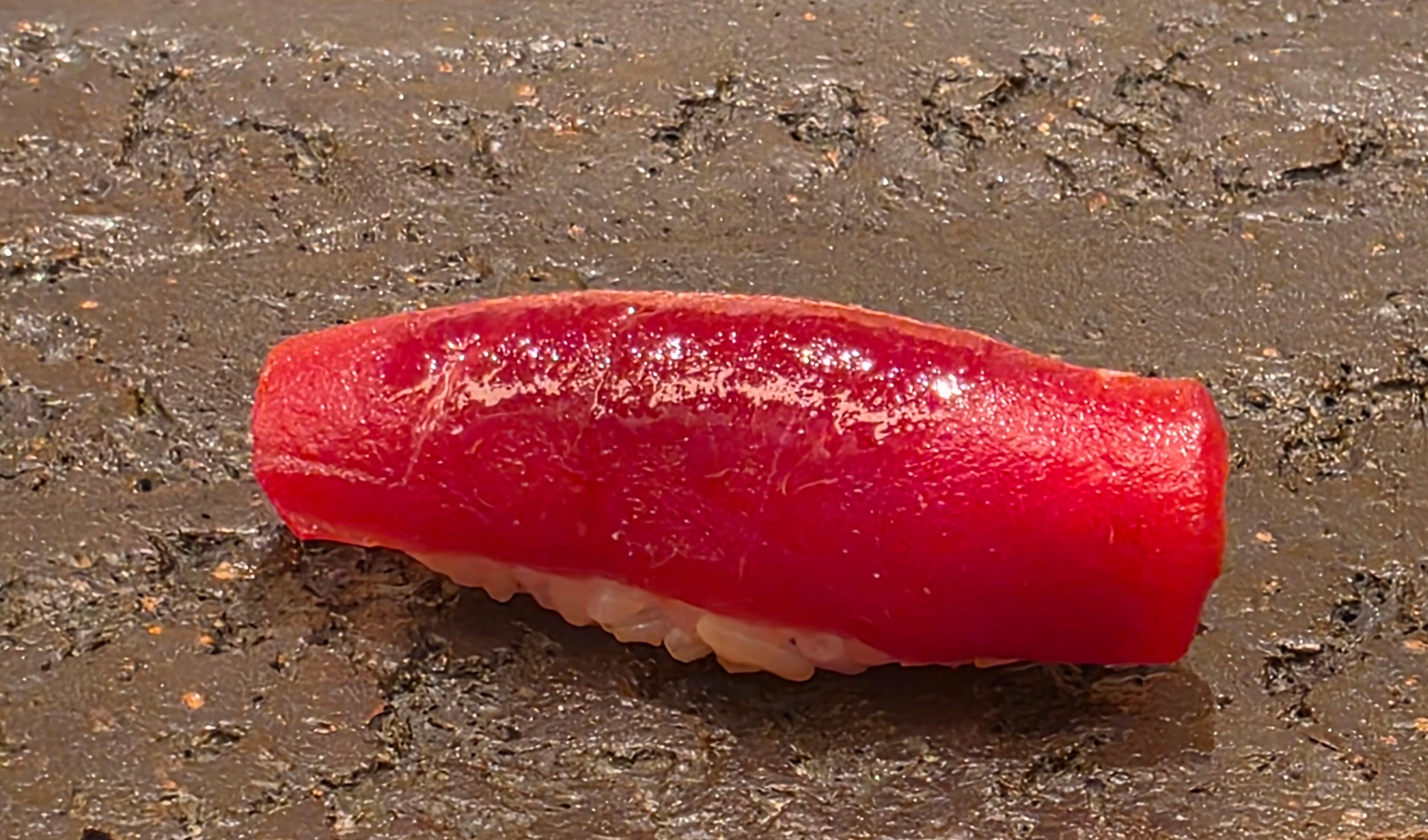
Moving into the tried and true classics - the bluefin tuna. Starting with the lean cut from the back of the dish, the Akami.
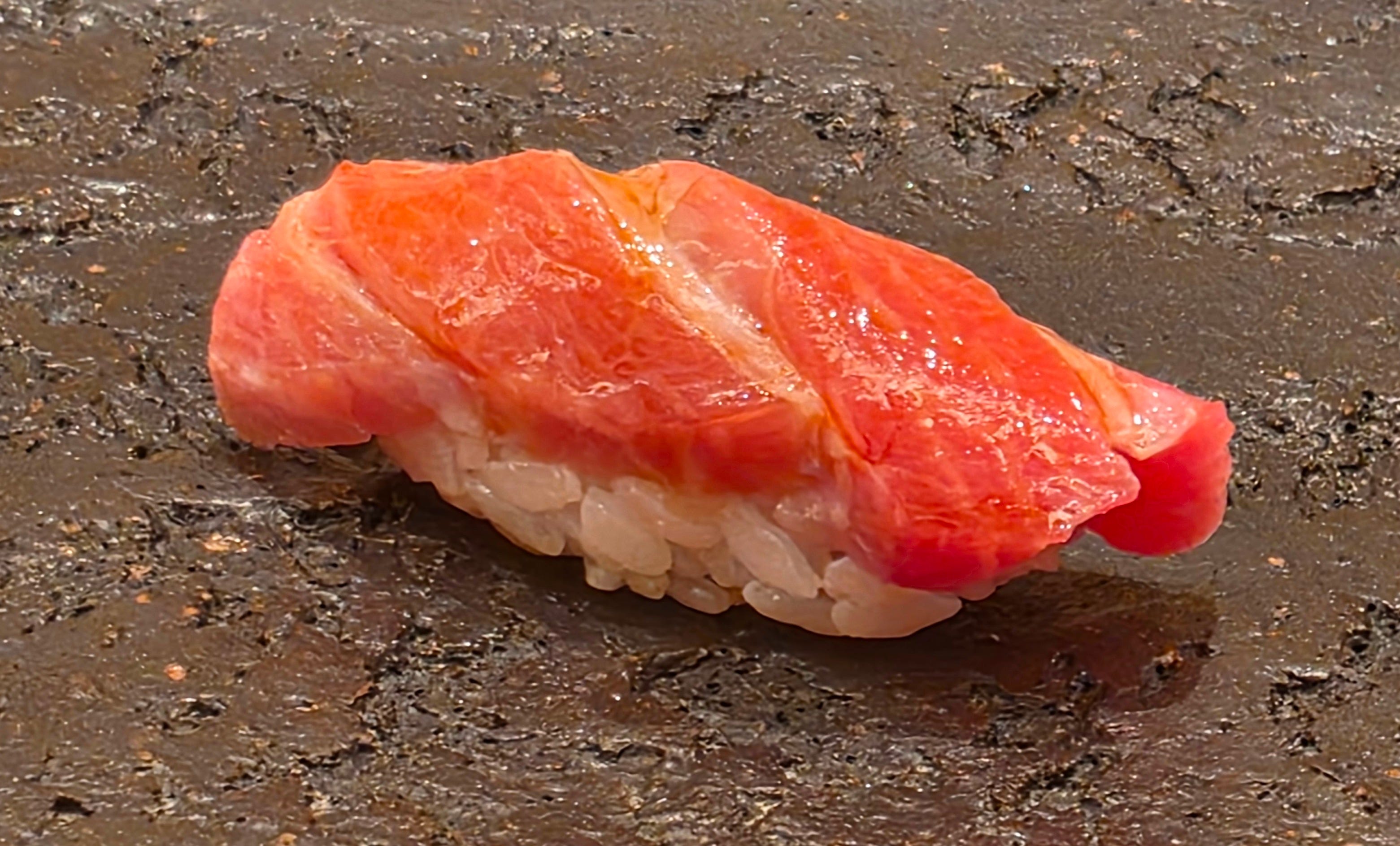
The chutoro came next, the fatty cuts from the side of the belly, sliced on the bias so it falls apart in the mouth, one of the few times I really enjoyed the chutoro cut. Interestingly, we skipped the otoro fat bomb.
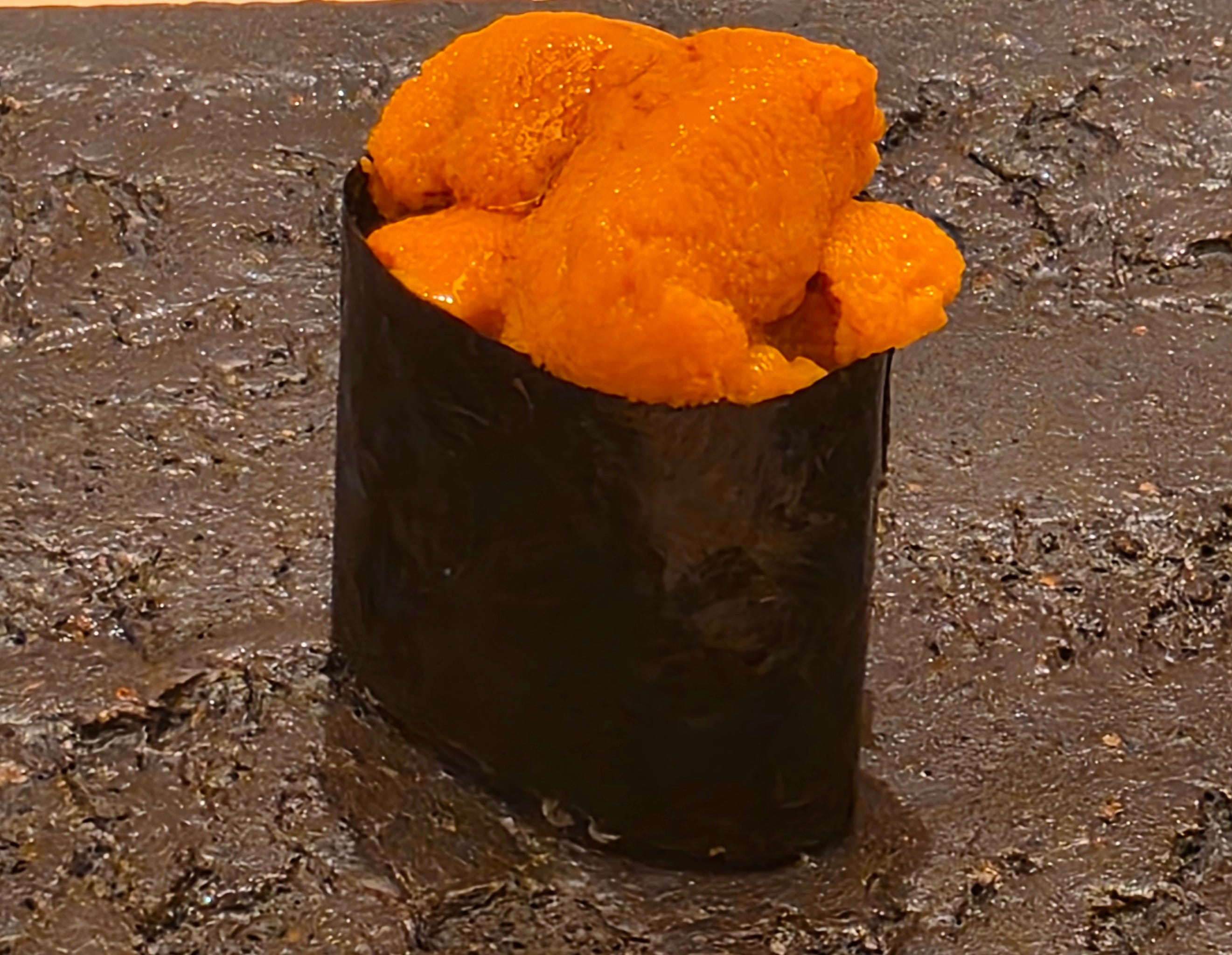
Another classic, the uni gunkan. Looking a little small, but delicious as always.
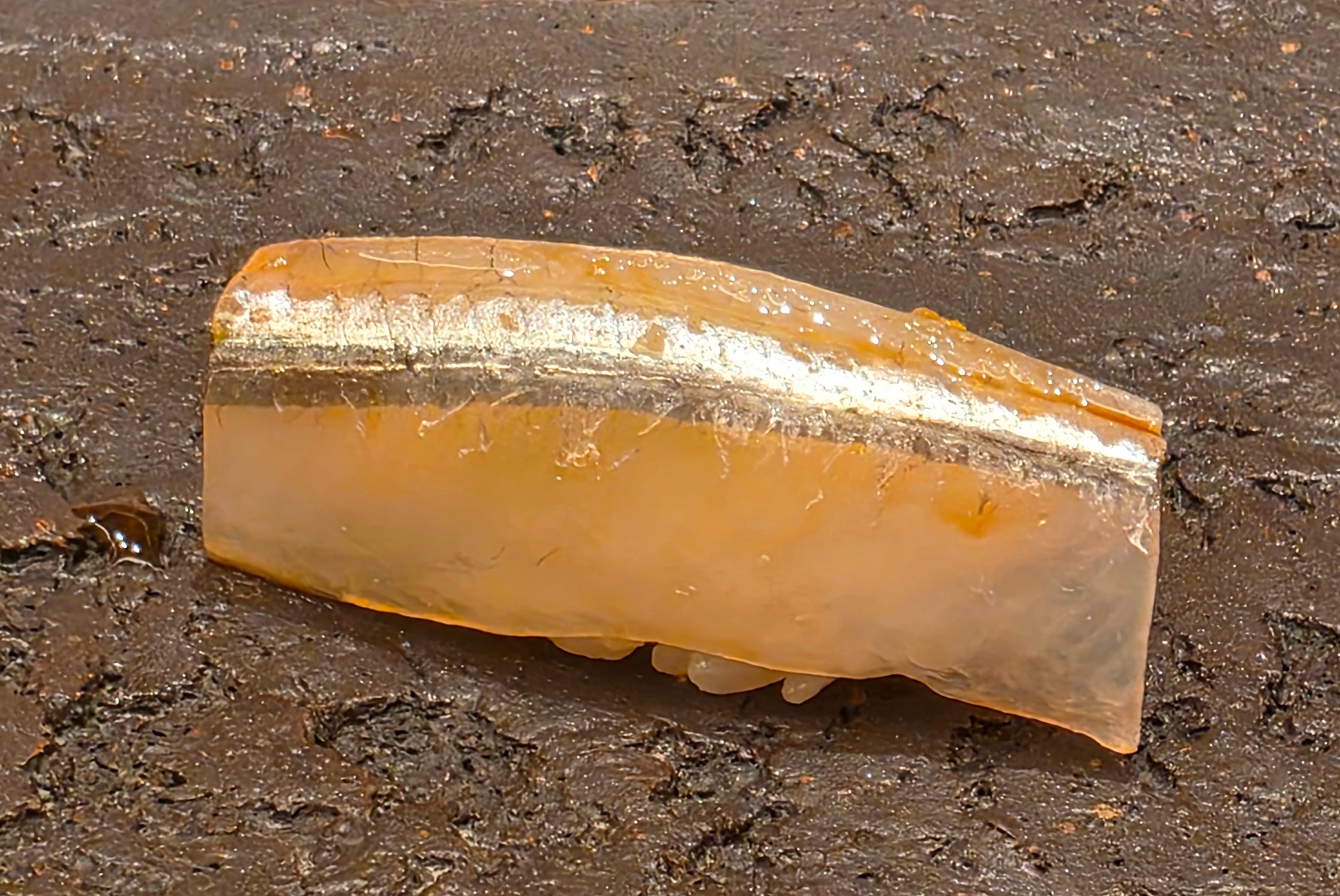
Slowly dialing back the fattiness and richness now, with an interesting fish I haven’t seen before, the needlefish. a slender, eel-like fish cut in a way to expose a thin layer of silver skin left across the middle.
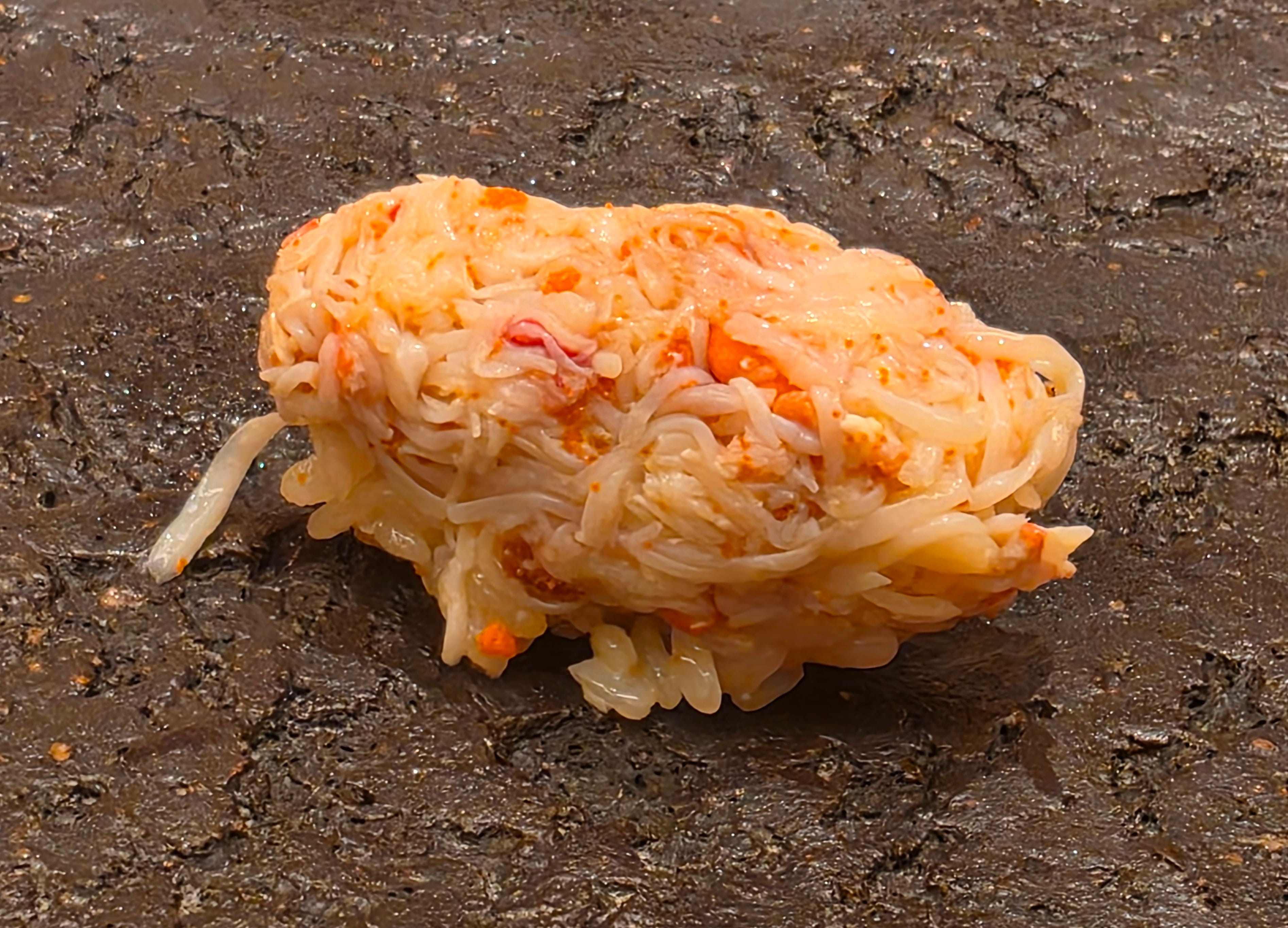
While not the most visually appealing, the biggest hit of the night, a generous handful of female snow crab, pressed into a sushi. First time I’ve seen it done in the nigiri-style instead of a handroll. Sweet, crabby, and absolutely delicious.
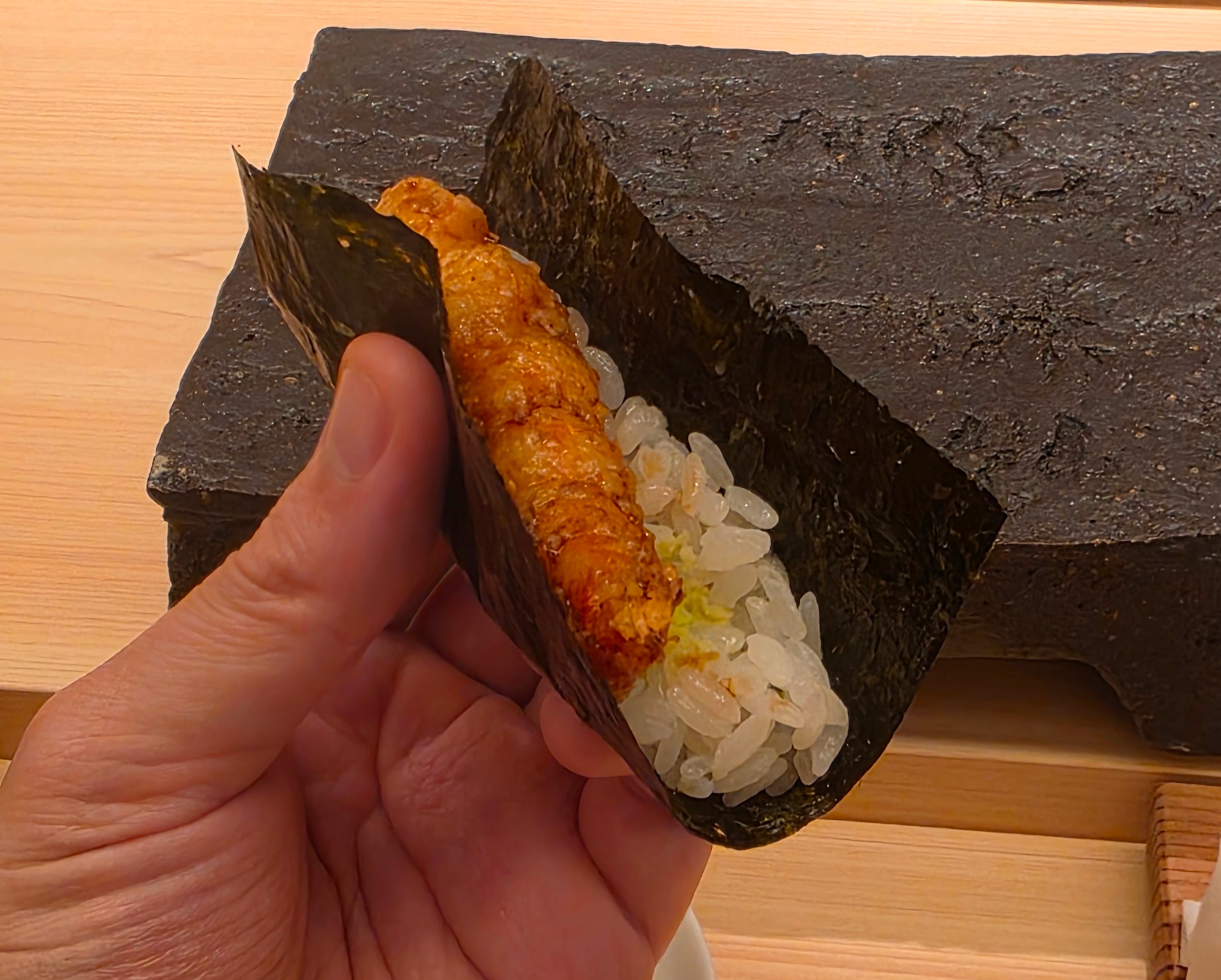
Finally, to finish off the main event, a handroll with a tempura prawn with a layer of uni.
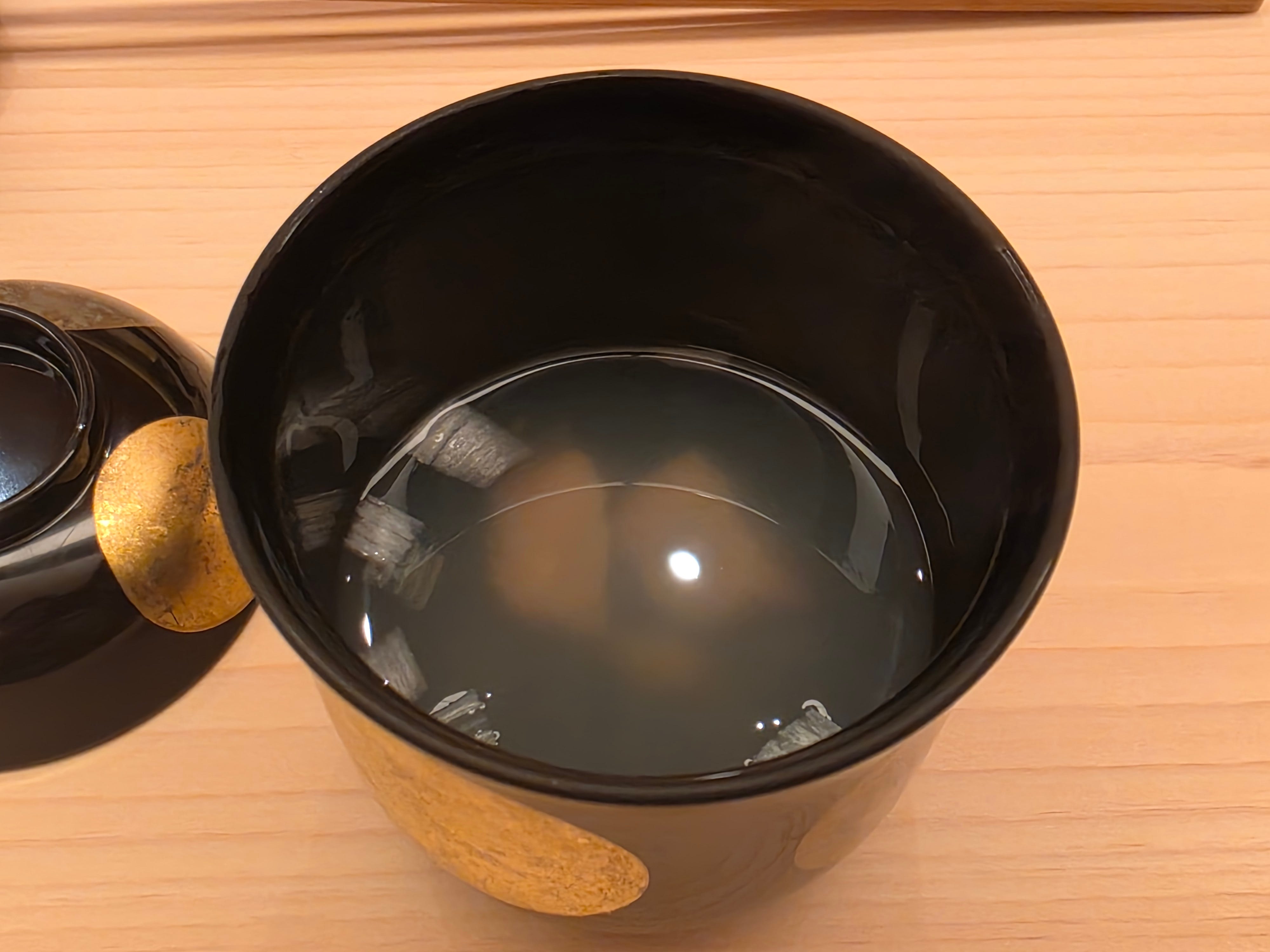
Bringing things to a close, a clear briny clam broth instead of a usual miso soup.
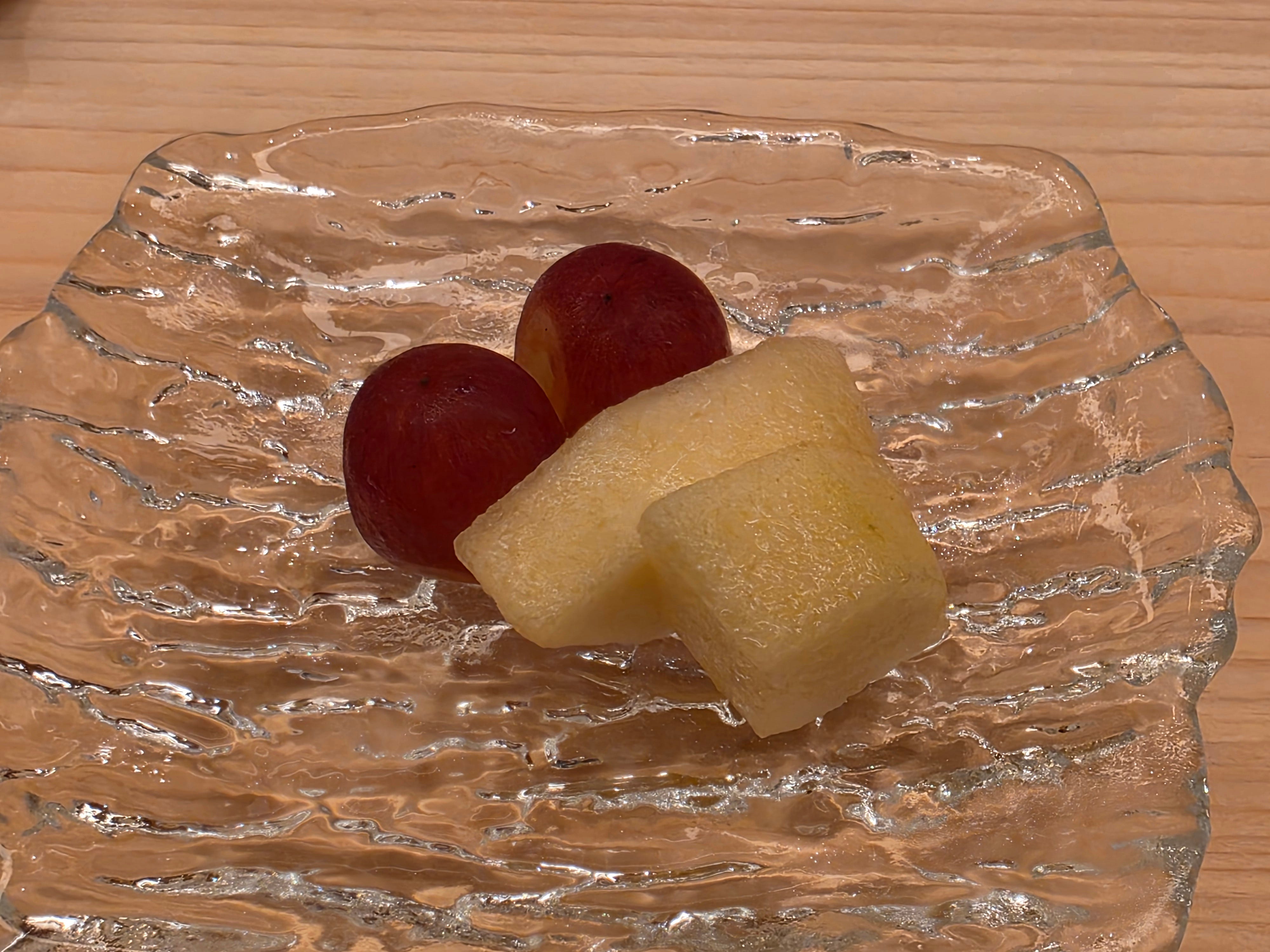
As always with Japanese fruit, intensely sweet grapes and melons. One of two pieces is really all one can handle in a sitting.
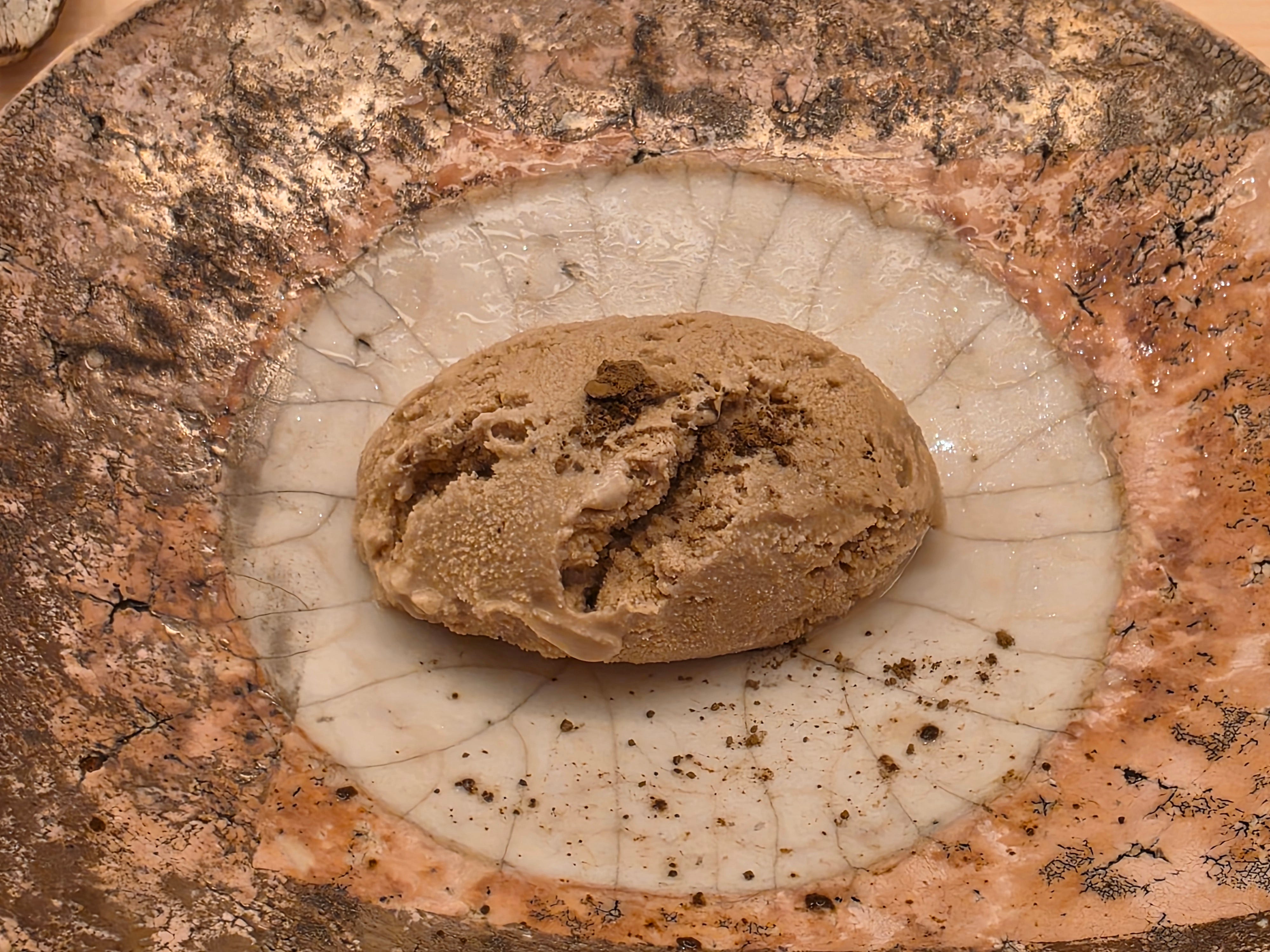
Finally, a scoop of roasted tea ice cream, served with a hot tea, both made from the same tea leaves. A cold and hot way to end of the meal
Overall, a great meal. There is an obvious comparison to Shoukouwa, both Singaporean restaurants specialize in edomae style sushi, both have achieved two Michelin stars, and Chef Sakuta used to run the sushi counter at Shoukouwa before opening Sakuta. I definitely felt that Shoukouwa was more innovative. There was more sophistication to their dishes, particularly the appetizers, and there was a lot more interactivity and explanation at Shoukouwa. Nonetheless, Sakuta had some real hits as well - the shark fin tempura, as well as the snow crab nigiri.
On balance, I much preferred Shoukouwa, but Sakuta is no slouch, and handily beats sushi joints in most other cities. I’ve been quite surprised at the quality of itomae in Singapore. I would’ve thought that the farther you go from Japan, the worse the sushi gets. It’s a natural consequence of being farther and farther away from the fish markets in Tokyo where all the best seafood is sourced. Once you get past Hong Kong, the quality of sushi chefs tends to deteriorate pretty quickly. Once you get to London or New York, it’s looking pretty dismal. Singapore is a pleasant exception.
Total damage: 780 SGD/ 1 person