
Some restaurants feel like they've earned the right to stay exactly as they are. T'ang Court, tucked inside the Langham in Tsim Sha Tsui, is one of them. It opened in 1988 inside what was then the Great Eagle Hotel, picked up its first Michelin star in 2009, and climbed to three stars by 2016. The hotel changed its name, underwent a full renovation in 2014, and expanded the T'ang Court name to branches in Shanghai and other cities. The Hong Kong original, meanwhile, stayed put and changed almost nothing.
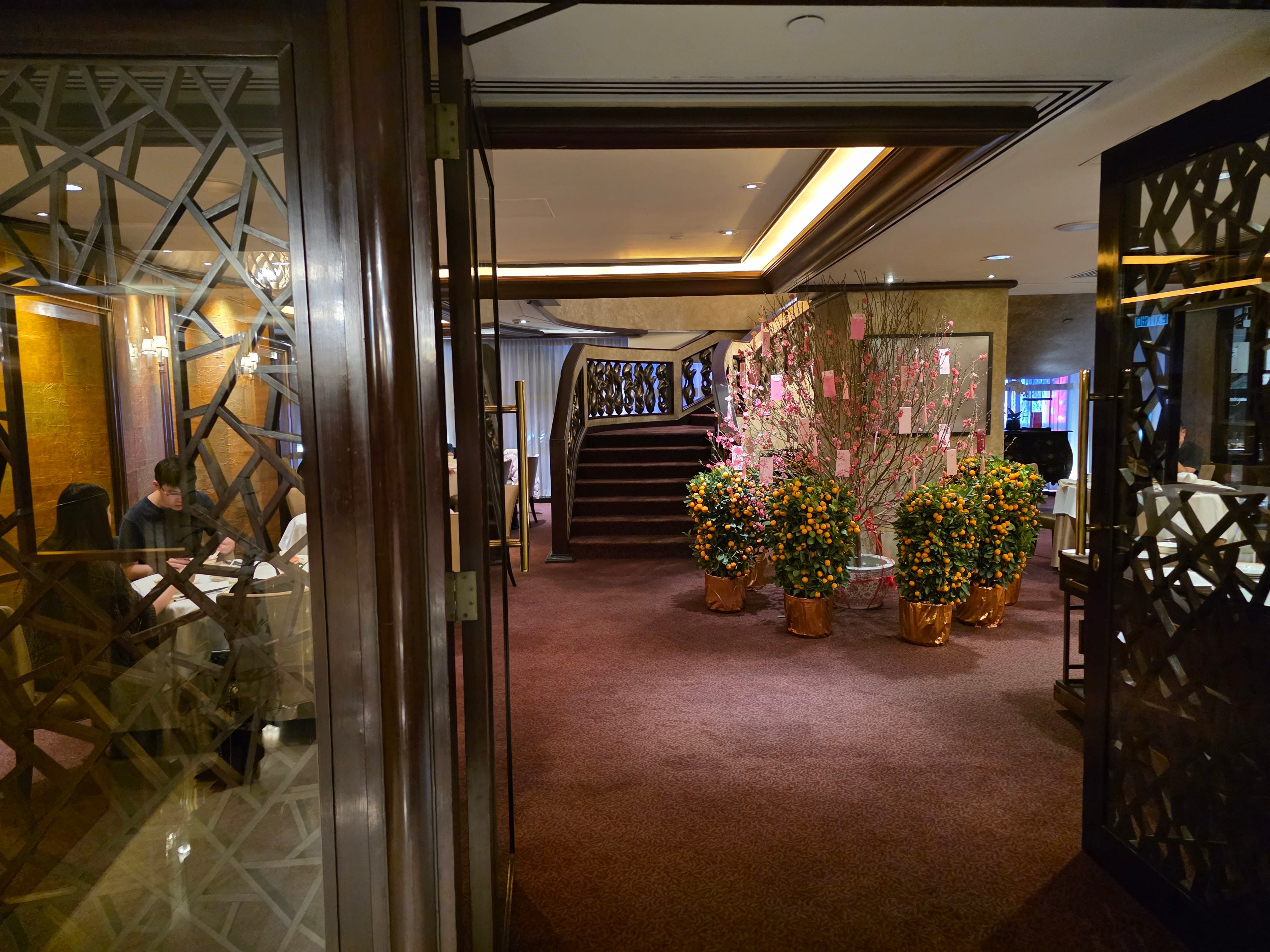
The room announces itself with a certain confidence. Deep red carpets and drapes, gold trim, carved wood detailing, large porcelain vases, and chandeliers stacked across two floors connected by a sweeping staircase. The Tang dynasty references are deliberate and committed rather than decorative shorthand, and the effect feels genuinely grand without tipping into pastiche. It looks, by most accounts, very much as it did when it first opened.
The food has been shaped by a single kitchen lineage that stretches back to day one. Chef Kwong Wai Keung joined T'ang Court when it opened, having started his career at 14 as a kitchen assistant in a Central hotel, working his way through every station and eventually running the Chinese kitchen. He stayed for over three decades, building a reputation around classic Cantonese cooking: live seafood, abalone, crab, whatever the market offered that week, all treated with strict attention to fire control and ingredient freshness. His signature three-onion stir-fried lobster, made with spring onions, red onions, and shallots finished with Shaoxing wine in a blazing wok, became one of the most recognisable dishes in Hong Kong. He retired around 2022.
His protégé, Chef Wong Chi Fai, took over the executive chef role. Wong had joined T'ang Court in 2001 as a No. 3 steamer chef and spent two decades learning directly from Kwong before stepping into the top position. The philosophy has not shifted: seasonal menus updated every month or two, tasting menus built around market availability, and the same exacting standards around sourcing and timing. Several of Kwong's signatures remain on the menu under Wong's stewardship, including the three-onion lobster and the crumbed crab shell.
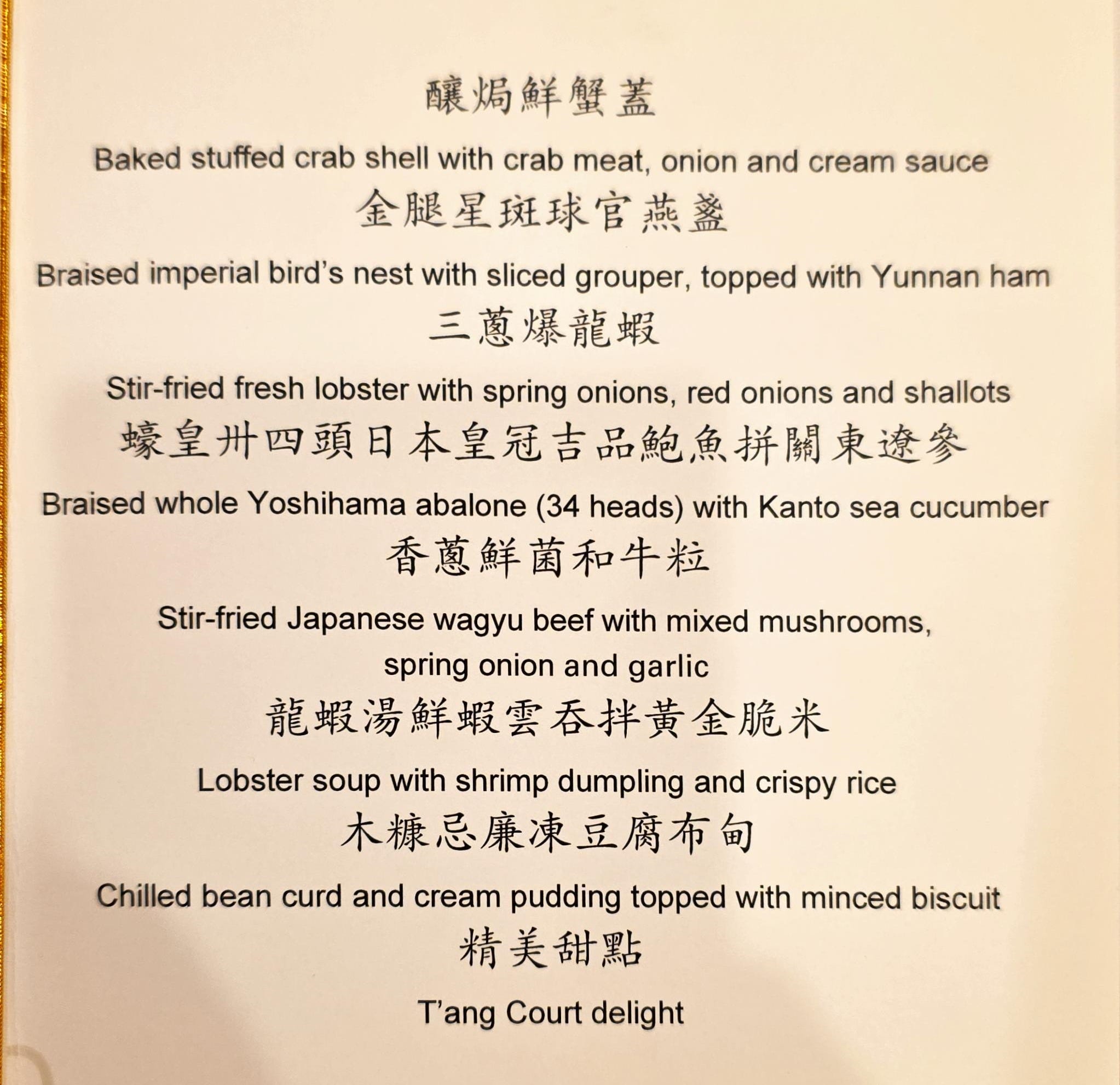
We arrived late, which made the tasting menu the obvious call rather than trying to navigate the carte at that hour. It turned out to be the right decision.
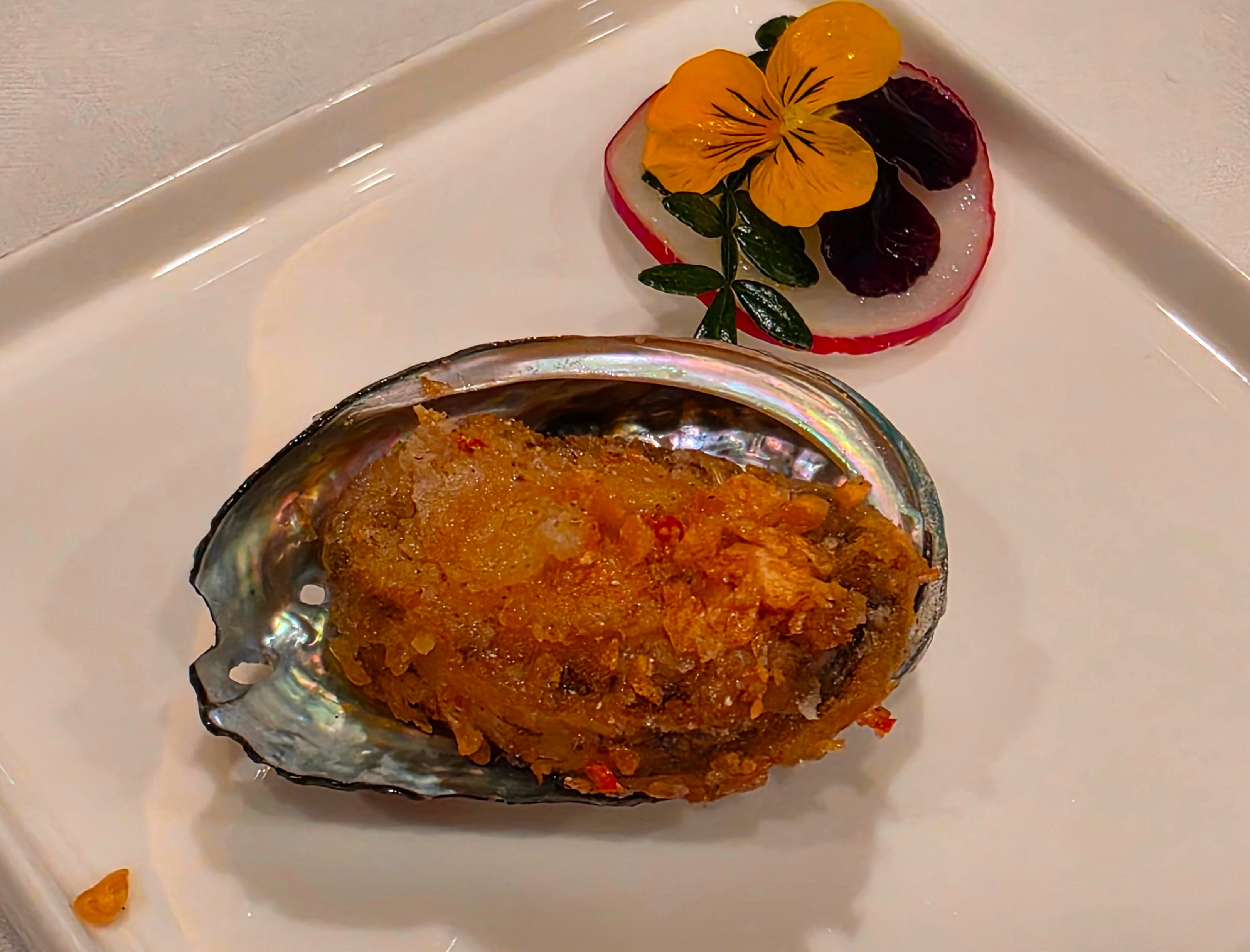
The meal opened with abalone prepared typhoon shelter-style, coated in a salt and pepper crust.
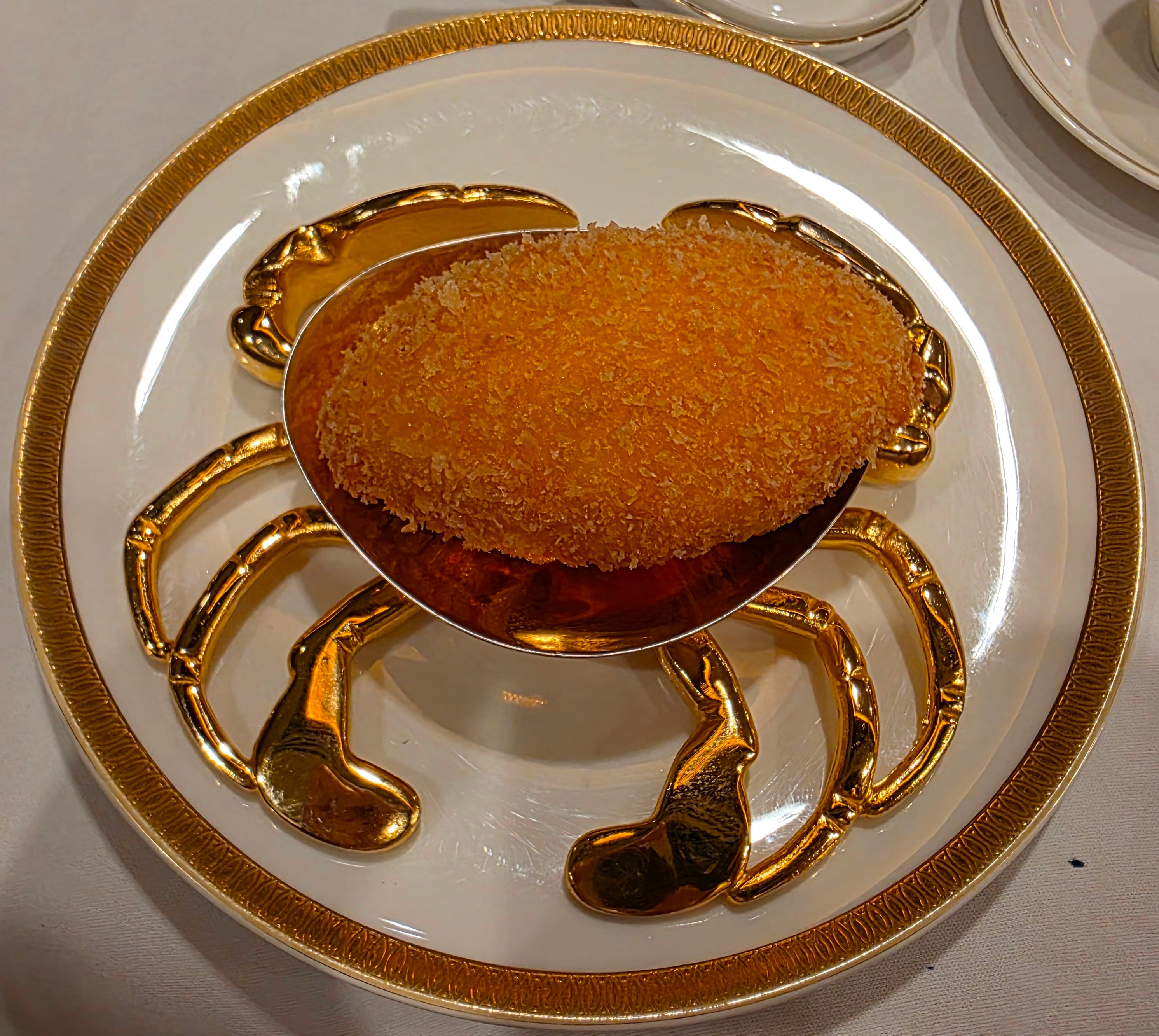
Then came one of the house signatures: a crab preparation bringing together Alaska crab and local flower crab meat in a delicate cream and onion sauce, clean and precisely balanced.
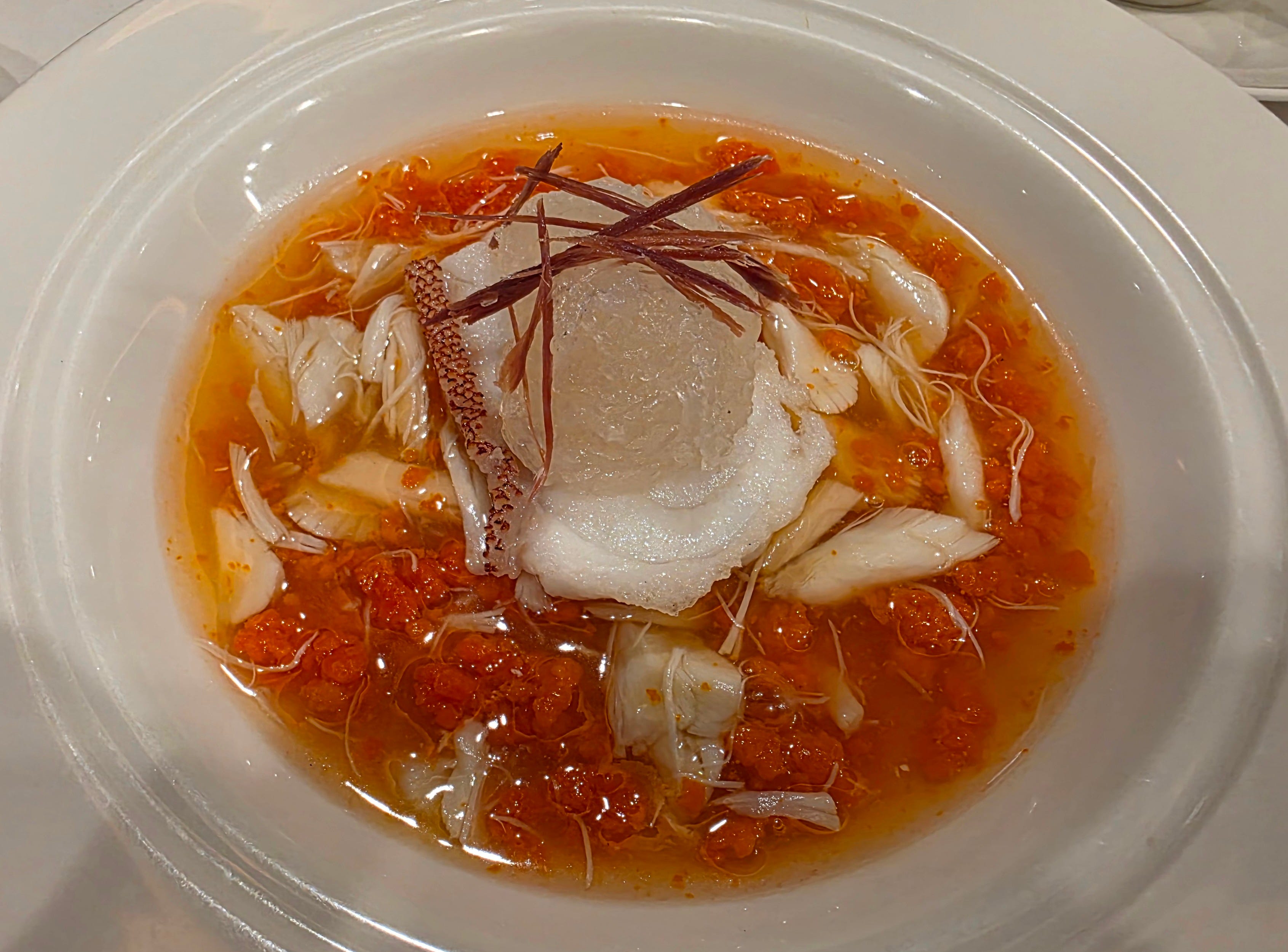
A braised imperial bird's nest followed, on top of a slice of grouper, in a rich crab meat and roe long-cooked ham stock. Rich and layered in a way that feels distinctly Cantonese, the kind of dish where the depth comes entirely from patience and technique rather than any single ingredient doing the heavy lifting.
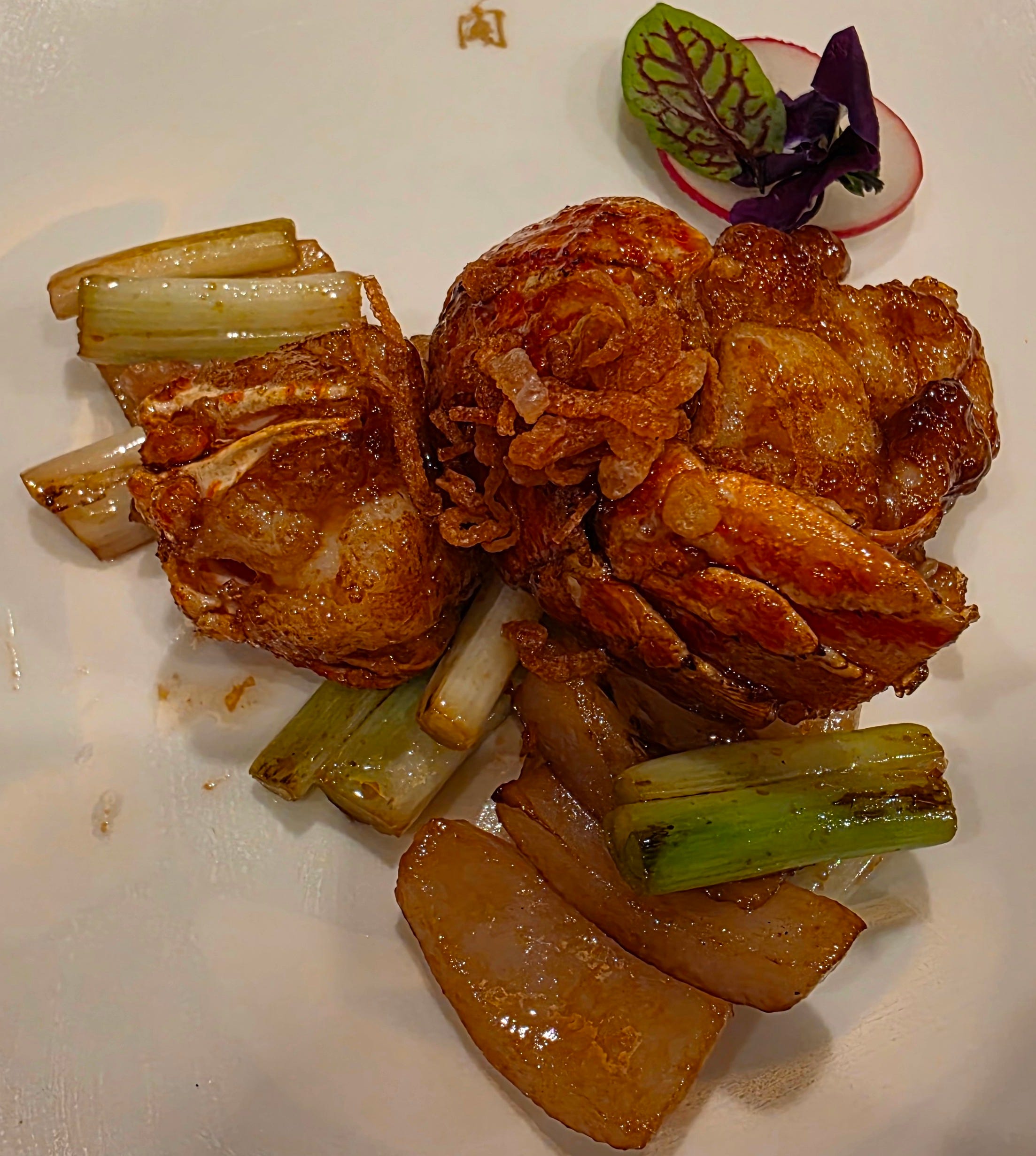
Then the fragrant three-onion lobster, and it delivered everything its reputation promises. The wok hei was present and distinctive, the three types of onion each contributing something distinct without any one of them dominating, the Shaoxing wine lifting the whole dish at the finish. A dish that has been on this menu for decades for good reason.
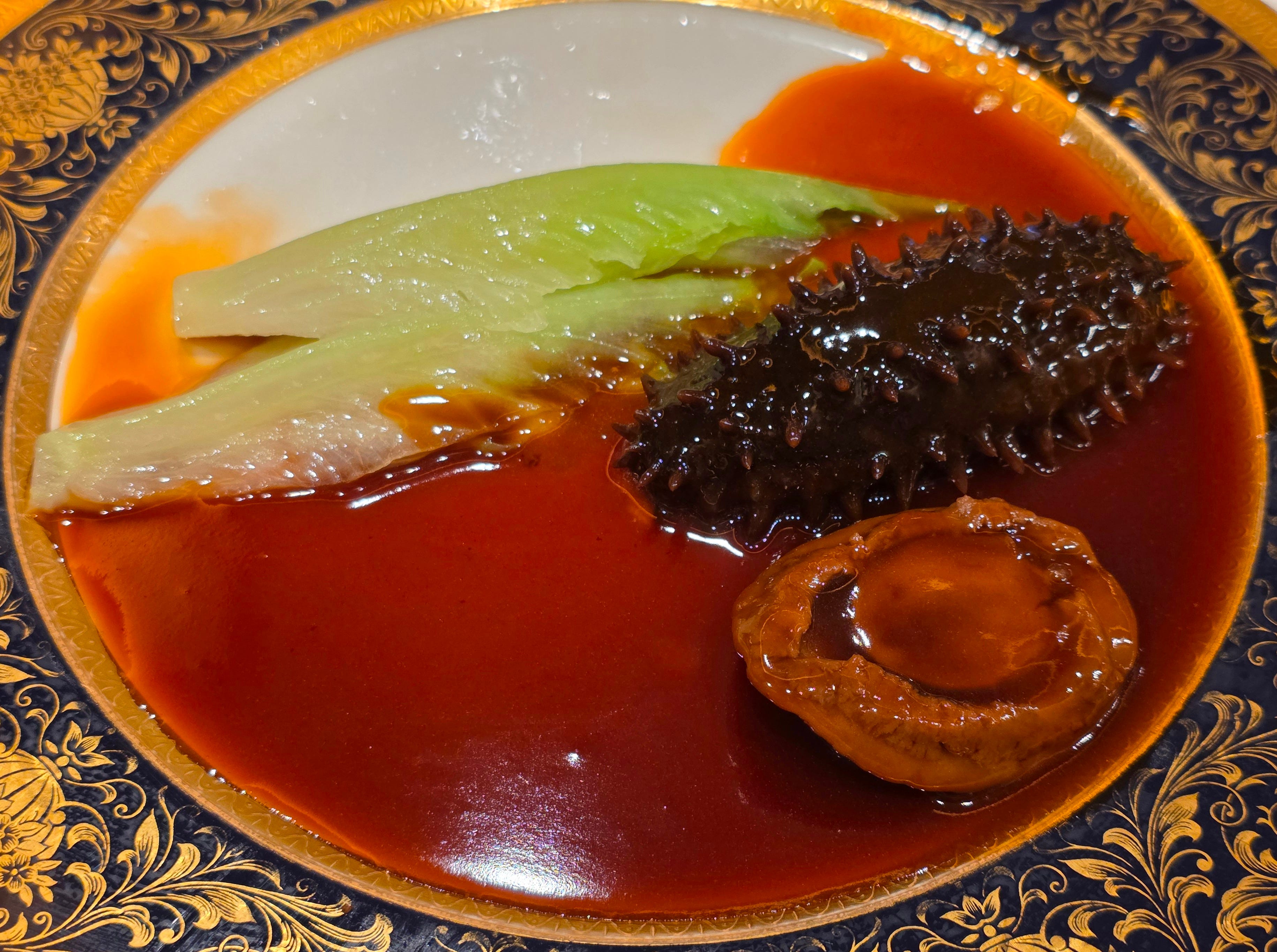
Sea cucumber arrived next, braised alongside abalone in a heavy oyster sauce. This is as classically Cantonese as it gets: texture-forward ingredients that absorb flavour through slow, careful braising rather than offering anything particularly assertive on their own. Slowly rehydrated over a week and slowly cooked in the oyster sauce to impart flavour while maintaining the gelatinous texture.
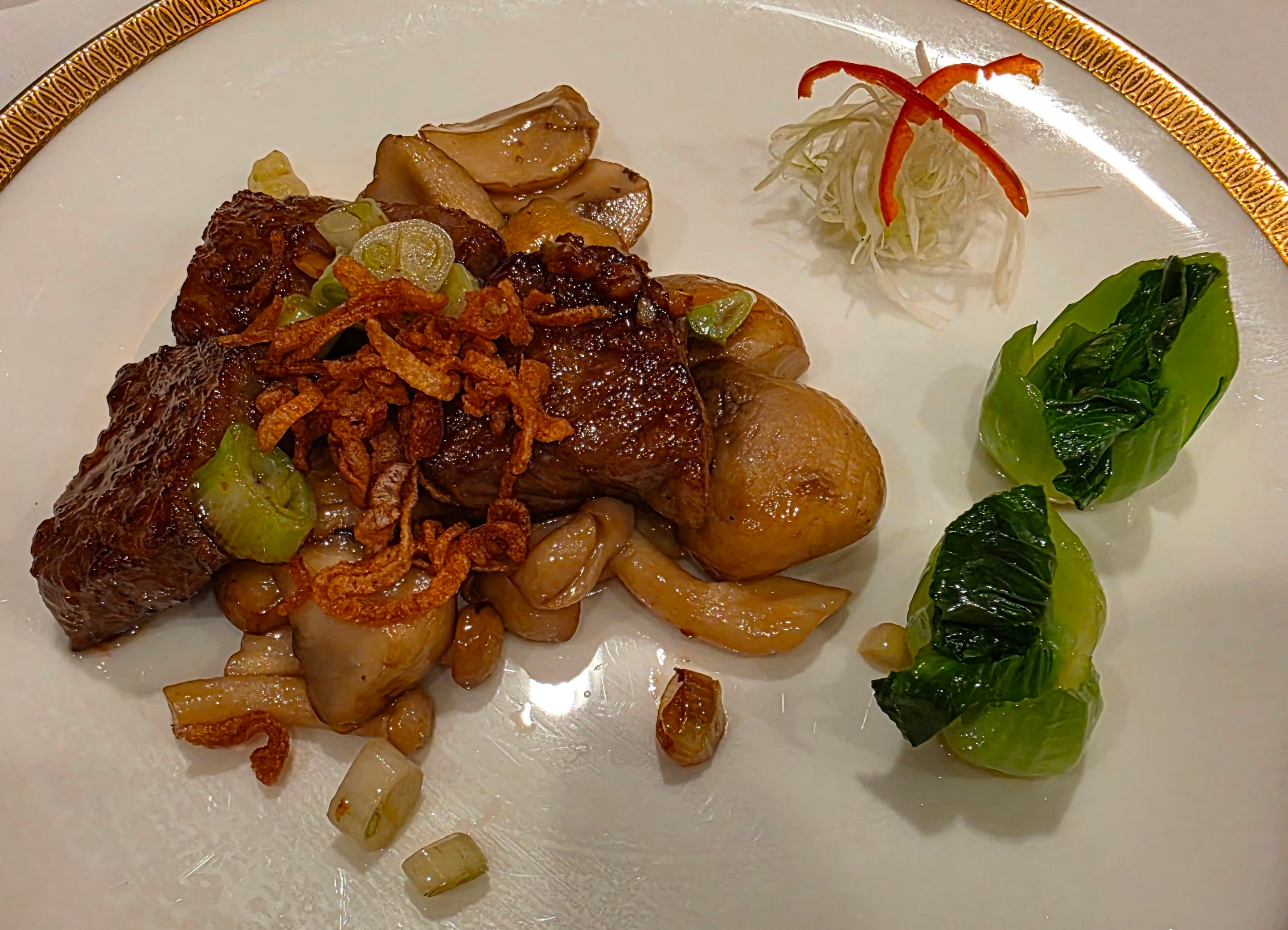
Wagyu beef stir-fried with two kinds of mushrooms came after, executed with the same attention to wok hei that defined the lobster course. The beef stayed tender, the mushrooms took on a bit of colour, and the wok hei did its job without overwhelming the dish.
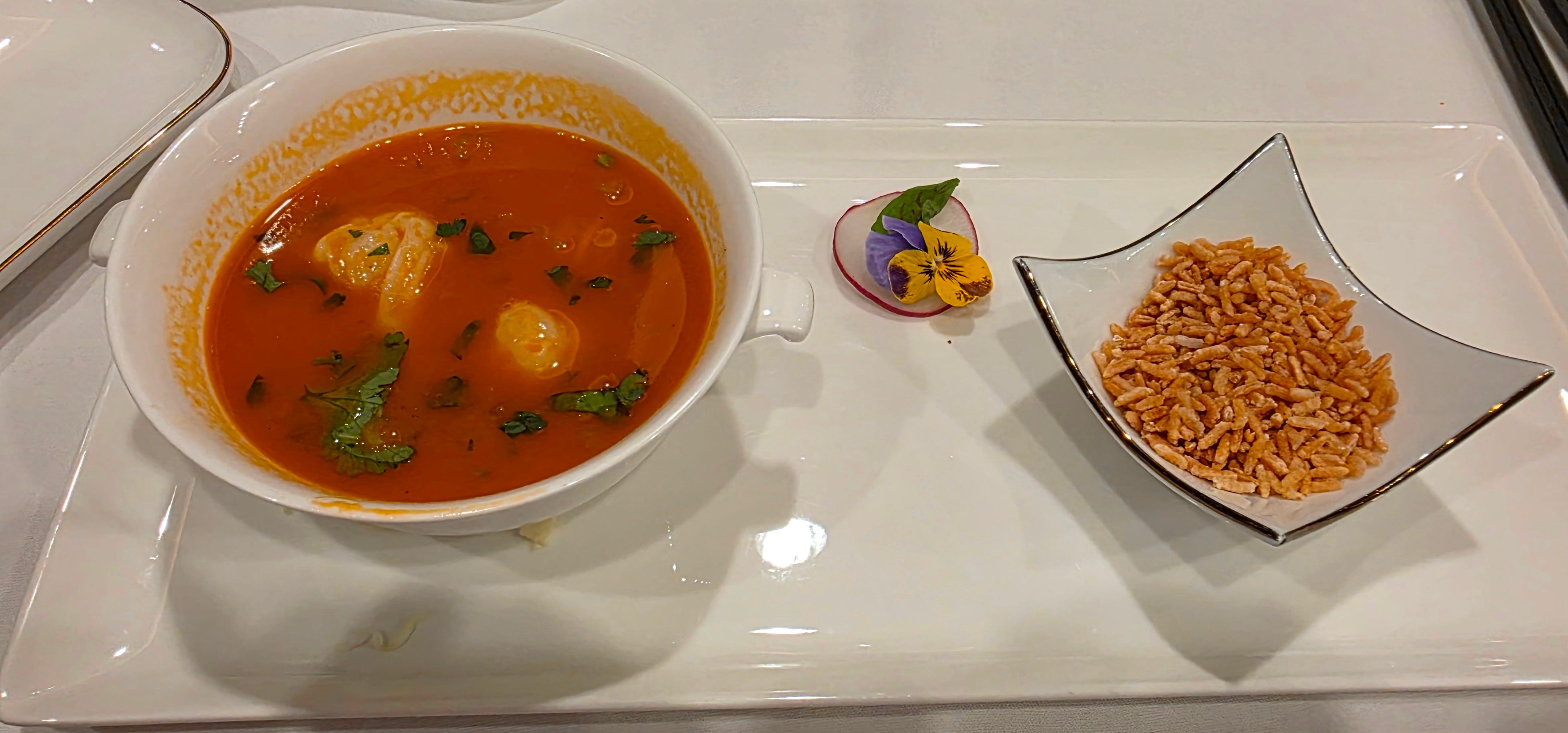
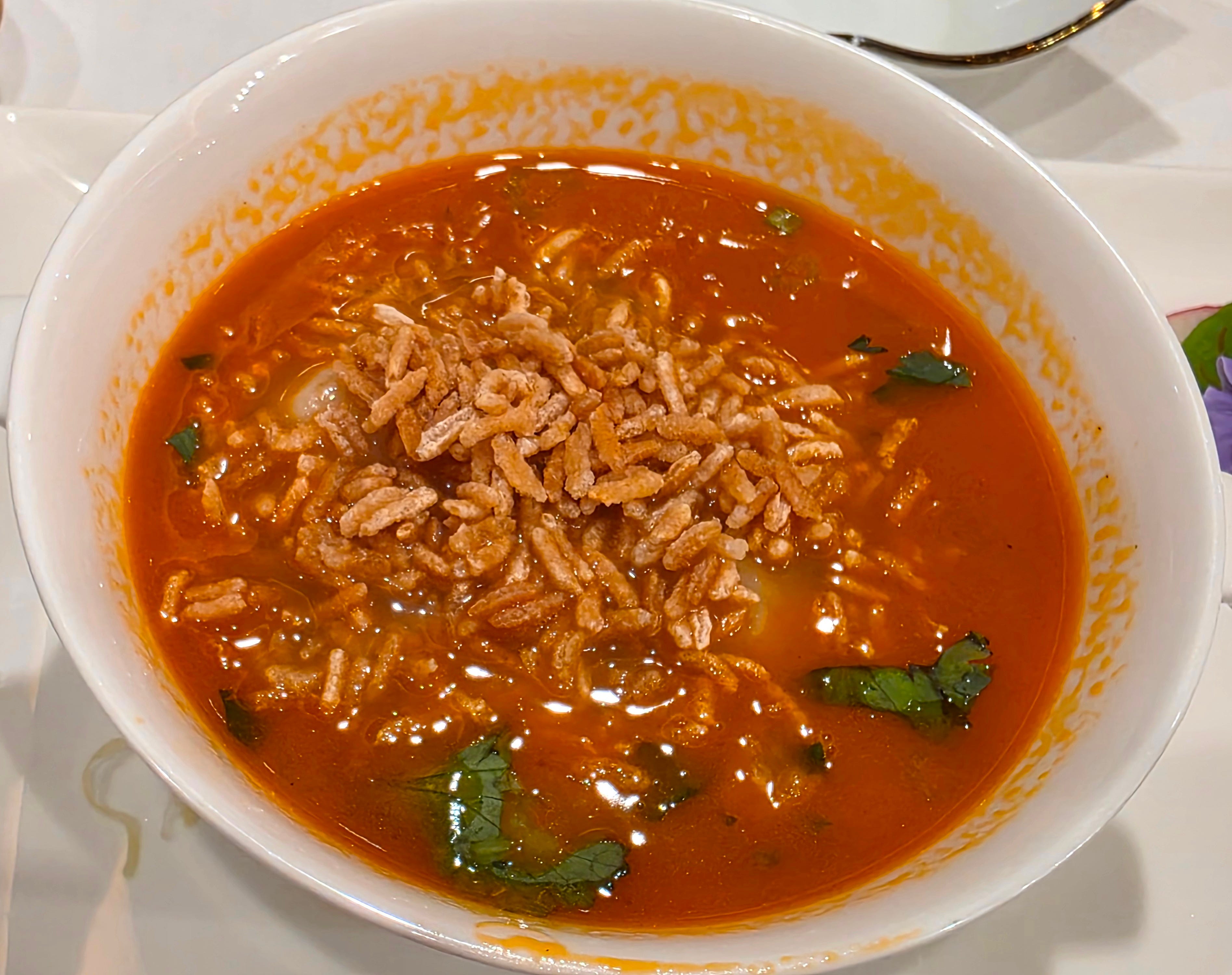
The course that surprised me most was the one that came next: a lobster broth made from the shells of the lobster served earlier, with puffed crispy rice at the table. Audibly cracking once added to the soup, the dish was clever, satisfying, and flavourful.
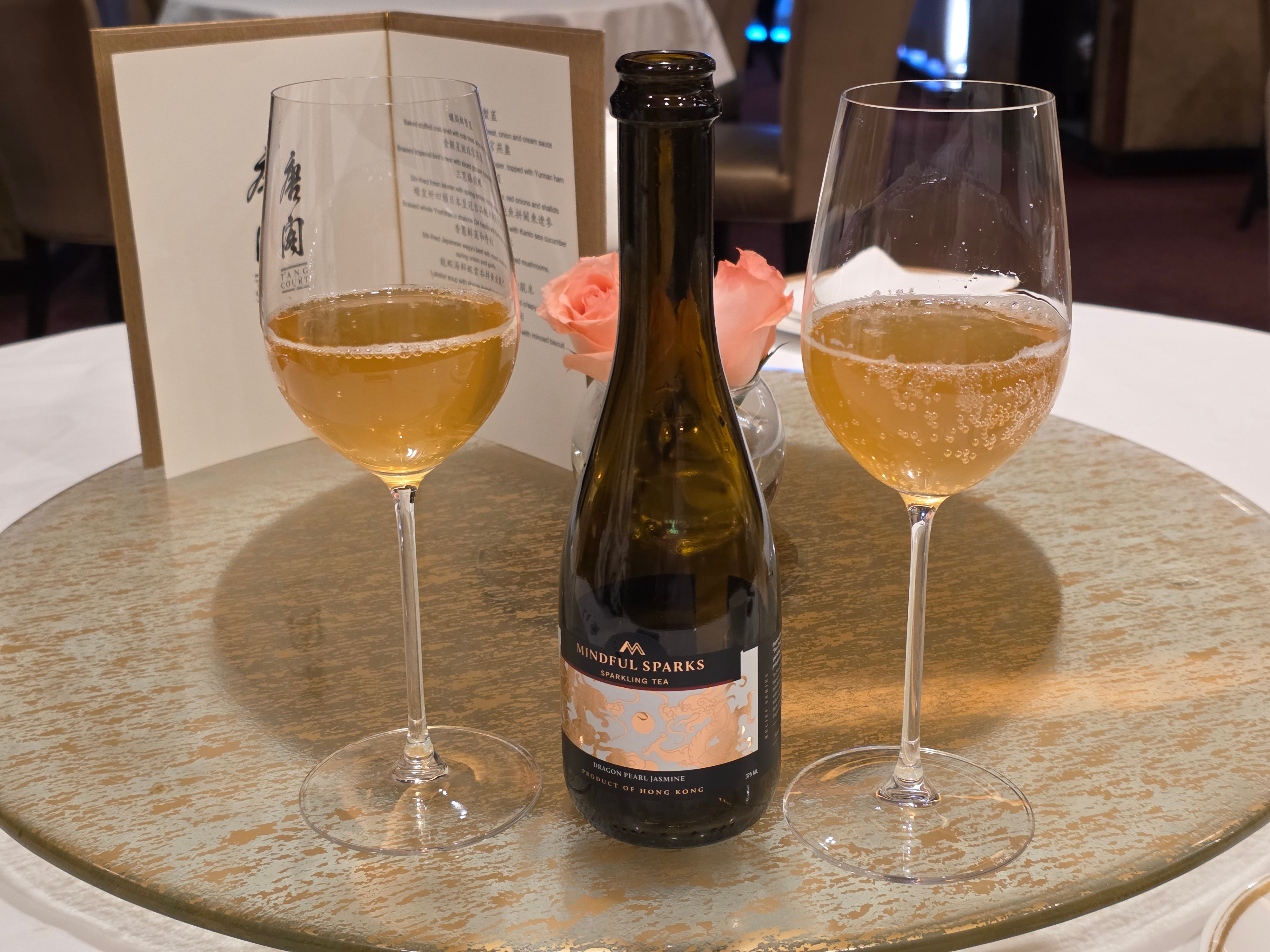
A sparkling tea served as a palate cleanser before dessert arrived, which is where things became a bit less impressive.
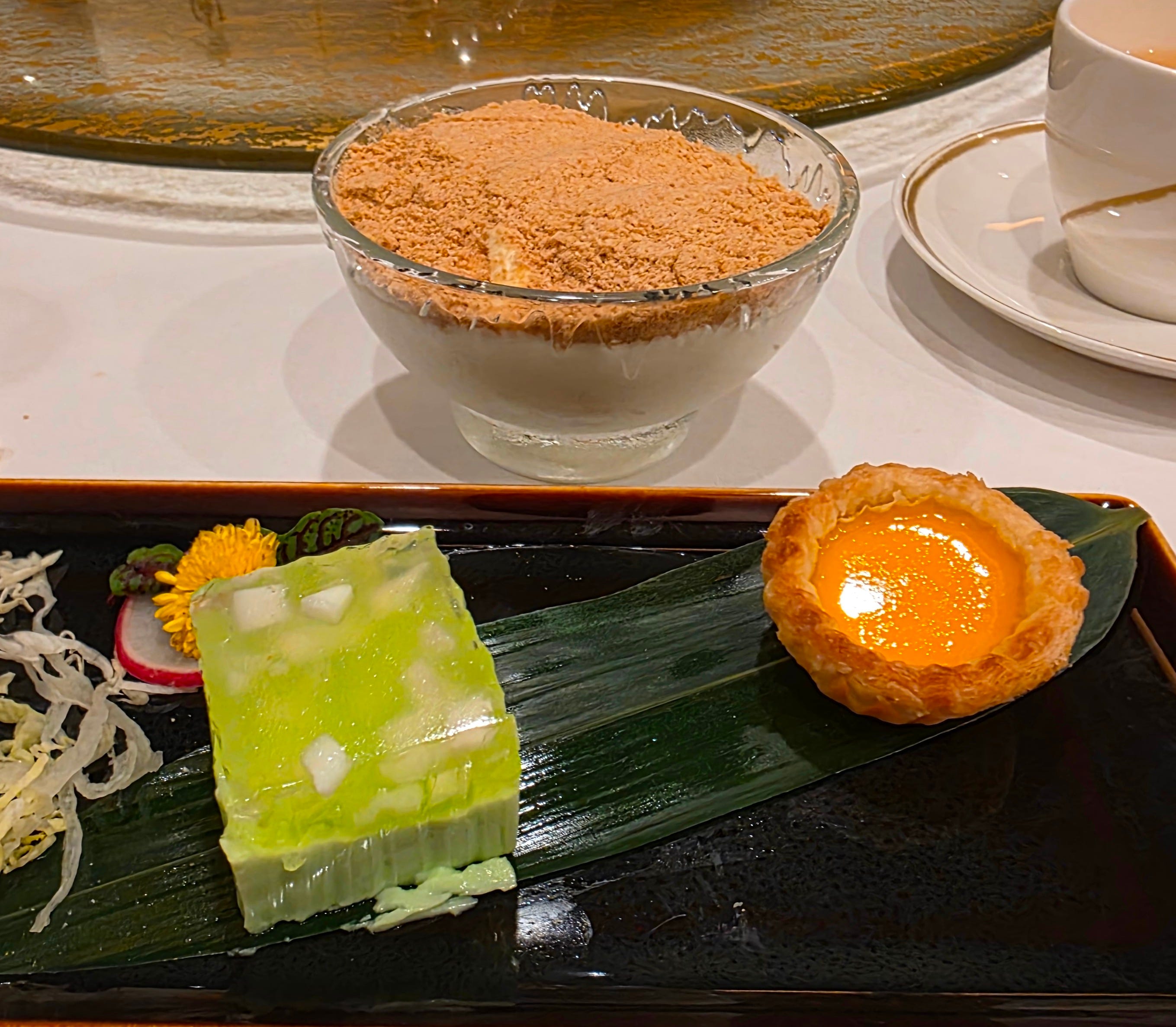
The egg tart was a classic and a genuinely good one. The honeydew jelly was unremarkable. The final dessert, a tofu preparation layered with cream and a Biscoff crumb, was genuinely puzzling and not in an good way. I left most of it. Frankly, a simple tofu pudding would’ve sufficed, or the could’ve gone to a long repertoire of both cold and hot classic Cantonese desserts - ground bean pastes, sago puddings, mochi dumplings. The egg tart worked, the rest was terrible.
Overall, I was a bit disappointed for what should have been the “height” of Cantonese cooking in Hong Kong. Many luxurious ingredients, but it just wasn’t that memorable. Granted, great use of wok hei, but the menu just fell a bit flat. It wasn’t bad, just not much better than the many other amazing Cantonese restaurants in Hong Kong. Not really deserving of a special journey. The dessert section reads more like an afterthought than a conclusion. At the price point, probably a pass. I’ll try Forum next and see if they can do better.
Total damage: 7500 HKD/2 people