
When friends flew into Hong Kong for a visit, I figured the first order of business was to feed them properly. Japanese is usually a safe choice with visitors, but omakase in Hong Kong can spiral into absurdity fairly quickly, both in price and in seriousness, so we settled on something a little different instead. Rather than another austere sushi counter, we booked Teppanyaki Mihara Goten in Causeway Bay.
Teppanyaki Mihara Goten is one of the more interesting Japanese openings in Hong Kong because it is not trying to recreate the old-school hotel teppanyaki model, all flashing knives and overworked theatrics. It is smaller, more chef-led, and noticeably more thoughtful than that. The restaurant is built around chef Terufumi Mihara’s “Wa Modern” style, a format that blends teppanyaki with kappo sensibilities and allows in a few French, Italian, and Chinese ideas without ever feeling like obvious fusion for the sake of it.
Chef Mihara first built his reputation in a more homey Tseung Kwan O shop before moving the concept to Causeway Bay in 2023. The Cubus version feels less like a completely new restaurant than a polished second chapter, one that takes the original idea and sharpens it into something more refined and more ambitious. The move also pushed the restaurant more clearly toward a kappo-style teppanyaki identity, with seasonal ingredients, a more deliberate sequence, and a stronger sense of progression across the meal.
The chef behind the restaurant is, of course, Terufumi Mihara himself. The place carries his name, and the whole concept feels unmistakably personal. Each service is said to run under his close supervision, and the menu reflects his broader philosophy: premium Japanese produce, prepared with the precision and sequencing of kappo, but filtered through the live-fire steel surface of teppanyaki. That hybrid is really the whole point. This is not just beef and seafood on a hot plate. It is trying to create a more layered, seasonal, chef-driven teppanyaki experience.
Tucked away inside a fairly nondescript office building in Causeway Bay, the restaurant itself is intimate enough that our group of seven took up half of the 14-seat counter. The seats are arranged in a semicircle around the central teppan grill, which gives the room a good sense of focus without feeling cramped. It is a small room, but not a severe one. The atmosphere felt polished and quietly modern rather than formal, and the scale of the place suited the style of cooking.
The menu was somewhat intricate on paper, with various supplements and optional upgrades, but in practice there was essentially one tasting menu, with a few decisions around toppings and additions. That worked well enough. At a place like this, too much choice would only get in the way of the pacing.
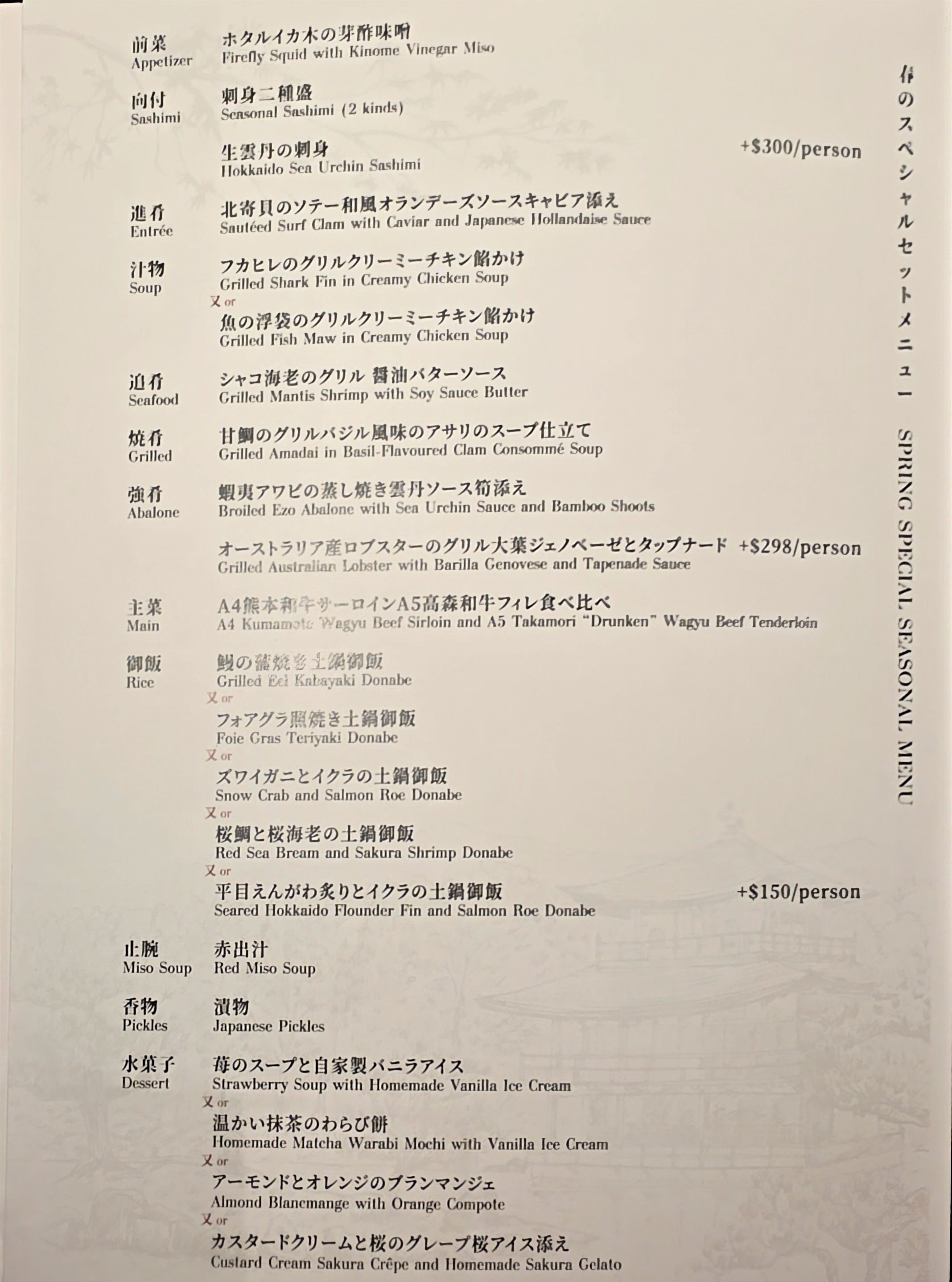
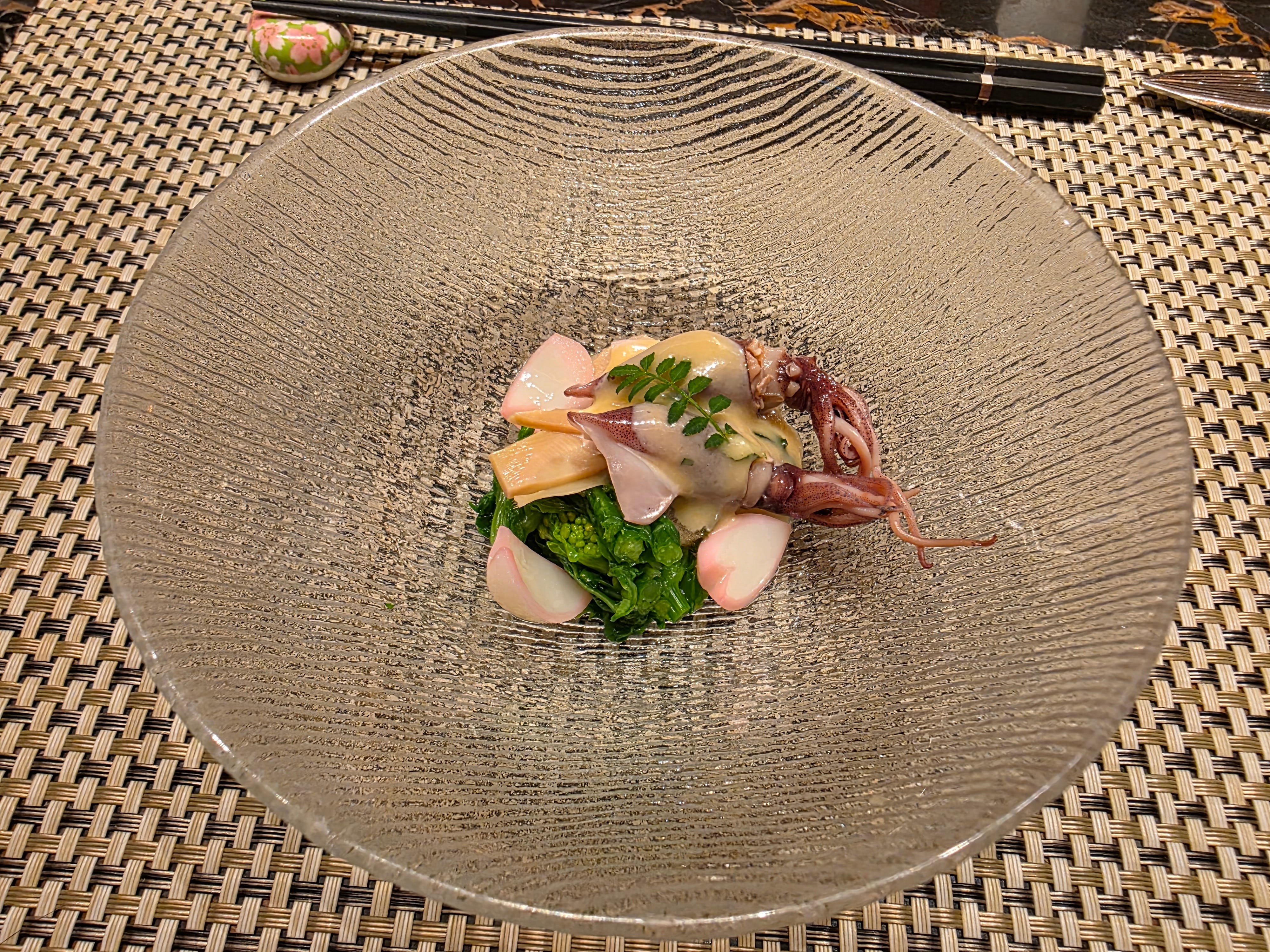
The meal began with a firefly squid canapé, a neat opening bite. Firefly squid can turn unpleasantly slimy very quickly if mishandled, but this one was fresh and clean, paired with broccolini in a way that let the sweetness of the squid show through.
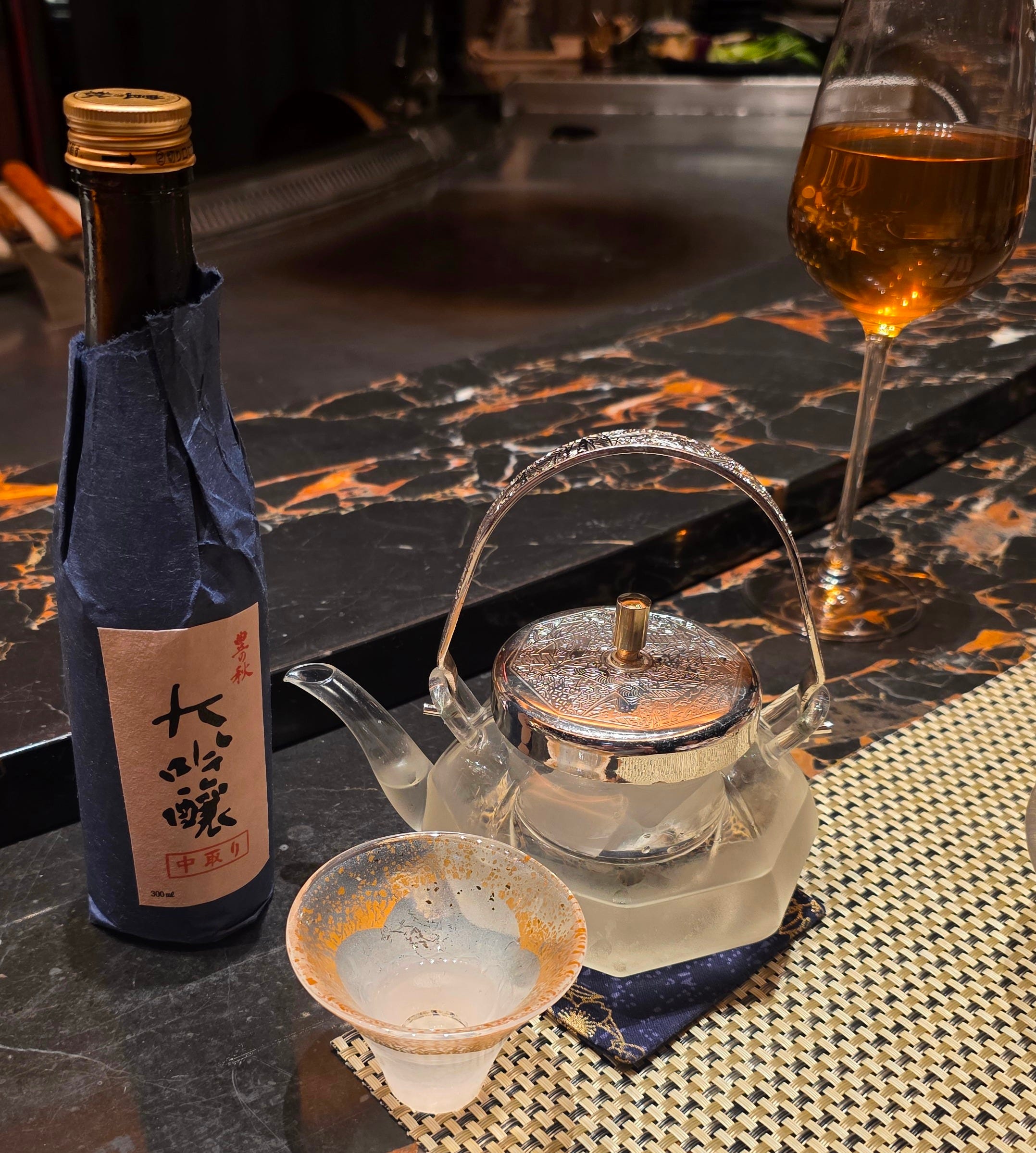
A small bottle of sake appeared at some point early in the meal, though I confess I can no longer remember what exactly what it was or any tasting notes. That may say more about the evening than the sake.
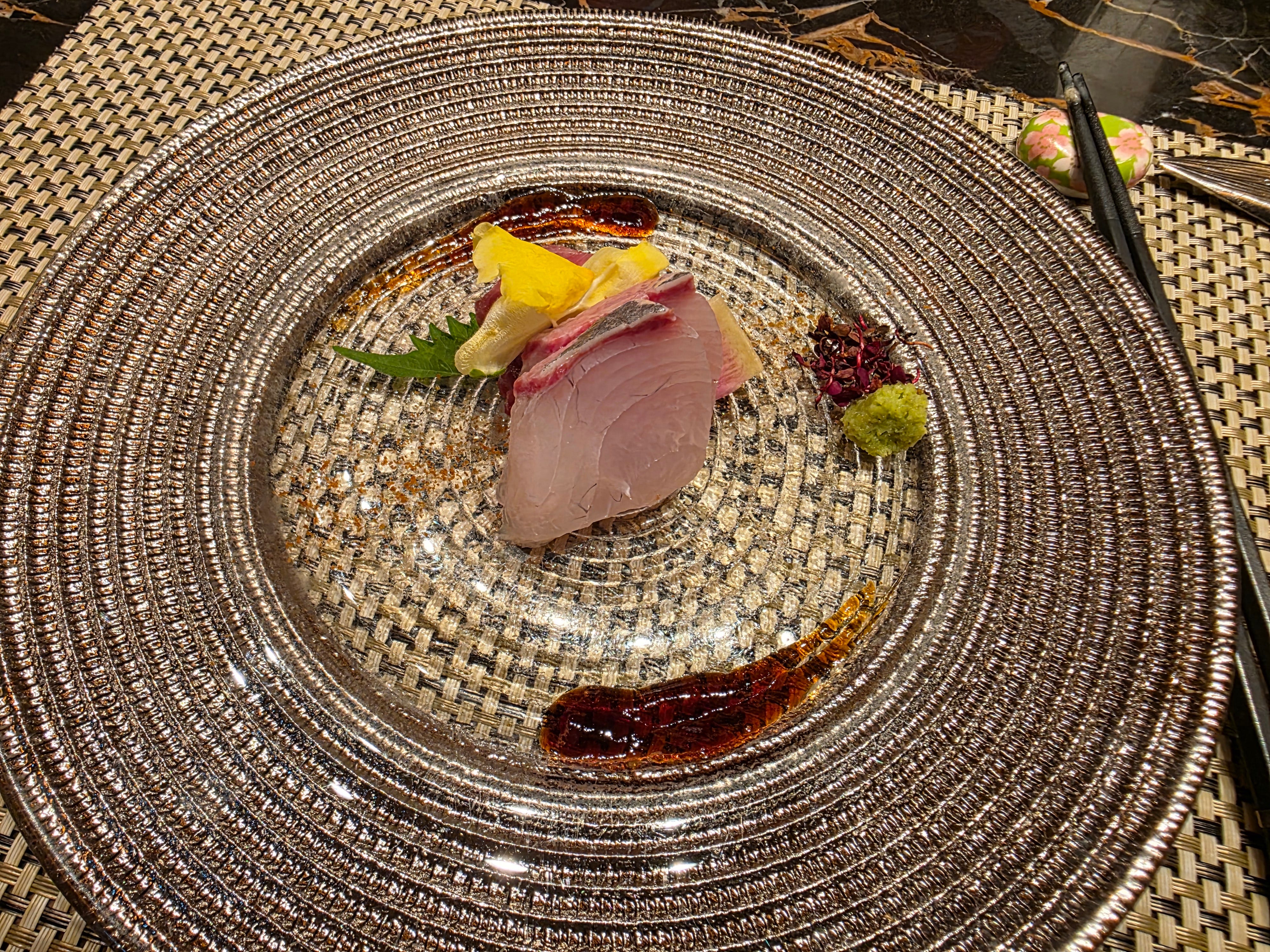
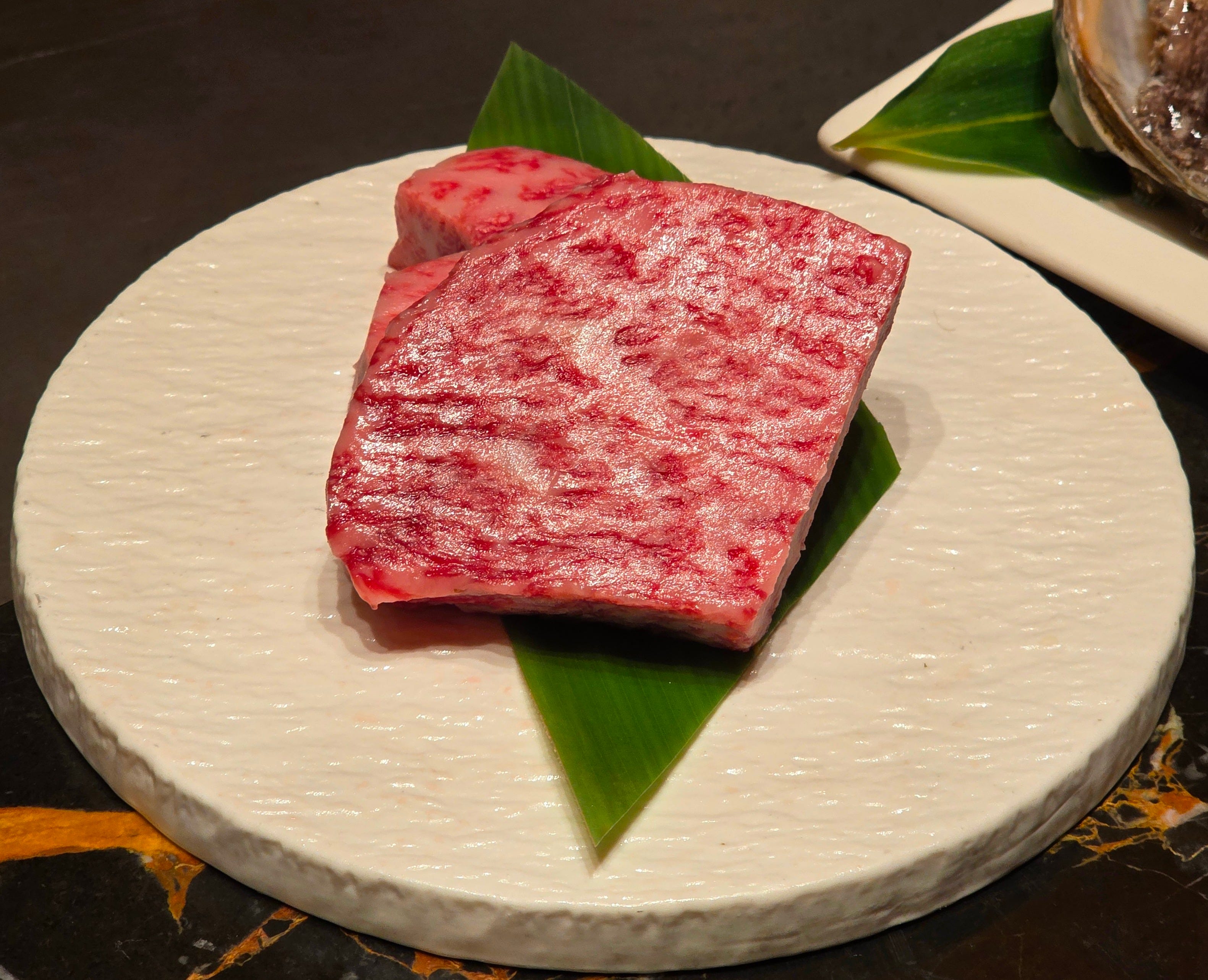
The sashimi course was yellowtail with a jellied soy sauce, a restrained and elegant start before the teppan portion of the meal really began. After that came one of the more enjoyable rituals of this style of restaurant: the presentation of the raw ingredients before they were cooked. Abalone, amadai, rehydrated shark fin, mantis shrimp, and beautifully marbled A5 wagyu all made their appearance one by one, each ingredient laid out like a promise.
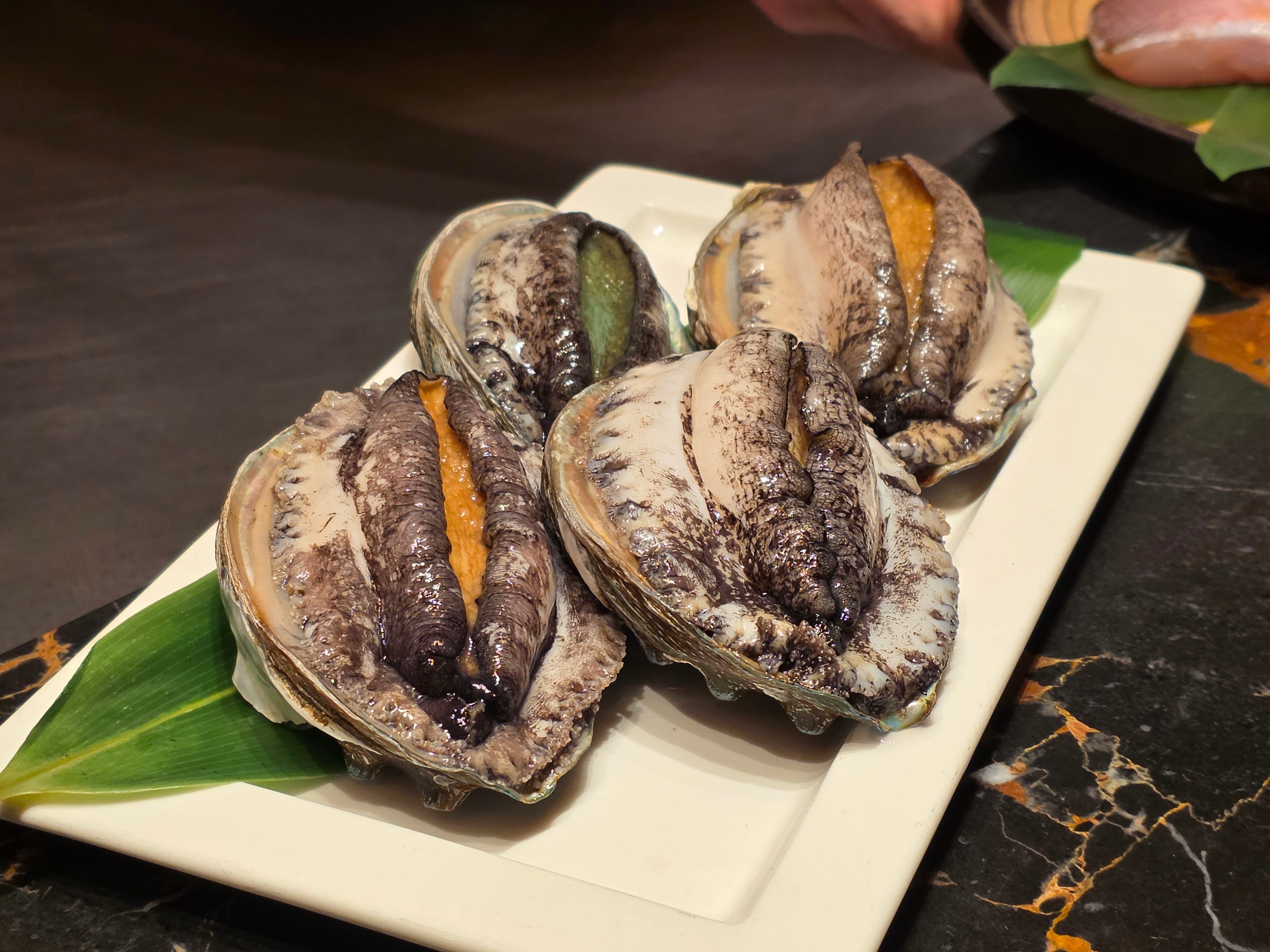
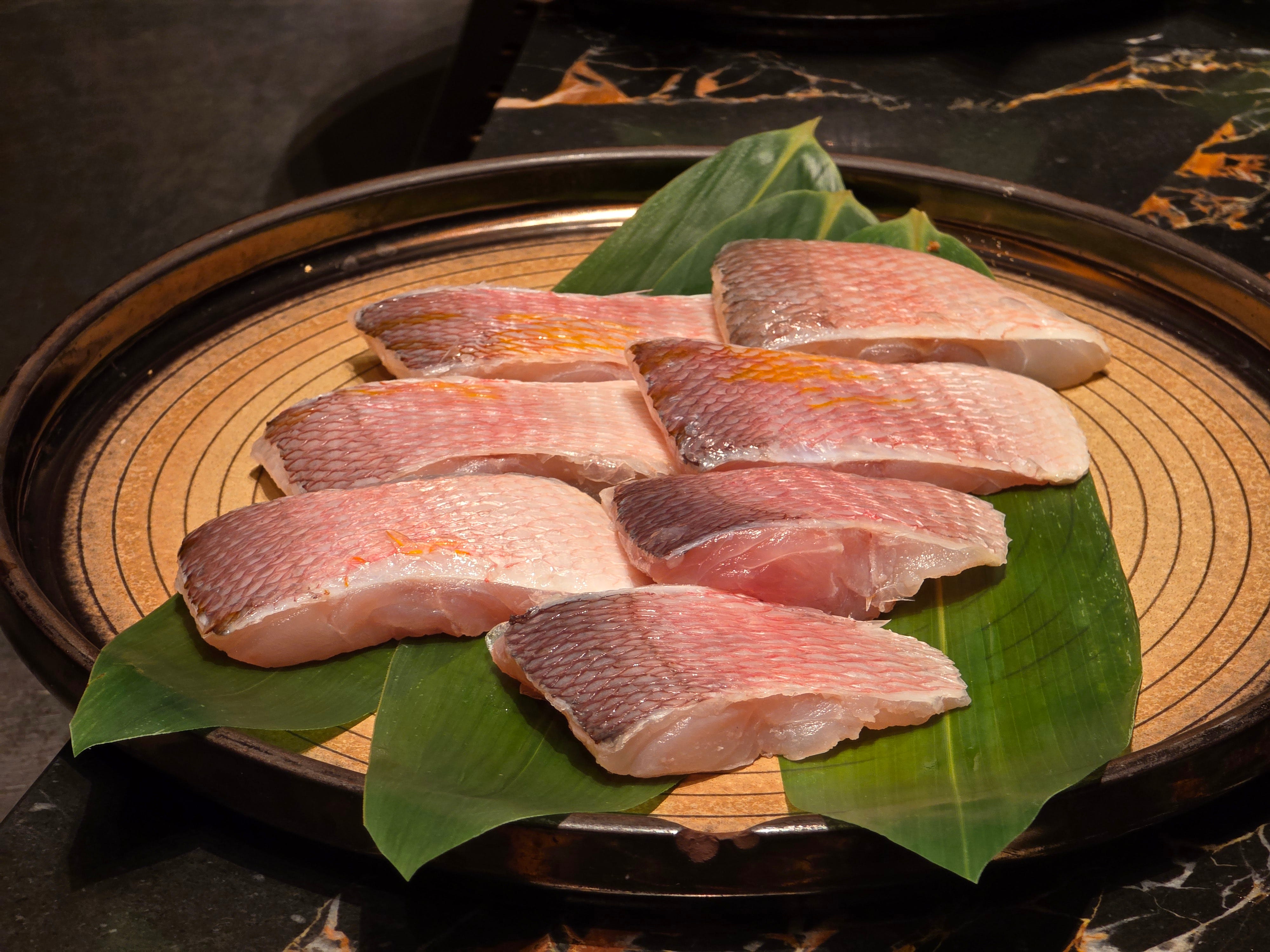
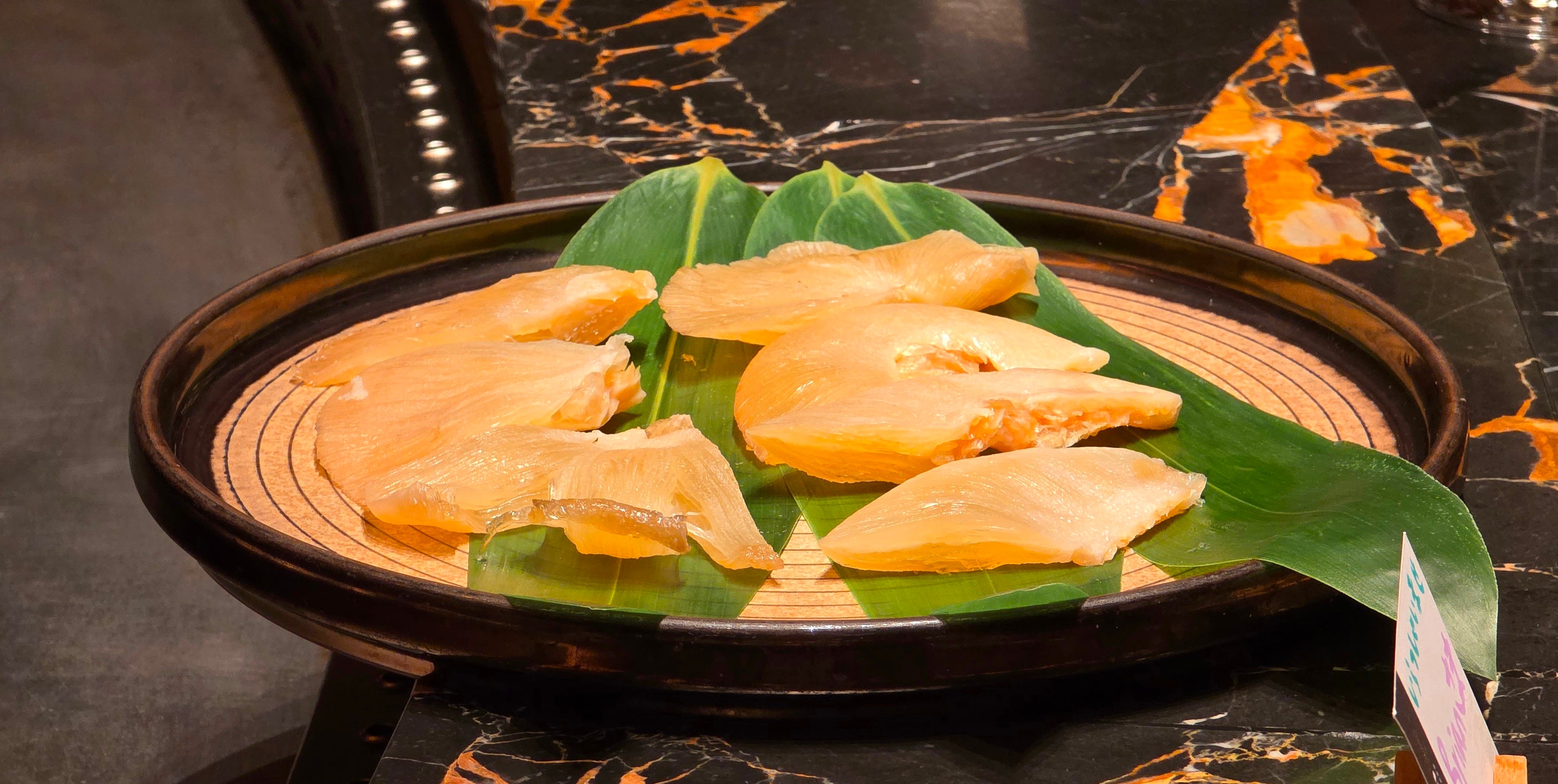
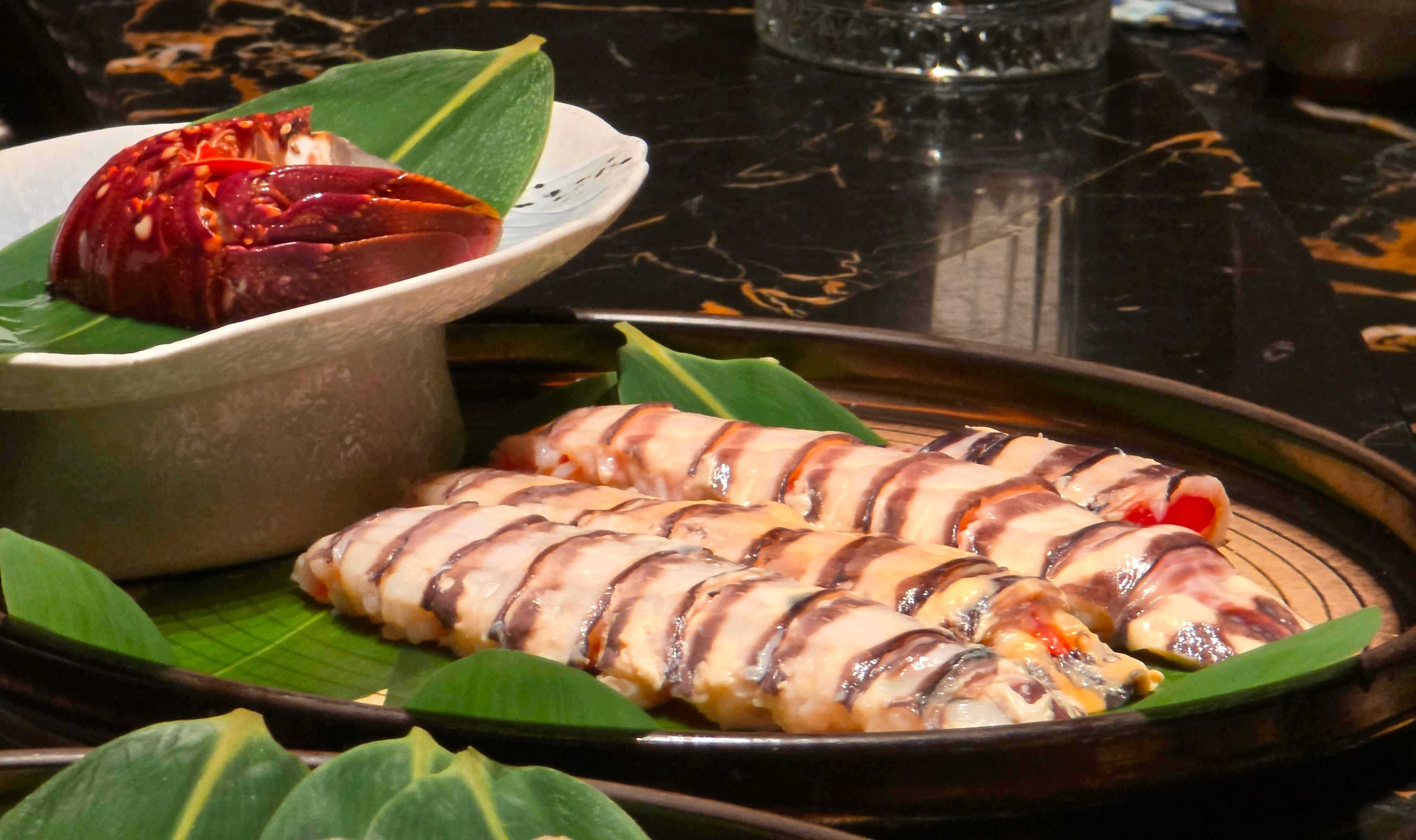
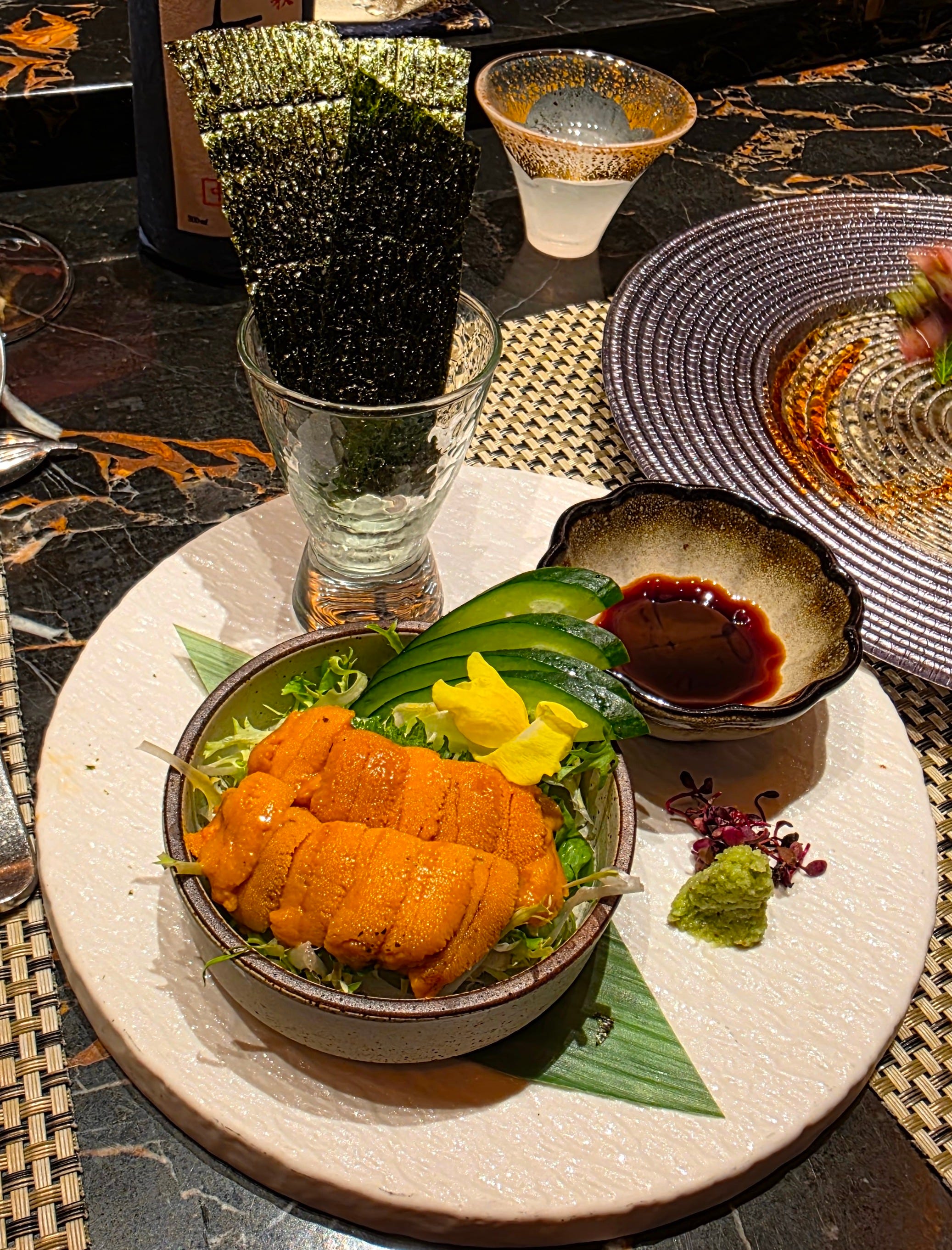
We also added an optional supplement of Hokkaido sea urchin, served in a deconstructed uni gunkan format. This was indulgent in exactly the way uni should be, vivid in colour, sweet, creamy, and deeply marine. A little obvious perhaps, but no less enjoyable for that.
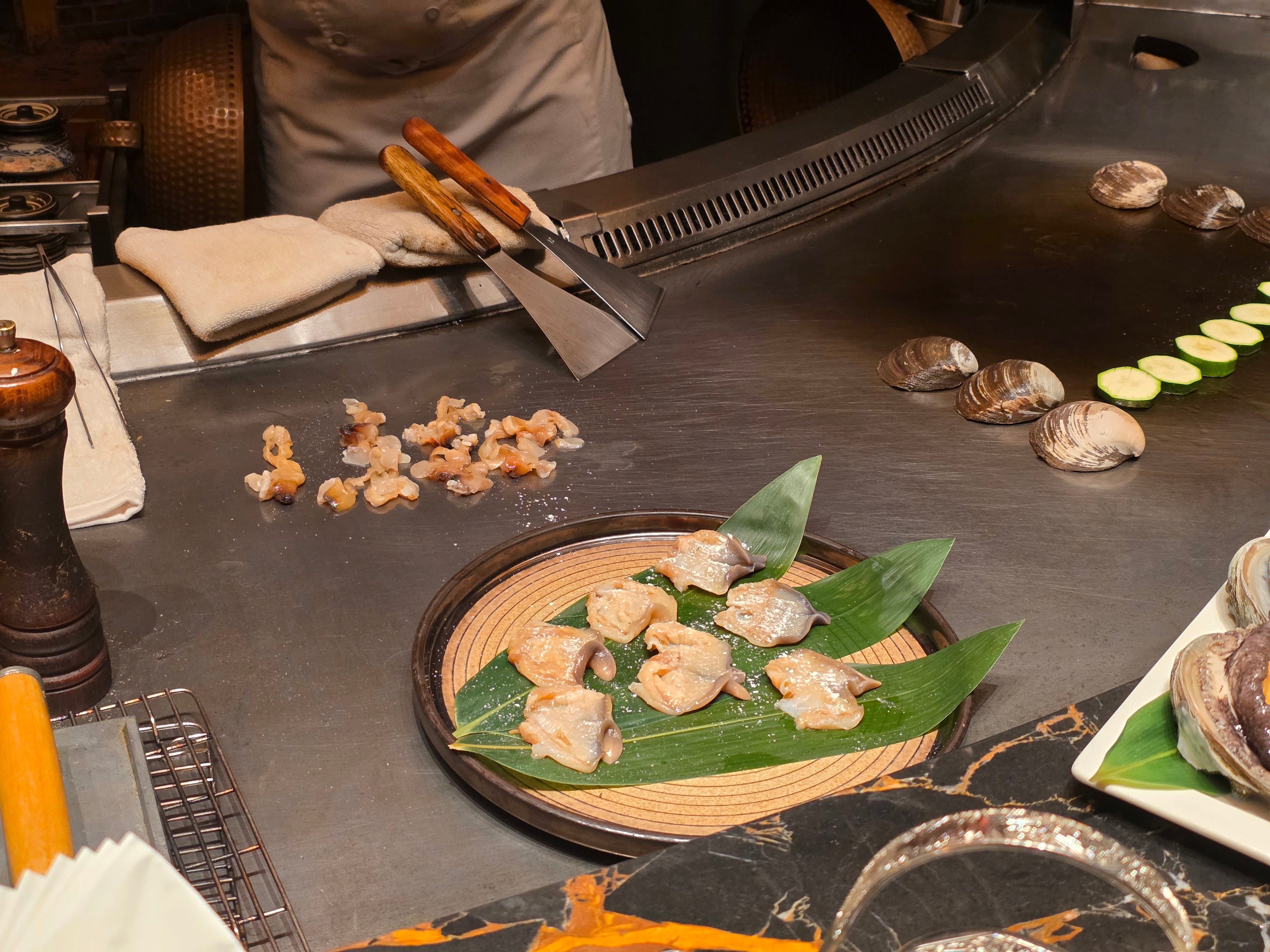
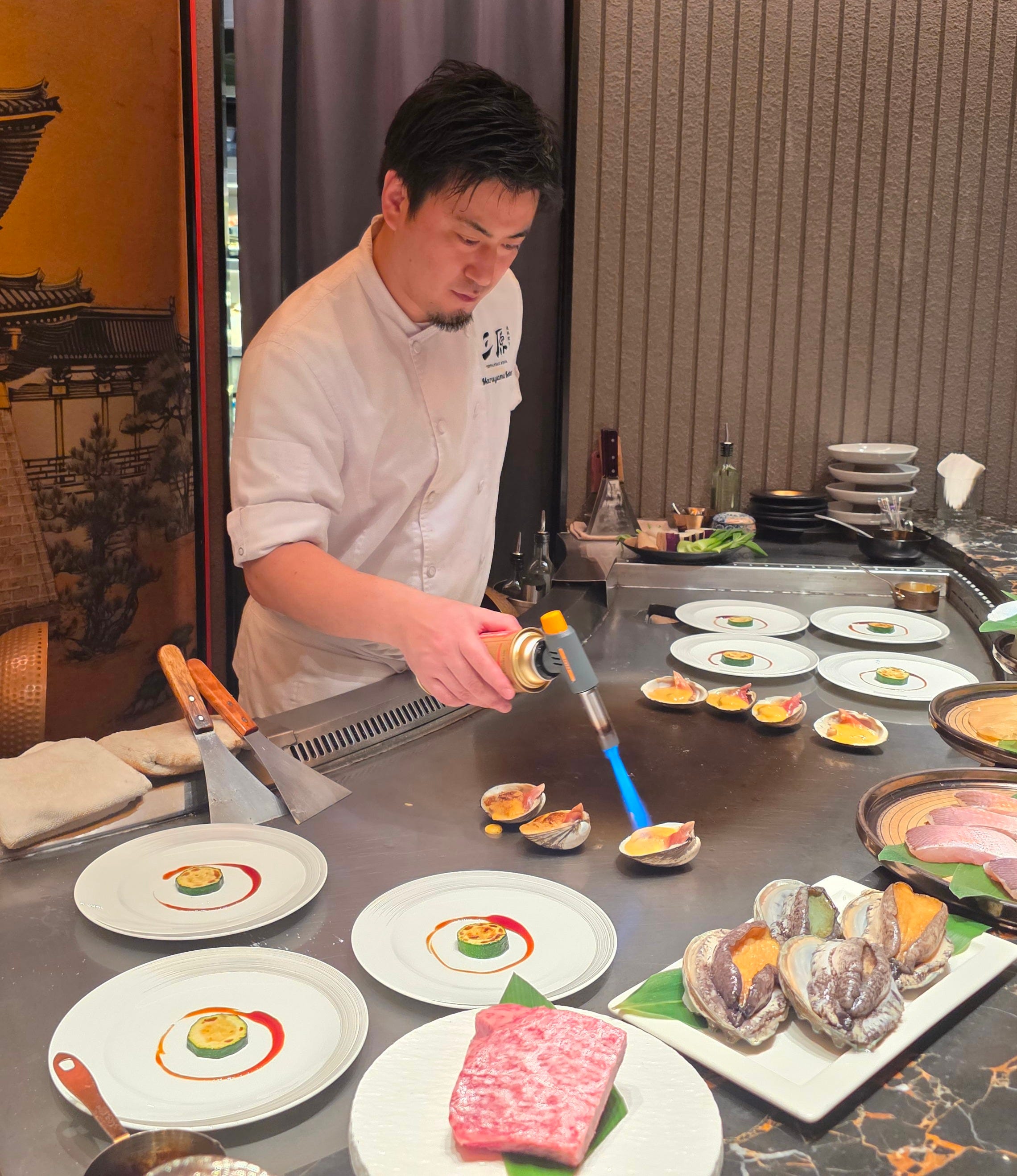
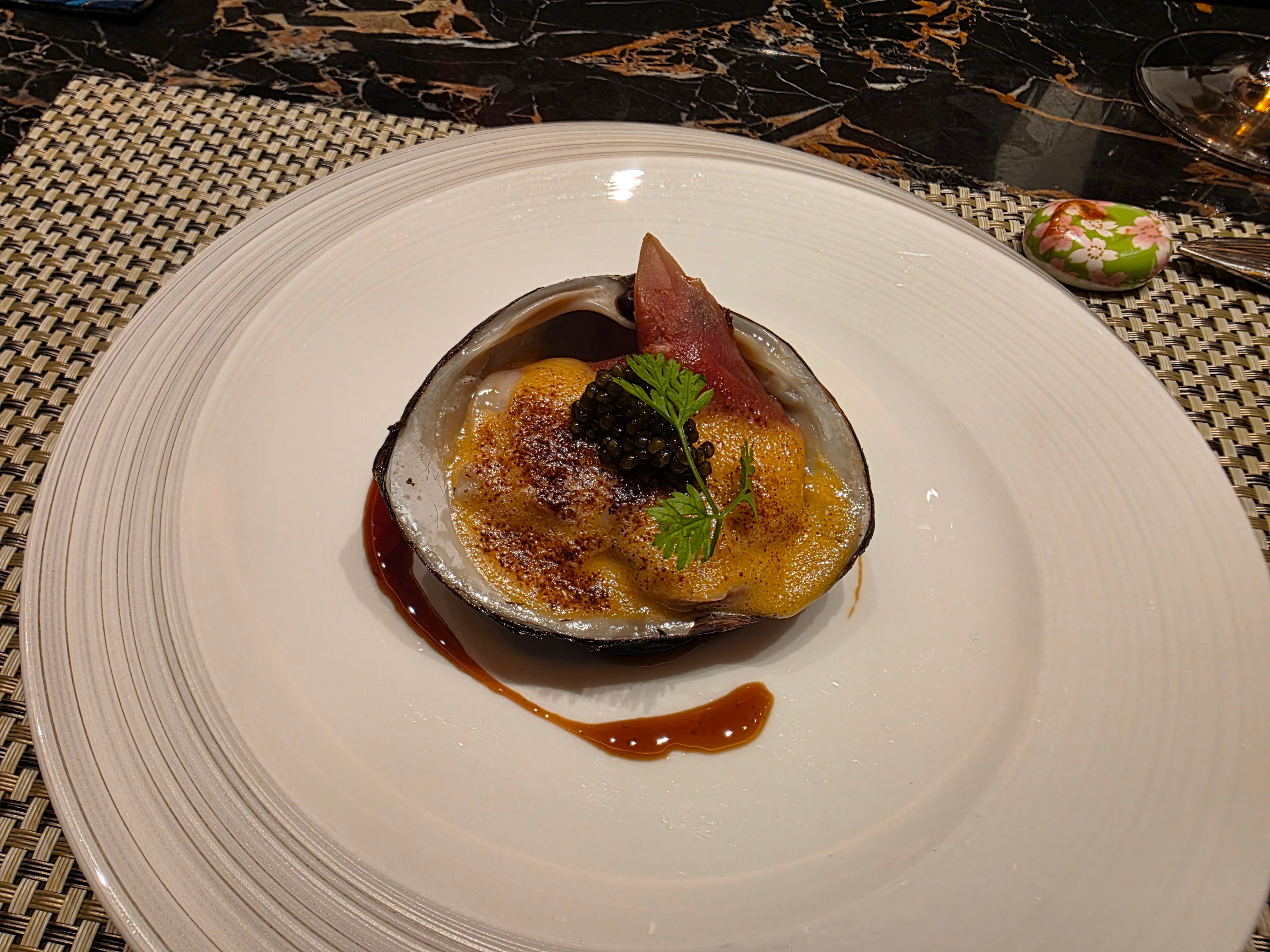
One of the best dishes of the night followed soon after. Arctic surf clams arrived in a hollandaise sauce topped with caviar, and this was superb. Clams can so easily be ruined by overcooking or buried under too much sauce, but these retained their snap and sweetness, while the hollandaise gave them richness and the caviar added just enough salinity. It was one of the best clam dishes I’ve had in quite some time.
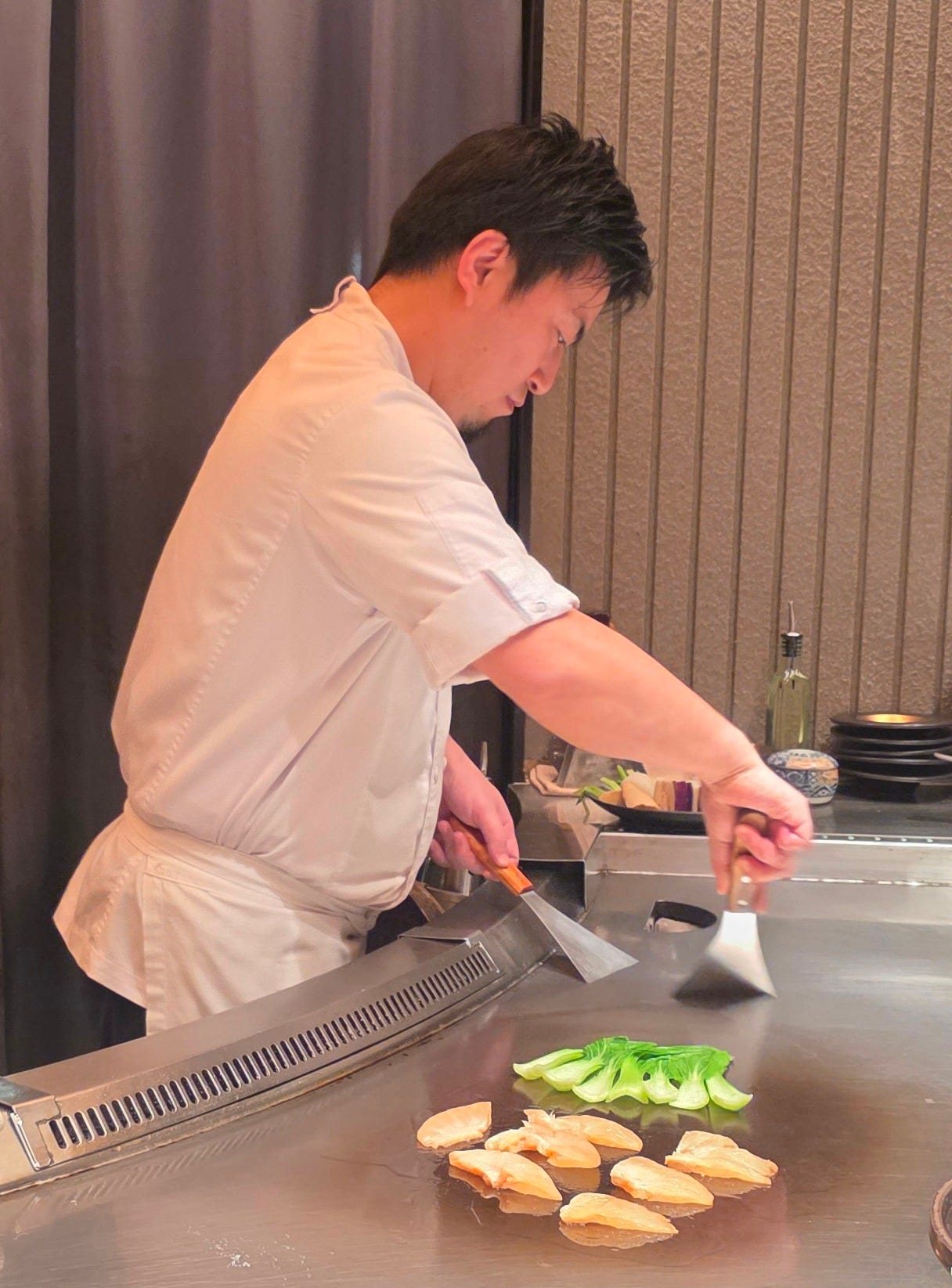
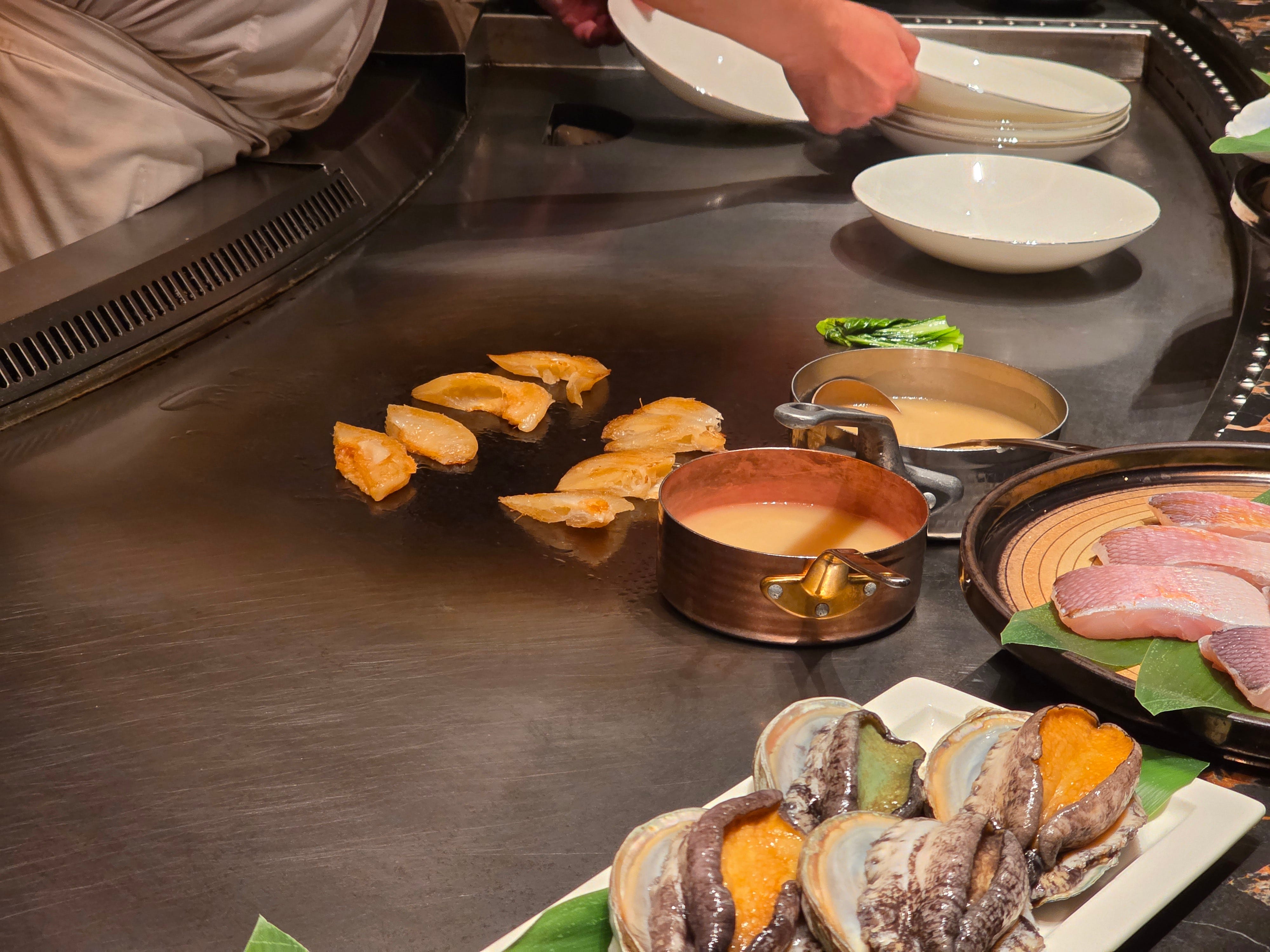
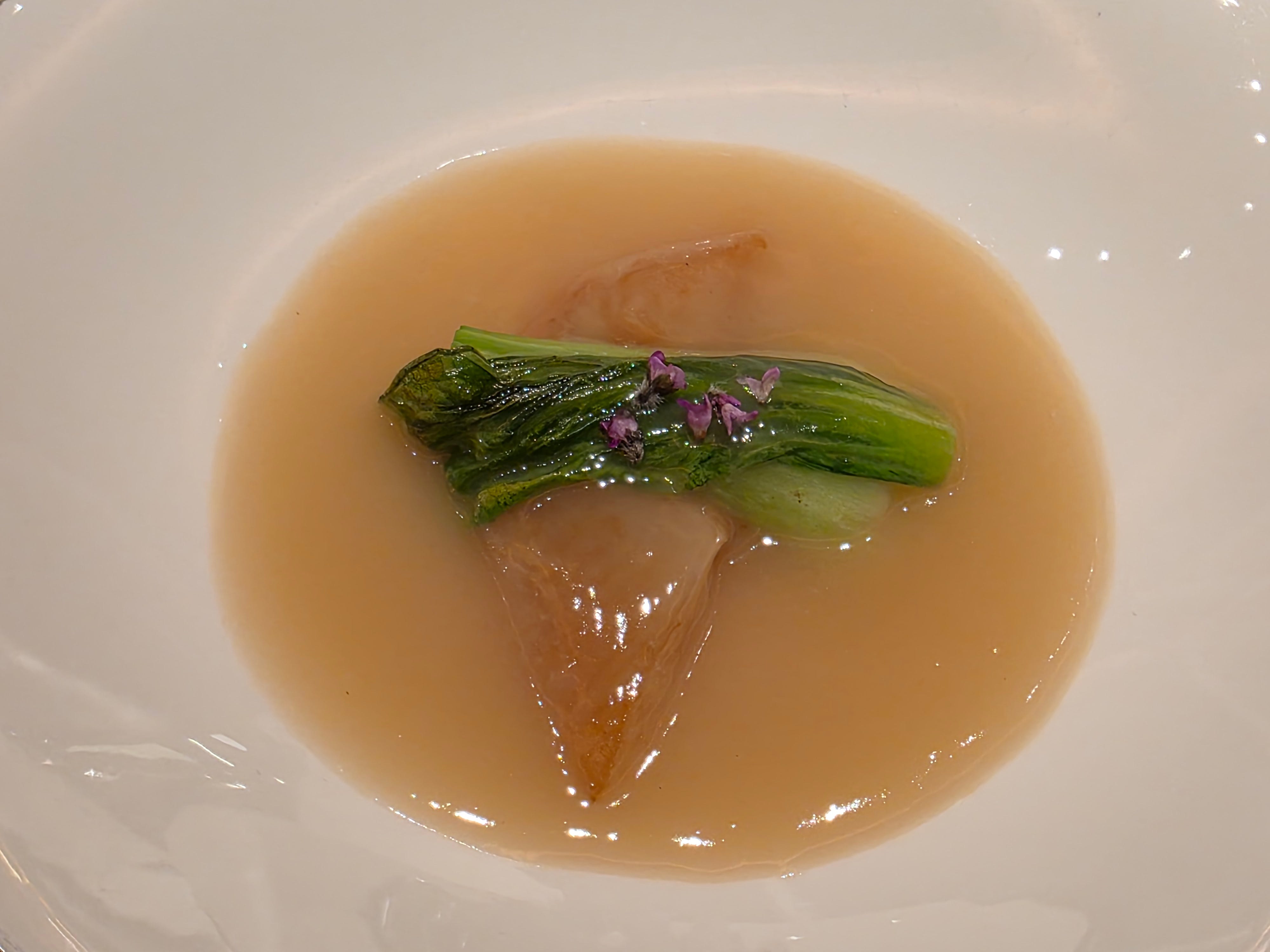
Then came the signature dish of the restaurant, a large piece of shark fin served in a creamy chicken soup. Shark fin is, at heart, a texture ingredient, valued less for flavour than for the way it absorbs whatever surrounds it. Here, the thick, concentrated chicken broth did exactly what it needed to do, giving the fin both context and depth. It was luxurious in the old-fashioned way, and rather good.
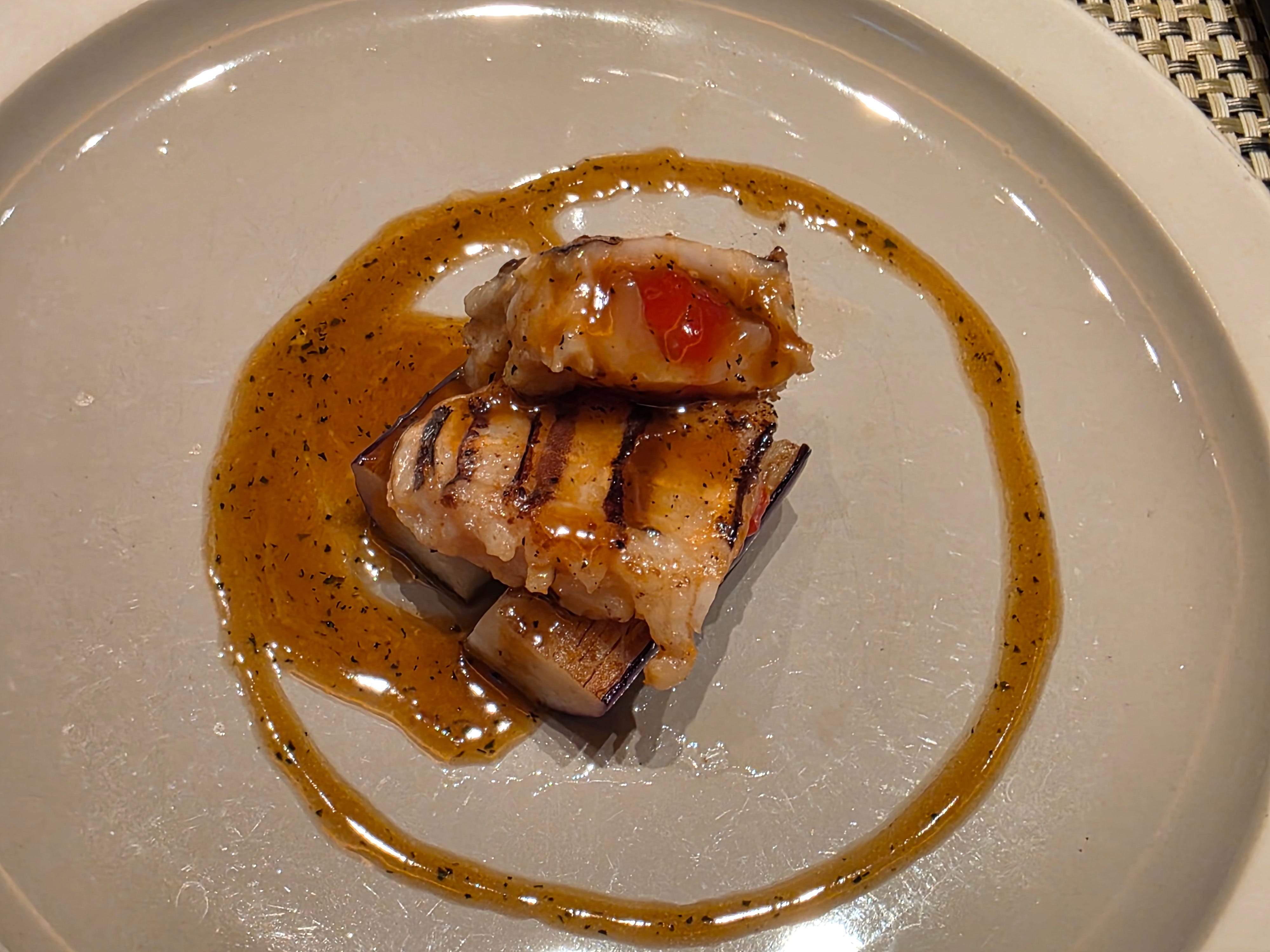
The grilled mantis shrimp in soy butter was less successful. Mantis shrimp should have a certain spring and sweetness when fresh, but this one was a little mushy and lacked the texture I was hoping for. Not disastrous, but clearly one of the misses of the night.
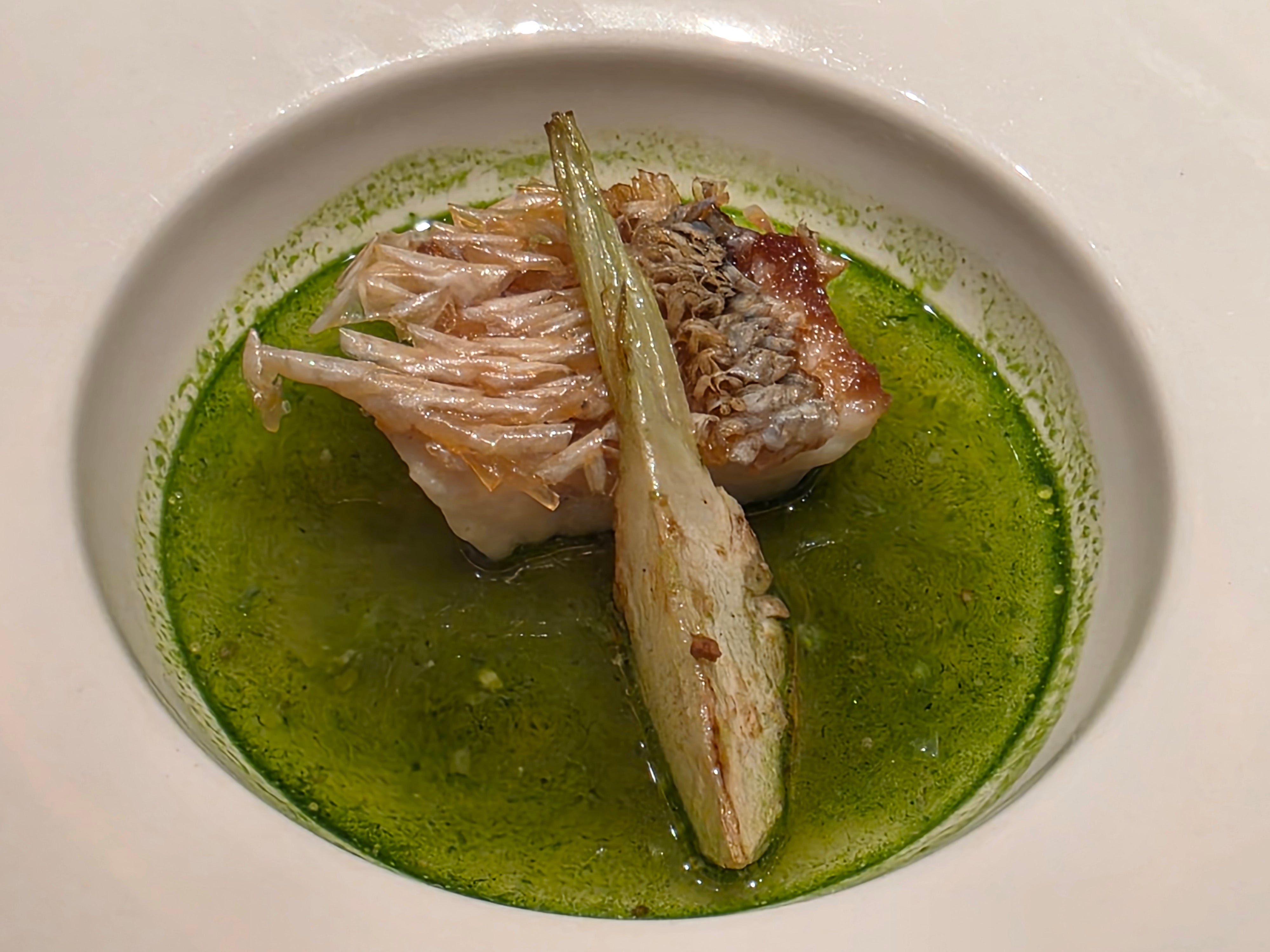
A much stronger dish followed. A pan-fried piece of tilefish arrived with remarkably crisp skin, served in a clam and basil consommé. On paper, basil feels slightly unconventional in this format, but the dish worked. The fish itself was excellent, and the broth gave it brightness and fragrance without overwhelming the delicacy of the flesh. One of my highlights of the evening.
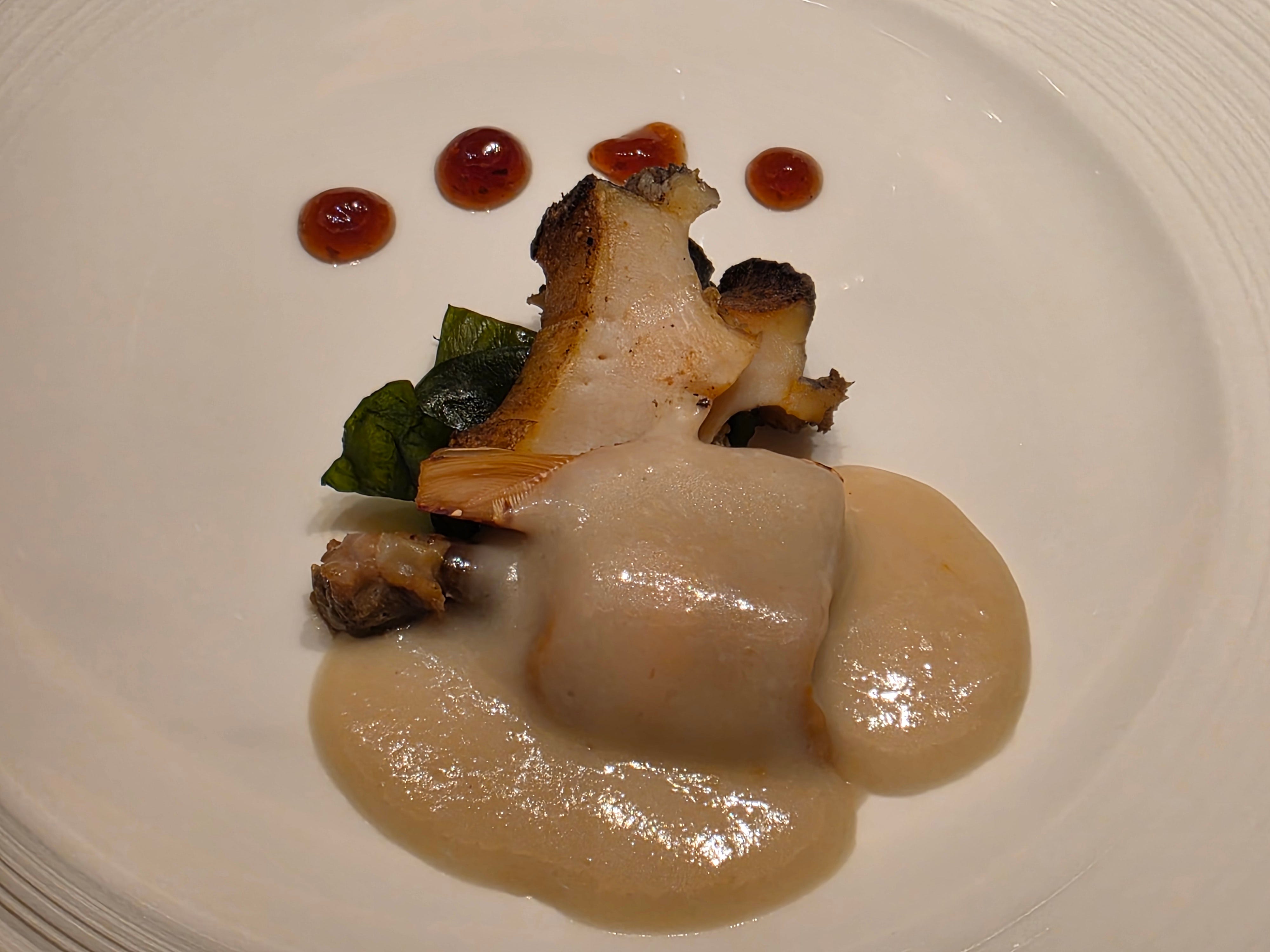
The grilled abalone with bamboo shoots in a uni sauce was well executed, but less memorable than I expected. There was nothing wrong with it at all, but it never quite rose above being competent and luxurious. At this level, that can sometimes read as faint praise.
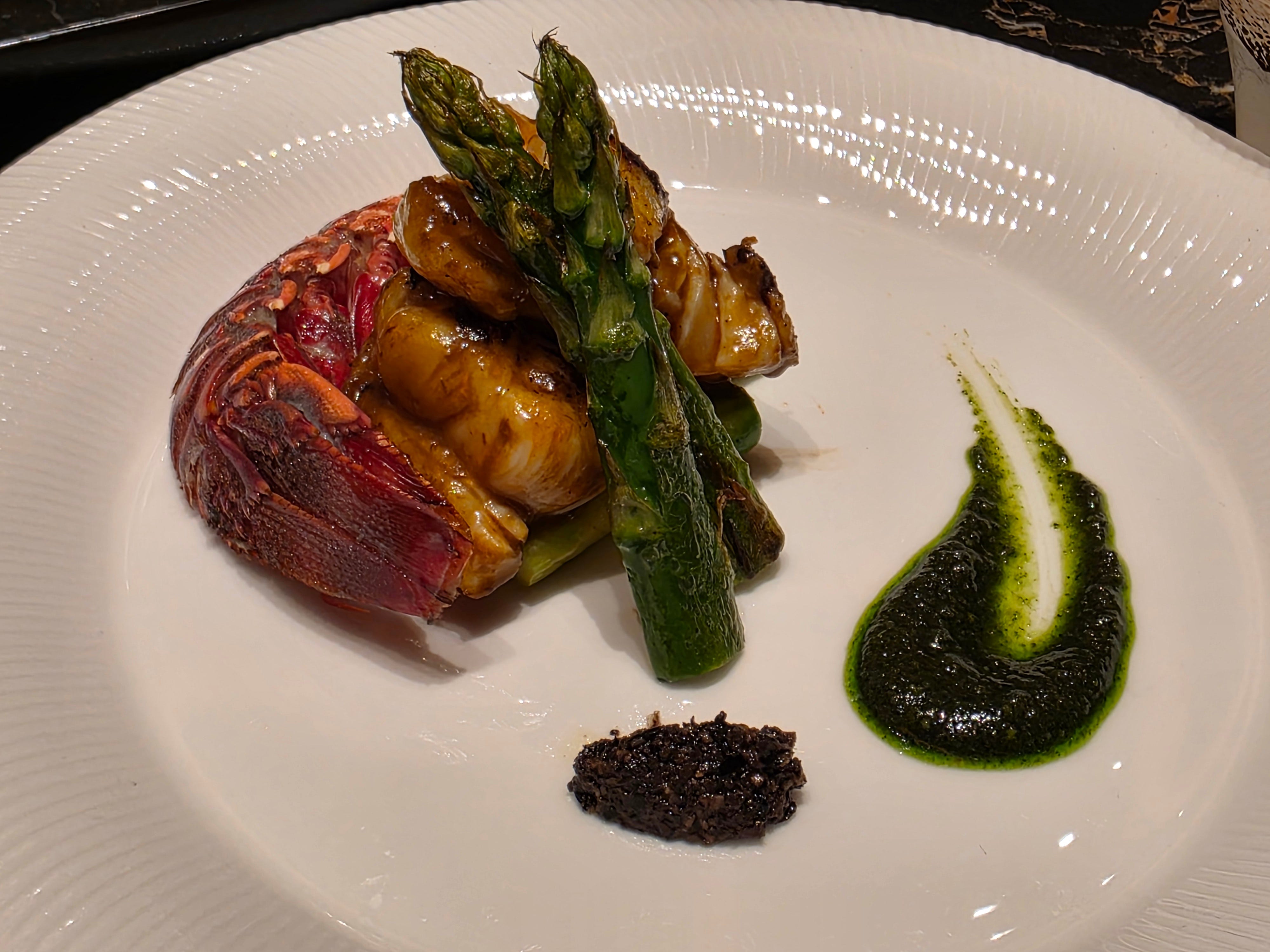
The lobster, grilled in soy butter and served with basil pesto and tapenade, was similarly a little underwhelming. The seasoning combination was interesting enough, but the lobster itself was slightly overcooked and chewy, which is hard to forgive when lobster is meant to be one of the centrepieces.
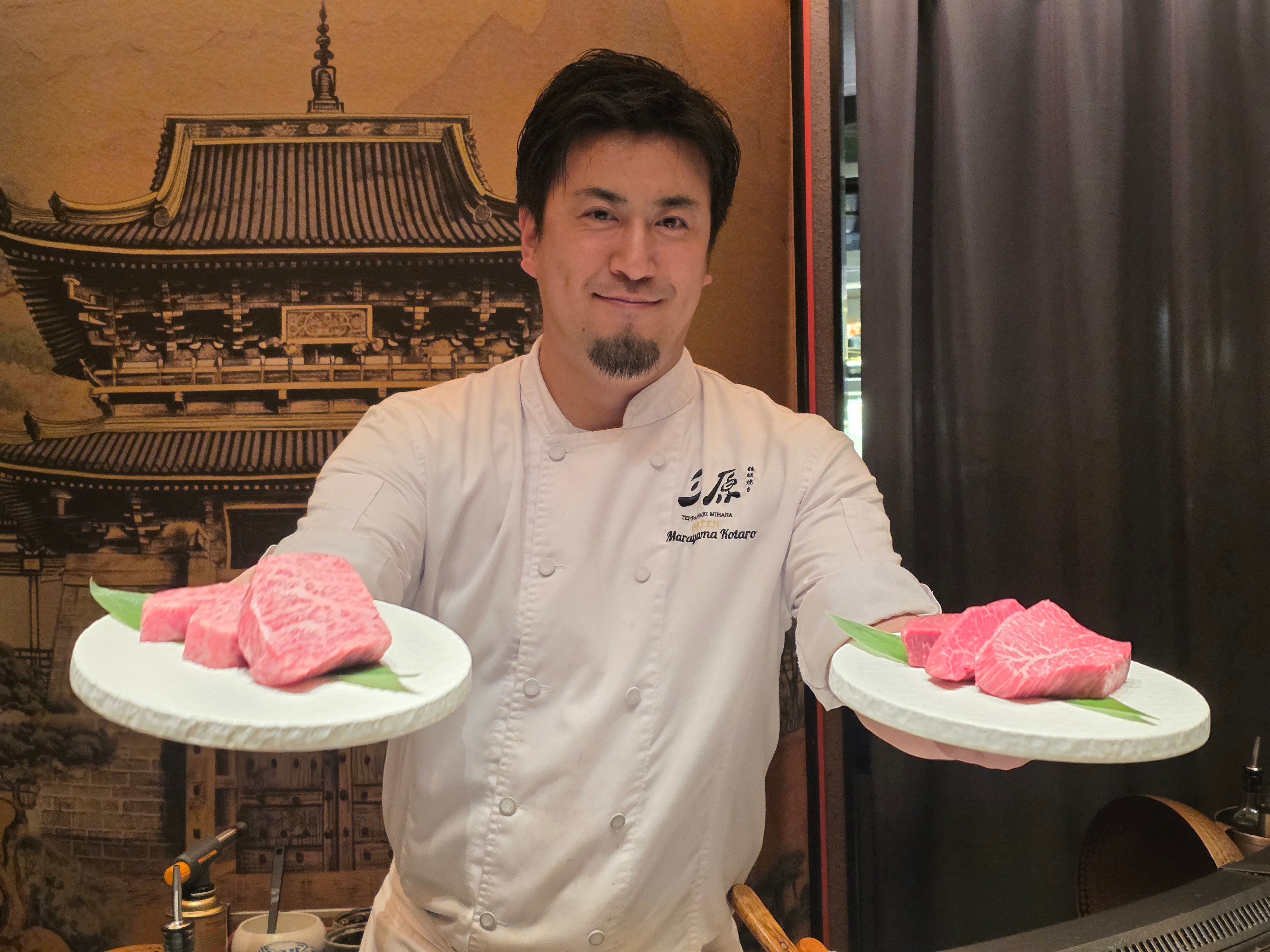
Before the beef course, the chef presented two cuts: an A4 wagyu sirloin and an A5 “drunken” tenderloin. I appreciated that they specifically source A4 rather than A5 for the sirloin, recognizing that too much fat in that cut would become cloying. It is the sort of decision that suggests someone is thinking carefully rather than merely chasing labels. The beef arrived properly cooked, served with garlic chips, wasabi, and three different salts. The portion size was also exactly right. With wagyu, generosity can become a burden quite quickly, and any larger serving would have tipped from indulgent into exhausting.
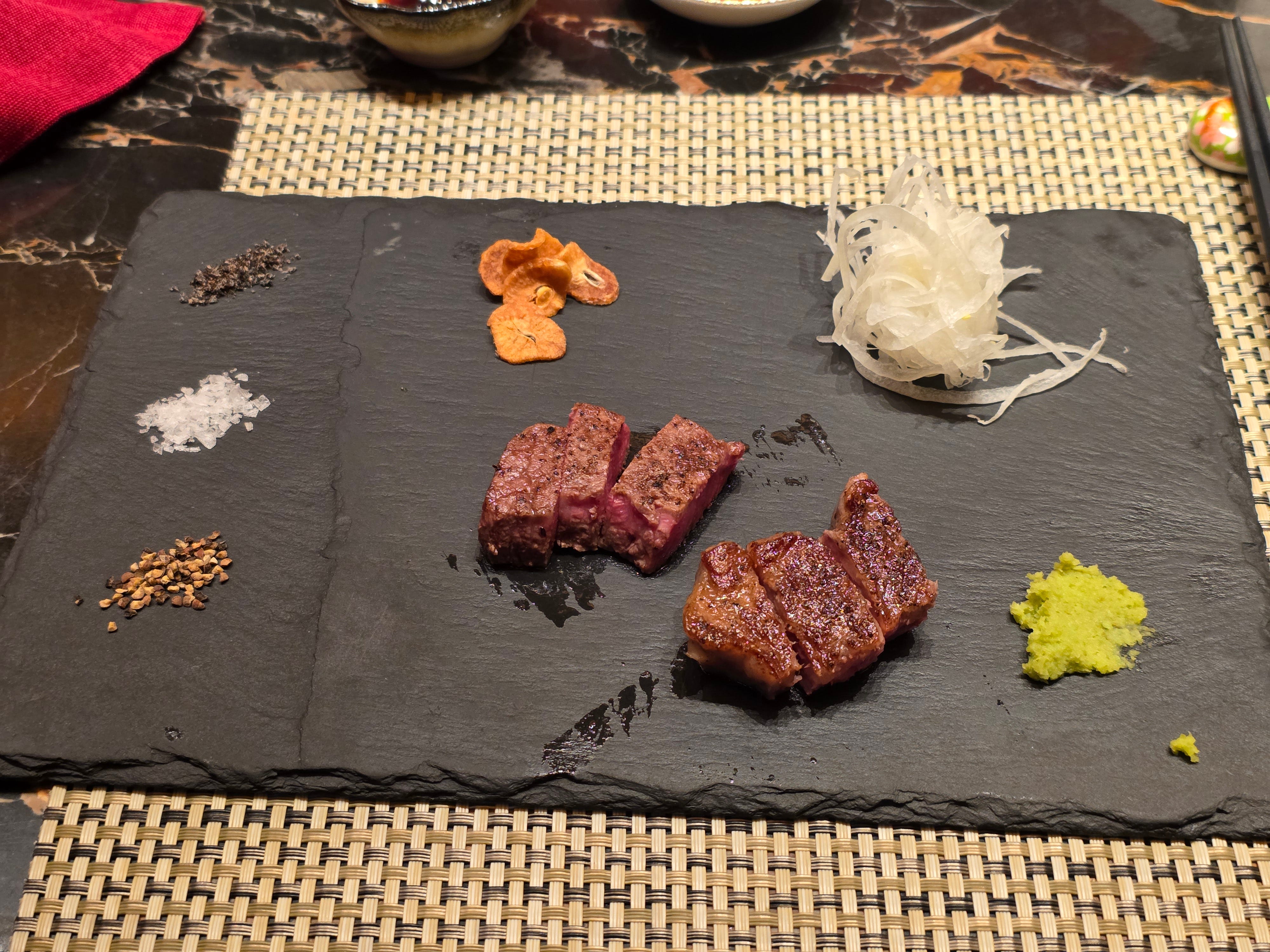
Both arrived perfectly cooked on the plate with garlic chips, wasabi, and three kinds of salt. The portion was just right; the fattiness of the beef makes it extremely filling, and any more would have been unmanageable.
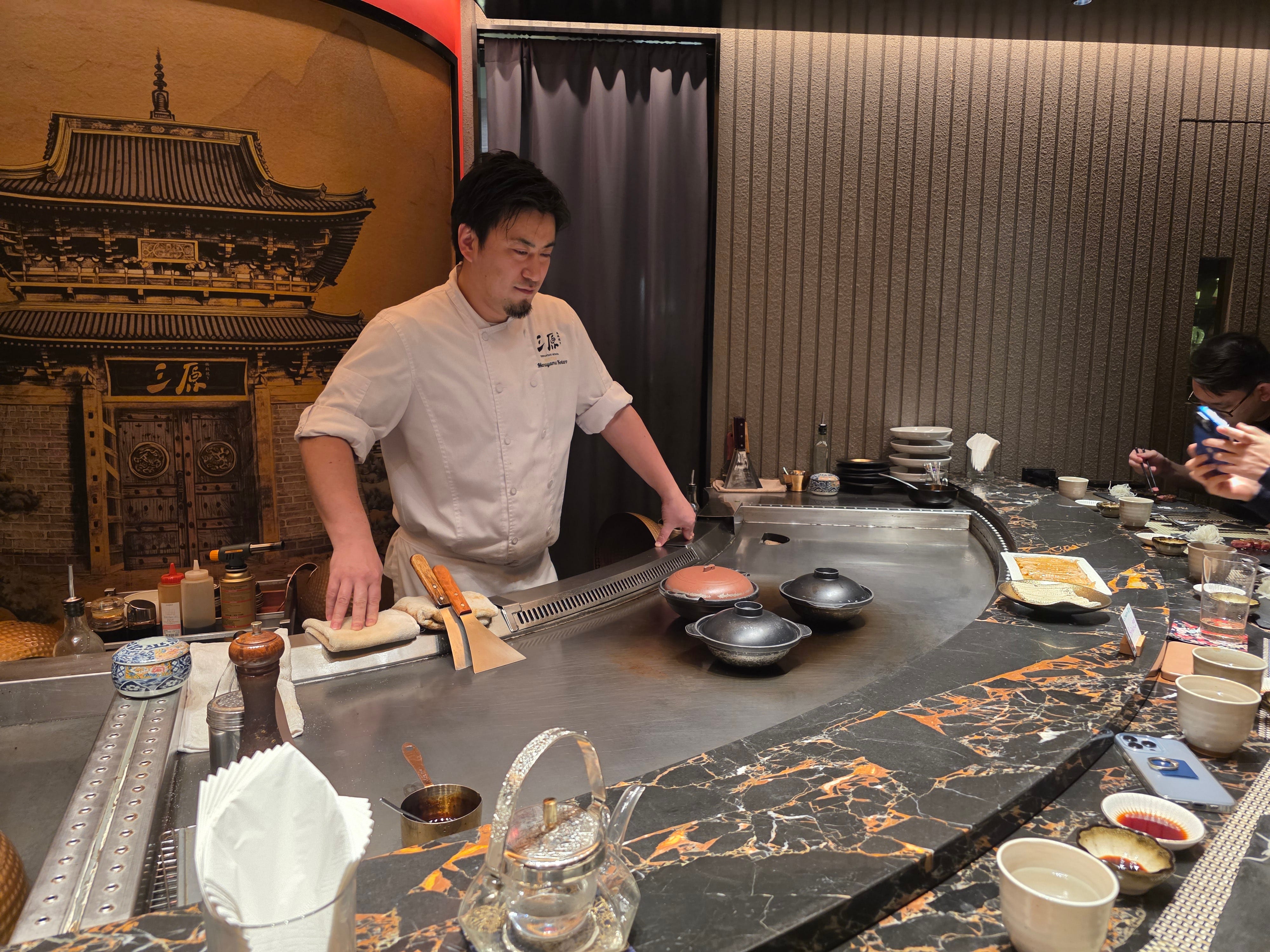
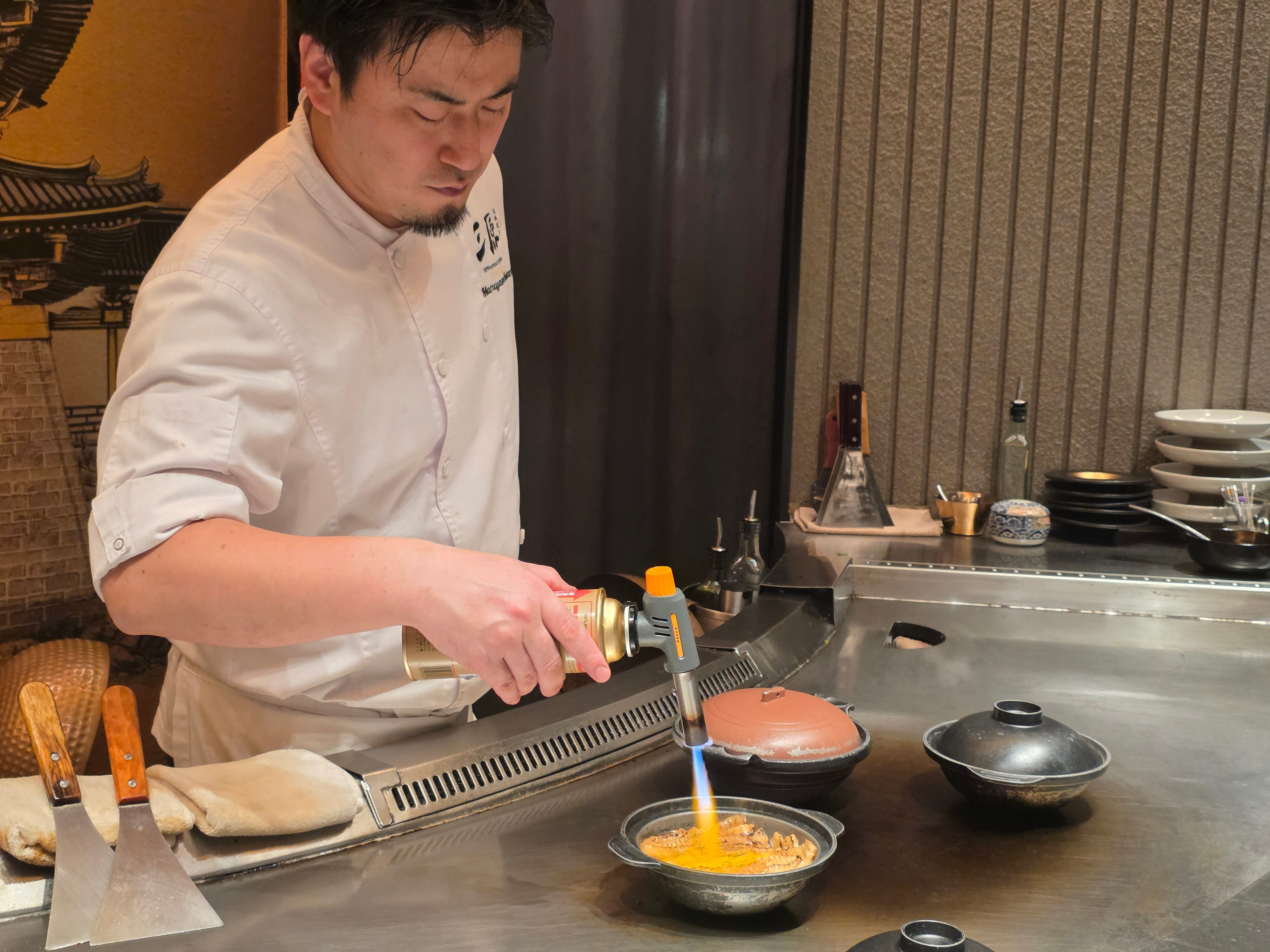
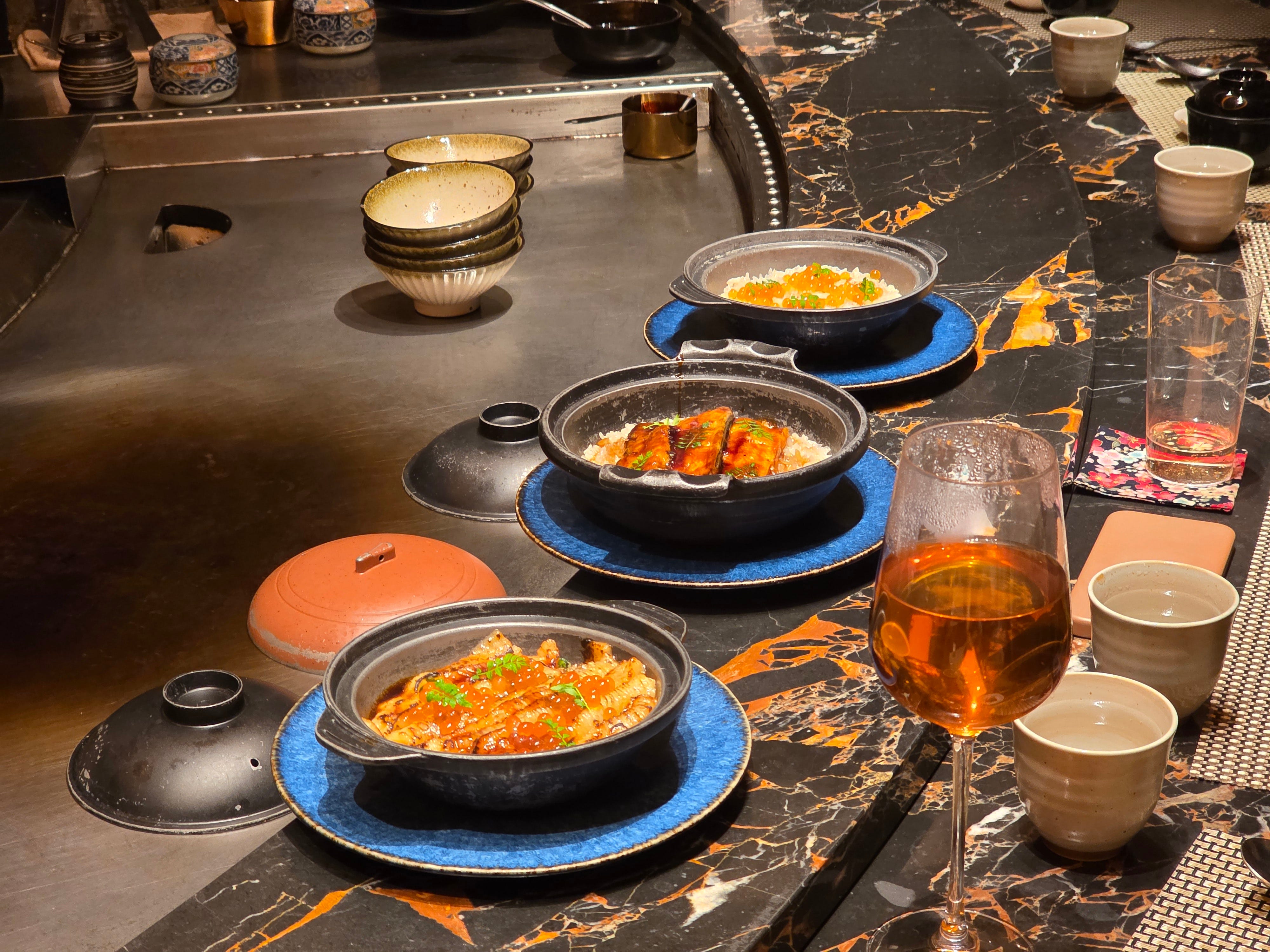
To finish the savoury courses, we were given a choice of three claypot rice preparations for the table. We went with grilled eel, snow crab, and flounder fin. This was a good ending to the meal, the sort of comfortingly substantial final course that teppanyaki does especially well when it remembers that starch matters as much as the headline proteins.
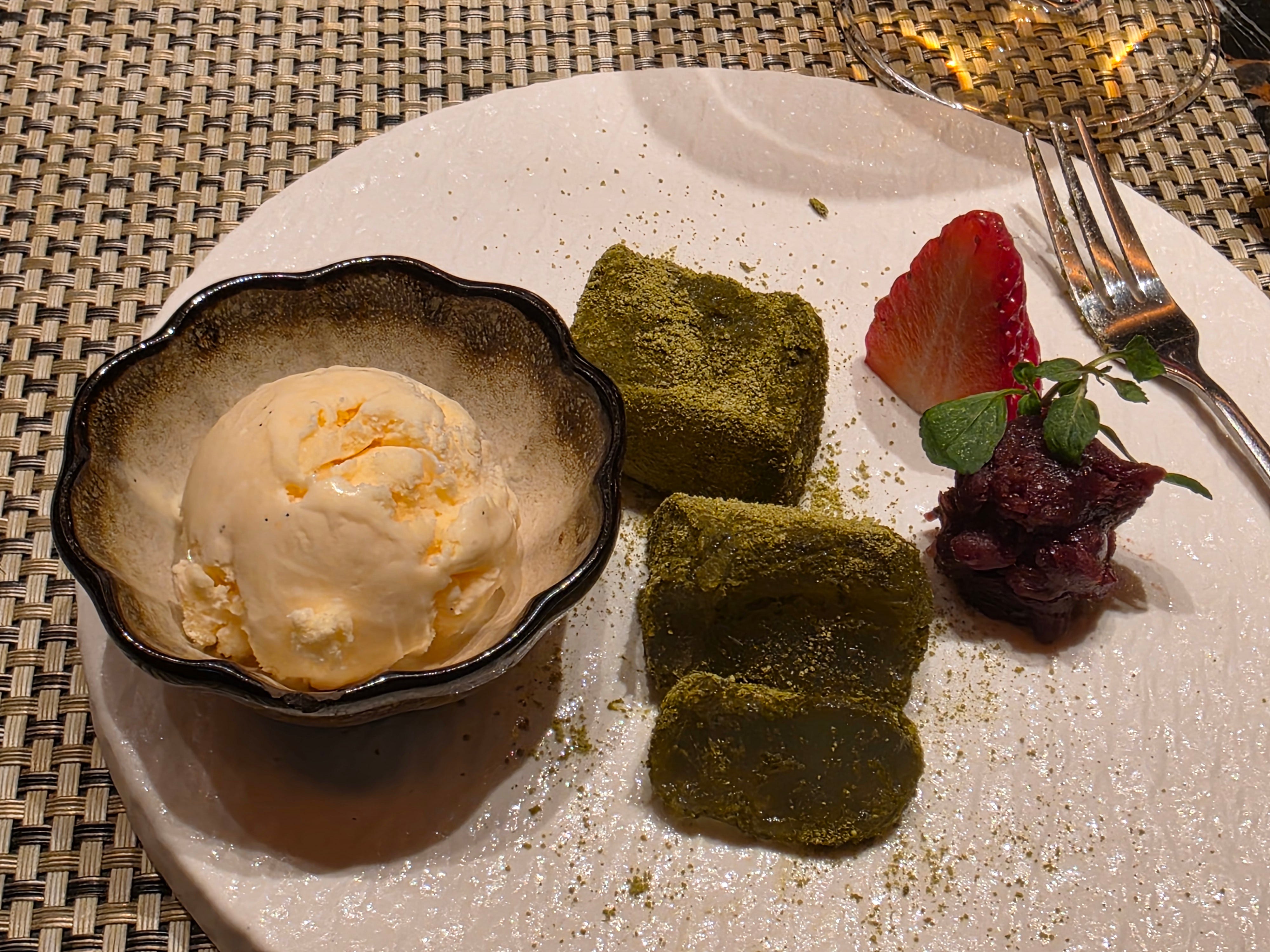
Dessert was red bean paste with mochi and ice cream, a straightforward and pleasant finish without trying to reinvent anything.
Overall, I came away fairly impressed. There were definitely some hits and misses, but the stronger dishes were strong enough to make the meal feel worthwhile. The arctic surf clams were excellent, the shark fin chicken soup was unusual and memorable, and I liked the inventiveness of the menu overall, particularly where Mihara’s kappo-influenced sequencing gave the meal a bit more shape than standard teppanyaki usually manages.
I actually preferred Teppanyaki Mihara Goten to its Michelin-starred neighbour, I M Teppanyaki & Wine, though the two are clearly aiming at different price points and perhaps slightly different diners. Still, for a more intimate, chef-led alternative to the usual teppanyaki formula, this is very much worth a return visit.
Total Damage: 12,500 HKD / 7 people