
In a change of pace from the fine dining restaurants I’ve been to recently, I managed to get tickets to a hidden pop-up event called “Tuna Fight Club”. Run by the team behind Notting Hill Fish + Meat (and connected spots like Supermarket of Dreams and Urchin), what started as a somewhat underground/insider event during COVID has become one of the city’s most talked-about (and hyped) seafood dinners.
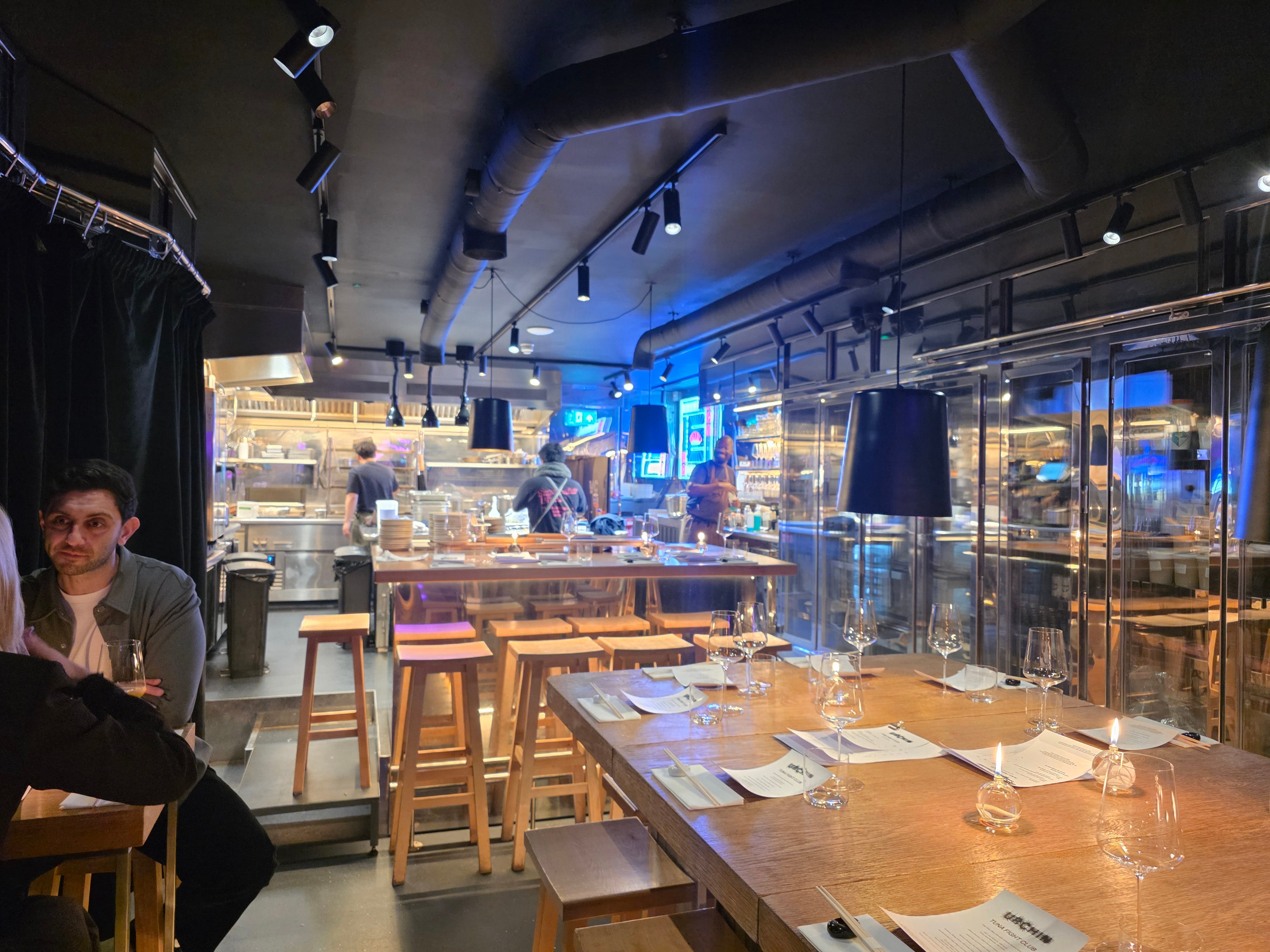
By day, the space is called “Supermarket of Dreams”. By night, it transform into part show kitchen, part communal tables and a shrine to the temple of bluefin tuna. A massive tuna is flown in from Spain, wheeled in at the beginning of the night, and broken down in front of us into a multi-course tuna omakase menu.
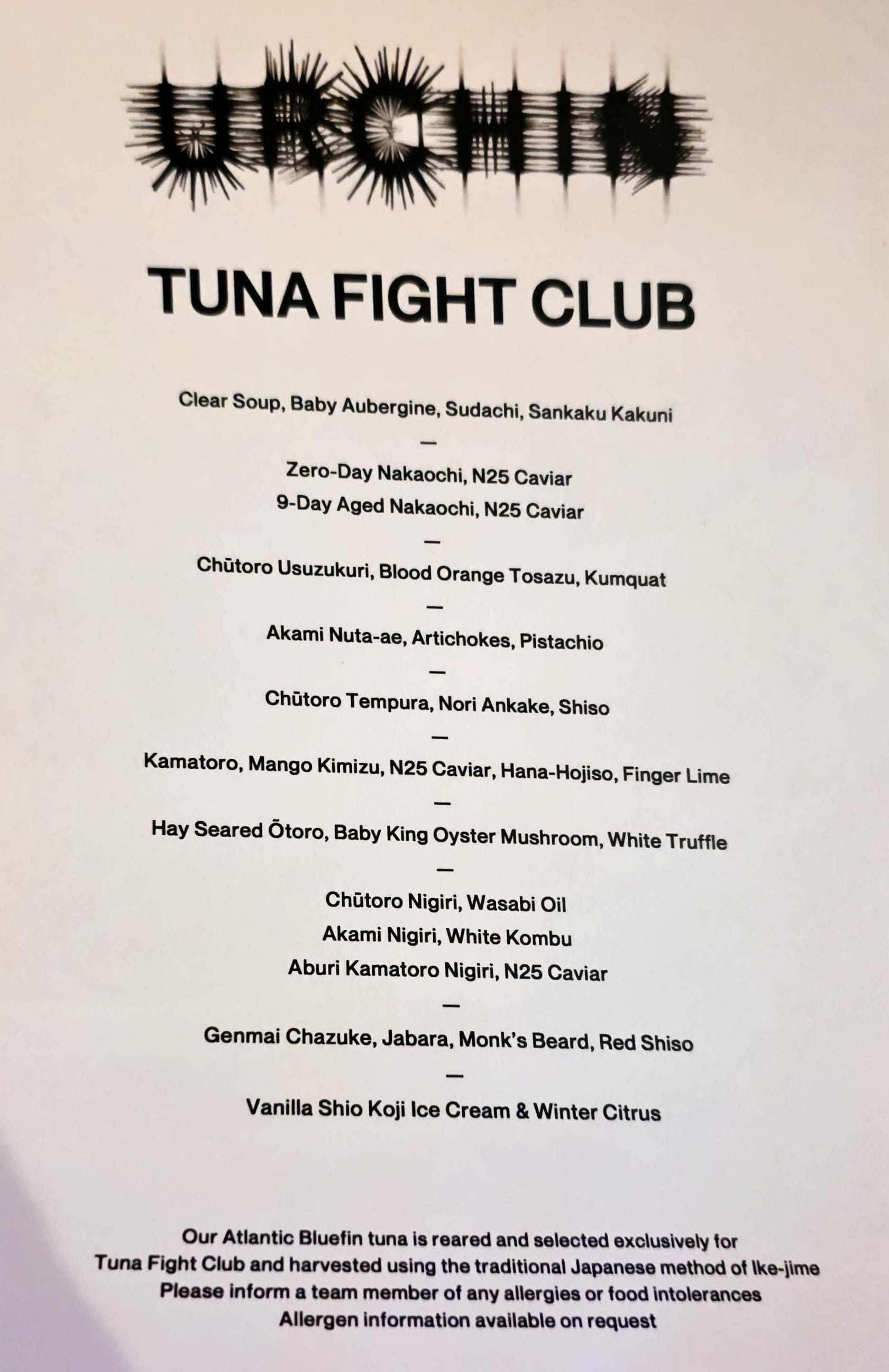
The menu for the night, with nearly every dish highlighting the tuna - either freshly carved from the tuna in front of us, or dry aged from last week’s tuna.
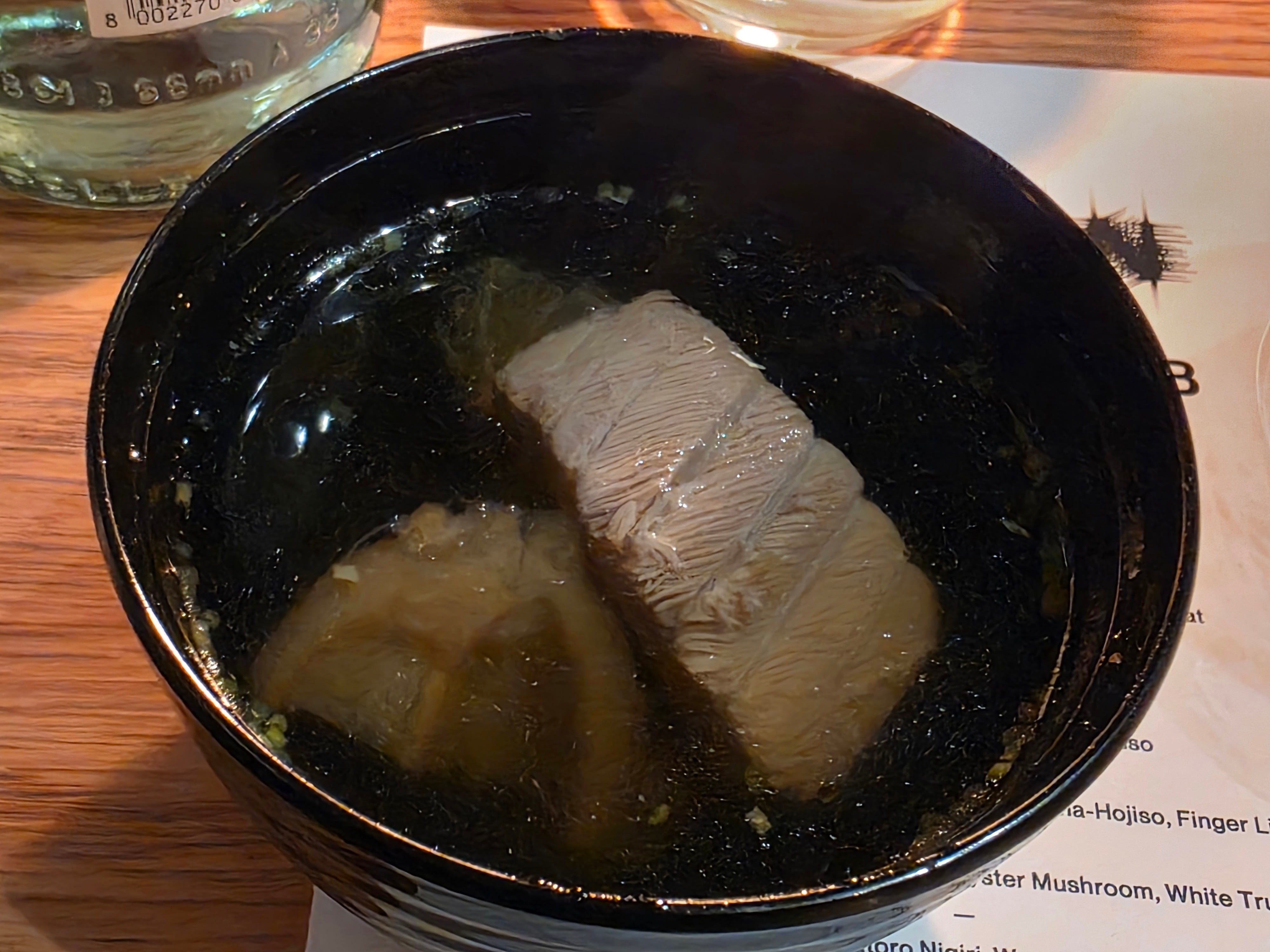
A clear, but flavourful soup with a small piece of tender aubergine, and a “fatty square” of tuna meat. Traditionally made with pork belly, they modified the recipe to use a fatty piece of tuna belly instead. Topped with a bit of sudachi juice squeezed over the top, adding acid and a bit of brightness to the flavours.
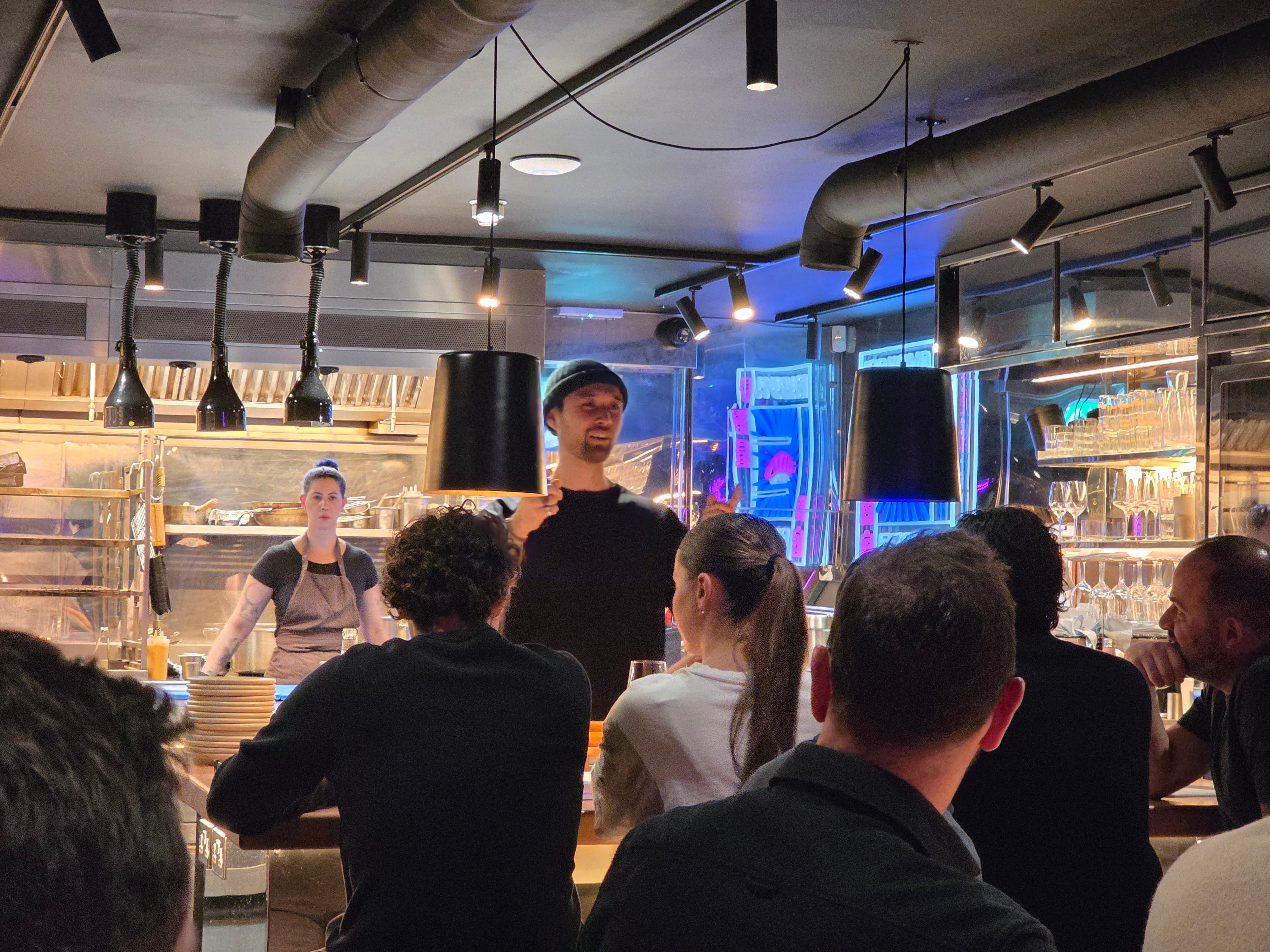
At this point the MC started explaining what would happen next and how the night would work.
The massive 200 kg tuna being wheeled in from the front.
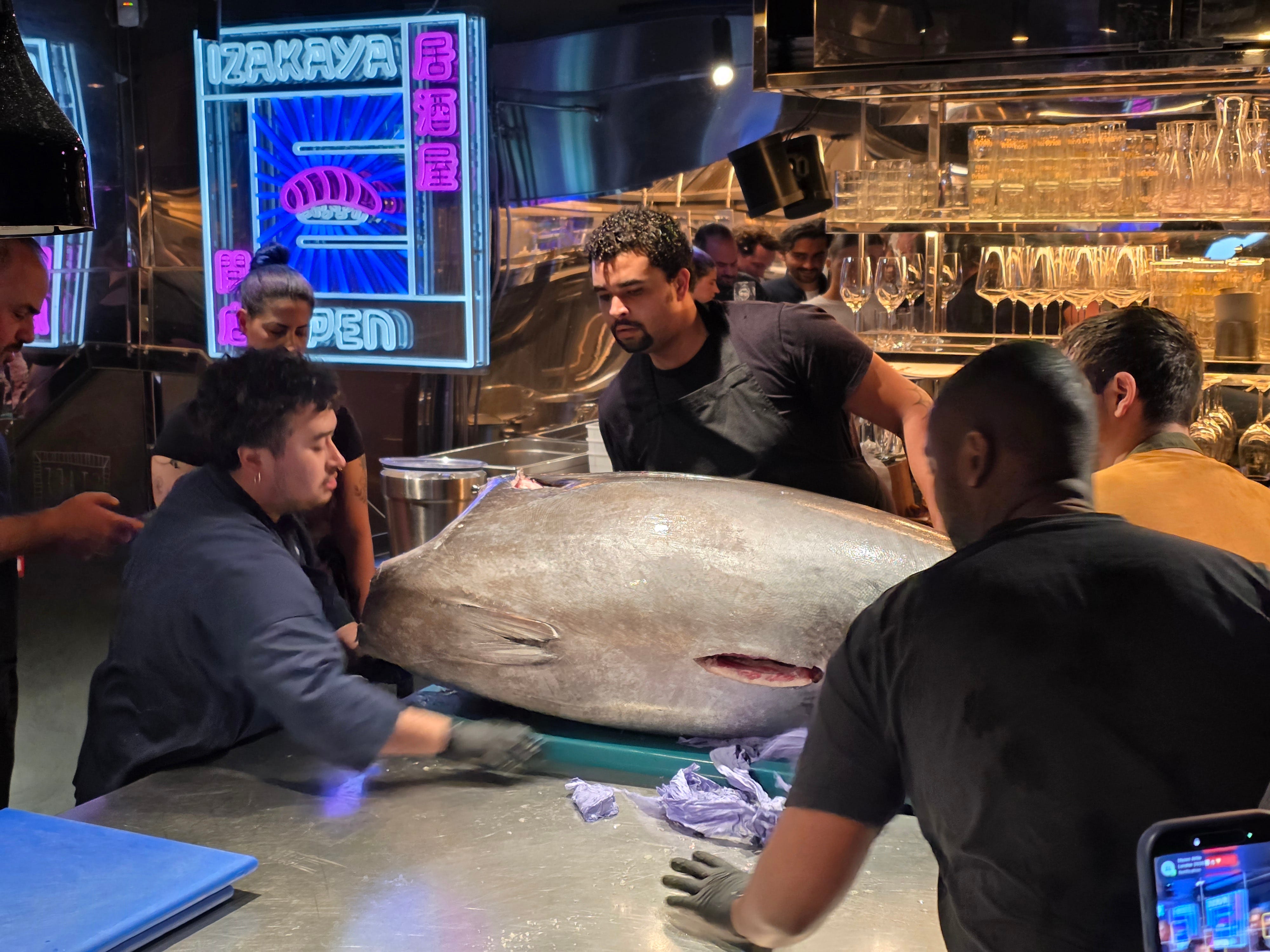
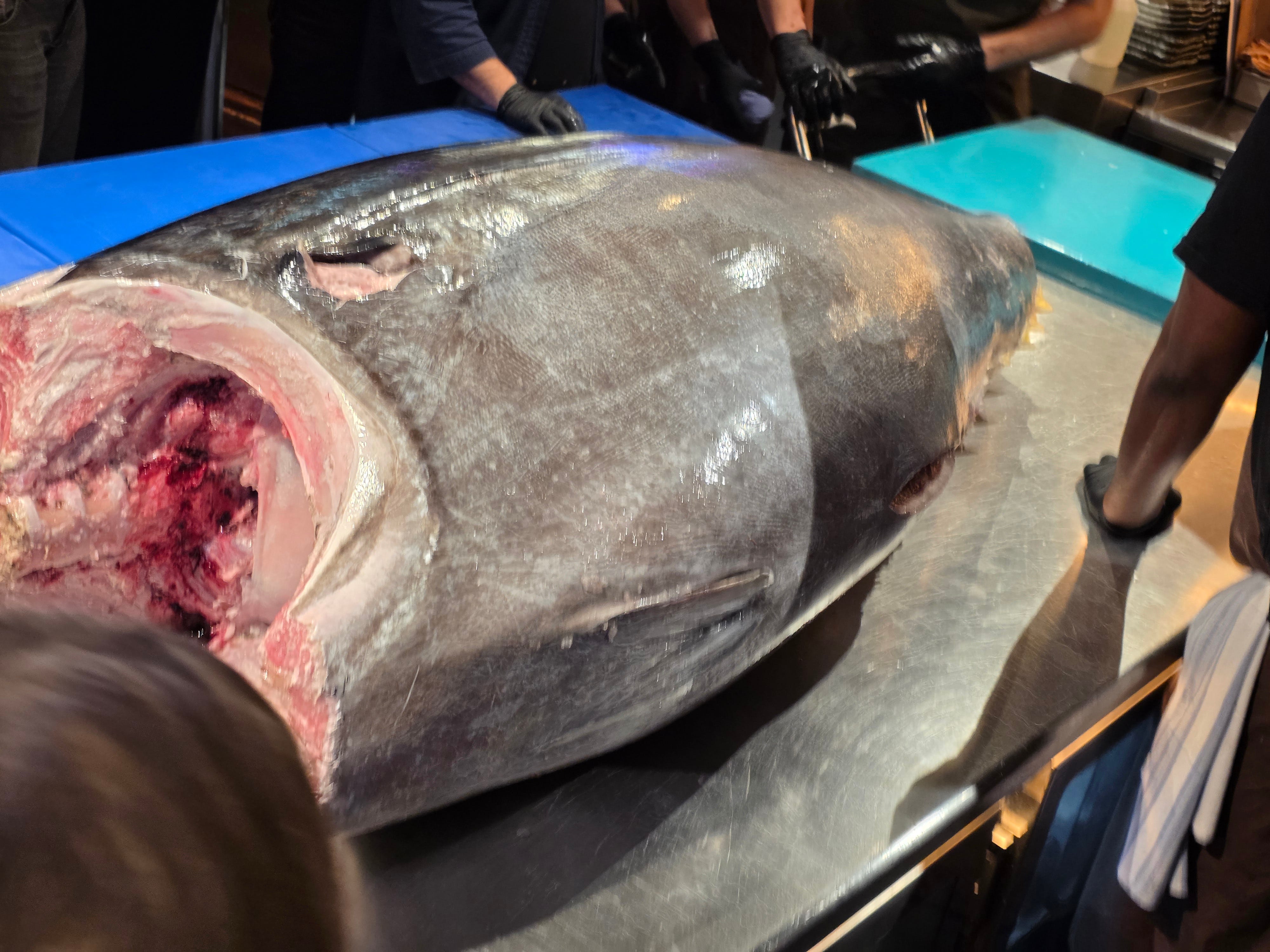
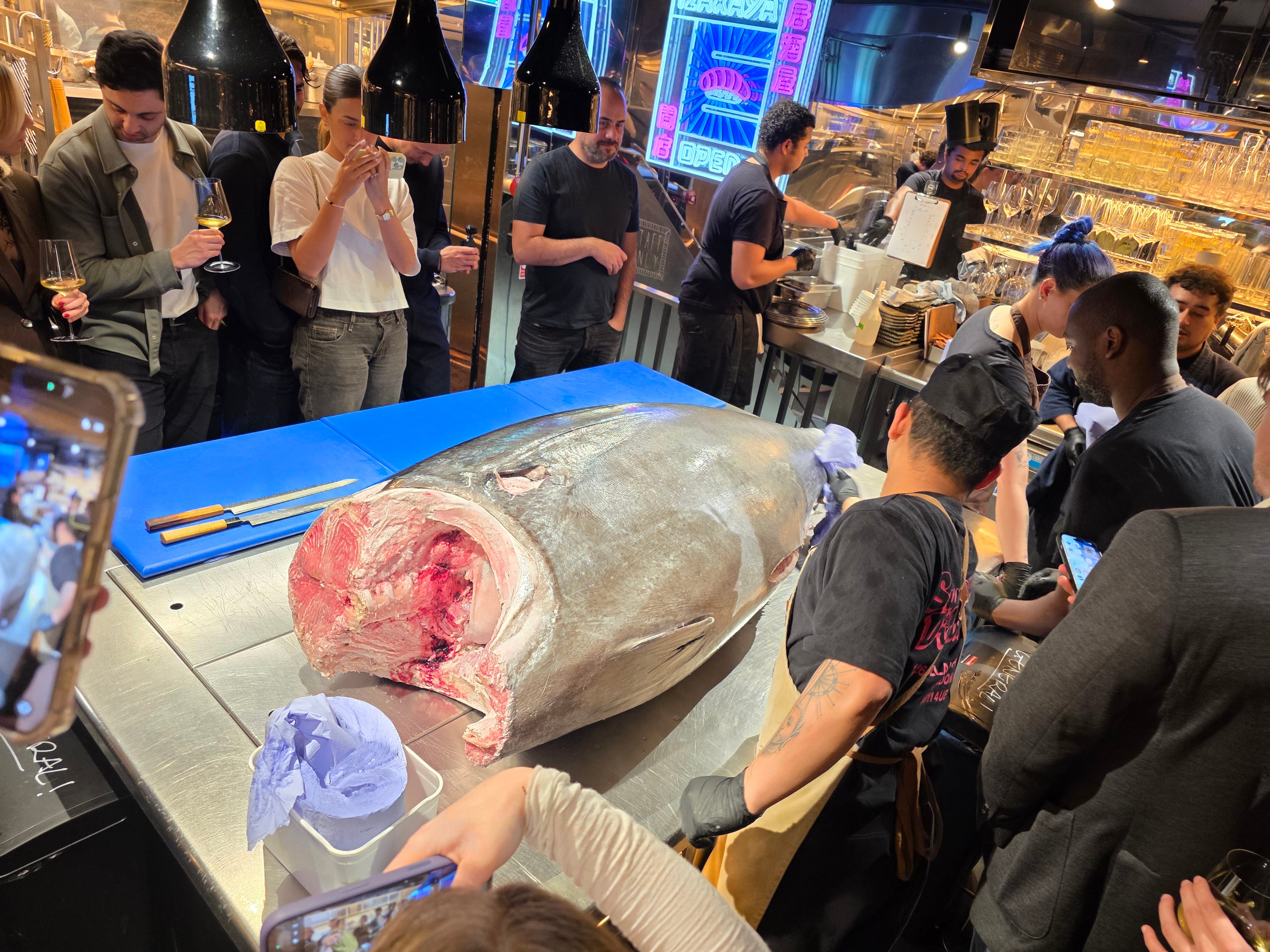
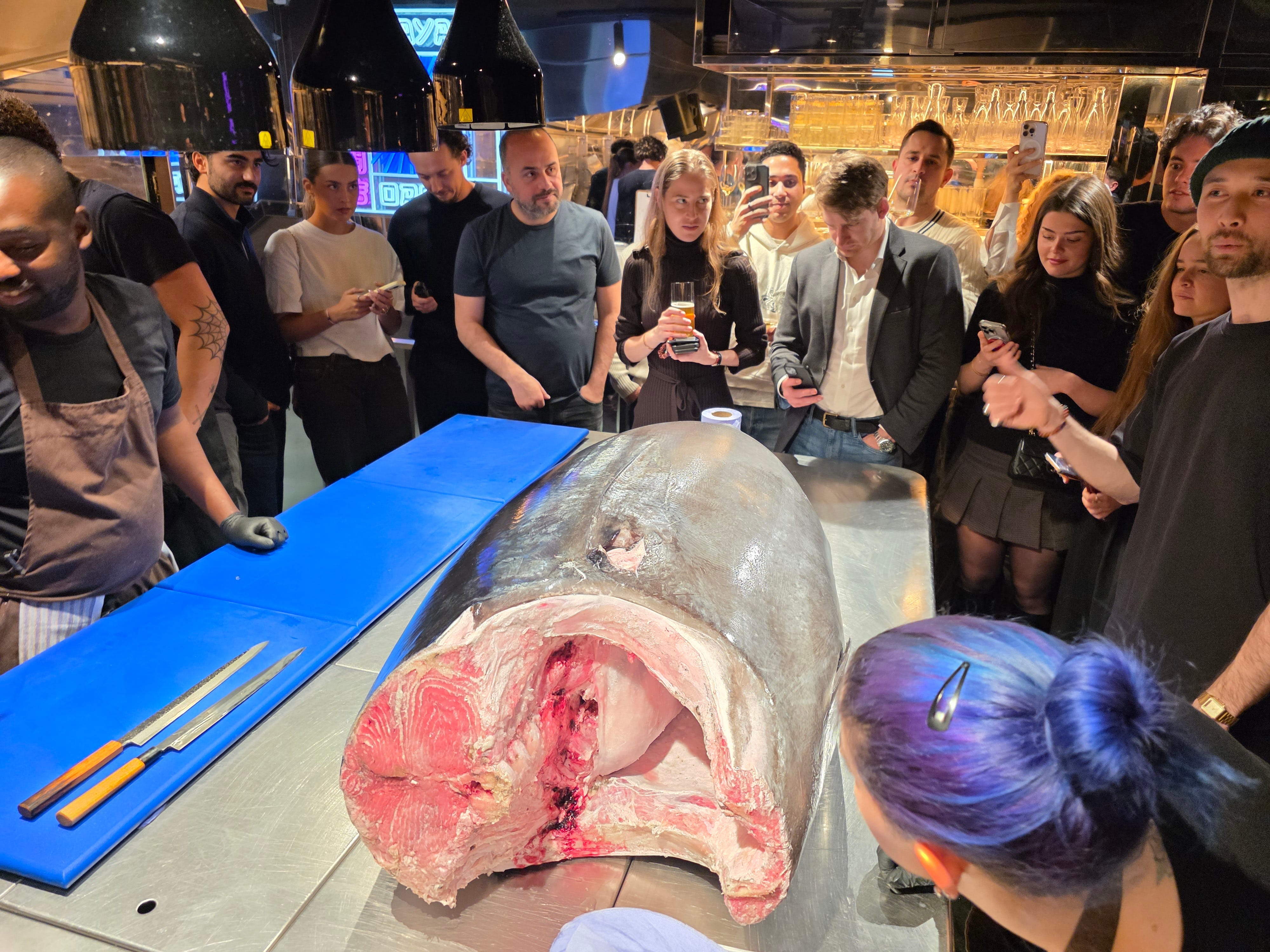
A new cut that I learned about that night, the kamatoro, a rare piece of tuna even fattier than the otoro, cut from collar of the tuna.
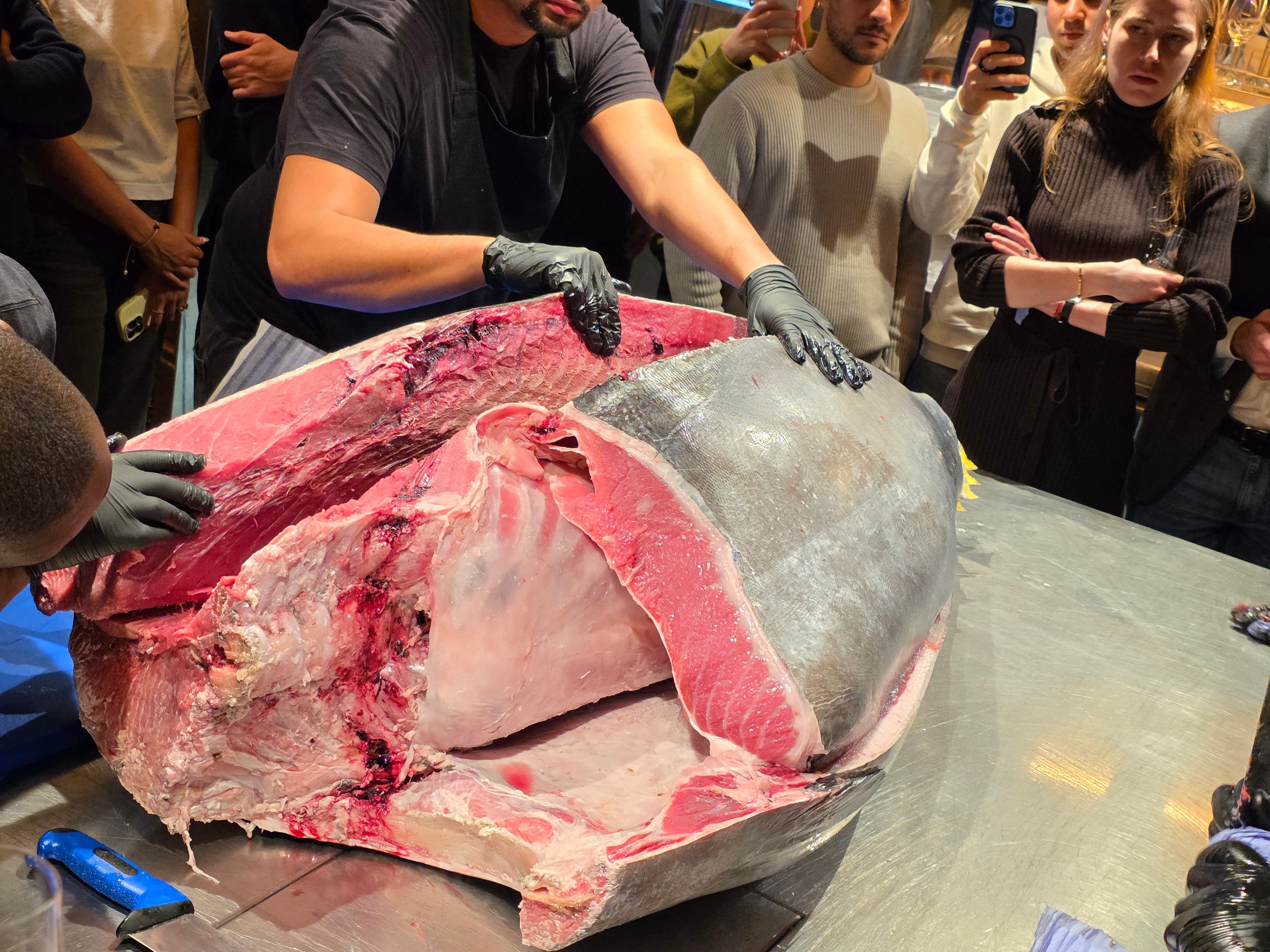
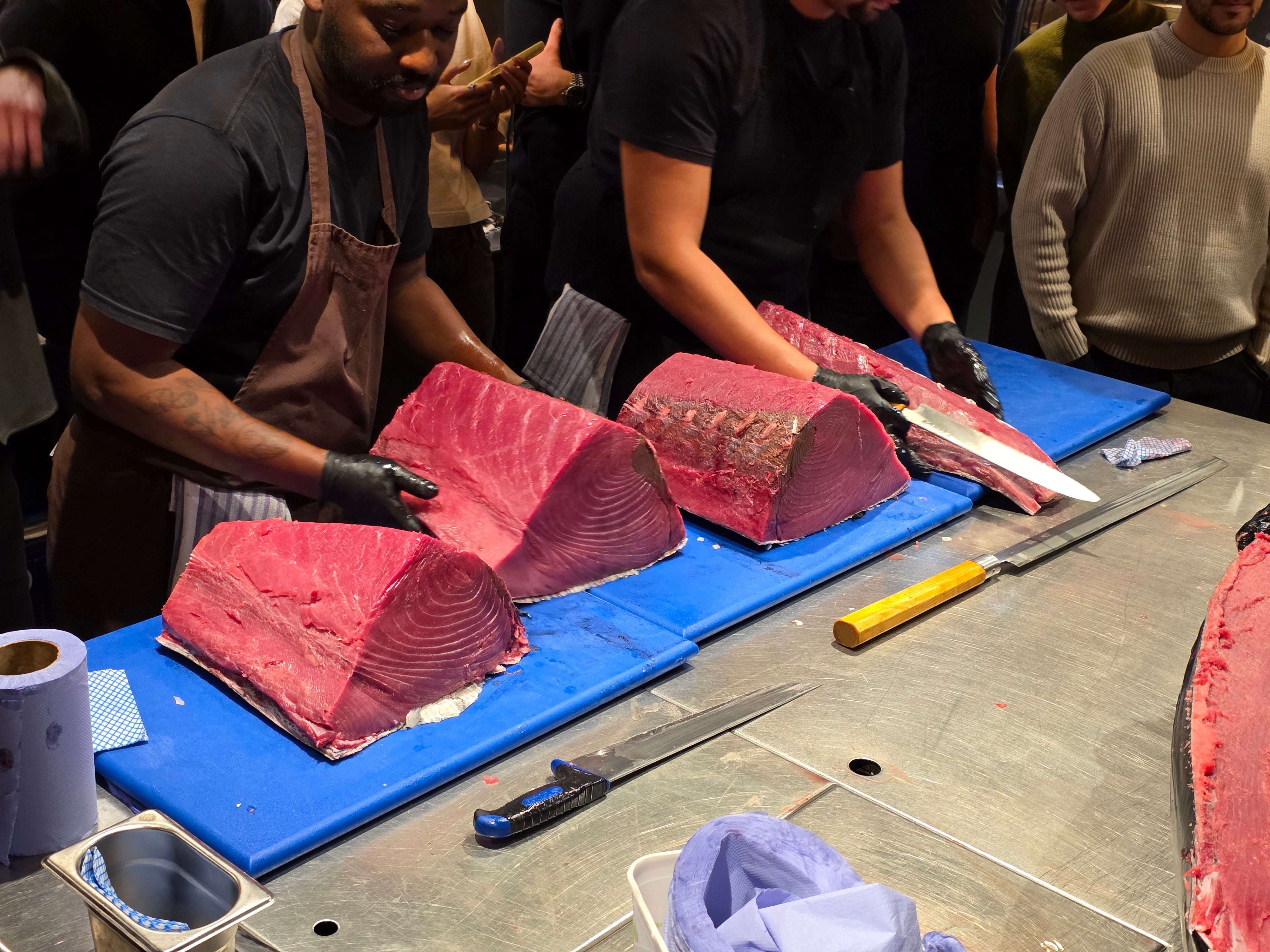
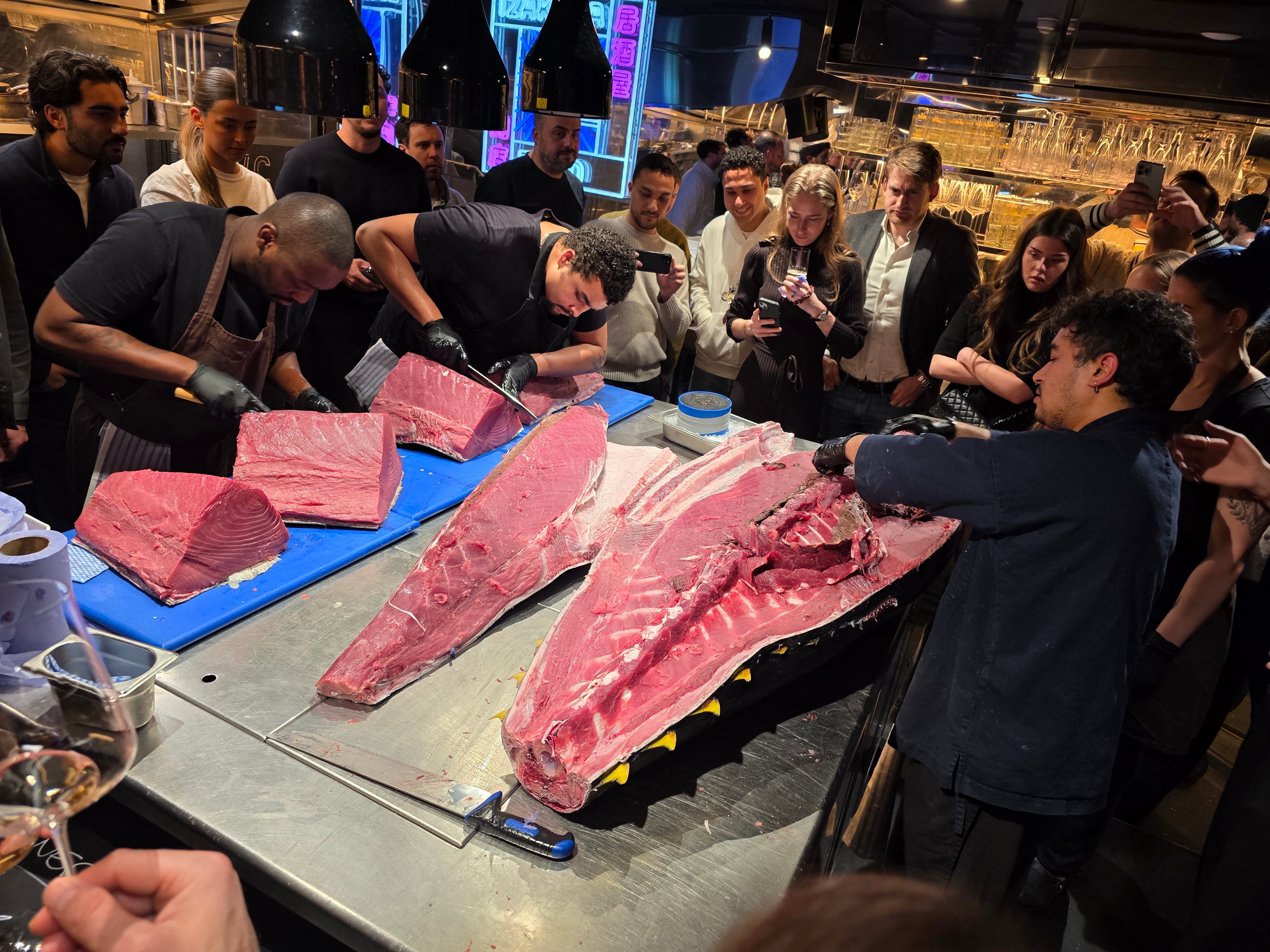
Once the loins were removed, the remaining meat off the ribs was scraped off and prepared for the first dish.
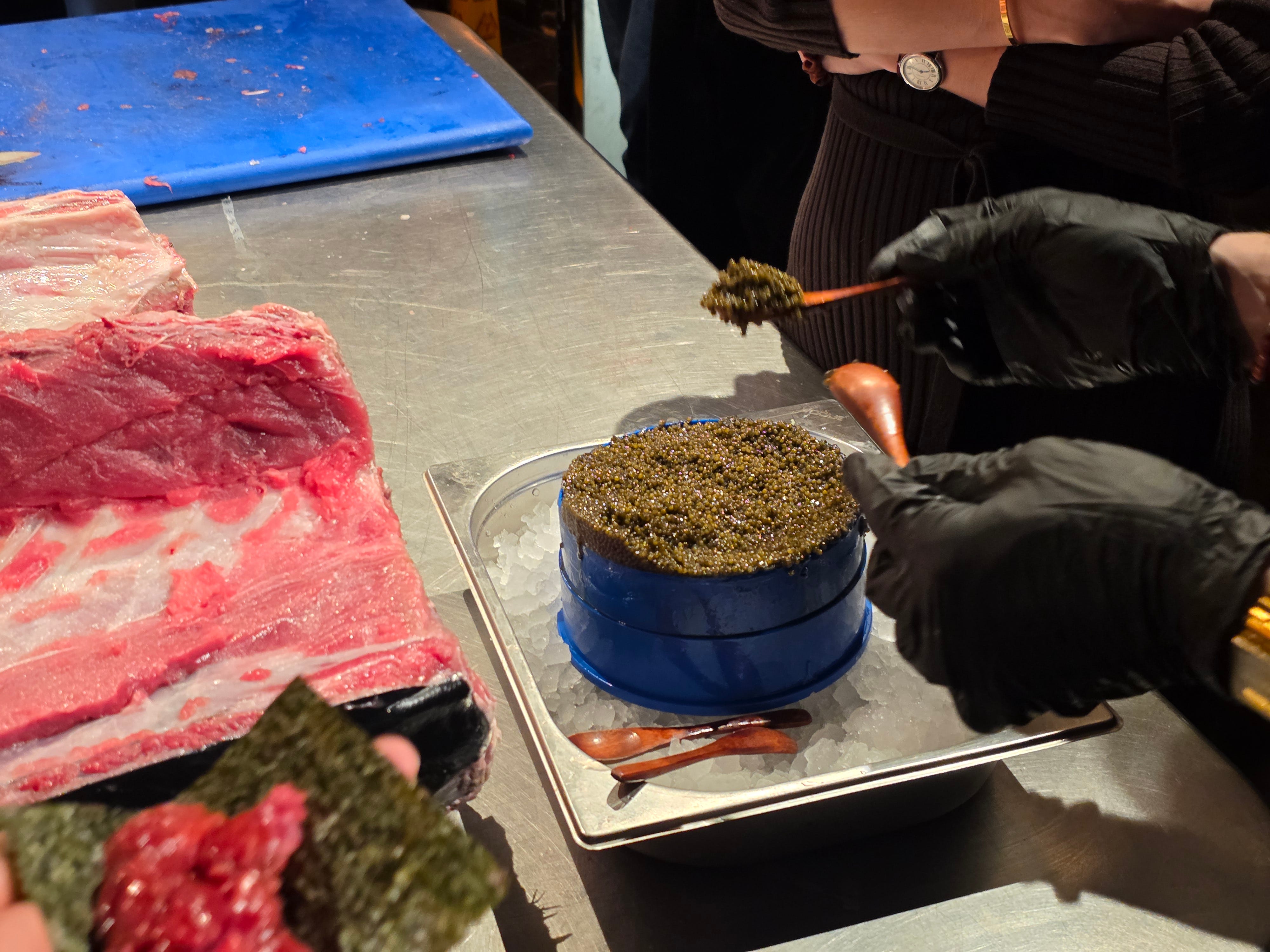
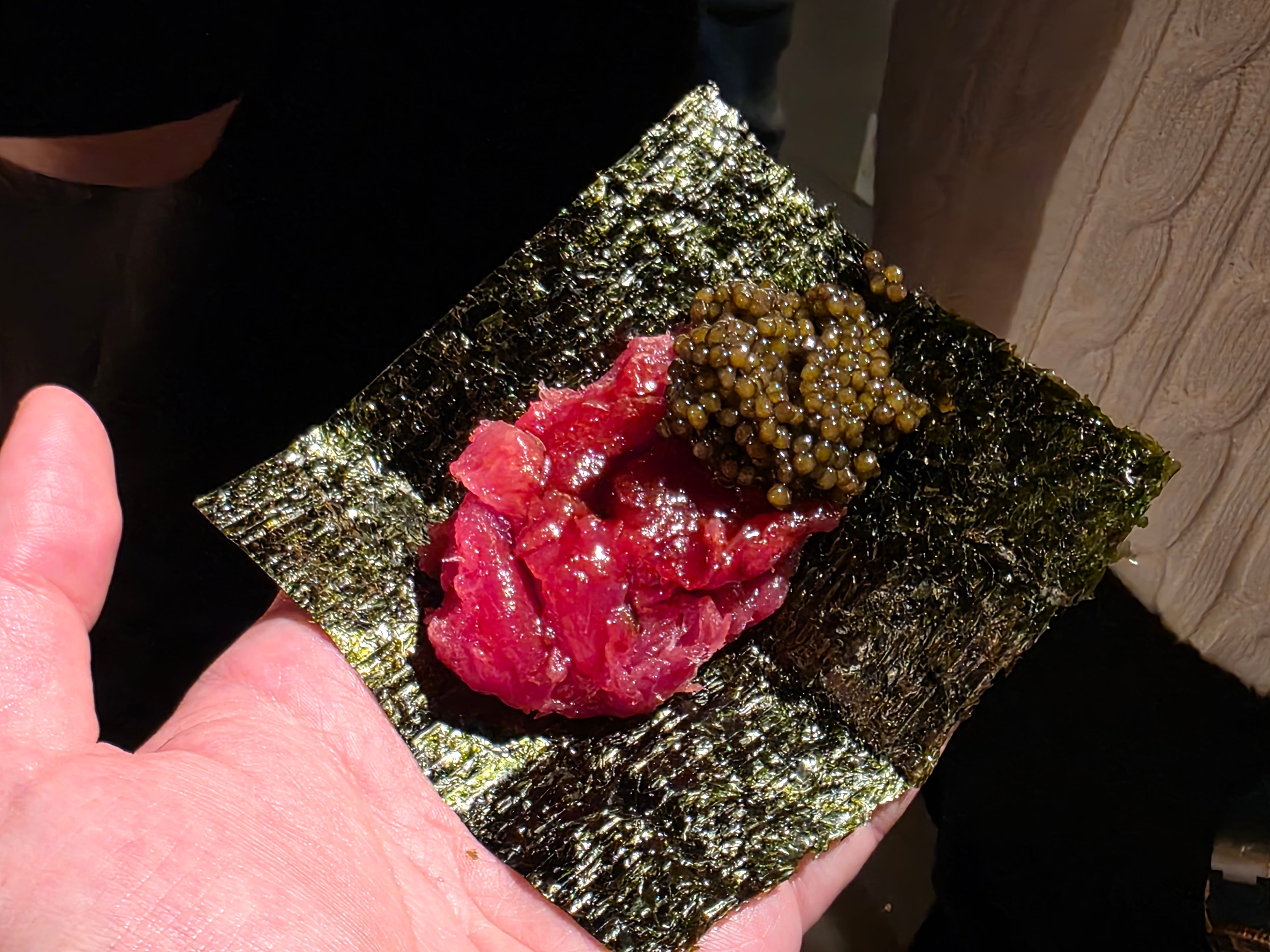
Dinner began with a lineup to pick up a piece of nori, over which they would put a on the fresh tuna mince freshly scraped off the ribs, a light brushing of soy sauce, and a generous heap of N25 caviar out of the massive kilogram container.
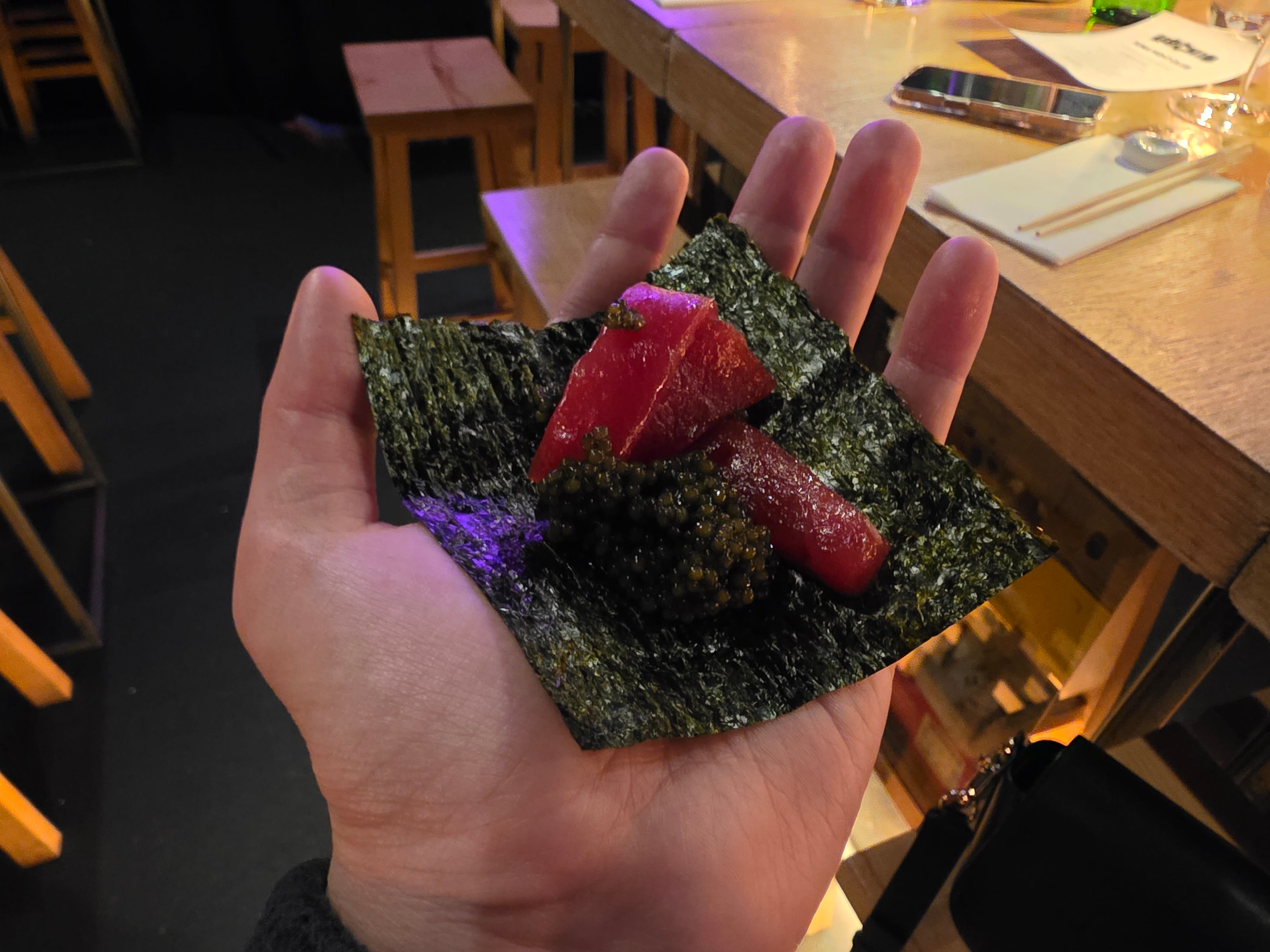
For contrast to the fresh tuna, the second handroll was made using tuna that was dry-aged for nine days. Funkier and more condensed in flavour, I definitely preferred the dry aged one more.
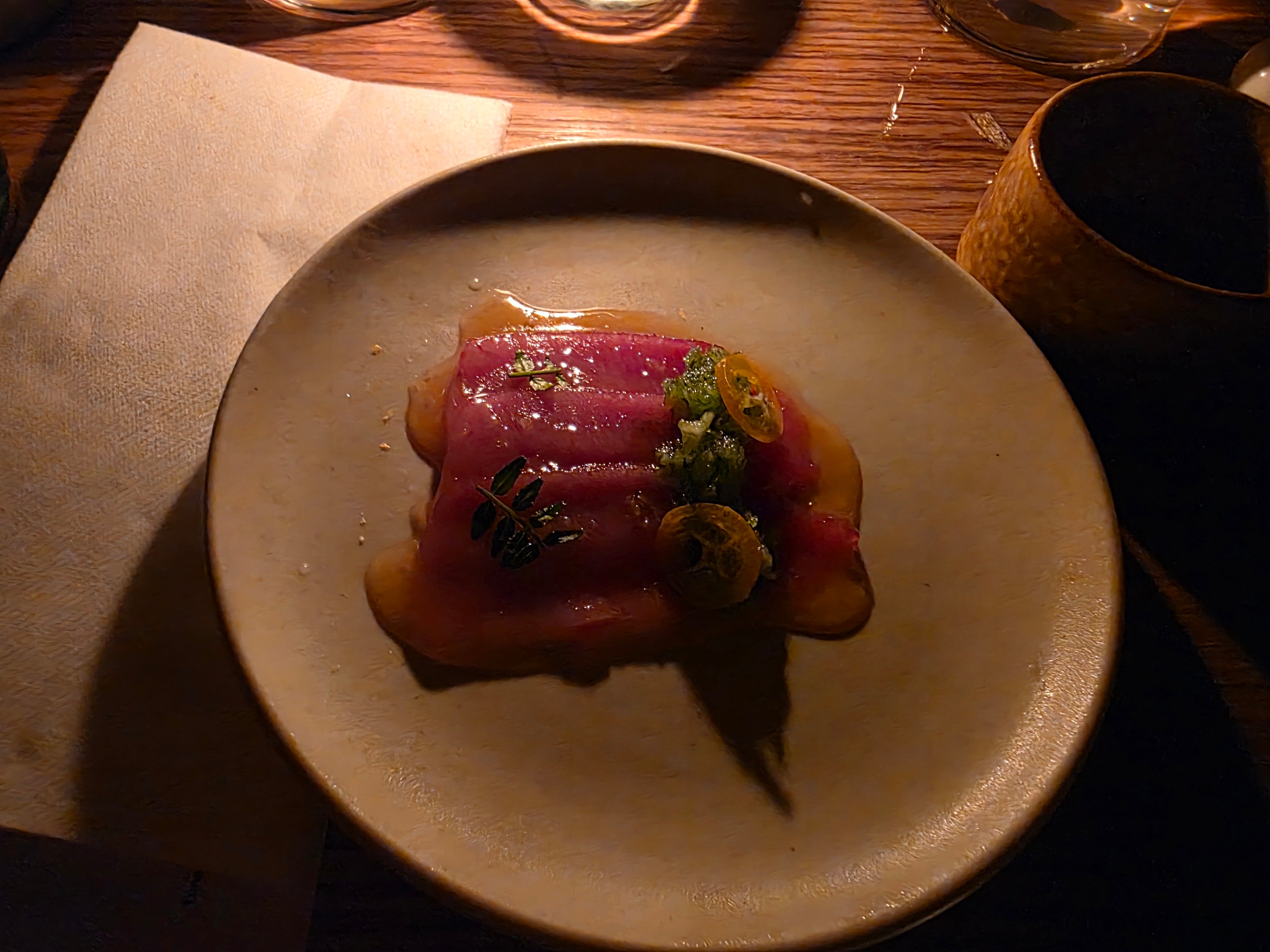
Returning to our tables, we were presented with thin slices of chutoro sashimi, each slice with either kumquat, blood orange or wasabi.
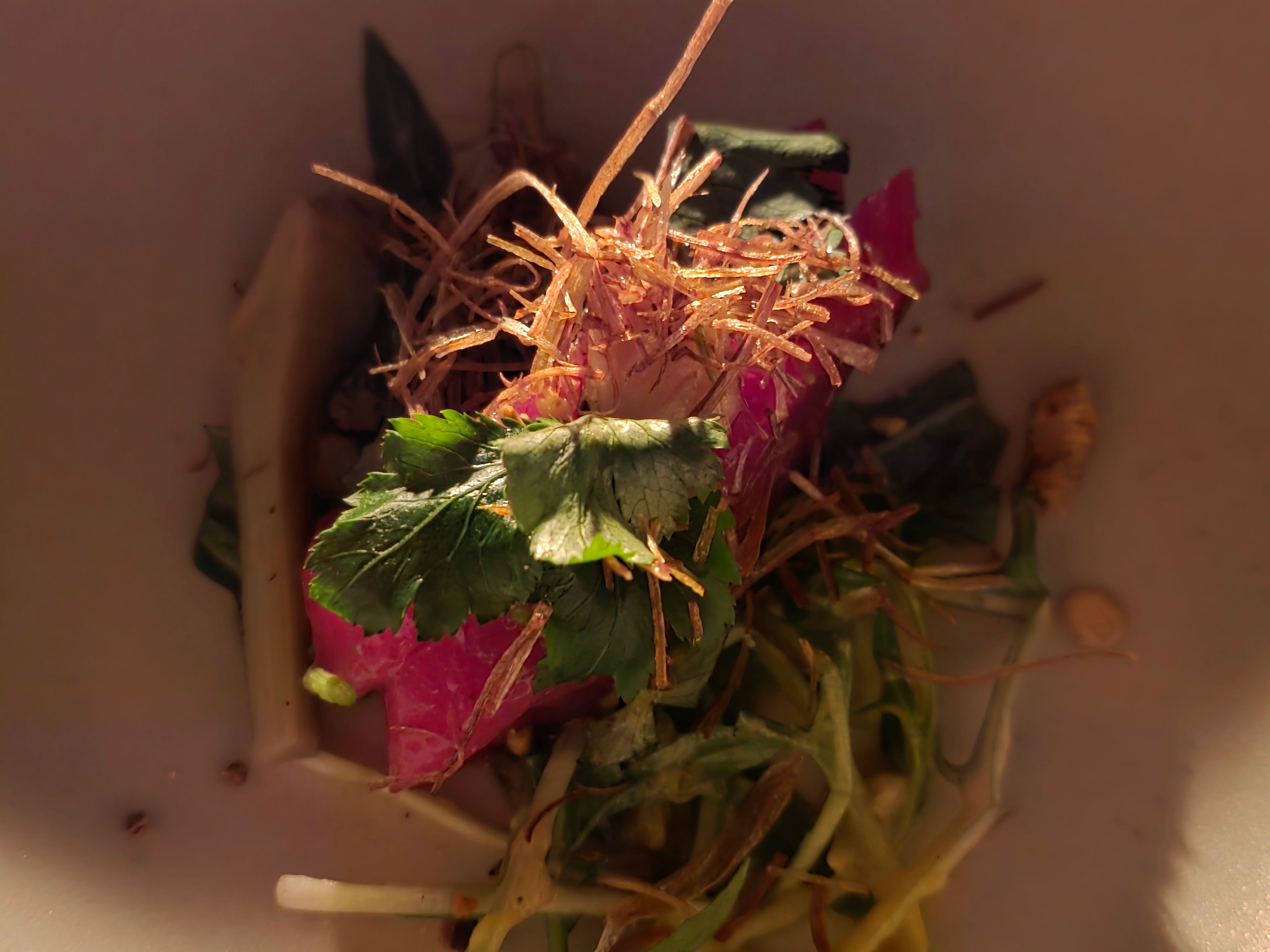
Salad made with a leaner cut of tuna, artichoke, crushed pistachio on a bed of mixed vegetables.
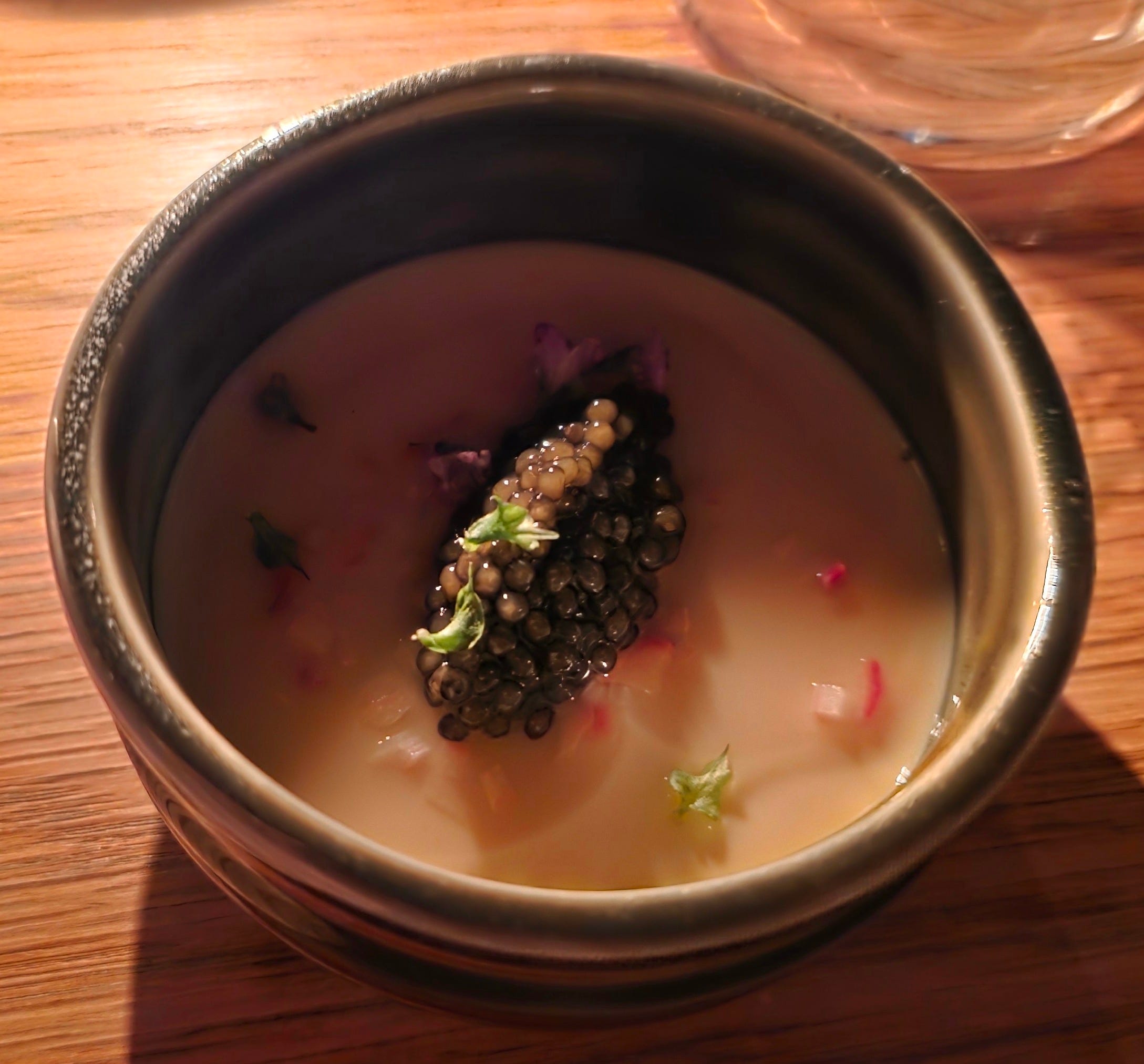
The next course was off menu, and they presented a steamed egg custard, with mixed seafood, topped with a dollop of caviar.
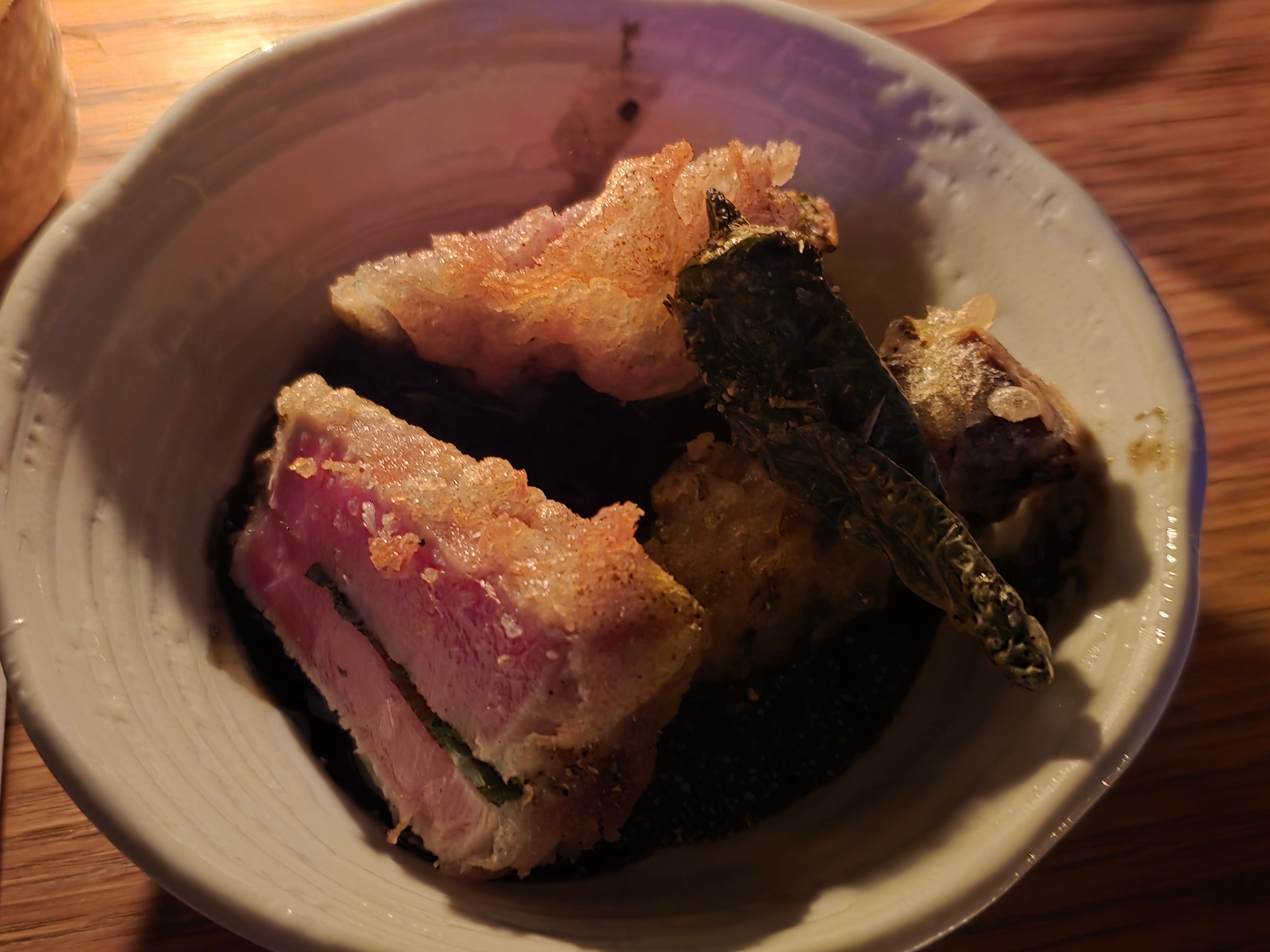
The first time I’ve ever had a tuna tempura, but cuts of the medium fatty chutoro, thinly battered and served in a thickened sweet sauce.
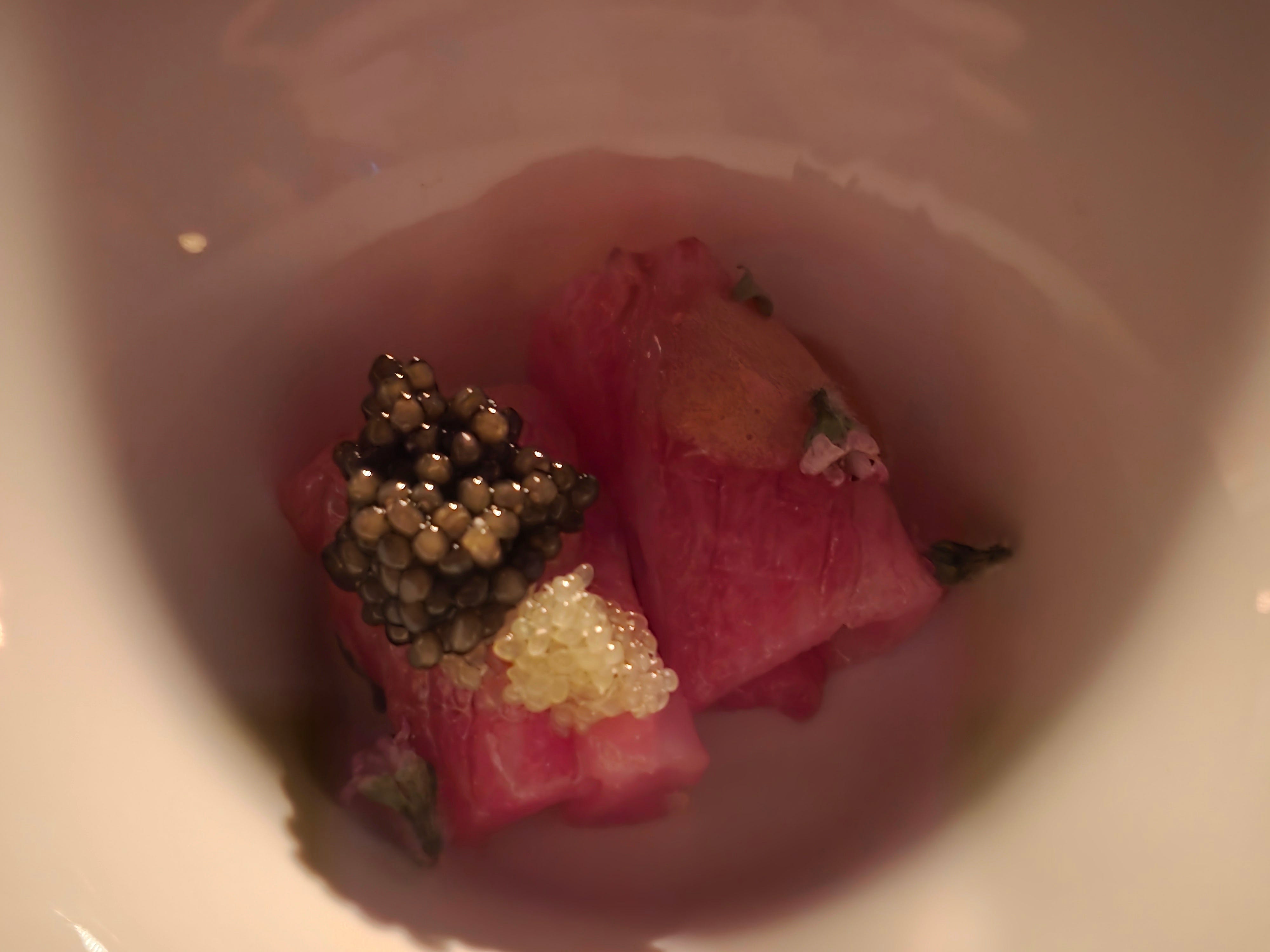
Next, a sashimi from the incredibly fatty kamatoro they were cutting from the tuna collar earlier. Topped with a variety of garnishes - mango kimizu, an hollandaise-like sauce, the same caviar from the massive container, perilla blossoms and finger lime. A fatty fat bomb with a bit of sour and brininess from the garnishes.
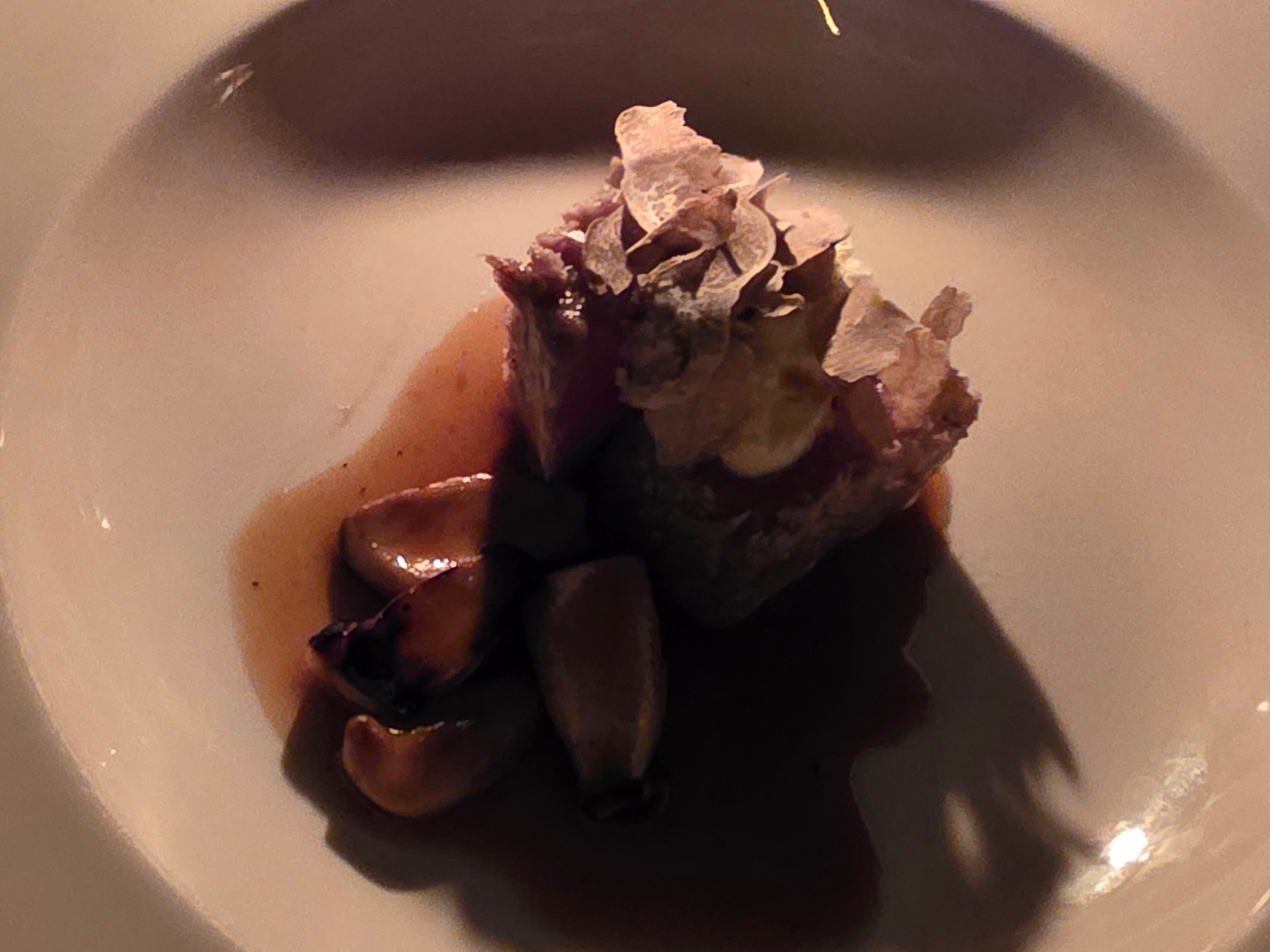
The next dish was some seared fatty tuna belly, served with some oyster mushrooms, and white truffle shavings on top. The fattier the cut, the more I prefer some degree of searing or cooking. Adds a bit of warmth, juiciness and mouthfeel to what otherwise would be a giant fat bomb.
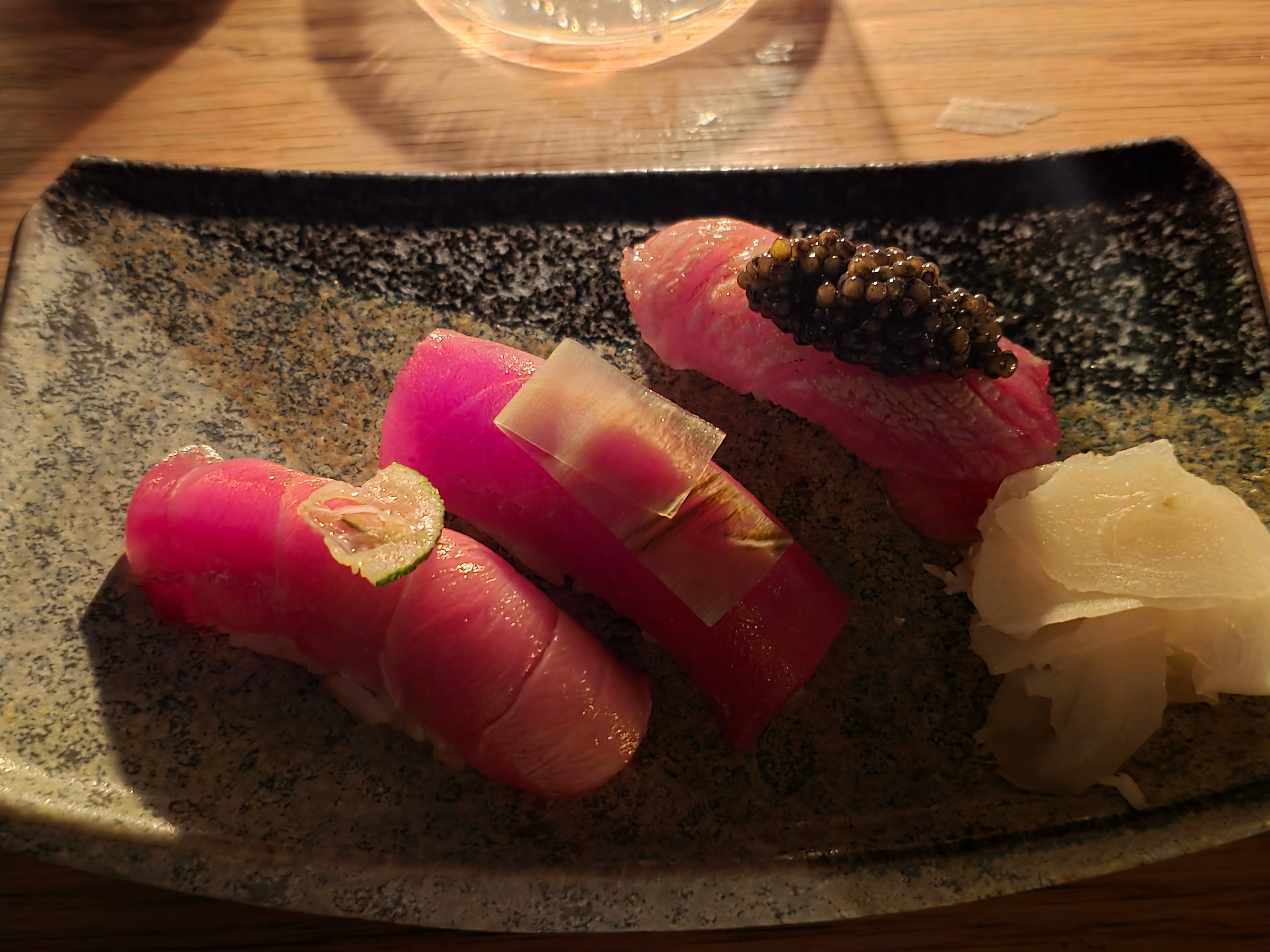
Three nigiri made from different cuts of tuna. From the left to the right
The medium fatty chutoro, served with a slice of lime and some wasabi oil
The lean akami with a bit of white ginger
The extremely fatty kamatoro nigiri, slightly seared, and topped with caviar
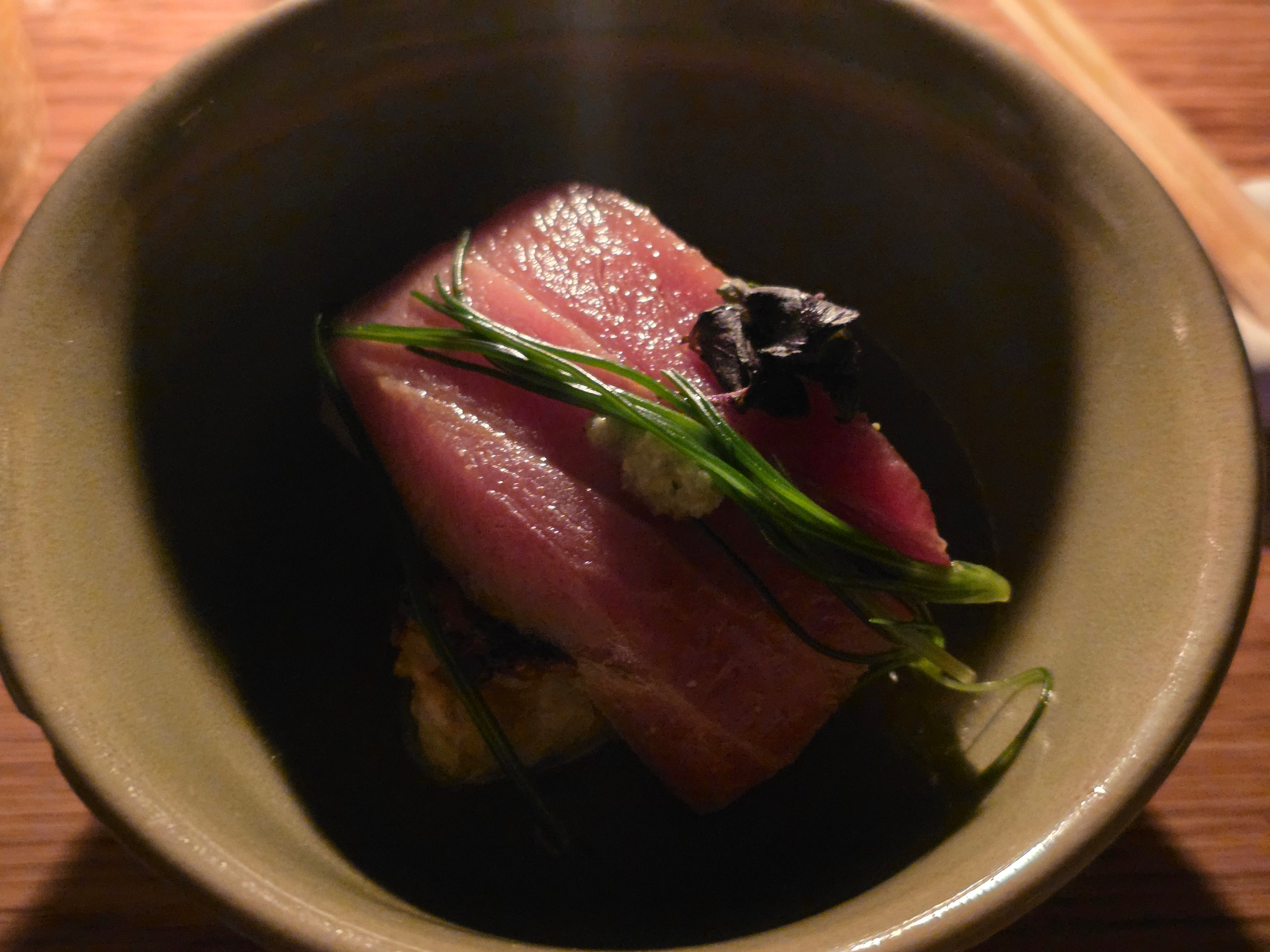
A final dish of a genmai chazuke, or cooked rice served in brown rice green tea. A bit of jabara (a Japanese citrus similar to lemon) to bring out the flavour, monk’s beard and a slice of the chutoro.
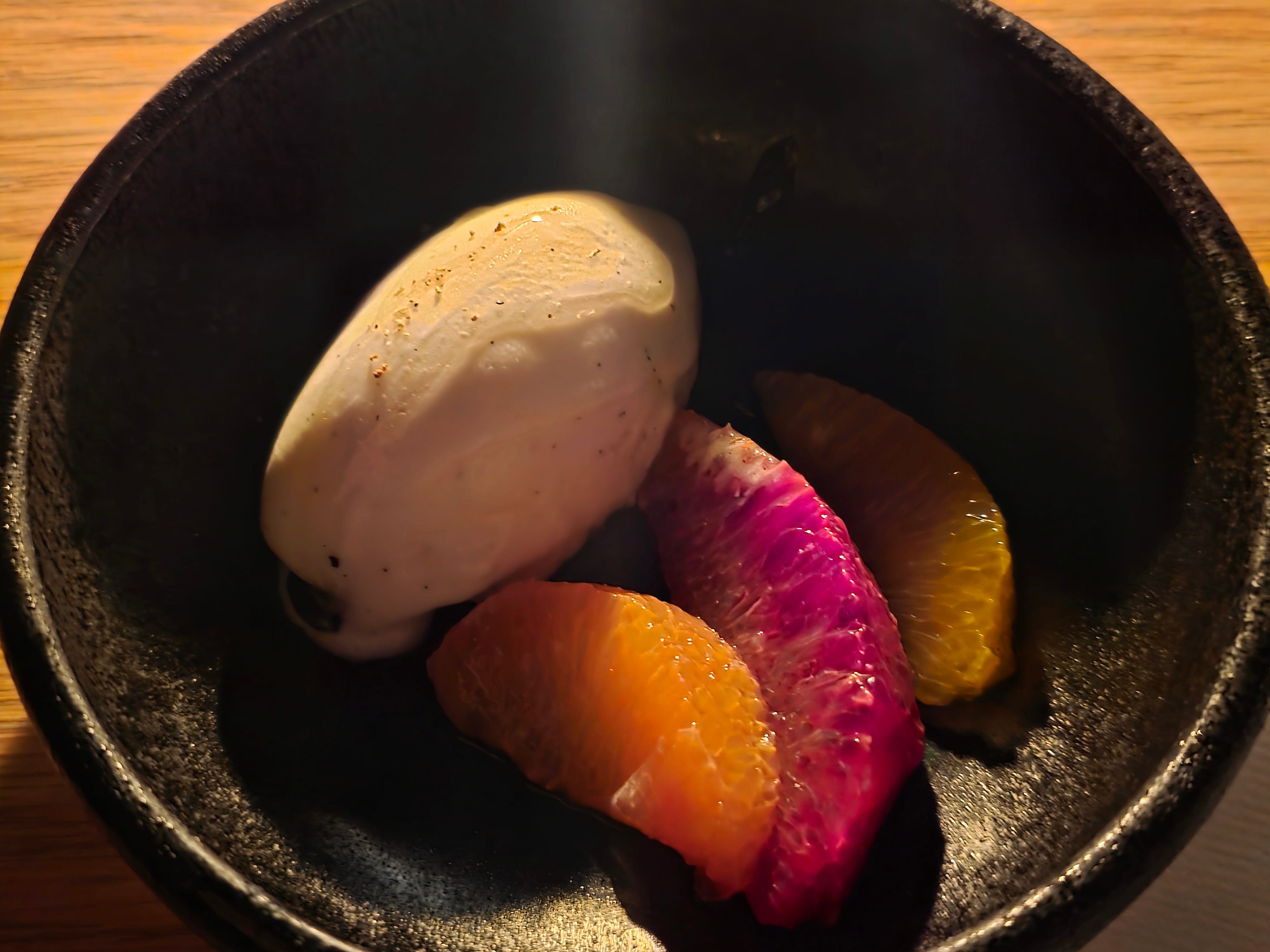
Dessert was a vanilla ice cream mixed with shio koji, adding a bit of saltiness and umami to the ice cream, with slices of various winter citrus fruits.
Well-Balanced and delicate, this was not. This was more of a celebration of tuna - pack on the best, fattiest cuts of the tuna, heap on a dollop of caviar, and use it for absolutely every dish, even where it didn’t make a lot of sense.
I’ve never really been a fan of Japanese cuisine in the UK. Perhaps I’m spoiled from spending so much time in Asia, but I’ve always found Japanese food in London to be pretty poor. This, while a fun night, was not the exception. It was a great experience, worth doing once, but do it for the experience, not necessarily the food.
Finally, the wait for the tuna to arrive can take a long time, so don’t make the mistake of finishing a bottle of sake before the tuna arrives. The rest of the night will be significantly more hazy and less enjoyable.
Total Damage 600 GBP/2 people