
Wing is Chef Vicky Cheng’s Chinese restaurant, built directly beneath his flagship VEA and against the grain of his French-trained background. The restaurant serves refined Chinese cuisine. A useful outside description is “boundaryless Chinese”: Chinese ingredients, Chinese meal memories, Chinese regional references, and European fine-dining structure where it helps.
Wing has become a global 50 Best darling, ranking 2nd on its list of Asia’s top restaurants, while the Michelin Guide still refuses to award it a star. That gap forms part of the story. Wing’s reputation rests on its service, personalisation, confidence in Chinese fine dining more than Michelin validation.
Wing opened in 2021 as Cheng’s second restaurant after VEA. VEA opened in 2016 and built its reputation around Cheng’s “Chinese x French” philosophy: French technique, Chinese ingredients, and tasting-menu structure. Wing reverses that emphasis. Here, Cheng works inside Chinese cuisine rather than using Chinese references to complicate French cuisine.
Wing grew out of an invite-only midnight-supper test kitchen at VEA. Cheng used those dinners to test whether his Chinese dining memories and French fine-dining training could produce a distinct restaurant below the successful one upstairs.
Its philosophy as “Chinese x French”, with each dish placing Chinese elements, heritage, and memories inside a French technique frame. Cheng’s approach is the evolution of Chinese cuisine, using quality ingredients and refined finesse to make dishes inventive while keeping them rooted in tradition. While VEA expresses Chinese memory through French fine dining, Wing handles Chinese cuisine with fine-dining precision.
Wing uses Chinese dishes, Chinese textures, and Chinese table logic, then sharpens them with modern fine-dining service. The kitchen draws from the eight great Chinese cuisines and the cooking is selective and chef-led.
Cheng wants guests to leave feeling that they have eaten a Chinese meal, with the warmth and precision associated with European fine dining. Wing keeps some shared-dish logic, then removes friction through portioning and guidance.
The restaurant works best as Cheng’s homecoming project. He uses fine-dining discipline to make Chinese dishes precise and luxurious without turning them into French food.
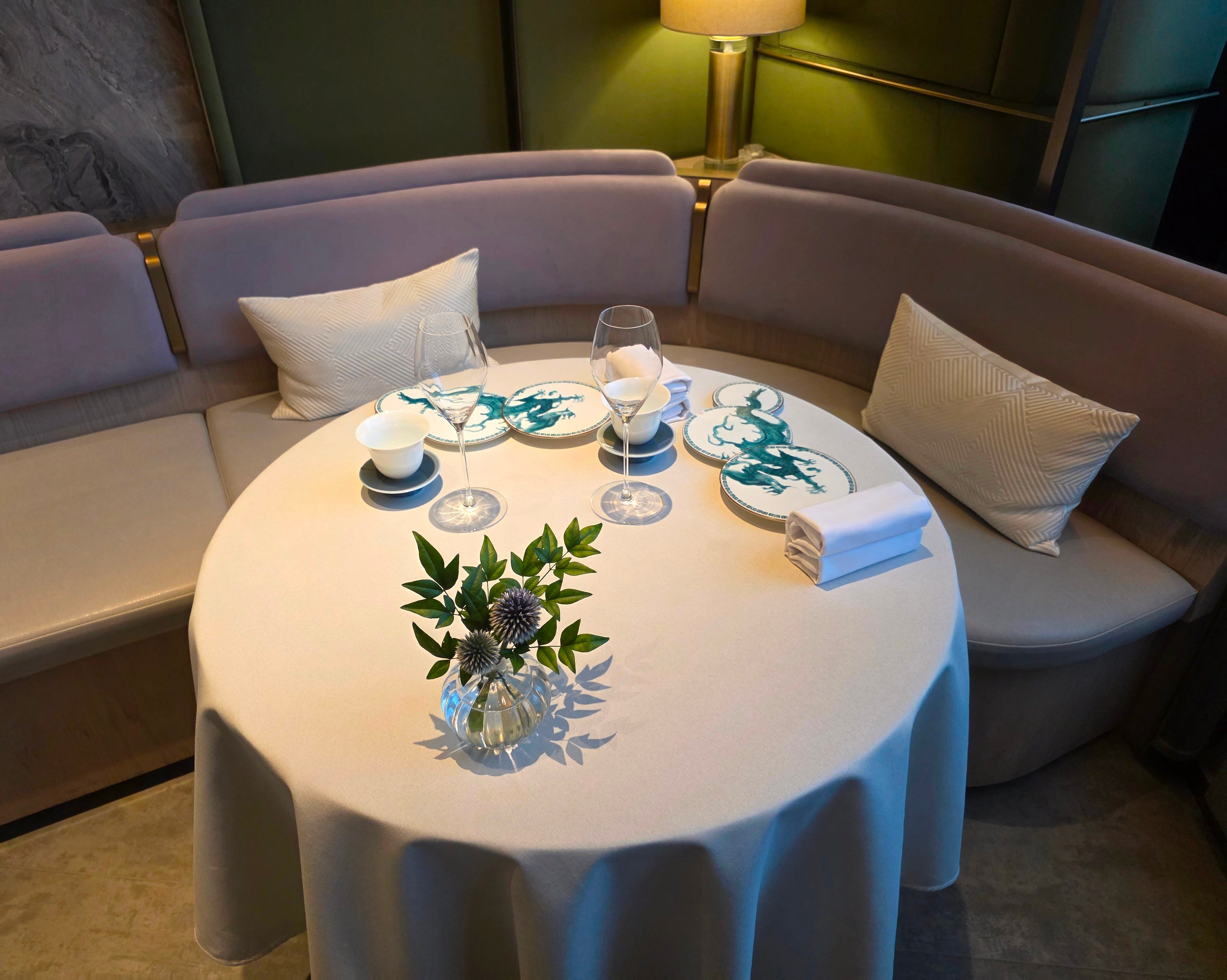
When we arrived, it was clear why reservations are nearly impossible to get. Apart from the private rooms, which come with hefty minimum charges, the public dining room has only four tables.
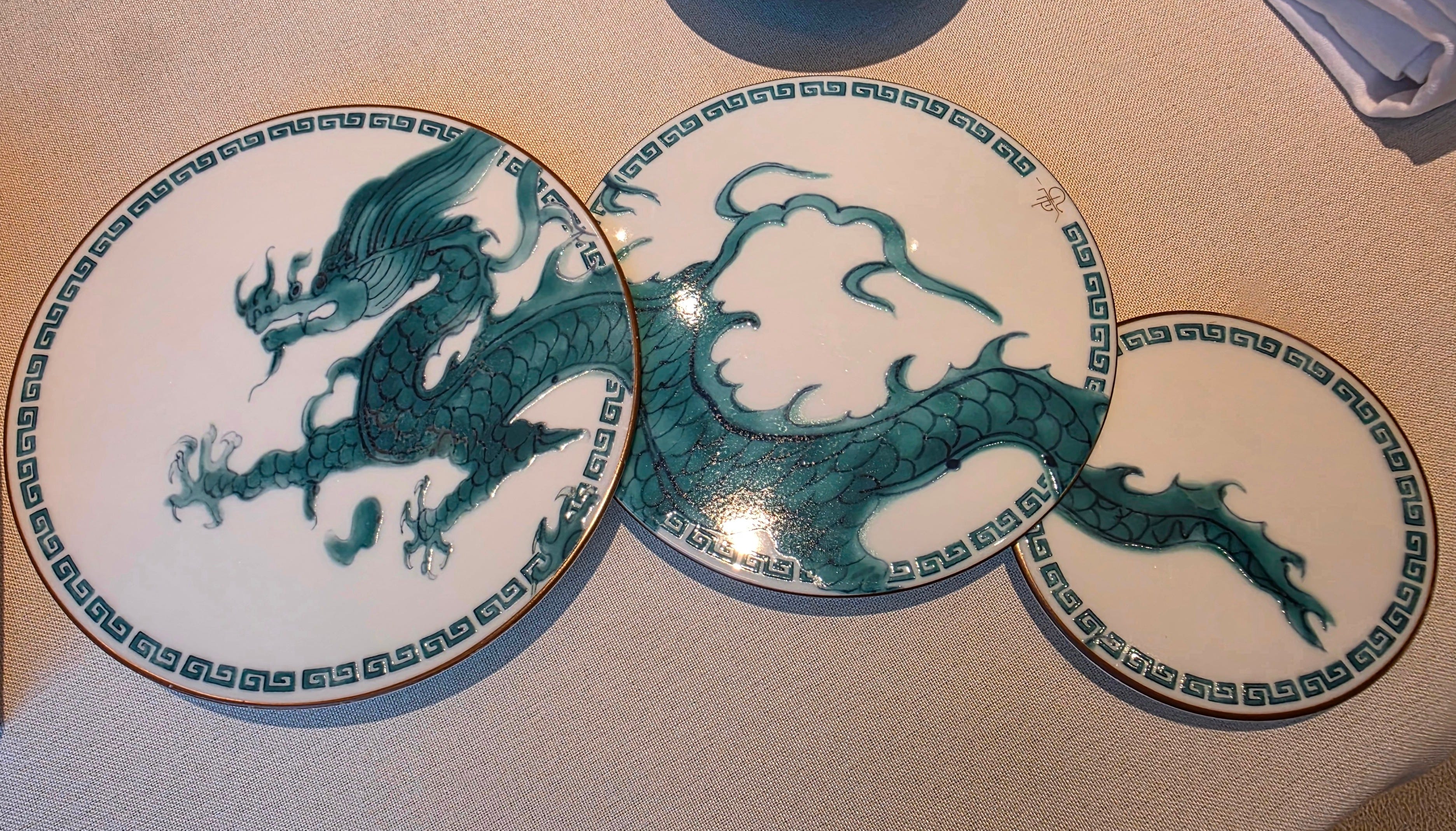
A decorative dragon display awaited us at the table.
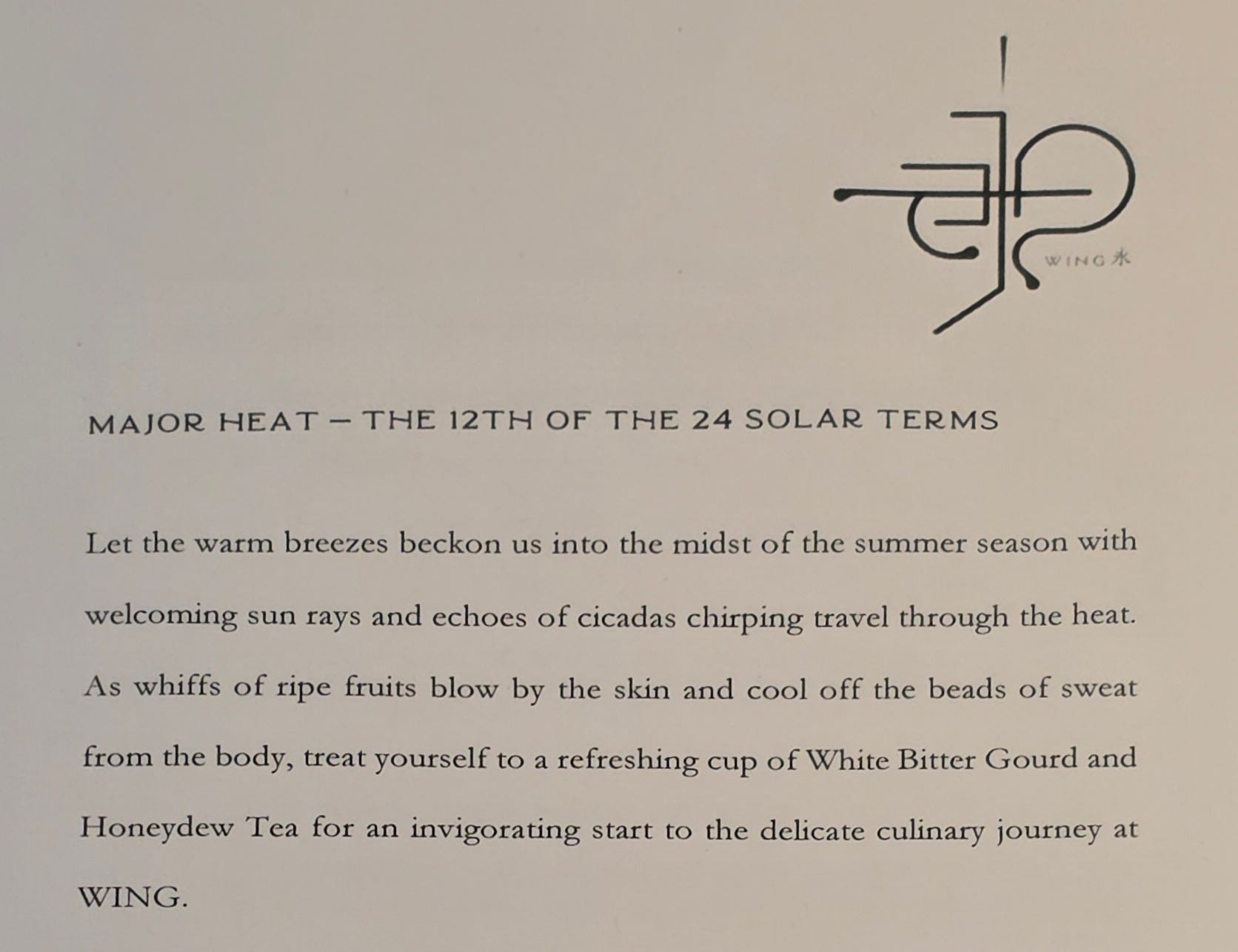
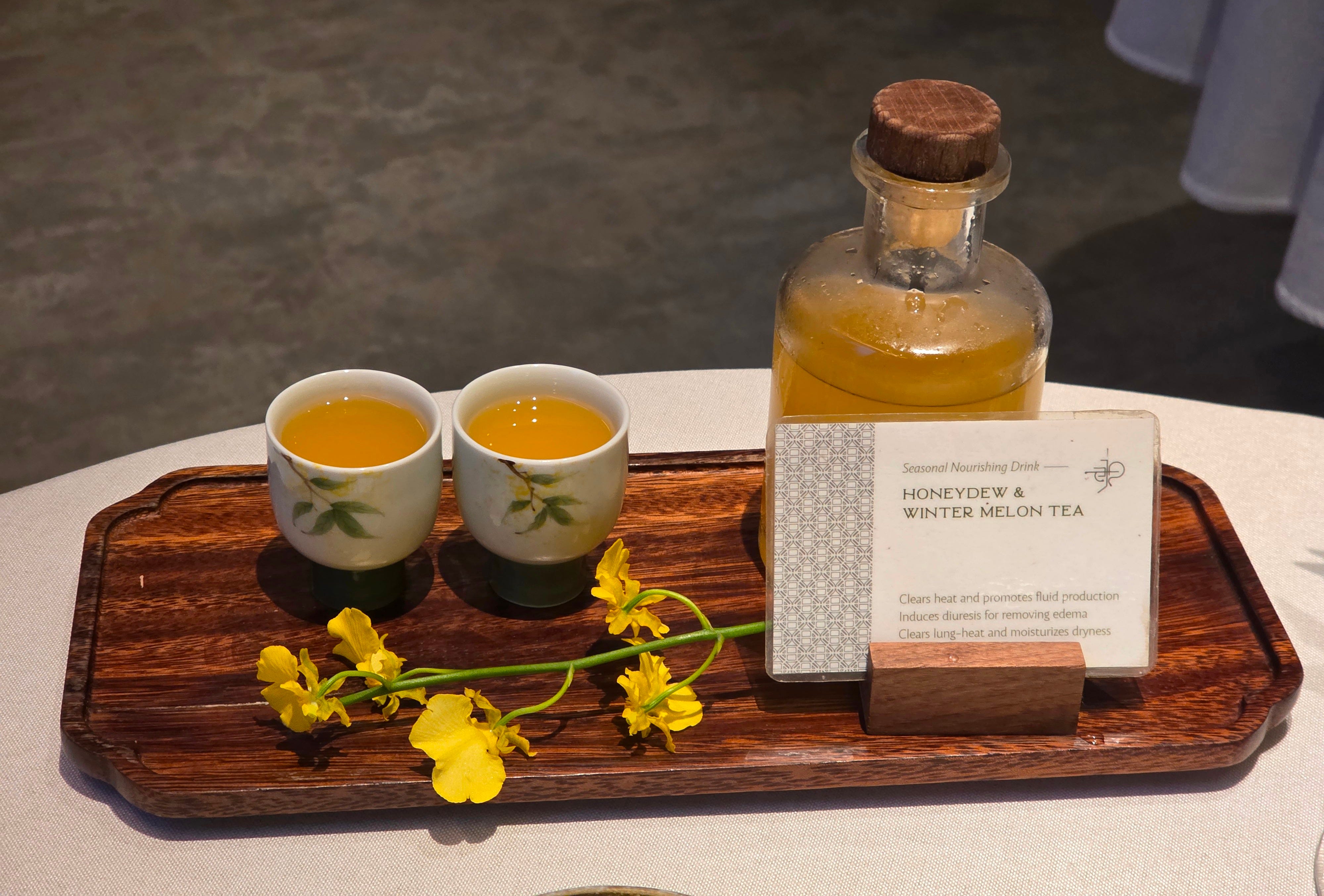
Shots of wintermelon and honeydew tea as an aperitif.
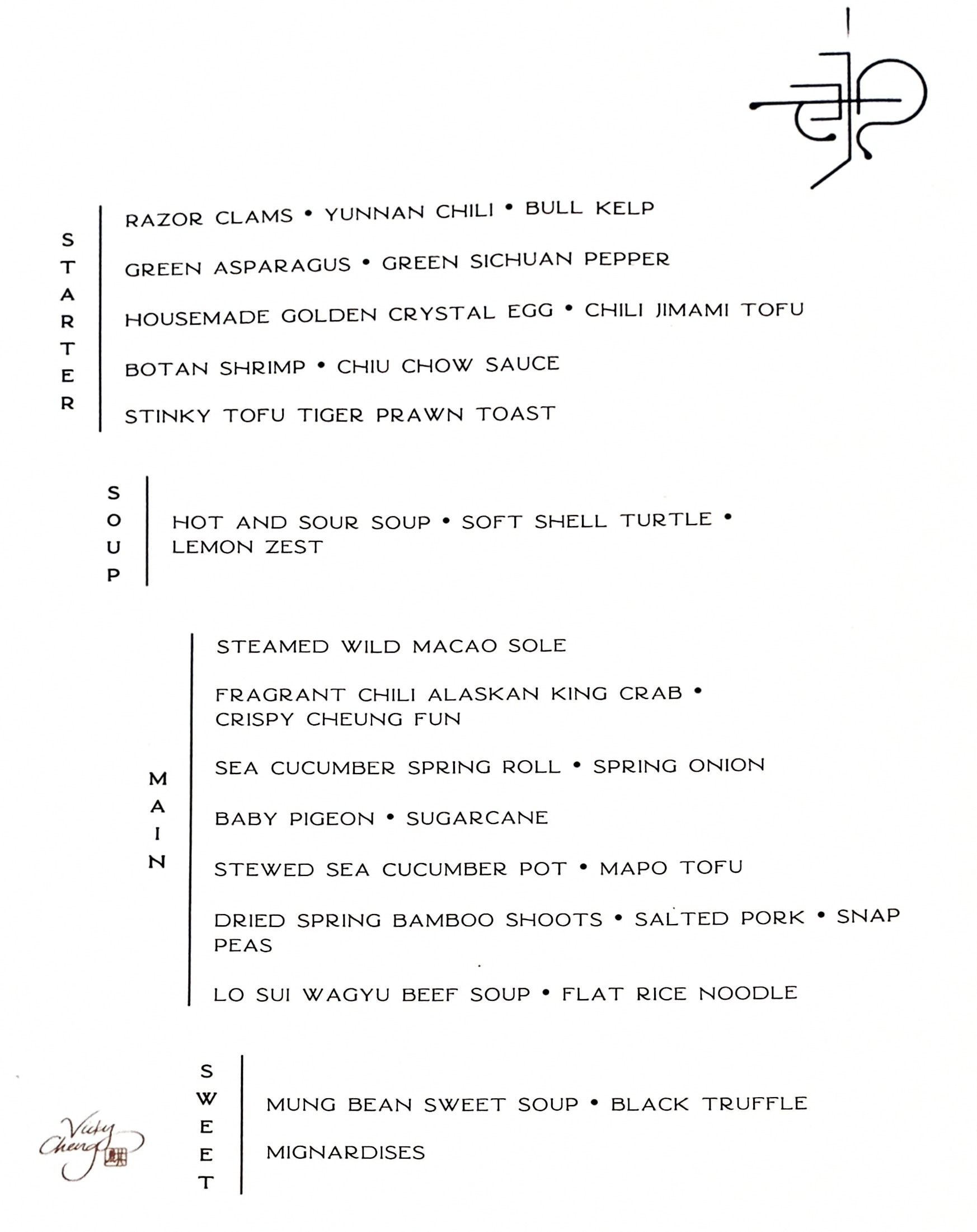
Because reservations are so difficult to secure, we pre-ordered the premium tasting menu with nearly all the optional supplements. That may have been a mistake. There was an enormous amount of food even before the supplements, and it was all excellent.
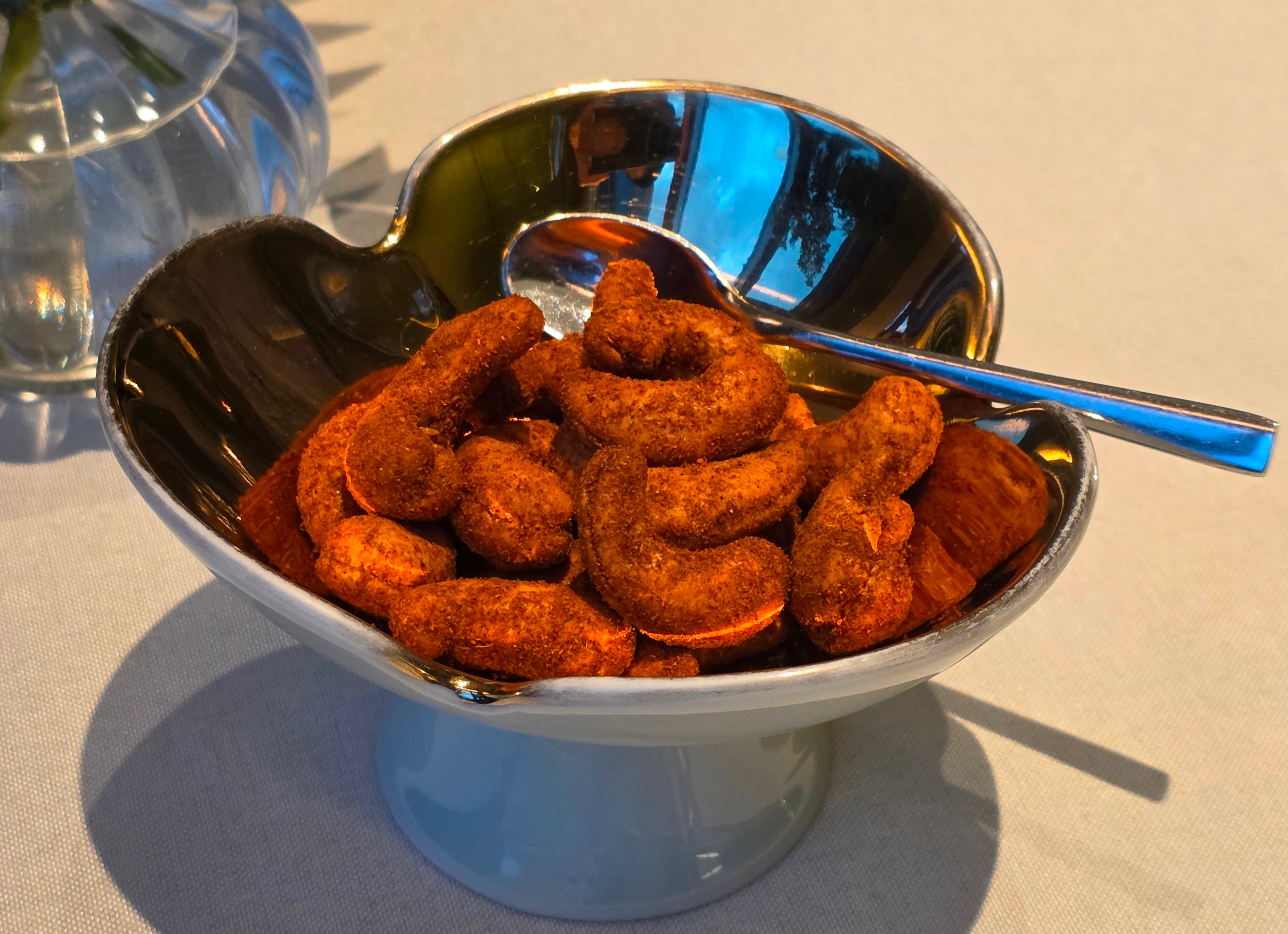
Some of the largest cashews I have ever seen arrived at the table, dusted with Chinese five-spice powder to keep us company while we waited for the first course.
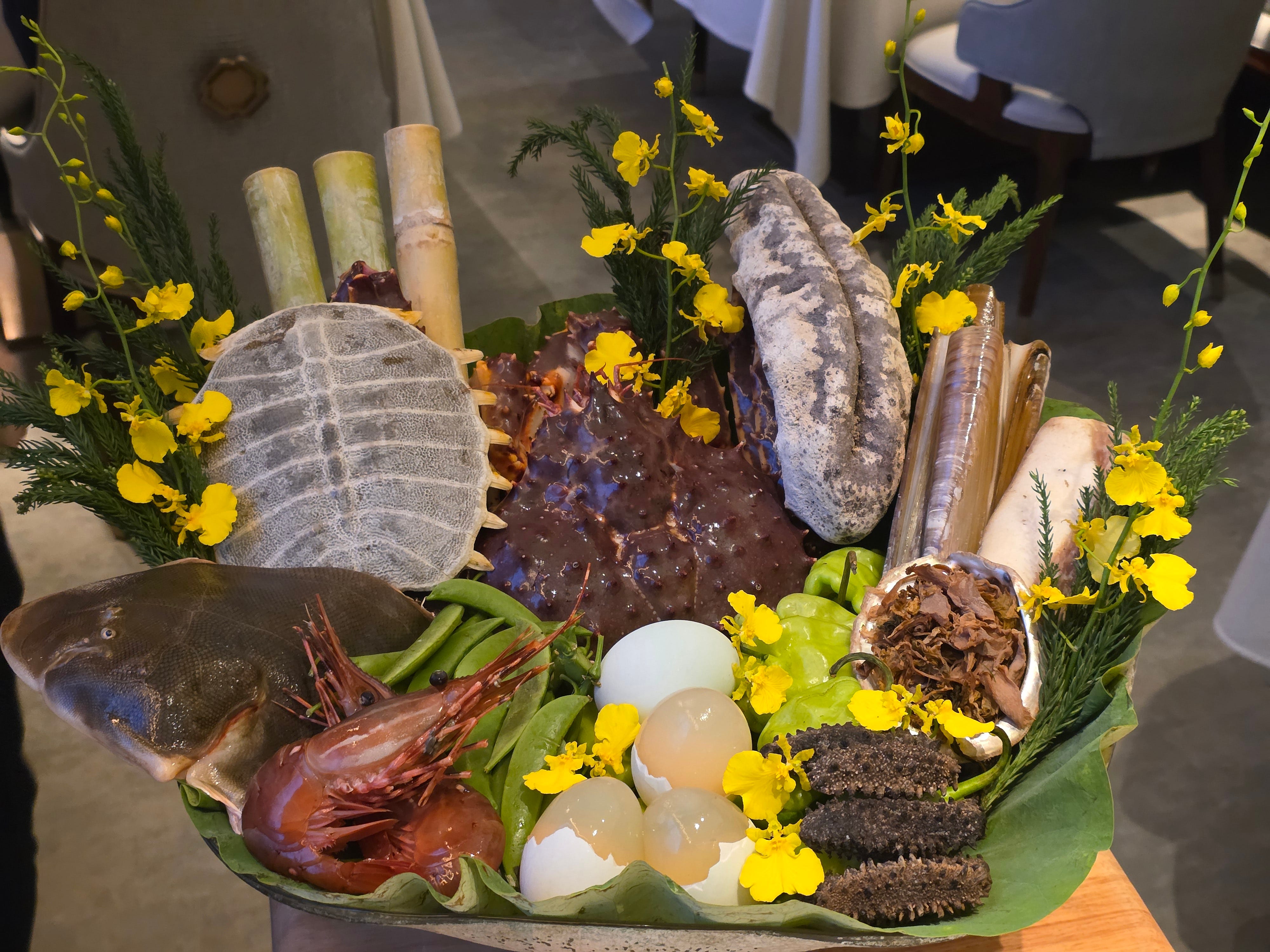
A display showed the exotic ingredients used in the meal: giant botan shrimp, a Macau sole, soft-shell turtle, sugar cane, Alaskan king crab, two kinds of sea cucumber, a crystal egg, which is a white version of the normally black century egg, razor clams, fresh sugar snap peas and dried tangerine peel.
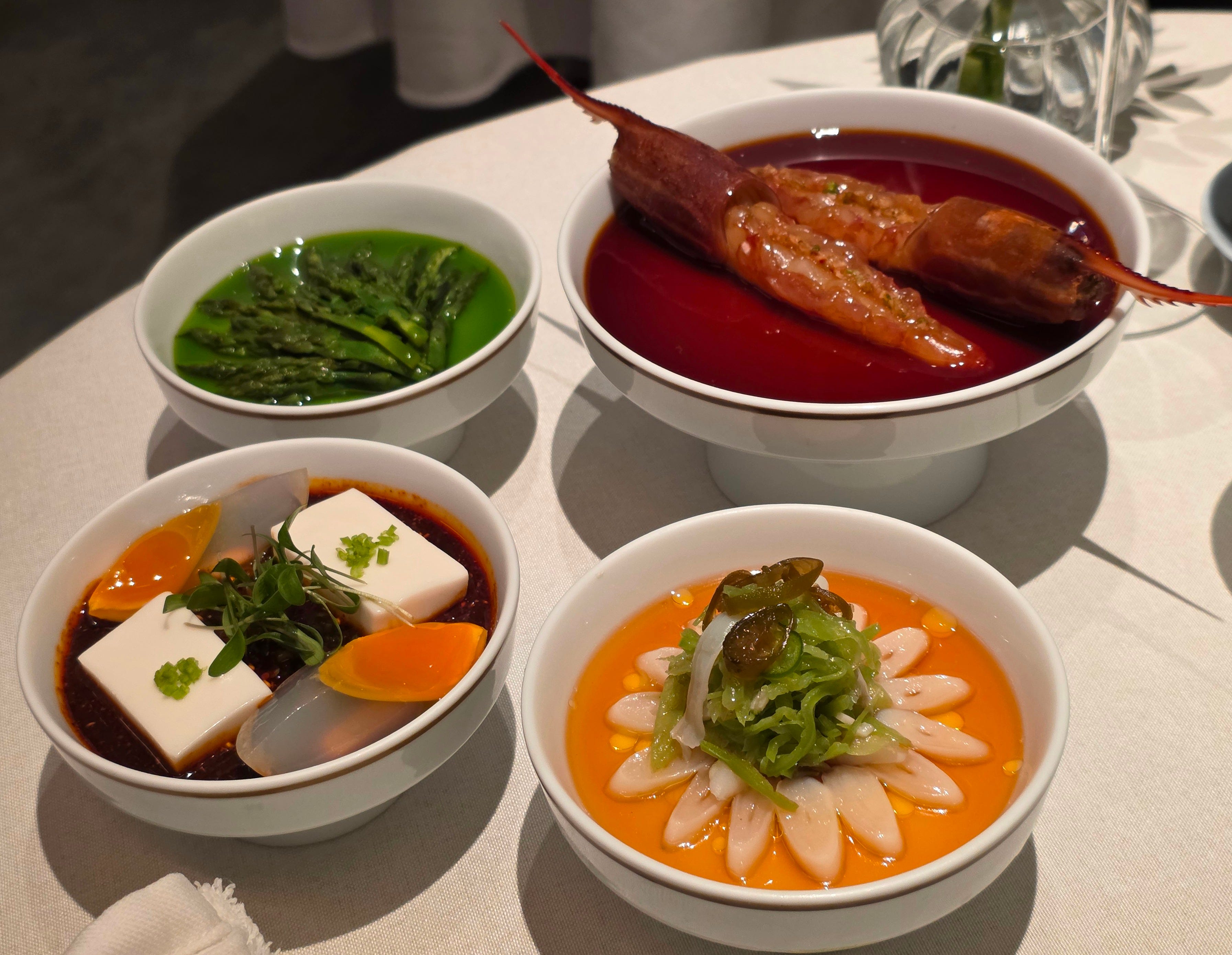
The appetisers arrived together in an intricately arranged display.
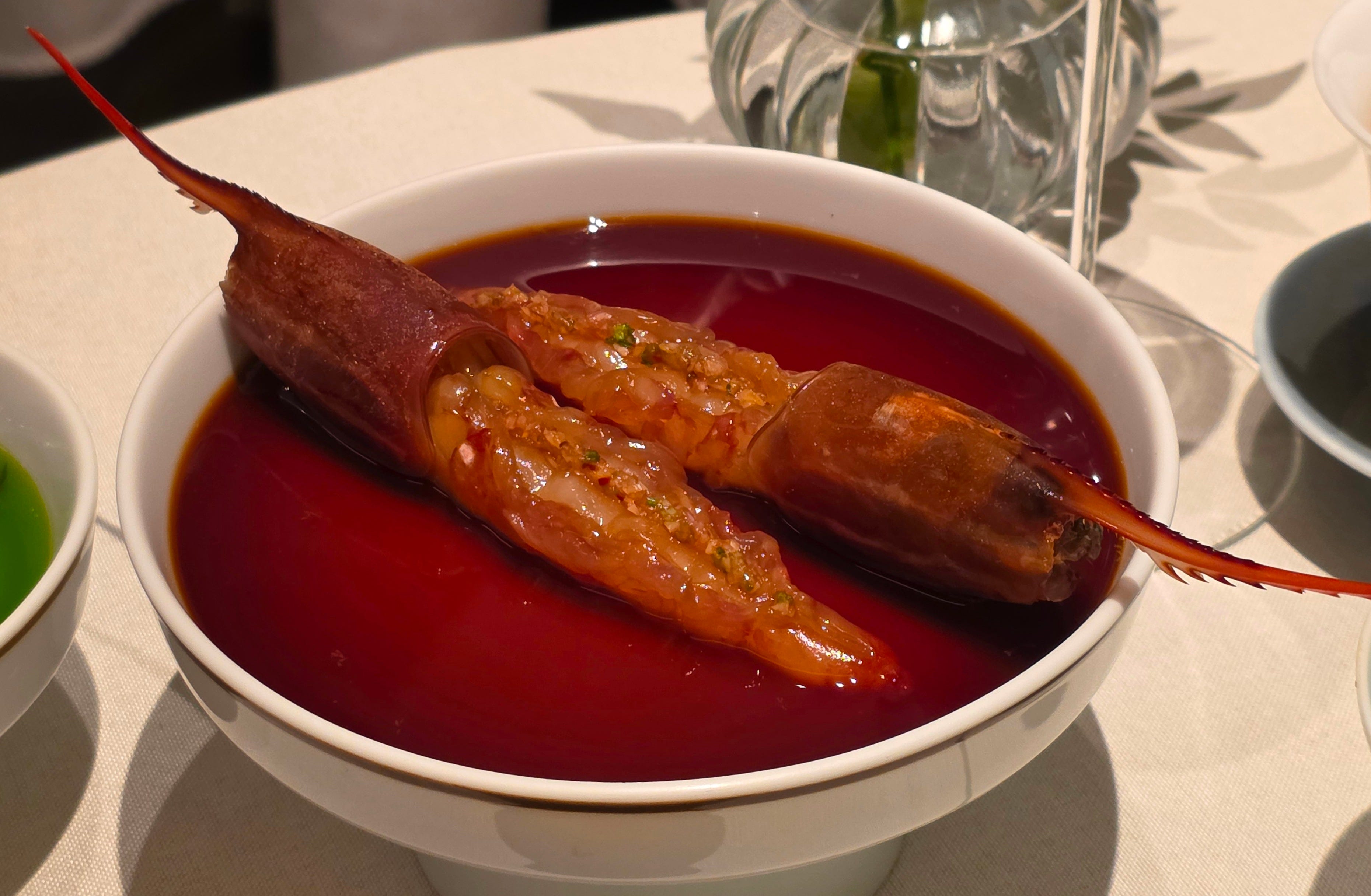
Firstly, two botan shrimp, served “drunken” in a sweetened soy and Chiu chow sauce.
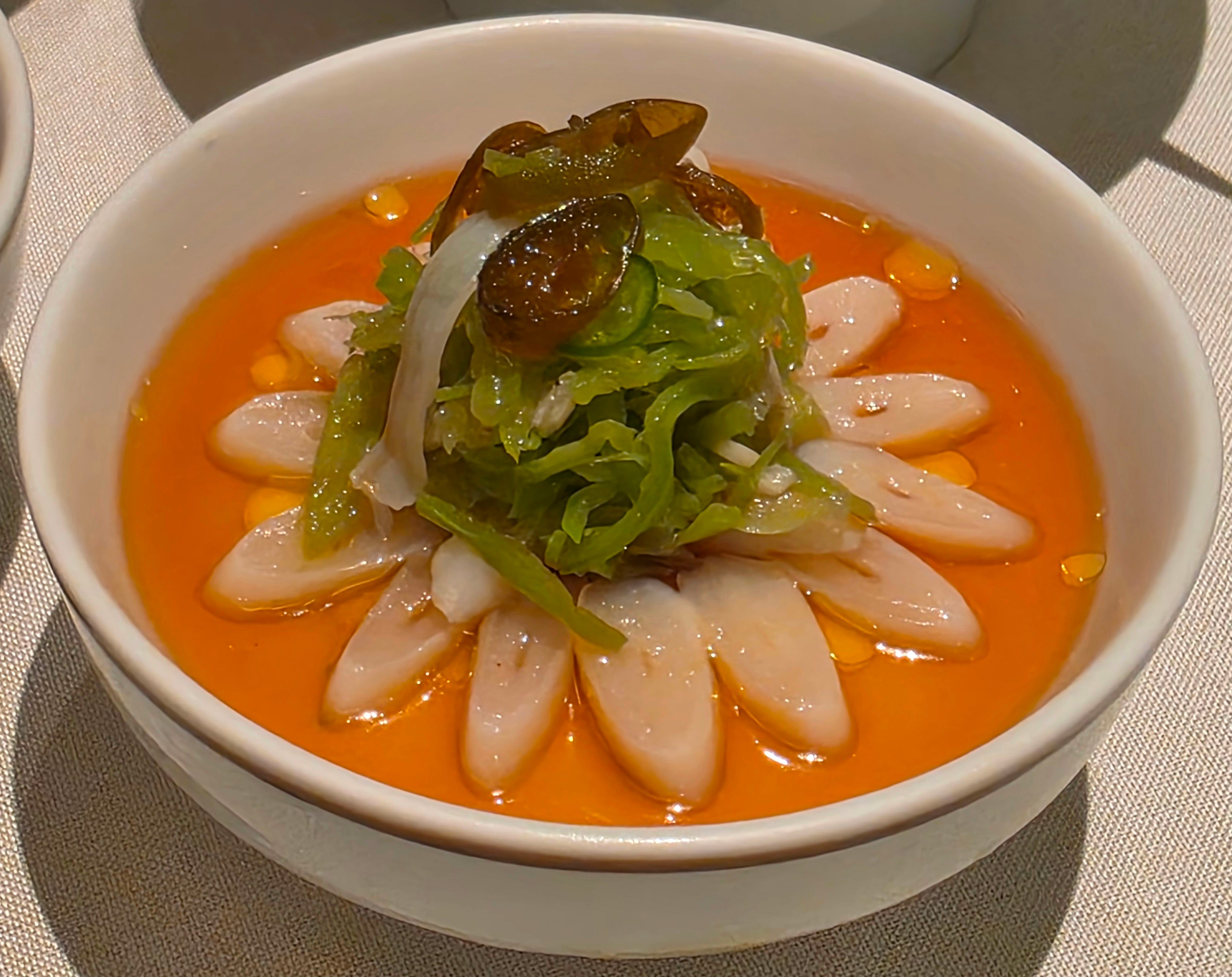
Thinly sliced razor clams came topped with kelp and pickled Yunnan chillies.
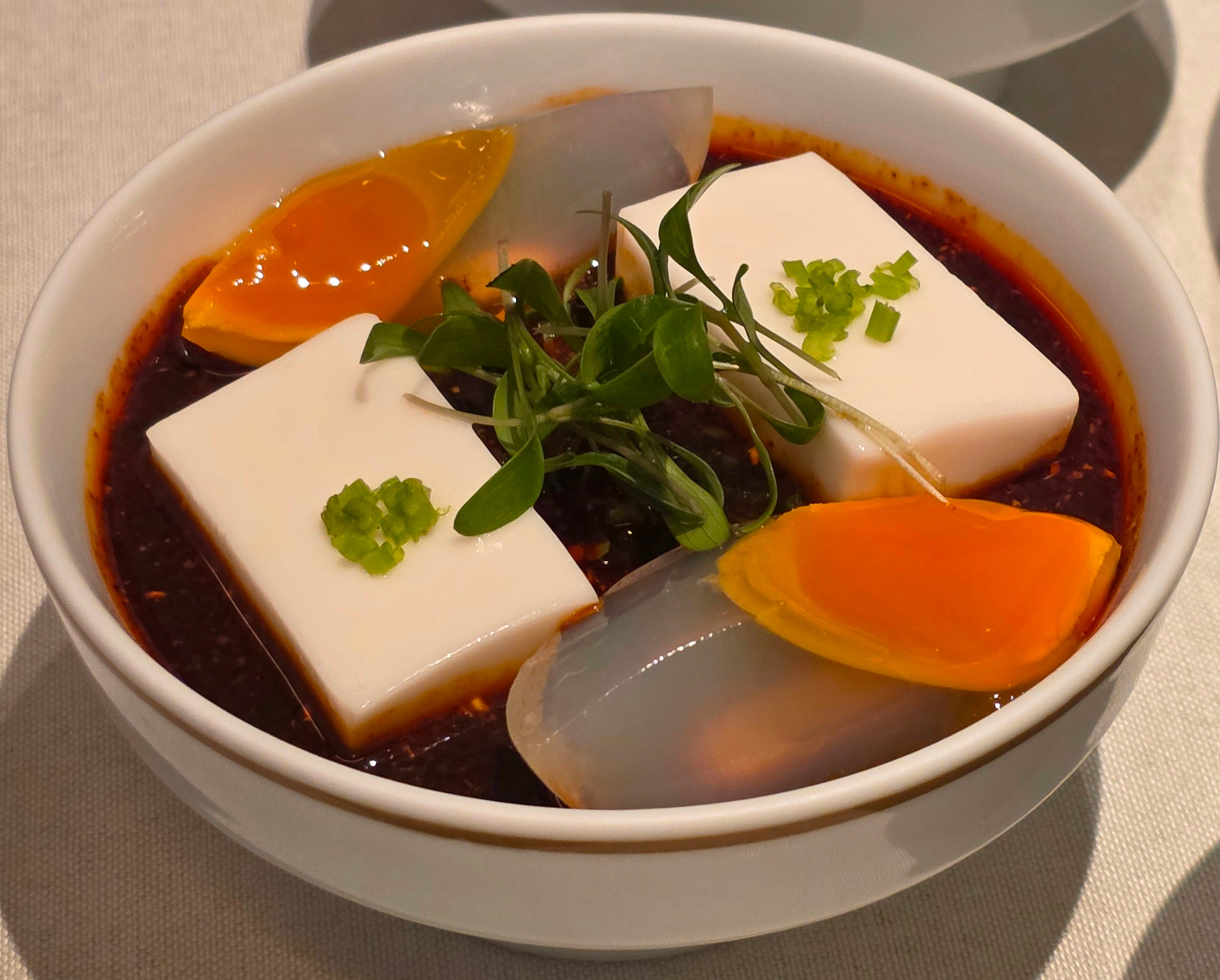
An interesting variation on a classic Sichuan appetiser: century egg and tofu in mala sauce. Instead of the usual black century egg, Wing preserved the egg’s translucent white. The tofu was deceptive as well. This dish usually uses soft silken tofu, but Wing took some inspiration from Okinawa and used jimami tofu made from peanuts, giving it a slight springiness and chewiness uncharacteristic of normal tofu.
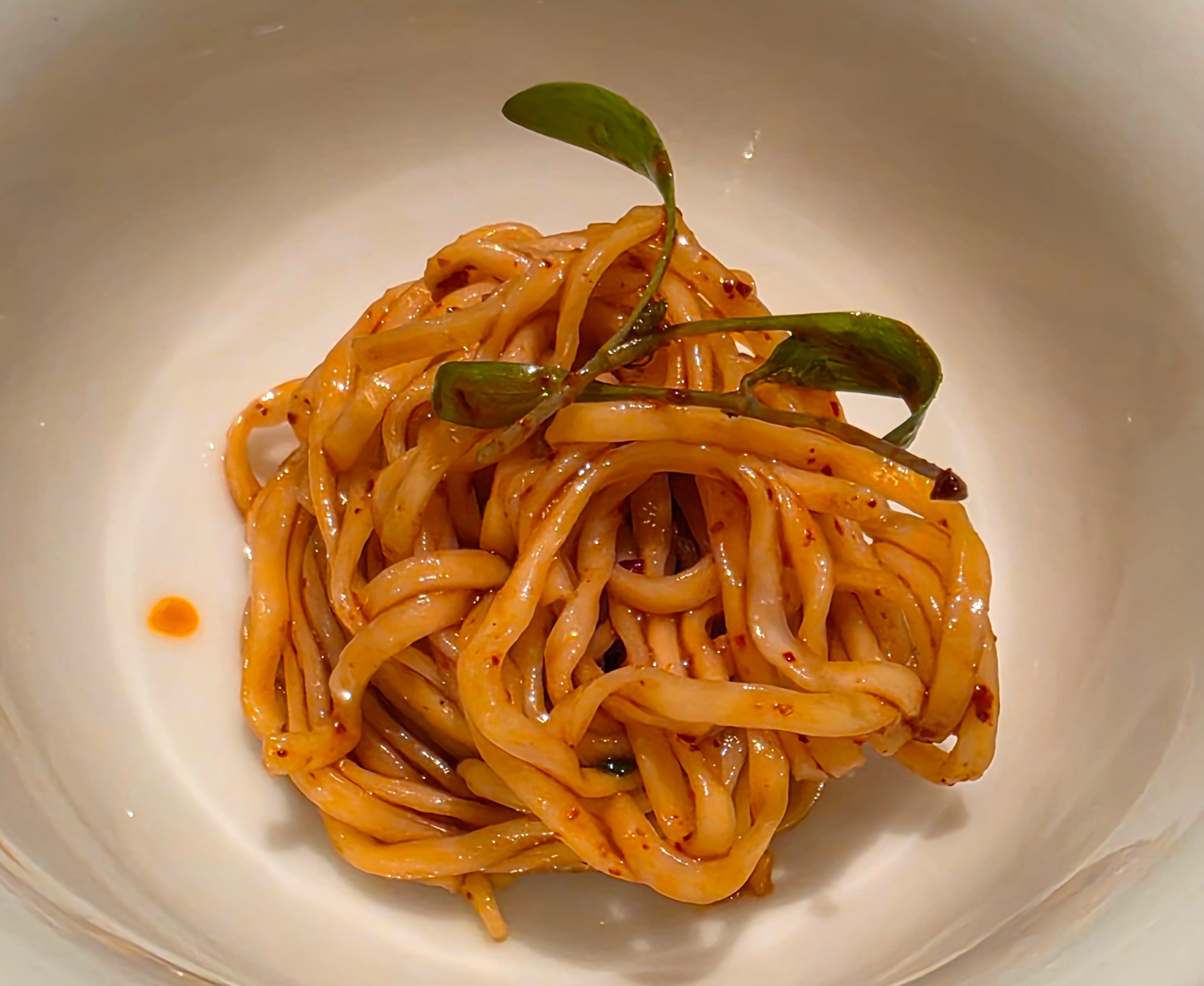
There was another surprise. Once we had eaten the century egg and tofu, the staff brought out a mouthful of noodles to mix with the remaining mala sauce, leaving no sauce behind.
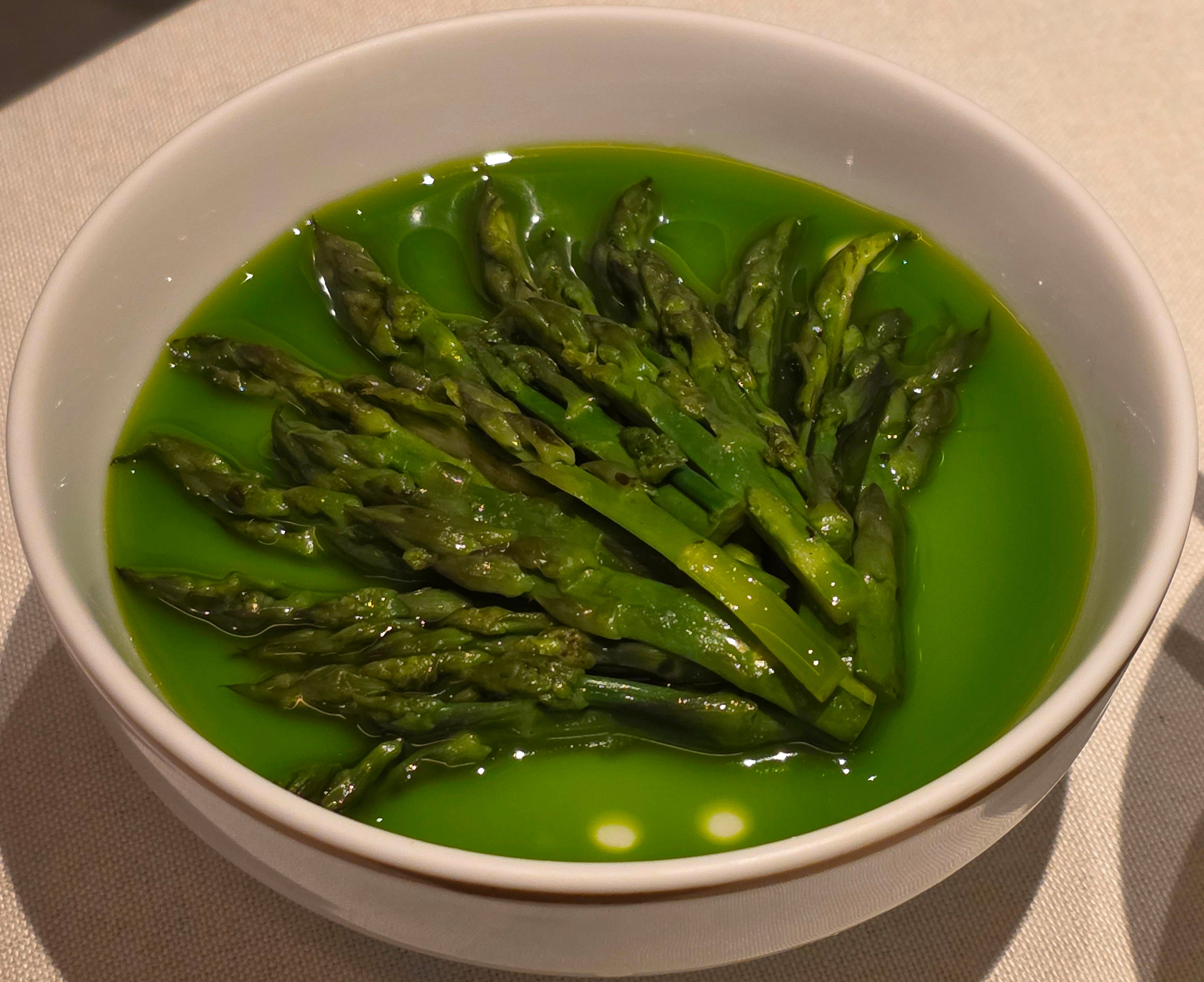
The final starter in the display was a tender quartered asparagus spear, lightly poached and served in a green Sichuan pepper sauce. It left the characteristic Sichuan numbness on the tongue.
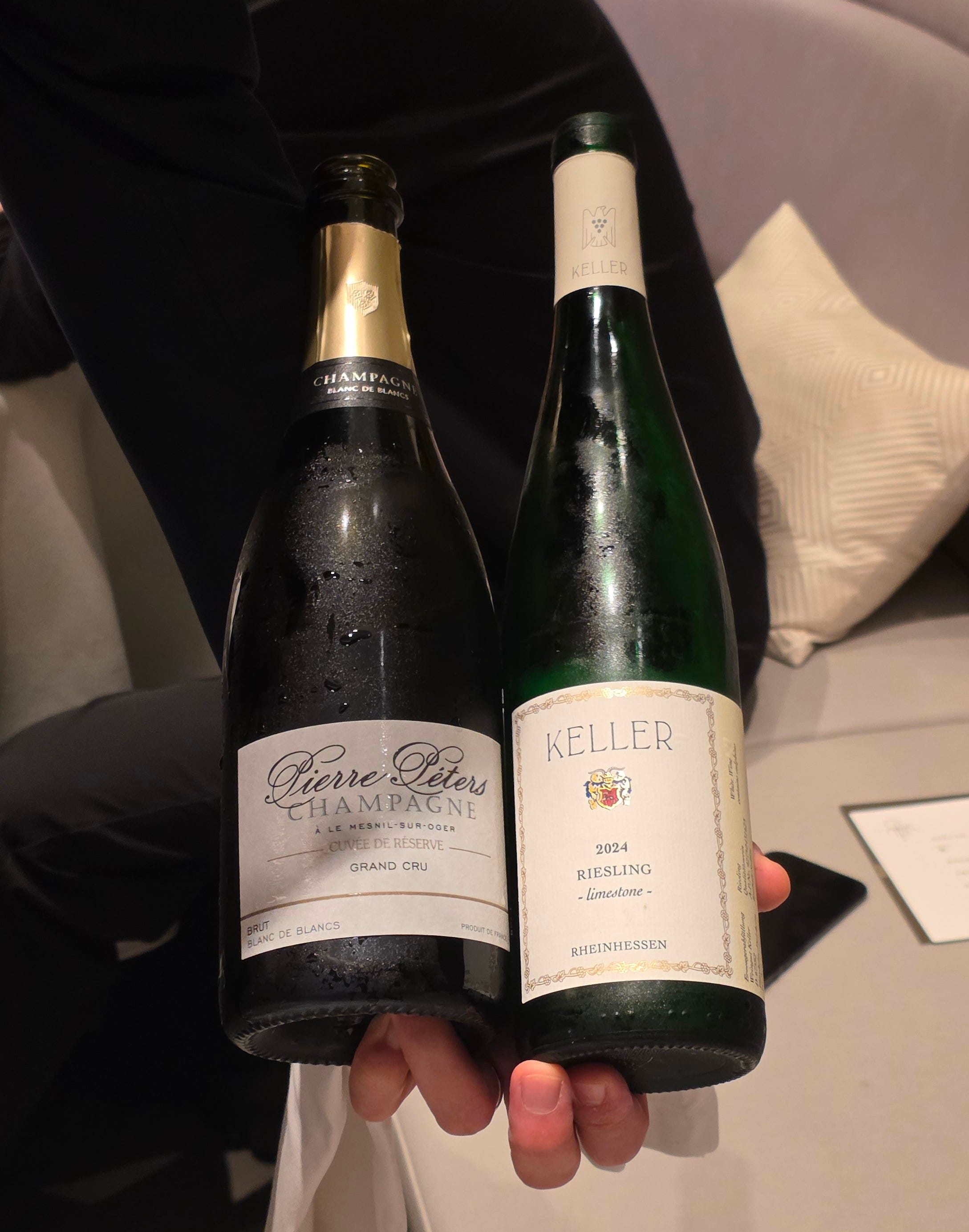
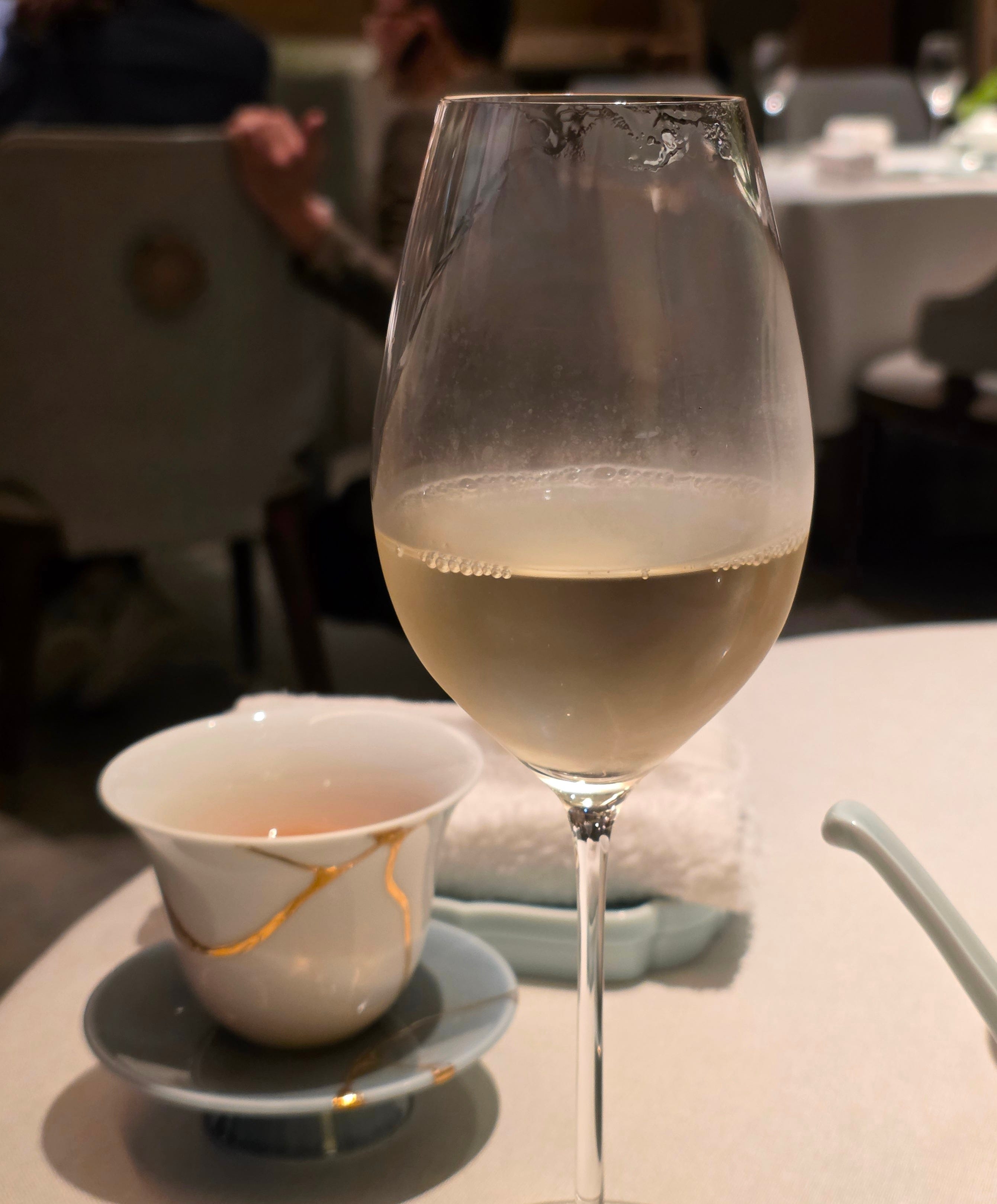
Our drinks arrived at this point. I chose a semi-dry Riesling, while my companion ordered Champagne. I usually find Riesling quite sweet, but this one had excellent balance.
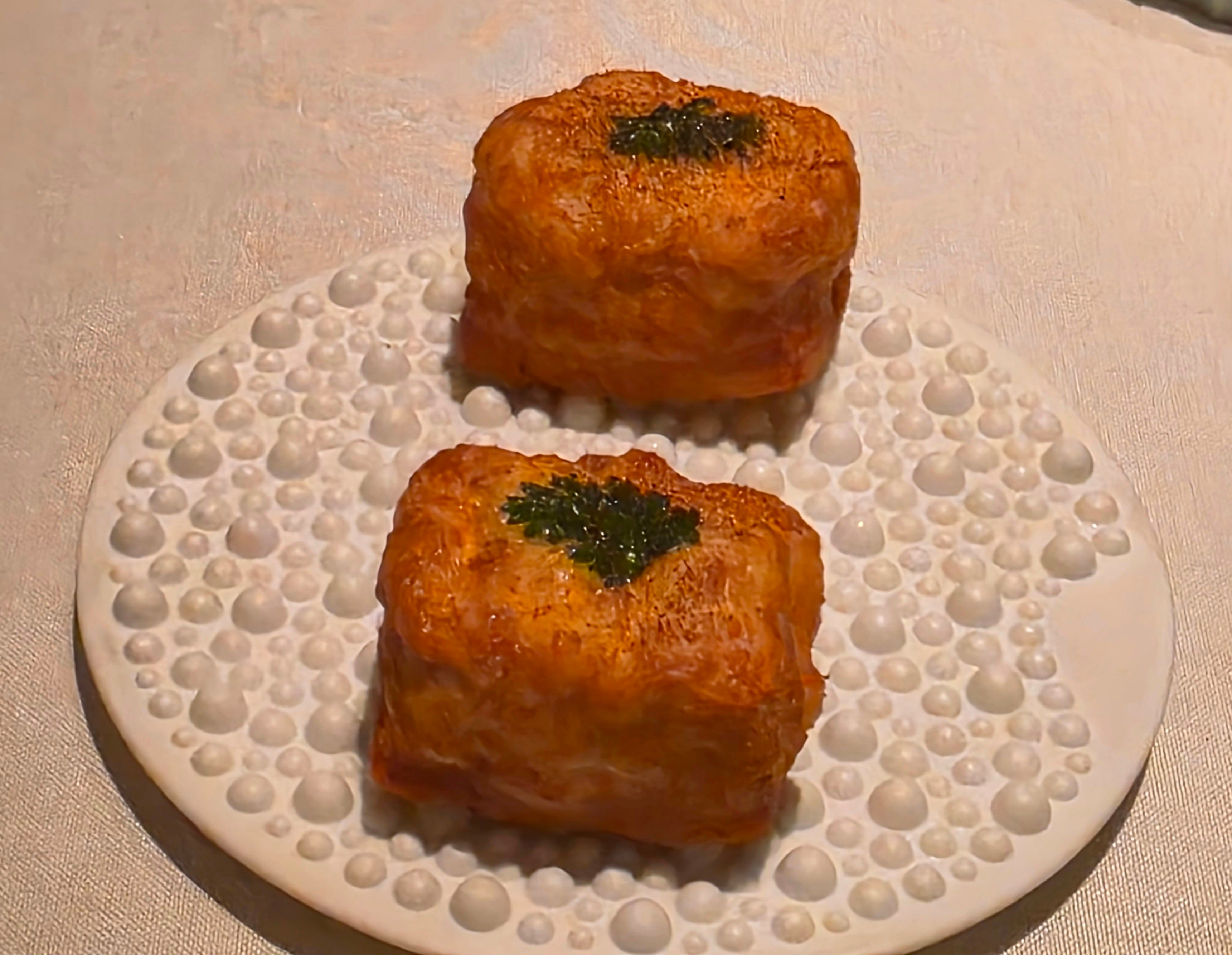
We could smell the first optional supplement before we saw it. Wing’s Hong Kong variation on deep-fried prawn toast adds a generous amount of stinky tofu. The toast came with a sweet hoisin sauce and a savoury Chiu Chow chilli paste. Once we got past the pungent aroma, the combination of sweetness, heat, and deep savoury flavour hit hard. Delicious!
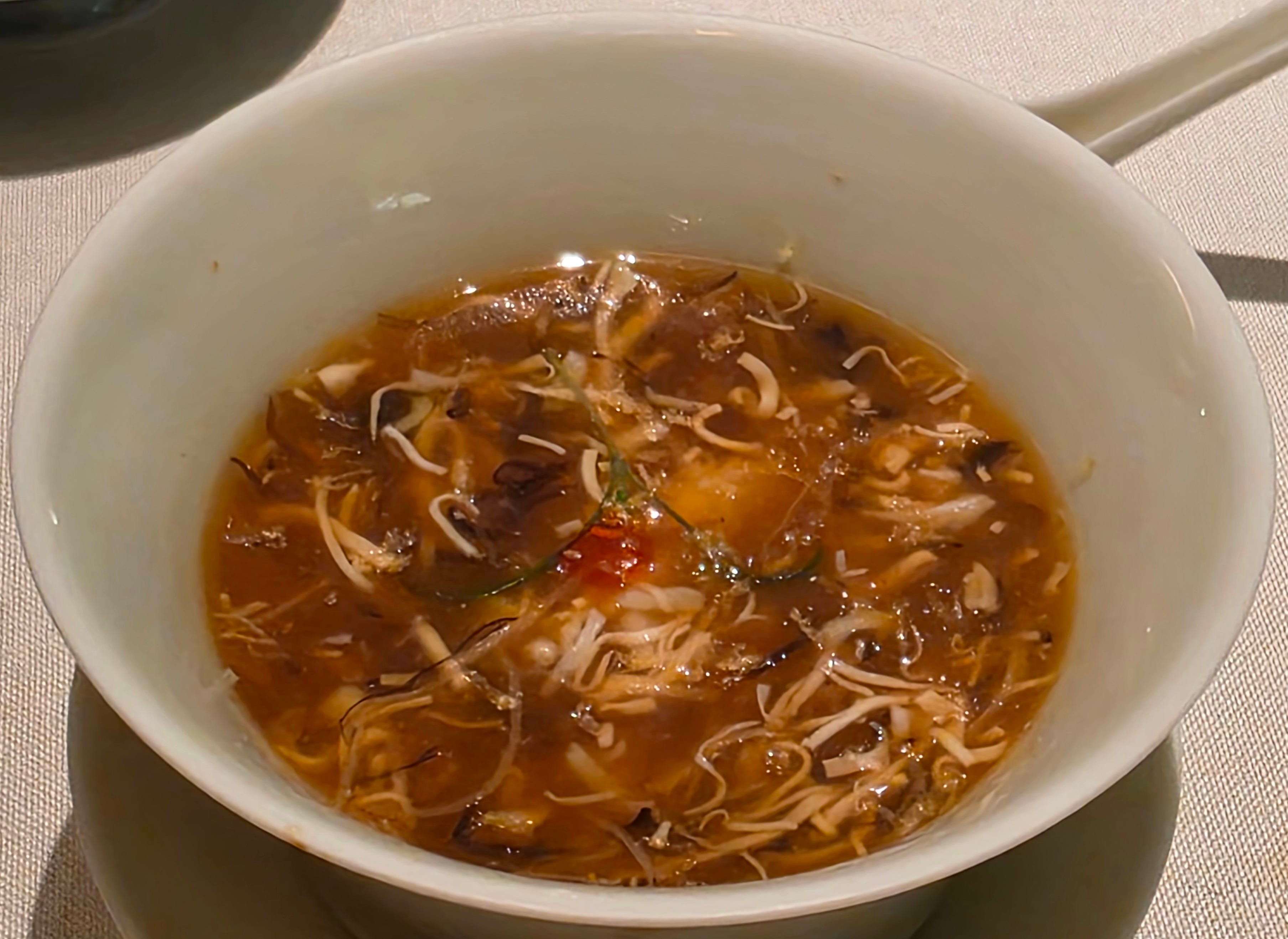
Taking more inspiration from the Sichuan region, Wing’s version of the hot and sour soup added soft shell turtle, which was largely unnoticable, but also added fresh lemon zest microplaned on top of the soup, which was a really unique, and welcome addition.
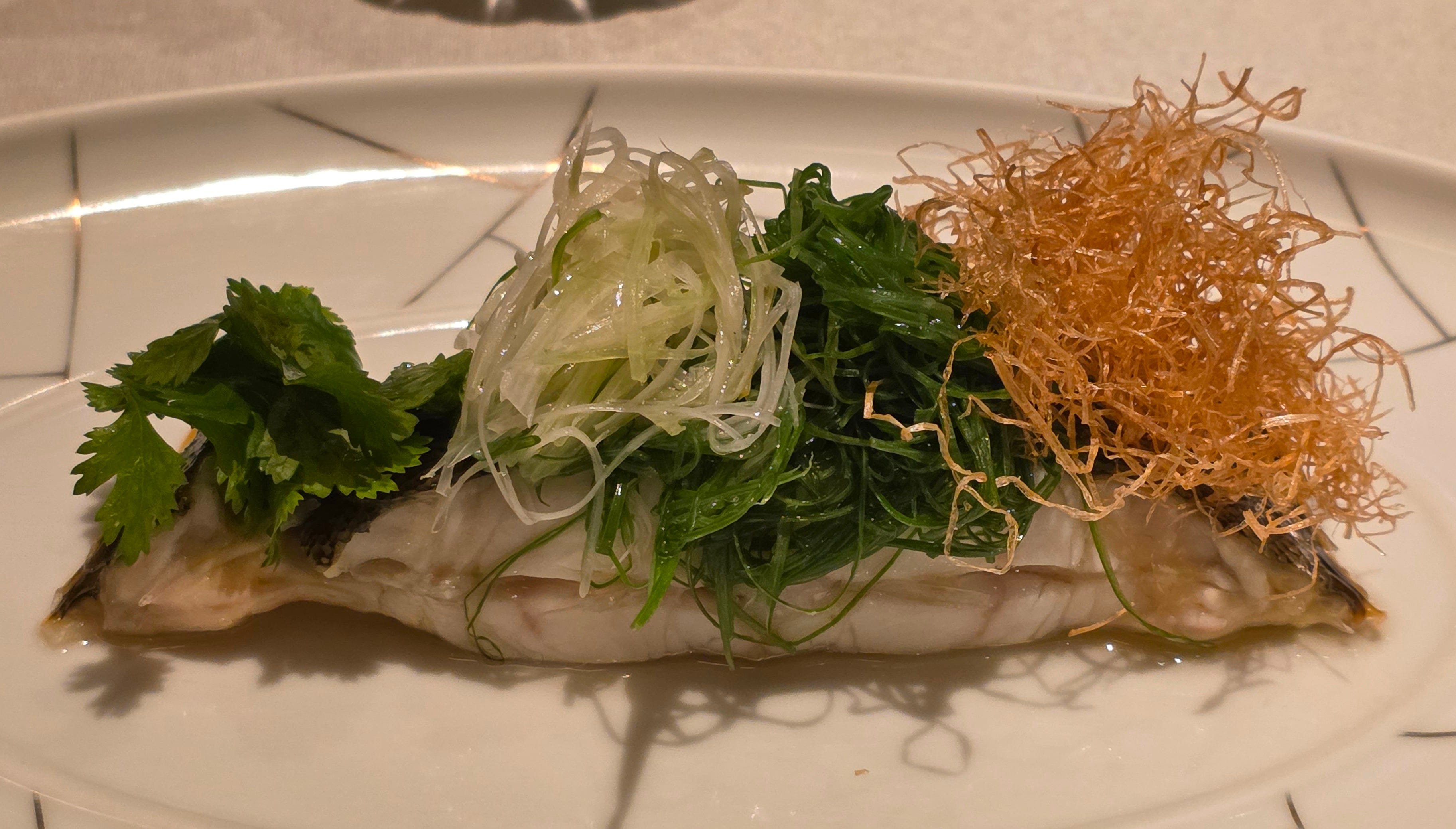
Moving into the main courses, the steamed Macau sole was brought out for display before being portioned and blistered with hot oil. It was topped with coriander and several varieties of spring onion. The kitchen then blistered the fish with boiling oil cooked down with sweet soy sauce.
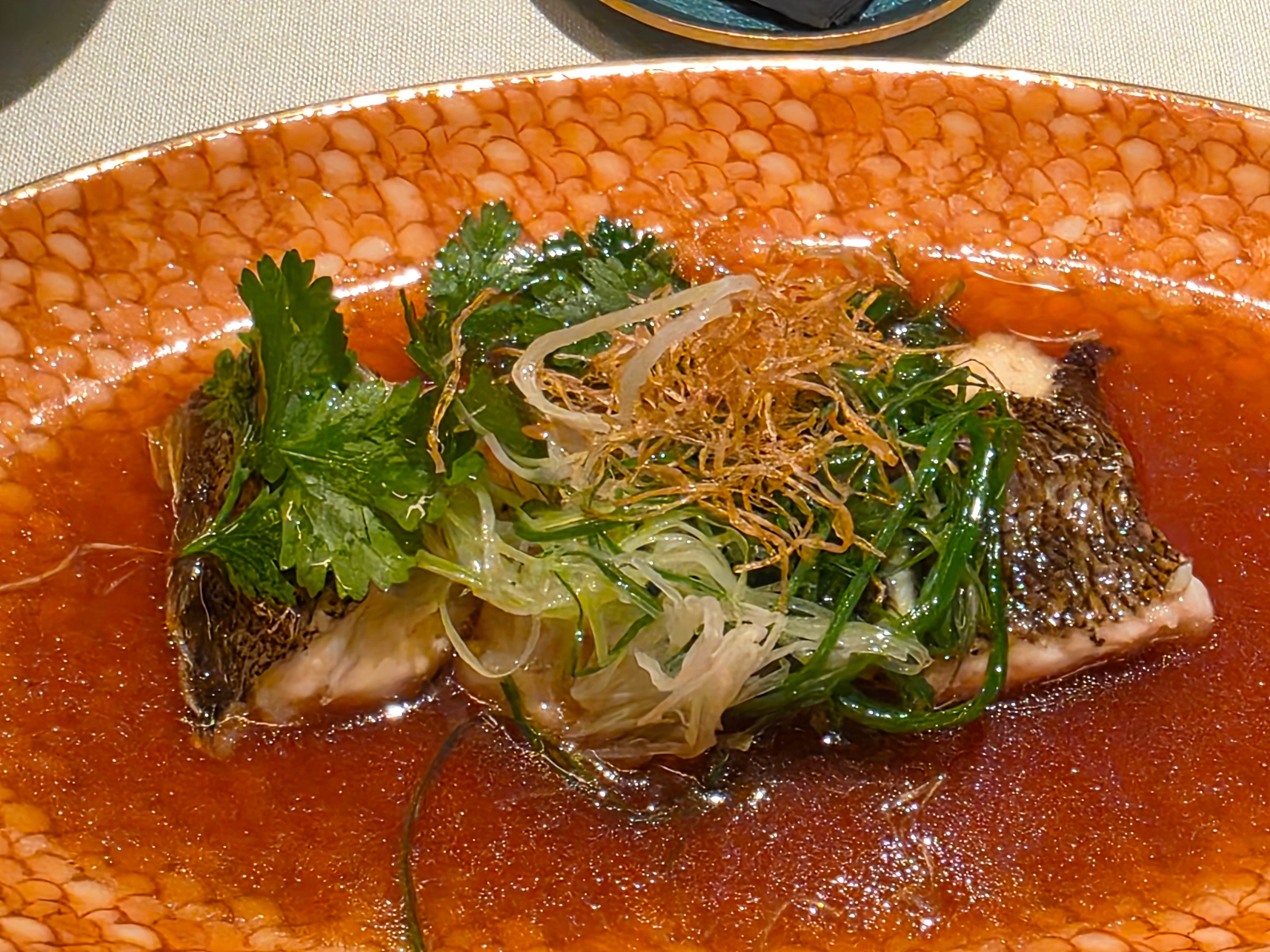
This was one of the highlights of the meal. The fish was perfectly cooked. Steamed fish can be difficult to judge, with a narrow line between undercooked and overcooked determined by the thickness of the fish. Wing got it exactly right. My only complaint was that I wanted more.
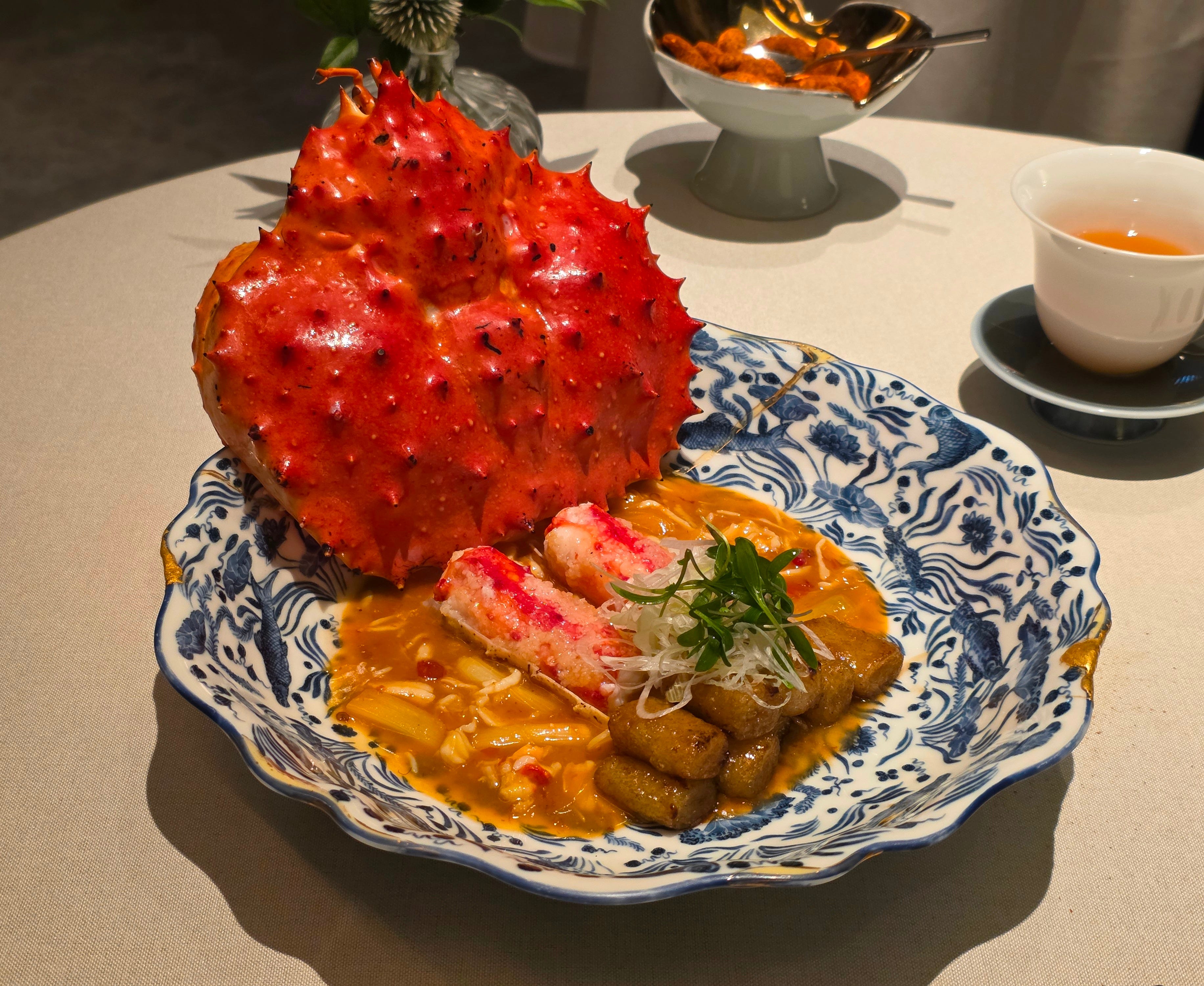
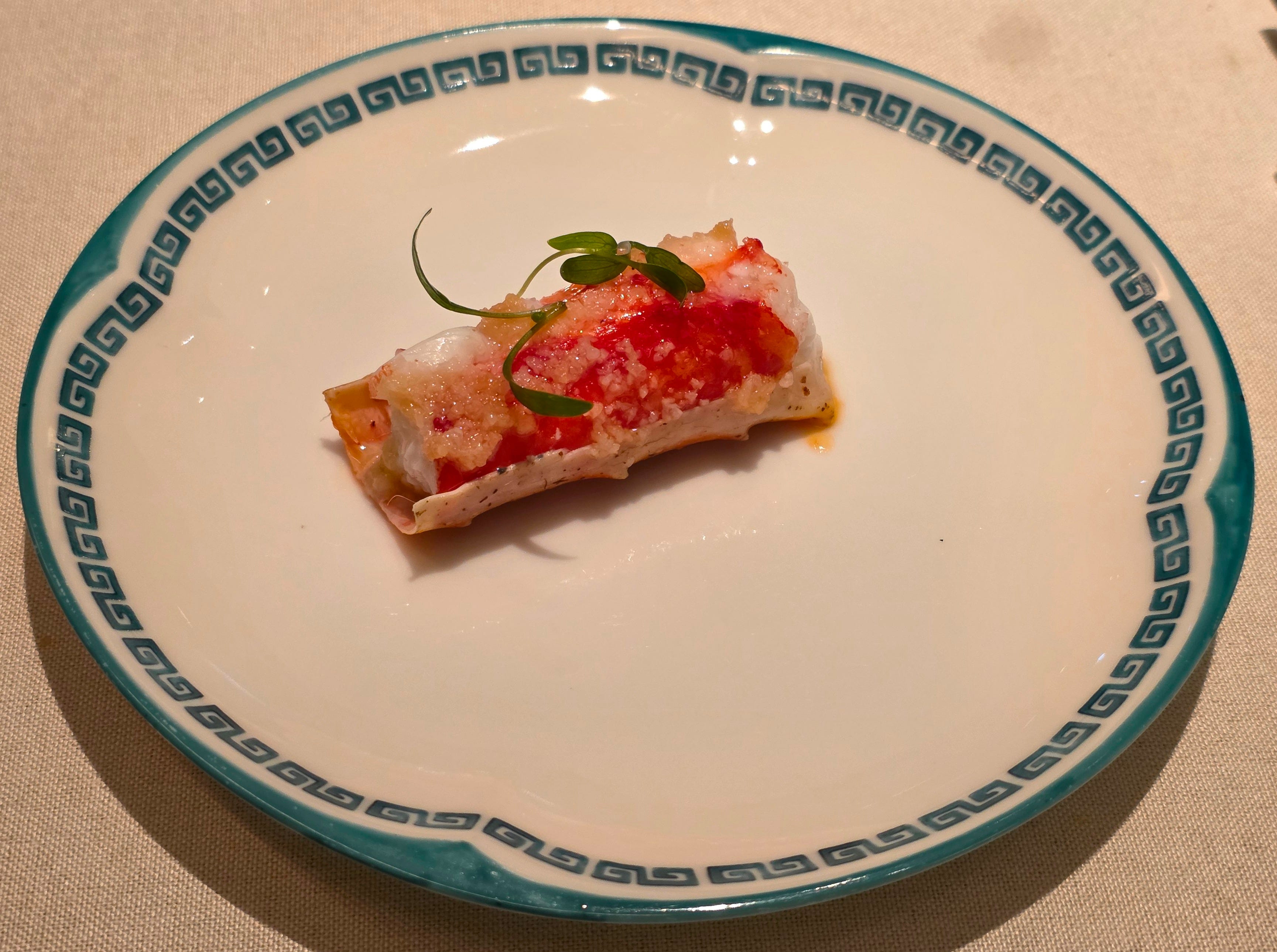
The Alaskan king crab was also brought out for display before being portioned. Two pieces of leg meat came with pan-fried crispy cheung fun in a crab-meat and innard sauce.
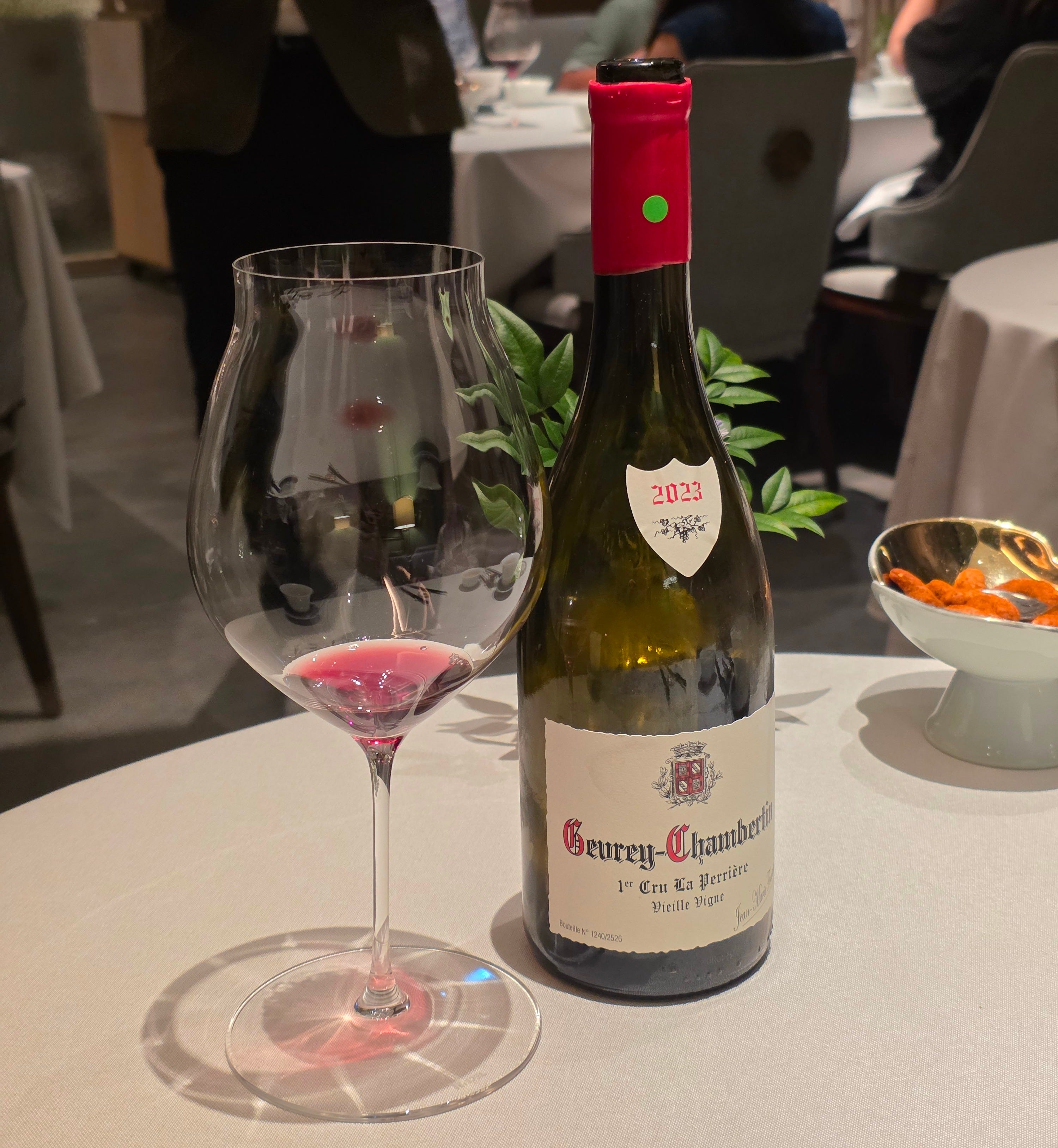
Moving into the reds, we had a fairly light-bodied red, but otherwise forgettable.
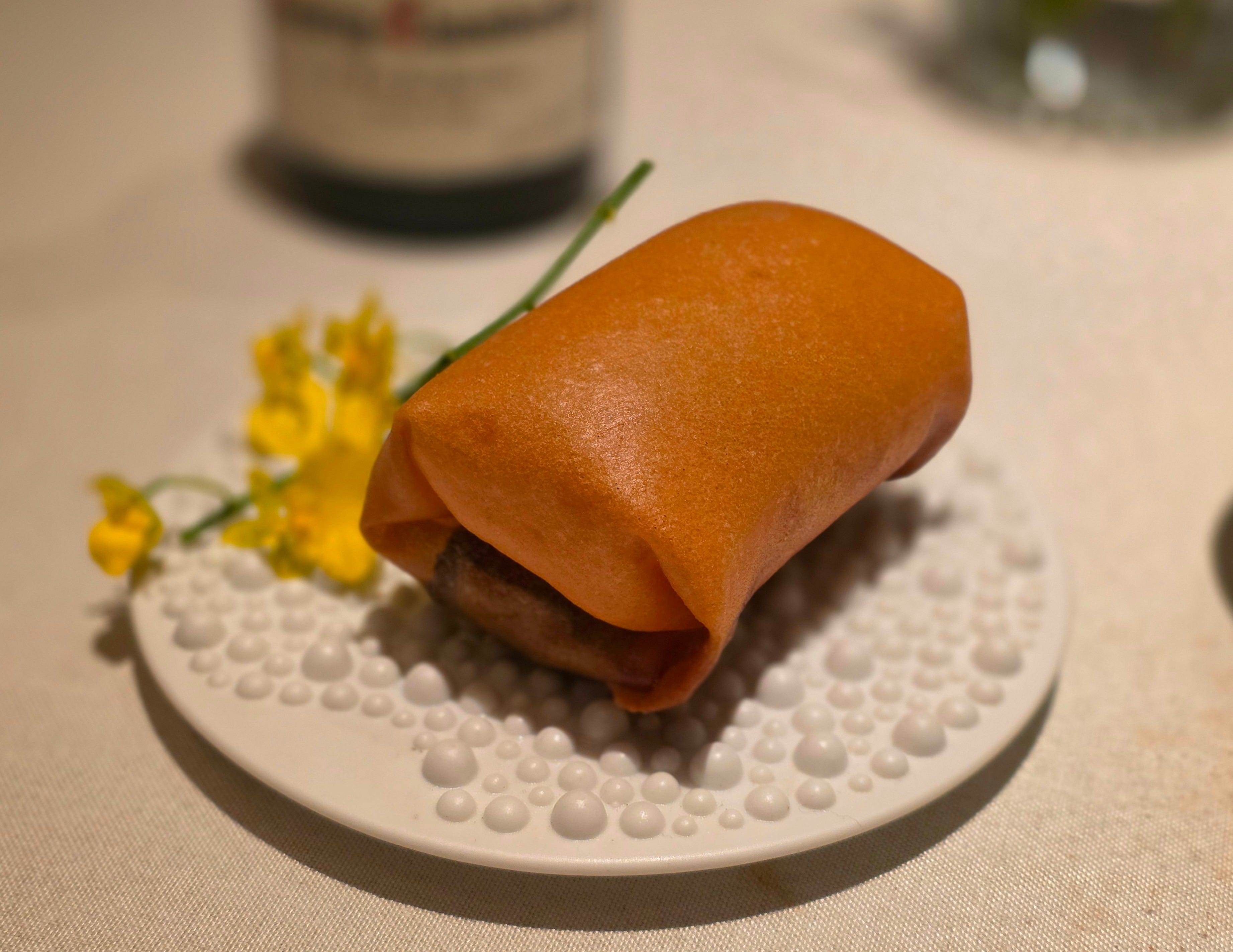
The next dish reminded me of the mala lobster spring roll at Duddell’s: an intensely crisp, airy, light spring-roll shell filled with rehydrated giant sea cucumber. This one was much better than the one at Duddell’s.
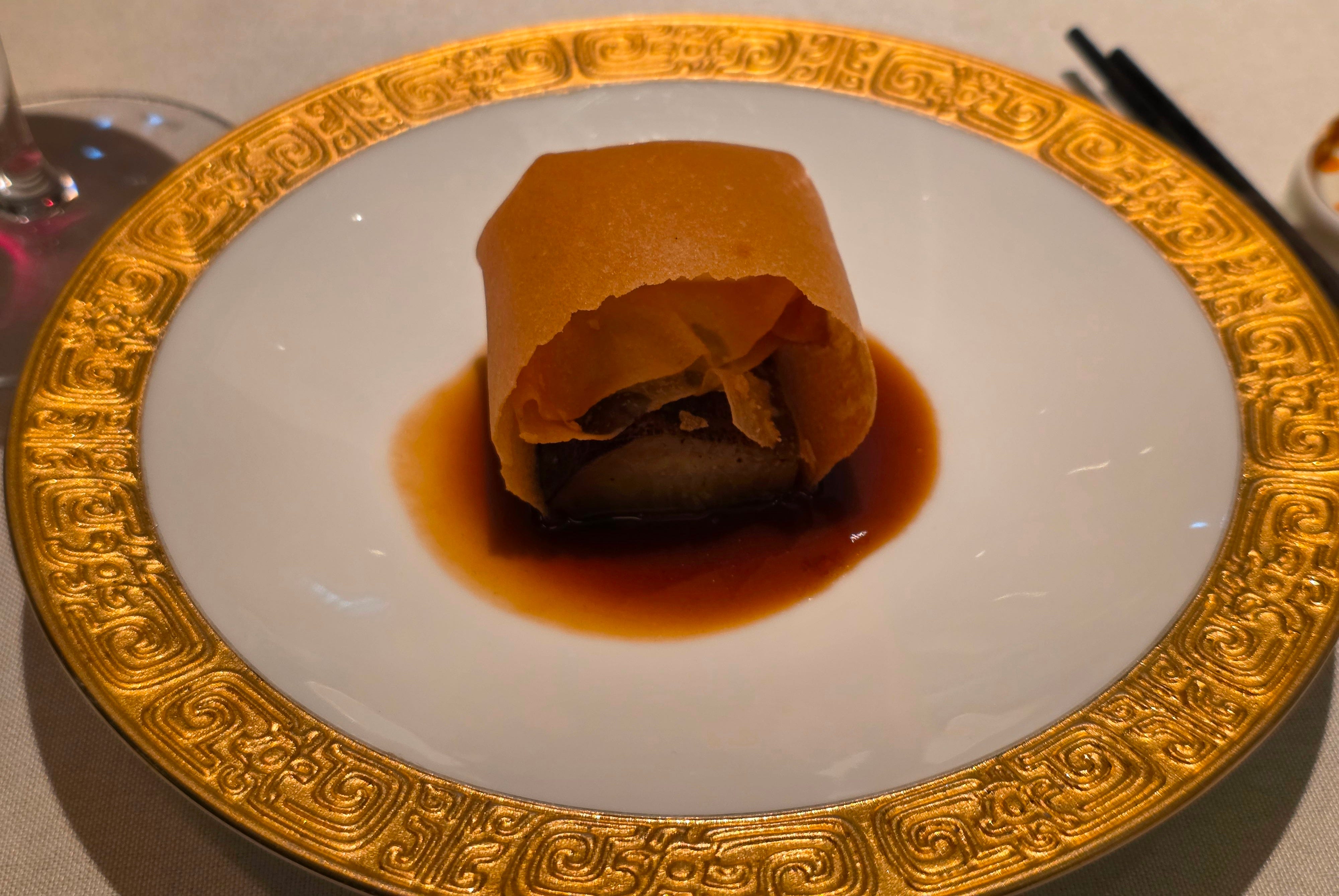
Absolutely delicious. The gelatinous texture of the sea cucumber contrasted with the crisp, light shell. This is one of Wing’s signature dishes and it’s pretty clear why. This was one of my highlights of the meal.
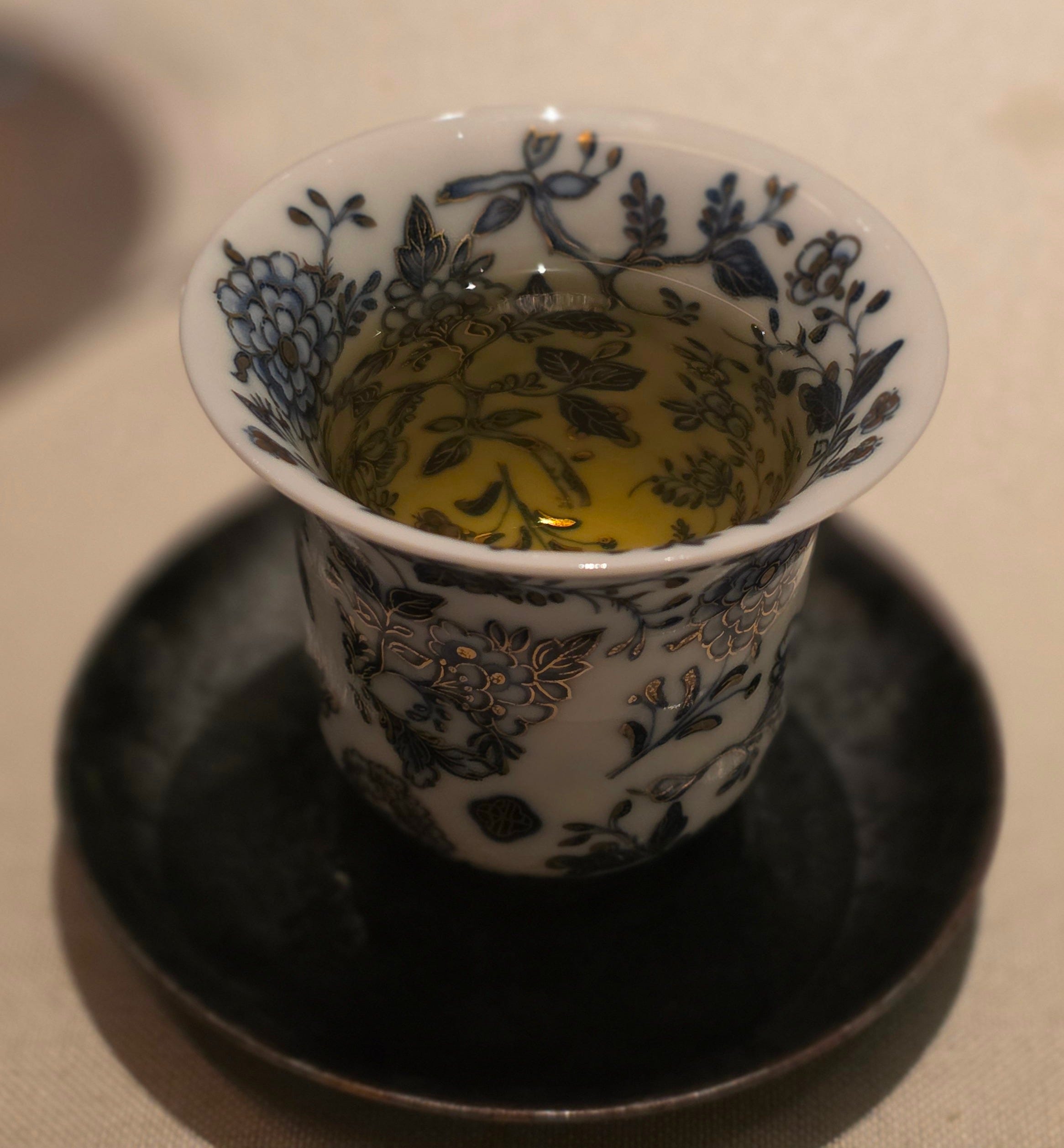
Before the pigeon, a shot of refreshing chrysanthemum tea cleansed the palate and cleared the heavy flavours and slick mouthfeel left by the sea cucumber.
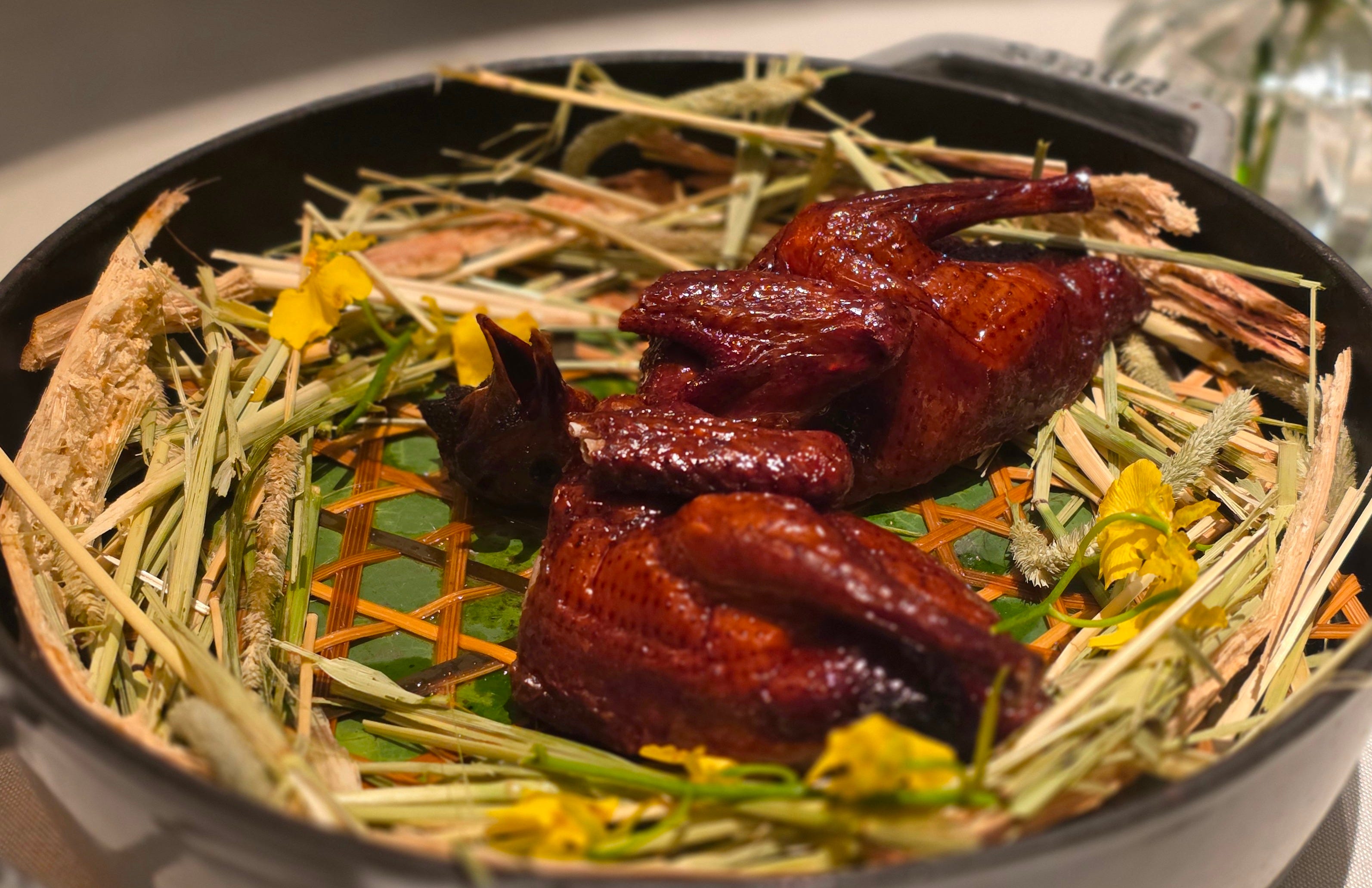
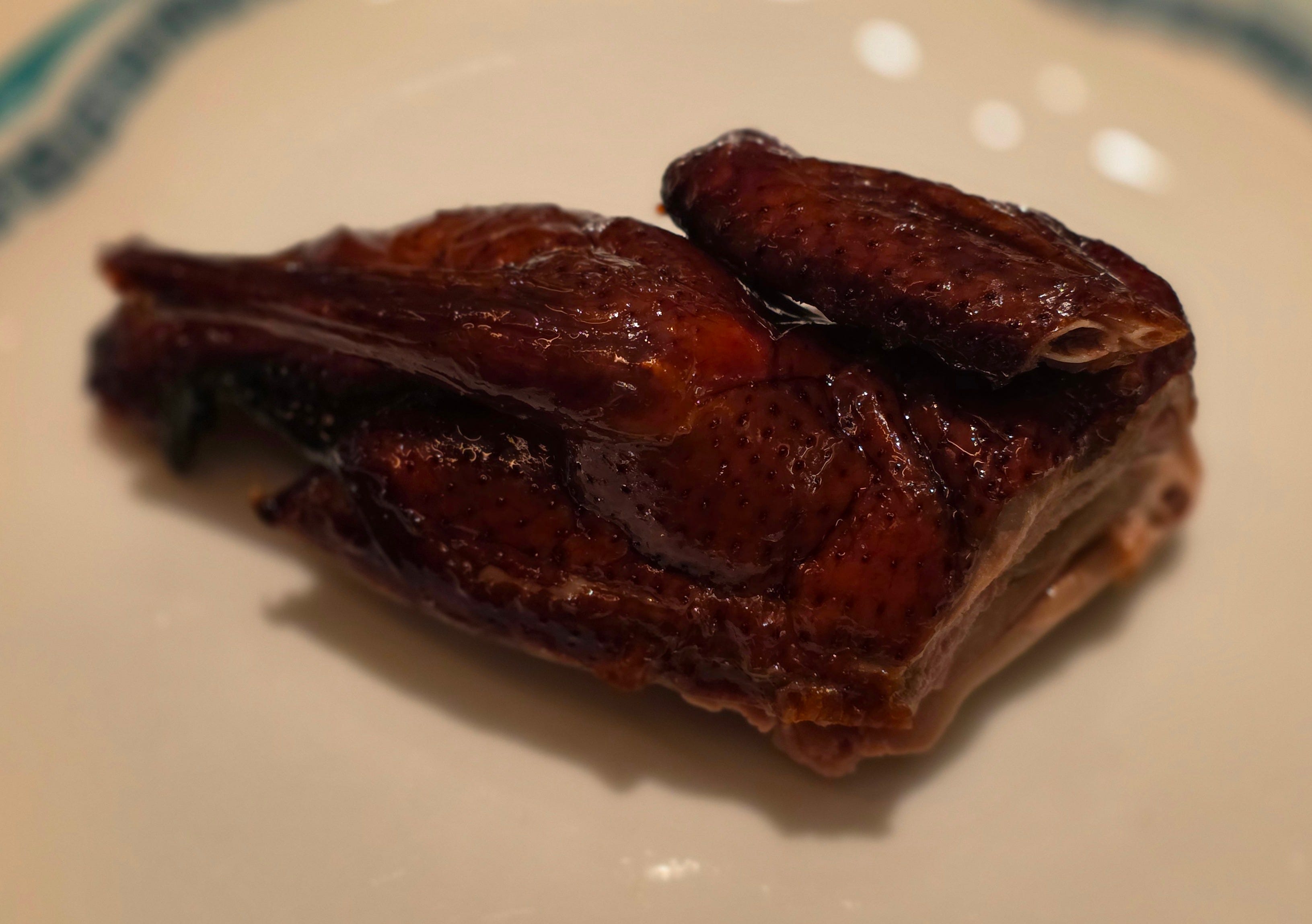
I normally avoid baby pigeon, quail, and other small birds. The effort rarely seems worth the amount of meat. This dish changed my mind. Cooked in sugar-cane syrup and gently smoked, the pigeon had crisp skin, juicy meat, and perfect seasoning.
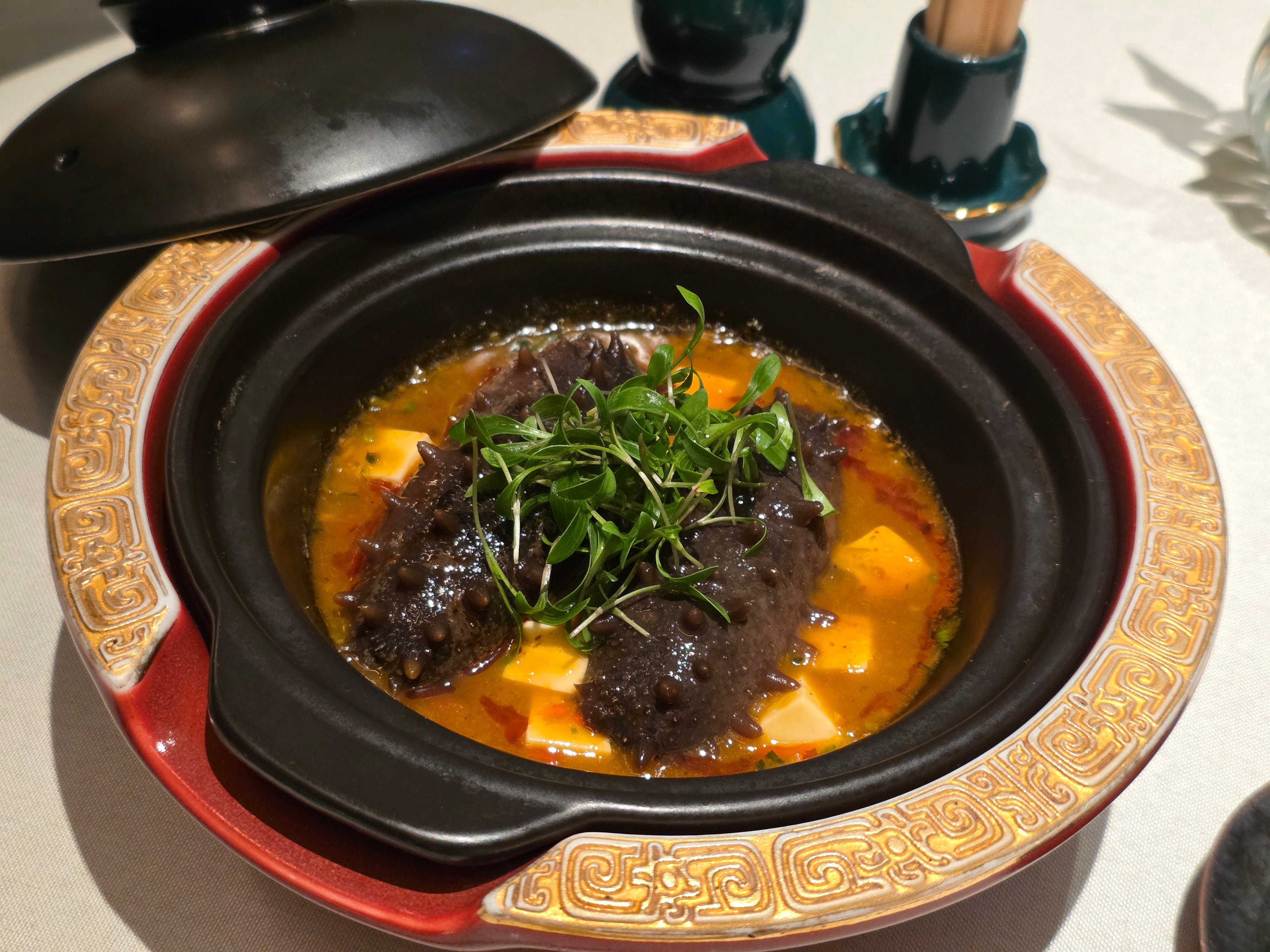
The second optional supplement was a braised whole sea cucumber in mapo tofu. It was an unusual combination. Sea cucumber has little flavour of its own and absorbs the flavours around it, so it is rarely cooked in a spicy broth. The pairing worked surprisingly well.
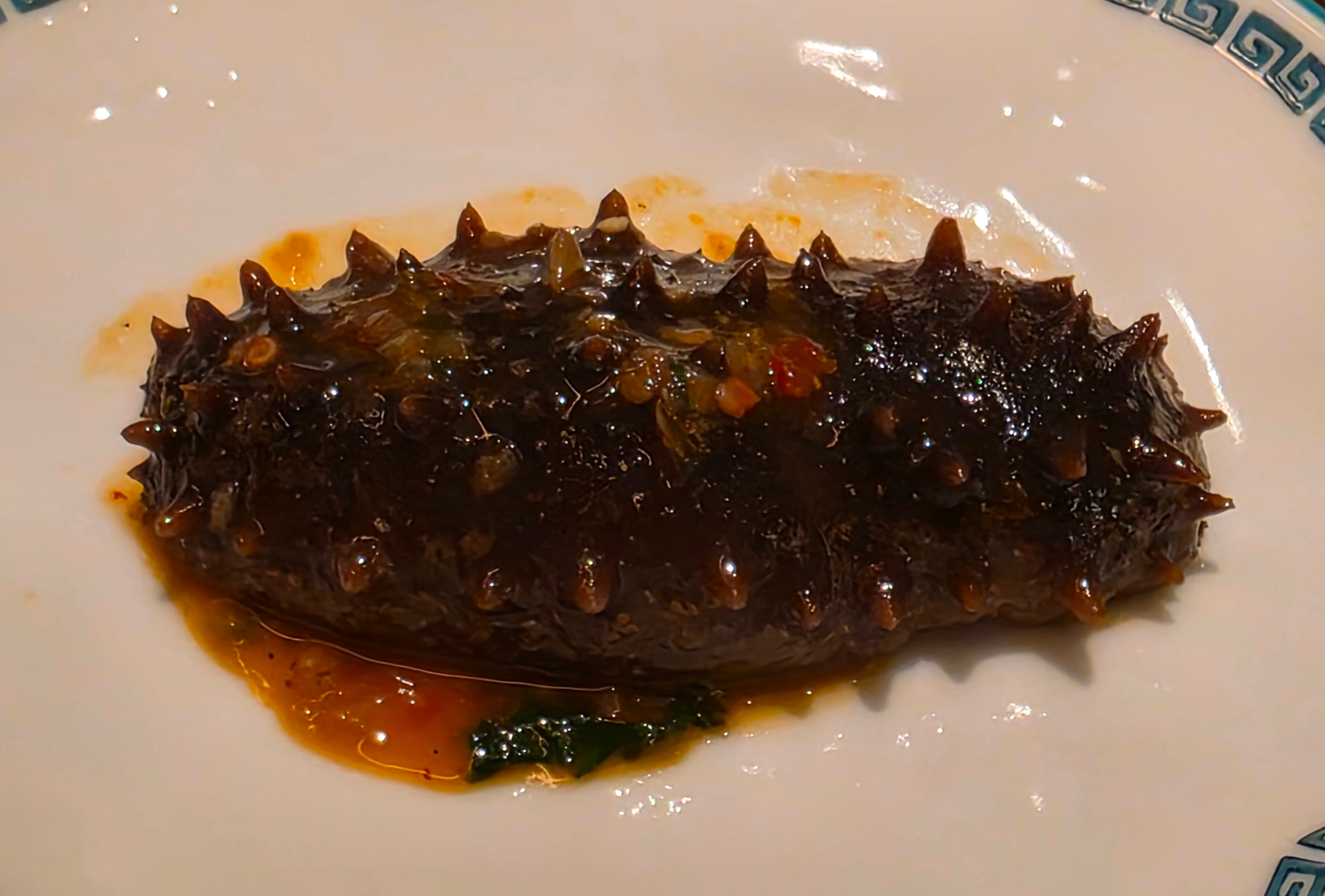
The spicy, gelatinous sea cucumber was served on its own. Another big hit and highlight.
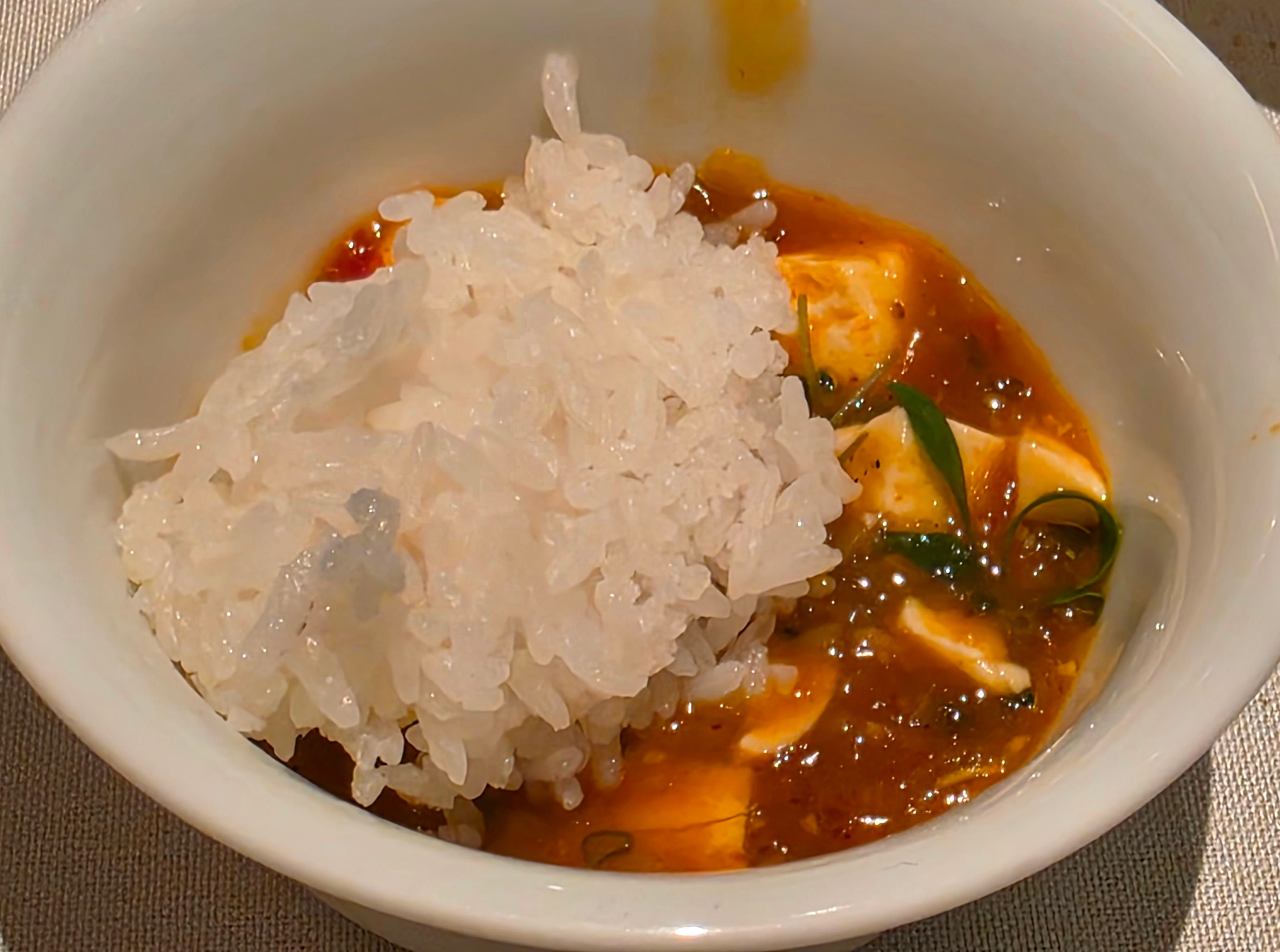
The mapo tofu came with a spoonful of rice.
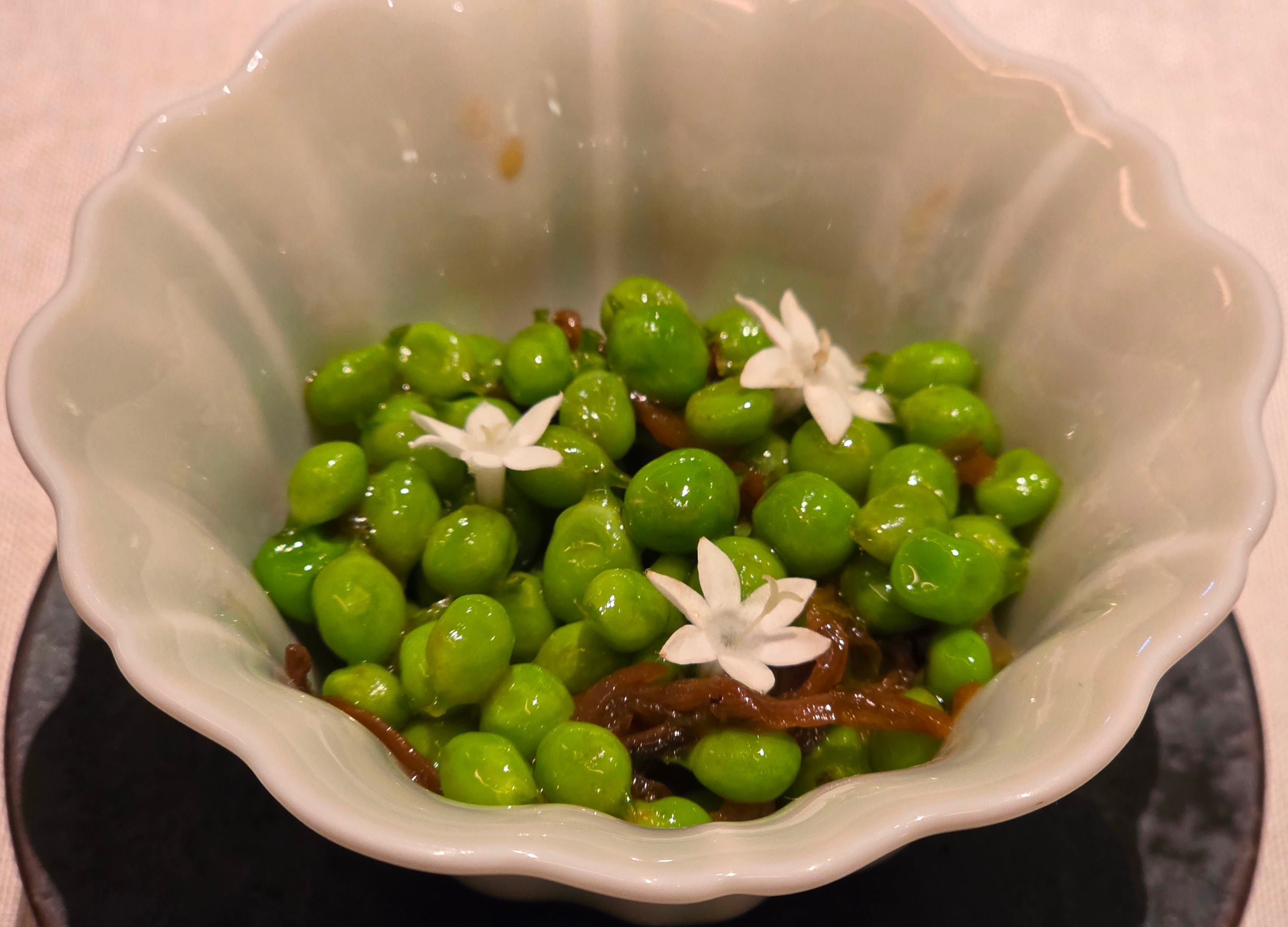
A small vegetable dish reset the palate: sweet snap peas cooked with dried bamboo shoots in thick pork lard. Springy, floral, flavourful, and surprisingly good.
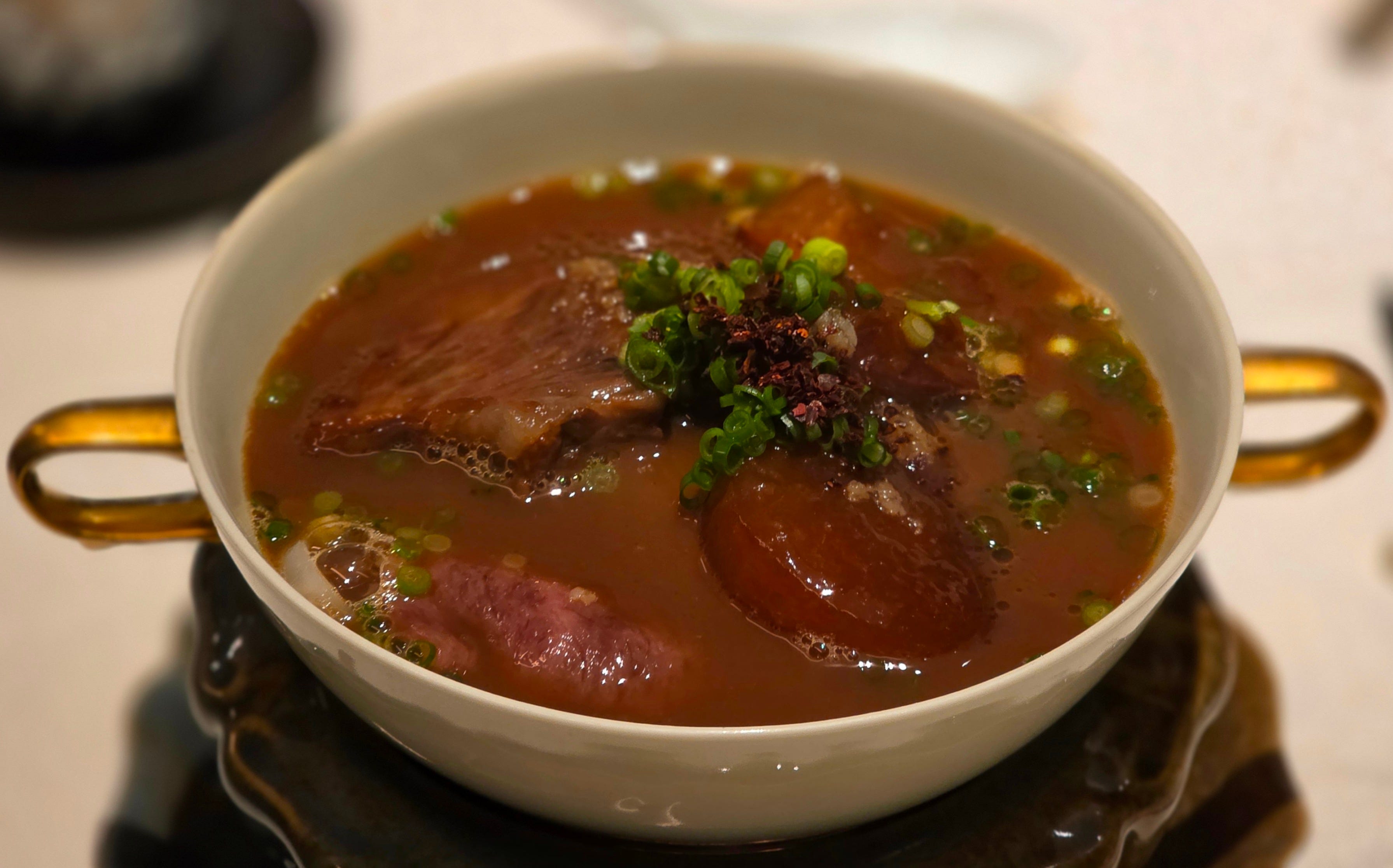
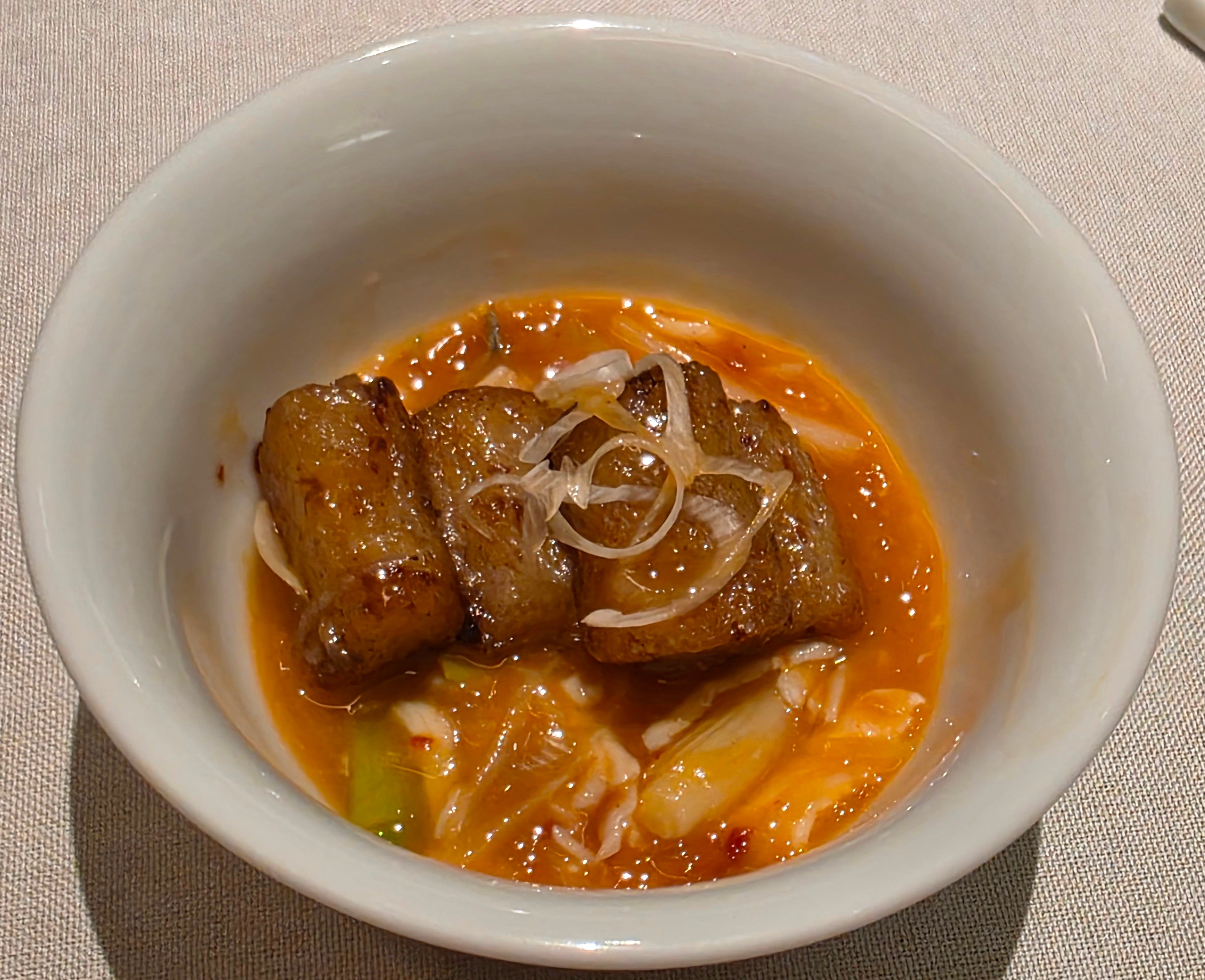
The final main course took inspiration from Taiwan: a warm, thick beef soup with slow-cooked beef tendon, brisket, and raw slices of fatty Wagyu. It had a slick mouthfeel, intense richness, and the characteristic flavour of braised turnip, all served over flat rice noodles. A soupy noodle dish is an unconventional starch for the end of a Chinese banquet. Traditionally, the final starch is dry, while soup noodles are often served as a meal on their own. It was delicious nonetheless.
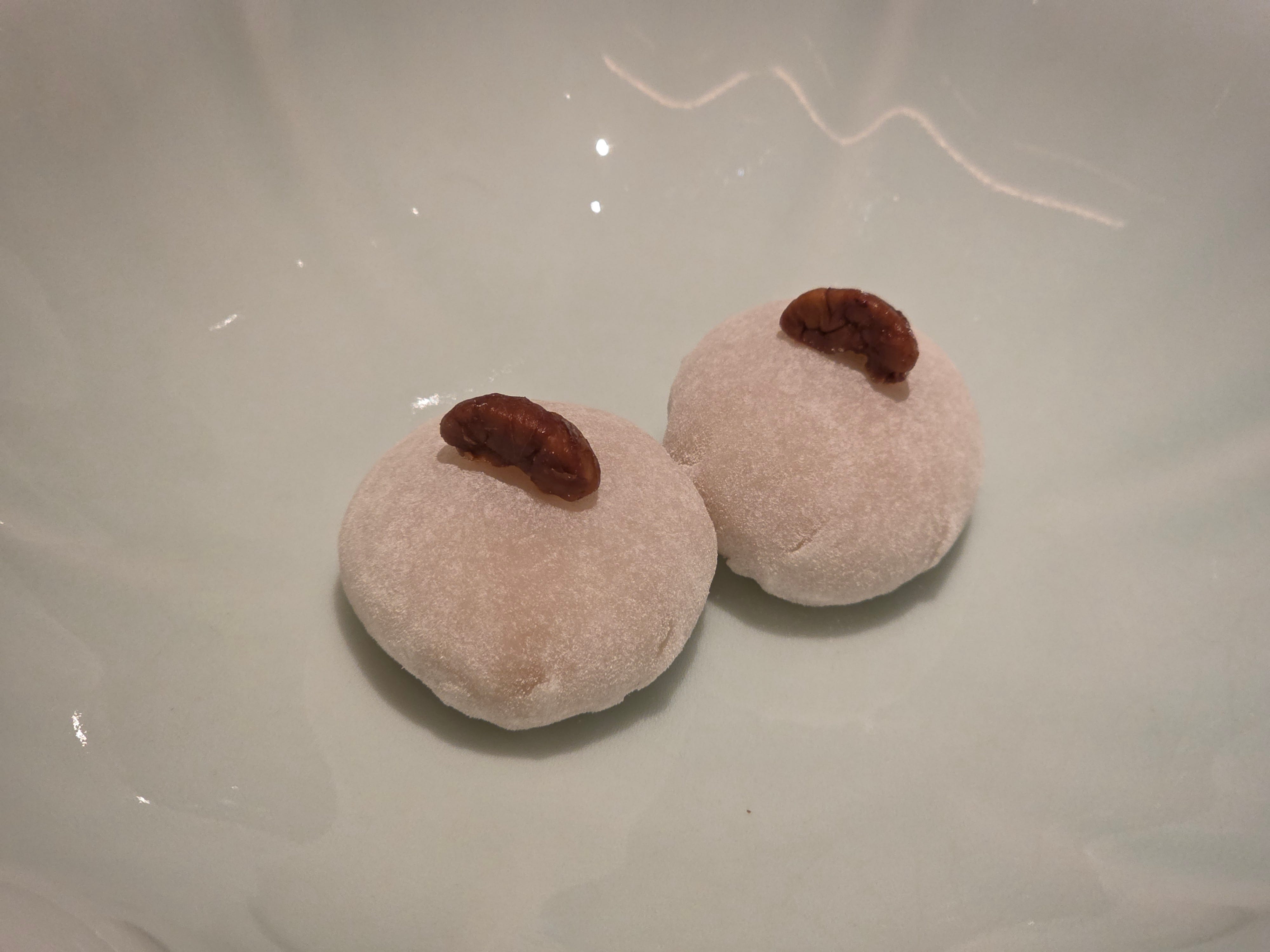
The mignardises arrived before dessert: rice mochi filled with walnut paste made from Hangzhou walnuts.
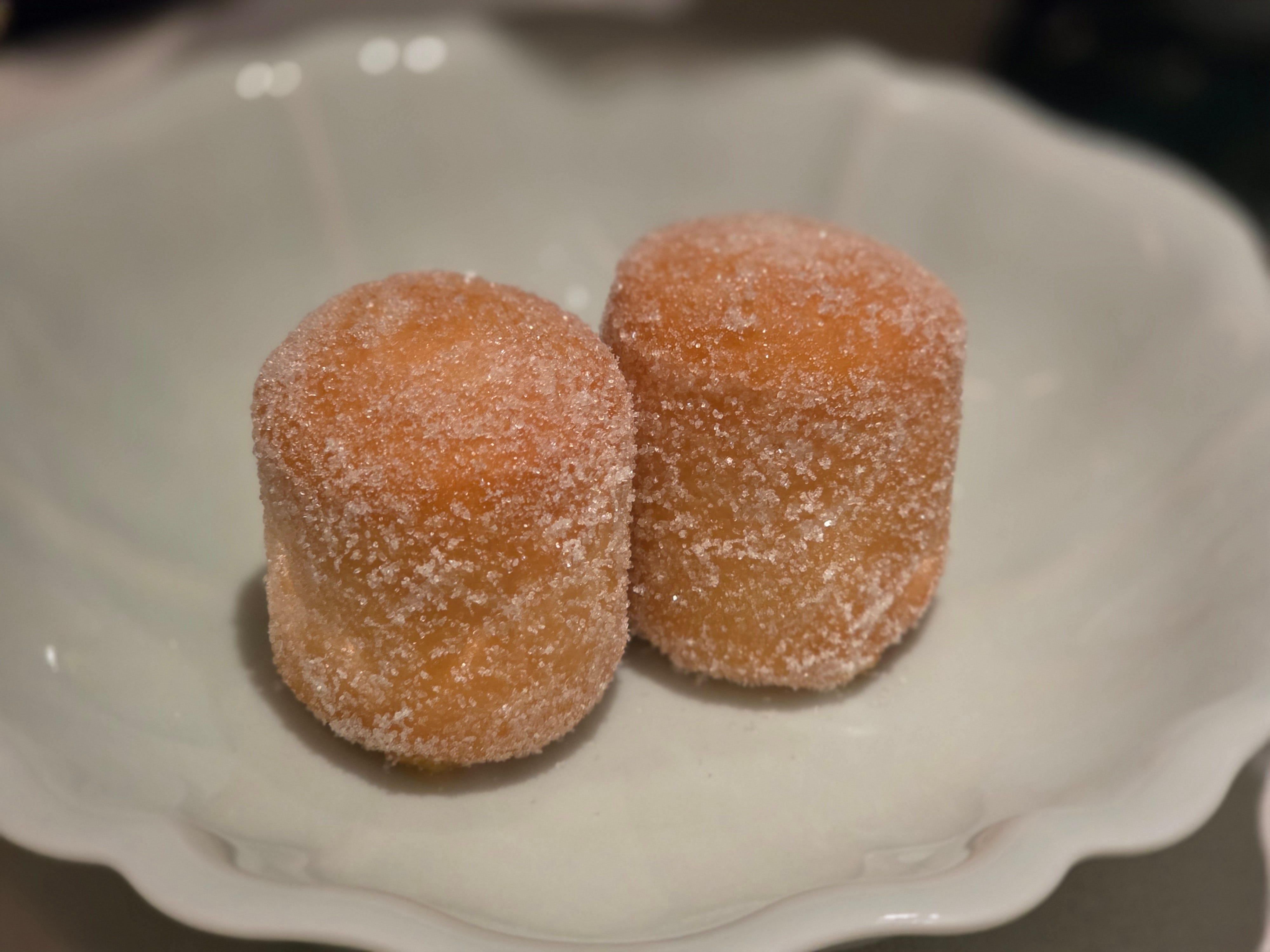
Small doughnuts filled with salted duck-egg custard.
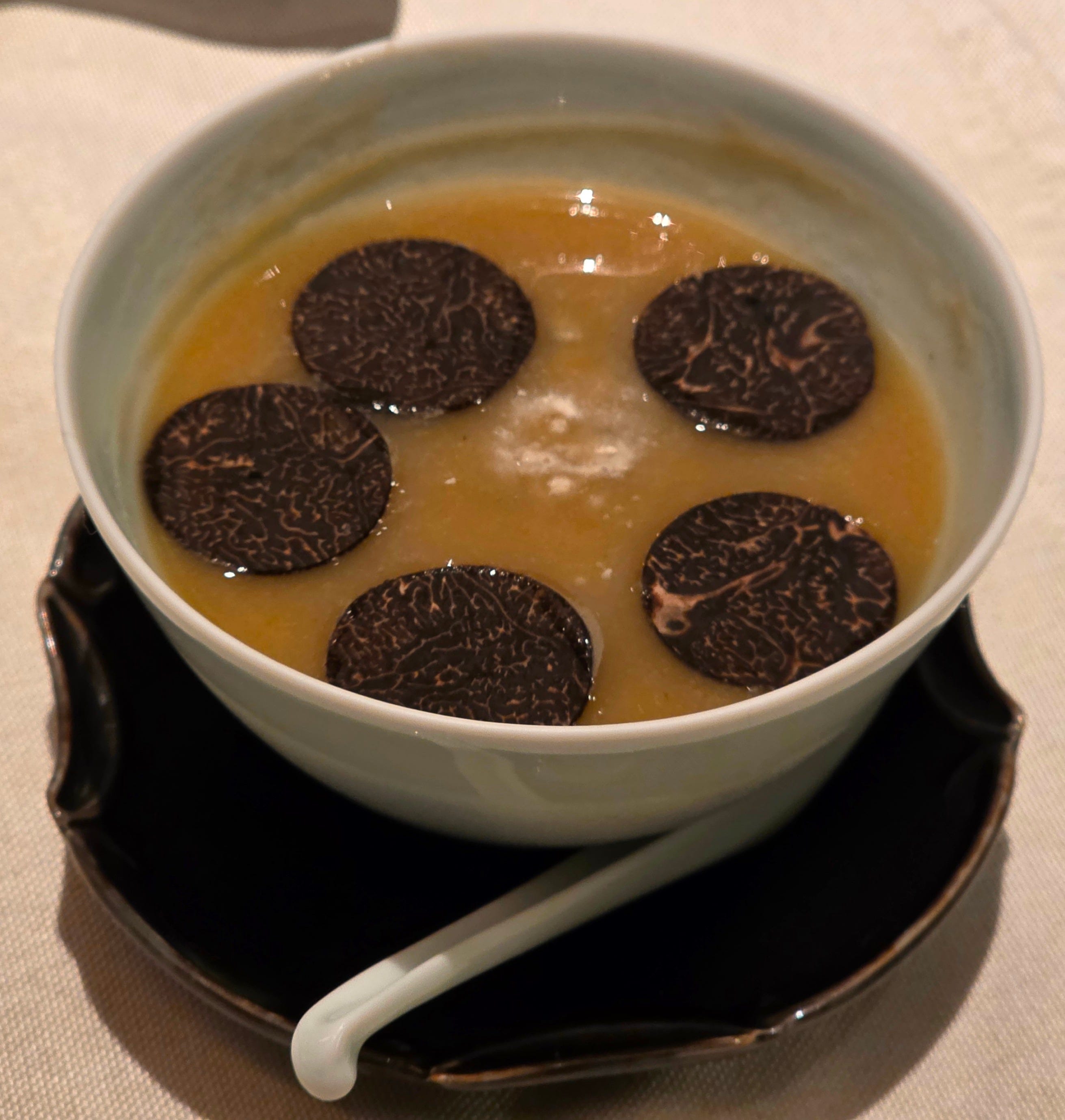
Dessert was a traditional sweetened soup made from ground mung beans. Wing infused it with black truffle and topped it with slices of fresh black truffle. The take was unique, with an almost overwhelming truffle flavour. It worked well enough, but by then we were too full to eat much more.
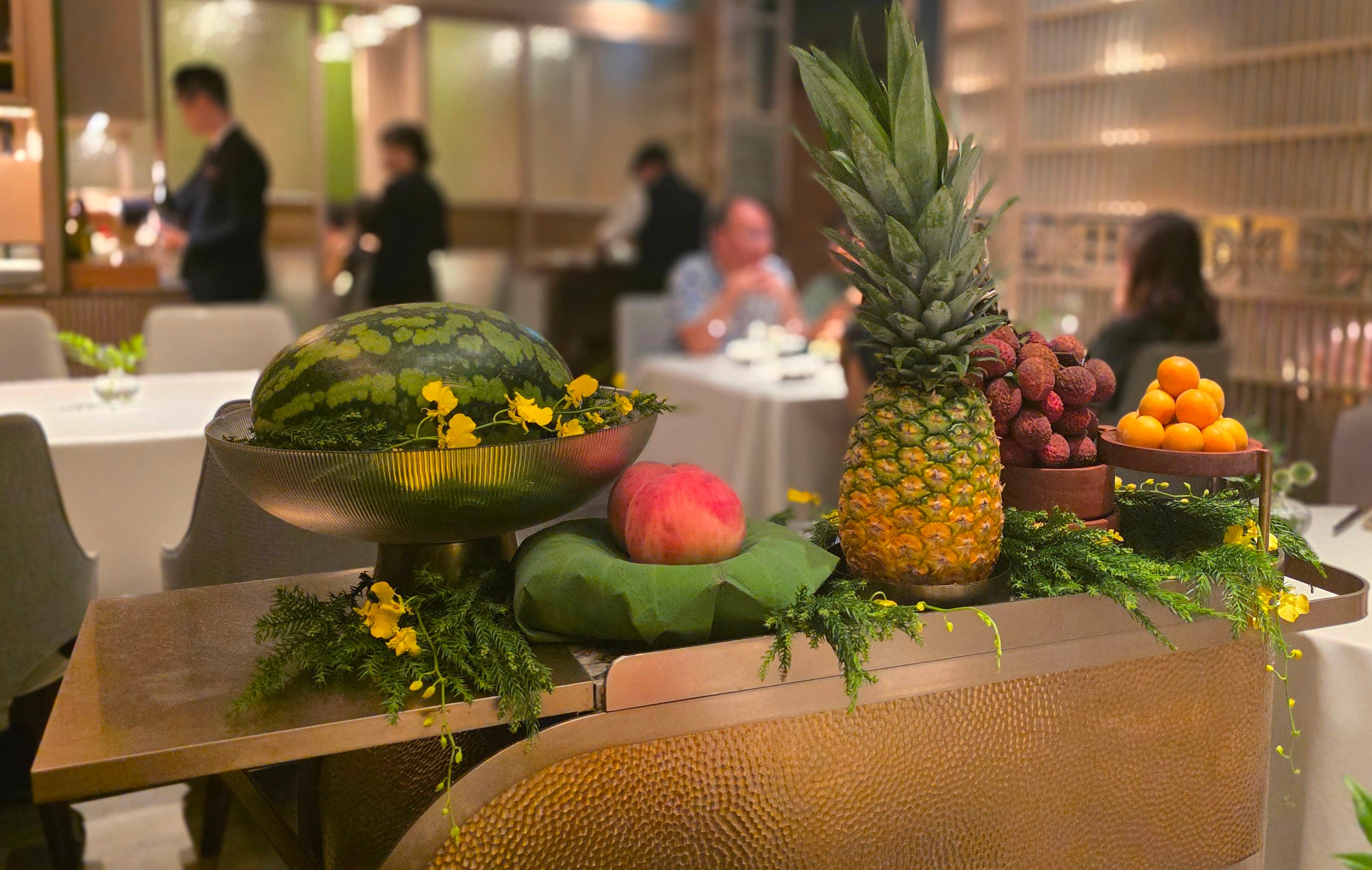
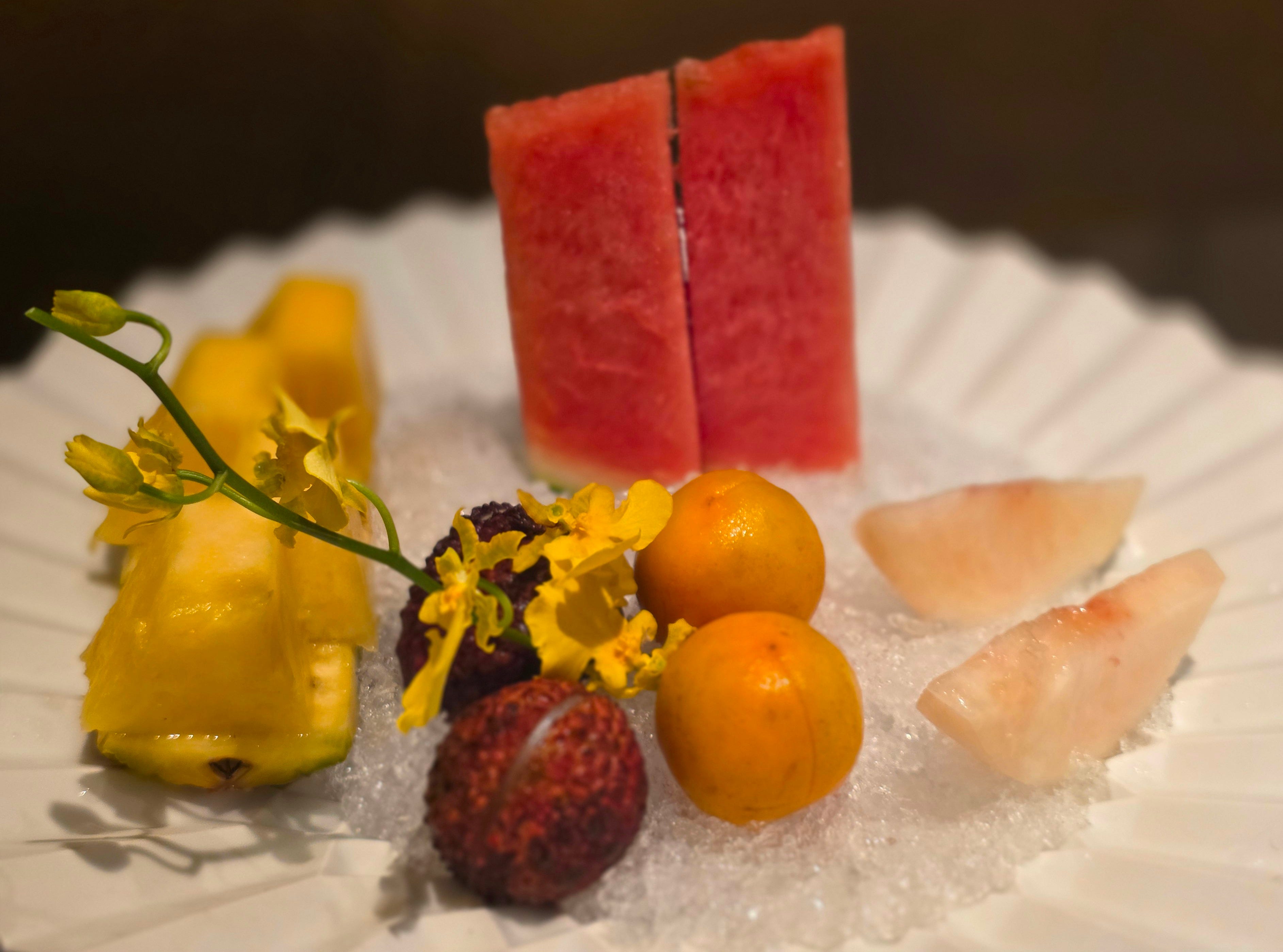
To add insult to injury, the waiter arrived with one final surprise: a trolley of fresh fruit. Japanese peaches, baby apricots, lychees at the height of the season, watermelon, and pineapples - each sweeter than the last.
I can see why it’s nearly impossible to make a reservation to Wing. The four tables aside, this was probably the best meal I’ve had in Hong Kong this year, and tying with 8½ Otto e Mezzo Bombana for my favourite experiences in Hong Kong ever. The style of dining, using Chinese influences in Western-format dining reminds me of Tate Dining Room (RIP), but Wing’s execution stays closer to Chinese dining, using Chinese dishes, and not merely Chinese ingredients in the tasting menu format. This one is a must return, and I look forward to trying Vicky Cheng’s VEA as a comparison.
Total Damage: 10k HKD/2 people