There are no shortages of ambitious Cantonese restaurants in Hong Kong, but relatively few manage to feel both serious and polished without tipping into either banquet-hall excess or hollow luxury. Ying Jee Club sits in that narrower category. It is one of the city’s more accomplished modern Cantonese dining rooms, not because it tries to reinvent the cuisine, but because it understands exactly how far refinement should go before restraint becomes the better choice.
Located in Central, the Ying Jee Club opened in 2017 and earned its first Michelin star within a few months. It soon moved up to two stars, and has held that level ever since. From the beginning, the restaurant’s identity was clear. This was never supposed to be the most radical Cantonese kitchen in town, nor one of those places trying to impress diners with gimmicks or contemporary flourishes for their own sake. The pitch was high-end Cantonese cooking delivered with consistency, polish, and technical control.
Even the name is pointed. “Ying Jee” evokes prosperity, success, and business, which feels entirely appropriate for a refined Cantonese dining room in the middle of Central. It is very much the sort of place built for long business lunches, serious family dinners, and diners who want confidence and pedigree rather than surprise.
The key culinary figure behind the restaurant is Siu Hin-chi, now the Director of Culinary. If Hong Kong Cantonese fine dining has its dependable safe hands, Siu is one of them. Before Ying Jee Club, he worked at both T’ang Court and Duddell’s, helping the former reach two Michelin stars in 2009 and the latter earn its second star in 2015. Michelin has repeatedly pointed to his role in Ying Jee Club’s rapid ascent as well, with the restaurant winning one star within months of opening and later climbing to two. Across his career, he is often described as having worked in kitchens associated with a combined 24 Michelin stars, which sounds slightly absurd until you realise that his whole reputation rests on meticulous, disciplined Cantonese cooking of the kind Michelin tends to reward.
Alongside him is executive chef Cheung Kin-ming, another Cantonese kitchen veteran with more than thirty years of experience. That combination, Siu’s reputation and the depth of the kitchen beneath him, tells you most of what you need to know about the restaurant. Ying Jee Club is not built around culinary theatre or chef mythology. It is built around technical reliability at a very high level.
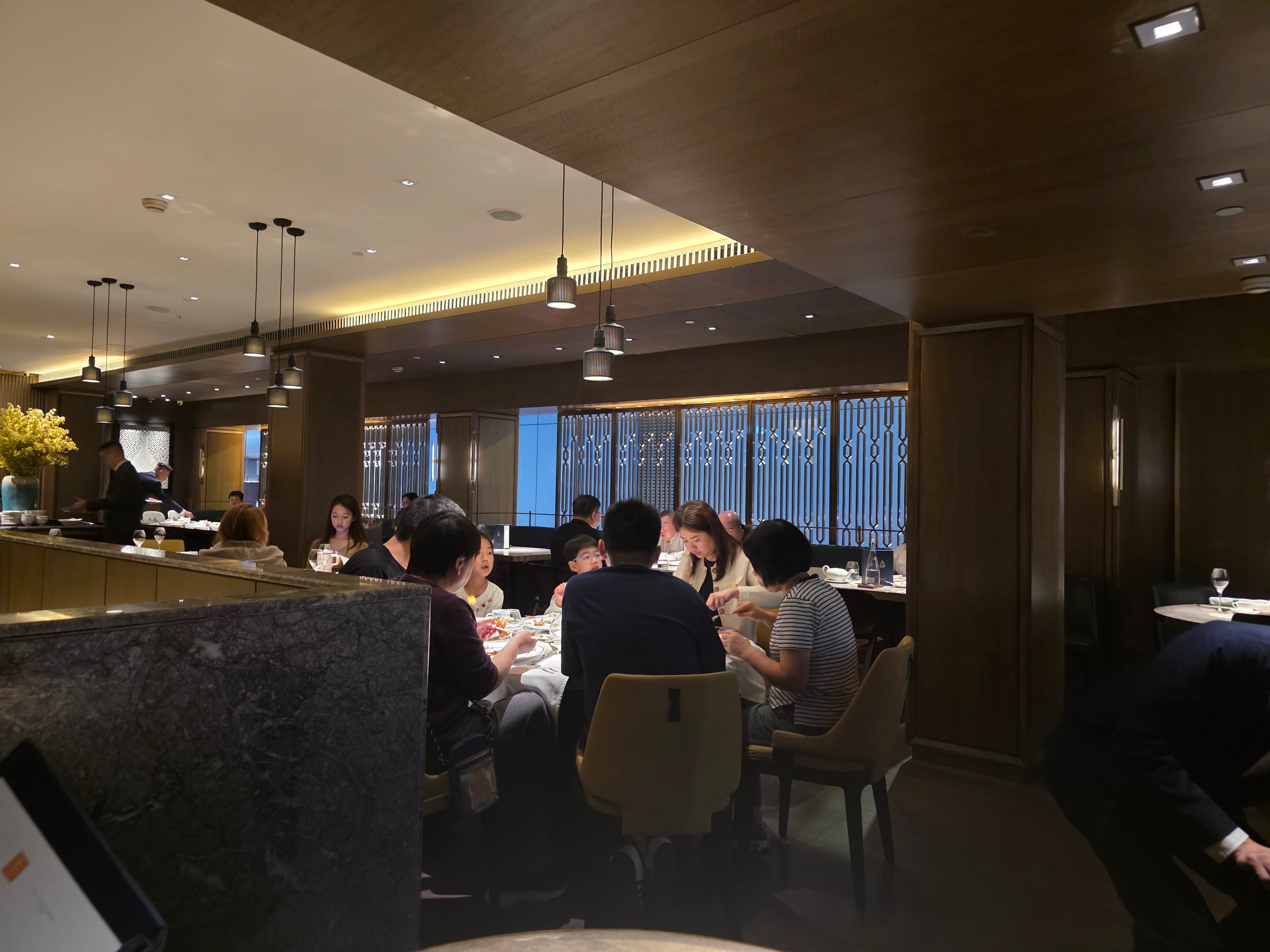
That same idea carries through to the room. The interior is dark, understated, and quietly expensive rather than overtly grand. On our visit, the room was filled with exactly the sort of crowd you would expect: obvious business dinners, family gatherings, and tables that looked like they had been coming here for years. It has the atmosphere of a serious Central dining room, not a showpiece destination for tourists. The effect is more controlled than flashy, which suits the food.
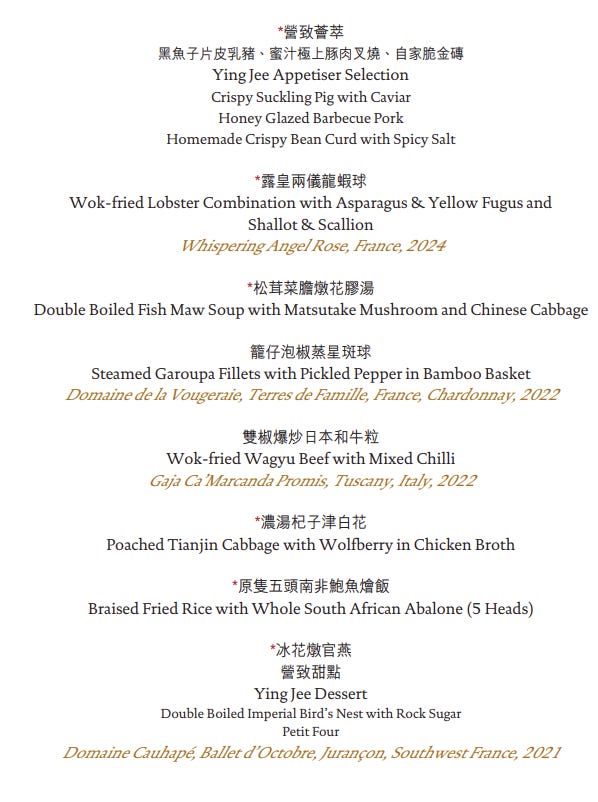
We decided to go with the tasting menu, which felt like the clearest way to understand the kitchen’s range.
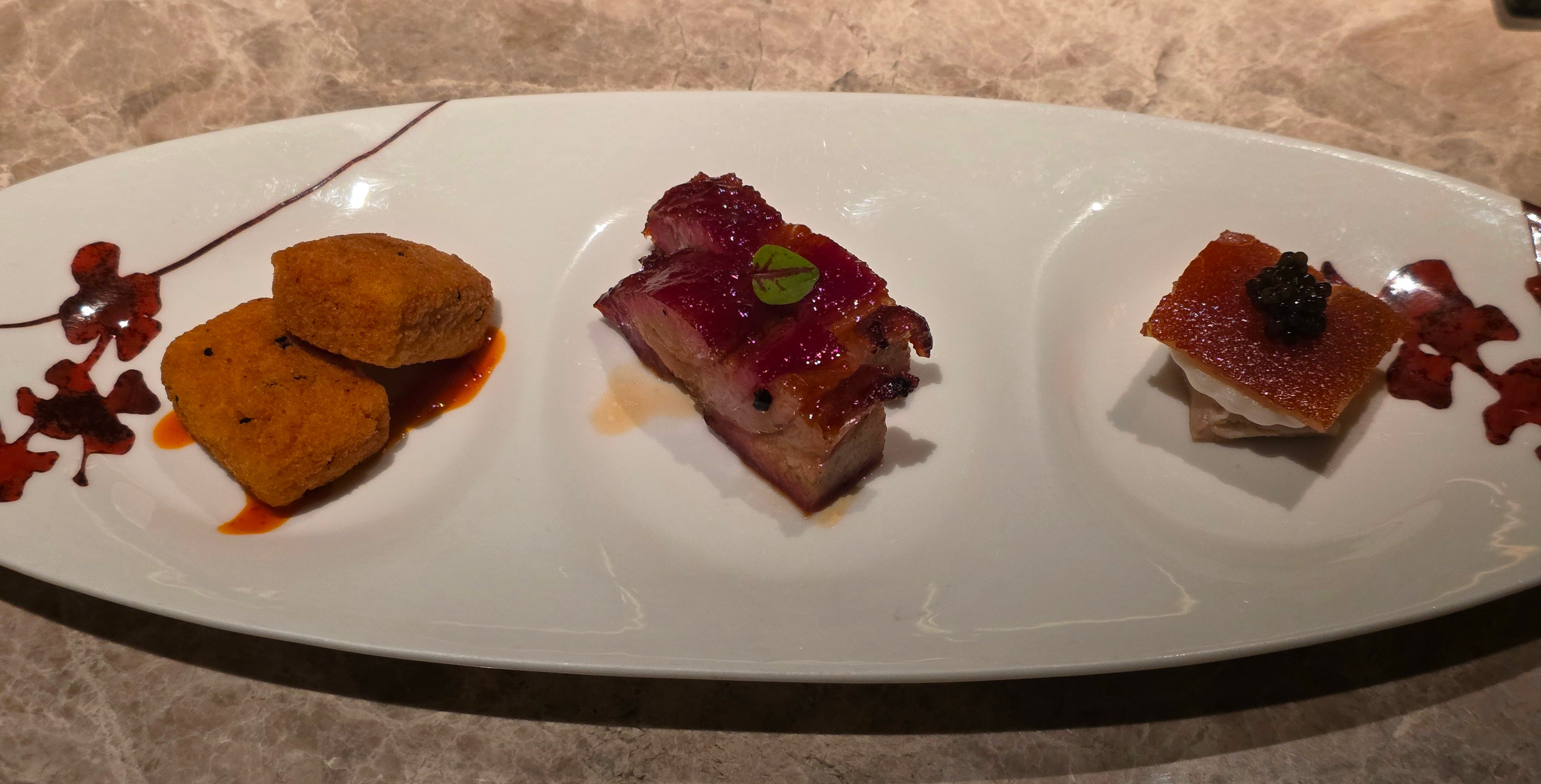
The opening selection of appetisers set the tone neatly. There was classic char siu, suckling pig, and a crisp tofu preparation. Nothing here was trying to be clever. The point was execution, and that much was apparent from the start.
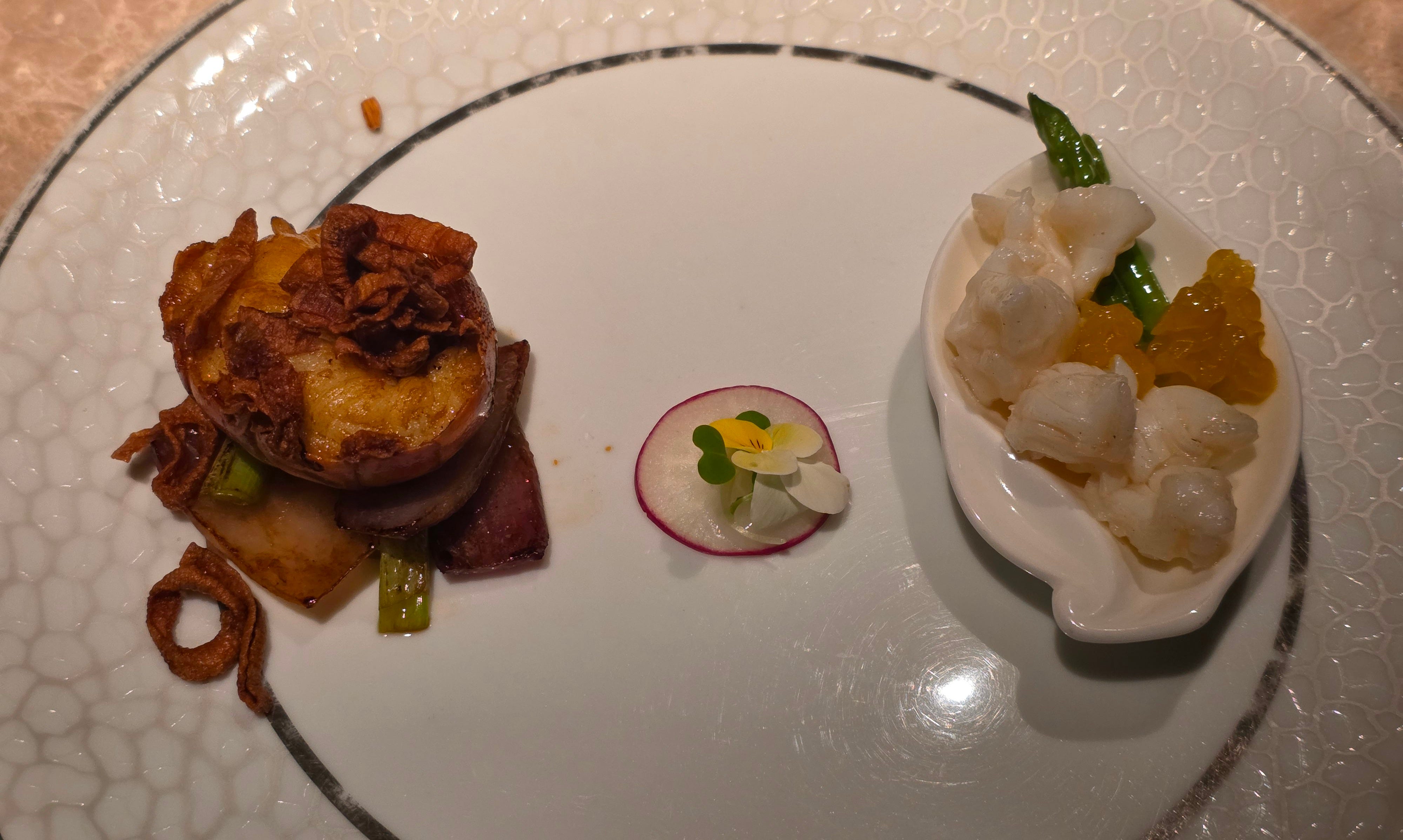
The lobster course came next, done in two ways using the two halves of the tail. One half was stir-fried with crispy garlic, green onion, and a good deal of wok hei, the kind of dish that reminds you how much flavour Cantonese cooking can build from heat, oil, and timing alone. The other half was removed from the shell and paired with asparagus and Chinese fungus, more restrained in style, allowing the sweetness of the lobster to come through more directly. It was a smart progression, showing both power and finesse with the same ingredient.
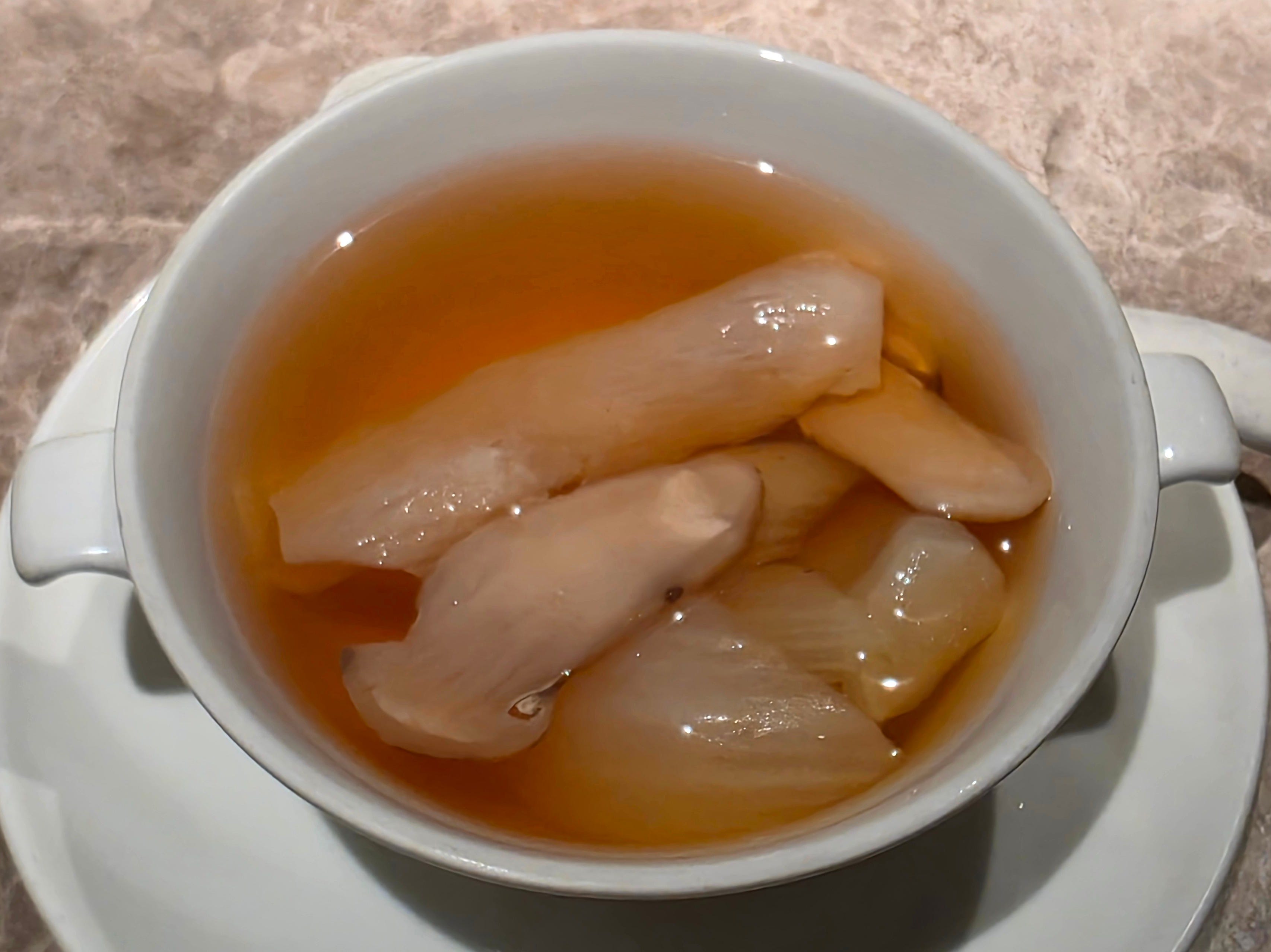
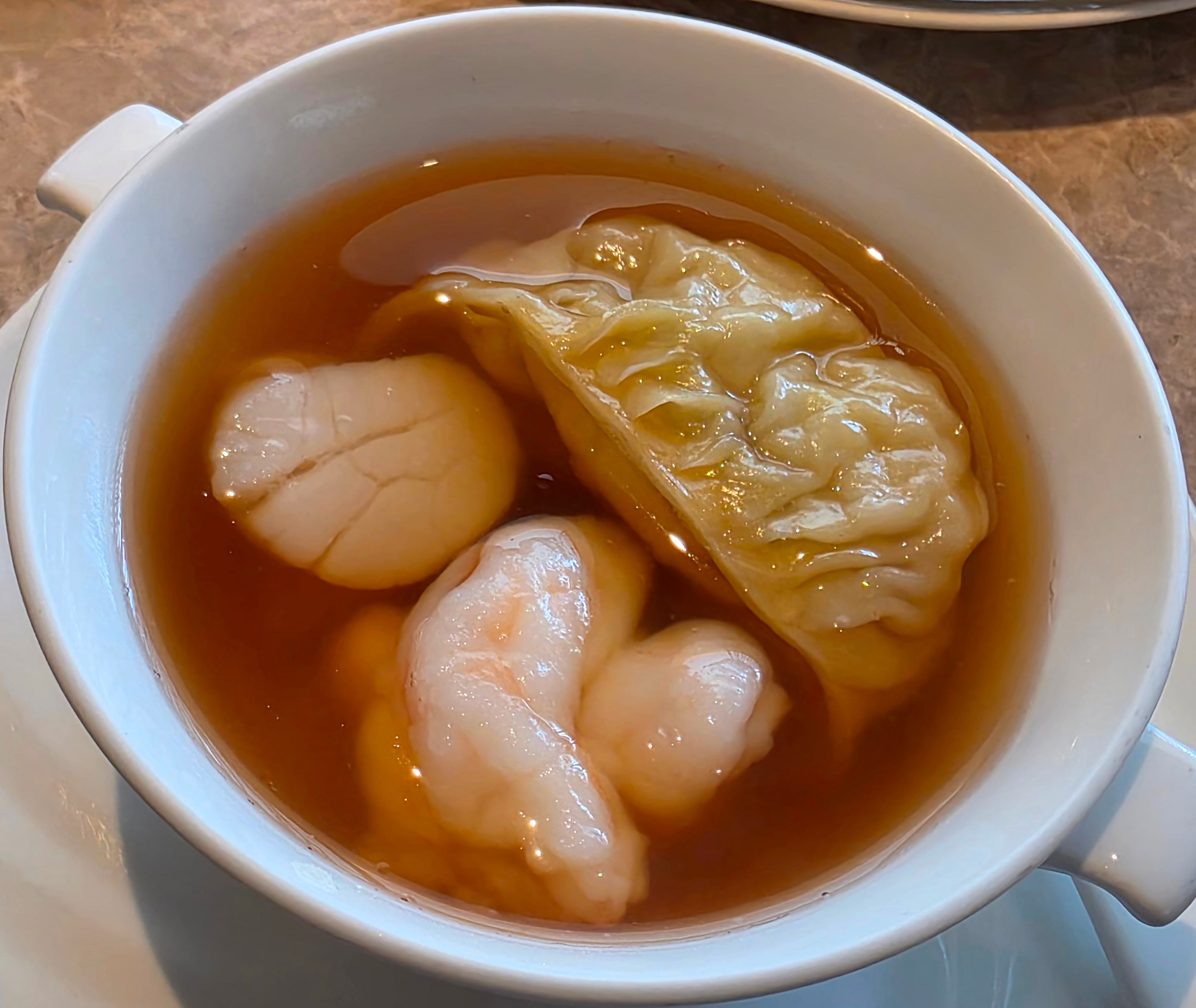
After that came a double-boiled soup of fish maw and matsutake mushroom, made using the classic Chinese low-and-slow approach that avoids diluting the broth with excess moisture. This was deeply concentrated, clear, and full of umami.
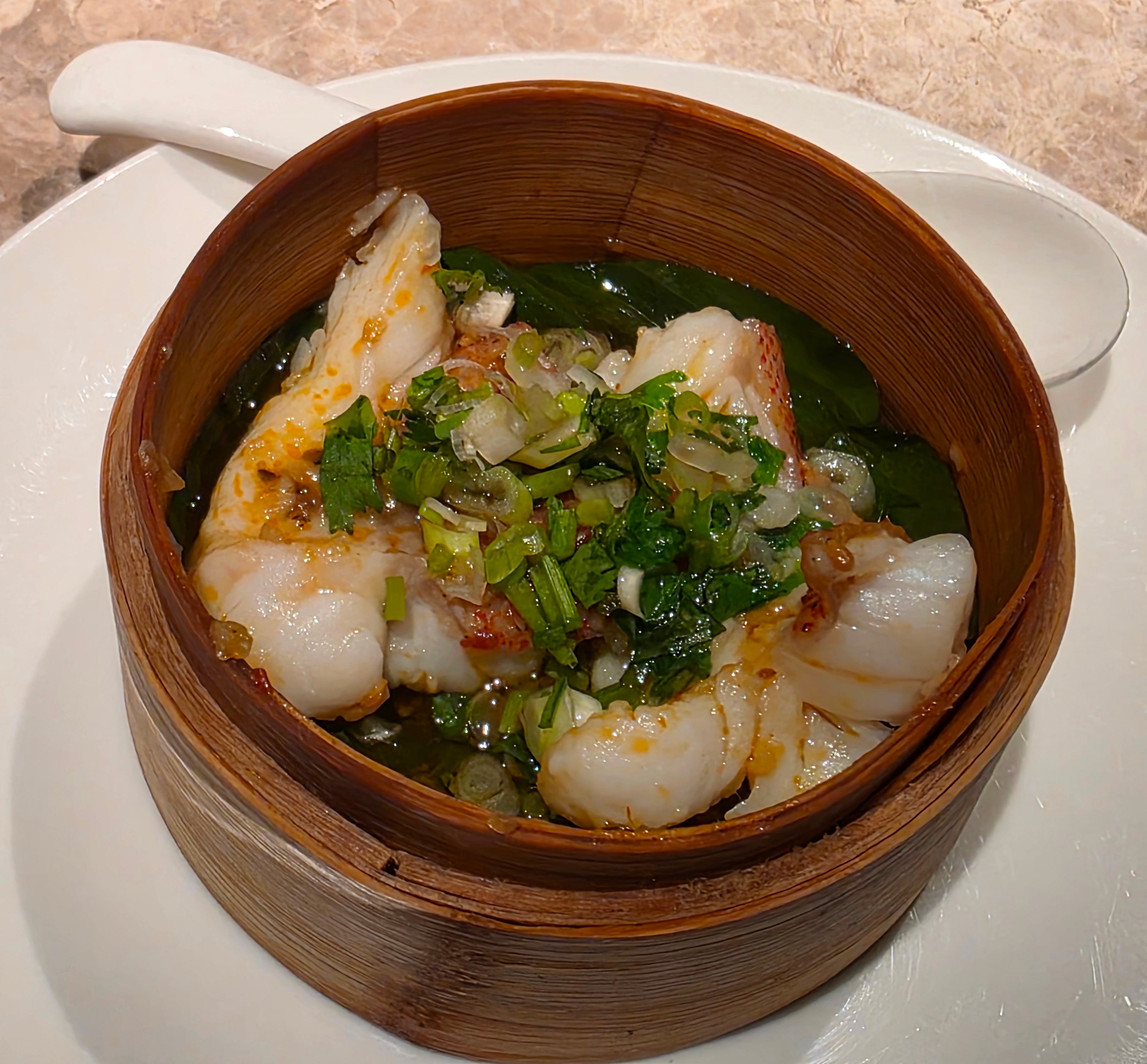
A traditional fish course followed: steamed grouper fillets, deboned for convenience, finished with blistering hot scallion oil. This is one of those Cantonese preparations that can seem almost too simple if you do not stop to think about how much precision it requires. The fish has nowhere to hide. Here, it was handled properly, delicate and clean, with the hot oil providing fragrance rather than brute force.
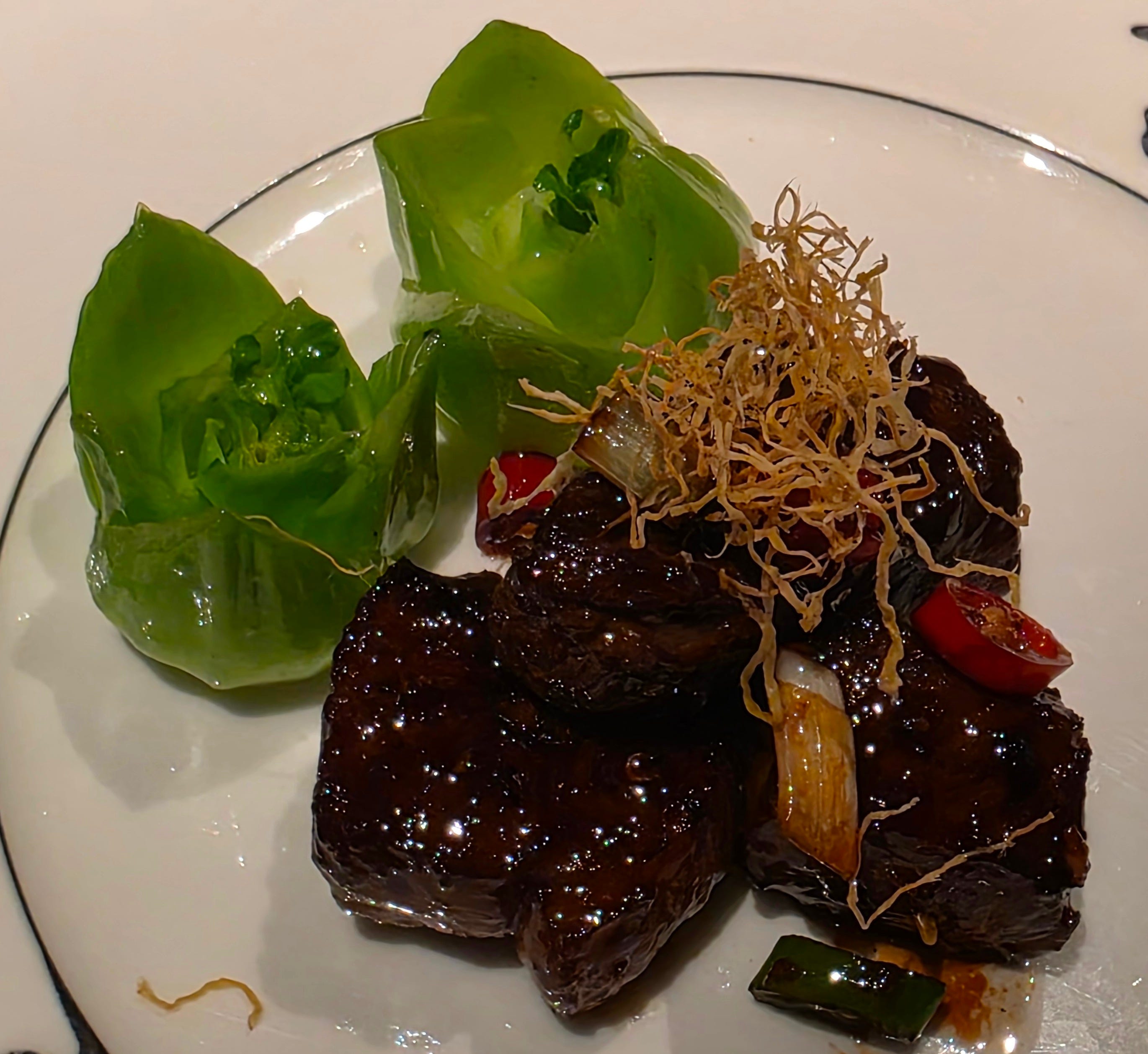
The wagyu beef came glazed in a sweet sauce and served with meticulously cut bok choi. Cantonese beef courses at this level often risk becoming a little predictable, but this was well judged and balanced, with enough sweetness to compliment the fattines of the beef without overwhelming it.
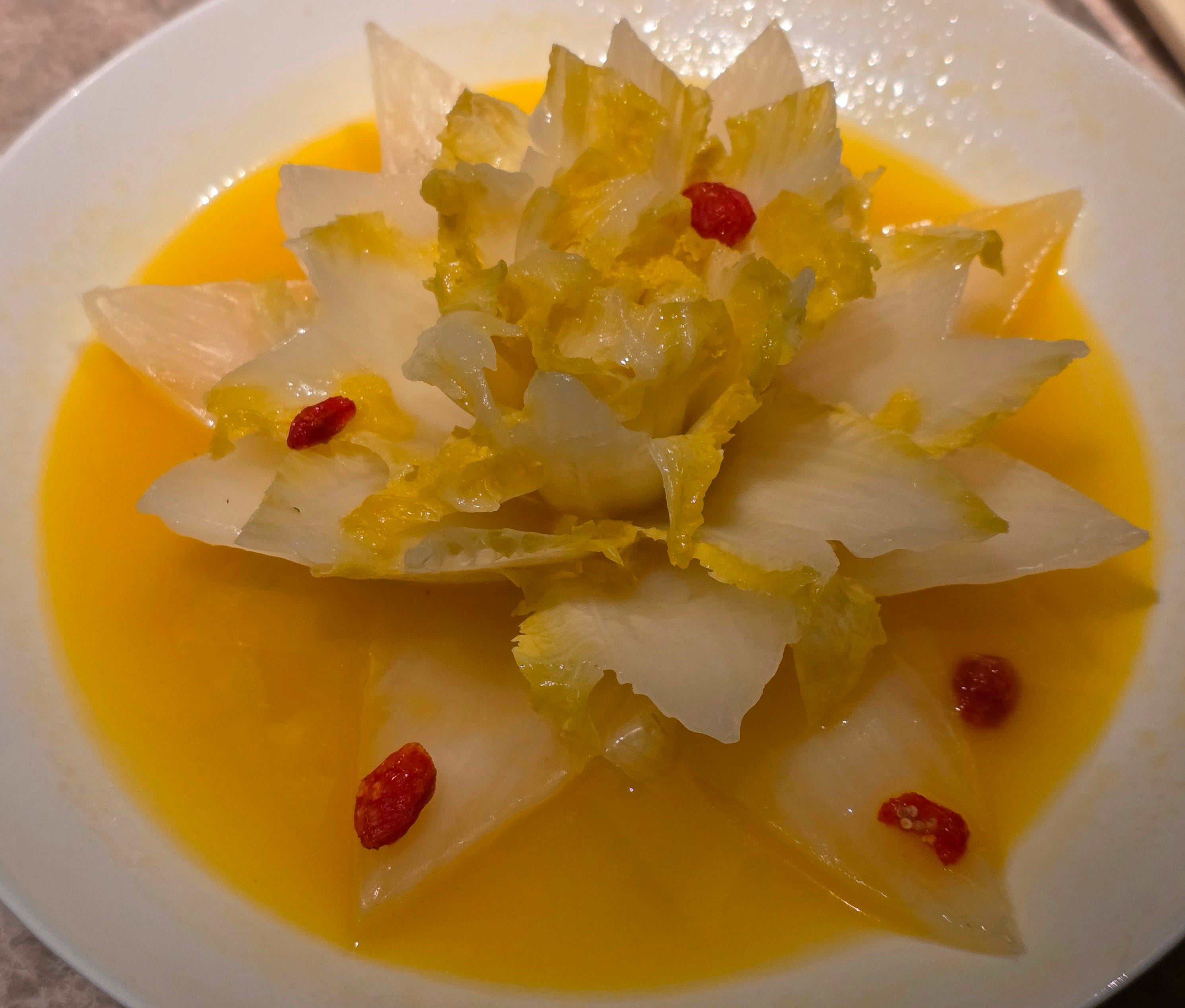
One of the neater dishes of the night was a traditional preparation of poached Tianjin cabbage in rich chicken broth with wolfberries. The cabbage had been carefully carved into the shape of a flower. The dish itself was elegant and soothing, and a reminder that high-end Cantonese cooking often reaches its most sophisticated expression not through extravagance, but through taking a humble ingredient and treating it with extraordinary care.
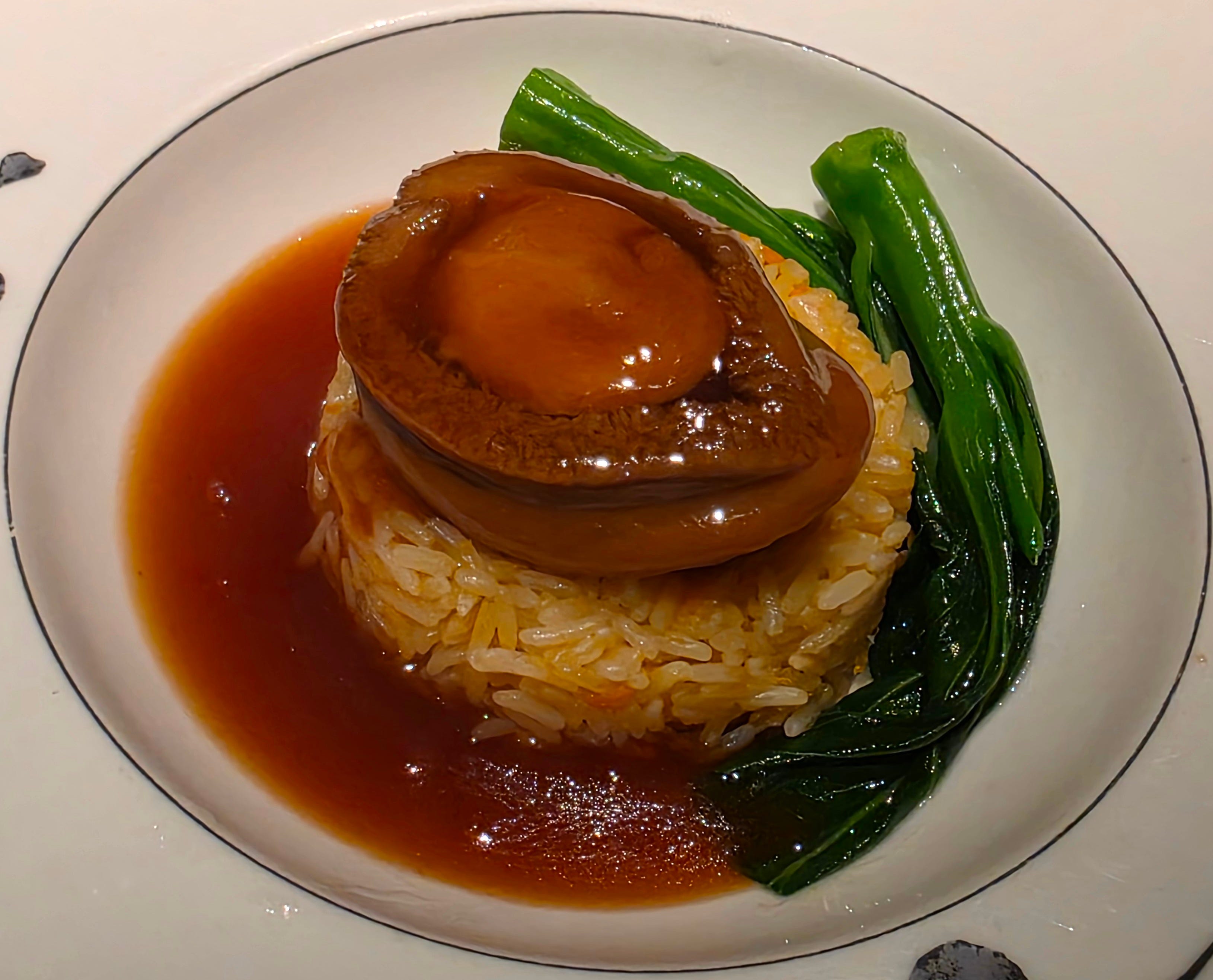
The highlight of the night came at the end of the savoury courses: a large rehydrated abalone served with fried rice in abalone sauce. This was excellent. Properly prepared abalone should be tender without losing its structure, and this one had exactly that quality, rich and deeply savoury, with the sauce carrying all the patient concentration you hope for in a dish like this. The fried rice underneath was not an afterthought either, but a useful delivery mechanism for all that sauce. If you are going to come to a place like Ying Jee Club, this is the kind of dish you want them to make for you.
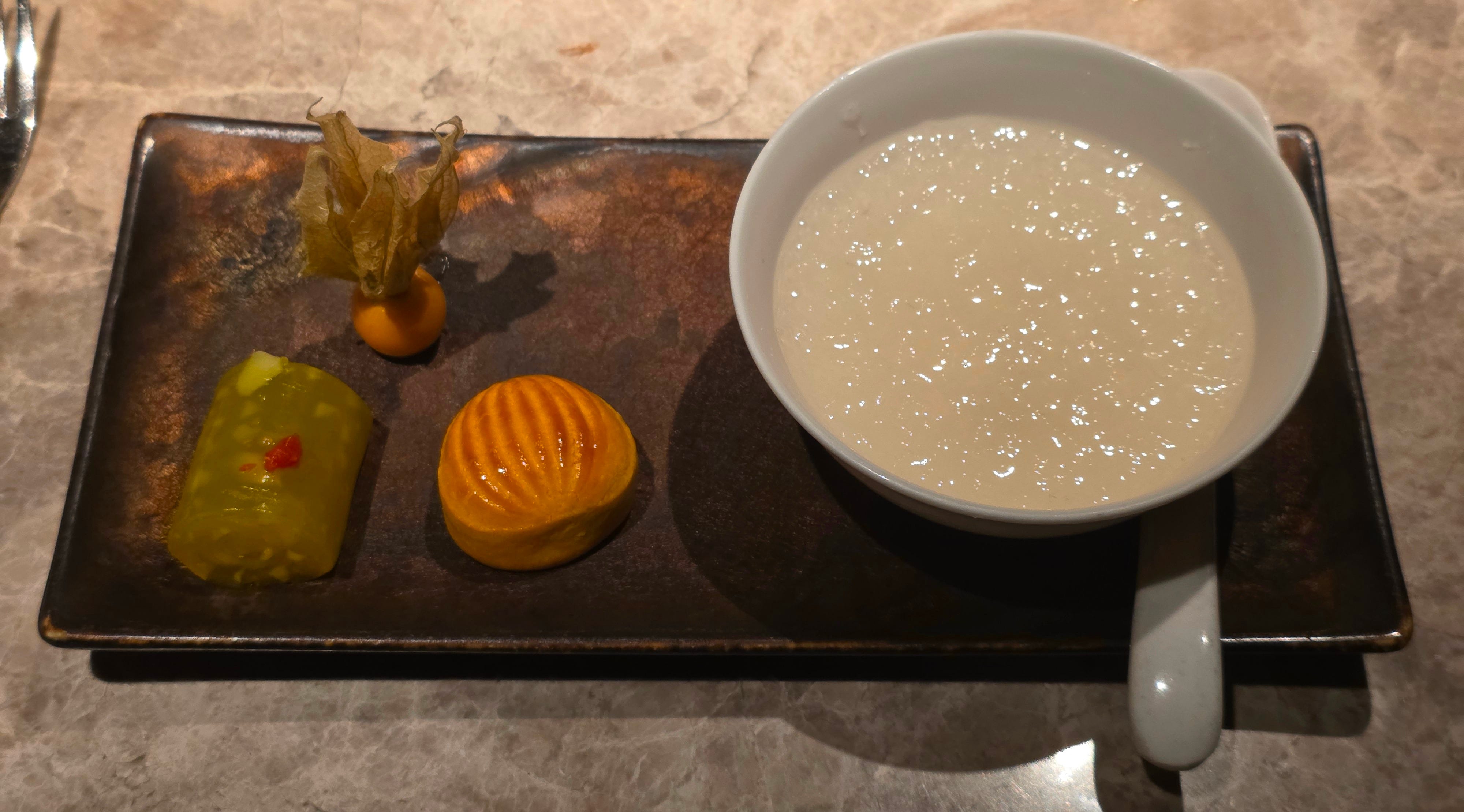
Dessert was relatively traditional, a double-boiled bird’s nest followed by petit fours on the side, including water chestnut jelly and an almond biscuit. It was a gentle ending, not especially theatrical, but consistent with the measured tone of the meal.
What impressed me most about Ying Jee Club was not that any one dish was wildly inventive or shocking. In fact, that is almost the wrong way to think about the place. The strength of the restaurant lies in the consistency and care across the board. The kitchen takes traditional Cantonese forms, occasionally gives them a slight twist, and executes them with a level of discipline that very few restaurants can sustain across an entire meal.
There was no single dish that left me stunned, but there were no weak points either, and that kind of consistency is harder to pull off than a one-off signature flourish. For serious, highly accomplished Cantonese cooking with Michelin pedigree, Ying Jee Club is the real thing. Worth a return visit.
Total Damage: 4800 HKD/2 people.
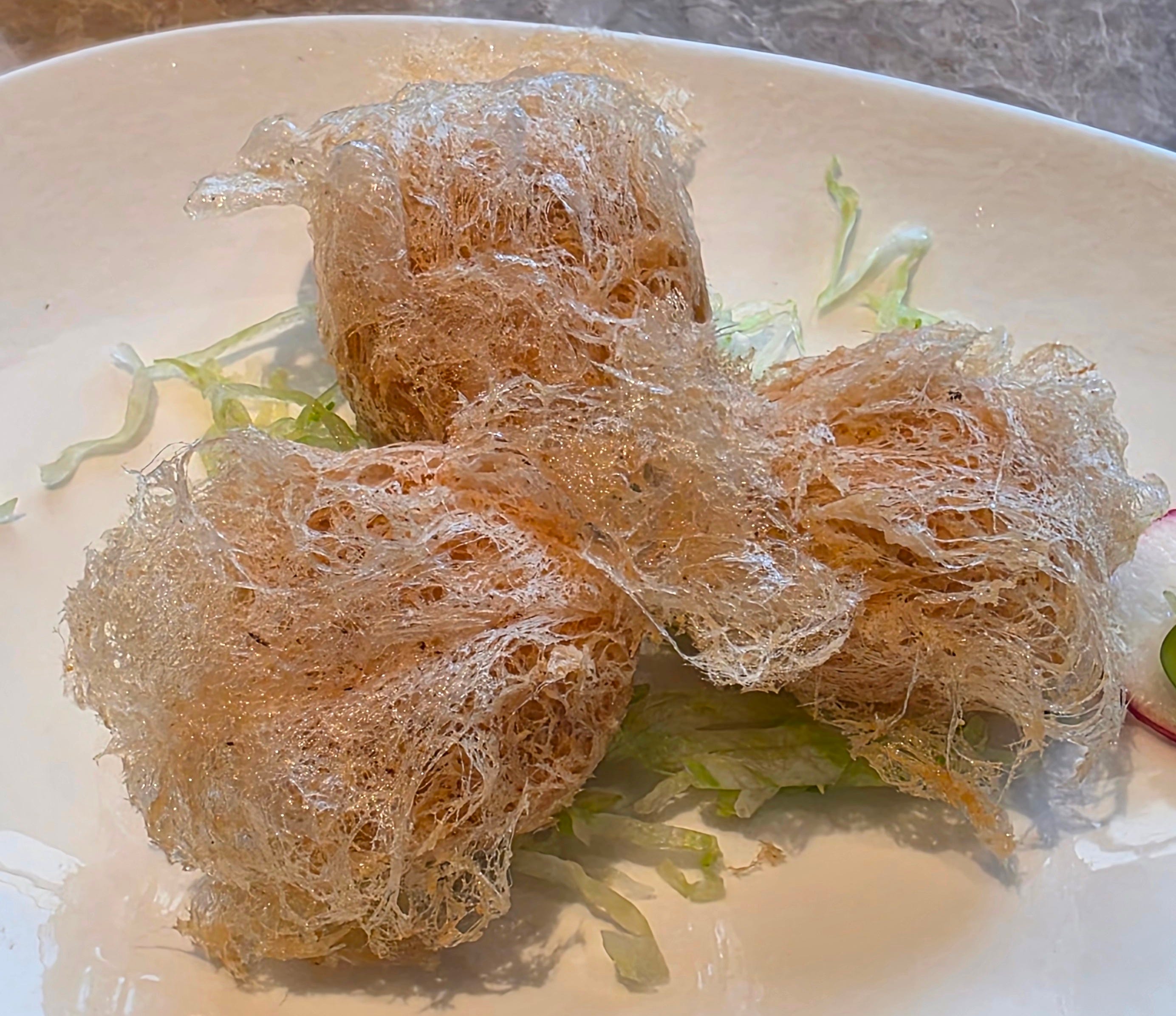
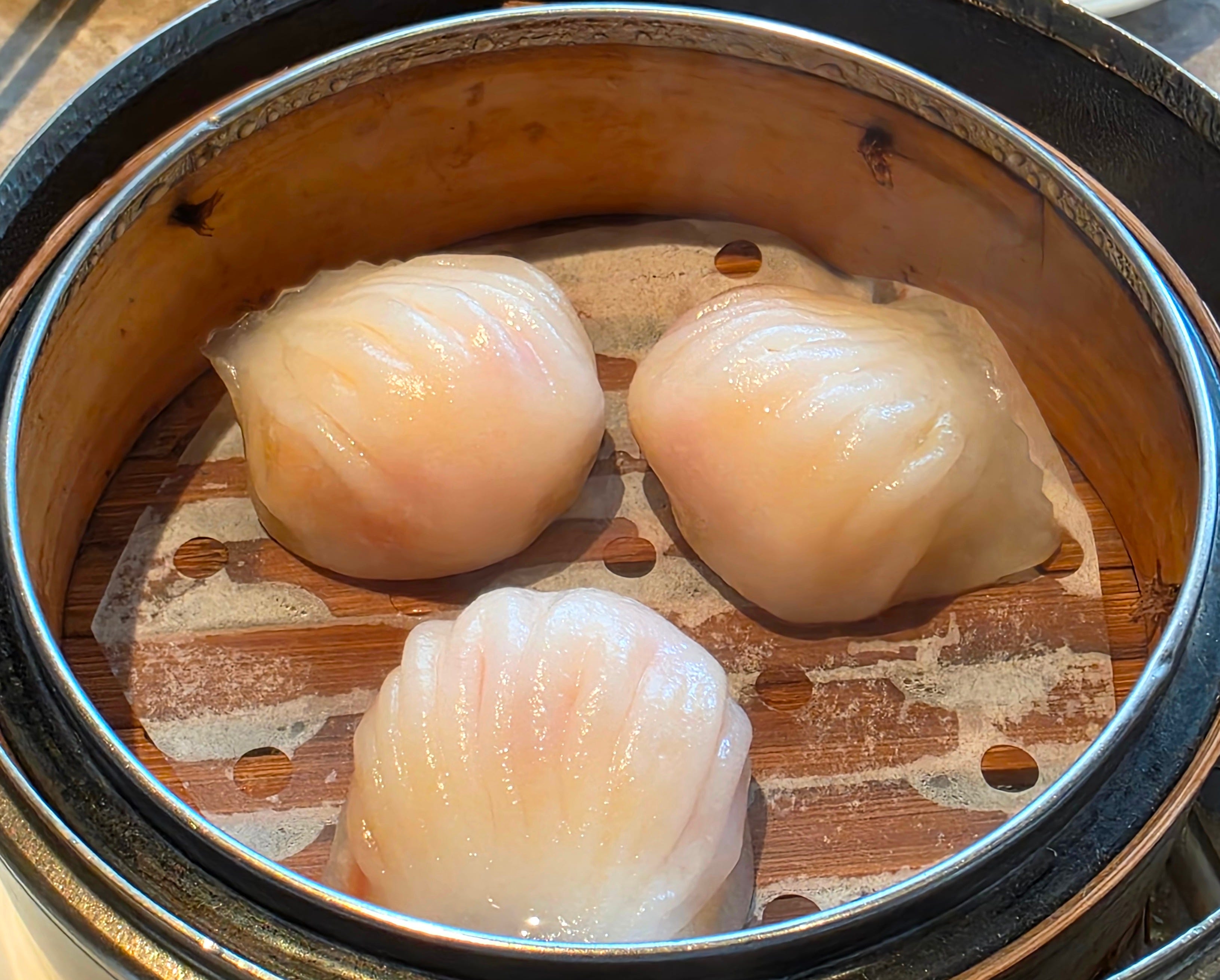
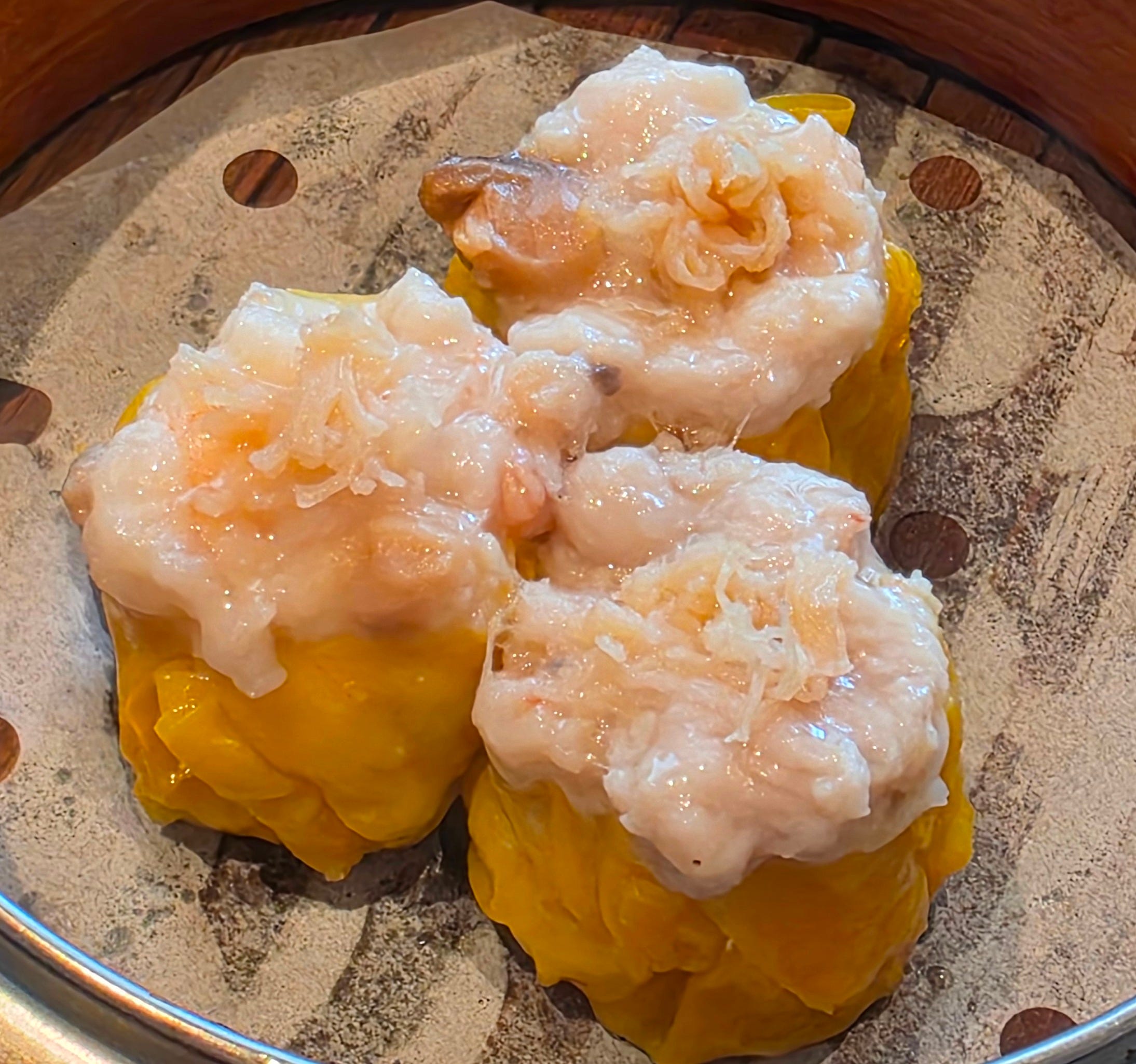
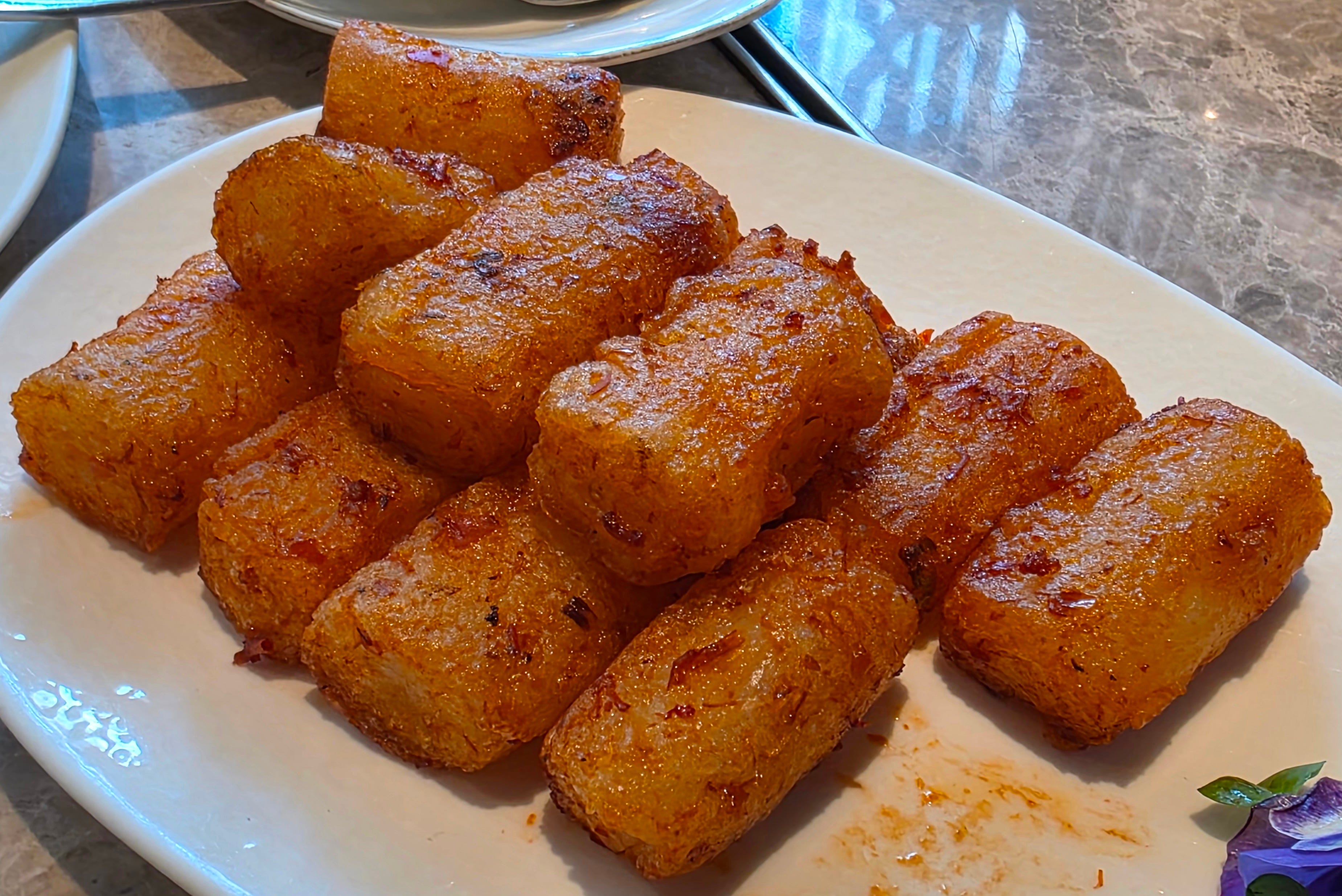
I enjoyed the experience at Ying Jee Club so much, that I ended up returning for dim sum just a few days later. I was impressed again. No caviar, gold flake or foie gras here. Just simple Cantonese cooking, exceptionally well-executed, every single time.