
Bo Innovation opened in Hong Kong in 2003, when self-taught Chef Alvin Leung bought a cheap speakeasy and turned it into a spot for his experimental take on Chinese food. It gained traction fast for blending molecular techniques with traditional flavors, earning two Michelin stars in 2009 and peaking at three in 2014. In 2022, Leung relocated to a new space in Central, where the updated space holds two stars today. The restaurant focuses on a single tasting menu, themed around Hong Kong’s street food and culture, with custom dishes served in quirky ways.
Chef Alvin Leung was born in London, England to Chinese parents from Hong Kong. The family moved early - first to Hong Kong briefly, then to Toronto, Canada, where he grew up as the eldest of four siblings. His father was an engineer, which shaped a methodical mindset. His first restaurant job came as a busboy in his teens and after studying civil engineering, he worked in the field for about 20 years - practical, structured work that carried over to cooking later.
Chef Leung switched careers around 2003. Self-taught in the kitchen, with no formal training and drew inspiration from chefs like Ferran Adrià at el Bulli, Heston Blumenthal at The Fat Duck, and Joël Robuchon. He bought a struggling speakeasy in Hong Kong called Bo and renamed it Bo Innovation, and started serving his unique style: X-Treme Chinese - traditional Cantonese flavors twisted with molecular techniques, bold combos, and theater.
Nicknamed the “Demon Chef” after his wild hair, tattoos, rock-and-roll vibe, and aggressive kitchen presence. People often remember his sunglasses, cross earrings, and fiery charisma.
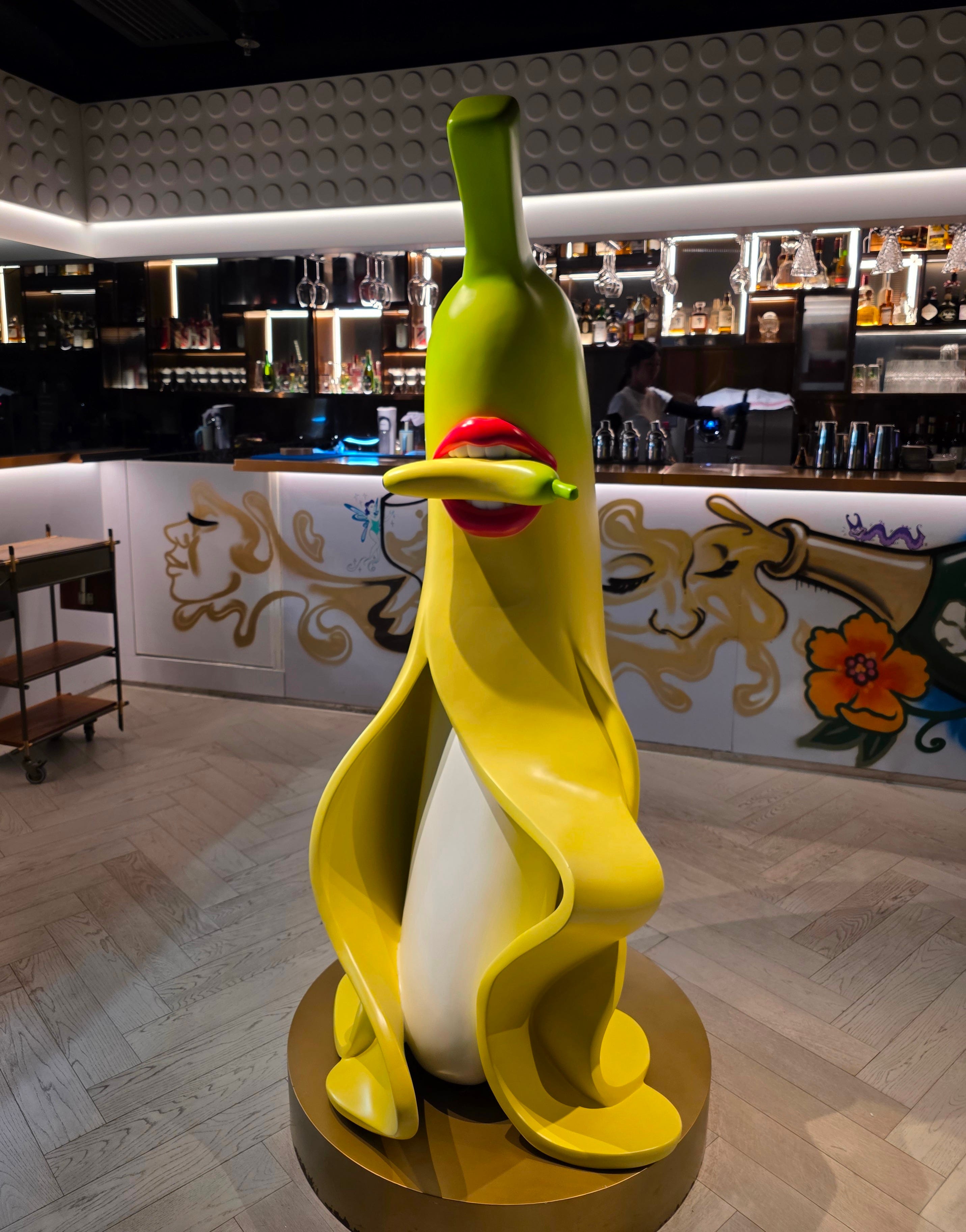
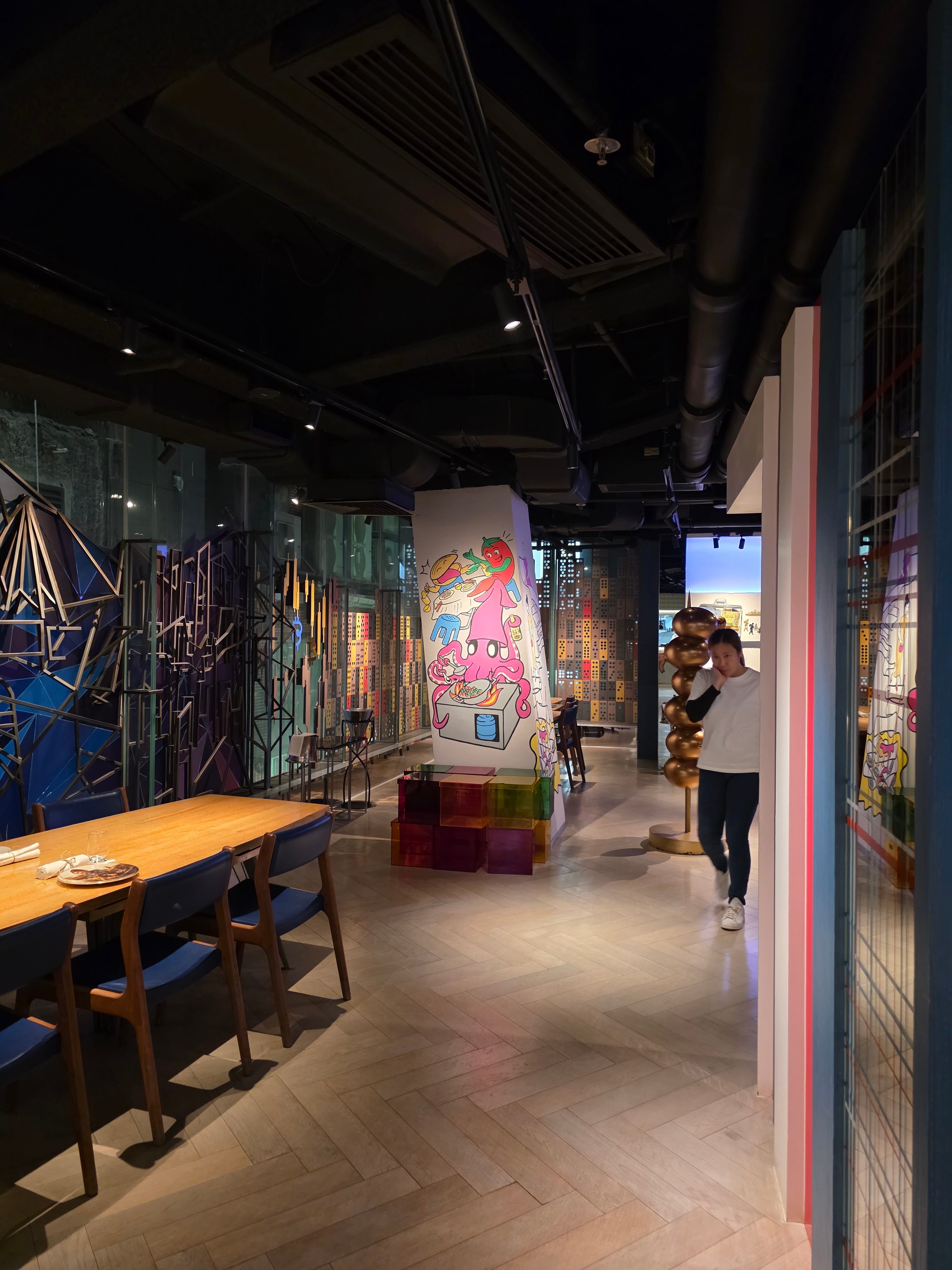
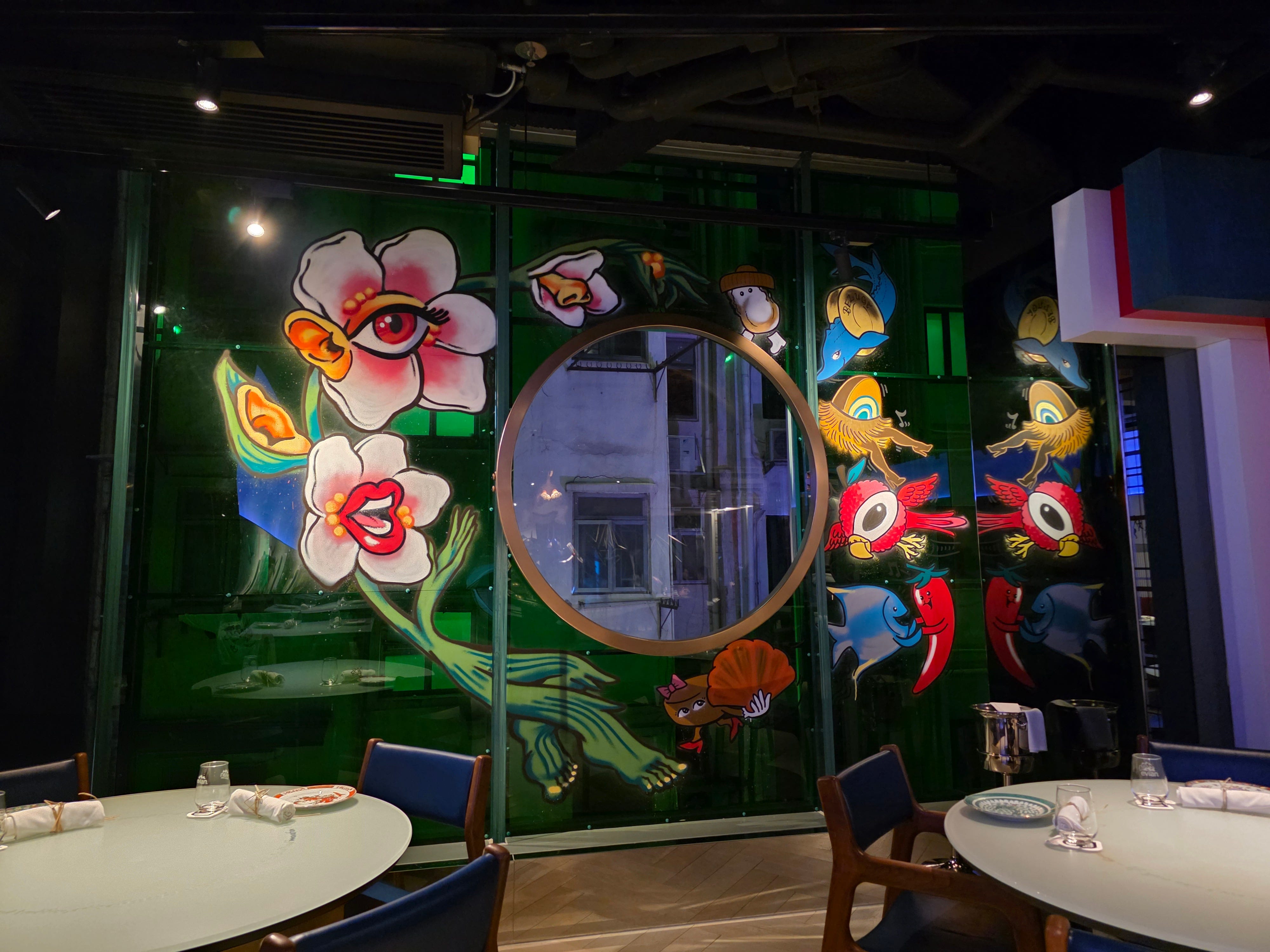
Walking into the space, it’s anything but formal. Local Hong Kong culture forms a common motif, and the mix of vibrant colours and multitude of artwork gives a bit of a surrealist, abstract vibe.
Everything from the wet towelette is served theatrically. In this case , fragrant water poured on top of the towelette pills and dry ice, creating a thick smoke drifting across the table.
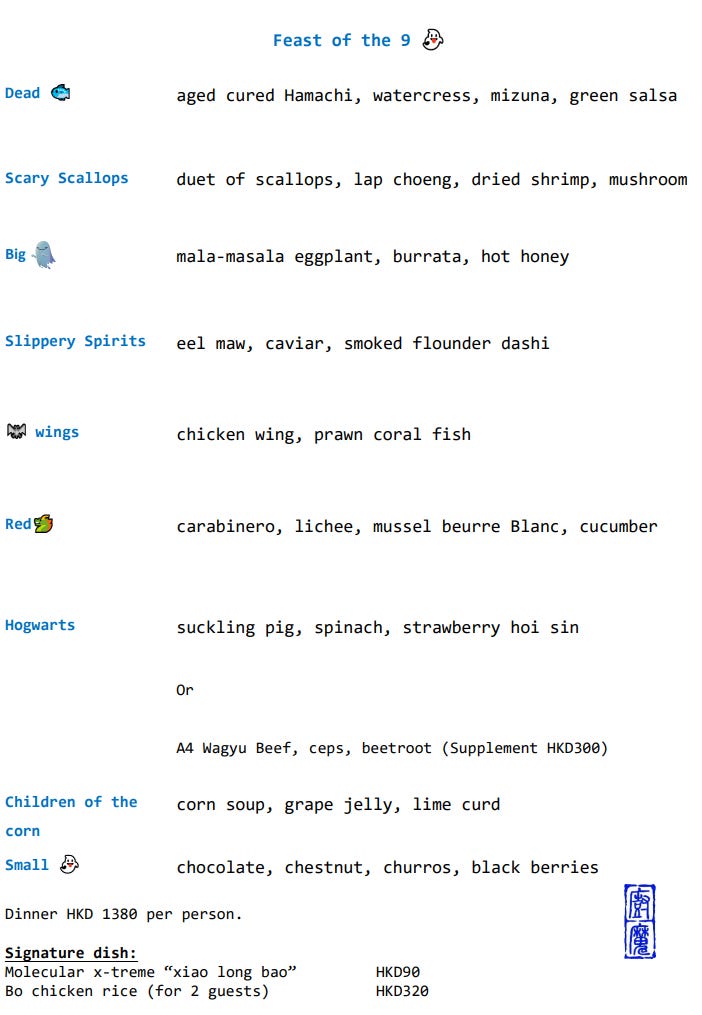
We went with the Feast of the 9 Ghosts tasting menu, adding on both supplements. The menu was surprisingly affordable for a fine-dining restaurant in Hong Kong, and I remember when Bo Innovation used to be one of the priciest menus in town. We decided to do the four wine pairing as well.
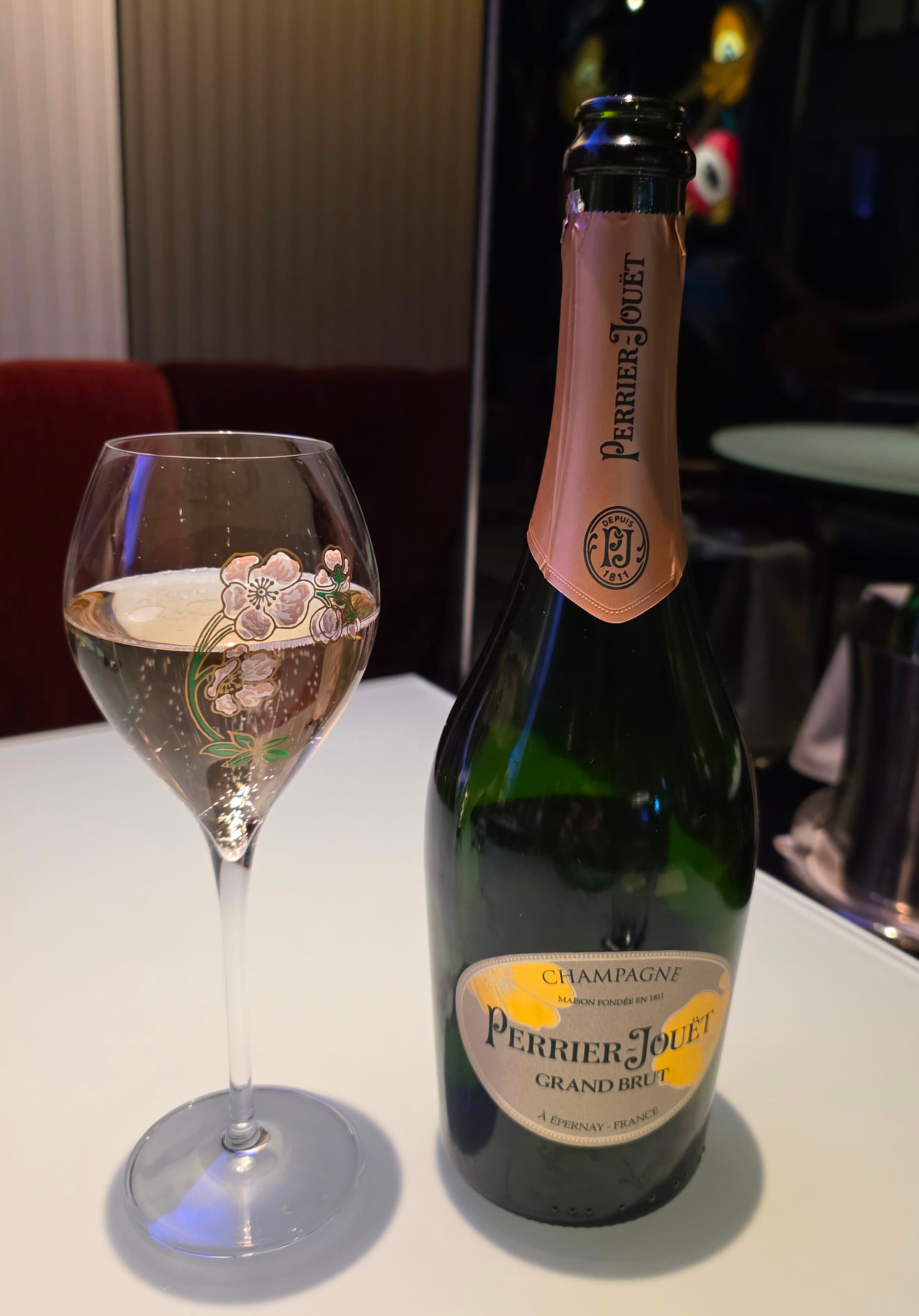
Starting with a champagne to accompany the first two courses.
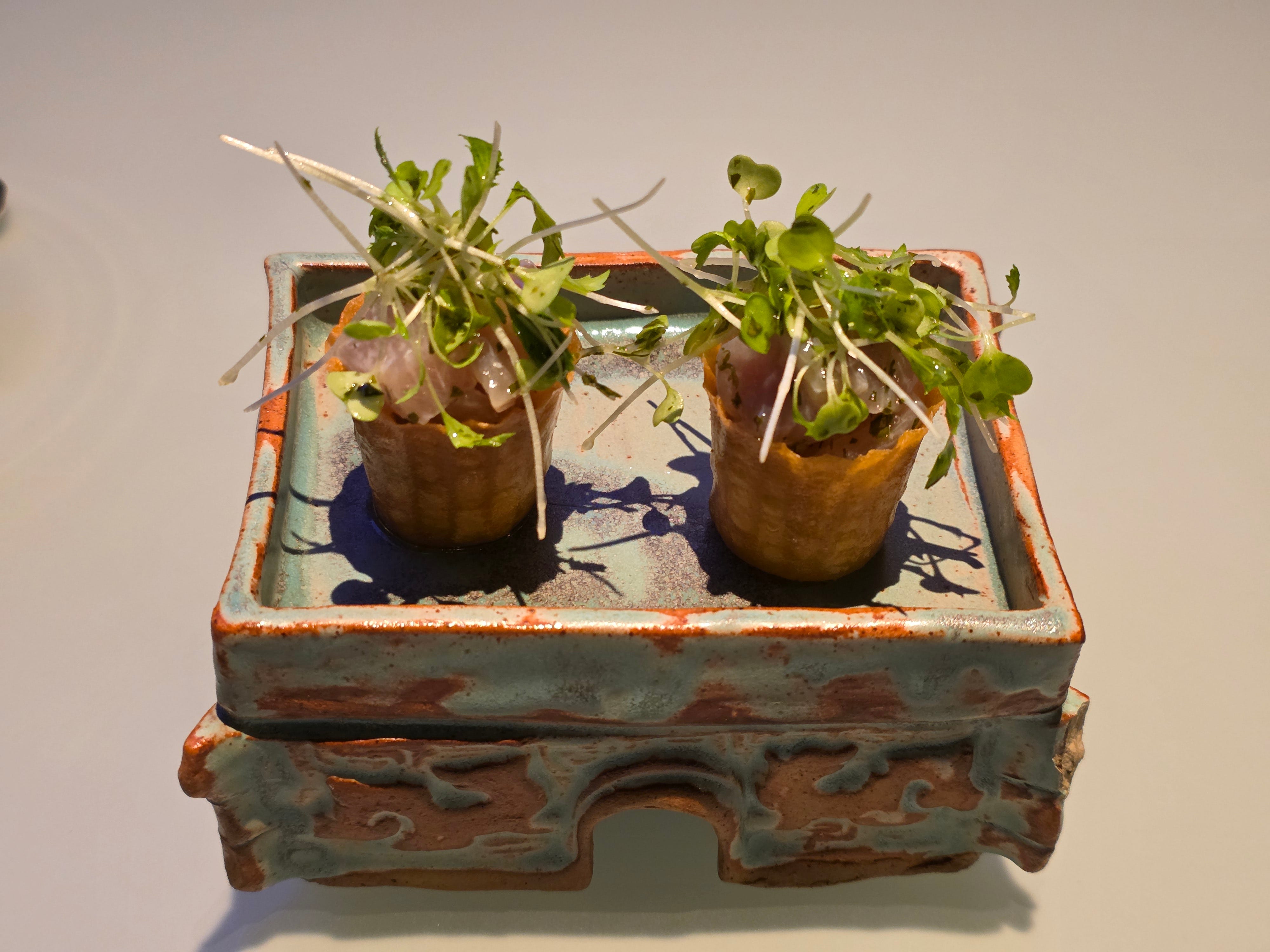
Dried aged Hamachi with watercress. Funky, oily mouthfeel with a hit of acid to balance the fishiness. Really great way to start the meal.
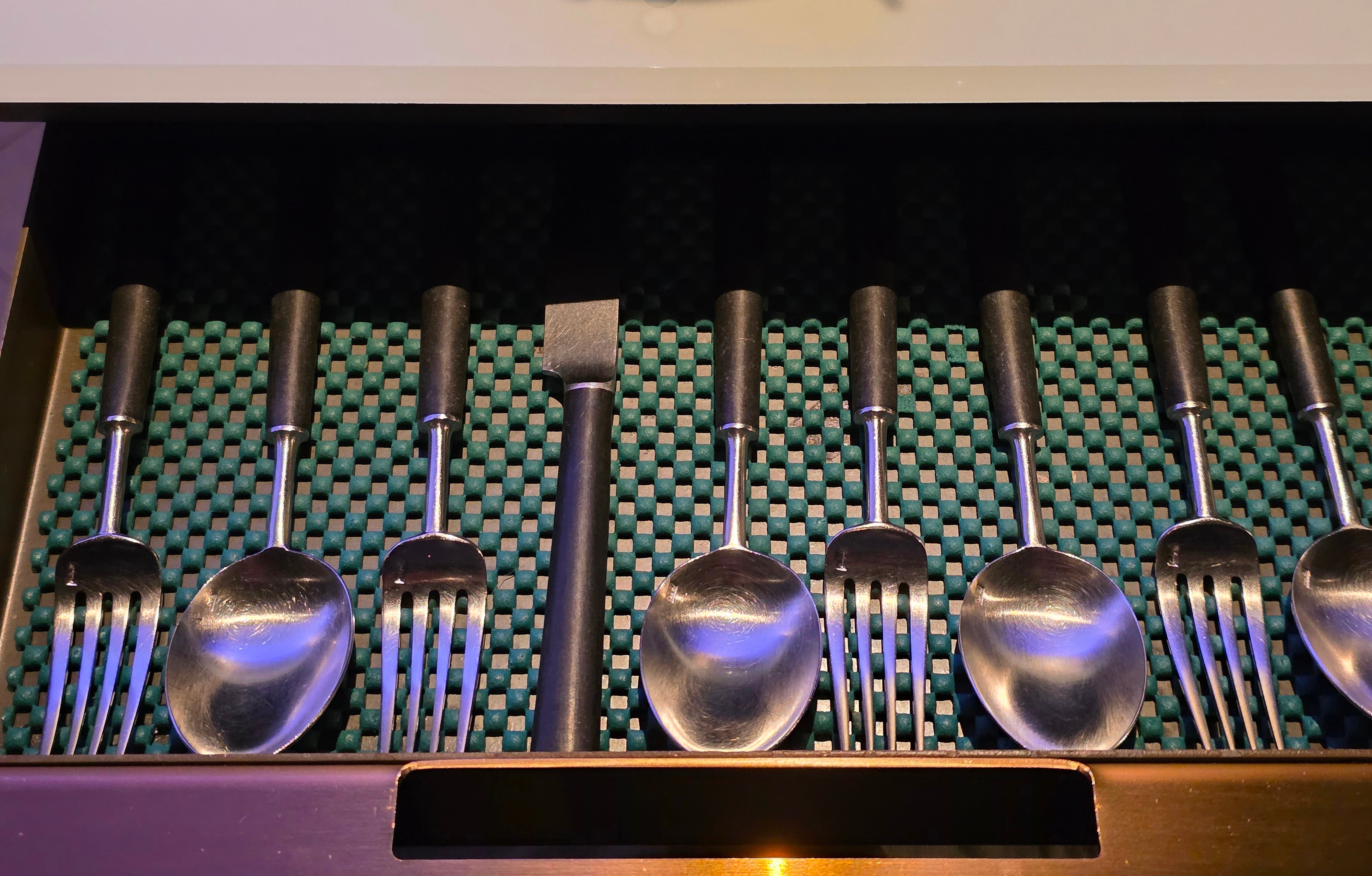
Like a mahjong table or a cha chaan teng, all the cutlery for the meal was stored in a little drawer beneath the table. Another little reference to local Hong Kong culture.
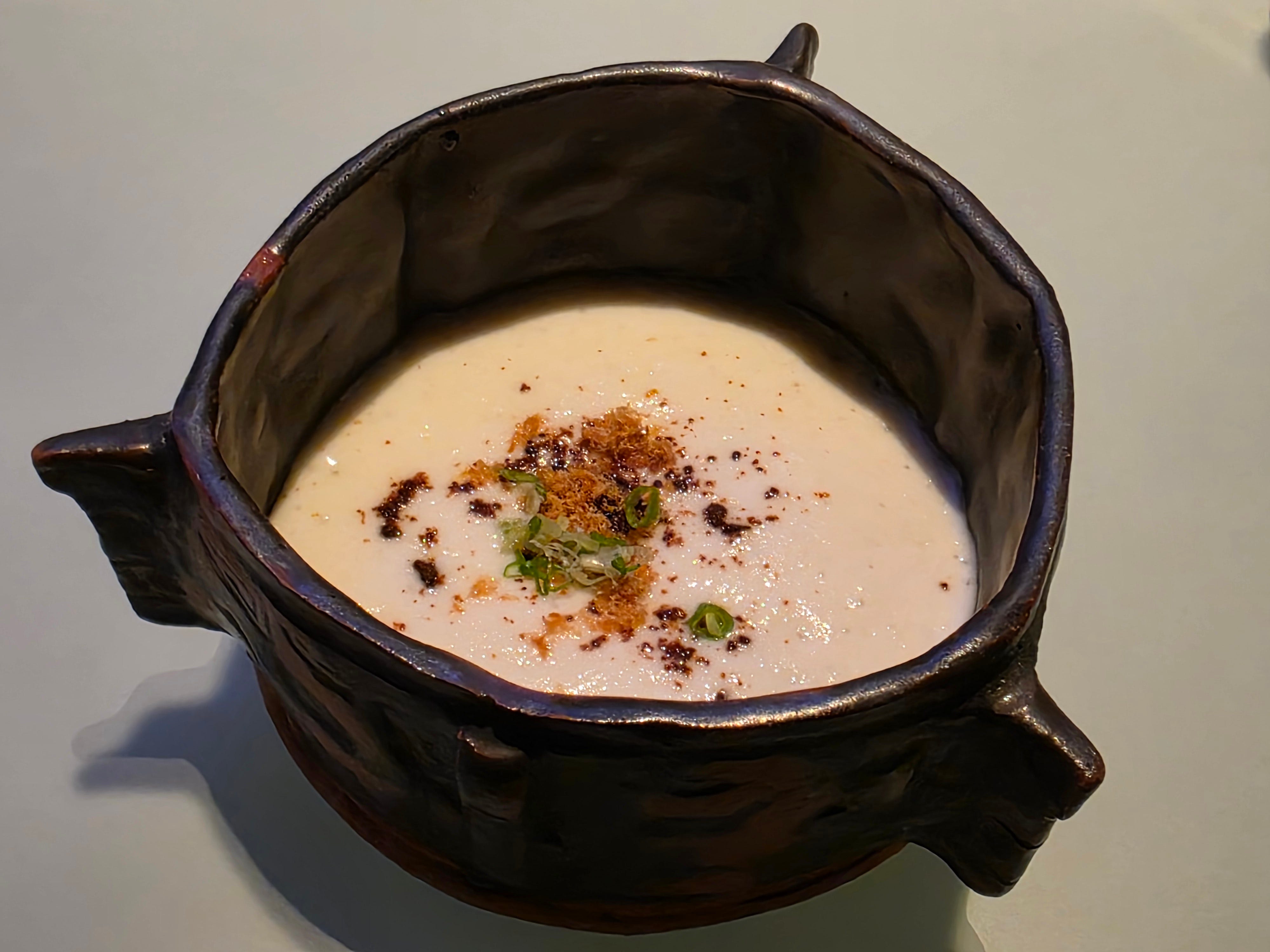
The second course was the “Scary Scallops”, a reference to Chinese pan-fried radish cake. A thick radish foam served with two kinds of scallop - contrasting a firmer, chewier texture from Chinese scallops with a sweeter, more tender texture from Hokkaido scallops. Served with mini dried shrimp, and bits of Chinese preserved sausage as per the standard preparation of the pan-fried radish cake.
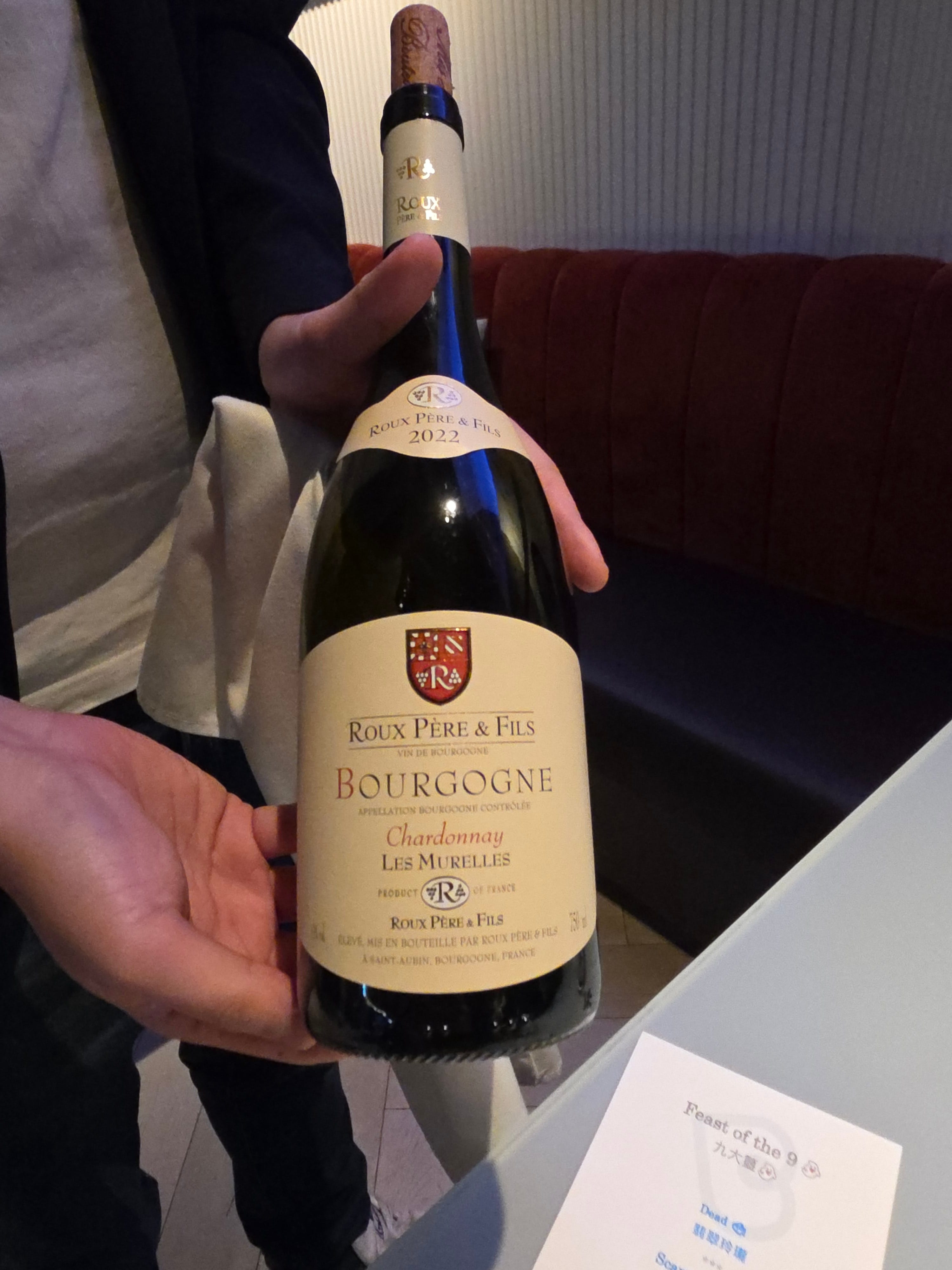
A Chardonnay with the next few courses. Fairly dry and otherwise uninteresting.
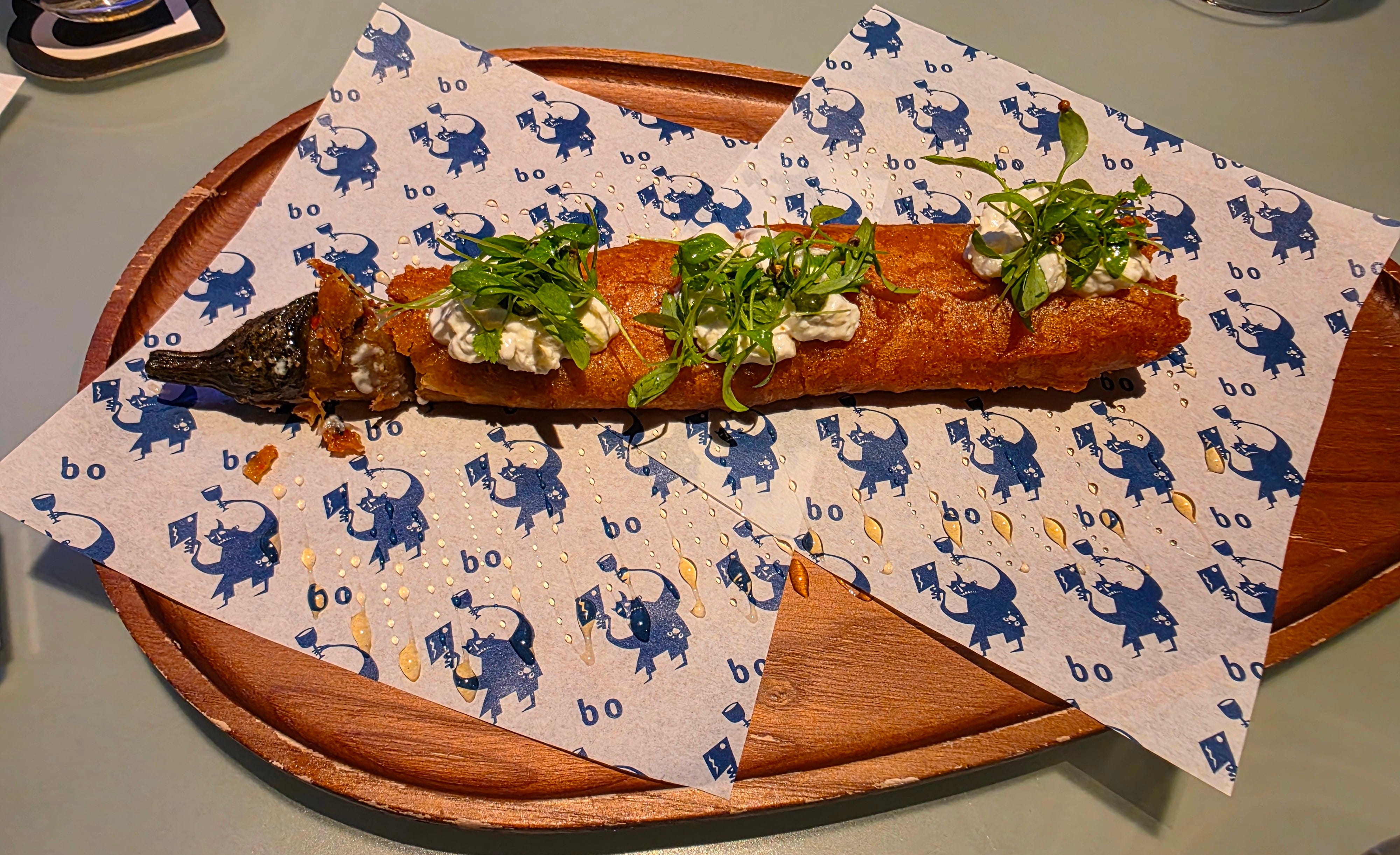
The “big ghost” - a large eggplant, prepared like a Chinese “oil fried demon” or deep fried dough stick. Crispy on the outside, soft and tender on the inside, with a kick from Szechuan peppercorn. One of the highlights of the meal.
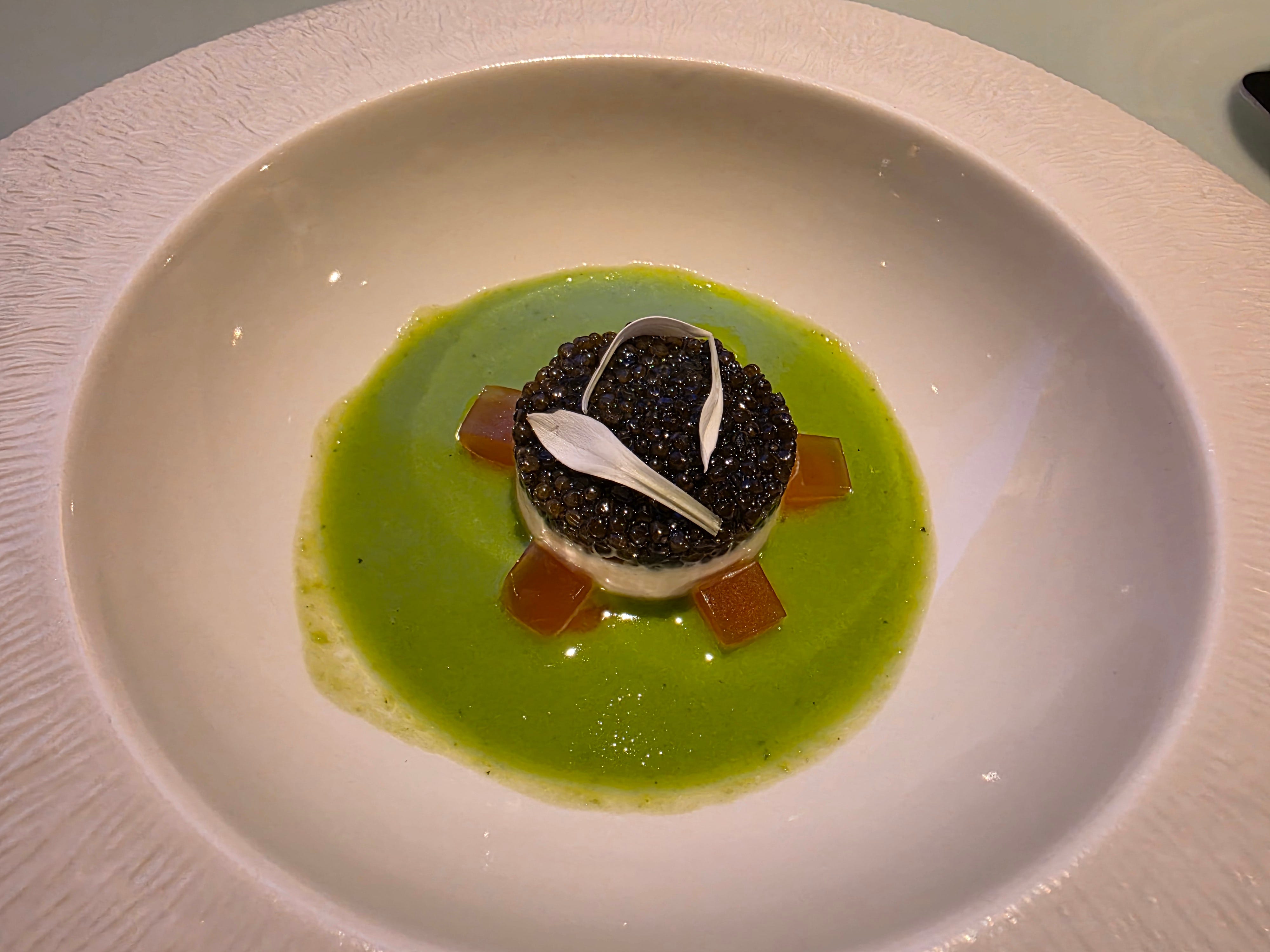
The next course skewed a lot more British than Chinese. A smoked eel mousse, topped with caviar, and cubes of bonito dashi jelly, sauced with a sweet pea and lemon emulsion. Fresh, popping with the sweet pea flavour contrasting the briny caviar and smokiness of the eel. I failed to find any Hong Kong connection, but well executed nonetheless.
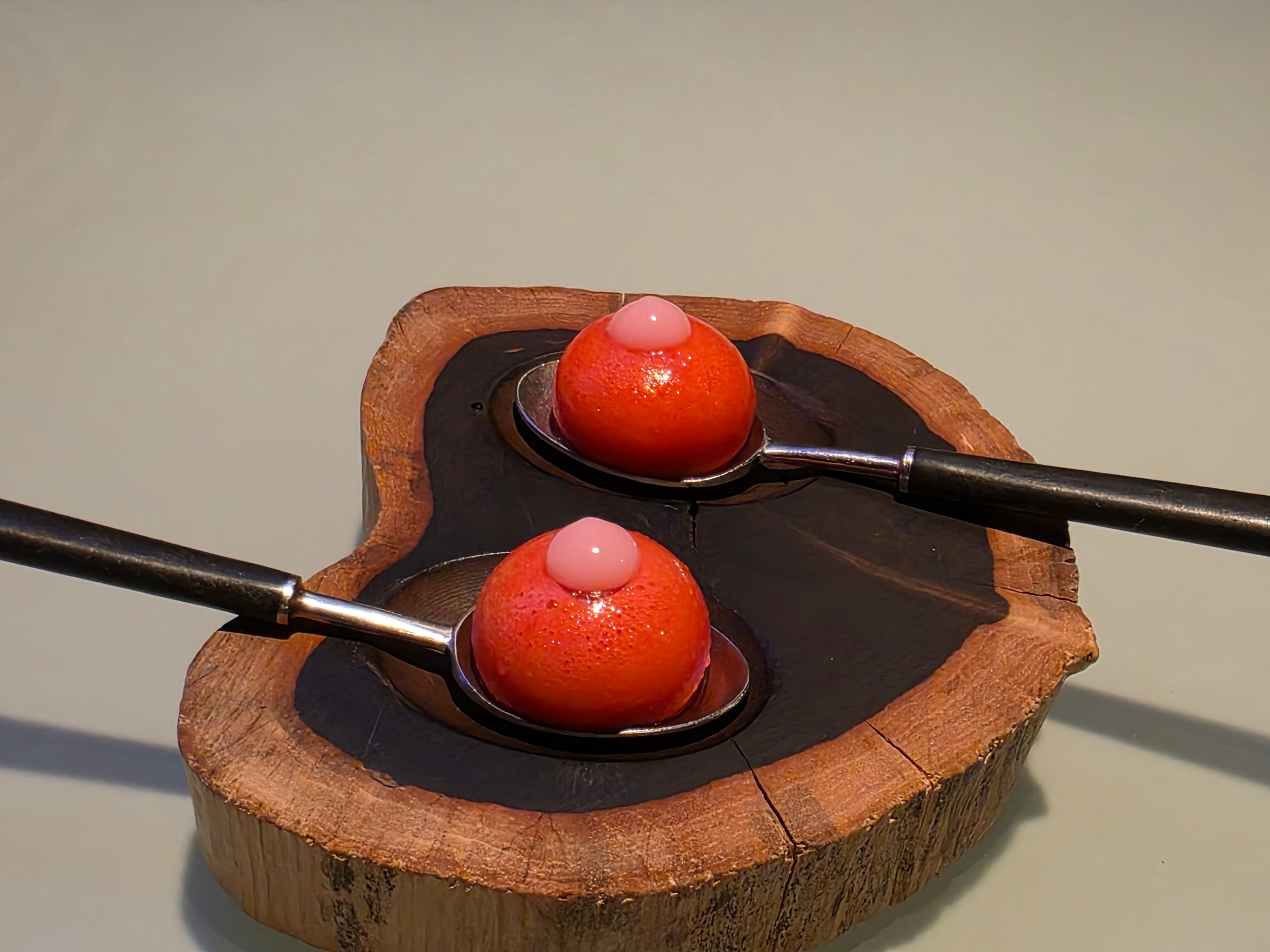
The signature molecular xiaolongbao came next. A sphere filled with condensed pork broth, ginger and aged vinegar with a kick of Szechuan peppercorn. A very classic molecular gastronomy technique that would’ve been very impressive ten years ago. A bit underwhelming for the signature supplement. Would’ve been a good amuse bouche though.
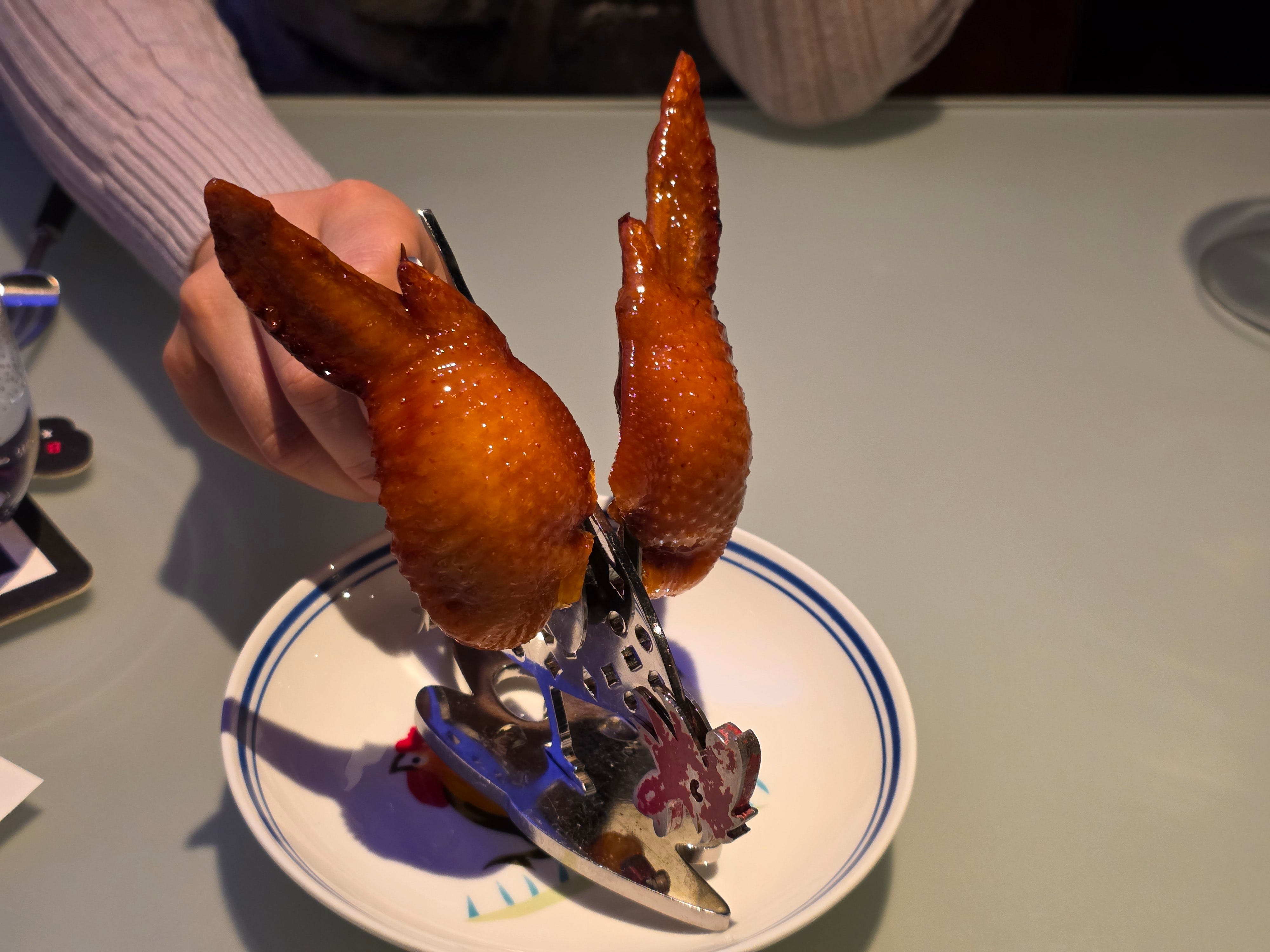
Moving back to the tasting menu, the stuffed chicken wing, deep fried to a crisp, stuffed with shrimp coral. The presentation was neat, with the wings mounted on a metal chicken.
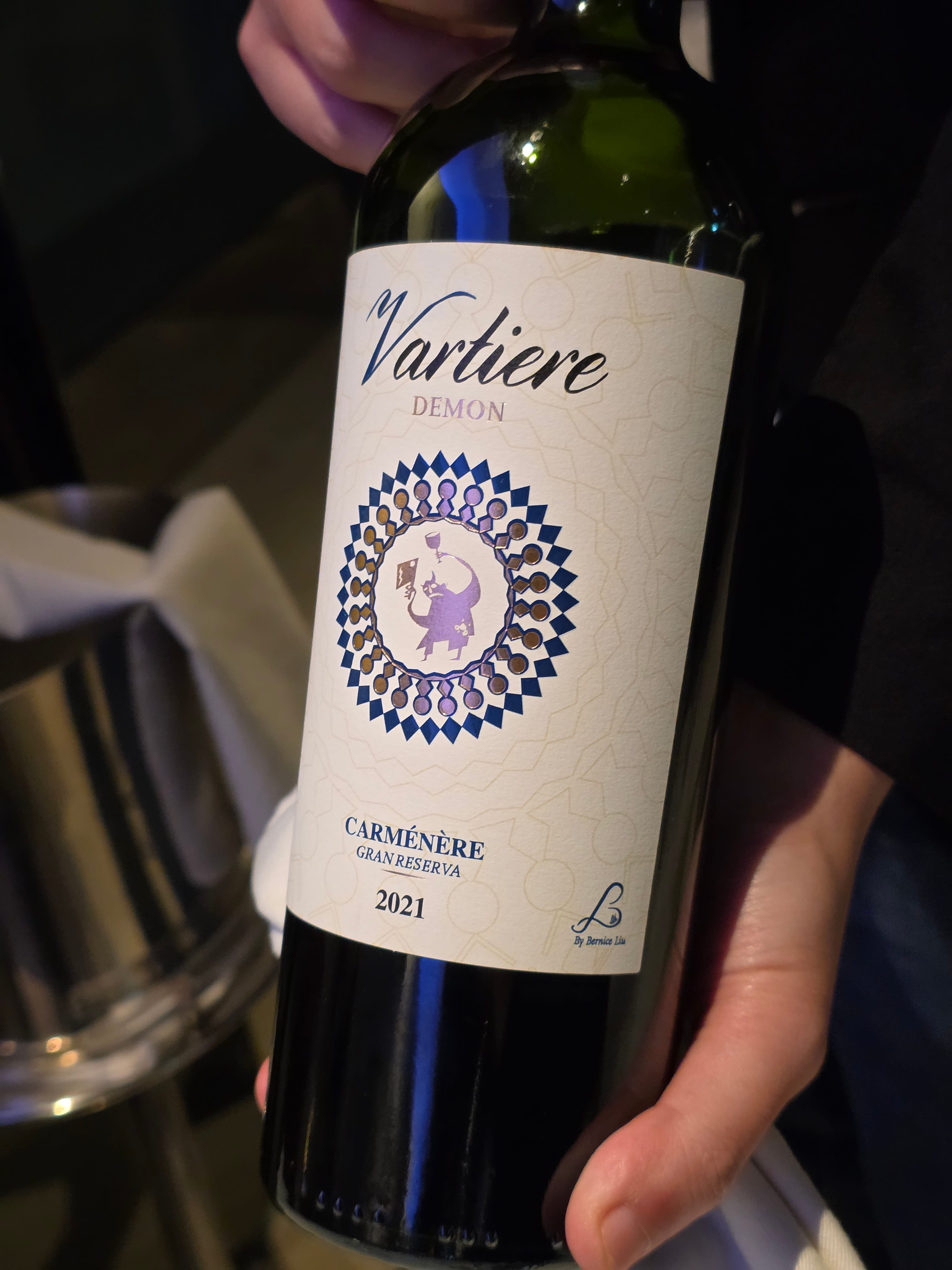
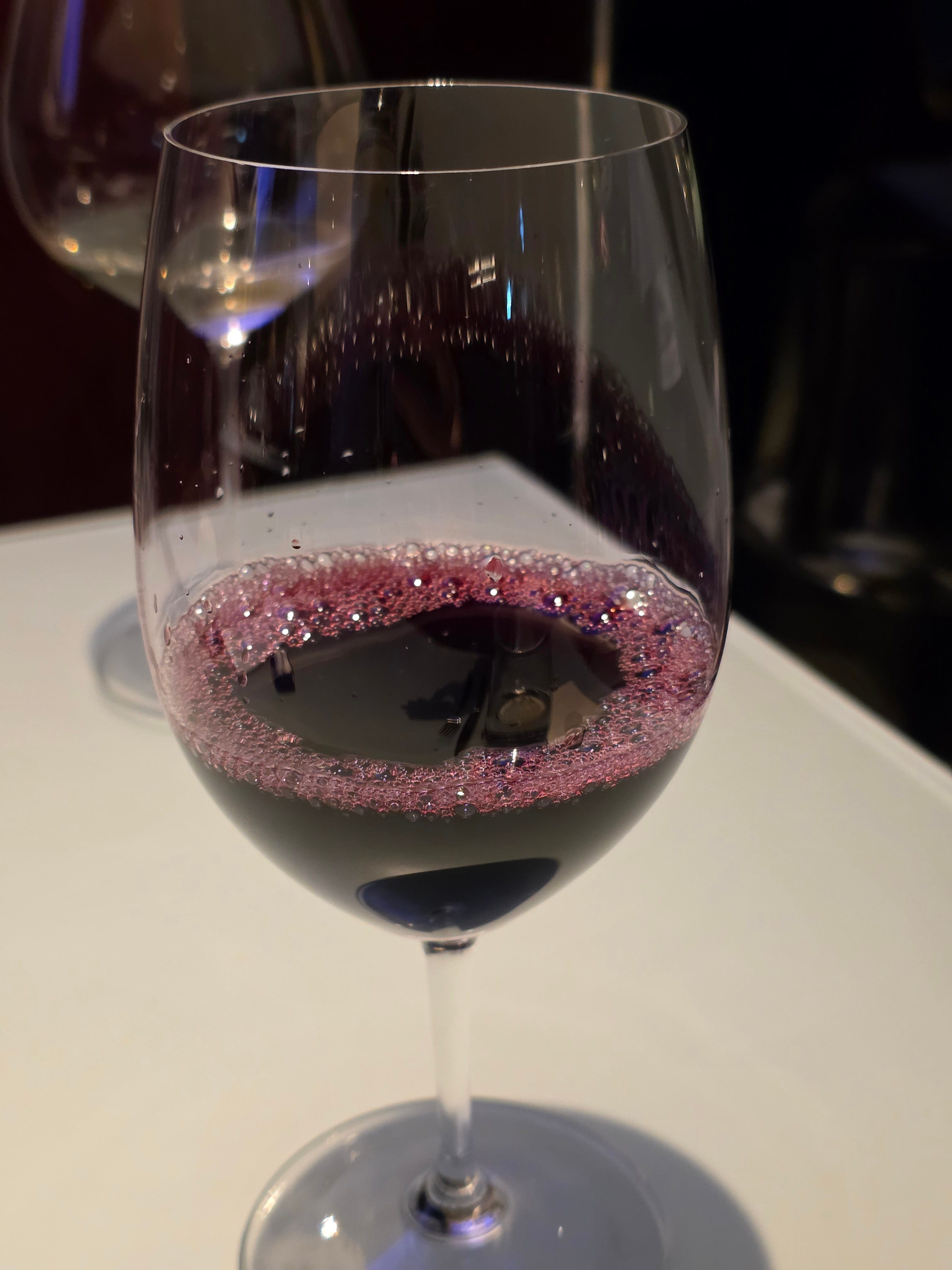
Vartiere Gran Reserva Carménère, a Chilean wine bottled specifically for Chef Leung. Intensely red, complex, and well- balanced.
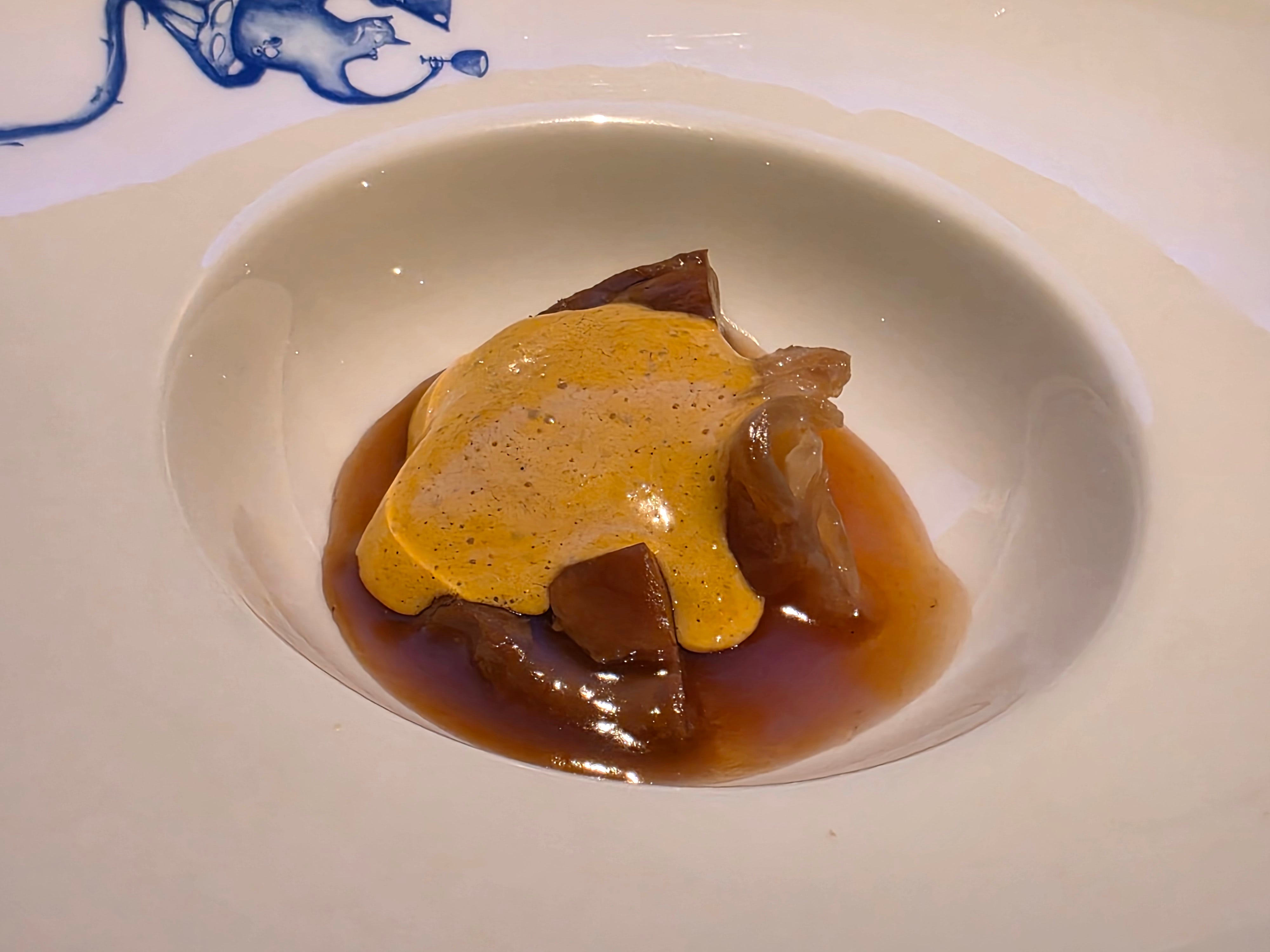
Some heartier dishes came next, and we started to go off menu. Instead of the carabinero (which was replaced with a lobster anyways), there was the option to go with sous vide fish maw and rehydrated dried abalone with a tangy sabayon sauce. Dense, rich, slightly chewy. Dried seafood dishes are a classic part of Cantonese fine dining, and the preparation of this dish was superb.
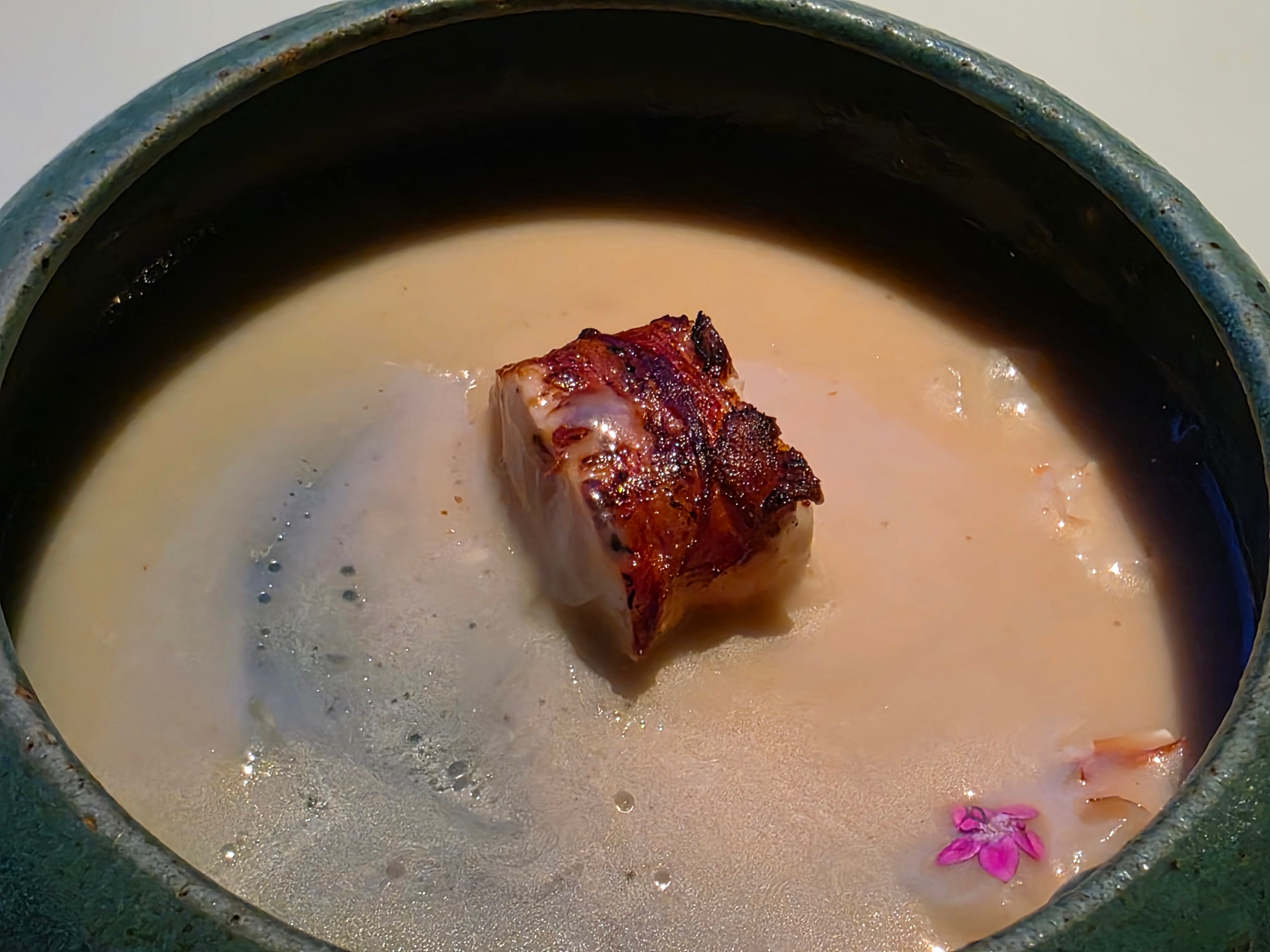
My companion stayed on menu, and had the lobster with lychee in a mussel beurre blanc. Slightly sweet, on perfectly cooked lobster, seared on top.
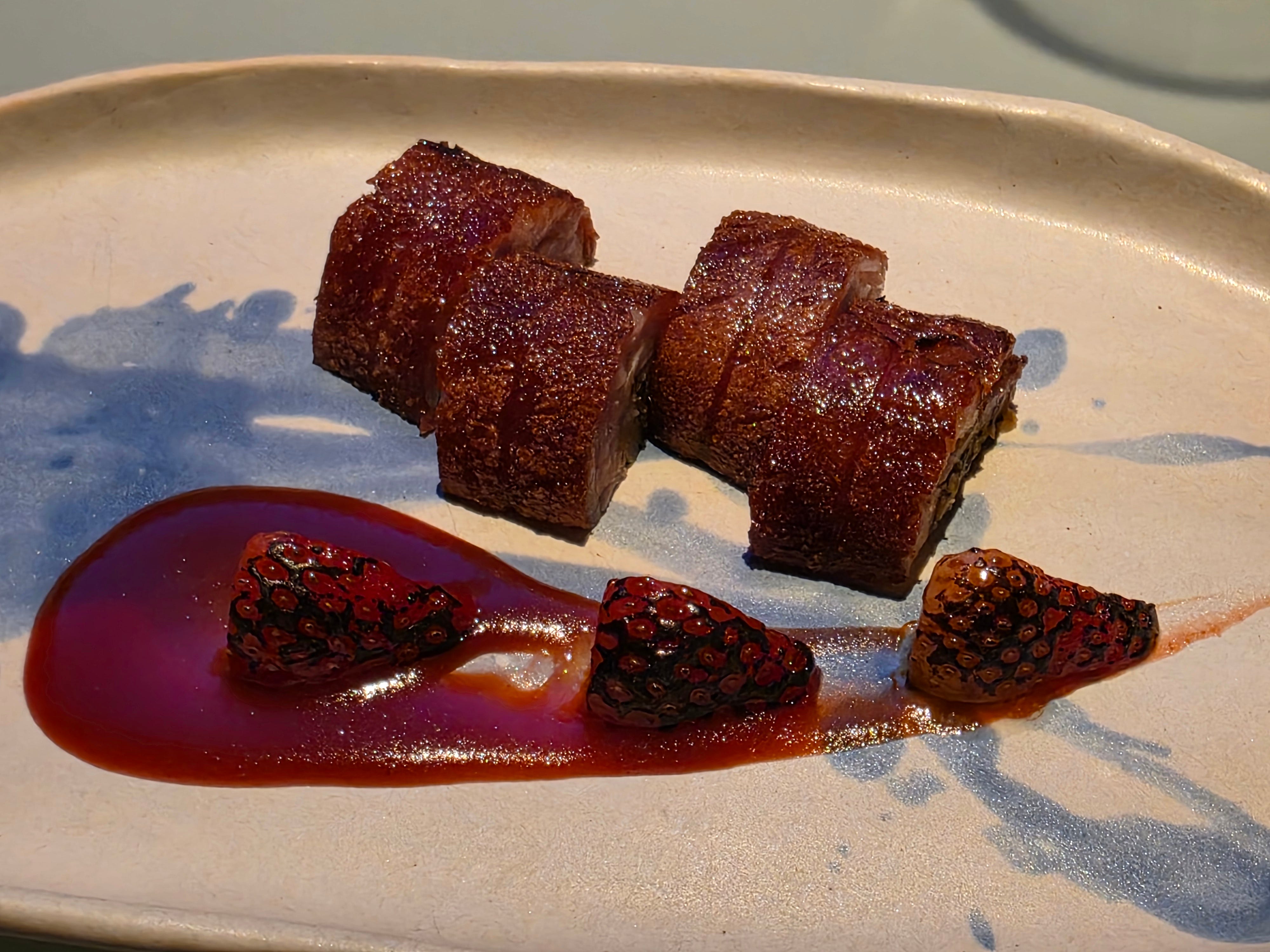
For the main, I had the suckling pig, stuffed with chicken mousse and pickled vegetable mixture, served with grilled strawberry with strawberry and hoisin sauce. An audible crisp when biting into the skin as every suckling pig should have. Suckling pig and hoisin sauce, another classic combination!
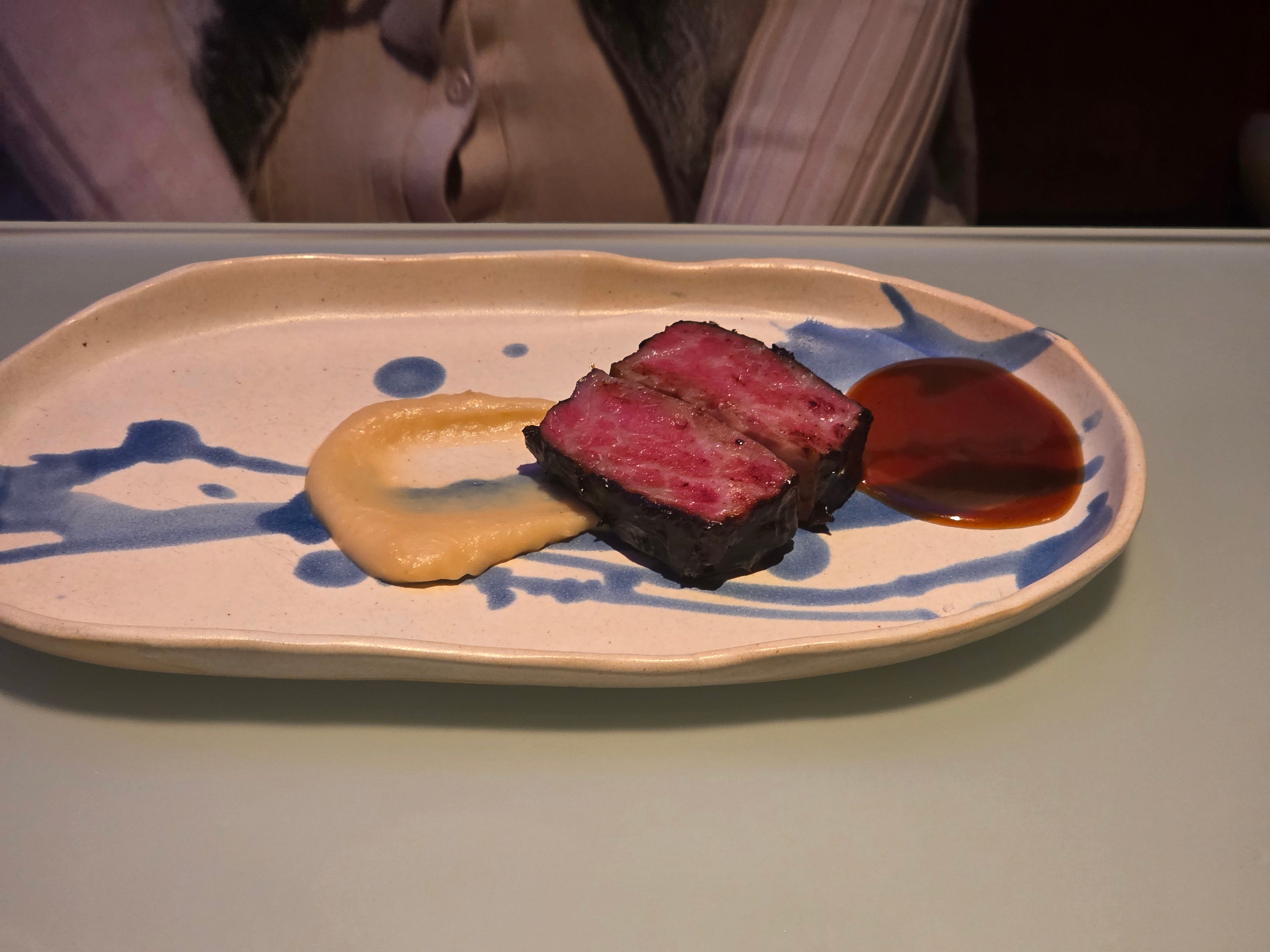
The other choice was an A4 wagyu steak with a lily bulb and garlic puree with a beetroot sauce. Largely underwhelming. Also, failed to see any connection to Cantonese dining.
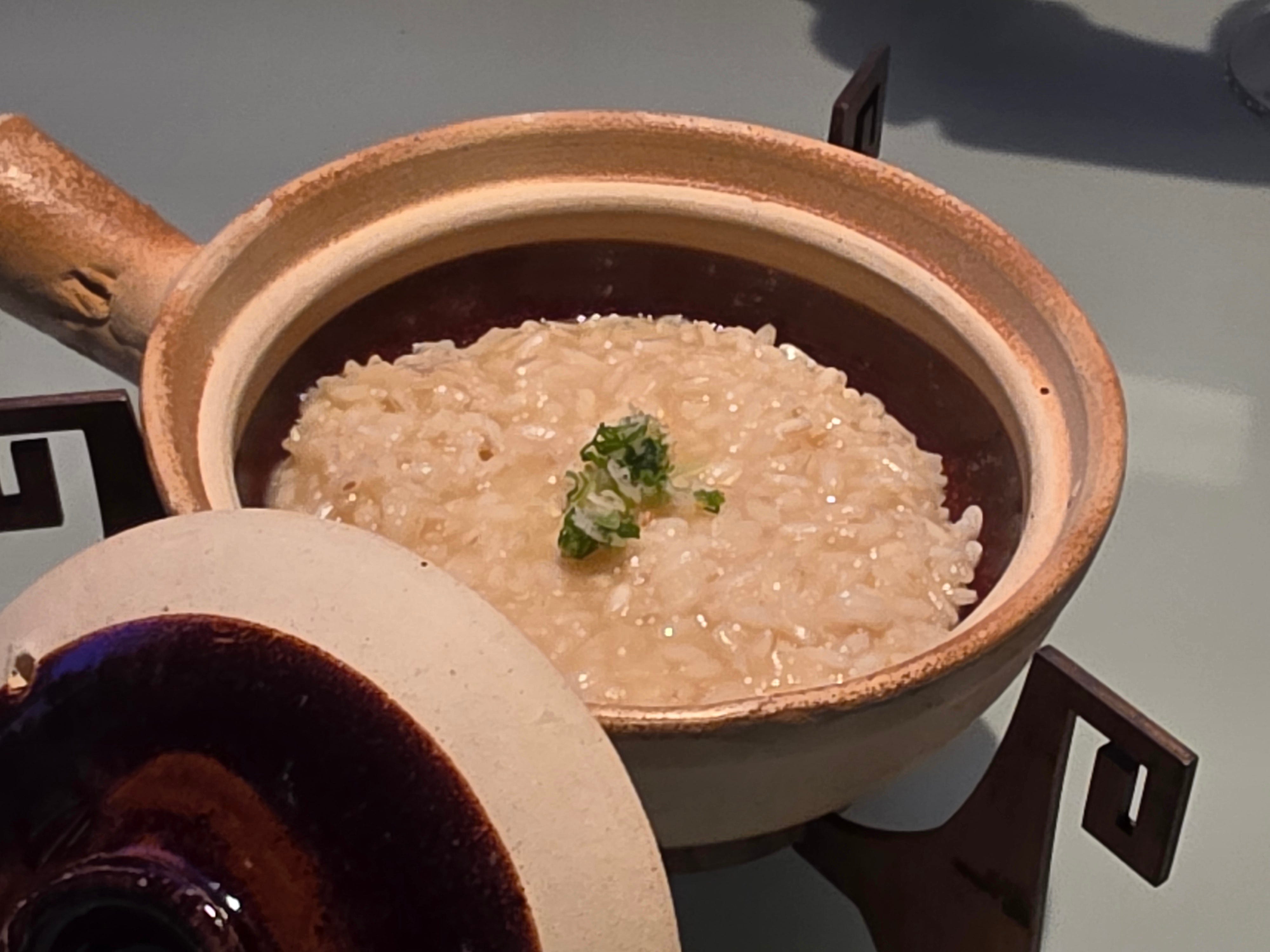
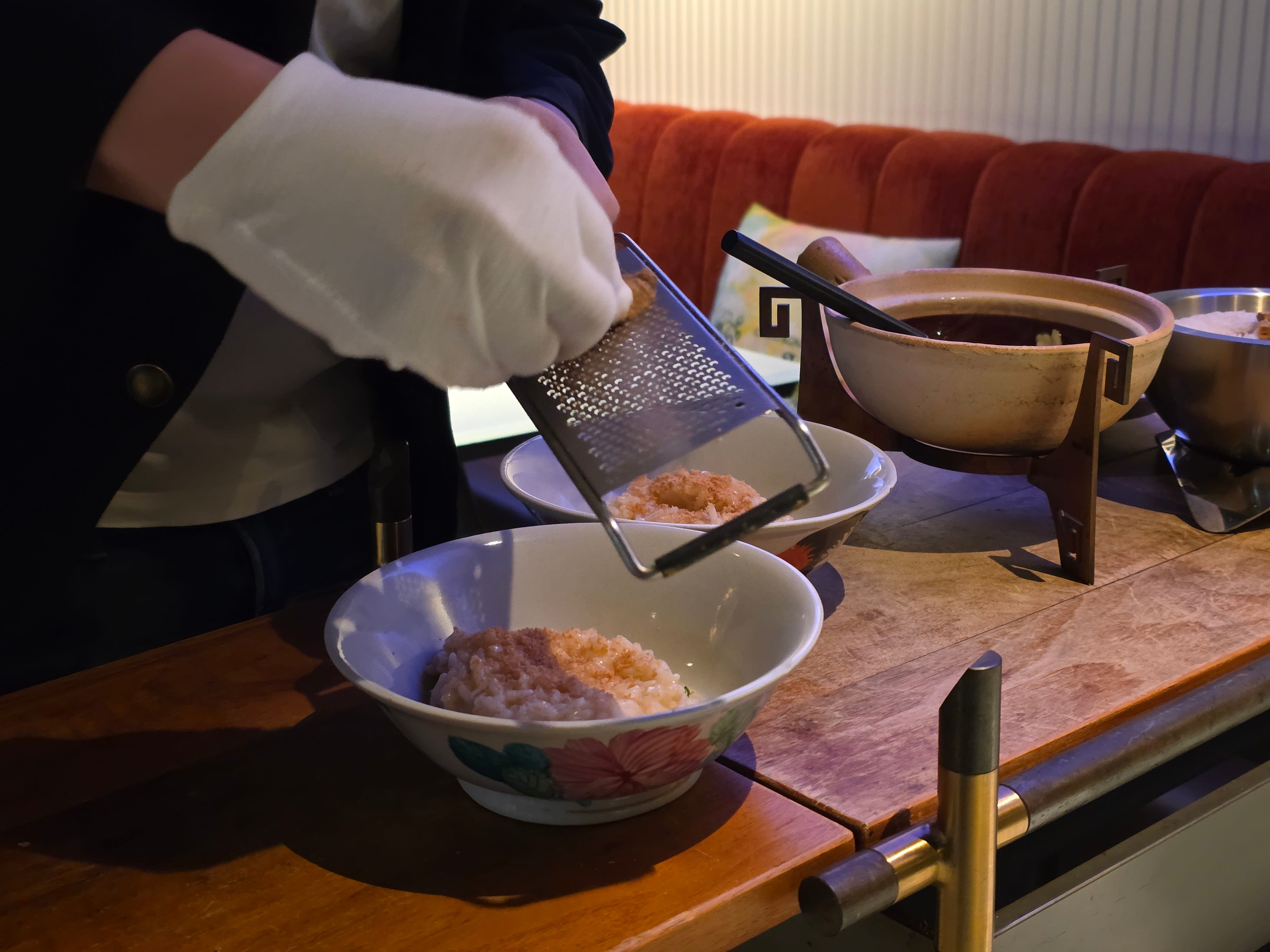
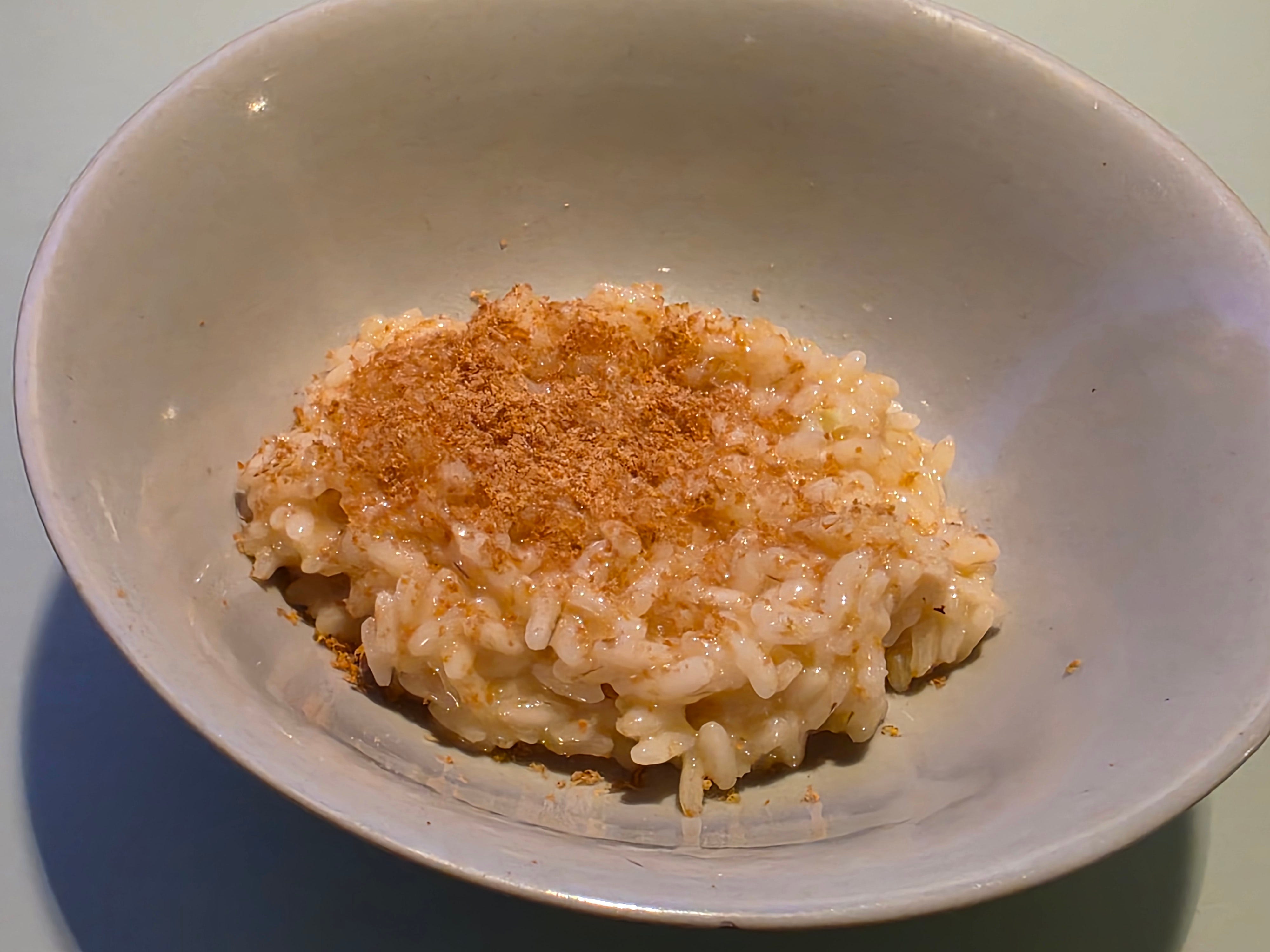
The other supplement, the Bo chicken rice came next. A rich chicken oil risotto, topped with shaved dehydrated foie gras. Just a little underdone, so the rice still had a bit of crisp. Neat, but far from the amazing chicken rice I remember from Odette. Skews a bit more Singporean than Cantonese though.
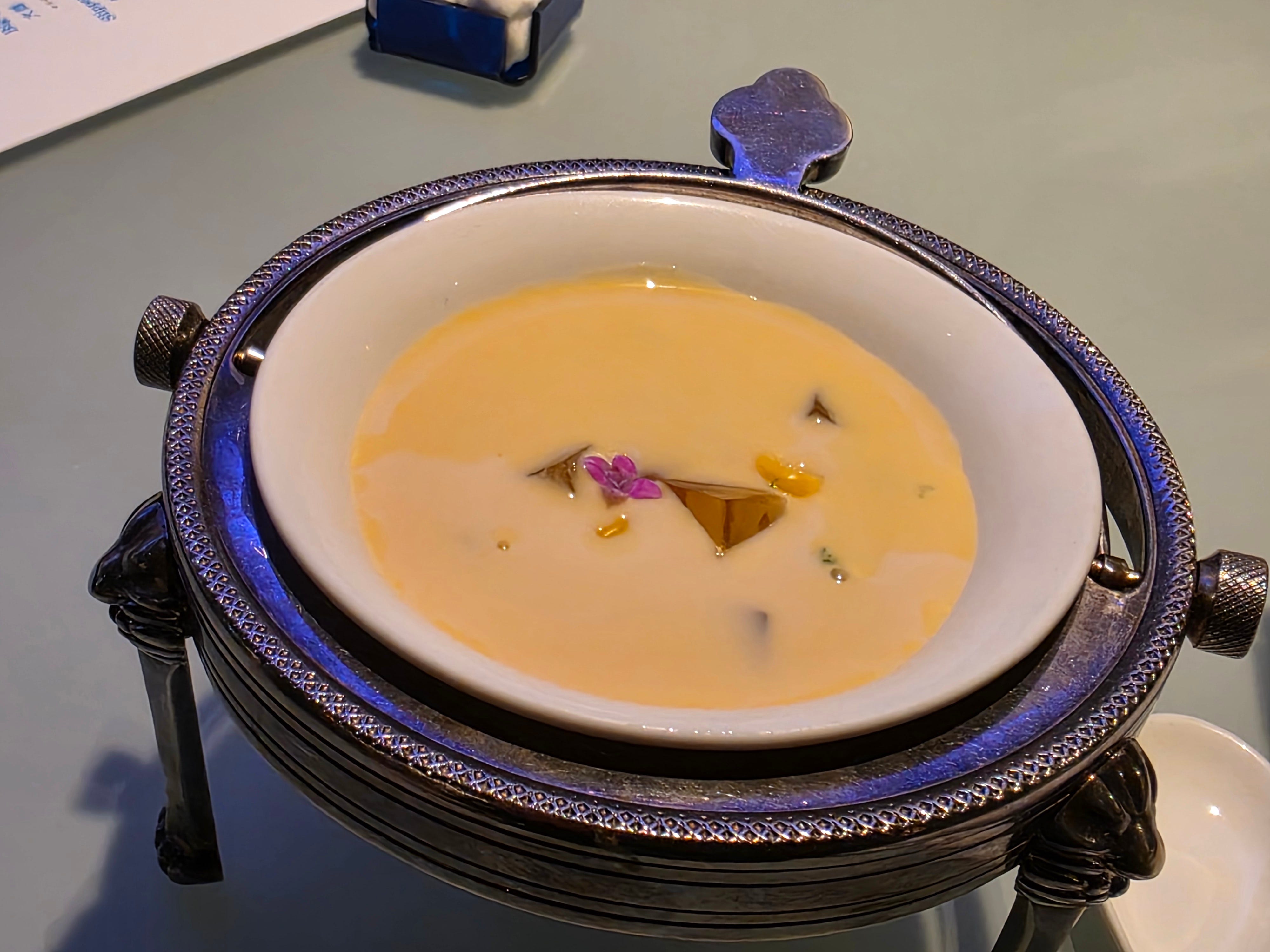
The predessert, “Children of the corn” came next, served in a classic “shark fin” presentation. Didn’t really get this one. A sweetened corn soup served with grape jelly and lime curd. Floral, grassy, and not my favourite.
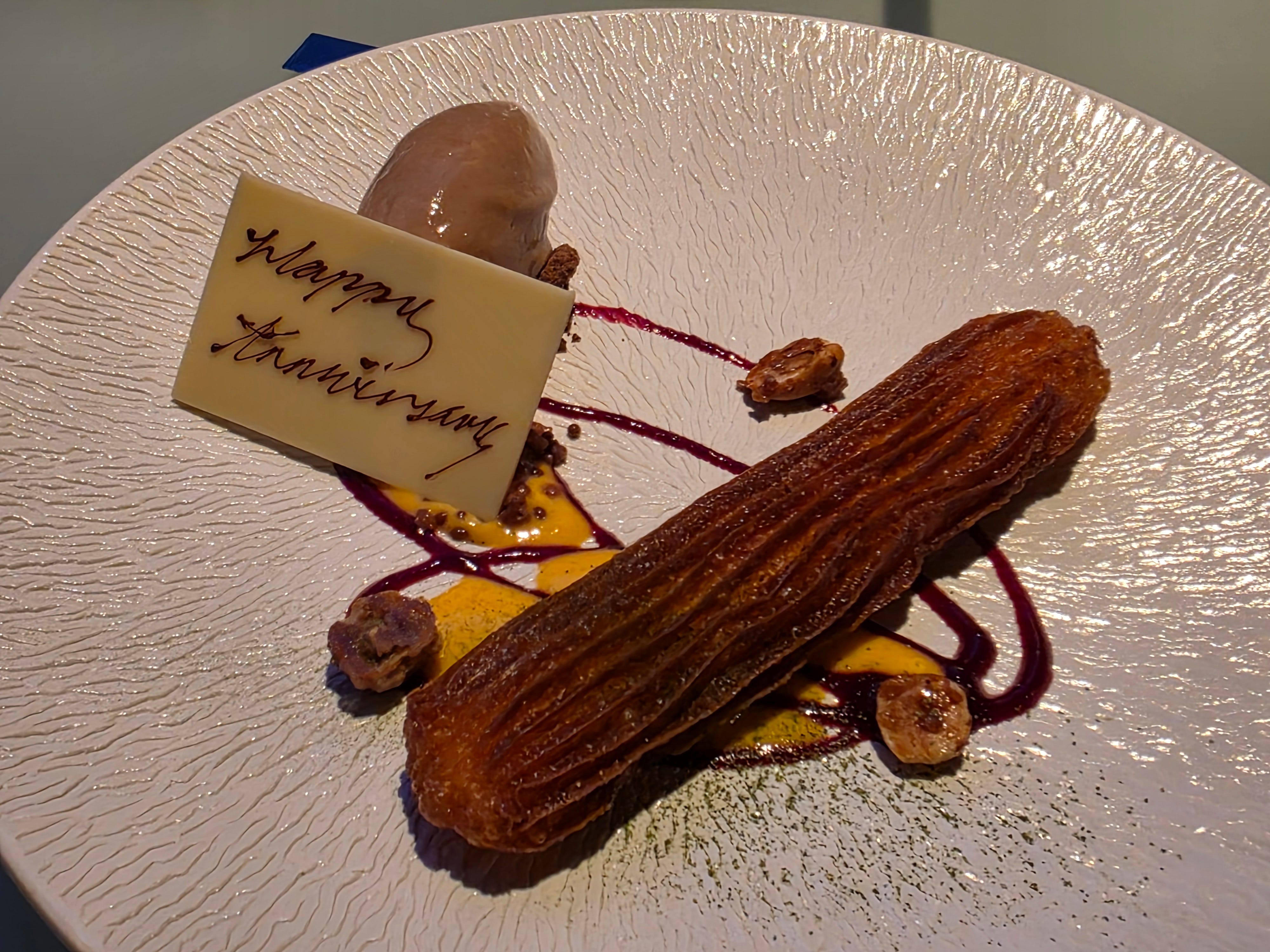
The dessert of a cinnamon churro served with chestnut ice cream and hazelnuts. Failed to see the Hong Kong connection here, but churros are always good.
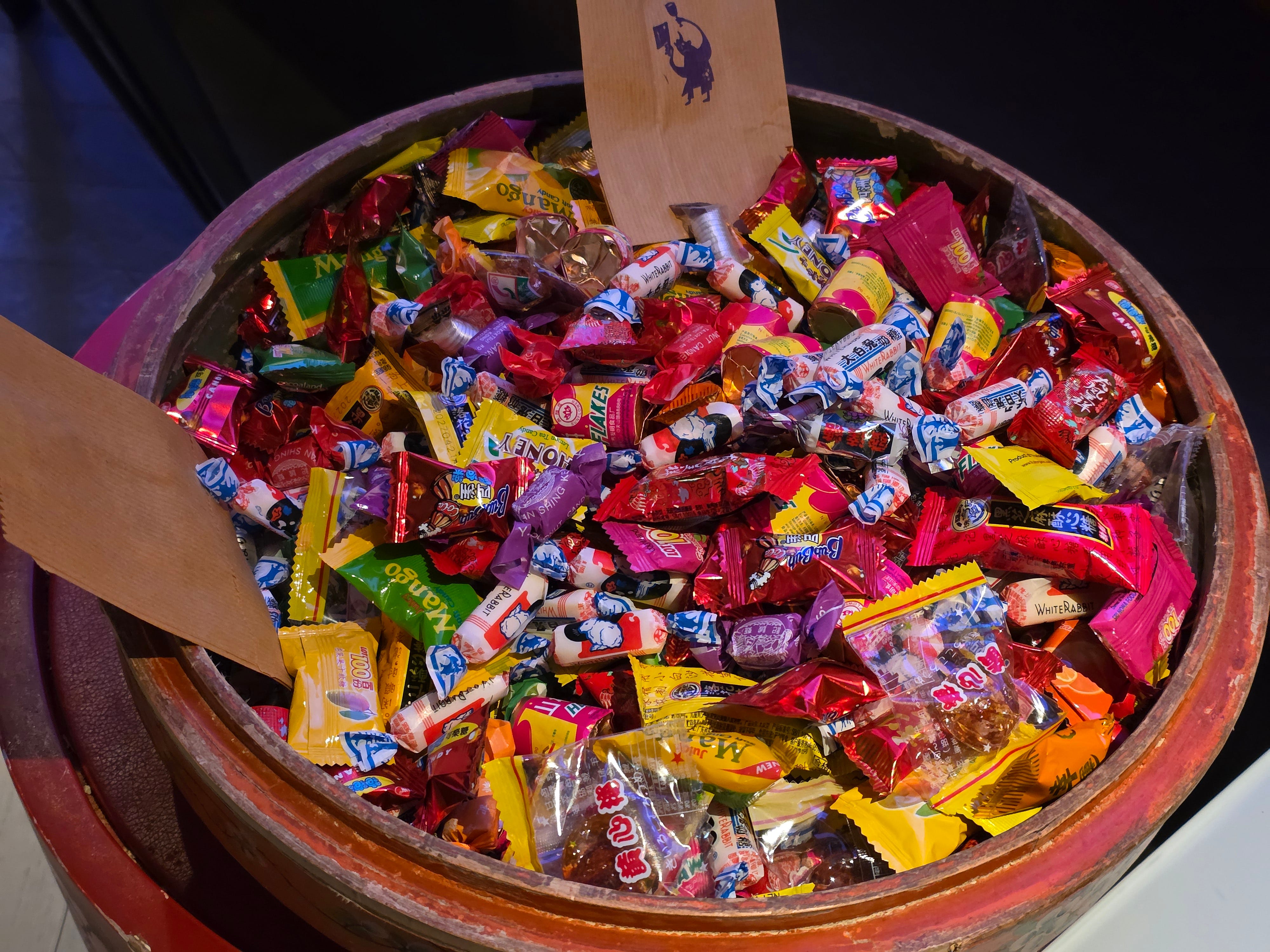
Instead of petit four, we were given paper bags and told to fill them with a selection of classic Hong Kong candied. A trip down nostalgia lane - white rabbit candies, cola hard candies, soft mango gummies and hawthorn crackers, all snacks that any schoolchild growing up in Hong Kong would remember fondly.
Overall, Bo Innovation is a neat concept, but a bit of a disappointment when it comes to execution. They tried to elevate Hong Kong culture to fine dining, similar to how Labyrinth elevated Singaporean hawker culture, but a lot of misses and a lot of dishes had a very loose connection to the central concept. I spent most of the night thinking about how they could redo the menu to strengthen that connection and other elements they could incorporate to highlight casual Hong Kong dining - from cha chaan teng foods, egg waffles, milk tea, pineapple buns, curry fishballs, roasted chestnuts, dim sum, roasted bbq meats, claypot rice. There was a large universe of possibilities they could’ve drawn from, but went in a very different direction instead. On the other hand, it’s probably one of the cheapest two Michelin star restaurants in Hong Kong, but frankly, I don’t see them holding on to those stars for long.
Total Damage: 5k HKD/2 people