
I recently realised that, somehow, I had managed to visit and write up every Michelin three-star restaurant in Hong Kong except one. Forum, the last holdout, felt overdue.
Few Cantonese restaurants in Hong Kong carry the same weight. Forum was founded in 1974 by Yeung Koon-yat with HK$600,000 and a handful of business partners, before being officially registered in 1977. The early years were not especially smooth. Partners left one by one, and Yeung eventually became the sole owner. Over the decades, however, Forum grew into one of the great institutions of Cantonese dining in the city, a place with the reputation of a rich man’s canteen, known for banquet-style luxury, old-school polish, and above all, abalone.
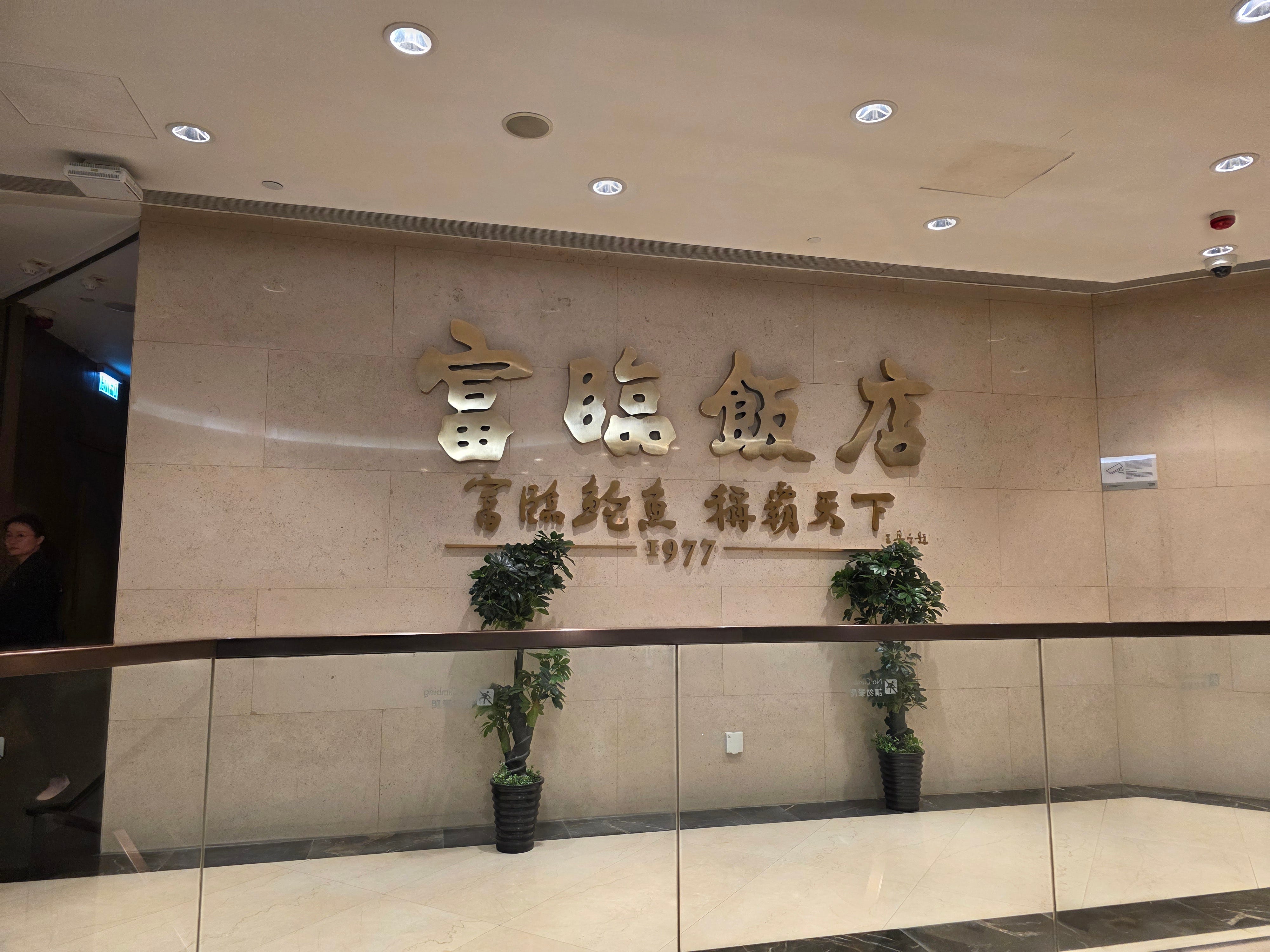
The cuisine at Forum is unapologetically traditional Cantonese fine dining, the kind that leans heavily on premium dried seafood, painstaking technique, superior stock, and the quiet confidence that comes from not needing to reinvent anything. The restaurant became especially famous for Yeung’s abalone, prepared according to a method he refined over decades, braising superior dried abalone in a deeply concentrated broth of chicken, pork bones, and lean pork over charcoal stoves until the texture turned supple and the flavour sank all the way through.
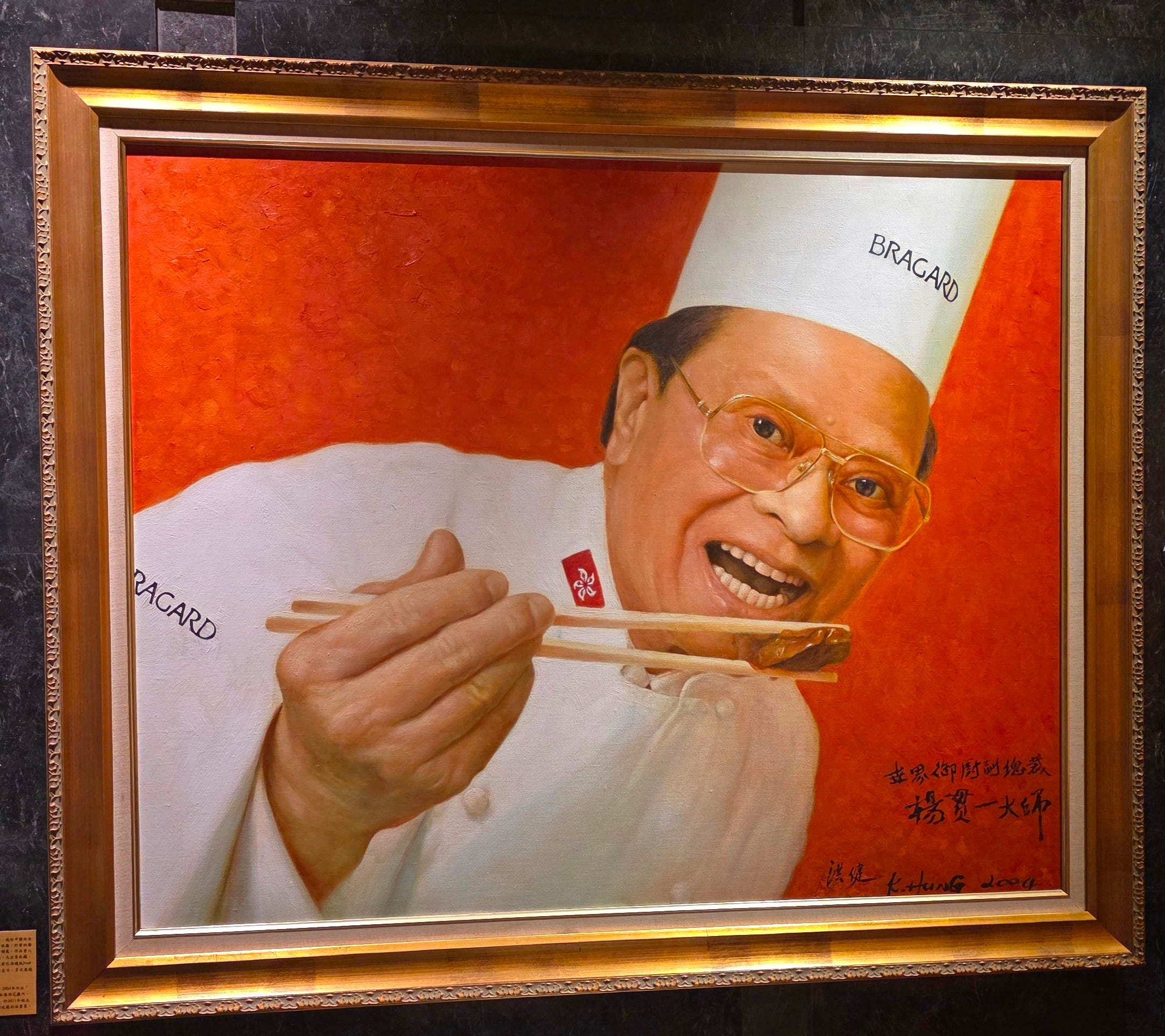
Chef Yeung Koon-yat led the kitchen from the beginning until his death in 2023 at the age of 90. His life reads like the classic Hong Kong culinary story. Born in China, he came to Hong Kong in 1949 and began at the very bottom, working as a dishwasher before slowly climbing through the trade over more than sixty years. He did not come with some glamorous pedigree or famous European detour. His reputation was built the hard way, through discipline, repetition, and a near-obsessive pursuit of technical perfection. Over time, his work earned international recognition, including the Club des Chefs des Chefs Gold Award in 1996 and its highest honour in 2009. His signature Ah Yat braised Yoshihama abalone, often served with goose web, became one of the defining dishes of high-end Cantonese cuisine.
After Yeung’s passing, the kitchen passed into the hands of his long-time protégés, with Adam Wong Lung-to now serving as executive chef. Wong joined Forum in 1992 as Yeung’s apprentice and never really left, dedicating more than three decades to the restaurant. His background is steeped in culinary institutions and guild-style recognition, but what matters more is that he appears to understand that Forum is not a place for dramatic reinvention. The menu, style, and overall philosophy have remained largely unchanged. The restaurant continues to preserve Yeung’s recipes almost exactly, while allowing only the occasional collaborative flourish around the edges.
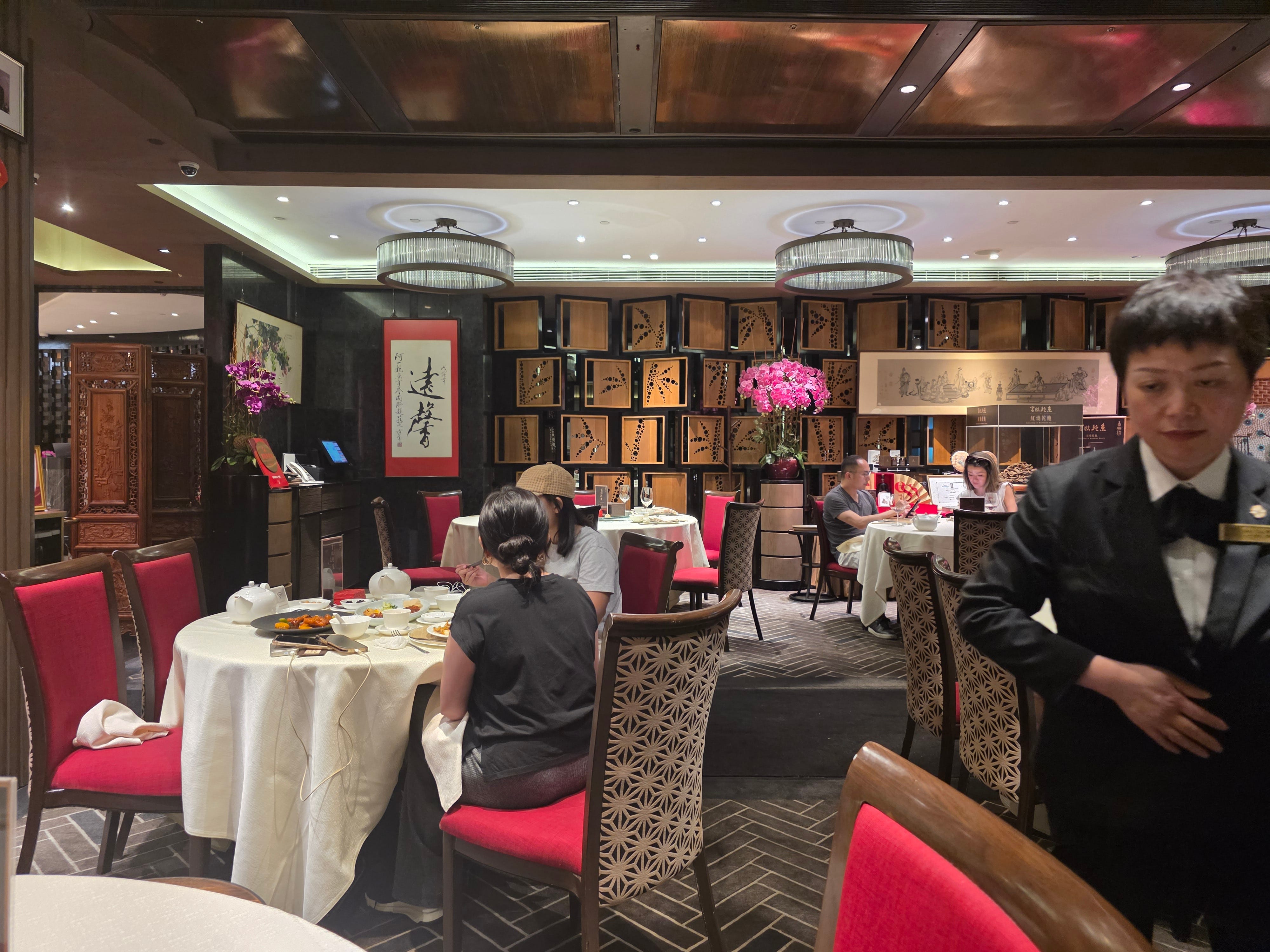
The room itself feels exactly as an old guard Cantonese dining room probably should. Slightly dated Chinese décor, polished surfaces, red accents, dark wood screens, chandeliers, porcelain vases, and the sort of understated formality that now feels increasingly rare in Hong Kong. It is not fashionable in the contemporary sense. It does not need to be. The whole place feels like a preserved piece of another era, more banquet hall than tasting-menu theatre.
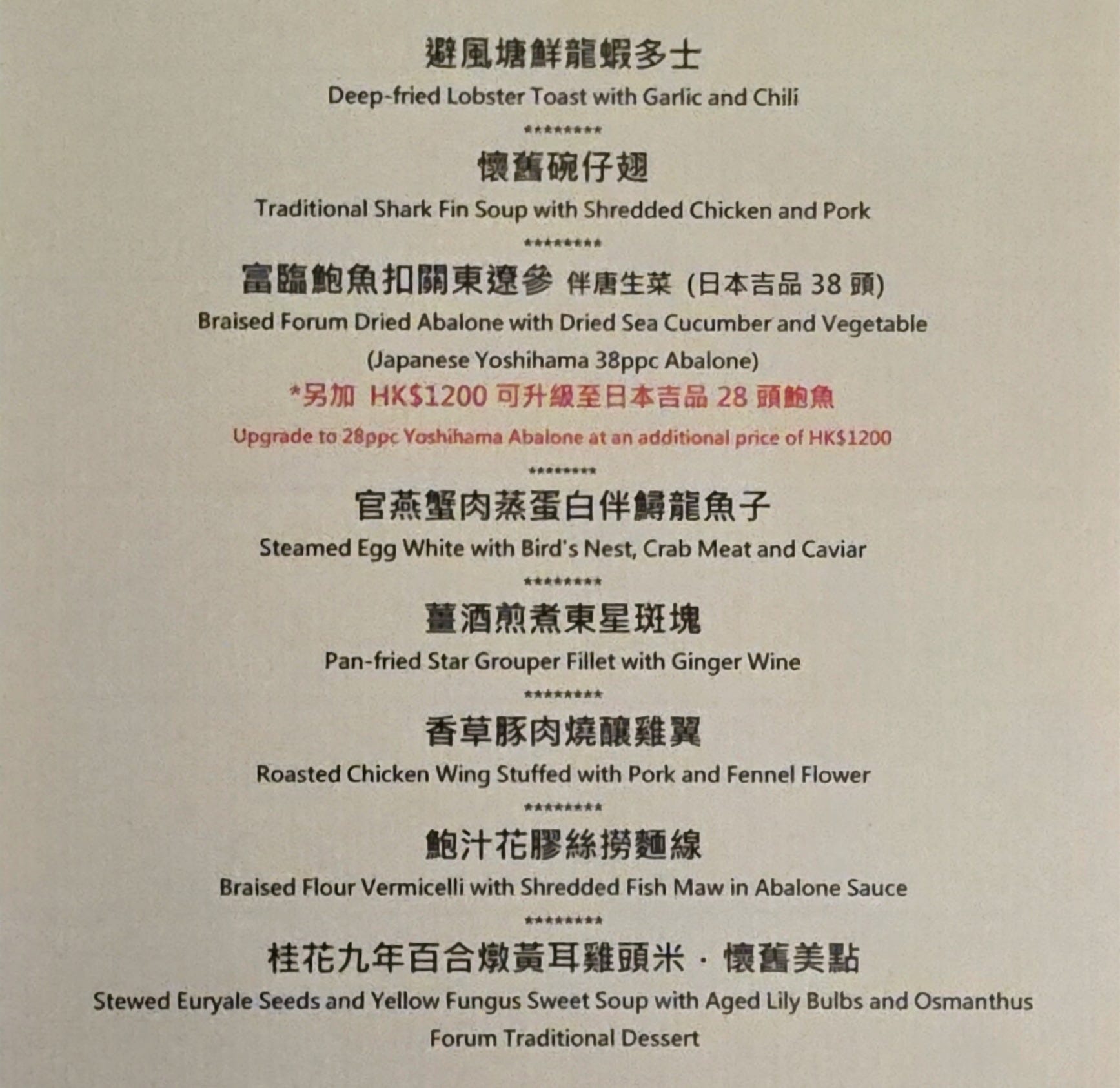
There were several tasting menus on offer, alongside a thick à la carte menu full of the restaurant’s classics. We decided to go with one of the tasting menus, partly because it allowed the kitchen to show its range, and partly because it seemed the best way to understand how Forum thinks about luxury Cantonese food. As the meal unfolded, one of the more interesting themes became clear. Several dishes took familiar Hong Kong street-side or everyday formats and elevated them using premium ingredients and banquet-style techniques.
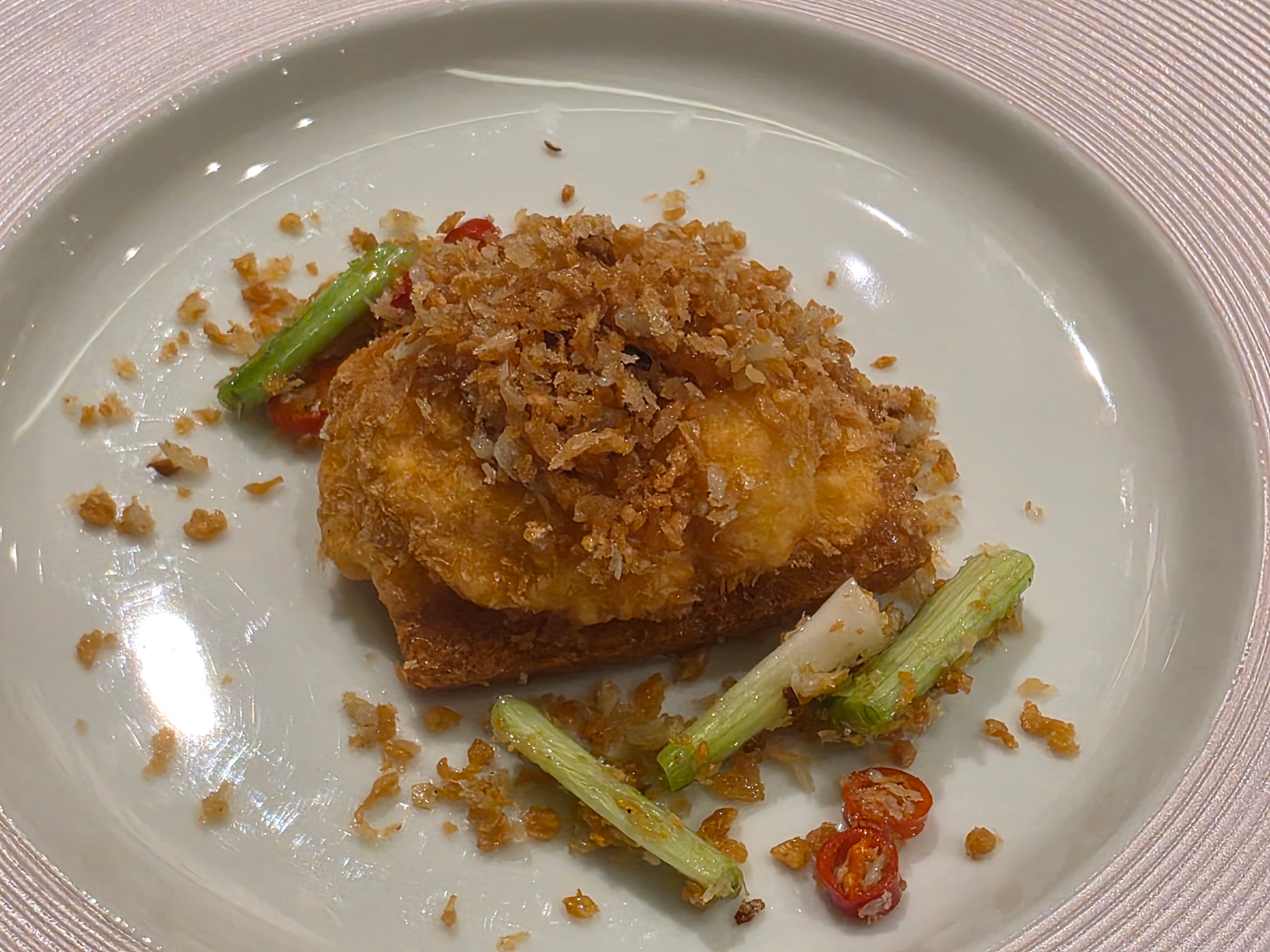
The first example of this was a deep-fried lobster toast with garlic and chili. In its more ordinary form, this would usually be made with shrimp paste, the kind of thing you might happily eat from a cha chaan teng or snack stall without giving it much thought. Here, the restaurant substituted lobster tail, then topped it with deep-fried garlic, bird’s eye chili, and green onion for a bit of heat and a whisper of wok hei. It was excellent. Rich, crisp, and aromatic.
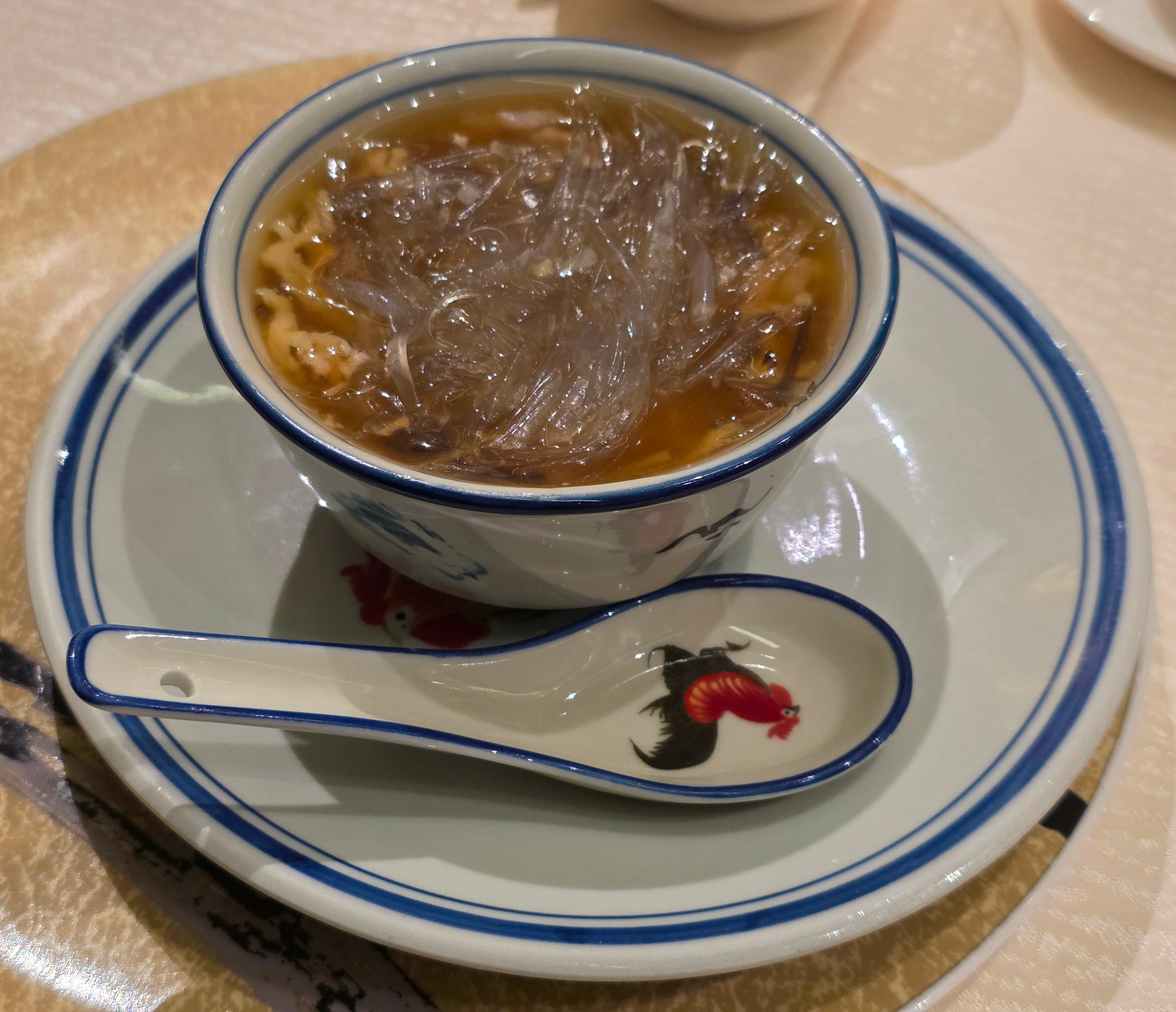
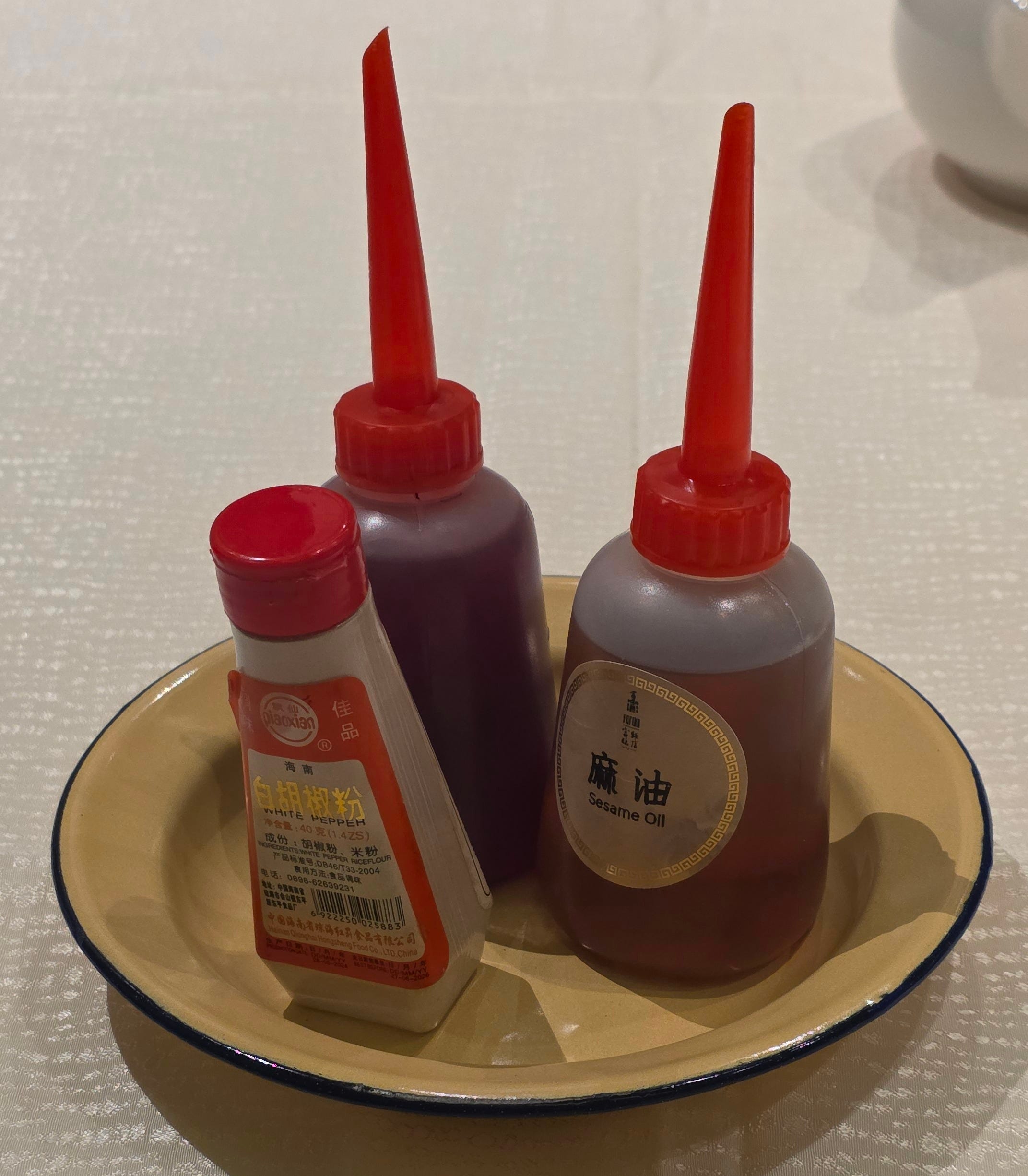
One of the highlights of the night came next, Forum’s luxurious take on imitation shark fin soup. This is the sort of dish you can find all over the city in humbler form, where vermicelli stands in for shark fin in a thickened broth with shredded chicken and mushrooms. Forum reversed the substitution and put the real thing back in, serving an actual shark fin soup with the traditional street-side condiments on the side: red vinegar, sesame oil, and fine white pepper. The result was wonderful. There was something faintly amusing about presenting such a luxurious version of such a familiar Hong Kong comfort dish, but it worked beautifully. The broth was rich and deeply savoury, and the condiments gave it that nostalgic local identity.
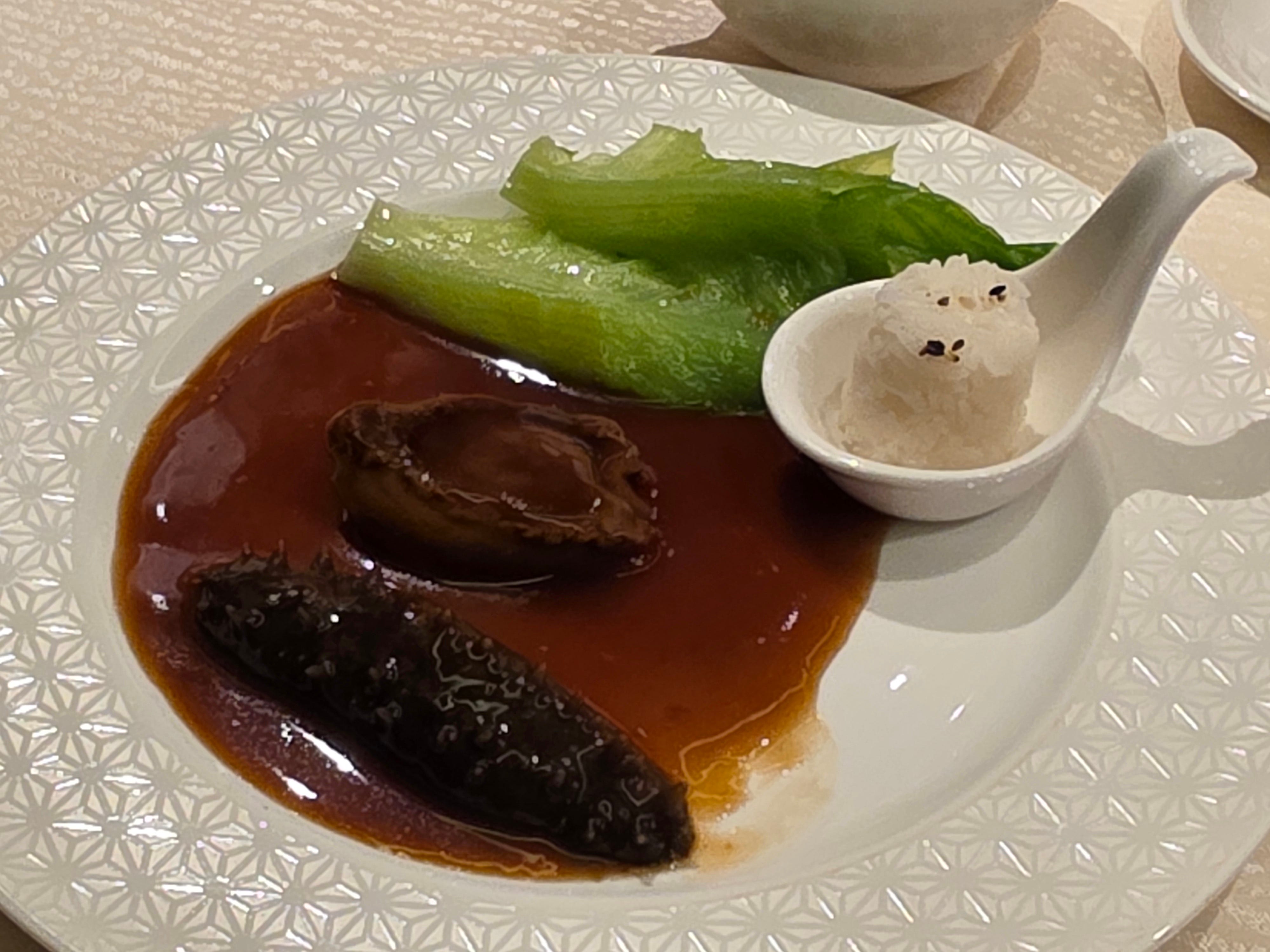
Then came the dish most closely associated with Forum, and the one that explains why Yeung earned the title “King of Abalone”. This was a deeply traditional preparation of rehydrated dried seafood, featuring a whole braised abalone and sea cucumber served with Chinese lettuce and a small ball of rice to mop up the sauce. Both sea cucumber and abalone are texture foods as much as flavour foods. On their own, they are relatively restrained, absorbing the essence of whatever they are cooked in. Sea cucumber tends toward a gelatinous springiness, while abalone can easily turn tough if mishandled. Here, both were superb. The abalone sauce had that dense, savoury depth that only comes from long reduction and patience, and the little rice ball was a smart touch, because wasting that sauce would have been unforgivable.
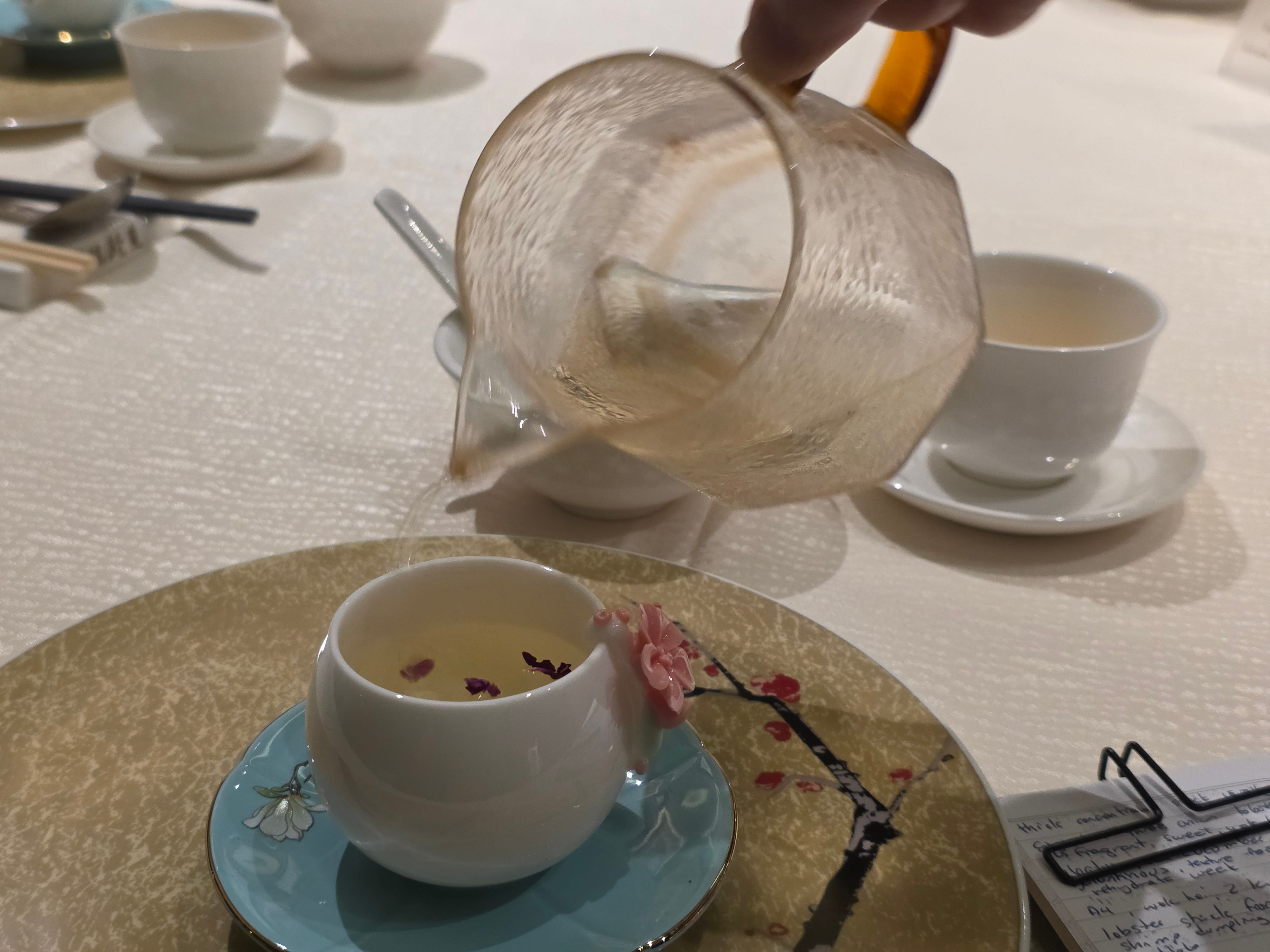
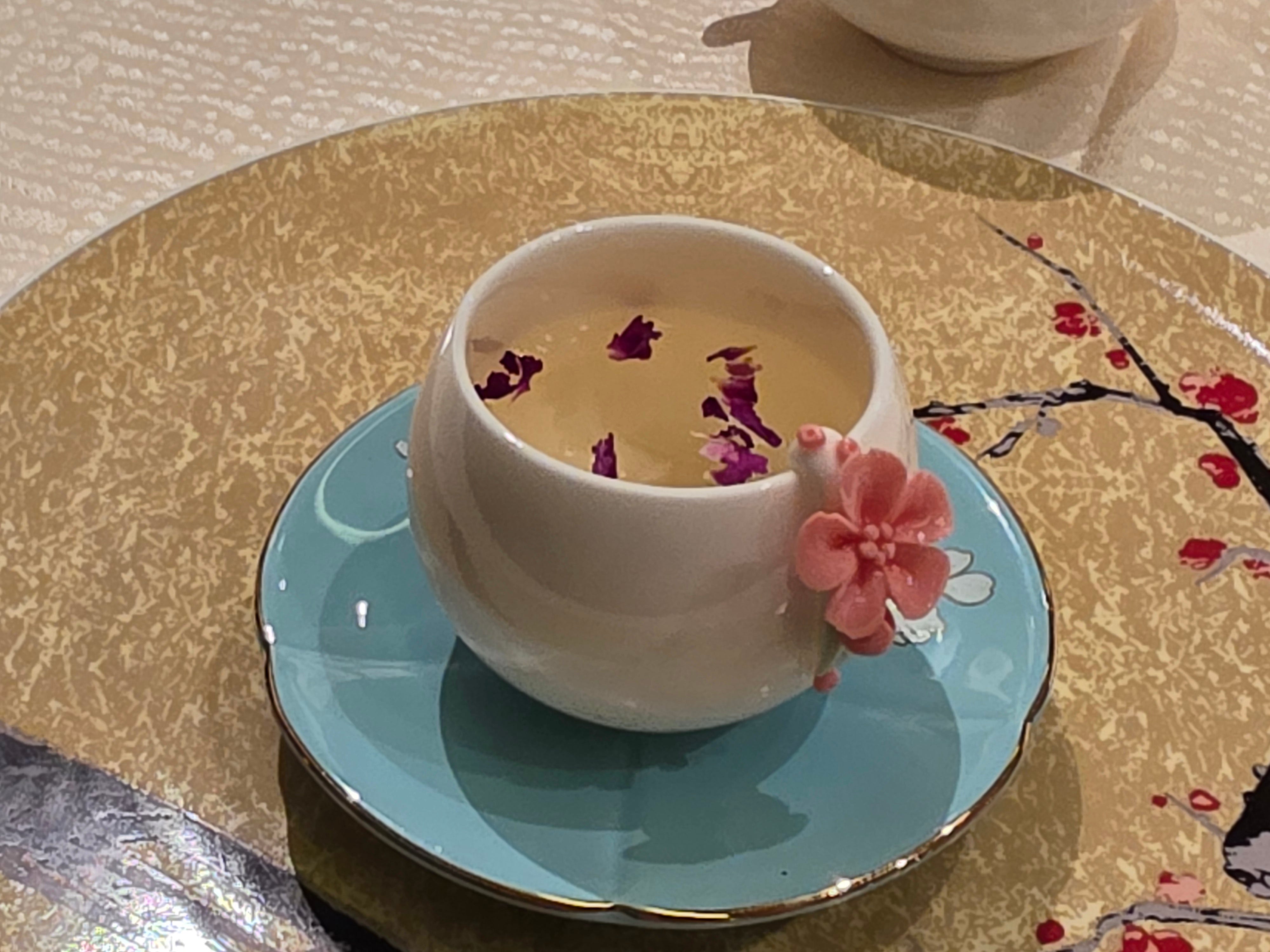
After that came a small teacup of cold-pressed rose tea, functioning as a palate cleanser after the intensity of the abalone course. Light, floral, and neat.
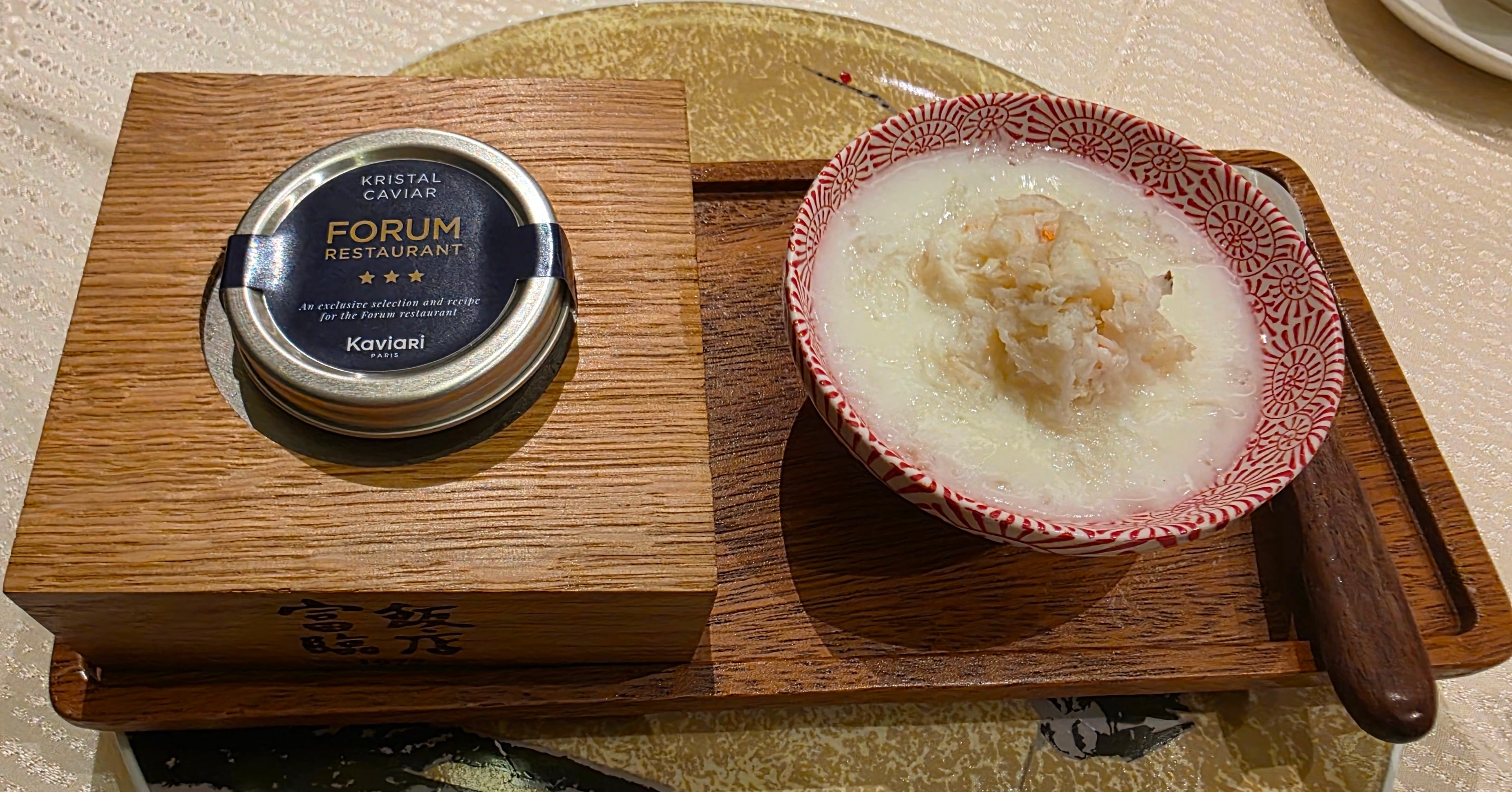
The next dish continued the broader theme of luxurious Cantonese banquet cooking. An egg white custard arrived with bird’s nest and crab meat, seasoned without salt, alongside a small tin of caviar. We were told to try it first on its own, then with the caviar, to see how the dish changed. Without the caviar, the sweetness of the crab came through more clearly, and the textural contrast between the custard and the bird’s nest felt more pronounced. With the caviar, the dish took on more depth and salinity, becoming more complete, if perhaps a little less delicate. It was a clever way of letting the diner calibrate the dish in real time.
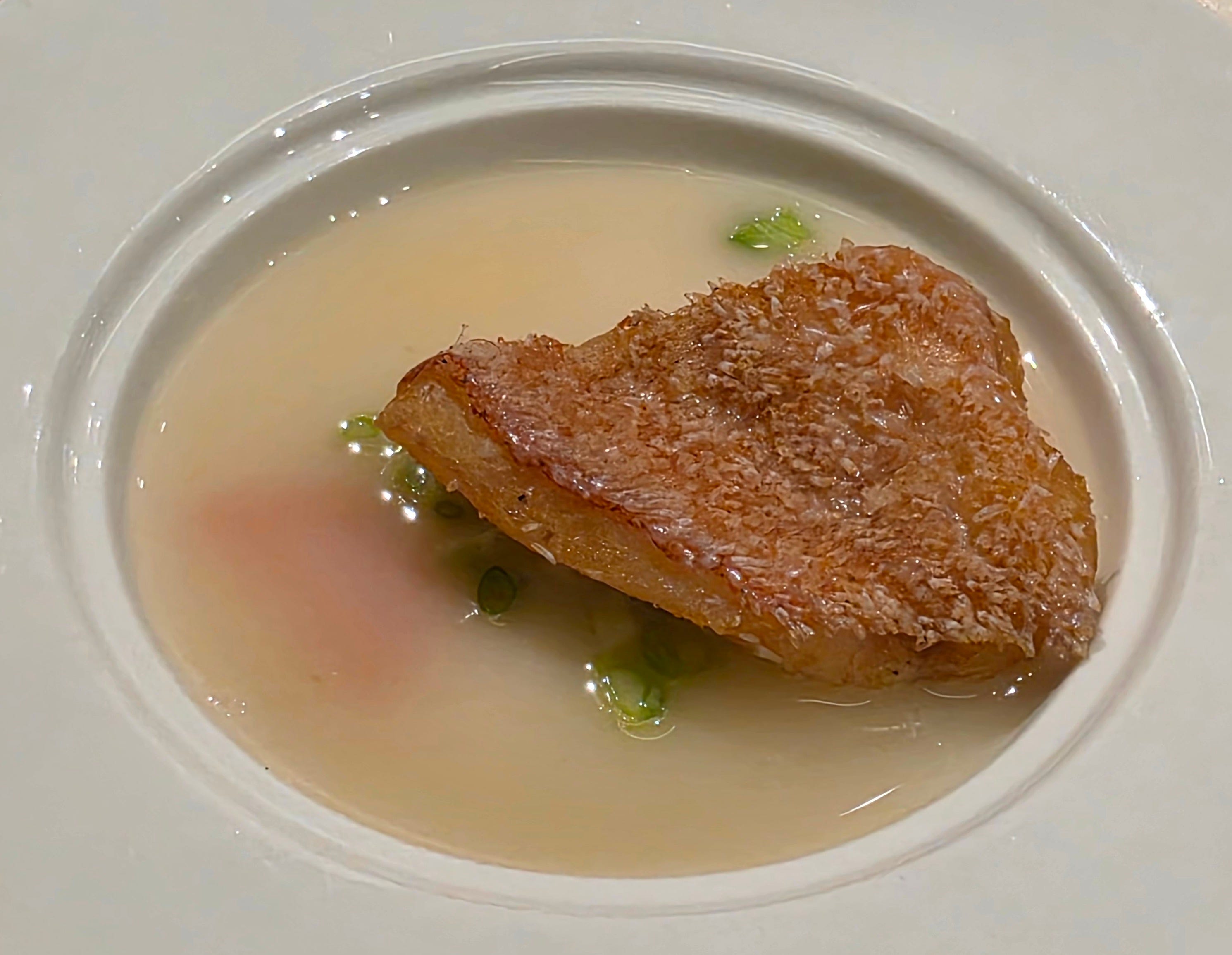
A pan-fried star grouper followed, served in a strongly alcoholic aged ginger wine broth. The skin was excellent, blistered and crisp, almost like a good tilefish, while the flesh remained moist and delicate. The broth, however, was extremely assertive, a concentrated blast of alcohol and ginger wine with green onion lingering at the edges. I liked the fish more than the sauce. The latter bordered on overwhelming.
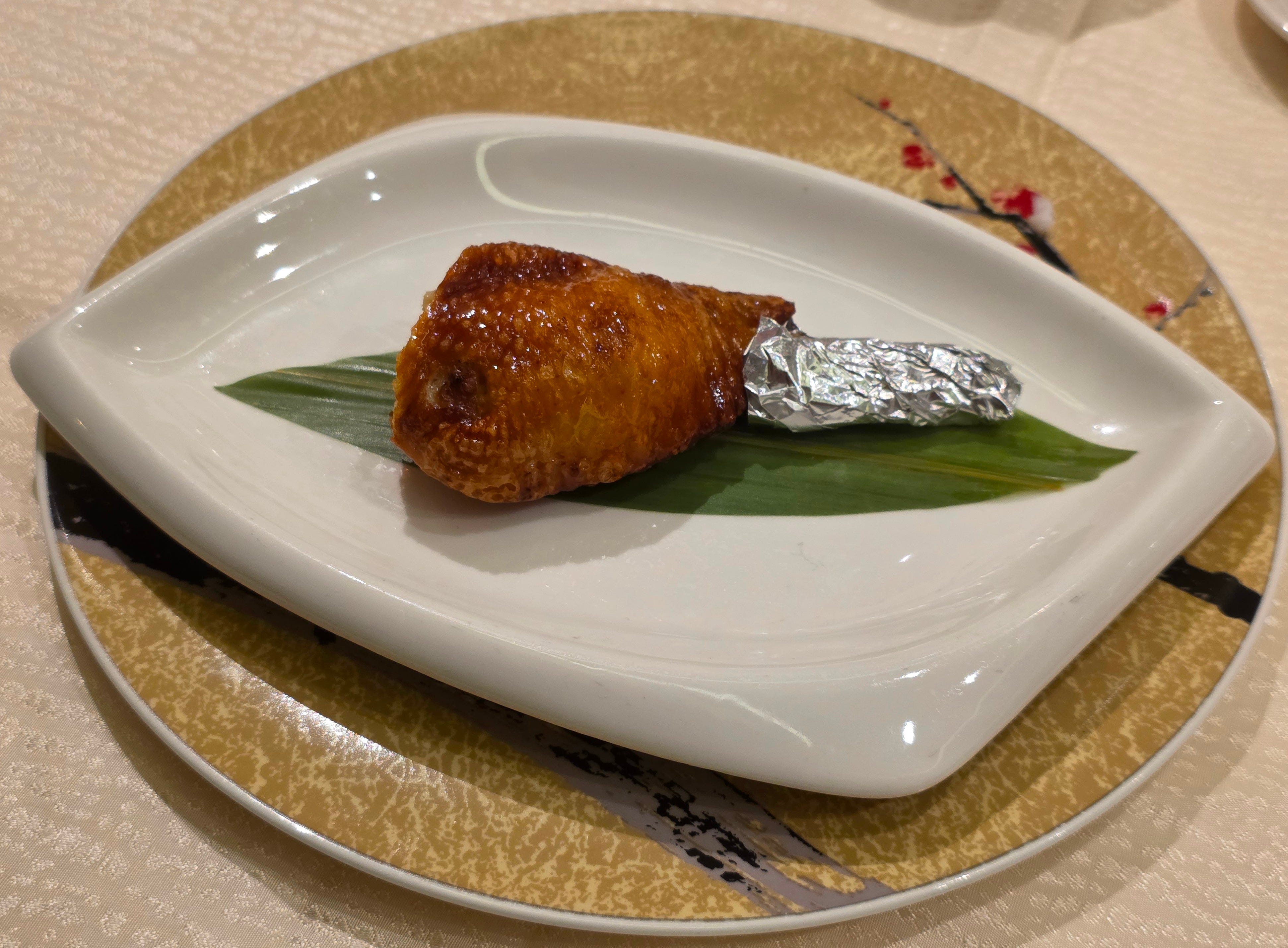
Another of the more playful dishes followed: a deboned chicken wing stuffed with fennel pork mince. Juicy, aromatic, and unexpectedly herbal, it almost read more European than Cantonese. In fact, the flavour profile reminded me more of a good British pork sausage than anything I usually associate with banquet Cantonese cooking. Strange in theory, but enjoyable in practice.
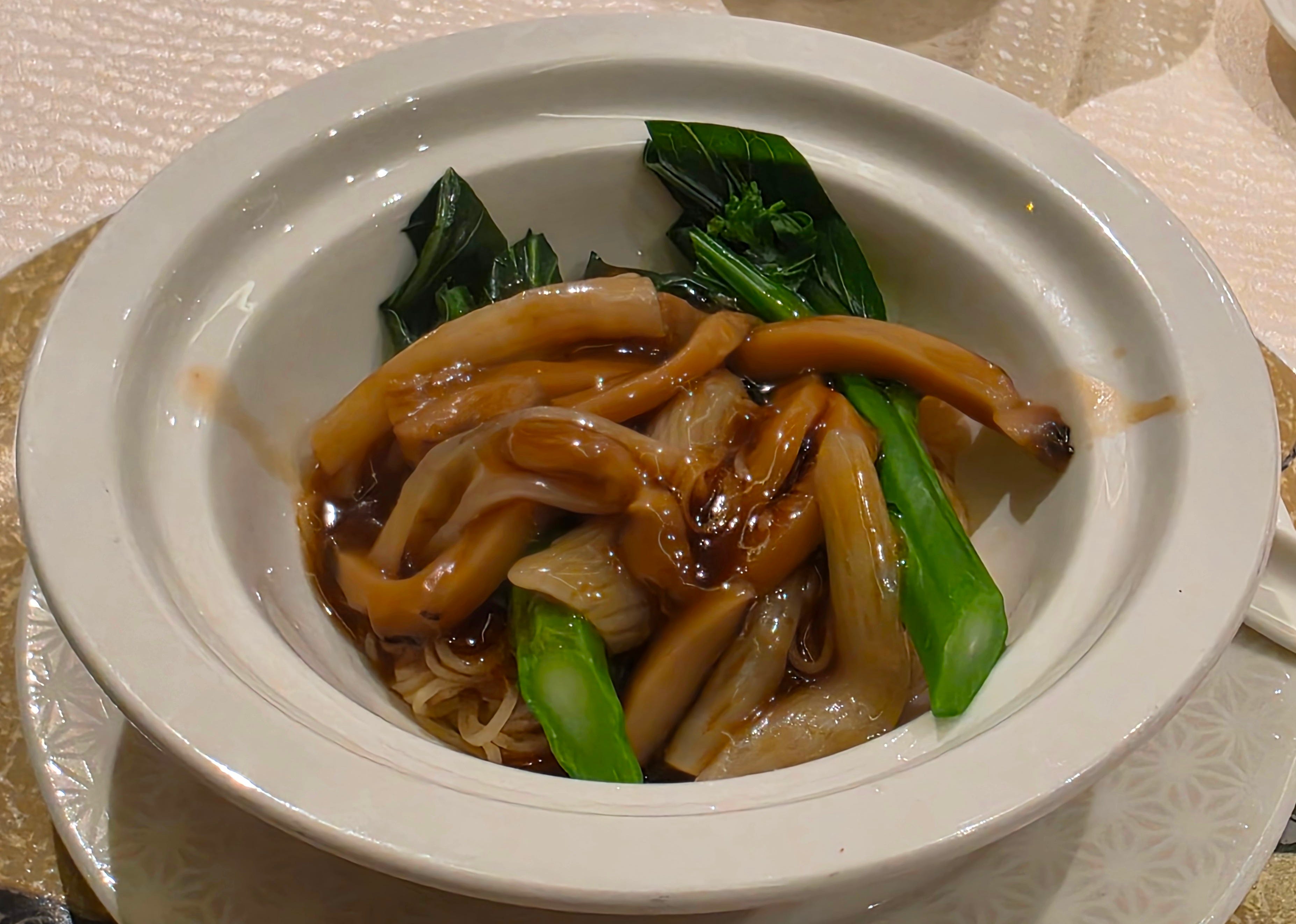
To round out the savoury part of the meal, we were served dry-stirred vermicelli with braised mushrooms, shredded fish maw, poached gai lan, and more of that excellent abalone sauce. This was a deeply satisfying closing starch, the sort of dish that feels far more luxurious than it sounds on paper once all the sauce and concentrated seafood flavours begin to settle in.
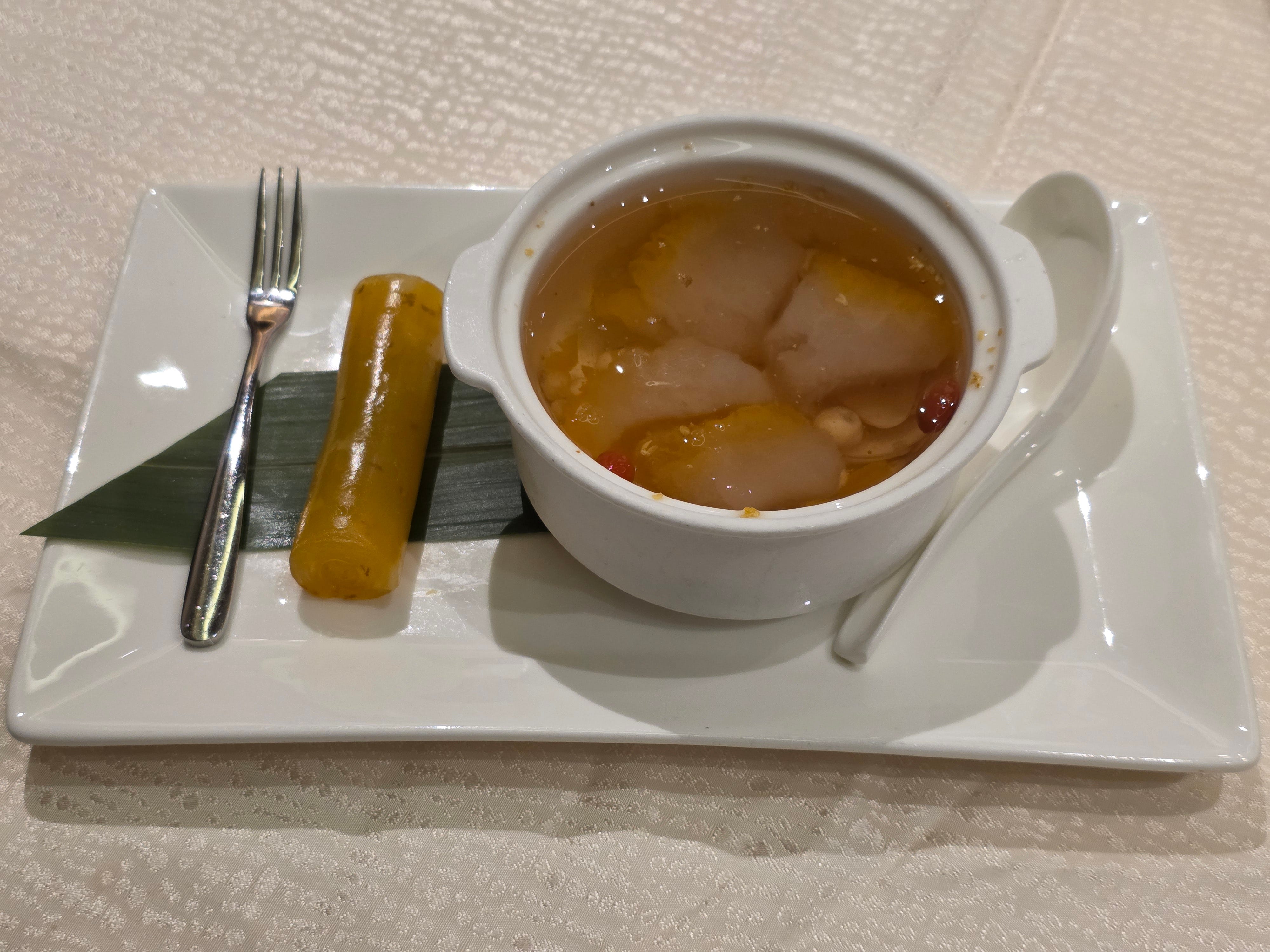
Dessert was less convincing. A chilled Cantonese sweet soup arrived with crispy aged lily buds, osmanthus, spongey Chinese fungus, and barley-like grains, alongside an osmanthus jelly roll topped with water chestnut flakes. It was certainly interesting, but not my favourite part of the meal. The textures felt slightly awkward together, and the whole thing leaned more unconventional than delicious.
Overall, though, Forum was a very strong meal, and one that captured a style of Cantonese luxury that Hong Kong does better than almost anywhere else. What I liked most was the way the restaurant balanced old-school banquet grandeur with occasional references to familiar Hong Kong street food forms. The shark fin soup was superb, the abalone and sea cucumber fully lived up to their reputation, and the whole meal felt grounded in the kind of culinary tradition that does not need to chase novelty. Compared to another giant of Cantonese cuisine in Hong Kong, T’ang Court, I much preferred Forum.
Total damage: 6400 HKD/2 people