
Chef Angelo Sato opened Humble Chicken in January 2021 on Frith Street in Soho, in the old Barrafina site. The first version was a casual Tokyo-style yakitori counter. Beak-to-tail chicken, individual skewers, individually ordered a la carte. It was well reviewed and busy from the start. Still, Sato later admitted the original yakitori idea worked, but not quite how he wanted.
At the start of 2023, he moved the restaurant into tasting-menu territory. The room became an 20 seat counter, with an eight-course menu described as Japanese food with a European accent. That version earned Humble Chicken its first Michelin star in the 2024 Guide, then a second in the 2025 Guide. Going from one to two stars in a year is rare, and Michelin called the jump remarkable.
Shortly after the second star, Sato shut the restaurant for a full rebuild. Humble Chicken reopened in 2025 as Humble Chicken 3.0. The new version is much more serious. Covers are down from 20 to 13 per sitting. The kitchen is bigger. The room was redesigned by Raven Collective, with dark blue, light wood, a cherry wood counter and copper and brass details. Even the utensils have been upgraded, with bespoke ebony and gold pieces made in Niigata and hand-blown ceramics from Herefordshire.
Sato has said openly that the goal of Humble Chicken 3.0 is the third Michelin star.
Chef Sato’s background is unusual. He was born in Japan to a Japanese father and German mother, both missionaries for a religious sect before leaving when he was 14. He has described his childhood as normal, but also said the lack of formal education made the real world difficult. He did not attend culinary school or regular school, and has said he arrived in London at 18 unable to read or write in any language.
His culinary education came entirely through work. He started in a local Japanese restaurant at 14, worked for free at a fish market before shifts to practice filleting, and learned to break down a chicken into more than 30 pieces at a yakitori restaurant. He later worked at RyuGin and Narisawa in Tokyo before flying to London on his 18th birthday and walking into Restaurant Gordon Ramsay to ask Chef Clare Smyth for a trial.
He then worked at Trinity under Adam Byatt, Eleven Madison Park in New York under Daniel Humm and Will Guidara, and Restaurant Story in London under Tom Sellers. At Story, he became head chef within four months of opening and stayed for around three years.
Before Humble Chicken, he tried Mission Sato, a bento restaurant in Old Street, and Omoide, a rice bowl takeaway. Both are now closed. A pop-up at Restaurant Story attracted interest from JKS Restaurants, but the deal fell apart over equity. Sato later said, “I’ve just spent 12 years being someone’s bitch and if I take this deal, I’m going to go right back to that.”
That probably explains a lot about Humble Chicken. It does not feel like a chef casually trying to run a nice restaurant. It feels like someone building towards a target with frightening intensity.
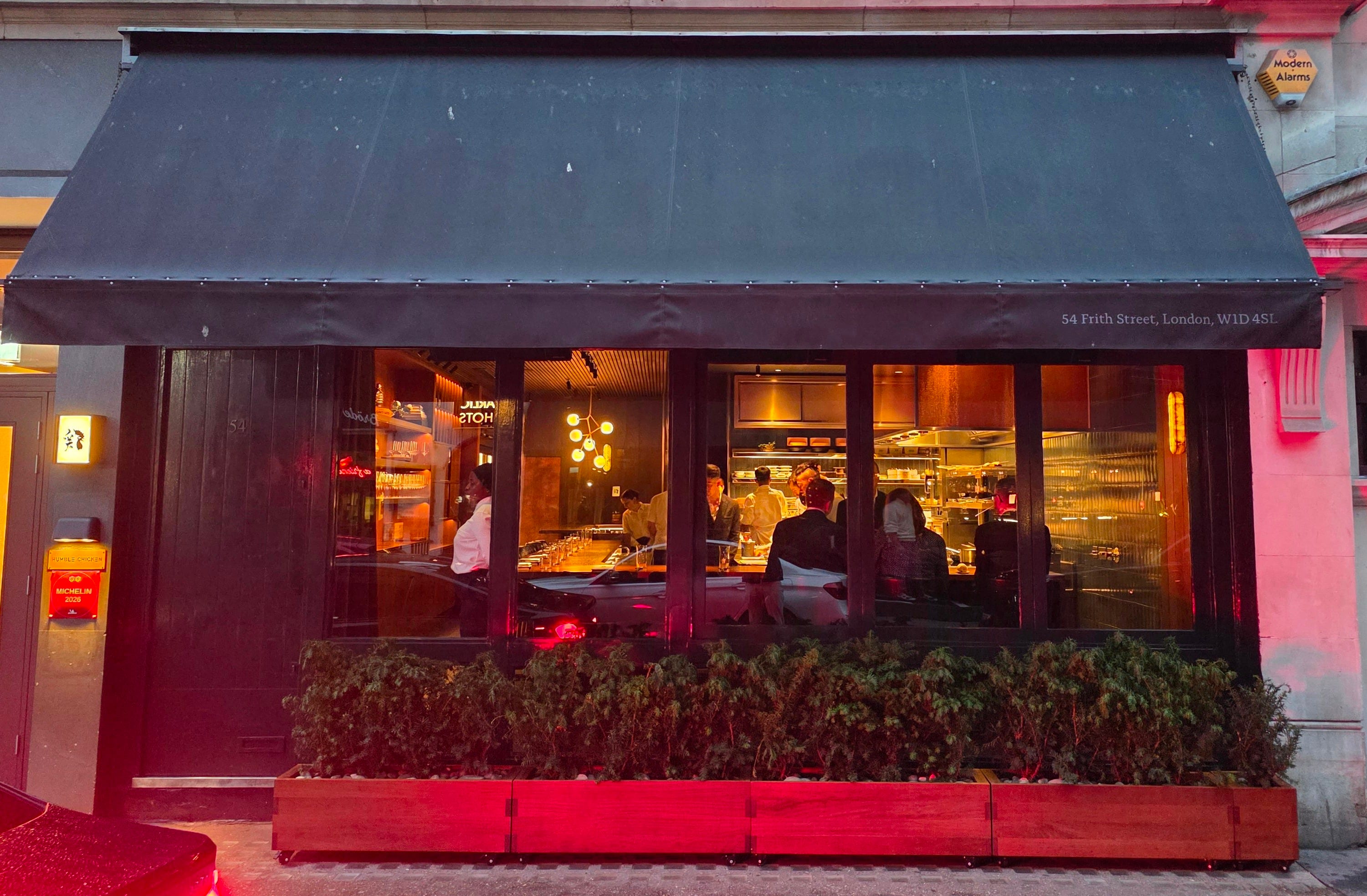
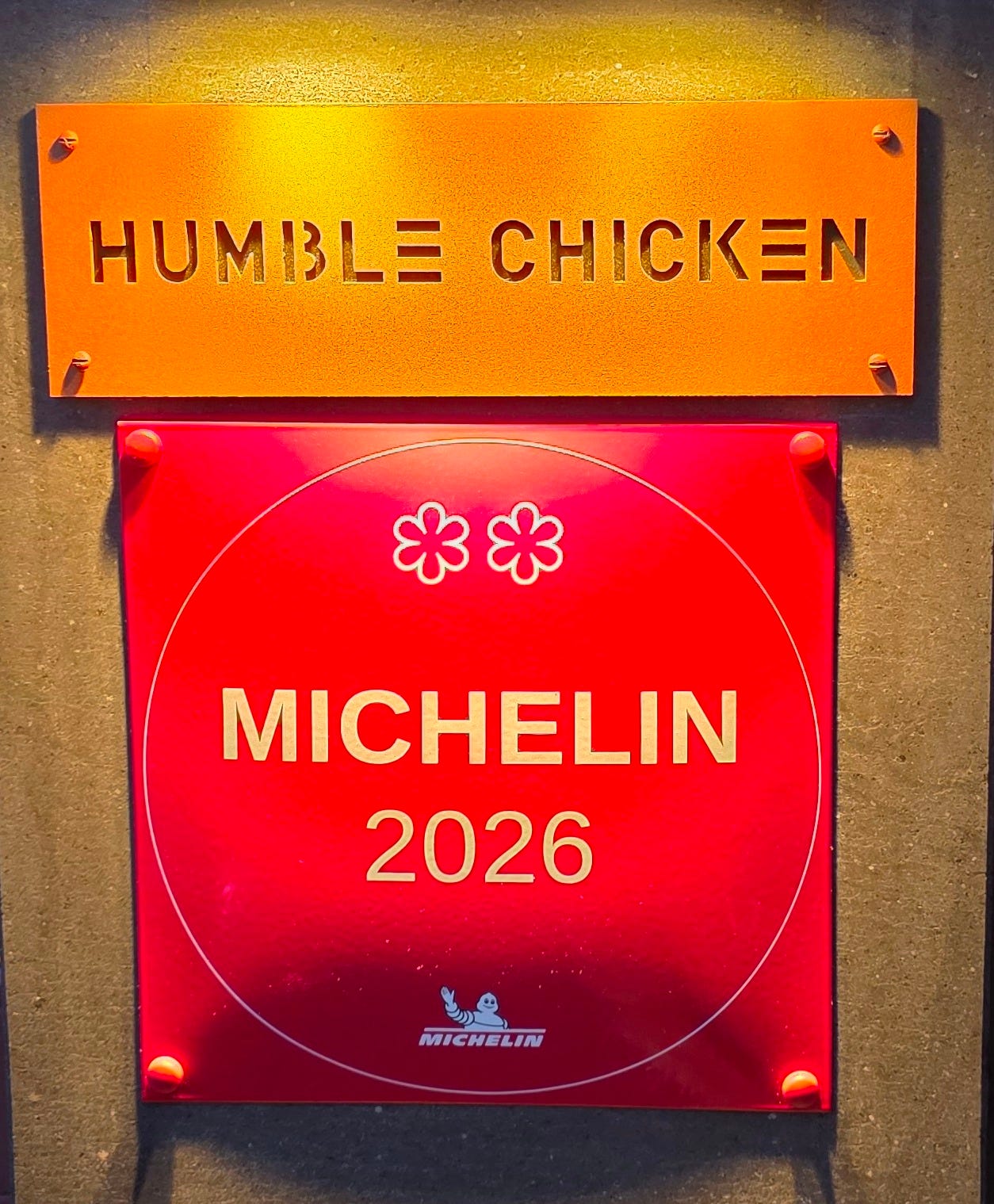
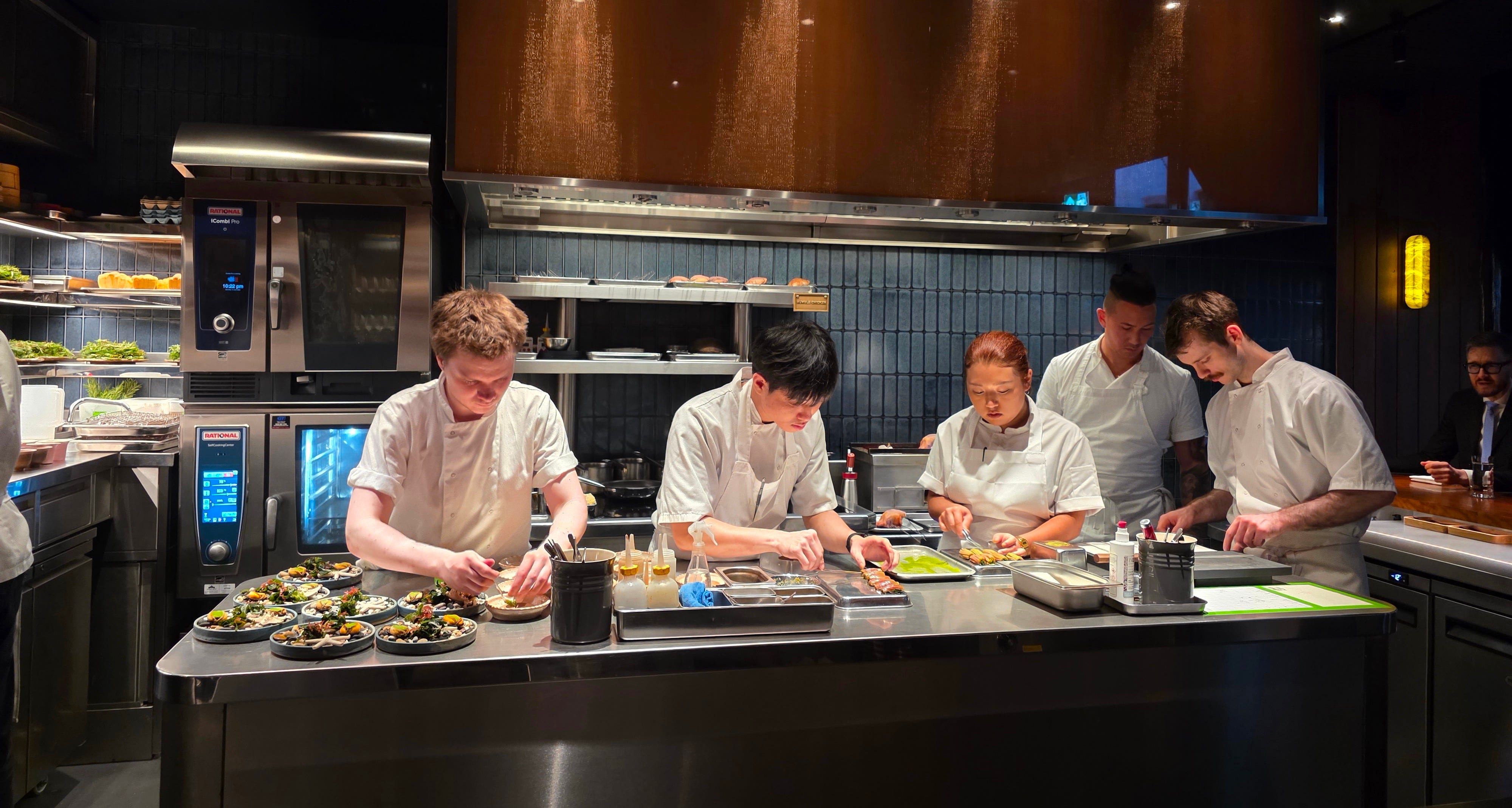
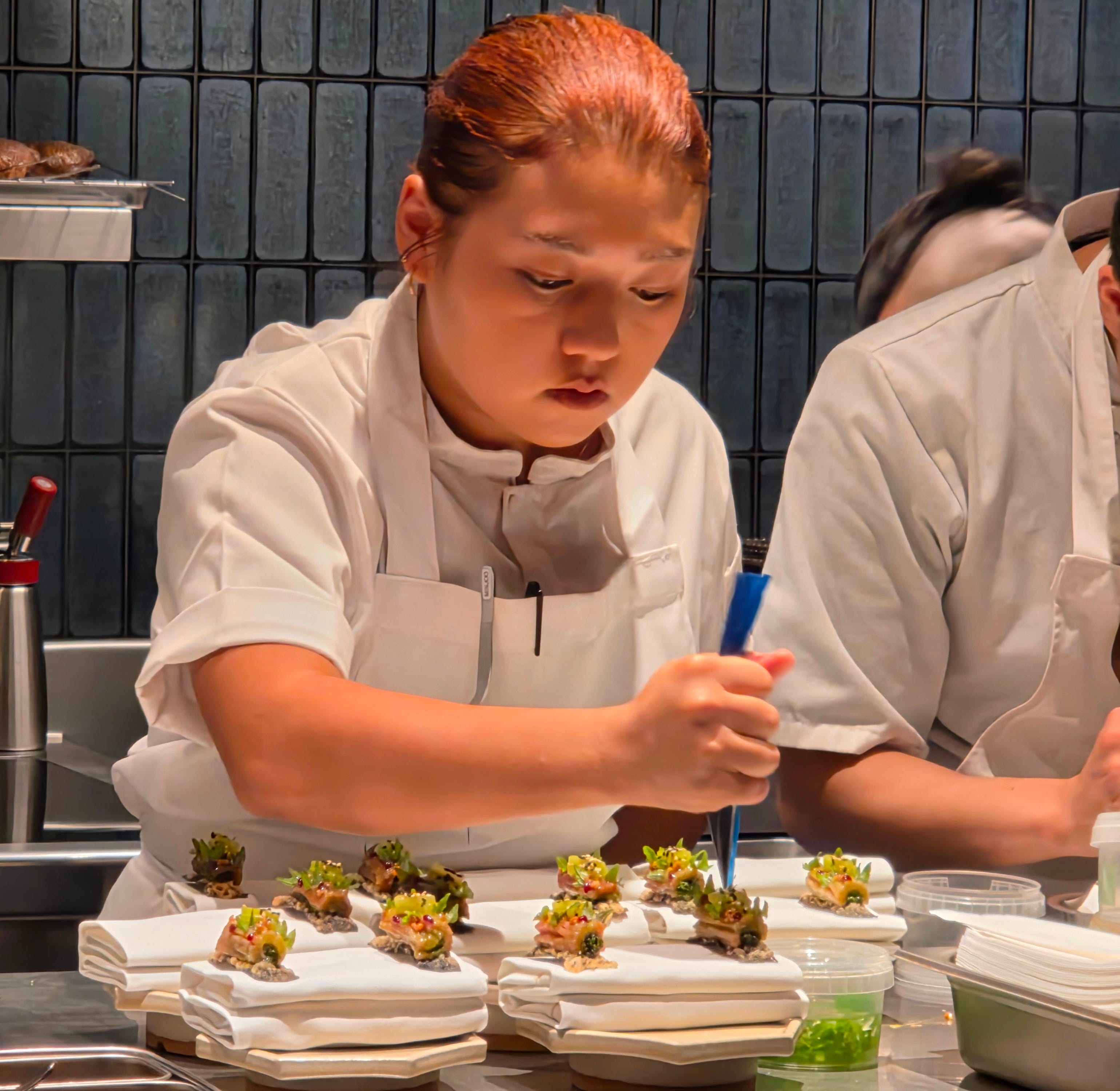
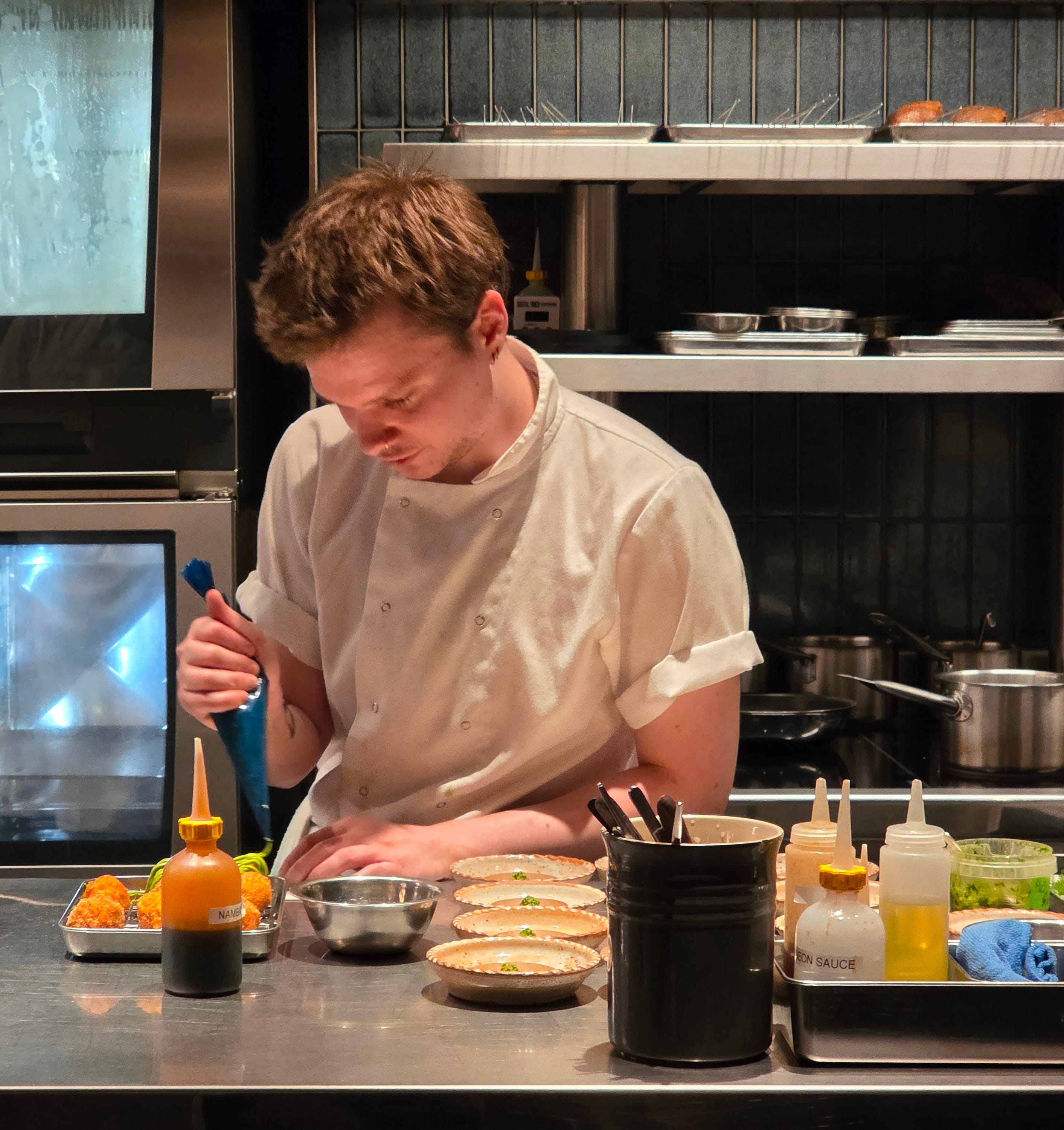
The restaurant sits in the middle of a busy part of Soho. Inside, the counter wraps around a small open kitchen. There are only 13 seats, and the chefs work directly in front of you. The kitchen has the rhythm of a proper show kitchen, but without theatre for theatre’s sake. Everyone has a specific job. The coordination is tight, and the pace never drags.
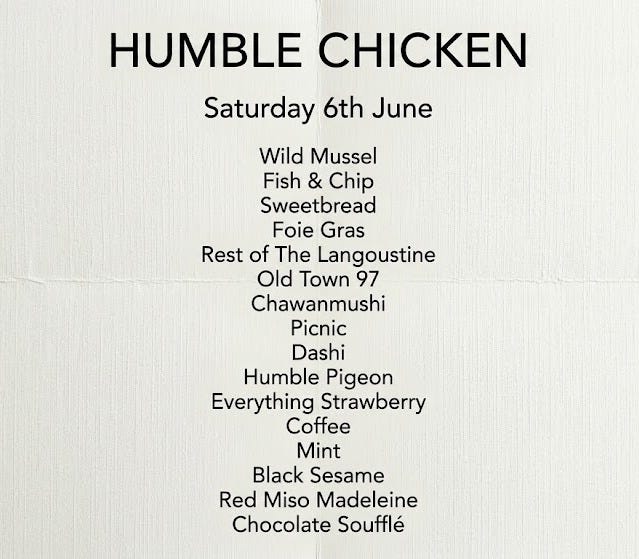
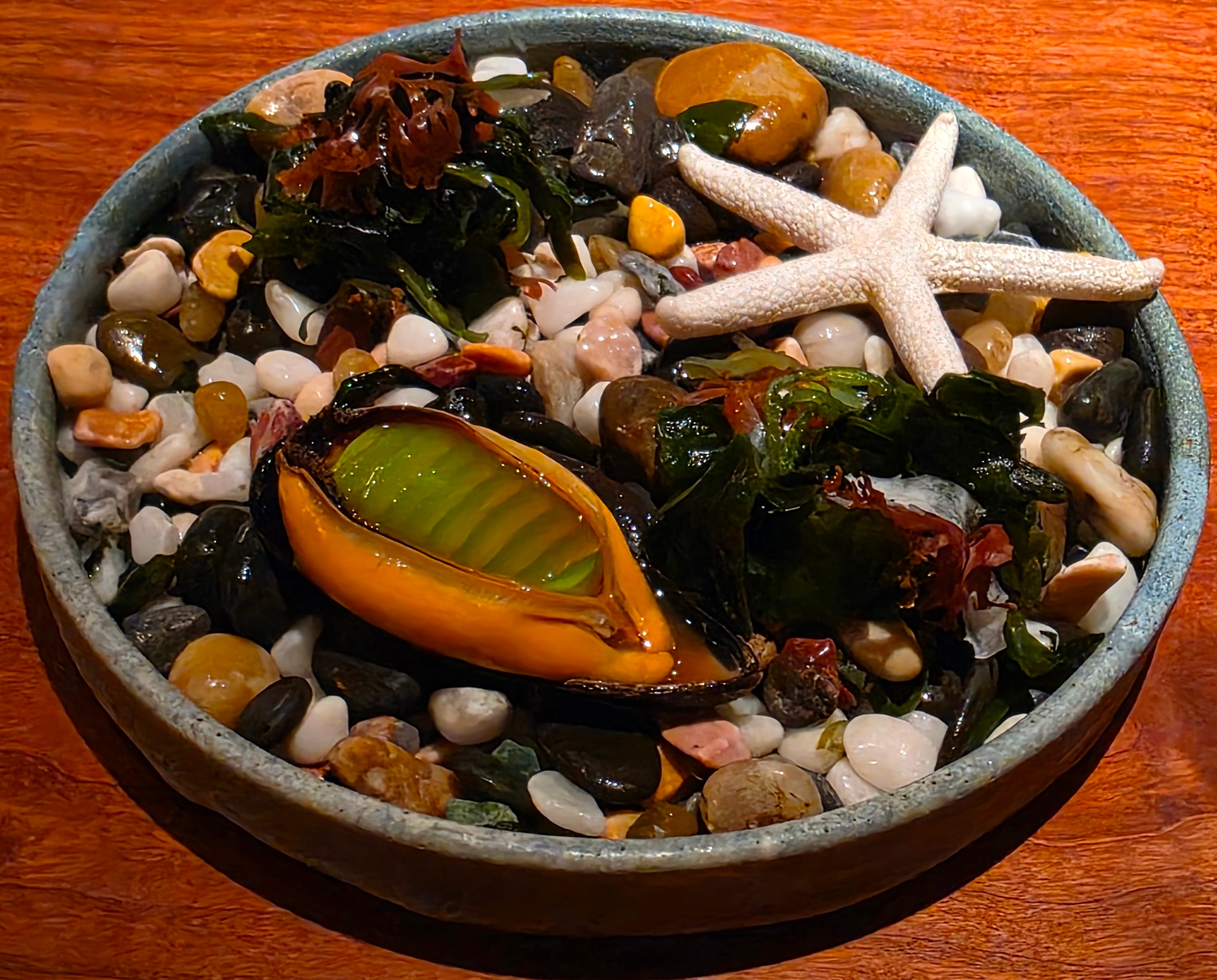
The meal opens with five small bites.
The first is the humble mussel, steamed and stuffed with avocado and fermented onion, then finished with soy-citrus ponzu. It is a clever opener. Bright, savoury, and much more interesting than the description sounds.
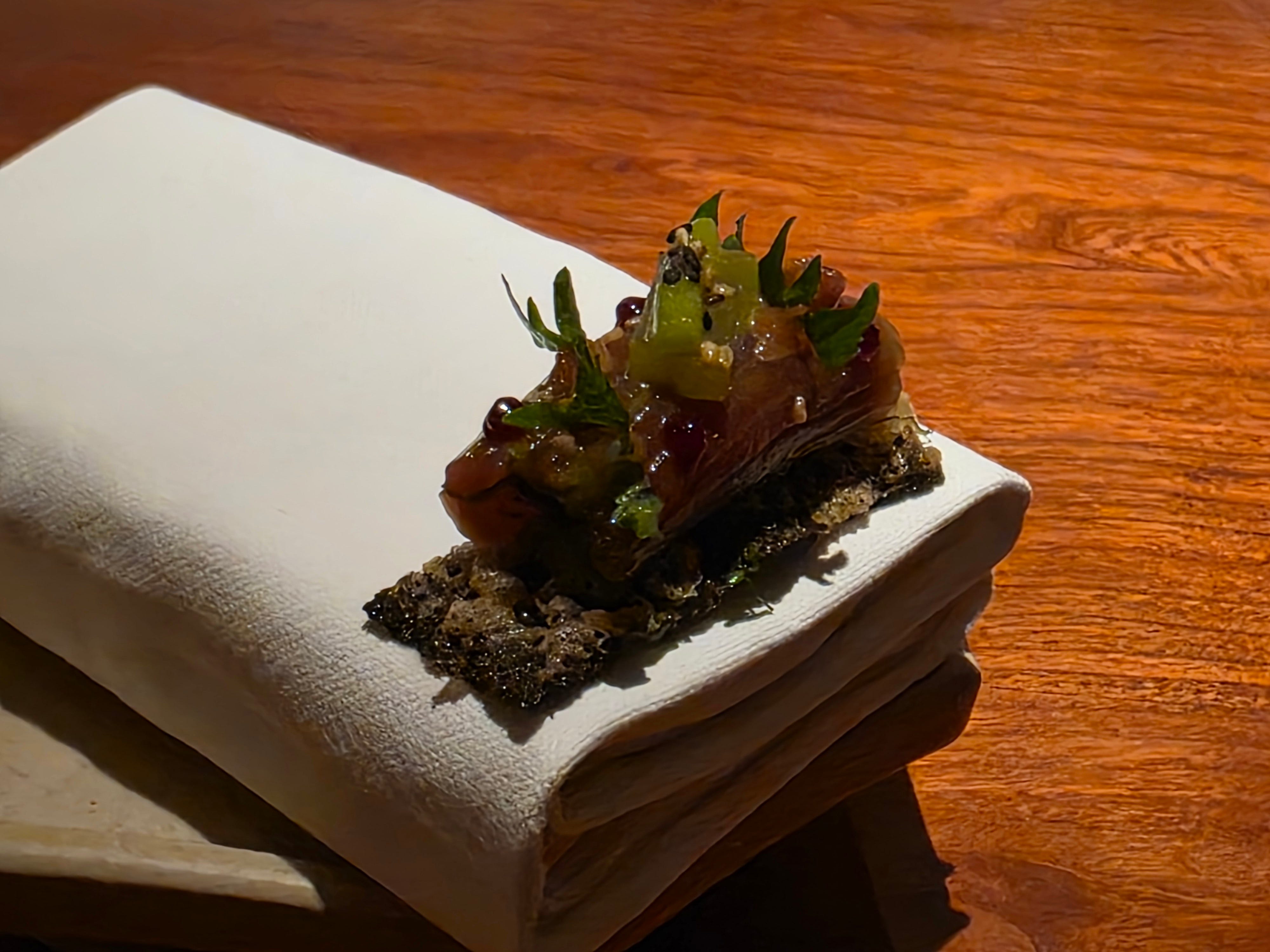
Next is Fish a Chip, a crisp seaweed chip topped with two kinds of tuna: akami and an otoro mince. It is a neat little bite, with the fat of the tuna balanced by the crispness of the seaweed..
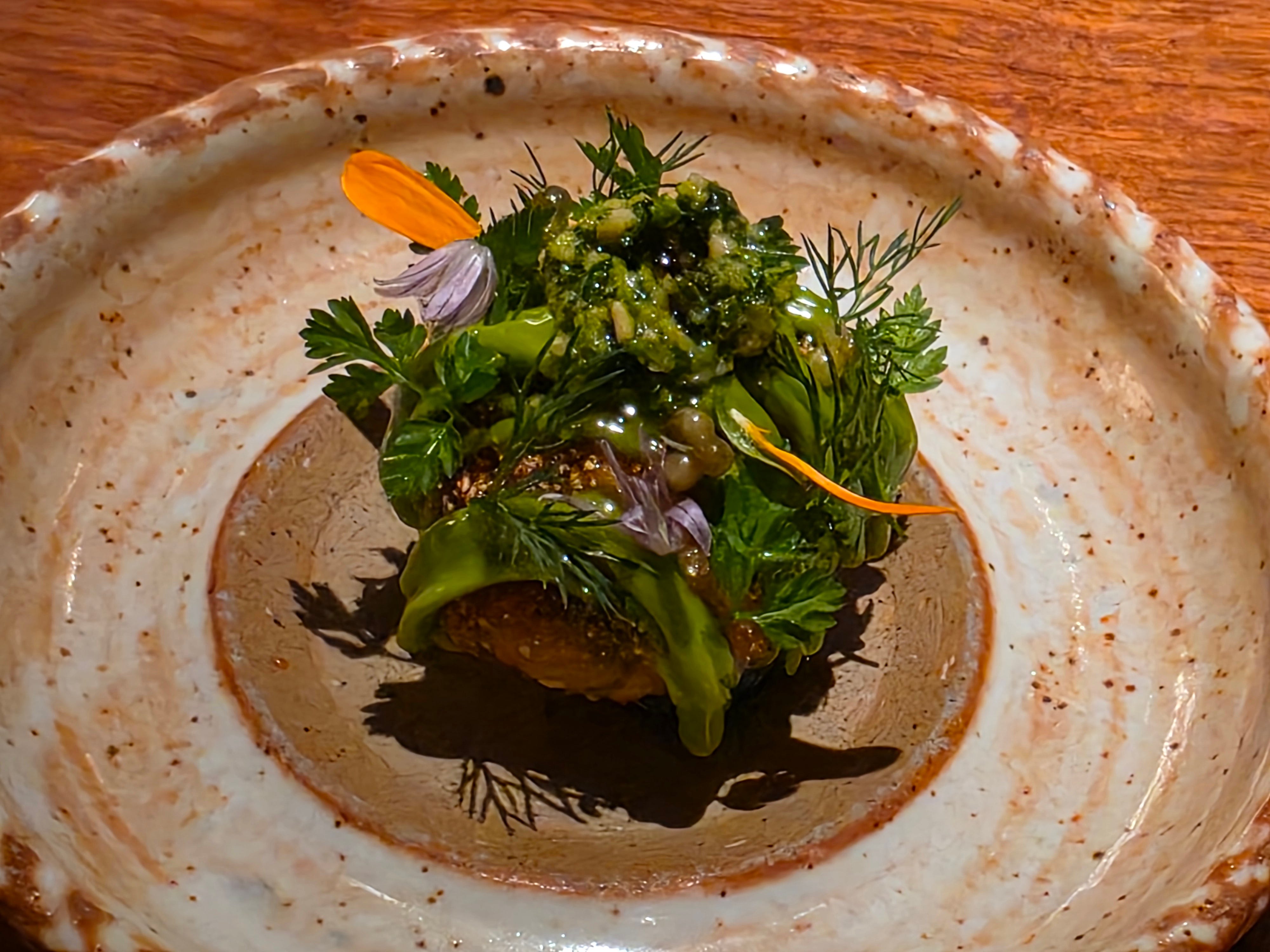
The fried veal sweetbread comes next, topped with garlic emulsion, pea and lovage pesto, dill and microgreens. Warm, rich, and comforting. A strong early course.
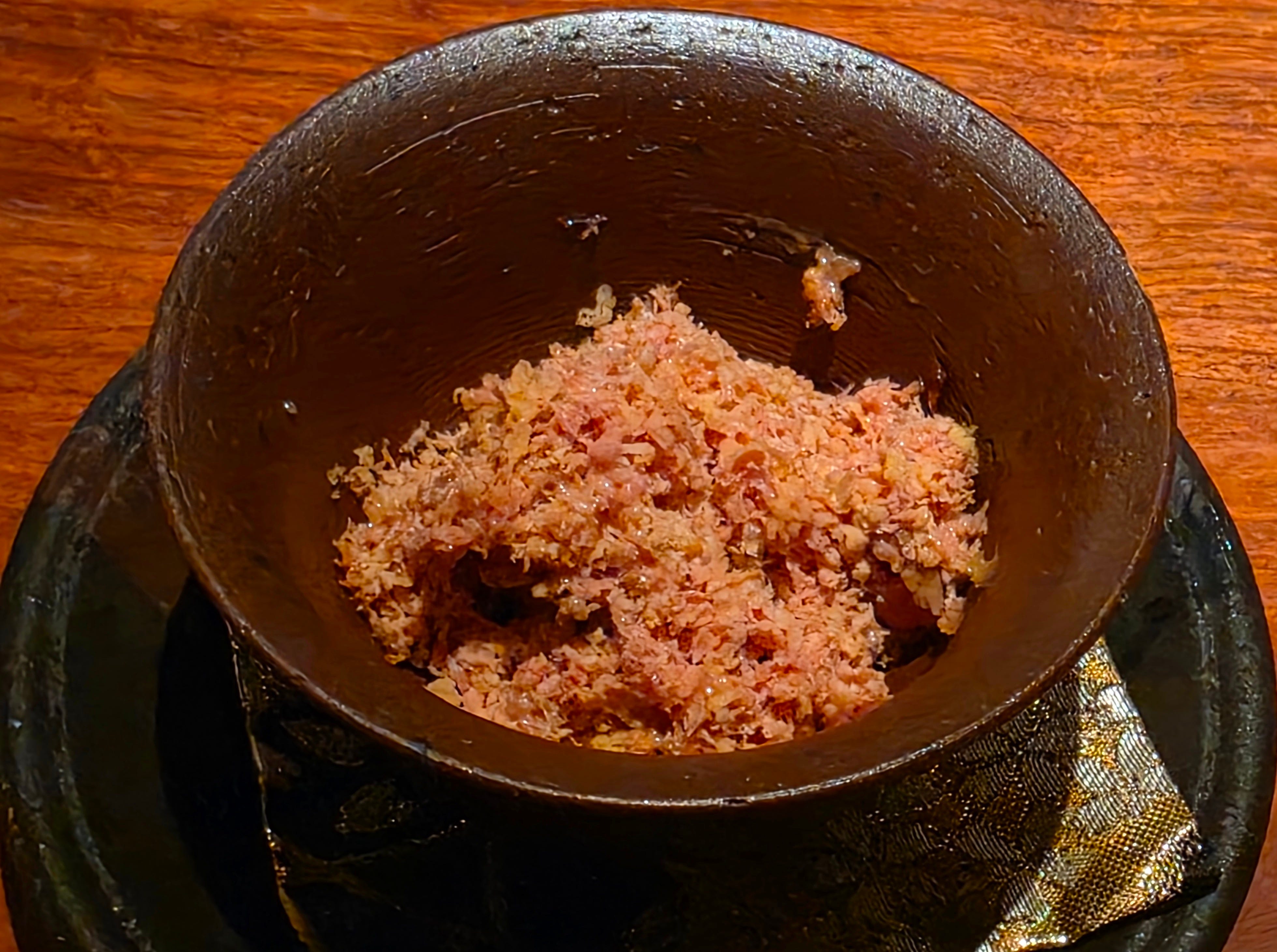
The chicken liver parfait is served over diced mango, with frozen foie gras shaved on top. Rich and fatty, but the mango keeps it from becoming heavy. It is an unusual combination, and it works exceptionally well.
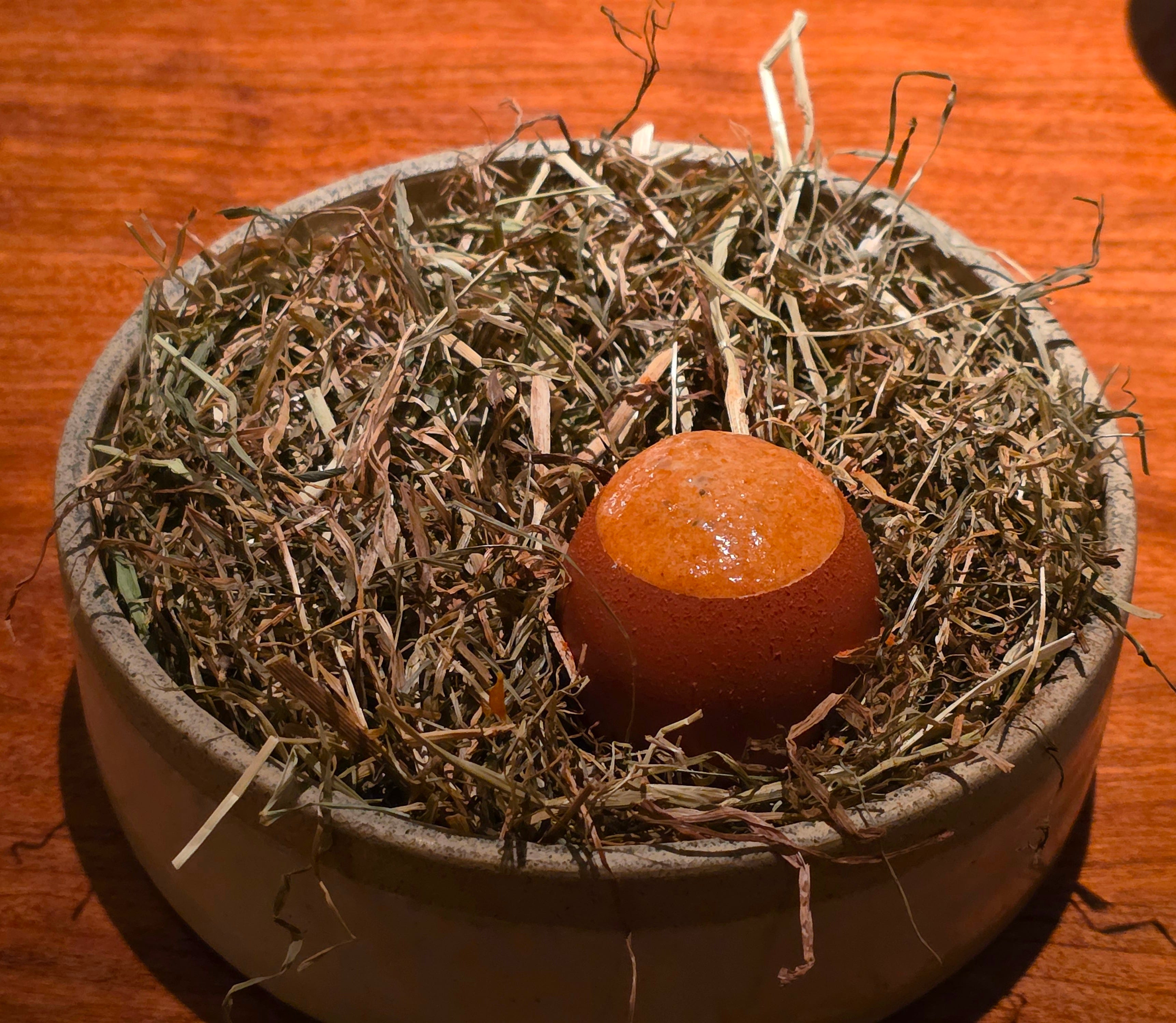
The Rest of the Langoustine is served inside an eggshell. Langoustine and pig trotter sit on scrambled egg, with a langoustine bisque foam. This had deep, condensed shellfish flavour, with a slight smokiness. One of the better early courses.
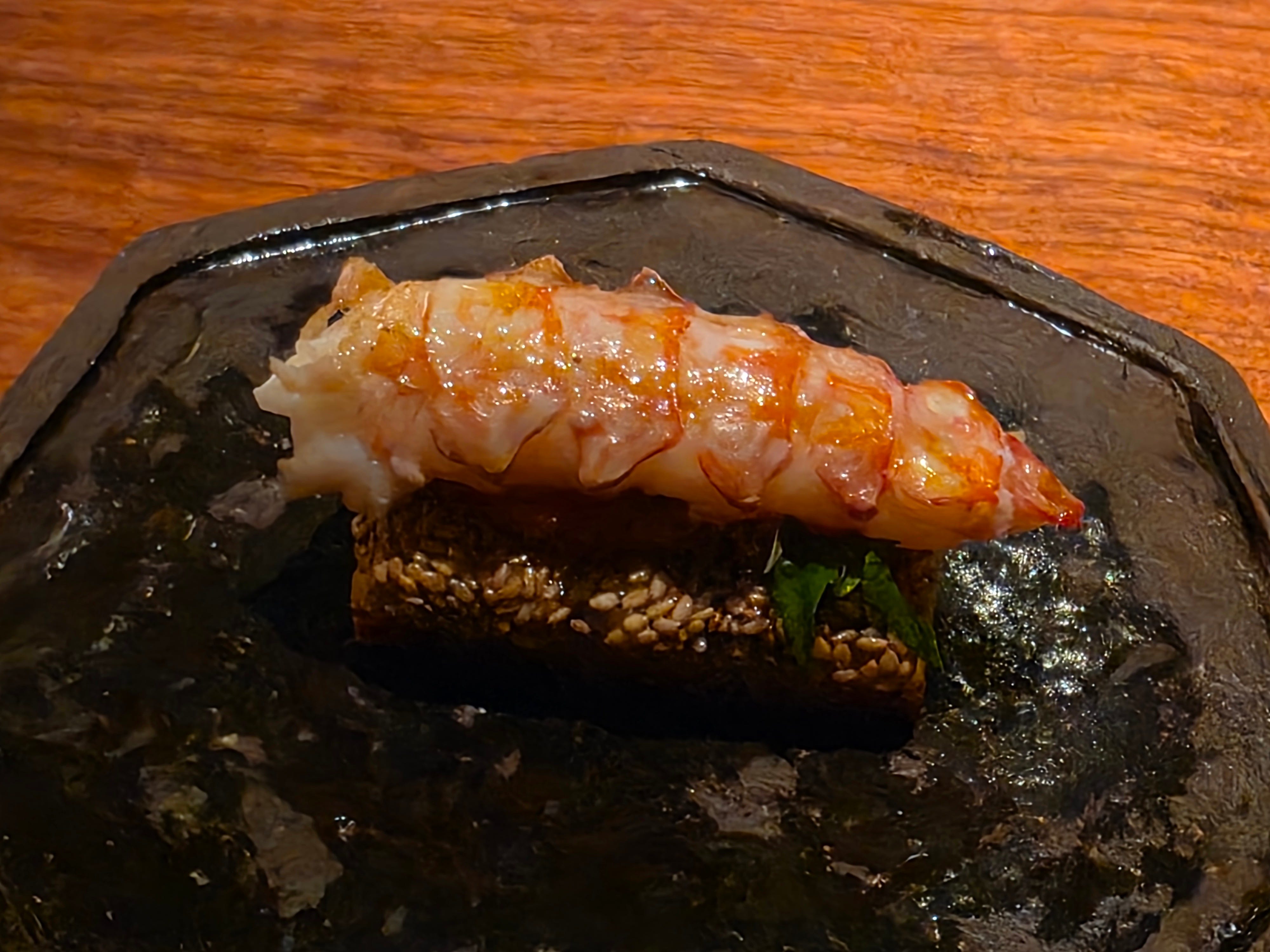
Old Town 97 is named after a late-night restaurant the team often goes to after service. It is Humble Chicken’s version of shrimp toast: deep-fried sesame-crusted bread, shiso leaf, Korean chili paste and a langoustine tail. Delicious!
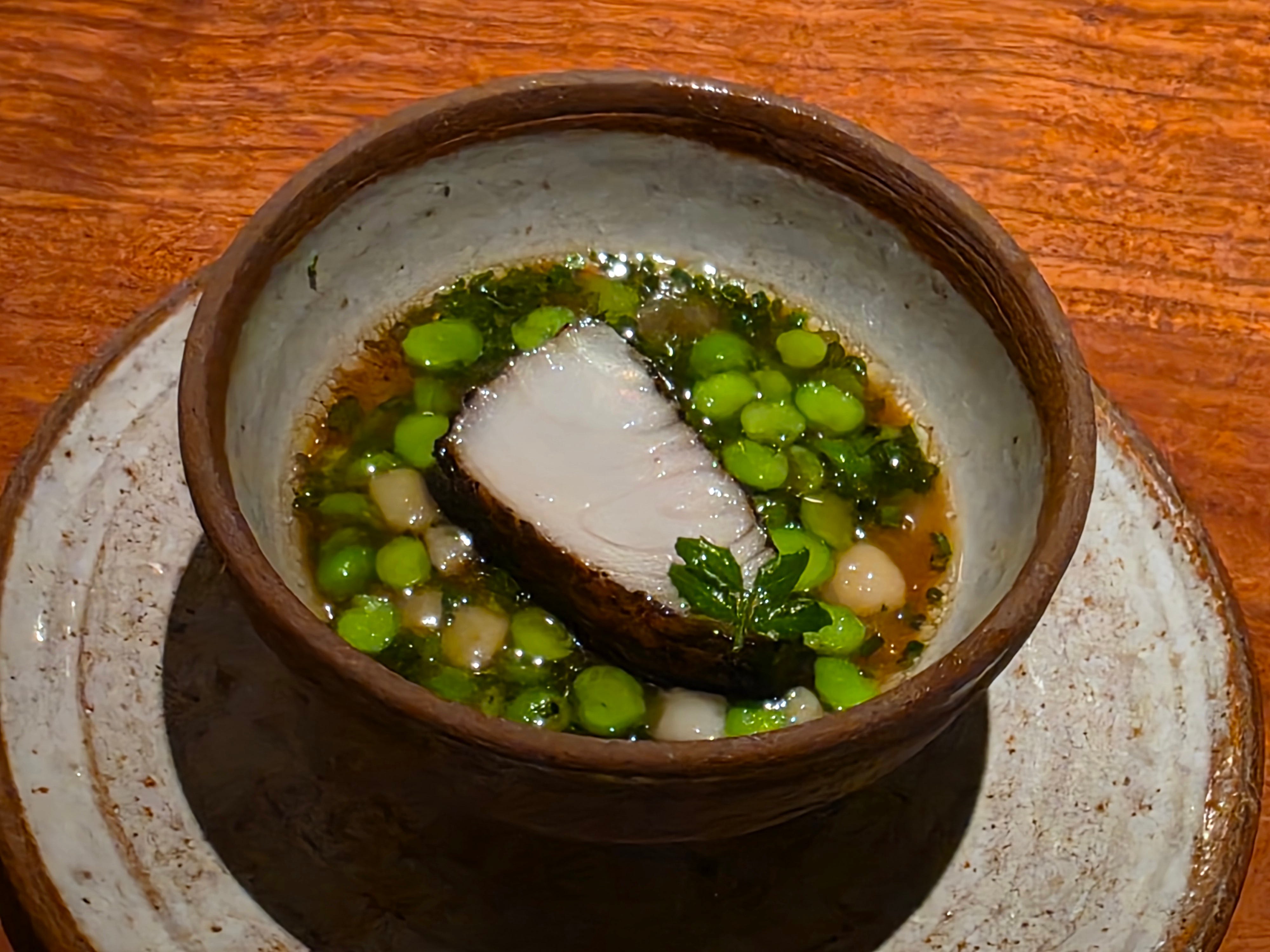
The Black Cod chawanmushi was one of my favourite savoury courses. A piece of smoked black cod sits on top of delicate egg custard, surrounded by beef bone marrow broth and fire-touched peas. The burnt scallion oil gives it a huge smoky note. The peas add crunch against the soft custard. It is a very good example of what the kitchen does well: smoke, heat, texture and fat, all handled with control.
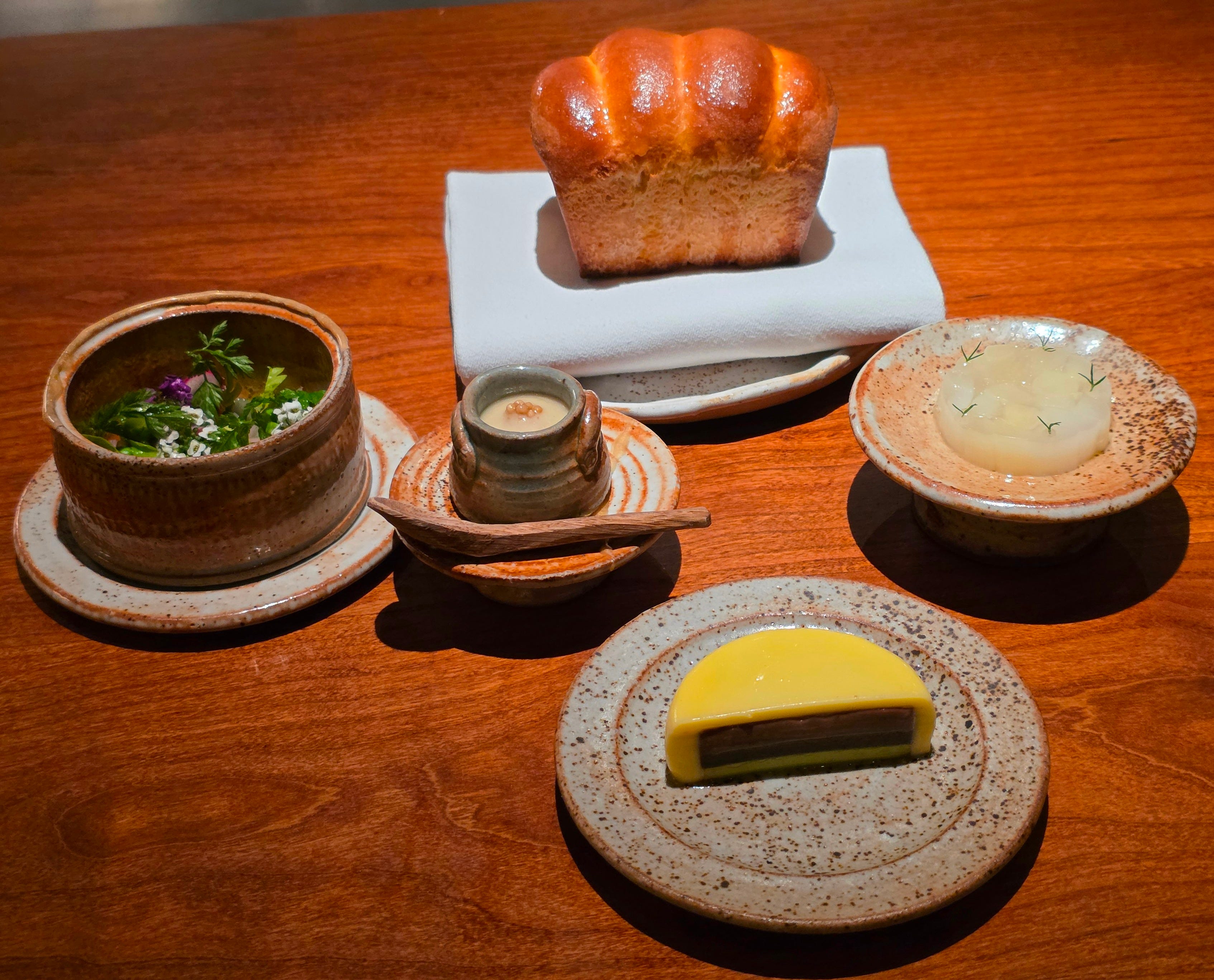
Then comes the bread course, called Picnic. This is already one of the restaurant’s signatures, and it deserves to be.
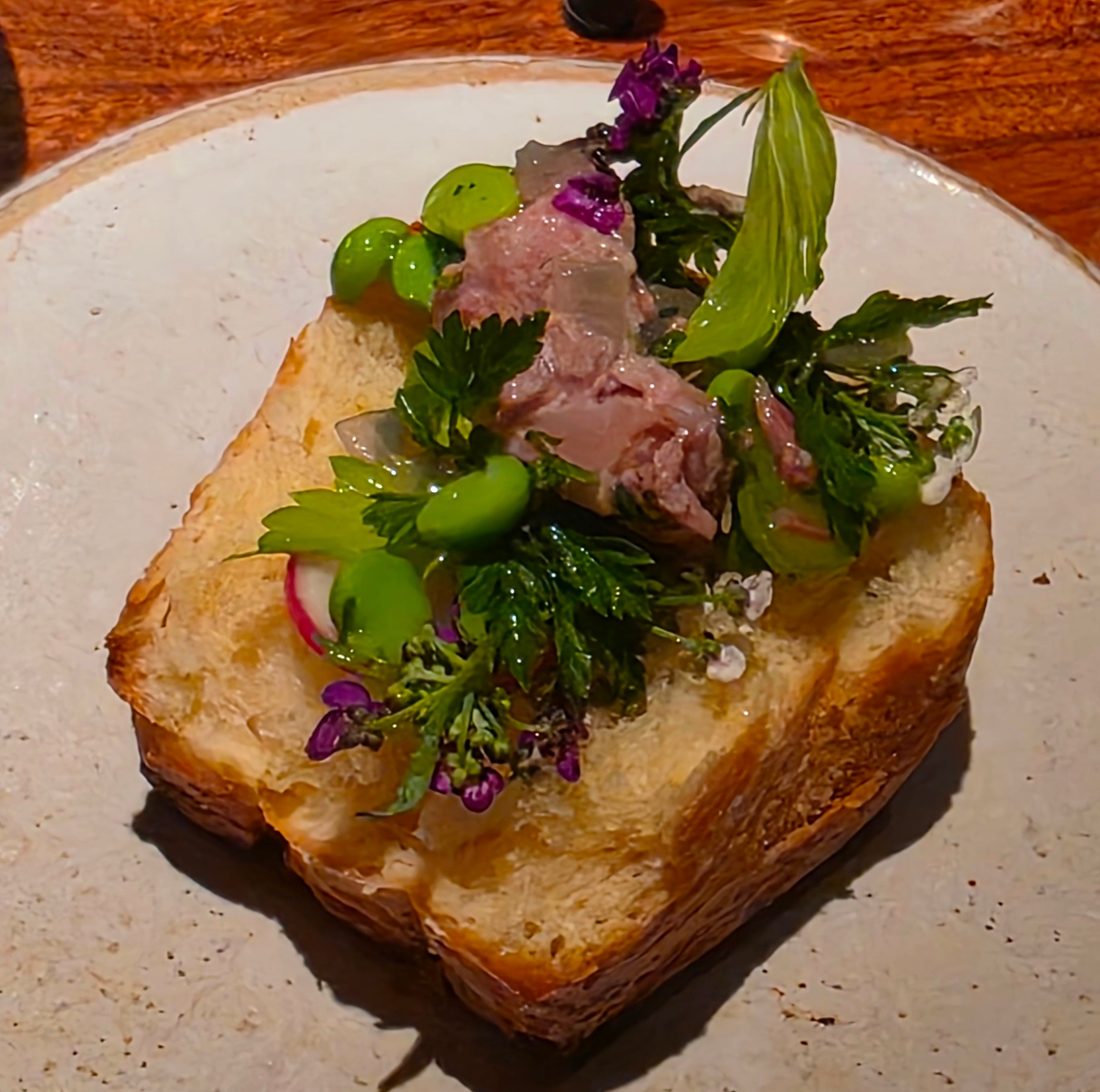
The bread is warm, sweet Japanese shokupan. The condiments lean more German: seven-day cultured butter sandwiching a layer of pigeon liver parfait inside, lacto-fermented white asparagus pickles, pork terrine covered with herbs and microgreens, and a small pot apple mustard. The idea is that you build your own sandwich. It sounds slightly cute on paper, but in practice it is one of the best bread courses I have had in London. The terrine on the soft shokupan was excellent. The white asparagus pickles were also very good.
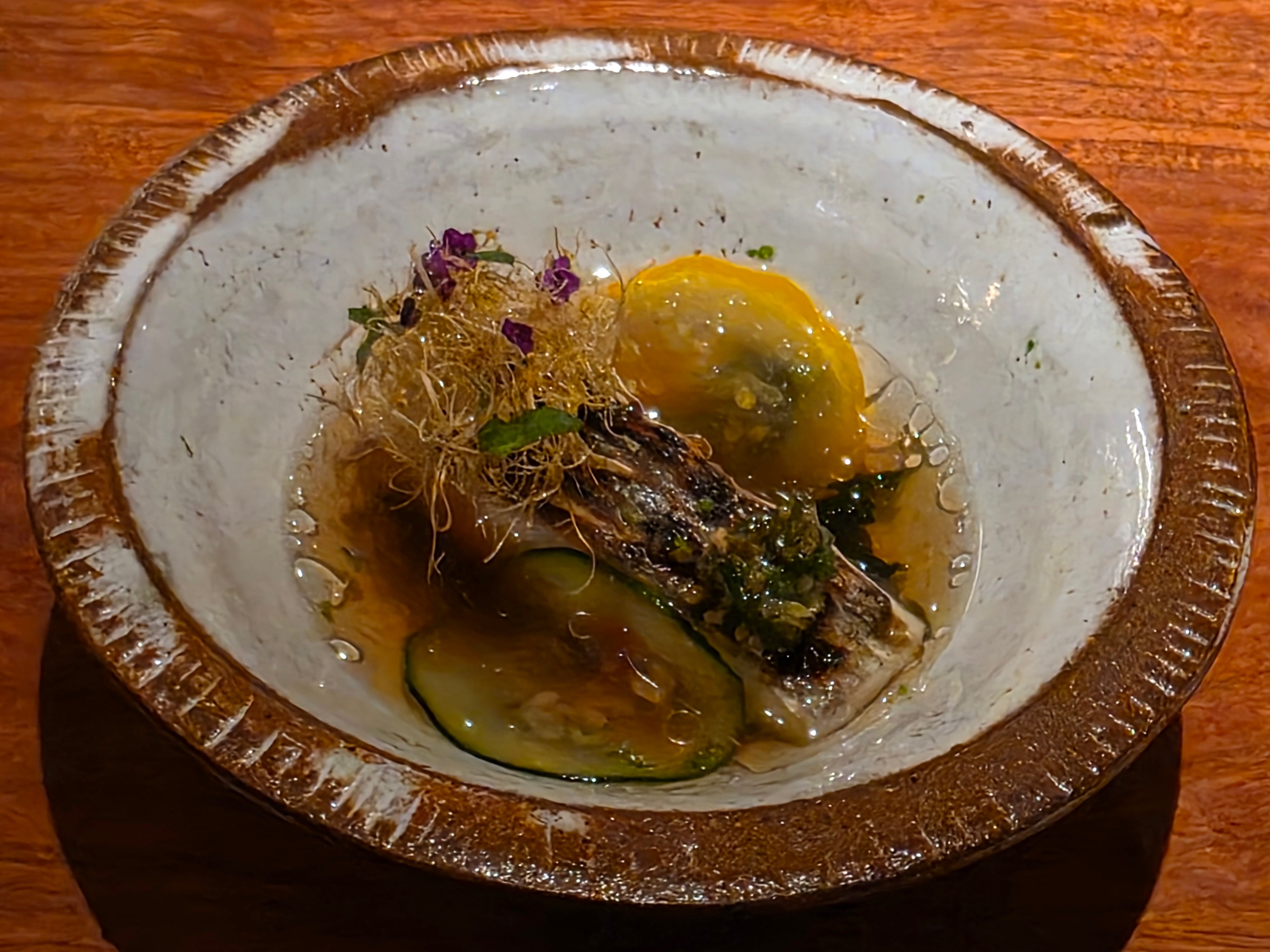
After that came sea bass in a clear dashi, cooked over coals so the skin blistered. The skin was crisp, the fish was clean, and the dashi gave it enough depth without turning it into something heavy.
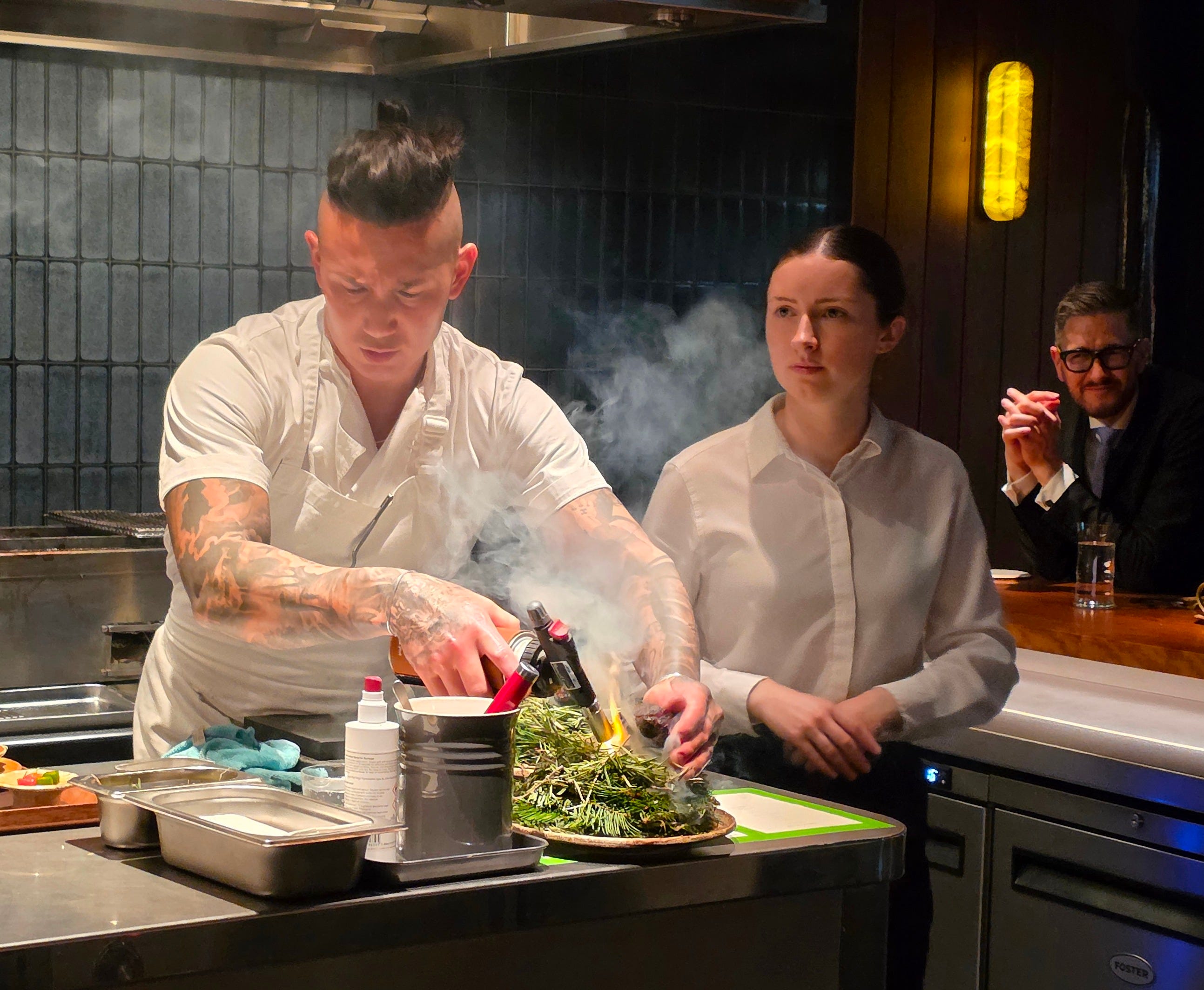
The main event is the pigeon.
Chef Sato cooks the pigeons himself. While the rest of the team handles the preceding courses, he works at the grill, moving each pigeon on and off the flame, then smoking it on pine needles for nearly an hour. The breast is served on a bed of pine needles, which are set alight underneath for a final hit of smoke.
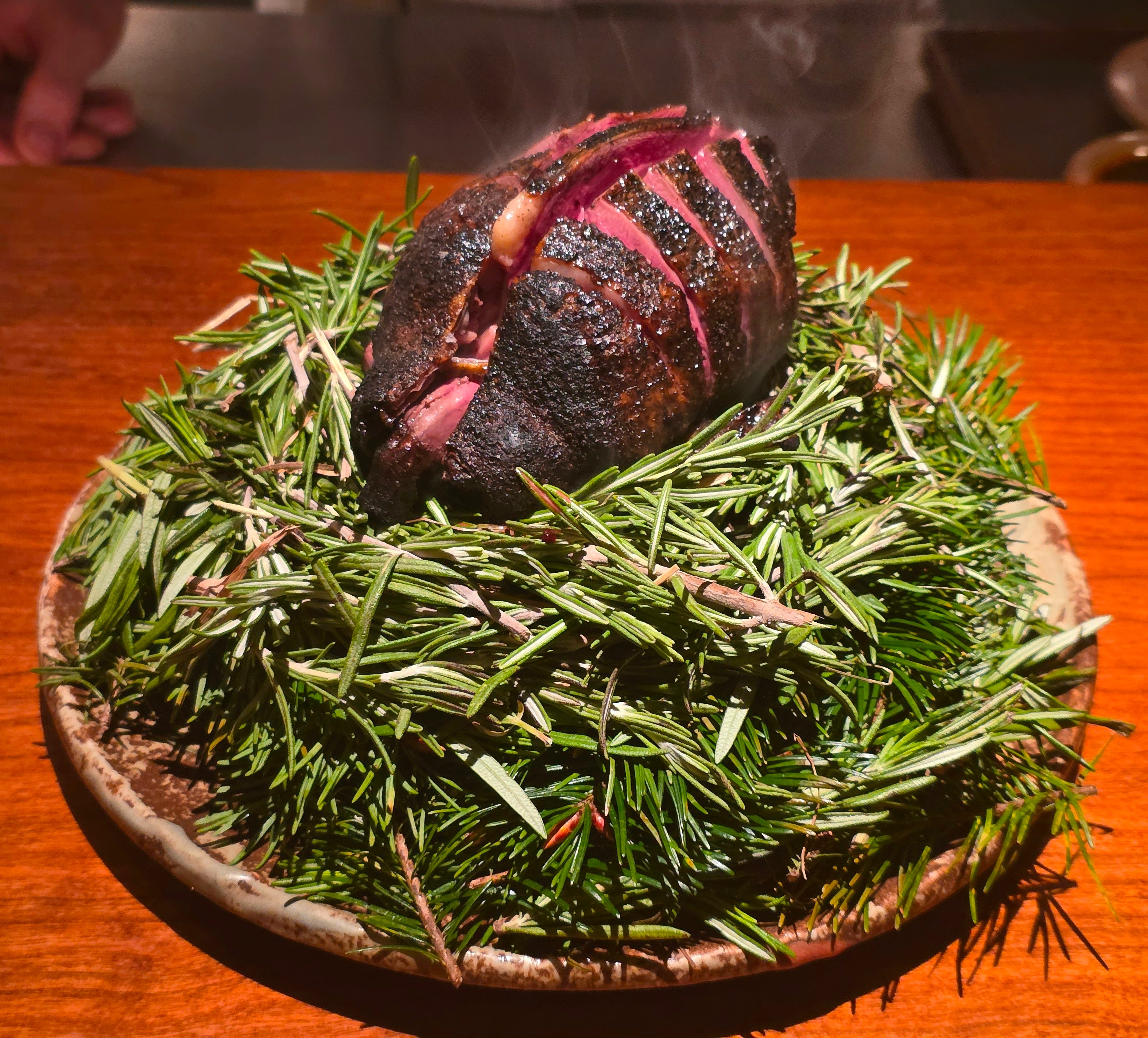
As I was dining alone, they gave me the whole pigeon, which is normally shared between two people. This was generous, but slightly dangerous.
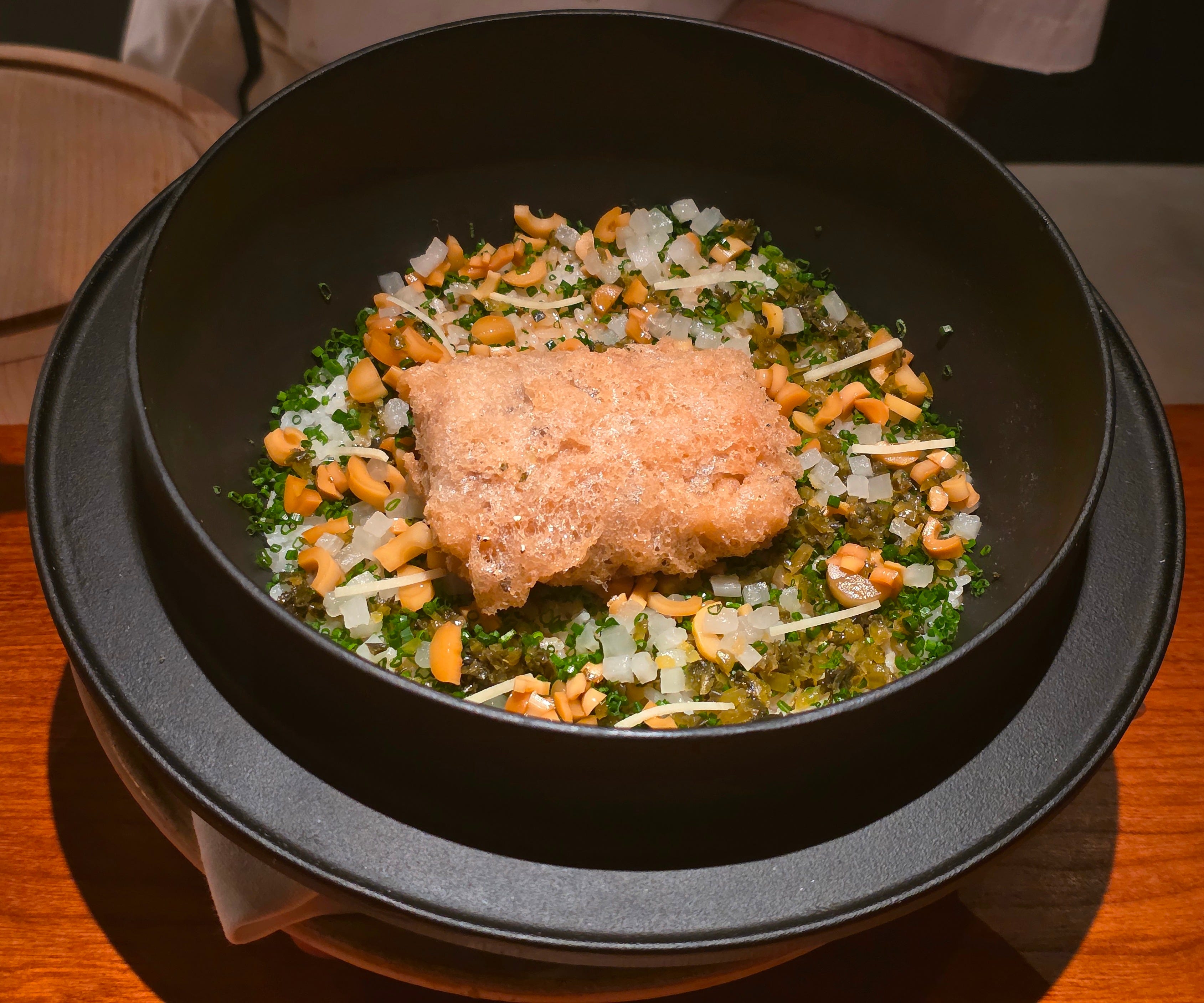
The rest of the bird is used for pigeon rice, served alongside the breast with a Sichuan-inspired mala sauce, grated radish ponzu, pickles and pigeon stock.
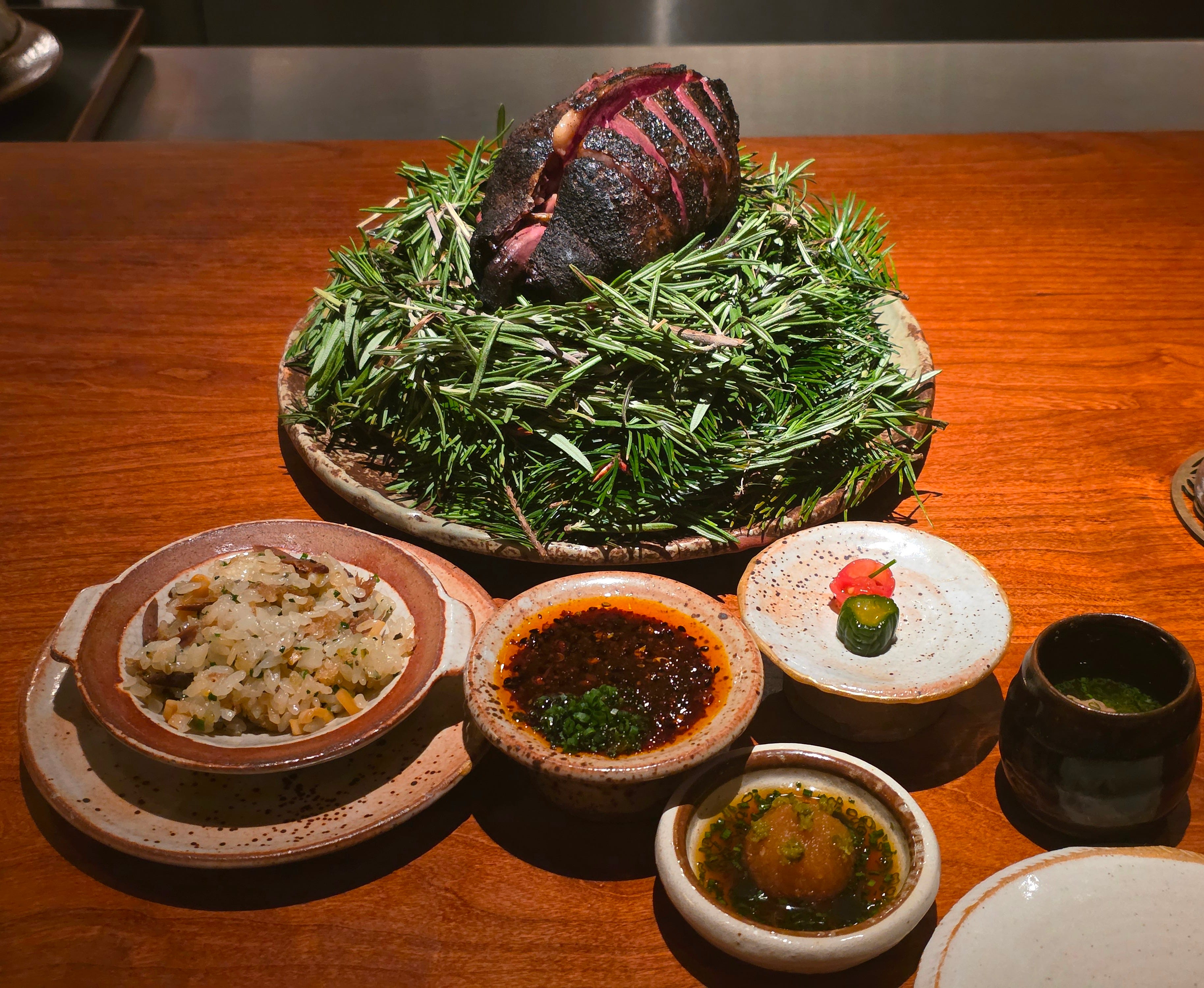
By this point I was completely full, and barely managed half of it. Still, the dish was excellent. The breast had a deep smoke, the rice was rich, and the condiments gave enough acidity and heat to stop it becoming one-note.
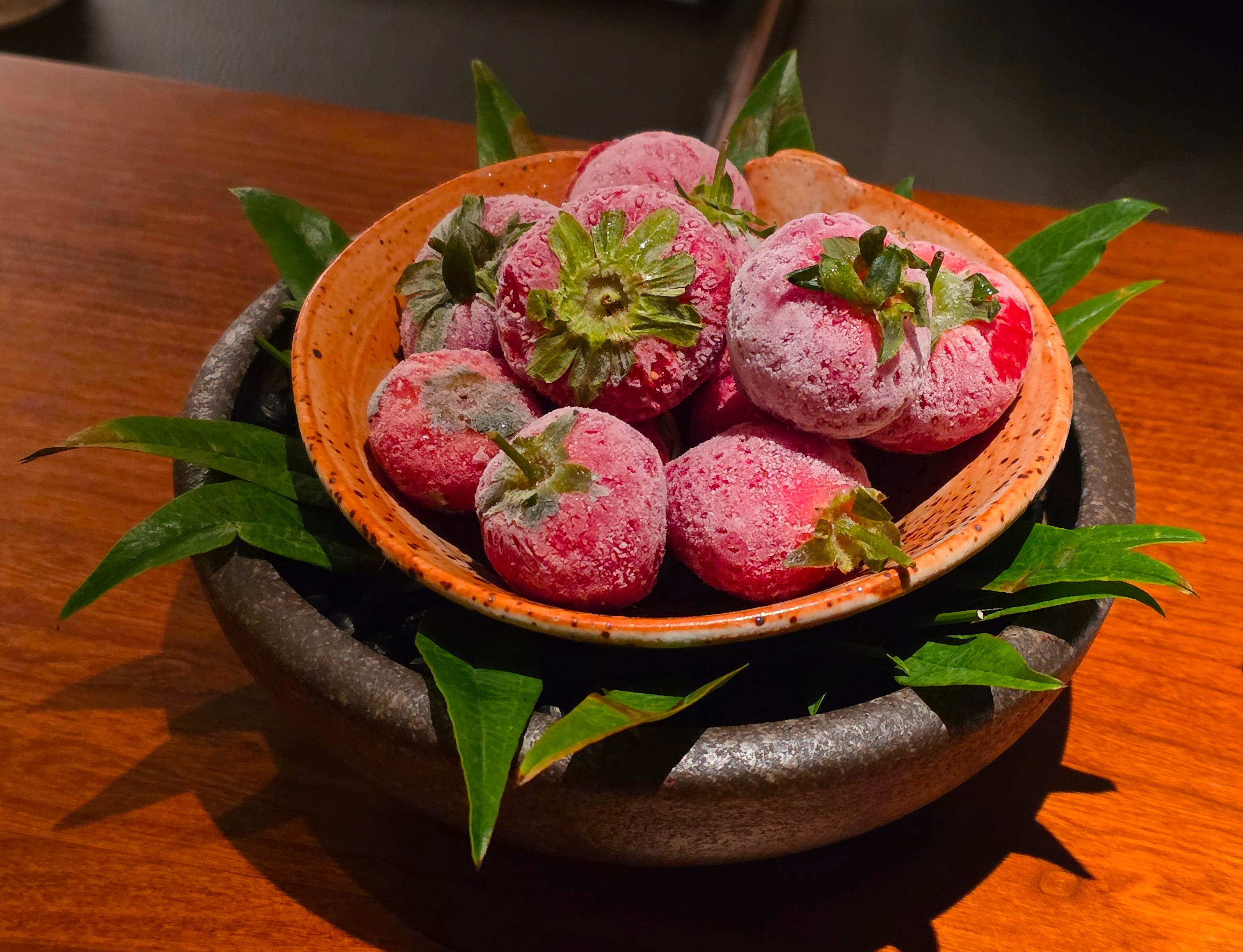
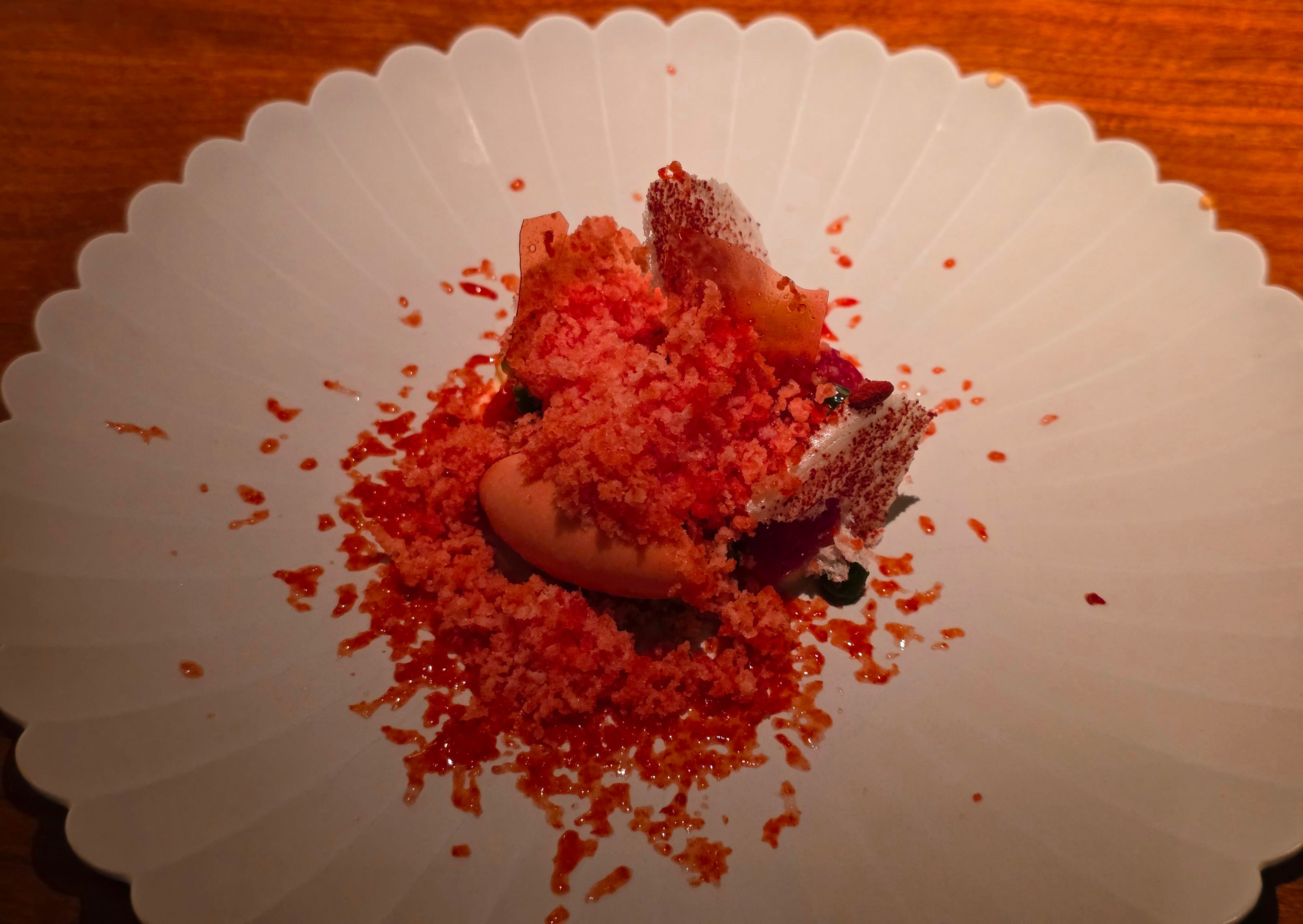
Dessert was Everything Strawberry, inspired by a New York cheesecake. A piped cheesecake cream base came with different textures of strawberry: sorbet, dehydrated crystal flakes and frozen strawberry micro planed over the top. Clean, precise, and not too sweet.
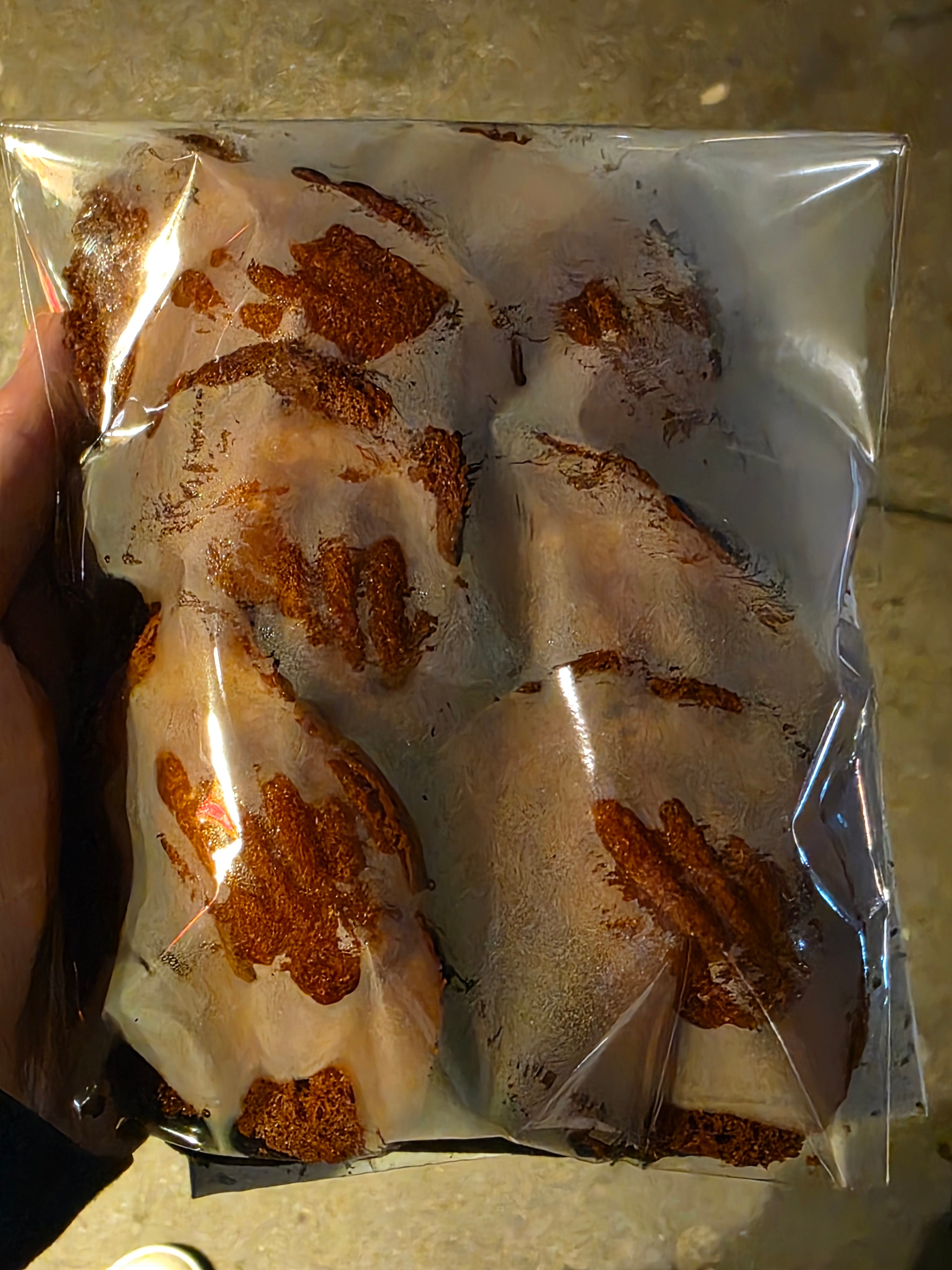
The petit fours are apparently another highlight, but I was crashing hard from jet lag after landing in London earlier that morning. I was barely able to stay balanced on the bar stool, so I asked for the bill and skipped the petit four. On the way out, they gave me a packet of freshly baked madeleines, still warm from the oven.
Overall, I had an excellent meal. I was not sure what to expect from Humble Chicken 3.0, especially given its yakitori origins, but this is now a very serious restaurant.
The use of heat and smoke reminded me of Humo. The precision reminded me of Alex Dilling at Hotel Cafe Royal. The intricacy of the preparation reminded me a little of Row on 5. That puts Humble Chicken in very good company, and among some of the best restaurant’s I’ve tried in London over the past few years.
The bread course and pigeon were the clear standouts. The menu is unconventional, but it has real identity. Sato is clearly chasing three stars, and based on this meal, it would not surprise me if he gets that coveted third star soon!
Total Damage: 270 GBP/1 person