
Lai Ching Heen is the institutional Cantonese room at Regent Hong Kong. You are buying continuity: the old Yan Toh Heen lineage, Chefs Lau Yiu Fai and Cheng Man Sang, the harbour view, the jade-room theatre, the tea service, and polished classic Cantonese execution.
The restaurant opened in 1984 as Lai Ching Heen, became Yan Toh Heen during the InterContinental Hong Kong years, before returning to the Lai Ching Heen name when the hotel reverted to Regent. This is not a new restaurant trying to borrow history from an old one. It is the same Cantonese institution moving through different hotel-brand eras.
The continuity runs through Executive Chef Lau Yiu Fai, who joined the hotel in 1980 and was part of the original opening team. He came up through old Hong Kong Cantonese kitchens, including Tai Sam Yuen and Fook Lam Moon, before moving through Vancouver, Tin Shan Palace, and then the Regent / InterContinental room.
Head Chef Cheng Man Sang is the other half of the story. He has worked alongside Lau for decades, and current coverage frames the restaurant as a Lau-Cheng partnership rather than a one-man room. This is cooking built around consistency, temperature control, seafood handling, dim sum, roasting, banquet-grade polish, and service choreography.
The grammar is luxury Cantonese: crab, lobster, scallop, abalone, Hokkaido seafood, Kagoshima wagyu, suckling pig, Peking duck, premium tea, house XO, caviar touches, and black truffle where useful. It’s less about reinvention than the kitchen keeping a difficult form of hotel Cantonese cooking intact through ownership changes, room redesigns, and dining-fashion cycles.
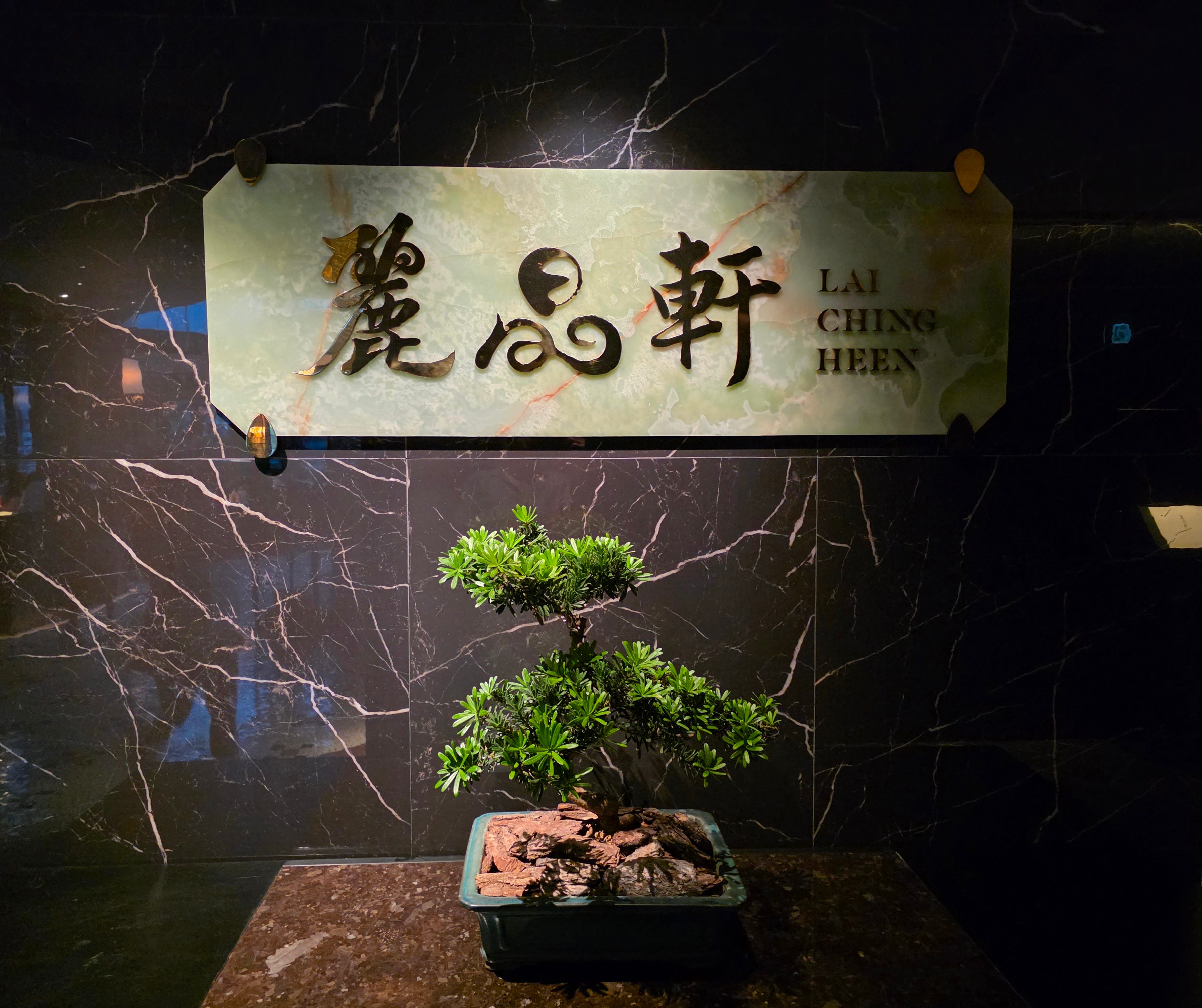
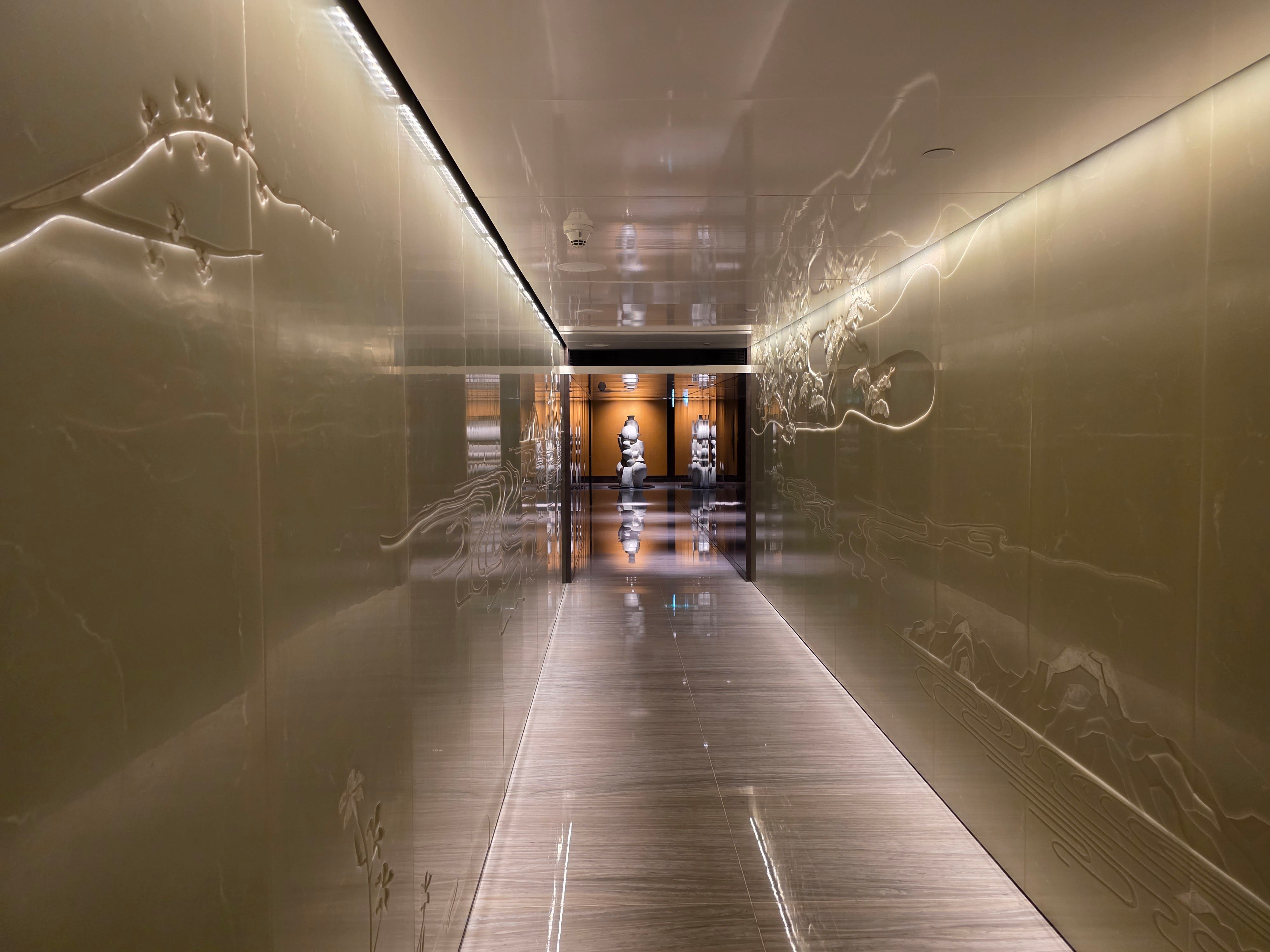
You enter through a long jade hallway. Jade is the recurring motif, and the restaurant leans into it hard.
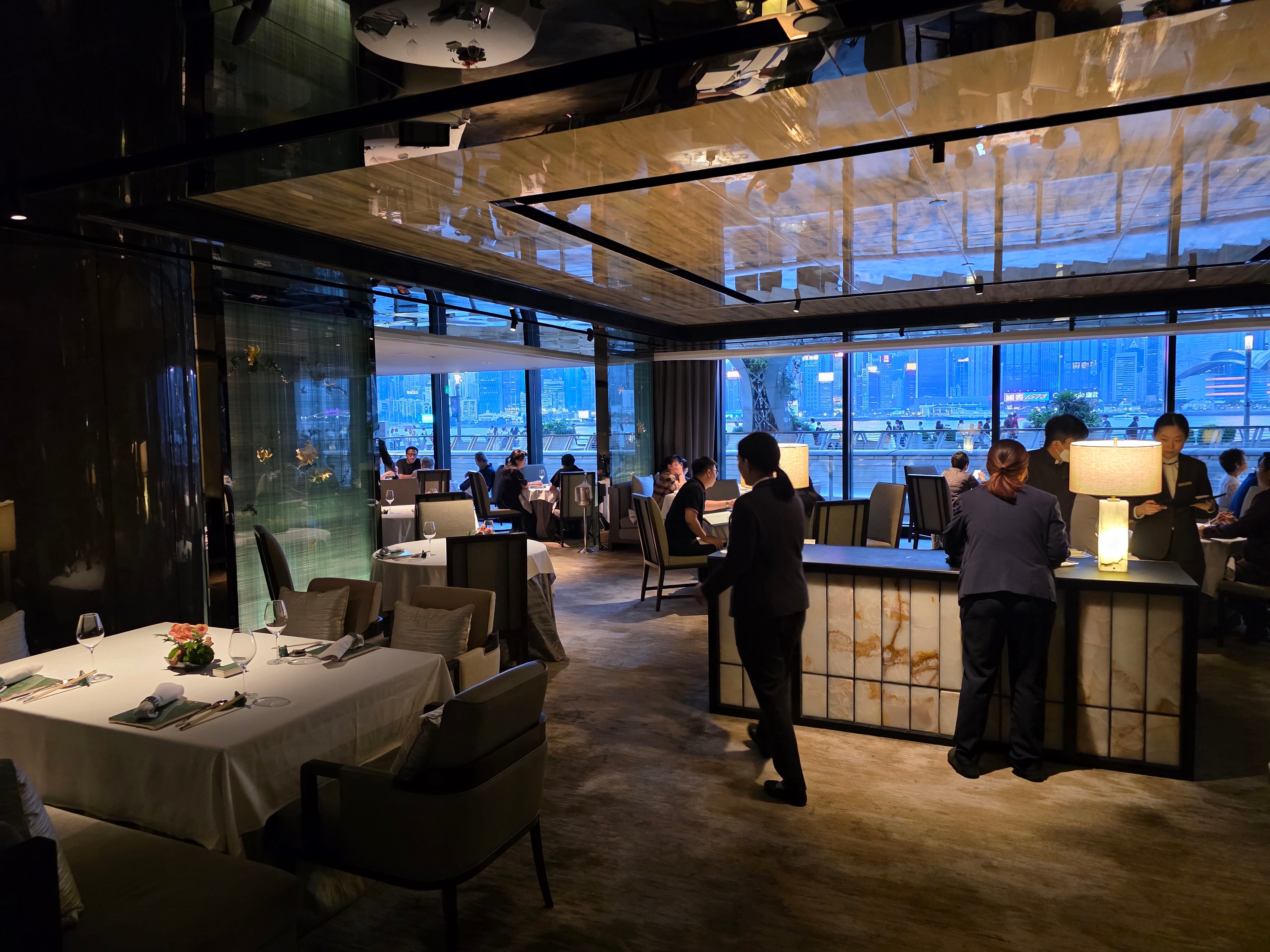
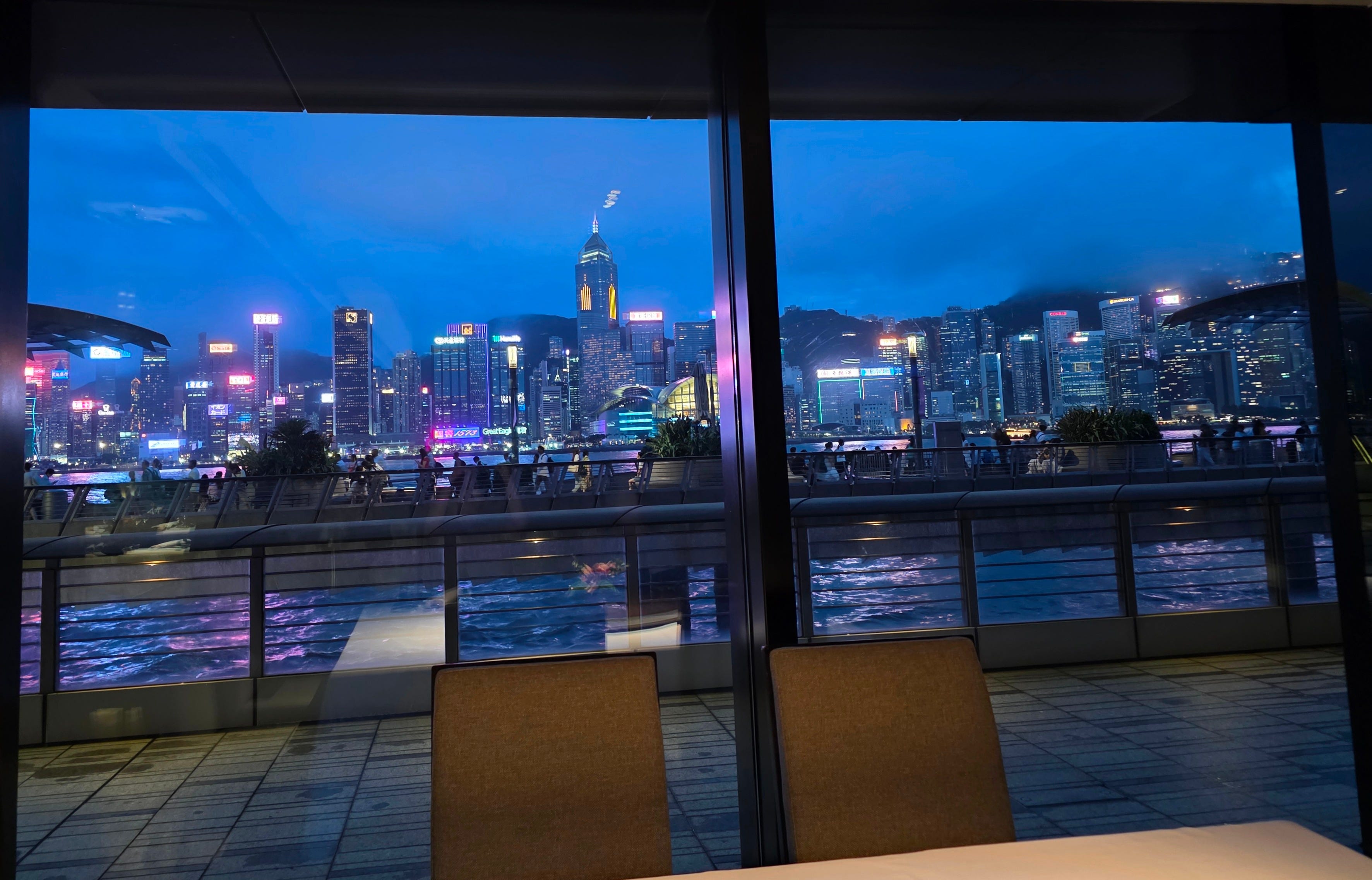
The hallway eventually opens into a dark dining room facing the Hong Kong skyline. A slightly theatrical atmosphere: controlled lighting, polished service, harbour view, quiet money.
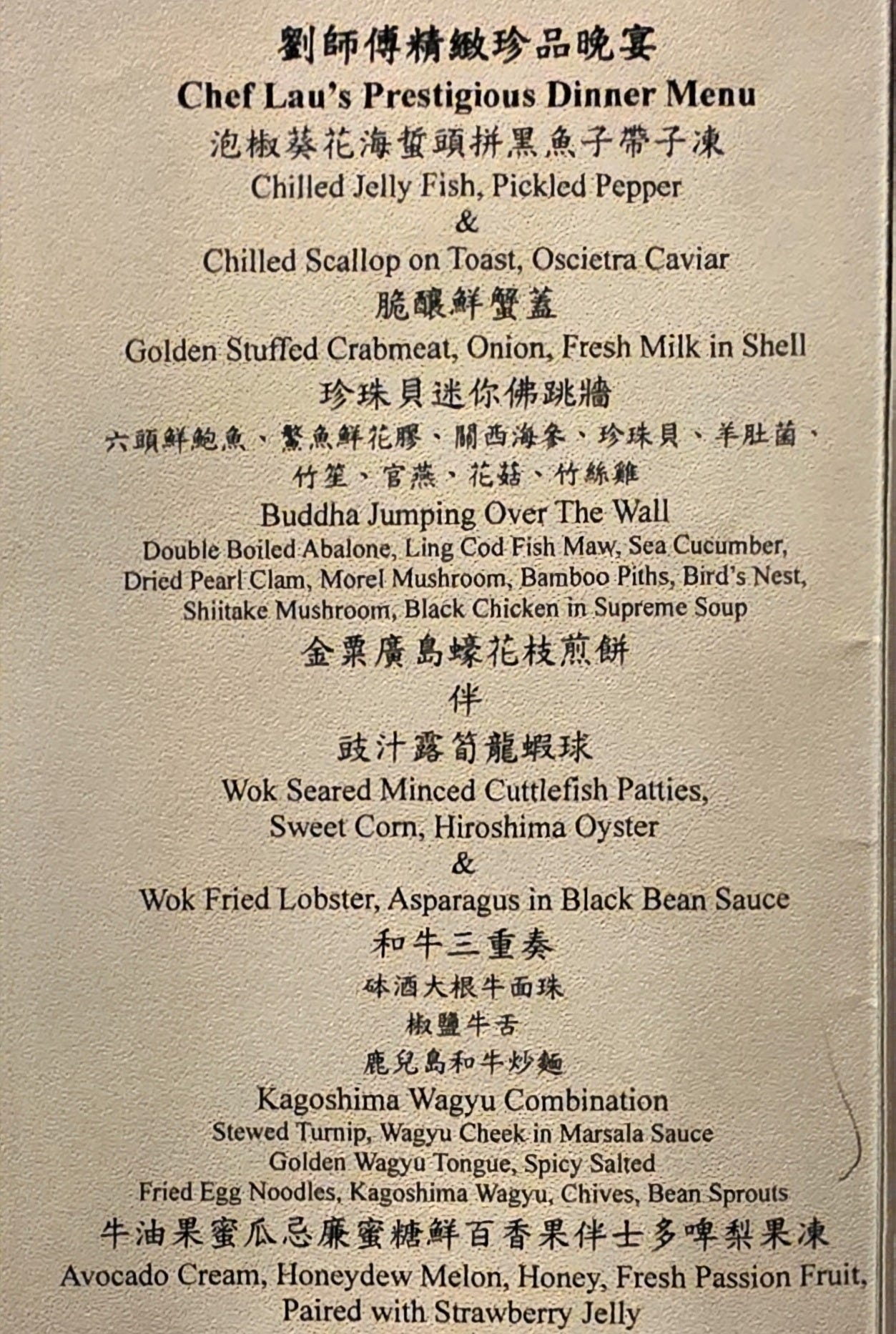
We went with the Prestigious tasting menu, which is effectively a greatest-hits menu built around signatures developed over the past 40 years.
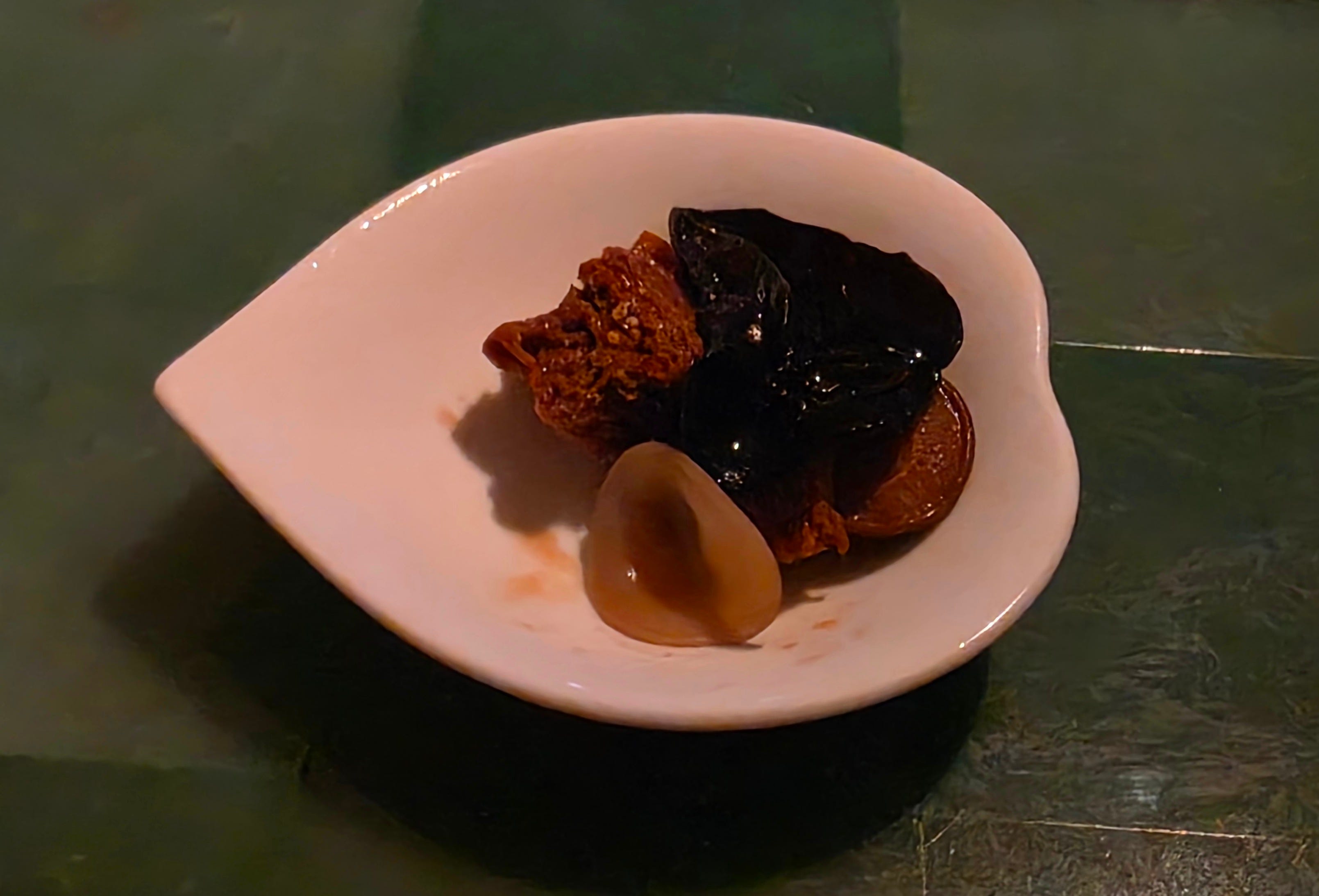
The amuse was a small vegetarian dish of wheat gluten, Chinese mushrooms, and bamboo shoots, lightly marinated. Fine, but mostly a palate-setter.
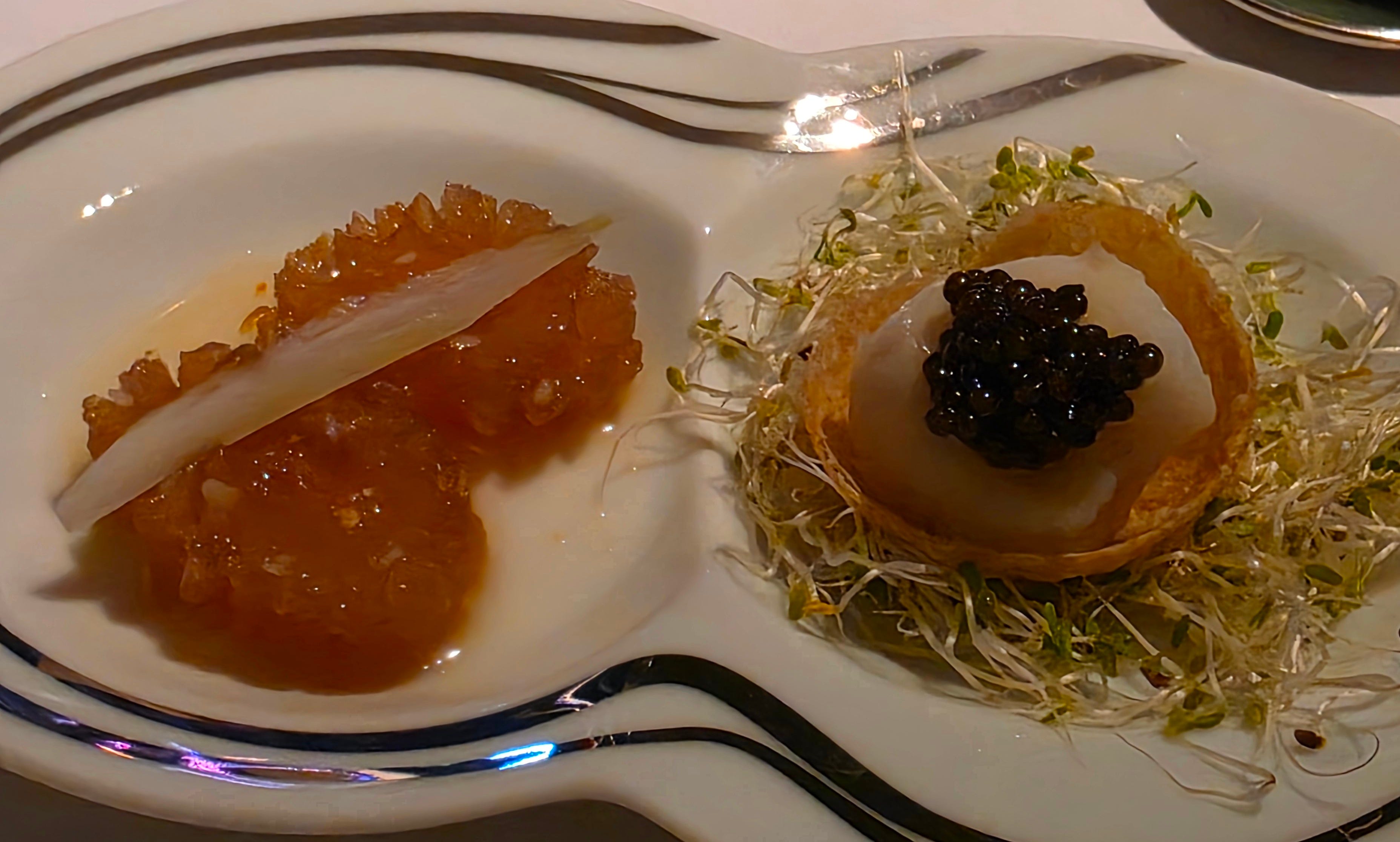
The appetiser had two pieces of crunchy jellyfish, pickled in a slightly sweet and sour liquid with a little heat from pickled peppers. Beside it was a meaty scallop in a slightly soggy shell, topped with caviar. The jellyfish was the better half of the plate.
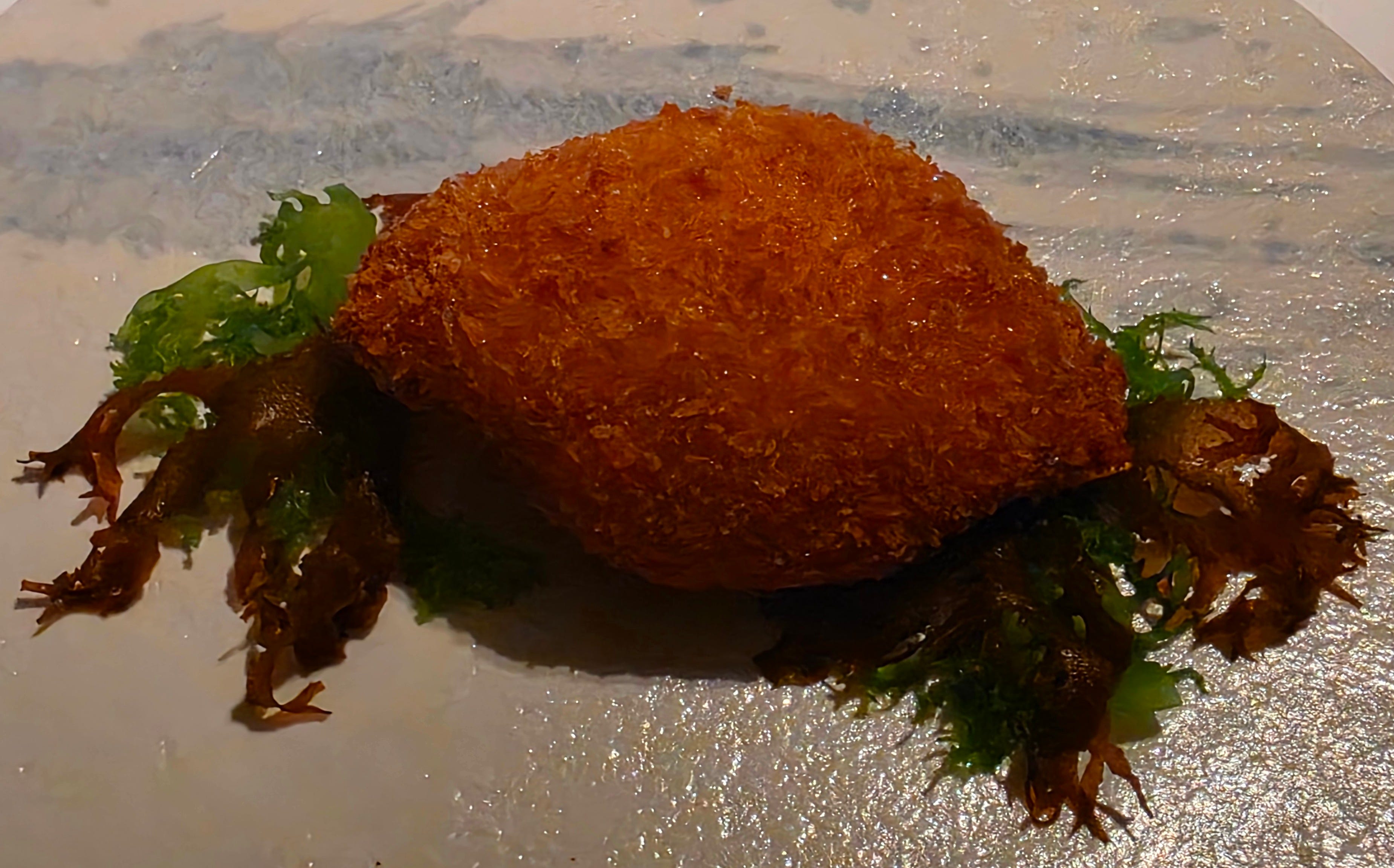
Then came the golden stuffed crab shell, similar in idea to the version at T’ang Court. Lai Ching Heen stuffs the shell with local red and green crab meat, cooks it down in a rich onion and milk sauce, then serves it gratin-style. It is old-fashioned, rich, and a classic banquet dish.
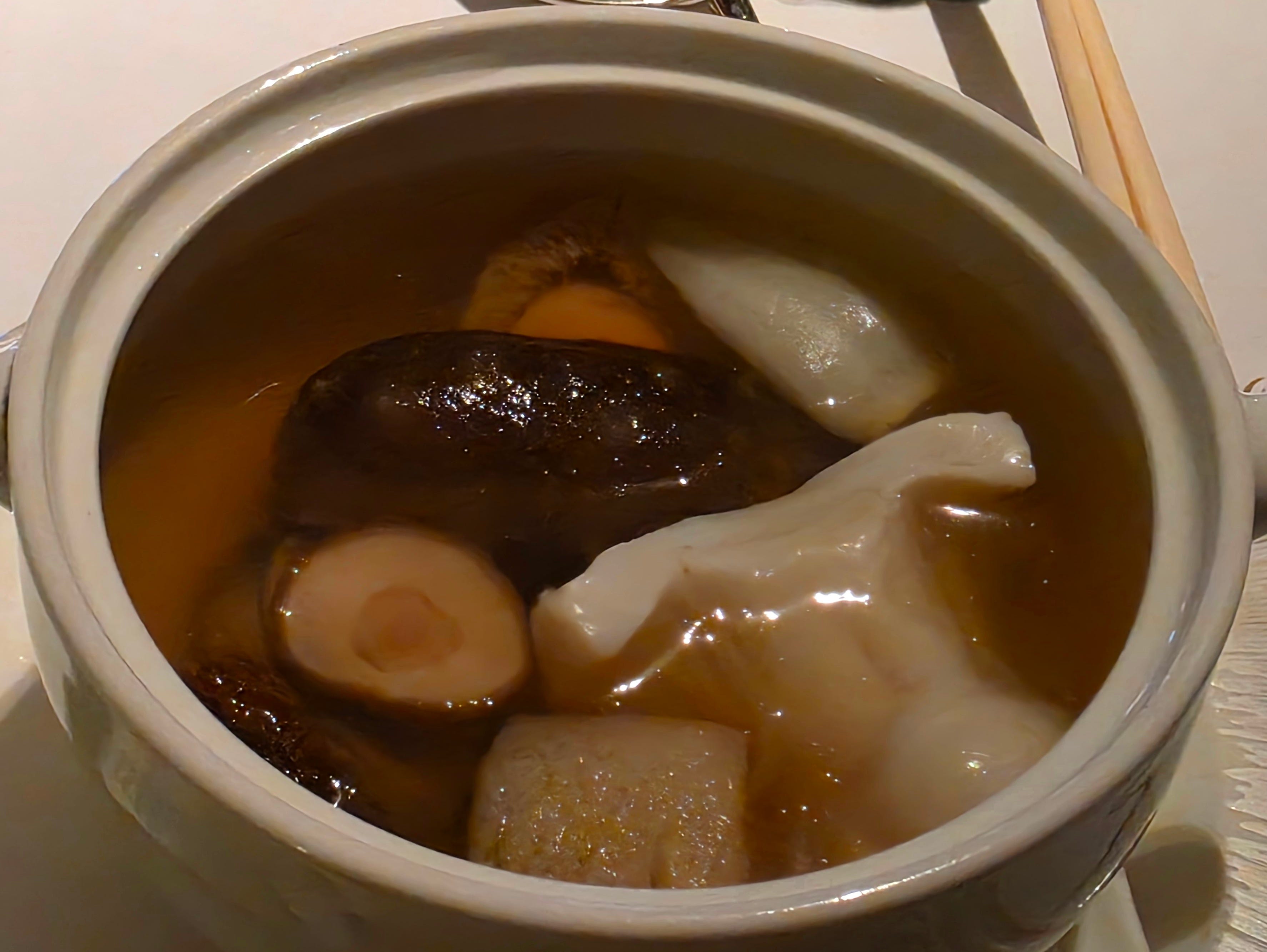
The main event was Buddha Jumps Over the Wall. This was by far the best dish of the meal. The soup came as a deep chicken consomme packed with classical luxury Chinese ingredients: fish maw, abalone, sea cucumber, dried clams, black chicken, mushrooms, and bird’s nest. The bird’s nest gave it that gelatinous, slippery texture without making the soup heavy or muddy.
The dish is a classic Fuzhou banquet dish from Fujian cuisine. It’s less as normal soup and more a luxury braised casserole served in broth, all slow-cooked until the broth absorbs the flavour of land and sea.
The best-known lineage of this dish ties it to Juchunyuan, a historic Fuzhou restaurant founded in 1865, and chef Zheng Chunfa. The Juchunyuan version is now national-level intangible cultural heritage, prepared with more than thirty ingredients and seasonings, layered into a Shaoxing wine jar and slow-cooked over low heat.
The name itself comes from another Chinese food legend: the aroma was so strong that even Buddhist monks, bound by vegetarian discipline, would jump over the monastery wall to eat it.
It was intensely savoury, deeply aromatic, and extremely filling. The dish had the density and confidence that the rest of the menu did not always reach. This was the reason to be there.
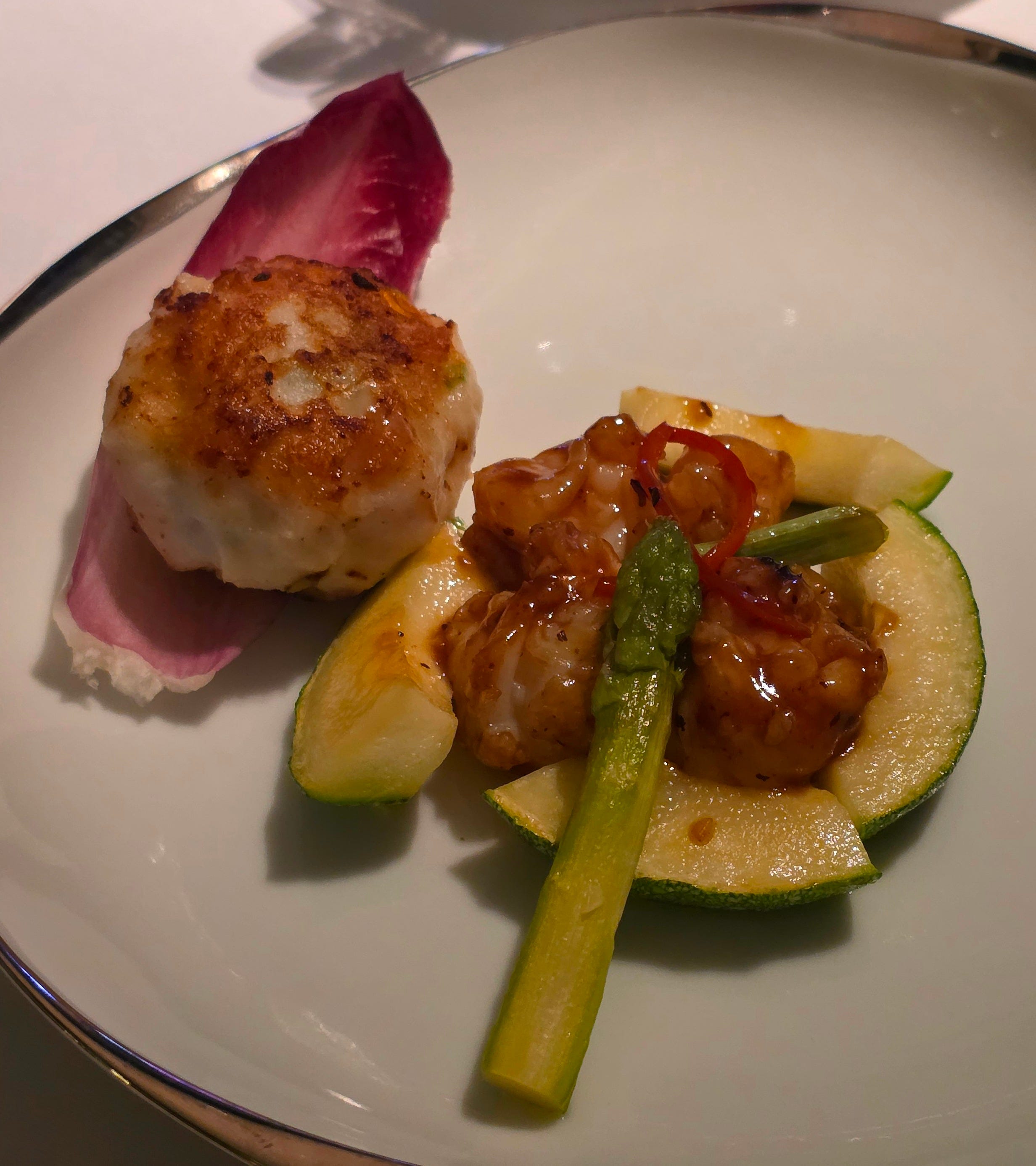
The meal continued with wok-fried lobster, vegetables, and a minced cuttlefish patty wrapped around a Hiroshima oyster. The lobster had good wok hei and was a clear hit, although the portion was a bit small. The cuttlefish patty had the right springy texture and the oyster gave it a bit of interest, but it did not leave much of a mark.
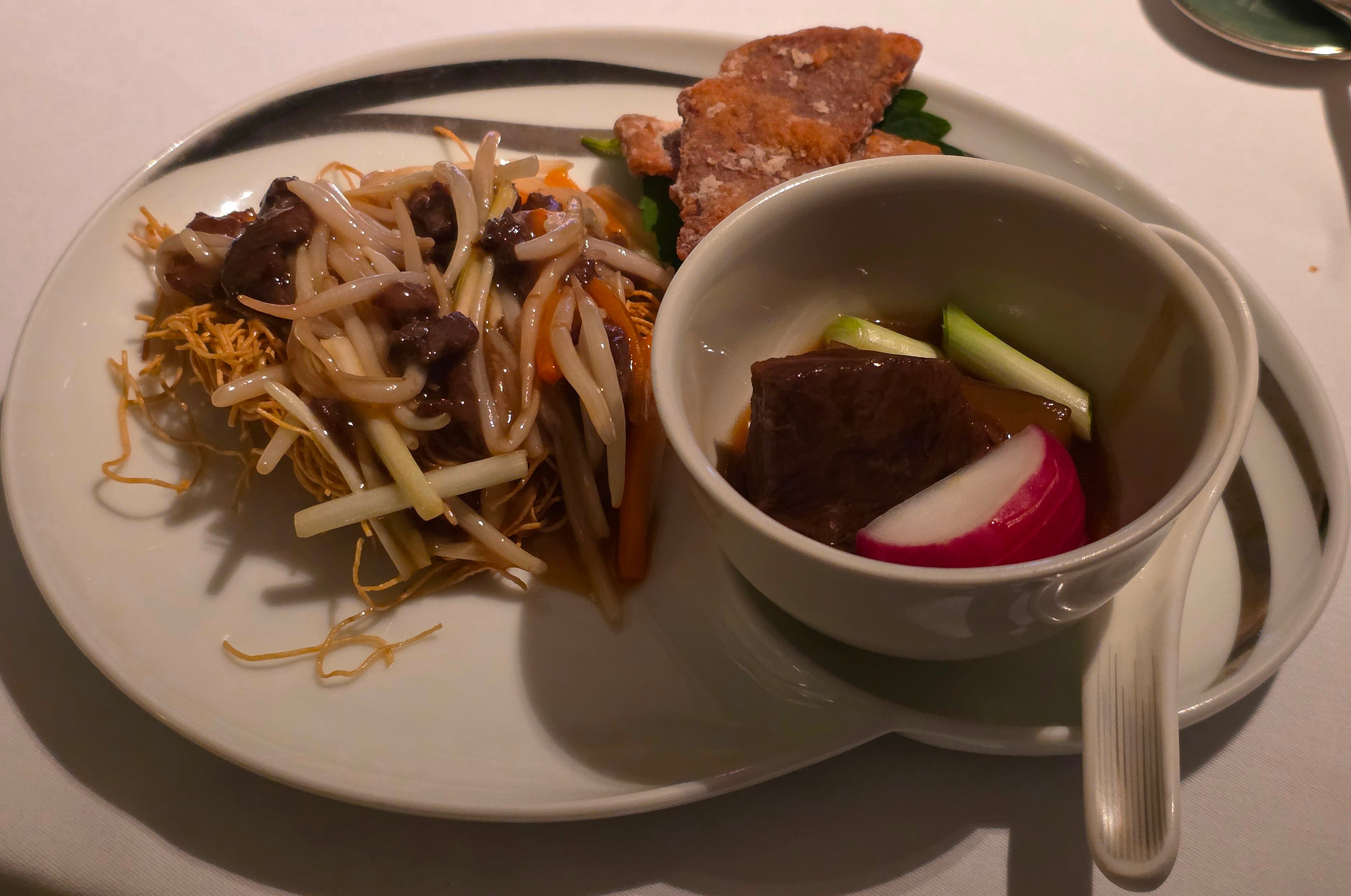
For the main, Kagoshima wagyu came three ways. The cheek was braised until fall-apart tender in a marsala sauce with turnip, radish, and spring onion. The tongue came as thin slices, deep-fried in a salt-and-pepper batter. The third part was crispy egg noodles topped with a thick sauce of bean sprouts, spring onion, carrot, and minced wagyu.
All three are familiar Chinese restaurant forms. Nothing here was especially surprising, but the execution was solid. The cheek was the best of the three. The tongue was pleasant enough.
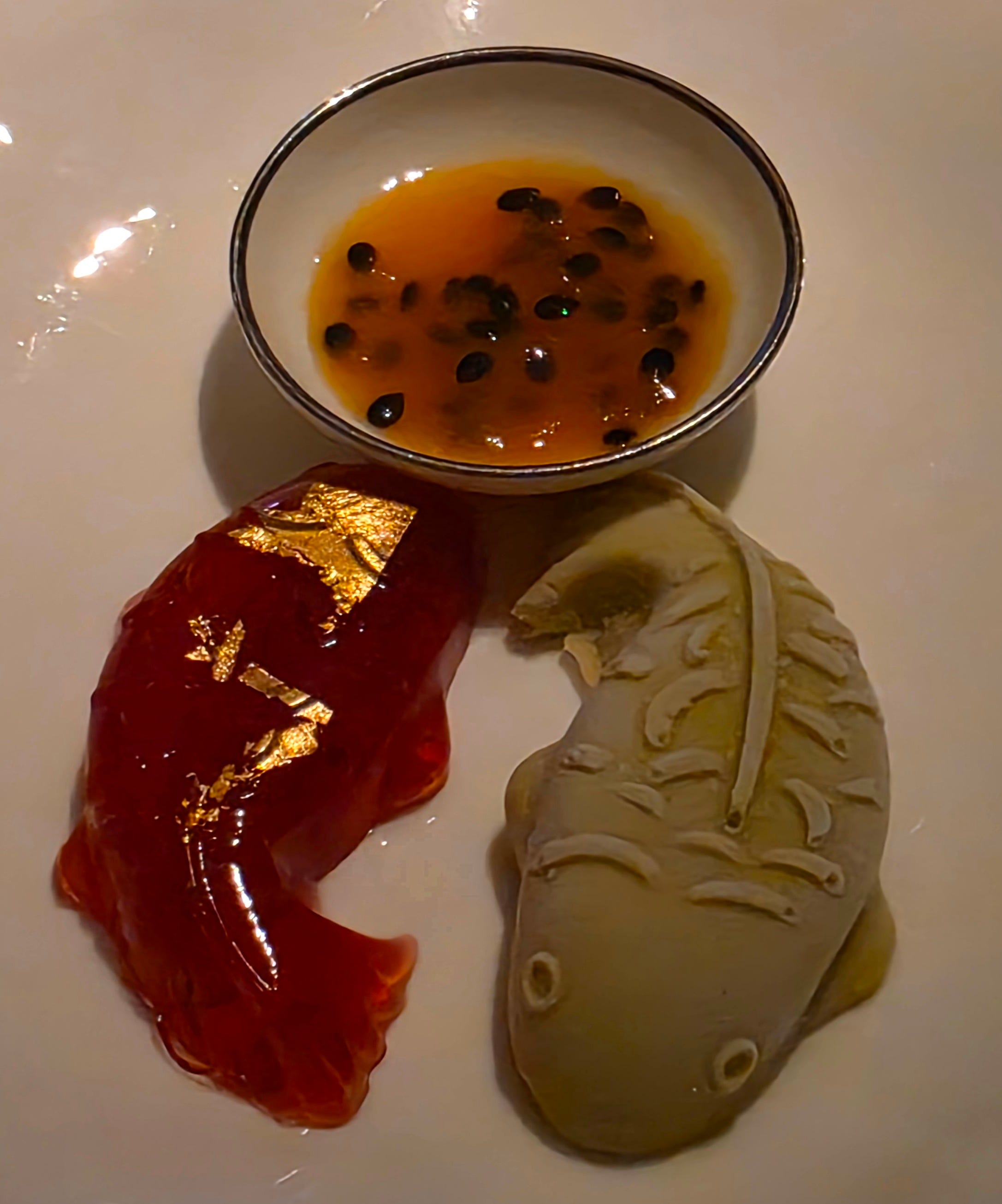
Dessert moved outside the usual Cantonese register: avocado cream and honeydew melon popsicle with fresh passion fruit sauce and strawberry jelly. This did not work for me. The avocado felt forced, and the whole plate seemed more interested in being unexpected than being delicious.
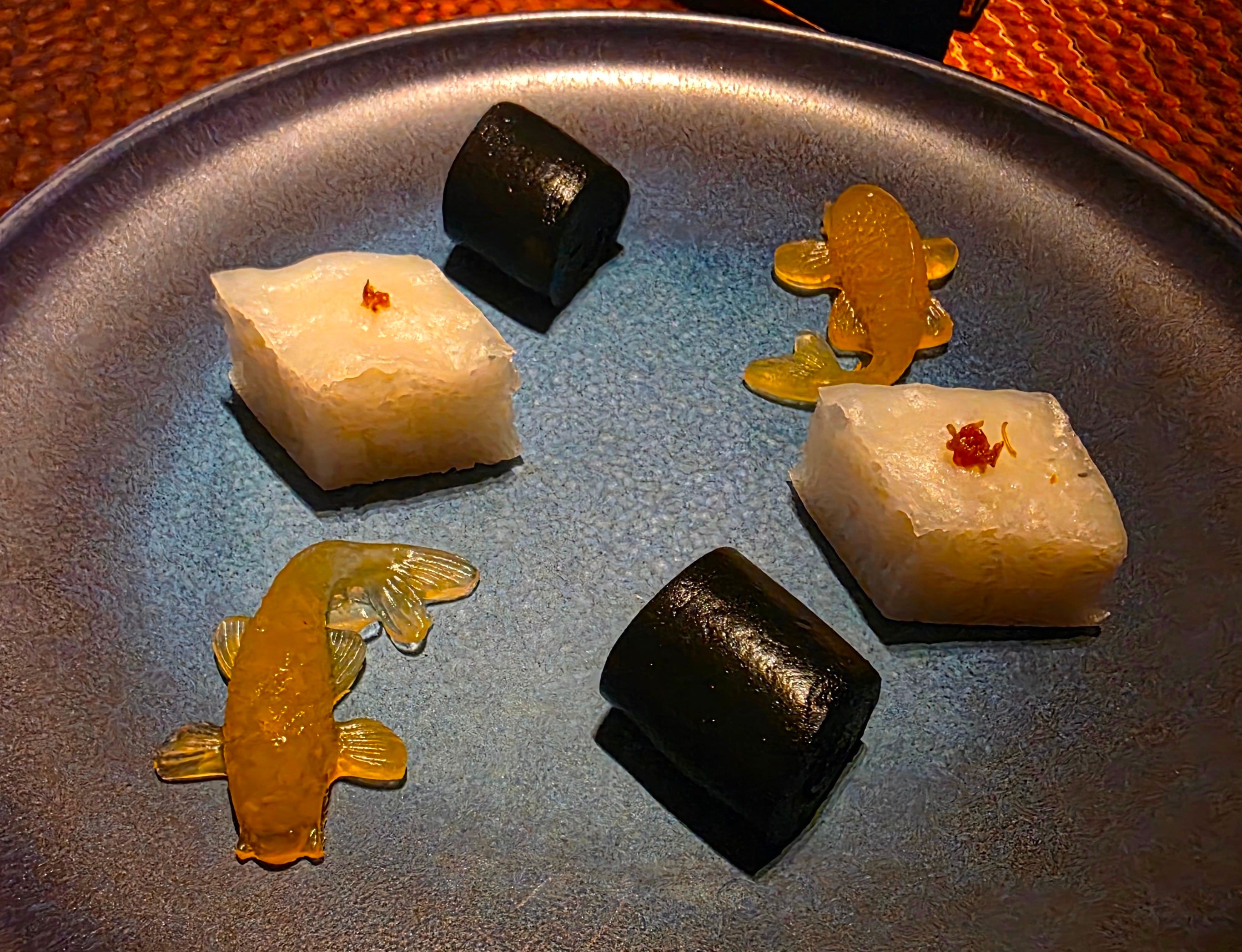
The petit fours returned to safer ground: sesame roll, steamed white sugar cake, and a delicate pineapple jelly shaped like a goldfish. Much better. Small, traditional, and well judged.
The Buddha Jumps Over the Wall anchored the meal. Without that dish, this would have felt like a polished but fairly standard luxury Cantonese banquet menu, the kind of thing you could imagine being served in a thousand high-end banquet halls across Hong Kong.
The kitchen is serious, the room has history, and the service is exactly what you expect from a Regent-level Cantonese institution. But on this menu, only the soup felt essential. The crab shell was good, the lobster was well cooked, and the wagyu was competent, but none of them would bring me back by themselves.
We also missed some of the restaurant’s other major signatures because they require pre-ordering and are better suited to a larger group, especially the suckling pig and Peking duck. That may be the better way to do Lai Ching Heen: come with more people, pre-order properly, and treat it like the grand Cantonese banquet hall it is.
Total damage: 4500 HKD/2 people.
Let's do it 🤝