
Tanaka is the Hong Kong outpost of Boss Satoru Tanaka’s Japanese wagyu-kappo group. It opened as the second overseas location after Singapore’s Nikuya Tanaka. The restaurant serves a long, beef-centred omakase built around whole-animal purchasing, a single top-grade Matsusaka cow selected for each day’s meal and a theatrical counter kappo format.
The Hong Kong restaurant was still new when we visited, so it had Boss Tanaka’s pedigree but very little independent track record. The reason to come is clear enough though: serious meat sourcing, a Japanese kappo progression and unlike the Singapore location, the chance to watch the legend, Boss Tanaka himself, at work behind the counter.
Similar to his other restaurants, the format is wagyu kappo, with a variety of cuts appearing in a multitude of temperatures and preparations rather than as one large steak. The original Ginza restaurant uses a 12-course structure that moves through seasonal dishes, meat sushi, grilled courses, rice and steak. Both Singapore and Hong Kong locations faithfully follow the same broad sequence putting Matsusaka beef at the centre of the meal.
Boss Satoru Tanaka owns and leads the Tanaka Group. He comes from a third-generation meat family: his grandfather dealt in cattle and horses, while his father ran a butcher’s shop. Tanaka opened his first yakiniku restaurant at 25 and later built a group of about 20 meat-focused restaurants in Japan.
His expertise sits in selecting cattle, buying whole animals and breaking down the meat. The restaurant buys specially selected Matsusaka beef from female cattle that have not calved and have been raised beyond 50 months. Whole-animal purchasing gives the kitchen access to a range of cuts across the menu instead of reserving the obvious steak cuts for the end. The kitchen then applies Japanese culinary formats to the different cuts, including sushi, tataki, tempura, shabu-shabu and steak.
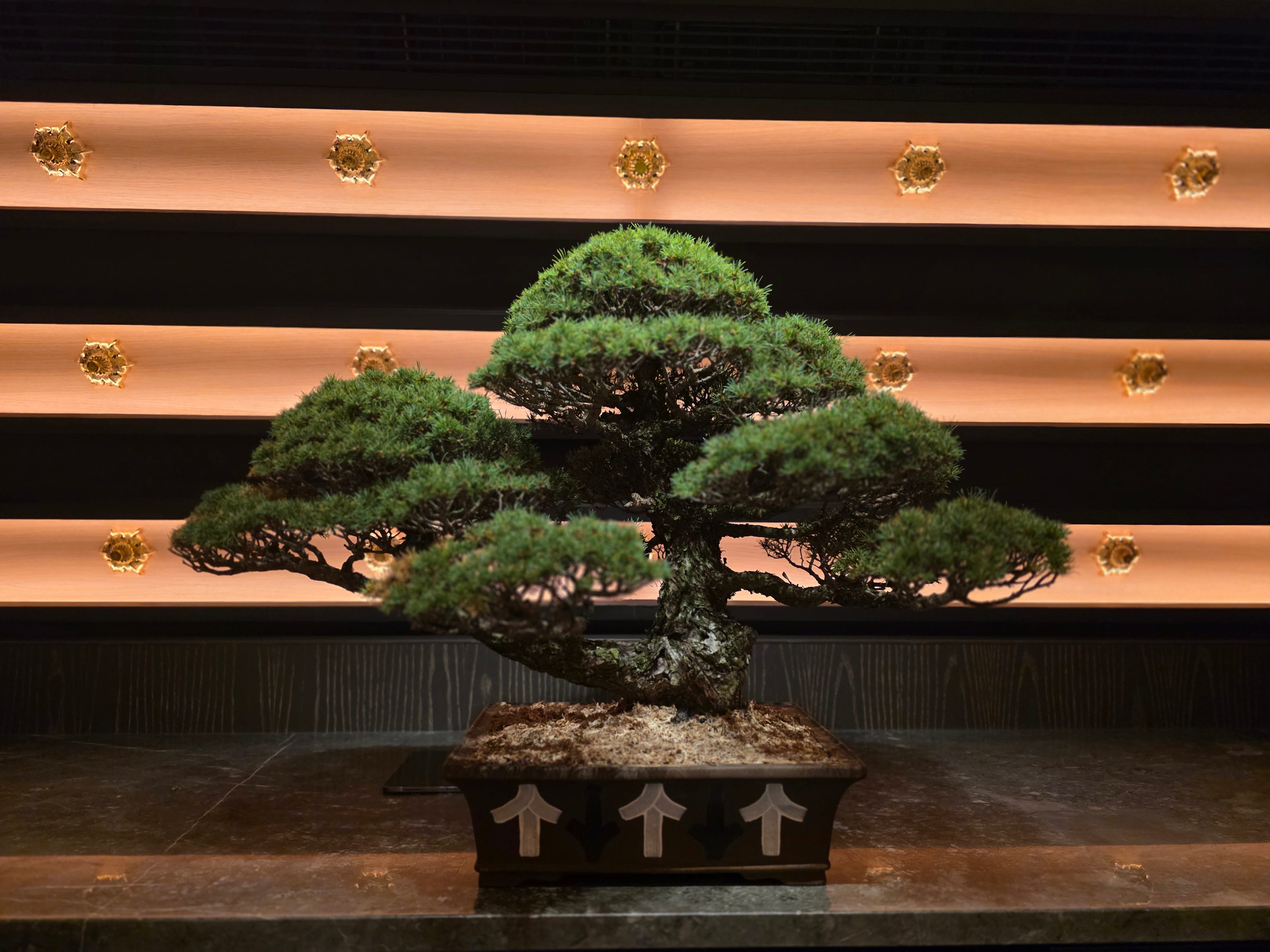
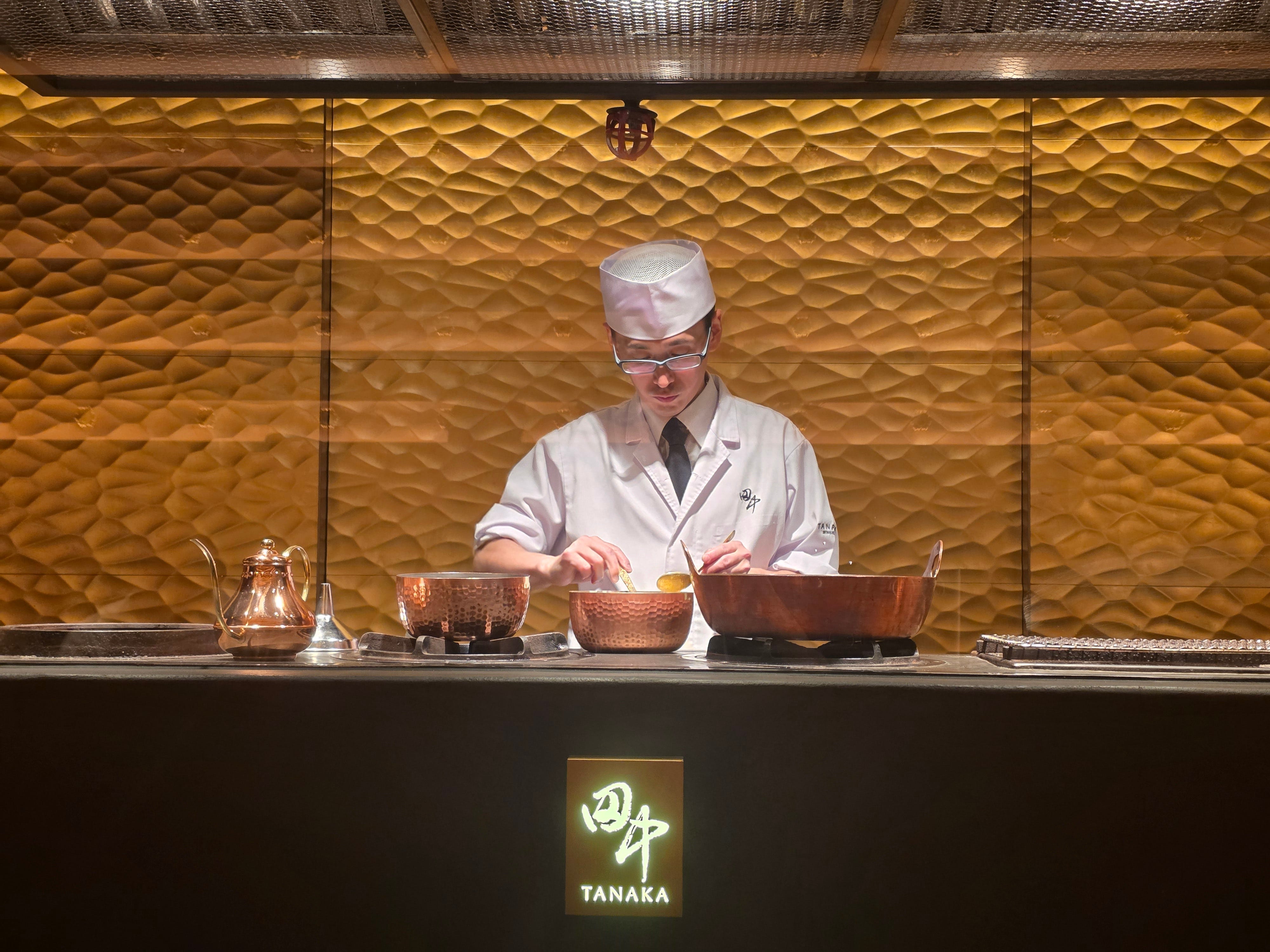
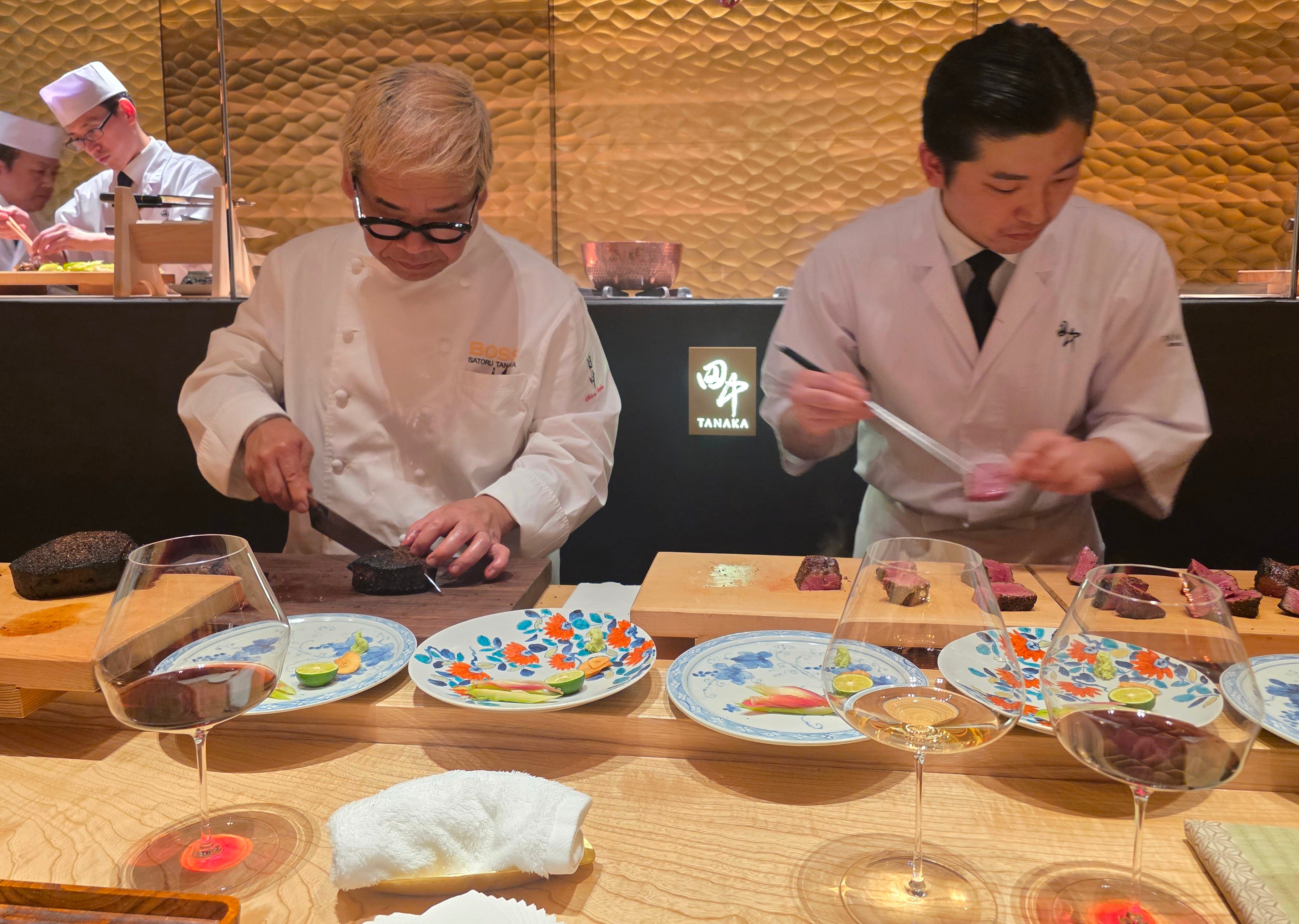
The room is dark and theatrical, with a slight nod toward the Kitchen Stadium from the original Iron Chef TV series. The staff were methodically finishing the mise en place when we arrived. Eight counter seats face the open kitchen, while two tables at the back offer larger groups a little more privacy.
The room was designed by Yasumichi Morita, who combined shrine and temple references with a minimalist look. The counter performance forms part of the experience.
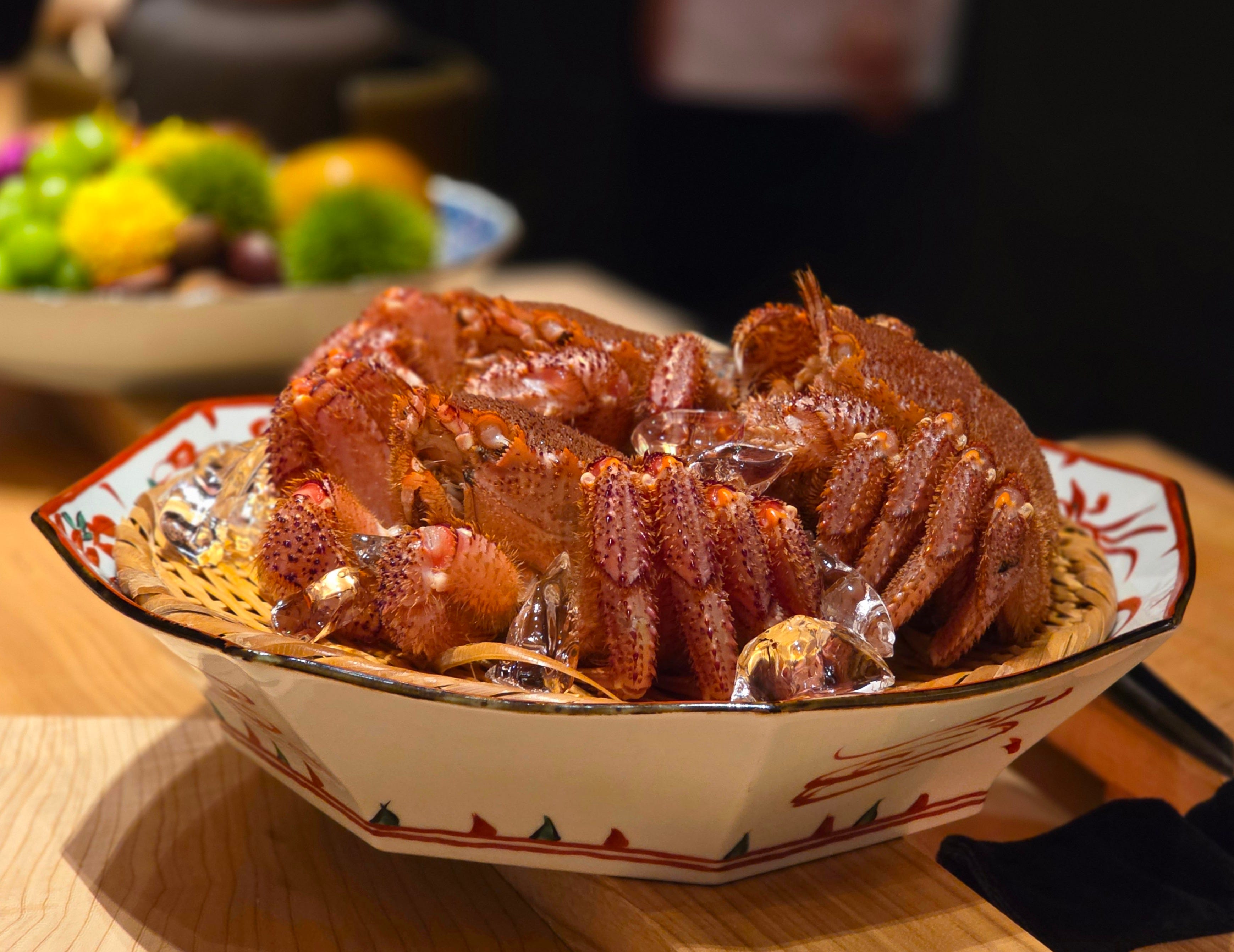
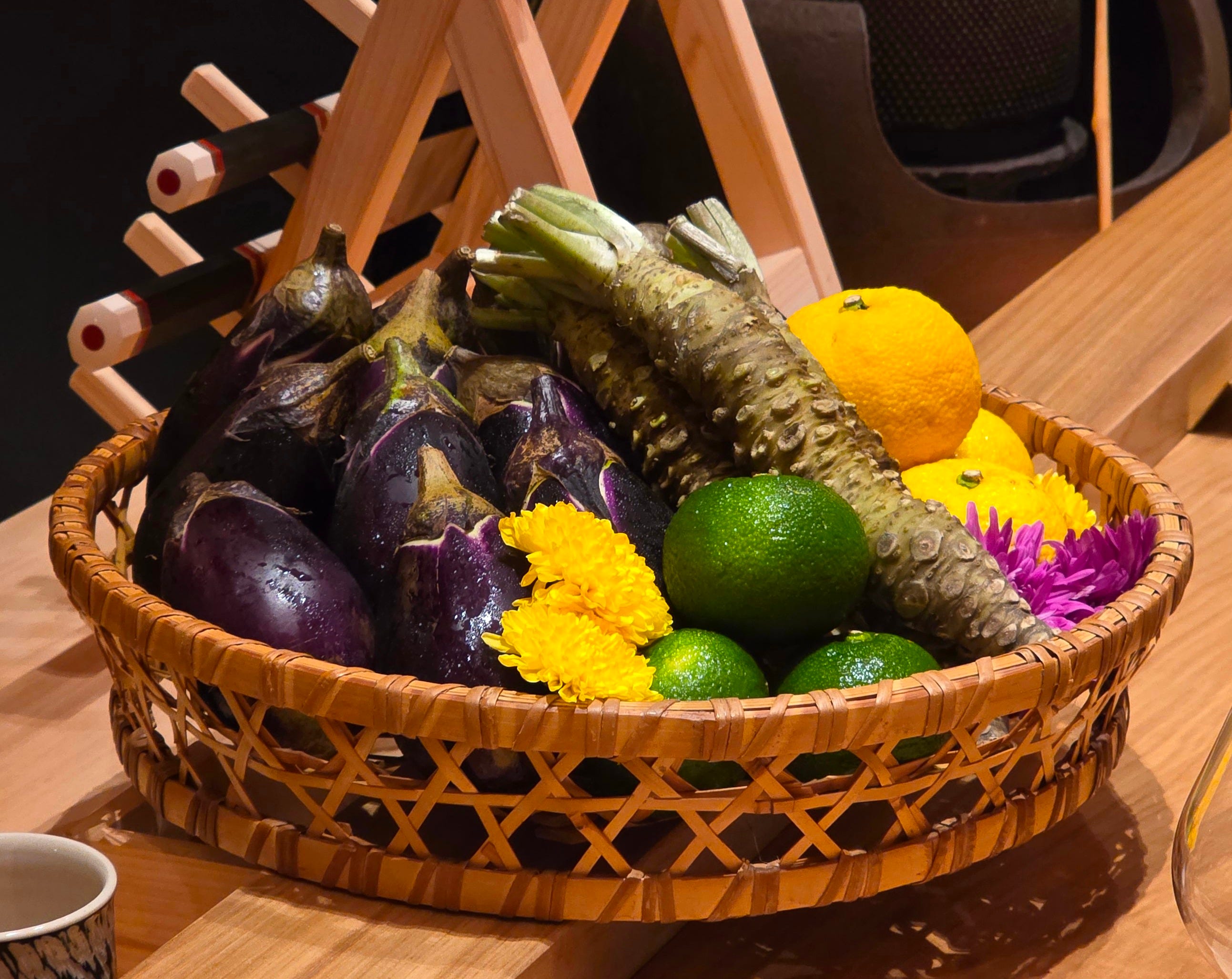
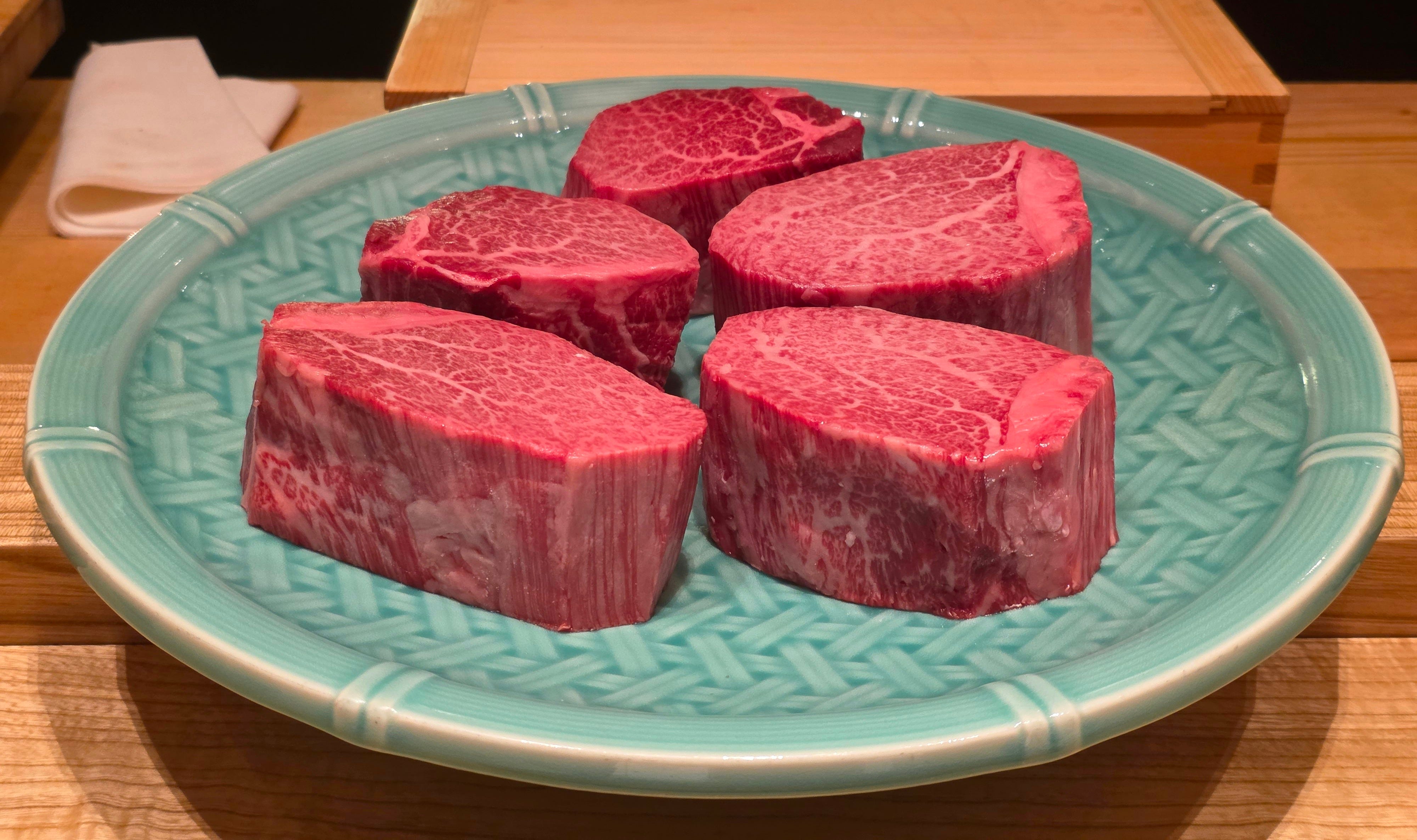
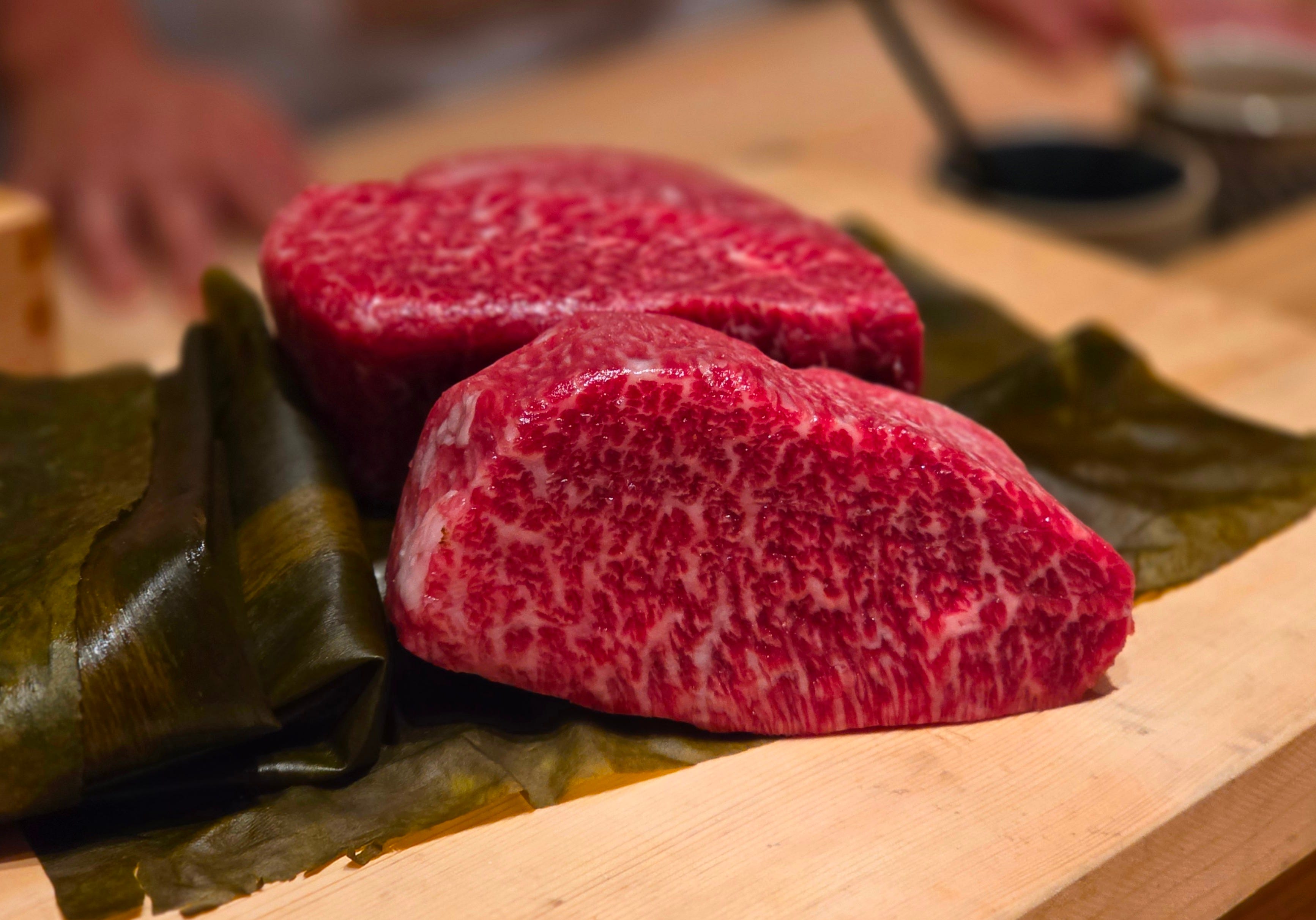
In the traditional kappo manner, the ingredients were arranged in a display on the kitchen counter. The seafood and produce were present, but the main attraction was the spread of beef cuts from a single Matsusaka cow.
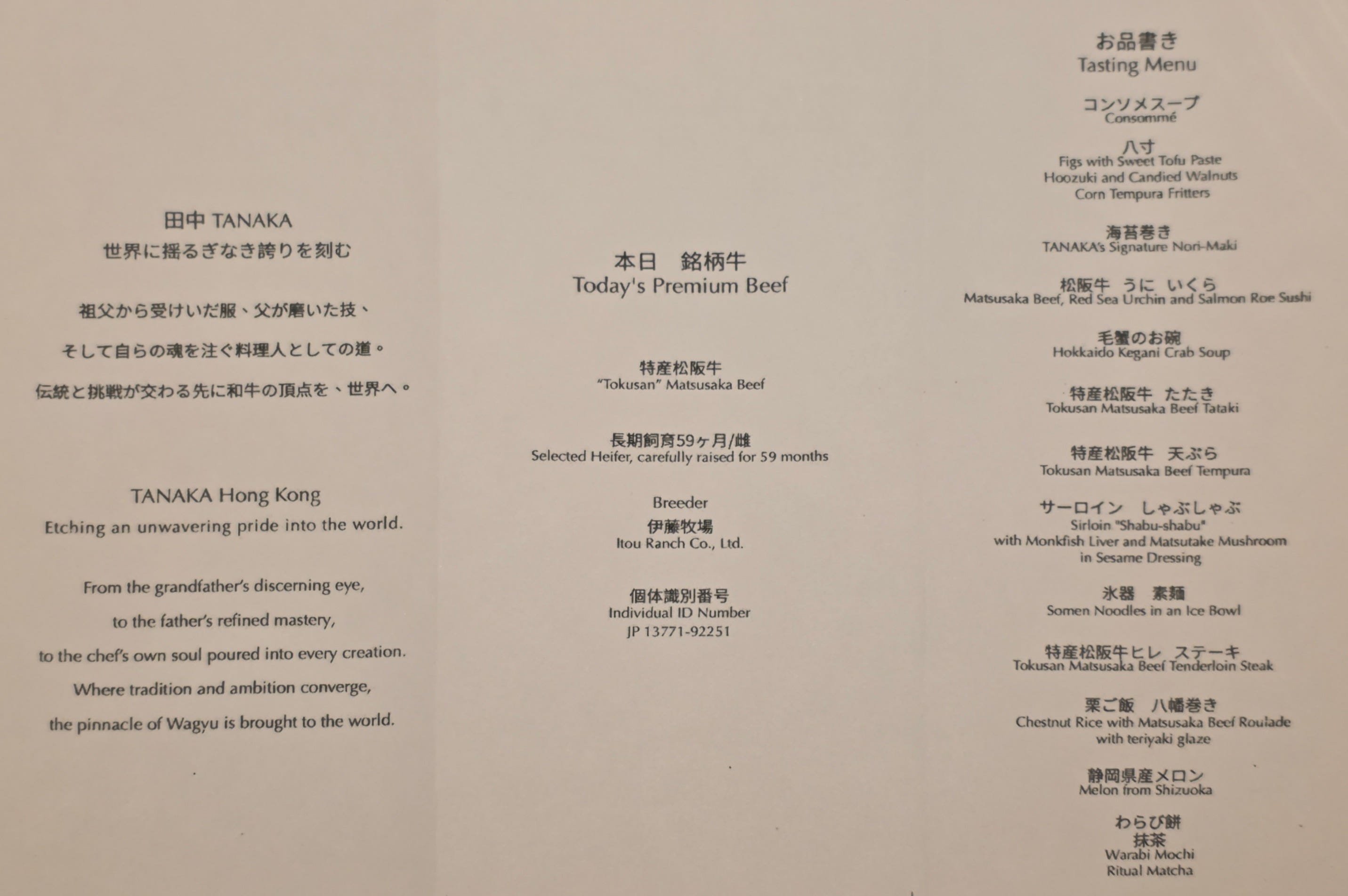
The menu followed a format very similar to Nikuya Tanaka in Singapore with many of the courses were shared between the two restaurants: the nori-maki, beef tataki, beef tempura, shabu-shabu, somen served in an ice bowl, tenderloin and dragon-eye rice. The Hong Kong menu added its own details through local ingredients and seasoning.
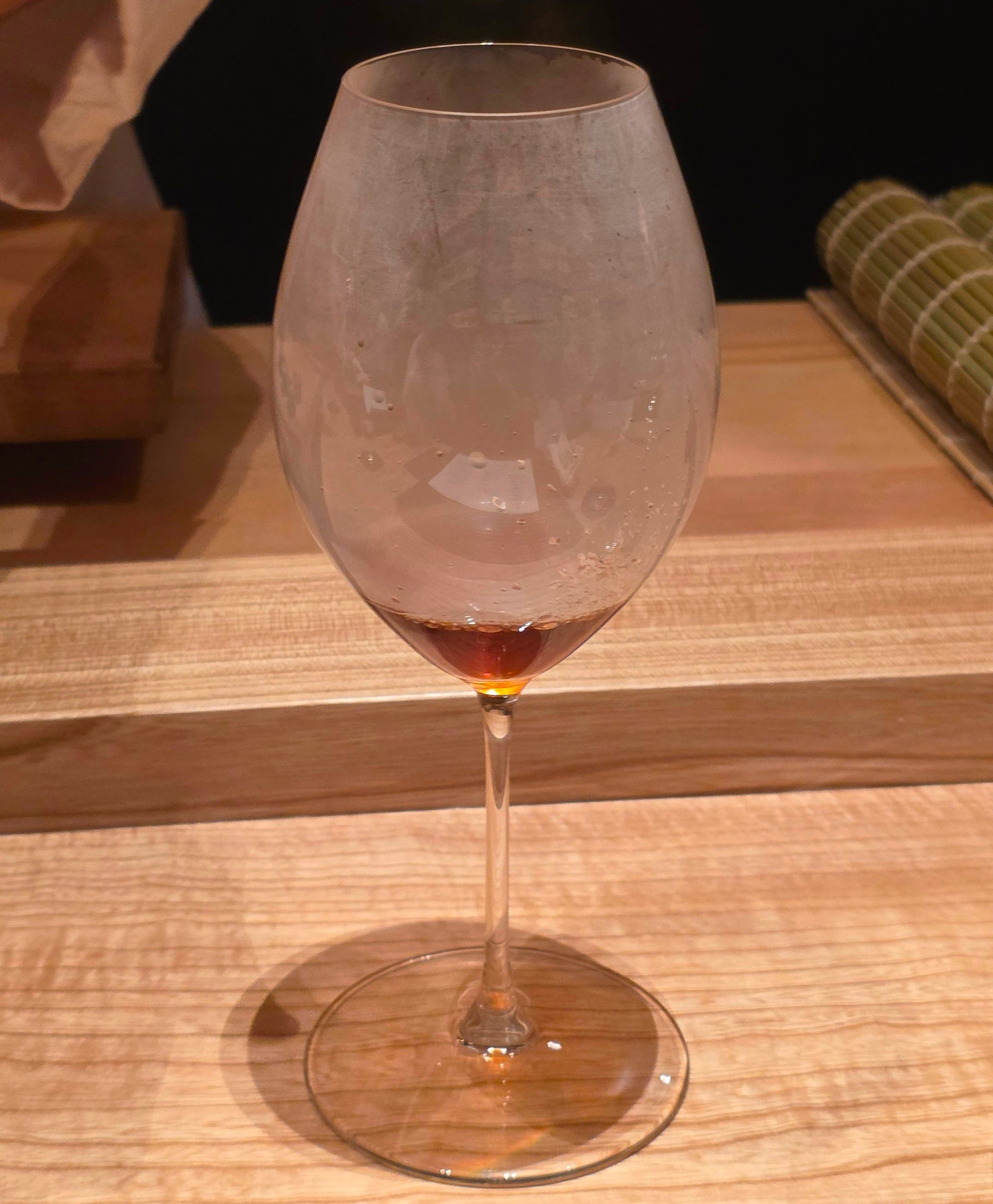
The amuse bouche, a small shot of fragrant and rich beef consomme, served in a wine glass.
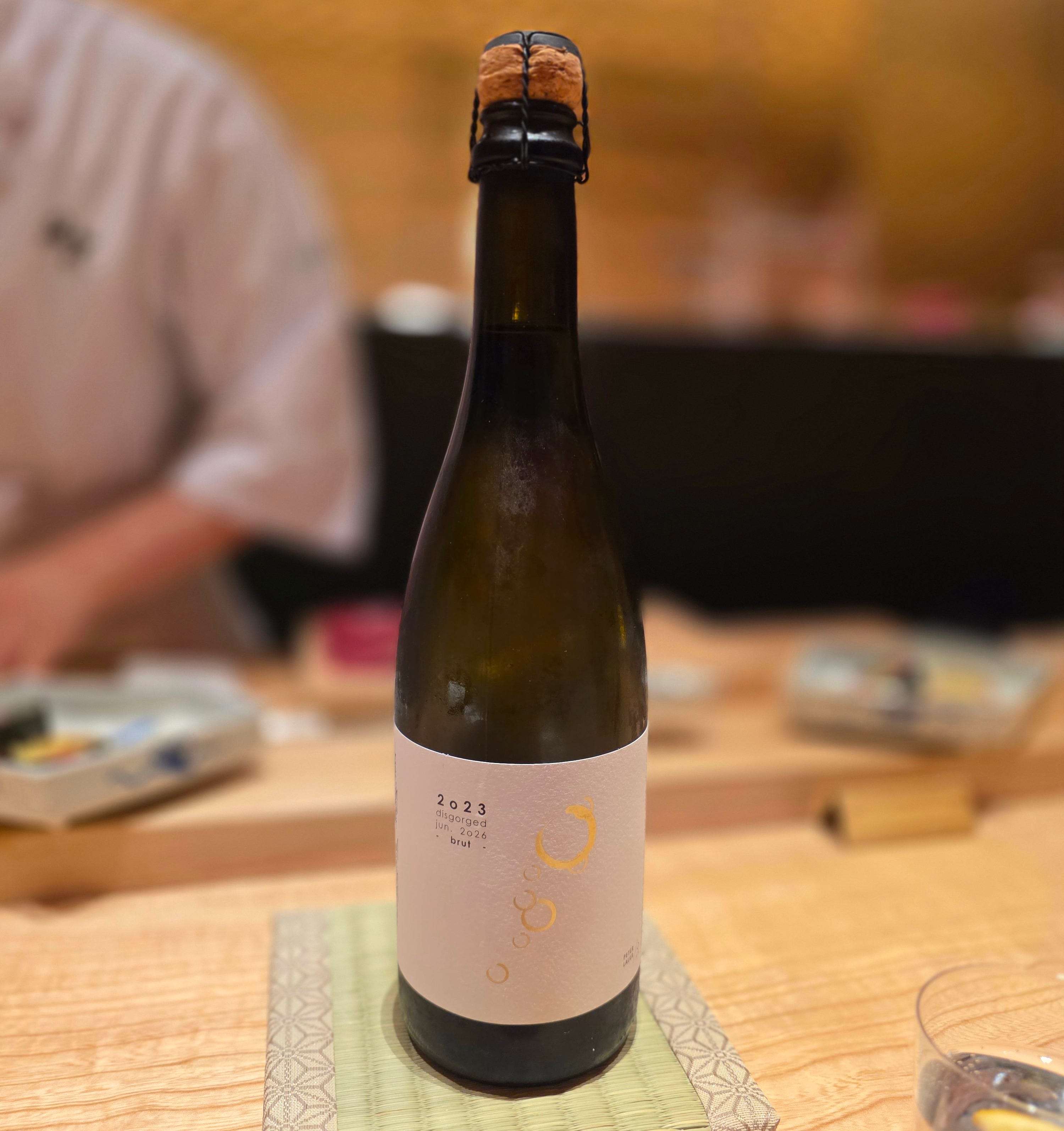
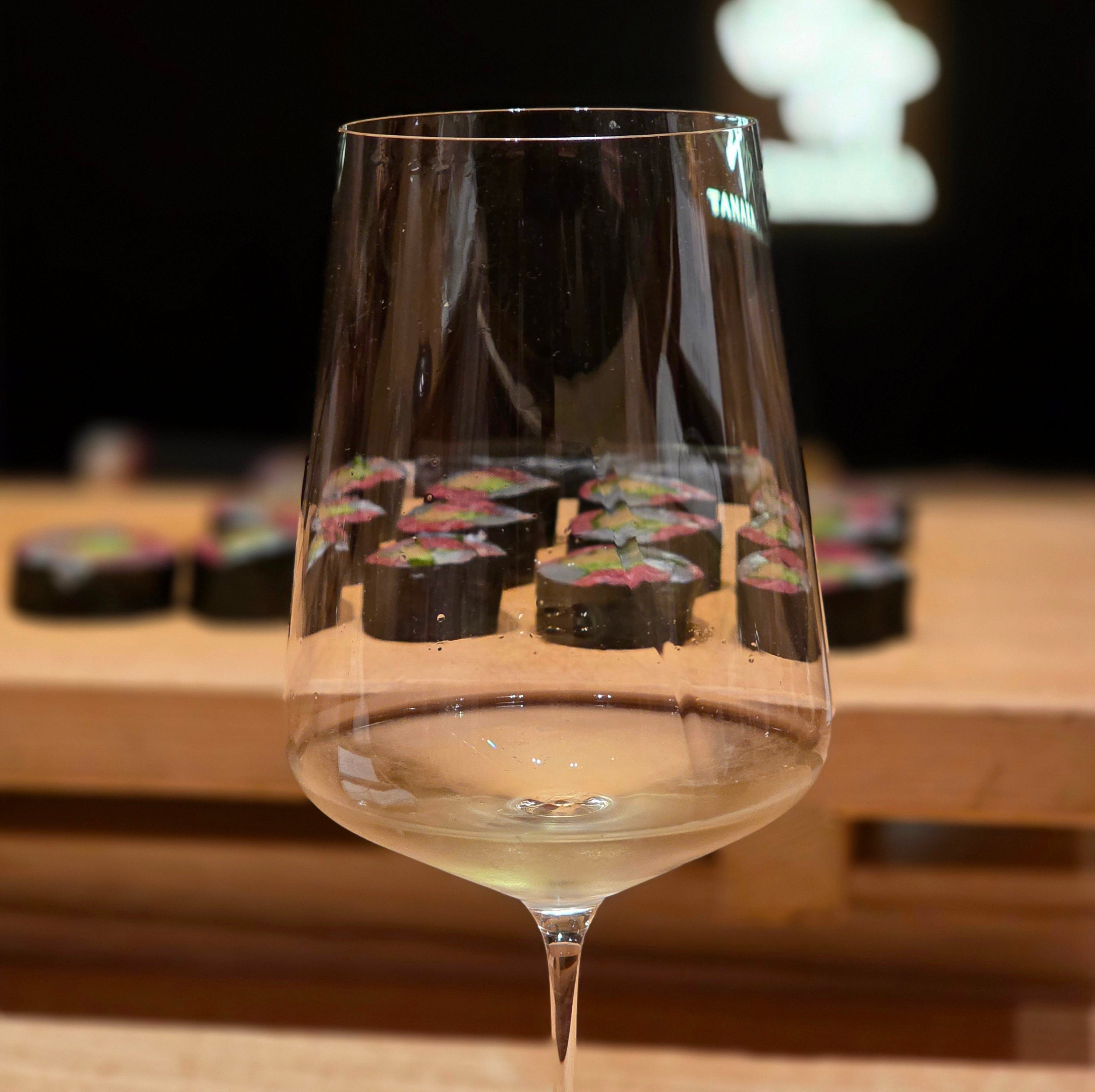
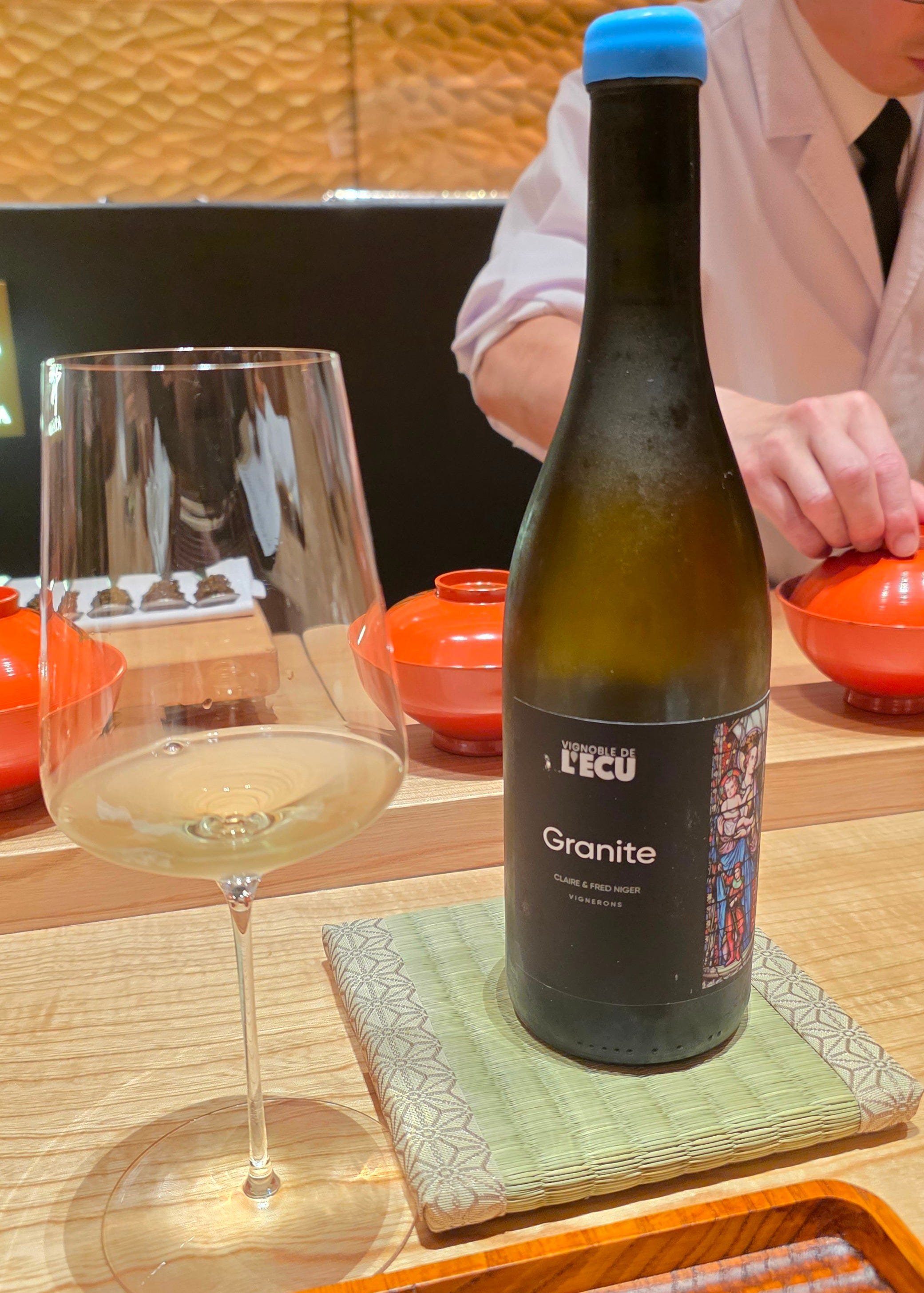
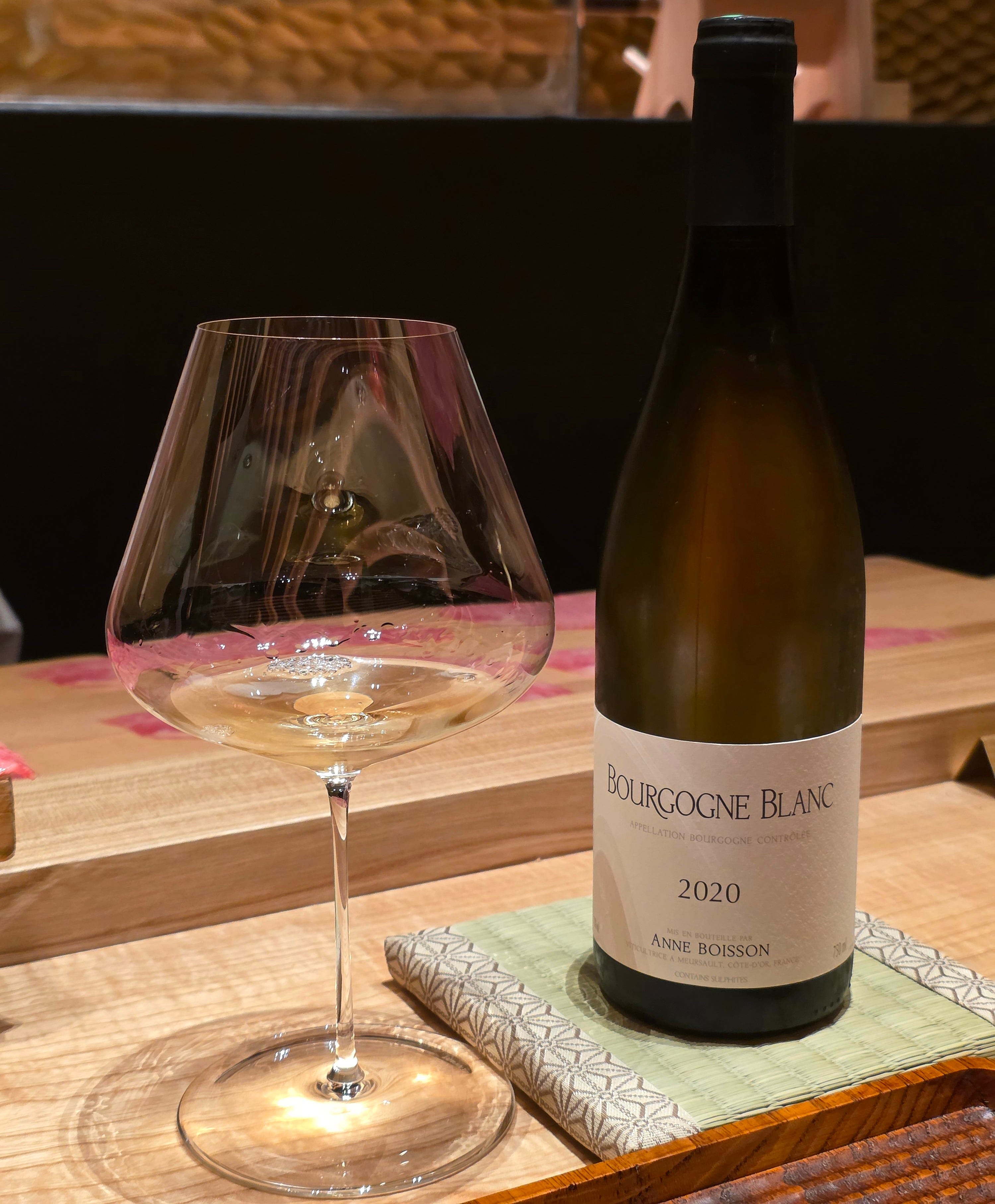
We went with the wine pairing, although I was so excited watching the kitchen at work I didn’t take many notes about the wines. It was a bit of a eclectic selection, with sparkling reds, funky whites. Most notably, even though we shared a single wine pairing, Tanaka has seriously generous pours. The glasses were really starting to pile up toward the end of the meal.
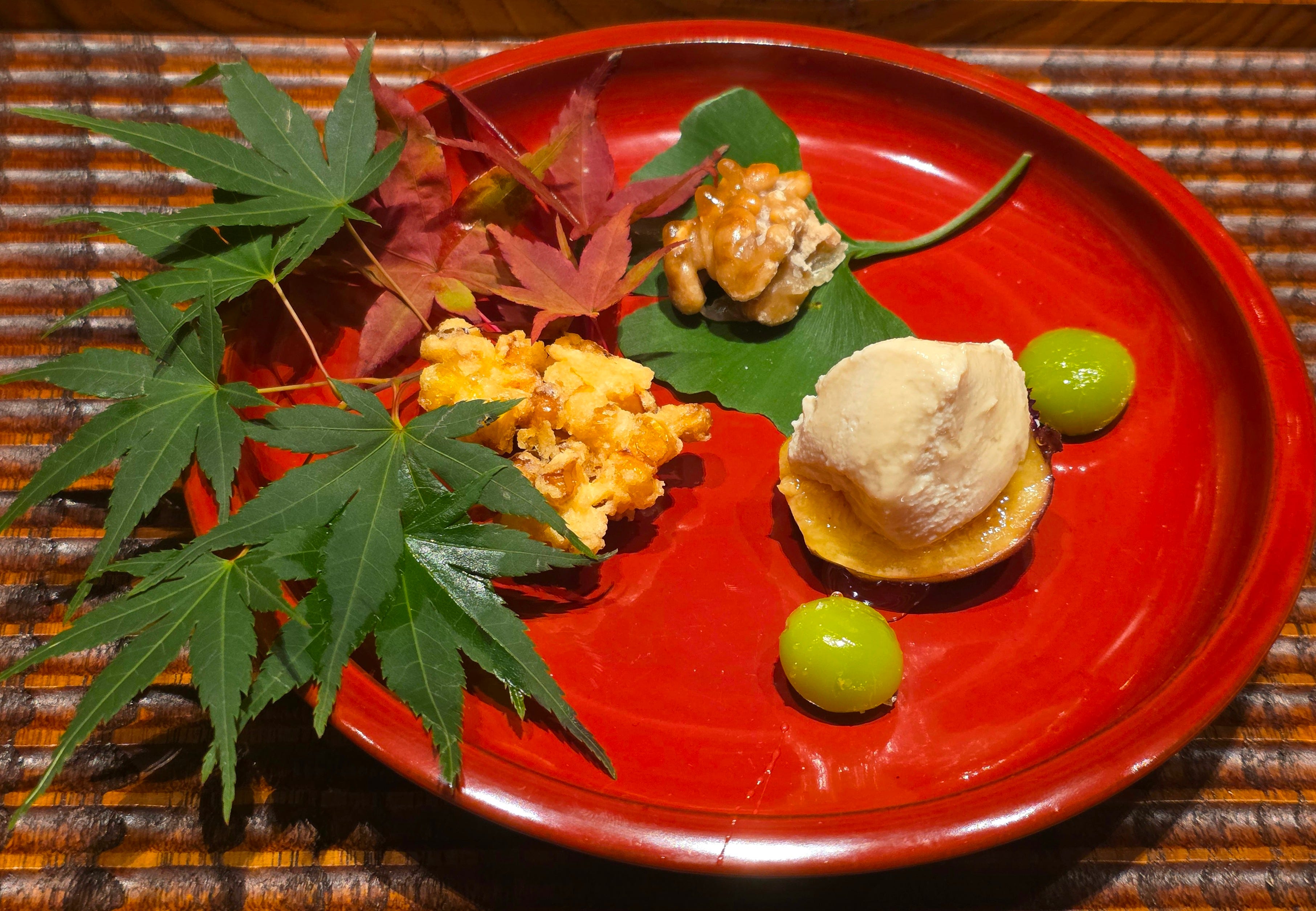
The appetizers paired a light corn tempura fritter with sesame and tofu paste on fig, ginkgo nuts and candied walnuts. A gentle, sweet start to the meal.
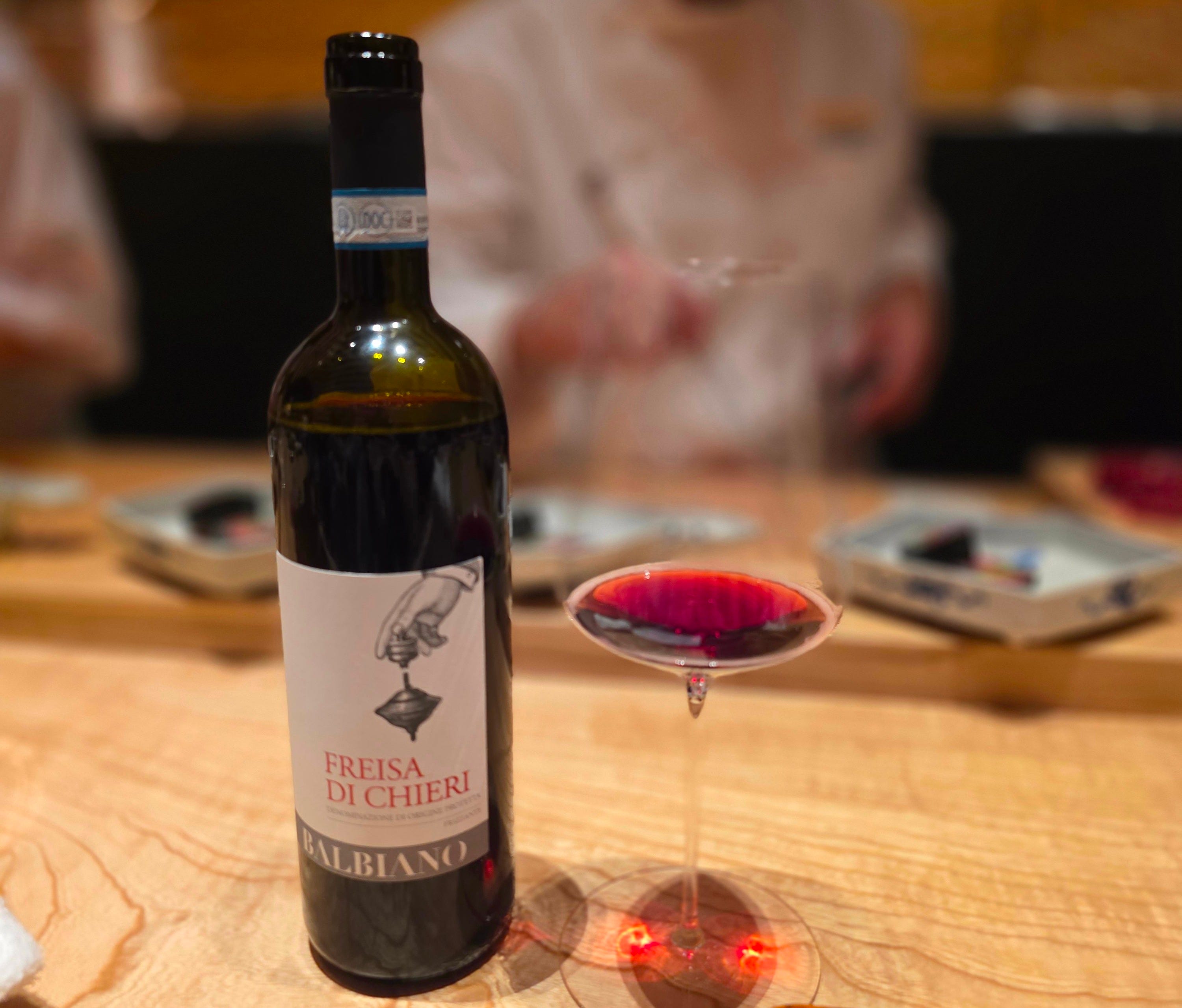
The sparkling red wine was funky and sweet, with a bitter finish.
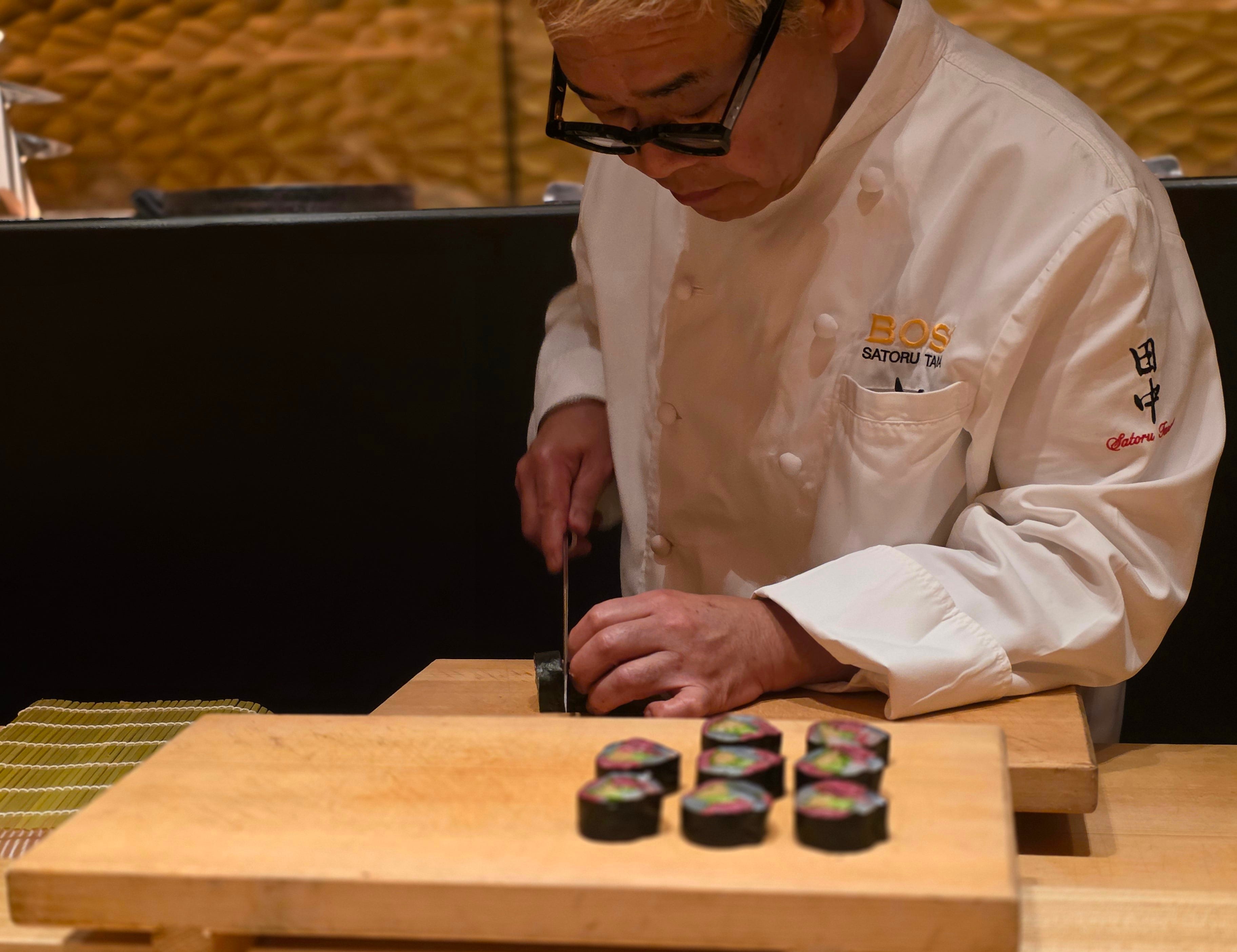
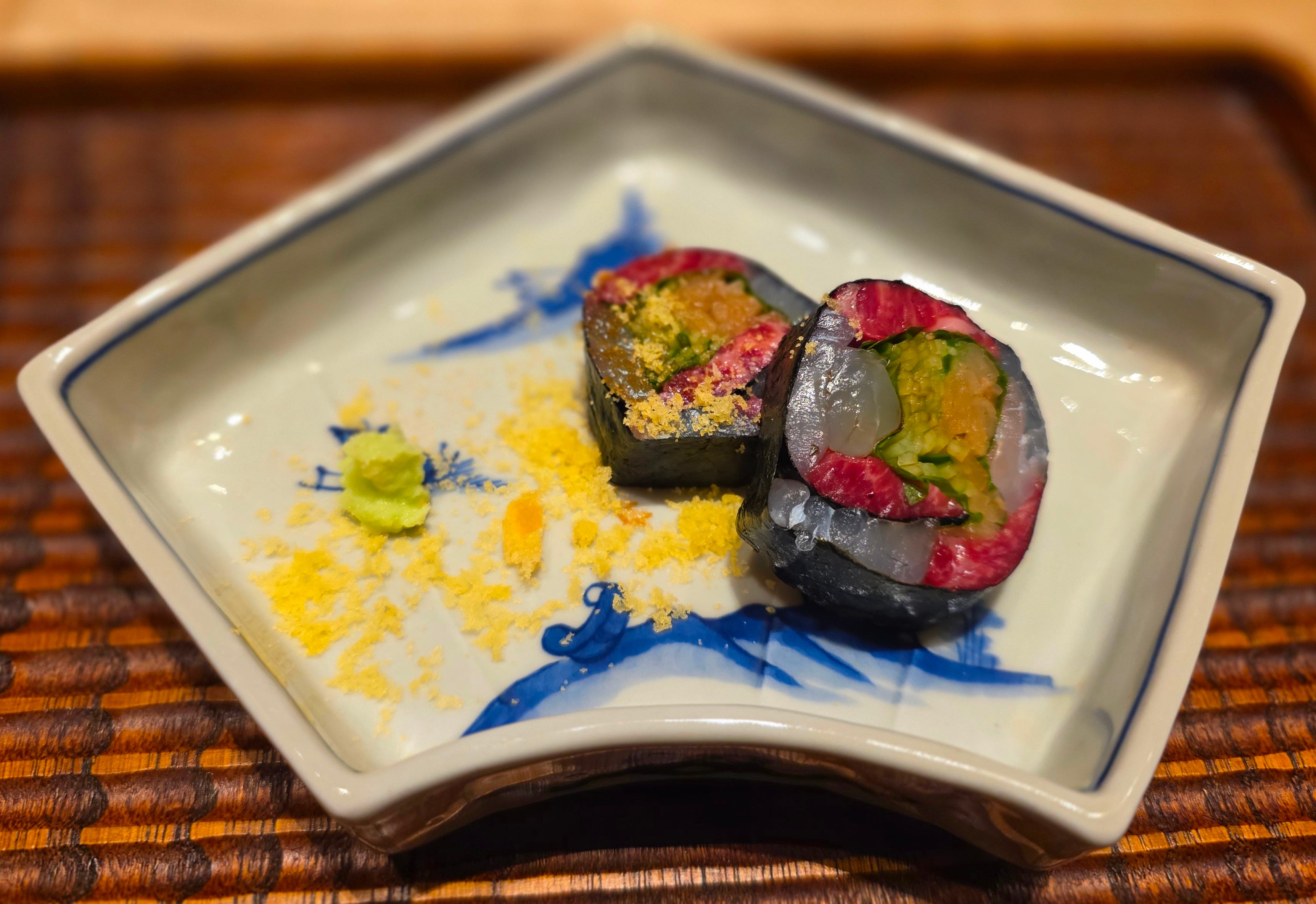
Next came one of Tanaka’s signatures: nori-maki wrapped around lean cuts of beef, snapper, lightly pickled cucumber and gourd, then topped with shaved bottarga. The combination was delicate, hits of sweet, sour and overall refreshing.
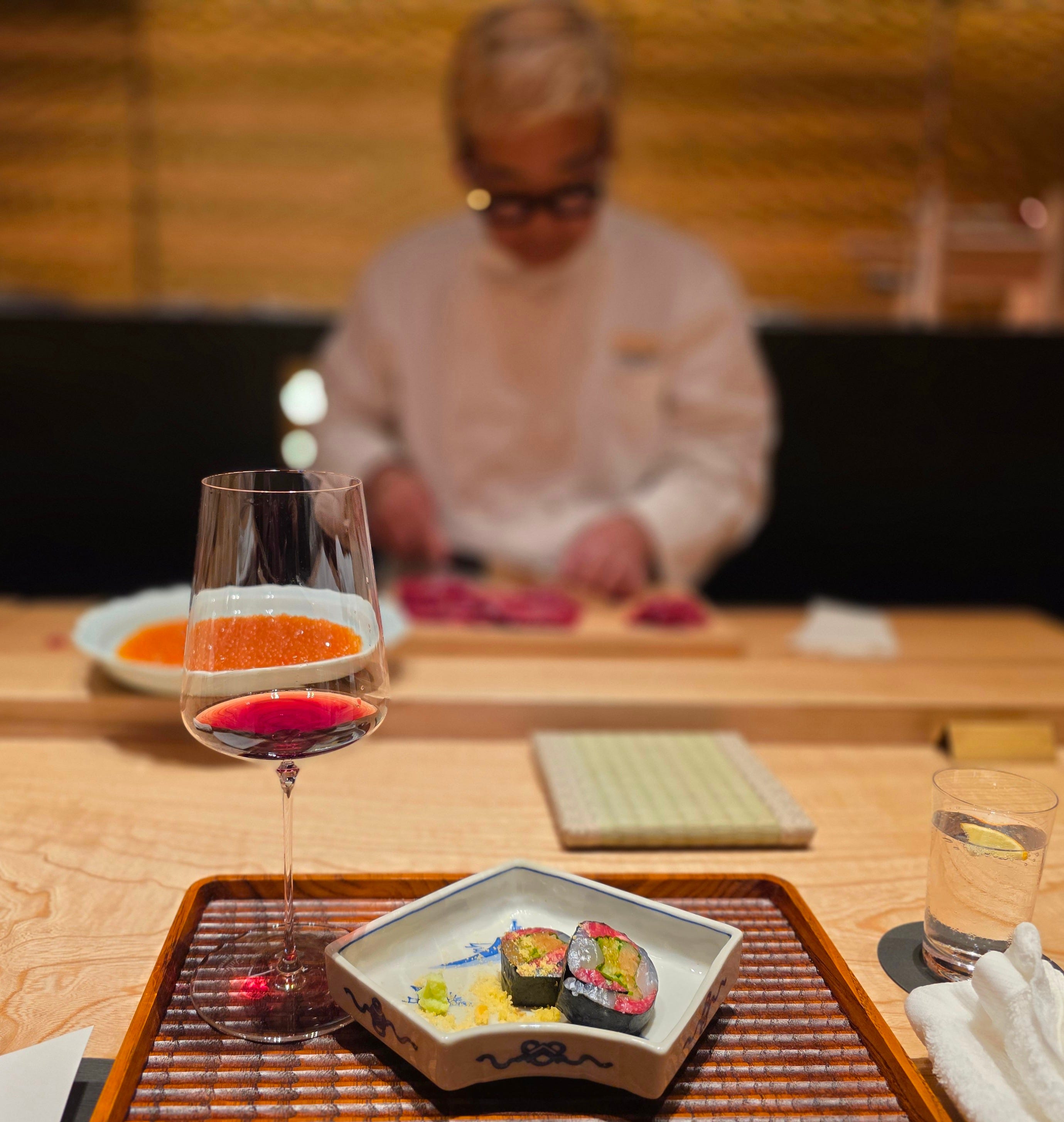
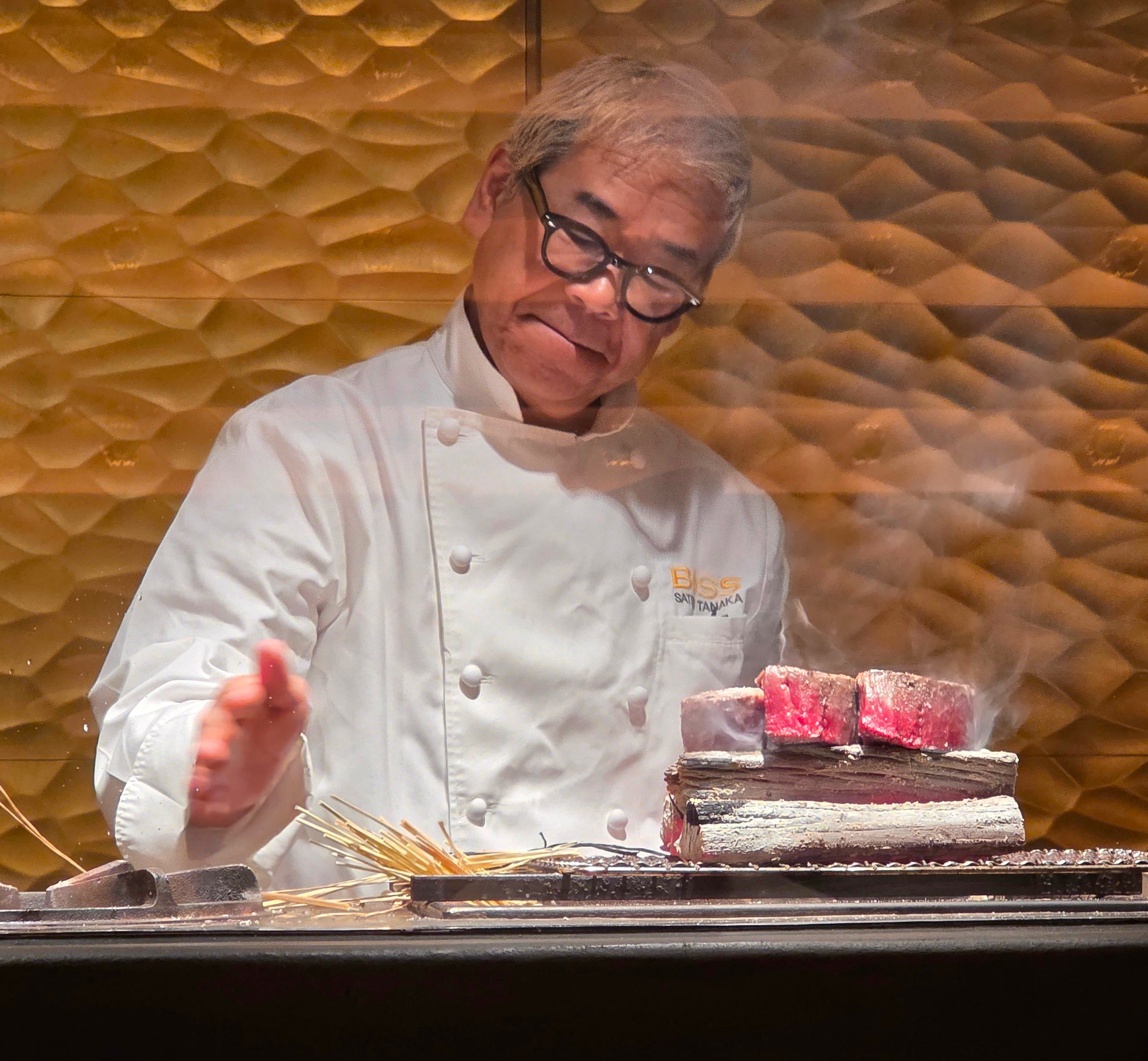
We had been given the best seats in the house, directly in front of Boss Tanaka. From there, we could watch father and son prepare the meal together.
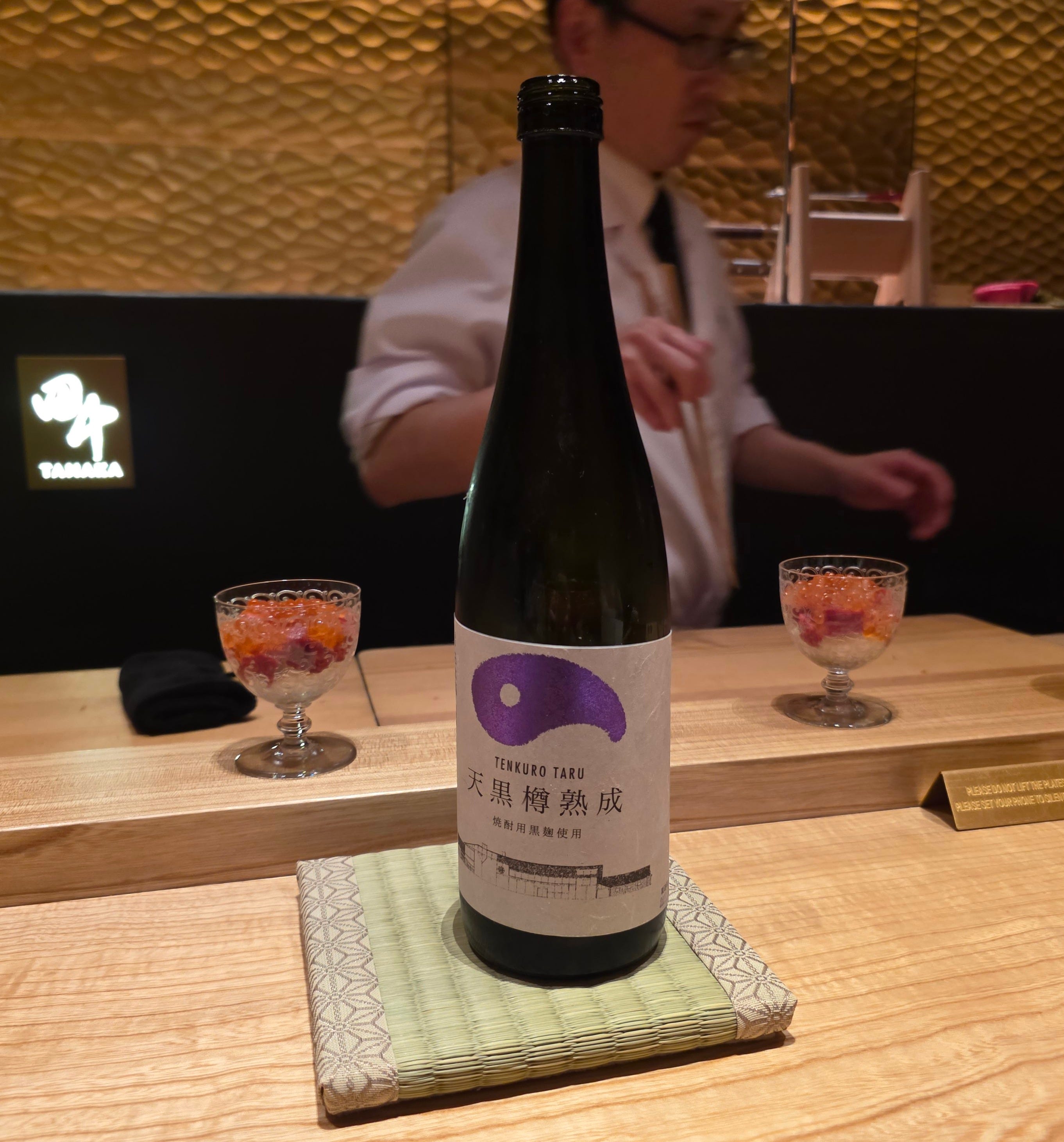
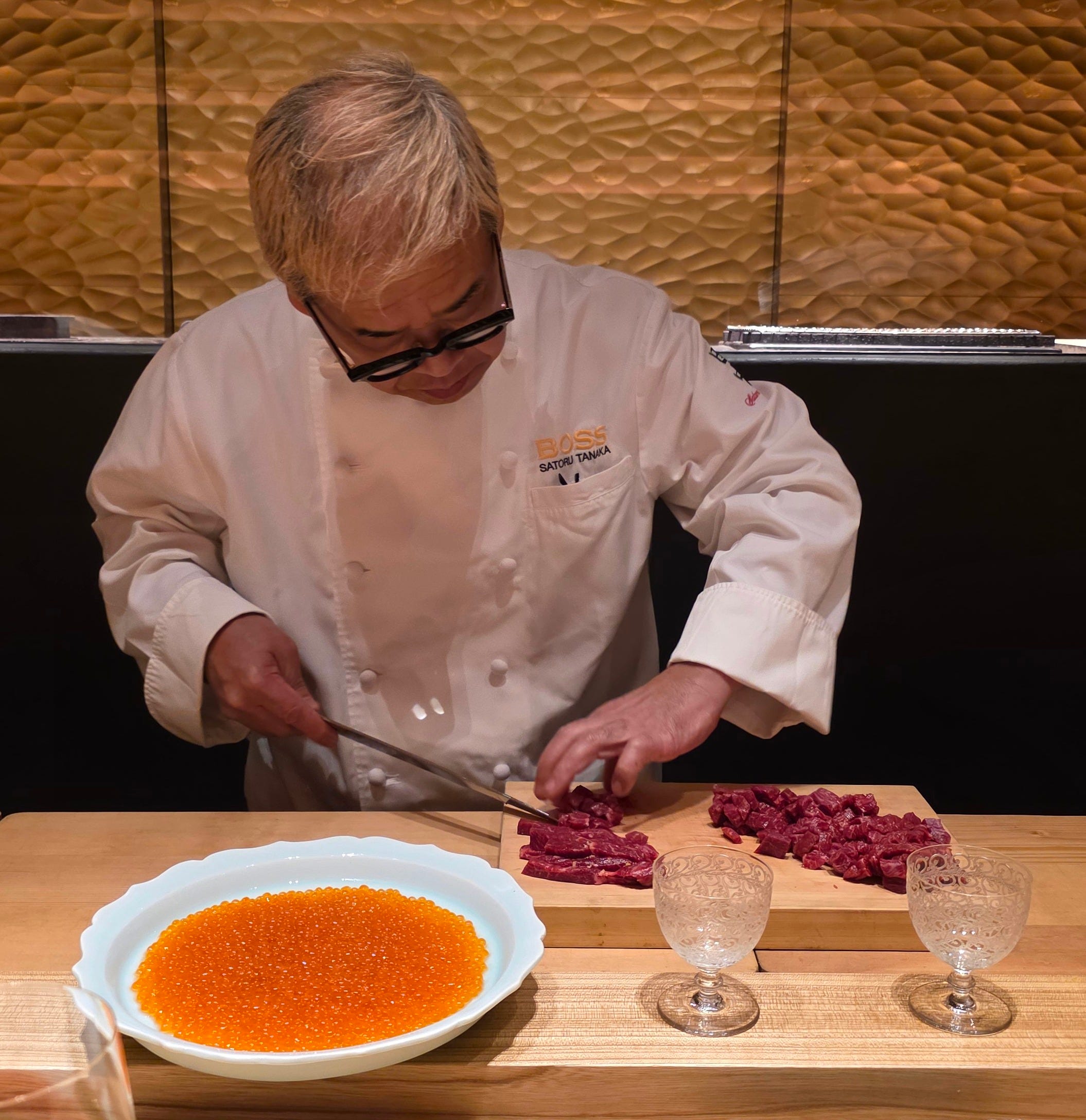
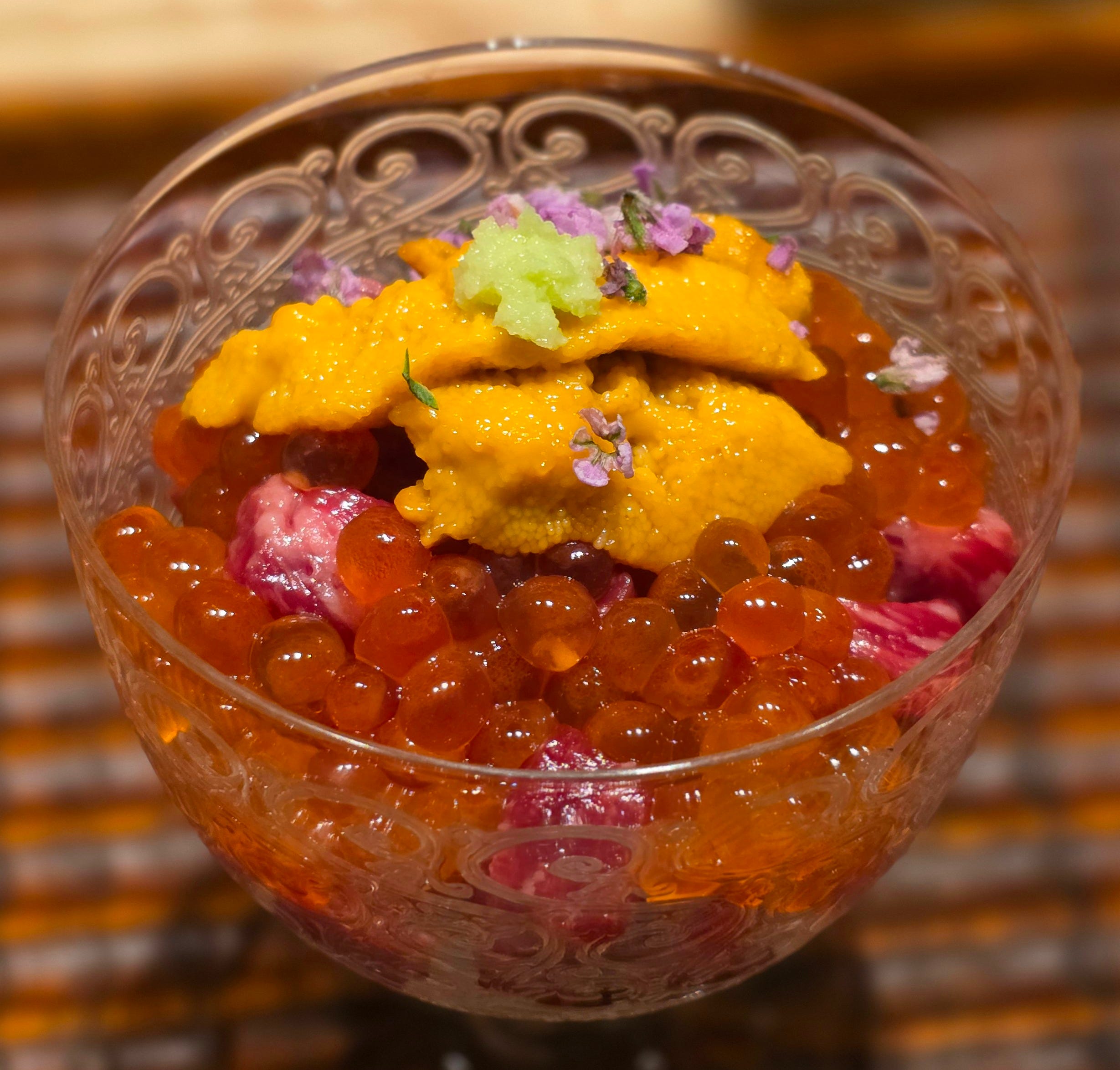
The beef tartare arrived on kushi sushi rice topped with fresh salmon roe and uni. The beef was marinated briefly in soy sauce and the staff explained the great pains they went to in order to soruce fresh salmon roe appears for only about 40 days each year. It’s only available during spawning season, after which the harvested row is salted and frozen to make it available year round. The fresh roe tasted much milder than the more common alternative.
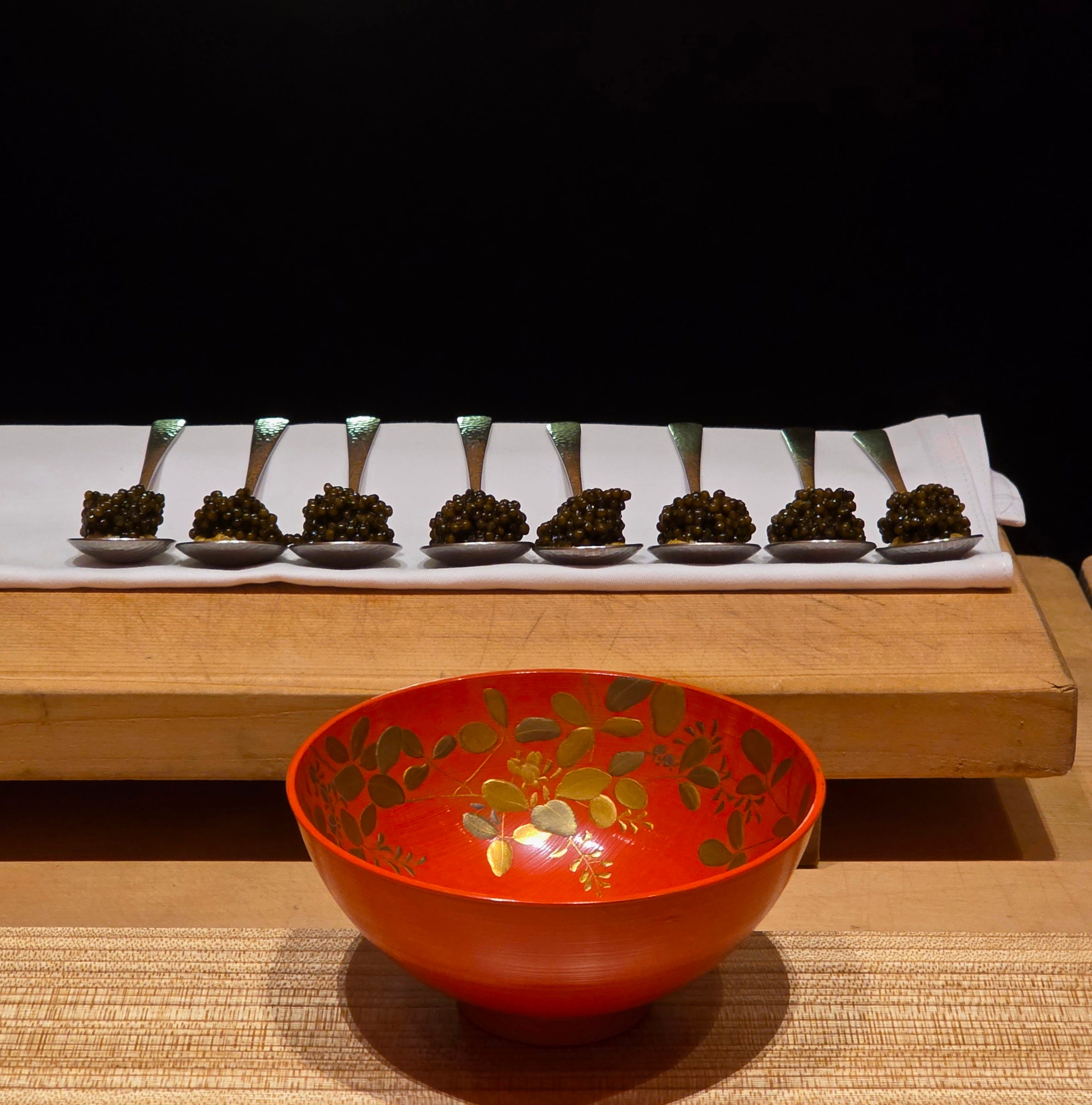
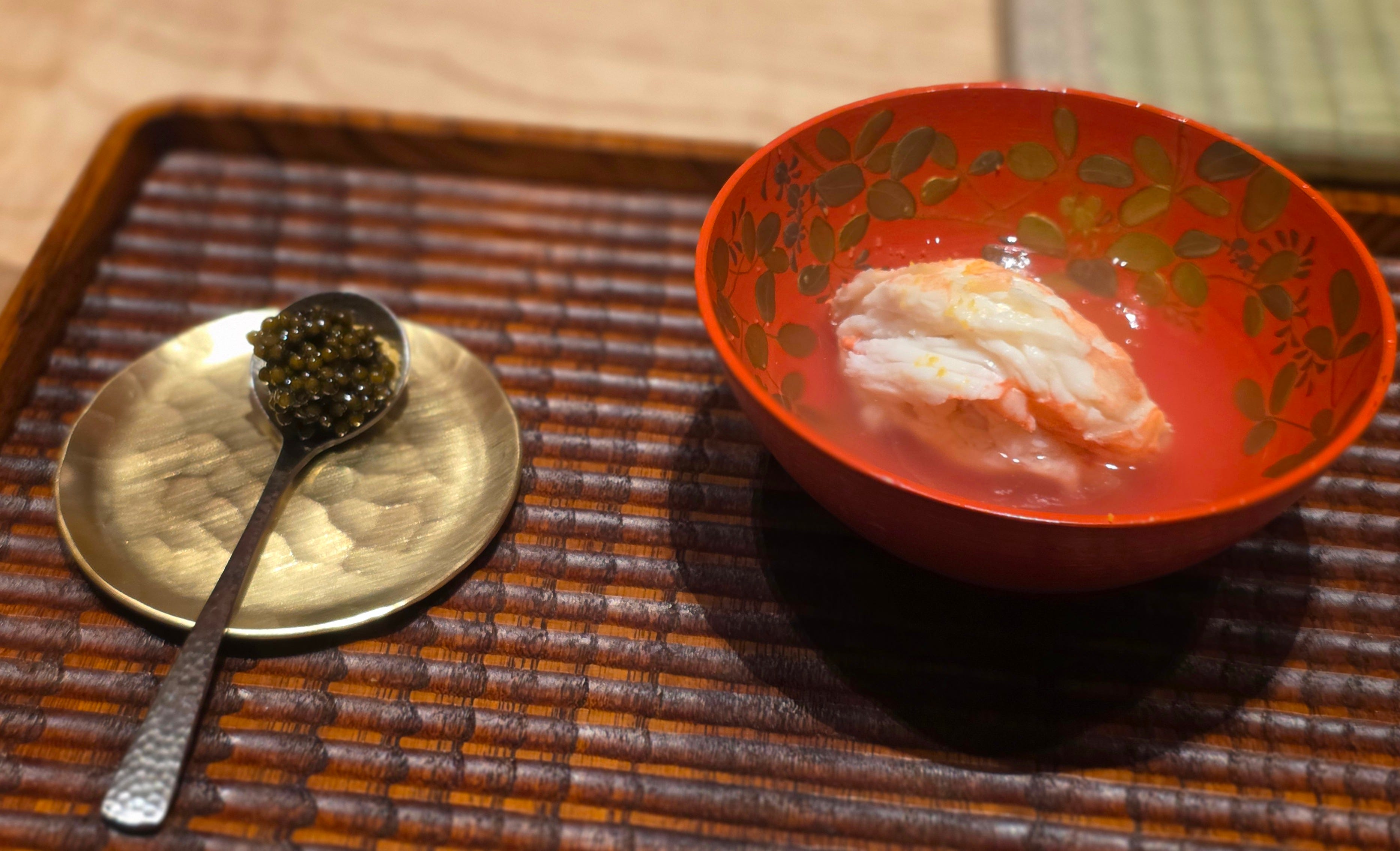
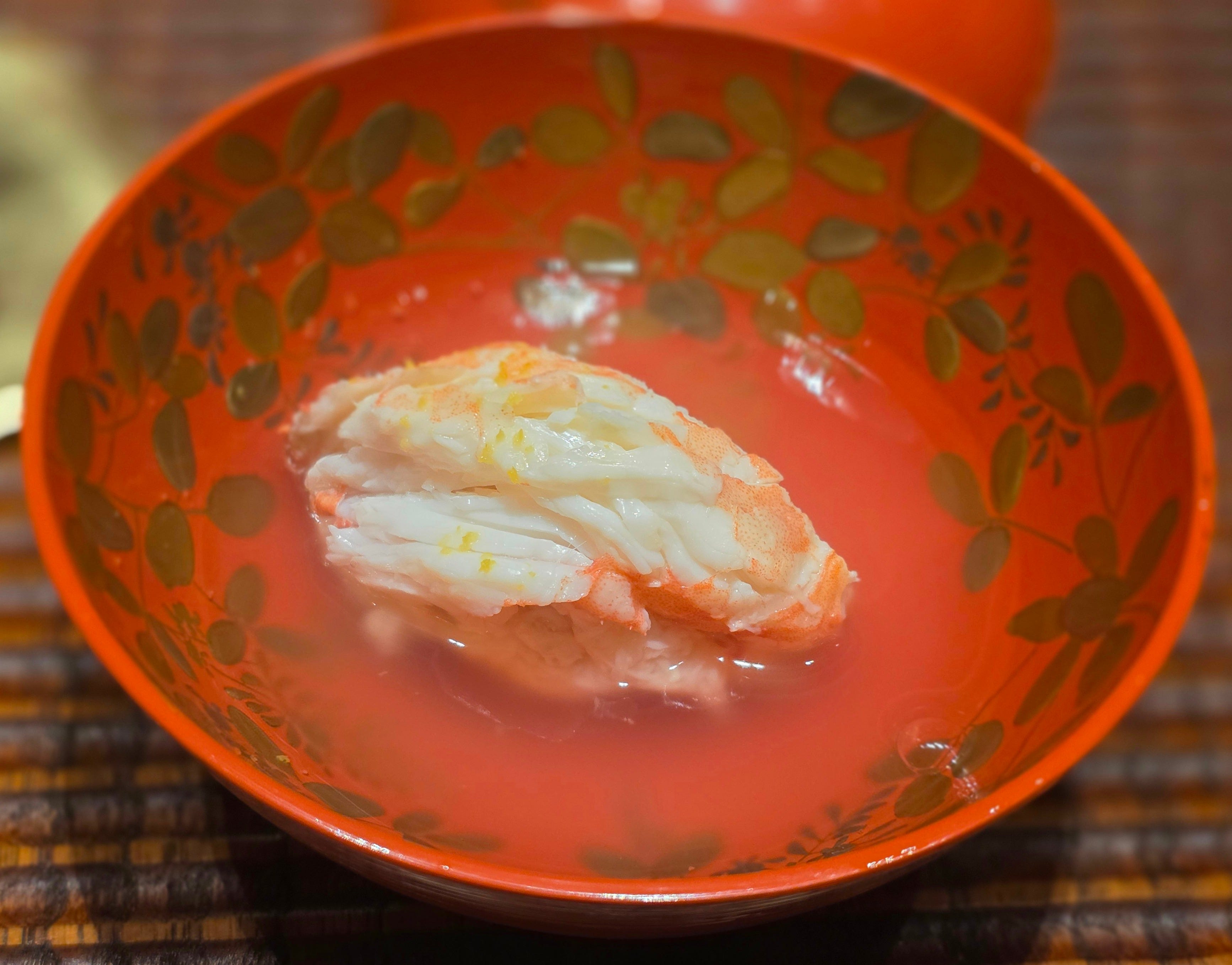
Despite not featuring the signature ingredient, the hairy crab soup was the highlight of the meal. It came topped with lemon zest and a mount of a crab meat in a deep, rich broth. There was a lot of crab in the bowl, and the dish briefly moved the focus away from the beef. Alongside the soup came a spoonful of rich crab liver paste and caviar.
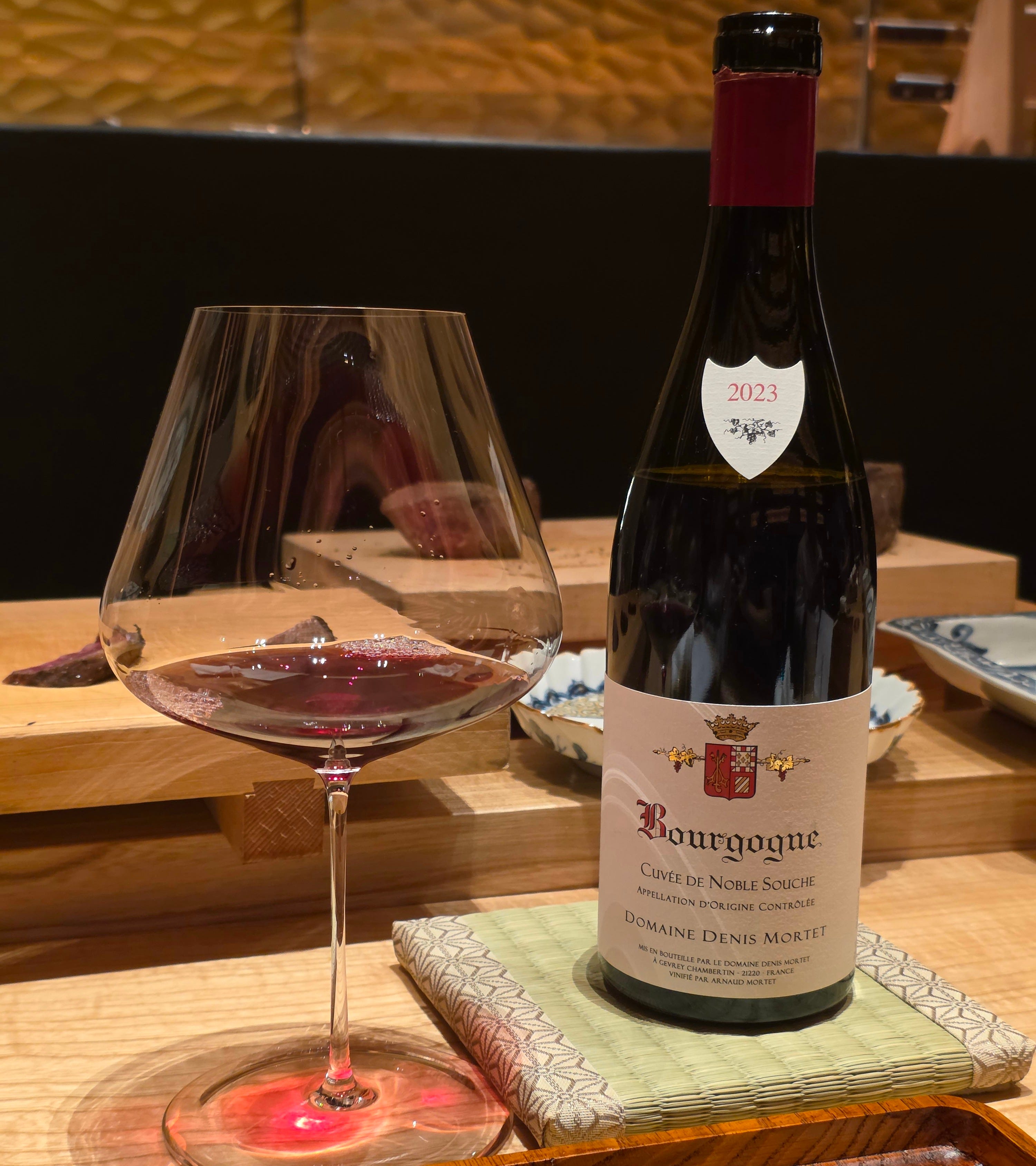
The next three dishes came paired with a Burgundy.
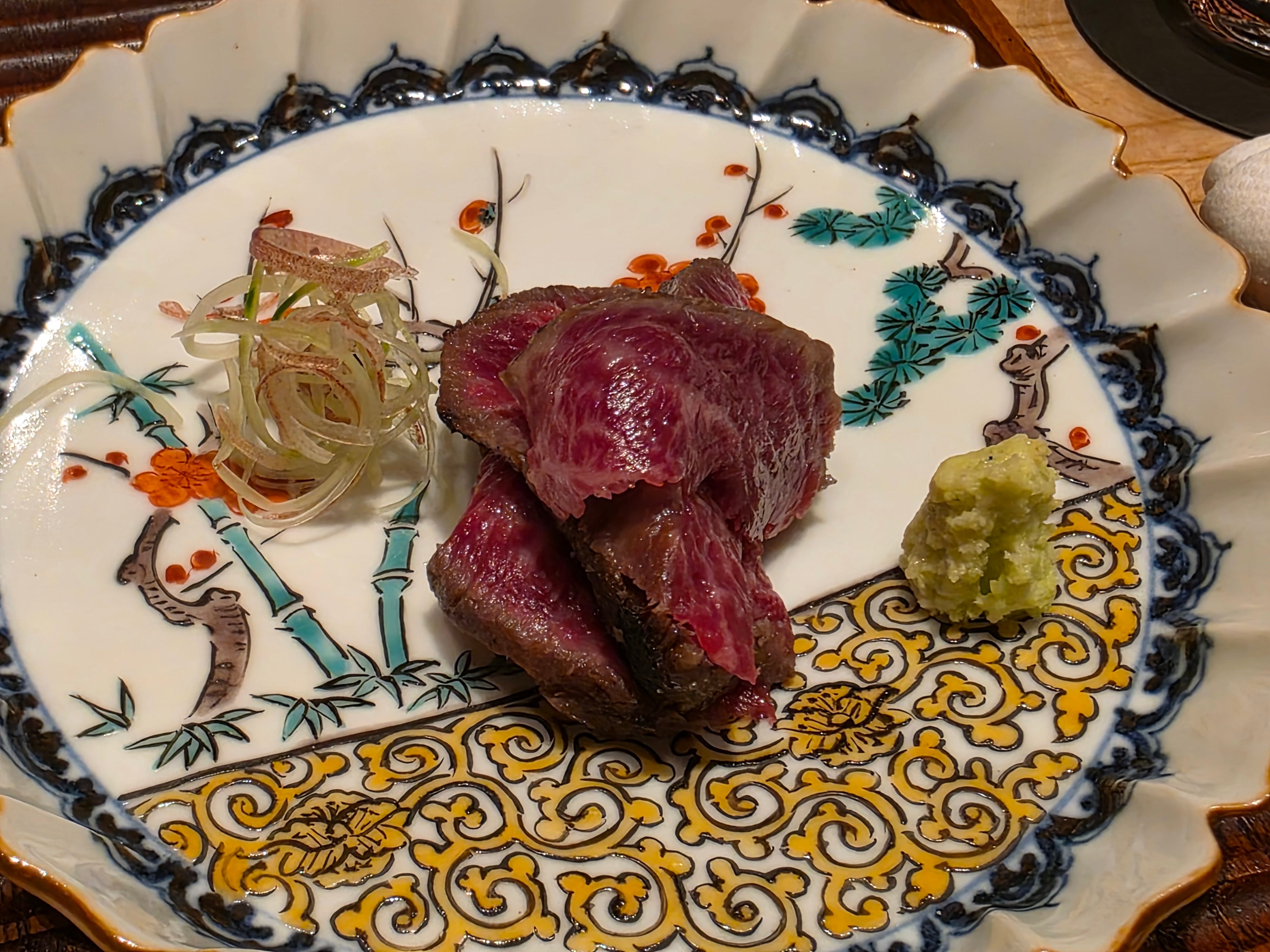
The top-round tataki, another Tanaka signature, arrived with wasabi, and salted onions.
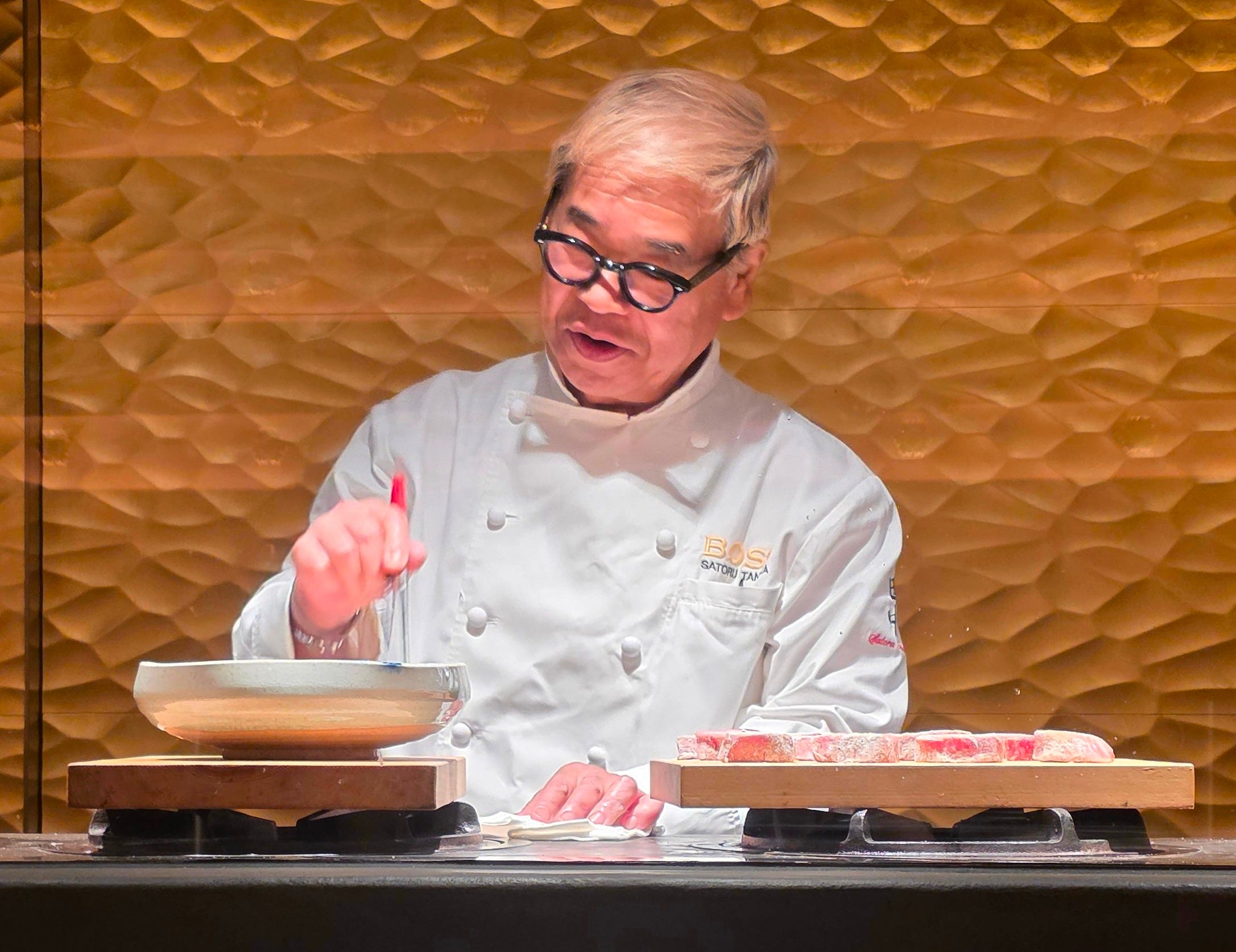
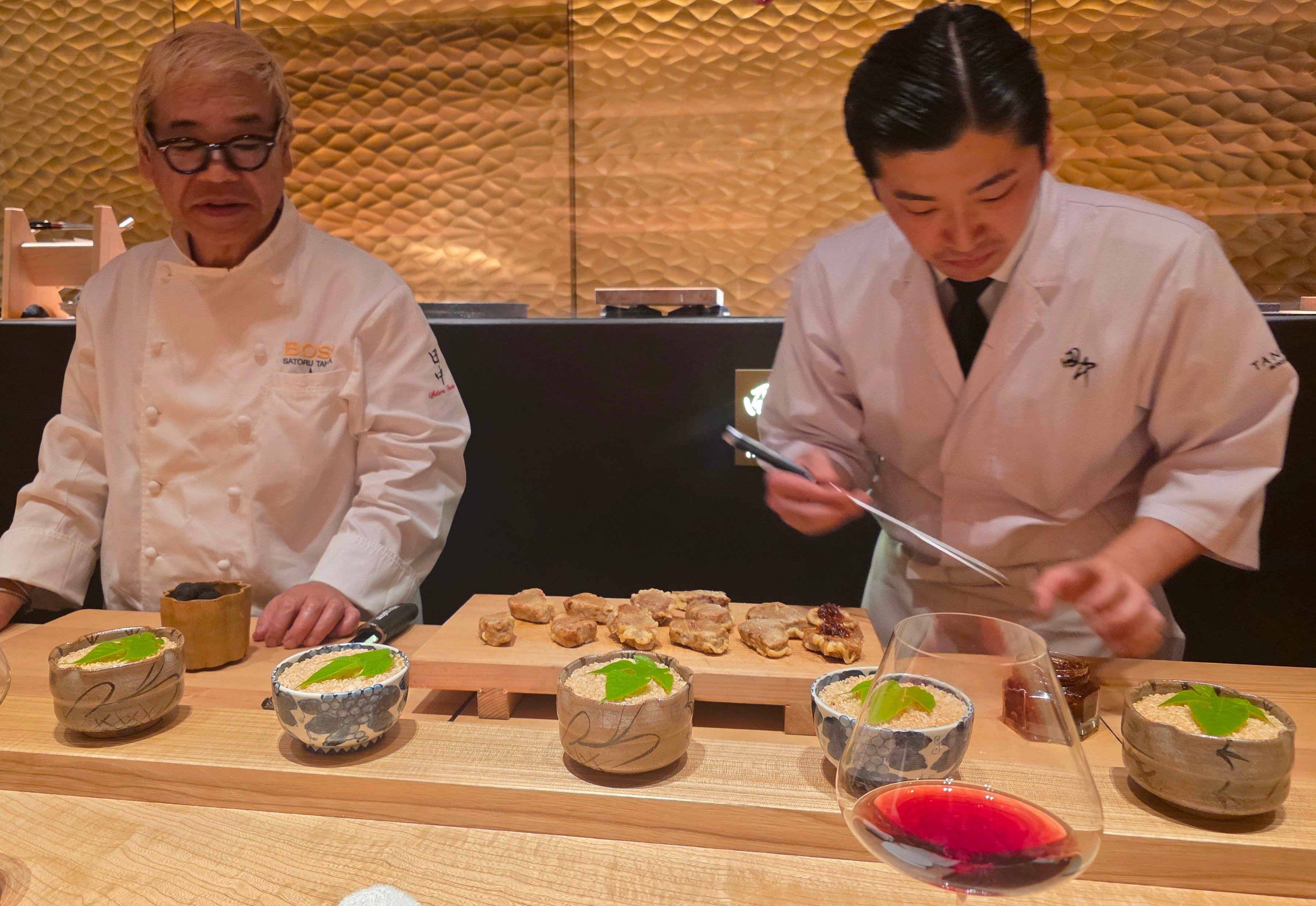
Father and son worked side by side to finish the beef tempura.
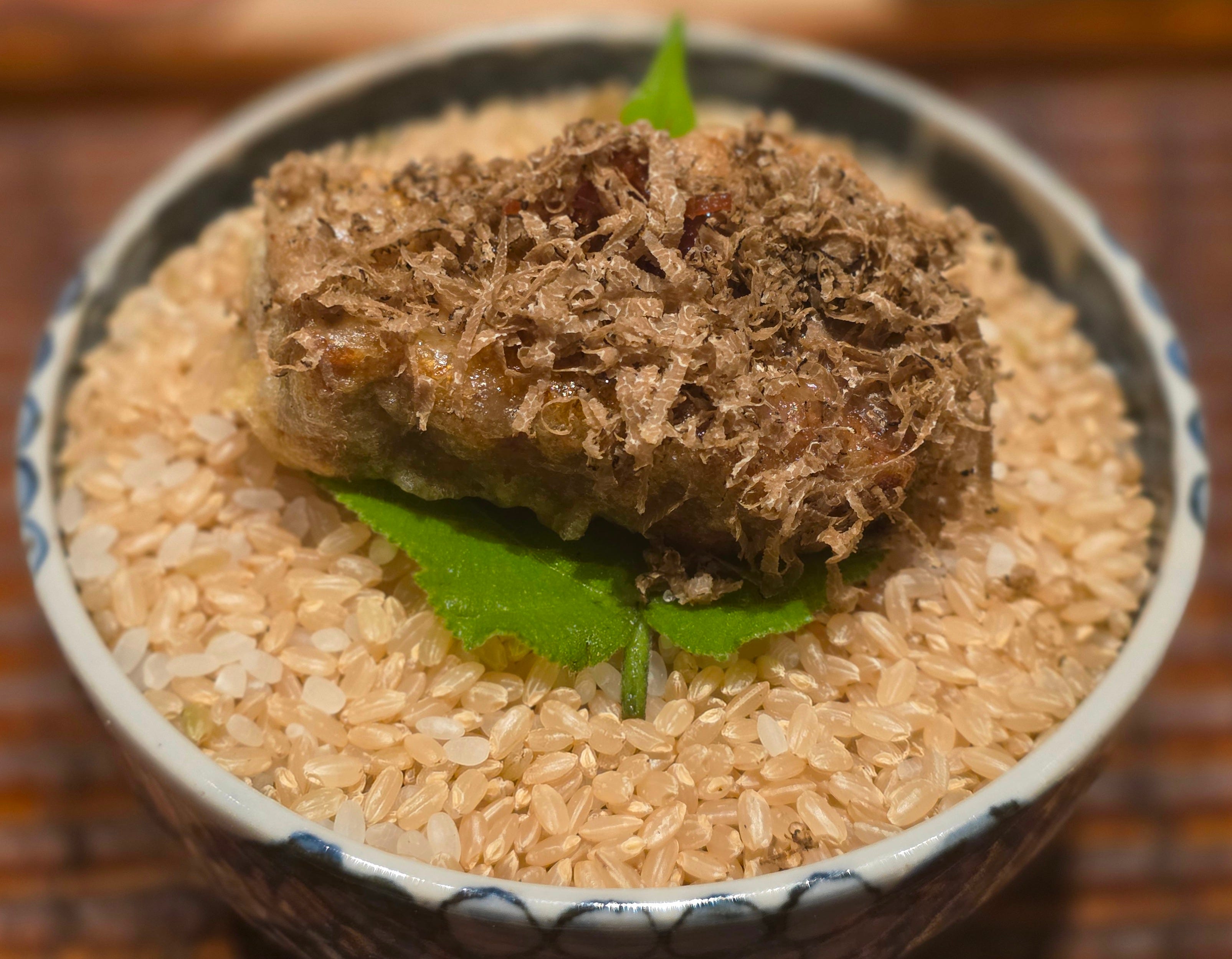
The tenderloin was light and crisp, topped with XO sauce for a Hong Kong accent and shaved black truffle.
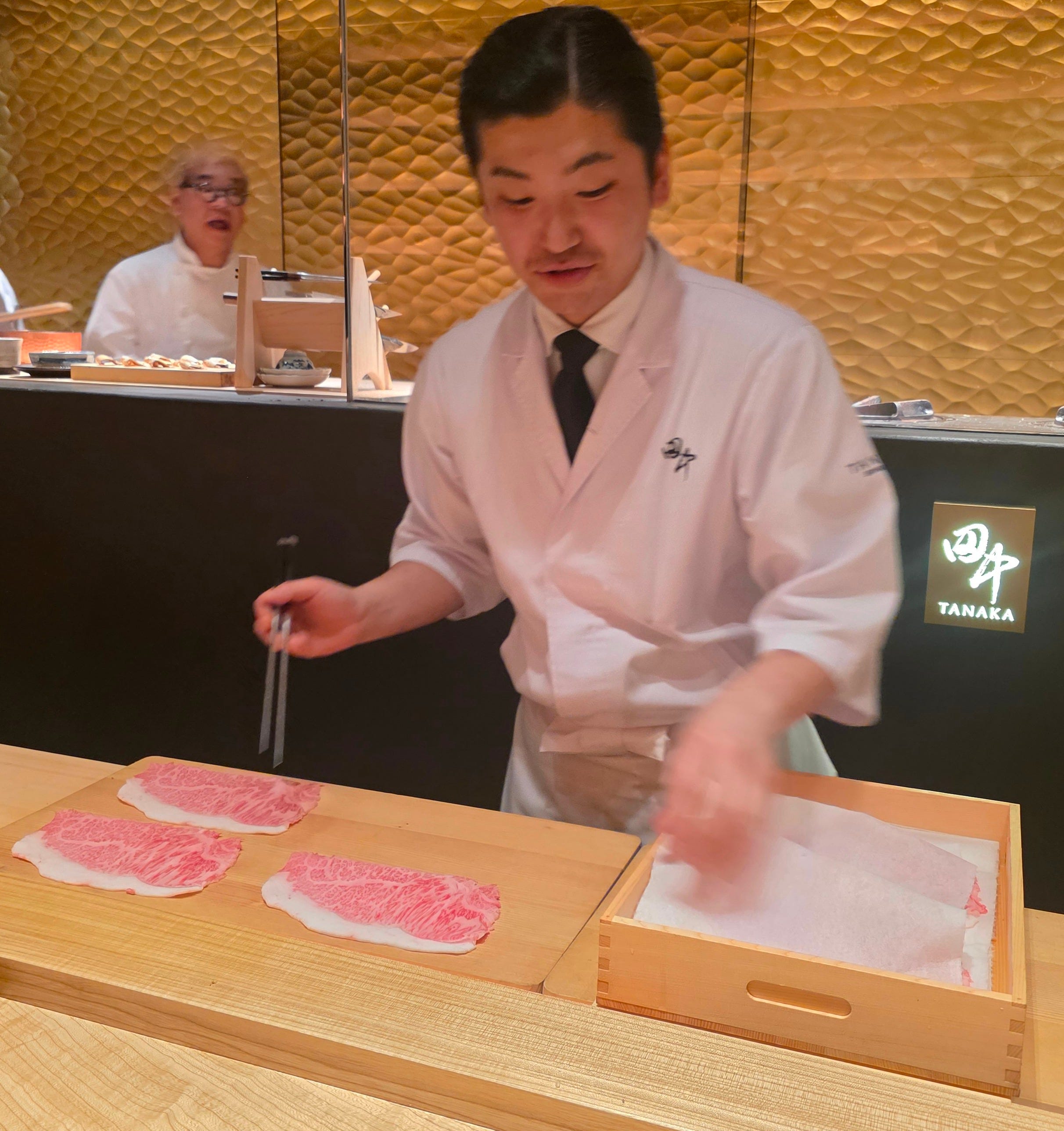
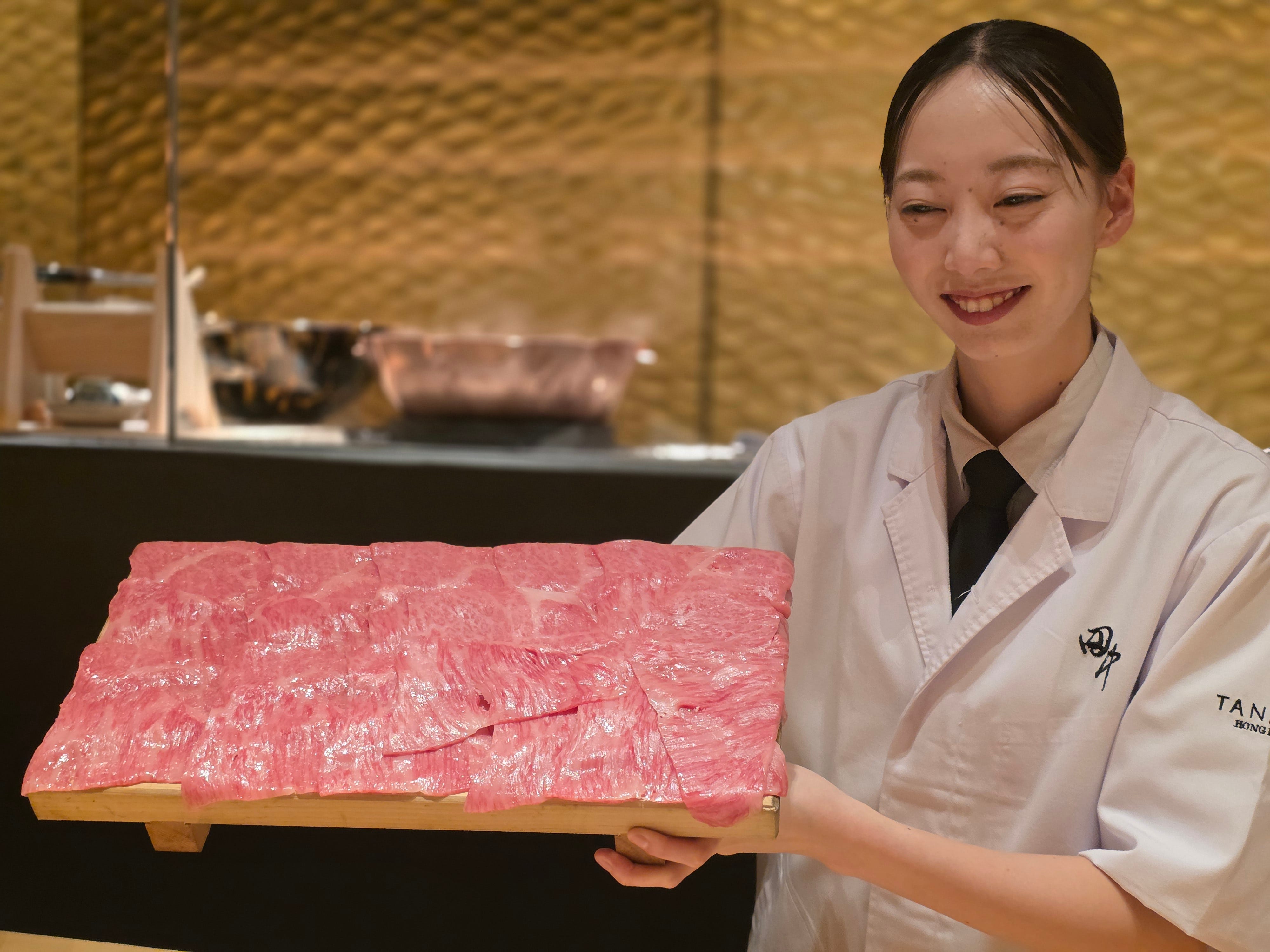
The staff trimmed the sirloin before lightly poaching it for shabu-shabu. Another chef ground the sesame and prepared the dressing by hand.
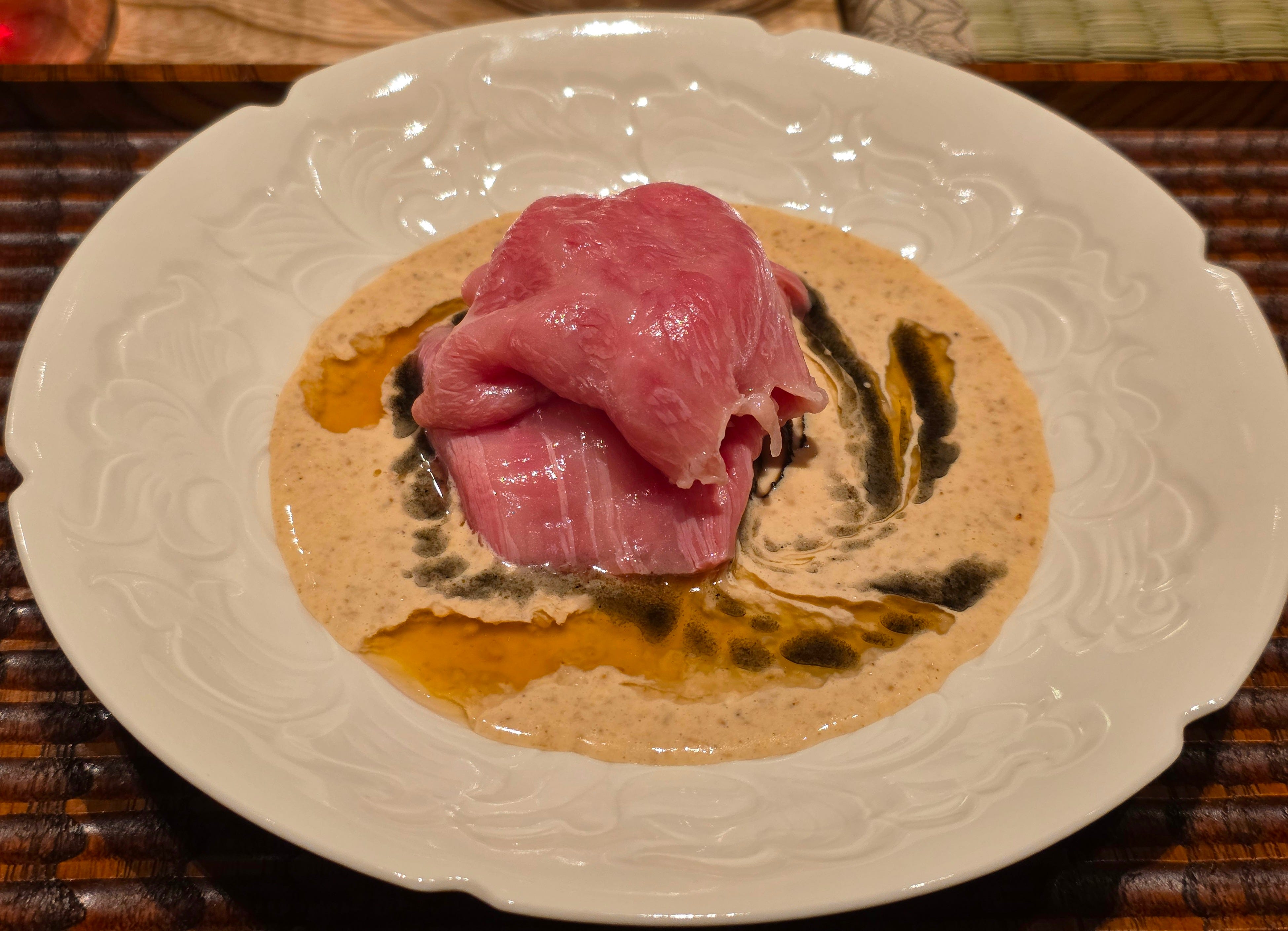
The dish was rich and nutty, beef cooked just enough to warm it through.
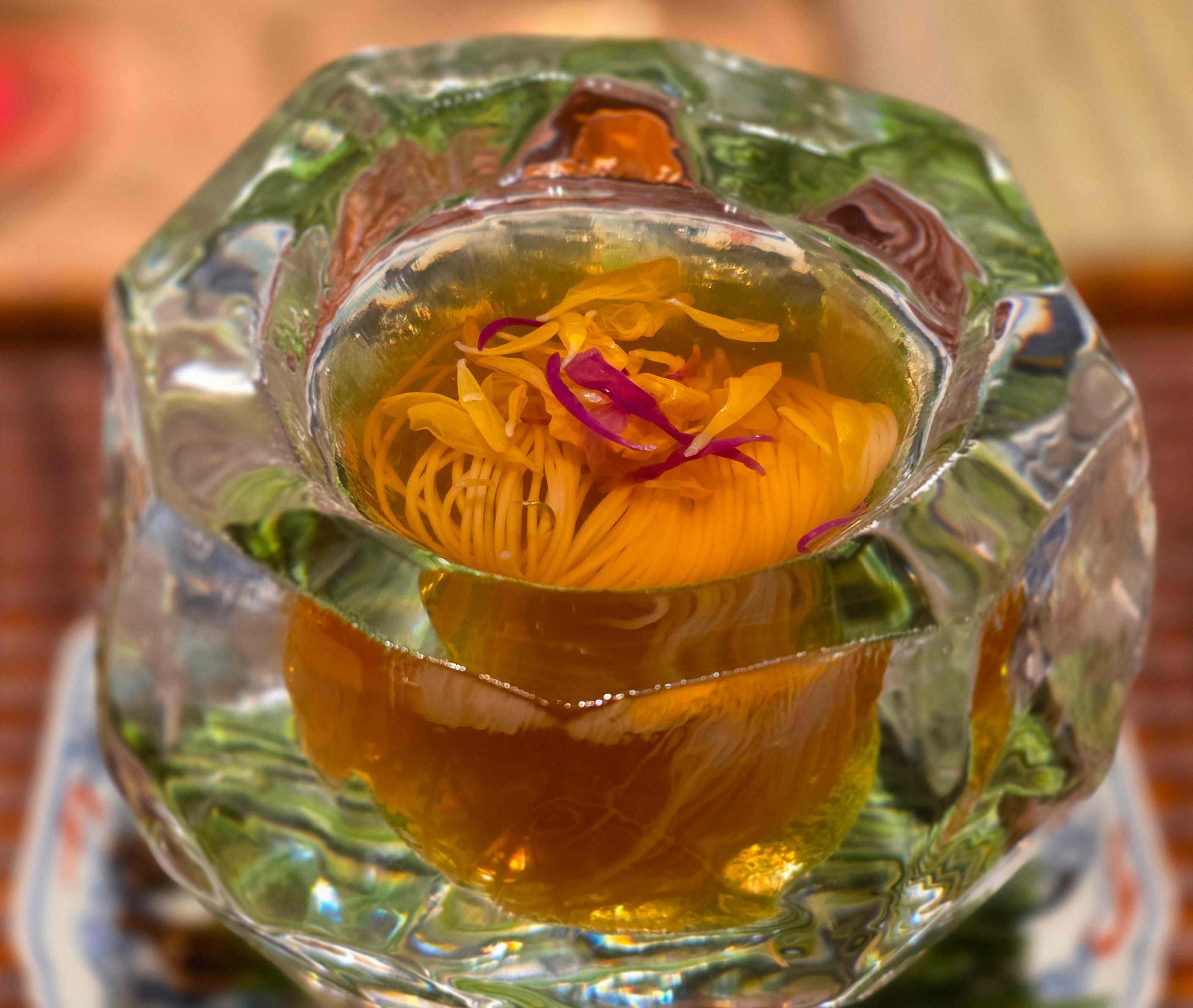
Another Tanaka signature followed: short somen noodles in a concentrated, refreshing broth, served inside a hand-carved ice bowl.
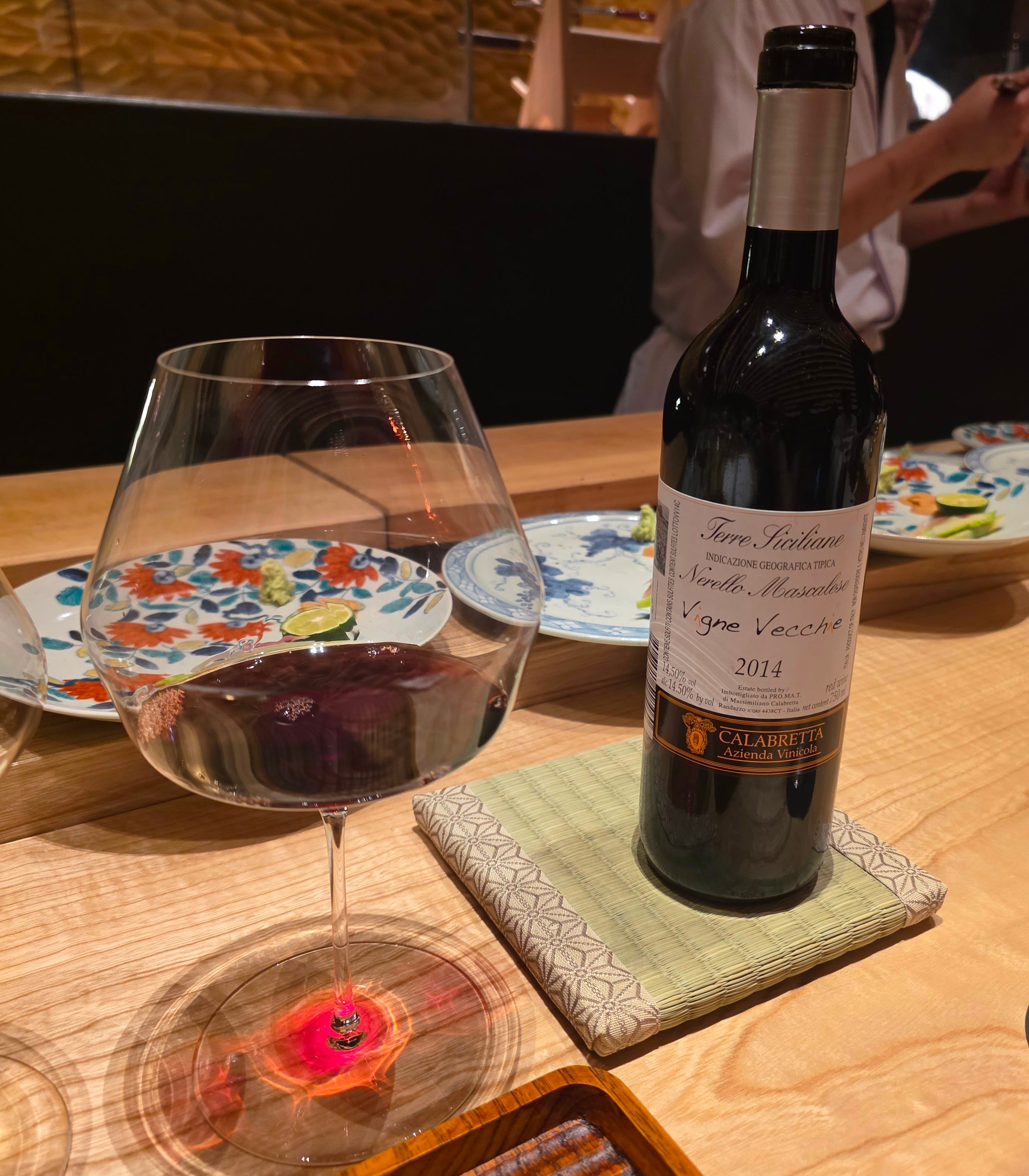
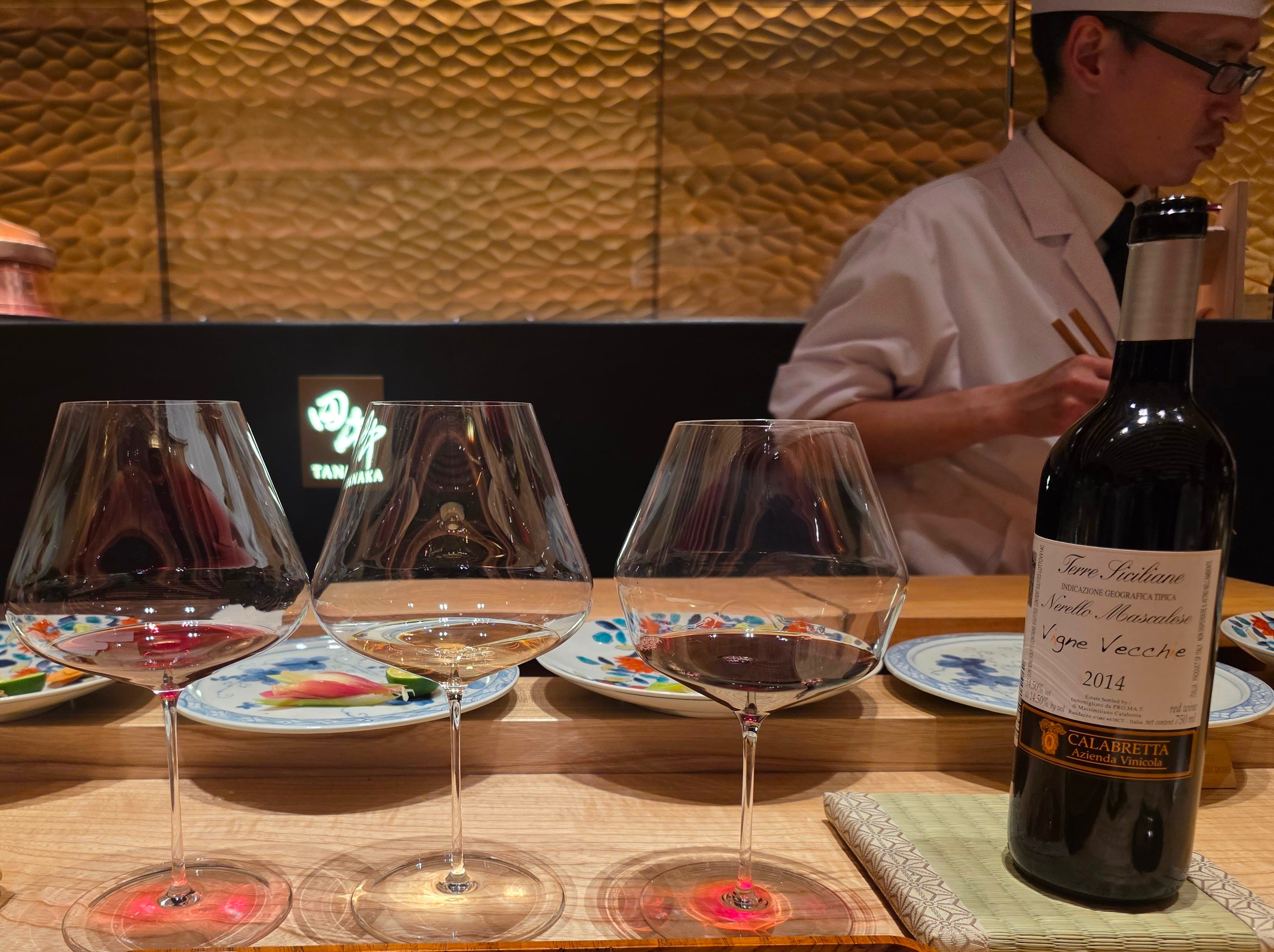
One of the problems with going with the wine pairing is that they had very generous pours. Even though my companion and I were sharing a single pairing, we were definately getting a bit drunk, and the glasses started piling up.
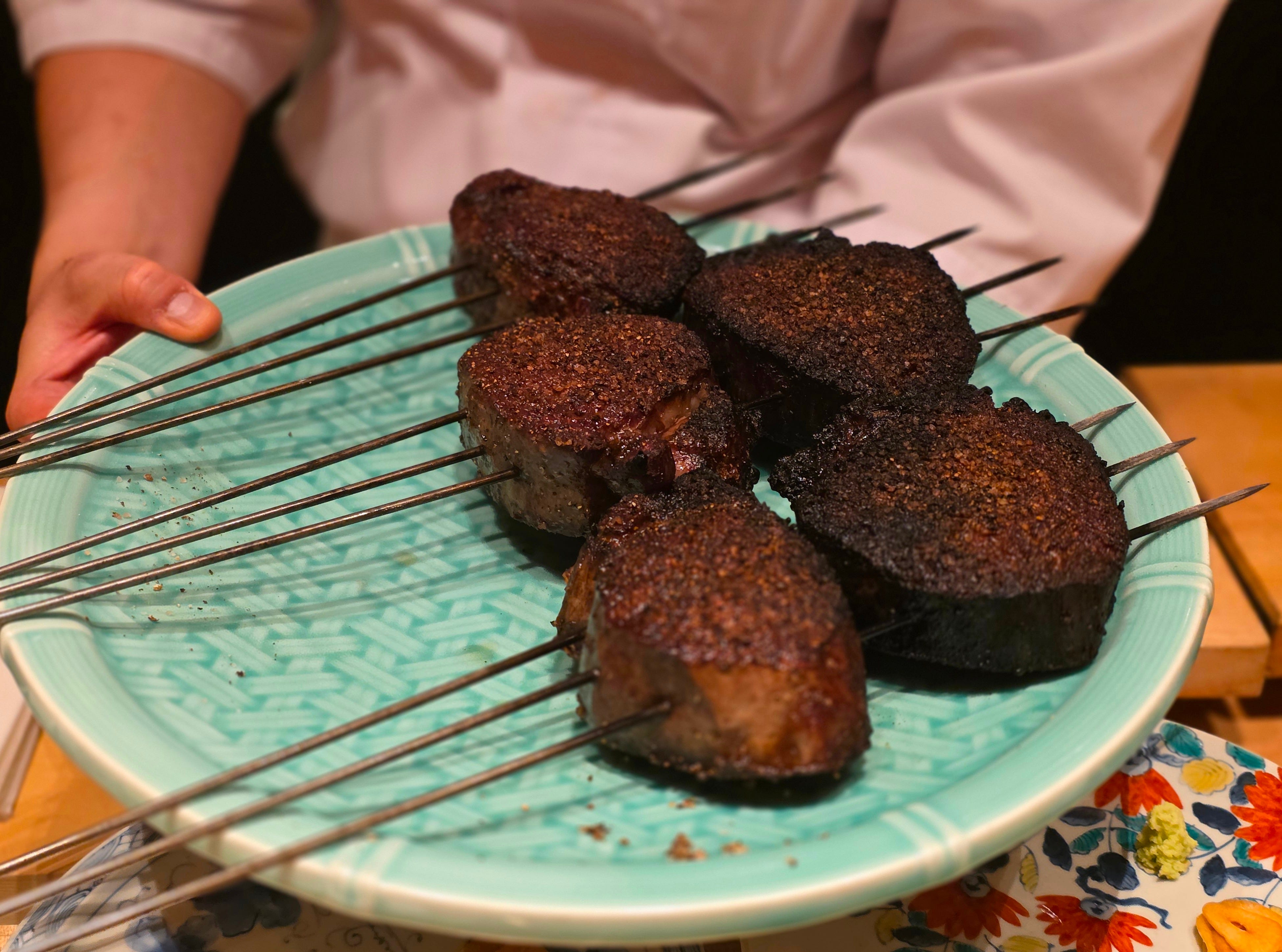
The main event was the tenderloin steak.
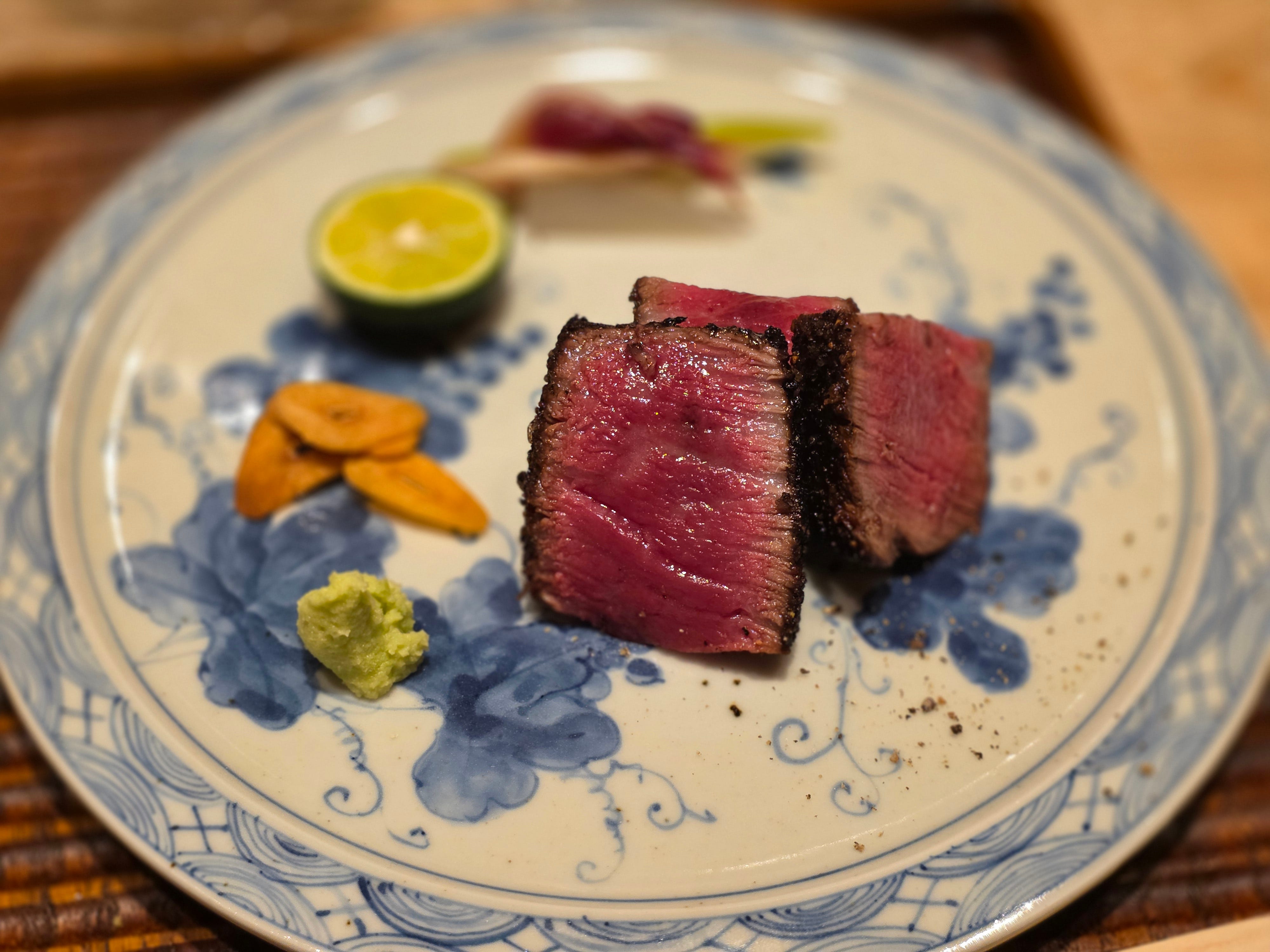
It was extremely tender, almost falling apart, and arrived at a perfect medium rare. Fried garlic chips, wasabi, yuzu and pickles completed the plate.
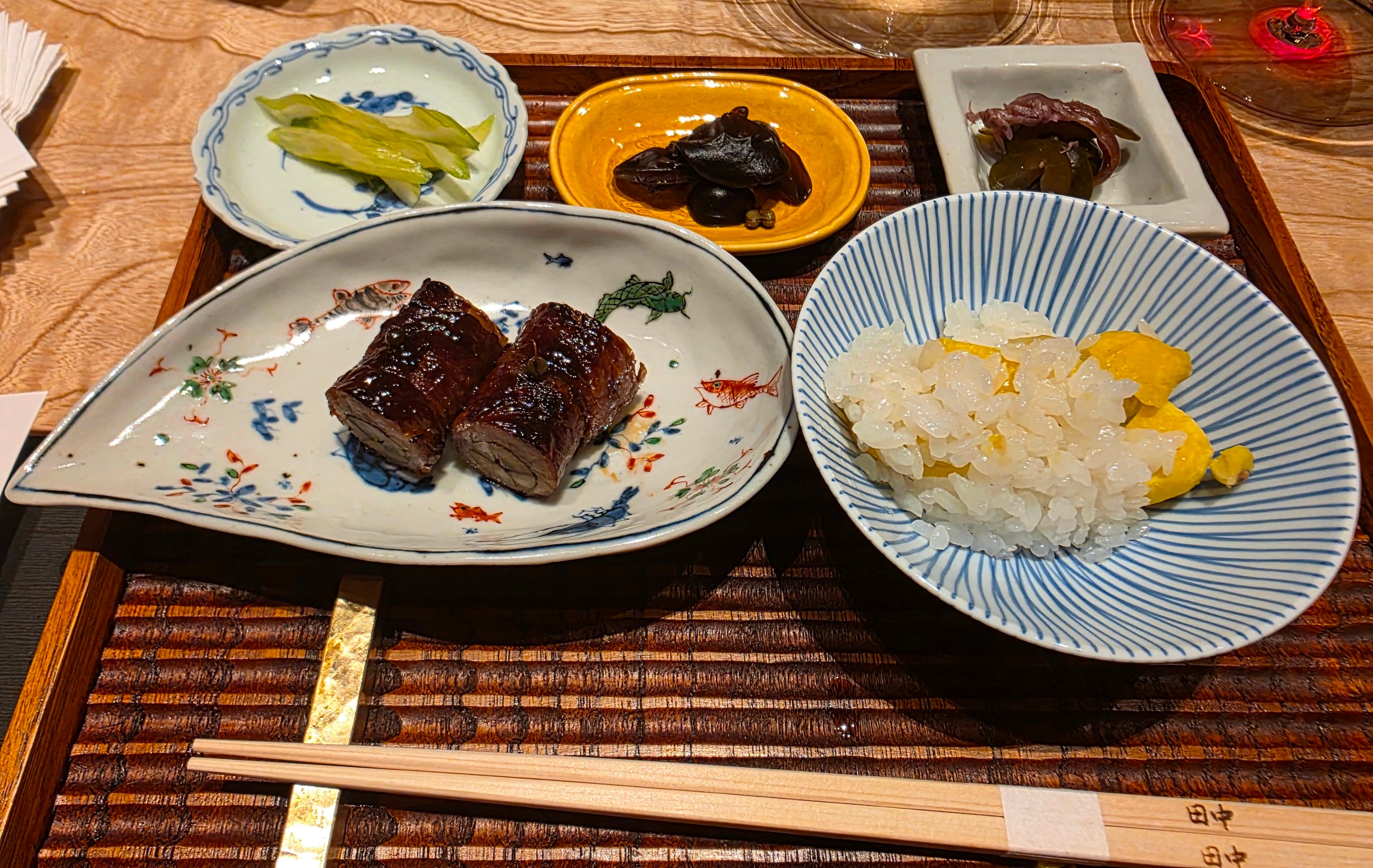
The dragon-eye rice came with chestnuts, beef roulade wrapped around eggplant, pickles and wood ear fungus, another nod to Chinese cuisine.
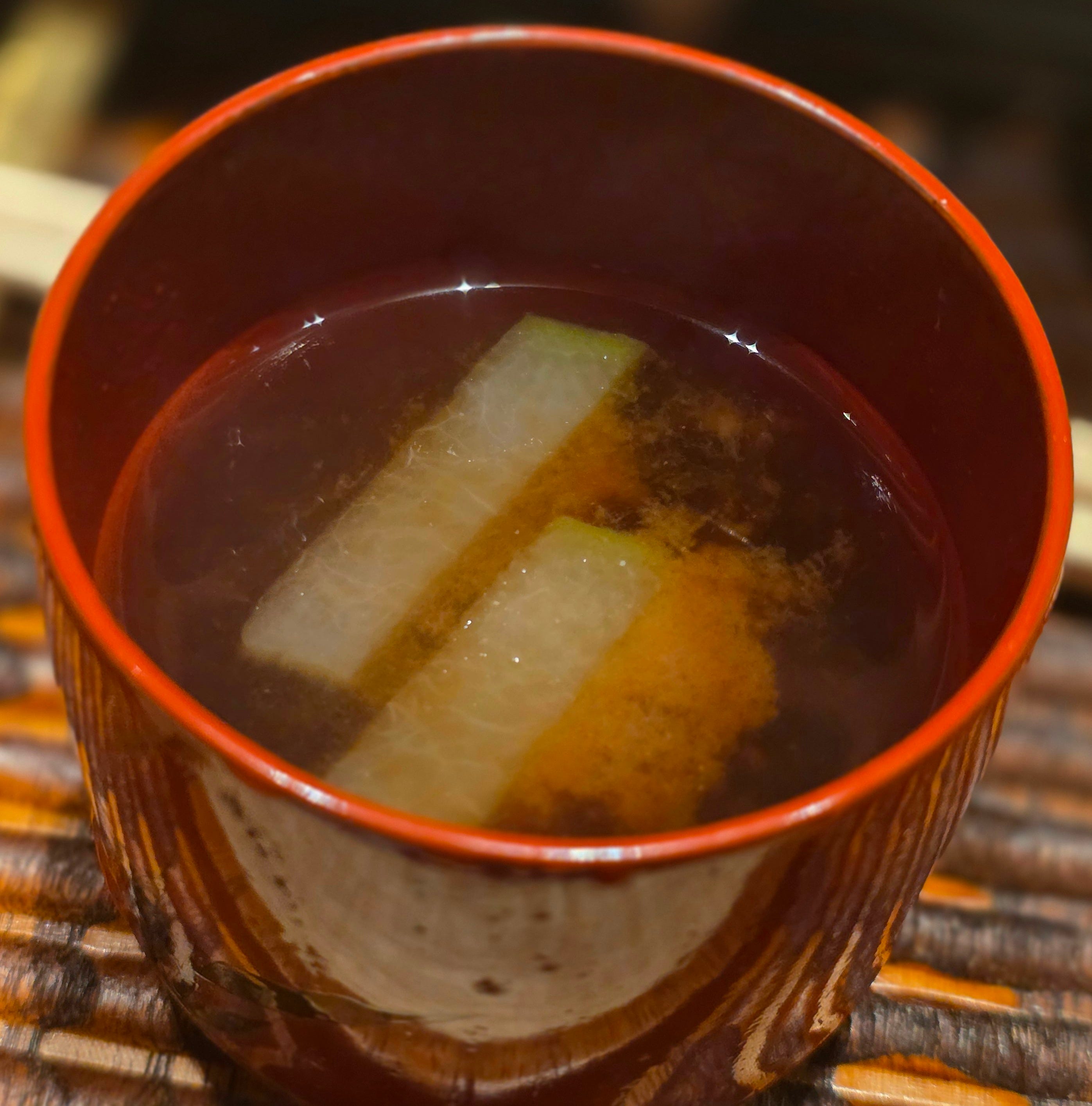
A bowl of miso soup with winter melon followed, a final nod to Chinese cuisine.
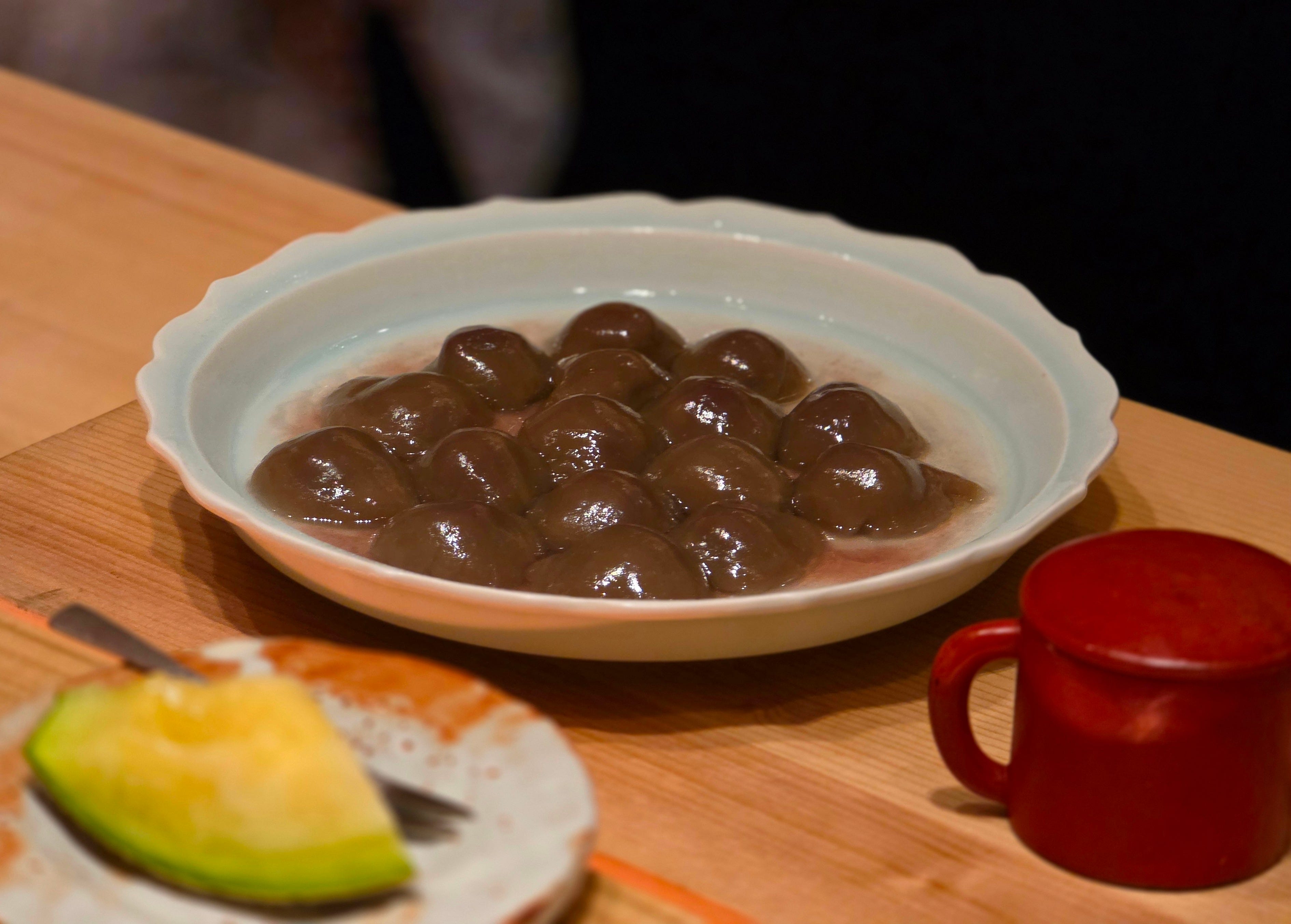
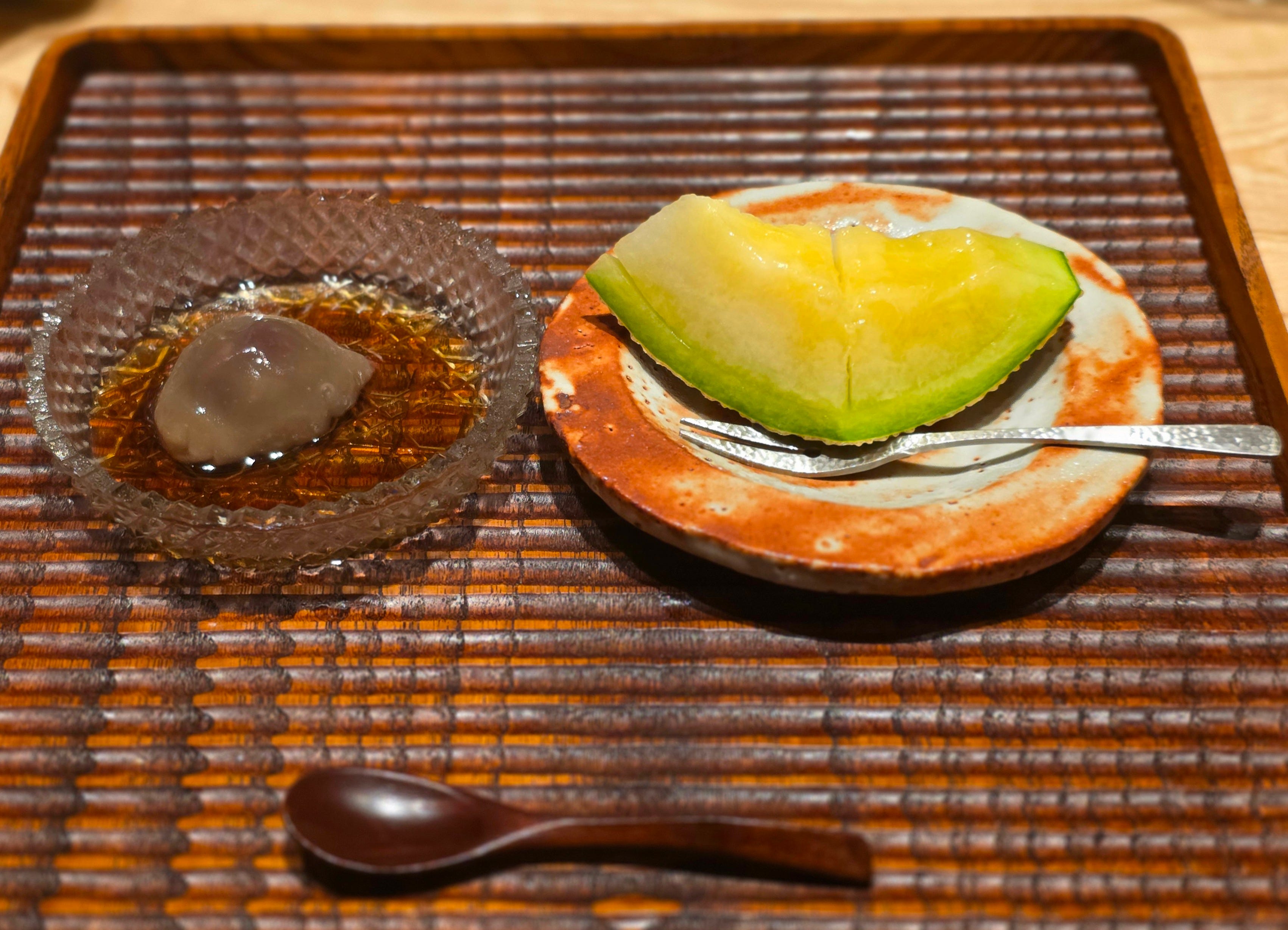
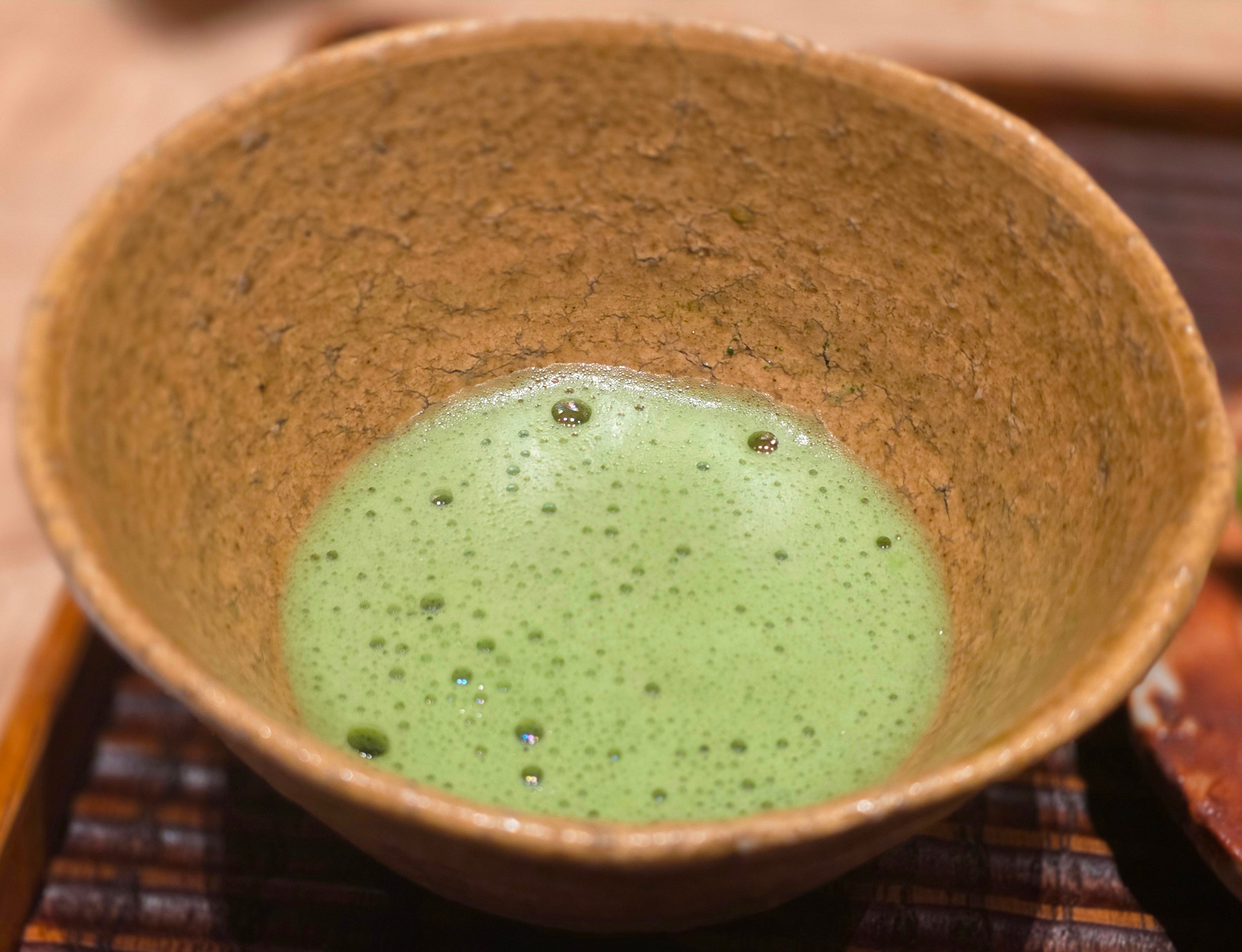
Dessert was red bean mochi with intensely ripe muskmelon, followed by hand-whisked matcha.
Tanaka delivered the full luxury wagyu-kappo experience: rare beef, a large number of preparations, a carefully staged counter and a founder who was visibly involved in the cooking. The father-and-son performance and Boss Tanaka’s obvious excitement explaining each ingredient and dish made for a fun and entertaining night.
The hairy crab soup was my dish of the night, even though the restaurant’s purpose is beef. The tenderloin, shabu-shabu and beef tempura were also strong. The meal felt more theatrical than Nikuya Tanaka in Singapore, largely because we were seated directly in front of the Tanakas and could watch the performance at close range.
The wine pairing was generous enough to become a problem. Sharing one pairing between two people was more than sufficient.
Tanaka is a specialised and expensive experience, but the sourcing and range of preparations made the meal feel more substantial than a conventional steak dinner. As with Singapore, one of the best meals I’ve had this year. Definately worth returning.
Total Damage: $9,200 HKD/2 people