
Sushi Mamoru is a polished Hong Kong Edomae counter built around Chef Hirofumi Chiba. It is not a famous Tokyo name transplanted into Central.
The meal works best when you judge it as Chiba’s own counter: good sourcing, careful technique, a lively room, and a chef who enjoys explaining the details. It works less well when you judge it against the restaurant’s stated idea of protecting traditional Edomae sushi.
Mamoru means “protect” in Japanese. The restaurant uses the word literally. The pitch is preservation: traditional Edomae technique, direct relationships with Japanese fishermen and farmers, and a focus on ingredients that do not often appear outside Japan.
Chef Chiba is the centre of the restaurant. He is a third-generation sushi chef with more than two decades of experience, including fugu training, time at Sushi Iwa and Zorokuzushi in Tokyo, Sushi Kohaku in Hong Kong, and now Mamoru.
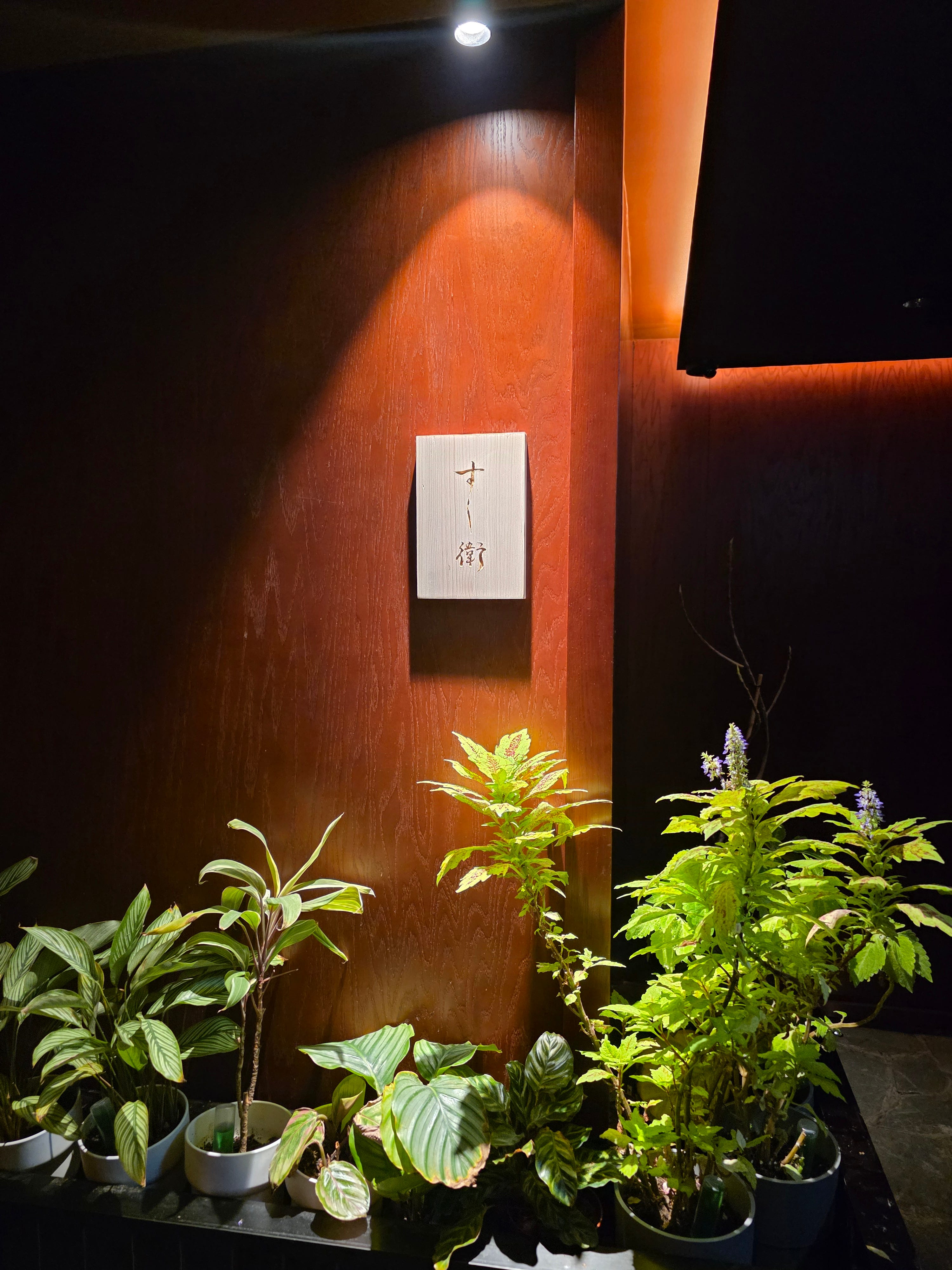
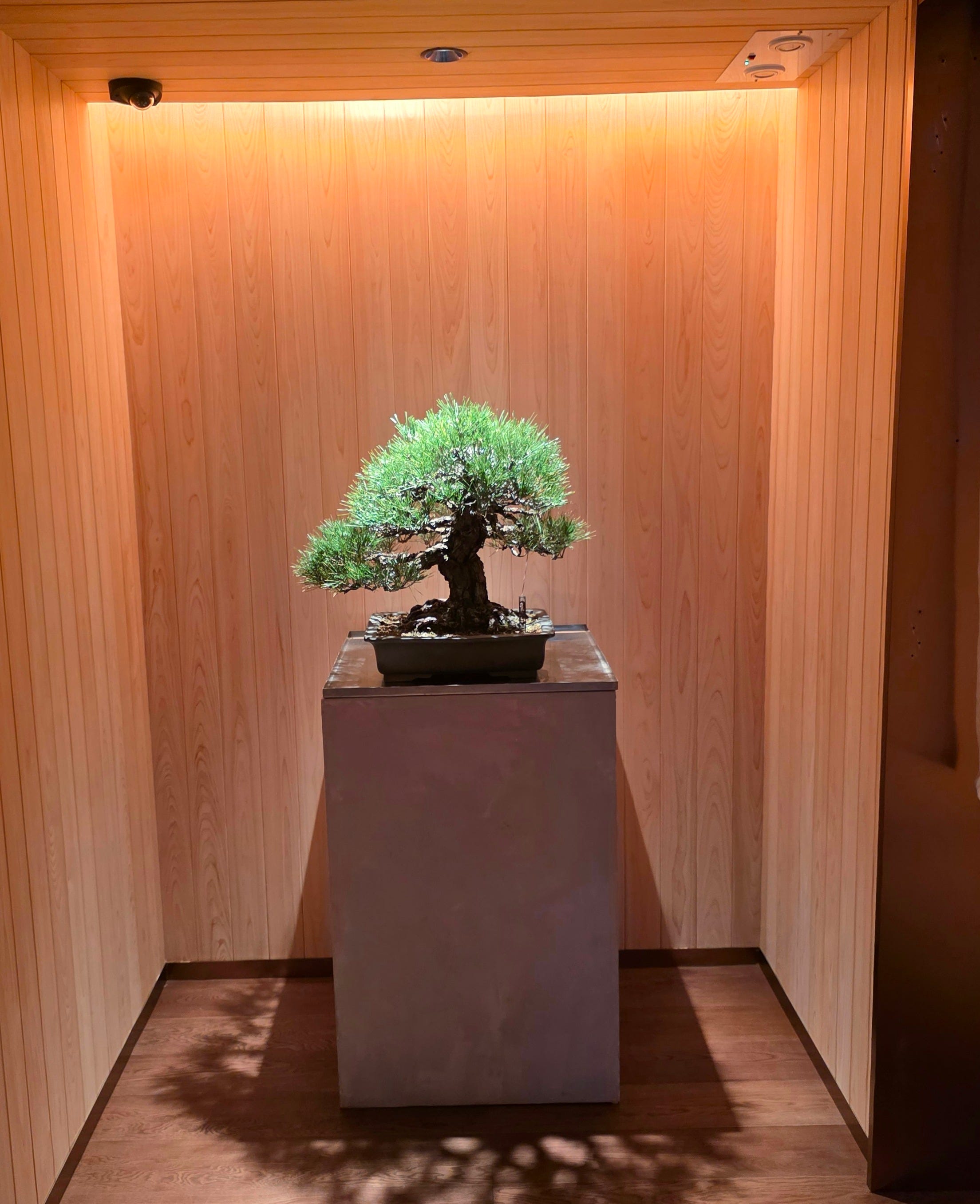
The room is run by Leading Nation, and it feels like it. It is slick, expensive, and more theatrical than the usual windowless sushi box. The entrance takes you through an understated door, past a dramatic wood-panelled hallway and an old bonsai, before opening into the counter.
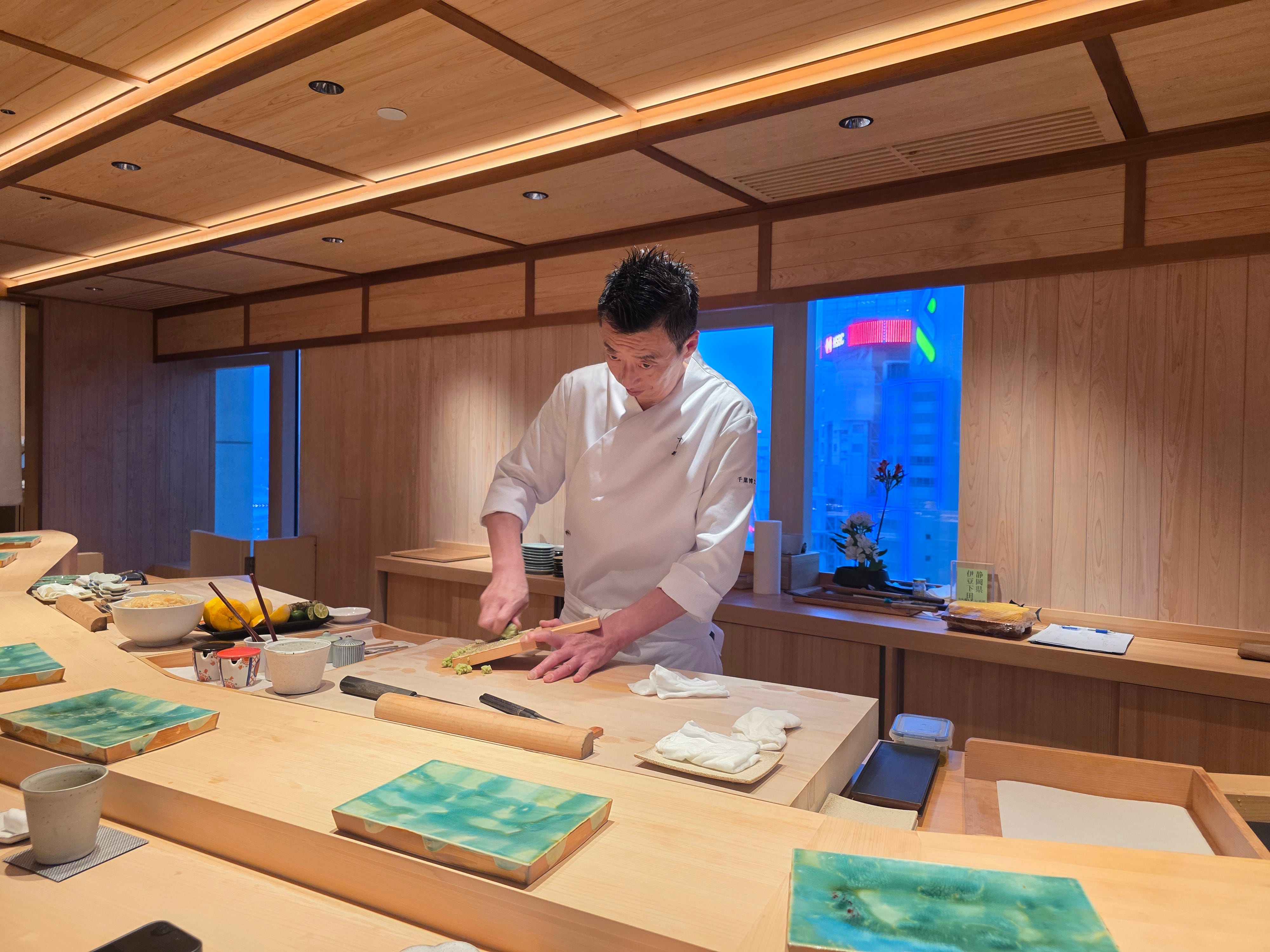
The counter itself is arced hinoki. We later found out the arc came from the room’s previous life as a teppanyaki restaurant. It also has something rare for a sushi counter in Hong Kong: a view outside. Most counters shut the world out and force your attention onto the chef and the rice. Mamoru lets the city into the room.
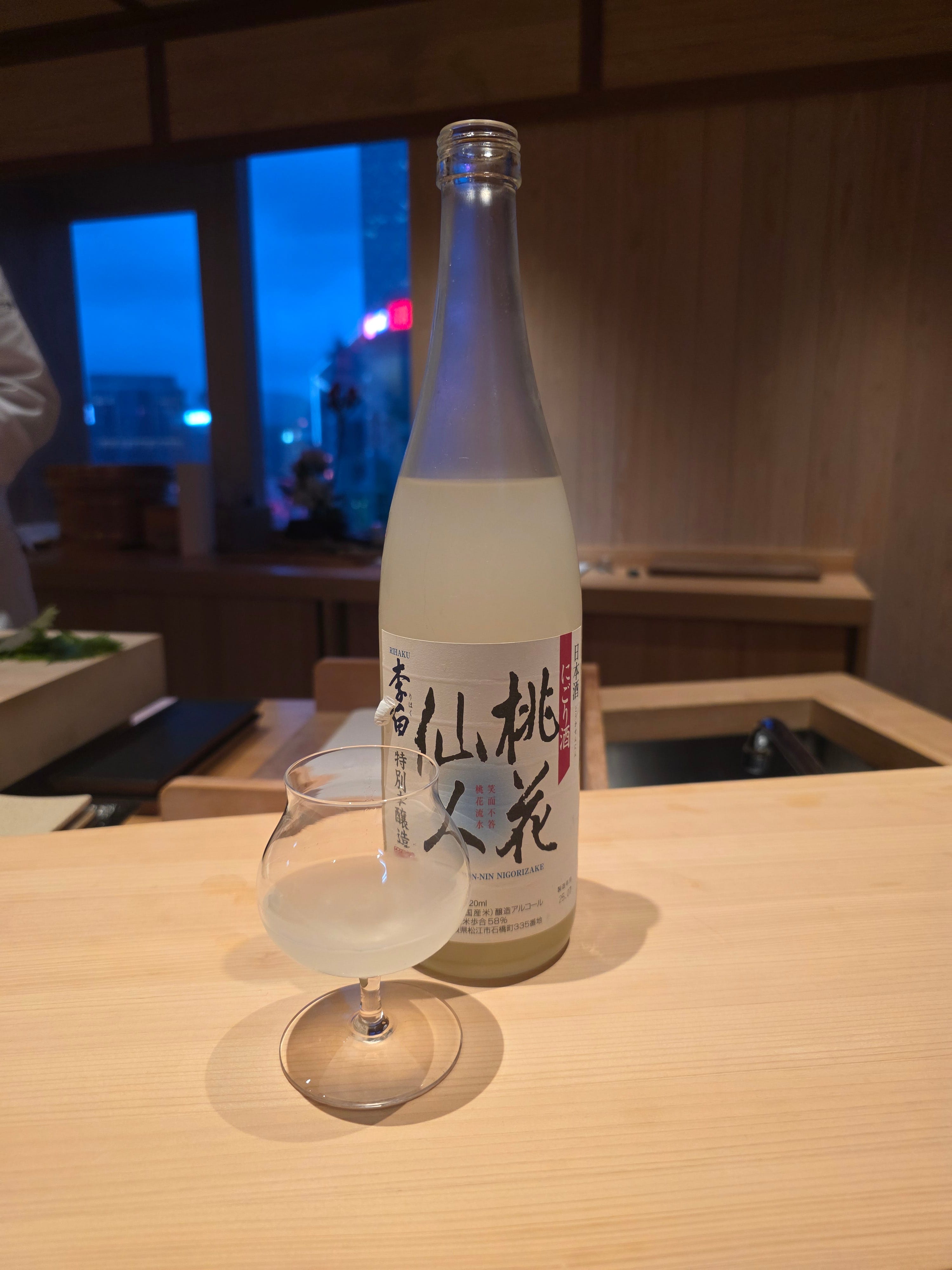
We started with a cloudy sake. Crisp, umami-heavy, and much better than the one we had recently at Hana no Kumo not too long ago.
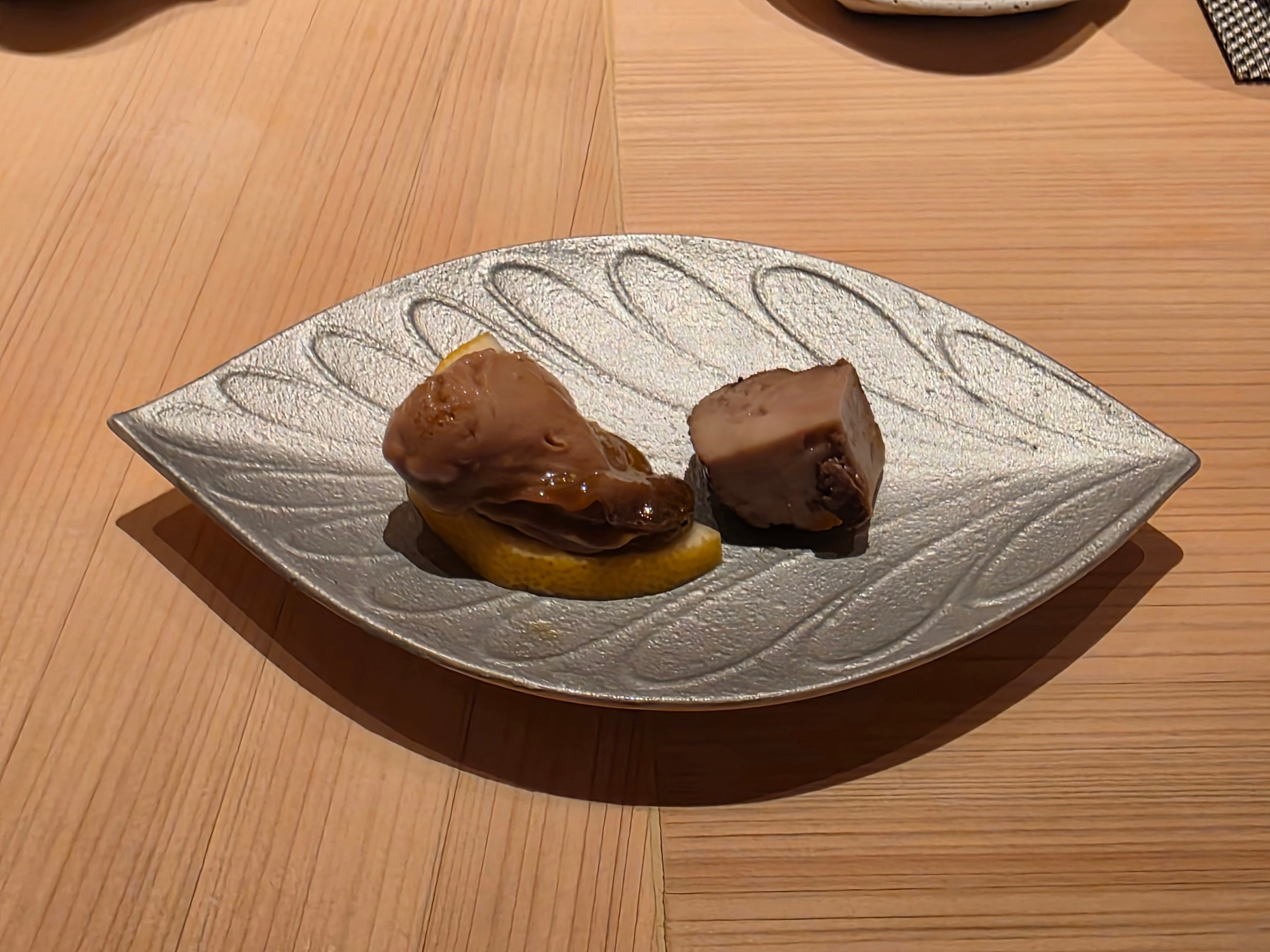
The first bite was a strange one: monkfish liver braised in red wine sauce, next to a firm oyster marinated in olive oil, bay leaf, red pepper, and a lot of garlic. It read more like Mediterranean antipasto than Edomae sushi. Not unpleasant, but it immediately made the restaurant’s “protect tradition” line feel a bit loose.
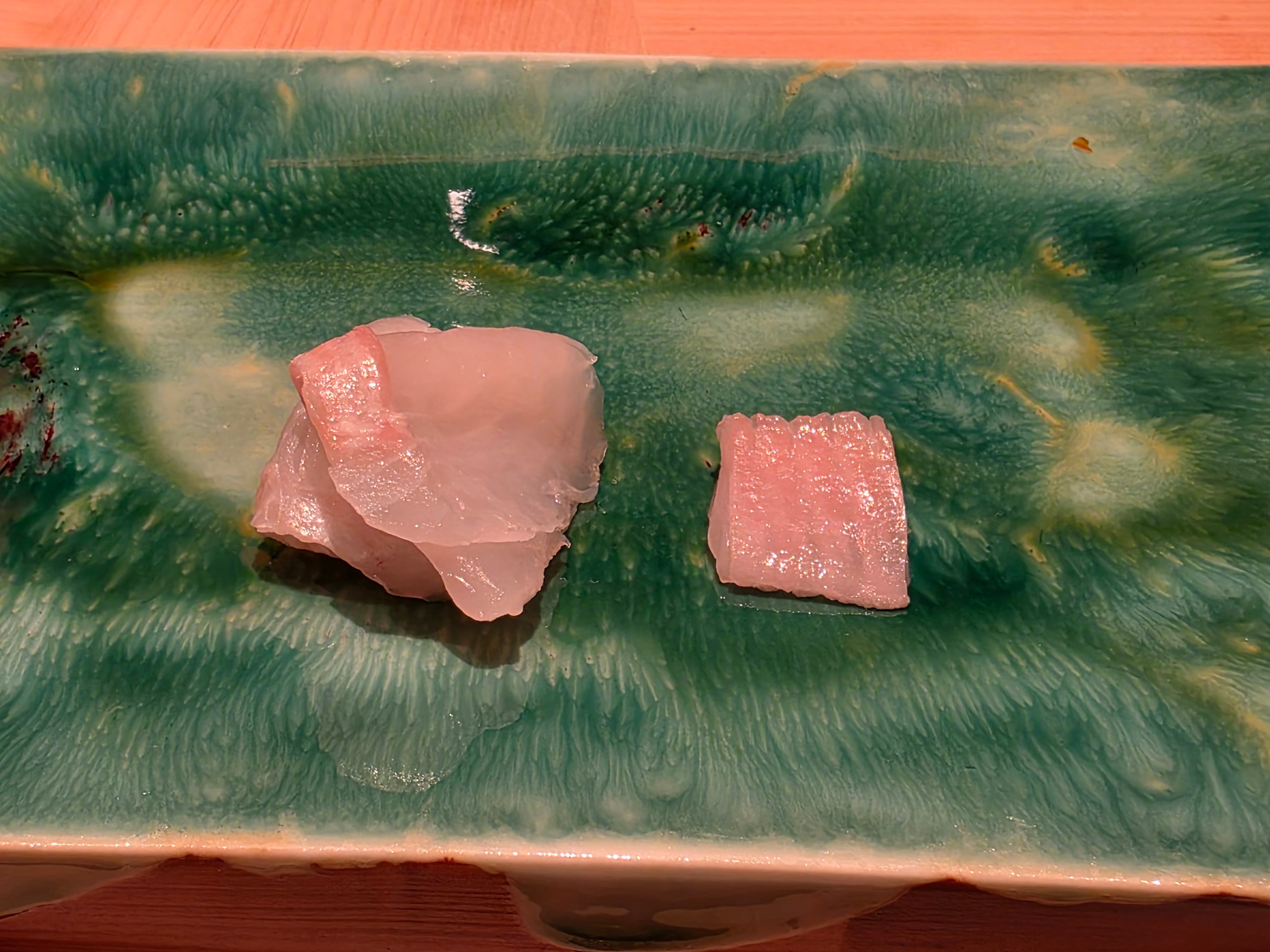
Two cuts of barfin flounder followed, served with yuzu radish and ponzu. This was more controlled. The point was texture: different parts of the same fish, handled cleanly, with enough acid to keep it bright.
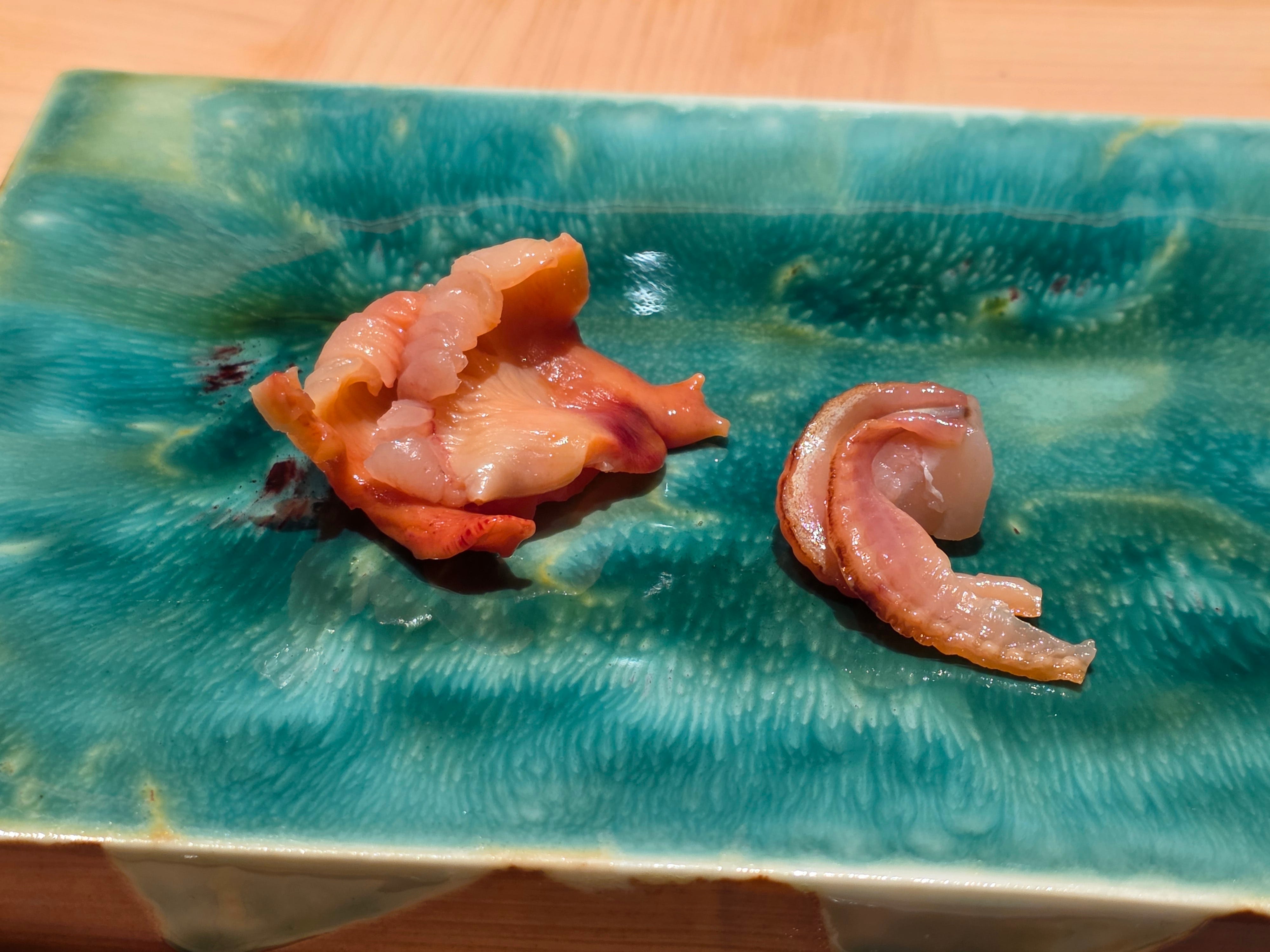
Osaka surf clam came next, using both the skirt and the clam. Crunchy, clean, and exactly the sort of shellfish course I want early in a meal like this.
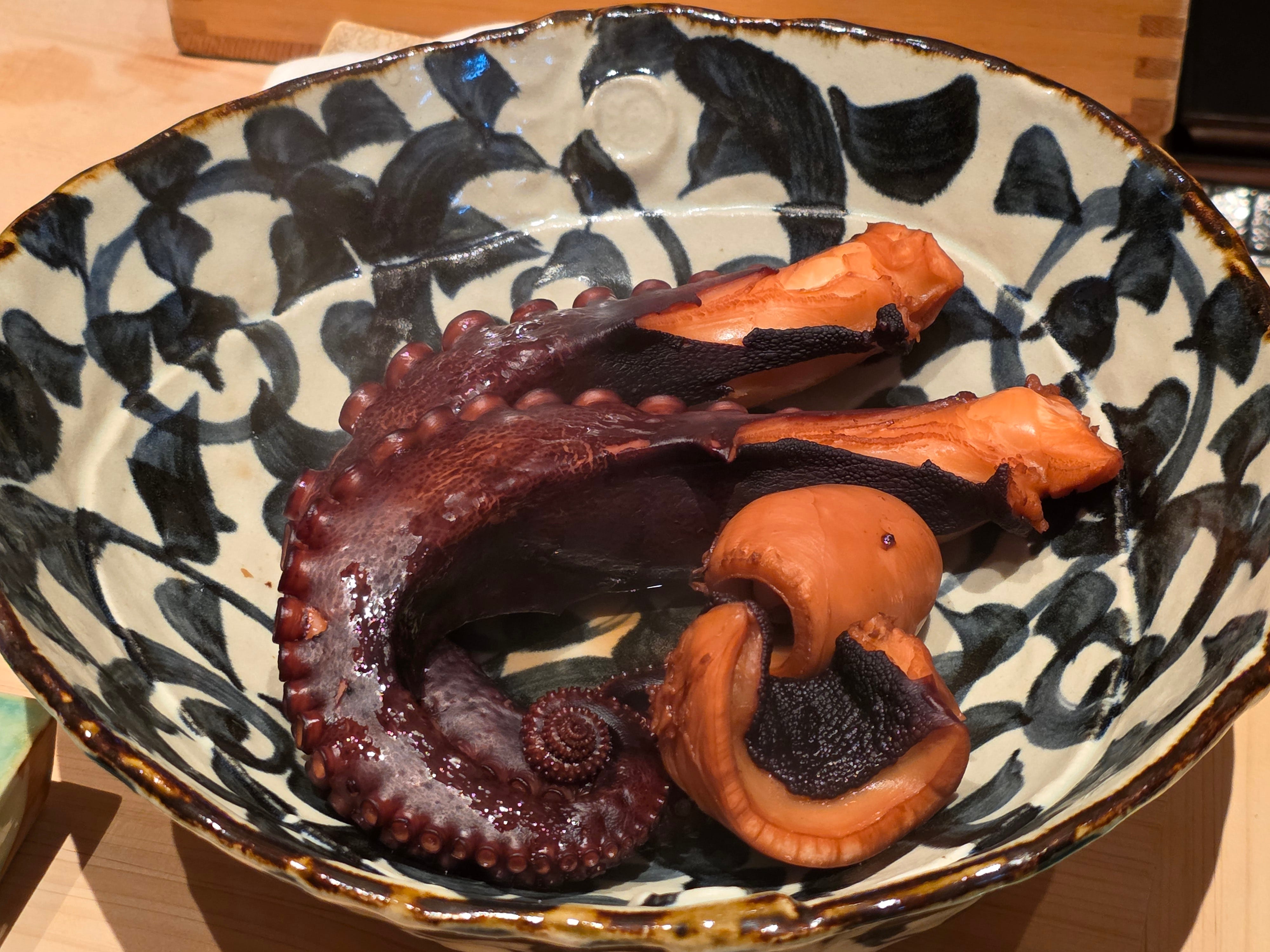
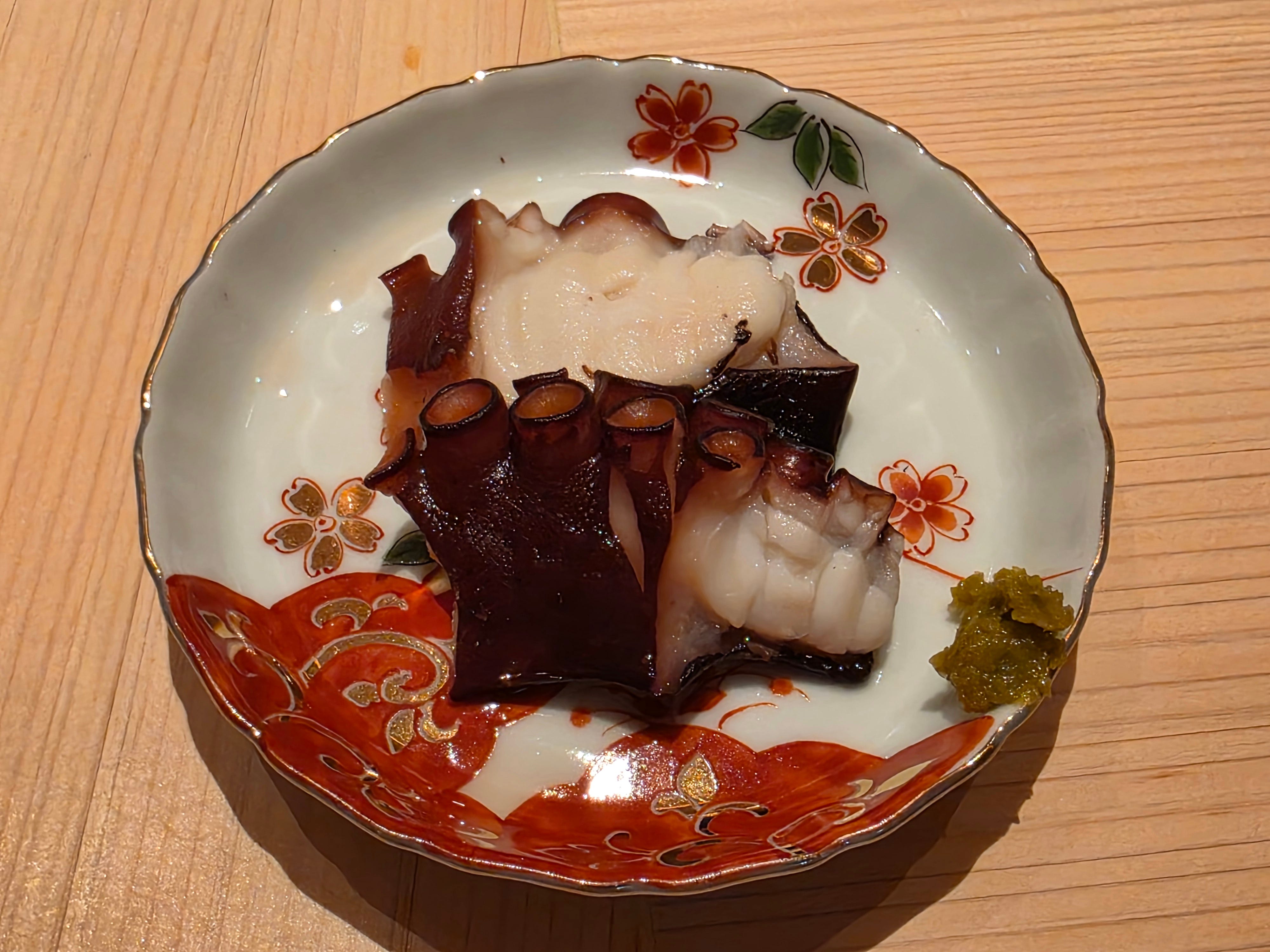
The octopus tentacle came with smoky yuzu pepper paste on the side. The paste had real kick. It pushed the dish away from the more restrained Edomae register, but it worked.
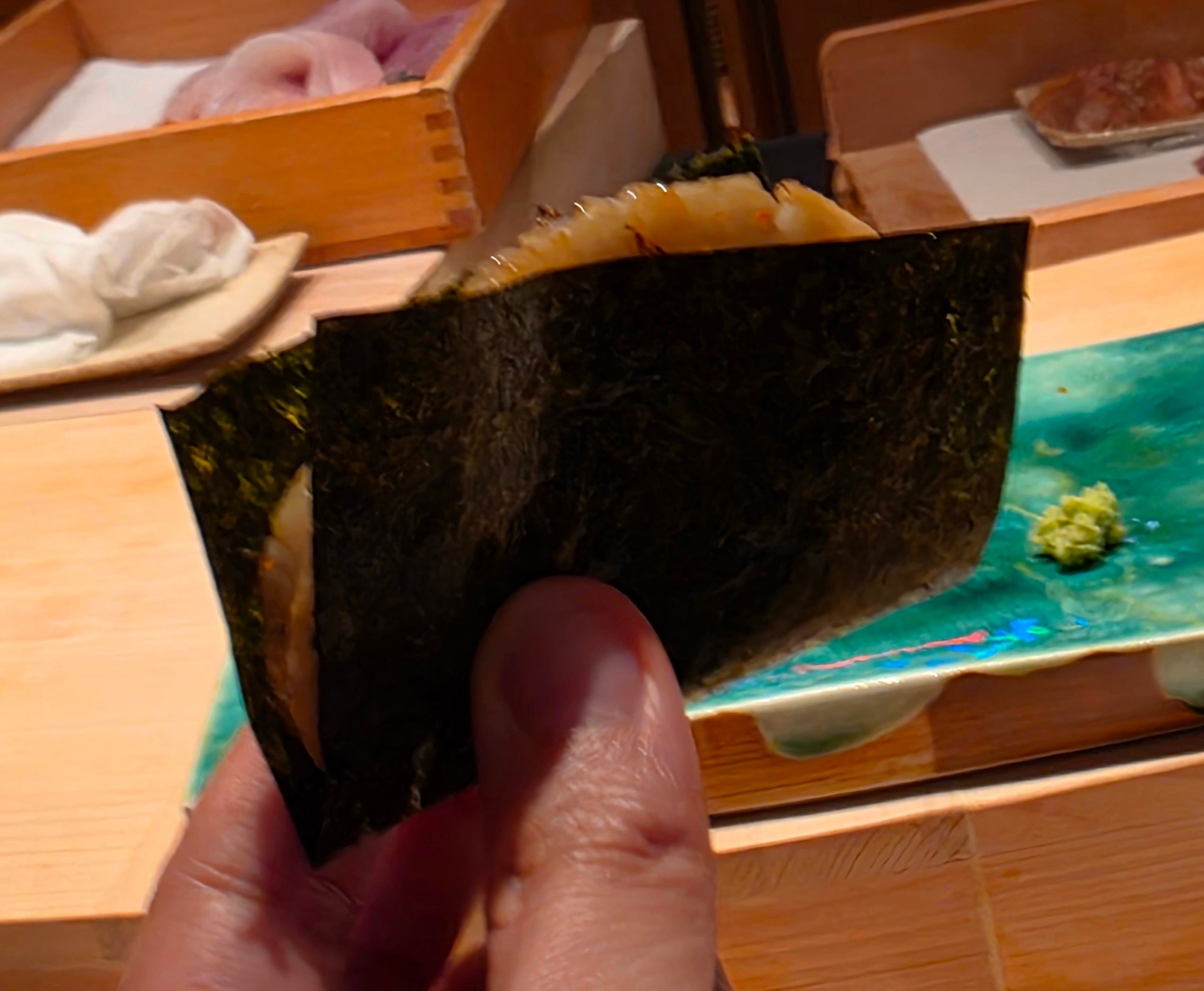
We had visited Sushi Saito not too long before, and the overlap in ingredients was funny. Same season, same greatest hits. The grilled scallop nori wrap felt like a replay. A good one. Sweet scallop, warm nori, enough fat and smoke to make the bite land.
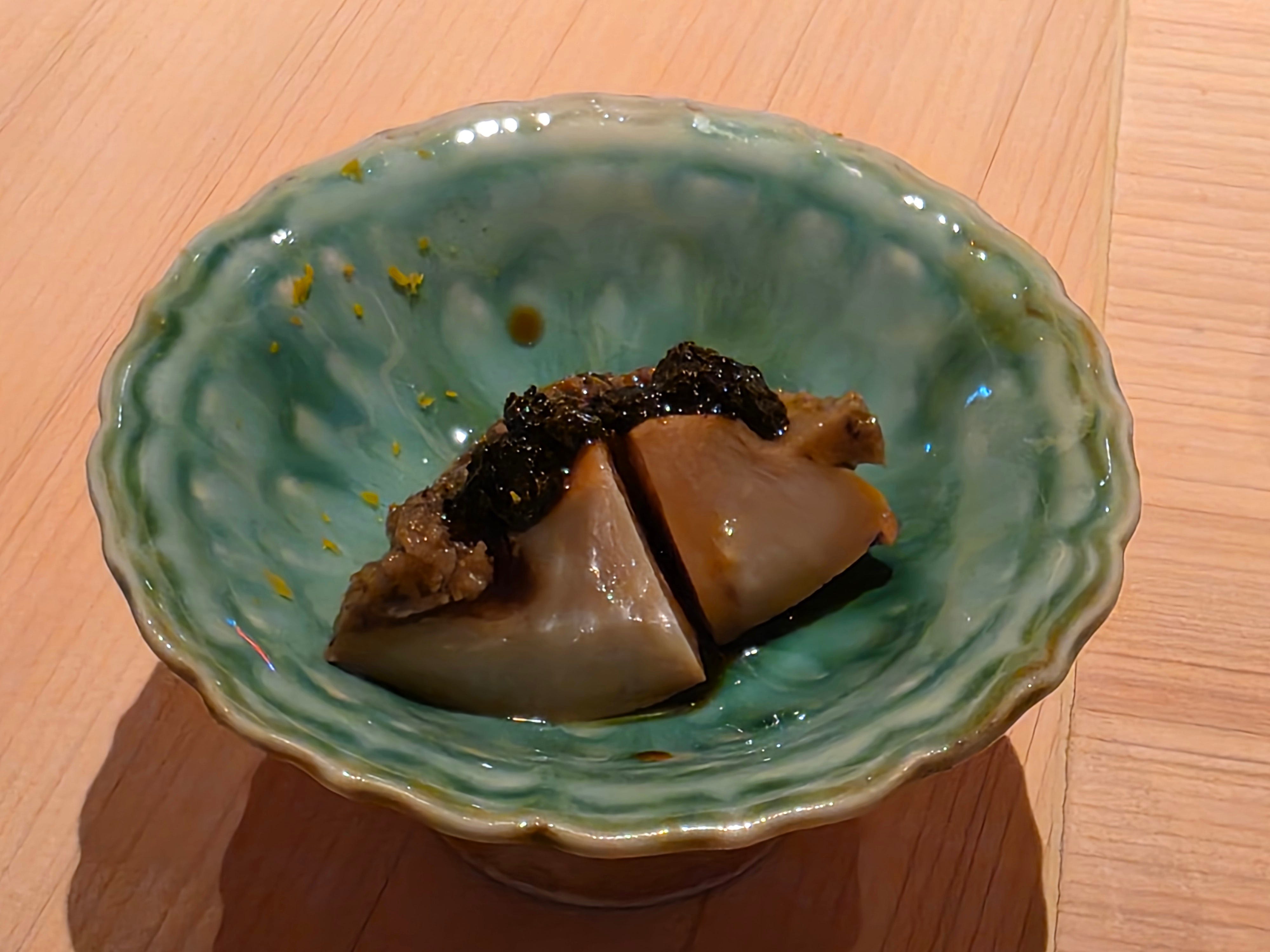
Braised abalone with liver sauce followed. A classic omakase dish, and a strong one. No need to complicate it.
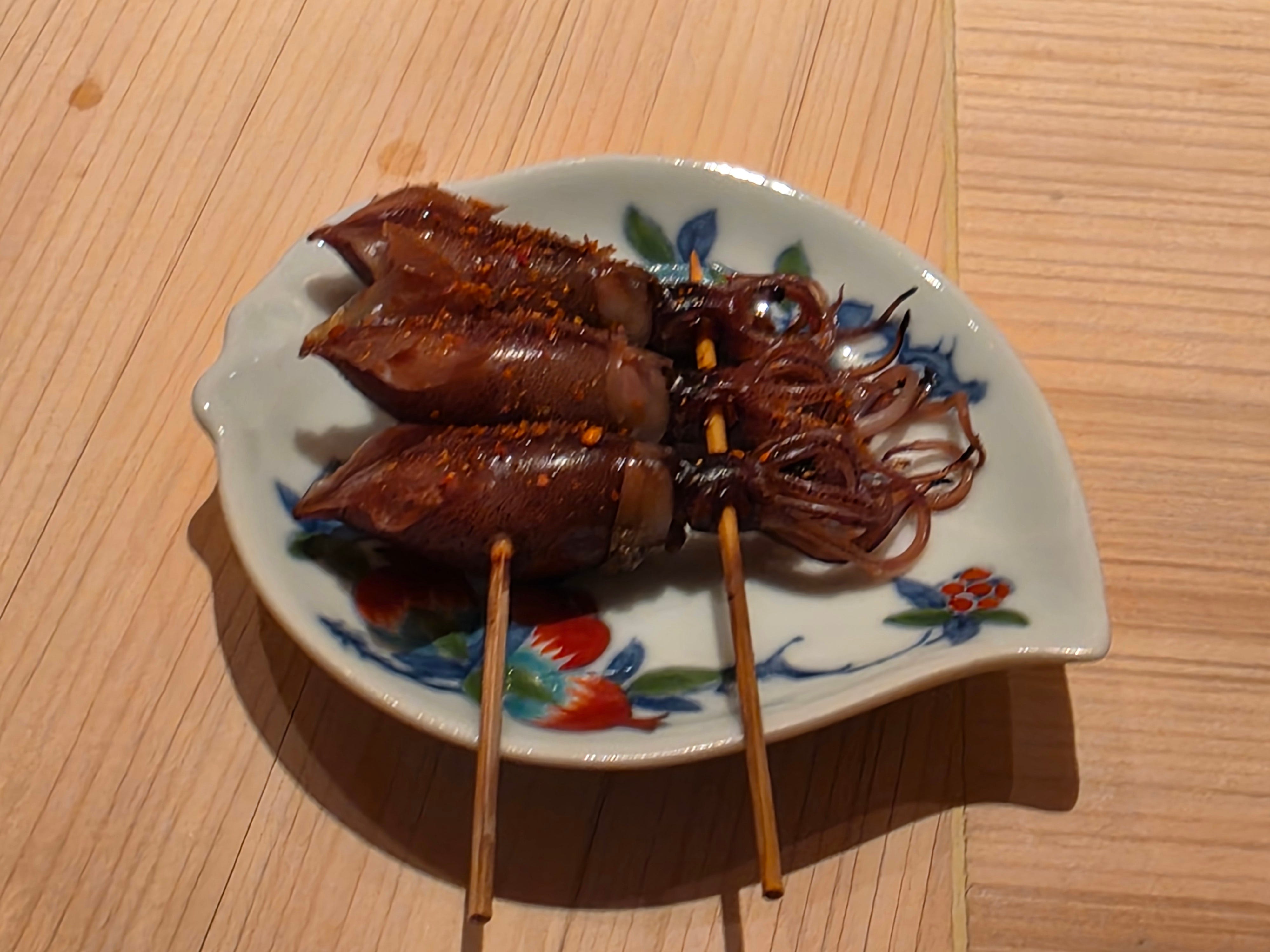
Firefly squid were at their seasonal peak. Chiba poached them, touched them with fire, and finished them with shichimi. Close to what we had at Saito. Good again.
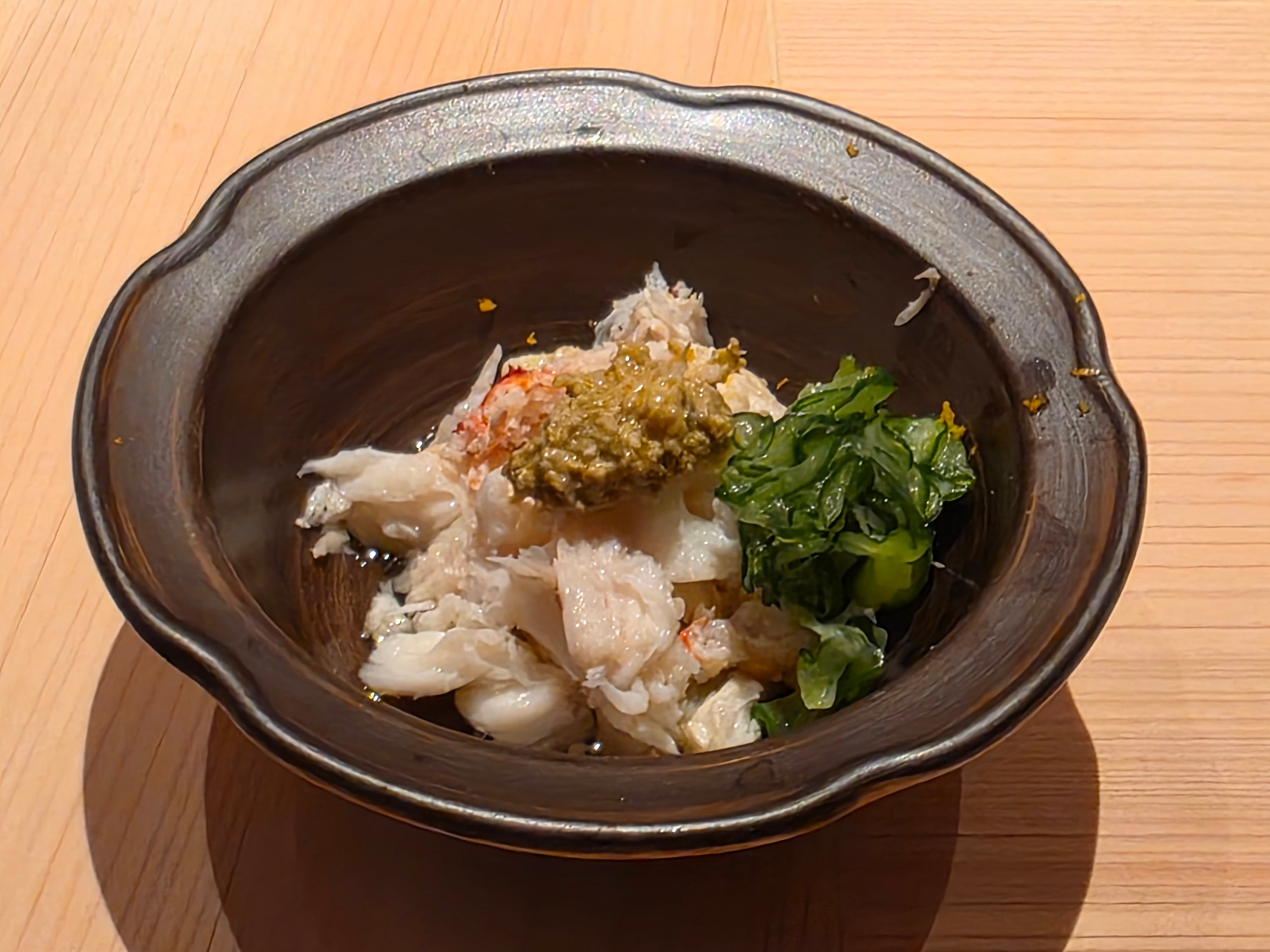
The Hokkaido hairy crab was one of the better composed dishes of the meal. It came with a little bitter crab innard and pickled cucumber for crunch. Rich, clean, and balanced. A big hit.
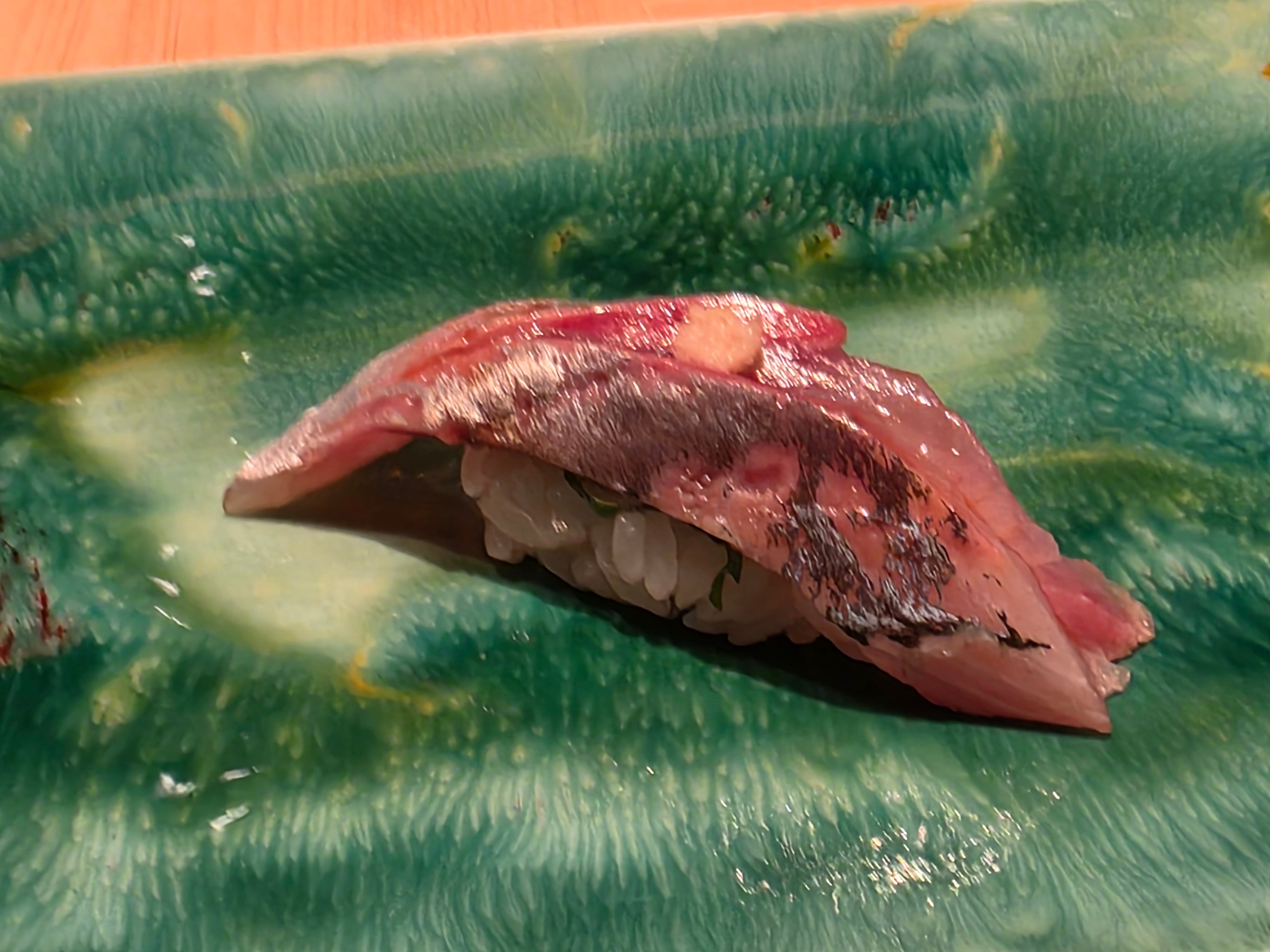
Then we moved into nigiri. Horse mackerel came first, topped with shredded shiso. Bright and direct.
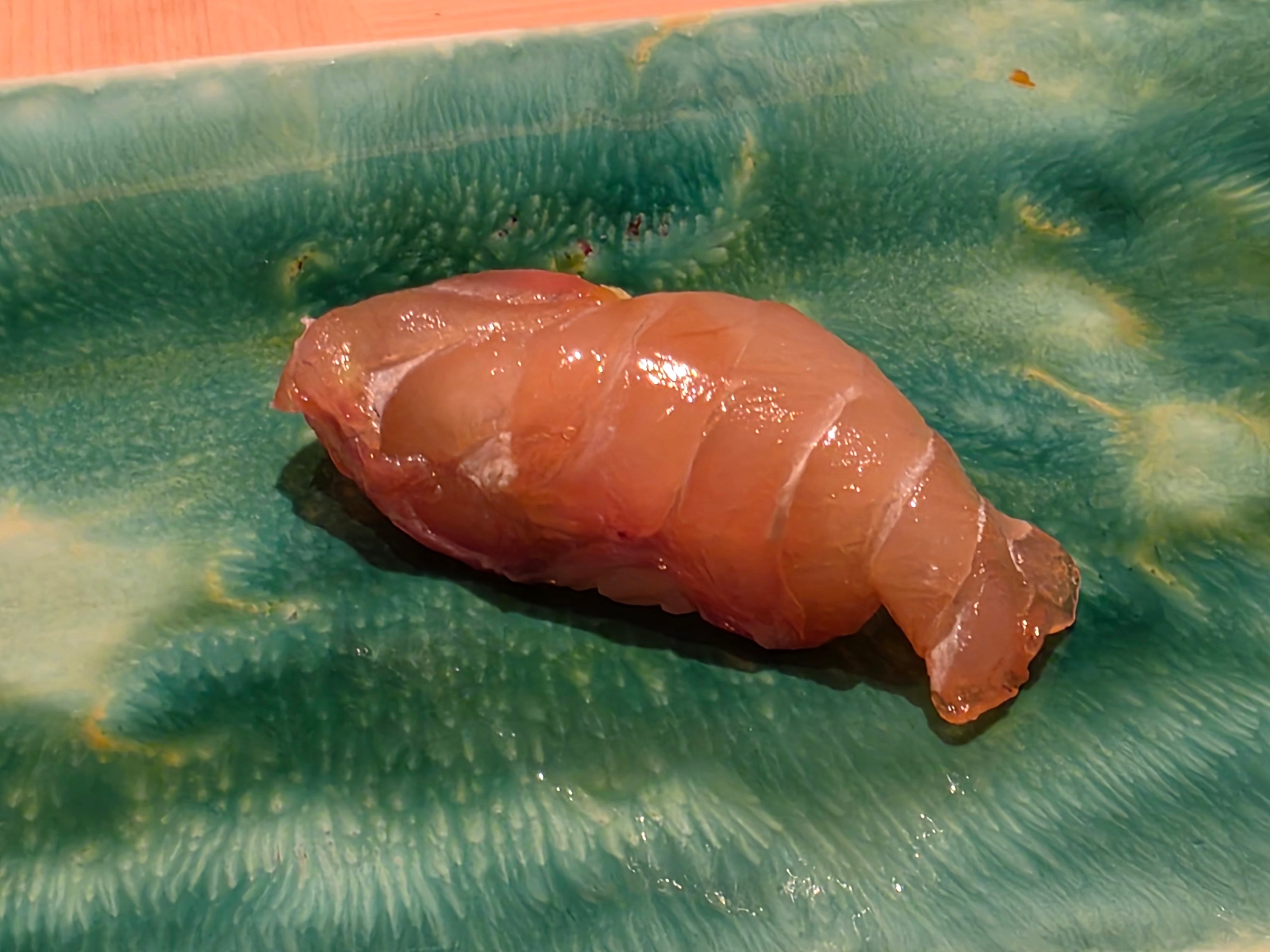
Grouper followed, cured before being pressed into nigiri. Firm, clean, and restrained.
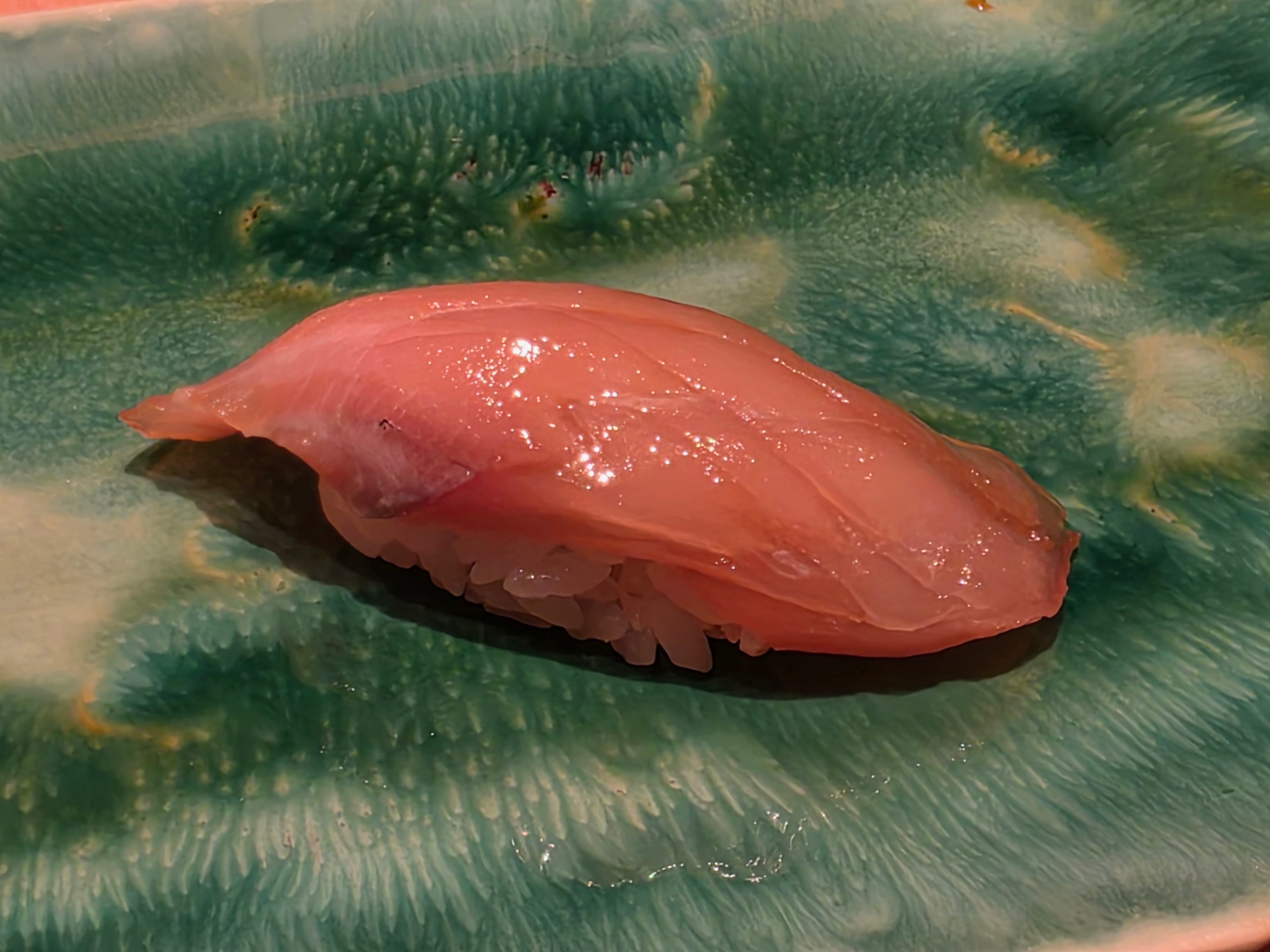
Then Spanish mackerel.
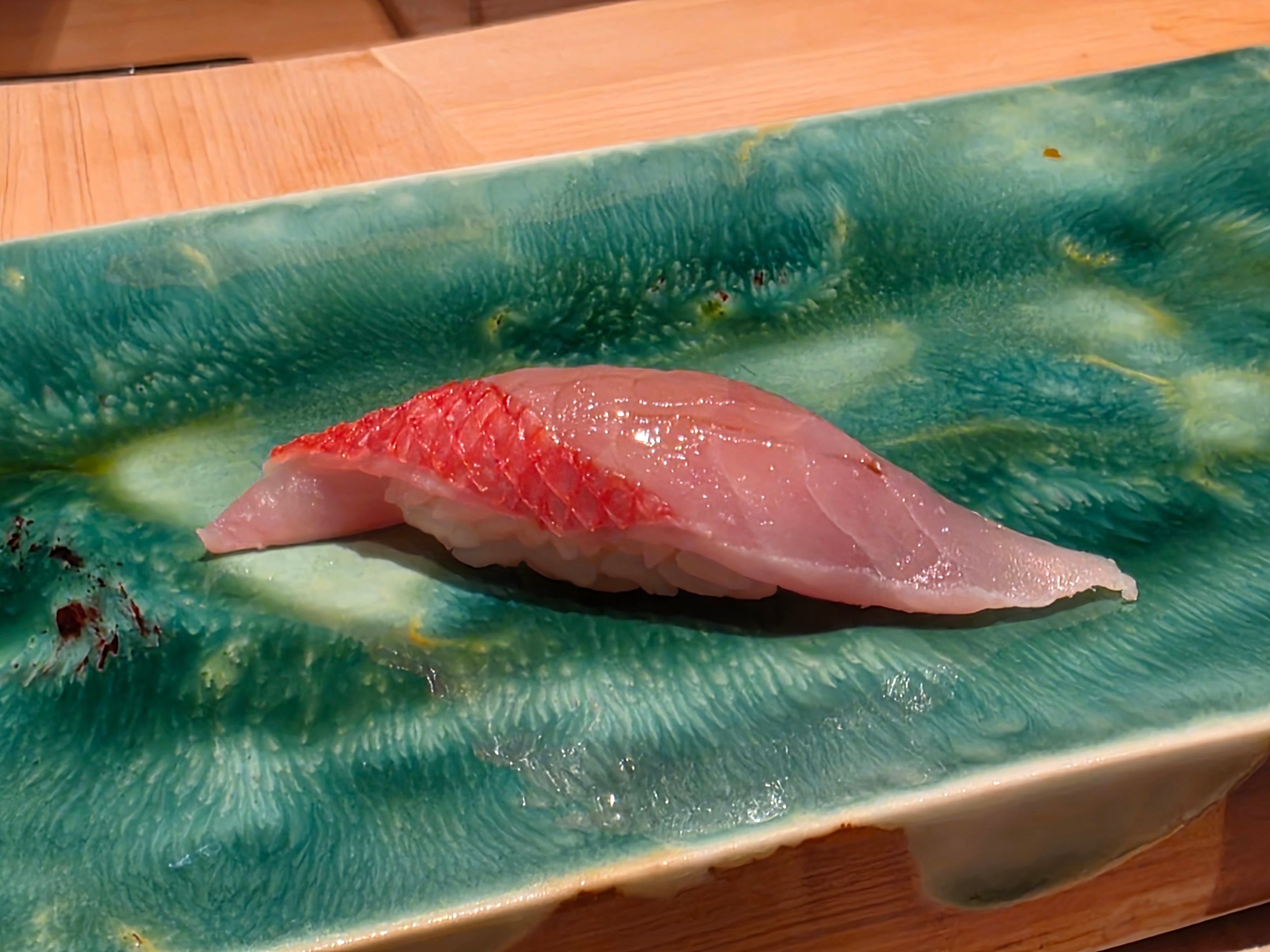
Goldeneye snapper from Shizuoka came next. Chiba pointed out that the tuna served after it was also from Shizuoka, so there was a decent chance the tuna had been feeding on the snapper before it was caught. Good line. Better piece.
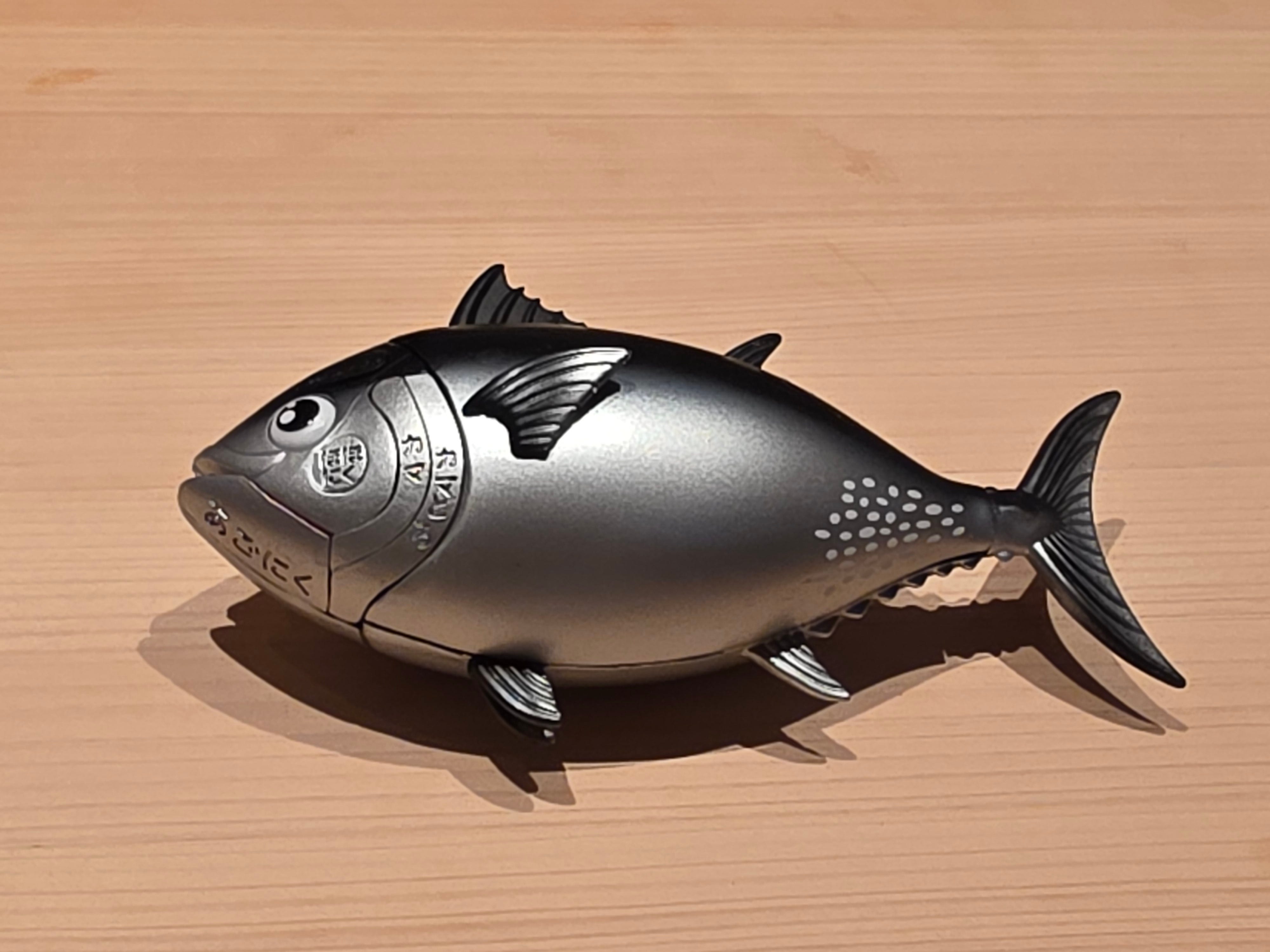
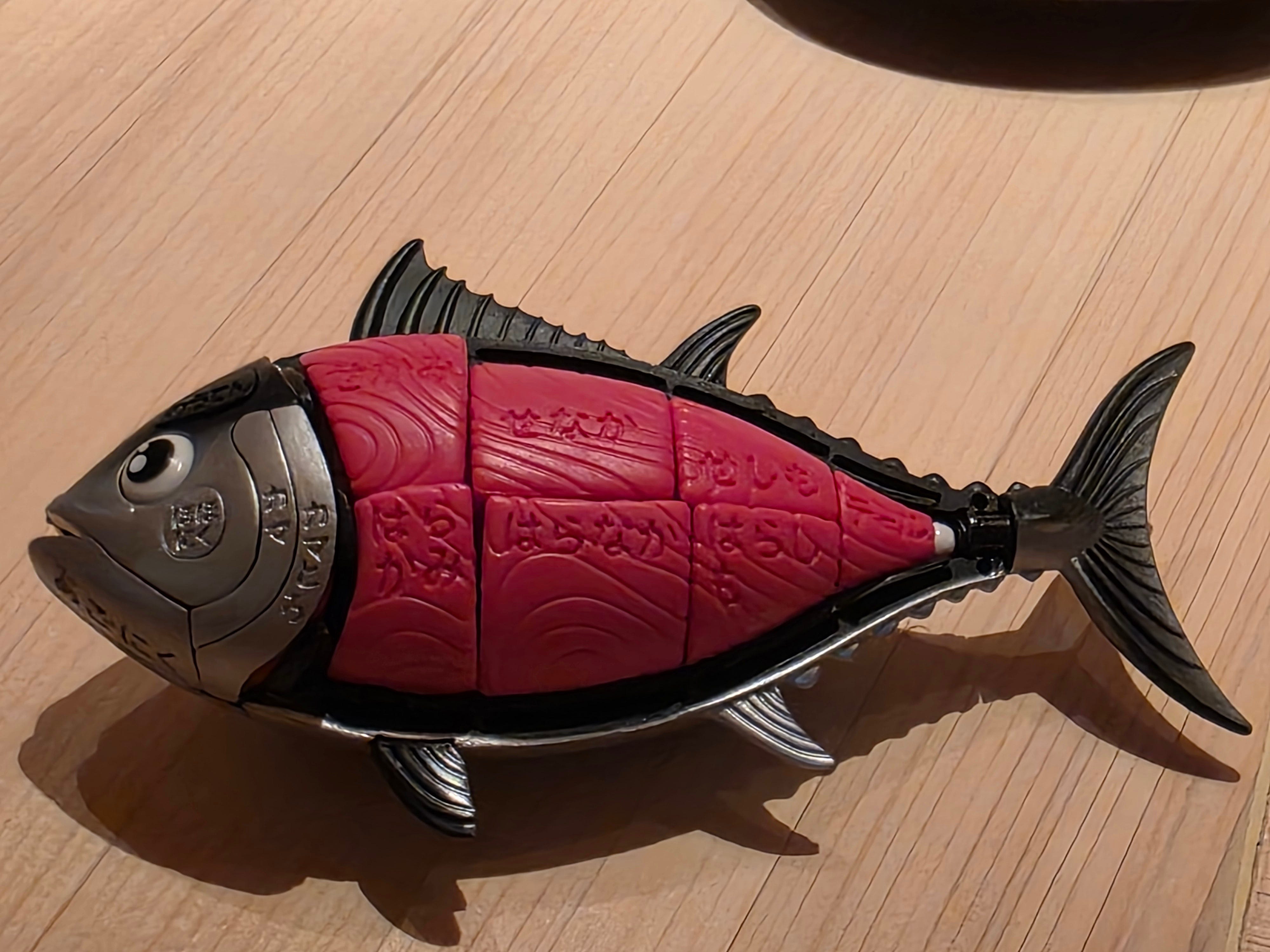
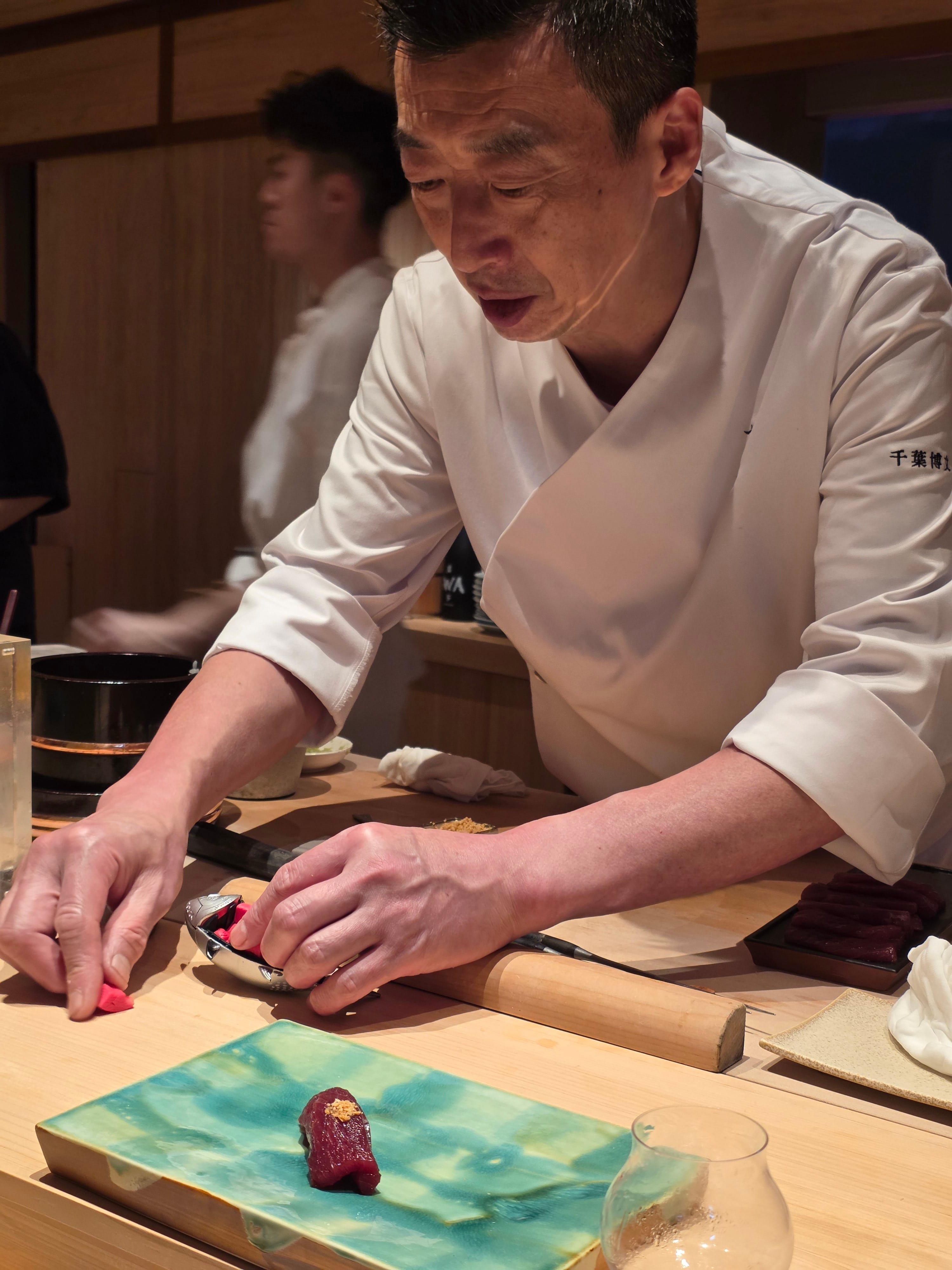
Chef Chiba then spent real time explaining each cut of tuna, where it came from on the fish, and how he wanted us to read the progression. He even took out a model tuna and dissected it into individual parts in front of us. This is where the restaurant is strongest. He is charismatic, specific, and engaged with the product.
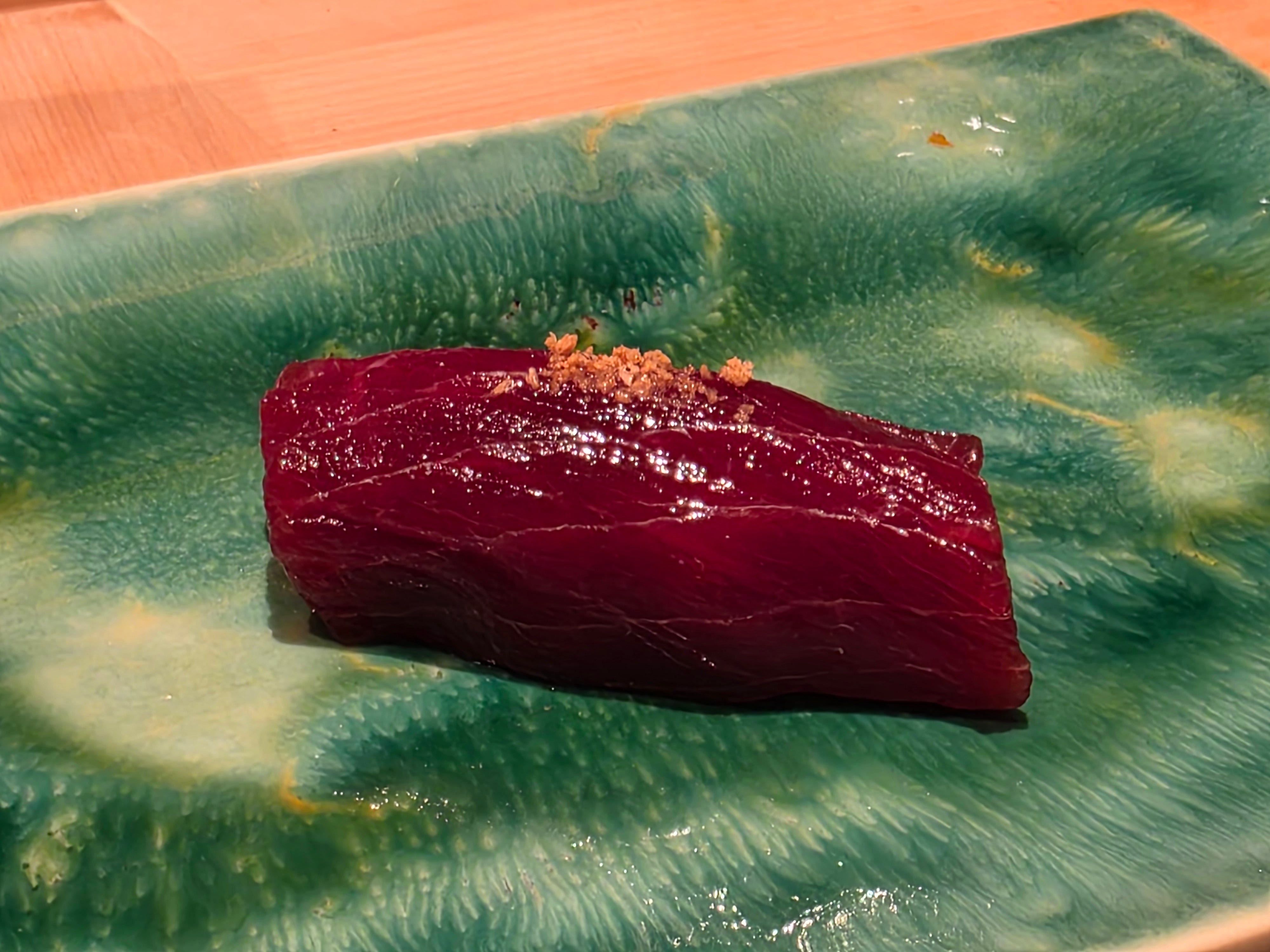
We started with akami: ruby-red lean tuna with ground sesame on top.
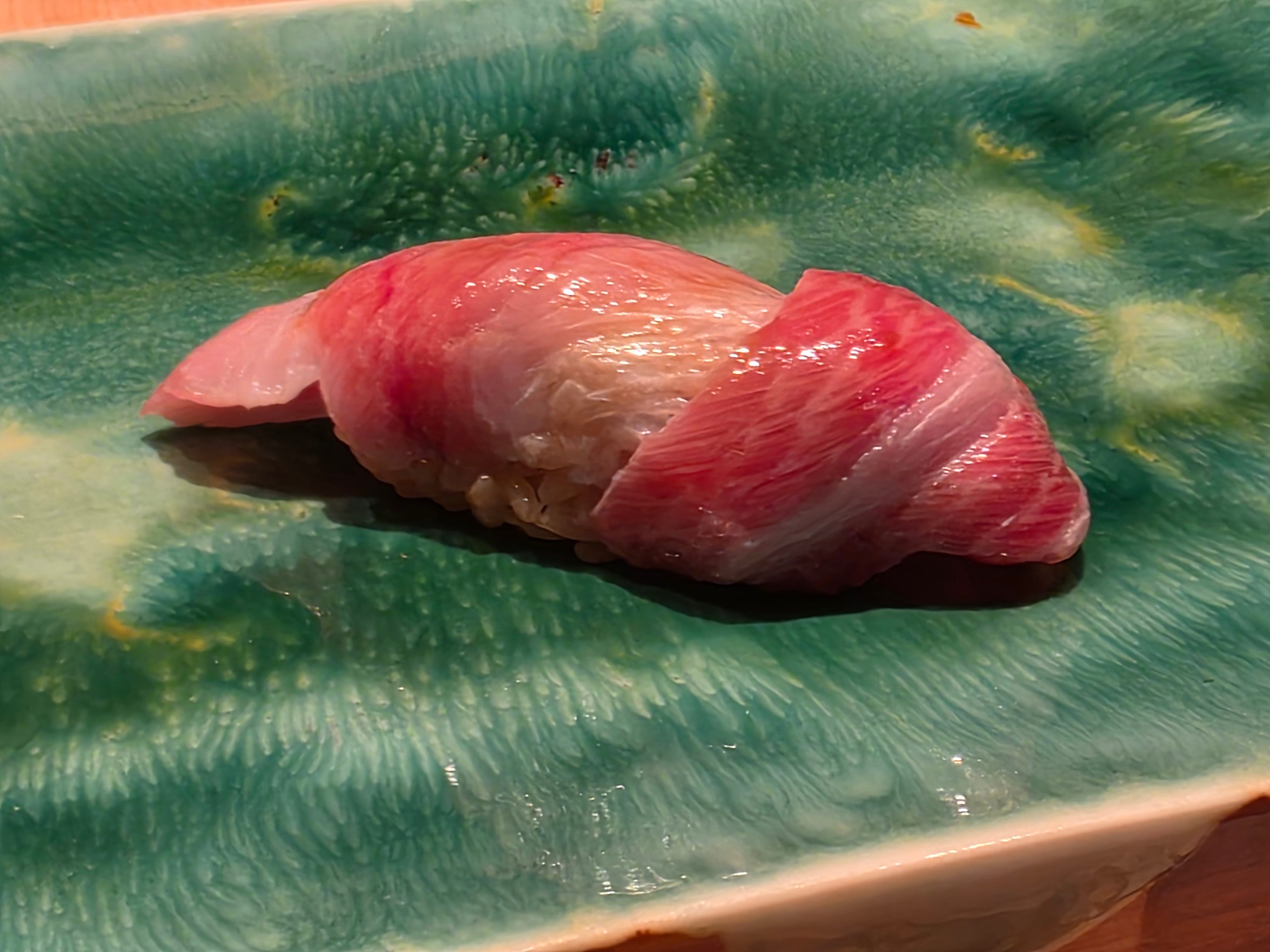
Then straight into jabara otoro, the fattiest cut of bluefin. Rich, heavy, and exactly what it sounds like.
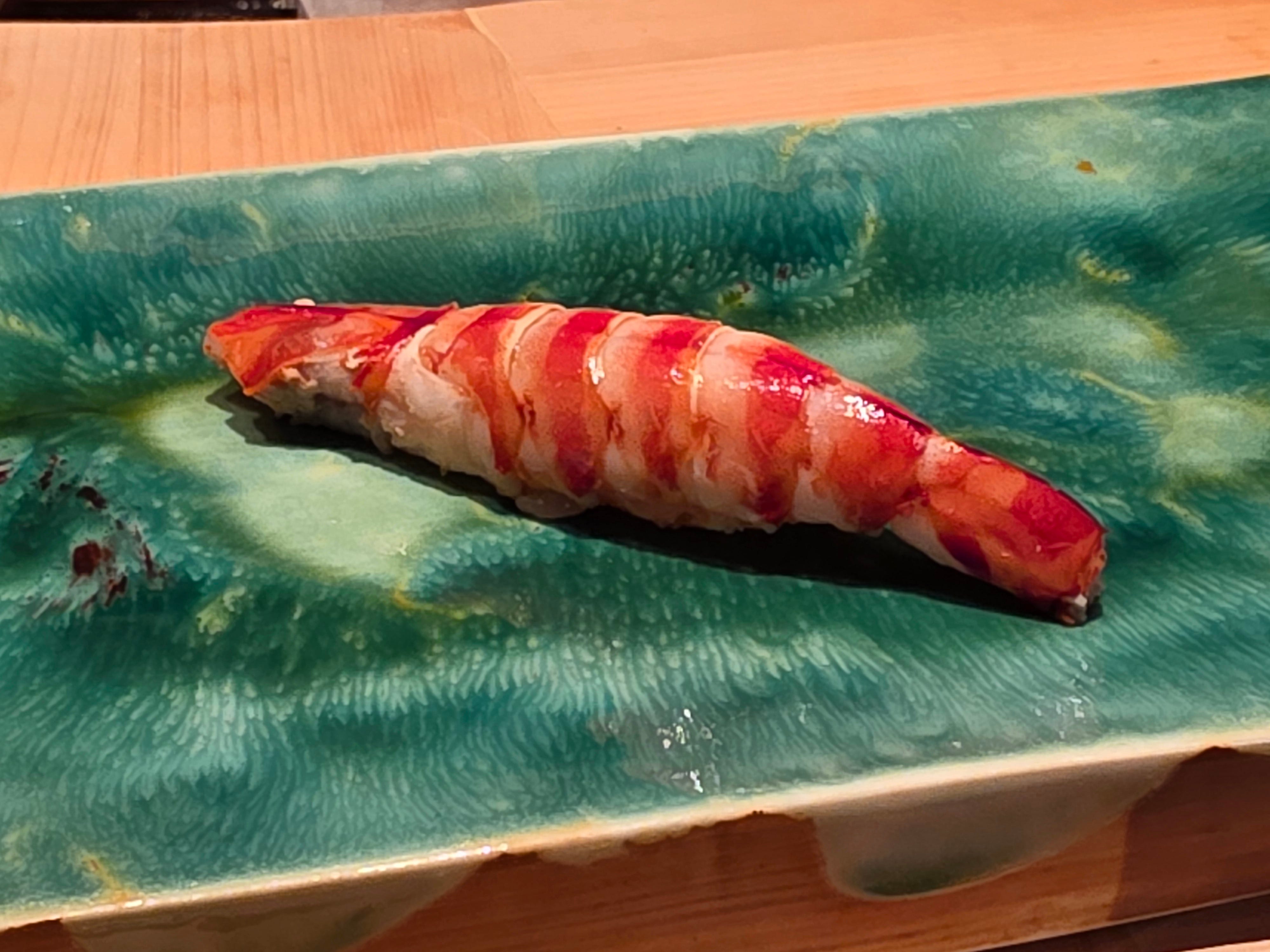
The giant tiger shrimp was the first nigiri that lost me. Chiba put salted duck egg between the rice and shrimp as a Hong Kong reference. I understand the idea. I did not think it belonged there. The shrimp did not need the extra gesture.
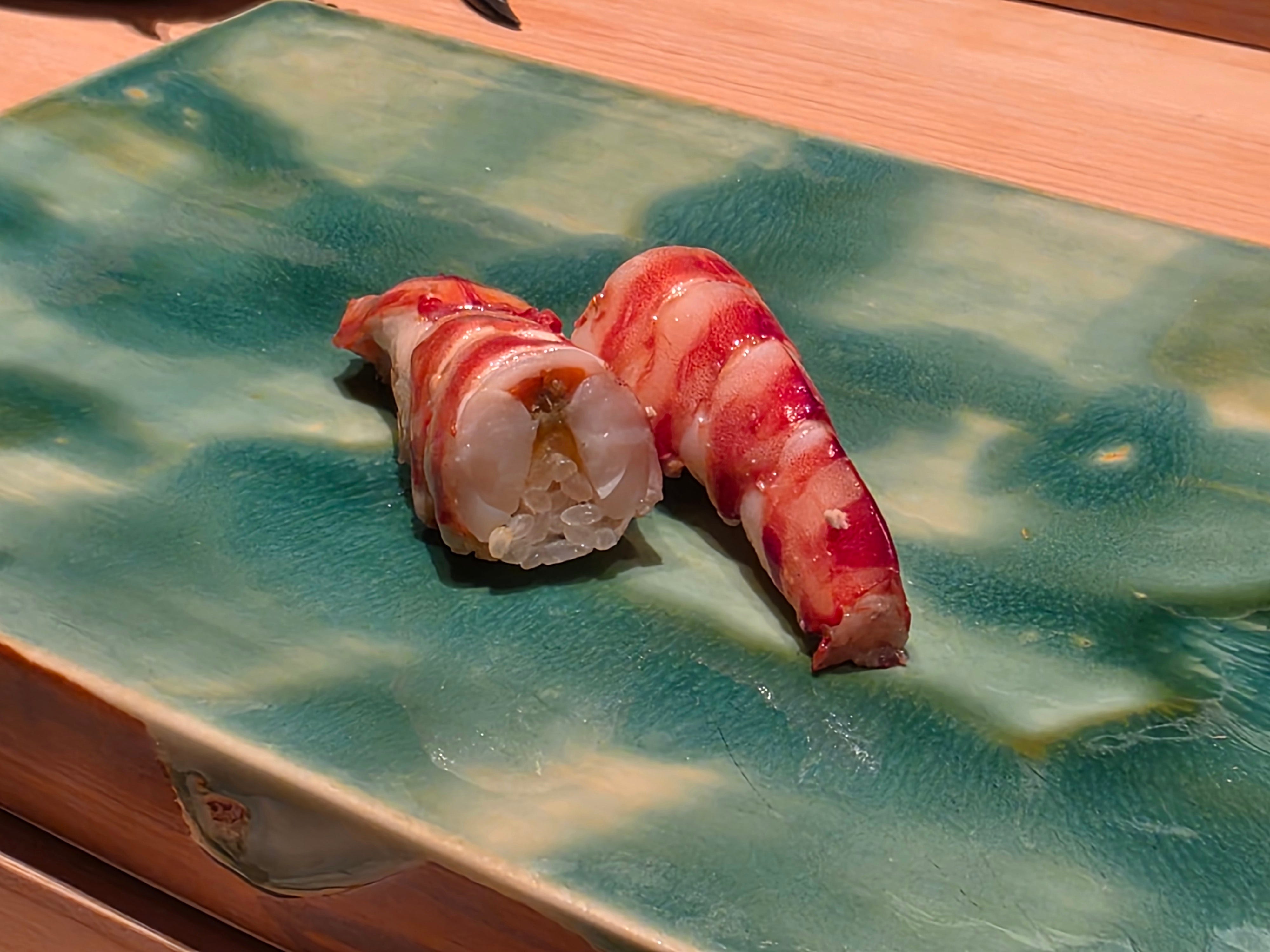
The shrimp was served as a single piece for the men and cut in half for the women.
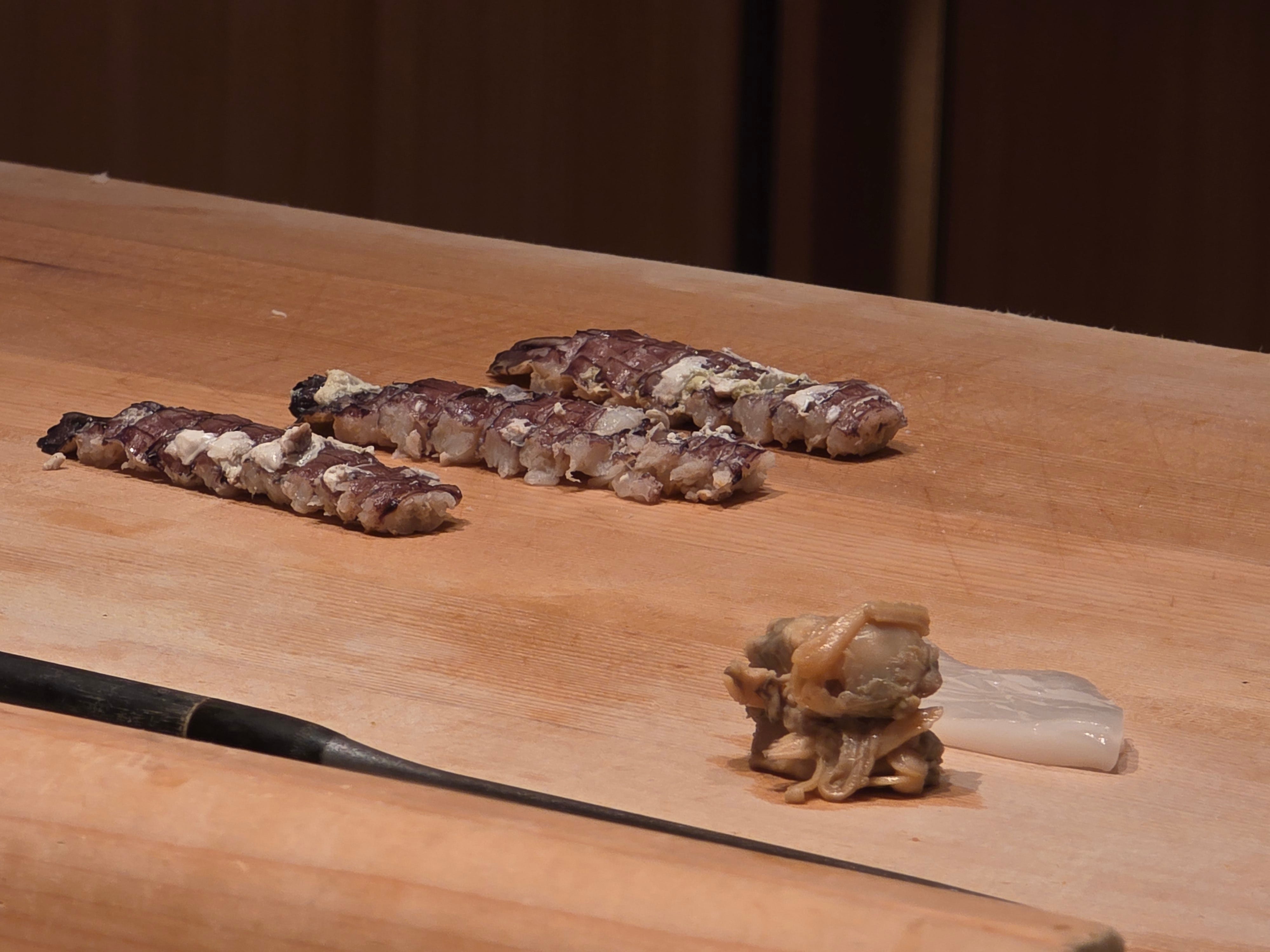
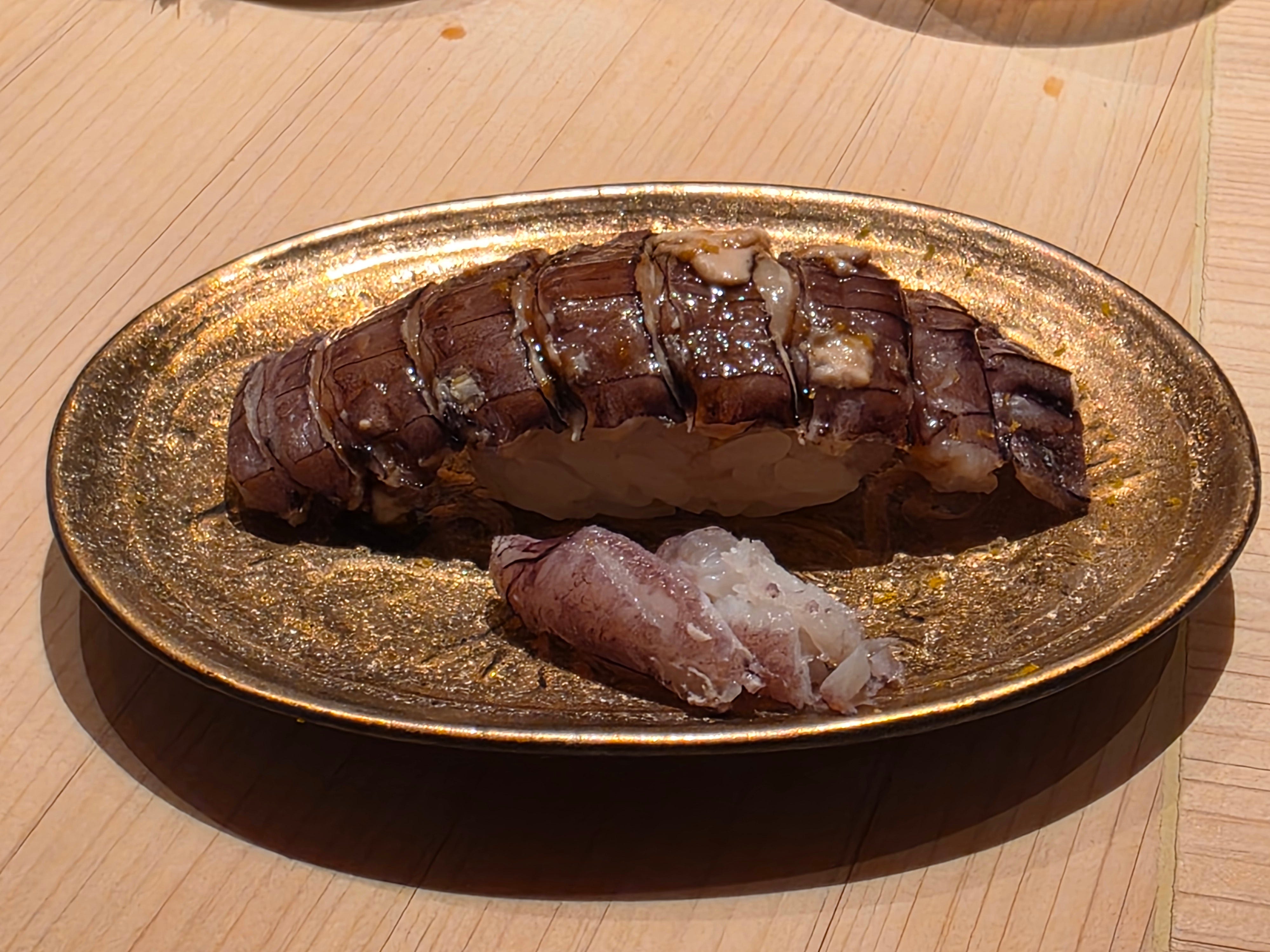
Then came a rare sight at an omakase counter: Indonesian mantis shrimp. Chiba said large mantis shrimp are hard to source in Japan, so he had to look elsewhere to get pieces big enough for sushi. This was one of the more interesting sourcing choices of the meal.
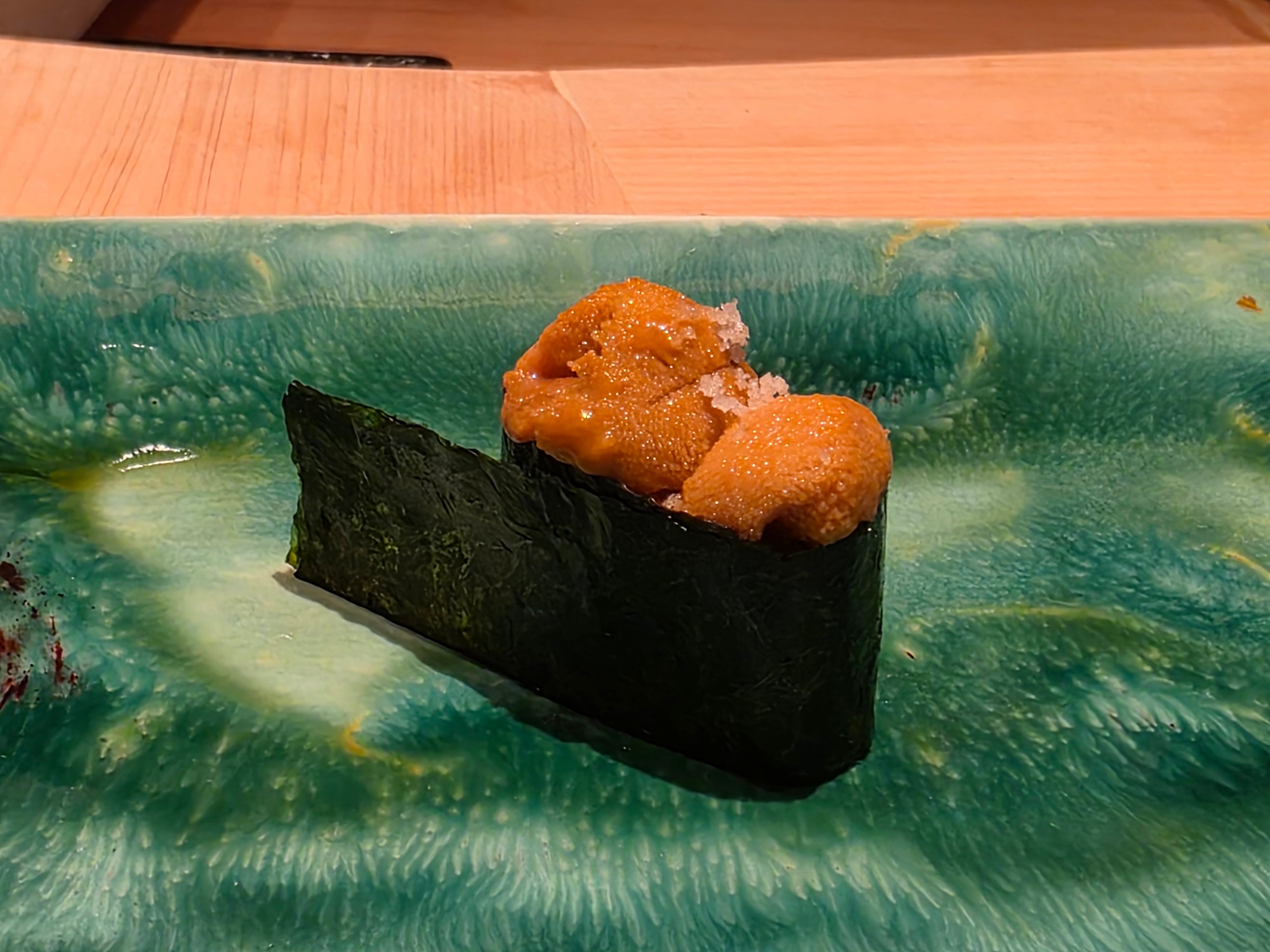
The uni gunkan was classic: creamy sea urchin, a little sea salt, no drama.
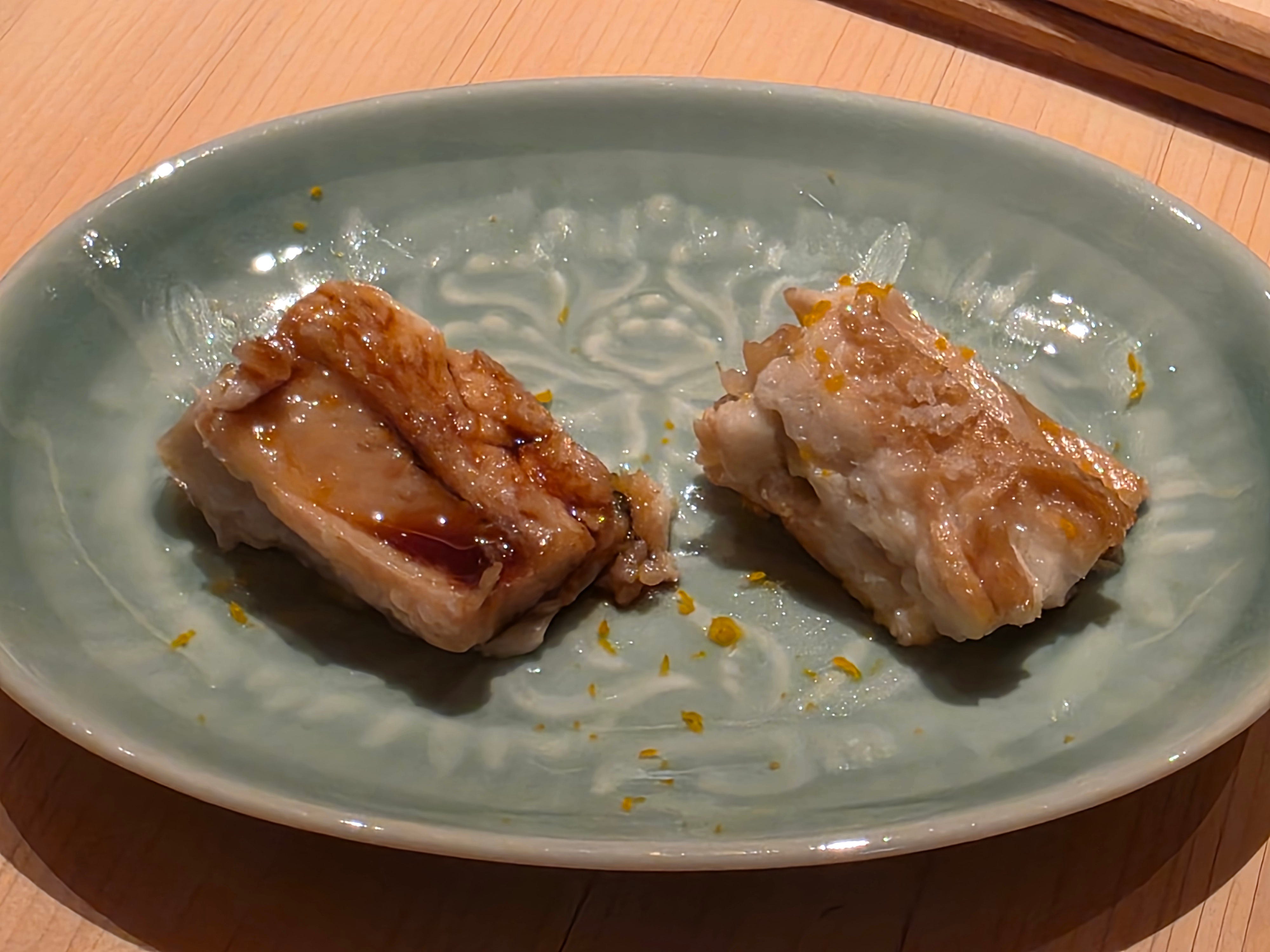
Anago was one of my favourite pieces. Sea eel with yuzu zest, lighter and fluffier than unagi, almost melting into the rice.
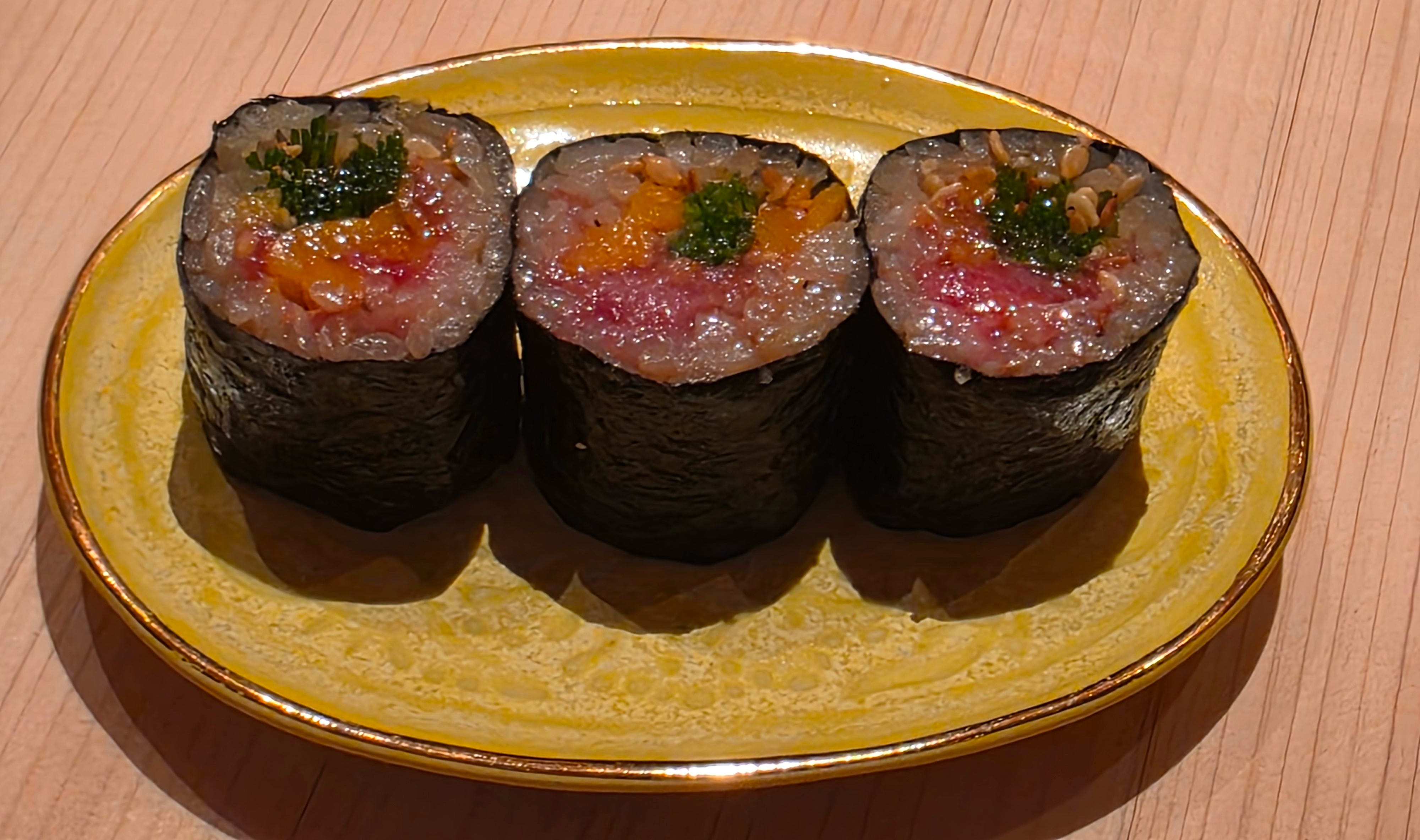
The savoury section ended with a roll of minced tuna, uni, chive, and sesame. Rich, crunchy, and a little more built-up than the nigiri before it.
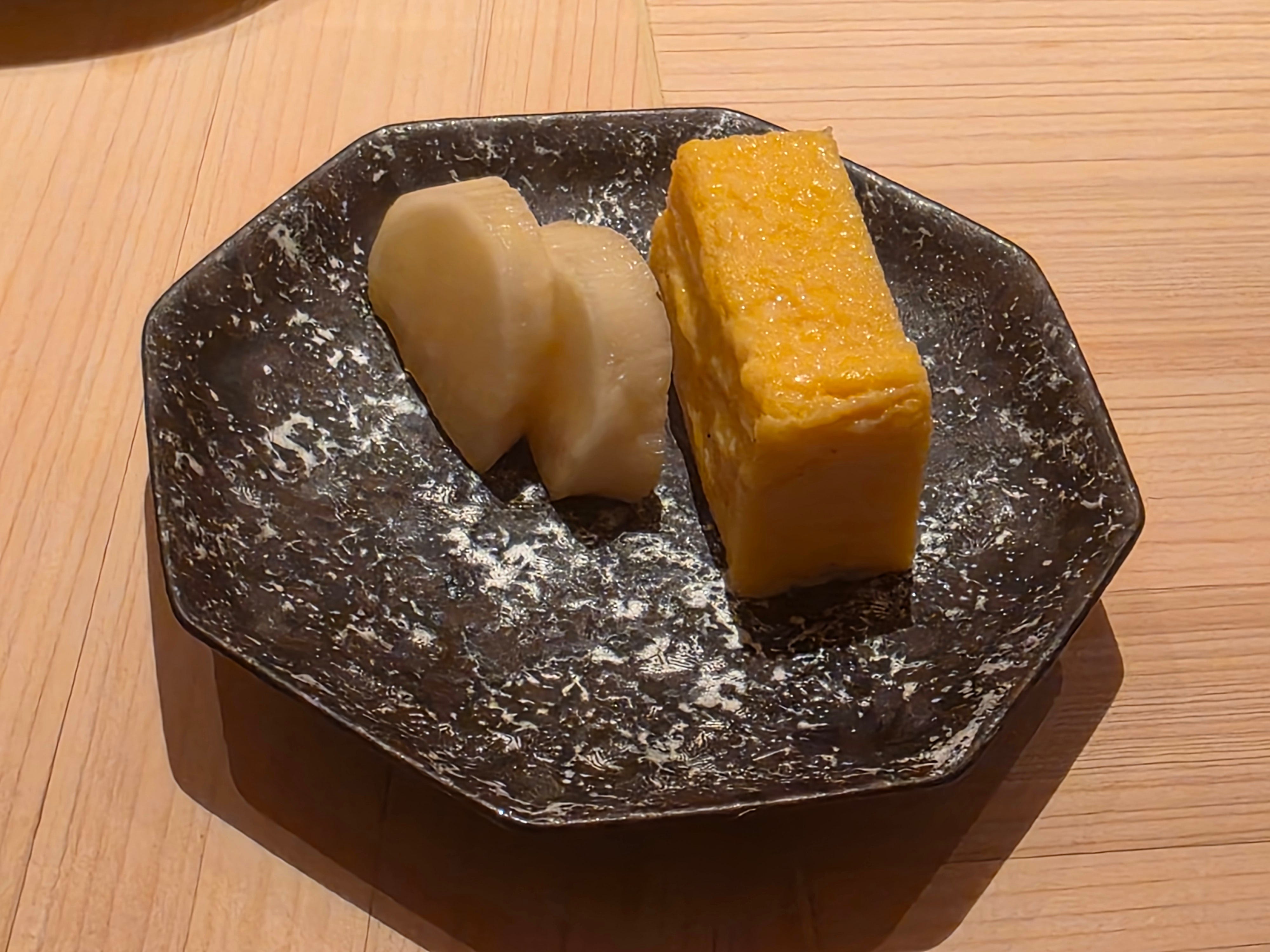
Pickles and castella-style tamago followed.
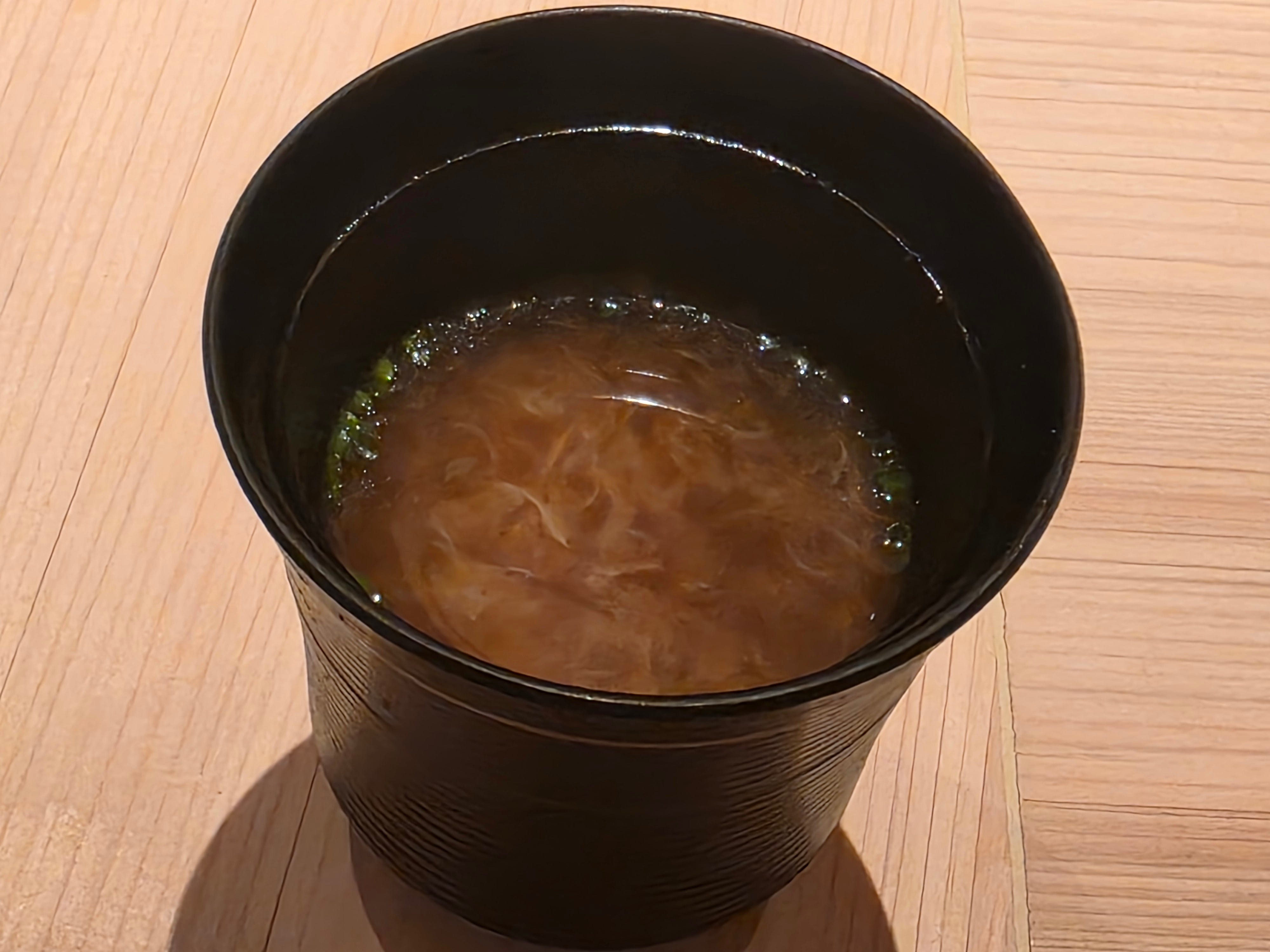
The miso soup came with chilli oil, another Hong Kong reference. This one worked. It gave the soup a little lift without turning it into a gimmick.
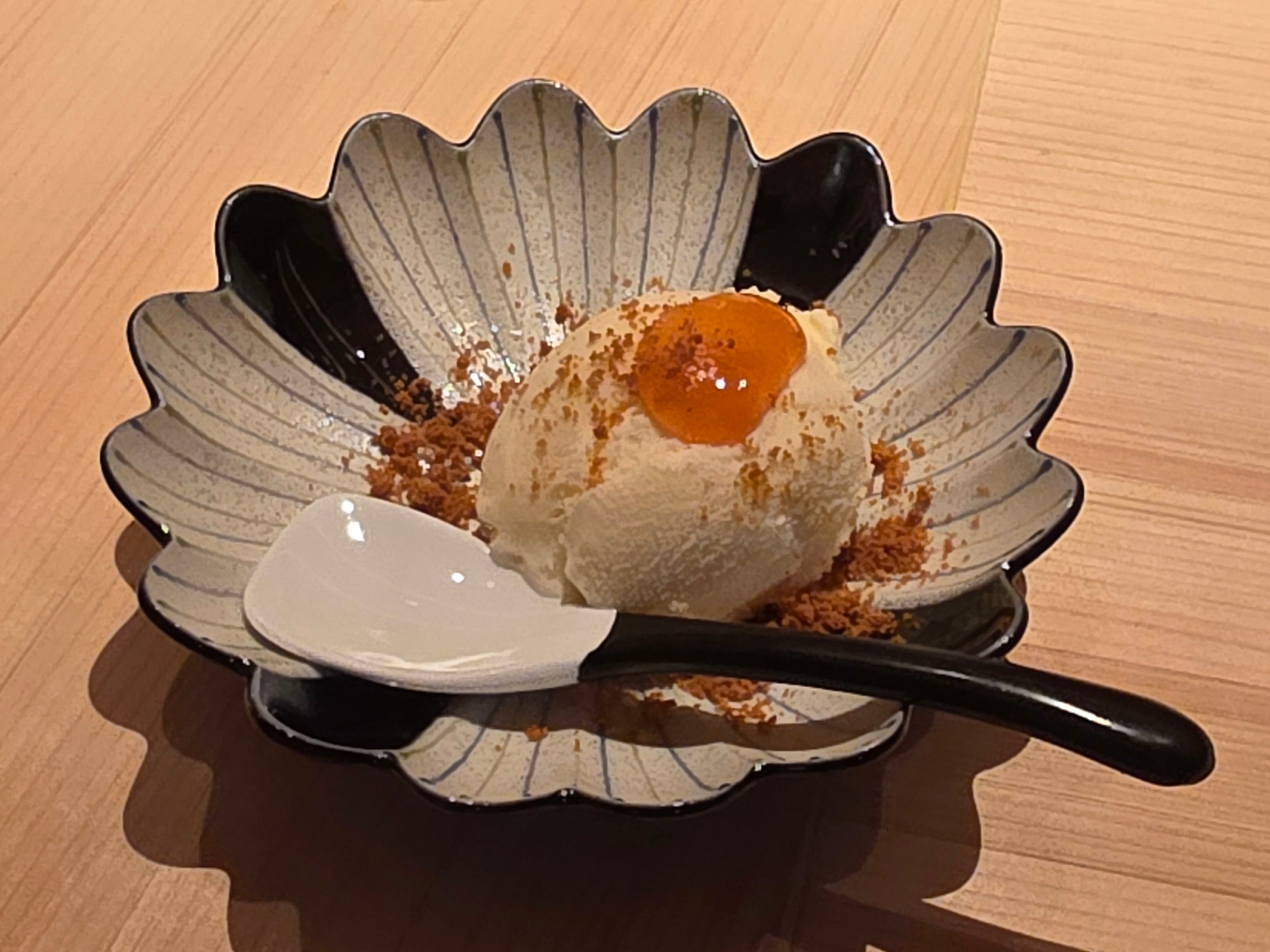
Dessert was cream cheese ice cream with strawberry mango jam. On paper, I hated the idea. I would prefer muskmelon at the end of sushi. In practice, it ate like a small cheesecake and worked better than expected. It still felt odd in this meal.
That is the issue with Mamoru. The restaurant talks about protecting tradition, but the meal drifts further from traditional Edomae than Saito or Shikon . The chilli oil in the miso soup, the crab with pickled cucumber, and the yuzu pepper with octopus worked. The Mediterranean oyster, salted duck egg shrimp, and cream cheese dessert did not.
The meal is good. Chef Chiba is fun, generous, and technically serious. The room is comfortable. The sourcing has real thought behind it.
I do not think Mamoru is the best version of what it says it wants to be. For traditional Edomae sushi in Hong Kong, I would book Saito or Shikon first. For a polished, more experimental Hong Kong omakase with a charismatic chef, Mamoru makes more sense. For me, a decent meal, but not one I would rush back for.
Total Damage: HKD 7,200 / 2 people
Enjoy reading all the different places u review. Not sure if ur interested in Murasaki 紫美, but they opened a spot for this Saturday.